Loading summary
Transcript61 lines
- [00:00]
A
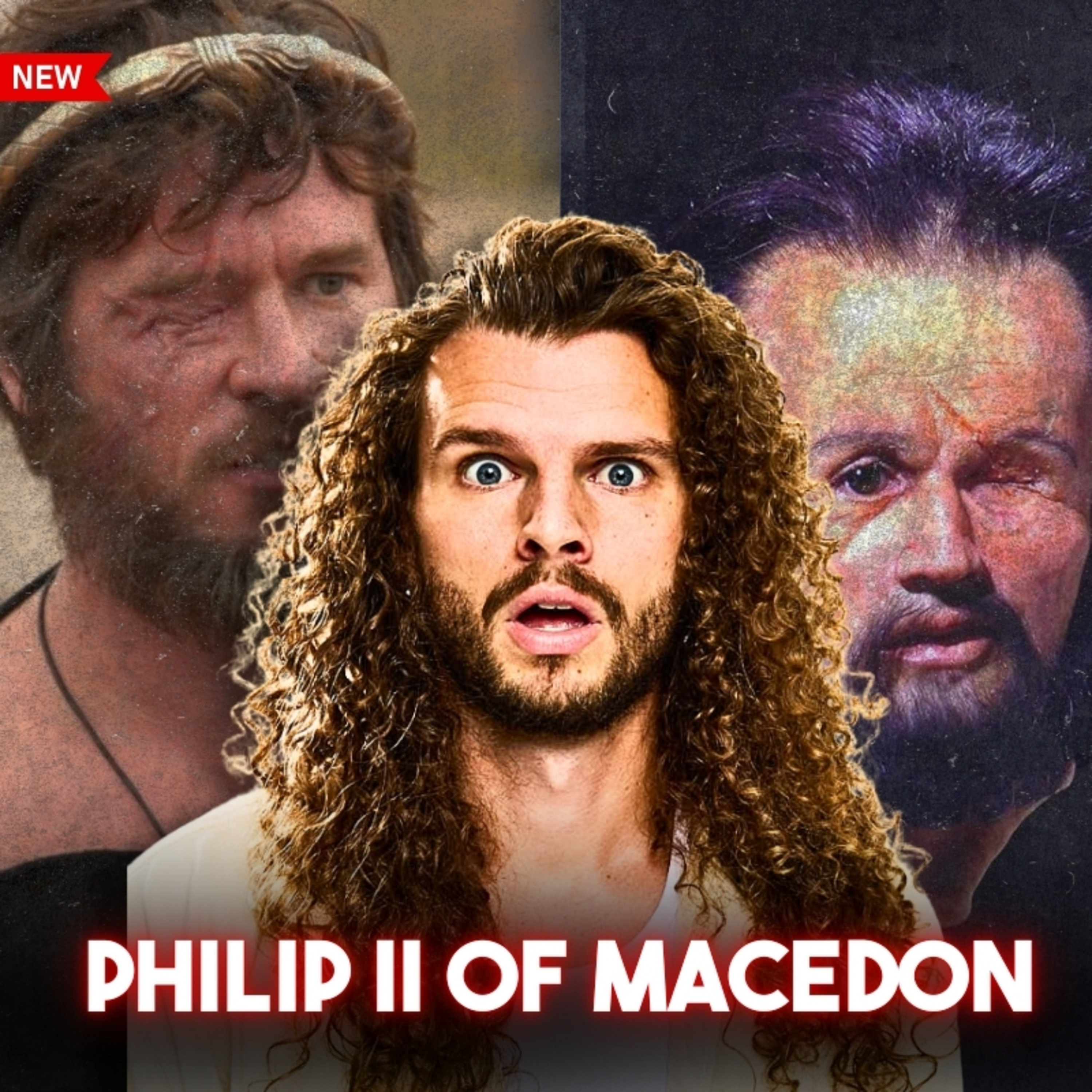
Everyone knows Alexander the Great. He conquered Persia, he marched to India, he spread Greek culture across the ancient world. But what if I told you that Alexander didn't build the army that made any of this possible? What if the real genius, the man who transformed a broken kingdom into the most powerful military force on earth, was murdered before he could claim his own glory? Today we're talking about Philip II of Macedon. The. The father Alexander desperately wanted to surpass, the king whose life work was inherited by his teenage son, and the man that history forgot while celebrating the empire that he built. If you're interested in ancient history, specifically the life of Alexander the Great and his father who preceded him, this is the episode for you. So sit back, relax, and welcome to History Camp. What's up, people? And welcome back. Welcome back to History Camp. My name is Mark Gagnon, and thank you for joining me in my tent, where every single week we explore the most interesting, fascinating and controversial stories from all history forever. Yes. That is what we do here in this little tent of mine. It's been a lot of history that's been going on. I mean, every day there's new stuff that happens. And for the past, like, 4,000 years, ever since people were writing stuff, petroglyphs and random caves in the Middle east or something, there's been history to talk about. And this is my goal. My plan on this channel is to understand everything that's ever happened, ever. And it's a lifelong mission and no better time to start than right now. So thank you guys for tuning in. I appreciate you making the show possible, for being a camper, for joining me in my tent and for liking commenting and just keeping the fire burning here at the campsite. It's not possible without you guys, so truly. Thank you so much. It's also not possible without the Greek freak himself. The man who desperately wanted to chat about this specific topic, my friend, Christos Pakadakados. What's up? I didn't even ask. I didn't even ask. Christos, how are you doing? Great, Mark. I'm glad to hear it. Thank you. Sorry. I'm sorry that I exploded right there. It's all good. I'm trying my best.
- [02:06]
B
I'm used to it.
- [02:07]
A
I know. The Cristos. Come on, dude, you're paying me something. Like I'm some type of. Some type of tyrant. Not you, the commenters. Oh, yeah, they've been going off, dude. I've been seeing that it started. It's starting to scare me, and rightfully so. Do you think are you threatened. Do you feel like you're unsafe out in these streets? Do you feel like one of the campers are going to find you and tell you to put a. Put a sock in it?
- [02:25]
B
I do talk to my therapist about it, but let's get on with the episode.
- [02:28]
A
We shall. Okay, we're talking about Philip II of Macedon now. We did an episode on Alexander the Great. We went through everything. I mean, I've spoken with historians about him. Allegedly, he was gay. Doesn't matter. Okay. I just think it's a funny thing to bring up now. We're talking about Philip II of Macedon. This is his father. This is really the guy that kind of laid the groundwork for Alexander to do what he did. So why does history celebrate the son and forget the father entirely? This is justice for Philip ii, all right? And we're going to be going through all the details of who he was. Now, in order to understand Philip's achievement, you need to understand where he started. Macedon wasn't just weak, it was a joke. Okay? The major Greek powers barely considered it a part of, like, the civilized world. It was on, like, the fringe of all the maps. It was like, yeah, what even is that? You know? And geography cursed the kingdom from the very beginning. Mountains dominated the north, home to independent tribes who raided the farmlands below them whenever they pleased. The fertile south struggled to feed its population. And whenever Macedonian forces chased these invaders, they simply retreated into terrain that no army could follow. Enemies surrounded the kingdom on every border. To the east lay Thrace, a persistent threat. To the west, there were the Ilarians, you know, fierce warriors occupying mountain fortresses that were basically impenetrable. And then you had Thessaly bordering the south with some of the finest cavalry and all of the Greek, you know, armed forces. And then looming over everything were the true powers of the Greek world. You had Athens with its dominant navy, and Sparta. I mean, you know about Sparta, right? 300. It's one of the. One of the most legendary forces in the ancient world. And then Thebes, of course, with its revolutionary military strategy. And, you know, the Persian Empire had even conquered Macedon at one point. The kingdom kept on losing wars over and over to anyone who even bothered to fight it. I mean, you can imagine being a Macedonian at the time was pretty tough. You had internal chaos. Macedonian kings took a bunch of wives, they had a bunch of sons. There was all these secession problems. Foreign powers were exploiting this instability, you know, backing different princes to keep the kingdom. Just constantly at war, constantly divided, constantly Weak. And when Philip was born, around 382 BC, nobody imagined that Macedon would ever matter. It was poor, it was fractured, surrounded by enemies. I mean, again, I don't want to throw any countries under the bus, but just imagine a country that is poor, impoverished, constantly invaded, over and over and just stuck between massive military superpowers. Just imagine that, okay? And so the great city states of Greece saw it as, you know, just, you know, this backwater inhabited, you know, by people that weren't exactly Greek. And Philip's court fostered close ties with philosophers. And through these circles, ideas about leadership and governance reached Macedon. And through his son, Alexander would receive direct tutelage from Aristotle years later. Now, as we all know, Alexander the Great, you know, as a child, was taught by the famed Greek philosopher Aristotle. Now some people will speculate again, this is not verify, this is maybe even historical conspiracy land. But some speculate that his father Philip II actually may have met Aristotle. He was obviously, you know, the Macedonian royal family physician at the time. Now Aristotle's ideas were, you know, spreading through this empire. And in his book on politics, he sowed the seeds in the minds of the Athenians that although the best government may be democratic, if a man distinguished with extreme virtue, you know, should be king and this government should be superior in democracy. So basically to say that it's possible that the Athenians saw, you know, Philip II and then later Alexander the Great as a virtuous ruler, which is why they maybe didn't put up as much of a fight. Perhaps it was also by Aristotle himself. Again, this is not verifiable but an interesting theory regardless. Imagine Macedon at this time poor, impoverished, surrounded by enemies and historically the losers and Philip II was, he was compelled to prove them wrong. So around 368 BC, Macedon lost another war, this time to Thebes, which had risen to become a dominant military power in Greece after, you know, Sparta and Athens exhausted each other in the Peloponnesian War. As a part of the peace settlement, Macedon sent hostages to guarantee compliance. Now this is basically an old school tactic to basically say, hey, we're going to give you some of our people within the royal court. That way you know that we're not going to attack you and that we have some type of alignment. You have some of our people, we're all good, we're not going to, you know, aggress the situation. Now one of these people was the teenage prince Philip. As the third son of King Amntas iii, Philip was considered dispensable valuable enough to obviously satisfy the people of Thebes and their demands, but not important enough to matter if something went wrong, if he gets killed, you know, and they can kind of renegotiate on their peace treaty. Now, Philip spent roughly three years in Thebes and in those years changed everything. As a royal hostage, Philip received excellent treatment. He had freedom to move through the city, access to all the institutions, and most importantly, exposure to military innovations that made Thebes so powerful. Now the Thebans had developed the Sacred Band, an elite unit of 300 soldiers bound by intense personal loyalty and rigorous daily training. Unlike Spartan warriors, who came exclusively from the aristocratic class, the Sacred Band often were drawing from hoplites who were heavily armored citizen soldier infantrymen of these ancient Greek city states. So Philip saw that discipline and constant training could matter more than birth, which sounds obvious to us now, but back in the day, they thought that the supreme soldiers were going to come from the high class. But Philip knew that, that this was not true. And this was a lesson that he would later apply to a larger scale, that you could get anyone, and if you were able to train them appropriately and situate their minds effectively, you could make them into a military machine. But the Sacred Band's real innovation was tactical. Traditional Greek warfare centered on the phalanx, a formation where soldiers would basically lock shields together and advance as, like a wall of, you know, spears and shields. Think almost like an ancient tank. Armies would just simply crash into each other until one side broke. The Theban general Epaminondas revolutionized this entire approach. Instead of attacking straight on, he weighted his line unevenly, placing the strongest troops, the Sacred Band, on one flank in a deeper formation than normal. Now, this concentrated force smashed through the enemy's best soldiers first. Then when elite troops fell, pan through the rest of the army. This might sound a little complicated, but just know that this was the brilliant tactic that crushed the legendary Spartans at the Battle of Leuctra in 371 BC. This was a decisive victory that shocked the Greek world and gave Thebes a brief military hegemony over all of Greece. Now, Philip studied these tactics obsessively. He learned how the Thebans coordinated infantry and cavalry and combined operations. He observed how constant training could create disciplined soldiers that, you know, part time citizen soldiers and smaller militias couldn't match. And he understood that a professional army, soldiers who trained year round instead of farming between campaigns, could actually defeat any force of amateurs. Now, the Thebans never suspected that they were educating their future conqueror. Macedon seemed Too insignificant to even threaten anyone. This was a guy of lower royal status from a completely insignificant nation. They treated Philip well, sure, hoping to create a future ally who would remember their kindness. But they created a monster instead. What's up, guys? We're gonna take a break really quick.
- [10:32]
C
Because buying work boots is annoying, okay? Take it from me. Stand up comedian, podcaster. Okay, I'm. I'm. I'm busting my. I'm busting my tuchus. You can see my hands here, calloused. Don't look too close. Doesn't matter, guys, buying work boots is tough because basically you gotta choose.
- [10:46]
A
All right?
- [10:46]
C
Do I want them to be comfortable? Do I want them to be really durable? Do I want them to be safe, or do I want them to be affordable?
- [10:52]
A
You know?
- [10:53]
C
And so now you're going through all these different brands, you're like, okay, well, these are gonna wreck my feet. You know, these ones are gonna last a long time, but they're super expensive. These ones feel good, but they're gonna get destroyed. Well, now you don't have to choose. And that's because I wanna talk to.
- [11:07]
A
You about Brunt Workwear.
- [11:09]
C
This was started by just a regular blue collar guy that basically was talking to all his friends that work in trade jobs, and they kept on being like, hey, these big brands don't listen to us. And, you know, they either haven't changed in a hundred years or they've changed too much. And now they're super cheap and poorly made. But that's why he invented Brunt, because these are products that are used by real hardworking tradesmen that want something that is extremely comfortable right out of the box.
- [11:32]
A
They want them to look cool, they.
- [11:33]
C
Want them to be not crazy expensive.
- [11:36]
A
And they want them to last a long time.
- [11:38]
C
And that's why Brunt is amazing. I've been wearing these around the city because, you know, it's a little bit chilly now. And I put on my boots just to make people think that I have.
- [11:44]
A
A blue collar job.
- [11:45]
C
And they are comfy right out of the box. I mean, like, I wear, you know, like, running shoes, regular shoes all the time. And these kind of feel like that. Like, it feels like I'm just wearing, like, a normal boot. But these are awesome because they are super safe. They're waterproof, they are, you know, lace up. They are great ankle support, and on top of that, they last forever. I actually have friends that work in roofing, and they'll wear these in the wintertime up in, you know, Pennsylvania, and they'll Be able to wear them throughout the whole year, and they keep your feet warm. They last a super long time.
- [12:14]
A
They've dropped like hammers on their toes.
- [12:16]
C
And they're, you know, generally safe. I mean, I wouldn't recommend testing it yourself, but if some mistakes happen like they do on the job site, you.
- [12:22]
A
Can be sure that you'll be safe with your Brunts.
- [12:25]
C
Now, I don't think there's a ton of other brands that are doing what Brunt is doing, and that's because Brunt stands by what they make. You can wear them to work, and if they're not right for you, you can send them right back. I don't know any other brand that does it. That's a company that is standing on the business. So all that to say Brunt stands on what they believe. You can try them out, send them back if they don't work. But I'm telling you, you're going to love them. They're extremely comfortable. I've been wearing them around the city. They keep your feet warm, they keep your feet safe, and they're not crazy expensive. And they might be the last boots you ever buy because you're going to wear them for years and they're going to hold up. I'm telling you, Brunt is amazing. And they love this podcast so much that the listeners of this very show are going to be getting $10 off brunt when they use the code camp at checkout. Just go to bruntworkwear.com use the code camp, and you are good to go. Stop messing around. Your feet are important, and your health and safety is the most important thing you can do. Check out Brunt.
- [13:19]
A
What's up, guys? We're gonna take a break really quick because I gotta tell you a story. Imagine you're sitting in your house. It's cold outside. It's. It's a little snowy. And you're like, man, I just want a panini. So you go and you order it, you know, from a. From Doordash or something like that. And it never gets to you. You're looking at the app, you're like, dude, it's been four hours. Where's my panini? You're calling? No one answers. Well, this is a true story that happened. There was a woman, a client, that was working as a Doordash driver, and she slipped and fell on an icy walkway outside of a Panera Bread in Fort Wayne, Indiana. She breaks her elbow, which leads to surgery and hardware having to get inserted into her arm. She can't Work. And originally, you know, she sued Panera and Panera's like, okay, we'll give you like 125,000. But then the good people over at Morgan and Morgan fought for her and got her the million dollar verdict that she deserved. Yes. If you never heard of them, Morgan. Morgan is America's largest injury law firm. Yes. And they are that way for a reason. They've been fighting for the people for over 35 years now. I'll be honest. If I ordered, you know, a panini and the woman gets paid a million bucks because she slipped, I mean, it's a tragic thing to happen, of course, but I deserve a little bit of that. I, I should get a cut at least, right? I'm the one to order the panini. If I never ordered that panini, she never would have slipped, never got a million bucks, which obviously she deserved. You know what I mean? But maybe next time she gets a million and million point one. I can get a cool a hundred thousand out of that. Regardless. All I'm saying is if you're ever injured and you are looking to get the money that you deserved, the compensation that is entitled to from your injuries, Morgan and Morgan could be the way to go. Hiring the wrong law firm can be disastrous. I mean, you can be locked up and litigate. It's a nightmare. But hiring the right law firm could substantially increase your settlement. And with Morgan and Morgan, it's easy to get started. Their fee is $0 unless they win. That's right. Their fee is free. Unless they win your case, you don't pay zero. You pay zero cents. Unless they win your case. You can visit forthepeople.com gagnon g a g n o n. That is f o r the people.com gagnon or dial pound law. That's pound 529 from your cell phone. That's for the people.com gagnon. Or click the link in the description below. And thank you so much to the good F over at Morgan and Morgan for sponsoring this program and making this show possible with this paid advertisement. Let's get back to the show.
- [15:39]
D
This Friday, Crime 101 hits theaters.
- [15:42]
A
What is it that you do? I take high value items and make them disappear. So you're a thief.
- [15:48]
D
One crime connects them all.
- [15:51]
A
I'm getting close. I know it.
- [15:52]
D
But only one will walk away.
- [15:55]
A
I underestimated you.
- [15:56]
D
Chris Hemsworth, Mark Ruffalo, Barry Kilgan and Halle Berry.
- [16:00]
A
We're good at this. Yeah.
- [16:02]
D
Crime 101. Directed by Bart Layton. Rated R under 17 animated without parent Only in theaters Friday.
- [16:12]
A
Now. Philip returned home around 365 B.C. with a head full of military knowledge and strategy and ambitions that would have seemed insane to anyone who knew the history of Macedon. But he patiently waited for the opportunity, and it came. In 359 BC, his brother, King Perdiccas III, died in battle against the Illyrians, a catastrophic defeat that killed 4,000 Macedonian soldiers and left the kingdom defenseless. Now, once again, this is the story. Macedon, right, and the heir that was apparent was a child. Philip became the regent, theoretically ruling until his nephew came of age. But in practice, Philip had seized power for life. I mean, you gotta understand, the situation was desperate. The Illyrians threatened invasion. Thrace was pressing from the east. The army was shattered. Most rulers would have just focused on survival. Once again, the story of Macedon just getting pounded and pounded and pounded. But Philip decided to rebuild everything from the ground up. His first revolution was social. Traditional Macedonian society determined status by birth. If you came from a good family, that's where you were. If you were a low family, that's where you were. Nobles commanded because their bloodlines were the most pure. I mean, they were. They were put in charge of all the militaries, regardless of their ability. It's all based on your lineage. Philip began promoting men more aggressively based on ability, though noble birth obviously still carried a great weight. If you performed well in a battle, you would rise through the ranks no matter who your father was or what family you were born into. And again, this sounds obvious now. We live in a much more meritocratic society. But for most of the world, throughout most human history, things were based on your bloodline. Who is your father? If you were the child, you would inherit everything. That means job, that means military rank, that means status, nobility, all that was just passed on. But this idea of promoting people not based off who their parents were, but how skilled they were was radical. And the aristocracy resented having to treat these farmers and these peasants as equals. But Philip identified talent wherever he found it and promoted ruthlessly based on results. His greatest discovery was Parmenion, a commander from minor nobility who became Philip's most trusted general and partner in conquest. I mean, again, this was not done at this time. Parmenion's loyalty never wavered because Philip had given him opportunities that no king would have ever offered. Philip also understood that professional soldiers needed professional pay. He couldn't ask men to train year round if they also had to feed their families. And they would have to pick up a farming shift in Order to make enough money, to make enough food, right? They needed money to live in Macedon, but they didn't have the money to pay them. So Philip took it. In 357 BC, Philip captured Amphimopolis, a city controlling access to rich gold and silver mines. And then suddenly, Macedonia had a little bit of money to throw around. So Philip used it to pay his soldiers and fund construction projects and crucially, bribe foreign politicians. And so he paid off Athenian leaders and nobles through Greece to support his interests or just to stay out of the way. A steady stream of gold bought Philip time to build his army while keeping enemies off balance through diplomacy and corruption. Philip didn't just copy what he learned in Thebes, he improved on it dramatically. The traditional Greek phalanx had significant weaknesses. Heavy armor would slow down their movement. Short spears meant that soldiers had to, you know, be close with enemies in order to fight. And if faster troops were able to flank the formation, it became extremely vulnerable. So Philip redesigned everything. He reduced armor weight dramatically, and this really increased the army's ability to march. He compensated for less protection. He then extended the infantry spear with the sarissa. This is basically like a giant pike or a spear that was maybe like 15 to 20ft long, nearly twice the length of traditional weapons. Enemy soldiers couldn't reach these Macedonian troops because of this forest of spears basically pointing at them before they could even get close. He created specialized units to protect vulnerable flanks. So shield bearers, basically, the guys just holding the shields, they were called hypospis. They served as elite mobile infantry capable of rapid repositioning. So when threats would emerge, they converge to basically seal the gaps before the armies and the enemies could exploit them. Maybe most importantly, Philip perfected combined arms warfare. Now, this is basically when you just combine all of your different military tools all in one unified system. This includes infantry, cavalry, you know, horseback archers, all working together. So the phalanx basically would pin enemies in place while the cavalry would sweep around and strike from behind. And this was an anvil and a hammer, basically, that Thebes really kind of discovered and pioneered. But Philip II executed it with unprecedented precision. Now, against this machine, traditional Greek armies were helpless. They couldn't match the speed of the Macedonians. They couldn't penetrate the wall of these giant sarissa, you know, spears. They couldn't counter the speed that the cavalry were charging in order to take them from behind. But Philip understood that military power alone wouldn't achieve his goals. You needed a great military, but you also needed brilliant diplomacy. Now, at this point, the Greek City states hated each other. I mean, Sparta despised Thebes, Thebes despised Athens. Everyone hated each other and had grudges through generations and generations of warfare. And Philip exploited every division and basically formed temporary alliances, played rivals against each other, and always would buy time for his army to grow stronger. He also married strategically. He took wives from neighboring kingdoms in order to seal an alliance. His multiple marriages weren't indulgence alone. I mean, I'm sure he enjoyed himself, but they were foreign policy, basically binding potential enemies into his family through blood. How are you going to fight me? Like I married someone from your tribe, your city. We have children together. You're going to kill your own children? So when diplomacy and bribery weren't enough, Philip would then use deception. This is the best part. He made promises that he never intended to keep. He would pretend to be weak in order to learn enemies that were too confident and too eager. He understood that wars are won before the battles even begin. And this is through preparation and manipulation. So by the late 340s, this is again BC. Philip had transformed Macedon from, you know, the loser kid in gym class that was constantly getting picked on into the strongest power in Greece. Again, this is through diplomacy, through strategy, through deception, and then, of course, through military strength. He moved south, systematically absorbing territory through conquest and intimidation and, of course, diplomatic manipulation. The decisive confrontation came at Chaeronea in 338 BC. Athens and Thebes finally united against this Macedonian threat that continued to grow. And so they assembled their combined forces for a final stand. But it was too late. Philip's army was a precision instrument, facing opponents who was still fighting like, you know, it was the four hundreds or something, you know, the battle was decisive, and the allied Greek line broke. Philip crushed both of these armies decisively when the Theban line collapsed. The sacred band, those legendary warriors whose predecessors literally taught Philip everything that he knows, they refused to retreat. They held their ground, and they were nearly annihilated, allowing their comrades to escape. And the irony here is fantastic. The sacred band of Thebes had shown Philip how to build an unstoppable army. And then with that army and with that information and also the deep understanding of how the sacred band would operate, he was able to destroy them. After Chaeronea, Philip controlled basically all of Greece. Most Greek city states now were bowing to a Macedonian and Macedonian dominance under the League of Corinth, though Sparta ultimately would remain outside of his grasp. Now, the League of Corinth was basically an organization of these Greek states that he himself was the supreme military commander. And the poor kingdom that nobody respected for generations had become the master of the Greek world. Philip immediately turned toward his ultimate goal, and that was Persia. He sent Parmenion ahead with an advanced force of 10,000 soldiers to secure a foothold in Asia Minor. These Greek cities under Persian rule would ultimately welcome this liberation from Philip ii. And the full invasion would then follow after. And then came the wedding. In 336 BC, Philip's daughter Cleopatra married Alexander I of Epirus. Now, there's a lot of interesting names going on here. Okay, Obviously Cleopatra, we're not talking about Cleopatra in Egypt. That comes much later. The obvious queen, the pharaoh, so to speak. She happens much later, but coincidentally, the same name. Also Alexander I of Epirus. Not the same Alexander, of course, but again, a very popular name. And it's ironic because Cleopatra would die in what city?
- [25:28]
B
Alexandria.
- [25:29]
A
Alexandria, named after Alexander the Great. Just kind of a funny little irony right there. Now we connect these names with Egypt because of the Ptolemaic dynasty, the Greek rulers who controlled Egypt after Alexander's conquest. Philip's daughter was obviously, you know, Macedonian. The celebration at Aegae drew dignitaries from across Greece. Philip wanted to appear approachable, a unifier rather than a conqueror. And so he minimized his security. A bodyguard named Pausanias A approached the king and in that moment he drove a sword into his chest. He died moments later. Now, Pausanias tried to flee, but he stumbled and Philip's companions killed him before he could ever be interrogated. Philip was killed and he was in his mid-40s at the time, young enough for decades of more conquest. Instead, his 18 year old son Alexander inherited everything. What's up, guys? We're going to take a break really quick because you know what time it is. It's time to level up. And bluechew just dropped something wild. Okay? Bluechew's been rocking with us from the beginning, so of course we have to rock, pun intended, with them. All right? And what they've just done is change the game. All right, this is next level gold metal energy. This is bluechew gold if you never heard of it. This is the newest innovation from the number one, Chewable Ed brand.
- [26:49]
C
All right?
- [26:50]
A
This isn't the little blue pill that your grandpa used. This is the four in one beast that is setting the gold standard for performance. We're talking two ingredients to keep the good times rolling, okay? Mixed with apomorphine and oxytocin that are going to turn up the arousal and the connections in your brain as well as the ingredients to keep the blood flow, to keep everything pumping, okay? Bluechew Gold dissolves into your tongue and works in as little as 15 minutes. And that means you're going to be rocking quicker and staying in the game longer. Let me just say. That's how we put this tent up every single episode. We give Christos a Bluechew. And you know what? We have this tent rocking all year round, okay? That's what it takes. Now, I recommend this in a, you know, a married, Christian relationship. But you know what? You guys can do whatever you want. Blue Chew is the ultimate service to get you these chewables to your door in a discreet way to keep the bedroom on fire. We have a special deal for the listeners of this program. You're going to get 10 off your first month of Blue Chew Gold if you use the code Gagnon G A G N O N. That's promo code Gag Gagnon G A G N O N. You can visit bluechew.com for more details and important safety information. And thank you so much to Bluechew for keeping the lights on and making this show possible. Now, let's get back to it. Now, why did his bodyguard murder him? What caused this? Who ordered this assassination? Well, modern historians as well as ancient sources will offer a few explanations. Some say a personal grievance against Philip ii. Others suspect that Persia, or even Philip's own family, the truth ultimately died with the assassin. Now, Olympias, Philip II's wife, was not Macedonian. She was a princess from Epirus, a kingdom to the west of Macedon. And this foreign origin could eventually become relevant to this conspiracy theory. So just consider this theory. Philip had recently married. Again. Remember, Philip II had many wives from all different kingdoms in order to secure alliances. But his most recent marriage was to a young Macedonian noblewoman named Cleopatra Eurydice. And Cleopatra Eurydice had an uncle named Attalus. And at this ceremony, he had drunkenly toasted to the hope of a legitimate heir to the throne. Now, the implication of this statement is clear. Alexander, with his, you know, mother from Aripity, was somehow less Macedonian than any son that Philip might have with a new, fully Macedonian wife. So this insult drove Alexander to fury and sent Olympias back to her homeland in exile. Now, Philip, a shrewd judge of character, may have had doubts about Alexander's temperament. Anyway, the young prince was brilliant but volatile. He was prone to rage and recklessness. Why would such a man make a competent ruler at all? Again, this is all theory. We don't know exactly. But you have to Think what Philip is thinking. Who am I going to pass my kingdom onto? Is Alexander really the one? If Philip had lived another 30 years, he conquered Persia himself and produced more sons, Alexander may have never ruled at all. He maybe would never have been great. But if Philip died immediately, Alexander inherited an empire at its peak with Persia waiting to be conquered and glory just on the other side. We will never know with certainty who killed Philip ii. Was it Alexander's mother? Was it Alexander himself? Who's to say? It might be the Persians. But all we know is that Alexander the Great ultimately benefited the most from his father's convenient death. It's ironic to think that one of the main issues that was plaguing Macedon for years was this secession problem. That rulers would have many wives, have many sons, and then they would all battle and infight and create civil war about who would take the throne. And perhaps this happened to Philip ultimately and that led to his demise. An ironic little ripple, but it was the birth of Alexander, who would then become the Great. Now, Alexander the Great obviously, you know, earned that title through his conquest that spread Greek culture from Egypt all the way basically up to India. But every battle that he won, he won with Philip's army. Many of the tactics that Alexander used had been developed under Philip. I mean, every general who served him, including Parmenion, Philip, had trained and promoted. I mean, remember Alexander the Great, who we did a whole episode on, which is, I should say, a great episode.
- [31:12]
B
One of our top rated.
- [31:13]
A
One of our top rated. There you go. Alexander was literally. He grew up on campaign with his father. He lived his entire life almost as like a mascot kind of on the Macedonian trail of conquest. Alexander expanded his father's creation brilliantly. But again, who's to, you know, who takes the credit? Is the expander or is it the creator? Philip took a kingdom that couldn't defend itself at all against random little hill tribes and made it not only a dominant power, but the hegemon of Greece. He invented military innovations that changed warfare for centuries. He built loyalty among men who would die for him. He played the cunning game of diplomacy with skill that matched, I mean, even the most brilliant military strategists of today. But he was murdered at the moment of his greatest triumph. His life work was inherited by a son who was by all accounts extremely desperate to surpass him. And this pattern repeats itself throughout history. Founders build and heirs expand. Society celebrates the expansion because it's way more dramatic, it's way more visible. Those compounding gains are so tangible and far more Easily measured. But building something from nothing, I mean, you know, it does something that expansion never does. It has a vision that just doesn't exist yet and the patience to create it. Philip II of Macedon possessed that vision, and he had the drive and the intellect in order to make it happen. And I think he deserves to be remembered as one of history's great leaders. Not as a footnote, not in the shadow of his son, which his son did, you know, did expand. You're welcome, Christos. But as the architect of an empire that changed the world, and that is the story of Philip II of Macedon. You know what? I am a Philip II truther. This is my hot take. This is my convo starter for every person I ever meet at a bar. From ever. For all eternity. Mark, what are you thinking about? You know what I'm thinking about? Philip II is the realest one. He's the OG of OGs.
- [33:19]
B
That's blasphemy.
- [33:20]
A
Philip the Great. How about that? Whoa. Philip the Great. Alexander the. Pretty good. I'll say it. Yeah. Now, Christos, I'm curious, as a Greek, what is your opinion of Philip the. Philip the Great?
- [33:33]
B
He's kind of the guy that breaks through the barrier and then Alexander took it over the line.
- [33:39]
A
Do Greeks like Alexander the Great?
- [33:41]
B
They love him. They can't get enough of him.
- [33:43]
A
That's what I assume. But also, he's. Is he Greek?
- [33:49]
B
I don't want to answer that question.
- [33:51]
A
Whoa. I mean, but this is another funny story, right? So many of these leaders that take over countries are not always from the country.
- [33:58]
B
Well, back then, it was also, like, borders that weren't clearly drawn.
- [34:02]
A
Yeah.
- [34:03]
C
It's fair.
- [34:03]
A
And they're all kind of the same people.
- [34:04]
B
Yeah.
- [34:05]
A
You know what I mean? Sure. Like, what's the difference between, you know, Easy. I was gonna say Napoleon.
- [34:12]
B
Oh, okay.
- [34:13]
A
He was born in Corsica. True. Which is now Italy. Oh, no, now is. Is France. I think it was under, like, Italian occupation. But, you know, it was technically. I think at the time that he was born, it was technically Italy. And then he becomes obviously the ruler of. Of France and then lose and then comes back again. Regardless, we don't need to digress. Fact check says Corsico was part of.
- [34:36]
B
France when Napoleon was born in 1769.
- [34:39]
A
But it then became part of Italy at some point.
- [34:41]
B
No, it says it acquired it from Genoa the year prior 1768.
- [34:48]
A
Which is technically. Genoa is obviously technically Italy. Right. But at that time, again, what are borders? What are people? You know? But it's just an Interesting ripple. I mean, the Greeks love Alexander the Great, but he did also spread, you know, Greek philosophy, shout out Aristotle, but none of it would have been possible without Philip the Second. Who. Let me ask you this. Who is a greater tech innovator? Tim Cook. Steve Jobs. What does that have to do with anything? Steve Jobs is the visionary. He's the innovator. He's the guy that makes it all happen. Tim Cook, a brilliant CEO, a great guy. He's able to expand, he's able to build, but he's no Steve Jobs.
- [35:30]
B
I think they both serve their place, and I love Apple products, and I will accept them whenever you want to send them.
- [35:35]
A
A diplomatic point, I hear you, but I'm just saying, dude, Philip ii, he's the realest one. What do you guys think? Are you team Philip ii? Are you team Alexander? Are you going to be Christos, the notorious Greek fence sitter and say, oh, I like both, you know, for different reasons? A legit position. I'll allow it. What do you guys think? Drop a comment. I would love to know what your thoughts are. Also, if you're a historian that specializes in, you know, Greek Macedonian history, you know, the Hellenistic area, era of, you know, ancient discourse, I would love to know, is there anything I missed or anything I. I glossed over? Anything that needs more time and attention or maybe just some interesting details? Please drop a comment. More importantly, why do you think they killed Philip ii and who do you think did it? Was it. Was it Alexander's mother? Was it Alexander himself? Was it the Persians? Was it just a crazy bodyguard that just, you know, got a whiff of the. The old sweet stuff and just went crazy? Let me know what you think. Please drop a comment. I read all of them. And, of course, be civil. All right, this is what we do over at camp. This is a place to celebrate humanity, to look at all the craziest stuff that's ever happened, and ultimately to be good people. Now, if you like more history deep dives, congrats, you're in the right place. This is history camp. We do these deep dives all the time, but if religion's your vibe, we got religion camp. If you like deep dives on miscellaneous random stuff, from military operations to coups to esoteric mystical occultism, check out Camp Gagnon. I do a bunch of interviews and deep dives there as well. But again, if history's your vi, you found me at the right time. Thank you all so much, and I will see you next week in the future to talk about the past. Peace.