Loading summary
Transcript30 lines
- [00:01]
A
So good, so good, so good. Spring styles are at Nordstrom Rack stores now and they're up to 60% off. Stock up and save on Rag and Bone, Madewell, Vince, All Saints, and more of your favorites.
- [00:12]
B
How did I not know Rack has Adidas?
- [00:14]
A
Why do we rack for the hottest deal? Just so many good brands. Join the Nordy Club to unlock exclusive discounts. Shop new arrivals first and more. Plus, buy online and pick up at your favorite Rack store for free. Great brands, great prices. That's why you rack. Score more with the college branded Venmo debit card and earn up to 5% cash back with Venmo Stash. Got paid back with the Venmo debit card. You can instantly access your balance and spend on what you want, like game day, snacks, gear, tickets and more. The more you do, the more cash back you can earn. Plus, there's no monthly fee or minimum balance. Sign up now@venmo.com collegecard the Venmo MasterCard is issued by the Bancorp Bank. NA Select Schools available. Venmo Stash terms and exclusions apply at venmo me stashterms max $100 cash back per month.
- [01:00]
B
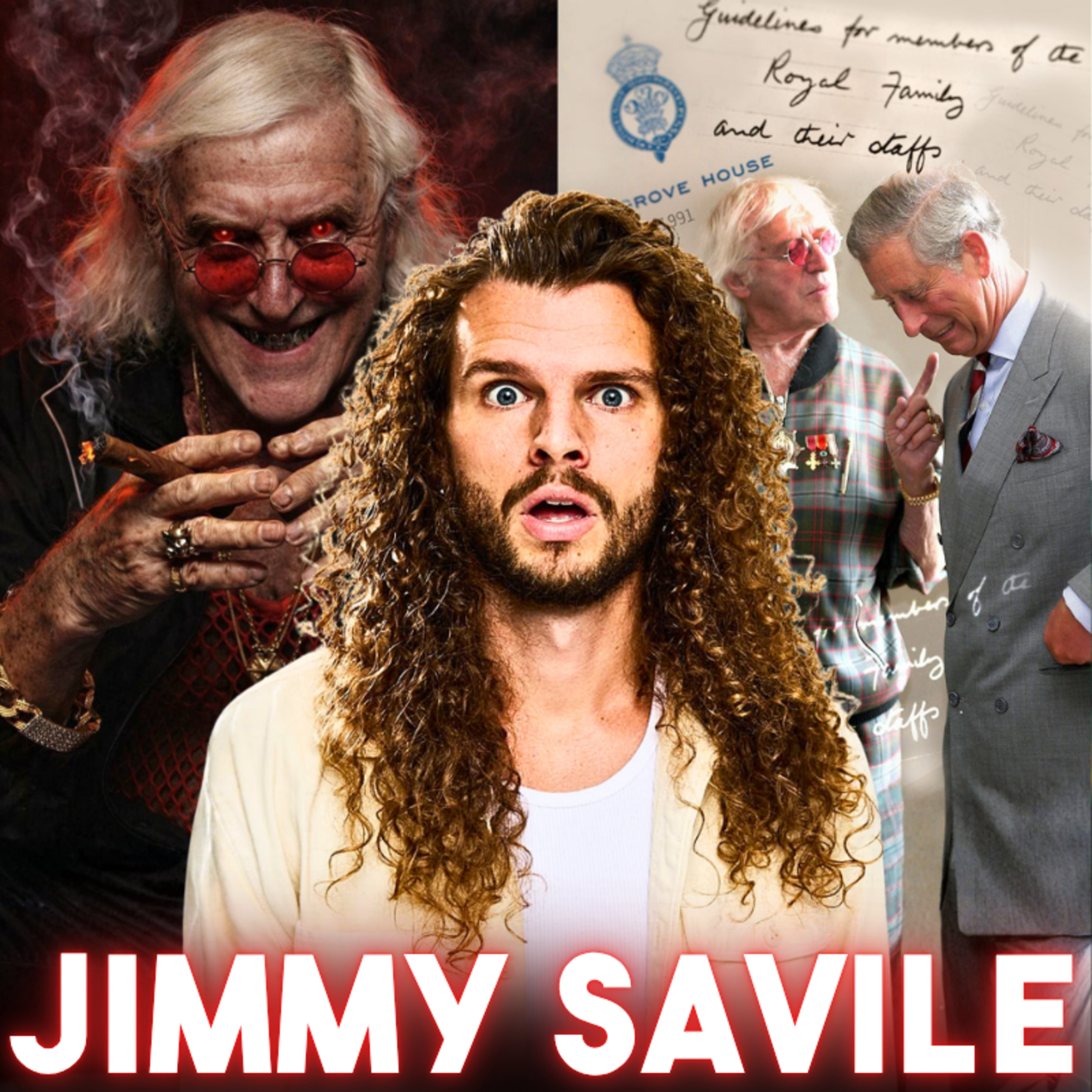
This is the disturbing story of Jimmy Savile and the conspiracy of silence that protected him for half a century. In many ways, this story serves as a chilling precursor to the Epstein Files. Basically a case study on how power, institutional protection, and willful blindness can shield a monster in plain sight for generations. This one is a little bit morbid, so have some discretion while you're watching it. Anyway, sit back, relax, and welcome to camp. What's up, people? And welcome back to camp. My name is Mark Gagnon, and thank you for joining me in my tent, where every single week we explore the most interesting, fascinating, controversial stories from around the world. From all time, forever. Yes, that is what we do here in the campsite. I'm trying to get to the bottom of everything that's ever happened. I'm trying to learn all the history and know all the things. That is my. That is my attempt here at campsite. But. And today's no different, guys. We have a. A fascinating and morbid episode. In lieu of doing a lot of coverage and content sort of around the Epstein files and just how it's kind of changed people's perception of power and institutions in the United States and how all this stuff really operates, I've gotten a lot of people asking if we can do a deep dive on this guy Jimmy Savile and just how disturbing and gross his entire career was and how he was protected by the highest rungs of power everywhere he went, basically, but specifically in England. Now, before we jump in, I just want to say thank you guys so much for, for making the show possible and just supporting us through this, through this time. You guys are truly the best. And every time you click a video, every time you like and comment, you are making my dreams come true. And it's really the greatest thing ever. And I also have great news. If you are interested in getting a little bit closer to the fire and gathering around the campsite, we have a Patreon. That's patreon.com Camp Gagon. That is where basically me and everyone like you, basically get together and we chop it up, we get into all the most interesting stuff. There's, you know, combos, chat rooms, and we're all just kind of hanging out. We also do bonus content. We do zooms every month, extra episodes, ad free episodes, merch discounts, all that stuff. And it's about the cost of, like, a cup of coffee every month. That's it. So you can check it out. Patreon.com Camp Gagnon and also give a shout out to Christos. None of this is possible without this guy. All right? He's the big, big Greek in the sky. You know, that's the way I look at him. He's like Zeus. Zeus is Greek, right? Sure. All right, Christos, I'm sorry, we don't have time for you to do a whole diatribe, but today we're talking about the disgusting and morbid Jimmy Savile. Now, in order to understand who this guy is and how he was able to ascertain so much power and ultimately exploit it for his own disgusting predilections, kind of need to go all the way to the beginning. To a working class Catholic household in Leeds, England, where James Wilson Vincent Saville was born on October 31, 1926. Yes, Halloween. And looking back, the symbolism feels almost too on the nose, right? Too perfect. Like the universe was trying to warn us that this guy was messed up before he even got here. Jimmy was the youngest of seven children. By all accounts, his childhood was defined by two things. Poverty and. And his mother, Agnes Savile, or the Duchess, as Jimmy would call her for the rest of his life, was the center of his universe in a way that was a little too intimate. In a way, it went way beyond the normal maternal attachment. In short, Jimmy worshiped her. He was obsessed with her. And when she died in 1972, he actually kept her body in her home for five days before allowing her to be buried. He preserved her clothes, her bedroom, everything exactly as she left it. He would visit the room regularly, sitting with her belongings, talking to her as if she were still there. He actually once told an interviewer with complete sincerity that the best years of his life were the five days that he spent alone with his mother's body. I mean, just let that image sit with you for a moment, because this is a man that Britain would soon invite into their living rooms and their children's lives, hospitals, be knighted. Like, I mean, he climbed to the highest ranks of British culture, and here he is talking with a journalist, being like, yeah, I loved it when me and my mom was just sitting there and she was all dead. Like, I mean, it's like, crazy that this ever happened. But I guess it was a different time. I guess it wasn't even a different time. I mean, Epstein was run around up until 2019. So now, during World War II, young Jimmy worked as a coal miner, a protected occupation that kept him out of military service. But it was in the mines that he suffered a spoilt spinal injury, which gave him this sort of signature hunched posture and, like, slightly unsettling kind of gait that later became a part of his eccentric Persona. But the minds also gave him something different. It was his first taste of operating outside the rules. You see, after the war ended, Savile didn't return to real work. Instead, he became a scrap metal dealer, which in post war Britain was kind of just a euphemism for someone just, like, doing black market trading. He learned, like, how to hustle and how to charm and how to kind of live in, like, the gray areas where rules don't really apply. And you take a lot of risk, but you can also, you know, make a lot of money. And then came the dance halls. So by the late 1940s, Saville started running unlicensed nightclubs in his hometown of Leeds and in Manchester as well. These were basically underground dance halls where Savile served as a manager and a dj. And he was, by many accounts, one of the first DJs in Britain to actually use two turntables simultaneously, literally pioneering techniques that would later become standard in the industry. You know, he was just like a little hunchback, just, like scratching on the ones and twos. He was charismatic. You know, he was innovative, and people just generally kind of liked him. And even then, rumors of abuse had actually started to circulate right around this time. Former employees and attendees at these dance halls would later Testify that Savile was assaulting young women at these events, using his position of power and his access to private areas and back rooms to basically prey on girls who had just come to these events to, you know, have a good time. And this is a pattern that would define his life. And it was already starting to take shape, right? You create something interesting that people want to go to and you start to create a crowd, then you charm the crowd, then you cultivate an image and, you know, of an image of fun and excitement, something interesting, and use that basically as cover to carry out something much darker and much more sinister. And he got away with it repeatedly. And this was one of the first times that he really saw that. And by the early 1960s, Savile had transitioned from a club DJ to a radio personality, landing a gig with Radio Luxembourg before eventually moving to the BBC. And the timing was perfect. Britain was on the cusp of a cultural revolution. The Beatles were about to explode. Youth culture was becoming like a real market force around the world, but specifically in Britain. And the BBC needed someone who could connect with the younger generation. Jimmy Savile, with his bleached blonde hair and tracksuits and cigars and all these incomprehensible catchphrases like, now then, now then, and how's about that then? Fit the bill perfectly. He wasn't polished by any stretch and he wasn't handsome, but he was weird and different and was strange in the exact way that the moment of the 60s had basically called for. So in 1964, Savile had become the host of Top the Pops, one of the most influential, influential music programs in British television history. Like, I don't even really. It's like MTV before MTV is one way to think of it. Like, I don't even know trl. Maybe it was just the go to spot for music in the 60s. And suddenly he wasn't just a regional DJ with a following, he was a national figure, beamed into millions of homes every single week, surrounded by the youngest, most infamous pop stars of the day and the even younger fan base that would follow them around. And the access that this gave him unprecedented. Teenagers would line up to be in the studio and young performers would seek his approval. And behind the scenes, away from the cameras, Savile was building something completely different, something that he started back in the underground nightclubs. And this was a hidden infrastructure of abuse that would span decades. Now, here is where we kind of need to slow down and really try to understand what Savile was constructing, because it wasn't random. It wasn't opportunistic in the way that most predators operate either. Jimmy Savile built a system, this engineered architectured access, that basically gave him unsupervised contact with the most vulnerable people in his industry. And he did it basically in plain sight, with the full cooperation of the institutions that should have been protecting them. And this is maybe the most disturbing part. It started with charities. Beginning in the 1960s and accelerating through the 70s and the 80s, Savolo expanded his Persona from entertainer to being a philanthropist. He ran marathons, he organized fundraisers, he raised tens of millions of pounds for hospitals and schools and, you know, kids organizations. And in return for his generosity, he basically just asked for one thing. He just wanted access. As a matter of fact, Stoke Manville Hospital became his primary base of operations. This was a renowned spinal injury center, a place where some of the most vulnerable patients in the country, people who were paralyzed, they maybe couldn't move at all. Many of them were children and they came here for treatment. Savile's charity work had raised so much money for the hospital that they gave him his own bedroom on the grounds. I mean, like, not a visitor's room, not a hotel nearby, a bedroom inside the hospital where he could come and go as he pleased at any hour of the day or night. I mean, is that not the crate? Like, how weird is that? This is a television personality with no medical training, no official role, no accountability, doesn't know anything about medicine, and he's given a bedroom inside a hospital full of immobilized patients. And this wasn't like medieval times, this was in the 60s. And he used it exactly as you would expect a predator to use it. But Stoke Mandeville was just the beginning. He moved on to Broadmoor Hospital, and Broadmoor was and remains one of the highest security psychiatric facilities in all of Britain. This is where they send people that have been convicted of the most serious crimes but are deemed, you know, clinically insane for a regular prison. They can't actually go to jail because they're so crazy. I mean, we're talking like violent offenders, serial killers, the most dangerous psychiatric patients in the entire country. And the administrators of Broadmoor, impressed by Zavo's charity work and his celebrity status and his connections, the people he knew, they gave him an official role on their board. And once again, his own set of keys to the facility. Is this not crazy to anyone else? Like, how is this ever a thing? His own keys to a high security psychiatric hospital where he could just walk around the halls at night, unsupervised among patients who are literally medicated and traumatized and mentally unwell to that, no one would even believe anything that happened to them. Like, this is literally the most vulnerable aspects of our society. And he just had a key to just wander around. Leeds General Infirmary would give him a similar deal, and so did a bunch of other hospitals across England. It's so bizarre. At its peak, Savile had what amounted to basically free reign of more than 28, 28 different institutional settings. I mean, schools, children's homes, hospitals, detention centers. He would basically just, like, show up unannounced, and he would visit patients alone, and he would volunteer for tasks that, you know, gave him physical access to vulnerable people. And because he was Jimmy Savile, you know, because he was a celebrity, he was this famous dj, and he was hanging with all the coolest people and pop stars, and he raised so much money, there's no way this could be a bad guy, right? No one even questioned it. And then there's the morgues. I mean, this is the craziest thing. Like, multiple sources testify that Savile had a particular interest in hospital morgues. I mean, remember the stuff he was doing with his mom just dead in her room, right? Like, this is the guy that's severely disturbed. So he had this weird interest with these morgues, and he would basically visit them during his nighttime wanderings. And he basically had access to the bodies of recently deceased people. And when these allegations first started to surface after his death, fairly recently, they seemed almost too grotesque to actually be believed. Surely this is speculation. Surely this is people projecting the worst possible crimes on a man who is, you know, revealed as a monster. Right? There's no way, but official investigations actually confirmed it. Savile had indeed spent unsupervised time in morgues, a lot of it. And what exactly he did will probably never be known. I mean, he's gone. He can never really testify. But the testimony is consistent enough and disturbing enough that it can't just be dismissed. Every charity event, every hospital, every photo opportunity with the young patient, it was all part of the institutional architecture of abuse. The institutions basically let him build it piece by piece because he brought them money or publicity and, you know, because questioning him or challenging him might bring consequences if, you know, like, what if they go against him and they all of a sudden stop getting funding? Or he tells people to, you know, stop supporting them? This guy is so connected that he's able to use his power to exploit the most vulnerable populations These institutions. Now, if Jimmy Savile had been some shadowy figure operating in secret, his decades of abuse might be easier to comprehend, right? It's like, oh, this is like a fringe doctor that no one knows about. But that's not what happened. The evidence was kind of all there, mountains of it accumulating year after year, you know, person after person looking at the evidence and kind of doing nothing. The first documented complaints to the BBC came in 1964. Now, keep in mind, a lot of these allegations, almost all of them came out after Savile's death, like post 2010. And the first one came in 1964. Now, this is the same year that Saville began hosting Top of the Pops. That, you know, very popular music program. Girls who had attended tapings reported inappropriate behavior. These complaints basically went nowhere. No investigation, no consequences. And the show just went on. And so did Savile. And you got to think like, this is the 60s, okay? This was a different standard for how men and women operated. You know, like, I think open flirting was like, pretty generally accepted. So for women to complain about inappropriate behavior in the 60s, this guy must have been doing some real weird stuff. And the fact that it was completely dismissed is truly crazy. Now, throughout the 60s and 70s, rumors about Savile circulated widely within the entertainment industry. Comedians were actually even making jokes about it. Other TV personalities would like kind of whisper warnings that actually the phrase Jim will fix it, the name of his beloved children's show where he actually made kids dreams come true. This was an actual show that he had. This is crazy. But regardless, this became like industry slang. Like, this was like a euphemism that everyone kind of understood, but no one really talked about. John Lydon, the former frontman of the Sex Pistols, mentioned in a 1978 BBC interview that everyone knew about Savile and what he was doing. But the interview was just never broadcast, and the BBC just shelved it. In 1973, journalists at the Daily Mail attempted to investigate Saville. They gathered testimony, they compiled evidence, and then the story just went nowhere. Officially, there wasn't enough proof. Unofficially, Savile was too powerful, too connected, too valuable to the institutions that benefited from his money and from his influence. I mean, it's really the same thing with the Epstein story. I remember the journalist in 2003 that was like, we have the whole story. We had everything. And the editor canned it. They said, hey, we're not going to put this story out. It's like they had all the stuff. And then it went nowhere. I mean, think about how many innocent people could have been spared. Like how many victims and survivors wouldn't have undergone this type of trauma if they actually did their due diligence when it happened. It's not like this person was some criminal mastermind no one knew about. There were multiple credible complaints. I mean, journalists and interviewers and researchers are bringing up evidence through the 60s and 70s. I mean, it's crazy. Now. Even the police received complaints multiple times over the decades. Like the official police. In 2007, Surrey Police conducted investigation based on multiple allegations of this history of abuse. They passed their findings to the Crown Prosecution Service, who reviewed the evidence and conveniently concluded that there was insufficient evidence to prosecute. Savile was in his 80s by then and was still, in many ways a beloved national figure and still made public appearances and was still largely untouchable. And then there was Newsnight. In late 2011, just weeks after Sav's death, the BBC flagship investigative journalism program was preparing an expose. They had victims willing to speak on camera. They had evidence, they had a story that would have revealed the truth about one of the BBC's most famous faces. And BBC executives just stopped it. They literally just pulled the segment. They claimed that it didn't meet editorial standards, that there were concerns about the evidence, that the timing just wasn't right. The timing? Jimmy Savile's already dead, but the countless people that he had abused were still alive and still awaiting justice that really would never come. I mean, what timing are they possibly talking about? It's crazy. The real answer, of course, is that the BBC was about to air tribute program celebrating Savile's life and his legacy and of course, his relationship with the BBC. An expose would have interfered with all of that. So the victims were conveniently silenced once again. And the tributes aired. And Britain mourned a man who spent the better part of 60 years abusing children in the very institutions that were now honoring his memory. And when the truth finally came out, when ITV aired its own documentary in 2012, when Operation U Tree was launched, when victim after victim after victim finally came forward, the scale of. Of what had been ignored became impossible to deny. Over 500 victims were identified. The abuse spanned six decades. It occurred in the BBC studios, in hospitals, in children's homes, in his caravan, in his car, in dressing rooms. I mean, anywhere you could imagine. There's some allegations which are pretty disturbing. I don't even know if we can say them on YouTube. Your children as young as patients, as old as 75. The living. And according to the morgue testimony, potentially even the dead. I mean it's. He was like the most grotesque predator of the. The largest scale. I mean it's crazy. And the saddest part is that almost all of it could have been stopped decades earlier if anyone in power had chosen to act on what many of them all knew.
- [20:23]
C
Zootopia 2 has come home to Disney. Let's go get ready for a new case.
- [20:28]
A
We're the greatest partners of all time.
- [20:30]
B
New friends, Gary the Snake and your last name, the snake Dream team. Pick new habitats.
- [20:35]
A
Zootopia has a secret reptile population.
- [20:37]
C
You can watch the record breaking phenomenon at home. Zootopia 2 now available on Disney Plus. Rated PG. And right now you can get Disney plus and Hulu for just $4.99 a month for three months with a special limited time offer. Ends March 24th. After three months, Plan Auto renews at $12.99 a month. Terms apply.
- [20:55]
B
The world moves fast. Your workday even faster.
- [20:59]
C
Pitching products, drafting reports. Analyz Microsoft 365 Copilot is your AI
- [21:05]
B
assistant for work built into Word, Excel,
- [21:08]
C
PowerPoint and other Microsoft 365 apps you
- [21:11]
B
use, helping you quickly write, analyze, create and summarize so you can cut through
- [21:17]
C
clutter and clear a path to your best work.
- [21:19]
B
Learn more@Microsoft.com m365copilot now this brings us to the question that still haunts the entire Savile case. The question that still doesn't really have an answer with like, the why? Why was he protected for so long by so many people across so many institutions? I mean, for someone like Epstein, you can kind of wrap your head around. You're like, all right, maybe he's an intelligence apparatus. Maybe he's working with our government. Maybe there's an informant thing. Like, there must be something that allowed this guy to be protected. You know what I mean? He gets this conviction in 2008 and doesn't really go to prison. But there must be something right with Saville. Here are some of the theories. I mean, they're not particularly satisfying. And again, none of these have been confirmed. So just in the interest of transparency, these are not facts. These are just theories. And it might not be one. It might be, you know, a few different ones because they are not mutually exclusive. The first theory is as simple as just institutional cowardice. Savile brought in money, brought in ratings, brought in fame. And challenging him would have meant admitting that the institution had made a huge mistake in elevating him. It would have Meant scandal, lawsuits, accountability, losing money. I mean, each institution, the BBC, hospitals, police, they made a calculation that basically protecting Savile was actually easier than exposing him. And this theory doesn't require any grand conspiracy. It just requires ordinary human weakness, repeated across decades by people who found it more comfortable to look away than to act. The second theory involves his connection to power. So Savile wasn't just a celebrity in the normal sense. He was personally close with the Royal family. Prince Charles wrote him letters seeking advice. And Savile even spent multiple Christmases with the royals in the palace. Now, this is an allegation, but the story stands and many people believe that this is the truth. He was close to Prime Minister Margaret Thatcher, who championed his knighthood and of course ignored all the allegations about his behavior. He was also given a papal knighthood by Pope John Paul ii. If Savile fell, it wouldn't just be Savile who was embarrassed. It would be the crown, the government, the hospitals, the morgues, the Church. I mean, the cost of exposing it was just too high for people who had the power to do it. Now, there's a third theory in all of this that's a little darker. Okay, so just hear me out. Some investigators have suggested that Savile wasn't just protected because of his connections or, you know, the money or the fame. He was protected because he was useful in a different way. Because perhaps he was providing access to powerful people because he was a part of the network. Now, this is where the allegations become more speculative. Okay, So I just want to put that out there. This is not fact, all right? This is just a theory, but I think it's worth mentioning. Savile's name has been in execution to the ELM Guest House scandal, a Westminster linked case involving allegations of a VIP pedo ring operating in the 70s and the 80s. He was reportedly a visitor to the guest house. However, that investigation was once again shut down before reaching any conclusions. I mean, I couldn't imagine if me or someone I knew was a victim of some type of, you know, operation like this. Like sometimes I have organized crime ring and then there's an investigation that just turned off. I mean, you got to go. You go to jail, you go Cain Velasquez, you just go crazy. It's insane. He was also connected to the Haute de la Garon. This is a children's home in Jersey where widespread abuse occurred over decades. Savile visited the home multiple times. He was photographed literally with kids there. The Jersey investigation uncovered evidence of systemic abuse. But once Again, the full findings were never made public. And some of the investigators complained that their work was being deliberately suppressed. I mean, what's happening here? Was Savile a part of something bigger? Was he protected? Because exposing him would have been exposing others. Others who are even more powerful, even more untouchable. We don't know. The investigations that might have actually answered these questions were closed or underfunded or blocked. You know, files have been lost, witnesses have died, and the full truth was never really found out or published. Sound familiar? Anything that's going on now with these Epstein files that happen to just be swept under the rug? Now, the fourth theory is perhaps the most disturbing of all. And this is the theory of collective denial. Now this one is interesting. So maybe there's no conspiracy. Maybe there didn't need to be one. Maybe Savile was protected because society, at some level, simply just didn't or couldn't believe that such a beloved figure could be capable of such horrific acts. Was he eccentric? Sure. But he was familiar. He seemed like a good guy. You know, he was on tv, he's helping kids, he's raising money. How could someone like that be a monster? There's no way this is a theory, to be honest with you, that implicates all of us. The rumors were there. The accusations were in plain sight. The pattern was visible to anyone who wanted to see it. But maybe Savile survived not because of any coordinated cover up, but because human beings have, unfortunately, this infinite capacity to look away from things that make them uncomfortable. Which is why I think it's important to specifically scrutinize these things that make us uncomfortable. Now, Jimmy Saville died on October 29, 2011, two days before his 85th birthday. He died in his sleep in his home in Leeds. Having never spent a single day in prison. He never faced a single charge. He was truly never held accountable for any of his crimes. He was buried with full honors. His gold colored coffin was displayed in a hotel so that mourners could actually come and pay respects to Sir Jimmy Savile. His headstone was inscribed with the words, it was good while it lasted. I mean, that's the literal. That's his actual headstone. It was good while it lasted. Now, within a year, that headstone was gone, removed by his family, broken up, and then buried in an undisclosed landfill location that basically prevented it from becoming a target. His grave itself was actually quietly dug up and destroyed. And the tributes that had aired on the BBC were pulled from circulation. Commemorative plaques were removed from hospitals. His legacy was just being erased basically just as quickly as the institutions that had created it could manage, because by then the truth was out. Operation Utri, launched in 2012, would eventually identify over 500 victims. The abuse had occurred in at at least 28 institutions. Victims ranged from so, so young as 2 to as old as 75. And the investigation revealed that Savile had assaulted patients in their hospital beds, children in BBC dressing rooms, teenagers in his caravan, basically any. Any vulnerable person in virtually every setting where he had been given access. I mean, institutional failure after failure after failure. It's almost hard to fathom that this happened fairly recently. I mean, the official reports where they were finally published, I mean, they were damning. The Dame Janet Smith review concluded that the BBC had missed opportunities to stop Savile and had created a culture where complaints were not taken seriously. Yeah, dude. No. 500 victims and it's like, yeah, I guess the culture's bad. You let a psycho have full access to your entire facility. This is insane. Now, hospital records and reports actually documented case after case of abuse that had been reported at the time and once again ignored. This is a pattern that's undeniable at this point. Savile had openly, you know, offended and repeatedly just continued to offend for decades. And the institutions that are supposed to protect these vulnerable people continue to fail, not through ignorance, but through deliberate inaction. Some compensation was eventually paid to victims, funded by Savile Estate and by settlements from the institutions that had enabled him. But the amounts were. I mean, it was a pittance, right? And the process was painful and tedious, and for many survivors, the acknowledgment came way too late to ever feel like any justice. Now, when the Epstein case broke wide open, when, you know, the flight logs emerged, when the connections to presidents and princes became public, and victim after victim came forward with stories that mirrored each other in their horror. Those of us who had followed the Savile case felt just so disturbed by how familiar the whole thing was. Like, the recognition in this was strange. The patterns are almost the same. I mean, it's not the exact same, but fundamentally it's just men using philanthropy and connections as a shield. Epstein positioned himself as a benefactor of science and education, and Sowell positioned himself as this tireless charity worker for children's hospitals. In both cases, the charitable giving created a reputation that made accusations unthinkable. Surely a man who gives so much couldn't be even. Couldn't be capable of this. Both men cultivated relationships with the most powerful people in society. In both Cases, these relationships were basically a web of mutual exposure. If one fell, others are going to fall around him, creating a powerful incentive for everyone in power to protect the secret. Both men were just operating in plain sight. The Epstein jokes, you know, circulated for years after his arrest. Like, Epstein didn't kill himself, that kind of stuff. It became a meme because everyone knew on some level that the official story didn't make any sense. And once again, these Savile jokes circulated for decades. Industry insiders knew, comedians knew, journalists knew. It was an open secret. And it was, maybe that's the most disturbing part of all of it, because it really implicates everyone who heard the whispers and still did nothing. Or perhaps the system was so powerful that, you know, making jokes at each other was the only thing they could do because they knew that he'd be protected by these institutions at the end anyway. Both men had investigations that were suppressed. Epstein's 2008 Sweetheart Deal, created by Alexander Acosta, was one of the most lenient sentences in the history of sex trafficking prosecutions. The procurement of a prostitute, what was it? The procurement of prostitution by a minor. And he was just given just a little slap on the wrist. He was like a few months in prison that he could come and go. And Saville's 2007 investigation was also dropped by the Crown Prosecution Service. In both cases, the systems that should have delivered justice were just instead delivering even more protection. And both cases raise the same haunting question. Were they alone? The evidence unfortunately suggests networks. Epstein's operation undoubtedly, in my opinion, involved recruiters and pilots, property managers and a documented chain of association with many people, namely Ghislaine Maxwell, who has since been the only person convicted. Who else was involved? Who else knew about this and who else was participating? Who were the co conspirators? The full client list has never released. The flight logs hinted names that have never been investigated. There are still code words and hidden messages in emails to this day that have yet to be deciphered. And it seems like no one cares. It seems like there's nothing being done about it. Sav's operation involved hospitals that gave him keys, BBC executives that, you know, killed investigations, police forces that just pushed cases to the side, and persistent allegations of connections to wider rings of abuse involving politicians and VIPs. I mean, the Elm Guest House investigation was shut down, the Jersey investigation shut down. Files have been lost. How many others were involved? How high does this protection go? Just like with Epstein, we'll probably never know. What was once dismissed as a conspiracy theory has in both cases proven to be closer to fact than the official narrative. The idea that, you know, powerful pedos and their networks basically operate with institutional protection at a massively high level seemed paranoid. You know, until the Franklin scandal, until Epstein, and of course until Saville, until we saw with undeniable clarity that the crazy conspiracy theorists, I guess, in this case, unfortunately, have been right all along. While these respectable institutions had been working on the COVID up. The Saville case isn't just about one monster. Of course, it is about the monster that is Jimmy Savile. But it's about every person who heard the rumors and said nothing. Every executive that stopped the investigations to protect the ratings, Every hospital administrator who acted with negligence and gave us celebrity keys to the ward because, you know, he brought some publicity. Every police officer who just decided that a national treasure was more important than the testimony of kids. Jimmy Savile died comfortably and free and celebrated by the people of his country. His victims lived with what he did to them for decades. And many of them were never believed. They were called crazy. Many were never compensated. Many continued, continued to carry the weight of this abuse. Many of them suffered with drug addiction, mental health issues, alcoholism, trying to cope with the trauma that was inflicted by this man, all because an entire country, you know, just chose not to stop it. And the system that protected him, it's basically still there, right? It's the same institutional cowardice, the same deference to wealth and status, the same willingness to sacrifice the vulnerable to protect the powerful. It's the same that happens time again, time and time again, right? It's just a different, you know, format, but it's the same structure, the same reflexive disbelief when victims speak out against people we'd rather just not believe. You know, like, we'd rather just say, like, oh, there's no way they're capable of this kind of evil. There's no way. It hasn't really changed. I mean, Epstein proved that Savile wasn't an anomaly. You know, he was like a template. If anything, Epstein was just Savile, but with more money and connections. The question isn't if there are other Saviles or other. Epstein's operating right now under the protection of these, of these institutions. The question is who and where and when? And will we finally be able to stand up as human beings and stop them before it's too late? And that, ladies and gentlemen, is the unfortunate and morbid story of Jimmy Savile. I mean, it's just crazy that these institutions can work this way. And you have people that are operating in such plain sight, doing such evil. Evil and that they're able to die peacefully in their bed and never be investigated. There's never anyone looking at it. Like, I don't even, I'm like, how famous was Jimmy Sav? Like, there's no way that he was that big, that they were like, we need to protect him, right? Like, like the fact that Prince Andrew's able to go down and get perp walked and arrested and Jimmy Savile just, you know, 15 years before nothing happened to him is just crazy. I mean, I guess that's one sign for like progress going in the right direction. You have a, you know, a sitting monarch getting arrested, whereas before you didn't even have like a radio DJ getting arrested. But still, I mean, yeah, it's just, it's just insane. I also don't know a ton about British politics, but I have enough friends from Liverpool to know that Margaret Thatcher's the worst. And this just seems like another, you know, this is just another, another nail in the coffin. I mean, you got Jimmy Saville knighted. Come on. I mean, it's just an insane, just an insane story. I mean, Christos, did you, did you learn anything from this?
- [37:09]
A
Eczema as unpredictable, but you can flare less with epglis, a once monthly treatment for moderate to severe eczema after an initial four month or longer dosing phase. About 4 in 10 people taking EBGLIS achieved itch relief and clear or almost clear skin at 16 weeks. And most of those people maintain skin that's still more clear at one year with monthly dosing.
- [37:29]
C
Emplus Lebricizumab LBKZ, a 250 milligram per 2 milliliter injection is a prescription medicine used to treat adults and children 12 years of age and older who weigh at least 88 pounds or 40 kilograms with moderate to severe eczema, also called atopic dermatitis, that is not well controlled. With prescription therapies used on the skin or topicals or who cannot use topical therapies. EBGLIS can be used with or without topical corticosteroids. Don't use if you're allergic to ebglis. Allergic reactions can occur that can be. Severe eye problems can occur. Tell your doctor if you have new or worsening eye problems. You should not receive a live vaccine when treated with Ebglis. Before starting ebglis, tell your doctor if you have a parasitic infection.
- [38:03]
A
Ask your doctor about Eglis and visit ebgliss.lilly.com or call 1-800-lilyrx or 1-800-545-5979.
- [38:10]
C
This episode is brought to you by White Claw Surge. Nice choice hitting up this podcast.
- [38:15]
B
No surprises.
- [38:16]
C
You're all about diving into tastes everyone in the room can enjoy.
- [38:20]
B
Just like White Claw Surge.
- [38:21]
C
It's for celebrating those moments when connections have been made and the night's just begun. With bold flavors and 8% alcohol by volume.
- [38:29]
B
Unleash the night.
- [38:31]
C
Unleash White Claw Surge.
- [38:32]
B
Please drink responsibly.
- [38:34]
C
Hard seltzer with flavors. 8% alcohol by volume. Volume. White Claw Seltzer Works Chicago, Illinois.
- [38:40]
B
A couple things, actually. A lot of people might be wondering why we made the Epstein connection. He actually was named in the Epstein files. Oh, really? In what? In what. What specific way? Show you right now. Chris says you're the best. You know that? I try. I mean, was he named, like, by a witness? So this is the headline. Okay. Jimmy Savile appears in Epstein Files as woman claimed she attended US Trade show full of perverted men where she. Where he provided entertainment. I did not know about this. Good, good. Look, a woman told the FBI investigation into Jeffrey Epstein that she attended a trade show in the US Where Jimmy Savile was the entertainment. According to newly released documents, the woman told investigators that she went to an event in New Orleans which she said was full of perverted men. In a video interview, the woman claimed Savile, former Top of Pops host who abused 500 victims before his death until 11, was a sexual deviant. Wow, that is just disturbing. And while attending shows in Switzerland, she heard people. She heard talk about children being flown to the US and the men involved were the same people who were having parties with Savile. I mean, what is going on, dude? Like, that is so disturbing. Like, how is this not being stopped? Like, it's just, like. I don't know. It's just disgusting. I don't know. Anything else you wanted to. You wanted to chime in with. Yeah. John Lydon, the guy from the Sex Pistols who kind of outed him. That interview never aired, but he did claim that he was blacklisted from BBC because of that. No way. And this is a guy that's called Johnny Rotten. Obviously, Rotten is for his teeth, but still, though. But, like, I mean, that's crazy. That's why, like, I. I just don't understand what this guy had going for him. Like, again, I. I'm not. From the time. I didn't watch the content. I don't know him outside of Obviously, these allegations or I guess these, you know, crimes, but I'm like, how big could he have been? Like, Epstein, like, despite his. How evil he was, like, you can understand, like, how wealthy he was. You're like, oh, I can see how he was able to use that manipulation to his, you know, to his benefit. The. The comparison, and there is no comparison to their crimes or whatever would probably be like Ryan Seacrest being accused of something like this. That's an interesting point. Yeah. So it's like everyone kind of knows him, but even still, I'm like, I'm not going to give secrest a room at a hospital where people are getting spinal surgeries. Wow, he's a great guy. It's a good point, actually. Secret, you're in. Anyway, what do you guys think? If. If you are familiar with this, if you've read a book about Jimmy Savile, maybe if you knew him, if you came, you know, cross paths with him. If there's anything I missed or got wrong, please drop a comment. Let me know. Please enlighten me. I am not immune to correction. Furthermore, if you didn't know anything at all, please drop a comment. I'd love to know what you took away from this. What are your thoughts? What do you think about the. You know, in lieu of the Epstein files, how is this information hitting it differently? I have great news. If you like history content, we have history camp. That's where we do deep dives on all the craziest stuff that's ever happened in history. That's a show where I go into all stuff in the past. And we also have religion camp. That's where I go through all the beliefs of all the people of the world. I mean, Christianity, Hinduism, Islam, Judaism, all the religions under the sun. What do they believe? What are people thinking about? And where do. Where do they say we go? So we got history camp for the past, religion camp for the future. But if you just like to rock with what's going on right now, the most interesting stuff I can think of today, well, that's all going to happen right here at Camp Cagnon. Deep dives and interviews with people way smarter than me. And of course, these kinds of tent talks, as we call them fondly. And of course, I'd love for you guys to join me at the campsite. That's patreon.com Camp Gagnon. Gather around the fire and. Yeah, come join us and feel more like yourself. That's the best way to put it. Anyway, God bless you all, and I will see you guys next week.
- [42:35]
C
Monster Energy. Everybody knows White Monster Zero Ultra, that's the OG it kicked off this whole Zero Sugar energy drink thing. But Ultra is a whole lineup now. You've got Strawberry Dreams, Blue Hawaiian Sunrise and Vice Guava. And they all bring the Monster Energy punch. So if you've been living in the White can, branch out. Ultra's got a flavor for every vibe, and every single one is Zero Sugar. Tap the banner to learn more Peace.