Loading summary
Transcript3 lines
- [00:00]
A
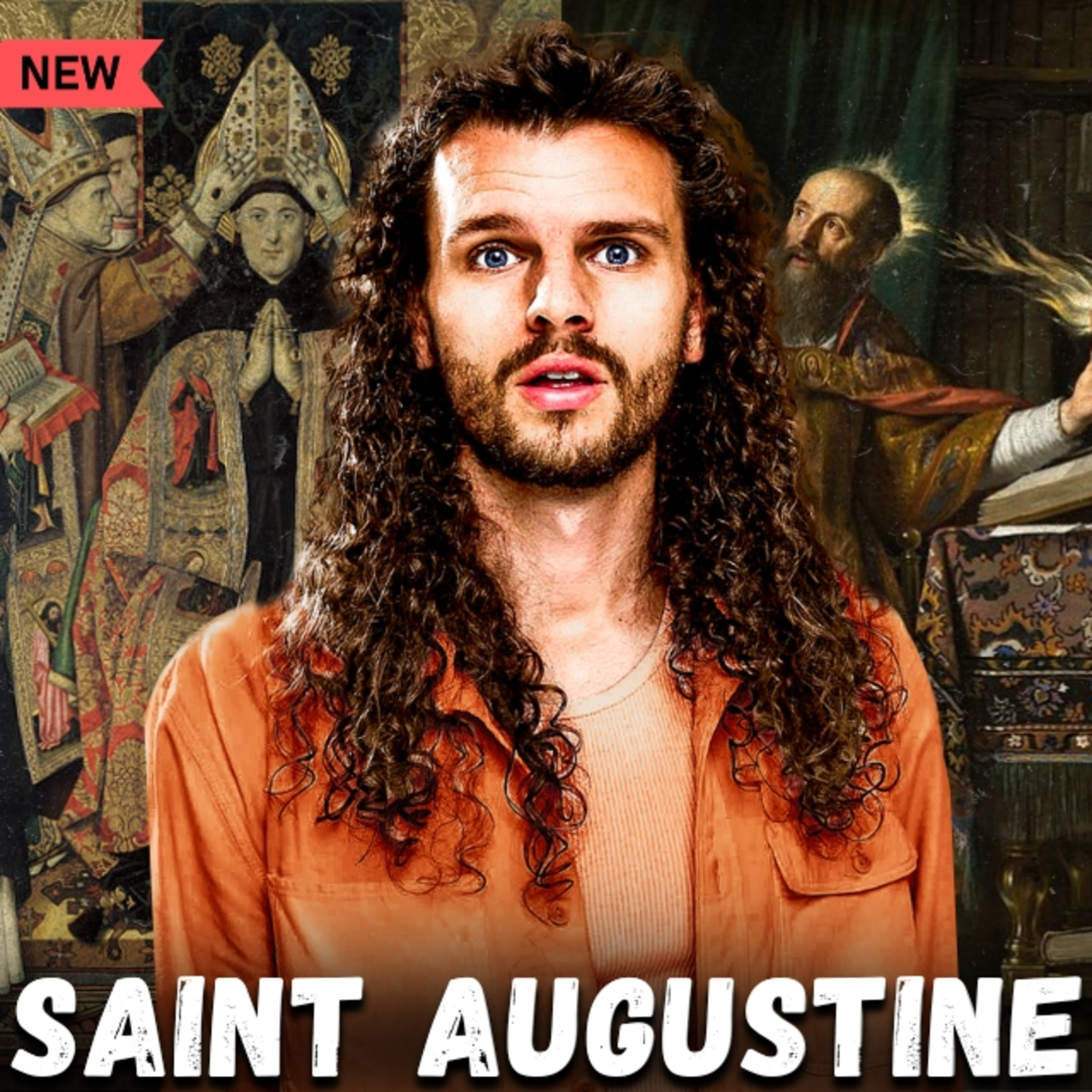
Imagine you steal some food from a market, not because you're hungry or because you need it, but because it's just fun to do something wrong. Well, a teenage boy in North Africa did Exactly this in 370 A.D. and years later became one of history's greatest thinkers and spent entire chapters trying to understand why he did this. And that boy was Augustus. And his journey from rebellious youth to one of the most influential minds in Western history is a story about all of us. Our struggles, our search for meaning, and our fight against our own worst impulses. For 16 centuries, Augustine's influence hasn't faded. Time magazine called him a force in intellectual, spiritual and cultural life across every generation since his conversion. But here's what makes his story so powerful. Augustine wasn't admired because he was born perfect. People connect with his story because his messy, complicated life looks a lot like our own. This is the story of a man who searched for truth in all the wrong places before finding it where he least expected. So sit back, relax, and welcome to Religion Camp. What's up, people? And welcome back to Religion Camp. My name is Mark Gagnon, and thank you for joining me in my tent, where every single Sunday we explore the most interesting, fascinating, controversial stories from every religion from all time, forever. Yes, this is my attempt to understand what everybody believes. I don't think it's possible to understand a people or a person without knowing that the God that they worship. So this is my attempt to compile all the divine wisdom that's ever been written through the eons of religious literature and distill them from my own personal life. I want to thank you for tuning in on this beautiful Sunday. Go to church or mosque or temple or whatever you go to. Just believe in something and worship God. All right, so thank you for tuning in. I truly appreciate it. Appreciate all you guys supporting, commenting, like, and subscribing. You keep the fire burning here at the camp. And you know who else keeps the fire burning? My dear pal? Christos. All right. The Greek freak himself, the Orthodox sage, Christos. How are you doing? Great. All right, Christos, we don't have a ton of time because we're talking about Augustine of Hippo. Are. Are you familiar with this guy? I'm not at all. Does he have a tradition in the Greek Orthodox faith? Is there anything that. That you attach with this, this patron saint? I wouldn't be able to tell you. Oh, my goodness. Well, good news for you. Strap in. Buckle up, pal, because you were about to get a whole lot of Augustine wisdom right to your head. All right, this guy, Augustine of Hippo, all right, he writes in his book Confessions of St. Augustine, he says these words, great art thou, O Lord, and greatly to be praised. Great is thy power, and infinite is thy wisdom. Seems like a guy who got it all figured out, right? He's a saint. He's admired. There's entire churches, cities named after this guy. He seems like he was probably just born a great dude and just, you know, was just a pious man who loved God with all his heart. Well, in order to understand those words and getting to that place of peace, Augustine took decades of mistakes and wrong turns and sins and painful lessons. And through his experiences and through his writings, we find a lot of the answers that he eventually discovered. And his journey kind of becomes a mirror for me and anyone else who's ever just felt lost or confused or conflicted about what their relationship with God is. And it's just kind of searching if there's more to life than just what we see. And what's great about Augustine is that it's not just ancient history. This is a story about human nature and the battles that all of us have and really trying to find truth. But where does the story begin? Well, on November 13, 354 A.D. a baby was born in a town called Tagast, a small North African village in what we now call Algeria. Let me just say shout out to the Algerians. I love Algerians. A little North African country in the Maghreb region. It's some of my favorite people have come out of Algeria. First, one of the greatest soccer players. Let me say the greatest soccer player of all time, Zinedine Zidane. Zizu. The best of all time, 100%. I put Zizu number one. He's my favorite ever. I dress as him for Halloween, like, three years in a row. Okay, Algerian by descent. I mean French nationality, but ethnically Algerian. And not only him, but also St. Augustine. Now, the Roman Empire still ruled the known world, but there are cracks that are starting to show. Christianity had been legal for, like, 50 years, but the religious landscape was really complicated in this massive, sprawling empire. And Augustine's family was middle class. They weren't wealthy, but they also were not poor. And his father, Patricius, followed the traditional Roman gods. His mother, Monica, was a deeply committed Christian who constantly encouraged her children to embrace her faith. Augustine grew up with a brother named Navigius and a sister. We think he grew up with a sister, and it is thought that her name was Perpetua. Now, in a world in transition, there's all sorts of things that are shaken up. Old Roman temples are still there, though the government no longer funded them. And new, exotic religions are arriving from the Far East. And Christianity was growing, but it wasn't the only option. Historians describe this time in Rome as a religious marketplace, and like many marketplaces, it was crowded and noisy. Now, Patricius, Augustine's father, worked in local government and pushed his children very hard. He dreamed of them having better lives, especially Augustine, whom he wanted to become an educated, cultured man. But from early on, Augustine had a rebellious streak, and this created real tension between father and son. Now, Monica never gave up, hoping that Augustine would devote his life to God. When her son wouldn't listen, she turned to prayer, constant, tearful prayer. And years later, Augustine would reflect on his mother's persistence. Her example of faith stayed in his memory forever. And though Augustine would later become famous as a brilliant thinker, the young boy hated school. Some subjects were too hard, others were pointless, and he found games just way more interesting, which led to frequent beatings from his teachers. He later would write about those difficult school days with a lot of surprising honesty. Then, when he turned 12, his parents sent him to the town of Medora for better schooling. In this ancient city sat about like 12 miles from home and was thoroughly pagan in culture. And there, Augustine made lifelong friends, and for the first time, learning was actually exciting to him, especially the works of the famous Roman poet Virgil. Now, four years had passed before money started to run out, and at 16, Augustine returned home. And for an entire year, his parents struggled to figure out how to continue his education. Augustine, however, enjoyed this sort of unexpected freedom. And later, in his confessions, he wrote honestly about the lustful desires that consumed him during this time. Now, his parents reacted very differently. Monica constantly warned him about his behavior. And Patricius, who had his own problems with women, seemed almost amused by Augustine and his wild behavior. And though marriage could have been an option, neither parent really wanted to rush into anything for their son. Now, during that year at home, Augustine hung out with a rough crowd who stayed out late at night, causing trouble. And one night, they decided to steal pears from a neighbor's tree. Now, here's what's interesting. They didn't even want to eat them. The fruit tasted bad and was generally unappealing for this time of the season. And instead they just loaded up their arms with pears and then threw them to a bunch of pigs. And some people might see this as just like kids being stupid, but Augustine later saw it as revealing something dark about himself and human nature as a whole. In his confessions, he spent basically an entire chapter just analyzing this event, trying to understand his own motivation. And what his conclusion was is really interesting. He says that they stole the pair simply because they wanted to do something wrong. Not for hunger and not for pleasure, just for the thrill of breaking rules and going against authority. And I think it's really interesting so far in Augustine's life. I feel like myself and a lot of people can kind of relate, right? Like, you're a young kid, you're kind of middle of the road financially. Your parents want what's best for you, and you just want to rebel. You just want to be bad. And he realized that we are damaged by what Christians call original sin. This is our fallen nature, and our desire to do things that are bad. Our ability to basically choose right from wrong is weakened. And we just naturally lean towards things that we know are bad for us. And over time, we doing wrong becomes just a habit. And then we develop patterns of making bad choices. And Augustine concluded this is just a lifelong battle. Every day we struggle to do good while fighting this internal pull towards our own evil nature to do wrong. What's up, people? We're going to take a break real quick because this episode is sponsored by me. Yes. Camp R and D. That is the merch. That is the threads that we'd be wearing around here at the campsite. And we got all sorts of cool stuff. My buddy Zach just cooked up a sick UFO collection. You can go check it out there at Camp R and D. I really appreciate you guys. We had so many people that came through for the holidays and picked up their threads. It's awesome. We got hats, hoodies, T shirts, all that. And if you're still listening to this and you didn't skip through, congrats, you got a promo code. All right, what do we do, Christos? 5% more. How much five more? 10%. 10%. Final offer. You won't go higher? You tell me. What do we give them? 12%. All right, we're doing 12% off. Should we go more? Hey, it's your world. I'm just living in it. Let's round up 10%. No, 15%. If you use the promo code, Camp 15, you're gonna be getting 15% off. Yes. I think we should also do Camp 10. Just if someone doesn't want to take too much Camp 10 or Camp 15, those are the only two that are available. And then maybe we send a little something extra to the ones that do 10. If you do Camp 10, maybe there's something extra. No promises, but it's an interesting experiment. I just am curious to see what you guys do. Camp 10 or Camp 15 at Camp R and D when you check out, you're going to be getting those discounts. Thank you so much for rocking with us and wearing the threads. It keeps the lights on, it keeps the fire burning. Anyway, let's get back to the show. And shortly after this specific pair incident, Patricius becomes sick and he dies. The but before his death, something really important happens for young Augustine. He converts to Christianity. Monica's prayers and faithful example finally reach her husband. Now, with Patricius gone and no money left, Augustine's education seems basically done right. When the patriarch of the family eventually passes on, the family is left destitute. But a wealthy citizen of Tagast named Romanianus noticed that Augustine had potential and a natural talent for literature. And thanks to this man's financial support, Augustine headed to Carthage to continue his studies. And for a small town kid, this was a dream come true. I mean, he was thrust into this bustling city. Now, Carthage was everything a young man from the country could ever dream of and everything that his mother was terrified of. The city was completely pagan. People worshiped the goddess Tenit. And though Augustine's interest in learning was very strong, the city's temptations just overwhelmed him. With his father dead and his mother far away, Augustine just dove into everything that this new bustling city of Carthage had to offer. Against his mother's wishes, he took a mistress and had a son named Adiodatus. It's important to note they remained faithful to each other throughout this time. Laws about social class may have actually forbidden them from legally marrying. And at the time, people couldn't really marry outside of their social status or like their class rank. Now, his mother Monica didn't approve at all. But despite the temptations, Augustine also became very serious about his education. And he began studying public speaking and math and music and philosophy. And as he later wrote, my unquiet mind was altogether intent to seek learning. Now during this time he discovered the Roman philosopher Cicero, who wrote about wisdom's importance. And this made Augustine wonder, what is wisdom? And sure, it's important, but like, how can I actually find it? So Augustine wants truth, and this is ultimately what he finds within himself. And when Cicero awakened his desire for this wisdom, he naturally looked first at the Bible. But he ran into a problem. He expected it to be as beautifully written as Cicero's elegant Latin prose. But the Bible he read was translated into rough kind of common Latin. And the stories that he was reading really shocked him. Patriarchs with multiple wives and stories of adultery. Augustine was almost like, scandalized, right? Like, this is his mother's faith. This is the faith that his mother talks about all the time, the God that she's praying to. But yet this book that he's reading of these faithful men are just. I mean, they're living these. These debaucherous lives. And so for him, he was confused. He's like, was this really supposed to be the example of faith? And so disappointed by this, he abandoned the Scripture and looked for something more appealing. And in the crowded religious marketplace, to use that term of this Roman Empire, there were a ton of options. A Persian man named Manny founded Manichaeism, this Eastern religion that really emphasized reason and science and philosophy, while claiming to be Christian. And he believed that Manichaeism was a purified version of Christianity that involved many of the more tangible sciences. And Manny claimed to be an apostle of Christ, but taught that Christ perhaps was never born or never became human and never died. He didn't really like the established church and promoted this new version of truth that attracted a lot of truth seekers, much like Augustine. Now, Augustine went for these teachings. He admired the Maniches and, you know, they lived this disciplined, moral, logical life, and it really appealed to him. They also claimed to seek wisdom in classes taught by, like, these elite elders that were very wise. And the promise of this secret knowledge was incredibly attractive. We'll give you the secrets that no one else knows, and we'll explain the universe and all the mysteries and all the teachings, and you'll know everything that there is to know. And it's a pretty bold promise, but at 25, Augustine joins the Manichees and then returns to Degas to teach public speaking, bringing his mistress, AKA wife, and his son. Now, when Monica heard about his involvement with this group, she was devastated and, you know, her heart broke doing it. But she refused to let him into her house. But Augustine wasn't discouraged. He just simply stayed with his friend Romanius, who basically funded his education and, you know, became famous for his speeches. Then something happened that changed everything. A close friend whom Augustine had convinced to join the Manakees suddenly became very sick. And while unconscious, the man's family had a priest baptize him. And two weeks later, he died. This death deeply affected Augustine, and he looked to the Maniches for comfort, but their answers were pretty short. In the face of this tragedy that he just experienced, he bombards his teachers with questions, you know, most couldn't answer anything satisfactorily, right? Like, he's asking them, where is he going to go? What happens to his soul? Like, will I ever see him again? Why did he die? Why does this evil exist? And they all kind of just said, like, you know, don't worry. Like, you know, there's answers. Faustus will tell you the answers. Don't worry. Now Faustus was the top Manichean teacher. Augustine anticipated meeting him with a lot of excitement. He was like, this guy will have all the answers, and he'll explain logically why my friend died and where he is and what our purpose on Earth is. And he'll be able to answer all of these longing questions. But when they finally met, Augustine felt completely let down. Faustus wasn't very educated, right? He knew less than Augustine already did. And he wasn't very well read or particularly intelligent in any way. And Faustus actually asked Augustine to tutor him. Disappointed and disillusioned by this meeting, Augustine's interest in the Manicheans really faded. And though he still identified with this movement, serious doubt started to set in. And the seeds of doubt were just taking over his entire soul. Now, after Augustine started drifting from the Manakees, Monica just intensified her prayers. She sought spiritual guidance from church leaders. She approached one bishop who had himself been involved with the Manakees when they were young. And the bishop refused to speak with Augustine, but told Monica, the son of so many tears could not be lost. That bishop could predict Augustine would eventually be saved. And that was his feeling, or at least his hope, because Monica prayed so intensely. For nearly three years, Augustine taught in Carthage. Frustrated by undisciplined students and the lack of organization, he just wanted to leave. So Augustine did something deeply dishonest. He told Monica to wait at a church while he said goodbye to a friend. And instead, he got on a ship and he left without her. Rome meant everything to Augustine. It symbolized his entire cultural heritage. Right? This is the city of Virgil, the poet who got him so interested in learning in the first place. And is the city of Cicero. This is where all the enlightened, most intelligent, smartest people would go in order to find truth. And he was thrilled to actually start his own school there. But Rome became another disappointment. Students were exactly like those in Carthage. They weren't really interested in learning. They weren't dedicated to discovering truth, but they were happy to sit in his class and kind of take advantage of him. So they attended lectures and bragged about studying with, you know, the great Augustine of Hippo, this very smart man. But when tuition was due, they just disappeared. And as a result, Augustine was left with unpaid bills. Now nearly completely broke and, you know, tired and without any type of real direction in his life. He just felt lost. And right then, an opportunity appeared. He connected with a man named Quintus Aurelius Simakis. He was a member of the senatorial family who wanted to restore Rome's old religion. Now, Simachus offered Augustine the position of official teacher of public teaching in Milan, which was very prestigious and very influential. And Augustine immediately accepted. He was essentially the government's voice on education in this city, kind of like a public relations chief. And it was a really critical position. But when Monica arrived in Milan, because she would never give up on her kids, she was delighted to be near her son and equally excited to be near the famous Bishop Ambrose. Now, Bishop Ambrose was highly respected. Born into wealth, he'd been governor before becoming bishop, a role that he accepted as God's will. And he adopted a simple lifestyle and gave his wealth to the people that needed it. He became known for his very powerful sermons. So Monica urged Augustine to meet with Bishop Ambrose, and eventually Augustine agreed. And though Augustine resented his mother's push towards Christianity, he appreciated getting to know the bishop. Monica used Augustine as a messenger, sending religious questions through him to Ambrose. Now, Ambrose's responses really impressed Augustine because they were so thoughtful. He understood philosophy in a way that Augustine did, but he also had this wisdom and a peace and a general purpose and a calm that Augustine lacked but deeply wanted. In Ambrose, Augustine found everything that Faustus lacked. He was intellectual and thought about the world very deeply and well read and well educated and also just a Christian. In Milan, Augustine discovered a movement known as Neoplatonism. This is a revival of, of ancient Platonic philosophy, of the philosopher Plato. And many intellectuals found it really appealing because it welcomed many different religious ideas. Ambrose actually used Neoplatonism in his language while he was preaching, and this deeply influenced Augustine. Meanwhile, Monica recognized that her son was climbing the social ladder. He went from being this kind of, you know, wild kid to all of a sudden being educated in Carthage to now being in Rome to now being friends with the Bishop of Milan. I mean, it's a crazy come, but it was now time to marry someone appropriate. Augustine's mistress came from this lower social class, and so marriage to her was legally impossible. So the woman was sent back to Africa. Monica began arranging a marriage for Augustine with a family of similar standing. And the situation felt really brutal to Augustine, but also necessary. The woman showed real nobility in how she handled this. She said she was leaving and she would always love him and. And she would never love another man. Now, according to tradition, she lived celibate from then on as a servant of God. And she became a role model for Augustine in many ways. And then came a crisis. Empress Justina, who followed the Arian heresy, which is basically an early church heresy, which denied Christ's equality with God. That Christ was almost like a messenger or a prophet or a lesser God from the one true God. And this obviously denies the Trinity, which in the Christian tradition, that Christ, the Holy Spirit and God are three in one, that is one singular God with, you know, sort of different forms. Now, Empress Justina wanted to seize Milan's Basilica for the Aryans, so she planned to take it by military force. Now, if you don't know, a basilica is one of the foundational churches within a city. It's typically very beautiful and ornate. And this is obviously a massive issue for the bishop. So Bishop Ambrose organized a civil disobedience. His congregation occupied the basilica and sang hymns and they chanted psalms and Monica was there too. And this took real courage because these soldiers outside could have just attacked and pulled everyone out at any moment. Ambrose was prepared to die for his church. Augustine must have felt torn, right? His mother is in the church, Ambrose is in the church, and he loved both of them. But this also endangered his career. The Emperor ultimately called off the troops. They backed away. The basilica remained with the Church. And this actually really impressed Augustine. He began seeing Christianity differently and he asked Ambrose for help, and he eventually received it. Ambrose showed Augustine a new approach to reading the Old Testament, and this made it possible for Augustine to engage with the Scripture in a way that he never could before. Now, at the peak of his career, Augustine decided to retire to the countryside with friends to pursue truth through philosophy. But even that peaceful setting, something wasn't right. Augustine described himself as soul sick, which I think is actually a really interesting way to put it. Feeling like everything's going fine in my life, but my spirit is misaligned. He had everything right. He had a nice house, peaceful living, philosophical conversations, but yet his soul was. Was still longing for something. So one day an officer named Ponticianus visited and started talking with Augustine and discussing philosophy and actually told him a story about two men who read about St. Anthony. And they were so inspired by his life that they broke away their engagements and they joined a monastery. Now, after Ponticianus left, Augustine began to weep. He says These men had so much less than we did, far less philosophy, and yet they were entering the kingdom ahead of Augustine, who wasn't even baptized yet. He admitted his prayer had been, give me chastity and continence, but not yet. He didn't want to give up the physical pleasures of the real world, which I think that is the most powerful but relatable and honest phrasing for I think most people trying to understand their spiritual life. Give me chastity, give me continence, give me peace, but not yet. So Augustine continued to put it off. He never felt satisfied or happy. He was again soul sick because he held on to these trivial, meaningless pleasures that kept calling back from his memory. And there in that garden paradise that he was living in, in this nice home, having everything that he ever wanted, his soul was still sick, and he knew that he had to change. Augustine became so upset, he described himself as tearing at his own hair and hitting his head. He ran into the garden and ultimately just threw himself under a fig tree and began to cry. And then he heard a child's voice saying, take up and read. Take up and read. Augustine wondered if this was a nursery rhyme. I mean, he couldn't think of anything that matched. He looked around and he tried to find the child that was saying this, but he just assumed that this must be a sign from God. He then ran to where his friend Alpius was sitting and there lay the letters of St. Paul. He grabbed the book, he opened it, and he read from Romans 13 and said, not in rioting and drunkenness, not in chambering and wantonness, not in strife and envying, but in the Lord Jesus Christ, and make no provision for the flesh to fulfill the lust thereof. And in that moment, Augustine surrendered to God and his friend Elpius, who was with him that day, joined him. And full of joy, they told Monica the news. By the late 4th century, the church had developed a careful initiation process. Converts, known as catechumens needed a clear understanding of the doctrine and what following Jesus Christ actually demanded of them. And though Augustine already knew many things and he had much knowledge, he humbled himself to learn again as a student. His son Adiodatus, nearly 15, joined him, and on Easter vigil night, the Bishop read Old Testament passages telling the entire story of salvation, showing how Christ fulfills everything that was anticipated. Augustine was baptized and according to the story, completely naked, he plunged three times into the water. In the name of the Father and the Son and of the Holy Spirit. And he was brought up and given a White robe which now symbolized the pure life that he had now lived and the future of piety before him. And all of his past sins were washed away. With Monica present. Augustine, Adiodatus and Alypius were all baptized by Bishop Ambrose. We can only imagine what a beautiful moment this was for Monica, who had prayed so faithfully for her son's conversion. Now, soon after, they decided to return to North Africa. They traveled to Rome's port Ostia to catch a ship to Carthage, where they planned to establish a. A Christian community. While waiting in Ostia, Augustine and Monica stayed in a comfortable house. And Augustine tells us about a conversation. As they leaned out a window, they wondered what the saint's life in heaven would be like. They decided the saint's joy was so great that no earthly pleasure could ever compare. They went beyond the heavens to their own souls. They then beyond that, they found themselves in God's presence. What's up guys? We're gonna take a break really quick. Cause I gotta tell you a story. Imagine you're sitting in your house, it's cold outside, it's a little snowy. And you're like, man, I just want a panini. So you go and you order it, you know, from, from Doordash or something like that. And it never gets to you. You're looking at the app, you're like, dude, it's been four hours. Where's my panini? You're calling? No one answers. Well, this is a true story that happened. There was a woman, a client that was working as a doordash driver, and she slipped and fell on an icy walkway outside of a Panera Bread. And in Fort Wayne, Indiana, she breaks her elbow, which leads to surgery and hardware having to get inserted into her arm. She can't work. And originally, you know, she sues Panera. And Panera's like, okay, we'll give you like 125,000. But then the good people over at Morgan and Morgan fought for her and got her the million dollar verdict that she deserved. Yes. If you never heard of them, Morgan and Morgan is America's largest injury law firm. Yes. And they are that way for a reason. They've been fighting for the people for over 35 years. Now, I'll be honest, if I ordered, you know, a panini and the woman gets paid a million bucks because she slipped. I mean, it's a tragic thing to happen, of course, but I deserve a little bit of that. I. I should get a cut at least, right? As I'm the one to order the panini. If I never ordered that panini, she never would have slipped, never got a million bucks, which obviously she deserves. You know what I mean? But maybe next time she gets a million and million point one. I can get a cool a hundred thousand out of that. Regardless. All I'm saying is if you're ever injured and you are looking to get the money that you deserved, the compensation that is entitled to from your injuries, Morgan and Morgan could be the way to go. Hiring the wrong law firm can be disastrous. I mean, you can be locked up and litigate. It's a nightmare. But hiring the right law firm could substantially increase your settlement. And with Morgan and Morgan, it's easy to get started. Their fee is $0 unless they win. That's right, their fee is free. Unless they win your case. You don't pay a zero. You pay zero cents. Unless they win your case. You can visit forthepeople.com gagnon g a g n o n that is f o r the people.com gag gagnon or dial pound law. That's pound five hundred and twenty nine from your cell phone. That's for the people.com gagnon or click the link in the description below. And thank you so much to the good folks over at Morgan and Morgan for sponsoring this program and making this show possible with this paid advertisement. Let's get back to the show. As a young kid, Augustine set this goal of pursuing wisdom the first time he ever read Cicero. And here he was for one brief moment, in the presence of divine wisdom. And his mother was by his side. And we call this the Ecstasy at Ostia, because there, for a moment, they were taken outside of themselves and into the presence of God. And just days after their heavenly conversation, Monica became ill. When she regained consciousness, she saw her son grieving and said, you will bury your mother here now. His brother Navigius tried to console her, saying, they take her back to Africa. She said, listen to him talk. How silly. She'd let go of even that one wish. She explained that when the time came for the Lord to call her home, he would know where to find her. Nothing is far from God, she said. She was ready. Her life's purpose had been fulfilled. She had seen Augustine come to live a Christian life. When she died, Augustine closed her eyes. He sang one of her favorite hymns written by Bishop Ambrose. And this brought him to peace, grieving, of course, by the passing of his mother, but to peace. Augustine then returned to Africa and soon faced another heartbreak when his own teenage son passed away. But having found comfort in God. He got to work setting up this Christian community. And one day, while attending church in Hippo, the congregation grabbed him and dragged him to the bishop. They presented him as a candidate for the priesthood, and in that moment, the bishop ordained him. Augustine became the first priest of Hippo, later assistant bishop and finally bishop in this major North African port city. Over time, he wrote hundreds and hundreds of documents that helped believers grow in faith and kept their foundation pure from false teaching. And using his gift for public speaking, he debated and defeated these false teachers. When barbarian hordes invaded Rome in 410 AD, many believed the gods were punishing them for accepting Christianity. And in response, Augustine wrote one of his greatest works, the City of God. He examined what's permanent and what endures and how to recognize God's kingdom on earth. In Augustine's final years, barbarian vandals laid siege to Hippo himself. His biographer, Poseidius wrote that Augustine lived to see cities destroyed, churches stripped of priests and people scattered and killed. Augustine, in his 78th year, spent more time in prayer. On August 28, 430 A.D. he died surrounded by his friends. Having no earthly possessions, Augustine left no will. His true legacy is in his writings and in his work, a treasure that would truly last for centuries. And his writings form the foundation of much of what we understand of Western civilization. His teachings belong to the entire Church. The young man who once stole pears just to feel the thrill of doing something wrong became one of history's greatest voices. And he understood what it means to be human and ultimately human nature because he lived all of it. The struggles, the desire to do wrong, the desire to give in to sin, the search for meaning, the disconnection from God and the battle against our own worst impulses. And Augusta's story really resonates because it's a story of me and you and every person that's listening to this, right? We see ourselves in this journey from rebellion to redemption, from confusion in where we stand, to clarity from this kind of, like, restlessness to understand who God is, to a peace. And as he wrote in his Confessions, our hearts are restless until they find their rest in God. And truly, Augustine has been a voice not only for today, but for all generations. And that, ladies and gentlemen, is a synopsis of the life of Augustine of Hippo. I mean, I don't know. I always felt connected to Augustine. I would hear about him in church, like, you know, as a Catholic, we would talk about the different saints, and Augustine always came up. And people would always point out, like, hey, if you like sinning Augustine's the guy for you. Like, he lived a whole life where he was out here and fathered a kid kind of illegitimately and, you know, was, you know, sinning and was just like wrapped up in the craziness of city life. And ultimately the only thing that brought him ultimate peace was his devotion and his relationship with God. I think it's an important lesson for anyone. Whatever your faith tradition is, whatever spiritual path you're on, I think a lot of people can relate to this. Being a kid, being like, school sucks, this is boring. Listening to your mom's prayers, being like, this lady's wacky. Like, what is she talking about? You end up going to school, you get pretty good grades, you graduate, you move to a city, and you're still just kind of like searching for what it all means. You go, start going to parties, you're hooking up with girls, whatever, start doing some drugs, and then you just get to this point where you're like, all right, I beat the game. I'm happy. I'm living in a house, I've got everything I've ever wanted, but yet I'm still completely lost. And I think this is where God and a relationship with the divine, whatever that is for you is, I think is really helpful. Again, I'm not here to proselytize or anything like that, but I just think the story of Augustine is helpful for anyone that is searching for some type of divine connection, that you can have everything you ever wanted and still feel completely soul sick in the words of Augustine. And just to sit there and be like, what is this all for? Why did I do all this? I amassed all this money, I built this huge reputation for myself. I have a legacy. Everyone knows me as this really smart, well read guy, but for what? And I think Augustine's story is really great because it's never too late. And whatever that is for you, if you want to channel and find that connection with the divine and whatever your tradition is, it's never too late. No matter how much you sinned, no matter how bad you are, there's room for all of us in the choir of God or Allah or Brahma or Hashem, whatever you want. But yeah, I find Augustine's story to be really compelling. I need to read Confessions. I think that's my next. That's going to be my next deep dive. If you read it, let me know what you think. Or if you've already read it, I'd love to shoot me a DM on Instagram. I read all of Them. I'd love to know what you think, Christos. Did you learn anything, you heathen? Plenty. But you could say he converted. Yes. I mean, technically his mother was Christian, but I don't think if you. Again, I haven't read Confessions, but I presume if you ask a 15 year old Augustine like, hey, do you accept Lord Jesus Christ? He'd be like, no. Yeah, so I guess you could say he didn't convert because he solved the problem of evil. He converted because he realized he was the problem. Ooh, Christos, look at you. We really should make a Christos camp. Also, it is kind of funny, I remember I forget I was talking to someone and they were like talking to all the people on the squad and they were like, so Christos is doing the production and makes this whole thing run. I was like, yeah. And they were like, and Jesus also helps out. And I was like, yeah. So we got Christos and Jesus. Some pretty good, some pretty good names up in the mix. Some would say it's a prerequisite to apply to work at Camp Gagginon. Yes, you have to have, you don't have to be Christian, but you got to have a Christian name. You know what I mean? No, that's not true. We have many folks without the Christian name, but you know what? We change them. Yeah, exactly. We Christianify them. Exactly. We Anglicize them. That's very nice. No, again, I don't think that the story, I mean, the lesson here could be like, hey, accept Jesus Christ. And again, I'm a big believer in the Gospels being the single most impactful and I think moving religious document ever written. Like, even if you're agnostic or non religious or of a different faith tradition, just read the Gospels. I think there is so much power in there. But whatever that tradition is for you, whether you are Muslim, but you're lapsed, or you're Hindu but you don't really connect, like reconnect. And there's never too, it's never too late for you to turn your life around and orient yourself to what is good and what is holy. Again, whatever that is for you. I have my thoughts, but I'm Catholic, what can I say? You know what I mean? The winning team. Am I right, guys? Right. I mean, I'm showing my bias here, but of course I acknowledge it. But again, I think there's beauty in all the faiths. And so for me, I just try to pursue what I feel is right and what I know to be right as it's written on my heart. You know, I think we all have a sense that, like, hey, you should take care of people. You know, you should not be so greedy. You should take care of the poor, you should take care of the sick, protect those that truly need protecting, and, you know, try to be a good human. And I think at the end of the day, we all kind of know what that is. So take some time to reflect. That'd be what I try to do for myself. And, oh, boy, do we know that I need it. But anyway, thank you guys so much for tuning in to another episode of Religion Camp. I have great news for you. If you enjoyed this episode, we have many more on all sorts of different religions. Not just Christianity, but Hinduism, Islam, Mormonism, Judaism, everything under the sun. Whatever people believe, we are at some point going to cover it. Or maybe we already have. And we drop these episodes every single Sunday. So please subscribe, like, be a part of the camp. We would love for you guys to join us. And if religion's not your vibe, we got history camp. You can check out all sorts of crazy historical deep dives over there. And then, of course, Camp Gagnon. Yes, that is the main channel where we do deep dive interviews with people way smarter than me that just give me wisdom and put me on game. And if you like this, then welcome. Thank you guys so much. I appreciate you. You are always welcome in my tent and I will see you all in the future. Peace be with you.
- [39:10]
B
My dad taught me a lot, including how easy it is to forget to cancel things. So I downloaded Experian, my bff. Big financial friend. Experian could help me cancel my unused subscriptions and lower my bills so saving me hundreds a year. Get started with the Experian app today. Your big financial friends here to help you save smarter. Results will vary. Not all bills are subscriptions eligible. Savings not guaranteed. $631 a year average savings with one plus negotiations and one plus cancellations paid. Membership with connected payment account required. See experian.com for details.
- [39:38]
A
Experian.