Loading summary
Transcript13 lines
- [00:02]
Mark Gagnon
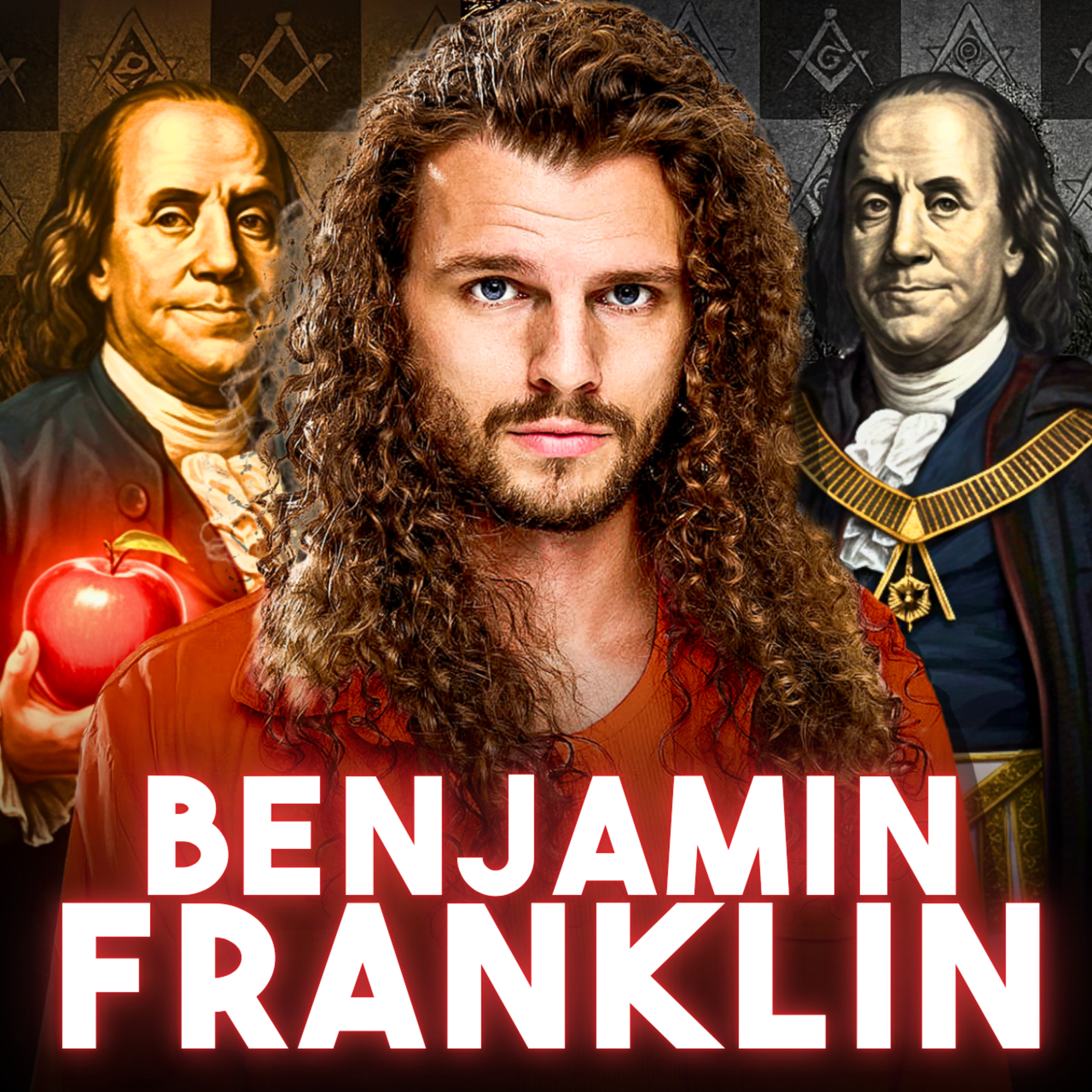
Benjamin Franklin, the genius inventor, the wise diplomat, the friendly face on the hundred dollar bill. He's the man we all know and love. But behind that image lies one of history's most mysterious figures. This is a man who created fake identities and influenced entire cities. Who operated spy networks across Europe. And a man who had human bones buried in his basement. Franklin spent his life reinventing himself, adapting to changing times and somehow always landing on the right side of history. But the more you learn about him, the more questions emerge. We're not here to talk about the Founding Fathers from your textbooks. We are diving into the mysteries, the secret societies, the contradictions and the questions that make Franklin one of the most enigmatic figures in American history. Everything you've ever wanted to know about the cryptic side of Benjamin Franklin. So without further ado, sit back, relax, and welcome to camp. Your sausage McMuffin with egg didn't change your receipt did. The sausage McMuffin with egg extra value meal includes a hash brown and a small coffee for just $5 only at McDonald's for a limited time. Prices and participation may vary.
- [01:18]
Commercial Announcer
Attention, law enforcement. You took an oath to protect and serve, to keep your family, your neighborhood safe. But in too many cities, dangerous illegals walk free as police are forced to stand down. Join ICE and help us catch the worst of the worst. Drug traffickers, gang members, predators. Join the mission to protect America. With bonuses up to $50,000 and generous benefits. Apply now join.ice.gov and fulfill your mission.
- [01:48]
Mark Gagnon
What's up, people? And welcome back to History Camp. My name is Mark Gagnon, and thank you so much for joining me in my tent, where every single week, we explore the most interesting, fascinating, and controversial stories throughout all of history ever. This is, once again my journey to understand everything that's ever happened. And I'm doing pretty good so far. I mean, almost 10 episodes in, and we're really chipping away at some stuff, you know? I mean, this is just a place where I sit in my tent and I look at, you know, weirdo history stuff and just absolutely, just nerd out. It's kind of the best. And as always, I'm not alone. I'm joined by some of my dearest, closest friends. Some people, I mean, these guys are brothers, you know what I mean? They sit in this tent all day and they just learn, right, Christos? I'm not David's brother. You guys are brothers, dude. You guys are Eskimo bros at the very least, right? He wishes. Oh, damn. All right, all right, all right, all right, guys. We don't have time because today we're talking about Ben Franklin. All right? You know about Ben Franklin, and no, not Thomas Edison, which I think sometimes people get them confused. And I want to set the record straight. They're different people. All right? Did you guys ever get them confused, or am I the only dummy that did Just you. All right, anyway, Ben Franklin, who is this guy? Great American leader, inventor, Just kind of a genius, brilliant dude altogether, but also was involved in spy agencies, secret societies, and has done some things in his life that are less than savory. And today we're getting into all of it. The controversial, dark history of Ben Franklin, but also the good stuff. We're gonna get a holistic view of this great American. So where do we start? 1706, this guy, Ben Franklin. But it really starts with his papa. Before Ben Franklin was even born, he was just. Just a sparkle in his mom's ball sack, or his dad. Whatever he was, it goes to his dad. All right? Josiah Franklin, who was a candle maker, who had already been married once before, split from that lady and then had kids with. Had kids with her, split from her, and then married again and had 10 more children. Imagine that. You have a bunch of kids, you have a wife, and you say, you know what? Time to run it back. Wife two, and pop out 10 kids. Ben was number 15 out of 17 kids total. It's a small village. I mean, legit. He's got a whole jury, basically, with some extras that can alternate in. And they're all living under one roof in Boston, Massachusetts. Now, Josiah originally wanted Ben to become, like, a minister, but the family couldn't afford to send him to school past age 10. So instead, at 12 years old, Ben Franklin became an apprentice to his older brother James, who ran a printing shop. This was supposed to be Ben's ticket to a decent, regular, simple life, but it turned into something far more interesting. You see, James Franklin wasn't just any old printer. He was running one of Boston's biggest newspapers. And he was always getting in trouble with the authorities for printing things that they didn't like. Now, Ben was supposed to be learning the printing trade, but what he really learned was how powerful words could be when they were actually put on a print. And he saw how his brother could influence public opinion and start conversations and, you know, make some friends and even more enemies with powerful people. Now, this is where Ben's story gets fascinating. In 1722, when he's just 16 years old, he starts pulling off one of the most audacious, I guess, you could say schemes in colonial American history. Boston had this newspaper called the New England Courant, and people were always writing letters to the editor and complaining about everything. Politics, religion, bread prices, you know, whatever was bothering him that week. So Ben decided to create his own letter writer. Except this one was fake. He invented a character called Silence Dogood, supposedly a middle aged widow who had opinions about everything happening in Boston. And Ben would write these letters and then secretly slip them under the newspaper office door at night, so when James would find them, he would think that they were from a real person and then publish them. Now, this Silence Do Good, would roast Harvard students for being brats and make fun of religious leaders for being hypocrites and basically call out every single person in Boston one by one. And. And the whole city became obsessed with the letters. People were talking about Silas Do Good at dinner parties, quoting her work. And it said that some men even started to consider marrying her. I mean, ultimate catfish. That would be fire. If you try to smash Silence Duga and all of a sudden Ben Franklin shows up, you're like, bam. Now, Ben had basically created Boston's first, like, influencer, but she didn't exist at all. He was just a 16 year old dude who was figuring out how to manipulate the entire city's conversation by writing these clever letters as a fake identity. And the scheme worked until Ben got a little too arrogant and he told his brother James that he'd been the one behind Silas Dogood's letters all along. And James was pissed. Not just because Ben had been lying, but because his little brother had proven he was a better writer and actually had more influence than James himself. So James did what any petty older brother could do. He couldn't just outright, you know, say, like, hey, my brother was the one that was writing all these things, because that would obviously, you know, invalidate his entire newspaper. So he just decided to make Ben's life miserable and straight up started beating Ben regularly and humiliating him in front of the customers. But Ben had learned something crucial from this little experiment. If he was smart enough, he could make people believe whatever he wanted them to believe. And if James thought he could control him through violence and intimidation, Ben had some bad News. Because in 1723, Ben broke his legal apprenticeship contract with his brother and ran away to Philadelphia. Now, breaking an apprenticeship contract, I'm sure you're thinking it's like, oh, it's like an internship. No, no, this was a huge deal. This is like a legal commitment, like, almost like a marriage in a way. It's like, I am committed to working for this person for this amount of time. And by running away, he was basically making himself like a fugitive. And he'd figured that his brother wouldn't want to, you know, deal with the embarrassment of publicly chasing him down. And if people asked why, then he would have to explain what was going on. And he was right. So Ben shows up in Philadelphia at 17 years old with basically no money, no connections, no plan, just, you know, a will to figure it out. And it's said that he bought three rolls for breakfast and ended up walking past the house of his future wife while carrying the bread under his arms. It sounds ridiculous, but Ben literally wrote that in his autobiography. He says, I was in my working dress, my best clothes, coming round by sea. I was dirty from being so long in the boat. My pockets were stuffed out with shirts and stockings, and I knew nobody nor where to look or for where to look for lodging. Fatigued with walking, rowing and the want of rest. I was hungry and my whole shock. My whole stock of cash consisted of Dutch dollar and about a shilling in copper. I went up the Market street as far as 4th street, passing by the door of the. Of Mr. Reed, my future wife's father, when she, standing at the door, saw me and thought I made, as I certainly did, a most awkward, ridiculous appearance. So there you go. Even Ben Franklin gets nervous around the ladies. You know, if you see a girl and, you know, you're like, damn, she thinks I'm a scrub. Could be your future wife. Take it from Ben. So what does he do? He decides to stick around Pennsylvania. And within months, he'd convinced the governor to send him to London to buy printing equipment. And. And the governor gave him some letters of recommendation and promised to fund the whole trip. I mean, pretty good, right? You go there with basically nothing. Be like, hey, look, I worked in a print shop. I can help you. Let's get some newspaper stuff. I can help sort of, you know, massage your political influence around, you know, Philly and at. Ben basically thought that he had hit the jackpot. Except when he arrived in London, he discovered that the letters were fake. And the governor had basically tricked him into just leaving the country and getting out of Philly. Pretty crazy, right? He got duped. Now, most people would have been devastated by this, but Ben saw this as just another opportunity. I think a good lesson from history, by the way. You know, really successful people, anytime something bad happens to them or something good happens to them, they just always think like, oh, this is good. Which I Think is actually a good little piece of wisdom here. Never think about how the universe is doing something to you. Think, how is the universe doing something for me? And that's what Ben did. He showed up in London after getting conned by the governor and said, you know what? This is great. I'm going to spend two years here and learn advanced printing techniques. And he studied all the latest technology and built connections with publishers and intellectuals. And when he returned to Philly, he didn't just have new skills, he had a comprehensive plan for domination. Now, Ben realized that this would make him dangerous in certain ways. Right? In the printing business, knowledge is more valuable than money. And every newspaper, pamphlet, business card that went through his shop was information and information about other people's business and what people are working on and different secrets. And this was an extremely valuable commodity, specifically in colonial America. So by 1729, he'd bought his own newspaper, and by 1732, under the pseudonym of Richard Saunders, he had published what was known as Poor Richard's Almanac, which became one of the most popular books in all of the colonies. But again, Ben isn't just building a media empire. He's also building an intelligence network. Now you can see how this pseudonym harkens back to, you know, Silence Dogood. And he saw that by kind of obscuring his identity, he could become anyone he needed to be. So now his printing shop became the place where politicians, merchants, community people, they would come to get their materials printed. And while they were there, he would chat with them. And anyone that was printing something wanted to be in the public eye in some capacity. So he knew that this would be valuable. And he also knew which politicians were potentially taking bribes in, which merchants were struggling financially, in which families had scandals, in which religious leaders, you know, weren't doing what they said they were supposed to be doing. And he filed it all away because he understood something that most people will never really figure out, that knowledge about other people is the ultimate power. And Franklin's real breakthrough came when he joined the Freemasons in the early 1730s. Now, again, people have controversial opinions about the Freemasons. My general philosophy is that the Freemasons aren't some, you know, like, group that is, you know, doing satanic worship, trying to, you know, like, take over the world government. It's basically a networking club or fraternity for super ambitious men who want to get ahead in life. It is the frat outside of college. And to be honest with you, most frats, like, most fraternities basically are like, proto, you Know, secret society, Freemasonic type organizations. So the Freemasons had members in every major city, and they helped each other with business deals and they created connections that, you know, could make or break careers. Right? Like if you think about this secret club where everyone's meeting all the time and they're all part of this brotherhood and, you know, they do some type of ritual to get in. It's like, oh, this person's got a print shop and this person's trying to be a politician, and this person's connected to the military. Let's all work together to put our interests first. So for someone like Ben Franklin, who understood that success came from knowing the right people, it was perfect. The Freemasons also gave Ben something he'd been craving his entire life. This was a. A communal status and a respect. Remember, this was a guy who grew up as number 15 of a candle maker's family. He's not born into wealth or prestige, but in the Freemason's background doesn't matter as much as intelligence or the ability to contribute to the group in some way or what you're able to do. Right? So Ben quickly rises through the ranks and becomes the leader of his local lodge in Pennsylvania in 1734. But more importantly, he started building relationships with Freemasons in other cities and other countries. I mean, all across the colonies. He's creating a master network. What's up, people? Let's take a break really quick because I want to talk to the fellas. Let me ask you something. Are you stuck? Do you feel like you're struggling with work or relationships or maybe your marriage or just feeling like you're not like the. The dude you want to be? You ever just, you know, thinking to yourself, like, man, I should be farther along. Right now I just get caught in these cycles where I just kind of lose self control. But, well, here's the thing that nobody likes to admit. It is possible that porn might be part of the problem. Yes, I know I said the P word. Now look, I don't want to be overly moralistic here, okay? But if you're someone that struggles with pornography and, you know, research has shown that regular porn users actually leaves men feeling more anxious and less connected and ironically, less satisfied. And then it creates a cycle that then you gotta be a little secretive about and you tell yourself, like, I'll quit. And then you come back to the same cycle and. And now you're in a trap. Well, that's where Relay comes in. Relay is a therapist backed app with actual clinicians designed to help men quit pornography and actually feel better and get control of their lives. And the difference with Relay is that you're not doing it alone. With Relay, you basically join a small group of guys that are kind of on the same road. They're sharing accountability and encouragement and actual tools to help when triggers hit and you're feeling, you know, anxious or alone. Relay helps you feel a little more connected. And you can stay totally anonymous, but for the first time, you're not gonna be in this battle alone. I mean, think of it like a gym membership, but with your brain and for your habits and for the future of your relationship, maybe. Right? Thousands of men and their families are already seeing some change because the men in their lives are a little bit less stuck. So if you're feeling stuck, check out Relay. Don't wait another month to be the man that you want to be today. And you can break the cycle with relay. So go ahead and use the code Gagnon G a g N o n for for a seven day free trial. If you feel like this thing has just got a grip on you that you're not able to let go, that is joinrelay J o I n relay R e L a y app camp and use the code Gagnon for a seven day free trial. Don't put it off. Be the man you're supposed to be today. Today. Now let's get back to the Show.
- [15:36]
Commercial Announcer
I'm Christian McCaffrey, pro running back, and Abercrombie is an official fashion partner of the NFL. I'm not kidding when I say NFL by Abercrombie. Broke the Internet last year and I think this season's lineup is even cooler. And so does my wife who keeps stealing all my hoodies. Stay fit for the season and Abercrombie's newest arrivals. Shop NFL by Abercrombie in the app, online and in store. ABC Shifting Gears is back.
- [16:07]
Mark Gagnon
He has arisen.
- [16:08]
Commercial Announcer
Tim Allen and Kat Dennings return in television's number one new comedy, what what? With a star studded premiere including Jenna Elfman, Nancy Travis and. Hey, buddy. A big home improvement reunion.
- [16:24]
Mark Gagnon
Welcome. Oh, boy, that guy's a tool.
- [16:27]
Commercial Announcer
Shifting Gears season premiere Wednesday, 8, 7 Central on ABC and stream on Hulu.
- [16:34]
Mark Gagnon
So by the 1740s, Ben Franklin had become incredibly wealthy and successful. His printing empire was making legit money and he basically retired from the day to day business ops. And he was free to pursue whatever interested him. Most people would have bought like a nice house and just kind of chilled out, but Franklin was kind of obsessed with power. And so he now takes up a scientific career in 1742 when he invents the Franklin stove, which is basically a more efficient, like, fireplace that heated rooms better and used less wood. And it was practical, it was useful, and it made people's lives easier. So he could have just kind of patented it and made another fortune, but instead, he decides to give the design away for free, Claiming that he just wants to help community. Now, it sounds noble, But a lot of people speculate that Franklin was actually being strategic here by giving away the stove design, he positions himself as a selfless genius that just cares about the people and wants to help people more than he cares about making money. And it's a great public relations move that really enhances his reputation in the community While costing him relatively little because he already was rich from this printing empire. Around the same time, he also invents the bifocals because he's tired of switching between different pairs of glasses. Again, practical and useful, but also reveals something interesting about his personality. He hates being inconvenienced. I mean, he's basically like Larry David in a way, right? Like, just a little like, taking off your glasses. He's like, this is the worst thing in the world. I'd rather just create glasses that I could don't ever have to take off. I can see close, I can see far, all in the same glasses. So if something bothered him, he would just figure out a way to make it work. And his real breakthrough came when he became fascinated with electricity. Now, in the 1740s, electricity was kind of like a party trick. People didn't know how it could be applied or how to really make it work. And people knew that it existed, and they knew kind of where it came from, but they didn't really understand what you could do with it. You know, scientists would rub pieces of amber with cloth to create, like, static electricity, and they could use it to make sparks or shock people. But Franklin saw something different here. He saw this raw potential, A force of nature that could be studied and understood and potentially even controlled. And then he begins rigorous experimentation to uncover the properties of this electricity. And along the way, he found some unconventional methods. One of the strangest scientific experiments Involved electrocuting animals, Most notably turkeys. So Franklin wrote in a 1750 letter to botanist Peter Collinson that he had been using electricity to kill turkeys. Partially his curiosity, but partially he believed that basically, quote, the birds killed in this manner eat uncommonly tender, which is an actual quote from Ben to this guy Peter. But Franklin didn't just shock turkeys with his method, he also shocked himself. He was using two large laden jars to electrocute a turkey, but accidentally shocked himself so violently that he actually lost feeling in his arms and his neck for a few days after that. And then on Christmas of 1750, he wrote a letter to his brother James describing an incident saying, two nights ago, being about to kill a turkey by the shock from two large glass jars containing as much electrical fire as 40 common phials, I inadvertently took the whole throw, my own arms and body. The flash was very great and the crack as loud as a pistol. I had a numbness in my arms and the back of my neck, which continued till the next morning, but eventually wore off. Nothing remains now of this shock but a soreness in my breast. And I'm ashamed to have been guilty of so notorious a blunder. And then comes the moment that we all know and love old Ben Franklin. For 1752, the kite experiment, which made Franklin internationally famous. The story that everyone basically knows is that Franklin went outside and flew a kite during a thunderstorm with a key attached to it to prove that lightning was the actual electricity that people were seeing and shocking each other with. What people don't usually mention is how insanely dangerous this was and how it really kind of demonstrated Franklin's willingness to, like, risk his own life in a lot of ways to prove a point. He wanted to determine whether the electricity produced in the sky was the same kind that he was able to produce in his lab. Were they fundamentally the same thing? Now, the lightning didn't actually strike his kite, but if it did, we'd probably be reading, you know, Franklin's gravestone. But it did cause an electrical charge and ultimately proved him right. Now, this kite experiment made Franklin famous throughout Europe and America, and scientists and political leaders all wanted to meet the man who had, like, tamed lightning. But while Franklin was basking in this international claim for his scientific genius, he was also engaged in activities that kind of contradicted his public image as, you know, a champion of human freedom and dignity. Now, unfortunately, historical records confirm that Franklin owned slaves, at least six individuals. And these individuals worked in his household and his printing business in Philadelphia. And when he no longer needed their labor, he would sometimes sell them. Now, this reality contrasts sharply with his public images, like a defender of liberty and natural rights and altruism to uplift humanity. And while he's publishing essays criticizing British rule and sort of championing this colonial freedom, he's also benefiting and participating from this institution of Slavery. And now, this contradiction was not unique to Franklin, right? There's, you know, many people in this era that are talking about, you know, all men are created equal, but then also protecting, you know, the institution of slavery. But in the interest of being holistic and, you know, thorough in our examination of historical figures, it is an important part of his legacy. And in addition to this, in 1751, he did publish an essay titled Observations concerning the Increase of Mankind Peopling of Countries. And in it, he makes several comments about race and immigration that really reflect the racial attitudes at the time and in some cases, kind of go beyond them. He wrote about what he preferred, you know, the lovely white and red people of Europe and expressed concerns about black people and became more, you know, populous in the colonies. And he also criticized a lot of the, you know, German immigrants that were coming into Pennsylvania. And his comments weren't, you know, just personal opinions, but it really showed that he was thinking about race and culture on a bigger scale. And he wanted the English American colonies to stay white and Protestant and generally English speaking. Now, again, I think this is important to bring up because when looking at historical figures, it's important to look at what they believed and what people at the time believed, no matter how abhorrent it is. Now, in 1757, Franklin packed his bags and headed to London on what was supposed to be kind of like a short diplomatic mission. You see, at the time, he was serving as the agent for the Pennsylvania assembly, basically representing the colony in an ongoing dispute with the Penn family. Now, the Penn family, as you know, were the wealthy proprietors who technically owned Pennsylvania under the royal charter from England. Now, this conflict centered around taxes and land rights, as you can imagine, is a story with land know, the American Revolution. The Pennsylvania assembly wanted to tax the vast estates owned by the Penns just like everyone else's property, right? Have you got property in Pennsylvania, you gotta get taxed. But the Penn family claimed that they were exempt because, hey, we own the whole shit. Now, Franklin was sent to argue that this was unfair and that the proprietors should contribute to the colony's defenses and the expenses that the colony has, especially with, you know, tensions rising on the frontier during the French and Indian War. It seemed like a pretty straightforward assignment, right? Go to England, present Pennsylvania's case to the crown, get a ruling, and come home. Pretty simple, right? But as you can imagine, nothing about 18th century imperial politics was simple. And Franklin would end up staying in London for nearly 18 years. He went there on this little diplomatic assignment and stayed for 18 years. Got you for 18 years. Find out one of those kids wasn't his. How does the song go anyway? And, you know, he becomes involved in British politics and, like, science and kind of just gets wrapped up in the way of life in London. And while he was supposed to be defending Pennsylvania, he started to really get a firsthand look at how little respect the colonies were actually given by the British elite. And realized that, you know, this was going to really reshape his loyalties over time. So he set up a house at 36 Craven Street, a four story little townhouse in one of London's most fashionable neighborhoods. And he rented rooms from a widow named Margaret Stevenson. And he quickly became like a member of the family. He was especially close to Margaret's daughter Polly, writing her letters whenever one of them traveled, almost like she was his own daughter. And on the surface, Franklin was living the life of a respected colonial representative. But something strange was happening during these London years. You see, his political views were shifting in ways that seemed too convenient. In some ways, on the surface, he was this respected colonial representative, hosting dinners and going to lectures and mingling with the intellectual elite of London. He was accepted into the Royal Society and continued his scientific work and even considered joining the British government. At one point, he applied for posts within the empire, possibly even hoping to get like a governorship for himself, basically, or like a top position for even his son William. And when he arrived, Franklin was still a loyal British subject, right? All the people in the colonies were still British. He believed in the empire and he wanted to make it work. But that belief began to change. In 1765, Parliament passed the Stamp Act. Now, this sparked massive protests across all the colonies. Franklin had stayed quiet at first, but the backlash pushed him to speak out. And by early 1766, he testified before Parliament, condemning the act and helped get it repealed. And by the late 1760s, his frustrations with Britain and with the crown was continuing to build. And he tried to mediate between both sides. But privately, he was tired of the arrogance that he saw from British politicians and from the elites. And he began to write anonymous essays, as we know Ben Franklin loves to do, under the name Homespun, and criticized Parliament's treatment of the colonies and warning about the dangers of this political overreach. Then, in 1773, three years before the revolution officially begins, Franklin lit a fuse with what would become known as the Hutchinson Letters affair. Basically, he quietly leaked private letters from Massachusetts governor Thomas Hutchinson that revealed a desire for titer British control over the colonies and the leak caused a massive uproar in Boston and of course, fury in London that this governor had his private correspondence leaked. Franklin was summoned before the Privy Council where he publicly was berated and mocked and ultimately stripped of his postmaster position. It was a deliberate humiliation and it broke any illusions he had left about potentially reconciling with the English. And after nearly two decades in London, Franklin had seen enough. He said, you know what? This is whack. And when he finally left in March 1775, just weeks before the Revolutionary War broke out, he wasn't trying to fix the empire anymore. He was preparing to dismantle it. Emergency broadcast we have a brand new channel and that is Mark gagged on comedy. If you don't know, I've been a stand up comedian for almost 10 years now and it is my true passion. I love doing it and every time I go on the road after I finish my show, I like to hear from the audience. We pass out note cards and people submit topics. And me and sometimes my buddy or sometimes just me alone, we will pick the topics out. And it is a segment that we call you ask for this and they are crazy. The topics go across the board. Current events do crazy stories and we dive in all of them. And if you are interested in checking out the episodes it would really help me out and help out the the channel, you can check it out in the description. It is Markag on comedy on YouTube and I'm so excited to be posting more standup. I really hope you guys enjoy. Now mint is still 15amonth for premium wireless and if you haven't made the switch yet, here are 15 reasons why you should. 1. It's $15 a month. 2. Seriously, it's $15 a month. 3, no big contracts. 4, I use it. 5. My mom used to say, are you.
- [28:59]
Commercial Announcer
Are you playing me off?
- [29:00]
Mark Gagnon
That's what's happening, right? Okay, give it a try. @mintmobile.com Switch upfront payment of $45 for three month plan. $15 per month equivalent required. New customer offer first three months only, then full price plan options available, taxes and fees extra. See mintmobile.com before Benjamin Franklin actually goes back to, you know, the Americas and starts his fight for independence, there is an interesting story about what was literally buried underneath his feet while he was in London in 1998, more than 200 years after Ben Franklin left Craven street, workers were renovating the house to turn it into a museum. And they were digging into the basement when they made a discovery that changed everyone's perception about Ben Franklin. Sticking out of the dirt was a human thigh bone. And when they kept digging, they found more bones and more and more. And by the time the excavation was finished, they'd uncovered potentially 1200 or more bone fragments belonging to at least 28 different people, including six children. And these weren't ancient remains from some long forgotten burial ground. Carbon dating showed the bones were from the exact period when Franklin was living in the house. Now, what's going on with this? The bones showed some evidence of medical dissection. Femurs have been cut cleanly, probably to demonstrate amputation techniques. And skulls had circular holes drilled into them. There were even cut marks from surgical instruments on some of the skeletal remains. And now this is where things get complicated. You see, historians have a neat explanation for this. They say that Franklin's housemate, William Hewson, who married Polly Stevenson in 1770, was running an anatomy school from his house. Hewson was a legit scientist who studied blood circulation and the lymphatic system. And he would get cadavers for his research and teaching, and, you know, he was getting them through London's potential underground network of grave robbers through some legitimate sources as well. And according to the official story, Franklin probably knew what Hewson was doing, but didn't participate directly. Right. It's pretty good. Historians obviously show Franklin as, you know, just a guy that was living in the house and saw some scientific research and let it be. But some people take issue. You see, this is Ben Franklin, one of the sharpest, most observant, curious minds of his era. And he noticed everything and he remembered everything, and he would use this information as a weapon, like we've seen before. So some people suspect that it was possible that Ben Franklin knew about this and still sort of continued to cover it up, or at least not discuss it. Now, the situation becomes even weirder when you consider what else was happening at Franklin's house during that period of time. British intelligence had the entire place under surveillance. They potentially knew that Franklin was writing these anonymous articles and suspected that he was in contact with colonial radicals. So they were trying to figure out exactly what he was up to. Franklin's house was basically, you know, by the, you know, 18th century standards, bugged. And British agents were watching who came and who went and intercepted his mail and tried to gather intelligence about his activities. And Franklin knew that this was happening. He even joked about it in letters to his friends, saying, even if I suspected my valet to be a spy, as he probably is, I think I should not discharge him for that. If in other respects, I'd liked him. Despite being berated by the British, some historians believe that Franklin was playing maybe an even more dangerous game. Some people believe that he may have been operating as a double agent, feeding information to both the British and to the Americans, depending on who served his interest best. I mean, think about it. He's in the perfect spot to play both sides. He had the British elite, you know, basically super well connected, thanks to his work in London, he was a part of all the right circles and back into the Americas. He's tight with all the big names there and is a part of the Freemasons. The guy is kind of like the perfect conduit to kind of play both sides. Now, again, Franklin was also a master of, you know, information as well as disinformation. Right, The Silence Dogood letters. He had proven earlier that he could create these identities and spread information when it suited his purposes. So in the 1760s and 1770s, it's potentially possible that he was doing the same thing, but on an international scale. You see, some historians suspect that Franklin was just trying to be prudent, specifically in the early years of his, you know, London tenure. You see, if the British came out on top and they crushed any type of colonial rebellion, he could point to two decades of loyal service in London and be like, look, I'm a proud British citizen and I love the king. Whereas if the colonies win, he had a trail of anonymous writings and public statements defending their rights. And whether by design or instinct, some people believe that Franklin was making sure that he was going to be on the right side of history, no matter what happened. Now, Franklin's years in London show us how comfy he was living in the gray zone. I mean, the guy literally had bones in his basement and cadavers under his feet and never really said a word. But by the time he left in 1776, with war on the horizon, he wasn't the same dude who showed up 18 years earlier. And it seemed like he knew exactly what he wanted to do. Now, by October 1776, Franklin is nearly 70 years old. And most men his age would be retired or trying to spend time with their grandkids or write a memoir. But Franklin was about to embark on the most dangerous mission of his life. You see, the situation in America at this point was desperate. George Washington's Continental army was getting demolished by the British. They'd been kicked out of New York. They're running out of ammo, and the soldiers are literally walking around barefoot in the snow. And France was America's only realistic hope for survival. You see, the French hated the British, and some of them still do. They had been fighting wars against each other for centuries, and France was still bitter about losing the Seven Years War in 1763. So Benjamin Franklin's thinking, if I can convince the French that supporting America hurts Britain, then maybe they'd be willing to send money and weapons and troops to help our revolution. But here's the catch. France wasn't about to risk another expensive war and bleed out potentially more money to help some rebel group in America. And the French government had already secretly sent some applies to America. But they wanted to see proof that the Americans could actually win before committing to a full alliance. Now Franklin understood something that most diplomats in his era didn't fully grasp. This wasn't going to be won through formal negotiations and treaties and doing everything above board. This was going to require playing a little dirty and trying to pull out every stop that he'd, you know, gathered in his entire career as a printer and quasi intelligence gatherer. You see, the journey to France was risky. Franklin was traveling on a ship through waters controlled by the British navy, carrying credentials that essentially marked him as a traitor to the British crown. If the British captured him, he would have been taken to London, tried for treason, and executed basically immediately. Right. Remember, by 1776, he is a sworn ally of the colonists and the rebels. But Franklin had calculated the risk and said that it was worth it because he knew that this mission was America's last chance. The moment Franklin stepped off the boat in France, he was the most washed man in Europe. The British caught wind that he was there, and they were trying to spy on him and figure out exactly what he was up to. And the French were on his case because they wanted to figure out if, you know, this old America was worth supporting or just wasting their time. And he knew that he was being watched, and instead of being intimidated by it, he turned it into his greatest weapon. Rather than trying to hide or operate like a spy, Franklin made himself the most visible man in France. He attended every salon and dinner party and scientific meeting he could find. He showed up wearing his simple brown coat and his famous fur hat and deliberately played the role of this humble American philosopher surrounded by these fancy French aristocrats. But this wasn't just Franklin being a tourist. He was using a form of, like, psychological warfare. He was showing the French that Americans wouldn't, you know, weren't just backwoods farmers throwing rocks at the British. They were sophisticated and intelligent and they deserved respect. And more importantly, support. At the same time, he was sending a clear message to the British. Like, look at me, look how comfortable I am. Come get it. Look at how many of these French friends I'm making. Look at how many, you know, influential parties I'm going to. You guys should be a little worried. So Franklin's approach, as we know now, was brilliant because it made him seem harmless, while also making him seem pretty dangerous. The French aristocrats would invite him to dinner parties because he's charming and he's famous, not realizing that he's gathering intelligence about the French and French politics and their military capabilities. The British spies would watch him at these social events and report back that Franklin was just enjoying himself, not understanding that every conversation was an opportunity for him to advance those American interests. Meanwhile, behind this public facade, Franklin was building what may be the most chaotic and effective spy network ever. I mean, he had agents across Europe, from London to Vienna to Madrid, all gathering intelligence and reporting back to his headquarters in Paris. This is a village just outside of Paris. Now, these agents were essentially tracking, like British ships and their movements through European ports and monitored troop deployments and eave drops on different meetings and who's talking to who. And Franklin's network was doing everything that a modern intelligence agency would do today. They're intercepting enemy communications and potentially bribing officials for some inside info and running disinformation campaigns designed to confuse the British and even conducted what we would kind of now call covert operations to disrupt British activities in Europe. Basically, Franklin had kind of developed his own personal CIA, except it was being run out of a French suburbs by, you know, like a 70 year old guy and bifocals. And here's where the story gets even more fascinating. You see, his spy network had a problem. Franklin was pretty bad at basic security. Like he would hold meetings like in public cafes and would leave classified documents just like around his office. And, and he trusted people a lot and was potentially even too trusting with some of America's biggest secrets. And the British intelligence service took full advantage of this. They placed agents throughout Franklin's organization, actually sent their own spies to basically become members, including people who were incredibly close to him. The most important British spy was Edward Bancroft, who literally became Franklin's personal secretary. Now, Bancroft was smart, charming. He was actually born in Massachusetts. So Franklin had no reason to doubt him. And more importantly, he had access to everything. All the documents, the meetings, every secret plan. And for years, Bancroft was copying Franklin's communications and sending reports back to London using invisible Ink in secret drop locations around Paris. The British government paid Bancroft £1,000 a year, which is around $200,000 today. And of course, there's, you know, a key question. Did Franklin know what Bancroft was doing? Some historians will argue that Franklin was naive and overly trusting and genuinely didn't realize that his closest advisor, literally his secretary, was a British spy. But other people dispute this. You see, this is a guy who'd spent his entire life gathering information about other people. He'd proven that he could kind of detect deception and manipulation from a young age. And he was successful and operated in the shadowy world of London politics for 18 years and, you know, colonial American politics before that. So do we really believe that Franklin just let this happen and had someone so close to him that was completely disloyal? The other possibility is, you know, more interesting. Franklin knew exactly what Bancroft was doing and was actually using him to feed false information to the British. Think about that from Franklin's perspective. You get this guy that you know is a spy, but you don't let him know that. And then you bring him in and now you have a direct channel to misinform the British intelligence service. You could basically control what information the British received and would keep secret files to himself and then let his secretary, the spy, get all the information that he wanted Britain to know. Now, this would mean, if this is true, that he's playing a game so sophisticated that he was using British spies against Britain itself. I mean, it's like beyond like 5D chess. Now. It's difficult to know if this is actually the case. And his personal life in Paris wasn't just busy, it was infamous, right? He's negotiating these alliances and he's playing diplomat, and he's also now just like a full blown celebrity in French society. And he's going to all these dinners and stuff. And it wasn't just the aristocrats that loved him. He actually developed close relationships with several French women, specifically Madame Brion and Madame Helvetus. And his letters to them weren't just friendly, they were pretty flirty. To Madame Brion, he once wrote, Saturday evening, I shall stay with you until you long for my departure. And I shall know that the time to leave has arrived when you will refuse me a little kiss. Not that romantic. I mean, maybe it was a different time. I feel like Riz back in the day was probably a little different. Sounds like a simple. It just seems like a little like, yo, I'm coming over and I'm not leaving until you kick me out. Maybe that's the energy, which is, like, a little cooler. Guess I'll know when it's time to leave. When you refuse to give me a kiss, I'm like, I mean, that's consent. But also, when you look like Benjamin Franklin, it's a little rough. Yeah, but he's. He's loaded, though. He's also a spy. Like, you know, ladies like that. But. But, I mean, it's a little. I mean, he is a. He is a woke king, though. If he's just like, yo, I'll leave when you don't kiss me. It's like, yeah, consent, you know? I mean, that's sick as hell. Brion would call him Mon Papa, meaning, my dear Papa. She even responded to him by saying, no, mon cher Papa, your visits have never caused me any trouble. Our hearts will be neither more or less pure. We shall shut the mouths of evil speakers. Damn. And then his letters to this other woman, Madame Helvetius, took a different tone. A little more poetic, but still flirtatious. You see, she was the widow of a famous French philosopher, and Franklin was, by all accounts, in love with her. He even proposed to her, but she turned him down. Politely, but, you know, pretty firm. So Franklin did what only Franklin would do. He wrote a satirical letter from the afterlife. Now, this is an actual piece known as the Elysian Fields. And he basically imagines himself in heaven meeting the ghost of Madame Helvetius's late husband, this French philosopher. And in it, the two men argue about who should be with her for eternity. Franklin claims that he's a better match and even brags that he'd tamed her little dog, which is not a euphemism. She actually had a small dog. And then the whole thing is just gets even weirder. Franklin's social activities weren't just about having fun. Right? They're part of the intelligence op. Every party, every romantic relationship is just a potential source of secrets. I mean, the guy is an unbelievable social navigator. And the rumors about Franklin's activities in Paris get even crazier because some people claim that he is a part of the Hellfire Club. Now, if you don't know what this is, this is a secret society known for some occult practices. Now, let me just say up front, the Hellfire Club connections are hard to prove definitively, but they're not impossible. You see, Franklin had been involved with similar groups in London. He'd always attracted, you know, been attracted to different secret societies, like the Freemasons in America. He had connections to get invited to These exclusive gatherings in Paris. What we do know for certain is that Franklin's Freemason connections became incredibly important while he was in France. The French Masonic lodges were again, like an America filled with aristocrats and military officers and political leaders that could help or potentially hurt America's cause. And Franklin used these connections to navigate these diplomatic channels and arrange private meetings with these influential people. But his involvement with the Freemasons also raised questions about his true loyalties. You see, Franklin was simultaneously building relationships with the French Masons who, many of them supported America, and some British Masons who obviously opposed the revolution, and then even Prussian Masons who were actually playing their own political game altogether. It's like Franklin was operating in, like, multiple different identities, all at different times to kind of get whatever information Franklin was trying to pull. He was an American patriot and a French ally, and then a British subject and then a Masonic brother, and somehow was able to make all these relationships work at any given time without contradicting each other. So by 1778, Franklin's efforts in France were actually paying off. The French signed the Treaty of alliance with America, basically providing military and financial support, and ultimately made American independence possible. Franklin's time in France would prove that he was willing to use any means necessary to achieve his goals and ultimately the goals of this country he was now trying to represent, including tactics that would make, you know, modern intelligence agencies proud. He'd operated spy networks and manipulated governments and potentially, you know, had a menage trois with some ladies. But he also demonstrated that there was also no line that he wouldn't cross to not serve his purpose. And his next challenge would be to test those boundaries even further when his own family becomes the enemy. What's up guys? I'm on the road. I would love to see you guys there. Obviously, if you don't know, I'm a stand up comedian and stand up comedy is my passion. It's the thing I love to do. And seeing you guys all come out to the shows truly makes my life. I hang out after the show and say what's up to everybody. So if you want to come through, check out the show, say what's up to me. It would mean the world. You can see me at all these dates and more on my website, markagnon live.com and I'll see you guys on the road.
- [46:31]
Commercial Announcer
It's pro savings days at Lowe's. Get up to 35% off select major appliances and save an additional $1,000 when you buy four select LD G major appliances plus get a free Dewalt 20 volt max 5amp hour battery. When you buy a select Dewalt 20 volt max tool, get the job done for less At Lowe's, we help you Save. Valid through 926. Selection varies by location while supplies last. See associate or lowe's.com for more details and qualifying items.
- [46:59]
Mark Gagnon
So to backtrack a little bit, we're going to go back to 1762. Ben Franklin pulled off one of the greatest political operations ever when he managed to get his illegitimate son William appointed as the royal governor of New Jersey. Now, this wasn't just any political appointment. This is one of the most prestigious positions in colonial America. And Franklin used every connection and favor and manipulation technique he could to get this secured for his son. Now, William Franklin was born around 1730 as a result of an affair that Franklin had as a young man. Franklin never publicly identified William's mother, and he raised the boy as his own without ever officially acknowledging these circumstances. By all accounts, Franklin was a devoted father to William, and he brought him to London during his diplomatic missions and introduced him to some important people and paid for his education and basically molded him for a career in politics. And getting William appointed as the royal governor required Franklin to call in every favor that he had with the British officials. He lobbied parliament and charmed the aristocrats and essentially spent years building this political capital that was necessary to secure this appointment. And it was a massive investment of time and energy and just really demonstrated how much Franklin cared about his son's future as well as his own family's legacy. And William was actually good at the job. He served as New Jersey's royal governor for over a decade, from 1763 to 1776. He was popular with the colonists and effectively was managing this colonial legislature and balanced the competing interests of London as well as the local communities. And by the early 1770s, William had built his own political network and established himself as, you know, one of the most successful royal governors in the American colonies. But then the relationship between Britain and the American colonies started to fall apart. And as things get worse between the colonies and Britain, Franklin and his son ended up on opposite sides. Franklin started supporting the colony's push for independence, as we know, while William actually stayed loyal to the British. And this wasn't just a political argument. This was a deep split about what kind of future they wanted for America and kind of where they saw themselves in it. The first big break in their relationship happened in 1774, when Franklin was embarrassed by the British officials in London. Remember the story? He got his hands on the private letters from the Massachusetts governor and then shared them with the colonial leaders, which caused this huge scandal. And then Britain found out that Franklin was behind it, and they basically did this public hearing and called him a thief and a traitor, and it humiliated him in front of the entire Parliament. Now, William Franklin watched as his father got torn apart by the British. And you'd think that this would make William side of the colonies, but it actually did the opposite. He believed that his father was wrong and that what he did was immoral and basically went against the British authority. And it actually made him more loyal to the Crown. He saw what they did to his dad and he was like, they're never going to do that to me. I'm going to side with them and I'm going to do what's right by the British. I'm never going to do what my dad did. So by 1775, Franklin got back to America from London and he and his son were not really talking. His son was pretty pissed. And Franklin was now one of the loudest voices pushing for independence, while William is still working as the royal governor chosen by the King to lead New Jersey. It was like having, like, you know, the head of the FBI and the leader of, like, a, you know, a crime family, like a part of the same family. It's crazy. And so the breaking point comes in early 1776, the Continental Congress was getting ready to declare independence, and they needed to shut down any royal governors who might fight back, because, again, these governors of these different colonies are technically British citizens and British loyalists. And then we have William Franklin, and he's not just another loyalist. He's the son of one of the most famous revolutionaries in America. So this makes his loyalty to Britain not just awkward, but it's dangerous to the entire revolution. So Ben Franklin is faced with a choice. Do I stand by my son and protect my son, or do I stand by my revolution? And he chose the latter. In June of 1776, just weeks before the Declaration of Independence was signed, Franklin supported the decision to have his own son arrested. And this wasn't just like a little house arrest or like, protective custody. He's seized by armed men, stripped of his office, and thrown into a real prison. I mean, think about that. Like, Franklin spent years building William's career, getting him appointed to one of the most prestigious positions in colonial America. And then he publicly supported having his son get arrested. William Franklin would end up spending the next two years locked up in these rough conditions. And he was moved around to different jails, including one in Connecticut where he was just treated kind of like shit. Some suggest he was treated even worse because of his connections to, you know, basically like American royalty. And they saw him as, you know, going against his own father. The food was terrible, there wasn't enough heat, and medical care was basically non existent. And no one could really tell him what would happen next. On top of all that, the prisons are full of violence. I mean, people are fighting each other and getting killed all the time by other prisoners or guards. And during this whole period, Franklin never visited his son, never wrote letters to check on his condition, Never used his political influence to, you know, better the treatment for his child. He is one of the most powerful men in America and he could have done something, but he chose not to. And other families managed to deal with these political differences. I mean, John Adams still got along with relatives who stayed loyal to the British, and George Washington kept in touch with family members who supported the crown. Even Thomas Jefferson didn't fully cut off loyalist relatives. But Ben Franklin, my man, stood on business. He said, nah, all that. He acted like his son didn't exist. And to him, William was already dead. So in 1778, William Franklin was finally let go in a prisoner swap. But by then, his health was wrecked and his career is over. So he ends up moving to London, where he spends the rest of his life basically in exile, because, again, this guy's from Massachusetts. He's an American and colonial, but considered himself a British citizen. And the British gave him a small pension, but it wasn't nearly enough to keep up the life that he once had as a royal governor. And after the war ended in 1793, William tried to patch things up with his father. He sent letters asking for forgiveness and tried to make peace. And he admitted that they'd end up on different sides. And he hoped that they could move past the politics and rebuild their relationship and their, you know, bond as father and son. And Ben Franklin, he took him back and said, you know what? I'm sorry. Psych. Ben Franklin basically said that the relationship was done, that his child was dead to him, and that William had made his choice during the war and that there was no going back. In Franklin's letter to his son, he said, quote, nothing has ever hurt me so much and affected me with such keen sensations as to find myself deserted in my old age by my only son. And not only deserted, but to find him taking up arms against me in a cause wherein my good fame, fortune and life were all at stake. And he ends the letter saying, I was not only your father, but your friend. You have forfeited both titles. Damn, Ben Franklin is a tough motherf. That's crazy, dude. I mean, Franklin refused to see William when he was in London, made it clear that as far as he was concerned, he had no son. No son at all. And this isn't just politics. Franklin stayed in touch with other people who, you know, stayed loyal to Britain during the war, and he was able to move on with them in some ways. But with William, it's different. Franklin couldn't let it go. He seemed to take his son's loyalty to the crown as like a personal betrayal, something that he just couldn't get past. And the financial consequences for William were devastating. Franklin was extremely wealthy by the time that he died in 1790 and left William with basically nothing. He actually stated in his will that it's because of his attachment to the British government. And while Franklin left substantial inheritances to his daughter Sally and to his grandchildren, William received only some worthless land in Nova Scotia and some, you know, a few personal items here and there. And what makes Franklin's treatment of William stand out is how it went against, you know, some of the things that he would write about in his writings, especially in Poor Richard's Almanac. He talked about the importance of family and loyalty and forgiveness. But when it came time to, you know, protect his political reputation and his status as a revolutionary and his life in some regards, Franklin said, you know what? I'm choosing my legacy over my kid. Revolution over family forever. US Of A. Over my own blood. I mean, that's fire. And I mean, not for. Not for William, I mean, poor guy, but for me as an American. Dude. Thank you. Shout out Ben Franklin. Right guy, sick as hell. I mean, minus the slave part. Look, it's complicated, okay? Look, it doesn't matter. Franklin's treatment of his own son showed how he could be cold and calculated and, you know, how important his legacy was to him. And for all the years that he spent talking about these family values, you know, his son crossed a line that got in the way of his political goals. And in his final years, it became clear that this kind of ruthless calculation isn't a one time thing. This is his entire life. Now, when Franklin returned to Philly From France in 1785, he was 79 years old, not in the best health. And most people expected him to just retire, maybe write like a memoir and just ride off into the great beyond. Instead, Franklin made one of the most dramatic political Transformations of his entire career. He became an abolitionist. This wasn't some slow personal shift, like a change of heart. He literally jumped into the anti slavery movement with the same drive and strategy that he brought to everything else. Just months after getting back to America, he was made president of the Pennsylvania Society for Promoting the Abolition of Slavery, one of the first anti slavery groups in the country. Franklin didn't just take on this role for show. He got to work right away, and he started growing the group's influence and brought in new members and used his political clout to basically push the whole thing forward. And he wrote these powerful letters calling slavery both morally wrong and bad for the economy. He pushed other leaders to back this emancipation and even sent formal petitions to Congress urging the federal government to step in and take a stand. Now, again, historians debate where this came from. Right? Like, is this like a man that fully sees the era of his racist ways when he was a kid and says, you know what, I need to do the right thing? Or is this a man later on in his life basically trying to patch up his legacy and his public Persona and kind of sensing what's on the horizon? Some people seem to acknowledge that maybe he had understood the contradictions in his life and took a clear stand. But the timing of the conversion raises some questions about his motivation. Right. He owned slaves for decades. In 1751, he literally wrote an essay about keeping America white. And then during the early years of the Revolution, he was serving as one of America's most prominent advocates for liberty and independence while he still owned enslaved people. And it wasn't until the late 1770s that he actually started gradually freeing his slaves. And then, even then, it was a slow process that took some years. So what was it that made him go from slave owner to being one of the first and most prominent abolitionists in American history? By the 1780s, some attitudes towards slavery in America were starting to change, especially in places like Pennsylvania and a lot of other northern states. The Revolutionary War had exposed a huge moral contradiction. How could they demand freedom from Britain while keeping other people in their own country in chains? Right. Slavery, up until this point, was a British institution. It was a British colony that was doing this, and they were sending money back to the crown. But now America is its own country fighting for independence and liberty for all. How can we keep people enslaved? Now you have religious groups like the Quakers who are speaking out loudly against slavery, and Enlightenment thinkers who are arguing that slavery goes against the very ideas of human rights and natural law, all the stuff that the revolution was built on, and more importantly, slavery was mattering less and less economically to the north, specifically Pennsylvania. And the north was shifting towards manufacturing and industrializing and trade. And they didn't rely on slave labor, you know, as much as the south did. And the south at the same time, is doubling down, trying to fuel its agricultural economy. So this growing split between north and the south made slavery not just a moral issue, but also a political and an economic issue as well. And you can see basically from the American revolution, you have this polarization that's happening within this new country that makes, you know, the American civil war basically inevitable. Now, Franklin was a master at reading political trends and understanding where things are going right. You can see how when he was in London as possible, he was kind of playing both sides and he was keeping this public Persona, but then the private Persona. And so some people suggest that over his career, he's able to kind of shift and read patterns. And some people believe that he becomes an abolitionist when it starts to pay off politically. Right. He steps into this leadership role as the movement's gaining traction. He, you know, saved his most passionate anti slavery writings for the very final years of his life when he knew that these would likely be his last public words and would shape how future generations saw him. On the one hand, it's like, finally this guy came around, he did the right thing. On the other hand, historians will criticize him, saying, you knew that it was wrong the whole time. Like, the fact that you came around and wrote these, you know, beautiful, impassioned articles indicates that maybe you had some foreknowledge that this institution was morally bankrupt, but yet you continue to profit off of it. Again, this is a debate that is held by historians to this day. In 1789, he published a letter saying that slavery went against everything the declaration of independence and the constitution stood for. He argued that enslaved people had the same natural rights as anyone and that keeping them in chains was deeply wrong. And he didn't hold it back. He literally called it a national sin and said America couldn't call itself free or fair until it dealt with it. Now, the truth is that these arguments were not necessarily new. By the 1780s, I mean, he had heard the Quakers and other religious groups talking about it, and enlightenment thinkers since, you know, even the early 1700s talking about it. And again, have this gap between America's fight for liberty and its reliance on slavery that had been glaringly obvious from the moment the revolution began. And some people give Franklin all the credit for discovering these things, but really it seems like these conversations were being had in intellectual circles before then. Regardless, he was smart enough to understand that these arguments that he made earlier in his life would reflect poorly on him. So he chose to embrace this abolitionist attitude later on in his life. But maybe he did have a change of heart and he saw the error in his ways and the evil that slavery truly was to the American public. Now, fortunately for Franklin, he was never really challenged on his position later in his life, with his writings earlier in his life. You see, he died in 1790, just five years after coming back from France. Reitus image as an abolitionist was really taking hold. And, you know, he was seen as this wise, benevolent founding father who saw the light and spent his final years fighting for justice. Had he lived longer, he may have been challenged with some questions about his past, and he may have been pressed about some of these contradictions, which would have forced him to write more extensively about why he had this change of heart. Now, his death also kept some of his other secrets hidden in some ways, like the bones found in his home in London that belonged to his roommate, or his role as potentially a double agent during the revolution, or some of his relationships with his son and how he really was able to emotionally cope with the fact that his son was in prison and that he cut off that relationship. I mean, Franklin was always a master of public opinion and how he could shape people and how they saw him and ultimately his public Persona. And he may have been the greatest PR person ever. I mean, he pulled off this insane transformation, going from a man that benefited from a bad institution to then being an abolitionist. And in the end, Benjamin Franklin didn't just help shape the revolution, he also shaped how we tell his story as well. And that, ladies and gentlemen, is the life and times of Benjamin Franklin. Going through everything. I mean, the secret societies, the Freemasons, the occult stuff in Paris, the crazy roommate chopping up bodies to, you know, the unethical parts of the slavery to the redemption of becoming an abolitionist. I mean, this guy did it all. Christos, what'd you think? I didn't realize he was so multifaceted. Oh, yeah, yeah, yeah. This guy was getting around, doing a bunch of stuff. Shin bone in your backyard. Yeah. I mean, pretty wild, right? I mean, kind of like my. I don't know. It seems like a wild thing. Like, if you just had a buddy that was chopping. I guess like anatomy schools back in the day were just, like, in a guy's house, you know, like, I guess they didn't have the same ideas about how this stuff worked. I mean, the stuff with his son is crazy, right? Like, that is brutal. Like, just put your, putting your son in there and your son doesn't vibe with you and you're like, dude, you're done. You're fired. But stood on business and helped out America. So shout out to him. I mean, what about you, David? I wasn't listening at all. No. Any takeaway that you got? Anything that you learned? Anything that you're grateful for? No. Okay, well, guys, don't be like David, all right? And I want to thank all of you, not David, for listening to this episode. I would love to know what did you think about Benjamin Franklin and the life of this fascinating, controversial and infamous founding father? Drop a comment. Is there anything I missed? Anything oversimplified, Anything I skipped over? I read all of them, whether it's YouTube, Spotify. Also hit a subscribe because that really helps grow the channel. And as always, I'm on the road. Come see me do stand up comedy. Mark Yagnon Live. You can check that out. And we also got merch, Camp, R D, all that is in the description and more. Check out the religion Camp channel. Check out Camp Gagnon, all the interviews and all those other episodes that go live there. As always, I will see you next week in the future to talk about the past. Thank you all so much. See you next time.