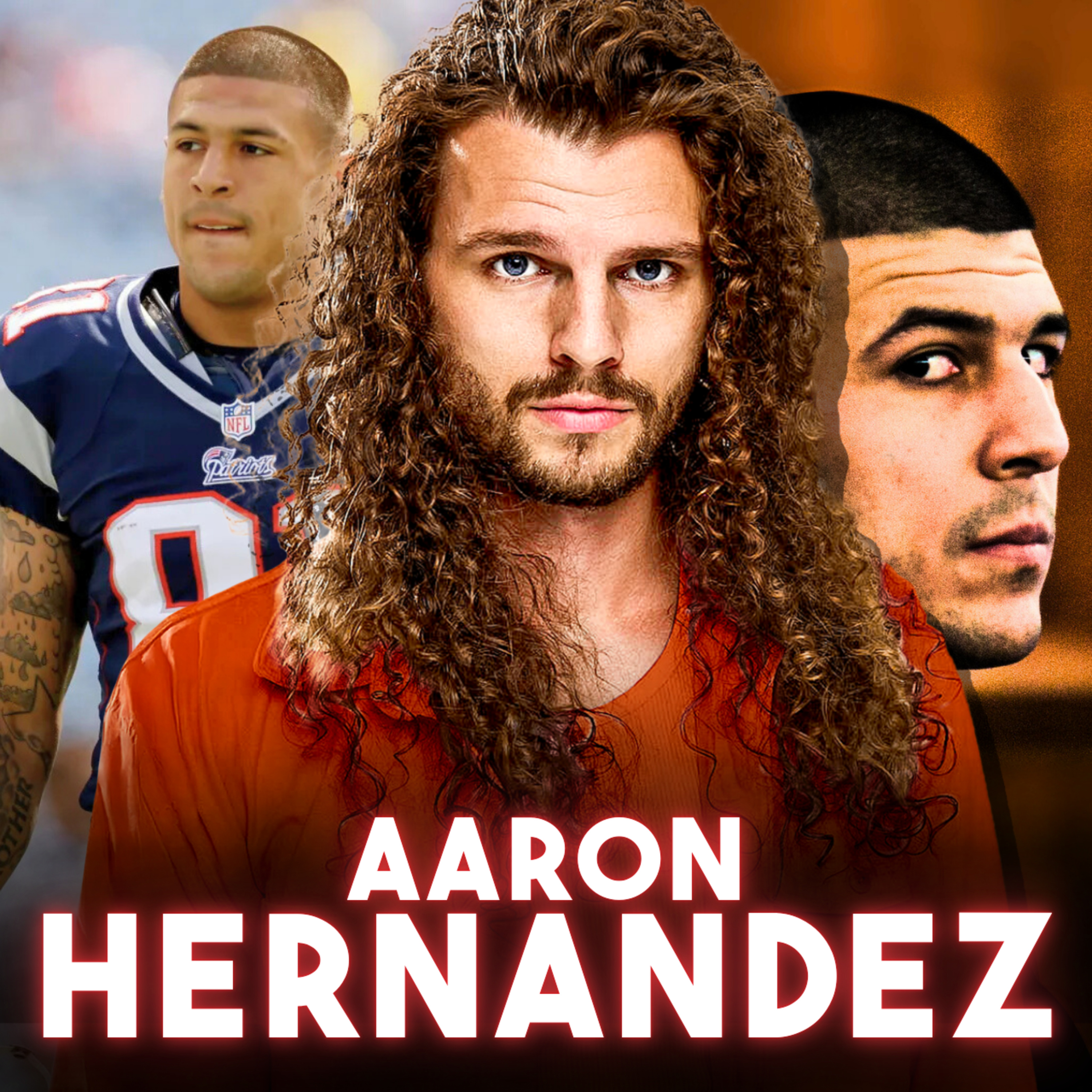
Loading summary
Transcript435 lines
- [00:00]
Mark Gagnon
Today, we're diving into one of the most shocking and tragic cases in sports history. The rise and fall of Aaron Hernandez. This isn't just about a football player that threw away a promising NFL career. This is a story of how childhood trauma, untreated brain damage, and a double life of violence led to multiple murders that shocked the entire world. We'll explore how Aaron Hernandez went from an abused kid in Connecticut to catching passes from Tom Brady and becoming a superstar in the NFL, all while secretly committing brutal murders. We'll examine the warning signs that everyone ignored, the evidence that brought down his carefully constructed facade, and the devastating brain disease that may explain his descent into violence. By the end of this episode, you will understand how Aaron Hernandez became capable of such brutal murders and why his story serves as a cautionary tale about trauma, brain injury, and the hidden cost of our most popular sport. So let's jump into it without further ado. Sit back, relax, and welcome to camp. What's up, people? And welcome back to camp. My name is Mark Gagnon, and thank you for joining me in my tent, where every single week, we explore the most interesting, fascinating, controversial stories from around the world. From all time, from all ages. I'm always joined by my good friend Christos. How are you, Christos? Doing great. All right, all right, all right. Enough gabbing, Christos. I've seen a lot of the comments. People are annoyed with all of your jibber jabber. All right? It's just every single episode. I'm good. It's just enough. Love you guys. You're taking time away from our illustrious guests and a dear friend of the show and my new friend, Alex Monahan. How are you?
- [01:34]
Alex Monahan
Great. Doing well. Excited to talk about some murders.
- [01:37]
Mark Gagnon
Yeah, yeah. And some sports also.
- [01:40]
Alex Monahan
And for a Wednesday afternoon.
- [01:41]
Mark Gagnon
Yeah, dude, I think if we. Obviously, we're going to be discussing Aaron Hernandez today, but I wonder if. I feel like it would be way funnier if we just only talked about a sports career if we were just like, it just ignored. So good, dude. He was unbelievably talented. And then. Wait, what is this? He killed something.
- [01:58]
Alex Monahan
Yeah, exactly.
- [01:59]
Mark Gagnon
That's crazy.
- [02:00]
Alex Monahan
Possibly five people. Yeah.
- [02:01]
Mark Gagnon
I didn't know about all this. That's wild. But, yeah, I mean, I. To be honest with you, I was never a. An American football fan. Like, I would, like, I'm from Orlando. You know what I mean? Like, we don't really have a team. I would have friends that are like, you know, like UF fans. But even then, it's like, I was always so disconnected. My parents are Canadian. They never had a strong interest in American sports in general. So I hear about this whole Aaron Hernandez thing. I'm just like, this is crazy. I couldn't even, like, understand the gravity and, like, the magnitude of everything, even basically up until I actually started doing research on it, that I was like, oh, this is wild. Yeah. Like, you were obviously a sports fan growing up. Yeah.
- [02:39]
Alex Monahan
Huge.
- [02:40]
Mark Gagnon
You were familiar with Aaron Hernandez, like, when he came onto the radar, like, what was your, like, earliest Aaron Hernandez memory? I mean, you guys were best friends, so. Yeah, well.
- [02:49]
Alex Monahan
Well, we were not best friends. I mean, they were just like, him. Him plus Gronk was obviously. They were unstoppable. And then with Brady, like, I mean, he. He was a freak athlete, right? Like, I think so many people knew that, you know, even going back to Florida, like, he had all these problems kind of circulating or rumors at the time, allegations or, like, connections or was a suspect, but, like, there was nothing proving it. And he was so damn good at football.
- [03:18]
Mark Gagnon
Yeah.
- [03:19]
Alex Monahan
Just the same way, I think, like, if LeBron does anything bad, which he almost certainly does, like, I feel like there's a billion rumors about.
- [03:25]
Mark Gagnon
Don't even start this right now, okay? I'm a LeBron, Stan.
- [03:28]
Alex Monahan
Okay.
- [03:28]
Mark Gagnon
Okay. LeBron has never done anything wrong. Whatever you're accusing him of, is it. He's in. Okay.
- [03:33]
Alex Monahan
Okay.
- [03:33]
Mark Gagnon
Better.
- [03:34]
Alex Monahan
I mean, look, I love Kobe.
- [03:36]
Mark Gagnon
He's also innocent.
- [03:38]
Alex Monahan
Definitely.
- [03:39]
Mark Gagnon
Yeah. But, like, he's like, all right, shit.
- [03:43]
Alex Monahan
But, like, I think. I mean, if someone's good enough at sports, like, I mean, Kobe, like, kind of got washed over. Right. Obviously caused trouble for a bit, but has not affected, really, his legacy at all. It transcends a shit.
- [03:55]
Mark Gagnon
It. Transport sends sports. It's. It's like. It's just culture. Like, if you're good enough at something, and so genius. It's something. American society in the world at large, will look past things that you do until your grievances sort of come close to your talent level. Yeah. That's how talented Kanye west is. Is that he's literally on the record being like, yo, Hitler.
- [04:15]
Alex Monahan
Yeah.
- [04:15]
Mark Gagnon
And it took people up until that to be like, hold on a second. Maybe this guy might be bad news. Like, that's how good he is at music. That, like, everything else he was saying leading up to that, they're like, all right. Confederate Flag. We can look past it. You know, this other crazy thing he said, we'll look past it. And then that was finally, like, all right, you can't. You can't. Dfi Hitler. But it was up until then that everyone was like, no, the music's. And then even now, there's still. People are like, music's great.
- [04:38]
Alex Monahan
Right.
- [04:38]
Mark Gagnon
You know what I mean? I mean, Michael Jackson. Right. Quintessential. Which, I mean, he was never charged, so. Allegedly. But, yeah, you gotta be. If you're gonna be bad, you gotta be talented.
- [04:46]
Alex Monahan
Yeah.
- [04:47]
Mark Gagnon
And Aaron Hernandez certainly was up until. Up until the end and that everything came out. But we're gonna get into the whole story, and it starts in Bristol, Connecticut, a place that I have never been to. I'm actually gonna be in Stanford pretty soon. Maybe by the time this drops, I'll have already been there. So if there's anyone mad about this, please don't come to the show. But Aaron Hernandez was born November 6, 1986, which is so crazy. Like, how old I'm getting that. I read people's birthdays, and I'm like, this guy was almost. He would have been, like, close to me in age. Like, it's like, it's crazy to think about. Does it bother you now that you'll see professional athletes that are younger than you? Yeah, that.
- [05:28]
Alex Monahan
I. I think I had a realization. I think it's.
- [05:30]
Mark Gagnon
Who was it? Who? Who was it?
- [05:32]
Alex Monahan
Well, I think it's like, once you hit, like, 25, 26, there's still, like a few left. But then when you're 27 and you're watching March Madness, like the best player in the country, and just seeing they're younger than you.
- [05:43]
Mark Gagnon
Yeah.
- [05:43]
Alex Monahan
I mean, it's just. It's crazy. It's.
- [05:45]
Mark Gagnon
It was John Morant. John Morant was crazy seeing John Morant play. And I'm like, well, this guy's obviously, you know, 32, and I'm 19. And then I was like, wait a second, I'm fucking 27 and he's 24. I was like, well, fuck.
- [05:59]
Alex Monahan
I mean, Yeah, I think that. I think that with a lot of people, though, not just athletes, like, the up and coming streamers. It's crazy. It's crazy. Their success speed Kai just at, like, such a young age. I mean, speed 20. I don't even know if. I don't even think he can drink.
- [06:15]
Mark Gagnon
Isn't that insane?
- [06:16]
Alex Monahan
He has, like 40 million YouTube subs.
- [06:19]
Mark Gagnon
Throngs of people in Indonesia following around at every given moment. My boy can't even rent a car. Like, that's insane.
- [06:26]
Alex Monahan
I mean, the new. These are the new. I mean, dude, I. I don't even want to know where he's at at 40. It's going to be crazy.
- [06:35]
Mark Gagnon
Yeah. True.
- [06:35]
Alex Monahan
Uncharted.
- [06:36]
Mark Gagnon
I mean, yeah.
- [06:37]
Alex Monahan
Mr. Be the level of fame at 20 is insane.
- [06:39]
Mark Gagnon
Yeah, it's. It'll be fast. I will watch that Netflix documentary.
- [06:42]
Alex Monahan
Yeah.
- [06:43]
Mark Gagnon
But anyway, to Aaron Hernandez, he is the son of Dennis and Terry. Okay. Dennis, pops, he was a football player back in the day. Star athlete at Bristol Central High and played at the University of Connecticut. So his dad was a college baller. And Bristol, for anyone that doesn't know, is basically, it's like your typical working class spot. You know what I mean? It's like Friday night, everyone's going to the football field, watch some high school kids play ball, kind of Friday Night Lights sort of energy, which lowkey sort of sick. But Dennis, his dad wasn't only his dad. He is. He was the. The kid. He was the dude that would be on the sidelines just like going crazy at every game. Allegedly hate to see it, which I knew so many of these dads growing up, which. Playing soccer, you get every different type, which is fascinating, I feel. Like football and baseball, you get, like, a very specific type of sports dad. When you play soccer, you'll get like the Jamaican, like, soccer dad. You'll get like the Brazilian soccer dad. And they're. They're yelling at the ref in different languages. You know what I mean? That was hilarious to me. But that was his dad. He was like. He was. He was taking it very seriously. And he's like, not just yelling at little league umpires. According to investigations from the Boston Globe, he would physically abuse both Aaron and his older brother. And the basic rule in their house was simple, do great at sports and you won't get. You won't get whooped. So Aaron, his brother, learned that the, you know, their pot, their dad's love was a little conditional. And as a result, they got pretty good. So maybe violence is the answer. But basically, yeah, his dad was like, yeah, if you do well, I'm gonna go to your games. I'll feel good about the game afterwards, and we'll be good. And if you don't do good, I'm gonna fucking lecture you. And potentially put some hands on you. Which less than ideal.
- [08:29]
Alex Monahan
Yeah.
- [08:29]
Mark Gagnon
Which, dude, I used to, like, play games. My mom would try to give me advice afterwards, and I'd be like, you don't even. You don't even play soccer. You know what I mean? I would get so pissed that if she just hit me, I'd be like, all right, maybe. Maybe I'll come around. You didn't. You were Saying you didn't really play sports growing up.
- [08:42]
Alex Monahan
No, I did, but not super competitively. Like, I remember, like, high school. Yeah, the high school I went to, we went, like, I think 1 in 13 my junior year and the game we won. My mom was like. Like, I feel like. Like, if it was so sad looking at the other team after they lost. They look so discouraged. I'm like, the fuck, mom? We're like, 1 in 10.
- [09:00]
Mark Gagnon
Your mom's an artist, you know? I mean, she has, like. She has an artist's empathy that comes through. She's like, why are you being so mean to those kids? Just lose. Make them happy, you know?
- [09:09]
Alex Monahan
I do feel like, though, I mean, I mean, obviously, I don't. I don't feel like I grew up with anyone whose parents were obvious. I mean, hopefully not as intense as his dad about sports, but, I mean, a lot of parents with school nowadays, with their kids.
- [09:22]
Mark Gagnon
Oh, yeah.
- [09:23]
Alex Monahan
They completely changed their tune depending on how. I mean, tiger parents, right? Like, at least the high school I went to, I feel like that was pretty common, which it is a tricky thing, because that guy looks psycho.
- [09:33]
Mark Gagnon
Yeah. I mean, he's Dennis Hernandez. Oh, he's an intense dude. Oh, yeah. I mean, I. I would go through a brick wall for that guy, though. You know what I mean?
- [09:41]
Alex Monahan
Yeah, he looks like he'd be a good football coach.
- [09:44]
Mark Gagnon
Yeah, he.
- [09:44]
Alex Monahan
He has the look that he's.
- [09:46]
Mark Gagnon
Yeah, no, he's dialed in. I mean, I would be afraid to just play against that guy's team. You know what I mean? Like, forget what the players look like if that guy's the head coach. I'm like, no, I'm just going to.
- [09:54]
Alex Monahan
Sit this one out.
- [09:55]
Mark Gagnon
I mean, that is. That is intense. But, yeah, it's such a weird thing because all these, like, greats, whether it's like, music, sports, maybe that's it. They had a parent that was, like, diabolically focused, and that's, like, obviously not the best way. I mean, like, we talked about MJ before, like, his dad, and it's, like, psycho. And it's such a tricky thing because, like, it does create excellence, but at what cost? And Woods. Yeah. Yeah. I mean, his dad, like, we just, like, throw, like, balls at him while he was, like, trying to, like, drive, you know? Like, it's, like, crazy. Yeah. But at the same time, it does create the greatest of all time, for sure. So it's like, is it possible to create greats without being a demon?
- [10:35]
Alex Monahan
I mean, 100. But I mean, like, you look at. Yeah, I think it's just, like, there's a line, because you see videos now of Jalen Brunson as, like, a kid and his dad training him. His dad's intense, and Jalen Brunson's like, he just looks like a kid. His dad's having him run sprints. Like, faster, faster. Gotta keep shooting. Like, I mean, that is not the relationship. Like, definitely intense.
- [10:58]
Mark Gagnon
Yeah, but. But it seems much more productive, Abusive. Yeah, much more productive. And paternal. Yeah. I'm trying to think, like. Yeah, I. I think that is the. The. You need someone that's, like, intense and, like, it demands excellence, but is also balanced and, like, still paternal at the end of the day, you know? And it doesn't stop there for our. Our, you know, Aaron Hernandez, because not only was the abuse, but you were.
- [11:23]
Alex Monahan
Gonna say our boy Aaron. Not that, but.
- [11:25]
Mark Gagnon
Well, he was a boy here, so up until this point, I do feel bad for him. Yeah. But he was also sexually abused as a kid, and though the details have never been fully disclosed, he's literally learning from a young age. Like, the people that are around him that are supposed to, like, kind of have his back, whether it's like, his dad or, you know, certainly people that are close to him. Like, sexual abuse typically and unfortunately, disproportionately happens to kids from people that are close to the family, whether it's like, you know, a Boy Scout coach, a pastor in the church, like a football coach, whatever.
- [11:53]
Alex Monahan
Yeah.
- [11:54]
Mark Gagnon
So certainly he's learning at a young age. Like, hey, no one has my back. No one's protecting me. I got to ultimately fend for myself. And so not only that, there have been sort of, like, rumors that have gone around that he was also confronted with sort of confusion about his sexuality. So according to a high school report from people that knew him in high school, that he had a boyfriend, that he was gay, but he was terrified his dad would find out. And so, as a result, he's dealing with, like, all this internal confusion and psychologically is damaged from this upbringing. They're like, you have sports excellence on one hand. That will save you and everything else, you know, your own mind. The people that are around you that protect you are also, you know, like, coming at you from. From the opposite side. I mean, tough spot for a kid, so.
- [12:44]
Alex Monahan
Definitely tough. Especially. Especially. I mean, I assume this is when he was already playing football. I don't think. Is there a gay NFL player?
- [12:51]
Mark Gagnon
Can we look that up now? I don't even know.
- [12:54]
Alex Monahan
Or NBA.
- [12:55]
Mark Gagnon
I don't even.
- [12:55]
Alex Monahan
I would be shocked.
- [12:56]
Mark Gagnon
I Think. I mean, Carl Nassib was, like, the only one, but that was, like, how many NFL that was. That was. Yeah, but that was years ago. I feel like he retired from the league. Well, yeah, he came out in 2021 while playing for the Raiders, and. Oh, this jersey's now at the Smithsonian. I mean, shout out to you, dude. Got put up in the rafters, my boy. Hell, right? I mean, I would do month.
- [13:18]
Alex Monahan
Yeah.
- [13:19]
Mark Gagnon
If I was in the NFL now, dude, I would just, you know, I would get. I would get a hand job one time to get my jersey in the Smithsonian. That seems like a worthwhile trade. You know what I mean? Just be like, yeah, dude, I'm a little gay. Hang my jersey up from the fucking. From a dinosaur. I mean, that's sick. I mean, this is hilarious.
- [13:35]
Alex Monahan
I don't know, but I.
- [13:36]
Mark Gagnon
You're just googling gay NFL players, and it's just pulling up random people's names.
- [13:39]
Alex Monahan
It's like, can you look up gay high school players? Because I think we're talking about that time. Numb.
- [13:44]
Mark Gagnon
Yeah, look up. Look up gay podcasters in this tent right now. Just my image a thousand times, like, fuck. So everything changes. January 6, 2006. Dennis went in for a routine hernia surgery. And these surgeries happen all the time without any problems. But something goes wrong, and Dennis, his father, dies of complications when Aaron is only 16. So you can see how this adds a complexity to the story. Dennis is, you know, one of Aaron's, like, largest sources of trauma, but also his, like, biggest cheerleader and, like, the guy that's, like, pushing him to excel. So this guy, right, like, you can imagine your dad, like, having your back, but also kind of abusing you. I mean, fully abusing you. And then him passing away sends you down a spiral. Like, losing Your dad at 16, regardless, is. Is traumatizing, but then also the mixed emotions of, like, what your relationship with your dad was. So after Dennis dies, the situation gets a little weirder because Aaron's mother, Terry, starts dating her niece's husband. So basically, like, Aaron's older cousin's husband, and Aaron then moves in with them. So now you have, like, a grieving teenager confused about his sexuality, abused by his dad, sexually abused, also, at a certain point now living with his mom and, like, his cousin's husband, and they had, like, a whole fallout, and they're. I mean, this is like, the most chaotic web of a childhood I've heard, which is also a problem because you read about people and almost always, like, people that have done terrible Things and you get into their backstory and you're like, oh, I kind of feel bad. Yeah, I have, like, a problem with this because, like, I over empathize with everything, like, to a fault where, like, I'll read about some serial killer and it's like, yeah, you know, he was ritually tortured by his father for eight years of his life. And I'm like, yeah, that's probably not good for anyone's psychology, you know, But I'm like, damn, I'm fucking feeling bad for a serial killer. Regardless, this is Aaron's situation. And to add another layer of the chaos, Aaron was living with people who were sort of family, but not really in a house where his place was unclear. And a sense of belonging is constantly up for debate and sports is kind of like the only escape. There's also. How tall was Aaron Hernandez? Can we get a. Can we get a fact check on that? Because, like, he's not a small dude. No. So, like, given this whole family situation, plus also just being like a gifted freak athlete.
- [16:02]
Alex Monahan
Shorter than I thought.
- [16:03]
Mark Gagnon
I mean, six, two, but he had to be.
- [16:06]
Alex Monahan
That's a heavy. Can we get his weight?
- [16:09]
Mark Gagnon
Yeah, yeah, I want to know. I mean, he was. This guy was moving 245.
- [16:13]
Alex Monahan
Yeah, he was moving.
- [16:14]
Mark Gagnon
Yeah.
- [16:14]
Alex Monahan
And he was fast as.
- [16:15]
Mark Gagnon
That's a big boy.
- [16:17]
Alex Monahan
Yeah.
- [16:18]
Mark Gagnon
Damn. So that is basically his childhood, as you can imagine, is not a. Not a great spot to be in. So he graduates from Bristol Central High School and then enrolls at Florida in January 2007. And this is not just any college program. This is uf. University of Florida under Urban Meyer. Tim Tebow, so sick. Tim Tebow so sick. Right?
- [16:41]
Alex Monahan
Like, that would have been a great year to be at uf.
- [16:43]
Mark Gagnon
I couldn't imagine, dude. Like, my parents used to go, like, despite them not really being fans, like, they had friends that were, like, involved in the school. So they would go to UF football games. And like, they were going in this era, like, sitting in the box watching Tim Tebow just throw dimes. Yeah, but were you. Were you, like, following sports at that point? Like in the Tim Tebow era?
- [17:03]
Alex Monahan
Yeah, but not. I mean, I was young, dude.
- [17:05]
Mark Gagnon
Kids in my school were on fire for Tebow. Like, I like every, like, football game. Like, I would be, like, with my little, like 10 year old friends.
- [17:12]
Alex Monahan
I mean, he was legendary.
- [17:13]
Mark Gagnon
They put on the John 3:16, the Philippians 4:13. Like, eye black. Like, it transcended, like, my school and, like, my area. So that's the team he goes to. And this Is championship level program and yeah, this is the team. And not only that, Urban Meyer also is like a. He. He runs a tight ship.
- [17:36]
Alex Monahan
He's a goat. Yeah, he's a goated coach.
- [17:38]
Mark Gagnon
What is he doing now? Where's Urban Meyer at these days? Is he coaching still? Let's find that out. Actually, he was coaching for Ohio State. Yeah. Oh, yeah, that's right. Now I think he's a commentator. I mean, I mean, the amount of.
- [17:51]
Alex Monahan
Yeah, I'm sorry.
- [17:52]
Mark Gagnon
I bet you I want to know what he made.
- [17:54]
Alex Monahan
Yeah. Fox Sports.
- [17:55]
Mark Gagnon
What is his net worth? The salaries of these college coaches is so absurd to me. Every time I see like.
- [18:02]
Alex Monahan
But you have no job security.
- [18:04]
Mark Gagnon
Yeah, yeah.
- [18:05]
Alex Monahan
These NBA coaches, I feel like they're fired every six months or a year. 35 mil.
- [18:11]
Mark Gagnon
I figured it'd be a little more than that.
- [18:12]
Alex Monahan
Probably wrong.
- [18:13]
Mark Gagnon
Yeah, right.
- [18:14]
Alex Monahan
This guy's blowing money.
- [18:16]
Mark Gagnon
I mean. Yeah, what was that?
- [18:17]
Alex Monahan
That wouldn't surprise me. Six year, $24 million deal. Oh, shit. He didn't get paid that much compared to like Nick Saban.
- [18:25]
Mark Gagnon
Yeah, Saban.
- [18:26]
Alex Monahan
Nick Saban was making like 15 a year. Unless I'm crazy and he's on all these commercials. Yeah, maybe I'm wrong.
- [18:32]
Mark Gagnon
Saban was pulling crazy money. Yeah. What is. What is Saban pulling?
- [18:36]
Alex Monahan
80, 280. I don't buy that.
- [18:39]
Mark Gagnon
130.
- [18:40]
Alex Monahan
I'm buying the over. I would hammer the over for a lot of money.
- [18:44]
Mark Gagnon
Earning 130 million.
- [18:46]
Alex Monahan
Yeah, fuck that bullshit. At Alabama alone, he doesn't strike me as the guy to blow money on fancy cars either.
- [18:52]
Mark Gagnon
Fancy hats, though.
- [18:53]
Alex Monahan
Yeah, fancy hats.
- [18:54]
Mark Gagnon
I know you. You've seen his hats, dude. I mean, dude, when Gillis was. Was cooking him. Alabama Jones is so funny. So that's Urban Meyer, right? Urban Meyer has a reputation for taking talented trouble players and basically turning them around and like changing the trajectory of their lives through discipline and structure. And you know, the idea was that football could be a positive force in these dudes lives. And with the right coaching, the right environment, you help grow them up. You know what I mean? They're 18 years old when they're getting to college. So he genuinely believes that he can help these players from these different backgrounds become better people. And Aaron is sort of like the ideal student for this kind of a model. Right. He's like struggling, but extremely gifted. And you know, he's got this childhood trauma and he's able to fit into, you know, Meyer's sort of college conditioning. But within a few months of being on campus, Aaron starts to go off the rails. And somehow it seems like there was not a ton of attention that was paid to him. So April 2007, he goes into a restaurant near the campus with some teammates. He's still 17 at that point. Not even old enough to vote. Not, you know, 17. You're still a kid. And according to the police report, he had been drinking, which first red flag, right under, like, Urban Meyer's tutelage. Like, you should not be drinking at all.
- [20:09]
Alex Monahan
And I don't know if that's a red flag. College kid drinking.
- [20:13]
Mark Gagnon
No, that's around a bunch of hot.
- [20:15]
Alex Monahan
Girls at us left on the football team. I'm. I'm not.
- [20:18]
Mark Gagnon
That's fair. Not a red. Not a red flag. But I. I understand. I do think, like, with the way Urban Meyer, like, from what I've heard, the way he runs, like, especially with, like, Tim Tebow, literally Jesus reincarnated as quarterback, I imagine he probably has, like, a pretty strict rule over, like, how the guys behave. So he's breaking. He's at least breaking the, you know, the. The football code of conduct. He gets into argument with restaurant staff, refuses to pay the bill, and starts making a scene. When the manager tries to intervene, Aaron punched him so hard that it ruptured the man's eardrum. So not ideal. Catches a. Catches a little charge off RIP Tim Tebow, you know, the golden child of college football, maybe of all time, was there and tried to break up the fight because he could see that Aaron was, like, you know, out of control, and somehow he's not charged with anything. The incident gets handled quietly, probably because, you know, he's this, you know, football star, and the university wants to stay out of some publicity. And this is Aaron's first lesson, that his talent and skill can help him skirt around the law. Right? I mean, like, you beat the shit out of a dude and then nothing happens. You're like, oh, I'm invincible. I can. I can handle myself, and, you know, I'll be protected. So most people would learn, like, hey, I should not be fighting people. But he's not most people. So five months later, September, he gets questioned by police in connection with a shooting that leaves two men wounded. Someone had opened fire on a car with three men inside. And the witnesses identify Aaron Hernandez as a suspect, which is psycho.
- [21:50]
Alex Monahan
I mean, I don't think there was anything that provoked it either.
- [21:53]
Mark Gagnon
Really.
- [21:54]
Alex Monahan
I don't think so. I mean, you just started firing, but I could be wrong.
- [21:58]
Mark Gagnon
But you got to wonder, like, is he involved in, like, gang shit in Florida? Like, like, he's not. This is not where he grew up. He doesn't know people that are, like, connected local gangs. Like, I don't even know if gang. Gainesville is like a big, like, gang area, but somehow he gets involved in, you know, a gunfight or maybe just a straight up shooting, and he's brought in for questioning. But once again, no charges are filed. There's not enough evidence. The witnesses aren't willing to testify. Maybe the investigation is enough to go through. Whatever the reason, Aaron walks away from another serious, violent incident with any. Without any type of consequences. And, like, not even like, dude, if I got questioned for a shooting I had no involvement in, I'd be like, whoa, that's crazy. I should chill. Like, even me, you know, I'm hitting. Like, if. Like, I would be like, yeah, I'm not gonna do any other type of illicit activity at all.
- [22:44]
Alex Monahan
Just being question for the rest of the day.
- [22:45]
Mark Gagnon
Yeah, for at least the rest of that.
- [22:47]
Alex Monahan
Not buying blow later.
- [22:49]
Mark Gagnon
Yeah, yeah. Like. Like, I don't even like going through, like, tsa. I'm just like, oh, shit.
- [22:53]
Alex Monahan
Like, scary. Did if I have a water bottle, I think that's. Oh, okay. We're thinking about different things.
- [22:58]
Mark Gagnon
But, yeah, I'm like, I don't. I just don't like that kind of confrontation with authority. I'm like, I don't want to know.
- [23:04]
Alex Monahan
It's not fun.
- [23:05]
Mark Gagnon
You ever go through border control? You go to a different country, and they're like, do you have anything in your bag? Do you have money? Or, like, did you bring food back on?
- [23:12]
Alex Monahan
Travel outside the country for good reason. Yeah, yeah, exactly.
- [23:17]
Mark Gagnon
You're more afraid than me. So during the 2007 season, he's, you know, freshman. He catches 16 passes, 111 yards, which might not sound like a huge number, but for a freshman tight end in a program loaded with superstars, it's pretty impressive. And it's pretty clear to everyone that, like, yeah, this guy, we're going to build, you know, our team with him. So by 2008, season is when Aaron really explodes in the national, you know, scene. Because if you don't know, this is when Florida last won the national championship. Playing alongside Tim Tebow. Catches 34 passes, 381 yards, five touchdowns in the regular season and plays a key role in that championship run. So now he's a junior. 2009, he's become one of the most dominant tight ends in college football history. He's catching 68 passes, 850 yards, five touchdowns, becoming the first Gator ever to win the John McKay Award as the nation's best collegiate tight end. And pro scouts are already looking at him like, yeah, this guy's going to the league. But the pattern is becoming clear for anyone who wanted to see. And of course hindsight is 20 20, because Aaron gets into some more legal trouble. What are you gonna say?
- [24:24]
Alex Monahan
No, I was just gonna say it kind of reminds me of Henry Rugs a little bit. Like, I think, like with Nick Saban. I don't know, I just feel like the coaches don't actually know all the players that well. Like Nick Saban said something about Henry Rugs after he was going like 140, whatever, got into the car accident and killed that dude. Now he's in jail, I think still. Is Henry Rug still in jail? Ricky still in jail. But, but, but Saban has a famous.
- [24:51]
Mark Gagnon
I never even heard about Saban, like.
- [24:52]
Alex Monahan
Like he was always such a good kid at Alabama and like there was nothing known. But yeah, he's. Yeah, Saban like has a very emotional clip about it speech. But I think like these coaches, how many players are on a college football roster? A hundred something. Yeah, these guys have wives, they have kids. Like, I don't know.
- [25:10]
Mark Gagnon
Yeah, you don't know the dealings, like, especially behind the scenes. And if you're able to.
- [25:14]
Alex Monahan
That's a great club.
- [25:16]
Mark Gagnon
Come on. Click this. Let me see.
- [25:17]
Alex Monahan
This was so viral. I remember when it first came out.
- [25:19]
Christos
If there was a player in Las Vegas who was drinking at 3 o' clock in the morning with his buddies and his girlfriend and somebody would have taken his keys away, probably would have pissed him off, probably would have made him bad. Probably wouldn't have thought very much of you for doing that. But would he be better off now or is he better off where he was? Going 156 miles an hour running the ass into somebody and killing them. And he's in jail and he doesn't have a career anymore and he's a good kid and he never had one problem on our team in Alabama. So what kind of friend were you? What kind of leader were you when you allowed the guy to do it? But nobody wants to do that because they're afraid of what somebody's going to think of them.
- [26:07]
Alex Monahan
156 is crazy.
- [26:09]
Mark Gagnon
Damn.
- [26:10]
Alex Monahan
How do you even go 156, dude?
- [26:12]
Mark Gagnon
Yeah.
- [26:12]
Alex Monahan
What kind of car, what kind of car goes 156?
- [26:15]
Mark Gagnon
Yeah. I'd actually be so curious to know.
- [26:17]
Alex Monahan
Man, these receivers though, they got a problem. They got. I mean, Kyron Lacey, who was probably going to be a top draft pick, LSU player. He. I bet on him. All of that's how I know the name. But he.
- [26:31]
Mark Gagnon
Oh, damn Corvette.
- [26:33]
Alex Monahan
No, but he. He. Another wide receiver speeding. He clipped an old guy and hit him in a hit and run. Then he committed suicide after. No. Yeah, because he was gonna go to jail. He committed suicide. He probably would have been football player or people who know football may disagree, but he was probably going to be. He was going to be pretty high up in the draft. He was going to the NFL. I mean, fuck lsu. I know, it's crazy.
- [26:56]
Mark Gagnon
There's a tragic thing all around. You're like, damn. Yeah. I mean, it is. It is a tricky spot to be in, especially as, like, a college football coach, because, like, you have these kids that are coming in, some of them troubled, they're trying to prove themselves. A lot of them not getting paid, especially in this time. So it's like their life depends on this program. You don't want to just, like, kick him out and be like, hey, you're done. You know what I mean? Totally. And so you try to like, okay, we can work. We can make him work. And on top of that, if you're so talented that the program benefits, it's like, yo, this is lifting everyone up. And your success will then kind of help you focus a little bit more. So I can see why these guys are in such a tough spot, like Saban Urban. Like, yeah, it's like, it's impossible. So it's like, okay, you have this dual life that's happening with Hernandez already, where it's like, okay, he's doing some things, he's getting involved with, you know, confrontations. This is just the stuff that, like, we know about. I'm sure there's way more things, like, behind the scenes where he's like, oh, he got in a fight with this guy. He's at a bar fighting this dude. Like, these things, in my opinion, are not isolated incidents. No. And not everything goes up to the head coach or the, you know, like, front office guy. So what do you do, you know? And this guy's. He's one of you games. He's a part of the team. Maybe he just needs more time. And Urban Meyer later said that he regretted some of the decisions he had made regarding Aaron. But at the time, it's like, yeah, you're in, like, an impossible spot. It's like, yo, let's just keep. Keep him around and hopefully these guys will help him.
- [28:14]
Alex Monahan
And he wasn't convicted.
- [28:15]
Mark Gagnon
Yeah, exactly. He had Never done anything.
- [28:17]
Alex Monahan
He didn't even go to trial at this point.
- [28:19]
Mark Gagnon
He had never done anything criminal. So it's like, what if this kid gets out of our program? Like, he's just gonna, he's gonna be a mess. So, you know, there's like a duality that's happening. What's up guys? We're gonna take a break really quick because you need better sleep. I mean, if you're like me, you'll probably wake up feeling exhausted, you miss your workout, you're drinking too much coffee, you feel wired the whole day because you're just shocking your nervous system. And the problem is that sometimes you don't sleep great. And the sleep supplements that you do take are probably packed with melatonin, oftentimes 10 times the melatonin that your body actually produces. So as a result, you end up feeling more groggy and worse than you did before because this melatonin is knocking you out and you're not able to wake up easily. It's a big problem. And that's why Sleep Dust came to the market, because they saw this issue. And instead of knocking you out with massive doses of melatonin, it works with your body using five clinically backed all natural ingredients. That includes magnesium glycinate, which is amazing for sleep. I take it every single night. L theanine, glycine, and a micro dose of melatonin that actually matches what your body makes. So as a result, you fall asleep faster, you sleep deeper and you wake up refreshed and ready to crush your day. Sleep Dust is third party tested, contains no sugar, artificial ingredients and it's made right here in the US of A. They are so confident that it will work for you and it'll help you sleep that they offer free shipping and they back with a 60 day money back guarantee. Now I love this because all these things are amazing. I'm already taking magnesium glycinate, I'm already taking L theanine. And I mean sure, you could buy all of these supplements independently or you could save money and time just by getting Sleep Dust. So if you are curious, you can go to ww.sleep-dust.com that is S L-E-E-P--UST.com and you can use the code sleep for 20% off. That is sleep-dust.com use the code sleep for 20% OFF. And look, if you don't like it, you got a 60 day money back guarantee. That is how confident they are. So go check them out and thank you so much for supporting the show. We got the link in the description. Now let's get back to it. So by the time that Aaron declared for the NFL draft his junior year, he had a resume that looked incredible on paper. Right. National champion John McKay, winner, first team all American. And basically any NFL team would be more than happy to have him have him come on. So now NFL scouts and the GMs are not dumb, so they're doing their homework. And while Aaron's issues at Florida aren't front page, obviously within, you know, secret, you know, internal scouting circles, people are starting to, like, hear about some stuff. And the teams are concerned about his character. Some are so worried they took him off their draft boards completely. Colts, Bengals, Steelers, even the Pats, ironically, didn't want to deal with the risk, which I imagine is probably like, both. It's like, okay, we don't want a guy that's, like, legit a hazard, like, publicity wise.
- [31:13]
Alex Monahan
Yeah.
- [31:14]
Mark Gagnon
Invest all this money and time into a guy that, like, goes to prison. But then on top of that, like, internal team dynamics, it's like, is he coachable? Is he able to get along with other guys in the league? Is he able to sit on the bench for a season? Like, all that stuff goes into these calculations. So this is what they're dealing with. But New England eventually changes their mind. They take a chance, and that decision would later tie them to one of the most shocking murder cases in sports history.
- [31:39]
Alex Monahan
And like, that, I think. Yeah, I feel like it happens with players all the time. Like Sanders this past year. Right. People are talking about him being a top three draft pick, fell to fifth. So Vizigo and, like, you know, Johnny Manziel. Yeah, right. Partying and like, I don't know.
- [31:56]
Mark Gagnon
Yeah. Do these guys fit into the system is like, the psychology of it is actually that would be a fascinating job. Like, do, like, psychological evals and, like, see how guys can actually fit into systems.
- [32:06]
Alex Monahan
I mean, also, like. I mean, there's a big jump from getting in fights to, like, murder.
- [32:12]
Mark Gagnon
Yeah.
- [32:13]
Alex Monahan
Like, I assume a lot of football.
- [32:14]
Mark Gagnon
Players have been in fights.
- [32:16]
Alex Monahan
I mean, right. Like, what's his name? Miles Bridges. Like, there are NBA players who, like, have assault charges. Like, they have beaten up their wives or girlfriends. But, like, yeah, really got a basketball and like, I don't know, like, should they be kicked out of the league or not? But yeah.
- [32:33]
Mark Gagnon
And it's like, oh, if they did their time, they resolved it. Yeah. Internally. If they, you know, were on probation and now they're done, it's like, all Right. They serve their sentence. Like, what do you do?
- [32:42]
Alex Monahan
Yep.
- [32:43]
Mark Gagnon
So he gets drafted fourth round in the 2010 NFL Draft. And you know, obviously Patriots know about his incidents in Florida, but they also knew his talent. And Bill Belichick's thinking was pretty simple. Aaron is too talented to pass up, and if anyone could straighten him out, it's the Pats, which it is kind of ironic to me that he played with Tebow and Tom Brady. It's crazy. Like two, like arguably in their times, like the Goats of like different sort of leagues, but then also almost like symbolically like similar. You know what I mean? Like, Tim Tebow is literally like carrying on like this Christ, like sort of like iconography. And Tom Brady in a different way is also seen as like this golden child. Like the fact that he played for both of these guys I find interesting.
- [33:31]
Alex Monahan
And you want. Yeah. And like, I feel like in sports you always wanted people who seemed a little psycho, like they were the best players. Yeah, the guys who like, cared way too much about Little League. And like in high school it was the same. I didn't play college sports. But like the people who were psycho, you know, throwing water bottles when their team lost, were typically the best players.
- [33:52]
Mark Gagnon
Yeah. Someone that cares. Sure.
- [33:53]
Alex Monahan
Tom Brady loved playing with him.
- [33:54]
Mark Gagnon
Yeah, I'm sure. It's like, yo, this guy leaves everything 245.
- [33:58]
Alex Monahan
Yeah, exactly.
- [33:59]
Mark Gagnon
So, you know, and he gets drafted and the gamble pays off immediately. Aaron steps right into the Patriots offense and basically proves to be one of the, you know, best tight end prospects in years. He plays alongside Tom Brady, of course, and then fellow tight end Rob Gronkowski. And he became part of what many people are calling the most dangerous 2 tight end offense in NFL history. So Gronkowski was this massive guy who could overpower defenders and make catches in traffic. But Aaron is different. He had the size of a tight end, but the speed and the agility of a wide receiver. So during his rookie season, he catches 45 passes, 563 yards, six touchdowns, and they're solid numbers for any tight ends. But he's a 20 year old rookie again, still can't even legally drink. Then second season, Aaron goes crazy. Like kind of similar to what he did at Florida. Right. Like, first season he's good. Second season he's out of here. 79 passes, almost a thousand yards, seven touchdowns, becoming one of Tom Brady's favorite targets. And the chemistry then between them is obvious. Right. Like Brady trusts Aaron to be in the right place at the right time. Aaron has the skills to make catches, can just do shit on the field that other players can't do. And off the field, it seems like Aaron is kind of like, you know, turning things around. He's in a legit relationship with a girl he's been dating, like, since high school. And in 2012, they had a daughter. And to anyone watching from the outside, it's like, all right. Aaron's like, all right. He figured it out. Like, the Urban Meyer system, like, straighten him out. He's now in the league. He's taking things seriously. He's got a family, and he's going to put all of his.
- [35:31]
Alex Monahan
He's got money.
- [35:32]
Mark Gagnon
Yeah. He's got. Yeah. Like, it got the life. It. It worked. Like, whatever the thought process was, it worked. And the Patriots also thought so. You know, Aaron is becoming a cornerstone of their offense, and his personal life is stable. And team officials and coaches later said they saw no warning signs that anything was wrong. Aaron showed up to practice on time, worked hard, played well in the games, and from their perspective, it was like, yeah, this is the exact type of story that we wanted. But under the surface, the reality is a little different. So while Aaron is building his NFL career in Massachusetts, he is still maintaining connections to dangerous people back home in Bristol. Aaron would regularly return to Connecticut during the off season and spend time with gang members, drug dealers, and people who are involved in sort of these crime circles that he is trying to escape. And this is where the psychology gets interesting, right? As we've said, he has money, fame, success that most people can only dream about. He's playing for one of the most successful teams under one of the most successful, like, coaches, most successful quarterbacks, living in a mansion, and is still drawn to sort of, like, the crime world that he knew growing up.
- [36:40]
Alex Monahan
Shout out John Morant.
- [36:42]
Mark Gagnon
It's interesting, though. I mean, did John even have, like.
- [36:45]
Alex Monahan
No.
- [36:45]
Mark Gagnon
He had no connection. Right? Like, he, like, grew up in, like, a nice suburb with, like. I mean, that's the extent of what I know. But it is interesting that people. I don't know, you hear this all the time. Relationships, right? Where it's like, people long for the love that they know, even if it's not good for them.
- [37:01]
Alex Monahan
Yeah.
- [37:01]
Mark Gagnon
You know what I mean? Like. Like, like, typically, you see it, like, with women, but I think it happens both ways where, like, they'll deal with, like, abuse from, like, a parent and then marry a guy that does exactly what their parent did and abuse them. And it creates, like, these cyclical psychological patterns of, like, habituation where, like, you're getting into these bad experiences that you knew from childhood because ultimately you long for the feeling that you had as a child, irregardless of how it affects you.
- [37:27]
Alex Monahan
Yeah.
- [37:28]
Mark Gagnon
Which is just like, I don't know, it's a beneficial thing that I think people need to kind of be aware of. Like, if your childhood was tough, you might be drawn naturally to bad situations. And that's like, the whole, like, breaking the cycles thing that people talk about. And it's hard to do, but obviously, I mean, Hernandez's story is a good example of why it's necessary. So, you know, some people speculate, like, maybe this world feels more real in the NFL. He's hanging with these, like, rich dudes that all are making money. Maybe it's because they feel like these are authentic relationships. Maybe it's because, like, the violence is familiar to him. Whatever the reason, he can't leave the old life behind. And this is the first incident in Aaron's story that really kind of makes headlines. So, July 16, 2012. Aaron is at a Boston nightclub called Cure. And it was kind of a typical night out for, like, a young NFL all star, right? He's got drinks, VIP treatment, the whole deal. But this is when Aaron encounters Daniel d' Abreu and Sapphira Furtado. These are two young men who had immigrated from Cape Verde, and they were just there celebrating. They had no connection to Aaron and no reason to be on his radar in any capacity. They're just two guys having a good time at a nightclub. But according to what prosecutors would later argue in court, d' Abreu accidentally bumped into Aaron while dancing and some drinks got spilled. Now, most people in the situation, I mean, Alex, you correct me if I'm wrong. What would you do if you're, you know, at a bar, you got a table, someone bumps into you, how would that interaction go? What would you do?
- [39:00]
Alex Monahan
I would be normal and just like, just be like. I mean, if I spilled it, it's just like, yo, sorry, bro. And then if someone spills on you, maybe give them a look like, get the fuck out of here.
- [39:10]
Mark Gagnon
But aside from that, you'd be a little pissed. And then things would go on.
- [39:13]
Alex Monahan
Maybe a little annoyed, depending on how they react.
- [39:18]
Mark Gagnon
Right?
- [39:18]
Alex Monahan
Right.
- [39:18]
Mark Gagnon
At most, like, annoyed. And then maybe if they escalate, you're, like, into some type of confrontation that then gets broken up. So Aaron doesn't forget about it. Instead, he becomes fixated on what he sees as disrespect. In his mind, these two strangers had somehow wronged him and that can't be allowed to stand. And this is where you can kind of see like some of the lessons from his childhood where it's like, violence is a normal response to, you know, disrespect. And this is still driving him psychologically. So Aaron leaves the club, but he doesn't go home. Instead, he gets his gun and he waits. And when Diabru and Furtado leave the club and get in their car, Aaron follows them, track them through Boston streets until they stopped at a red light in the South End neighborhood. Then Aaron pulled up beside their car and opened fire. He shot both men multiple times, killing them instantly. So, you know, these guys were basically murdered because they had spilled a drink on a guy at a nightclub.
- [40:15]
Alex Monahan
I don't know how if. If that's the reason that he killed someone. Like, how. How does this guy not have, like 50 bodies, right? Like 500. Or maybe it's just drinking. I mean, I have no idea.
- [40:28]
Mark Gagnon
I would be. Again, I don't.
- [40:30]
Alex Monahan
That is a crazy reason.
- [40:32]
Mark Gagnon
Yeah.
- [40:32]
Alex Monahan
I don't even throw hands right.
- [40:34]
Mark Gagnon
Yeah. I mean, yeah, you have to be like fully psycho to be like, yeah, I'm going to fight over this. Like, getting in a fight sucks. And I know because I've never been in a fight, but I do know that it is.
- [40:44]
Alex Monahan
Avoid them at all costs.
- [40:45]
Mark Gagnon
I truly do. I had friends that I would hang with, like, especially back in the day, like from home that like, would love to fight.
- [40:50]
Alex Monahan
Yeah.
- [40:51]
Mark Gagnon
And I would always hang with them because, like, they were funny. But then they would get shit faced and then try to fight people. And then I was constantly breaking up fights and I was like, this is so dumb. Yeah, like this. Like you'd wake up the next morning, just be like, fucking have a black eye. Yeah, dude, but I fucked him up. Yeah, like, you're fucked up for what? Like what? Like, what was the point of this? And fortunately, no one I knew would take it this far. I also would be skeptical if alcohol is the only thing involved.
- [41:16]
Alex Monahan
No, for sure. But, you know, I also don't understand, like, maybe it's different nowadays. Like, do NFL players of that caliber not have. I don't know. I feel like once you're that on the map, you're just like constantly worried there's going to be people who know who you are, like, taking pictures of you.
- [41:34]
Mark Gagnon
Even media, even a fight, you're like, oh, this could risk my NFL career.
- [41:38]
Alex Monahan
Exactly.
- [41:38]
Mark Gagnon
Like, if I get in a fight with this guy and he gets permanently injured like that. My, my Career is on a lot, much less. I mean, tracking them down. This is also, like, there's a premeditation here that's also, like, psycho. Really, really strange. So after the shooting, Aaron drives away and went on with his life like nothing had ever happened. He didn't confess to anyone. No signs of guilt or remorse. He just went back to being an NFL player. And here's the part that kind of shows Aaron's mindset. A month later, August 27, 2012, he signs a five year, $40 million contract extension with the Patriots. So think about that. He commits double murder, and then literally, like a month later gets a $40 million payday. And he literally, you know, goes from, you know, being like, one of the most successful tight ends in the NFL at the time to, like, killing two virtually innocent people. So while the families of Diabru and Furtado are still grieving, the Boston police are investigating the murder. And Aaron was celebrating this contract extension. At the Patriots press conference to announce the new deal, Aaron is smiling for the cameras, talked about his excitement to be in New England, and thanked the organization for believing him. Yada, yada, yada. I would love to see the pictures of him at the. At the contract extension, because it is sort of.
- [42:51]
Alex Monahan
So it is chilling, right?
- [42:53]
Mark Gagnon
To be like, yo, this guy, just like. Like, imagine like, your family got murdered by this dude, and you're just like, this guy's just celebrating, just, like, having a good time. Like, it's like, it's. It's very strange. Like, even I, like, watch true crime documentaries. I'm like, yeah, people that kill people, like, don't just, like, pretend like it never happened. Like, there's some type of COVID up. They get anxious. There's, like, nervousness, yada, yada, yada. So at the press conference, he's doing his thing, and he's able to sort of compartmentalize things that are happening to him in, like, a very strange way. Right? Like, it's. It's not just, like, keeping different parts of your life separate. This is like two almost, like, different identities. There's, like, a psychological thing happening here that I think is fascinating. But, like, he's violent and paranoid and dangerous, but also able to just be, like, charming and hardworking, a family man and, like, you know, be a good dad.
- [43:40]
Alex Monahan
Remember, football plays?
- [43:41]
Mark Gagnon
Yeah. Yeah, Literally so. And he's able to kind of, like, switch between these things. But obviously, this double life comes at a cost, and that cost is a constant paranoia. Right? He had to be controlling of who knows what, you know, the who can be trusted. And he's living in constant fear that people are going to discover him or investigate or he's not.
- [44:02]
Alex Monahan
I don't know. Like, maybe he's just a psycho.
- [44:05]
Mark Gagnon
Yeah, I guess.
- [44:06]
Alex Monahan
I don't. I don't know how you do that. I. I like murder people and then just show up to a news conference, go to football practice. It's like, it's insane to me. I would, I wouldn't be able. I would be paralyzed by fear and fear of people finding out. Well, I think even if I had no remorse, I would be terror. Like, I just can't imagine it.
- [44:24]
Mark Gagnon
Yeah. And I think the paranoia thing does play a role as we'll find in a second. But yeah, I think even for like the most psychopathic people, there's like, oh, I don't want to go away forever.
- [44:35]
Alex Monahan
Right.
- [44:35]
Mark Gagnon
You know what I mean? So, like, that is like. And especially for him, like, he has so much to lose. So by 2013, he has this paranoia kind of growing and, you know, he doesn't know who he can talk to and who he can trust. And this is where, you know, there is the Odin Lloyd situation. This is the case that basically brings everything down. So to understand how this happens, you need to understand Odin Lloyd. He's a 27 year old and just a few months older than Aaron, and he plays semi professional football for a team called the Boston Bandits. Now this wasn't the NFL and a lot of these guys, like have jobs or are trainers or coaches, and they play football basically like on the weekends because they love playing football. And he comes into Aaron's life because he's dating Shanaya Jenkins. And Shanaya happened to be the sister of Aaron's fiance, Shayana Jenkins. So when Erin and Shayana get serious, Odin basically becomes a part of the extended family.
- [45:28]
Alex Monahan
Can you pronounce the sisters names again?
- [45:30]
Mark Gagnon
Yes. Shania and Shayana. Got it. I mean, that's a. That's a. That's a sick. Pretty good. Sick.
- [45:37]
Alex Monahan
Pretty good with your pronunciation. Shanaya and Shayana.
- [45:41]
Mark Gagnon
Yes, yes.
- [45:42]
Alex Monahan
Mom had a field day with those.
- [45:43]
Mark Gagnon
You know what I mean? I mean, I wonder. It'd be like good twin names, you know what I mean? Like, I like when twin names rhyme. Like we, we had two. We had two twins in my high school.
- [45:53]
Alex Monahan
Yeah.
- [45:53]
Mark Gagnon
Lamar and Jabbar.
- [45:55]
Alex Monahan
I love that.
- [45:56]
Mark Gagnon
And I was like, oh, I love that. This is great. And they were identical twins. And if you messed up one of their names because you didn't, you know, remember, like, who was who they Just kind of roll with it. And they'd be like, yeah, sure, what do you want to know? Yeah, it was great.
- [46:08]
Alex Monahan
I had a girl named Jasmini in my high school.
- [46:10]
Mark Gagnon
No way.
- [46:11]
Alex Monahan
Her mom, her mom said the name Jasmine wasn't interesting enough. So just switch the E to an I. I'm like, fuck. Like, I love that.
- [46:19]
Mark Gagnon
You ever see anagram names? I know a couple people whose names are just like brand new anagrams of like the grandma's name. Like, what? Oh, no.
- [46:26]
Alex Monahan
But that's kind of cool.
- [46:27]
Mark Gagnon
And like, they'll just like, they'll just like switch it all around. It's very funny. So basically from Odin's perspective, you know, he's semi pro football player. He's seeing this guy's like extended family. And it's a cool connection, right? He's like a regular guy who all of a sudden has like this NFL player, is basically a brother in law. And Odin, a lot of ways, you know, kind of looks up to Aaron and was genuinely impressed by his lifestyle, right? He's got like car success, he's playing with Tom Brady. And he basically represents like what can happen if you work hard and are talented enough, right? And Aaron seems to like Odin. You know, they'd hang out, Aaron would bring Odin to parties and clubs. And for someone like Odin, who worked a regular job and played semi pro football, getting this experience is like pretty awesome, you know, so it's like, yeah, from the outside, they're, they're homies. But in Aaron's mind, he's thinking about the situation a little differently, right? Remember, this is the same dude that basically just committed a secret double murder like a few months before. And every day he wakes up knowing that he killed two people and knowing that if this secret gets out or if anyone ever knows or if there's any evidence, he's gone forever. So he's constantly worried about who knows what's going on. And he's. This paranoia is brewing. So this is where the story gets a little deeper. Prosecutors believe that Odin had somehow learned information about Aaron's involvement in the 2012 murders. Maybe Aaron had said something he shouldn't have, or he overhears a conversation. Maybe he saw something that didn't make sense at the time. He sees a weapon, who knows? And we'll never know exactly what goes down. But something made Eren believe that Odin knew too much.
- [47:58]
Alex Monahan
Probably nothing, if I had to guess. I mean, knowing he got a side.
- [48:02]
Mark Gagnon
Stare one day, yeah, he was like, dude, that's it. So June 14th Aaron and Odin go to Rumor nightclub in Boston. This was one of those, like, upscale places, NFL players, other celebrities, they go to kick it. Aaron is a regular there, and bringing Odin along is just a normal friend thing to do. But according to witnesses, something goes wrong that night. Aaron is pissed at Odin during the evening and at some point storms out of the club. People notice because it seems like a big overreaction to whatever is happening. Prosecutors later suggest that Aaron might have been angry because Odin spoke with people at the club who are connected to the murder victims in 2012. Maybe Odin mentions Aaron's name in the wrong context. Maybe he asked questions. That makes Aaron a little nervous. Whatever happens, it convinced Eren that Odin was becoming a problem. Three days later, June 17, Eren has a plan. Around 1am, he picks up Odin along with two associates, Carlos Ortiz and Ernest Wallace. These were guys from Aaron's past, people who would help him out with whatever needed to get done. Aaron told Aaron, or told Odin that they're just going for a ride, just gonna go hang out, go kick it, get into something. Odin had no reason to be suspicious. You know, this is basically family to me. So he gets in the car thinking that they're just gonna have a good time, fuck around. They drive to an industrial park in North Attleborough, Massachusetts, about a mile from Aaron's home. This is like a desolate area. Warehouse is kind of like a, like a, basically just like a shipping district. And there's, you know, businesses that would basically be around just completely empty in the middle of the night. The perfect place for what Aaron had in mind. So by 3.23am, Odin sent what would be his last text message. He texts his sister, did you see who I'm with? Think about that message for a second, right? Odin was starting to get nervous about the situation. Maybe something about Eren's behavior was making him uncomfortable. I can imagine if you're plotting to kill someone, the energy is going to be a little weird. Or maybe he just wanted, you know, the sister to know that he's hanging with someone, someone famous. Two minutes later, at 3:25am, workers at a nearby business hear multiple gunshots in rapid succession. And then silence. Aaron had basically just executed someone who was virtually family, someone who was extremely close and just leaves his body in an industrial park. He drove home after the murder and immediately went into cover up mode. He attempted to destroy his home security system. He smashed his cell phone into pieces to destroy any messages. He hired professional cleaners to come scrub his house. And in his mind like, dude, I, you know, I did it, I got away. So the next morning, his body is discovered by a jogger. This is Odin, of course. And it was revealed that he had been shot multiple times with a.45 caliber pistol. And at this point, Aaron makes a crucial mistake. He underestimates how much evidence modern police could actually uncover. Even when you think you cover everything up perfectly, and I think this is important to even underline because this is different than the two, the double homicide that happened earlier. Those are just random dudes, no connection that he pulls up on drive by style, kills them. This is a dude that he knows that he's intimately connected with, that people are aware that they're hanging out. And a mile from your house, a mile from your house, it's like hiring a clean, like extremely sloppy. So the investigation that followed will uncover a mountain of evidence that Aaron didn't even realize was even going to be connected. And it would, you know, connect him not only to Odin's murder, but also the double murder from 2012 that he had gotten away with. And he officially has flown too close to the sun. I mean, imagine like you kill two people and basically get away with it. Like, I don't know if there would ever be any connection to him, like, had he not continued this type of lifestyle. But of course, people that do erratic and unexplainable things typically will get caught. So when his body is discovered, police didn't look too far to find their first suspect. Right. The connection is like pretty obvious. You have.
- [52:00]
Alex Monahan
And the text. Yeah, which I still, I would love to know what the interaction was like the two hours before.
- [52:07]
Mark Gagnon
Right. Like, I wonder what that energy is. I can't imagine it's good personally, but.
- [52:11]
Alex Monahan
Did you see who I am with? That seems like a, like bragging, like, oh, haha, like so sick. I'm hanging out with Aaron Hernandez.
- [52:17]
Mark Gagnon
Yeah.
- [52:18]
Alex Monahan
It's like, how are you that rich and you don't hire hitman? It's like the whole thing, it's just.
- [52:21]
Mark Gagnon
Like, again, I wonder if in his mind it's like, oh, I can handle my own business, I can handle myself. And on top of that, I don't want to implicate some random hitman, but if he also has two dudes that are basically doing it or he just.
- [52:35]
Alex Monahan
Doesn'T, maybe he didn't care about getting caught. That's the sloppiest shit I've ever heard. A mile from your house. Okay, a relative. So scroll up a little bit here.
- [52:45]
Mark Gagnon
So this is coming from Fox Sports. It says the messages were displayed on Hernandez's BlackBerry cell phone and they were shown to the jury. Two messages were sent from Hernandez's phone to one belonging to Ernest Wallace, one of the men allegedly with the former New England Patriots tight end. The first message at 2:45 says, you grab everything out of the car. Clip and CDs and everything. The second, sent at 1:39am that says, Love you. Fuck, I wanted to kill you, but you know I love you. Hit me tomorrow, get some rest and tell the rest I love them. What? So that's the one that he sent to his associate. Not to Odin, I don't believe. Scroll.
- [53:27]
Alex Monahan
Kill his associate, too.
- [53:28]
Mark Gagnon
No, no. Scroll up, scroll up, scroll up.
- [53:31]
Alex Monahan
I wanted to kill you.
- [53:32]
Mark Gagnon
So this is two. Unscroll down, please. And so this is two messages that were sent to a phone, one belonging to Ernest Wallace, Jr. Yeah. So I'm assuming that he's messaging his boy, that I wanted to kill you. Love you.
- [53:48]
Alex Monahan
Fuck, I wanted to kill you.
- [53:50]
Mark Gagnon
I'm assuming that they had some type of disagreement or something that happened. And he was like, yo, that shit was a little hairy, but we're good. Hey, you tomorrow.
- [54:00]
Alex Monahan
It's so crazy.
- [54:02]
Mark Gagnon
So prosecutors have alleged that Lloyd was killed with a Glock. Yeah. This is interesting. So basically, you know, the body's discovered, and they understand the relationship. And police knew that Aaron and Odin had been spending time together. So Aaron was going to be questioned basically no matter what. But what started as routine questioning quickly becomes much more serious once the investigators start to uncover evidence. And the first breakthrough comes from Aaron's home security system, the one that he attempted to destroy. The footage showed Aaron leaving his house on June 17, carrying what appeared to be a gun. But later footage showed him returning to the house without a weapon. Aaron had destroyed the security system after the murder, thinking that he eliminated the evidence. But he made a mistake. And because he didn't realize the police could recover the footage from the systems even after they had been destroyed. Can you actually pull up that link of the home surveillance footage? So they actually. The prosecutors actually show the surveillance video of Hernandez inside from his home security system. Surveillance shows Hernandez greeting her when she came to babysit the night before Lloyd's murder. Video shows him light up and take a drag in the driveway before leaving. While he was gone with his fiance, his two alleged accomplices came to his home at midnight.
- [55:21]
Alex Monahan
Ernest Wallace and Carlos Ortiz.
- [55:24]
Mark Gagnon
When Hernandez returned, he walked right by with what looks like it could be a gun. Later, he was picking up his daughter and after that affectionate moment, he and his two accomplices left in a silver Nissan Rental. Crazy. Two hours later.
- [55:41]
Alex Monahan
So those are his cameras, too?
- [55:43]
Mark Gagnon
Yeah. I don't know what type of oversight went into this. If he was like, oh, if I destroy the camera, there's no video. I don't even understand. Like, I'm assuming that there's, like, some type of, like, central system or all the video gets uploaded through WI fi or something, but that's, like, just really dumb.
- [56:01]
Alex Monahan
Did he plead guilty? We're not there yet.
- [56:04]
Mark Gagnon
We're okay.
- [56:05]
Alex Monahan
Okay. You don't have to look it up yet.
- [56:08]
Mark Gagnon
So the second piece of evidence that happens that kind of shows things involves the car that Aaron had used that night. He hadn't used his own vehicle because that would have been. Obviously, that would have been dumb. You know what I mean? You can't use your own vehicle. That's stupid people behavior. Instead, he had rented a Nissan Altima from a local enterprise dealership. So again, Aaron, once again underestimates how many security cameras exist in a place like Boston. So police find the footage of the silver Altima on multiple cameras throughout the night, were able to track its entire route from Aaron's house to the industrial park where Odin was killed. The car was captured on camera, basically showing a clear timeline of the movements. Even more damaging, the rental car contained gunshot residue in the vehicle and other trace evidence that connected to Odin's murder. So you cleaned your whole house, but not the car that you rented to do the crime?
- [56:57]
Alex Monahan
The third piece of evidence, probably in his own name.
- [57:00]
Mark Gagnon
Yeah, probably. And the third piece of evidence is maybe the most absurd. At the murder scene, police found a piece of bubble gum stuck to a shell casing from the gun used to kill Odin. When they tested the gum, it had Aaron Hernandez's DNA. So that's. I mean, that's about as close as you can get. I mean, that's like. Like, yeah, you're fucked. And this is the part that kind of shows how thorough this investigation was. Police were able to prove that Aaron had purchased the exact type of gum. I'm saying gum here, not a weapon. Literally, like fucking five gum or any other brand. I don't know if they want to be associated with this. Earlier in that day, they had receipts, security camera footage from the store, everything. So not only did Aaron's DNA place him at the murder scene, they could also prove that he had bought the exact type of gum that ended up at the murder scene. So he was, you know, shoddy guy, spit the gum Out. And it's a. A detail that, fortunately, the police were actually able to, you know, to get the fourth piece of evidence. As if this is not compelling enough for you. I know you're probably still on the fence. You're like, maybe he didn't do it.
- [58:07]
Alex Monahan
Yeah, maybe. Well, I feel bad for him, man. He had a tough childhood, dude.
- [58:12]
Mark Gagnon
Yeah. Now you start to feel a little bit less bad. You're like, what the fuck?
- [58:16]
Alex Monahan
Now I am.
- [58:17]
Mark Gagnon
But. But who knows? Maybe he's still innocent. You know, the DNA is there. Same weapon, same gun. But then the footprints. Crazy. Police find shoe impressions at the murder scene, and they were able to match them to the boots that Aaron was wearing that night. And how did they know what boots he was wearing? From the same security camera footage that he thought that he had destroyed that showed him allegedly having a gun.
- [58:36]
Alex Monahan
He did not watch Forensic Files growing.
- [58:38]
Mark Gagnon
Up at all, right?
- [58:39]
Alex Monahan
This is, like, the most obvious stuff. There are cameras everywhere.
- [58:42]
Mark Gagnon
Your own cameras. You have, like, you're spitting out DNA at the scene.
- [58:48]
Alex Monahan
Like you chew gum on days you fucking murder people.
- [58:51]
Mark Gagnon
That's what I'm saying. Everyone knows this. Don't even smoke cigarettes. You put them in your pocket when you're done with them. Like, it's just like, dude, what the hell? So the footprint evidence wasn't particularly damaging because it placed Aaron at the exact. Or it was particularly damaging because it places Aaron at the exact spot. So he's not just in the general area. He's right there, where the trigger's pulled with the cameras, with the gum. And the fifth major piece of evidence comes from his cell phone. Remember, Aaron had smashed his phone into pieces after the murder, which is obviously going to destroy any evidence. Except the police are able to uncover the text messages almost immediately between Aaron and his associates that we had mentioned before. So the messages show them planning to meet up with Odin on the night he was killed, as well as texts between Aaron and Odin setting up their meeting. And the phone records created a timeline of how this murder was actually organized. What's up, guys? We're gonna take a break really quick because you need to rebrand your crotch. That's right. You need a full rebrand on your dong. And you're gonna do it with Bluechew, because Bluechew, their tablets aren't just for better sex. No, they are. Like, if Tony Robbins give a motivational speech rate to your. You know, I mean, you're gonna feel amazing. Look, I just took one of Bluechew's tablets today, and suddenly, I mean, look at me, I'm glowing. This table, absolutely getting crushed underneath it. Right. My penis is given a press conference. Okay? Feeling great. Never been better. So whether you're trying to make, you know, a memorable moment with your. Your sweet love, or you're just trying to give, you know, a friend of yours or a girl, you know, like a, you know, some crazy group chat fodder, something for the girls to gossip about. Bluechew is absolutely the chewable table service that you need to bring the thunder. And the best part is that we got a special deal for the listeners of this lovely program. Get your first month for free@bluechew.com. just use the promo code. Gagnon at checkout. All you gotta do is pay five bucks for shipping. That's like a cup of coffee, all right, five bucks for shipping. You're gonna get free bluechew straight to your door. So upgrade your legacy. Let your name ring out for eons. And let's get back to the show. Aaron gets arrested. June 26, 2013. New England Patriots release Aaron exactly 90 minutes after the arrest. An hour and a half. Yeah. The Patriots hear about what happened. I'm sure they have some sort of, like, police sergeant that's like, yeah, it's not looking good for your boy. And immediately they're, like, out of here. So they didn't even wait to see about the charges. They just immediately cut them loose. Which I wonder if that indicates anything internal, where they're like, oh, I could obviously see this.
- [61:20]
Alex Monahan
So it's happened with Antonio Brown a bunch of times, right? Oh, yeah, but just like, for, like, you're being crazy, like, you're not a criminal, but, like, you're just being a psychopath.
- [61:32]
Mark Gagnon
Yeah. You're being belligerent.
- [61:33]
Alex Monahan
Right.
- [61:33]
Mark Gagnon
And we don't want you. They don't want you.
- [61:35]
Alex Monahan
You know, Jeff.
- [61:36]
Mark Gagnon
But something like this running your mouth, I would presume it'd be like, all right, well, let's just wait till he's convicted. Let's just see the charges. I wonder if they had a guy on the inside being like, yeah, we found gum at the scene.
- [61:46]
Alex Monahan
Yeah. The cops just like, hey, you know, released. By the way, the DNA was found. Footprints were found. Also, we think we have security camera.
- [61:54]
Mark Gagnon
Footage of him with the same weapon. Yeah.
- [61:56]
Alex Monahan
And, like, the whole movements tracked. And his phone, like, I don't know, I'm cutting him loose and.
- [62:01]
Mark Gagnon
Yeah, right. So you also have to keep in mind he just had gotten a $40 million extension earlier that year. He's one of, like, they're Sad. One of their best key offensive players and, you know, he was like a part of, like, the team system. So he's immediately cut loose. And this is basically a career ending release before most people even knew that he was arrested. And the trial didn't begin until over a year later, January 9, 2015, and it became just a medium start of the NFL playoffs. Oh, really? Oh, that's crazy. Right? Yeah, yeah. I mean, beginning of the year. Also, real quick, it's important to place the context of. The Patriots are in the middle of their dynasty. Bill Belichick and Tom Brady are gods in New England. So the fact that not a single cop told them what was going on.
- [62:49]
Alex Monahan
He have a TV in his jail cell?
- [62:51]
Mark Gagnon
Probably. Probably.
- [62:52]
Alex Monahan
You get to watch the Pats games.
- [62:53]
Mark Gagnon
Yeah. I'm sure a cop or an investigator, like, gave them a tip. Like, yeah, this is terrible. For the record, like, save face for the organization. And these cops are all Pats fans.
- [63:02]
Alex Monahan
I mean, murder is different than, like, you know, I feel like a lot of NBA players recently, like, Zion, even this summer, I think. Right. Like, but it's civil. Some girl wants money, possibly sexual assault.
- [63:16]
Mark Gagnon
Right.
- [63:16]
Alex Monahan
But they're not. You're not releasing somebody.
- [63:19]
Mark Gagnon
Yeah.
- [63:19]
Alex Monahan
The murder is just.
- [63:21]
Mark Gagnon
Yeah, it's a different level. I think it's less the charges, it's more just the compelling, overwhelming evidence that they were able to gather almost immediately.
- [63:28]
Alex Monahan
Or they were just like, yeah, he did it. Like, we. We've heard the rumors. Like, yeah, he's probably going to be guilty. Let's just get rid of him.
- [63:35]
Mark Gagnon
Right.
- [63:35]
Alex Monahan
I don't know. The whole thing's crazy. I watch so much Forensic Files and I feel like I've never seen a more black and white case. It's like, this can't even make a Forensic Files episode. He's so stupid.
- [63:45]
Mark Gagnon
Yeah, it'd be a ten minute episode. Yeah. Like, well, all right, it's him. I mean, also, being on his defense team would be so stressful. You'd have to be like, look, someone else. He kissed a guy. The guy had the gum in his mouth. He spit. That guy is the real one that did it. And yeah. So he goes to trial January 9, and his behavior during the trial is pretty strange. He would, like, smirk at the camera. He was like, kind of goofing off with his lawyers and just kind of seemed disconnected from everything that was going on around him.
- [64:12]
Alex Monahan
Like, that pisses me off.
- [64:13]
Mark Gagnon
Like, your life is going to be done. You know what I mean? And also, like, again, you got to think, like, I'm so curious what it does even to his family. It's like, dude, you killed, like, your brother in law, like, his wife is like, this is. This guy's like, in my family, like, my. My sister loves this dude.
- [64:29]
Alex Monahan
I would love to know what she says about him. Now.
- [64:31]
Mark Gagnon
That is actually a great.
- [64:33]
Alex Monahan
Wait, could you remind me, was it Shania or Shoy Nyana?
- [64:37]
Mark Gagnon
I think she's Shayana. I think that's his wife. But we should double check that.
- [64:41]
Alex Monahan
It's always crazy to me how you can be married and these people have no idea.
- [64:46]
Mark Gagnon
Yeah.
- [64:46]
Alex Monahan
How fucking psycho their boyfriend is. Or this is husband. Right. They were married.
- [64:50]
Mark Gagnon
This is, this is what's interesting. So according to ChatGPT, there have been some things over the years that have kind of changed. So allegedly, according to ChatGPT, it says that she maintains his innocence, saying, he was full of life, sweet, lovable with doing anything for anyone. He's the love of my life and I want him to be known for what he is rather than what people are speculating. I don't know when that was said in the things here. And then additionally said talking about his mental health. She says, I thought it was a hoax, that this was some cruel person playing a trick on me. We were looking so bright going up a ladder in a positive direction.
- [65:29]
Alex Monahan
It was crazy seeing him grab his baby on that surveillance photo. Yeah, but like, smiling. You looked happy. I mean, granted, it's a grainy security.
- [65:37]
Mark Gagnon
Video, but like, you see this so often, though, with like mob guys, right? It's like, oh, they just killed a guy that night. Then they're like at like a, you know, turkey cookout the next day, like for Thanksgiving, like, shaking people's hands and saying hi and hanging with their kids. Like, there's a real compartmentalization that happens, I'm assuming. And I bet you in his mind he's like, this guy's got to go because he's going to leak my secret, which is going to destroy my family. So he's like, I'm actually doing this for my family. Like, I think that's part of the psychology that goes into the mind of these people that commit crimes and then still are like loving fathers and husbands. Like, I'm doing this for them. So people are commenting on his behavior, saying, like, this is pretty strange. And legal experts said that Aaron's courtroom demeanor was damaging to the case. Juries don't like defendants that are arrogant or unconcerned. And Aaron comes across as someone that's just like, above the law. Like, yeah, yeah, I've done shit before and nothing's ever happened. I'm sure this is fine. The prosecution methodically presented their evidence over several weeks. And security footage, the rental car, DNA, footprints, cell phones, and they basically lay everything out piece by piece, and they build a case that seems pretty impossible to really refute. So Aaron's defense team tries to create reasonable doubt, but they're fighting against this overwhelming mountain of evidence. So by April 7, both sides present their closing arguments, and the case goes to the jury. They deliberate for 36 hours over three days, and the jury reaches their verdict that Aaron Hernandez is guilty of first degree murder. So in Massachusetts, that carries a mandatory sentence of life in prison without the possibility of parole. And at 25 years old, Aaron throws away everything. NFL, career, family, freedom, and will never get out of prison. But again, we know about, in hindsight, the totality of his criminal behavior. And this is just the beginning. Aaron is convicted of murder, but the prosecutors believe that his crimes go far beyond. And the investigation had revealed that Aaron was connected to the 2012 shooting. And, you know, the prosecutors finally believed that they had enough evidence to prove Aaron was responsible for those killings as well and to put him on trial again. So this double trial murder, or this double murder trial, rather, has been kind of brewing in the background for a lot of these investigators. But this trial is different from the Odin Lloyd case because the evidence isn't as overwhelming, the witnesses are not as reliable, and Aaron's defense team is able to create reasonable doubt. The prosecution's case relied heavily on the testimony of Alexander Bradley, Aaron's former friend, who claims that Aaron had also shot him while in a separate incident in Florida.
- [68:11]
Alex Monahan
I believe it.
- [68:12]
Mark Gagnon
I mean, so people question. They question his credibility. He's testifying in exchange for immunity because, you know, he had initially lied to police about what had happened. So Aaron's lawyers were able to attack his credibility, suggesting that he was just trying to get revenge against Aaron by blaming him for crimes that he didn't commit. So by April 14, after weeks of testimony, the jury finds Aaron not guilty of double murder and was convicted on a single charge of illegal gun possession. But that is not what the prosecutors were hoping for. So for a few hours, it looked like Aaron might have finally caught a break. Right? Yes. He's still serving life without parole, but his lawyers were talking about appeals and already talking about, you know, trying to get into, like, acquittals. That would mean he's not facing additional charges. And then he would eventually get released from prison if he's able to go on parole at some point. But then just five days later, on April 19th at 3am, guards are making their rounds and they find Aaron had killed himself in his prison cell, hanging from a bedsheet, and was pronounced dead at UMass Memorial Hospital shortly thereafter. And his death is bizarre and disturbing in ways that went beyond just the act itself. So when guards found him, he had written John 3:16.
- [69:28]
Alex Monahan
What is John 3:16?
- [69:29]
Mark Gagnon
This is a verse from the New Testament in the Bible that says, for God so loved the world that he gave his one and only Son, so that we may not perish but have eternal life.
- [69:39]
Alex Monahan
Damn. You just recite that off the bat.
- [69:41]
Mark Gagnon
Come on, dude, I'm a Catholic, bro. I was raised. I was raised. I was. I was raised very church.
- [69:48]
Alex Monahan
Are we talking about Aaron Hernandez?
- [69:50]
Mark Gagnon
Imagine that's not at all what it says. Like, whoops.
- [69:54]
Alex Monahan
For God so loved in the world that he gave his only son.
- [69:59]
Mark Gagnon
What? Yeah. And if you can search John 3:16, Tim Tebow, there's a. Oh, interesting revelation I think here as well. I don't know if this is necessarily the case, but if you can go to images real quick, but he would have this on his eye black while he would play.
- [70:17]
Alex Monahan
So that's super weird too.
- [70:19]
Mark Gagnon
So I don't know if you can connect it, but I wonder if, you know, this played some type of impact.
- [70:22]
Alex Monahan
How popular reverse is that?
- [70:24]
Mark Gagnon
Tremendously popular. So amongst, like the, you know, Christian Coalition in the United States, it's like.
- [70:29]
Alex Monahan
Like we talking top five, like.
- [70:31]
Mark Gagnon
Oh, that's easy. Top five.
- [70:32]
Alex Monahan
Is that the goat? Like the LeBron James of the Bible.
- [70:36]
Mark Gagnon
Might be the goat, to be honest with you. Like Philippians 4:13 will be up there.
- [70:39]
Alex Monahan
Okay.
- [70:39]
Mark Gagnon
You know, for I can do all things through Christ, who gives me strength.
- [70:41]
Alex Monahan
Right?
- [70:42]
Mark Gagnon
Like that's up there for sure. Or all things through God rather. But yeah, I mean, that's. That's a goated verse for sure. So he writes this on his forehead in his blood. And that's not all. He'd also made strange references to the Illuminati on his cell wall. He drew pyramids in the all seeing eye. And below the pyramid he wrote Illuminati in capital letters. And above the pyramid he drew an oval with rays coming from the edges. There were also letters to his family found. He wrote that he was entering into the timeless realm and that he would see them in heaven. It's sort of heartbreaking, right? You gotta think like his wife and daughter kind of read that Aaron's lawyers said that you know they had never seen any signs that he was suicidal. Jose Baez, his lead attorney, said that Aaron had seemed hopeful about his appeals and was looking forward to spending time with his daughter. And that this sort of tragic end kind of came out of nowhere. But then something wild happened. Because Aaron died before his appeals could be heard, Massachusetts law required that his murder conviction be erased. It's called abatement ab initio. And it's an old legal principle that says if you die before your appeals process is complete, your conviction is ultimately vacated. So legally speaking, Aaron Hernandez, upon his death, was an innocent man.
- [71:58]
Alex Monahan
It's the most fucked up. I mean, I guess it doesn't really matter, but like, I don't know, pretty wild, right?
- [72:04]
Mark Gagnon
So despite the overwhelming evidence that he's a killer, his conviction is erased in the records as if this media circus trial had never actually happened. Then Aaron's family made a crucial decision that would change how he, how we basically understand his whole story. They donated his brain to the Boston University Chronic Traumatic Encephalopathy center for Research. And this is not unusual because many families of former football players have made similar donations to help scientists understand the long term effects of playing the sport and basically what CTE does to the brain. But Aaron's was different because of his age and the pristine condition of his brain. So Dr. Ann McKee, who's the head of Boston University CTE center, had studied hundreds of brains from former football players. But she found that Aaron had stage three CTE, the most severe case Dr. McKee had ever seen in someone so young. So to put in perspective, previous cases with similar damage have been found only in people who were at least 46 and had played a long time in the NFL.
- [73:07]
Alex Monahan
Was it from football? I mean, that's a question. Or was it from this guy being in fights also?
- [73:14]
Mark Gagnon
I would say almost, almost certainly football.
- [73:16]
Alex Monahan
Just from football.
- [73:17]
Mark Gagnon
It's just like, especially in this time, I think they had different helmets. I think they've actually updated them because of a lot of the CTE research. 40 yeah, and basically it's just like from micro traumas that happen to your brain through just chronic hits and it creates literally just like a Swiss cheese in your brain. It's this chronic traumatic encephalization of the brain tissue.
- [73:36]
Alex Monahan
Are you tried together in a double murder?
- [73:39]
Mark Gagnon
Like, are both the cases tried together?
- [73:42]
Alex Monahan
Like if two people murder someone, like, because his murder conviction was erased, his, like his, his partners in the crime of killing Odin, I assume they're still. Nothing changes for them.
- [73:55]
Mark Gagnon
That's A good question. I actually have no idea because I don't know if I'm. I think. I mean, their trials are separate. I'm assuming that they're.
- [74:01]
Alex Monahan
Oh, you have separate.
- [74:01]
Mark Gagnon
I'm assuming that their appeal process, because they're. They're probably gonna say, like, I didn't murder anyone. Like, I was with this guy.
- [74:08]
Alex Monahan
That'd be my defense.
- [74:09]
Mark Gagnon
I didn't know it was gonna happen. Aaron Hernandez, he has his personal beef with this dude. He kills this guy, yada, yada, yada, that. So the damage to Aaron's brain is pretty severe. His frontal lobe, which controls obviously, you know, decision making, impulse, judgment, is severely damaged. And this is the part of the brain that ultimately makes us human. You know, this frontal cortex that actually, like, elevates us. And many people would say, like, actually gives us.
- [74:32]
Alex Monahan
This is why girls should date comedians and not football players.
- [74:35]
Mark Gagnon
Yeah, that's a different type of trauma. You know what I mean? It's not head trauma, but an emotional trauma that's, you know, far ranging, but yes, data comedian. So it seems like his brain, like, literally this encephalization of the brain is like, literally causing his brain to shrink. And there's large holes basically found in the brain tissue. And Dr. McKee showed images of Aaron's brain next to a normal brain. For someone his age, I would actually love to see what those images look like.
- [75:02]
Alex Monahan
I would love to as well.
- [75:03]
Mark Gagnon
The differences are pretty shocking. Where a healthy brain should have been white, intact, his brain is, you know, literally traumatized and has, you know, damage and scar tissue. Why.
- [75:15]
Alex Monahan
Is this hockey too, or just UFC football?
- [75:19]
Mark Gagnon
I've actually heard different things about different sports. And again, I'm not an expert on it. There's actually a great documentary that covers a lot of this. But yeah, basically any sport with like, chronic, chronic head trauma, like repeat head trauma. So it's not necessarily only the big hits. Of course, those cause head trauma where someone goes in like a fencing pose and actually, you know, concussed, but it's just like a little hit. That's a pretty inconsequential tackle. You're like, oh, that's whatever tackle. But they put their head directly into some guy's chest and yeah, you're gonna have like a micro concussion. And you get 10 of those a game over, you know, however many, you know, 15, 20 games a year for five years. Right. That's only the NFL. That's not even counting potentially high school Pop Warner as soon as you start playing tackleball. So it seems like his brain is severely damaged. You know, where, you know, a healthy brain would, would not look this way. His brain literally has like.
- [76:13]
Alex Monahan
But could that also have been from his dad being. I don't know. There's so many questions. It's possible.
- [76:18]
Mark Gagnon
I mean, it certainly doesn't help like the psyche, but I would assume that for CTE it's going to require repeat impact and like repeat like smaller impacts over time, which is possible. I mean, I can't imagine that it helps. So Dr. McKee found a tau protein deposit throughout his brain, which is the main proponent of ct. She also found signs of previous small hemorrhages from impacts, these tiny brain bleeds that accumulate over years of playing football. He's been playing football since he was 8 years old, meaning he's been taking some version of head contact for two decades. So even though he only had two documented concussions, scientists believe that he suffered many more sub concussive hits. And CTE isn't just like the big hits, like we were saying. It's like, you know, thousands of these smaller impacts. And people that have ct, they will typically, you know, exhibit like aggression, depression, paranoia, poor decision making.
- [77:13]
Alex Monahan
Makes sense. All the things that all just checks.
- [77:16]
Mark Gagnon
Out, all the things that we saw Aaron basically do prior to his death.
- [77:20]
Alex Monahan
Because he did seem paranoid, right? He's paranoid. His, what, brother in law is going to snitch on him about a murder?
- [77:27]
Mark Gagnon
Yeah. And then even the stuff that he's writing in his jail cell is like, you know, psychotic. Like he's talking about the Illuminati. Like who, like that's, who even knows what all that's about. So looking back on his life through the CTE lens, things kind of start to make a lot more sense. You know, like even like his temper at Florida and the paranoia and the disrespect and his inability to control himself. And again, this doesn't excuse his crimes. Right. Like Odin Lloyd is still dead and their families are still grieving. But it does kind of give an insight into how someone with so much to lose would just, you know, make so many catastrophically bad decisions in a row.
- [78:02]
Alex Monahan
Could we, could we pull up a clip of him? Just like. I'm very curious now. I haven't heard his voice in so long. Yeah, like what is he like at a press interview? Does he come across as normal or is he a little, you know.
- [78:15]
Mark Gagnon
Yeah, I mean, I, I mean we should pull up a video.
- [78:17]
Alex Monahan
But my assumption, some NFL players seem a little psycho and then others are super articulate and like, it' like Yeah.
- [78:24]
Mark Gagnon
I would assume it's. Yeah, I would love to watch this. Pull that up. It's kind of nice to get out of the cold weather for a little.
- [78:30]
Christos
Bit, but regardless what we played, we.
- [78:33]
Mark Gagnon
Got to come to play, and I'm excited about the game, regardless. Is it nice to get in the.
- [78:36]
Alex Monahan
Bubble today instead of out of the cold here?
- [78:38]
Mark Gagnon
Well, it was. But regardless, it's going to be a hard practice, so you got to get your mindset.
- [78:44]
Alex Monahan
Damn, look at that smile.
- [78:45]
Mark Gagnon
It was nice to be in the bubble. Nice. Handsome, dude. Got a little sweat in there. It got some heat so we could be prepared for Miami, but it was a good practice.
- [78:53]
Alex Monahan
Crank it up. Was it?
- [78:55]
Mark Gagnon
Oh, that's confidential. Did you hear what the question was? Helps.
- [78:59]
Christos
I'm just glad to be.
- [79:01]
Mark Gagnon
That's confidential. Go back. It was a good practice. Crank it up.
- [79:05]
Alex Monahan
Was it?
- [79:06]
Mark Gagnon
Oh, that's confidential.
- [79:07]
Alex Monahan
I mean, seems super normal.
- [79:09]
Mark Gagnon
In fairness, I actually know a few people that I think have. I know a few people that I think have had CTE that have had.
- [79:19]
Alex Monahan
Does it go away?
- [79:20]
Mark Gagnon
No. No. I mean, some people are. They're looking into seeing if there's a way to, like, actually regrow the brain tissue, but it doesn't seem like, from my knowledge, if there's actual treatment for it. But I knew. I knew a person who had committed suicide that was a former D1 football player that played many years, I think, actually played in the league for a little bit, and the family had suspected that it was cte. And in all the time that I knew him, was just, like, a regular, affable guy.
- [79:45]
Alex Monahan
I mean, look at that smile.
- [79:46]
Mark Gagnon
Yeah. Just like.
- [79:47]
Alex Monahan
Could you go back down to the comments? Sorry.
- [79:53]
Mark Gagnon
Yeah. No one. No one says exactly what.
- [79:57]
Alex Monahan
No one is even talking about murder. He was so damn fine.
- [80:01]
Mark Gagnon
Well, there you go. Women do.
- [80:03]
Alex Monahan
Look, there we go.
- [80:04]
Mark Gagnon
So beautiful.
- [80:05]
Alex Monahan
Talented. Success. Yeah. It's crazy to me. I feel like so many Forensic Files episodes, like, guy commits a crime, meets his wife while he's in prison. They, like, write to him.
- [80:15]
Mark Gagnon
I mean, how often? I mean, dude, Ted Bundy proposed to his wife on the stand.
- [80:18]
Alex Monahan
That's crazy.
- [80:19]
Mark Gagnon
Like, while he's facing, like, the trial.
- [80:22]
Alex Monahan
That's, like, real bad boy vibes.
- [80:24]
Mark Gagnon
Oh, it's insane. I mean, some people. Because I think Bundy represented himself and basically did that in order to, like, try to appeal to the jury. Like, you're not going to sentence me on the. You know, on my engagement day. Yeah.
- [80:34]
Alex Monahan
That guy, Mr. M. In the chat, he. He summed it up perfect. Hard to believe that dude killed three people. Seems so chill and relaxed.
- [80:41]
Mark Gagnon
Right?
- [80:42]
Alex Monahan
What's his name? DJ MJG. That's a long name. LLC. 7701.
- [80:47]
Mark Gagnon
Yeah, it's an LLC. You know, it's small business.
- [80:49]
Alex Monahan
Small business.
- [80:50]
Mark Gagnon
Respect. So, yeah, looking back on his life through that lens is pretty chilling. Chris, did you have something you wanted to throw in? Yeah, apparently because he committed suicide, he was still eligible for benefits for his kids, is one thing people are saying.
- [81:05]
Alex Monahan
What benefits?
- [81:06]
Mark Gagnon
Like, from the league? From the league. Interesting. So had he been in prison? Had he been convicted? But I thought he was convicted of first degree murder. But then in the, like, appeals process, you mean? No, I. I could be wrong. That's interesting, though. Like, I wonder if it's because, like, oh, your contract is cut short. You're in breach of contract because you're a convicted felon. Like, your family's not entitled to any of the compensation, but if he dies, then they are entitled to some type of, like, you know, player pension or something like that. I wonder if that's the case. That'd be worth a.
- [81:43]
Alex Monahan
But also, like, I mean, maybe not. I mean, I assume his wife is rich, right? He was making good money. I assume he didn't get the full.
- [81:52]
Mark Gagnon
40, but like, yeah, they're.
- [81:54]
Alex Monahan
That would be psycho.
- [81:55]
Mark Gagnon
But they're probably good forever. I mean, I imagine. Again, I don't know what their spending habits were. Want to click on that one? So, because he was appealing the conviction, did he know about the law? Like, oh, if you die, you're going to be innocent, but then what is. What is.
- [82:11]
Alex Monahan
Lawyer told him.
- [82:12]
Mark Gagnon
What are his kids entitled to?
- [82:14]
Alex Monahan
Maybe his lawyer told him so.
- [82:16]
Mark Gagnon
Well, basically, to Christos point, some people believe, basically with this abatement nullification rule, that under the Massachusetts law at the time, if an individual died before exhausting their appeals, the conviction would be vacated. And that rule applied to Hernandez because of the conviction. It's vacated because basically in his death, he's innocent. It's actually interesting because that nullification was reversed by the state supreme judicial court in 2019, permanently restoring the conviction. But some believe that with his conviction vacated, Hernandez's contracted $15 million guarantee from the Patriots would be payable to his estate, potentially benefiting his daughter. However, the reinstatement of the conviction, the NFL's contract terms, and legal rulings around the abatement nullified that, meaning that his family never received the money. Reports indicate that Hernandez set up a trust before his death, possibly to shelter assets, potentially around $9 million. The prosecutors argued in Hearings that his suicide seemed deliberate, aimed to benefit his family under the abatement rule. Again, it's sort of speculated. Some sources suggest that Hernandez wrote in his suicide note that you're. He basically said, you're rich. Which prosecutors saw as hinting that he acted on financial motivation.
- [83:31]
Alex Monahan
What does that ESPN article say? Federal judge says six year old and can't separately pursue a $20 million suit. Oh, they can't sue the NFL over CTE.
- [83:45]
Mark Gagnon
Oh, yeah, that's a whole other thing. But basically people think that the league should be on the hook regardless. So, again, this doesn't necessarily excuse him of his crimes. Right. As we've said. But it does kind of show it in a different light.
- [83:59]
Alex Monahan
No, but I feel like it's that way with a lot of crimes. You end up feeling bad for a lot of people involved. I feel bad for his daughter, obviously.
- [84:07]
Mark Gagnon
Yeah, right.
- [84:08]
Alex Monahan
Feel bad for his wife. I feel bad for him in many ways. He had a shitty life and.
- [84:13]
Mark Gagnon
Yeah, just kind of tragic all the way around.
- [84:14]
Alex Monahan
Tragic.
- [84:15]
Mark Gagnon
You know, I'm actually curious. What was the. What were some. What was some of the evidence in this other case? Like the other two guys? Like, I wonder if the weapon is the same. Let me look here.
- [84:28]
Alex Monahan
That would be beyond stupid, maybe. I mean, that would make sense. Like, why can you link it after this first murder?
- [84:35]
Mark Gagnon
So with these other two guys, the key prosecution witness was this guy Bradley that we talked about and basically said that, you know, he had like a violent past. There was nightclub surveillance. Separately, police identified a silver Toyota 4Runner that was allegedly Hernandez at the shooting scene. And detectives tied the same SUV to Hernandez via ownership. During the trial, investigators recovered a.38 caliber revolver from a vehicle connected to one of Hernandez's relatives. And the ballistic tests matched the revolver to the bullets used in the murder of Diabro and Furtado. And then bouncers and surviving friends provided graphic testimony describing what had happened. That, you know, there was bullets flying, people ducking, and then moments after the shooting, establishing this real time event scenario. They couldn't possibly identify Hernandez as the shooter, but they corroborated the elements of the crime. So they also highlighted procedural errors. So, for example, the bullet riddled vehicle wasn't properly processed at the crime scene, which then led to contaminating evidence. So they concluded that there was reasonable doubt that Hernandez was the one that was guilty, therefore he was acquitted. But yeah, pretty, pretty tragic all the way around, to be honest with you. I guess. I don't know. I'm trying to think, what are the lessons Right. Like, if you see someone is kind of struggling with this kind of stuff, like, try to get some professional help. But Hernandez doesn't seem like someone that you could get help for. I can't imagine you'd be like, hey, go to a therapist. He'd be like, no, but I wonder if you could, like, convince him, like, if it was like, a family member, a really close friend being like, hey, you know, your daughter, like, just do it for her, you know, I watched.
- [86:14]
Alex Monahan
That clip and I just, like, wouldn't ever be able to pinpoint.
- [86:19]
Mark Gagnon
Yeah, but I guess if you knew him well enough to know that he had, like, a violent history, you know what I mean? Like, these are not isolated incidents. Like, if you're like, oh, hey, dude, you have, like, anger problems, at the very least, he plays football.
- [86:29]
Alex Monahan
I don't know. That would check out. Yeah, but I. I don't know what.
- [86:33]
Mark Gagnon
The lesson is pretty tragic all the way around. But, I mean, yeah, I guess if you, you know, someone's a professional athlete that's getting head trauma and seems like they have anger issues, they should probably go get checked out for help. And then on top of that, that, you know, the parents here seem like.
- [86:48]
Alex Monahan
They, I mean, just no motive. Yeah, that's crazy to me.
- [86:53]
Mark Gagnon
Yeah.
- [86:54]
Alex Monahan
Nothing.
- [86:55]
Mark Gagnon
Yeah. I wonder if, like, I wonder how, like, the sexual abuse stuff came up. Like, I wonder if that was in, like, pre trial, if that was like, a rumor that someone had shared. But yeah, I mean, someone with, like, childhood trauma like, that definitely needs to get professional help.
- [87:08]
Alex Monahan
I mean, I just think it's so rare. Like, maybe it's the type of content I see, but, like. Or like, I watch a lot of crime shows, but just murdering random people.
- [87:19]
Mark Gagnon
Yeah.
- [87:19]
Alex Monahan
Wife opposing gang guy who robs you. Like, I don't know. Right. You're trying to rob someone to actually get something. This is just.
- [87:28]
Mark Gagnon
That is like a rational criminal behavior, though, right?
- [87:30]
Alex Monahan
This is just full, full blown psycho.
- [87:33]
Mark Gagnon
But again, this is just. You know, I think the CT thing actually probably makes a lot of sense here. This is not someone behaving in a normal fashion. This is a mentally ill person that unfortunately caused a lot of damage and harm to not only the people around them, but people that came in contact with them. But anyway, I'd love to know what you guys think. Please drop a comment below if there's anything from this case that we had missed. I would love to know what you guys think. If you had never heard of this case before and you found this interesting, I would love to know what your thoughts are. Alex, thank you so much for joining me, brother. I appreciate it.
- [88:02]
Alex Monahan
This is fun.
- [88:03]
Mark Gagnon
This is fun. Wild story. And Christos, once again, thanks for just being on the ones and twos and just being a mensch. Anyway, this has been an episode of camp. Appreciate y' all and I will see you guys next time in the tent. Peace. What's up, people? Quick announcement. If you are a fan of Camp Gagnon or Religion Camp, I have great news because we are dropping History Camp. That's right. This is the channel where we're going to be exploring the most interesting, fascinating, controversial topics from all time throughout all history. Right. You probably know about Benjamin Franklin, I don't know, Thomas Jefferson, Nikola Tesla, interesting figures from history and you probably learned about in school and they were pretty boring. But not here. No. As you know, I was raised by a conspiracy theorist. So I'm going to be diving deep into all of the interesting, strange, occult and secretive societal relationships that all of these famous, influential men from our shared past have. So if you're interested, please go ahead and subscribe to the YouTube channel. It will be pinned in the description as well as the comments. And if you're on Spotify, this doesn't really apply to you, but these episodes will be dropping as well. Just go ahead and give us a high rating because it really helps the show.