Loading summary
Transcript1 lines
- [00:00]
Mark Gagnon
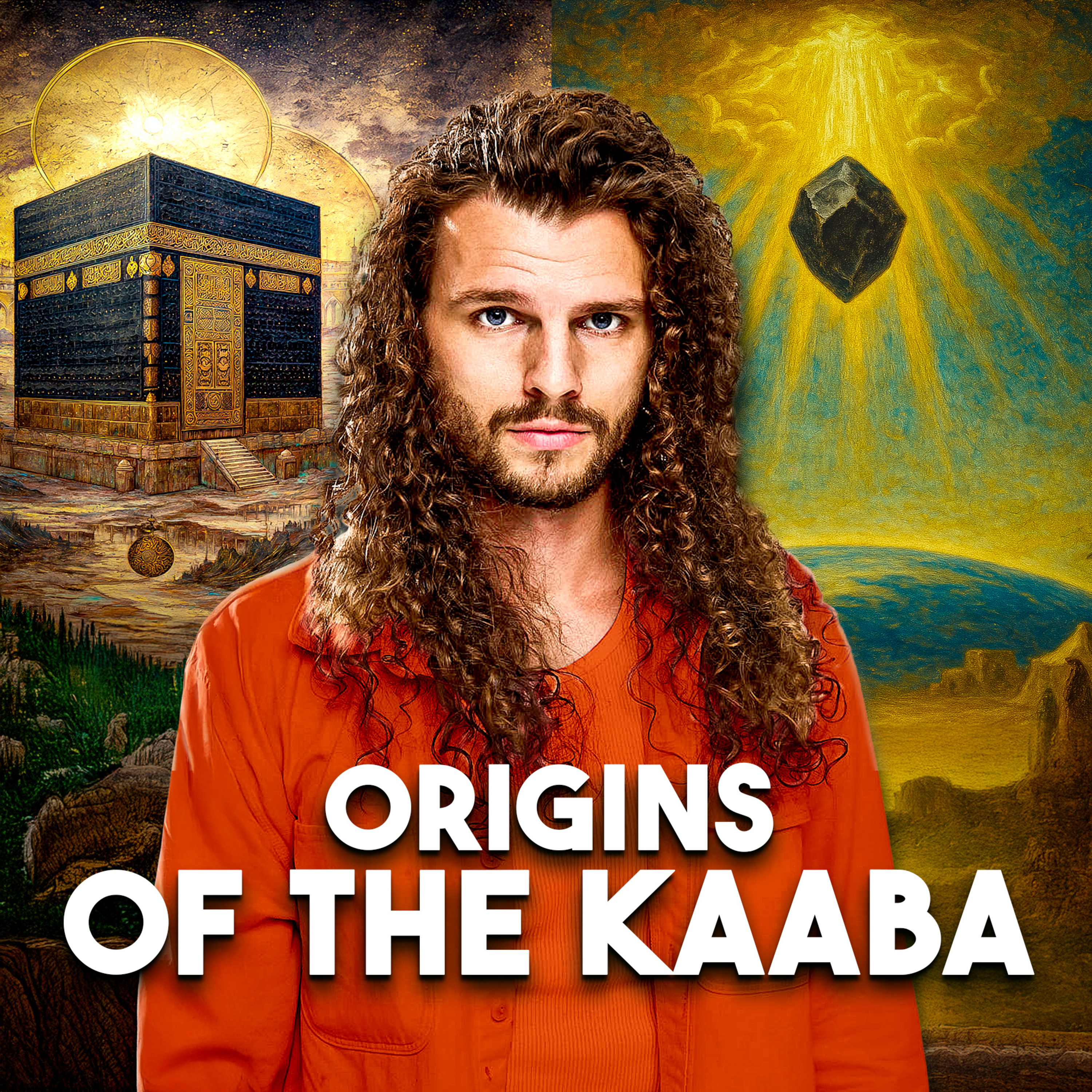
When Muslims face the Kaaba in prayer five times daily, from every corner of the world, they're connecting not just to a building in Saudi Arabia, they're connecting to this ancient lineage of monotheistic worship stretches all the way back to the very first human. Wow, this house is cute. But can I really get in the game in this economy? I do have savings and I am responsible. Ish. Ugh, I should bury it. I'm being wild. But what if I'm not being wild, though? Could I actually score a kick off your home buying journey with Zillow's new buyability tool. It makes it easy to find out what you can afford so you can get off the bench and onto the playing field with confidence. Check your buyability only on Zillow. Hey there, travelers. Kaley Cuoco here. Sorry to interrupt your music, great artist, BT Dubs, but wouldn't you rather be there to hear it live? With Priceline, you can get out of your dreams and into your dream concert. They've got millions of travel travel deals to get you to that festival, gig, rave, sound bath, or sonic experience you've been dreaming of. Download the Priceline app today and you can save up to 60% off hotels and up to 50% off flights. So don't just dream about that trip. Book it with Priceline. Go to your happy price. Priceline and actually stretches back beyond humanity into the realm of heaven itself. During the Hajj, up to 100,000 people might be circling the Kaaba at the same time. The Kaaba we see today isn't exactly the same structure that existed in Muhammad's time. In fact, it's been rebuilt either partially or completely 12 times through recorded history. The most interesting and mysterious element of the entire structure, the famous black stone. It might be a meteorite. What do you see if you actually enter into the Kaaba itself? So if you are like me, if you are not raised Muslim, if you don't know all the ins and outs of Islam, then this will be a great episode to break down what is really going on in Mecca around the Hajj. What's up, people? And welcome back to religion Camp. My name is Mark Gagnon and welcome to my tent, where I explore the most interesting, controversial and fascinating stories from all religions from around the world, from all time. And to all my Muslim friends, salam. I happy late Ramadan. I missed it, but it was during this Ramadan season that I was talking to my Muslim friends and it got me curious about this thing known as the Kaaba. The Kaaba is a fascinating religious pilgrimage site. It is the house of God, the house of Allah. But I didn't know much else about it. You know, I would see, you know, pictures of Muslims in worship, but I always assumed it was like a giant cube of obsidian. That's what I thought. A giant black cube. I thought the whole thing was just, like, made out of obsidian, which I now have learned is not the case. So if you are like me, if you are not raised Muslim, if you don't know all the ins and outs of Islam, then this will be a great episode to break down what is really going on in Mecca around the Hajj. I'm joined here today by my good friend Christos. How are you, Christos? Doing well. How's everyone doing? They can't respond to you, so I hope they're doing well as well. Also, let me just note if I have anything incorrect in this episode. I'm sorry. All right. I'm not Muslim. I was not raised Muslim. This is my best to try to understand culture and people through a deep dive on the things that I find interesting. And I think there's no better way to understand a culture than to understand the God that they worship. So let's start with the cabba. All right, You've probably seen, like, I have this big black cube, massive crowd circling around it. Let's throw a picture up right now, so anyone that hasn't seen it, they can check it out. And if you're like me, you're probably wondering, what is it? Why is it so significant? What does it all mean? Well, in order to understand the Kaaba and Islamic tradition, you got to go all the way back. Before there was a physical Kaaba in Mecca, there was this, I guess, celestial prototype, the. And again, my Arabic is very bad. My pronunciation is going to be awful. Okay? I just. I'm doing my best. Okay? The bait, Al Mahamor. This is also known as the frequented house. This is the heavenly Kaaba. Okay? This is the Kaaba that exists in the heavens, okay? And I say heavens plural because in Muslim cosmology, it is in the seventh heaven. And it is said that 70,000 angels visit it daily in order to perform worship, circling it in ritual prayer. Sound familiar? Because that's what's interesting about Islam. As Muslims during the Hajj are performing tawaf, which is the ritual circling of the Kaaba, they're essentially participating in same cosmic ritual that connects heaven and earth, doing on earth what angels are simultaneously doing in heaven. Now, there's one angel that's very important to the story. The angel Jibril, also known as Gabriel, if you know any of my Jewish or Christian friends are watching. The angel Jibril told the Prophet Muhammad, peace be upon him, while he was visiting the seventh heaven. Jibril also told Muhammad that when the 70,000 angels leave, they never return. But another group of 70,000 angels show up the next day in their place, a constant turnstile of religious worship. But did this heavenly concept come down to earth? Well, this is where Adam enters the picture. Yes, the same Adam from the Garden of Eden. According to Islamic tradition, after Adam and Eve were cast out of paradise for eating the forbidden fruit, you know, from the tree of knowledge of good and evil, they landed in different places on Earth, which is interesting. As a Christian, we were always taught that Adam and Eve left together. But in Islam, that is not the case. Adam landed in what is now known as Sri Lanka, while Eve ended up in Jeddah, near modern day Mecca. They were completely separated with no idea where the other was. Male and female, circling the earth without knowing where their partner could be. Adam, heartbroken and searching for Eve. I mean, that's like a terrible day, for the record, right? Like, as a Christian, I think with the Garden of Eden all the time, right? Like, you have, you're there with your girl, she breaks the lease agreement, and then you guys are kicked out. And Islam, it's even worse because not only are you kicked out, you're kicked out. You don't even know where your other half is. So Adam, heartbroken, searching for Eve, wanders the earth. During this time, the angel Jabril appears to him and guides him to a spot in the valley of Mecca. It's not a random location. It was directly beneath where the heavenly Beit al Mahamor stood in the celestial realm. Again, this is the heavenly Kaaba. Gabriel instructed Adam to build a simple structure for worship. The very first Kaaba. It wasn't the grand cube that we know today, but more of a, I guess a simple demarcation of sacred space. Adam constructed it using stones from five sacred mountains. Sinai, Zetun, Lebanon, Judea, and Hira. Each of these mountains has its own significance in various religious traditions. Topic for a different episode. The structure became the very first place of worship dedicated to the one God on earth, Allah. Adam would perform his prayers there, and he was doing tawaf, circling the Kaaba as Muslims do today. Sometimes religious scholars like to call this process circumambulating. Basically just means, you know, worship, worshiping in a circle, moving around it. I Wonder if. Actually, I think. I think Punjabis do a version of this when they get married. I remember that from a Indian wedding that I went to. I wonder if it's the same thing. I wonder if it comes from that same idea of, like, worship as you move in a circle. Regardless, there's something beautiful about this concept, right? The idea that the very first human also established the very first place of worship. And it creates this unbroken chain of monotheistic worship stretching back to the literal beginning of time. But what happened to Adam's Kaaba? Great question. Well, this is where nature comes in. Over centuries and millennia, the original structure didn't survive floods, particularly in the valley of Mecca. Gradually eroded the original foundation. Eventually, all that remained was just a slight depression in the earth. You know, a groove, a subtle marking of where the first house of worship stood. Fast forward thousands of years to around 2000 B.C. this is where Abraham enters the story. Okay? The patriarch recognized in Judaism, Christianity, and Islam. All right? The big OG and the Quran and Islamic tradition tell us that Abraham followed God's command. He brought his wife Hagar, and their infant son Ishmael to the empty, uninhabited valley of Mecca. This is where a major test of faith occurs. Leaving his family in a desolate valley with minimal provisions. The famous story goes that after Abraham departed, Hagar ran seven times between the hills of Safa and Marwa, searching for water for her thirsty child. This desperate search is commemorated by Muslims during the Hajj in a ritual called Sai. When things looked like they couldn't get worse for Hagar, her poor infant Ishmael was kicking at the ground. And miraculously, a spring of water gushed forth beneath his feet. This is the famous well of Zamzam, which still flows today. Provides water to millions of pilgrims annually. This water source transformed the barren valley and eventually attracted the Djurum tribe to settle there. And Mecca gradually becomes this inhabited settlement. Years later, when Ishmael had grown into a young man, Abraham returns to Mecca to visit his son. And during this visit, Abraham receives a divine revelation, a command to rebuild the Kaaba in the exact spot where Adam's original structure stood. Now, here's where the story gets even more interesting. According to tradition, Abraham wasn't left to guess where the ancient site was located. The angel Gabriel. Again, Jibril, I'm going to say Gabriel for the record, just because I grew up. Look, I grew up Catholic. It's the same angel, right? The angel Gabriel appears again to Abraham and physically marked the footprint of the original structure. Some accounts even say Gabriel helped Abraham excavate the area until they found the original foundation laid by Adam. What's remarkable about the tradition is how it connects these two pivotal figures, right Adam, the first human, and Abraham, the patriarch of Islam and much of modern monotheism. The symbolism and having Abraham rebuild what Adam originally constructed forms the this unbroken spiritual lineage. The construction process itself is filled with fascinating details. Here's a couple. Abraham and Ishmael worked together gathering stones from surrounding hills. As the walls grew higher, Abraham needed a way to reach the upper portions. This is where the famous Makam Ibrahim, the station of Abraham, comes into the story. According to the tradition, Abraham stood on a stone while building the upper walls of the Kaaba. Miraculously, this stone rose up beneath his feet as needed, elevating him to the required height. Even more amazingly, the stones softened like clay to receive the imprints of his feet. These footprints, said to be Abraham's, are still preserved today near the Kaaba inside a special glass enclosure. Millions of pilgrims visit this stone during their Hajj and Ummah rituals, often praying behind it after completing their tawaf. The original Kaaba was a simple, roofless rectangular structure with a foundation about like 3ft high and the walls reaching about like 12ft tall. It had a door elevated above the ground, you know, to protect from flooding, which is common in the valley. And unlike today's cube, the original structure Abraham built may have been rectangular rather than perfectly square, although this is of course, contested by Muslim historians. Abraham and Ishmael dedicated the completed structure to the worship of the one God, Allah, establishing it as a place of pilgrimage. The Quran records a beautiful prayer they made upon its completion. After completing the Kaaba, Abraham made a universal call for pilgrimage, inviting people from all directions to visit the sacred house. Islamic tradition holds that he stood on a nearby mountain, called out, and his voice miraculously reached all corners of the earth. It said that all souls who would ever be born until the day of Judgment heard this call and that those destined to perform the pilgrimage responded with le bak, here I am at your service. And Arabic. What's up, camp family? What's up, campers? Two big announcements. Don't skip this. Two massive announcements. The merch store is back open. That's right. Camp Goods is back in stock. We got these hats that I'm wearing right now. I've been rocking them both on here, on. On flagrant. I've been wearing them on stage. We got a bunch more hats like the ones behind me. You can see them all here on the website. We also Got some shirts. Oh, man. What is this one right here? Come on now. Come on now. Camp gear for allterrain. We got some other ones. What is this one right here? Oh, this one's beautiful. This one might be one of my favorites. The colors. The colors are absolutely crazy. This is Camp Gagnon vintage wisdom across the globe. Come on now. We got all that and more on the store. We also got these sick mugs right here. You might have seen me maybe sipping from one of these in some of the recent episodes. These are sick. They are all available on the website campgoods Co. Check it out. Link is in the description. And by supporting the merchandise, you are obviously supporting the show. You're supporting me, and you're obviously, you know, supporting all the amazing people that make the show happen, like Christos, who is currently throwing me T shirts from underneath this desk here. So please check that out. Additionally, I'm on the road. That's right. I'm doing my one hour of standup comedy. Some of some of the greatest jokes ever written. Okay, that's not true. But they are my jokes and I wrote them. I'll be in Portland, Maine on April 27th. And that one I'm I'm doing with Joey Avery. You know Joey Avery, a friend of the show. He sat across from me many times and I'm explaining some things to him. And he might be my dumb friend, but he is a brilliant stand up comedian. And we will be there in Portland, Maine. If you are in these areas, please come out. And we're adding a ton of dates all through the summer, so check out my website, themarkgagnon.com for all tour dates and updated info. Come hang out with me. I talk to every single person after the show. If you want to kick it with me, maybe have a drink, I'll be there and I will see you guys on the road. Let's get back to the show. Imagine this. You're 30ft underground, digging through frozen earth with spoons and mess hall plates. Nazi guards patrol overhead. One wrong move, one loose pebble, and it's over. But on this night in 1944, 76 Allied prisoners would attempt the impossible, tunneling their way to freedom in the largest prisoner of war escape of World War II and centuries earlier. In a cold stone chamber, a teenage girl in armor stood before her accusers. Her crime leading armies, speaking to angels, and daring to challenge the most powerful men in Europe. Joan of Arc's trial would become one of history's most infamous moments. These are just two stories from today In History, the newsletter that brings you the most fascinating events from the past delivered fresh to your inbox. From epic wars to religious rebellions, ancient mysteries to modern marvels, don't miss another piece of history. Scan the QR code now or click the link in the description to sign up for Today in History. What's fascinating is that archaeologists confirmed that there has indeed been a structure at this site for thousands of years. Although pinpointing the exact date of the original construction remains challenging. The area around Mecca shows evidence of ancient settlements and religious activity dating back a millennia. But here is something to think about. Whether you take this origin story literally or view it symbolically, it clearly shows what the Cabo represents and how much deeper it is than just a physical building. It embodies this profound concept of sacred space, a meeting point between heaven and earth and the focal point for human devotion to God. When Muslims face the Kaaba in prayer five times daily from every corner of the world, they're connecting not just to a building. In Saudi Arabia, they're not worshiping a building, obviously, they're connecting to this ancient lineage of monotheistic worship, according to tradition, stretches all the way back to the very first human and and actually stretches back beyond humanity into the realm of heaven itself. And that is just the beginning of the story. So Abraham and Ishmael. Lowe's is the destination for EGO outdoor power equipment this spring. See what's new and exclusive like the 17 inch string trimmer with line IQ technology that auto feeds to save you time and the 22 inch select cut self propelled mowers with a multi blade system for precise cutting. Shop EGO days happening now during Spring Fest at Lowe's we help you save. Selection varies by location. While supplies last. McDonald's meets the Minecraft universe with one of six collectibles and your choice of a Big Mac or 10 piece McNuggets with spicy nether flame sauce. Now available with a Minecraft movie meal at participating McDonald's for a limited time. A Minecraft movie only in theaters. Just finished rebuilding the Kaaba, right? Establishing this sacred cube. As you know, this is the house of God. But there's something missing. A way to mark where pilgrims should begin their circulation. The tawaf. A starting point for the ritual. And this is where we encounter the most interesting and mysterious element of the entire structure. The famous black stone. When people talk about the black stone, they're not talking about the whole thing. The black stone, or the Hajar al Aswad in Arabic, is set into the eastern corner of the Kaaba, about five feet above the ground. It's not particularly large, roughly the size of maybe like a basketball or soccer ball. But its significance in Islamic tradition is massive. And the origin story, this is wild. According to tradition, while Abraham and Ishmael were completing the Kaaba, the angel Gabriel appeared to them once again. But this time he didn't come empty handed. Gabriel presented them with a stone that had come directly from heaven, from paradise itself. What's fascinating is that this stone wasn't always black. Tradition says that it was originally this dazzling white color, so luminous that it could be seen from a day's journey away. Imagine that brilliant white stone shining like a, like a lighthouse in the middle of the desert, guiding pilgrims towards the Kaaba from miles and miles away. Why is it black now? Well, there's a few explanations. In tradition, the stone is said to have gradually darkened over time by absorbing the sins of those who touched it. Some traditions specify that it was the sins of those who touched it while in a state of ritual impurity, or those who touched it. Without sincerity, the stone itself essentially took on humanity's spiritual burden, becoming darker with each passing generation. Now, if you are the skeptical scientific type, you might be wondering what this stone actually means, is like, geologically, right? Like you could tell what it is, and it's a fair question. While no comprehensive scientific analysis has been permitted in modern times due to the stone's sacred status, obviously various theories have been proposed. Some geologists who've even had the chance to view it closely suggest it might be a meteorite, which would be fascinating and a really interesting twist on obviously the heavenly origin, right? Like a meteor is literally from the heavens. If true, it would, you know, would make sense that it's not only a metaphorical symbol, you know, or a spiritual symbol of God giving, you know, Abraham and Ishmael a stone from heaven, but a literal astronomical piece of heaven. Others believe it could be basalt or some other type of volcanic rock. The fact that Arabia has significant volcanic history makes it plausible. Some speculate it might have been, you know, some type of impacted glass formed when a meteorite strikes the silica rich sand and that intense heat fuses into the sand and creates a glass like material. What we do know of the stone now appears as a composite of about eight other small fragments held together in a silver frame. This fragmentation happened over centuries through, you know, natural wear and deliberate damage during various political conflicts that we'll get to in a little bit. The placement of the black stone serves as a, you know, it serves a practical purpose as well. By embedding the stone in the eastern corner of the Kaaba, it provided a clear marker for where the ritual should begin and end. Even today, pilgrims aim to start their seven counterclockwise circuits around the Kaaba from the blackstone corner, touching or even kissing it if possible, or simply raising their hand toward it in the massive crowds. Now, what happened after Abraham and Ishmael's time? This is where the story takes some turns. After Abraham established the Kaaba as a center of monotheistic worship, it indeed became a major, major pilgrimage site. Various, you know, Arabian tribes would travel to Mecca to perform rituals, and for a time, the pure monotheistic tradition continued. The descendants of Ishmael, who had settled in Mecca around the well of Zamzam, were the primary caretakers of the Kaaba. But over the centuries, we're talking hundreds of years here, things began to change. The original message of monotheism became diluted and mixed with other religious concepts. That this wasn't unique to Arabia, by the way. Throughout human history, religious practices have often evolved or transformed as different cultures interact with the traditions. By the 5th and 6th centuries AD, just before the rise of Islam, the Kaaba had become something quite different from what Abraham had intended. It turned into a major pagan shrine of over 360 idols representing different tribal deities of pre Islamic Arabia. Now this is a problem. These weren't just like small trinkets like historical accounts describe. A substantial amount of stone and wood carvings placed both inside and around the original Kaaba. The most prominent was Hubal, a large human shaped statue that stood inside the Kaaba itself. One key practice associated with Hubal was divination. Tribes would consult the deity by using specially marked arrows stored in the Kaaba. These arrows were drawn to make decisions on important matters like marriage and other disputes. Each arrow had an inscription or a mark such as yes or no, or even just blank like, try again. The result was considered the will of the gods and the decision usually was followed. Each tribe during this time had its own patron deity, but they recognized and respected each other's gods as well. Kind of this sort of, you know, religious diplomatic agreement, you could say. When tribes would come to pilgrim to, you know, do a pilgrimage in Mecca, they would pay a sort of like an homage to their own specific deity while also acknowledging the others. But here's something that might surprise you. Despite the shift to polytheism in the region, many elements of the original Abrahamic rituals were preserved, though often with, you know, some different meanings. For example, the Tawaf the circling of the Kaaba continued and the reverence for the black stone stayed the same. And, you know, the running between the hills of Safa and Marwa. So during this time that the Kaaba in this holy Muslim pilgrimage site was basically taken over by pagans. They were doing all sorts of wild things. For example, these pagan idol worshipers would circle the Kaaba typically naked. They would perform this same ritual, this tawaf, completely naked. They believed that, you know, in order to honor their deity or to honor their God, that they would appear before it in a state of absolute purity without the impurity of clothing that they had worn, while potentially committing sins. And it was this rebirth or returning to the initial state of purity that we all have when we're born. And this practice would later get forbidden in Islam. Muhammad actually came in and outlawed and cleared out these idol worshipers and these pagans from the sacred site. This introduces the concept of ikhram, which basically, you know, this is where you have these white garments that are worn during the pilgrimage to symbolize purity and the equality of all believers. Another pre Islamic tradition, or a pagan tradition you could say, involved hanging poems inside the Kaaba. These poems were known as the Suspended Odes, which would be written in gold and displayed inside the Kaaba as a high honor. These poems were a collection of seven to ten long Arabic poems, considered the pinnacle of pre Islamic Arabic poetry composed by famous poets during the 5th and 6th century. Throughout this period, the Kaaba underwent several renovations and rebuilding. One significant reconstruction happened when Muhammad, peace be upon him, was about 35 years old before he received his first revelation. A fire had damaged the structure and then heavy rains had weakened its walls. The Koresh decided to rebuild it using money from legitimate trade only. No money from gambling, usury or prostitution. Obviously these things are known as haram. During this reconstruction, something interesting happened. The tribes couldn't raise enough pure money to rebuild the Kaaba to its original dimensions, so they've reduced its size slightly, leaving out sections of the original foundation. This excluded portion is marked today by a small curve in the wall known as the Hatim, which stands near the northwest side of the Kaaba. We should get a picture so people can see. Muslims consider the area within the curved wall to be a part of the original Kaaba, which is why praying in this space is considered equivalent to praying inside the Kaaba itself. Despite all these changes and the proliferation of idol worship, a small minority of people in Arabia still maintained this monotheistic belief in Allah. These monotheists were known as the hunafa, or the singular the hanif, meaning those who turned away from idol worship and turned toward Allah himself. These hunafa would sometimes retreat to caves in the mountains around Mecca for spiritual contemplation, much like Muhammad himself would do before receiving his first revelation in the cave of Hira. This represented a continuous thread of monotheistic tradition that had never completely died out, despite this sort of pagan takeover. So by the time of Muhammad's birth in 570 AD, the Kaaba had a complex and layered religious significance. On one hand, it was the center of the Arabian polytheist pagan sort of takeover, housing all these different idols. On the other hand, it still retained the elements of the Abrahamic heritage, including the blackstone and sort of the basic ritual practices, and the widespread recognition that it had been built as a house for one God by Abraham. This dual identity, both as this pagan shrine and a structure for Allah, would prove crucial during the early days of Islam. It allowed Muhammad to reclaim the Kaaba for monotheism without completely rejecting the cultural and historical significance it held to the people. He could also present his message not as something entirely new, but as a return to the original purpose of the Kaaba as the pure house of Allah created by Adam and then rebuilt by Abraham, as it had been known for centuries. So now we've seen how the Kaaba has gone from Adam's original place of worship to Abraham's reconstruction, to then a pagan house of idols. And this is where we get to Muhammad, the birth of him in 578. This is a pivotal point in understanding Islam, of course, as well as the Kaaba's role. If you're like me, you probably read a news story and you're like, this is crazy. What is the truth about this? Is this a partisan spin? Is this funded by some media company or some country, by their state sponsored media to try to warp my brain? I genuinely read news articles now with so much skepticism because I have no idea if this is from the right or the left and what the agenda is and why it's being presented in front of me. And that is why I follow and support ground news. That's right. So even before I started working with this company on the podcast, I've been following them on Instagram because I just thought they gave a very, very great unbiased, nonpartisan approach to media. It's awesome. Basically, you're going to get a headline and they will show you sort of the different media splits as it comes to understanding the story. They will compare the reporting from different outlets across the political spectrum in one place to show you how the framing and word choice can affect our understanding of a story. I mean, here's a story that my mom sent me from a couple months ago. Robberies, assaults, surge in Central park, leaving New Yorkers and NYC tourists terrified. What is the purpose of this story? Who is writing it? Where is it coming from? Now I can go to Ground News, read this headline and be able to make an assessment as to whether or not this is predominantly being reported by the right wing or by the left wing and make some type of deduction like, oh, this is actually being used, you know, as some sort of political apparatus. So if you're like me, if you're a truth seeker, if you're trying to find unbiased news, I would absolutely recommend Ground News. It is completely independent, nonpartisan, subscriber funded. It allows readers to think critically about the world around them. And it doesn't tell them what to think, but instead lets them think for themselves. And ultimately it avoids misinformation and tries to heal polarization within our country, which I think is absolutely amazing. So don't let misinformation and sensationalism influence how you think. Save a massive 40% on Ground News's top tier vantage plan with my link. Ground News slash Gagnon J, G N O N. Or scan my QR code right here or go to the description and click on the link. This unlocks access to all of their news analysis features. Something that I think is, I don't know, super important to have. Yeah, make decisions based on facts, not spin. This November, Check them out. Here is a bullet. Imagine this. You're 30ft underground, digging through frozen earth with spoons and mess hall plates. Nazi guards been patrol overhead. One wrong move, one loose pebble and it's over. But on this night in 1944, 76 Allied prisoners would attempt the impossible, tunneling their way to freedom in the largest prisoner of war escape of World War II. And centuries earlier, in a cold stone chamber, a teenage girl in armor stood before her accusers. Her crime leading armies, speaking to angels, and daring to challenge the most powerful men in Europe. Joan of Arc's trial would become one of history's most infamous moments. These are just two stories from Today in History, the newsletter that brings you the most fascinating events from the past, delivered fresh to your inbox. From epic wars to religious rebellions, ancient mysteries to modern marvels, don't miss another piece of history. Scan the QR code now or click the link in the description to Sign up for today in history. By the time Muhammad was born, the Kaaba had been under control of its own tribe, the Quraysh. For generations, they were the masters of Mecca. And the Kaaba was essentially, you know, their golden goose, right? They basically thought if they controlled the most important religious site in Arabia, which brought them not only tremendous prestige but also a ton of economic benefit for the flow of pilgrims and traders, which is why some people have allege, you know, it kind of makes sense, it becomes a pagan site because the more people that go to worship, you know, the more money you can make. The Quraysh had developed a whole economic system around the Kaaba and its season. They organized trade fairs to coincide with religious gatherings, created a calendar of sacred months when fighting was prohibited, and collected various fees and offerings from visitors. In many ways, they were brilliant business operators who understood the connection between religion and commerce. Muhammad's earliest connection to the Kaaba came long before his prophetic mission began. This was when he was about 35 years old, still an ordinary merchant with no idea of the religious role that he was going to fulfill. The Kaaba needed significant repairs. Right. This is what we mentioned earlier. This flooding had come in and damaged the walls. There had been a fire that weakened the structure. So the Quraysh decided it was time for a renovation. They dismantled the Kaaba down to its foundation, began rebuilding it only using pure money for this sacred task. No funds obtained through gambling, prostitution or other dubious means would be accepted. This limited their budget considerably, forcing them to build the smaller Kaaba. Like we mentioned before. What we didn't mention is as the rebuild was nearing its completion, a serious problem emerged. Who would have the honor of returning the sacred black stone to its place in the eastern corner? Various Quraysh subclans began arguing over the task. Remember, these were, you know, proud tribal Arabs for whom the honor was deadly serious. And the matter almost escalated to bloodshed. The deadlock continued for several days until someone suggested that they let the next person to enter the sanctuary make the decision. As fate would have it, that person was who else than Muhammad. Peace be upon him. Just assume peace be upon him for all of them. Okay? I don't want to get in trouble with the Muslims. All right? Who had the reputation for fairness and wisdom. His nickname was Al Amin, meaning the trustworthy one. Muhammad's solution was simple and brilliant. He asked for a cloth to be spread out and placed the black stone in the center. Then he invited a representative from each of the quarreling clans to grasp an edge of the cloth and lift it together. When they had raised the stone to the right height, Muhammad himself stepped in and positioned it in its corner. Everyone was satisfied with the outcome. Each clan had participated equally in the sacred task and bloodshed was avoided. It's a really interesting and cool moment in history, right? The future Prophet of Islam still years away from receiving his first revelation, already playing a crucial role in the Kaaba story. And in retrospect, it seems almost symbolic of how Muhammad would later unite all of these same tribes under the banner of Islam. Fast forward several years and everything had changed. Muhammad had received revelations declaring that there was only one God. And he began preaching against idol worship and faced increasing persecution from the Quraysh, who saw his monotheistic message as a threat to their Kaaba centered ecosystem. Basically, the Quraysh was like, hey, if a bunch of people are coming here, we're making more money. But now you're saying there's only one God that's going to affect our bottom line. Eventually the pressure became so intense that Muhammad and his followers fled Mecca from Medina in 622 AD. This is known as the famous Hijra that marks the beginning of the Islamic calendar. During his time in Medina, Muslims prayed facing Jerusalem. But according to Islamic tradition, around 16 months after the Hijra, Muhammad received a revelation while leading prayers instructing him to change the qibla. This is the prayer direction from Jerusalem to the Kaaba in Mecca. The Quran describes the moment like this. We have seen you turning your face toward heaven, so we will surely turn you toward a qibla with which you will be pleased. So turn your face toward Al Masjid Al Haram. This was a pivotal moment that reconnected Islam to the Abrahamic legacy of the Kaaba. By directing prayers toward the Kaaba, even while it still housed idols, Muhammad was signaling that his mission wasn't to establish something entirely new, but to restore the pure monotheism of Abraham that had been corrupted over time. The story culminates in 630 A.D. when Muhammad returned to Mecca at the head of an army of 10,000 Muslims. After years of conflict, the Quraysh surrendered the city without a fight. Muhammad's first act upon entering Mecca was to go directly to the Kaaba. He circled it seven times on his camel, then entered the sanctuary itself. Inside, he faced the ultimate symbolic moment of his mission. The Kaaba contained 360 idols representing various tribal deities from all over Arabia. And Muhammad destroyed them all, reportedly reciting as he did so quote, Truth has come and falsehood has vanished. Indeed, falsehood is Bound to vanish bars. With his act, the Kaaba was restored to its original purpose as the center of of the worship of Allah. So now we've gotten to the point in the story where the Kaaba has now been reclaimed by Muhammad and by the followers of Allah to be the house of monotheistic worship of the one God. But that does not mean that the Kaaba has been unchanged since then. You know, some ancient buildings just seem to sit there forever while the Kaaba isn't one. Despite its simple appearance, the sacred cube has had quite the eventful history. I mean, floods, fires, warfare, you know, thefts, reconstructions, all sorts of things. So first off, something that surprises many people. The Kaaba we say we see today isn't exactly the same structure that existed in Muhammad's time. In fact, it's been rebuilt either partially or completely 12 times through recorded history. Think about that. A building so sacred to millions of people that they face their direction five times a day in prayer has been, you know, basically rebuilt and reconstructed into a more perfect version. Notice how it says direction. People don't pray to the Kaaba. I think this is a big thing that I didn't really know growing up, you know, not growing up Muslim. I never understood it. It's not a prayer to the Kaaba. They pray in the direction of the Kaaba. And again, this is called the Qibla. So if the Kaaba was ever destroyed like history has shown us, people would still pray in the same direction regardless. The first major damage occurred soon after Muhammad's death. By 683, just 50 years after Muhammad had cleansed the Kaaba of idols, the Muslim community was experiencing its first civil war. During this conflict known as the Second Fitna, the Umayyad forces leads. Ryan Reynolds here from Mint Mobile. I don't know if you knew this, but anyone can get the same Premium Wireless for $15 a month plan that I've been enjoying. It's not just for celebrities. So do like I did and have one of your assistant's assistants switch you to Mint Mobile today. I'm told it's super easy to do@mintmobile.com Switch upfront payment of $45 for 3 month plan equivalent to 15 per month required Intro rate first 3 months only, then full price plan options available, taxes and fees extra. See full terms@mintmobile.com Pro Baller Lonzo Ball for buzzballs ready to go. Cocktails take 12. Buzz balls just dropped their biggest blue ball. Script says Biggie's blue balls. Lonzo take 13. Blue balls just Dropped their biggest buzz balls. Let's try a vocal exercise. Buzz balls, biggies, blue balls. Buzz balls, biggies, blue balls, big balls. Just drop. Get BL with buzz balls. Available in spirit, wine and malt 15 alcohol by volume Basketballs LLC. Carrollton, Texas. Siege to Mecca, where Abdullah bin Al Zabir was taking refuge. Basically a giant war had breaking out. They were launching projectiles, flaming projectiles on catapults. And a lightning strike. The structure burns down and the intense heat actually causes the Blackstone to crack into three pieces. They eventually rebuild it and put those three pieces into a silver framing that holds it together. Fast forward again. It then gets retaken back and then rebuilt once again. This pattern of damage and reconstruction continued throughout the centuries. But in 930 A.D. something happened that stunned the Islamic world. The theft of the black stone itself. A radical Ismaili Shia sect known as Karmatians, led by Abu Tahir Al Janabi, attacked Mecca during the Hajj season. These weren't your typical raiders. They had a mission to challenge what they saw as a corruption of mainstream Islam. These pilgrims basically came in, they killed people, filled the sacred well of Zamzam with their bodies, and then committed what many considered the ultimate sacrilege. They pried the black stone from its place in the Kaaba's corner and took it back to their headquarters and Al Asa in modern day eastern Saudi Arabia. For 22 years, the black stone remained in their hands. They demanded an enormous ransom, believing that pilgrims would not come to Mecca without the sacred stone, thus crippling their enemies. But here's the thing. The pilgrims continued to come. They simply performed their tawaf around the Kaaba with its empty corner pointing to where the stone had been. And then eventually, in 952 AD, the stone was returned. Although there's some historical debate about whether a ransom was paid or not, some accounts suggest that they began experiencing misfortunes they attributed to possessing the stone unjustly. Whatever the reason, it had been returned. But it had sustained further damage and now was in even more pieces. The 11th century brought more changes, and the heavy rains continued to damage the Kaaba once again. But perhaps the most extensive Reconstruction happened in 1630. During Ottoman times, Mecca experienced catastrophic flooding as rainwater came down from the surrounding mountains into the valley where the Kaaba sits. The force of water was so strong that it collapsed three of the walls, leaving only the wall containing the black stone intact. Sultan Murad IV ordered a complete rebuild, and the original stones were recovered from the floodwaters where possible and supplemented with new Stones from the nearby hills. The Ottoman reconstruction established much of what we see today, including the dimensions of the basic structure. Though these physical changes, something even more interesting was happening. A political contest over who would control the Kaaba. You see, in Islamic history, being the custodian of the two holy mosques in Mecca and Medina was a enormous religious legitimacy and carried with it a ton of authority. Over the years, many different dynasties fought for control of this region, and ultimately the Ottomans claimed the prestigious title of the custodians of the two holy Mosques. The Ottoman Empire held this honor for nearly four centuries until World War I, when Sharif Hussein of Mecca declared the Arab revolt against the Ottoman rule. And since then, the Saudi royal family has held the title of custodian of the two holy Mosques, with the current custodian being King Salman bin Abdul Aziz. Through all these political changes, the Blackstone itself continues to face challenges. Centuries of being touched and kissed by millions of pilgrims, along with previous damage of fire and theft, had taken their toll. Today, the original stone exists as eight small fragments of different sizes held together in a silver frame that's been replaced many times throughout history. With the current silver frame dating back to 1956. Only about 20 to 30% of what's visible of the silver frame today is actually the original black stone. The rest is a type of cement filling called strass, which holds the fragments together. The largest piece of the original stone is estimated to be about the size of maybe a date. In modern times, the Kaaba's structure has been relatively stable, though it continued to receive regular maintenance. The major changes have instead been to the surrounding area. The Masjid Al Haram, the sacred mosque that contains the Kaaba, had been expanded numerous times to accommodate for even more pilgrims over the centuries. The most significant recent event affecting the kaaba occurred in 1979 when extremist militants seized the Grand Mosque, taking hundreds of pilgrims hostage in a two week standoff. Saudi forces eventually reclaimed the mosque, but not before there had been some damage to the surroundings. Today, Saudi authorities take extraordinary measures to protect the Kaaba from both natural disaster and human threats. The building is regularly maintained with the kiswa, which is the black cloth covering the Kaaba, and it is replaced annually during the Hajj. Flood control systems have also been installed to prevent any type of devastation to damage the structure. To this day, modern technology has even been employed to preserve the black stone. In 2021, Saudi authorities released rare, detailed images of the stone, creating a new photographic technique called focus stacking. These images are now used for study and Documentation allowing close examination without physical touching. What's so fascinating about this story of the Kaaba being rebuilt is that the Muslim devotion to the site and all worshiping in the same direction has been unchanged. Whether it's, you know, damage or natural disaster or theft, all Muslims since the beginning of Abraham have all been pointed towards the same direction. And I think there's something profound about that, right. This continued spiritual significance that transcends the physical building. The Kaaba has never been revered for its, you know, architectural magnificence or anything like that. The power lies in the connection to Abraham, Adam, Muhammad, and ultimately God himself. And that takes us to the Kaaba as we know it today. But to truly understand this remarkable structure, we need to look beyond the physical building and look how it connects the physical and the spiritual world. In Islamic mystical tradition, specifically Sufism, the Kaaba isn't simply a building. In Mecca, it's seen as the earthly reflection of divine reality, a mirror of what exists in heaven itself. So that raises the question, what do you see if you actually enter into the Kaaba itself? Well, this is pretty interesting because not many people get to do it. It is, you know, such a sacred place, and so many millions of pilgrims go there every year. But surprisingly, the interior is quite modest. There are three wooden pillars supporting the roof, a small prayer area that can accommodate about maybe a dozen people, and some hanging lamps that illuminate the space. The marble floors and walls feature inscriptions and prayers and Quranic verses, while the ceilings reportedly bear the names of various rulers and dignitaries who've restored the Kaaba throughout the centuries. Kind of like a historical record preserved in the most sacred space in Islam. Now, while the interior remains generally unchanged, the way the Kaaba is maintained has evolved dramatically with modern technology. The most visible example, like I mentioned before, is the Kiswa. The Kiswa is the obvious, you know, beautiful black drape that goes over the Kaaba itself and gives it its iconic black cube look. It has been handcrafted in Cairo for many years, but is now created in Mecca itself. Dedicated, you know, basically with an entire group of, you know, highly skilled artisans that actually craft and put in the ornate calligraphy that contain Quranic verses around the Kaaba. It is said that the Kiswa costs about $5 million to produce annually. I mean, the Kiswa itself, you know, uses 700 kilograms of silk and 120 kilograms of gold and silver thread. It weighs about 1500 pounds, and they only use it for one year, but at the end of the year, oftentimes it is cut up and given to different museums, different groups, and even potentially given as gifts. Another interesting feature of the Kaaba that most visitors don't really understand is the mizab, a golden rainwater spout extending from the roof. Mecca doesn't get a ton of rainfall, but when it does, specifically during Bahaj, pilgrims will position themselves under the spout, hoping to catch a few drops of the water. It is believed that the water flowing from the Kaaba itself is especially blessed, a divine gift directly from Islam's most holy structure. Notably, in 2012, there has been some construction around the Kaaba. For example, the Makah Royal Clock tower, which stands nearly 2,000ft over the Grand Mosque. It's the world's third tallest building and houses luxury hotels where wealthy pilgrims can perform their prayers while looking directly down at the Kaaba from their rooms. A premium view that obviously you can imagine is quite expensive. The modern development has sparked countless debates within the Muslim community as traditional scholars worry that the spiritual focus is shifting from the simple sacred Kaaba to these massive commercial structures surrounding it. They question whether the luxury and the commercialization around the mosque might distract from the true purpose, a devotion and dedication to God. Others argue that these developments are necessary to accommodate the growing number of people and to ensure that many more people will continue to do the great pilgrimage every year. What's remarkable throughout all these changes is how the Kaaba itself has remained essentially unchanged. Despite the massive skyscrapers around it, the Kaaba continues its primary focus, serving as the Qibla, the direction of prayer for Muslims worldwide. Maybe the most interesting or impressive thing about the modern Kaaba isn't the building, but the logistics of managing the millions of visitors. During the Hajj, up to 100,000 people might be circling the Kaaba at the same time. It's not 100,000 pilgrims, it's 100,000 all at once. That's like having a packed stadium crowd all moving around a single point, but without chaos. So how do they make it work? The Saudi authorities have developed a multi level system. There's a ground floor immediately surrounding the Kaaba, called the Metaf. The roof of the mosque and several floors between. Each level has a clear entry and exit point with pathways marked on the floor so people don't get lost. They also have a specific time slot. The area closest to the Kaaba has times reserved for the elderly and disabled pilgrims, and a woman only period, so everyone has a chance to approach the black stones safely. During busy times, there's even a queue for those wanting to touch or kiss the black stones, with guards keeping things moving. But behind the scenes, it's all high tech. The mosque has thousands of cameras and sensors that feed into a command center. Staff watch for dangerous crowds or medical emergencies, and can quickly send help to specific areas using a grid system that maps the entire complex of the mosque that houses the Kaaba. Interestingly, Mecca can hit 120 degrees Fahrenheit in the summer, but yet the marble floors around the Kaaba stay cool. That's because they have pipes with chilled water running beneath the marble, plus massive air conditioning units that pump out cold air, keeping everyone in a safe environment. What surprises many first time visitors is the mix of people circling the Kaaba. At first glance, you might see West Africans walking with Indonesians, wealthy Arabs besides, South Asian workers, elderly people in wheelchairs, and even people from Europe or America taking it all in. It might be the most diverse gathering of humans anywhere, with people from every continent, ethnicity, language, and social class moving together around a single point. After thousands of years and many historical changes, this simple black cube still draws people from around the world. So we've traveled through 4,000 years of history together, from the story of Adam building the first structure to Abraham, to Ishmael's reconstruction through its years as a pagan shrine, Muhammad's reclamation for monotheism, centuries of political struggles, and finally the modern pilgrimage experience. I guess what makes the Kaaba so fascinating and important isn't necessarily the architecture. It is the amazing ability to organize billions of people from around the world across any time and any place. Think about it. When a Muslim in Tokyo or Toronto or, you know, Morocco or even in Saudi Arabia turned toward Mecca to pray, they're participating in something that links them directly to Abraham. The rituals performed around the Kaaba today and the tawaf, the kissing of the stone, the prayers, they're essentially the same ones that have been practiced for thousands of years. The Kaaba has witnessed empires rise and fall. It's withstood floods and fires and thieves and sieges. Its caretakers have changed from prophets to tribes to caliphs to kings. Yet throughout all of this, the core purpose has remained the exact same. To serve as the focal point for worship of one God. For Muslims, the Kaaba represents the spiritual center of their faith. But even if you're not Muslim, there's something powerful to appreciate here too, right? The Kaaba shows how a simple symbol can unite people across, you know, vastly different languages and cultures and social status. So next time you see the Kaaba, whether it's in a News clip or a photo. Just know that it's more than, you know, a giant black, you know, structure or a simple cube, maybe a meteorite. It is a testament to something far bigger than any one person, place or moment in time. And maybe that's the important thing that we can all take away from the Kaaba in this Muslim tradition is that, you know, this beautiful house of God can be shared by so many people and that many times a day, millions, potentially billions of people around the world are all focused on one central site, all for God. I found that very interesting. I did not know so much of this about the Kaaba and about, you know, Mecca in Saudi Arabia. Again, you hear these terms like, oh, the Mecca, you know, that's like it's used colloquially. But actually understanding the history is very fascinating, especially for someone like me that grew up, you know, Catholic. Yeah, understanding the site. I guess in Catholicism we have like the Vatican, you know, is very similar, but it sort of lacks the centralized ritual purpose that Muslims have. I found it very enlightening. I don't know, I think it's fascinating and I have a ton of respect for, for the Muslims that, that, you know, perform the Hajj and actually go there and, and, you know, worship together with their brothers from around the world. So what do you think if you're Muslim? Did we get this right? Tell me if there's anything I missed. Write in the comments below. And if you're not Muslim, what do you think of the Hajj? What do you think, think of the Kaaba and what do you think of, you know, the sacred site in Mecca and this, you know, amazing pilgrimage, Both the historical elements, but also the modern logistics of making it all happen. Again, this is religion camp. If you are interested in, you know, the world of religious history and deep diving into theological and the divine, this is the place for you. If you have suggestions for videos or concepts you would like to see. If you feel like your faith is not represented, please comment it below. I read all the comments, every last one, the good and the bad. So I'd love to know what you guys are thinking. But as always, thank you so much for tuning in. I really appreciate it and you're welcome back on the tent anytime. Peace be with you. If you've made it to the end of this episode. You are clearly someone who understands that beneath every historical event lies a deeper truth waiting to be uncovered. You're the type of person who knows that real history is more fascinating than any fiction and we deeply appreciate that about you. I'll be honest. That's exactly why I personally invite you to sign up for Today in History, our free newsletter that goes beyond the surface of historical events. We dive into the stories that textbooks never told you, the secrets that challenge the course of nations, and the forgotten tales that deserve to be remembered. Let's continue this journey of discovery together. Take the conversation from your headphones into your inbox. Sign up now through the QR code or link in the description Today in History. Because every day holds a secret waiting to be revealed. Thank you for being part of our historical journey. We'll see you next time.