Loading summary
Transcript5 lines
- [00:00]
A
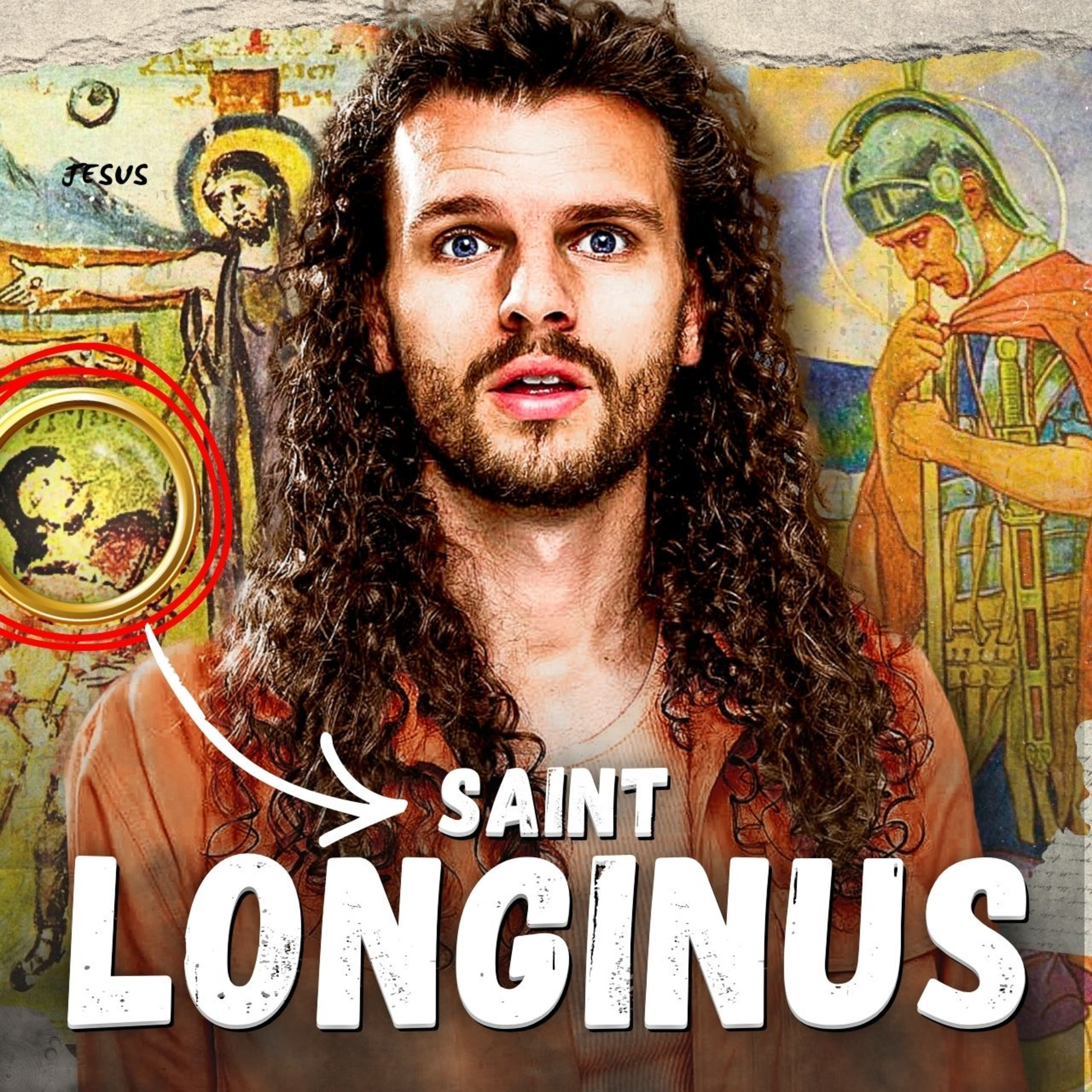
Almost everyone has heard of the crucifixion of Christ. But what most people don't bring up is the man. Not the man on the cross, but the man who pierced his side. His name was Longinus. And he's not only responsible for delivering the final wound that killed Jesus Christ, but he's also one of the first witnesses of the resurrection and the only person to have his blindness healed by the blood of Christ. But apart from the man, there was also a weapon. The Holy Lance. The weapon so feared that legend says the man who held it could never face defeat. This is the story of Longinus, a soldier whose entire life changed in an instant, and the saint who delivered the final attack on Jesus Christ. If you were interested in religious history, the crucifixion of Jesus and the saints that don't always get talked about, this is the episode for you. So sit back, relax, and welcome to Religion King. What's up, people? And welcome back to Religion Camp. My name is Mark Gagnon, and thank you for joining me in my tent, where every single week we explore the most interesting, fascinating, controversial stories from every religion from around the world, from all time, forever. Yes, this is my attempt to understand what everyone believes. There's billions of people on this planet and billions more that are already dead, and I want to figure out where they are and what they believed while they were here on this big, beautiful planet. I truly believe you can't understand the people without understanding the God the. That they worship. So this is my attempt to go through everything, and on this channel, we go through Islam, Christianity, Hinduism, and all of the above. Let me say up top, I am not a religious scholar. I'm not a theologian. I'm just a guy with a WI FI connection trying to figure it all out. Now, of course, this show is not possible without you watching at home, supporting this channel. It truly means the world. It's also not possible without my Greek Orthodox friend, Christos. Christos. How are you? Calimera? What's up? Religion? All right, Christos, I. I just wanted you to say, just. Is it Calimeda or not? Well, right now it's Calispera. Calispera. Whoa. Come on, dude, you gotta chill with that kind of language around here, all right? This is why we can't let you get the mic too much, Christos, because you get crazy. Now, guys, today we are talking about one of the lesser known saints in Catholicism. 1. A very fascinating figure he's talked about in the Bible, and he exists in Christian tradition. And let me just Address one thing about this man, Longinus. At times I might just say, you know, Longinus, because that's how most people say it. But this guy is one of those figures whose story sits between authentic religious tradition, the inspired word of God as we know it in the Bible, and also medieval embellishment. All right, early Christians who remembered this guy, right? This soldier at the crucifixion. And a lot of people talk about it, but the details around him grow over centuries, which is what makes, you know, understanding him a little bit tricky, Right? Trying to parse the historical figure and the legend that exists around him. However, according to legend, Longinus is said to have been born in the mountain region of Cappadocia, which is now like central Turkey, during the reign of Emperor Tiberius. Now, of course, this is the emperor of the region that was the, you know, Roman emperor when Christ was crucified. This makes sense right now, around the time of the crucifixion, he was probably a seasoned Roman soldier. So he's probably in, like, his 30s or 40s at that time. Now, growing up in Cappadocia, he was familiar with a lot of diverse cultures and religions. I mean, this region was the crossroads between the east and the West. So people coming from all over the world had to travel through this area to get to their destination. Now, an interesting fun fact. Longinus probably wasn't his actual name. The gospels never really identify him by name. The term Longinus first appears in the 4th century in an apocryphal text that we know as the Gospel of Nicodemus. And it likely comes from the. The Greek word launch, meaning spear or lance. And over time, launch became Longinus when it was actually, you know, Latinified or whatever. And it literally just means spear guy. Right? It's like the guy with the spear. The spear dude. And it stuck around for nearly 2,000 years. Now, as a centurion in the Roman legions, Longinus commanded between 80 and 100 soldiers and represented, like, the real backbone of the Roman military. And if you know anything about Rome, they were a military empire. So these weren't just tough fighters. These centurions needed intelligence and tactical skill and just complete ruthlessness. So in order to become a centurion in this time in Rome, you had to survive years of brutal campaigns and battles. And, you know, so it's. It. It's implied that Longinus likely had served in, you know, multiple provinces before actually being stationed in this area under Pontius Pilate. Now, by the time we meet Longinus in the story, he had probably overseen dozens, maybe even hundreds of crucifixions. It's really hard to put a number on, but Roman crucifixion was designed to be the most humiliating and agonizing death possible. I mean, it is so brutal. I mean, one of the ways you die is not actually from blood loss or, you know, from the hanging. It's literally you're asphyxiated. Like, your lungs, you can't catch your breath and you slowly just suffocate to death publicly in front of anyone that passes by. And it was just reserved for the worst people. It was for slaves and I mean, bandits and thieves and. And of course, political revolutionaries, rebels, if you will. So what happened next completely changed Longinus's worldview. The legend of Longinus, within Catholic tradition, takes place during Holy Week, right? These are like the seven days that lead up to Easter. Now, back in his time, tensions had been building throughout, you know, throughout Jerusalem. Jesus of Nazareth had entered the city while riding a donkey as crowds were proclaiming him king. Like, literally, Hosanna. Hosanna, which was a direct callback to the prophecy in Zechariah 9:9 about a future king arriving humble and riding on a donkey. And the hosanna reference comes from Psalm 118, a Passover hymn. Literally, that means save us now traditionally used to welcome a God sent k. But almost immediately after his arrival, Jesus walked into the temple and he saw a bunch of, you know, money changers in the temple and he flipped all their tables and he shouted that my house shall be called a house of prayer, but you have made it a den of thieves. Quoting directly from Isaiah 56. 7 and Jeremiah 7:11. This wasn't just a symbolic gesture. This was a direct assault on the economic system that existed within the temple and a public rebuke of the leadership of the temple. And so to a Roman officer like Longinus, this didn't look like, you know, some wandering, peaceful preacher. It was the beginning of a potential revolt, right? A man had just entered the city to royal chants and all these people saying, save us now. And invoking, you know, ancient prophecy about, you know, this new king sent from God, and now he's disrupting the holiest site in Jerusalem. You can see how this becomes an issue, right? So when the Jewish leaders of the time bring Jesus before Pilate, they charge him with claiming to be the king of the Jews. And at this time, any claim to kingship is treasonous against Rome, right? There's only one king, and that's Tiberius, right? And technically, amongst Judea it is Pontius Pilate, and this is punishable by crucifixion. Also at this point, a crowd of people had gathered around, and According to John 19:12, local leaders were insisting that, you know, if they let Jesus go, it would make Pontius Pilate no friend of Caesar, literally no friend of, you know, Tiberius. Now, Pilate, then ultimately made this decision. And according to the legend, he ordered Longinus to oversee the execution of this Jewish preacher along with two criminals. Now, this takes us to Golgotha, also known as the place of the skull. This is a hill that stood outside Jerusalem's walls where many of these crucifixions would take place. It was here that Longinus stationed his men to carry out three crucifixions. The two other criminals were no different than the others that, you know, he had executed dozens of times before. But something was about Jesus. And what Longinus witnessed during those hours defied everything that he thought he knew. As Jesus was being nailed to the cross, he didn't curse his executioners or beg for mercy like other victims. Instead, he prayed, saying, father, forgive them, for they know not what they do. And when one of the crucified thieves turns to Jesus and says, jesus, remember me when you come into your kingdom, Jesus turns to the man and says, truly, I tell you, today, you will be with me in paradise. Now, this was not normal, normal criminal behavior. It wasn't even normal human behavior, right, especially when facing this brutal death. So for Longinus, watching this unfold made the entire execution start to feel very different than anything he had seen before. And then, of course, according to Christian tradition, this is when the supernatural events began. At noon, darkness covered the entire land. Not clouds, but just darkness that lasted for three hours. Longinus had fought many battles and seen a ton of different omens, but nothing like this. So when Jesus died, the earth immediately responded with this earthquake. Rocks split apart, tombs cracked open, and the massive temple veil tore from top to bottom. Despite this, the protocol for crucifixion still had to be followed. Roman procedure required confirming death before releasing the body. So Longinus took his spear, that lance that would make him famous throughout history and the reason we're talking about him today. And he pierced Jesus side just below the. Now, according to the gospels, immediately blood and water flowed out, A medically accurate detail that physicians today actually recognize as consistent with death by crucifixion. But then the miracle happened. According to church tradition, Longinus suffered a serious eye problem. It was a real issue that he had for many years. And possibly a condition known as ophthalmia, which was common amongst soldiers in a lot of really dusty, bright climates range. But miraculously, some of the blood and water splashed onto Longinus face and into his eyes. And in that instant, his medical issue was resolved, his vision cleared completely, and for the first time in years, he could see perfectly. But more than physical healing occurred. According to tradition, spiritual sight came with him. And as he looked at this crucified man before him, he realized that he had just made a massive mistake. And he spoke these words, truly, this man was the Son of God. Also, just to point this out for context, this quote does come literally from the gospel and is said to have come directly from the centurion. But again, his name just isn't mentioned directly. So we at least know that a soldier did say this. But his name and, you know, story is sort of what has been added to this legend. Now with the legend, the story only continues to grow. Longinus relationship with Christ didn't just end at the crucifixion. The Jewish leaders were worried because Jesus had made a prediction that he would rise on the third day. So he asked Pontius Pilate for a Roman guard to secure the tomb. And according to legend, Pilate assigned the very man who had overseen the crucifixion to do just that. And that man was Longinus. So what happened during those three days must have been extraordinary. According to Matthew's Gospel, there was another earthquake early Sunday morning, and an angel appeared, rolling away the stone and causing the guards to collapse like dead men. Traditionally said to mean that they were asleep on the job is how most biblical scholars interpret it. But when the soldiers recovered, the tomb was empty, with only a linen burial garment left behind. That is the Shroud of Turin, which we've done an episode on. You guys should go check that out. The Jewish authorities began panicking about what would happen if news of this empty tomb began to spread. So they decided to take things into their own hands. They offered substantial bribes to soldiers to spread a false story. They said, oh, just say that the disciples had came in and that they stole the body while. While they were sleeping. Just say that. Now, this appears in Matthew 28, verses 12 through 15, and it literally says, when the chief priests had met with the elders and devised a plan, they gave the soldiers a large sum of money, telling them, you are to say his disciples came during the night, stole him away while we were asleep. If this report gets out to the governor, it will satisfy him and keep you out of trouble. So they Took the money and did as they were directed. And this story is still told amongst the Jews today. Now, during this time, Roman soldiers admitting they fell asleep on duty, it's a death sentence, right? It was literally capital punishment under Roman law. So when they were offered a way out and, you know, just basically, you know, smooth it over, say that this happened, but nothing will happen to you. Most of these guards took the deal, but not Longinus. Something fundamental had changed in him at that moment of the crucifixion. The healing of his sight and, you know, maybe even more than that, the healing of his heart or his soul. However it's interpreted, he refused the bribe and instead began telling people what really happened on the cross. But again, this is extremely dangerous, right? He's going against his superiors and he's proclaiming that this person actually is the Son of God and he's defying the religious authority and he's really risking his own life. Now, according to legend, and it's really hard to pin down exactly where this came from. Longinus eventually realized he could no longer serve Rome while following Christ. So he made a dramatic decision. He stripped off his armor, laid down his weapons, and went looking for the men Rome was hunting. Now, of course, these men are the apostles. Deep in Jerusalem, the apostles were still hiding, right in fear for their lives. But eventually Longinus found them and asked to be baptized. Peter, John and the others were amazed to meet the very centurion who had overseen the crucifixion of Christ. And now they wanted to learn from him. So the apostles welcomed him. And after receiving baptism and spending time learning, you know, from those who had actually talked and broke bread with Jesus, Longinus made another life changing decision. He would return home to Cappadocia not as a retired soldier, but as a missionary for the Gospel that had transformed his life. Another interesting fun fact, and something that's not really mentioned a lot, is that two of Longinus fellow soldiers, often named Petronius and Cassius, shared the experience of guarding Jesus's tomb and also converted after effectively witnessing the resurrection of Christ. They also chose to accompany Longinus on his ministry to Cappadocia. Now, again, a lot of this comes from sometimes medieval myth making. So at this point, very little of this is actually included in the Gospels. For anyone that's watching that is not Christian, but it still exists within church lore. Now, back in Cappadocia, Longinus immediately threw himself into a religious lifestyle while simultaneously becoming one of Christianity's most effective early preachers. His testimony was unique because he wasn't preaching from hearsay or oh, I heard from a guy or someone said something. This was first hand testimony of someone who had been intimately involved in the crucifixion and the death and ultimately the resurrection of Jesus Christ. What's up guys? We're gonna take a break really quick because I have a story to tell you. Fun fact, after you have a child, your testosterone naturally goes down. It's a way for you to like become like more empathetic and more in touch and like protect your kid and stuff. And I didn't really believe that. But then I had a baby like a year ago and I started to feel it around, like 3 o' clock would roll around and I would get more tired. I wasn't really sleeping that great because we just had a baby and I was like drinking more coffee and I started getting anxious and I was like, this is not working. I was like, should I just do trt? Like I know a lot of guys and they hit like 30, 40, they're just ripping TRT. So I was looking into it, I was like, ah, it affects your fertility. I might want to have some more kids. So I was like, alright, there must be a way I can do this that's more natural and just like support my testosterone. So I hit my buddy David who does the ads, and I was like, is there anyone that's out there doing any of this kind of stuff? And he was like, oh, you should check out Mars Men, Mars Men. Right here is a natural testosterone booster. This is going to just basically support your testosterone using a bunch of supplements and natural ingredients that are going to make your testosterone be what it's supposed to be. Okay, don't even think about TRT because again, it can be overkill. You're going to be injecting your body and it can also shut down your body's like natural production of testosterone, but using this stuff. Tongat, Ali, shilajit, vitamin D, zinc, boron, all the natural stuff that is going to be supporting your healthy T levels and helping your stamina and giving you more energy throughout the day. And honestly, it's great. I've only been trying it for, you know, a couple weeks now and I want to do like a before and after testosterone test and see like how much more my testosterone boosted. 91% of guys reported feeling higher energy. And the reviews on this are absolutely amazing. It's made in the USA, third party tested and there is a 90 day money back guarantee. So there's literally no risk. You can try it for, you know, three months. And if it's not for you, they will get you your money back. And for a limited time, the listeners of this program, this is a crazy deal. By the way, most brands don't do this. You're going to get 60% off for life and three free gifts. When you use the code camp@ Mengotomars.com that is Men M E N Go to Mars M A R s and use the code camp at checkout. And after your purchase, they're going to ask you where you heard about them. Please say that you heard about them from Camp Gagnon, that we sent you there. It really helps us out. Mars Men is great. It is a natural support for your testosterone. Look, you can buy all of these supplements separately, or you can just go to Mars Men and get it all in one case. Now let's get back to the show. Longinus's preaching sparked what could basically just be described as, like, mass conversion throughout the region. Entire villages abandoned their pagan gods and just embraced Christianity wholeheartedly. The transformation was dramatic that within a few years, Christianity had deep roots throughout the entire region, roots that would help make Cappadocia a major center of early Christian theology and monasticism. Now, back in Jerusalem, the Jewish religious authorities were beginning to hear reports that the very Roman centurion who had actually killed Jesus was now preaching about the resurrection and converting thousands of people to Christianity. And this is exactly what they didn't want, right? This is basically like another apostle, right? This is a credible testimony from a trustworthy person who, you know, was highly ranked within, you know, the Roman military that is now undermining their efforts to suppress this early Christian movement. So as the story goes, Pilate at that point was now going to go ahead and get rid of Longinus. They, you know, amongst the Jewish authority, he was seen as someone that was, you know, talking about this guy, Jesus Christ, who was obviously massively problematic within the region. And then to pilot, it was like, yo, this guy was one of our soldiers, and now he deserted us. And he's like, praising one of the people he killed, like, we cannot stand for any of our Roman soldiers to have gone crazy. So as a result, Pilate dispatches a squad of soldiers to Cappadocia with orders to arrest and execute Longinus and his companions for desertion, treason, and disturbing the peace. So the soldiers make the long journey up to Cappadocia and began searching for their targets. They had descriptions, but they never actually met Longinus personally. Right? So after asking around, you know, in this Region, which is literally Longinus's hometown. They're trying to figure out where they can find him. And they were directed to a modest house on the outskirts of the village. And when they knocked, the unthinkable happened. Someone opened the door, and who was it? Longinus. Without revealing his identity, he welcomed the soldiers in, and he invited them to rest and to eat. And his companions quietly just made a meal while Longinus was listening to the soldiers telling him of their plan, that they're hunting these dangerous deserters of Roman legion named Longinus and his companions. They needed to be captured and executed. And throughout the evening, Longinus, you know, served his basically bounty hunters and gave them this genuine kindness. He asked about their journey and their families and their service. And the soldiers were really impressed by their host's character and his wisdom and just how well that he understood military life, but, you know, had just found something better and moved on. So the next morning, as the soldiers prepared to continue their hunt, Longinus gathered them together, saying, I need to tell you something. I am the londinus you're looking for. The soldiers are like, skrt. What? The man who had shown them all this hospitality and their kindness, this is the guy that pilate wants us to go kill. The revelation created a crisis for the soldiers. You can imagine, right? How could they arrest someone and effectively kill someone that had just treated them like family. They had just traveled so long, and they're trying to get this guy. And then he just spent the whole evening taking care of them and giving them a place to sleep and feeding them. So they urged Longinus to flee, promising to report that they couldn't find him. And they had grown to respect and, in some ways, even admire this man just over their brief time together. But Longinus refused to run. He called his two companions, and together, they made a choice. They could face martyrdom rather than deny their faith or just live in hiding. The soldiers torn, basically in this moment between duty to, you know, Rome and to the emperor and to the Caesar and their affection and their affinity. And like this human relationship they built with this man. And reluctantly, they took the three men into custody. Then, as they traveled to the capital, the guards found themselves receiving impromptu theology lessons from these prisoners, who remain joyful and peaceful despite facing this certain death. Now, this next part, let me just say, is highly debated. Again, remember, a lot of what we know about Longinus and the stories that are told. A lot of it comes up in, you know, medieval times, and a lot of it circulates and is embellished and the true story of Longinus is difficult to really pin down. But a lot of these embellishments are really cool. So I think it's worth saying, okay. It said that upon arrival, the Roman governor gave Longinus and his companions a choice. Okay, sacrifice to the Roman gods, formally deny Christ, and receive a pardon for desertion, or we gotta kill you. So these three men, as you can imagine, they say, yeah, it's fine. You can kill us. So the governor ordered traditional torture to break them. Despite this, Longinus continued preaching under torture. And even after guards knocked out all of his teeth, Longinus still spoke clearly, proclaiming the name of Jesus Christ as the Lord and the Savior. Now, again, a lot of this is probably embellished in some capacity, but these are the medieval legends that go around at this point. The governor is frustrated, and so he orders the ultimate silencing. He wants Longinus's tongue to be cut out completely. But then came another great miracle in Longinus life. Despite having no tongue, he continued to speak. The governors, the guards, and everyone present stared in amazement. Now, again, likely this is embellished, but this is the story. Longinus then did something that must have been terrifying to witness. He grabbed a nearby axe and began destroying the pagan idols in the Governor's chamber, smashing them to pieces while shouting, now we all shall see whether they are gods. It is said according to tradition, that when the idols shattered, demons that had been inhabiting them were released and immediately attacked the governor and made him go blind. And in retaliation for the destruction of their dwelling place. Now, realizing that further torture would only produce more miracles, the governor just ordered immediate execution. So Longinus knelt calmly and began praying for his executioners and was killed. Now, of course, the legend with Longinus doesn't end there. As the blade fell, it is said that some of the blood splashed into the Governor's face, and instantly his sight, which had been taken away by the demons, was restored. The same miraculous blood that had healed Longinus ey at the crucifixion had now healed the very man who ordered his death. Now, the story is beautiful. It's a fantastic story, but the real story is likely not as poetic. When Longinus arrived to the city, he and the two soldiers were just simply beheaded. Probably no idol breaking or demons or miracles or tongue cutting or eye healing or anything like that. Just beheading and execution for these three rebels that deserted the Roman legion. Now for one of the more traditional stories associated with Longinus. Following orders, the soldiers severed Longinus's head and transported Back to Jerusalem. As proof that their mission was successful, Pontius Pilate and many of the other authorities of the region, Satisfied that their problem was finally, you, know, solved, Ordered the head thrown into the city's garbage dump Outside the walls, Basically saying it was unworthy of any time type of burial. But according to stories, God had other plans for this relic. Years passed, and during the reign of a later emperor, A wealthy blind widow from Cappadocia Decided to make a pilgrimage to Jerusalem with her son, Hoping that prayer at this holy site Might actually restore her vision. The pilgrimage became great. But when they arrived in Jerusalem, her son fell ill and died within days, Leaving the mother alone in this foreign city, Heartbroken and blind and without guidance. She then faced the decision to either make her way home alone or die alone in Jerusalem. So that night, she wept in her bed. And Saint Longinus appeared to her in this dream. And next to him was a young man that she recognized as her son. Longinus told the woman not to mourn for her son because he's in heaven, and that if she wished to see him, she must restore her vision by retrieving his head. Yeah, literally, like, hey, go find my head. That was thrown beyond the city walls. He then gave her specific directions and assured her that touching his head, this relic, it would restore both her physical sight and her spiritual vision of her son's heavenly glory. Now, despite the strangeness of the request, the widow felt compelled and followed the orders. Now, the next morning, the widow hired guides to lead her to this area outside of Jerusalem's walls. And when she arrived, she began digging just with her bare hands into basically, like a garbage pile. Followed, you know, basically following the saint's instructions. And after hours of searching through the garbage, her fingers felt something. Now, as soon as her hands made contact with Longinus preserved head, her sight was restored. And after finding the head of Longinus and recovering her sight, the woman brought this relic back to the place where she was staying in Jerusalem. Him. And she kept it there. And she had another vision. Longinus appeared again, standing next to him. And he showed her that her son was now in a state of honor and peace and counted amongst those in God's kingdom. Longinus then gave her one final instruction. Take both his head and her son's body, Place them together for a burial, Reassuring her that her son would remain in joy and rest. Now, when she awoke, she followed the instructions given in the vision. She returned to Cappadocia, where she buried her son and the head of the martyr Longinus in the Same place. Now, again, just as a footnote, that story is not something that is verifiable historical fact, as you can imagine, but it is something that exists within the Christian tradition. So I felt like it was important to discuss in this episode. Now, today, Saint Longinus is venerated across multiple Christian traditions. Roman Catholics to Eastern Orthodox, Greek Orthodox. Right. Christos. All right, all right, right. Armenian Apostolic tradition and a lot of other churches really just honor him as a martyr and as a saint. His Feast Day is October 16, and it's celebrated with, you know, special liturgies that often include the reading of the crucifixion and his martyrdom. But some of the coolest things about Longinus are this artifact. Multiple locations claim to have relics of Saint Longinus, but most famously, the Holy Lance, or as the Nazis called it, the Spear of Destiny. Now, there's all sorts of crazy history with this thing, okay? And we can get into some of it. The three places said to hold the spear are the Vatican, the Hofburg treasury in Vienna, and a church in Armenia. Now, the lance in Vienna is far from a battlefield weapon. It was a part of the imperial regalia of the Holy Roman Empire and can be traced to the 8th or 9th century, likely from the time of Charlemagne. Name the Holy Roman Emperor. It first appears in written records during the Carolingian period, when rulers were making a lot of fake relics to reinforce their. Their legitimacy. Emperors wanted their regalia to be tied to Jerusalem or the Passion of the Christ or anything that involved divine authority. So you can imagine owning the spear that pierced Jesus Christ himself symbolized divine authority and became a political tool rather than, you know, literally a Christian relic. Now, the Vatican's lance, however, isn't exactly a full spirit. It's a fragment that came from Constantinople after it fell to the Ottomans. In 1453, Sultan Bayesid II sent a piece of the relic to Pope Innocent VIII during diplomatic negotiations. Although it was most likely fake. Also, it's really difficult to verify these relics. Right. You can actually see a replica of the fragment in the hand of Pope Innocent vii. However, the Armenian spear holds a story with a written tradition that's technically older than both of those. The earliest known reference to the Armenian Lance appears in a 13th century manuscript titled Holy Relics of Our Lord Jesus Christ. Now, this text states that the spear was brought to Armenia by the Apostle Thaddeus, one of the earliest figures associated with Christianity in the region. However, the manuscript doesn't explicitly name a specific place where the relic was kept, but its description matches the monastery, now called Gegardavank, or the Monastery of the Holy Lance. It describes features of the site, most noticeably the monastery gate, which is exactly how historians were able to connect this manuscript to that traditional. Another interesting fact, the spear in Armenia is put on display once a year for people to come see it. You can go see it even still to this day, on that specific feast day. Now, the most famous story associated with the lance actually comes from the First Crusade in 1098, when the Crusader army was starving and trapped inside a city. Now, a soldier named Peter Bartholomew claimed to receive visions telling him that the true lance was buried beneath the Church of St. Peter. So the Crusaders dug into the floor and they find this corroded spearhead with no identifying features. However, many accept it immediately because morale was collapsing and the army needed a sign. And this dude has a dream and says that, hey, there's a spear under the ground, and they dig it up and they find it. Now, others, including, you know, high ranking clergy, suspected that it had just been planted there. Regardless of, you know, know what this object was or where it came from. The discovery boosted morale, and the Crusaders soon broke the siege. Now, you're probably thinking, you know, what everyone else is thinking is, like, all right, where's the real one? Well, in the mid 18th century, Pope Benedict was actually asking the same question. He had heard that a supposed holy lance in Paris might match the one that was kept in St. Peter's so he asked for an exact drawing of the Paris relic to be sent to Rome. After comparing the sketch to the Vatican spearhead, he concluded that the Paris lance tip appeared, appeared to fit the missing portion of the Vatican fragment, as if, like, they had once been part of, like, the same blade. However, many modern historians note that his conclusion was based just only on visual comparison, not like, real solid scientific evidence. And the two pieces have never actually been scientifically shown to be related. But apart from the spear, the Russian Orthodox Cathedral of St. John the Baptist in Washington, D.C. also claims to possess a bone fragment from Longinus. However, in Brazil, St. Longinis developed a very unique role given to the fact that his relics have been spread all over the country. So he's known as the patron saint of lost objects in Brazil. Brazilians regularly will call upon the saint in venerating him and literally will call him Sao Loginho. When they've misplaced something important, they'll recite this chant, literally, like, missing object. And it literally just means, like, Saint Longinus. Saint Longinus. If I find this missing item, I'll Hop three times. This tradition supposedly originated from legends of Longinus's short stature and keen eyesight, which allegedly helps him find stuff that rolls under the couch. Like, it's sort of silly, but that's just how it was kind of used within, you know, Brazilian Catholic lore. Now, whether historical or not, the practice just demonstrates how saints sort of adapt or get adapted to meet the practical needs of, you know, different religious people across different cultures. Now, what makes Saint Longinus and his story powerful isn't just the miracles, of course, that is, you know, miraculous. But it's just how completely his life changed, right? He went from being this Roman soldier carrying out orders to someone who openly followed what he believed was the truth, even though it cost him his job and safety and ultimately his life. And the story, I think, is important, right? Even to non believers, just to contextualize how saints and their stories get told within the church. And what I think Longinus symbolizes is that no one is too far gone to be redeemed. Right? If the soldier who literally killed Jesus delivered the final blow, then anyone can change their life and, you know, take up the call to follow Christ no matter what they've done or who they are. Right? Longinus was like a seasoned, nearly blind soldier following orders and, you know, killed a man and ended up as a saint remembered across the world with, you know, relics being venerated in churches all over. Right? His life changed because he witnessed something that forced him to choose not what was easy, but what he felt like was the truth. So next time you hear a story of the Crucifixion, remember the soldier standing at the cross. And also, if, you know, you lose something, you know who to reach out to. Old Saint Lanus and make sure you hop three times. And that is the story of the saint who quite literally killed Jesus Christ. Interesting one. There's a lot of stuff that I didn't realize. Like, even going through the research on this, I didn't realize, like, the, you know, the sort of cultural fervor that he had in Brazil, which is so interesting how, like, different. Like, I feel like in America, we talk about St. Anthony. Like, I'll hear a lot of people be like, Ah, St. Anthony, help me find stuff. Like, he'll be, like, the patron saint of lost items within, like, Catholic tradition. But it's just interesting. Like, there's also so many interesting stories about the Holy Lance, like Charlemagne, Holy Roman Empire emperor, allegedly, according to the story, had the Holy Lance while he was doing his crusades and running around and battling people you know, in his time and never lost a battle while he had the Lance in his hands. And then according to the story, he dropped the lance, lost it in a river, and that's when he was killed. That's what the story says. It's also said that. And again, I think this is probably a little embellished, but that Hitler had a vested interest in the Holy Lands and that when the Nazis and the Third Reich actually went into Austria and, you know, seized Vienna, that one of the first things that Hitler was interested in was that he wanted to go to the House of Treasures and go get the Holy Lance. Now, again, I think this has probably been embellished. I think it's probably possible that he sent his people in there to go get money and resources because they were doing a very aggressive war effort. And this was one of the things that they potentially got. But it's an interesting little ripple in this whole thing. People try to speculate. They're like, oh, Hitler believed that the Holy Lance had a special power, and that's why he wanted it. Now, there's so many things associated with Christ that sort of exist as folklore. The Holy Lance is something that people talk about, right? Like, even Tenacious D has, like, the Pick of Destiny. Like, that's obviously a play on the Spear of Destiny, the Holy Grail. Do you know what that is? And, Doug, here we have the Limu Emu in its natural habitat, helping people customize their car insurance and save hundreds with Liberty Mutual. Fascinating. It's accompanied by his natural ally, Doug Limu. Is that guy with the binoculars watching us?
- [37:57]
B
Cut the camera.
- [37:57]
A
They see us. Only pay for what you need@libertymutual.com Liberty. Liberty. Liberty. Liberty Savings. Very underwritten by Liberty Mutual Insurance Company and affiliates. Excludes Massachusetts.
- [38:06]
B
Want a secret to free holiday gifts? Free. Yes. Really? It's TikTok Slash and free. You pick one to three products, share your unique link with friends, and watch the price drop in real time time all the way to zero. That's a free items with free shipping. Ready to try, download and open Tik Tok Search Slash Free Tap to join and start slashing.
- [38:32]
A
Now. I don't. The chalice that Christ used at the Last Supper. And that's where it comes from, I think. But it is interesting, right? So many different things come out of, like, medieval folklore about Christ and like the crucifixion and like the last days of Christ. They sort of explode into, like, these massive pop cultural, you know, phenomena that kind of get passed down from generation to generation. But laundromas is a great story. Even if you don't like, obviously there's elements of this centurion that exists within the Bible that if you're a Christian, you can accept as you know, the divine inspired word of God. But even if you're not Christian or even if you don't fully believe all the stories, like, I don't believe in the demon pagan story with his tongue getting cut out. I'm not like, oh, this is 100% true. I don't know how you verify that, but just the symbolism of what the story is, that even the guy that killed Christ can be redeemed and that by giving yourself to Christ, you can still appear in the kingdom of heaven. I think there's something nice about that. Right? So even you, whatever your sin is, whatever the sin you're doing right now, whatever the sin you're about to, when you close this video, that dirty little sin I know you're about to get up to, there's still redemption for you and for me and for all of us. And may we all join in the choir of Christ. Anyway, this is a fun episode. Kind of always cool to, you know, go down these winding paths. Christo, is there anything you picked up from this? Just that he. He kind of represents the bridge between the Roman world and early Christian faith. Yeah. Yeah, I mean, I guess he's like the. The first Roman Christian, you know, soldier of the empire, became a saint, symbolizing the message of Christianity. Yeah, it's kind of cool. Exactly. And apparently, I don't know how, like, his name is. Like, I was even looking when doing research, I was like, oh, there must be, like, a church of St. Longinus in Cappadocia. I don't think there is. Nope. That's crazy, right? Put a little more respect on my boy. Like, he's buried there. His head is back there, buried with this dude, that story with the lady is crazy. Like, that's a tough week. She goes to Jerusalem, she's blind, she's trying to fix her eyesight. Her kid dies. She gets a dream, finds a severed head, takes it. Like, what a. That's a quixotic tale if I've ever heard one. That just seems like a whole thing. Also, the way they name people after saints, Known uses the name Longinus. Yeah, that's a good point. That would be a nice one. Longinus. You know, my confirmation, St. Simon of Cyrene, the man who helped Christ as he was going to his crucifixion, helped him carry the cross and that is the actually where CrossFit is invented. That's a bad joke, Christos. That's a bad. Don't even laugh. You're wrong for laughing because that's not funny. Anyway, I hope you guys learned something. If you're a religious scholar and I got something wrong, please drop a comment. My bad. If you're just a guy like me that's interested in religious history, let me know what you thought. Please drop a comment. I would love to know what if you're a Christian, is this news to you? Did you learn something new if you're not Christian, what do you think? Is there some type of proxy in your religion or your respective faith background that you feel like maps onto this story? And of course, you know, if you like this channel, I have a good feeling you're probably going to like History Camp. That's where we do deep dives and everything that's ever happened ever. And then you can also check out the main channel, Camp Gagnon. That's where we have long form interviews with people way smarter than I am. Actual professors from Yale, Harvard, DeVry, all sorts of different smart people and people with interesting crazy life stories. And we also do just miscellaneous deep dives over there. And of course, you can see me on the right road. Mark Agnon Live. I'm coming to a bunch of cities, doing one singular hour of perfect stand up comedy is what my mother has called it. And on top of that, you can also go to Camp R D if you want to pick up the threads, pick up some merch. We got a brand new collection, the UFO collection. It is fire, if I do say so myself. You can get it all there. And of course, this is Religion Camp. We do these every single Sunday. And if you subscribe to the channel, it really helps us. Helps keeps the fire burning, keeps the lights on. And yeah, we're going to put, we're going to put Christos in a, in a Bentley. That's the goal. All right, one subscription at a time. That's going to mean you guys getting your fingers ready and start clicking that button. Anyway, thank you guys so much for tuning into another episode of Religion Camp. You're always welcome in the tent and I will see you next Sunday. Peace be with you. What's up, people? We're going to take a break real quick because this episode is sponsored by me. Yes, Camp R D. That is the merch, that is, is the threads that we'd be wearing around here at the campsite. And we got all sorts of cool stuff My buddy Zach just cooked up a sick UFO collection. You can go check it out there at Camp R and D. I really appreciate you guys. We had so many people that came through for the holidays and picked up their threads. It's awesome. We got hats, hoodies, T shirts, all that. And if you're still listening to this and you didn't skip through, congrats. You got a promo code. All right, what do we do, Christos? 5% more. How much? 5 more? More. 10%. 10%? Final offer. You won't go higher? You tell me. What? What do we give them? 12%. All right, we're doing 12% off. Should we go more? Hey, it's your world. I'm just living in it. Let's round up 10%. No, 15. If you use the promo code, Camp 15, you're gonna be getting 15 off. Yes. I think we should also do Camp 10. Just if someone doesn't want to. Want to take too much. Camp 10 or Camp 15, those are the only two that are available. And then maybe we send a little something extra to the ones that do 10. If you do Camp 10, maybe there's something extra. No promises, but it's an interesting experiment. I just am curious to see what you guys do. Camp 10 or Camp 15 at Camp R? D, when you check out, you're gonna be getting those discounts. Thank you so much for rocking with us and wearing the threads. It keeps the lights on. It keeps the fire burning.