Loading summary
Transcript1 lines
- [00:00]
A
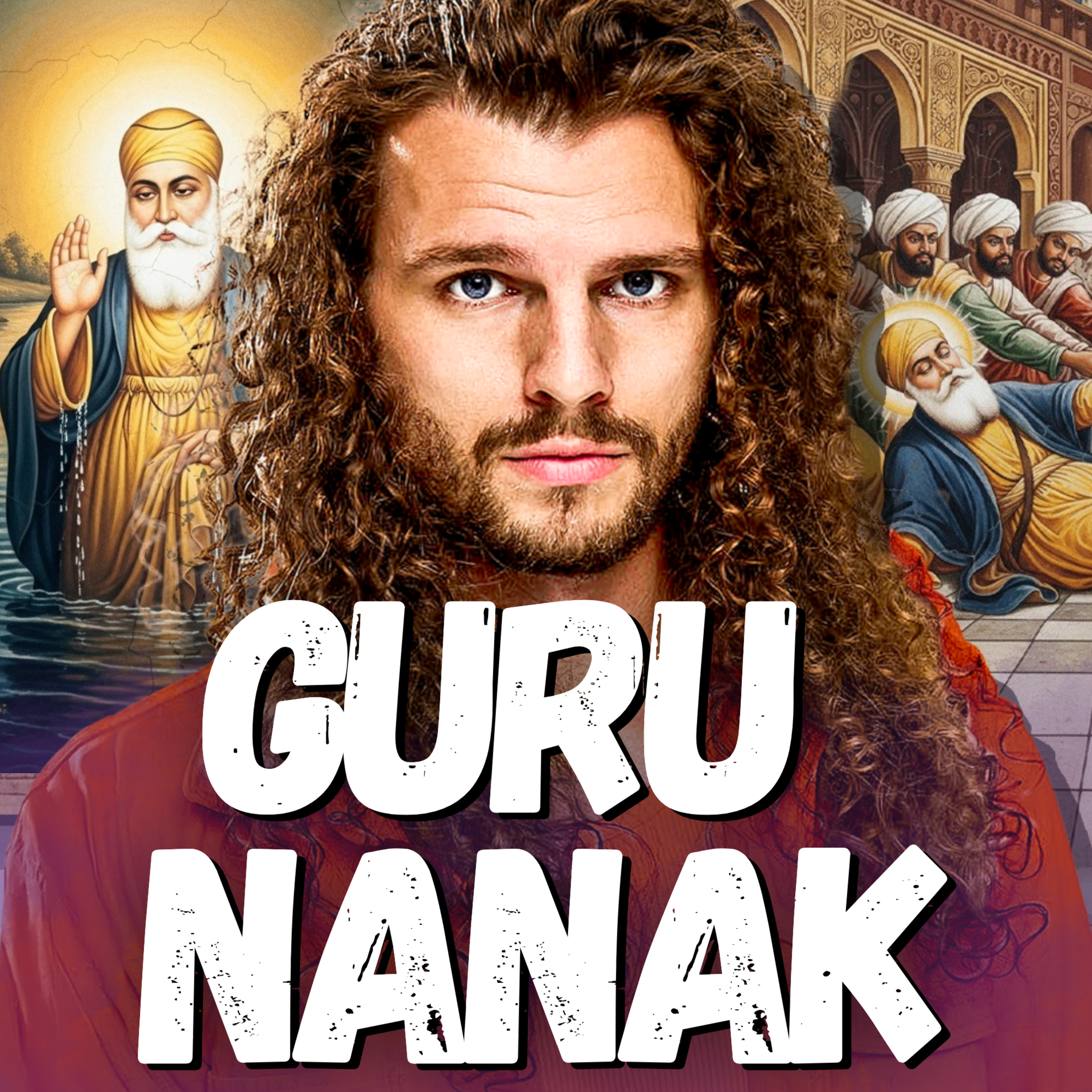
Guru Nanak. He was a child who questioned priests before he could even read. A traveler who walked thousands of miles to debate yogis, kings and scholars. And a man who vanished into a river for three days while everyone believed that he had drowned. But when he returned, the first thing he said shook all of India. There is no Hindu, there is no Muslim. This wasn't just another preacher. He was the man who started Sikhi. And his story isn't just about religion, because after that moment, nothing in India was would ever be the same. This is the life and teachings of Guru Nanak, a man who started Sikhi, a religion that is practiced by 30 million people around the world. So sit back, relax, and welcome to Religion Camp. What's up, guys? And welcome back to Religion Camp. My name is Mark Gagnon and thank you for joining me once again and in this tent where every single Sunday we explore the most interesting, fascinating, controversial stories from every religion from around the world, from all time, forever. Yes, this is my attempt to understand what each person on this great, beautiful planet really believes. And of course, this show is not possible without you, the viewer, but more importantly, the man behind the buttons, the Greek freak himself, Christos Bachbadopados. Guys, give it up for Christos. That's so sweet. I didn't even say anything to you, Chris. I was just telling to applaud and then you jumped in, ruined your own applause. Dude, come on, we don't have time for all this. Alright, guys, because today we are talking about Sikhi, or sometimes in the west people call it Sikhism. But we're really focusing on Guru Nanak, the man who started it all. Now, I'd just like to make a few disclaimers. One, I did not grow up in the Sikh tradition, so if there's anything I get wrong, anything I mispronounce, please forgive me. I'm doing my best. Feel free to drop a comment and correct me again. The purpose of this show is that I have a general philosophy that in order to understand a people or to understand a culture, you have to understand the God that they worship, even if you're not religious, if you just grew up in this faith tradition, almost certainly these stories of the gurus have kind of become a part of you. And if you grew up in America, there's a little bit of Christianity. If you grew up in the Middle east, there's probably a little bit of Islam that's still in you. And if you are practicing, I mean, more power to you. You know, I think it is. It's just crazy to me that there are so many people that I interact with on a daily basis, and I know almost nothing about what they believe, their philosophy on the world, what they think our purpose here on Earth is, where they think we came from, where they think we're going. And to me, I think understanding the religious philosophy behind these people just helps me connect with people all the better. And if you live in New York City, there's a good chance you met someone that's, you know, practicing sick. If you met someone with the last name Singh or Core, there's a high chance that they might have some type of, you know, sick ancestry. Maybe you've gotten into an Uber and you see a guy with, you know, a turban thing, they call it a pug. Maybe you see him and you go, oh, I wonder what that guy believes. He's probably. He might be Muslim, he might be Indian, and he may be Indian, but there's a good chance that he is a follower of the gurus. And so if you want to have a better understanding for the people around you, you got to understand this guy, the man who started it all, Guru Nanak. Now, the story takes place all the way back 1469. Now, back then, the world is obviously a very different place. Columbus never went to America. Books were still just like a new thing because the printing press had just kind of started, and, you know, ideas are spreading around, and if you wanted to send a message somewhere, you literally had to put it on like a horse and just kind of just pray, you know? And in India, things at the time were kind of starting to fall apart politically. The Delhi Sultanate was basically crumbling. Local rulers were kind of doing whatever they wanted, and society was getting pretty rigid, to say the least. So if you were born into a certain caste, that was kind of it for you, right? That determined what you could do, who you could marry, even, you know, potentially what, well, you could drink from. And there was also this kind of like a beef between Hindus and Muslims. No pun intended, sorry. Hindus, you know, they lived near each other, they traded with each other, but there's always, like, this underlying tension. And born into this was our man Nanak. Now, he's born into a village called Talwandi. His dad, Meti Kalu, was a local accountant. He wasn't rich, but he was, well, respect. Respected in his community. And his mom, Tripta, was one of those people that everyone loved because she was always just helping and gracious to other people. Normal family and lived a pretty normal life, except this baby was anything but normal. The midwife said he didn't even cry when he was born. He just looked around the room like he was taking everything in. He was born into a Hindu family at the time, as many people in India were. And a family priest of Hinduism basically looked at his birth chart and said, the kid is going to be honored by both Hindus and Muslims and kings will bow down to him. And to people who heard this, it sounded like crazy, right? Like, this was just like typical, you know, like Indian auntie being like, my baby's the best. He's going to go to Harvard. Don't even worry, he's going to be a doctor. You know, like that. They were just like, all right, this is just some mom that's saying this, right? This is a village where most people never traveled more than like a few miles from where they were born. But even as a little kid, Nanak was asking questions that made even the adults around him uncomfortable. While other kids were, you know, playing around, he would be watching the lowest caste families and how they had to live at the edge of town. Or he would ask why some people couldn't use the same well as other people. And he would even just go up to the elders around him and say, if God made all of us, why are some people considered high and some considered low? And as you can imagine, the people around him were like, ah, it's just the way things are. Just, you know, keep, just play, you know, go, go away. Now, as the legend has it, his first day at school became this sort of like, you know, larger than life story. In the village. The teacher is trying to teach the kids the Alphabet. She says A and asks the knock to repeat it. But instead of just saying A, this five year old kid starts explaining how A stands for the one God who's worth worshiping. The teacher's like, all right, we're learning letters here. Now, it's not literally A, but this is the equivalent. And Nanak basically says, but what is the point of letters if we don't understand what's actually worth writing about? I mean, can you imagine, like first day of school, it's like a little kid and he's already just like standing on business. It's like, yo, what's up? What are we even writing? What is, what are all these letters even for if we don't even know what we're actually talking about? What's up, people? Let's take a break really quick because I want to talk to the fellas. Let me ask you something. Are you stuck? Do you feel like you're struggling with work or relationships or maybe your marriage or just feeling like you're not like the dude you want to be. You ever just thinking to yourself, like, man, I should be farther along right now, I just get caught in these cycles where I just kind of lose self control. Well, here's the thing that nobody likes to admit. It is possible that porn might be part of the problem. Yes, I know I said the P word. Now look, I don't want to be overly moralistic here, okay? But if you're someone that struggles with pornography. Pornography and you know, research has shown that regular porn users actually leaves men feeling more anxious and less connected and ironically, less satisfied. And then it creates a cycle that then you got to be a little secretive about and you tell yourself like, I'll quit. And then you come back to the same cycle and now you're in a trap. Well, that's where Relay comes in. Relay is a therapist backed app with actual clinicians designed to help men quit pornography and actually feel better and get control of their lives. And the difference with Relay is that you're not doing it alone. With Relay, you basically join a small group of guys that are kind of on the same road. They're sharing accountability and encouragement and actual tools to help when triggers hit and you're feeling, you know, anxious or alone. Relay helps you feel a little more connected and you can stay totally anonymous. But for the first time, you're not going to be in this battle alone. I mean, think of it like a gym membership, but with your brain and for your habits and for the future of your relationship maybe. Right? Thousands of men and their families are already seeing some change because the men, their lives are a little bit less stuck. So if you're feeling stuck, check out Relay. Don't wait another month to be the man that you want to be today. And you can break the cycle with Relay. So go ahead and use the code Gagnon G N for a seven day free trial. If you feel like this thing has just got a grip on you that you're not able to, to let go, that is, Join Relay. J O I N rel R E L A Y app A P P camp and use the code Gagnon for a seven day free trial. Don't put it off. Be the man you're supposed to be today. Today. Now let's get back to the show. So his parents didn't really know what to make of him. And when he turned nine, they arranged this traditional Hindu ceremony known as Upa Nayana. And this is basically where Hindu boys get this sacred thread placed across their chest. And it's a big deal. It's kind of like a coming of age ceremony and the entire village is invited. So the priest is about to put this cotton thr and Nanak just says, wait, this thread is going to get dirty and break. If you want to give me a sacred thread, make it out of compassion and truth, the kind that doesn't break. Now the priest is just standing there with this thread in his hand, like, so do you want, do you want the thread and the Knox? Dad is kind of embarrassed and his mom doesn't know if she should be like proud or concerned. And like the whole village is watching this nine year old basically reject one of their most important tradition. And as you can imagine, this left a lasting impact on everyone in the village that witnessed this. And then there's another infamous story, the cobra story. This is basically where Nanak was supposed to be watching the family's cattle, but he fell asleep under a tree and the cows wandered off and started to eat crops belonging to a local landlord known as Rai Buular. Someone goes and tells Rai Bular and expects him to be furious. But when Rai Bular gets there, he sees this massive cobra with its hood spread over Nanak's face, protecting him from the sun that was beating down on him almost like an umbrella. And the snake is just sitting there until Nanak wakes up. And then the snake slides away. Now Rai Bular, who was Muslim at the time, decided right there this kid had some type of divine protection and became one of his first supporters. Now despite all of this, Nanak's dad kept trying to get him interested in just practical things. He gave him 20 rupees, which is a lot of money for them at the time. And he told them to go buy some goods and resell them and maybe just learn some business and just kind of become like a merchant or like a salesman. So Nanak takes the money, he goes to town, and what does he do? He buys food for a bunch of hungry holy men who had nothing. So then when Nanak turns home empty handed, his dad is mad and he asks, hey, where's the merchandise I told you to buy? And Enoch just calmly says, I made the best deal possible. What better investment than feeding people who are starving? He called it the Satya Sauda, which means the true bargain. And somehow his dad couldn't really argue with the logic, even though he obviously wanted to. Then When Nanak turned 18, his parents arranged a marriage to a girl named Sulakni. And this was a normal tradition. Arranged marriages were just kind of how things worked at the time and even today in some parts of India. But here's the thing. It turned out to be a really great match. So Lakhni understood him completely. She didn't mind if he spent hours in prayer or if he gave their things to the poor. She knew that he was on a mission. And eventually they had two sons, Sri Chand and Lakmi Das. To support his family, Nanak got a job in Sultanpur as a storekeeper for a local governor. And his generosity carried over into the jobs. Sometimes he would give customers, like a little extra grain because he said God was watching and he couldn't shortchange anyone. And his boss didn't mind because everyone trusted Nanak and wanted to do business with him. In his free time, he'd hang out with this group of friends who like discussing these spiritual questions. One of them was a Muslim musician named Mardana who played the rabab. And this friendship itself was a little bit unusual, right? Hindus and Muslims hanging out, making music together, talking about God. It was just very intimate for the culture at the time. But they just clicked. And then in 1499, when Nanak was 30 years old, something happened that changed everything. He was had kind of like this morning routine where basically he would take, like a bath in one of the nearby rivers. And one day he goes down to the Kali Bayan river with Mardana and he leaves his clothes on the bank of the river and just goes into the water and then disappears. And his friend, this Muslim musician, Mardana, is waiting, and he's waiting and he's waiting and he starts to search and look around and he starts calling for help. And they find the clothes, but then no Nanak. So then for three days, the whole town is looking for him. There's, you know, people going in the water, there's people swimming through the river. And his wife gets the news. His parents find out. Everyone is so sad because they think, oh, my goodness, our dear Nanak has died. And then on the fourth day, he just walks out of the water, calm. But something is different about him. His face looks a little different. His eyes have kind of like a depth to them that people had never seen. And people are now rushing towards him with questions. And he raises his hand and he says these words that have become famous. Nak koi Hindu. Na koi Musalman. There is no Hindu, there is no Muslim. At first people thought that maybe he kind of drowned and, like, got brain damage. But as he explained, they realized what he meant. He wasn't rejecting religion. He was just saying that these labels that we put on ourselves, these divisions that we create in our society, they don't matter to God. The divine doesn't care if you're Hindu or you're Muslim. God looks at your heart, not like some stamp on your passport, like an ID card. And from that moment on, his old life was over. He quit his job, he gave away all of his possessions, and he told his family that he had to travel and spread his message. Mardana even agreed to go with him, which was massive because we're talking about years of travel through places where, you know, they knew nobody, carried nothing and really depended on strangers for, like, food and shelter. And their first big journey took them to Kurukshetra, which was where Krishna first delivered the Bhagavan Gita to the warrior Arjuna. Now here, a solar eclipse was happening and thousands of pilgrims were pushing into the sacred water, believing that it would wash away their sins. Someone asked Nanak why he wasn't participating in this sort of ritual bathing. This, like, beautiful moment where the eclipse is happening. It's like a big deal. And he says, the real pilgrimage happens inside you. God isn't hiding in the water. God's found in how you live. He then made his way to Haridwar where there was a ritual in which pilgrims threw water towards the east as an offering to their dead ancestors. But Nanak started throwing water to the west. And when the priest got upset, he said, I'm watering my fields in Punjab. If your water can reach heaven, mine can reach my crops, right? And the point was obvious. The ritual without understanding is meaningless. And then in Varanasi, the holiest Hindu city, he debated with scholars who were impressed by how much he knew but confused by his interpretation. When they talked about the purifying power of bathing in the Ganges, he asked, if the river purifies everyone who bathes in it, what about all the fish who live there permanently? Are they the holiest creatures of all? Kind of a bar, kind of a. Kind of a great point. So he then goes to the famous Jagannath temple in Puri, and he watched the evening ceremony where priests were waving these elaborate golden lamps before a deity known as Jagannath, who is one of the forms of the Hindu God Vishnu. And instead of being impressed, he composed his own version, version on the spot. He says, the sky is the platter. The sun and the moon are lamps. The stars are scattered pearls, the wind carries incense. The Forest offers flowers. This is the real worship service for God. It's pretty deep. And then his second journey takes them south, all the way down to Tamil Nadu and even Sri Lanka. This was a very long way. We're talking about regions most northern Indians never saw. Different languages, customs, everything. In Andhra Pradesh, the caste system was even more brutal than it was in the north. And Nanak deliberately ate food prepared by Dalit families. The Dalit family is typically the lowest caste. People often call them the untouchables. And he shared meals with people of all castes sitting together. And when he was criticized, he said, God didn't create high and low people. That is human invention. In Sri Lanka, he met with a local king who asked about the secret of good governance. And Nanak told him, a king should be like a tree, providing shade and shelter to everyone without favoritism. Justice should shine on everyone equally, just like the sun. The third journey was possibly the most physically brutal. He headed north toward the Himalayas, some of the most challenging physical terrain on Earth. I mean, we're talking about walking at altitudes where, like, just breathing is difficult, through mountain passes, where, like, the weather or, like, a bad storm can just kill you. So in Kashmir, they encountered Buddhist monasteries where monks had preserved ancient meditation techniques. And these weren't the comfortable temple discussions that he had in the plains. These were conversations with people who spent decades in mountain caves, surviving on almost nothing completely dedicated to transcending physical existence. One monastery they visited had monks who hadn't spoken in years, communicating only through gestures and written notes. But the most intense encounters were with the Nath yogis at places like Sumer Parbat. And these weren't your typical yogis. Some had been sitting in the same meditative posture for years, while others had developed, like, really remarkable powers. They, according to the reports, could control their body temperature, so they could sit naked in the snow. They could slow their heartbeat to, like, near death levels, and they could go months without food. At one remote cave, Nanak met a siddha, a person who was basically mastering this enlightenment. And this person claimed to have not eaten solid food in over a decade, surviving on air and meditation alone. And the guy was very thin. I mean, skeletal, basically, and somehow still alive. And he challenged Nanak. He said, you speak of finding God while living a householder's life, but look what I've achieved through complete renunciation. Can your married men with jobs reach this level of realization? And Enoch's response became one of his most important teachings ever. He replied, brother, you've conquered your body, but have you Conquered your pride, you've renounced the world, but you're still attached to your renunciation. A true yogi doesn't need to prove anything to anyone, not even to himself. Another Siddha, one of these meditative holy men at Mount Kailash, supposedly demonstrated his power by levitating several feet off the ground. And a crowd of pilgrims gasped in amazement. But Nanak watched calmly. And then he said, that's impressive. You can lift your body into the air, but can you lift someone who has fallen into despair? Can you raise the spirits of a widow with no food for her children? That's the miracle that the world actually needs. So these debates in these mountain retreats were different from anywhere else. These yogis weren't interested in theological arguments or social reform. They were focused on transcending human limitations entirely. And they saw Nanak's path of engage spirituality as kind of like settling for less than, like this ultimate realization, this ultimate escape from reality. And one particularly intense discussion lasted for about three days. A group of accomplished yogis argued that only through complete withdraw from, from Maya, which is basically the Sanskrit idea of, or the Hindu idea in Sanskrit for like the illusion of reality. And this basically included all worldly relationships, all responsibilities, and only through this complete withdrawal could someone achieve true liberation. They had scriptures and centuries of traditions backing them up, so they thought they had a pretty good case. Nanak's response was once again very perfect and very smart. What if Maya isn't the enemy? What if the world isn't an illusion to escape from, but a classroom to learn? The householder who raises children with love, works honestly and serves others might be doing more yoga than someone sitting alone, thinking about how enlightened he is. Even some of the yogis started to, like, nod along with him. And that idea that, you know, the ordinary life could be a spiritual path was radical to their worldview of just complete renunciation and asceticism. But despite the philosophical debates, the physical challenges were brutal. At one point, Nanak and Mardana got caught in a blizzard at high altitude and they nearly froze to death completely. Mardana, who was older and not used to these mountainous conditions, became seriously ill with altitude sickness, and they had to shelter in a cave for days while he recovered, surviving just on melted snow and whatever dried food they had left. This experience tested everything that Nanak believed about God being present in the world. He kept asking himself, where is God in these mountains? Why is this happening? And the yogis pointed to this as proof that God could only be found in transcending the Physical, that our physical body was in some way a hindrance to our connection with God. But Nanak found his answer and how he and Mardana took care of each other during this crisis. The divine wasn't absent from the harsh mountain conditions. It was present in the determination to survive together and in the kindness of strangers who had shared with them shelter and food. And when they finally made it back to more hospitable regions, both men were fundamentally changed by this experience. Now, the fourth journey of Guru Nanak is maybe the most significant. He headed west into the heart of the Islamic world, which was very dangerous because a non Muslim spiritual teacher traveling through Muslim land could face a lot of real hostility. But he made it. In Afghanistan, he debated with Muslim scholars, and in Baghdad, he engaged with some of the most learned theologians of the Islamic world. But when they described heaven and hell as literal places where souls go after death, Nanak said, heaven and hell exist right here. Heaven is remembering God and serving others. Hell is being consumed by ego and selfishness. One of the most famous events in Enoch's life actually happened in Mecca, the holiest city in Islam. Exhausted after the long journey, he laid down to rest with his feet pointing toward the Kaaba, Islam's holiest site. And this was considered deeply disrespectful. A group of pilgrims angrily woke him and told him to move his feet. But Nanak calmly replied, please point my feet and in a direction where God is not. According to the story, when they tried to move his feet, the Kaaba itself seemed to turn and stayed aligned with his feet, no matter which direction they pointed him. Now, this likely didn't happen literally, but regardless whether it happened literally or not, the story captures the message perfectly that God isn't confined to a single place or a building or a direction. God is all around us in the world that we live in. So after 20 years of continuous travel, covering thousands of miles, meeting and arguing with countless people, Nanak returned to Punjab. He was now over 50 years old. His beard was white, his face was wrinkled. But instead of retiring, he did something completely new. He founded a town called Kartarpur on the banks of the Ravi river and created what we now recognize as the first Gurdwara, a Sikh holy place of worship, basically a church in Sikhi. And this wasn't just a place to live. It was a demonstration of everything that he had been teaching. People of all castes and all religions and all backgrounds lived and worked together. The whole community was built around three principles. Remember God, work honestly and share with those around You. The most revolutionary thing was the langar, the community kitchen, where everyone, no matter who they were, sat on the floor together and ate the same food. In a society where sharing food was governed by incredible complexity and rules about caste and religion and politics, this was explosive. Brahmins and untouchables, Hindus, Muslims, rich, poor, all sitting in the same rows, eating from the same kitchen. There's even a story of Emperor Akbar visiting Guru Nanak. When the Mughal emperor arrived in 1598 with his full royal entourage. We're talking like guards and horses, the whole shebang. He expected the usual protocol. He wanted special treatment and private audiences with the wise men and this big reception. Instead, Akbar was directed to the longer hall and told that everyone, including the emperors, ate in the community kitchen before meeting Guru Nanak. Now, what's remarkable is that Akbar didn't just kind of tolerate this, he was moved by it. After the meal, when he finally met with Nanak, he reportedly said, in my court, people fight over who sits closest to me. Here I see people fighting over who gets to serve others. He offered to grant land and money to expand Kartapur, but Nanak declined, saying that the community would just remain fully self sufficient. Kartapur had everything the community needed. The settlement was built around a central courtyard called a chowk, where the morning and evening prayers took place, while there was a guest house nearby that had simple rooms with sort of, you know, like cots, basically, where visitors would stay regardless of whether they were wealthy or just wandering holy men. And the gurdwara itself was a modest structure. It wasn't this big, elaborate marble and gold construction that would come later. It was just a simple building with white walls where the community would gather twice daily. What made it special wasn't architecture, but the fact that anyone could enter, anyone could participate, and anyone could even lead the prayers if they had something meaningful to share. Kartapur worked like a regular community. People farmed, they had crafts, and they maintained buildings. Even Nanak himself worked in the fields, showing that being a spiritual leader didn't exempt you from physical labor. Mornings started with communal prayers. Days were spent in productive work, and the evenings were kind of about discussions about what could improve the community. As Nanak got older, people started wondering who would lead after he died. His older son, Sri Chand, who was, you know, kind of thought to be the obvious choice, right? He's the oldest son. He was spiritual just like his dad. But Nanak had watched one of his disciples, a guy named by Lana, who had proven himself through years of selfless Service and Lana had started as a follower of the Goddess Durga, but became convinced that Nanak's path was the true one. So Nanak renamed him to Guru Angad, meaning part of me, and chose him as his successor. This established that Sikh leadership would be based on spiritual merit, not family or inheritance. Ungad preserved and continued Nanak's work while adding his own contributions. He developed and standardized the Gurmuki script, which kind of gave six a distinct written identity and made spiritual teachings more accessible. He expanded the practice of Lengar, ensuring that communal kitchens welcomed all people regardless of their caste or their status. He also set up what's known as, like, a wrestling arena where six would actually train and like, exercise and physical discipline in wrestling. And In September of 1539, when Nanak was 70, word spread that he was starting to get older and his health was failing. And this caused people from all over to travel to see him for what might be the last time. Both Hindu and Muslim followers gathered, and arguments started about funeral arrangements. And Hindus wanted cremation, as that goes in line with their beliefs. And Muslims wanted a burial. Each group claimed that he was in some way belonging to their culture, their traditional. And sensing this dispute, Nanak called both groups together and asked Hindus to place flowers on his right side and Muslims to place flowers on his left. He then said whichever group's flowers stay fresh overnight gets to handle the funeral. According to their tradition, he laid down, covered himself with a white sheet and closed his eyes. When they lifted the sheet in the morning, his body was gone, and both sets of flowers were equally fresh. The Hindus then took their flowers and cremated them. The Muslims took theirs and buried them. And even in death, the guy who spent his whole life breaking down barriers between people made one final statement about how pointless all of these divisions really are. But here's the thing. Nanak's death in 1539 wasn't the end of the story. It was more like the end of this first chapter. His movement didn't die with him. It transformed from one man's teaching into something much bigger and much more organized, what is known as Sikhi or Sikhism. And it all came from a guy asking one question. What if none of this actually matters to God? What if the Creator doesn't care about whether you're Hindu, Muslim, what caste you are, high, low, rich, poor. What if the only thing that matters is how you treat other people and whether you remember that there's something bigger than your own ego? At Kartapur Sahib in Pakistan today, there are actually two Memorials side by side. One marks a Samad, which is a cremation site for Hindus and Sikhs, and one marks a grave for Muslims. The nine gurus who followed over the next 200 years each added their own contributions while staying true to Nanak's core message. Guru Angad, like we mentioned, developed this script and established schools. Guru Amar Das expanded the Langar system and fought against practices like sati, which is widow burning, where basically, you know, women whose husbands would die were oftentimes just be killed. And then Guru Ram Dass founded the city of Armatsur, then built the Golden Temple. And then Guru Arjun compiled the first official collection of hymns known as the Adigrant, which eventually became part of the Suru Granth Sahib, which is basically the Eternal Guru, which is the book of all of the teachings of the gurus. But it doesn't end there. We actually have a full episode that covers the journey of all nine gurus who came after him. So if you enjoyed this one, make sure you check that out in the description below. And that is everything you got to know about the guy who started Sikhi. Now, I should say maybe not everything. There's probably a lot more, especially if you are a practitioner of Sikhi. You're like, hold on, there's so much stuff you missed. Sure. This is just maybe an introduction to Guru Nanak. I mean, I'm always. Again, I'm. I'm moved by these kinds of stories of just like, these wandering sort of holy men that kind of reject the rigidity of the structure around them and kind of pursue, like, the ultimate truth, I think. I don't know, like, I've kind of. I feel like that's kind of where I'm at, like, with my spiritual journey, where, like, I'm Catholic, you know, I love God. I am monotheist. I believe that, you know, people are good. I believe God is good, but at the same time, like, meditation is really good for me. And then, like, you know, not being bogged down in, like, the rigid spiritualism, as I learned about more religions, I just kind of learned, like, it seems like people are sort of talking about similar stuff. I don't know. I don't want to say, like, all religions lead to the same place, but I just feel like God is just so outside of our understanding of, you know, what we can. What stories we can share, what we can actually write down. So I don't know. It's. It's stories like this where this guy kind of just rejects everything and says, hey, follow God and be good. To people that I think is really easy for a lot of people to get on board with, which makes complete sense why this became such a widespread religion, specifically in the area of Punjab, where he's from. I don't know. I'm always moved by these stories where I'm like, I should just really focus on being good to people. I spent so much time meditating or whatever, and I'm like, I feel like I'm missing the point if I'm not actually helping people around me. And actually, I learned a great story from an imam, a Muslim spiritual leader. He shared the story because sometimes, like, you know, in New York City, homeless people come up to and they'll be like, hey, you got a dollar? And I'm always like, I don't. Because I'm like, well, if I give this guy money, like, what if he just spends it on the wrong things? You know, like, what if he buys drugs or alcohol? And I saw this in mom say something that was just so profound. He was like, you know, we don't give money to homeless people because we think, like, oh, what if they use it for bad stuff? But how often does Allah give us money that we use for improper things? Right? We spend it on cars. We spend it on, you know, alcohol. We spend it on, you know, going on, like, a fun night, sneakers we don't need. And it's like, is that really that much better than, you know, this guy spending on something he doesn't need? Like, who am I to say that, you know, I deserve unwarranted success or wealth from God, but other people don't deserve it as well? I don't know. It's just a. An interesting sort of concept that I feel like I should just do a better job of being good to people around me and trying to help the downtrodden. I don't know. I feel like that's something my more recent years that I haven't been as focused on. But after reading about Guru Nanak, I feel genuinely inspired to kind of, I don't know, do something in my life. I kind of want to start, like, a charity. I don't know exactly how or, like, what to do or who to give it to, but I just feel like it'd be a cool thing. Like, I'm just like, you know, things are going pretty well. Like, I have a kid I got to take care of, and I got a wife I got to take care of. But, like, other than that, I'm like, even if I put, like, a dollar a day to go like help out or something like that would. That would do something. I don't know. If you guys have any ideas or, you know, people who can start a charity, let me know. I'd love to get involved. But anyway, Christos, would you. What do you think about Guru Nanak? The wisdom is just unbelievable. It's fire, right? It's just, like, so practical. It's just like, hey, be good to people around you. Serve people, cast wealth. All this stuff is, is. Is fake. Like, it's not real. Like, just focus on being good to the people around you. I don't know, it's these kind of stories that kind of just get me thinking. But anyway, if there's anything I missed, if you're, you know, sick, if you grew up in this faith tradition, please let me know. I would love to learn more, as you can see. And if you didn't grow up in this faith tradition, if you're a Muslim, if you're Christian, if you're, you know, something completely outside of this and you've never heard this before, what'd you learn? Did you see anything that kind of overlapped with your own personal philosophy or the religion that you belong to? Please drop a comment. Top comment on this video would be getting merch. That's my give back so far. That's. That's what I can do. I can give people merch. I mean, I'll do something better one day, but for now, I mean, you get merch. Top comment after a few days. We'll check it out. YouTube, Spotify, I read all of them, so please let me know what you think. Also check out History Camp. Also check out Camp Gagnall where we do interviews with all sorts of interesting people. And you can also see me on the road. Markagnonlive.com I will see you guys at all the live shows. Unfortunately, it is excellent. A lot of people really like the show, so come on out. All right. And also subscribe to this channel because every Sunday we're dropping episodes on all the religions of the world. Me just trying to understand what everyone out here is really believing. Anyway, as always, I believe life is better with belief. And thank you guys for joining us with another episode of Religion Camp. We'll see you next Sunday. Peace be with you. What's up, people? Quick announcement. If you are a fan of Camp Gagnon or Religion Camp, I have great news because we are dropping History Camp. That's right. This is the channel. We're going to be exploring the most interesting, fascinating, controversial topics from all time throughout all history. Right? You probably know about Benjamin Franklin, I don't know, Thomas Jefferson, Nikola Tesla, interesting figures from history and you probably learned about in school and they were pretty boring, but not here. Now, as you know, I was raised by a conspiracy theorist, so I'm going to be diving deep into all of the interesting, strange, occult and secretive societal relationships that all of these famous, influential men from other our shared past have. So if you're interested, please go ahead and subscribe to the YouTube channel. It will be pinned in the description as well as the comments. And if you're on Spotify, this doesn't really apply to you, but these episodes will be dropping as well. Just go ahead and give us a high rating because it really helps the show.