Loading summary
Transcript1 lines
- [00:00]
A
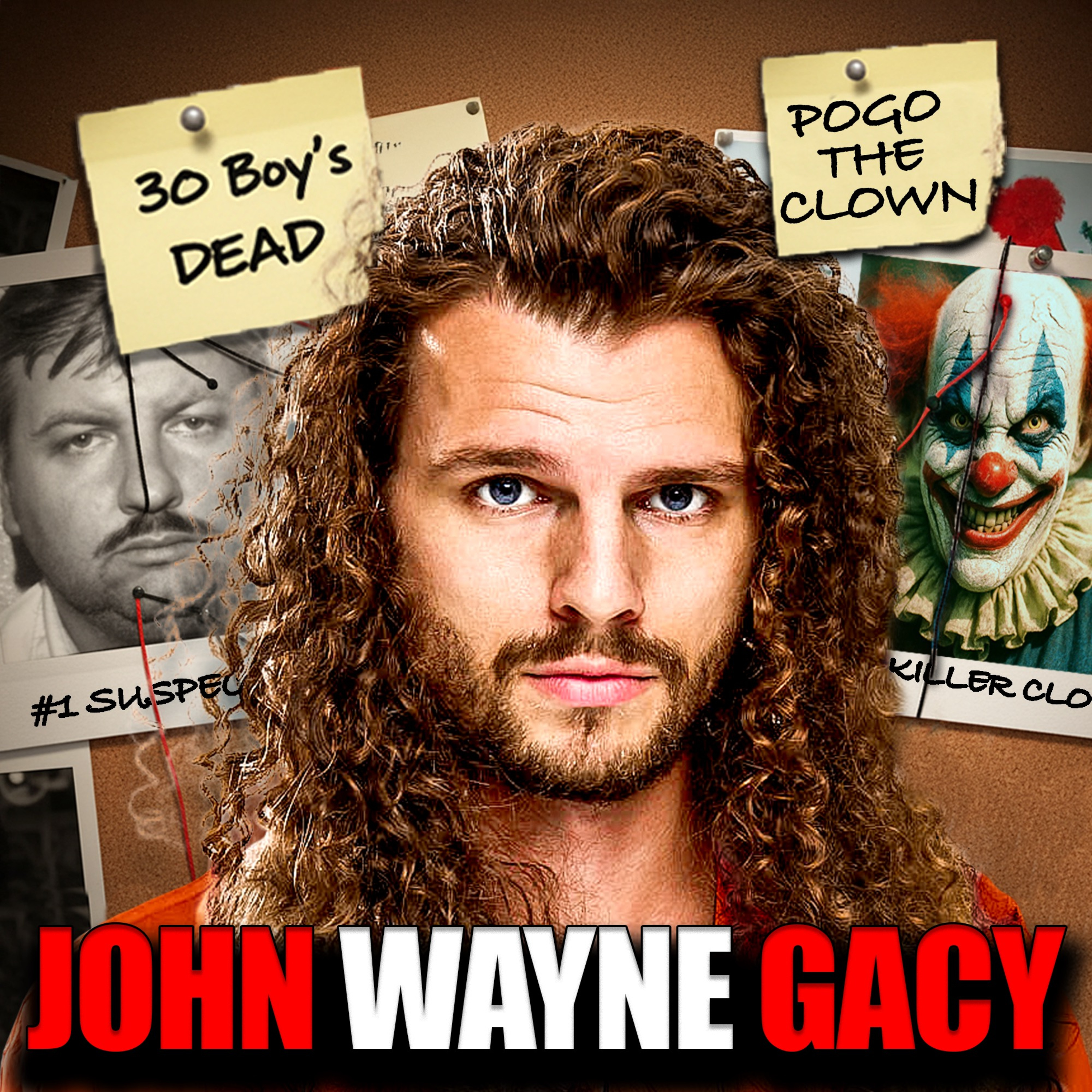
What if I told you that the neighbor hosting block parties, handing out free food, and volunteering as a clown at children's hospitals was one of the most prolific serial killers in history? Well, it's true. And his name is John Wayne Gacy, aka the Killer Clown. In the 1970s in Chicago, he lived a double life. Respected businessman by day, serial murderer by night, with 26 bodies buried under his house. His capture didn't just shock the nation, it turned clowns from silly to sinister. And it helped spark America's obsession with serial killers. Today, we're going through the life of John Wayne Gacy. How he went from a regular boy growing up to the psychopath serial killer and the killer clown himself. So sit back, relax, and welcome to camp. What's up, people? And welcome back to camp. My name is Mark Gagnon and thank you for joining me in my tent, where every single week we explore the most interesting, fascinating, controversial stories from around the world, from all time, forever. Yes, this is my journey to understand everything that's ever happened and to go into my deep, weird wormholes, wherever my fascination takes me. And today, it is sinister. But before we do that, I need to let you guys know that as always, I'm joined by my dear friends. Friends, today my good pal David is here. What's up? Hey. And my pal, Christos Dakadapados. How are you, pal? What's up? All right, Christos, we don't have time because we have David here, okay? And he's also gonna be chiming in. David, a long awaited return to the pod. Okay, I'm just saying a lot of comments were speaking negatively. Put the one positive comment on this. But there were a couple positive comments. I'll be honest, Christos has been getting absolutely lambasted in the comments. That's why I'm back. Because he's been chiming in, non stop derailing this entire podcast. There's one. Okay, guys, so we are going to talk about the one and the only John Wayne Gacy. Now, let me just preface this by saying I. When I talk about serial killers, I'm interested, okay? Because I like the psychology. I like to know what's going on inside their heads. I think clowns are sort of weird and I don't, I don't want to glorify the, the, the, the bad parts. There's real people that are affected by this and you know, many people, you know, their children were killed by this guy. You know, people that, you know, they friends, all that kind of stuff. So I just want to Put a disclaimer. All right? And it's basically absolving me of any of the jokes that we make in this episode. Is that fair? I wasn't listening. Anyway, guys, John Wayne Gacy. If you don't know who this guy is, one of the most savage serial killers of the 20th century. Literally, the killer clown. That is how people refer to him. And the story is going to mess you up because John doesn't fit, like, the typical criteria for serial killers, right? He's not like some loner living off, like, in the woods somewhere, like a social outcast that's, you know, talking to himself like a. Like a, you know, anyone with, like, an obvious mental illness. You know, obviously he did, but it wasn't. If you met him, you'd be like, oh, he's just like a nice guy, right? I mean, in fact, he's the opposite of all the things I just mentioned. He's successful. He was well liked, respected in his community, and he was known for being like, the neighbor that would bring you cookies, you know, help you move your couch, you know, dress as a clown, kill your kid, whatever. Like, he was known for doing stuff in the community. And, yeah, the clown part is maybe the most absurd element of his entire lore. You know, he would literally volunteer at children's hospitals and charities because, you know, he was that generous. Or so it seemed. Little did everyone know. While John was, you know, at the neighborhood barbecue and chatting, he was also on one of the most notorious killing sprees in American history. 33 total victims, 26 bodies underneath his house. And in only six years, he did all of this, and. And nobody saw it coming. So in order to understand the psychology of how someone can become so deranged, we got to go back to the very beginning. This guy was born in 1942 in Chicago to a working class family. You know, his mom, dad, two sisters. His dad was an alcoholic who would, you know, reportedly beat him pretty regularly, which, you know, that does fit into the, you know, serial killer lore. Typically, there's, you know, a significant childhood trauma. But here's the thing. Instead of becoming, like, this antisocial, you know, outcast, John goes the opposite direction. He becomes obsessed with being liked, with being successful, and basically proving to everyone that he is an upstanding citizen. And so he's not a social reject. He's popular. It's not clear why exactly, but Gacy actually dropped out of high school during his senior year, and he moved to Vegas, where he got a job. The job is a little bit on the nose. He worked at a mortuary, literally like a, like a funeral home, like where they. Like the morgue, right. And he lived in Vegas for several months before returning to Chicago. And shortly after returning, he. He then enrolled at Northwestern Business College and graduated in 1963. And he ends up getting married to a woman named Marilyn Myers, had two kids and moved to Iowa. And there he's managing a Kentucky Fried Chicken, you know, for his father in law. And reportedly, John seemed to be thriving. He got involved in community stuff. And everyone at this point was like, oh man, this guy's going place. He's got kids, he's married. I mean, up until this point, most people I know, they don't have two kids, they're not married, you know. So at this point, John Wayne Gacy's. He's killing it. He's doing a good job, I should say. But then in 1968, everything falls apart. He reportedly starts showing more sadist tendencies. He eventually gets convicted of assaulting a teenage employee and then was sentenced to 10 years in prison. I mean, quite the change up. His wife divorces him immediately and moved back to Chicago with their kids in 1969. And John would basically have no further contact with his family. And after that point, now, most people would see this as rock bottom, right? But it would become pretty clear that John only saw this as a temporary setback. I mean, 10 years in prison, he gets out on parole in 1970 after serving less than two years in prison. 1970 is when he goes on parole. 1968, he goes in, less than two years, he gets out. I don't know how this is possible. I don't know what jurisdiction he was in. Some liberal judge was like, all right, just let him out. What'd he do? Assaulted a teenager, 10 years in prison. That's crazy. But instead of laying low, John moves back to Chicago right away and wasted no time, basically starting over, rebuilding his image. And then in 1971, with the help of his mom, he bought the infamous house on Summerdale Avenue. And that would later become the place that he would hide his victims. And then began what I can only describe as this like, aggressive, like, rebranding campaign. And I mean, the guy was everywhere. He joined the local Democratic party, he worked on campaigns, he started throwing these elaborate themed parties at his house. I mean, like decorations, catered food, open bar, like the works. People would talk about his parties for months. I mean, who are these people going to a party of a guy that literally assaulted a teenager and went to prison for it? Psychotic Check their hard drives. Regardless. He would have Halloween parties where he'd spend, you know, thousands of dollars on decorations and Christmas parties and. And everything. And it. And it worked. I mean, that's just how shallow. Like, you know, the. The. The elite of, you know, any major city is, right? John Wayne Gacy was exactly what he always wanted to be. He was respected, successful, popular. He started his own construction company called PDM Contractors, which was actually doing really well. And that's how he was able to be so generous and fund all these parties. Or he would meet someone at one of his, you know, social events, and he'd be like, oh, you need your driveway redone? Hey, no worries. I'll help you out for free, right? You got money problems? Hey, I can help you. I can get you some cash. And he would just hook people up. But in this season of wealth and generosity in his life, he would now introduce this new, vital character that we all know. And this is Pogo the Clown. Now, when John joined the, like, a local democratic organization called the Moose Club, they hosted these charity events for kids. And John would volunteer to be the entertainment. And he was like, dude, I'll do it, no problem. And he would be Pogo. And Pogo the Clown was born. Now, the introduction of Pogo was interesting because it shows how calculated and intentional John was about everything in his life. Like, he didn't just, like, throw makeup on, call it a day. He would actually create a whole character from the ground up. And he had a custom made costume and he would practice magic tricks and he would make balloon animals and, like, he would learn how to, like, work with kids and how to be a showman. And he took this seriously because he understood that being, you know, the guy who dressed up as a clown for charity was great for his reputation and this image that he was now curating. Parents loved him. Their kids liked him. Local politicians loved him because he was appearing at their events for free. The media loved him because he was this businessman giving back to the community. At this point, John Wayne Gacy wasn't just rehabbing his image. He was now becoming like a man of the town. People knew him. He was like a local celeb. Like, oh, dude, that's Pogo the Clown. What a. What a legend. What a great guy. He redid my driveway. A clown redid. He's like, yeah, he's good. He brought everyone. They all came in a tiny car. It was awesome, right? And that is just how unsettling this is, right? Is because he seemed genuine. People actually liked Him. People who knew him during this time, they. They wouldn't describe a person, you know, who's obviously faking it. They would describe him as someone who was authentic and he liked being with the kids and the community and yada yada, yada. And that's what makes him confusing and why he is the focal point of so many people's serial killer, you know, morbid curiosities. Because maybe he wasn't always pretending to be the good. Maybe he was. Maybe this is a genuine part of him. And he really cared about doing good, you know, and he saw his past and was like, you know what? I'm gonna change my ways. He was a model sit. Model prisoner while he was in prison, and that's why he got out early. And situations like this, that kind of force us, like, as people to kind of reckon with this, where it's like, people can be literally the most evil people ever and then also do good things. And it's really like a. It messes with your brain because you're like, he should just be a monster. There's a problem is that monsters, most of these kinds of people, generally, they have redeeming qualities. So his neighbors liked him. The lady lived across the street. A woman named Carol Lanning later told reporters that John was the kind of neighbor who would shovel your driveway without being asked. He wouldn't need the shovel to bury people, but it's beside the point. He would just do it right. Ron Road, another guy who lived next door, said John was always helping out, always had time to chat. And these people, you know, they genuinely believed in the character. But by 1975, he had everything he ever wanted. Right? He. He reclaimed his image. He had a successful business, a beautiful house, respecting his community. By this point, he actually had a new wife. He got married to her in 1972. And, you know, he's got these parties, and from the outside, he's living the dream. But here's what I haven't mentioned yet. While Gacy was building this perfect and public life, he was also hiding a secret. This nefarious habit that, you know, had just started a couple years ago. Yes. While everybody was watching, he literally started to kill people. The first murder was in Chicago, 1972, just a year after he buys his house. It was a teenage boy named Timothy McCoy. John had picked him up from the Greyhound station on the kid's layover to Nebraska, brought him home, and killed him in the early morning hours. Then he buried the body under his house and went to work the next day. Like, nothing happened. Back to the construction company, back to his parties. And this became his pattern. He would go out, usually in Chicago's uptown area, where there were, like, a lot of runaway kids or, like, young men looking for work. He would lure them in with the promise of a construction job or a place to crash, murder them, and then bury them. And then he'd wake up the next morning and just be the same, you know, perfect model citizen in his community. And the psychology behind this is really terrifying. Like, this kind of a person is way scary because it's harder to really clock, right? He created this compartmentalized life where he was the pillar of his community by day and then literally a serial killer by night. And he didn't just make it work. He. He made it work for six years. Six years went by that he was doing this and nobody noticed. How is that possible? I genuinely don't understand. How did he kill 33 people, bury most of them under his house without anyone really picking up on it? And the answer is, I think, pretty simple, right? He mastered this ability to hide in plain sight. He built this double life that people weren't just blind to. They wouldn't even suspect it in the first place. It's also worth noting that John was obviously very intelligent by, you know, academic records and the successful business. And that intelligence was also why he was so insidious, is that he was clocking his victims very specifically. So, like I said, he would pick these specific parts of Chicago, and they're not random, right? He knows where he's going to find runaway kids or young men looking for work that were basically invisible to society. You know, they were not being tracked. People wouldn't really be looking for him, and when they disappeared, nobody would notice. Now, John's approach, again, was brilliant in the worst way, right? He would go to these young men, and he wouldn't look suspect at all, right? He would have a nice car. He would be well dressed. He would talk, talk like a businessman, which all of you know, all of which he was. And he would talk about, you know, construction work and the pay, and he would be like, hey, do you want some work? Maybe I could help you out on the job site or maybe just a place to crash and to a homeless kid or, you know, just a young man who's destitute that doesn't have a lot of opportunities. This was like a godsend. This was a guardian angel, someone to come help you. And unfortunately for them, the guy was John Wayne Gacy. So the victims would go back with him to that place on Summerdale Avenue, the same house where he'd had these dinner parties just hours earlier. And this is where the method would get really sick. He had this whole routine worked out to a T. He would bring them inside, offer them food, drinks. He would show them around, you know, give them a tour. He would offer them drugs or alcohol, and then he would suggest that they play this magic trick game where he would handcuff them, and he would say, don't worry. I'll show you how to get out. Except there was no way out. Once they were in the handcuffs, John had complete control. And what he would do next was extremely disturbing. So if this part is too far, feel free to skip ahead. But he. He would effectively torture. He would assault them sexually. He would then kill them in his house, typically by strangulation or asphyxia. Then he would take the bodies of his victims down to the crawl space underneath his house, and then he would bury most of them in lime, which he knew would help speed up the decomposition. And this is the part that, again, is just, like, really difficult to wrap your head around, because he would do this on, like, a Sunday night, and then Monday morning, he would just go back to work, and he would have his lunch meetings, and he was managing employees at this point. All the while, he just killed a completely innocent person. Just the day before, between 1971 and 1975, John had killed at least 15 people and had turned the crawl space under his house into a graveyard. And the smell became a real issue, especially during, you know, the summers in Chicago. But John, you know, being John himself, would just have an answer for everything. So the neighbors, like Ron Rhode, would start to point out the smell, and John would just kind of shrug it off. You know, he would be like, ah, the sewer's backed up, or maybe there's a dead animal. A raccoon must have gone down there and died. And the people just believed him, because why wouldn't they, right? Even his wife, who was living there, eventually caught a whiff and brought it up. And John just said, oh, it's moisture. It's probably mold or something. And the thing is, John was a master manipulator and was so good at just lying and hiding and basically compartmentalizing his life that he didn't even see a moral conflict between these lifestyles, because in his mind, these were two separate parts of his life, Almost two separate people that were doing these things, and they didn't have to affect each other. These people never even had to meet, despite the Fact that they were inside the same head, and these people basically existed inside the same person. And he didn't really see it as a conflict. Or maybe there's a part of him that felt like, oh, there's so much guilt from this atrocious thing that I'm doing that the good things that I'm doing in my, you know, my. My day life are balancing it out or some type of way that he was rationalizing. But either way, to him, it was a non issue. Right. He didn't really seem to grapple or struggle with his own depravity or his evil impulses. And ultimately his crawl space got too full. You know, like there's 26 bodies crammed into this place that's, you know, maybe like 4ft high. He was then forced to start getting more creative. So he would bury bodies in the backyard, under his patio, even in his own garage. And when he ran out of space entirely, he started driving out to Des Plaines river and basically just dumping them into the water. Now, here in this moment, I think it really shows how calculated he was. Right. He kept detailed records of his construction business and maintained perfect attendance at these Democratic party meetings and continued to do these charity events as Pogo the Clown. And everything continued to seem normal. But, you know, we see obviously how John's careful planning and the controlling nature manifests in his business, his personal life, as well as his killings. It wasn't really, you know, like him to let things just, like, slip through the cracks. So Carol Lanning, the woman across the street, you know, she would see John leaving for work every morning and coming home in the evenings and having friends over on the weekend and never reported anything suspicious. Even when John started having, you know, close calls, he managed to talk his way out of them. Now, this is one of the most heartbreaking stories, but in 1975, a young man named Anthony Antonucci actually escaped from John's house after being handcuffed and assaulted. He went to the police, he filed a report. But John was so respected in the community that when the police talked to him, he convinced them that it was just a misunderstanding and. And he was a disgruntled employee that was mad, and the charges were dropped. This is how good John was at manipulation. He could literally have someone escape, report him to the police, like, yo, this guy literally kidnapped me, assaulted me. And he would still convince everyone that somehow he's the victim, that this is an employee trying to get back at him for something. And for a while anyway, these, you know, charges would come back to bite him in the butt, which, you know, we'll explain that later. But for now, Gacy is just continuing this killing spree. And by 1977, five years after the first murder, John is now killing more frequently. And the pressure of maintaining this double life seems like is finally starting to get to him, right? He's starting to drink more. He's becoming more reckless, you know, but to his neighbors and friends, again, it just seemed like, ah, maybe he's stressed at work. And then ultimately, John's wife finally had some suspicions of his behavior. She started to question his involvement with young men, since he seemed to always be hiring these teenage boys for these construction jobs. And then she became suspicious of his nights out. And then she also discovered pornographic magazines featuring, you know, men. And so she divorced him and left in 1976, which very possibly gave the neighbors another reason to excuse a sudden change in his demeanor. Right. He's drinking more, he's stressed. It's like, oh, he's going through a divorce again. Nothing nefarious ever crossed anyone's minds because everyone just thought, oh, this poor guy, you know, he's. He's just going through so much. But at this point, the smell in his house is getting worse. And it wasn't just barely noticeable, right? It was overwhelming, especially when it rained. He had been literally putting bodies in this crawl space for almost five, six years at this point. And then in 1978, he made a mistake that would bring everything crashing down. There's a teenage kid named Robert Piest who worked at a pharmacy in Des Plaines, Illinois. He's a smart kid. He had a good family. The kind of teenager who would actually tell his mom, like, you know where he's going. And then on one night on December 11th, Robert is getting ready to leave work and go home when this contractor shows up and starts talking about needing workers for a job that pays really, really well. Way better than what he's making at the pharmacy. And Robert calls up his mom and says, hey, I'm going to go talk to this contractor about a job and I'll be home soon. Tragically, Robert never came home. Now, most missing person cases, especially involving teenagers, don't necessarily get immediate attention, especially in this time, right? Kids would run away, they would stay out late. You know, kids being kids. But Robert's mom, Elizabeth Piest, wasn't having any of this. She knew her son, and she knew that something was wrong. So she went immediately to the police department that same night and reported her son missing. What's up, guys? We're gonna take a break really quick because I gotta tell you a story. Imagine you're sitting in your house. It's cold outside. It's. It's a little snowy. And you're like, man, I just want a panini. So you go and you order it, you know, from Doordash or something like that. And it never gets to you. You're looking at the app, you're like, dude, it's been four hours. Where's my panini? You're calling? No one answers. Well, this is a true story that happened. There was a woman, a client that was working as a doordash driver, and she slipped and fell on an icy walkway outside of a Panera Bread in Fort Wayne, Indiana. She breaks her elbow, which leads to surgery and hardware having to get inserted into her arm. She can't work. And originally, you know, she sues Panera. And Panera's like, okay, we'll give you like 125,000. But then the good people over at Morgan and Morgan fought for her and got her the million dollar verdict that she deserved. Yes. If you never heard of them, Morgan and Morgan is America's largest injury law firm. Yes. And they are that way for a reason. They've been fighting for the people for over 35 years. Now, I'll be honest. If I ordered, you know, a panini and the woman gets paid a million bucks because she slipped, I mean, it's a tragic thing to happen, of course, but I deserve a little bit of that. I. I should get a cut at least, right? I'm the one to order the panini. If I never ordered that panini, she never would have slipped. Never got a million bucks, which obviously she deserved. You know what I mean? But maybe next time she gets a million and million point one, I can get a cool hundred thousand out of that regardless. All I'm saying is if you're ever injured and you are looking to get the money that you deserved, the compensation that is entitled to you from your injuries, Morgan and Morgan could be the way to go. Hiring the wrong law firm can be disastrous. I mean, you can be locked up and litigate. It's a nightmare. But hiring the right law firm could substantially increase your settlement. And with Morgan and Morgan, it's easy to get started. Their fee is $0 unless they win. That's right. Their fee is free. Unless they win your case. You don't pay zero. You pay zero cents. Unless they win your case. You can visit forthepeople.com Gagnon G A G N O N that is F O R the people.com Gagnon. Or dial pound law. That's pound 529 from your cell phone. That's for the people.com Gagnon. Or click the link in the description below. And thank you so much to the good F over at Morgan and Morgan for sponsoring this program and making this show possible with this paid advertisement. Let's get back to the show. What's up, guys? We're gonna take a break really quick because you need help pitching your tents. Yes. And that's what we do over here at camp. Maybe you're, I don't know, in line waiting for a concert somewhere and you just need something to lean on. May. Who knows? Maybe you just need help pleasing the special man or woman in your life. And bluechew is going to help you lay it down, okay? It's got the active ingredients that are in like Viagra, Cialis, but this is the chew, okay? And it's an amazing service that's coming straight to your door. And for the listeners of this very program, they are going to get their first month of Bluechew for free. All you need to use is the promo code G A G N o N. And you'll have them gagging. You know I'm talking about, you know, I'm, you know, I'm saying, my boy. So go to bluechew.com and try the promo code GAGON G A G N o N. And you're going to get your first month free. All you got to do is pay $5 for shipping. That's like a coffee. Okay? So to skip your morning cold brew and instead get that hard brew for an entire month, yes, that is@bluechew.com use the promo code Gagnon and start laying it down like they deserve. Let's get back to the show. And the detective who took this case was a guy named Joe Kozenzak. Now, Joe had been a cop for over 20 years. And funny enough, his kid went to school with this, you know, the peace boy as he described it. So when Elizabeth Piest told him about the contractor who had been talking to her son Robert, Joe started to get into it immediately and he started to study the scene of the crime. Luckily, the pharmacy manager remembered the contractor. A middle aged guy. He seemed, you know, legit. He said he was looking for workers. But here's the thing that caught Joe's attention. The guy had been asking specifically about Robert, asking if he was a hard worker, if he was reliable. To Joe, that seemed weird for like a Random job offer, trying to get, like, some extra help on a job site. You don't necessarily need them to, you know, be super reliable. You just need them for a couple days. So Joe did some more digging and found that the pharmacy had actually been recently remodeled by a company called PDM Contractors. And they determined that the owner, Mr. Gacy, was the contractor that spoke to Robert. Now, on December 12th, the very next day, Joe called Gacy and requested that he come in for police questioning. Gacy reportedly told Joe that at 11pm that evening that he could get to the police station within, you know, about half an hour. But at this point, Gacy panicked. He had Robert's body still in his house. He loaded up the body into the trunk and then went to go dump it in the Des Plains River. Joe waited at the station until 1am But John Wayne Gacy didn't show up until, like, 3am and then he was told to come back later. Now, investigators were later able to discover that Gacy's car was actually towed out of a snowbank at 2am that night, about 38 miles north of where Gacy would later admit to the place where he actually disposed of Robert Peace body. These records from the tow truck company actually helped authorities determine almost exactly when Gacy was actually at the river. Now, Gacy does return to the police station the next day, as he was instructed on December 13. There, he offers, you know, a brief statement. But Joe at this point has obtained a search warrant for Gacy's house, and he asked Gacy for the keys. And at first Gacy protests, but then he's compliant. He's placed under arrest that day. But after a brief search of his house and, you know, finding a few weird items like some syringes and different kinds of drugs and licenses that belong to other people, they were actually forced to release him around 11pm that evening. Now, Gacy is back on the streets, but he is under constant surveillance. Joe knows it's only a matter of time before John Wayne Gacy slips up. And then on December 19, Gacy invited two police officers into his home for breakfast. John informed them that his lawyers had filed a $750,000 civil rights suit against the Des Plaines government and the police department, charging that the officers were harassing their client with illegal searches and seizures and destroying his reputation with their investigation. At this point, the detective knew that this was John and his calculating wave, you know, attempting to control the narrative around him, just as he had always done. And then finally, on December 20, the police made the ultimate Discovery, they uncovered Gacy's sexual assault conviction in Iowa from 1968, the one where he was supposed to go away for 10 years, but got out on parole and moved back to Chicago after, you know, serving less than two years for being a good prisoner. So over the next few days, Joe did some more digging into Gacy's records. He also discovered a bunch of police reports of young men claiming that they had been abused by Gacy dating as far back as 1971. Joe contacted several of these victims and invited them in for questioning. One of the men who had escaped and reported Gacy would be written about in a future Chicago Tribune report. It reads, 27 year old Northsider Jeff Rignall says Gacy enticed him into his car by offering marijuana before using chloroform to render him unconscious. Rignall says Gacy then drove him to his house, handcuffed him and sexually attacked him before letting him go. A $3,000 civil suit was settled in the case. Gacy was also charged with battery, a misdemeanor. And Joe discovered that there were even more reports of this about Gacy. So another one reads, gacy is arrested by Chicago police officers after a 19 year old teen from the north side says that a man kidnapped him at gunpoint, forced him to engage in sexual acts. The police reports show that when he was taken into custody, Gacy actually admitted in the acts with the youth and their brutality, but denied the teens were unwilling participants. And an assistant state's attorney decided not to prosecute Gacy. I mean, is that not the most insane thing you've ever heard? This guy's literally like, dude, he sexually assaulted me, he kidnapped me, he forced me at gunpoint, he used chloroform. And just the everyone involved is just like, oh, you know, he's a good guy. He was a, you know, a lover's quarrel between these two men and they were trying to keep it hush, hush, da, da, da. I mean, it's crazy that this happened so many times and just he continued to get away. And there's now a pattern that's starting to emerge, right, of this sexual abuse, hidden violence, and then this guy, this predator that continues to get off without any type of repercussions from the government. It's kind of psychotic. And as a result, Joe, our detective, didn't like what he was seeing. And then on December 21st, Joe gets another search warrant for John's house. Again, this dude is, I mean, what an awesome detective. He's got this lawsuit, almost a million dollars Getting levied against the police department. He's like, nah, dude, f all that, we're going back to his house. When the search team actually arrived at West Summerdale Avenue, they were expecting to find, you know, maybe some evidence that Robert Piest had actually been there. But what they found instead was beyond what they could have imagined. They discovered the crawl space door, and they immediately found that there was this horrid smell that was coming from it. And it wasn't just bad. It was, like, overwhelming. It was like this nauseating stench of death. And keep in mind, this is six years worth of bodies that they're about to discover. The first body they found was so decomposed that it was just bones at this point. And then they found another one and another. And as they worked deeper into the crawl space, I mean, the degree of Gacy's crimes became even more and more apparent. Eventually, they counted 26 bodies, some of them buried in lime. Some were just wrapped in plastic. Some were so badly decomposed that identification was virtually impossible. And the investigators had to work in shifts because the smell was so overwhelmingly putrid. They. I mean, they couldn't eat. The stench was then clinging to their skin. Even when they went home, they couldn't get away from it. Some of the cops who worked on the scene said it was the worst thing that they had ever experienced in their entire career, but they weren't done. They continued to go back into the layers of John's home, including digging up his backyard. And, yes, more bodies under the patio, more bodies in his garage, another body. All told, they recovered 29 bodies from around John's property. And they suspected that there were even more hidden elsewhere, dumped in the river, in the woods, the construction sites. At this point, anything seemed possible. I mean, keep in mind, this guy literally owns a construction company. He's pouring concrete. He has these massive construction sites that are basically all under his control. I mean, the scope at this point to the investigators was beyond. Now, here's what's crazy about this, Dave. Before the second search warrant is placed on John Wayne Gacy's home, he's under this constant surveillance. He has private investigators that are following him. And on the same day that the team actually goes in and discovers the crawl space and discovers this graveyard that he basically put in the crawl space underneath his house, he also is found doing a drug deal, slipping marijuana to a clerk at a gas station, still committing more crimes. It's not certain exactly why he was doing this. Was this another person he was attempting to lure in? Even still, even knowing that he's under constant surveillance, knowing that the police are basically just banging on his door, and basically, at the same time, while all this is happening, they're going into his home and they discover the bodies. Once they discover the bodies, he's then brought in to police custody immediately. They have all the evidence they need, and they go and arrest him. And here's what's crazy. Even when he's arrested, he's still reportedly trying to, like, charm his way out of it. He's cracking jokes with the detectives and basically acting like he was just as shocked as everyone else. You know, he's like, oh, this is crazy. I can't believe this happened. Who did this? And that magic spell that, you know, Gacy used to have over the whole town is finally lifted. Joe Kozenczak knew exactly who John Wayne Gacy was, and now he could finally prove it. He'd spent weeks building this case, and he knew that, you know, for Gacy, there was no chance of getting out. When John finally confessed, it wasn't some dramatic crying breakdown. It was almost casual, like he was just discussing the weather. According to the Chicago Tribune, it says, in a rambling verbal statement lasting several hours, Gacy tells police he has killed 32 young men after having sexual relations with them. He talks of himself in the third person, saying that the slayings and the sex acts were committed by Jack or by John. Then he started drawing maps of where he buried the bodies, exactly where some of them were disposed of in the river, giving details about his methods, explaining his six year killing spree. Almost like it was a business presentation, the investigation revealed the full scope of what John had been doing. 33 confirmed victims. Though investigators still suspect there may have been more. Most were young men between 15 and 21. One of the defining factors that stood out to the detectives on this case, like we've mentioned, was just how sort of methodical and calculated John had been about this entire thing, right? He kept records of most of his victims. He had whole systems he developed for the burials and even had this routine for explaining away the smell or any of the other things that would link him back to, you know, bizarre behavior. And this wasn't just like a crime of passion. This was organized, systematic, and kind of almost businesslike approach that he had been running, you know, for six years. And the media went absolutely crazy, right? This wasn't just another news story. This was the biggest serial killer case in. In US History. At that point, news crews were outside of his house, helicopters circling overhead. The Entire country was glued to the TV watching this horror unfold. Gacy is then moved to Cook County's jail hospital while his house is, you know, continuing to be purged and searched for, you know, more victims and evidence papers, wallets and other property of missing Chicago area young men are found inside of his house. An anthropologist and a dental expert are brought in to the house to actually help with understanding the evidence. Families, parents of missing young men from even as far away as London call the Desk Plains police in an effort to identify any of the victims and seeing if any of them are their loved ones. The Chicago Tribune writes, the discovery of a red light and police radio in Gacy's car leads authorities to surmise that he may have posed as a police officer to lure the unsuspecting victims into. Into his late model black Oldsmobile. The article and a lot of the news stories like these with, you know, new information on Gacy and his crimes and methods would continue to come out for years and years to come. John's arrest didn't just solve one missing person case or, you know, take a dangerous psychopath off the street. It wasn't just, you know, a crazy crime story. His case completely changed the direction of the American zeitgeist and how our culture moving forward would think about serial killers and safety. And, you know, then the crazy part that came out of left field, the clowns. Before John Wayne Gacy, clowns were kind of seen as like this, you know, sort of weird but generally harmless entertainment, right? I mean, they had a history of, you know, coming from the circus. There was Bozo the clown on TV, Ronald McDonald selling Happy Meals, right? Like, it's just on TV. Clowns weren't always associated as creepy. I know this is weird to hear. If you're, you know, my age, younger, you're probably like, dude, clowns are the weirdest thing in the world at this point in time. They were just kind of like a, like a party act. Like, it really wasn't weird. I mean, Ronald McDonald's, the best example, like the biggest restaurant franchise in the world, was like, yes, we're represented by a clown. And the worst thing that people associated with them was just, like, you know, cheesy jokes. But when the news broke that this guy who had been entertaining kids as Pogo the Clown had actually been murdering people for six years, it created this, like, cultural nightmare that America just wasn't prepared for. Suddenly, the image of this killer clown became America's reality. And it was genuinely terrifying. And the media was, like, all over it, of course, like how the media does stuff, right? Every newspaper in the country is running this headline. Killer Clown. TV news would show footage of John in his pogo costume right next to crime scene photos. And this juxtaposition was so disturbing that it basically burned this image into the American psyche that clowns are psychotic and perverted and evil. And it went from just being, like, the silly thing to actually being, you know, serial killers, basically. And what really amplified the fear was that John was good at this job, right? Kids actually liked him. Parents trusted him. I mean, beyond the community, which we know about, like, people were like, oh, he's a. He's a good clown, right? And I think that is part of the element that really terrified people, that a literal monster could actually just be walking among, you know, our society. And, you know, your kids might think he's funny. And this shift in culture was solidified probably forever in 1986 when Stephen King, the horror novelist, published it. Now, Stephen King has said that Pennywise wasn't directly inspired by Gacy, but I mean, right? I mean, it was released less than a decade after Gacy's case. And even if Pennywise wasn't directly inspired by John Wayne Gacy and pogo, it was definitely following this cultural tre. This book. It would basically create this phobia of clowns. There's actually a word for it, coulrophobia. And, you know, it's a pretty rare, mostly unheard of phobia. Something that, you know, now millions of people could suddenly relate to. And before Gacy, if you said you were afraid of clowns, people would be like, what? It's like being afraid of like. Like a party streamer or like a. Like a balloon or something. It'd be like, that's bizarre. But after Gacy and then after it, a lot of people would all of a sudden be like, dude, clowns are the creepiest thing ever, right? And it wasn't just Stephen king. Throughout the 80s and the 90s, evil clowns started to pop up everywhere in horror movies, TV shows, music videos. And from this one man, cultural DNA had been changed. What's kind of crazy from this whole case is that professional clowns were now feeling the backlash from this event. Clown performers, people who had, you know, just been going to kids parties for decades, making a living, suddenly found parents were more suspicious. They refused to hire them. They would fire them after they found out about the story. I mean, like, it was an actual issue. I mean, even the clown colleges, which are like an actual thing, by the way. I don't know if you guys have ever heard of this. Like, they saw enrollment would drop down, and it just sounds like a, you know, a silly joke, but like, it was like an actual thing that people would do. They would try to do like these physical comedy sketch, you know, sketches. And, you know, it was like almost like miming you can think of. And, you know, many famous actors and comedians actually had their start in like clown theaters and like clown schools, like Charlie Chaplin, Buster Keaton. And they would have this like physical comedy thing that they would learn through clown schools. And basically all of that gets done with John Wayne Gacy. Even the International Clown hall of Fame had to deal with this whole bad perception. And all because of this one dude. An entire industry of just entertainers and, you know, kids, party performers were just destroyed by one guy. And then Fast forward to 2016. You get a perfect example of how long lasting his cultural impact is on the American psyche. That year there was a bizarre phenomenon when people would start reporting, like, creepy clowns all over the country. People would be like, oh, there's clowns in the woods. And the people would post like a video on social media. And a lot of the sightings obviously turned out to just be like publicity stunts or like hoaxes. But, like, there was a real panic. Schools were in lockdown. Police departments had to, like, issue statements. People were like calling in their local precincts. People were actually terrified. And just think about how crazy that is, right? 2016, nearly 40 years after John Wayne Gacy's arrest, people are dressing in clown costumes, trying to, you know, basically trigger a mass hysteria. And it worked. And it's kind of interesting the way the media sort of spun it, because a lot of people were like, oh, he was like a clown that would kill people. Which is kind of true. Obviously, John Wayne Gacy is a monster that killed a bunch of people, but he never really did it as a clown, right? He would, you know, he would dress as a clown, you know, for kids. And ostensibly, you know, those were none of his victims. But of course, the way the media put it together, killer clown, it stuck. And not only did he kill, you know, so many of these victims, you know, 33 people, he basically killed an entire industry. And unfortunately, John's effect on culture didn't just stop with, you know, the killer clown phenomenon, right? The Gacy case was a part of the initial push that started really, a lot of Americans obsession with serial killers, right? And still to this day, there is this whole genre of true crime that kind of got its Start with John Wayne Gacy and his case. And after John got sentenced to death in 1980, something weird happened. He became, like, a celebrity. Not the kind of celebrity you'd, like, want to be with, but like, he was someone that people knew, people were fascinated by him. You know, I mean, myself, I'm. I read the Wikipedia about this guy. I'm like, this is just so twisted. I just. I need to know more. And it kind of says more about society than it does about John, in a way. And I do know that this is, you know, a conversation the true crime community has often. Right? And this is, you know, around looking at, like, serial killers and stories and information, and you're not idolizing them, you're not celebrating. But at the end of the day, there is a morbid curiosity. And of course, it is a tricky topic that I think is important to talk about in this day and age. But either way, this whole fascination really exploded at the end of the 1970s with Gacy. And while he was sitting on death row at Menard Correctional Center, John actually discovered that he liked to paint. And he started to create these oil paintings, mostly of clowns and skulls, which. It's not very subtle, right? And here's what's messed up. People actually wanted to buy the paintings, like, actually pay money for art made by this mass serial killer. And the price would range from like 2,000 to $12,000 a piece. And there was enough demand that John basically had, like, an industry going from his prison cell. And the most famous painting was a self portrait as Pogo the Clown, which sold multiple times over the years. A number of his paintings have sold for, like, $10,000 at auctions, even in the current age. I mean, think about that. This is like. I don't even know what this is. It's like art collecting, sort of, but it's just about, like, a serial killer, like, painting himself. It's. The whole thing is just weird. And as you can imagine, John loved the attention. And he started to do interviews from prison and actually built up, like, this weird cult fan base. And some of these people actually believed that he was fully innocent. He would get letters from people from all over the country all the time. Some, you know, were women that wanted to marry him. Some were people obsessed with serial killers who wanted to understand how his mind worked. Some were, you know, people that just wanted, like, a piece of, like, this cultural phenomena. And John would respond to many of these letters, often with drawings or small paintings, as, like, gifts. And this whole thing from this moment ultimately created like collectible items related to serial killers. Basically what people call murderabilia. And this is, you know, letters from John. Artwork or even items from his house now became, like, commodities that people would buy at, like, auctions or, you know, trade shows. And there was an entire market of this stuff that John Wayne Gacy was, you know, basically the first person to start this serial killer celebrity sickness. Meanwhile, his house on Summerdale Avenue became like a tourist attraction. People would drive by just to see where it happened, and they would take photos or sometimes try to, like, take pieces of the property as souvenirs. And the next owners had to deal with constant trespassers. I mean, it's crazy that there's even new owners. I mean, that's like, insane. We need. We gotta figure out who those people are. It'd be a tough place to sell, I feel like, Right? You'd be like, dude, it's beautiful. Open concept, three bedroom. Don't mind the smell. It's just like, an insane thing that, like, someone actually had to put that on the market. And so it got so bad for the new owners that they actually tore down the house in 1979. But then even that became a spectacle because people want to show up and see the demolition. And this is where things get really twisted with this whole celebrity thing. John Wayne Gacy is finally executed May 10, 1994. And it turned into, like, a party. Over a thousand people gathered outside of the correctional center to actually watch. There were numerous arrests for public intoxication and disorderly conduct. People were selling T shirts and other merchandise. People were literally in the streets partying over this execution. And of course, I get it. This guy is an absolute vile monster and good riddance. But there's still people in the streets that are selling T shirts and they say, gacy's last laugh or no tears for the clown. Things like that, which I get people wanting to celebrate justice being taken out, that this guy's gone. But now you got people bringing coolers and lawn chairs that are tailgating the event. It's just a weird spectacle. Celebration of death that is just, again, says a lot about society in a way. I don't know what it says, but the whole thing is just insane. And the execution itself of John Wayne Gacy was botched just as another element of this insane story, the lethal injection machine malfunctioned, and John ended up suffering for about 18 minutes before he died. His last words were reportedly, kiss my ass. Which honestly sounds like something John would say, according to the people that knew him. And once he died. All of the works and the lore around him just got even more valuable. Like his artwork kept selling, sometimes at higher prices, because now there was no more that could be made. Books were being written about him, documentaries. I mean, he became this permanent fixture in American serial killer lore. And what's so crazy about this entire saga is that while John was becoming a celebrity on death row, there are still the families of 33 victims who were trying to heal and cope with what had just happened to their loved one. Some of these victims were never identified. But instead of focusing on remembering the people who died, our culture became obsessed with the guy that killed them. And that obsession still continues today, Right? We live in a world where serial killers have fan clubs and they paid money to go buy their stuff, and there's all sorts of stuff, and it all goes back to John Wayne Gacy. Now, here's the thing about Gacy that I think still haunts people. I mean, at this point, 50 years later, is that, you know, this wasn't just an obvious monster that was, you know, lurking. And, you know, people were scared of. And they were like, oh, that creepy guy, he's going to kill you. This was the neighbor. This was the guy throwing barbecues and had a successful construction business and running charity drives. He's literally dressing up as a clown. I mean, Gacy taught us basically in the most savage way possible, the old saying is true, that people are not always what they appear to be. And let me just be very clear about this, right? John Wayne Gacy is not this fascinating character. He's not an icon. He doesn't deserve our fascination, right? He's a predator that destroyed people and ripped apart families. 33 victims, 33 families that are never the same. And the only reason that we should remember him, to be honest with you, is that oftentimes the people that we need to be most concerned about are not the creepy, scary guy. It is the dude that's in your community that happens to be a psychopath, which is the most unsettling part of all this, right? And because of Gacy, we now know that behind, you know, every silly painted smile could be something worse, could be even a clown that turns out to be a serial killer. And that is the life, psychology and saga around John Wayne Gacy. I mean, it's really crazy. Like, watching. I don't know, I watch, like, a lot of, like, interrogation videos where, like, people are interrogated. There's one specifically. Christian, could you look this up? There's a guy who was, like, a Canadian military Like Colonel that had murdered, like, four women. And there's full on interrogation video that I feel like is probably similar to Gacy's, where for, like, an hour, they're asking him questions. They're like, you know, we have evidence that you were a part of this. We have evidence about, you know, your tire tracks were at the place, the shoes match your shoes. He's in this interrogation, and they're asking him like, oh, we have all this evidence. For an hour. He's just deny, deny, deny. And at one point, he just is like, all right, you got me. And for the next two and a half hours, he just, like, calmly explains everything that he did. Like, there's no, like, crying, there's no breakdown, there's no guilt, no remorse. Just pure disassociated psychopath. And it was, like, one of the more bizarre things to watch. And again, we don't have footage of John Wayne Gacy's interrogation, but I imagine that it's similar where it's this. This guy that's like, and then I did this, and then this happened. The fact that he referred to himself in the third person is also very weird. It kind of indicates to me that there's, like, a dual personality thing happening where he's, like, disassociating. He has his, you know, daytime, normal Persona. And then there's this other guy that does this stuff that's Jack, and it's, like, not the same person. And I feel like his brain is just, like, split in these two ways. And what ultimately caused this? I mean, it just seems crazy. Like, there's a lot of people with, you know, unfortunately, abusive families, alcoholic parents. I'm sure. I'm curious what it was that actually caused this specific type of, like, perversion and, like, obsession with killing in his mind. I mean, it just seems like. I mean, it's pretty radical. I can't imagine this. Just like, oh, he got abused a little bit. Like, I feel like there needs to be something darker. The psychology of things always is interesting to me. I mean, I guess you have the guy who is maybe born with an underlying mental health issue, right? He might be. He might have some type of psychological predisposition. And then he's born into an abusive family where his dad is beating him, he's calling him names all the time, and then he's sexually abused by a guy that's near the family. And then he might also happen to be gay. And then he's also living in a time where being gay is an issue. He's sexually Repressed. He's married to women, and he's trying to have this upstanding thing. Obviously, in the time, you couldn't be publicly gay. So now he's like, okay, I'm sexually abused. I happen to be gay. I have this abusive dad that's beating the shit out of me all the time. And then I also have this underlying mental health issue. And I wonder if there's part of him that's like, okay, I'm gonna have these relationships with these men, but I need to control them because I need it to be like a power dynamic. And then on top of that, he's like, okay, I can't let this get out because it'll ruin my reputation. I'm an upstanding person. I'm, like, the leader in my community. So now I have to get rid of these people, and I'm now just gonna kill them. I mean, it's pretty dark. I mean, that's what I imagine. Do you feel like this is. Am I missing anything in my analysis here? No, I don't think so. Also, he's the pioneer of killer clowns. Also, that Stephen King wouldn't give him his props. Also, that. And his wife was probably complicit, not knowing that there were bodies in her. That just seems crazy. That's the other thing. That's the other detail that I'm so curious about is like, how did she not know? How did. I guess, like, shout out. To shout out to the first wife for just leaving after the, you know, the charge. She was like, you did what you. Like, you assaulted a teenager. And, like. And I bet you. I actually bet you that's a part of it, that he assaults this teenager right back in the 60s, goes to prison, is humiliated, and is like, I'm never going to get caught ever again. He assaults this teenager and then lets the kid go and then goes, you know what? That's never going to happen to me again. I'm never going to be humiliated. I'm never going to have my reputation destroyed. People are never going to know about this. So I'm going to continue to assault, but then I'm also going to kill. Mafia rule. Wait, what is that? No witnesses. Basically, it's like some psycho shit where he's like, I'm gonna continue this deliberately, you know, psychotic act. And I. Yeah, I don't know. It's like. It's a whole mix of things, but it's just, like, unfortunate that it ultimately ended in, you know, so many victims. But that is the psychology of John Wayne Gacy. I'm curious what you guys think. If you're maybe a casual criminologist, maybe you've researched this case. Was there anything I missed? Anything I overlooked, Anything I got wrong? Please drop a comment. I read all of them on YouTube and Spotify. More importantly, the top comment on this video will be getting free merch. We will send it to you in some way. I don't know how, but we'll be checking after a few days. And as always, this is Camp. Check out Religion Camp. Check out History Camp. Make sure you're subscribed to this channel. And also, I'm on the road. Markagnonlive.com My live show is much funnier than this. I promise. There's not really any serial killer talk, to be honest, at the live show, but maybe that'll change. Maybe I'll find a. Maybe I'll find a funny joke about it all. Anyway, thank you guys so much for tuning in to another episode of Camp. Thank you for joining me in my tent. You are always welcome here and we will see you guys next time. Peace. What's up, people? Quick announcement. If you are a fan of Camp Gagnon or Religion Camp, I have great news because we are dropping History Camp. That's right. This is the channel we're going to be exploring the most interesting, fascinating, controversial topics from all time throughout all history. Right. You probably know about Benjamin Franklin, Thomas Jefferson, Nikola Tesla, interesting figures from history and you probably learned about in school. And they were pretty boring. But not here. No. As you know, I was raised by a conspiracy theorist. So I'm going to be diving deep into all of the interesting, strange, occult and secretive societal relationships that all of these famous, influential men from our shared past have. So if you're interested, please go ahead and subscribe to the YouTube channel. It will be pinned in the description as well as the comments. And if you're on Spotify, this doesn't really apply to you, but these episodes. Episodes will be dropping as well. Just go ahead and give us a high rating because it really helps the show.