Loading summary
Transcript905 lines
- [00:00]
Interviewer
The official story is that he was overcome with grief and then killed himself in a cell. And everyone kind of accepted it and moved on. So if you had to put together as best as you could, what do you believe happened?
- [00:09]
Janice McAfee
John wasn't a quitter. He was a fighter to the end.
- [00:15]
Interviewer
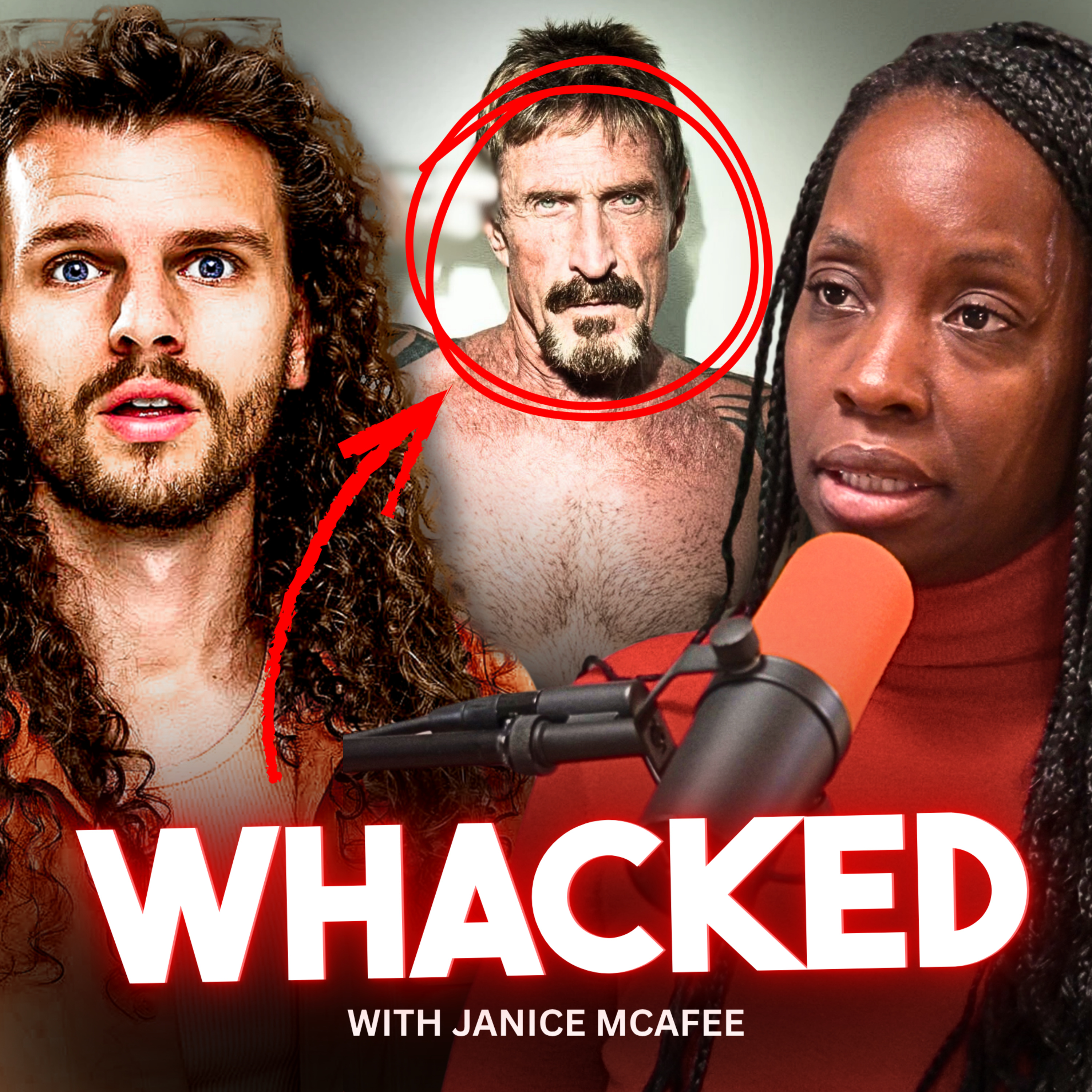
This is Janice McAfee, the former wife of the eccentric tech millionaire John McAfee, the man behind the antivirus software that made him a global name, made him a fortune, and may have given him access to some of the most coveted information in the world. Janice was his partner through the chaos of his final years, and she remains one of the few people who can speak directly on what he was dealing with leading up to his untimely death in 2021, which has officially been ruled a suicide.
- [00:42]
Janice McAfee
Now the camera is facing John's cell. The guard is walking down the hallway, and he's checking each cell. And when he gets to John cell, his door is cracked open like this. I just think it's strange that all of the other cell doors were completely closed and John's was strange.
- [00:58]
Interviewer
Since that day, McAfee's death has sparked endless theories involving organized crime, political pressure, intelligence agencies, and his years in Central America. Some believe that he knew too much. Others say that he was running from bad relationships back in Central America, or demons that only he knew about. But no matter what you believe, the mystery around John McAfee has only grown. And today, who better to talk about the real John than the woman who lived closest to him? So if you were into true crime, conspiracy, and the life of. Of one of the most unpredictable millionaires ever, this is the episode for you. So sit back, relax, and welcome to camp. Janice, how are you?
- [01:40]
Janice McAfee
I'm good, how are you?
- [01:41]
Interviewer
I'm excellent. Thank you for flying all the way from lovely California, from the Bay Area to. To New York City, just to. To chat with me. It means the world.
- [01:49]
Janice McAfee
Yeah, of course. Thank you for having me.
- [01:51]
Interviewer
Absolutely. I. I'm excited to talk about the man, the myth, and of John McAfee. You were married to John and you were in a relationship with John for about 11ish years. 12 years, roughly.
- [02:08]
Janice McAfee
Not so long.
- [02:09]
Interviewer
How, what was the timeline of that?
- [02:10]
Janice McAfee
We met in 2012 and he died in 2021, so about almost nine years.
- [02:15]
Interviewer
Okay, so about nine years.
- [02:17]
Janice McAfee
It certainly felt longer. For sure.
- [02:20]
Interviewer
Yeah, I can imagine that those, the last nine years of John's life, it was full speed ahead. I don't think that there were many days off. So, I mean, in that time, you guys lived a really, really fascinating and just awesome life together, which I want to discuss kind of how you two met and how things sort of evolved with you two, and then ultimately your time in Spain when John passed away, and kind of going through and really clearing up the details behind his death, which the official story is, you know, sort of discussing as a suicide. But it seems, at least by your account, that that is not the case.
- [02:58]
Janice McAfee
Right.
- [02:58]
Interviewer
And I think it would be, obviously, really important through all that, but in order to catch the audience up, because I think a lot of people have seen John McAfee. They're familiar with the antivirus software. I think there's a sort of cultural understanding of who this man was. But if you're able to just kind of briefly take us sort of a little bit to the beginning of, like, who is John? What was he, you know, like, based off of what you learned from, you know, spending so much time with him as a person, how did he make his money? And, yeah, kind of lead us up to when he left, you know, this software side of his life.
- [03:34]
Janice McAfee
Okay, okay, perfect. So. So John was born in England. He had dual citizenship. His mother was British and his dad was a U.S. soldier. And so he was actually born on a U.S. base, which is how he was able to get his citizenship through America. An only child. His dad was an alcoholic and also extremely abusive to John and his mother as well. So we're talking, like, broken bones, you know, busted ribs, you know, black eyes, all the things. And so that's what John grew up under, you know. And so I think that had a lot to do with who he became in his later life as far as just. He had such a huge heart for people, and he wanted to do what he could to make everyone's life better. If you were in his vicinity, if you were in his life and in his sphere of influence is what he sought to do, you know, to make.
- [04:33]
Interviewer
And his father died when he was still in his teens, correct?
- [04:37]
Janice McAfee
Yeah, he was, I believe, 15.
- [04:40]
Interviewer
Okay.
- [04:40]
Janice McAfee
If I'm get. If I'm remembering correctly, 15 when his dad died of suicide.
- [04:45]
Interviewer
So now his father kills himself. Does John, while you two are together, does he talk about his childhood or talk about his father's passing?
- [04:55]
Janice McAfee
Not so much. He didn't really. I mean, he. When he was working on his book, like, there was a book that was supposed to. An autobiography that was supposed to come out, but that didn't work out. But anyways, during those times, he would discuss his dad, but not. I don't think it was a Subject that he liked to talk about.
- [05:14]
Interviewer
Right. I can imagine it's traumatic. And when this is happening as a kid, it obviously has, you know, the trauma has an effect on any person that goes through that type of trauma. How do you feel like that manifests later in his life?
- [05:31]
Janice McAfee
Well, I could say that it definitely affected his. His belief in God only because his mother would send him to church. Right. Like, she didn't go with him, but she would send him to church. And I remember him sharing once that he, you know, that he would pray to God that this, you know, this situation would not be like what it was, you know, that her dad would stop, you know, abusing them. And. And God never answered, you know, and so for him, that, that I think that definitely marked him deeply in that sense, you know, because as a child, you. You have this childlike faith, but you don't see what you're asking for come to fruition. So. So naturally, you know, you're no longer going to believe. And so I think that fast forward played out greatly in his. In his adult life in the sense that I don't. I don't know if I want to say he was his own God, if you will. You know, I. I just, you know, me growing up, how I grew up, I. I've always believed that there is a God. I've always believed that. And so, you know, but other things happened in my life or took me away from that. But I think just to have, I don't want to say a moral compass, but I think we all need something higher than ourselves to believe in. Yes.
- [06:54]
Interviewer
Right.
- [06:54]
Janice McAfee
And when you don't have that, it's. I don't know. I don't. I don't know. I would imagine that it's kind of a bit despairing, you know, to not have something outside of you that you can look to, to draw strength from. Right, right. And so anyways, let me get back on track to where we were, but.
- [07:15]
Interviewer
I think that makes a lot of sense. Right. Like, I can imagine as, like a young kid, you are depending on this higher power to save you, to take you out of the situation, and it never happens.
- [07:24]
Janice McAfee
Right.
- [07:24]
Interviewer
And then especially for someone like John, who by all accounts was extremely intelligent, and so he's noticing that, like, okay, I'm doing this behavior, I'm doing what they're telling me to do, and I'm not getting any benefit. This is extremely frustrating. And then slowly he starts to do better in school, he starts to do well in business, and through his own accord is able to change his life, something that God never did for him or couldn't do. And so I can imagine for him in his mind, he goes, I am the thing that ultimately gets me out of bad situations. And when I can control the environment around me, things go good. And when I leave it up to God, I get, you know, my ribs broken. And I can imagine how that would create a very sort of tenuous relationship with a higher power and, you know, a lot of self belief in a lot of ways.
- [08:09]
Janice McAfee
Yes. And I think that that kind of manifested in a lot of his behaviors and I think as well, just our relationship probably would be also a manifestation of what he saw growing up, you know, his mother being abused. I came from a situation where I was, know, a. A working girl. Prostitute. A prostitute.
- [08:31]
Interviewer
And not supposed to say that word anymore, you know, that it's supposed to be sex worker. A sex worker, a working.
- [08:36]
Janice McAfee
I listen, I believe in calling a thing a thing. And I was a harlot. Okay.
- [08:41]
Interviewer
No, you. No, no, you weren't. You're a worker. You're a worker. That's what it was. So that's so funny that someone else is probably going to comment on this, be like you, Janice, it's not prostitute. You're like, look, I put the prostitute.
- [08:53]
Janice McAfee
What do you want me to say? Yeah, and so. And I had a pimp who was extremely abusive. So that's the situation that I came out of. And then the women that he met in Belize, those women were the same, had come from similar situations. And so I think again, that was just his nature. Right. To want to help. And it wasn't just only women, you know, that he wanted to help in that way. The men that he had around him as well, he sought to mentor and, and I guess share the knowledge, you know, the wealth of knowledge that he had.
- [09:30]
Interviewer
Right. He really commiserated and identified with people and probably women to a large extent that had been abused.
- [09:38]
Janice McAfee
Yeah. And broken people, if you will.
- [09:40]
Interviewer
Yeah. In a way. And I think that that's pretty traditional. I think. I think a lot of men, you know, emulate, you know, characteristics within their mother in a lot of different ways. And if his mother is abused and he's meeting women that are also abused, I wonder if there's a feeling that like, oh, I can help them, I can save them, I can get them out of this. And as a result, he's sort of, you know, around a lot of these types of women and men.
- [10:02]
Janice McAfee
Yeah.
- [10:03]
Interviewer
And I'm curious with you guys in your early relationship was There connection on sort of trauma and like, you know, upbringing and things like that.
- [10:12]
Janice McAfee
Not really. Not. Not really for. For me. Well, not. Not for me. For me, John was an answer to prayer, okay. Because I was. I had just turned. Turned 30 before I met him. And I grew up very religious. My father is still a minister. My mother's dad was actually a pastor. He had a small, like, storefront church. And so growing up, I was around my grandparents, you know, and going to their church. And the people in that church seem really serious about God and who God was. And he seemed really real to them, right. And thereby real to me. Right. I think that was the first time I experienced God's love, is just being in that environment. And so my grandfather had passed, you know, years prior to my turning 30. But I remember just sitting. Miami beach was on south beach. And I was actually. On my birthday, I was actually at work, which I was very upset about, because I had made enough money to at least have a night off, right, where I could just go to the club, buy some bottles, enjoy myself, right? And he took me to Benihana for dinner. This is the same thing we did the year before for my birthday. And sent myself and the other girl that was working with him or one of his other hosts to work, right? And I absolutely refused to work. I just sat on my butt all night. I didn't care. And I remember just watching the girls walking and. And I just. In my mind, I'm like, I can't do this anymore. And so I was kind of having a conversation with my grandfather, you know, because I knew if. If God was real, my grandfather knew him, and if heaven was real, my grandfather was there. And so I was saying in my mind, you know, if your God, I need him to do something for me, because I can't do this another day, week, month or year. I just can't. And I said, and if he doesn't do anything, then I'm just gonna give myself over to this life, you know, which meant, you know, I was just gonna start hitting the bottles, drinking, you know, drugging, whatever, because up until that point, I hadn't. You know, I drank, of course, because that was the nature of the job, but. But nothing where I was getting blackout drunk, you know, or doing cocaine or. Or any of the other drugs that are prevalent.
- [12:27]
Interviewer
You didn't fully give in.
- [12:29]
Janice McAfee
Exactly. I had standards, right? But four days later, I met John, right? And so he was absolutely an answer to my. That. That secret car of my heart. Nobody heard me. Like, I didn't speak this audibly to anyone, you know? And so. So that's what John was to me. Right. And initially, though, I mean, I received that as a gift from God. Right. But also at the same time, there was a self sabotaging that began to happen because I was like, how could this person want to be with me? You know what I'm saying? He's so super smart. He's lived this fascinating life. What can I possibly offer him? You know? And why, like, why is he keeping me around? You know, like, we're not and it's not, obviously. We met, you know, I was working and sex played a part, but it didn't play a part as to why he wanted me with him. And so it was like, okay, well, if I'm not even good for that, then why does he have me? You know what I'm saying? It was just so. There were a lot of things that I was doing initially to just try to make myself as unattractive as possible or maybe to push him away. I think that's a better way to say that. Because he can't try to push him away. Yeah.
- [13:53]
Interviewer
Because if you're able to do that, then he can't reject you, which is the ultimate fear.
- [13:57]
Janice McAfee
Yes.
- [13:57]
Interviewer
That, like, of course he's gonna reject me. So before he can reject me, I'll just reject myself. I'll just make it such that he doesn't want me at all.
- [14:04]
Janice McAfee
Exactly.
- [14:05]
Interviewer
And this seemed to backfire because it seemed like he wanted.
- [14:10]
Janice McAfee
Yes, it did. It did for a while, I guess, until I figured out, you know, what am I doing here? You know, like what? Like. Like this was an answer to your prayer. And what are you. What are you gonna do here? You're just gonna. You're gonna blow it. And how stupid would you be right now to blow this? You know? And so, you know, eventually I got my act together. It took a couple years, but I did eventually.
- [14:35]
Interviewer
Okay, I wanna jump to more of, like, how you guys met and then sort of what that journey was like, but just to catch the audience up to speed. John basically, you know, brilliant. Gets a degree in mathematics. And feel free to fill in any gaps here as we're kind of jumping along. Starts working with NASA at some point as a program.
- [14:53]
Janice McAfee
Xerox first. I think that was important because I think that's where he learned about programming.
- [14:58]
Interviewer
Okay, so he's programmed with Xerox, becomes a programmer for NASA.
- [15:01]
Janice McAfee
Yeah, he worked on a lot of black projects, Things that he couldn't even talk about at the time. Of his meeting. So they were still pretty secret things that were. That he worked on. And he was always very shocked that he got a security clearance because he was completely honest about, you know, the questions they were asking. You know, have you sold drugs? Yes. You know, have you done drugs? Yes. How much? How more than I could carry. You know, just even at that time.
- [15:28]
Interviewer
Because he was probably in his 20s at that time, and even in his 20s, he was always the same, John. He was partying super upfront, doing drugs, having fun.
- [15:36]
Janice McAfee
Yeah, well, I mean, he. He was born in, what, 40, 45. And so, you know, he would have lived through the. That whole hippie, you know, generation.
- [15:46]
Interviewer
Right.
- [15:47]
Janice McAfee
And so. So, yeah, he.
- [15:49]
Interviewer
Yeah, he was full on and embraced it in a lot of ways.
- [15:52]
Janice McAfee
Full on. Yeah.
- [15:54]
Interviewer
Interesting.
- [15:55]
Janice McAfee
And he had a one. Oh, I should tell this story, though. He. This story that he told of him having this one trip where he. I think he said he was somewhere. He was in St. Louis and he took some acid or something and he's out walking, and so he takes a little bit, and then nothing happens. So he's taking more and more and more because nothing's happening. So then all of a sudden it hits and he said he's. This dog is, like, barking. And so he said, you know, this caught his attention naturally because of his love of dogs. And so he goes over to the dog, and the dog says, finally, you came over. I've been trying to get your attention. And it's like, come with me. So he goes on this crazy, crazy trip which culminated in the end of him. A voice in his head telling him that he needed to. And kill his wife and his daughter. And he said on his way there, someone. Someone came and met him outside. I guess it was a. A minister or someone. I don't know, some man who kind of talked to him and talked him down out of that, I don't know, lunacy. I don't. I don't know what to call it. I've never had a trip like that. But he. But he. Yeah, he was gone for. For. For a good little while, you know.
- [17:15]
Interviewer
And the voice told him to kill his. His wife at the time and his daughter.
- [17:18]
Janice McAfee
Yeah.
- [17:19]
Interviewer
And he was like, all right. Like, at that. For whatever reason in that state, he.
- [17:23]
Janice McAfee
Was like, sure, he had actually made it to the house. And I think maybe his mother called someone because, you know, obviously they. They live near to each other. So I think that's how I think. I don't think this random person just showed up. I think someone called and he, so he did actually make it to the house and. But hadn't done anything.
- [17:42]
Interviewer
Right. He told you this story?
- [17:44]
Janice McAfee
Yeah, well, he's, he's spoken about it publicly before as well, you know, and.
- [17:48]
Interviewer
Then you were like, hey, let's never do LST ever again or whatever that was. Right. Heaven forbid. Another voice.
- [17:55]
Janice McAfee
But see, he hadn't done drugs like that in a, in, I would say, decades, you know, so.
- [18:01]
Interviewer
So even like an LSD phase.
- [18:03]
Janice McAfee
Wild and craziness. Even for all of his talking of drug use, he was always talking about prior drug use, never current. So he was very much a sober Dan. Right. I was the one that smoked the weed. And he, and he was like super against it when we were living in Portland because he was scared or concerned that if the police wanted to, if, if for whatever reason they wanted to come and harass him or make us like, difficult, you know, that's. That would be the reason. So, so yeah, he, he, later, later on, once we were in Tennessee, he let up on that rule. But, but yeah, he was completely different than, than the John McAfee that you saw public, that public figure.
- [18:48]
Interviewer
Right. Wow. Okay, so this is his time in the, in the 60s where he's.
- [18:53]
Janice McAfee
Yeah.
- [18:54]
Interviewer
Simultaneously, you know, he's living this crazy life, really genius guy, but also doing a lot of 60s era things, you know what I mean?
- [19:01]
Janice McAfee
Yes.
- [19:01]
Interviewer
Probably going with some, you know, having.
- [19:02]
Janice McAfee
Orgies, all the things.
- [19:04]
Interviewer
Right.
- [19:04]
Janice McAfee
And probably maybe half of the 47 children he allegedly had probably came during those two years.
- [19:11]
Interviewer
Right. So then at that point, once he starts working within these companies, NASA, Lockheed, does his act clean up a little bit or is he still partying to your understanding?
- [19:23]
Janice McAfee
To my understanding, I think yes. Yes and no. I mean, cleaned up in the sense that he did his work. Right. He was very adamant about making sure his work was done before, you know, partying or what have you. So. But he was, I don't know, I guess he was able to dance this dance of simultaneously being super hardcore party guy as well as, you know, this making sure he fulfilled his responsibilities at work.
- [19:53]
Interviewer
Right. And then goes on to create, you know, I forget which company he was at, but basically he's at this company, finds out about this computer brain virus thing.
- [20:01]
Janice McAfee
Right.
- [20:01]
Interviewer
And then goes on to create McAfee Antivirus.
- [20:04]
Janice McAfee
I'm not sure what he was doing at the time when the antivirus came about, but I know that his brother in law. So he had since been divorced and married twice since then. So this was his third wife, Judy, and that he was Married to at the time. So he, his brother in law came and brought him. There was an article about the computer virus. And so he said when he read it, he immediately knew what they did, how they did it and how it could be reversed. And so that's how the McAfee antivirus was, was birthed from that.
- [20:41]
Interviewer
And it seems like he really pioneered a few different things within the software world where he was kind of like, hey, like free software trials, like you can do this. He was really great at marketing and explaining to people like, hey, this is like a cold or like a fever for your computer. And it really attached to a lot of people. And as a result, you know, he was making millions of dollars.
- [20:59]
Janice McAfee
Right. Fairly quickly he was actually giving it free, giving it away individuals, individual users. But his first contract came from the army, from the military, so. And then of course CIA, FBI, all of those things. And so that's, that's how he made his millions was contract with the military, government contracts.
- [21:18]
Interviewer
Interesting. Now, was he ever like this relationship he had with these government contracts, was he working with them in close capacity or was he just selling the software to them?
- [21:28]
Janice McAfee
I don't know. I don't want to speak out of turn, so I, I'm, I'm not sure. I would imagine that he would have been working in close proximity because he was a genius, right? He, absolutely. He's valuable enough known what they needed. Right. As far as. Because obviously antivirus for the individual and then for the military is kind of different things. Yeah, completely different things. So I would assume he was working quite closely with whomever his contact was.
- [21:56]
Interviewer
So then by the 90s, he's, you know, the company goes public. At that point, I think he'd already left the company due to some differences.
- [22:03]
Janice McAfee
Early 90s, I think. I think from what he expressed is that he just wasn't meant to be in boardrooms, in, you know, board of directors and answering to anyone, which I.
- [22:13]
Interviewer
Think most people can see based off of his public Persona, that's probably the case.
- [22:17]
Janice McAfee
Yeah. So he got out really early, really.
- [22:20]
Interviewer
Early, but still kept the shares and then when it eventually went public and.
- [22:24]
Janice McAfee
Then eventually sold the shares. Yes.
- [22:26]
Interviewer
And it seems like based off public reports made somewhere in like the $100 million range. And then at that point he starts investing and I feel like this is kind of like the, the birth of the, the John macfie that people really see online and, you know, is very eccentric and is, you know, doing all sorts of wild things, but is also investing a lot into like real Estate.
- [22:50]
Janice McAfee
Right.
- [22:50]
Interviewer
And then he was.
- [22:53]
Janice McAfee
Yeah, I guess you could say investing. I think he was more so building homes. He was. A friend of mine actually said his. The way that he buil homes was like kind of like how Michelangelo would, you know, paint. Right. And so it just was very beautiful, The. The work of art that his homes were. Right. The details that he went, you know, in decorating and. Because he did all of that, you know, himself.
- [23:21]
Interviewer
How many.
- [23:22]
Janice McAfee
His idea.
- [23:22]
Interviewer
How many homes did he build that are still around? Are there many?
- [23:26]
Janice McAfee
So the one in Colorado Springs, that. That's the big compound. So there was the big main house, and then I think there was like 20 different cabins on, you know, spread out on the property. The New Mexico home, I believe, is still standing. That was a really nice one that he had as well. His home's in Belize, so he built homes for three of the girls. So I don't imagine those have to look pretty nice. I don't think I've ever seen those online, I'm sure, you know, for obvious reasons, so. But the home that I was able to see was actually the. The Colorado Springs home, which was really cool. I mean, it was. It was beautiful. You know, it was still designed in the way that he. That he had it, and it was just like a work of art. Art. It was. Yeah, it was nice.
- [24:21]
Interviewer
And then he claimed at some point in 2008 that he had lost much of his fortune. But then later, kind of was like, I was using the media. Is there. What can you clarify on that point?
- [24:32]
Janice McAfee
I think there's nothing. There's nothing that I can do to clarify, because John was very private about that, as he should have been, but it's really no one's business. I will say that he was. He was brilliant. So I doubt that he would have had 50% of his holdings, you know, that he lost. You know, that's just. That just doesn't seem right, knowing what I know of John McAfee and maybe even you just knowing him publicly, that, you know, that just would seem absurd. Right. That he would, you know, kind of put eggs in one basket and not, you know, be prepared for a rainy day, you know.
- [25:10]
Interviewer
Right.
- [25:11]
Janice McAfee
Also, I think the whole situation in 2008 was not a surprise to anyone paying attention. Right. So I would assume he would have been paying attention, you know, but he. He had other companies as well, so he was. He had other. Other things that brought him his wealth as well. So he had a company called Tribal Voice, which was instant messaging program that he was running that made him something like $17 million. And so. But obviously the antivirus was the bigger, you know, had the lion's share of his wealth. But, but he was, he was always busy creating, you know, and once his creation came to fruition, then it was on to the next thing that was kind of his, his M.O. because he would get bored and now it was on to the next thing that excited him.
- [26:02]
Interviewer
This is how he strikes me, just based off of reading about him, is that he's very much a work hard, play hard type of, you know, like eccentric multimillionaire, right? Which like there's very many of these people that I've read about or met that, you know, they'll work, you know, 18 hours a day and then party the other six you. And they just, they love to, you know, go fast and try things and disrupt things and if they're smart like John was able to disrupt industries, but then also liked to party and meet women and have fun and go do crazy cowboy things with his friends. And so to me there's like a little bit of a dichotomy I think to many people where they're like, okay, this guy's a partier and he likes to shoot guns and he likes to go on boats and he's living like this crazy, you know, larger than life, you know, sort of lifestyle, but simultaneously is also building multi 100 million dollar companies and working, you know, 12, 16, 18 hours a day. To me, I've met some people like this. But I'm curious, like how does that square with your relationship with him and the way that you saw him work? Was he like, does this dichotomy exist for you or do you see him as someone that was able to do all things and be multiple people?
- [27:15]
Janice McAfee
No, very much so. This was his existence, right? Very much so. He just liked to have a good time, he liked to enjoy life. And I think the partier of him was not as prevalent maybe in those earlier years. You know, obviously with age comes wisdom usually. And so, and then also our lives were just, you know, dangerous, right? He was, he was very much in real danger when he came back from Belize. Well, Guatemala is where he actually came, you know, came from. But, but his problems were birthed from, from what happened in Belize. And so that followed him into America. You know, he liked to work hard and, and play, maybe not hard, but just play, you know, enjoy. And that definitely took a different shape. You know, it wasn't, you know, drugs and women and all of that. It was guns, right? Bows, booze, you Know, and just relaxing, you know, doing. Just relaxing and doing whatever it was that tickled his fancy in the moment, you know, Was he competitive with himself? Yeah.
- [28:37]
Interviewer
Like, he didn't speak about rivals or other people in different industries, that he wanted a bigger boat then or a bigger house then, like, things like that?
- [28:43]
Janice McAfee
No, no. I think, you know, at the height of his wealth, he was able to do whatever he wanted, whenever he wanted, however he wanted. So. So he got to live that out, you know, and. And there was nothing that he wasn't able to do if he so chose to do it. So I think, no, he was not in any competition. I don't even think then, you know, at the time, he would have been either, I think, just with himself, you know, what. What can I do? You know, what. What can I do with all of this wealth? And obviously, I think he mentioned before, you know, that that amount of wealth, you. The people that are around, you don't know who you can trust. You don't know if they're laughing at your jokes because they're funny or because, you know, you have the money, right. You know, and they just want to be. Stay in close proximity to you. So. So there was a loneliness there as well, you know, because you never know why. Why people are with you or around you.
- [29:41]
Interviewer
What's up, guys? We're gonna take. Because you need help pitching your tents. Yes. And that's what we do over here at camp. Maybe you're, I don't know, in line waiting for a concert somewhere, and you just need something to lean on, May. Who knows? Maybe you just need help pleasing the special man or woman in your life. And that's why I want to talk to you guys about BlueChew. BlueChew is the ultimate service to get you discreet supplements right to your home. And what do these supplements do? They give you that leg, that third leg, the important one. And bluechew is going to help you lay it down, okay? It's an amazing service that's coming straight to your door. And for the listeners of this very program, they are going to get their first month of Bluechew for free. All you need to use is the promo code, Gagnon, G, A G, N O N. And you'll have them gagging. You know, I'm talking about. You know, I'm seeing what I'm saying, my boy. So go to bluechew.com and try the promo code, GAGNON G, A G, N O N. And you're gonna get your first month free. All you got to do is pay $5 for shipping. That's like a coffee. Okay, so to skip your morning cold brew and instead get that hard brew for an entire month. Yes, that is@chew.com use the promo code gagon and start laying it down like they deserve. Let's get back to the show at this time before he goes to Belize. Does he have friends?
- [31:01]
Janice McAfee
Friends because he had money, maybe.
- [31:03]
Interviewer
Yeah. But not like a guy that he knew since he was 16 or another.
- [31:08]
Janice McAfee
Not that I ever heard him speak of. Now, that's not to say, I apologize. Anyone that may have been a friend of his hearing this, he just never shared that with me. I think the. The person he was closest to was his uncle who kind of took on the father role when his dad died. And so that. That was who he spoke with great affection about.
- [31:32]
Interviewer
Right.
- [31:33]
Janice McAfee
And so outside of that, you know, I'm not, I can't speak confidently on. On that.
- [31:38]
Interviewer
That's fair.
- [31:41]
Janice McAfee
I will say, though. Well, not we'll say, but I, I will just tell you briefly why he left America. And so he was living in New Mexico, I think, at the time, and he had, through his wife's family, on his wife's side, nephews, two nephews and a niece, twins, twin boys, and then an older daughter. And so they would spend. They would come and spend the summers with John. Right. And so them being children, you know, John's like, well, I'm not going to change my life, you know, to fit these kids in because they wanted to be. They wanted to spend time with Uncle John. They loved Uncle John. And so he would take them, I think. Where did he say? In Santa Cruz. Like in a really posh area of Santa Cruz or if they go on vacation in Palm Springs. So it's like super duper posh people. Right. And he would have the kids go and like, if there was a cigar store, he sent, I think he said he sent his nephews in there and, and asked him where the children's section is for the children's cigars. Or he would send them up to, you know, people, older people usually, and ask if they could have a cigarette. And they'd say, well, where's your parents? Oh, my Uncle John's right over there. He said it was okay. So this is what he liked to do, to have fun.
- [33:01]
Interviewer
Just a mess with people.
- [33:02]
Janice McAfee
Yeah, they adored him. And so. But unfortunately, one of his nephews died in a plane crash. And so that really rocked John's world, you know, because that was. He was more of a son to John. And this is the reason why he left America and went to Belize. Right. He just kind of decided he had enough, and he sold his home, like, in a fire cell, you know, was giving away all this, you know, expensive art, cars, everything. Just go now. And he went to Belize with what. With what he had.
- [33:40]
Interviewer
And do you know why Belize?
- [33:42]
Janice McAfee
I have no idea why Belize. I mean, he just said that it was beautiful, which it is. I've seen pictures. I'm not. I'm not allowed to go there, apparently, because of my relationship with him. He said I would be foolish to ever go there. So anyways.
- [33:56]
Interviewer
But I could see a man so overcome by grief.
- [33:58]
Janice McAfee
Yeah.
- [33:59]
Interviewer
And, you know, I don't want to be in my home. That gives me memories of this, you know, basically a son to me. And I don't want to be in the city that I know at this point. Like, I could see him being so overcome by grief that he wants to leave. But I'm. Belize just seems, you know, with a lot. With all due respect, I've heard Belmont is a beautiful city, but I just don't know why I had a Belizean friend, you know, but that's about the extent of what I knew about Belize. So I don't know why someone would be like, oh, I need to go to Belize.
- [34:26]
Janice McAfee
Yeah, I don't know. I don't know either.
- [34:28]
Interviewer
Had he traveled there earlier in his life?
- [34:30]
Janice McAfee
Probably. He probably spent some time there. I mean, mind you, he was extremely wealthy at one point, so he probably went to all of the places that he ever wanted to go to.
- [34:39]
Interviewer
Right.
- [34:40]
Janice McAfee
And so maybe just had a fixation again. Wybelies. I know. Don't. I don't. I don't know.
- [34:46]
Interviewer
But when he goes down there.
- [34:47]
Janice McAfee
Yeah.
- [34:47]
Interviewer
It seems like somewhat quickly. There's. There's tension.
- [34:52]
Janice McAfee
I actually don't know how long he was living there before all of the things that people know about happening in Belize happen. So I'm not sure. But he goes there and he's living there. He's, you know, building homes. He's meeting women. He's, you know, doing the things that John does. And so minus the partying, I should say that. Minus. I don't. I don't see that that would have been a thing at that, you know, point in his life, you know, so he. He started a company. Well, he opened up a coffee shop. Built. I think he built it and opened it, or just opened one, you know, in a previous standing building. I don't know. Anyways, because he wanted coffee, so he was always trying to solve his own problems. He wanted coffee. Couldn't find it. So he opened a coffee shop, gave it over to the locals. He would try to catch a to the mainland, but the ferry was never running on time. So he bought boats and opened his own ferry company, gave it over to the locals. So one of his girlfriends, Amy, was living in an area that was very dangerous. So he wanted her to live somewhere that was safe. So he donated equipment to the police and money to the police to equip them with what they needed to do their jobs. So this is just what he was kind of doing, living over there, enjoying his life. And then he decided that he was going to make topical antivirus. Because when he came, when I actually met him, he had, like, all of these marks from bug bites all up and down his arms and his legs. And so that's why he was working on this topical antivirus for himself. And so not ironic, too.
- [36:33]
Interviewer
Yeah, he has this antivirus company and then also creates another antivirus company.
- [36:37]
Janice McAfee
Yeah. So. And he. He had made samples and was giving them out to the locals. And it was working. It was doing a good job. And so eventually he was. Two political representatives came to his property, and they asked him if he would be willing to give a $2 million donation to, I'm assuming, the ruling political party. And for that, he would get all sorts of perks. Women, drugs, land, whatever it was that he wanted. And he, you know, politely declined. And he says, like, a week after that happened, the gsu, which is a gang suppression unit, came to his property and Han handcuffed him. And I think 14 other people on their knees in the ground outside for over 12 hours. They were handcuffed that way. They destroyed his lab and shot his dog, his deaf dog, in front of him. And they arrested him as well and said that he had an illegal fire firearm, which they later dropped that charge because he was able to produce the license. And a week after that, those same representatives came back to the property and asked if he'd reconsidered his donation, to which he said, get the F off my property. And this began the war for him. And so what he was trying to find out was information showing that he was set up for the raid on his property because he wanted an apology from the prime minister. And so what he decided to do was he decided to gift laptops to boyfriends, girlfriends of people high up within the government secretaries, People close in, close enough proximity to people high enough up to where he could prove this information. Right, or find. Find out this Information. So on these laptops, there was key stroke logging information to a spyware on. On the laptops. And. And quickly he found out that instead of finding out information related to him and about this raid on his property, found out about drug trafficking, human trafficking, murder for hire, passport selling, all sorts of money laundering, all kinds of terrible, terrible crimes that were being perpetrated by people that were extremely high up within the Belizean government. And so he hired a group of women to kind of parse through the information for him, looking for things that were relevant to him. Right. And so one of these young ladies was sleeping with, I believe it was the head of the gsu, and she, during some pillow talk, kind of spilled the beans and said, oh, yeah, this is what we're doing for John McAfee. And so that's how they found out what he was doing. And so this happened sometime in the summer of 20, 2012. And so he had to go into hiding or go on the run while he was still there in Belize. So he's, you know, kind of island hopping, moving around, he and Samantha just trying to stay, you know, safe, basically. And this all culminated within the murder of his neighbor, which John was convinced was actually a botched hit on himself.
- [40:02]
Interviewer
This is Gregory Fall.
- [40:04]
Janice McAfee
Yeah, Gregory Fall. They went. Whoever killed Mr. Fall, they went to the wrong property. And so John always felt that he was the intended target of that.
- [40:14]
Interviewer
Now, there's obviously much speculation around, you know, Gregory Fall, and that it has been said that John was a person of interest.
- [40:24]
Janice McAfee
Right. Which is not true, actually.
- [40:25]
Interviewer
And can you clarify that point?
- [40:27]
Janice McAfee
So he was never a person of interest. He was only wanted for questioning. He was never wanted for murder. He was never even suspected of murdering him. And this is all from the Belizean news. Right? So. So the reporting in the. In Belize was that he was never wanted for murder, only for questioning, as all of the other neighbors were questioned. But because of what was already happening with John, he, of course, was not going to turn himself in for questioning. And so that's. That's why he was, you know, refusing to go to them and be questioned. That.
- [41:04]
Interviewer
Right. Especially you can understand John's perspective because he's saying, like, look, I had nothing to do with the murder, but I am connected to it in the sense that whoever killed this person really meant to kill me. So I'm not gonna go talk to a government that I think is hostile to me, that I believe killed this guy trying to get me. Why would I go into your private room to go speak with you about Anything.
- [41:26]
Janice McAfee
Exactly.
- [41:27]
Interviewer
Which, correct me if I'm wrong, he did express a willingness to be questioned, just not in Belize.
- [41:32]
Janice McAfee
Yes, definitely. When he came back to America. That's kind of what people were asking him when he was going on these news stations when they were asking about the situation. And he always said, I'm more than happy to answer any of their questions, but in a neutral place, you know, they can come here to Miami. When we were in Portland, you know, they offered for them to come there. He just was not willing to go back to Belize to answer the questions. Which, when you think about it, why would he have needed to go specifically to Belize, you know, to answer questions? Why not just come and. And ask her questions?
- [42:06]
Interviewer
You know, he also had dogs at the time.
- [42:09]
Janice McAfee
Yeah, he had a lot of dogs, which were not. He actually only brough two or three dogs with him from the States to the tubeless. All of the rest of the dogs were stray dogs that I guess made made their way to his property one way or another. So they were not officially his dogs, but they became his dogs. And so.
- [42:28]
Interviewer
And he would look after them.
- [42:29]
Janice McAfee
Yeah, he took very good care of them. And. And so he. He understood that people had issues with his dogs. He had issues with the dogs because they were, you know, they were wild dogs, if you will, you know, and so they barked a lot and. And they were just kind of a nuisance, you know. But from what John expressed about the situation is he felt that someone, I guess someone within the authorities of the. Of the Belizean government poisoned his dogs. So there was a story, or allegedly Mr. Fall had filed some report or complaint against the dogs prior to his being killed. And this then is why people are saying, or why it was then said that John, you know, killed him because he allegedly poisoned the dog. So this was kind of the story that, because Mr. Fall filed this complaint, he was probably the one who poisoned the dogs. John probably assumed that he was the one that poisoned the dogs, and then thereby that's why Mr. Fall is dead. But John believed that it was someone within the government. Again, just trying to, I don't know, agitate the situation, because obviously, if the dogs are disabled, then it'll be easier for whomever to come onto the property. Right. Because there's less of an alert. And so there was actually nine dogs that were poisoned. I think it's reported that maybe one or two, but it was actually nine dogs. And John had to, you know, go and kill them all because they were throwing up blood and, you know, blood was coming out of their, you know, their anus is. So it was pretty bad.
- [44:14]
Interviewer
Right. Especially for John, who's a dog lover.
- [44:16]
Janice McAfee
Yeah.
- [44:17]
Interviewer
Like throughout his life.
- [44:17]
Janice McAfee
But obviously they were suffering, so. Right. You know.
- [44:20]
Interviewer
Yeah, of course, I can imagine that being a very difficult decision. Right.
- [44:24]
Janice McAfee
Well, it was not a difficult decision, but maybe having to. To carry it out. Yeah. I mean, the decision was simple. They're suffering, they want to stop that from happening. But.
- [44:33]
Interviewer
Yeah. So I'm curious in that regard. Why. Why is he paranoid at that point that the government is basically trying to get him? Is it because they've uncovered this plot where he's basically tracking all this? Was he ever going to go public with that? Was he ever going to expose this?
- [44:49]
Janice McAfee
He might have threatened to. I don't know. I don't know. He might have threatened to. But the fact that he had that information, they knew that he had that information. They wanted that information, you know, they wanted to collect him to find out where it was, who had it, to make sure they had all of the cops copies. Because imagine for however long this was going on. So I think there was a few months. Right. That they. That went by without them knowing. Right. So imagine the kind of candid conversations that are being had because you have no idea anyone is listening. Right, Right. What you're discussing so freely, you know, and, and knowing that someone has all of this information, you know, and, and, and you don't know where it is or where it's going to. Or who's going to get it. Right. But you're ruined. You're ruined if this ever gets out. So of course this is why he's paranoid. Of course this is why he thinks, you know, that the murder of his neighbor of Mr. Fall was, you know, a botched hit on him, you know, and of course that's why he refused to go to Belize for questioning. You know, this, I mean, for me this just makes complete sense, you know, like he's literally has shared this story numerous times publicly of what he did, what he did. Right. Because he just wanted an apology. And so he has this information, you know, and so of course, why wouldn't he be under constant threat? Right. Until they are able to get that information from him.
- [46:22]
Interviewer
Right. You know, did he ever have like concrete emails from the government officials that were meeting with him or were they doing everything secretively?
- [46:31]
Janice McAfee
I think he had everything, everything. Oh, really? He had all communication, like hard evidence.
- [46:37]
Interviewer
Like, hey, they tried to basically get me to bribe them or they tried to extort me.
- [46:42]
Janice McAfee
No, not in that sense. No. Not in that sense. I just mean of their criminal activity, the criminal activity that they were involved in.
- [46:48]
Interviewer
Got it.
- [46:49]
Janice McAfee
Right. So. So that's the information that he had. And. And again, it. You know, it's. Anyways, I don't want to get too deeply into that, but, yes, he had a lot of incriminating information that. That should have completely wiped out the Belizean government, you know, all of them being arrested, you know, but obviously, it's a banana republic. I'm not sure exactly what that means, but I guess they do what they want to do over there, and that's just the law of the land.
- [47:17]
Interviewer
Right. But prior to, you know, the spyware, like those correspondences he had with the government.
- [47:22]
Janice McAfee
I don't think so. I don't think he ever found the. The evidence that he was looking for as it related to himself. I don't think. Think so.
- [47:30]
Interviewer
Got it. I see. I mean, yeah, I can imagine that being terrifying.
- [47:35]
Janice McAfee
Yeah.
- [47:35]
Interviewer
Living in a country where, like, oh, these people can just take me out of nothing. Like, they might not have any justice, like, if. Especially if it's done being perpetrated by the government.
- [47:43]
Janice McAfee
Right, right.
- [47:44]
Interviewer
I mean, and especially, I can imagine in, you know, a place, you know, like, you know, most of Central America, you could find someone that could carry out a hit.
- [47:53]
Janice McAfee
Yes. Very easily.
- [47:54]
Interviewer
Fairly easily, cheaply. Right.
- [47:56]
Janice McAfee
Yeah.
- [47:56]
Interviewer
Yeah. I could see this being stressful. Did he have other enemies at that time, or was it. Was it primarily people within the government that he sort of had uncovered this. This, you know, this crime network?
- [48:08]
Janice McAfee
Well, at that time, I think. I think that was his biggest threat, but I think him just being a gringo and living in the jungle, so he was living, like, off the beaten path of tourists, you know, where Americans typically, if they had a home there, then. Then it would be kind of in the safer area where it's known for the tourism. Right. But he was, like I said, off the beaten path. And that's just how he liked to live, to live authentically as possible to the natives. Yeah. And so there were issues that arose because of that, you know, people wanting to extort money from him or wanting to harm him, you know, for this reason. And so he needed to protect himself. And so that's what he did. You know, he hired. I think. I forget the man's name, but he hired. Oh, I almost had it. Anyways, there's a gentleman who was very much feared on. On the island. He was a former. Former police, and. And so he hired him and his, like, gang. Well, maybe not gang. It's not the best. His associates to. To protect him.
- [49:22]
Interviewer
And so he did have a private security detail.
- [49:24]
Janice McAfee
He had. Yeah.
- [49:25]
Interviewer
And did he also have security cameras? I'm sure he had a robust security system within his home. I'm.
- [49:31]
Janice McAfee
I'm sure, I'm sure.
- [49:33]
Interviewer
But with that system, he never caught who poisoned the dogs?
- [49:37]
Janice McAfee
I don't think so. Again, I'm. I'm assuming he had a. Cameras and all of that. I'm making a huge assumption here because I actually don't know. I never really asked him.
- [49:47]
Interviewer
Right.
- [49:49]
Janice McAfee
But yeah, I would, I would imagine if he, if he did, he would have been able to capture that, because from what I could see in the pictures, the. The gate of where the dogs would have been to receive the poison, I'm assuming it was put in some food or something would have been right there along the beach, on the beach side. So just knowing John, like, he would have had cameras that would have been able to. Because that would have been a spot of vulner vulnerability.
- [50:20]
Interviewer
Right.
- [50:21]
Janice McAfee
And so I would assumed he would had. If he had cameras, he would have had footage there and could have proven.
- [50:27]
Interviewer
Or figured out what I imagine it's going to be. Some. A masked man, you know, which doesn't give you a ton. Right? Is that someone from the government? Is that someone from a local gang? Is that, you know, a neighbor like you? You can't really, you know, pin down who exactly it is.
- [50:40]
Janice McAfee
Right.
- [50:41]
Interviewer
Yeah, I can see this being. Being challenging for him in that moment. So effectively this whole situation goes down. There's the documentary that we spoke about briefly before Gringo that details some of John's life and specifically this time in Belize, and it depicts him to be. And again, I haven't seen the documentary, so forgive me here, but from what I understand from the documentary, it depicts him to be violent and potentially dangerous. In the time that you were with John, did you think he was capable of the violence that was sort of discussed in the documentary?
- [51:14]
Janice McAfee
No, not at all. And if there's anyone that should have been in fear of John, it should have been been me, right. Because of the situation with myself and the pimp and the cartel and. And so I never felt unsafe around John, ever. I never felt unsafe with him carrying a weapon, ever. I will say about the gringo, when they were actually. When they were actually just looking to begin filming, right. They were going. The producers, Nanette Bernstein, who was the director or produce, and I believe Josh Davis as well, went down to Belize and each person that was in the gringo all of them called John, not at the same time, but individually called John and said, hey, this person's here from Showtime and they're wanting me to tell them all these sorts of stories about you. And they said, they're going to pay me, you know, X amount of money. And so I. So John knew what was happening, you know, because he still had friends, you know, they were still very friendly. He. They didn't leave. He didn't leave Belize on bad terms with the people that. That worked for him. Right. Or that were in close proximity to him. You know, he was a. He was a good man. By all by their stories and just them even reaching out to him to say, hey, let me give you a heads up about what's happening, right?
- [52:46]
Interviewer
They don't owe him anything, right?
- [52:47]
Janice McAfee
They. Oh, they owed him nothing. And, you know, John. John told them all, each of them, he said, listen, if it gets you more money, just tell them that you saw me eating babies. You know, he's like, tell them whatever they want you to tell them. Right? And because at the time, he wasn't able to, like, many of them worked for him. So obviously that dried up because they, you know, he was no longer there. So he was concerned, you know, as far as financially, you know, this is a lot of money, or this is money that can help you, so do what you can to get them whatever they're going to pay you. So I never saw the gringo either. I saw like, like snippets of it. But. But I will say that again, this, I think, concrete proof that. That John received that they were being paid was from Eddie McCoy, who in the gringo is Mac 10, who was allegedly the hitman that John hired to kill Gregory Fall and paid him with a check, which is so stupid. Like, who's gon. This is to kill my neighbor. Right? You're going to write that on the check. It was so stupid. And so anyways, he was paid 3,000 through Western Union, and that was paid directly to him by Nanette Bernstein. And so a little bit of devil's advocate, maybe he's being paid because he was appearing in the documentary, but $3,000 is a lot of money for someone to just, you know, be a part of a documentary. Now, I don't know what the going rate is for people being paid to participate in a documentary, but $3,000 sounds like a lot of money to me, especially if this is allegedly the hitman who is saying that John wrote him a check, you know, a check payment to. To kill this neighbor. So I think my. I think I have great disdain for the. For the gringo. Because you. Because John's story. John's story is so fascinating and it's so wildly entertaining that you do not need to have people lie. Right. You just don't need to. The truth is just so much better than the fiction that has been created, you know? And so, yeah, that's. And I think John as well, he was actually invited to participate in. In the documentary. He had a few conversations with Annette, but because of the direction she was obviously going in, he just refused to. To be a part of it.
- [55:23]
Interviewer
And then I think at some point there's discussion of, like, meth and. Like, a meth lab.
- [55:27]
Janice McAfee
Yeah.
- [55:28]
Interviewer
Is there any validity to this?
- [55:30]
Janice McAfee
I doubt it. I doubt it. Like, again, I wasn't there, so I could just tell you what, in the.
- [55:35]
Interviewer
Time that you knew him, he was not actively doing meth or running a meth lab?
- [55:40]
Janice McAfee
No, not at all. Not at all. Again, I believe what he told me to be true was that the lab was him creating antibiotic, a topical antibiotic, and the plant which he was using for the antibiotic was native to that part of the jungle where his property was. And so I do believe the woman, Allison, I believe her name was, was the one who was working with him in the lab. So I think she would have known if he was working on meth. I don't think she's ever stated anything to that effect. I do know there was some other. Another accusation that he, you know, forced himself on her. Again, I can't speak to the validity of that. I will say that there is nothing in John's charact that leads me to believe that he would be capable of something like that. My experience with John is that women were always throwing themselves at him in front of me when I wasn't around, you know, giving their hotel room keys to him or giving. Slipping their phone number to him. So this was my experience with John. So just. Yeah.
- [56:46]
Interviewer
So as far as, like, doing drugs or any reference he had, because I do believe there were some times where he spoke about meth or maybe a meth equivalent. But in your opinion, that would be about a previous. Like, in his childhood or in his.
- [56:58]
Janice McAfee
Younger years, he talked a lot about drug use and his drug use and his expertise in how to, you know, the dosage of drugs and all of that, and that was related to prior drug use. But he did. So there was something happened to him, I think before he left for Belize. I think he had a heart attack or something. And it was meant to have a triple bypass. Is that the right wording? I think I'm perhaps, yeah. Anyways, and so he, instead of doing that, he went completely natural and was doing all, finding out whatever information he could, doing research to find out how he could naturally reverse the effects. And part of that was, I guess you'd call it a supplement or something that he was getting from China. And that was. I think maybe this is what the people refer to when they're talking about he was using meth or something. I don't know, because I, I don't think he was very quiet about. Wasn't something that he tried to hide. It wasn't something that he abused, but it was definitely something that at least, at least what he told me was just something to kind of maintain, maintain the proper functioning of his heart and all of that.
- [58:23]
Interviewer
Because he doesn't seem like a bashful person to me. Right. Like, all the things that he enjoyed, he was pretty upfront about. Right. He's like, I like guns, I like women, I like drinking. And in my mind, if he also likes drugs, I could see him being like, I also enjoy doing drugs. And here's me doing drugs. Right. Like, so I've heard just both sides of it where, you know, there are people that say, like, oh, he's on these Internet forums and he's, you know, detailing how to like, make meth. Like, you've heard these rumors before.
- [58:50]
Janice McAfee
Yeah, well, that I think I, I don't think it was necessarily rumor. I think that was him at some point. I think the handle was Stuffmonger was on, on one of the, I guess the forum that you're probably speaking of. And so he shared. Yeah, a lot of the time, his knowledge, you know, his extensive knowledge.
- [59:12]
Interviewer
But it wasn't active is what you're suggesting.
- [59:15]
Janice McAfee
No, and I'm not, to my knowledge, knowledge, no.
- [59:17]
Interviewer
Because again, I mean, running is a libertarian. Like, he seems like someone that is very much a free will connoisseur. Right.
- [59:25]
Janice McAfee
Like, very much so.
- [59:26]
Interviewer
So long as you're within the bounds of like natural law and you're not like murdering other people.
- [59:31]
Janice McAfee
Right.
- [59:31]
Interviewer
Whatever it is that you want to do that, you know, you can more or less do that. If you want to do meth, go do math. And he's not doing it, obviously by your account, but he was, you know, telling people and sort of discussing the nature of these kind of drugs with them.
- [59:47]
Janice McAfee
Yes, definitely.
- [59:48]
Interviewer
Interesting. What's up, guys? We're going to take a break really quick because you might need A little bit of help. All right, as we know, our society is very sexual, right? It is in everything you. We are constantly being marinated in sexual garbage. Memes, music videos, Instagram. You're just scrolling and bang, there it is. And then that leads you down a little rabbit hole. You pop into the hub. Yeah, yeah, you pop into the hub and it might be sucking the life out of you. And dude, dudes everywhere. Yes. Killing your motivation, your relationships, your happiness from just, you know, gooning all the time. And that's why I want to tell you about something really important called Relay. Relay is the first app that actually helps you quit porn for good. It doesn't just tell you like, oh, you know, do better. It give you like little affirmations every day. It actually gives you tools that work, real accountability and actual encouragement and support to help you succeed. It's not about guilt or moral or telling you you're a bad person. It's about helping you grow to be the best person you can be. So if you're tired of feeling stuck, this is your sign to do something about it. So download relay, start your 7 day free trial with the code Gagnon and start building some real freedom. There are thousands of guys that are already doing this and getting their lives back through Relay and you can too. So seriously, stop gooning. Stop being a gooner. All right? At least for like a couple, a couple of weeks, right? Maybe a month. Right? To do your best. Okay? We're all in this journey together trying to be better men. So if you're interest, go to JoinRelay App Camp and become the person that, you know, you can be. Now let's get back to the show. How does John get from Belize to Guatemala?
- [61:22]
Janice McAfee
So after his neighbor was murdered, John now has to get off the island and he. So what first happened was he somehow he was actually on his property sometime after the. His neighbor was murdered and they came to his property, the authorities did. And he tells the story of how he was hiding in. And he was hiding basically in the ceiling in his bedroom, but they couldn't see him obviously. And he had the way that it was built like it was seamless, you know, the ceiling was seamless. So they couldn't, Sorry, they couldn't see where he would have been hiding, but he could hear, you know, all the movement, the, you know, know, talking and looking, you know, really looking for him.
- [62:16]
Interviewer
And was it intentionally built to be like a, A hideout?
- [62:19]
Janice McAfee
Safe. Safe room, really? Yeah. And so not because of this situation, but, but for, for whatever reason, I think that also goes to the danger that John felt he was in even before all of that happened with, with the gifting of the laptops and all of that. Right. There was obviously a. An element of danger there, there that existed prior to any of any of these other events happening. So he had arranged for a taxi driver, one of his trusted taxi drivers to come and meet him, and he was able to then get away from the home and then get ferried somewhere to catch a boat so that he could get to Guatemala. I'm sorry, this story is a little sparse because I'm not exact on the details. But anyways, he eventually makes it on boat to Guatemala. And I think this is the part that VICE magazine was able to capture a little bit, if your audience is familiar at all with John's story. John was on a boat with Samantha and there's some footage, video footage of them kind of escaping from Belize into Guatemala. And then once they got to Guatemala and could finally breathe a little bit of relief, the. The people with Vice magazine decided to take a picture and it said, we were with McAfee suckers. But the EXIF data wasn't removed. So immediately the location was known to the world. And John was having to go on the run again. And Samantha's uncle was a former Attorney General for Guatemala. And so he called him and he sent his driver to come and pick up John and the crew, Samantha as well, and drive them to him where he was in Guatemala, assuming where we saw him being arrested by Interpol. Again, if your audience is familiar, they would have seen, you know, these pictures are images of John being arrested by Interpol in, in Guatemala. And so he was brought there and then arrested for entering the country illegally. And this was the charge that, that they, that they got him on. And the Belizean authorities immediately went into action to have him extradited from Belize. But John's attorney needed time to file paperwork to kind of stay the, the extradition request. And so this is when John faked the heart attack and, and then magically got. Well once the, once the stay had been. Had been granted. And so, so after that, John was then taken to the airport because I guess once they stayed the extradition, then the jig was up, you know, there was nothing more that could have been done. Right. And so also because John was not wanted for a crime, right? He wasn't wanted for murder, just wanted for questioning. There was no reason why he, he should have been held there, right, because the entering the country illegally, slap on the wrist and they just send you back to your country of origin. Right. So this is what happened. He was actually deported from Guatemala to Miami. And he said once he. Once the plane landed and they were still in the tarmac, actually, that the plane was then boarded by men in black suits. And the pilot called him forward to the front of the plane and he said that. He was like, well, did I do now? You know, what trouble am I in now? And. And the gentleman responded to him, nothing. We're here to help you. And so apparently the. The terminal was packed with like hundreds of media, media personnel, journalists and. Are they even journalists anymore? Anyways, news people. And they were, you know, wanting to get the story or whatever, so they, they were saying, you know, we're just for your safety and everyone else's safety, we want to escort you wherever you want to go. And go to a taxi stand. And so they cleared out one of the terminals and there was just the one taxi there, and they put him in the taxi. And the taxi driver was like, who are you? And he said, I don't know, can you just take me to South Beach? And so John was. Apparently, I didn't know this. He. The Beacon Hotel is the hotel that he stayed at whenever he was on South Beach. And so that's where the cab driver took him. And he went in and asked the manager there, you know, for some cash so he could pay the cab driver and also for a room. He didn't have any money. Right. He just had the clothes on his back. That's all that he had. He. All of the money that he had was. Was stolen from him. So. So he. When he left America, I would assume that the majority of his. Whatever he had left, money wise, went with him. And so that was all. All stolen. When he, when all of this situation happened with the neighbor and him having to leave Belize, his homes were raided. All of the expensive, you know, art. All of the things, all of it was gone.
- [67:55]
Interviewer
No, Basically seized by the government.
- [67:57]
Janice McAfee
I won't say seized. I think stolen is a better word. Right, right.
- [68:01]
Interviewer
But stolen by either government officials or people working around these officials that knew that there was a vacant home, things of that nature.
- [68:08]
Janice McAfee
Yeah. Well, with the homes, anyone, any. I mean, whoever was around. Right, I'm sure. But. But as it related to the bank account and. And all of that.
- [68:18]
Interviewer
Was his home ultimately sold?
- [68:22]
Janice McAfee
Yeah, his one. The one home that was sold, I think. I don't think it was in his name, though, but it was sold. I only mentioned that because there was a home that was Actually in his name that was burned down just before it was to sell. It was. It was burned. Burned down, allegedly accidentally, but I think it was more an on purpose situation. So.
- [68:44]
Interviewer
For what purpose?
- [68:46]
Janice McAfee
I don't know, because he was. Because he had found a seller for it to maybe just to prevent him from being able to collect the money from. From the cell, I'm assuming.
- [68:58]
Interviewer
Interesting.
- [68:59]
Janice McAfee
Yeah. Yeah. So. So all of. All of his wealth was, you know, gone in an instant. Right. So again, all he had was the clothes on his back. And I met John. I guess it would have been the day after he was deported. So that would have been December 14, 2012. Right.
- [69:22]
Interviewer
And by the time you met him.
- [69:23]
Janice McAfee
Yeah.
- [69:24]
Interviewer
Based off of your understanding, he had very little money?
- [69:28]
Janice McAfee
Yes. He had no money, actually, virtually at all. No money. Yeah.
- [69:32]
Interviewer
So I didn't realize that.
- [69:33]
Janice McAfee
Yeah, he had no money. When I. When I met him, he had actually, a friend of his came and brought him $5,000 in $5 bills. Extremely crisp $5 bills. And he gave me a thousand of it for the night that I had spent with him. So December 13th. Right. It's. It's the night before or the. Just a few hours before we actually meet. And I'm in my. My conc. Condo with the other young lady who was working for my pimp. And we were sleeping. It was a slow night. I think it was like maybe a Wednesday night or something. It was just a really slow night. A night that usually you wouldn't go out. Right. Especially if we already had some money kind of saved up. There was no urgent need for us to go out.
- [70:19]
Interviewer
It's not a Saturday super bowl weekend or something.
- [70:22]
Janice McAfee
Exactly, because otherwise you're putting yourself at risk of being harassed by the cops or arrested.
- [70:27]
Interviewer
Every night you're out is exposure, and.
- [70:30]
Janice McAfee
So you want to be smart about it and not be out when there's nothing going on. Right. So anyways, the pimp calls and he's like, why don't you guys outside? So slowly, very slowly, we get dressed. We end up outside about midnight. And I happened to park my car across the street from the Beacon Hotel, and we were. We went to a place called Clevelander and Mangoes. These are like, not night spots on right there on Ocean Drive. And nothing was happening there. So I decided that we were gonna go to the Hard Rock Cafe in Fort Lauder, Lauderdale. Or the Hard Rock Casino, sorry, in Fort Lauderdale. And so we were walking back to where the car is parked, and I see John standing out in front of Johnny Rockets, speaking to one of the workers there. And we. We make eye contact. You know, I smile and nod, and he does the same. And. And. But I keep walking because I very quickly assessed that he. He was broke and that he wasn't interested. He just looked very dish. His clothes were not. You know, he just didn't look like he had money, right? And so he looked rough, actually, as well. And so I just kept walking. And by the time we got to the Beacon, the night manager was coming outside. And so I've chatted with him before, and I was asking him, hey, what's going on tonight? Is there any parties in town? Are the cops out harassing? Like, what's going on tonight? Right. A temperature check, if you will. And, you know, while he's telling me, you know, nothing's really going on, he looks down to where we had just come from, where Johnny Rockets is. He sees John, and he says, well, you know who that is, right? And I was like, no, I don't. And he said, that's John McAfee. I'm like, okay, who's that? And so he's like, well, do you know the McAfee antivirus? I was like, of course. And he said, well, that's the creator of it. And I was like, oh, really? Interesting. But I still. I still hesitated because, again, my assessment was a fair assessment. Maybe he's not broke, but he definitely wasn't interested. But anyways, I just bypassed that, and I was like, all right, let's. Let's just go and see what happened, right? So by the time we get to him, he's now the News Cafe, which is right on the corner of 8th and Ocean. It doesn't matter the street number, but anyways, whatever. He's at the News Cafe, which is still there, by the way, and he's smoking a cigarette, talking to the, you know, the workers there. And so I asked him for a cigarette, and while he was lighting my cigarette, he said, what are you girls out here doing drugging and rolling old men? To which I responded, we don't use drugs. And that intrigued him greatly. And he then invited us to join him for coffee. And so I immediately went into my spiel, you know, would you like some company? You know, you can have some chocolate or vanilla, or you could do a little swirl or whatever just to get out of the way. Again, I already assessed he wasn't interested, and he did not look any more interested, right? Even though he invited us for coffee. So. So I got that out of the way. He declined, you know, and said, I'm not interested. And so then I was like, okay, well, what brings you to Miami? Are you here for business or pleasure? And. And he was like. He's like, no, you don't know who I am? I was like, no, I have no idea who you are. And he's like, well, I've been top of the news for weeks now. It's like, well, I don't watch the news. I'm sorry. So it's a little. He seemed a little offended by me not knowing who he was.
- [73:54]
Interviewer
I wonder if he was relieved maybe.
- [73:57]
Janice McAfee
Maybe. But I think he is a little more of it. Yeah. Well, just because I, you know, I'm there in Miami and had I watched the news, I should have known exactly who he was. But I think. I think that also there might have been relief in the sense that he kind of felt safe that I wasn't sent to him, you know?
- [74:22]
Interviewer
Right.
- [74:23]
Janice McAfee
You know, and so. So he began to share with me the circumstances that led to him being there. So all of. All of the things I just shared with you about Belize, he shared with me. Not. Maybe not in such great detail, but kind of just a rough overview. And then he started sharing about his girlfriend. Right. And about Amy and Samantha and Tamisha and these girls he helped to change their lives, basically. You know, he built them homes. And, you know, eventually I would find out more about. About all that he did for Amy, which I would love to hear her story, if she ever felt comfortable with sharing. Right. Just because he. From what he said, you know, he. He hired tutors for her so that she could get a diploma and she could learn English. He built her a home as well. And at the time when John was back in America, maybe, I think when I say 2014ish, he had spoken to her, and she was working for one of the wealthiest men on the island. Working very close proximity, like a secretary or something, or assistant, personal assistant to him. Yeah. So she done very grave for herself. You know, she still had her home. She had her mother living in the. In their home, a mother who had sold her, you know, for sexual favors, for money. And. And. But she. But she turned her life around so much. Now, before I knew all of that, just knowing the little bit that I did know, I was like, okay. So I said, well, maybe I could be girlfriend number eight. Because he said there was seven of them. So I was like, maybe I could be girlfriend number eight. And it was like, you know, whatever. And so then he asked me to dismiss my girlfriend because she was high on Molly and not really adding much to the conversation. So. So then I. I did ask her, you know, I told her, you know, he wants me to stay. And. And so she did leave, and we stayed. So we. We were. We spoke for, like, maybe three hours. We were just sitting there, you know, a long time. Yeah. And it was really nice. And so then he invited me back to his hotel. And, you know, while he's in the bathroom, I'm kind of being nosy, just seeing what he has in the room. And he didn't have anything. Just, again, what, the clothes on his back. So, you know, I'm in his hotel room again, just assessing things. And he comes out of the bathroom and he's standing on the side of the bed, and he's kind of rocking up and down on his tippy toes. So I'm like, okay, what's going on? And he was like, would you mind if we just cuddle? And I was like, yeah, sure, we can cuddle, of course. But in my mind, I'm like, what the hell is cuddling? Like, I've never heard of cuddling. And I'm trying to go through my Rolodex of what sort of kinky sexual thing cuddling could. Could be. I was like, you know what? Screw it. I'll figure it out. I'm sure I could do it, whatever it is. And so he gets undressed and we're in the bed, and he just literally wraps himself so tightly around me and puts his head on my shoulder and goes to sleep. And that's what we did the first night we were together.
- [77:36]
Interviewer
So I'll be honest. Reminds me. Reminds me of myself. Right. I feel like John and I have a lot in common. Because if I. If I. If I had to guess, if I were to, you know, interact with. With a lady.
- [77:48]
Janice McAfee
Yeah.
- [77:48]
Interviewer
Yeah. Under these circumstances, I'd probably just want to cuddle, too. You know what I mean? The sexual pressure seems like so much just like, hey, let me just grab on and just take a nap. That sounds nice, right?
- [77:58]
Janice McAfee
So he had just described, you know, while he was telling me all of the things that happened, you know, that if he wanted sex, he could have had that, you know, Guatemala, you know, and he wasn't looking for that. He had a rough couple of weeks, whatever was going on, you know. Again, he expressed that to me, but I didn't know the truth of that, you know, but he. He looked like he had just been in the fight of his life, you know, like he was returning from war or something. You know, there was Just a heaviness to his presence, you know, and so. So I would imagine just. Just being able to feel safe enough to relax enough. Right. To go into a deep enough sleep where you're getting rest. You know, I would imagine that was extremely important to him, which is why, I guess he paid me a thousand dollars for it, so. Because, I mean, it was just a cuddle. I mean, that was nothing special about it.
- [78:58]
Interviewer
One fifth of his net worth. Right. Like, that's a half.
- [79:02]
Janice McAfee
Right.
- [79:03]
Interviewer
Especially for a guy that's just getting on his feet.
- [79:05]
Janice McAfee
Yeah.
- [79:05]
Interviewer
So then how do you go from here, you know, in this interaction, this moment, to then going to. To Oregon?
- [79:11]
Janice McAfee
So for whatever reason. Well, I should say, John, he. There was a graphic novel that was being written about his, you know, his saga in Belize and kind of just about his life in general. And the. The artist lived in Portland. Now, I'm not sure if that's the only reason why we went to Portland, because it actually never made any sense to me why he chose Portland. And so he was purchasing a pickup truck and we were going to drive from Tennessee to Portland. Now, unbeknownst to me at the time, the reason for the drive was because he was stopping. Each place that we stopped at and spent the night at was somewhere where he had buried some sort of emergency cash funding whatever it was. I don't know exactly. Exactly what it was, but he later shared with me that that's what he was doing, because he would disappear for hours at a time. Sometimes, you know, a whole day. I wouldn't see him. So this is what he was doing.
- [80:15]
Interviewer
What was one of the towns you stopped in?
- [80:18]
Janice McAfee
Oklahoma. We were somewhere in Oklahoma. An exact town. I don't know.
- [80:22]
Interviewer
Pull up into some random place in Oklahoma, and then you get into a hotel.
- [80:25]
Janice McAfee
Well, random to me, but not for him. Yeah.
- [80:27]
Interviewer
And you get into a hotel and then he just says, hey, I'll come back later.
- [80:30]
Janice McAfee
Yeah.
- [80:31]
Interviewer
Did he come back with, like, a bag?
- [80:33]
Janice McAfee
No, I never saw what he came back with, so I would imagine maybe he stashed it somewhere in the truck.
- [80:39]
Interviewer
But you didn't see it in the truck?
- [80:40]
Janice McAfee
No.
- [80:41]
Interviewer
Interesting. Do you know how much money, roughly, was in each cash?
- [80:44]
Janice McAfee
I have no idea.
- [80:45]
Interviewer
That's so fascinating. And I'm sorry, I skipped a step, actually. You went from Miami to Tennessee first?
- [80:50]
Janice McAfee
Yes, I skipped a step, actually.
- [80:52]
Interviewer
And what brought you to Tennessee?
- [80:54]
Janice McAfee
So. Because he was there, and that's when he was in Tennessee, because of his head of security who had worked for him for over 20 years at that Point. That's where he was his home base. So that's where. That's where he went to. And then I went and met him from Miami there in Tennessee. And then we drove together too.
- [81:14]
Interviewer
Now was he going to meet up with his head of security for security purposes or because that was just someone close to him that he was still in regular contact with?
- [81:22]
Janice McAfee
Probably both.
- [81:24]
Interviewer
I see.
- [81:25]
Janice McAfee
Yeah. Because. Because I was with him. Yeah. And so John, John later tail told me that I was actually he had a dossier on me, I guess if he could call it a dossier on. So. So he had a choice between myself and two other hoes, I guess, of who tickled his fancy, I guess. I don't know. So he knew. He knew about me. He knew enough about me. And I'm assuming his security would have as well. And so I'm just thinking about this now actually, because I never. Because, just because of what you asked me, you know, of security purposes of why he would have met with his security. But I think it makes sense that he would have met him for security reasons, as in the sense that he maybe needed someone to keep an eye on the pimp. Right. To see, like, let's just monitor that situation because obviously I was being monitored by John himself. Right. And so. So he wouldn't need to. To have me monitored by anyone else. Right. And so perhaps again to monitor that situation and maybe what he would get up to, knowing that I was with John, you know, just to kind of keep him safe on the back end, I guess, maybe.
- [82:47]
Interviewer
Right, because. Because you are working for a pimp.
- [82:51]
Janice McAfee
Yes.
- [82:51]
Interviewer
And as far as that industry goes, I mean, unfortunately you are sort of under the purview of this person and property in a way. Again, I don't know exactly the terminology to use in this instance, but it doesn't seem like there's very much a employer employee situation. You can't quit freely necessarily.
- [83:11]
Janice McAfee
Right, Exactly.
- [83:12]
Interviewer
There's a due that has to be paid. So how does that go from you basically getting out of this, you know, borderline trafficking situation?
- [83:21]
Janice McAfee
It took time and, and it took time mostly because of me. Right. And I had to. There was just a fear there. I wasn't afraid for myself, but I was afraid for my children because very quickly the cartel got into the situation. So. So once we, once we got to Portland, I had to leave. I. I should also say John did a lot of off roading before I met him during. And before he left for Belize. So I'm assuming this would have been the time where he would have been stashing this cat. Yeah, he. A lot of off roading was. That was kind of his thing that he liked to do off roading. And so, okay, brief intermission. So back to the pimp. So everyone knew in. In our small pimp and ho world, they all knew that I was with John McAfee. Right. And so everyone's got their ideas. And I was like, oh, yeah, pimping. We see you, you know, you got this big thing. Whatever, Whatever. Right. So it was the talk of the town. Yeah. Now I'm not sure when the pimp was a president by Francois, who was the cartel representative, but we had myself and the pimp. We parted ways shortly after I had gotten back to Portland. So what happened was we arrived in Portland. I had to then leave Portland to go back to Miami to close out a court case that I had. And until they were just going to basically say, okay, you're free and clear, because I had adhered to all of the stipulations as a deferred judgment. And so they were just going close out the case. So I was there with a pimp. There was a lot of discussion. He was talking about, well, maybe he could pay you $50,000 or maybe you can take pictures or take videos and sell it to the tabloids and make money that way. And there was just a lot of. I'm not sure what. What he was thinking of because, like, what is he going to pay me $50,000 for? You know, like, that's an insane amount of money for. I've done nothing to. To earn that. But anyways.
- [85:33]
Interviewer
But he sees you as. As an asset of his. And if just John takes you away, then he's losing money.
- [85:39]
Janice McAfee
Exactly. And so. So when I got back to Portland again after. After leaving, I. I told the pimp. I didn't. I wasn't going to be with him anymore. And it was over, essentially. And then John took the phone and there was a lot of back and forth going on. And so then John finally said, listen, if you come to Portland, you're gonna leave in a body bag. And so then John said, it's not a thread. It's just. I'm just telling you what's gonna happen. And so, you know, the pimp is cussing and screaming. And so we hang up the phone and that's that for a few months, right? Then John and I get into an argument. He kicks me out. Now, mind you, I don't have money because I'm not working right. I don't have a Regular job. And I'm not a prostitute anymore. So the money that I had access to was John's money, and I wasn't allowed to touch that when he kicked me out. So I called one of my regular clients who had in the past helped me out financially, and he sent me some money to get a hotel. And then I came up with a broken, brilliant idea that I would call the pimp and ask him for some money, and then I would use that money to fly home to California to get back to my family. Okay. But instead of the pimp sending me money, he sends me Francois, the cartel representative. So he comes, we do our business, he pays me, and then just before he leaves, he's saying, he says to me, hey, you know, listen, I know you know John McAfee, and, you know, I want to talk to you about him or whatever. And I was like, well, I don't know who John McAfee is. I don't. I don't know the story person. And he was like, okay, well, listen, you know, I know your pimp, and I know you know John McAfee, so it's cool. You know, we're going to have a meeting and. And, you know, we'll tell you more the details. So anyways, fast forward to the meeting.
- [87:21]
Interviewer
And this meeting is in Portland?
- [87:23]
Janice McAfee
Yes, in Portland.
- [87:24]
Interviewer
So this cartel head comes to Portland to meet you.
- [87:28]
Janice McAfee
Yes.
- [87:29]
Interviewer
Wow. So from the time you get kicked out to the time this guy meets you, it was probably about a week. And in that week where, oh, you had the money from a former client to put you up. Yeah, got it.
- [87:39]
Janice McAfee
Yeah.
- [87:40]
Interviewer
I mean, the fact that this guy came all the way from wherever he came.
- [87:44]
Janice McAfee
Sorry, sorry.
- [87:46]
Interviewer
Somewhere South Florida, who knows? All the way up to Portland. I mean, that's a long trip.
- [87:50]
Janice McAfee
Yeah. Yeah.
- [87:51]
Interviewer
So it seems like this was the motive the whole time.
- [87:53]
Janice McAfee
Yes, I believe so.
- [87:55]
Interviewer
To basically give you this offer that you'll. You'll share.
- [87:58]
Janice McAfee
Yes. So. So there was a pimp from Portland and another pimp from California that was also at the time, same meeting, but Franz Francois was in on the phone. And so on the phone, he. He then reveals that he, you know, is represented representing the cartel, the Caloa Cartel, and that they want to use me as their inside man to just give them information about John. So, like his whereabouts, guns, that he may have security, he may have kind of his. Just his comings and goings. Yeah. And, um, in the pimp and hoe world, when you're around, when you're with your pimp around, other pimps you're to be seen and not heard. Right? And so the fact that I was very vocally saying, I'm not doing none of this. Like, I'm not doing this. You guys are crazy. Like, this is not.
- [88:54]
Interviewer
In front of two other pimps.
- [88:56]
Janice McAfee
Yeah. Was a, was a massive. No, no. And so my, my pimp dismissed me into the bathroom, but I'm like, what the hell is going on? You know, so. So now I'm like, sufficiently like, alarmed, you know, of, of what's going on. What has he gotten himself into and thereby gotten me into? So when I come out, the. The other pimp from California threatened me, you know, and my family, you know, that if I snitched that we were, we would all be murdered. And the reason I bring that up is because my family, my parents had lived in the same home at that point for over 30 years. They had the same routine. They didn'. From that routine, right. My children went to the school that I went to. They were easily findable, you know, very easily to pay anyone $5,000 just to shoot up the house. 10,000 if you want them to target someone specifically in the house. Right? And so this was the concern, and this was always and only the concern my children, because now I had at this point, you know, when. So while John and I were driving from Tennessee to Portland, this is leading up to New Year's, and by New Year's Day we were in California. And John is now driving me to my parents home because he's like, you know, it's time, you know, it's time for you guys to reconcile, mind you. Like we're talking, like we're talking, you know, all deep things and all of the things. And for me, I was just nervous about going back because I didn't know how I would be received because the last that I heard from my dad was I wasn't allowed to come. Don't come, don't call, don't write, you know, and so. And so that's what I did and why I stayed gone.
- [90:47]
Interviewer
Your father obviously had objections to your lifestyle at that point.
- [90:50]
Janice McAfee
Of course. Of course. But he also didn't know what was going on. You know, he didn't know that I was being beaten, you know, and I just couldn't tell him that, you know, he just. He had made his assumptions about who and what I was. And so there probably would have been no sympathy and he probably wouldn't have believed me anyways. And I actually took John to tell him what, you know, what I had actually been Living through before he could be willing to hear it from me, you know, so. So anyways, by New Year's Day, you know, I had gone and I had seen my family. So then fast forward back again to this meeting which happened. Happened about April. April ish. Of 2013. You know, I'm. This is what I'm thinking of. You know, I've come back into their lives, and I'm bringing this danger with me now, you know? And so initially. Initially, I wasn't sure what to do. I just knew that I couldn't tell John because he probably wouldn't have believed me, and he probably wouldn't have helped me, and he probably would have done something that would put my family in danger. Right? So he probably would have called the pimp, threatened him. I don't know. Something would have happened that could have put my children in danger. Right? And that was my concern, just to protect them.
- [92:17]
Interviewer
You think John wouldn't have believed you that the cartel was trying to get a beat on him?
- [92:23]
Janice McAfee
I don't think he would have believed that I was not a willing participant, you know, that I wasn't willingly cooperating with my pimp.
- [92:32]
Interviewer
That at that point, he was concerned potentially about, you know, your allegiance.
- [92:37]
Janice McAfee
Right, right. Because I had been with the pimp almost 10 years, right? And so for him and his. And the people around him, you know, his security, this was a concern that I would always be loyal to the pimp because of, you know, how long I spent with him. And so I decided that my best bet was, was to just play along as best I could without putting John in any real danger. Okay? But also fulfilling the obligation of being cooperating with them. It was extremely stressful.
- [93:16]
Interviewer
What's up, guys? We're gonna take a break really quick because I gotta tell you a story. Imagine you're sitting in your house. It's cold outside. It's. It's a little snowy. And you're like, man, I just want a panini. So you go and you order it, you know, from a. From Door Dash or something like that. And it never gets to you. You're looking at the app, you're like, dude, it's been four hours. Where's my panini? You're calling? No one answers. Well, this is a true story that happened. There was a woman, a client, that was working as a doordash driver, and she slipped and fell on an icy walkway outside of a Panera Bread in Fort Wayne, Indiana. She breaks her elbow, which leads to surgery and hardware having to get inserted into her arm. Arm, she can't work. And originally, you know, she sues Panera and Panera's like, okay, we'll give you like 125,000. But then the good people over at Morgan and Morgan fought for her and got her the million dollar verdict that she deserved. Yes. If you never heard of them, Morgan and Morgan is America's largest injury law firm. Yes. And they are that way for a reason. They've been fighting for the people for over 35 years. Now, I'll be honest. If I ordered, you know, a panini and the woman gets paid a million bucks because she slipped, I mean, it's a tragic thing to happen, of course, but I deserve, deserve a little bit of that. I, I should get a cut at least, right? I'm the one to order the panini. If I never ordered that panini, she never would have slipped, never got a million bucks, which obviously she deserves. You know what I mean? But maybe next time she gets a million and million point one, I can get a cool a hundred thousand out of that. Regardless. All I'm saying is if you're ever injured and you are looking to get the money that you deserved, the compensation that is entitled to you from your injuries, Morgan and Morgan could be the way to go. Hiring the wrong law firm can be disastrous. I mean, you can be locked up and litigate, It's a nightmare. But hiring the right law firm could substantially increase your settlement. And with Morgan and Morgan, it's easy to get started. Their fee is $0 unless they win. That's right. Their fee is free. Unless they win your case, you don't pay zero. You pay zero cents. Unless they win your case. You can visit forthepeople.com gagnon g a g n o n that is f o r the people.com gagnon or dial pound law. That's pound 529 from your cell phone. That's for the people.com gagnon or click the link in the description below. And thank you so much to the good folks over at Morgan and Morgan for sponsoring this program and making this show possible with this paid advertisement. Let's get back to the show. Now, at this point, are you wondering why does the Sinaloa cartel care about John McAfee?
- [95:44]
Janice McAfee
Not, not really. Because I believed John. I believed what he told me about what happened to him in Belize. And for me, I just assumed, I made the assumption that this, the cartel, this situation had to do with what started back there. And I say that because when the night that I met John and we Were talking. You know, we were talking for all those hours. He was sitting. So the way that the restaurant was set up was that there was a ground level and then an upper level, right? And then so there was like a little wall area. So anyways, his back was against the wall, but I was watching him the whole whole time, like, you know, watching people walk by, watching the cars getting licensed, like, all doing all of the things that I would do as a working girl just to try to keep myself safe, Right? Because it's a very dangerous job, right? And so I felt that. I felt that there was a sense of danger that he felt that he was in just from that first night. But then also there. There was the cab driver that came. So the next day, John went to go and do an interview, and he invited me to stay. You know, he's like, well, are you going to be here when I get back? And I was like, oh, yeah, of course, you know. You know, because I thought that was it, you know, you don't ask me to stay, right? And so. So he said, you know, you can go down, get breakfast and just charge it to the room. So that's what I did. And I'm sitting in front of the hotel, waiting for my breakfast, and a cab driver pulls up, parks right in front of the hotel, and he walks directly over to me, and he said, hey, I know you're with John McAfee. Can you tell him that his cab driver's here? And again, I was like, you know, I don't know who you're talking about. I don't know John McAfee, and I can't help you. And he was like, okay, right. Just tell him that his cab driver is here. And so for me, again, this is just raising the alarms for me because nobody knew I was with him except for the. My pimp and the other hoe that I was with, obviously the night manager. But by that time, they would have been gone, right? They would have been. The day shift people would have been there, right? So for this person to have found out, to me, that meant that there was something else that was happening. Especially when I told John that his cab driver, you know, had, you know, was there and was waiting for him. And he said he didn't have a cab driver, right? So already so off rip in your.
- [98:16]
Interviewer
Relationship, you understand that he's being surveilled. In some cases, something's happening and that there are one or multiple groups of people trying to have information on his whereabouts. So when you're told that the Sinaloans are trying to, you know, watch him. You don't dig too much deeper, but you go, yeah, of course.
- [98:32]
Janice McAfee
He just jives with what he's told me and what I've already experienced.
- [98:36]
Interviewer
Now, in hindsight, do you believe that the Sinaloans were doing work on behalf of half of the people in Belize or the Belizean government, Or do you think that was a separate.
- [98:46]
Janice McAfee
I think. I think they were hired. I think they were hired because the cartel can operate freely here in America. Right. With impunity, basically. And they have been forever, actually. Well, for however long they've existed. Right. And so in hindsight, this is. This is why the cartel. Because, again, you could very easily operate. They have their operations, their drug operations, their human trafficking operations that have. Have been able to work, again, with impunity. Right. And so who better to hire? And. Right. You can't hire, you know, official people. Right. This is not an official situation. So it has to be kind of clandestine. Right. And it also has to be clandestine in a way that. That it's almost like gangstalking, right. Where we could talk about it. And we probably sounded crazy saying the things that we were saying that people were. In fact, people thought that John was crazy. They always called him paranoid and. And, you know, a madman and all of the things. But it was diff. It was difficult to just sort of capture what we were experiencing, you know, on camera or in. In a picture. Like, you wouldn't know. Like, I could. I could picture of a car and say, oh, this is what the car was doing. But you wouldn't. You wouldn't know that. You would just see a picture of a car. And how would you. You wouldn't understand the danger that it was. You understand what I'm. What I'm trying. How I'm trying to explain that. Yeah. So, yeah.
- [100:24]
Interviewer
And there's also one piece of data doesn't capture the pattern of data that you guys might be experiencing. Right. Like, if there's the same car outside your home at the same time every day, that might feel different to you than, you know, just showing me a picture of a car being like, look, look, it's watching us. And I'd be like, what do you mean? That's just a car.
- [100:40]
Janice McAfee
Right, Right.
- [100:41]
Interviewer
So you guys are noticing patterns of behavior. And I. I mean, would you say John was paranoid? Yeah, but justifiably.
- [100:46]
Janice McAfee
Justifiably I was. But I would say that I was actually the most paranoid of the two of us.
- [100:52]
Interviewer
Right.
- [100:52]
Janice McAfee
Because I had no idea exactly what was Going on, whereas he had more details of what was happening.
- [100:58]
Interviewer
You also have a lot on the line.
- [101:00]
Janice McAfee
Yeah, yeah. And it was. It was very intense. It was super stressful. So intense. I was being followed even when I would go to see my children.
- [101:12]
Interviewer
By whom?
- [101:13]
Janice McAfee
By cartel people, Spanish people. And so the assumption was that they were cartel people.
- [101:22]
Interviewer
And when you say followed, like when.
- [101:24]
Janice McAfee
I would go out, because we would go and do things, you know, fun things, arcade or a restaurant or the movies or something, until we would be followed. So much so that my son pointed out to me one time, like, hey, mom, that car is following us. Because I. I didn't tell them what was going on, But. But just coming from my background, I guess it just made sense for me to kind of share this with them, you know what I'm saying? And just. Just kind of teaching them how to stay safe. Right. How to be aware of their surroundings at all times. You know, how to. You know, if you have your phone, you know, don't be so engaged with your phone that you're not watching and looking what's happening around you. You know, if somebody's, like, kind of standing near you or kind of watching you, pay attention to that, you know, because you. You may not be in danger, but you might be. And so you want to be able to make sure that you're just. Just being aware of your surroundings. And so. So it's actually kind of proud to know that he was listening, you know, he was paying attention to that.
- [102:29]
Interviewer
And so it was the same car, same license, same plate that was showing up in different places?
- [102:34]
Janice McAfee
No, it was just a situation where I had already clocked this vehicle following us. I. I'm not. I think we were coming from an amusement park or something, But I had already clocked. Like I said, I had already clocked it, and I was already in, you know, kind of being watchful of it in. In the rear view. And he noticed. I guess he had been watching long enough to notice that the car had been following us as well, so.
- [103:00]
Interviewer
And followed you to your home?
- [103:01]
Janice McAfee
No, not to our home, but just close enough to it. Close enough to it, yeah.
- [103:07]
Interviewer
Interesting.
- [103:08]
Janice McAfee
Yeah.
- [103:08]
Interviewer
And I've heard different things about gang stalking. Again, I'm not an expert in this, but there are certain people that are legitimately gang stalked, and then there are other people that have these sort of paranoid delusions of gang stalking. And both exist.
- [103:22]
Janice McAfee
Yes.
- [103:22]
Interviewer
How are you confident that yours is the former version and not being in a period of high stress and anxiety from this legitimate threat and then seeing Things around you that, you know, make you feel as though you're being gangstalked? Were there specific pieces of little evidence that you would see that you'd be like, oh, this is.
- [103:41]
Janice McAfee
No, mostly it was just. It's just a knowing, you know, I don't know how to explain it other than in that way. You just know. Right. And. But I didn't. I wouldn't say anything. I wouldn't say anything to John or anyone because I needed to assess within myself. Because sometimes it was like, sometimes it could have been, okay, no, that wasn't nobody. Right. Even though they look suspicious, that that was nothing, just Mexican dude.
- [104:10]
Interviewer
Right.
- [104:11]
Janice McAfee
So I would keep it. Because we lived in California, of course, still live in California, but, you know, so obviously. But there's just a. There's just a difference. There's just. There's just a difference. And there's just a knowing, you know, But. But because I wanted to make sure I wasn't being paranoid, I wouldn't say anything. Right. Because I wanted to assess it for myself because I could be wrong sometimes. But definitely, the threat was definitely real, for sure. But also that threat was neutralized rather quickly by John. He somehow had gotten the phone number of the man who was the head of the Sinaloa Car cartel at the time, John Zabane. And I think he was like the second in command because I think this was during a time when El Chapo. When El Chapo was on the run, because he went on the run twice before this, that final time when they. They were able to keep him in custody. Yeah. And so there's actually recording of John. He. There was a YouTube, it's up on YouTube, where he actually calls. He calls. Mr. Zabane, has him on speakerphone and basically is saying, you know, you know, my wife is being followed. I have people, you know, following my wife, and basically she's, you know, not feeling safe or whatever. And. And Mr. Zabane saying, oh, no, Mr. John, it's not me, it's not me. And. And John basically telling him to, you know, to figure out who it is and. And, you know, cease and desist, if you will. And so I will say not long after that conversation, there was. Was just a difference in when I was, you know, returning to. To California, where I was always being watched, you know, and so it was either by John's people or the Caloa cartel people. The cartel people.
- [106:12]
Interviewer
And were you being watched in Portland?
- [106:14]
Janice McAfee
Yes.
- [106:16]
Interviewer
Got it.
- [106:16]
Janice McAfee
Watched and listened to. Yeah.
- [106:20]
Interviewer
Listen to how?
- [106:22]
Janice McAfee
Through my phone, through whatever electronic means. This was. This Was the assumption that was later confirmed. You know, of course I was being watched and listened to. You know, John had. John had private security that were only there to. To keep him safe, obviously. And to them, I was the biggest threat. I was the only threat. Right. And so, yeah, I was being watched and listened to, not only in Portland, but like I said, when I would come go back to California with my kids, my cars were. Were bugged. My car. My car was bugged. I had. I must say, it was bugged for sure.
- [107:02]
Interviewer
It was bugged.
- [107:03]
Janice McAfee
John told me later on, once we got rid of the car. Yeah.
- [107:07]
Interviewer
Just to be like, hey, I had to keep tabs on you.
- [107:10]
Janice McAfee
Yeah. I mean, but I knew that.
- [107:11]
Interviewer
Right.
- [107:12]
Janice McAfee
I. The assumption was this. Oh, and I should. Let me briefly tell you that story. So remember I said when I went back to. Briefly to Miami and the pimp was saying, oh, you should take video and picture of John, sell it to the table, or maybe he'll give you $50,000. Okay. So then when I came back, the day that I came back myself and John's head of security that had been working for him over 20 years, we arrived at the same time. So we're in the elevator going up to our rooms, and he just very randomly, the head of security says his name was John as well, John Poole. But anyways, he just randomly says, oh, yeah, and I brought that 50k in cash that you wanted me to bring. And so immediately to me, I'm. Immediately my mind goes to. That's a very specific number. And that's a very specific number that we were talking in Miami. So obviously, duh, they were listening and. And maybe watching even, you know, when I was there in Miami, which again, completely understandable. Right.
- [108:07]
Interviewer
Did he ever confirm that?
- [108:10]
Janice McAfee
No, but he did. But he did say that he. That everybody thought I was going to steal the money. Every. Everybody thought I was going to steal the money. Yeah. But he. He said he wasn't sure.
- [108:20]
Interviewer
When you say steal the money, you.
- [108:21]
Janice McAfee
Mean he had $50,000 cash. Cash that he brought to him in his back in the backpack. Oh, really? Yeah.
- [108:27]
Interviewer
And was it given to you?
- [108:28]
Janice McAfee
No.
- [108:29]
Interviewer
Okay.
- [108:29]
Janice McAfee
No, it was. Just had it in the room. And then he left for like a few hours thinking that I was gonna. Or allowing the opportunity to as like a test be created. Yeah. And everyone thought I was gonna take the 50k.
- [108:43]
Interviewer
And it was clear to you that there was money in this bag?
- [108:46]
Janice McAfee
Yeah.
- [108:46]
Interviewer
Did it ever cross your mind?
- [108:48]
Janice McAfee
I wanted to look at it. I didn't want to steal it because I'd never seen $50,000 before, so I definitely wanted to look at it. But not steal it. No, stealing it never crossed my mind. At that point, I understood that John McAfee was not someone that you wanted to cross. And not because you would lose your life or be in any danger from him, but just because all that he lived through. Right. He has to be. There has to be more to this man than what meets the eye. And I'm not sure that I want to be on the wrong side of that, you understand? And. And so. So that's why. Right. I didn't. You know.
- [109:25]
Interviewer
Yeah. I mean, I think we even spoke about that briefly offline. I think was like, it doesn't. It seems plausible that he's someone that will, you know, get even, but I don't know if he's someone that will kill to get even. Cause it seems like that would get him jammed up.
- [109:41]
Janice McAfee
Right.
- [109:42]
Interviewer
You know, and I don't think he's dumb.
- [109:43]
Janice McAfee
No, he wasn't dumb.
- [109:45]
Interviewer
But he would get even, but he's not dumb. And so, you know, with, like, the government. Government in Belize, they, you know, they do wrong by him. And so he says, you know what? I'm gonna find out how I can get my. My get even, which would just be an apology, which is all I want. And then uncovers far more than even, which, you know, sends him into a whole spiral. Yeah. But that is an indicator to me, like, yeah, he's someone that's going to get even, but he's not going to hire someone to get after the, you know, head of the GSU or anything like that. He's someone that's going to use his intelligence and his. His savage to get back. And, you know, in the same way, I can imagine someone like you being like, hey, I don't want to be on the wrong side of this, because I don't know what could happen. Not necessarily. You're afraid of your life.
- [110:25]
Janice McAfee
Yeah.
- [110:25]
Interviewer
But you don't want to find out what could be on the side.
- [110:28]
Janice McAfee
Right. I just. I didn't want any problems with. With his security, you know. You know, John Poole was. He was a nice enough man, but. Yeah, but he was not someone that you wanted to cross.
- [110:42]
Interviewer
Did you look at the money?
- [110:43]
Janice McAfee
No, I didn't look at the money. I didn't touch. I was too scared. I was really too scared because. I don't know, I just was too scared. So I went. And then I should tell you this, though, because I'm like, I was really wanting to look in the bag and was like, okay, no, I better not, because that might get me in trouble even just looking, you know. And so I went to go smoke a cigarette out in front of the hotel. And, you know, kind of looking around and I see like people are sitting in a parked car. They kind of. Everybody looks strategically placed, right, to intercept me. Now in hindsight, I'm saying to intercept me, but just in the moment, it just looked not random. The people that I was seeing that was just kind of hanging about. And then I noticed this man coming from the other end of the block, right? And he looks like a homeless person and he's sort of limping, you know, kind of limp. Limping, right. And as he starts to get closer to me, I notice that he's wearing one black shoe and one white shoe. And then I notice all of a sudden that he's now walking up straight, he's no longer limping back straight, and his eyes are locked on me. And he gave me the cult. Like, if looks could kill, I would have been brutally murdered. Okay? Because that's just how steely eyed he was, you know? And so, yeah, no, I didn't steal it. But, but, but that was, you know, kind of unnerving. So I'm just saying these little bitty things are all adding up to me as this is not someone that I want to cross, and especially not for something as stupid as trying to steal money from him. Like, that's dumb. I will say that I, I had situations where, where I tried to finesse people out of their belongings, you know, and it didn't go well. So I had already learned that lesson before I met John, you know, and so I was just in a place where that was not an option. Not for this situation, not for this man. For you in general, this was a special situation. And if I, for me, what my mind was on is that if I was played my cards right, I could change my life with this. With this relationship or whatever it was. I didn't know what it was going to be. I wasn't looking to be his wife or his girlfriend. I wasn't sure how long he was going to keep me around. But what I knew was that at the end of it, I didn't want to go back to being a prostitute like that.
- [113:23]
Interviewer
And you're hearing stories about Amy and you're like, oh, he changed her life, right? Maybe my life could change. And who knows what that looks like, but at least I'm not going to have to be on call anymore on the streets.
- [113:33]
Janice McAfee
Exactly. Well, while at the same time self sabotaging.
- [113:37]
Interviewer
Right, exactly.
- [113:38]
Janice McAfee
So all of this. Yeah, yeah.
- [113:39]
Interviewer
I mean, people exist in dichotomies.
- [113:41]
Janice McAfee
Right.
- [113:41]
Interviewer
Where it's like, I have dreams where I'm going to do this, but also I'm not going to do the things in order to get to that dream. And I think everyone can relate to that in some capacity. And in your case, it's not different. Yeah, yeah, I can see how that's. That's a stressful situation.
- [113:54]
Janice McAfee
Extremely. So.
- [113:55]
Interviewer
Yeah. Okay, so you don't, you don't touch the money?
- [113:58]
Janice McAfee
No.
- [113:58]
Interviewer
And he comes back and you guys. Does he tell you it's a test?
- [114:02]
Janice McAfee
No, no, not at that time. This. Years later, he reveals.
- [114:05]
Interviewer
Oh, he told you years later?
- [114:07]
Janice McAfee
Yeah.
- [114:07]
Interviewer
And he said that was.
- [114:09]
Janice McAfee
Yeah.
- [114:10]
Interviewer
Now I'm so curious because he comes back basically penniless, but then fairly quickly is able to access hundreds of thousands of dollars.
- [114:18]
Janice McAfee
Probably. Yeah.
- [114:19]
Interviewer
So maybe at each one of these different places that he stashed money was hundreds of thousands.
- [114:23]
Janice McAfee
It had to been a sizable amount of money.
- [114:26]
Interviewer
Millions.
- [114:27]
Janice McAfee
Maybe not that much. Maybe a million.
- [114:31]
Interviewer
Right.
- [114:31]
Janice McAfee
So enough to maybe 2 or 3 million.
- [114:33]
Interviewer
Enough to fund a. A pretty solid lifestyle.
- [114:36]
Janice McAfee
He would have had a lot. Well, I'm. Yeah. To live comfortably, to not have to be worried about money. Yeah, for sure.
- [114:43]
Interviewer
That's so interesting. And you. Did you ever ask him about it?
- [114:46]
Janice McAfee
I never asked him. Amount. I never asked because that, that just wasn't my place. And, and I didn't, you know, it just. It just wasn't my place. It's not something that I thought to. That I even thought to ask.
- [114:57]
Interviewer
Did you ever ask how he stashed the money?
- [115:00]
Janice McAfee
No. No.
- [115:02]
Interviewer
Did you ever confirm that the money was stashed?
- [115:04]
Janice McAfee
Yeah, well, he told. He told me himself, you know, later that that's what he was doing, that he was going and collecting money.
- [115:11]
Interviewer
Fascinating.
- [115:12]
Janice McAfee
Yeah.
- [115:13]
Interviewer
Wow. Okay, so now back to Portland.
- [115:16]
Janice McAfee
Yeah.
- [115:17]
Interviewer
You're. You're trying. How are you feeding information to, you know, this guy Francois as well as the cartel?
- [115:24]
Janice McAfee
Basically not Francois, but I was feeding it to the pimp and then the.
- [115:27]
Interviewer
Pimp was disseminating it.
- [115:29]
Janice McAfee
Disseminating it, yes.
- [115:30]
Interviewer
What would you tell them in order to keep them happy but also protect John?
- [115:35]
Janice McAfee
Well, that was very easy because the pimp was always calling me. He was always calling me, he was always texting me. And, and he, like, he wasn't shy about it. Right. And so he was. Sometimes he would call back to back to back, back if I didn't answer, you know, and John's right here. So I can, I can't answer it in front of John, but I, but not answering it is, you know, so John knows, he's seeing what's happening in real time. Right. But I can't answer it because I know what the conversation is going to be like because the pimp was never smart enough to figure out how to have a conversation with me and, and allow me to answer in a way that's not going to give away what it was that we're talking about in front of John. You know, and so this was always my excuse, like I can't do whatever you're asking me to do or I can't call you because you're calling me all the time. And John's suspicious now and he's watching me and you know, so I just can't find a way to do whatever it is the thing that you're asking me to do. So it actually worked out really well. I always had a built in excuse. But also Francois worked for John, so, so that was difficult as well.
- [116:46]
Interviewer
How did he work for John?
- [116:48]
Janice McAfee
He was working with John to. They were going to, they were working on a movie, so they were working on a script for a movie and Francois introduced him to the director. They were. There was the graphic novel also that was being worked on.
- [117:04]
Interviewer
Was Francois working on that?
- [117:06]
Janice McAfee
Yeah, I believe some, in some way, way he was because John said that he had sold his life rights to Francois. And so that's kind of what Francois was working on.
- [117:19]
Interviewer
Who was this guy?
- [117:22]
Janice McAfee
I don't know. Like, I, I don't know to, like, I'm sure John knew exactly. That's obviously why he was working for John still. Because I know John knew, knew. I know John knew everything that was happening. I know he knew about the meeting. I know he knew what was said in the meeting. Right. I know that he obviously then would have had Francois followed or whatever to figure out, you know, how deep of a connection or where the connection extended to. Right. And so again, when I say that John knew exactly what was going on, that's, that's how. Right. Because he, he's not stupid. Right. And so he always made sure to understand what was going on around him. What were people saying about him, what were people, you know, all of the things.
- [118:16]
Interviewer
Right.
- [118:16]
Janice McAfee
Much like, much like how he hired the women to kind of parse through the information from the laptops with the spyware to look for information regarding him or related to him. The same thing. People were probably put into place where. Or software placed on Devices or whatever, to just kind of stay abreast of potential danger. Or maybe not potential danger, but actual, real danger. And so I'm sorry if I missed.
- [118:45]
Interviewer
It, but I thought you mentioned that Francois was involved in some type of organized operation. Organized crime operation.
- [118:51]
Janice McAfee
Yeah. Well, what he said during our meeting was that he was representing the cartel. In what capacity? I'm not sure in what level? I'm not sure. What did he do for them? Or what was his ranking in the ordinary? I don't know any of that.
- [119:09]
Interviewer
But John's also working with him in a professional capacity. Yeah. What do you think that's about?
- [119:16]
Janice McAfee
So John liked to bring his enemies close, Extremely close. And that was something that never sat well with me, ever, Ever, ever, ever. Because they. He would hire them as security so they would be living with us. It was very intense, but he. The information that he needed to gather. John was so smart. He was so smart, and he was clever. Like a fox, right? You've heard that saying? Definitely. And so people being in that close proximity to him because a lot of people made assumptions about who John was because of his public Persona, because of them knowing the drugs and all of that. So everyone assumed that this was an active drug addict, an active alcoholic. Even though he has mixology videos and he's, like, online, if you don't see him drinking the drink, then nine times out of 10, he didn't always drink the drink. He may have sipped it, but no one saw all of the glasses that would pile up in our bedroom still full, because he didn't drink them. So he played up the role that he needed to. Even with these people living with him, they did not pick up on the fact that he was playing a role, and he was actually playing them to get whatever information he needed out of them.
- [120:38]
Interviewer
So he was hiring his actual enemies as security?
- [120:42]
Janice McAfee
Yes.
- [120:43]
Interviewer
In what sense?
- [120:44]
Janice McAfee
Not all of them, sure. But I would say there were a few.
- [120:47]
Interviewer
What would be an example of an enemy? You don't have to say their name in particular, but, like, for what reason were they an enemy?
- [120:54]
Janice McAfee
There was one security in particular who actually came from Medellin, Colombia. Okay. So, I mean, you can get any more enemy than that? Yeah. And.
- [121:05]
Interviewer
And why did he have. He had enemies in Medellin? Well, on some cartel connections.
- [121:09]
Janice McAfee
Cartel connection? Yeah.
- [121:12]
Interviewer
Interesting.
- [121:12]
Janice McAfee
Yeah.
- [121:13]
Interviewer
And he hired this guy after you guys, after you had spoken.
- [121:17]
Janice McAfee
This was long after. Long after the Caloa cartel, Long after the pimp was no more. I mean. Wait, he's still alive? I didn't mean that like I'm sorry.
- [121:27]
Interviewer
But after we were no longer connected.
- [121:29]
Janice McAfee
Connected, yeah. So this came way down the road, like just before we were leaving, just before we left the States to go to. Eventually to Spain.
- [121:44]
Interviewer
I mean, maybe I'm missing something, but it just seems like negligent to hire someone that you believe is an enemy.
- [121:50]
Janice McAfee
No, not for John. No, He. He.
- [121:53]
Interviewer
I mean, this guy from Medellin, was he just a Colombian dude that did security or he was connected to the cartel?
- [121:58]
Janice McAfee
He was definitely.
- [121:59]
Interviewer
How do you know?
- [122:02]
Janice McAfee
Well, I can't say how I know for sure, but he was definitely.
- [122:06]
Interviewer
And you're confident that he was.
- [122:07]
Janice McAfee
I'm extremely confident that he was probably there to maybe participate in physically disabling John and in order for him to be collected. I'm. I'm fully persuaded of that.
- [122:24]
Interviewer
And, yeah, help me just kind of paint the story. Broadly speaking. He crosses these people in Belize, collects information that he shouldn't have against high ranking people in the government, their connections with people, I'm sure, in cartel and, you know, police that are doing illegal activities that the government is aiding and abetting. He has this information, he flees, he's able to get away. The Belizean government or people connected to the government then are contracting with other organized crime groups that are able to have access to America to find him. And so they're reaching out to their contacts, like, hey, can you get a beat on this guy? Do you know who he is? Can you find him? And it ultimately works its way to people close to you that then get in touch with you and say, hey, you are as close as you can get to John McAfee. I need you to get us information on him and his whereabouts so we can ultimately collect him.
- [123:19]
Janice McAfee
Right.
- [123:19]
Interviewer
Is that more or less the right?
- [123:21]
Janice McAfee
More or less, yeah. And so, but there's all these moving parts. So I was. I was just the inside person. But then you had Francois, and then you had all of the things that I wasn't privy to that were probably happening as well. You know, we were, at that time we were traveling and John was doing keynote speeches. And so we would have questionable people that would be, you know, there, you know, that would try to come up to John afterwards and. And get in his face or not in his face, but just, you know, get close to him. Or now, again, these situations could have been nothing. We could have just been being hyper vigilant, but there was. There was always this threat of. Of potential danger. Right. And then also I need to say as well, that, yes, the information he collected was directly related to the Belizean officials and all of that. But imagine who they would have been doing business with outside of Belize.
- [124:18]
Interviewer
Right, okay.
- [124:19]
Janice McAfee
And the type of people that come to Belize.
- [124:21]
Interviewer
Right. These illegal crime networks.
- [124:23]
Janice McAfee
Wealthy. Wealthy people. Right. Who are not just Belizean. Right.
- [124:27]
Interviewer
Potentially Americans.
- [124:28]
Janice McAfee
Exactly. Yeah. And so now I think we're touching on a little bit more where. Why. Why the threat was so persistent, you know, because. Because of the information and how far out it probably stretched, you know, and again, why he was seen as such a threat, you know, and why. Obviously, they could have killed him at any point in time. Right. That was easy. That would have been extremely easy to have him killed. But they needed to collect him to get the information, to find out where the information was and make sure that they had all of it before they did something to him.
- [125:09]
Interviewer
Right. Cause you could get rid of him, but you don't know if he has a dead. Dead man switch to basically publish all the information or reallocate it to someone else who then can, you know, use it. I see. So they can't just get rid of him.
- [125:21]
Janice McAfee
Right. Or else that would have happened very, very easily.
- [125:25]
Interviewer
Right.
- [125:25]
Janice McAfee
Yeah. And so I should. And then we can move on, you know, as. But I do want to share this portion of Portland. So by the summer, I think it was July of 2013, the Belizean soccer team had come to. To play soccer in Portland, and they were a part of a tournament. Apparently, this was the first time that they'd ever, you know, come, you know, out of Belize to place. Sorry. To play soccer. And. And it was just very alarming to me that. That they were there now in Portland. Right. And so John found out information that, I guess all of the. All of the players that flew over. Over from Belize did not return when they left. Okay. And so fast forward, you know, a couple of weeks, we start seeing people kind of canvassing our neighborhood. And so where we lived off of 20th and Hawthorne, we were in a neighborhood where I was the blackest person that lived there. Yeah. You know, people would come to the shops, but as far as in the neighborhood where they. The homes were, I was the standard bearer for the blackness. Right. Anyways. And so these people that were then, you know, kind of canvassing our area looked. Looked Caribbean.
- [126:50]
Interviewer
Right.
- [126:50]
Janice McAfee
They looked Belizean. Well, not Belizean, but Caribbean, I should say.
- [126:54]
Interviewer
It didn't seem like your typical.
- [126:55]
Janice McAfee
Not American.
- [126:55]
Interviewer
Not your typical Portland residents.
- [126:57]
Janice McAfee
Exactly. And so we lived across the street from. There was a pizza place that was there and then an old movie theater. So people would be Sitting, sitting out for hours, sitting at the tables in front of the pizza place, just, you know, maybe have a drink, but not any pizza, you know, longer than one should with just a cup. You know, people would be milling around in front of the thrift shop that we had, which was across the street this way from our building. You know, just kind of looking at something in the window. But the shop, the thrift shop was not that interesting. Right. So it's. Obviously they weren't there for that reason. Reason. And so John then decided that we would hire our. Well, we had security that we had at the time. It was a biker couple, male and female. But he hired them, the gentleman to come and live with us, right. So he would come and spend the nights with us just to make sure we'd stay safe. And so then Fast forward to September 11th, 12th ish. There was a news article that came out about John overdosing and in a Vegas casino. And so he was getting calls all that day from people saying, hey, are you okay? What's going on? I saw this article and he would later tweet about, you know, the, the reports of his death were greatly exaggerated something to that effect. And so, so then after that, maybe a couple days after that, the security was arrested on trumped up. Well, he says trumped up. I don't know how true it was. Anyways, trumped up child abuse charges. Right. Said he didn't do it. So anyways, but he's arrested so now we don't have our live in security anymore.
- [128:46]
Interviewer
And do you believe that was coordinated?
- [128:47]
Janice McAfee
Yes, of course it was. Also, I should say in August, sometime in August we, we had a property manager, her name was Virginia, and one day she had put on notice on everyone's door that there was going to be new management. And then the very next day there was new management. Now I'm not familiar with how these things work if they move that quickly, but it just seemed very quick to me. So all of these things are happening right at once. Then fast forward after the security is arrested, maybe a couple of days, no more than a week. John and I are, we're binge watching Family Guy. We love Family Guy and American dad as well. But anyways, so we were binge watching Family Guy and I think we took like a bathroom break or something, I don't know. But I happened to look out of our bedroom window and I saw this pickup truck had pulled up and the person, the driver got out of the pickup truck and was flashing a flashlight four times down our street. So the way our apartment sat, it sat on an L shape, right? So we were on the fourth floor and we could see all the corners, the whole basically neighborhood of where we were, the main streets. So we could see everyone coming and going, basically. And so when I saw the gentleman flashing the flashlight, I told John about it. And he came to the window and he saw him do it again. And so he was like, okay, turn off the lights, turn off the tv. And he's got his binoculars and he's watching and he's listening, and he's going from the second bedroom to the living room to our bedroom, just watching. And for me, I haven't put it together that something was happening, right? I'm just like, okay, well, that was strange, you know. And then I'm like, okay, let's go back. Back to watching tv, you know. But he has already put it together of what's happening or. Or assuming what has happened. And then he kept asking me if I heard motorcycles idling. And I'm like, no, I don't hear anything. You know, like, I. I don't hear what you're talking about until I get frustrated. I eventually go and lay down. And then John comes. I think it's about 2 in the morning, he comes and wakes me up. And he's like, not panicked, but he's like, urgently trying to just, I guess panicked, whatever. Anyways, so he comes in and he tells me that they're here and we have to go. And I was like, who's here? What are you talking about? And he said a sedan pulled up with two motorcycle cops and a garbage truck is here. And he said, we have to go. And I was like, well, where are we going? You know? And I'm like, what is going on? And he. He's just like, listen, you can stay here if you want to, but I have to leave, you know. And so I was like, okay, well, I threw something on and I asked him why. I said, well, should we take the gun? And he was like, no, because it might be real cops, so don't take the gun. So we go and we run down the opposite end of the hallway and we run down into the parking garage. And, you know, John's kind of running back and forth like a madman looking for somewhere for us to hide. Now, our apartment building was on top of a coffee shop and a dental office. And so there were doors that led into each of these businesses. And so John's trying to see if the doors are unlocked. There are also storage closets in there as well, so he's checking all of these doors. None of them are unlocked. So he goes into the trash room where the big, you know, rolling garbage bin is, and he said, okay, let's get in here. Let's hide in here. And I was like, hell, no, that's gross. And so he was like, fine. And so he turned the light off, and now he's looking, and he's like, okay, well, can you climb up here? So in the parking garage, there was a lower level. It was like an elevator system sort of thing. A lower level, main level, and then upper level. And so he's like, well, can you climb up here? And we're going to hide under a car. So I climbed up there, and I remember I had a dress on. And I remember pulling the dress, you know, under me, because I was like, okay, well, I don't know what's happening, but let me just play along here. Like, this might be real danger. And so I'm glad I did that, because had I not. If they would have just bent over, they would have saw my dress hanging and they would. Would have seen us under. Under the vehicle. But anyways, so the parking garage. The light in the parking garage, the lights are motion, Detective. So naturally they are on while we're running around like crazy. And I'm thinking, once we get settled under the car and. And the lights finally go off, I'm thinking, this is crazy. We're going to get kicked out of our ap. There's cameras in the parking garage. And I said, you know, I'm thinking, like, once they see this, they're gonna kick us out. Like, what are you guys doing running around like crazy people in the middle of the night in the parking garage? So.
- [133:41]
Interviewer
And are you suspicious at this point? Do you think John's, like, going a little crazy? I think.
- [133:44]
Janice McAfee
No, I think he went a little crazy. I seriously thought he lost the plot. And. But I was like, okay, I'm just gonna. I'll go along with this, whatever, you know, and.
- [133:52]
Interviewer
Cause in your position, if he's feeling crazy, you're dealing with a crazy dude.
- [133:56]
Janice McAfee
And it's like, well, I don't fight with him about it. Let me just follow along. You know, I will say that I did hear the garbage truck idling outside, but still I haven't put it together yet. And so the lights go off, we're settled. All of these thoughts are going through my mind. And then you hear a click of the key fob unlocking the door. And then the lights come on in the garage. But but you don't hear anyone. You don't see anyone. Well, of course you don't see anyone because we're hiding. But you don't, you don't.
- [134:31]
Interviewer
There's no car coming.
- [134:32]
Janice McAfee
You don't hear any feet, you know, walking. You'd hear nothing. But you can feel the movement of someone moving through the garage.
- [134:43]
Interviewer
Do you see feet from underneath the car?
- [134:45]
Janice McAfee
I couldn't see the way that I was positioned. I couldn't see anything. I couldn't see shadows. I could see nothing. But obviously someone was in there because the light stayed on all night. And then in the lobby, you could hear people now, like maybe not arguing, but they were loud. They were very loud. You could hear people running up the stairs from, from the first floor. Obviously you couldn't hear them going all the way up, but you heard enough to know that there was a lot of commotion that was happening in the lobby. And so I would say then about three or four in the morning, maybe four in the morning, the, the garbage bin gets rolled out. The, the, the click of the fob happens again. And you hear the, the gate of the, the garage, the parking garage open. And then the garbage bin gets rolled out to the garbage truck. You hear the garbage truck doing its thing, you know, lifting the garbage bin and then, you know, doing the dumping and all of that, obviously. How do I know that a garbage truck sounds very familiar? We all know what a garbage truck sounds like, right? So, so that's how I knew it was a garbage truck without seeing that it was actually a garbage truck. And so the garbage was compressed, and then the bin was rolled back into the room. And then maybe half an hour later, you hear someone yell out, and I'm assuming that's because they realized we weren't in the garbage truck. And so now it's, you know, getting closer to five in the morning. And now there's. Their window of time is now ending of whatever, you know, them trying to collect us is now ending because. Because people will start to get up and, you know, to go to work and everything. So maybe about another half or half hour or so later, the lights finally go off in the parking garage and it gets quiet in the lobby. The truck, the garbage truck drives away or it's no longer idling, so it's gone now. And then about 7 in the morning, the, the property manager, a gentleman named Connor, he comes into the video room where the TVs, I guess, for the video cameras would have been, and he stays in there for like 30 seconds, and he Leaves out. And so then maybe about 9 o', clock, we finally decide to get up and get from under the vehicle before whoever decides they need to come to work and sees us hiding. And so we go up to our apartment. Apartment. We collect some belongings. We get dressed.
- [137:24]
Interviewer
Was anything in the apartment moved?
- [137:26]
Janice McAfee
Not that I noticed, no. But our dog was freaked out. She didn't move when we came. So normally when we come to the door, she's at the door, greeting us at the door, tail wagging. You know how dogs are. But she didn't. She didn't, you know, And I remember John opening the door and. And he's calling out to her. But she never moved. She never came to him. But she was right on her bed with the door open. But she just didn't come until I was like, oh, no, something happened to her. Like, I'm noticing, like, that's. That's the weird behavior for her. Like, you know. So anyways, we called the girlfriend of the security that had been arrested because strength in numbers, you know, we wanted to have somebody with us because we were gonna leave town. We were driving out of town that day. So we, as we're leaving our apartment with what belongings we had in our hand. Our neighbor, who lived right next the elevator, she was coming out of her apartment at the same time. So while we're waiting for the elevator to come, you know, John's asking her, you know, hey, did you hear anything strange last night? And she was like, yeah, I did. You know, I was just going down to ask the manager if there was something going on because I heard so much noise and commotion. People were like running in the hallway, and there was a lot of noise and talking. And she was just saying she was just concerned that maybe was there an emergency or something that happened. So again, just further confirmation for us, not that we needed it. We get downstairs, the manager is in, talking to our neighbor, but he doesn't see us. So we're behind him and while he's talking to our neighbor. And then we come from behind him and he. When he looks at us, his face goes white. Like, all of the blood is immediately drained from his face, which I thought was a strange reaction, you know, And I guess John would later find out that he was somehow a part of this situation, not necessarily a part of the danger or the threat, but just to be a witness there. Right? To do any cleanup that may have needed to happen, or, like getting the surveillance footage. Right. So nobody would have that. So. And. And so John was like, yeah, we. It Was a strange night last night. And, and what I have expected him to say was, yeah, why were you guys running around in the parking garage like crazy people in the middle of the night? But he didn't even say that, you know, so these are just things that I was marking in my mind. Again, John would have had further information than I was privy to, which he would later find out that the building was actually sold. And he followed the money and apparently the person that it was sold somehow connected to, well, maybe I shouldn't get too much into that, but he was able to trace the money and find out some very unnerving things about the people that had bought the buildings and their sort of connections to other nefarious operations. So that was kind of my introduction into how serious of a situation I found myself in. Right. And that the pimp, whatever the pimp was involved in, was nothing in comparison to this massive operation. And again, for me, just in my simple mind, not having any experience in a situation like this before, I'm just assessing that this is. Would have cost a lot of money for whoever, you know, put this plan into action. It would have cost them a lot of money to, to execute this plan, you know, and this was far above the pimps pay grade, you know, and, and so I was sufficiently, sufficiently scared after that.
- [141:24]
Interviewer
So as far as cops and garbage trucks being outside the property, did you see them or you just heard the garbage truck when you were.
- [141:33]
Janice McAfee
I only heard the garbage truck. I heard the gar truck idling. I heard the garbage truck, you know, doing its thing to lift the garbage bin up and the compressing noises and I heard it, you know, drive away. Now as far as the sedan and the police motorcycles, I don't know, you know, but I do know I can verify that the garbage truck was there for sure.
- [141:55]
Interviewer
So what is. Again, there's a few different plausible explanations here. One is that there happen to be police motorcycles there for an unrelated incident and there's a garbage truck that is there for some other reason due been garbage collection late or something, but that seems sort of unlikely.
- [142:11]
Janice McAfee
That's not the normal collection time, right.
- [142:13]
Interviewer
For a garbage truck to be there at 2 in the morning. It's possible that John is having some delusion where he thinks that he's being followed by these people because he's extremely paranoid and is seeing things that aren't actually there.
- [142:26]
Janice McAfee
Which is definitely what I thought right before everything got started. Yeah, sure.
- [142:30]
Interviewer
And then there's another option, maybe a few other options, but one, one is that there are fake police officers that were hired to effectively carry out a hit on John and anyone he may be with.
- [142:43]
Janice McAfee
Right. Or a collection.
- [142:45]
Interviewer
Or a collection. Now, when you say a collection, can you clarify that?
- [142:48]
Janice McAfee
Collecting him. They wanted to get him in their custody. Right. So they could then get access to information. Yeah, I'm sure I would have been murdered, like, instantly because there was nothing that I needed that they needed me for. Right.
- [143:03]
Interviewer
A liability potentially. Now, getting a garbage truck, it's either a privately owned garbage truck or it's something that they've coordinated with. And then you would basically be collected with the garbage truck. Is that the theory?
- [143:15]
Janice McAfee
Right.
- [143:16]
Interviewer
So I'm sure you've thought about this moment. How would it have worked had they been successful?
- [143:23]
Janice McAfee
I don't know. Like I said, I probably would have been dead immediately. Right. The garbage truck would have taken us somewhere to where they could have safely gotten John out of, you know, the garbage bin. I'm assuming it wouldn't have killed us. It would have just incapacitated us, you know, and. And then at that point, you know, probably a bullet in my head and probably them, you know, guns pointing at him and just, you know, it's over, Mr. McAfee, so you're coming with us. And maybe he would have tried to fight his way out of it or. Or I don't know. And then from there, I. I don't know. I've actually never really fully thought about that, honestly, But I'm assuming something like that.
- [144:06]
Interviewer
Now, when we talk about the security, this biker couple that was arrested on, you know, like ostensibly some type of trumped up child abuse charge that would require some type of crime coordination with the local government. Or do you think it's possible that they put in, like, a fraudulent claim?
- [144:26]
Janice McAfee
It could have been a fraudulent claim, I think. I think so. That's. That's easy enough to do.
- [144:33]
Interviewer
I'm curious about the depth of how it would go. Is it possible the government is involved in the United States?
- [144:38]
Janice McAfee
I don't think so at all. I think it's just very easy to pay a cop to put up a report, you know, or to pay somebody to do a thing that's very easy to do. Right. Especially if you're paying them some efficient amount of money. Right. And obviously, obviously, you would have already done your homework enough to know who would be the one that you would approach. Right. I don't have a high regard for the police, but I think it's very well known that they are very easily bribable. Right. That they're it's very rare that you have a cop whose hands are clean. Right. So I'm assuming it would not have been difficult to find someone to play ball. Right. But I do think that they. They could have been real cops. They could have been real cops who were paid to just, you know, this. The strange thing was that they were on their motorcycles because motorcycle, to the best of my knowledge, motorcycle cops don't. They're not on their motorcycles at nighttime because that's dangerous for them. You know, that's a danger to them physically. Right. To be out on a motorcycle. Right. You're going to be in your. In your cop car, not on that motorcycle. So that. That was really strange to me. But again, for me, it just. It's not difficult to find the people that you need to play ball. Right. Whether. Whether you're paying them or whether you're coercing them in some other way. Right. Threatening them. Them. Them personally or threatening their. Their loved ones.
- [146:12]
Interviewer
Right? Yeah. Yeah. I mean, this is just. It's. It's a. It's so wild.
- [146:17]
Janice McAfee
Yeah.
- [146:18]
Interviewer
And, like, dealing, like, living through it must be, like, so terrifying because you're going through all the emotions that I'm sure I'm going through where you're like, what is going on? Who's involved in this? And you're trying to put it all together. But I have the luxury of not being in real danger.
- [146:32]
Janice McAfee
Yeah.
- [146:33]
Interviewer
You had to do it while thinking on your feet, trying to not. Not die.
- [146:37]
Janice McAfee
Yeah.
- [146:39]
Interviewer
Pretty stressful.
- [146:40]
Janice McAfee
Very stressful.
- [146:41]
Interviewer
Like, I'm curious with the security guard, like, if you're gonna pay the cops to arrest him, I wonder if you could just pay him to flip him, possibly, and just be like, hey, how much is, you know, 50,000 a year to get you to, you know, take this guy out?
- [146:53]
Janice McAfee
I don't. I don't. Well, I'm sure that might have been. And maybe he was approached and maybe that's why he was arrested, because he wasn't willing to play ball.
- [147:06]
Interviewer
Right.
- [147:09]
Janice McAfee
You know, I mean, because the people that John hired were not stupid. Like, even. Like, even in my situation. The thing I kept coming back to, why I couldn't do the things they were asking me to do and why I was very limited on the things. On the information I did give them is because he would obviously know it was me. Like, there's, like, there's no one else around here that I could shift the blame on. Right. So it's going to own. Always come back to me. Right. And so if nothing else, I'm I'm. You know, I'm all about my own survival. Right. And there's no way to give, even.
- [147:47]
Interviewer
If you wanted to, right?
- [147:48]
Janice McAfee
Even if. Exactly. Even if I wanted to, I would always come back to me. I would. You know, the blame would be laid at my feet.
- [147:57]
Interviewer
Did you ever explain to John explicitly that you were basically propositioned to?
- [148:01]
Janice McAfee
I did come clean with him eventually, yeah.
- [148:03]
Interviewer
How long did that take?
- [148:06]
Janice McAfee
2014. Okay, so.
- [148:09]
Interviewer
And when you told him, what did he say?
- [148:13]
Janice McAfee
He was upset. He was upset, but he was more disappointed than upset. Disappointed at some of the things that I had done because it had put him in danger in a way that I just didn't consider, you know, a.
- [148:32]
Interviewer
Specific example you can share.
- [148:37]
Janice McAfee
No, I'd rather. I'd rather not. But. But he. But he understood, right? He understood the situation that I was in. But. But also, I guess, again, some of the things that I did were just put him directly, could have put him directly in danger from. From maybe people taking matters into their own hands, you know?
- [149:10]
Interviewer
Do you think it's possible he knew?
- [149:11]
Janice McAfee
He knew what?
- [149:12]
Interviewer
That you had been soliciting?
- [149:14]
Janice McAfee
Oh, yeah. He knew for sure.
- [149:16]
Interviewer
So when you told him, he wasn't surprised?
- [149:18]
Janice McAfee
He wasn't surprised? No, he wasn't surprised at all. He was. I think he was relieved that we were finally having the conversation, because we were always sort of having the conversation without having it, because I can. Okay, so very quickly, what they were wanting me to do, which was just giving them information, very quickly, changed into, okay, park the car over here. The assumption was so that they can do something to disable it or put a tracker on it or something. And then I was given a substance, a grainy substance, and I was told to put that in his food. And I wasn't sure what it would do to him. I'm assuming incapacitate him in some way.
- [150:04]
Interviewer
How were you given the substance from the pimp and he met with you?
- [150:09]
Janice McAfee
He met with me on the street, like, not far from our apartment building.
- [150:13]
Interviewer
Just at a meeting place.
- [150:15]
Janice McAfee
Yeah, he was just calling me, calling me, calling me, like, harassing me. Calling me to the point where I remember it, actually. I told John that I was. I wanted to go get some ice cream or something from Seth 7:11, which was, like, really close to our. Our apartment. And so what I did first was I went and met with the pimp, and then he gave me the substance, and I went to 711 and I went, you know, straight back to the. Our apartment? Yeah.
- [150:45]
Interviewer
Did you ever consider using the substance?
- [150:47]
Janice McAfee
No. I should have just thrown it away. But in the moment, in the moment, I just needed to get back to the apartment because I had been out far longer than what could have been explained of what I was purchasing. Right. It's 7 11. You're not doing, like a big, you know, grocery shopping thing at 7:11. So. So I had. I just had it in my pocket, and I just went quickly to 711 and went back to the apartment. And I remember stuff in my nightstand in the back. In the back of the drawer, but I just. For. I just left it there. You know, I was thinking, okay, like, how can I get rid of this? But. And maybe I was just putting too much thought into that. So eventually, I did throw it away. I threw it out. We were cooking. We were going to cook, John and I. One. One day we were going to cook, but John got busy on the phone, so I got hungry and I decided to cook. And so he came out of the bedroom, and he stands in the. In the doorway and he said, oh, you cooked his. Like, crap. She did it. And. And so I think, just in hindsight, I think that was. The reaction was like, damn, she did it. She put it. You know, because I don't think he was expecting me to again. I think that he knew that I was given this for sure. And I think that when I cooked, he was just disappointed that I had actually, you know, went ahead with putting the substance in the food, which I did not.
- [152:21]
Interviewer
Did he eat the food?
- [152:22]
Janice McAfee
Yeah, he did eat the food. But for. What happened was, you know, I said, yeah, I cooked. I was hungry, and you were taking a long time. And so it was like, okay. And I was like, well, do you want me to make you a plate? And he was like, yeah, you make it. So he's watching me. So I'm already thinking what he's thinking. I'm assuming. I'm assuming what he's thinking. I'm assuming that he's thinking that I put this stuff in the food. So I stir the food around. It was just some noodles and broccoli and chicken. So I made sure I stirred it all up so he could see I wasn't, like, dishing from the. Yeah, it's all the same. And I give him his food, and he starts to toss some of the noodles to our dog, Tequila. And, you know, then he. He was waiting for the, you know, to see if she was going to get sick. And he later told me that your reaction, too. Yeah, he later told me he did that because he knew that I love the dog and I would never, you know, allow him to give her the food if there was something wrong with it.
- [153:15]
Interviewer
So did he wait for you to eat?
- [153:18]
Janice McAfee
No. No. Once he saw how, you know, that I allowed. Allowed her to eat the food, he was convinced then that everything was cool. And he did eat. He didn't eat all of it, but he ate.
- [153:28]
Interviewer
This is a wild relationship up until this point that both of you know, hey, I met with someone to try to kill you. Yeah, but I'm not going to.
- [153:39]
Janice McAfee
Yeah.
- [153:40]
Interviewer
And he's seeing this. And you're simultaneously gaining trust with him because you're not violating, you know, your relationship, but also you're not telling him the full truth of what's happening. Happening. But he already knows. So somehow there's trust being built and being eroded at the same exact time. And this goes on for years.
- [153:58]
Janice McAfee
Yeah.
- [153:59]
Interviewer
Until you eventually tell him.
- [154:00]
Janice McAfee
Yeah.
- [154:01]
Interviewer
Where are you living when you tell him.
- [154:04]
Janice McAfee
We actually had to leave the. We had to leave the States. We were. But we were staying in Tennessee at the head of security's home in Tennessee. John Poole's home.
- [154:15]
Interviewer
Back at Poole's place.
- [154:16]
Janice McAfee
Yeah. And so. But we went to. We went to Maine first. I don't even know why we went to Maine. And this is just relevant only because we bought phones while we were in Maine. But John, instead of paying cash for the phones, he used our bank card at this Cellular One store.
- [154:36]
Interviewer
And why is that? Why is that significant to you?
- [154:40]
Janice McAfee
Well, this becomes relevant later not long after this. So then we leave Maine and we go to Boston. Now we go to Boston because we're meeting with Franco who is bringing a director who will do the documentary style thing. Because we had now been filming. We had been filming with a different crew of people and Francois actually came to my parents home. So it's so crazy all of the things that were happening and just the stress that is continually building for me. So he came to my parents home because we're filming there. Right. Because it's kind of our story and John story and all of the things. Yeah.
- [155:24]
Interviewer
Does he tell you that he's going to your parents home?
- [155:25]
Janice McAfee
Yeah. No, he comes with us. John Francois comes with us with. With John. When one of the visits, we were going on to see the kids.
- [155:34]
Interviewer
And this is a preliminary visit before you actually film.
- [155:36]
Janice McAfee
Yeah. And so. So back to Boston. So we're meeting now with a different director. This was why we were in. In Boston. But then John and I get into a fight. I leave the hotel to go. I just need to get Some air, right? And I'm looking for a store, so I come out, and there's like, a bus depot next to this parking garage, which is right next to our hotel. And someone's standing at the bus stop. And I asked him, hey, is there a store around here? And so he says, yeah, just cut through this parking garage, and it's right there. And immediately after I go through the parking garage, there's a drive. Gentleman sitting in a car right outside the parking garage with his windows down, not smoking a cigarette, not reading, not on the phone, not doing anything, just sitting there. And so immediately I'm like, well, that was stupid, okay? And you never go into a parking garage, you know, It's a dangerous place for women. And. And I knew that, but anyways, so I was like, okay, I'm not going back to the hotel that way, you know? And so I get my Red Bull and some cigarettes, and then there's a bus stop that's in front of the store. So I sit there just to watch the sky and to kind of watch the foot traffic, car traffic. And so nothing's really happening. So I decide to then go and start making my way back to the hotel. So I cross back across the street, but I go behind this vehicle that the man is sitting in, and he has government plates. So I'm like, okay, okay, all right. So I walk down. Now, I'm going down because the hotel is just right here, across from where I was, and then to the right, right? So now I'm going in the opposite direction to go around the block to come back around to the front of the hotel. And so I'm walking down the street. This woman is walking now towards me. And something I learned from John, that if you. If you feel like something's going on around you, you or you just want to check the temperature of what's going on around you, just stop abruptly. Whatever you're doing, just stop it abruptly. And then kind of watch the chaos that ensues. And so. And so after I passed this woman, that's what I did. I just stopped abruptly, and I took out a cigarette and to smoke it, and she's still walking. And then all of a sudden, she turns around and she sees me see her. And so now she's kind of like, okay, what do I do? And then she decides to go over to this. The window of this realtor's office, and she's, like, looking in the window. And so I'm like. And so I'm the butthead that I am sometimes I said, I see you, ma', am, so you can. Your cover's blown. And again, just making the assumption based off of other experiences that she, she was, you know, just, oh, a spotter, nothing else. Right? Because there's. There's always a spotter when danger is afoot, right. There's always someone to watch and. And to say, hey, she's coming this way. Or they're. They're over here, whatever. So I get to the corner now and I'm. I wait there and let the cycle, the. The red light go through a full cycle before I decide to cross the street again. Just keeping an eye on foot traffic, car traffic. I don't see anything out of the ordinary. So then I proce. Go down, walk down. So I make a right at the corner to walk down to make another right at the next corner to then be on the same street that my hotel is in. So when I get to the next corner, I stay there again, assessing foot traffic, car traffic. And then I decide to walk to cross the street just before the light turns, you know, for the oncoming traffic. And all a. Of. Of a sudden, out of the, like. I don't even know where these men came from because they. It felt like they just materialized. But I have three people now behind me, three men behind me. Black men behind me. Not American black men, though, so.
- [159:43]
Interviewer
And what are they wearing?
- [159:44]
Janice McAfee
I'm not sure if they're Caribbean, just regular clothes. They're not. Not government officials. These are just regular street dudes. And so now I'm on high alert. Then I look, as I'm just assessing what's ahead of me, I see a gentleman, a Mexican dude, sitting in, like, in the window. So the window of this business that was on the corner, it had like a little seating area. Not necessarily a seating area, it's just a part of the building. But he was sitting on it and he had tattoos, tattoos on his hand, tattoos on his face, right? And he's sitting across from a panel van with, you know, no windows except for the, you know, two passenger side windows and then the windshield, Right. And so, you know, immediately I recognized what that was, because whenever you see a van like that, you're. Somebody's trying to kidnap you, right? This is just my experience, right? Coming from being a prostitute. This is my experience. And so before the men could get close enough to me to grab me, because this is what I'm assuming is about to happen, because why else would three men be walking so closely behind me and this man sitting here, you know, anyway, So I immediately crossed the street. I didn't even look for cars. I almost got hit because I was just. I'm crossing the street immediately, and there was a hospital that was right across the street. So. So I went and sat in front of it and just tried to get my bearings, you know, what's going on. I never saw those three men come from behind the vehicle. I didn't see the Spanish man move either. Nor did I stay long enough to see the van pull off, right? So I don't know what happened. And I'm just sitting there and I'm just watching because now I'm, like, spooked. And I'm trying to figure out, okay, because I can see my hotel, and I'm just trying to figure out how can. Can I get there quick enough before something happens. And so anyways, I. Eventually I make it there, back to the hotel, and I see John and I tell him what happened. And so he's like, okay, we gotta go. He's got. We got any, you know, Francois, like, well, you know what? Like, how do you know? Like, what's. Like, this is even. Like somebody's even here for you? And he was like, because I trust Janice, you know, I trust her instincts. And so now I've got this pressure on me. Like, did I just. Like, did this really happen? Like. Or am I just being overly paranoid or whatever? And so on our way to the airport, because John decides we're going to the airport, he. One of the. The ladies, a lady that's with us, she is on Twitter or something. I'm not sure how she sees this tweet, but there's a tweet that says John McAfee, then in Maine, the name of the cell phone store. And I'm sorry, so it said John McAfee, the name of the cell phone store and the city in which we were in. In Maine. Right. And so it was the exact place where we were. Right. Again, why I told you about that is because he used his card to pay for the phone instead of cash. And so for me, that confirmed to that something that maybe I didn't just imagine what had happened. Right. Because there's always that concern.
- [163:18]
Interviewer
Did you see the tweet?
- [163:20]
Janice McAfee
I did see the tweet, yeah.
- [163:21]
Interviewer
Is it still up?
- [163:22]
Janice McAfee
I don't know if it's still up. I'm not sure.
- [163:23]
Interviewer
Who was the woman that you were with that saw it?
- [163:25]
Janice McAfee
She was someone that was just working with us at the time.
- [163:28]
Interviewer
I see. And just by happenstance, she saw it.
- [163:31]
Janice McAfee
Yeah. Well, because we were just. I don't know what we were doing because I'm, like, super amped up because of this situation. I'm not sure how that portion of it came about, but I do remember that. That.
- [163:43]
Interviewer
No. Is Francois connected to this in any way at this point?
- [163:46]
Janice McAfee
I don't know.
- [163:47]
Interviewer
Do you suspect that he was.
- [163:50]
Janice McAfee
Maybe to get me out of the way? Yeah, I mean. I mean, I didn't suspect him at the time, and I don't really now like that he necessarily had a hand in it, but definitely that whatever it was, was meant to just get me out of the way because I was in the way. I was perfect, preventing things from happening. I was. I was keeping, you know, telling John, don't park your car here. Make sure you have security, which you don't be driving nowhere by yourself. You know, if we were going to different keynote speech speeches and things, you know, I'm there, I'm with him, I'm watching his back. Watch out for this person, watch out for that person, you know, so I'm. I'm intercepting so that he can do what it is that he does as John McAfee. Right. He can be engaged and talking to people and feel confident that not just me watching his back, but John Paul would be with us as well. So even John Poole, confident enough that I'm gonna make sure nothing happens to him. And I don't think John Poole felt that way because he felt that I cared so much about John. I think he just knew that I was smart enough to know that John's survival, my survival, depended on John's survival. There's alignment and so, duh, you know, that I could be trusted in. In that sense, you know, and this.
- [165:10]
Interviewer
Is all happening before you tell.
- [165:11]
Janice McAfee
Yeah, before I tell him. Which is what prompted me to tell him that experience. Because. Yeah, because. Yeah. Because now they're after me and it's like, wait, whoa, whoa, whoa.
- [165:20]
Interviewer
Yeah, that was not part of the deal.
- [165:21]
Janice McAfee
Right? Oh, my goodness. I know it's not funny, but.
- [165:25]
Interviewer
No, it's. You gotta laugh or else you'll probably.
- [165:27]
Janice McAfee
I got away from it, so I can. You know, it's just in hindsight, the craziness of. Of it all, you know, and so.
- [165:35]
Interviewer
How does this tweet get out about where he is?
- [165:38]
Janice McAfee
I don't know. Again, people were keeping tabs on us, and so this just showed.
- [165:45]
Interviewer
And why tweet it?
- [165:46]
Janice McAfee
And in what way? I don't know. I think maybe to just make people who. Whoever. Whatever operatives in the area to make them aware. Again, I don't know. I. I can't say that I know that. I understand. And I can't say that maybe. Maybe that was. What do I want to say? I don't know. Maybe that was just something that was shown to John to. To make him more concerned. I don't know. Like, I. I don't know how real the tweet was, but I do know I saw it. I do know it was on Twitter because it was in the old Twitter format.
- [166:27]
Interviewer
Right, right.
- [166:28]
Janice McAfee
Whatever that. You know, because it's. It changed. It morphed into something else. There was this. I think. I hope that you can understand what I'm saying. Yeah, it was like that. So.
- [166:40]
Interviewer
Because this is, again, probably 2014. Ish.
- [166:42]
Janice McAfee
Yeah.
- [166:42]
Interviewer
What's up, guys? We're going to take a break really quick because we got merch, if you don't know. We got camp research and development merchandise. You can see it right here. Also, my buddy Andrew Schultz was actually just out hanging with his fam, having a good old time. All of a sudden, a dude walks up, up to him and goes, yo, what's up, Schi? And guess what? He was wearing this shirt right here. So shout out to that legend, whoever you are. You're the man. I appreciate that. And if you want to cop your very own camp threads, go to camp-rd.com we're dropping all sorts of new gear. You can see some of the images here of some of the products that we got. And anytime you buy a T shirt, you help this show directly operate. It is a huge, huge lift. And I'm very grateful for everyone that reps the gear, especially at the live shows. Seeing you guys wearing the T shirts at the shows truly makes my life. It's the coolest thing ever. I cannot believe people are actually wearing clothes that me and my friends are designing and sending imessage chats like, yo, you think this is cool? It's the craziest thing in the world. And I'm so grateful for everyone that does it. Check it out. We got the link in the description. Now let's get back to the show. What's up, beautiful people of America? I am on the road. That's right. I'm doing my hour of standup comedy in many cities, some of which are near you. Going to Philadelphia, Fort Wayne, Indiana and Charlotte, Chicago. You can get tickets at my website, www.markagnonlive.com. we also got the link in the description. I would love for you guys to come on out. I say, what's up to everybody after the show, if you want to come hang, have some laughs, grab a pick with me, shake my hand and tell me some crazy story. I would love to see you guys there. Can't wait. Let's get back to the show. So when you ultimately tell him, he knows, is he pretending to be mad?
- [168:15]
Janice McAfee
No.
- [168:16]
Interviewer
Why is he? But if he actually knows and he knows, the also haven't flipped on him in two years, I wonder, my assumption would be, you tell him. And he goes, I know. We all know. Everybody knows.
- [168:31]
Janice McAfee
I mean, he did. That was kind of the gist of the conversation, but there was genuine anger because there was a lot of relationships that went soured because of me. He had a lot of issues.
- [168:44]
Interviewer
Like with other girlfriends?
- [168:45]
Janice McAfee
No, with security. I see people that had been with him for a long time there was.
- [168:54]
Interviewer
Saying, get rid of this girl. She's a liability.
- [168:57]
Janice McAfee
Yeah. I was a big problem for him. A big problem for him. He lost a lot. He had a lot of sleepless nights because of me. And I think just the frustration of. I should have just said something earlier. Like, why didn't you just say something earlier? Because I already knew. And maybe a lot of the issues he was having could have been cleared up, you know.
- [169:21]
Interviewer
Are you married at this point?
- [169:23]
Janice McAfee
Yeah, we got married October. Well, we got married twice. So we got. We were married first October 2013 and then again March of 2016.
- [169:36]
Interviewer
Got you. So this is the first marriage.
- [169:38]
Janice McAfee
Yeah.
- [169:38]
Interviewer
And what was the nature of that marriage? Was it just.
- [169:40]
Janice McAfee
Well, we got married, but then there was an issue with our marriage license, so it was voided because we ended up leaving where we got married at Colorado Springs. And so we just never rectified the issue with the marriage license.
- [169:56]
Interviewer
Was there a large ceremony?
- [169:57]
Janice McAfee
No, no. It was in the backyard of his friends, Pam Jones, whose sister is Grace Jones.
- [170:05]
Interviewer
Oh, wow.
- [170:06]
Janice McAfee
And so it was her girlfriend and her family, her children and her ex husband is really nice, actually.
- [170:13]
Interviewer
That's awesome.
- [170:13]
Janice McAfee
Yeah.
- [170:14]
Interviewer
So it was. You guys were already technically married, but like the state didn't necessarily validate it.
- [170:19]
Janice McAfee
Right.
- [170:20]
Interviewer
But between you two, you were married.
- [170:21]
Janice McAfee
Yes.
- [170:22]
Interviewer
And so once you bring this up to him, he's pissed.
- [170:25]
Janice McAfee
Yeah.
- [170:25]
Interviewer
Now, you had mentioned up until this point there had been like a couple arguments.
- [170:29]
Janice McAfee
Yeah.
- [170:29]
Interviewer
Were the arguments around the same type of thing or were they all kind of like different things? Like whenever there'd be like.
- [170:37]
Janice McAfee
The same type of thing. The same type of thing. And for me it was just like, well, fine, I'm leaving. That was always my go to because he had because of the time, the first argument that he kicked me out, and that had to do with one of his girlfriends. She didn't want me at the house. Jealous, whatever. I don't know. But so he kicked me out for that. And so every argument after that was like, okay, I'm leaving. I'm not gonna let you kick me out again.
- [171:02]
Interviewer
I'm out.
- [171:03]
Janice McAfee
I need to be here. So.
- [171:04]
Interviewer
Gotcha. And the other arguments, were they.
- [171:07]
Janice McAfee
The other arguments were, like, stupid, like him, like, accusing me of something or. One argument in particular I can remember was so stupid because he had this number. It was a number he was concerned about that called him, and he was like, well, let me use your phone. I'm gonna call him back. And I was like, no, I'm not gonna let you use my phone because you're gonna call them back, and then you're going to be going through my call log, and you're going to say, hey, you called this number. Why'd you call this number? And I'm going to say, no, this was you calling my. Right? And so I was like, no, we're not going to do that. And so he's like, just give me the phone. Whatever, whatever. And so I did eventually let him use the phone. And sure enough, he makes an argument with me about, hey, you called this number. It's in your call log. And I'm like, are you. Are you kidding me?
- [171:57]
Interviewer
You called the log?
- [171:57]
Janice McAfee
We're not doing this. That was. That was. Was a huge argument. I ended up keying his car during that. I was so pissed. I was so pissed, I broke every glass in the house. And I remember he was standing or he was, like, sitting on the back of the couch, and there was, like, this perfect ring around his feet of glass. I somehow broke the tequila bottle. And you know how thick a tequila bottle is.
- [172:22]
Interviewer
You got. You got to get it right.
- [172:23]
Janice McAfee
He was suddenly like. He was like, okay, I'm done with this conversation. So he goes into the bedroom, and I chucked the way that the top broke, you know, so I'm holding the top, but there was, like, this jagged part in it. And I chucked it at the door so hard that it embedded itself in the door and almost went through. To the opposite side of the door. Yeah, I was so pissed, I keyed his car. I walked around the whole truck, and with the key and then on the hood, I was like, trying to sign my signature or something. I don't know, though. I scribbled on. It was. It was. It was a lot I did. I was. I've never, ever behaved that way ever before because no one has ever gotten me that angry before. I didn't care about the pimp, right. I didn't love him. It was just a stupid situation that I stayed too long in, you know? But there were real emotions there, apparently, with John.
- [173:17]
Interviewer
Right.
- [173:17]
Janice McAfee
And at this point, love was not something that was on the table. Right. So me saying that I loved him or admitting that I loved him was not an option. But apparently there were feelings there that were triggered by this betrayal of, I told you that this would happen. Right. And now you're accusing me. And it just really made me angry. So.
- [173:40]
Interviewer
Yeah, of course. Especially getting accused for something that you didn't do is like.
- [173:43]
Janice McAfee
Especially when there was things that I was actually doing that week spoken about.
- [173:48]
Interviewer
Right.
- [173:49]
Janice McAfee
It was like the elephant in the room that we never spoke about.
- [173:52]
Interviewer
But. But what is that, like, it. Like, was he in a position where he would forget things?
- [173:57]
Janice McAfee
I don't think so. I think it was just a way to kind of. Maybe he thought maybe it would trigger me into confessing. I don't know. Because it was just always something we just danced around. But we were clearly having that argument of, why aren't you. You coming clean about this? But we just weren't actually having that argument. That argument. Yeah.
- [174:19]
Interviewer
Right. So maybe. So you're suggesting. Because he didn't exhibit, like, memory issues in any other capacity, so you're suggesting that maybe he's like, hey, let me call the number on your phone. You call it. He goes back through your phone log and says, why is this in your phone log? And then that gets you nervously to be like, yeah, I've been calling the other people. Or like, I've been working with someone. Da, da. And then he can get you, and then finally you two can have the conversation.
- [174:42]
Janice McAfee
Yeah, maybe.
- [174:44]
Interviewer
Do you think by the time you tell him, had you said that you loved him?
- [174:51]
Janice McAfee
I don't think so.
- [174:53]
Interviewer
Did you love him at that point?
- [174:55]
Janice McAfee
I liked him. I liked him so much. Like, I really, really, really liked him. And I think that was probably the closest so I could get to love. Right. Coming from where I came from. Right. But I. What. When I say I liked him, like, I was smitten, you know, like all the romcom movies. Yeah. Like. Yeah. Like really in that sweet sort of when a girl likes a guy kind of way. Like, absolutely smitten.
- [175:23]
Interviewer
Did he love you.
- [175:26]
Janice McAfee
Ever? Or at that point?
- [175:28]
Interviewer
At that point?
- [175:32]
Janice McAfee
I don't know. I don't know. I. Maybe. Maybe the woman that he thought I could be, you know, once, once we were able to have a real conversation, you know, maybe he saw glimpses of that woman and maybe that's what, why he was willing to take the risk that he did with me.
- [175:56]
Interviewer
Now, a lot of people would assume that when you get married to someone, love is a, is a, is a, is a, is a pretense.
- [176:03]
Janice McAfee
Right.
- [176:04]
Interviewer
But not in your case.
- [176:05]
Janice McAfee
No. But I liked him.
- [176:08]
Interviewer
How did the marriage come about without the two of you sort of being on the same page as far as love?
- [176:13]
Janice McAfee
Like that is weird. Yeah. I honestly, I have no idea why he asked me to marry him. I really, really don't know when he did it.
- [176:22]
Interviewer
Was there a party that was like, no, no.
- [176:25]
Janice McAfee
When he did, I was like, no, I turned him down. I said, no, I'm not gonna marry you. And he showed me the ring. It's a beautiful ring. It was purple, my favorite color. But yeah, no, I turned him down now. And this happened after the pimp situation, after the Francois situation, after all of that, him asking me to marry him happened and I was just like, no, I'm not gonna marry you. Like, I don't, like, we don't need to get married. You know, I'm happy with the way things are right now. My assumption was because, remember I said that when I was in Miami, the pimp was talking about all these, you know, let's, you know, take pictures and sell it to the, you know, tabloids.
- [177:05]
Interviewer
Yeah.
- [177:06]
Janice McAfee
I also was talking to the, the other hoe there, cuz she was still there at the time. She eventually left, but. And she was like, well, what's he like? What do you think? What do you think's going to happen? And I just very jokingly said, you know, I'm, I'm going to marry him, get in the will. Right. I'm going to marry him and get in the will. So that this is what, fast forward, why, I'm assuming why he's asking me to marry him. Right. That he's thinking that I somehow to be able to fulfill this obligation. I don't know. Right. But this is where my mind went to. Yeah. So I just was like, no, I'm not going to marry you. Right. And, and, but he kept asking. And the reason I said yes was because I did like him very, very much and I wanted to be with him. And I felt that if I kept saying no, if I kept turning him down, that would, that would say something to him that I wasn't trying to say. Like, I didn't like I didn't care about him and I didn't want to have a future with him, you know.
- [178:12]
Interviewer
It wasn't necessary for you.
- [178:14]
Janice McAfee
Yeah, well, I don't know. I just felt that he would, he would. I just felt that it would hurt him or offend him in some sort of way that I was not intending, you know, because again, I did like him a lot. I cared about him and I did want to be with him, but I just didn't. Marriage was just not something that I thought about. Not just to him, but not to anyone, you know, because you can't make a ho a housewife. So stupid. But, you know, you.
- [178:46]
Interviewer
Do you believe that or is that just an adage?
- [178:51]
Janice McAfee
I just believe that that wasn't in the cards for me, you know, like that sort of normalcy was not in the cards for me, you know.
- [179:00]
Interviewer
So when it came around, you're like, no.
- [179:02]
Janice McAfee
Right.
- [179:03]
Interviewer
But then you're like, I don't want to be rude.
- [179:05]
Janice McAfee
Right. Yeah, I've been on of our worst things.
- [179:12]
Interviewer
So you tell him. He goes, okay.
- [179:15]
Janice McAfee
Yeah.
- [179:15]
Interviewer
Does your relationship change after that moment?
- [179:18]
Janice McAfee
Yeah, it does.
- [179:19]
Interviewer
Are there any more secrets after that?
- [179:21]
Janice McAfee
Yes, there are.
- [179:23]
Interviewer
Okay, take me forward from that point.
- [179:25]
Janice McAfee
Okay, so. So we're just living, you know, a normal life.
- [179:29]
Interviewer
And this is in Tennessee now.
- [179:30]
Janice McAfee
In Tennessee now. We're back with the, the head of security. We're at his home.
- [179:34]
Interviewer
Is day to day fairly normal. Are you guys going to restaurants? Are you.
- [179:37]
Janice McAfee
Yeah, we're have, we have movie dates. Who go out and go to the movies and do a dinner date and.
- [179:43]
Interviewer
Still somewhat concerned about your safety? No, no, I mean it sounds great.
- [179:48]
Janice McAfee
The pimp is not. The pimp is not in the picture. Yeah.
- [179:54]
Interviewer
And you're not getting followed.
- [179:56]
Janice McAfee
Yeah, the pimp is not in the picture and I'm not being followed when I go, you know, back to, to see the kids. But that's also because John is with me. Right. Both John's are coming with me. Right. I'm not going by myself anymore.
- [180:08]
Interviewer
This sounds pretty good.
- [180:10]
Janice McAfee
Yeah, life is good.
- [180:11]
Interviewer
This should be the end of the story.
- [180:12]
Janice McAfee
It should be, but so I'm. I'm not sure exactly because by this point I'm drinking heavily and so I cannot give you a blow by blow of how the pimp contacted me, but he contacts me. And when you say at this point.
- [180:33]
Interviewer
Drinking heavily, do you mean in that phase of your life?
- [180:35]
Janice McAfee
Yes, at this point. Well, I had, I and I had been drinking heavily by the time we were in Tennessee. Initially in Tennessee. So this would have been, Let's see, solidly living in Tennessee. So maybe after the whole situation where I've, I've told him, right, so now I'm drinking quite heavily and you're drinking for what reason? Just stress. I was just stressed out because I wasn't sure what the pimp was doing. I wasn't sure what the cartel was doing. I wasn't sure that that threat was over. Right. Because for me this was still an active situation. You know, even though I had come clean, you know, I didn't know if John was, what John was keeping tabs on. And then for me as well, I didn't think that he would have been aware necessarily of the danger of the pimp, not the pimp per se himself, but him just hiring someone, like I had mentioned earlier, hiring someone to shoot up my parents house. That could have happened at any time for any reason, you know, and no one would have investigated it because it would just have been a black on black crime. Right. It would have just been an assumption that they were involved, involved in something. Yeah. So this was the concern, great concern for me. So again, I'm not sure exactly how he got in contact with me, but he was able to do so. And he tells me that he is living in Jackson, Tennessee, which is about 45 minutes away from where we are. And I decide to go and meet him and at his house and he's, you know, basically like, what's up? Where you been? Whatever, whatever. And so I just am expressing to him, you know, the same thing that I had always expressed to him, you know, that I can't reach out because John is suspicious, you know, he's watching my phone, he's watching, you know, my communications, all of the things. And there were, there were some men there, a couple of men there. And I remember that I went to the bathroom while I was in there and I, I could hear my pimp overhear him talking to one of the guys there and he was like, I don't, I don't care. You have to kill, kill that bitch too. So what they were planning on was a home invasion, right. So that they could collect John. They were going to collect John in that way. And what I was supposed to do was give them a call, you know, and then leave, like leave the house and give them a call just to let them, them know, you know, it's on or whatever. Right. To give the signal, if you will. And.
- [183:25]
Interviewer
And they told you this whole plan?
- [183:27]
Janice McAfee
Yeah, this was the plan. Yeah. And so, so John again He. I didn't tell him. I didn't tell him what was going on.
- [183:39]
Interviewer
Because you were afraid of how he would react?
- [183:40]
Janice McAfee
Yeah, very much so. Because. Because then. Then my coming clean before was just like, what was that for? You know? Know what I'm saying? Like, why? I don't know. It just. I just made a. I just should have told him, you know, I should have told him why I even thought it was a good idea to. To go. Which again, was for me, for me, in my limited wisdom, I was just trying to do a temperature check, you know, and see what. Where. Where everyone's head was at, you know.
- [184:16]
Interviewer
Now, you met this pimp in Morris, working with him in South Florida.
- [184:19]
Janice McAfee
Yeah.
- [184:19]
Interviewer
Is it common for pimps to get places in Tennessee after working in south Florida?
- [184:24]
Janice McAfee
No.
- [184:25]
Interviewer
So why is he in Tennessee?
- [184:26]
Janice McAfee
I. Because I was there.
- [184:28]
Interviewer
And he's now tracking you?
- [184:30]
Janice McAfee
Oh, yeah. I should. Let me throw this little incident in there really quickly. So when John and I were married, October 2013, but we had been living in Colorado, which is where we got married. Colorado Springs. We had been living there since maybe April of the same year or. No, that's not right. Anyways, we were living. We were living in Colorado Springs after we got married. I'm sorry. And then fast forward till about April of the following year. Okay. And so while we were there, John was doing interviews with different mainstream media, so cnn, Fox, whatever. And he was asking them to not give his location on the, you know, while he's online or on air. And so there was an interview with Fox News. And this first thing the guy said was, we have John McAfee here from Colorado Springs. Okay. So now people know where we are. All right. And so maybe a month or so after that, I randomly just go to CVS just to pick up some things. And I had went to another grocery store first, but I there to pick up like my toiletries. That's where I got my toiletries from. And when I came out of the store, he was standing next to my car.
- [185:52]
Interviewer
Your pimp?
- [185:53]
Janice McAfee
Yes. Now, how did that happen? I have no idea that he would know exactly where I was. He didn't have my phone number. We had brand new phones. This was, you know, kind of fresh off the heels of the whole Portland situation. So I was not in contact with him.
- [186:08]
Interviewer
Did you guys talk?
- [186:10]
Janice McAfee
No, not at that point. We were not talking. So there was nothing to explain how he found out that I was in Colorado Springs, nor was there anything to explain how he found out I was at the store at that time.
- [186:22]
Interviewer
Did you talk once you got to the car?
- [186:24]
Janice McAfee
Yeah, of course, once we got to the car. But he obviously didn't tell me that, like why he was there or how he found out where I was, you know, and you know, I was just immediately, you can't be here, you have to leave. And he's like, well, I don't have no money. Whatever, whatever. Okay. So I took a necklace that John bought me and I took it to the pawn shop because I couldn't take money out of his bank account. And that was what we agreed on, you know, I wasn't going to give any of his money to. Okay. So I, I went and pawn the necklace just to give him some money and you have to leave. You cannot be here, you know, because you just can't be here. So that's what I did. So anyways, this again, why, I don't know how he was able to contact me, but again, like I said, I was drinking, drinking heavily at the time. So there's a lot of things that are spotty with my memory. And so I didn't tell John. But now he's on super high alert. And when we've got, now we have a team of ex military people that are living with us. John is convinced that people are hiding under our house in the crawl space and he's now just randomly firing off the gun in the house. Right. We have so many holes, so many holes. And so I remember the one night he, we get into an argument and he, he asked me to leave or I decided to leave something. And I remember leaving and I was, I was scared to go out of town. There was, there was just this irrational fear that I had that if I left, like to go further away from our home, there's going to happen to me. So I, I got a hotel right in, at the end of town of our town, which was Lexington, Tennessee. And, and I didn't call the pimp. I didn't, I didn't even attempt to call him. I was just there with my dogs. I had, by that time we had four dogs. And, and the dogs I had with me were our German shepherd puppies, brother and sister. So I had them with me. And, and, and I stayed there, what I think overnight. And then John had one of the security come and get me the next night. And you know, and that was that. When I came home, that was that. And, and then we had a whole other discussion, whole other kind of coming to Jesus sort of moment, but he was really pissed then. Now he was pissed before, he was upset the first time, the first conversation. But. But this time he was pissed because what was the explanation? And I had no explanation. You know, there was nothing. There was nothing good enough that I could have said to him, you know, to. To help him to understand why. Why I was doing what I was doing. You know, even for me, I didn't understand it. Right. You know, why. Why couldn't I have just simply told him since I. We had already did the big discussion and that was hard enough as it was. But. But why not just. Just be, you know, come clean about this situation and why not tell him in the moment, you know, now is it.
- [189:39]
Interviewer
It must be abnormal for a pimp to follow around one of his former workers across the country.
- [189:47]
Janice McAfee
Yeah.
- [189:48]
Interviewer
Like, why is he doing this? Is it because he knows that there's so much money on the line with collecting? John?
- [189:54]
Janice McAfee
Maybe. I. I do know that he was paid. The pimp was paid. I. I've heard $50,000. I'm not sure. Could have been more, but. But he was beholden to them, right? You. They paid you, and you have to do whatever it is that you said that you would do for that money that they paid you.
- [190:16]
Interviewer
And he's thinking, I can get this girl to do whatever.
- [190:18]
Janice McAfee
Well, I think more so that now his. His life is on the line because you've now accepted money and you have to come through with what you've promised that you could. And I can only imagine what he might have suffered through for not being able to come through with whatever it was that he promised them, you know, but for me, I wasn't paid, right? You know, I wasn't directly contacted by the cartel. You know, I wasn't directly. Directly in connection with them, you know, so also, there's. There's rules, right? I'm a civilian, right? I'm not in a relationship with someone who's in the cartel, and I know what's going on. So of course, there. That might be a casualty, right? Then, of course, you may be beholden to them because of the relationship that you were, you know, close proximity, if you will. Right? But at least this is my assumption, you know, on how these things work. There is some sort of organization or rules, right, to the. The criminal activity that they engage in. So I think that's why I've stayed safe, even far beyond, you know, and. And why I feel comfortable with being able to talk about the things, because I don't really know anything that I could point out someone, you know, where it would become a danger. For me or even the people I'm sharing the information with. Young. So. So yeah, he was. He was very upset. But we. I. I don't say that. I won't say that we ever really got back. We never really got back the rhythm that we had gained after the initial coming clean. We never really got back there. It was just. It was just different. And it stayed that way, you know, it's. It stayed that way till. Till the end, you know, and he's.
- [192:13]
Interviewer
Getting more and more paranoid and sort of agitated, it seems like.
- [192:18]
Janice McAfee
Not paranoid, just things. Things are becoming more. More dangerous. But then now. Now I'm. Now I'm questionable again. Right, right. And. And questionable in a way that I wasn't. I wasn't really before, even though I probably should have been, you know, but now with. With that incident, because it was like, you know, maybe for him. I thought we were past this. I thought we were at a point.
- [192:48]
Interviewer
Where it's almost worse to go back.
- [192:49]
Janice McAfee
Felt like you could have come to me. Yeah.
- [192:52]
Interviewer
Like, if a guy cheats 10 times and then comes clean, it's the 11th cheat that is worse than all the other ones because it's like, yo, I thought we patched it up. And now how many times now patching up doesn't seem to seem like an option. Yeah, that makes a lot of sense. And remind me again, how did he find out that you had went to go see him?
- [193:09]
Janice McAfee
Oh, he just. He knew I told you my car was. Was bugged. So.
- [193:14]
Interviewer
So by the time you come back, he goes, what the.
- [193:16]
Janice McAfee
Yeah.
- [193:16]
Interviewer
So then what happens with this plan that this pimp had laid out to you?
- [193:20]
Janice McAfee
It doesn't.
- [193:21]
Interviewer
You never called it in?
- [193:23]
Janice McAfee
No, no, I never called it in. And I don't know what happened at the house, but it felt like something happened at the house. I don't know what. I don't know if they decided to try to go in anyways. I don't know. It seemed. Or it would seem the pimp was somewhat desperate. Now at this point, he seemed more frantic that he was not frantic, but determined maybe to see it through or to make good on whatever the promise was that he was. That he made. And so that's. I can only guess, maybe that's why he came to Tennessee. Right. And why he was set up there. Sort of kind of moving around, following me, you know, that. That seems to track. It seems to make sense maybe, as to why he would have been. Been doing that. But as far as what happened, again, I don't know, you know, but Then life just, you know, slowly began to move on, you know, and he eventually ran for president, 2016, which was really cool. We went going on the campaign trail, and when he would talk about me, like, so the. The very first speech that he did, he made sure to address me and my situation, you know, and how, you know, yes, I was a prostitute when we met and how, you know, I had a pimp and how he, you know, basically not rescued me, but, you know, helped me escape that situation. And he's saying all of these glowing things about me and, you know, we've just been through all of this crap, you know, and I've broken his trust, you know, like you said that 11th time cheating, you know, And. And. But he never. He always spoke about me like the sun rose and set out of my butt. Like. Like, seriously. And. And it was genuine, though. Like, it wasn't. Like, it wasn't put on. You know what I'm saying? It wasn't him just saying something just for the sake of, you know, this is. This is. Would be a good thing to say, you know, while I'm on the campaign trail, you know, to make myself look good.
- [195:49]
Interviewer
Right.
- [195:50]
Janice McAfee
It was never. It never came across that way. Never felt that way. It always read honest and true. So did John love me? I do believe so that he did. Even to his own detriment. I do believe that he did, you know, and so, you know, the camping trail was cool. It's crazy. Crazy in the sense that the corruption, the level of corruption that exists there, and it's a small, nothing party, right, that's never going to ever make any real difference in the grand scheme of things. Right? But the. The level of corruption is. Is something on par as what I would imagine it being in. In the Democratic and Republican parties, you know, but it was a really cool time. I. I really enjoyed it because I began to see that, okay, maybe I can make. Maybe there is more to me than just who I was in the past. That's when I really began to first see a glimpse of maybe I can no longer just be the former prostitute, right? But maybe I can just be Janice. But I settled for Janice McAfee, right? And I'm figuring out who just Janice is right now. That's the journey am one now. But yeah, so. So life just continued to be crazy. Life continued to be crazy.
- [197:23]
Interviewer
At what point do you go to Spain?
- [197:25]
Janice McAfee
So that happened 2019. Summer. The. The end of summer, 2019.
- [197:32]
Interviewer
And what prompted the exit to Spain?
- [197:34]
Janice McAfee
So we. John had gotten word of a grand Jury indictment from one of his attorneys in Tennessee. So we were buying homes there in, in Tennessee. And so so obviously we had attorneys that would finalize paperwork and things. And so one of his attorneys had reached out to him and said that he had been subpoenaed to give testimony to this grand jury. And so John, I'm not sure if John had already had knowledge of this because he had purchased a boat and was beginning to restore it. The great mystery was actually the boat we ended up leaving America on. And so he was restoring it. That whole summer of 2018 it was being restored. And so when we got notice, I think it was around Thanksgiving of this grand jury and John, what were the.
- [198:24]
Interviewer
Terms of the grand jury indictment?
- [198:26]
Janice McAfee
It didn't say exactly, but it just, it said, I think it was just unspecified tax related things, but I was named in it. And then four other people that had once at some point worked for John and obviously John was named in it as well. And so then January rolls around and we leave. January 19th. Why that specific day, I don't know. Not important until we leave from North Carolina because that's where we were living on Hatteras island and we drive down to Miami and we get on our boat and we leave and we go to the Bahamas and we stop there because there's no income tax there. So we could not have been extradited back to America because whatever you're, the crime that you're being accused of has to be a crime in the country that you're in for there to be. For them to be able to extradite you. And so since there was no income tax, then they couldn't extradite us. So instead what they were going to do was collect him on any sort of charge, drunken disorderly or drunken in public, something just to get him in custody and ship him back to the state. So instead we left and went to Cuba. And Cuba was really nice, it was really fun. And. And so then while after a little while of us being there, maybe a month or so, we. Someone comes to our boat while John and I were gone and in a military uniform and, and says that John's presence is requested, you know, at this location. So I go with John and it looks like an old army barracks or of some sort. And we go inside, there's a general in there and he tells us that, you know, the US Government, someone has contacted them and they are pressuring them to send John back to the States. And they didn't want to do that. And so they were given a 72 hours to leave Cuba. And so we were able to leave just in time because we had to wait for our captain, our boat captain, to come back because he had just went on vacation because he had been with us that whole time. So he came back just in the nick of time. And we left there to go to the Dominican Republic. And we were immediately detained once we got there for. For. We didn't even know why we were being detained. We were just detained. You know, they removed us from our boat. They took us to a jail, and they let us stay in the cafeteria, so we weren't arrested. So we were in the cafeteria. We slept there. They fed us, but our dogs were with us. And until our dogs were on the boat for, what, three days without food or water, you know, we. When we got there to the Dominican Republic, we had ran out of food and water. You know, we were, you know, four days at sea. So it was a rough trip. It was a rough trip. But our dogs are, you know, and they just wouldn't let us go and take care of them anyway. So someone was finally able to do that and feed them and let them use the bathroom. And eventually we figure out that they. What they were trying to do on our boat because they. Because someone came and searched our boat while we were not on it. And so they finally, after four days of being in their custody, they let us go back to the boat for us to collect some belongings. Right. And when we got on the boat, the. The boat was completely ransacked. I mean, everything was everywhere completely ransacked. And so John found. John take. He took out his money. Right. He had a stash of almost $100,000. Right. And so we had declared the money in Cuba. Yeah. We had declared it in the Bahamas as well. Obviously, you have to declare what you have with you. And so somehow I don't know how they found it in the Dominican Republic, because that's what they were searching for. They were searching for the money because they asked John to go and show them where he had the money hid. And apparently it was somewhere they hadn't looked, you know, because John was clever that way. So. So that's what they were doing on our boat that whole time, trying to find where the money was stashed. Maybe they thought drugs as well, they could find, I don't know if something else they were looking for.
- [202:50]
Interviewer
So John showed them eventually where it was.
- [202:52]
Janice McAfee
Yeah. Where he found where he took the money.
- [202:53]
Interviewer
Did they try to take it?
- [202:55]
Janice McAfee
They did. They were trying to, because they took Us instead of after that, they were supposed to take us to the airport, but instead they took us to another holding facility where, you know, and they made John give up his money. They made him give up his money even though they let us keep the rest of our belongings because we were supposed to be going to the airport. So all of the things that we took off the boat was with us in suitcases. And so they let us keep all of that with us in the cell. Well, John kept my stuff. Cause they sent me over with the ladies. And so they had all of our stuff. And that's where you see some of those pictures of John in jail. He was able to take those pictures because there was a phone in my luggage that I didn't turn over to them because it wasn't a phone that I was using. It wasn't an active phone. It was just an old phone. And so he found it and was able to take some. Some pictures. And so. But what John did was he asked them for a receipt. And now I don't know why this mattered, but he asked him for a receipt for his money. So they counted it out and, and gave him a receipt. So anyways, he was able to get his money back. And. And then there was a big debacle about them trying to make John go back to America. But because he had dual citizenship, he said, I, I can go to. To, you know, the uk. I don't have to go back to the States. But they said, no, you have to go back to the US and so he hires attorneys. Again, same situation like in Guatemala, where they needed time to have the stay of extradition. And so this time John fakes a stroke. And so he. He comes over. So the rooms were in two separate rooms where they're going to count out the money and then where we're being held. And so there's a glass window so I can see him. So he comes over to my room and he says, listen, don't be alar. I'm just doing my thing. And then he goes back over. And then like maybe a couple minutes later, he like passes out, right? He just. And he hits the floor. Bam. And so everybody's like standing back, like, you know, this is bs. He's not like, he's fine, right? And so when he comes to, he's like, oh, my God, where am I? Who are you people? Where am I at? Where's my wife? And, you know, just like, he's out of it. And he doesn't know where he is until the security, our Security that was with us, he goes over, he said, sir, it's me, it's Steve. It's like, I don't know who you are. Get away from me. He was a really good actor. And so eventually they let me go and see him. And he was like, oh, my goodness, my wife. Where were you? Where are we? What's going on? Right? And so then I, you know, I eventually am able. I just give him a hug and I tell him, you know, they're making me leave. They're sending me to the airport, so I gotta go. I love you. Because they were sending each of us back to our country of origin, right? Because we're being deported. So I leave, go to the airport. As soon as we get to the airport, they get. Someone gets a phone call and says to bring me back because he's in the hospital. So I go back, I get into the hospital, and I see. I come into his room and he's got his feet up. He's on his phone. He's like, chilling. And I'm like, okay. So the doctors and nurses keep coming in and asking. They're trying to do tests on him, run tests on him to make sure he's okay. And he's like, no, I don't need that. And eventually the. The attorneys come and they. They're. They're coming in smiles and like, yeah. And he's like, okay, well, calm down. Because no one's supposed to know what we're doing, right? And anyway, so they were able to get this day of extradition, and that ended the whole debacle there. And then they ended up buying us our tickets to the uk and we got to the UK safely on a Friday evening. So this allowed us time to kind of catch our breath and still get out of town before any. Anybody opened up in the government. Right. And so we left on Sunday because obviously, the UK and the US have very close relations, and we needed to get out of there before any government offices were open. So that's what we did. And we eventually made our way into Spain.
- [206:53]
Interviewer
And so you chose Spain specifically?
- [206:55]
Janice McAfee
I'm not sure why John chose Spain. I don't know. I know he had friends there. I don't know if he chose Spain because of him, his friends there. I. I'm not sure.
- [207:05]
Interviewer
Now, once you arrive in Spain, at what point is John intercepted?
- [207:11]
Janice McAfee
It's almost a year later. It's over a year later.
- [207:15]
Interviewer
So you live in Spain for a year? Basically, yeah. Free and clear, no interruption?
- [207:20]
Janice McAfee
No interruption. We're traveling. We're Crossing borders. We're giving passports. Right. We flew. Where did we fly to? Oh, we were flying. We were going to fly to. Was it Germany? We were going to fly to Germany, but we got turned back because while we were in mid flight or in the air, they reinstated. Reinstated. Sorry. They reinstated the COVID Restrictions. So we got turned. We got turned right back around. Now, I mentioned that because we had to go through security. They. They flagged his or they ran his passport and there was no problem with his passport. So there was no issue. There was no warrant for him at all. Or for me either.
- [208:05]
Interviewer
How was that year for the two of you?
- [208:06]
Janice McAfee
It was amazing.
- [208:08]
Interviewer
Were you on good terms?
- [208:09]
Janice McAfee
Yeah, we were. We were on.
- [208:11]
Interviewer
No stress of this pimp. No stress from anyone else.
- [208:15]
Janice McAfee
The pimp. By that time, the pimp was no more a factor.
- [208:18]
Interviewer
You're not being followed?
- [208:20]
Janice McAfee
No. Not in Spain. No, we were. We were perfectly safe there. Perfectly. Until when it was a good time? Well, until he was leaving to go to Turkey. So this is October 3rd. October 3rd of 2020.
- [208:38]
Interviewer
And why is he going to Turkey?
- [208:39]
Janice McAfee
John is leaving to go to Turkey. I don't know. Business, maybe. I'm not sure. I never fully understood it, but I know that I didn't like it and because we were having to separate, you know, and I was just concerned, you know, I was just concerned that I don't know. So anyways, I just was, you know, I told him, just please call me when you get where you're going. Just so I'm, you know, I'm not worried about you. And there was just. There was just something about his. His demeanor. He seemed. Do I want to say on edge. Edge, maybe on edge when he was leaving, you know, and so, yeah, because I stood outside, you know, waiting, you know, I just watched, you know, watched him leave. I don't know, it just didn't feel good. It didn't feel good, him leaving. And he was not his normal, you know, jovial, sort of, you know, kind of John McAfee self, you know, there was just a pensiveness about him. And so. So anyways, I message him and I tell him, you know, I'm going for my jog, and I'll. I'll let you know when I get back to the, you know, to where we were staying and. And just, you know, let me know when you've made it safely to your destination. And then a couple hours later, I was told that he was arrested at the airport. And so what happened was his passport was flagged as stolen and that's why they took him into custody initially. And then after that, I think it was the next day, this red notice from Interpol materialized. And now he was being held for extradition or being held for these charges related to the tax and the US Wanting him to be extradited from this.
- [210:40]
Interviewer
Grand jury in the U.S. yeah. So then he goes to a Spanish prison.
- [210:44]
Janice McAfee
Yeah, he goes to the Spanish prison. It takes. It takes about a week or so for me to be able to be in contact with him. And in the meantime, I get his clothes together because I'm able to send him, you know, a care package, things that he needs. So I send him clothes, shoes, things that he needs to be comfortable. And finally he gives me a call. And it's felt really, really good to hear his voice. I was. Yeah. And so we spoke every day, three times a day. The conversations were eight minutes a piece. We. Oh, he asked me to. To start collecting, like, news headlines for him. So I would collect, like, the day's headlines just to kind of keep him abreast of what was. What was going on in the world. And he would dictate to me his tweets, because while he was in prison, there was tweets coming out from his account, and that was me. So he was dictating or, you know, telling me what he wanted me to tweet, what time he wanted me to tweet it, and so that's what I was doing. And I believe the very famous tweet of him saying that he was content and that if he hung himself a la Epstein, it wasn't his fault. I think that was just kind of a warning shot across the back. I think maybe he just didn't feel safe, obviously, because if he didn't know, prison and hospitals are the easiest way to whack someone. So I think he was just trying to preempt that. I do think that he. He felt maybe he was in danger as well. Maybe. Maybe it was real. Maybe not so much. I don't know, you know, because he never really told me that he was having any issues in the prison with any of the prisoners or any of the guards or anything like that. But. But that's not to say that he, you know, had an easy time there. You know, I don't. I just don't know.
- [212:42]
Interviewer
He never expressed suicidal ideation?
- [212:45]
Janice McAfee
Never.
- [212:45]
Interviewer
Or anything like that?
- [212:46]
Janice McAfee
Never, ever, ever.
- [212:47]
Interviewer
When he told you to tweet that and dictated that tweet to you, did it seem strange to you, or did you understand what he was doing?
- [212:54]
Janice McAfee
Yeah, No, I understood what he was doing, very much so. Like I said, I think it was just to preempt. I don't. I don't know if he felt that he was in imminent danger or if it was just preemptively because obviously, obviously he was very vulnerable. Right. To someone whacking him. And obviously the very famous situation with Jeffrey Epstein had, you know, not, you know, long occurred. Right.
- [213:18]
Interviewer
Did you think this was a possibility at this point?
- [213:21]
Janice McAfee
No, no, I. I was fully persuaded that John was going to Houdini his way out of this situation like he always does. Right. Fully, fully persuaded. Never even considered that his death would be the end of that. Never even considered that his death would be the reason why we would be no longer together. That time was coming. It had to come because I had to go back and be mom to my children. I had to go back to them. So we couldn't stay together forever. That just wasn't in the cards for us. Right. So eventually we were going to separate, but I never considered once that it would be because he is dead. Never once.
- [214:09]
Interviewer
So when did you find out that he was dead?
- [214:13]
Janice McAfee
I found out a few. So, okay, so that day we had spoken, we spoke twice earlier than normal. So the normal phone calls would be like between 8 or 9am and then between, between 12 and 2pm and then between 4 and 6pm Right. And so the day of was I spoke to him earlier than that. So I spoke to him before he went to court, which is sometime about 7 in the morning. And we were just discussing, you know, what I had discussed with the, with the attorneys about. At this time, John had five attorneys, two in the states because there was a. The tax charge. And then the SEC had filed something in New York. So we had an attorney for each case, and then we had two in two Spanish attorneys. The initial attorney was someone that his friends hired. The second attorney was someone who specialized in extradition and who had gone up against the U.S. you know, and, you know, fighting against the extradition of one of his clients. And then we had a British attorney because of John's dual citizenship. So we had all of these people, people working together to figure this out for John. Yeah. And so none of us were surprised that they were granting the extradition. We all understood that, John included. But we also understood that it was going to take time for them to be able to extradite him. Right. Months at. At minimum. Months, you know, because there's going to be appeals and all of these things. So. So there was no imminent Threat of him being extradited right away. Right. There's not. There just wasn't a possibility. But so again, we spoke before court and we spoke after he came back from court, and he was disappointed, and we just talked. You know, I asked him if he wanted me to read some headlines, and he said, no, let's just talk. So again, he was disappointed, very much so. But there was nothing in his conversation, nothing in his voice that even. Just looking back on, I could say, ah, he did sound. No, there was nothing. There is.
- [216:33]
Interviewer
So at that point, he knew that extradition was going to happen, that they.
- [216:37]
Janice McAfee
Had granted the extradition and it was.
- [216:38]
Interviewer
Just a matter of time.
- [216:39]
Janice McAfee
Well, I mean, there was appeals that were gonna happen. So we're not talking 24 hours, we're not talking a week even. But he knew that's inevitable. Well, yeah, but not in. But not. But that didn't bring him into this great despair, right?
- [216:59]
Interviewer
Or he didn't communicate anything to him.
- [217:00]
Janice McAfee
No, and I don't think that he would have rage quit, as I've heard people say, because of that. John wasn't a quitter. He was a fighter to the end, for sure. And so, like I said, my. My thought was that he was going to Houdini him his way out of the situation. So when I found out, which I found out through a DM on. Well, a DM on Twitter, someone. I was on Twitter just. Just scrolling and somebody. I got a notification of a dm and it said on omg, tell me this isn't true. And I immediately just thought of John, and I went to Google his name, and sure enough, there was the report there that he was found dead in his cell by suicide. And I remember just breaking down like, you know, I don't know. I just. Like, no, there's no way. That's not possible. But then a part of me was like, okay, well, what if he. What if he. What if this is just what it's supposed to say? Because actually, he's not. He got out. But I'm having all of these emotions like, oh, my God, he's dead. But. But then it's like, okay, well, maybe. Maybe he's not. Maybe he's actually alive. Maybe he did actually get out, you know, But I can't say that out loud, right? And I call my mom, and I'm talking to my mom, and. And I'm just. I'm losing it. So these are real emotions, right?
- [218:35]
Interviewer
Because.
- [218:35]
Janice McAfee
Because I don't know. Like, I don't. I don't know what's happening, you know, and so then I had to go a few days later to identify his remains. And when I saw him then I knew that. That that was him. So when I. They had a. They brought his. They brought his body into a room. So it was like. And there was like a glass partition separating me, so there's a separate room, but it was like a glass. Sorry, glass window. And they had him covered all the way, like, from the neck down. So I wasn't able to see his full body, just his face and his head, obviously, because they said that they were in the middle of doing the autopsy. So this is why I wasn't allow. Allowed to fully see his body. And I just remember staring at his face because I was just trying to look for the markers. The markers that I know. You know what I'm saying? And. And my heart just sank. My heart just sank because there was. Now there's no possibility that. That that wasn't him, you know, And. But I still needed to see his body. And this. This is what will always haunt me and frustrate me is because they never. They never let me see all of him, you know, Even though I'm sure I know who I saw. I knew it was him. I know that, you know, but to. To have that question, that lingering question, you know, it's. It's like torture. So, yeah, I went to the prison and I. They gave me his belongings, which is why I have his ring. And when we were talking to the. So it was the head of the guards, I guess, the supervisor of the guards. And there was a woman. Woman there. I don't know who she. Who she was, but I remember him just saying that. Now, this is being translated to me, but he was saying that he was surprised by what happened to John, that nobody saw that coming, that he had spoken to John. And John was the same upbeat, sort of joking self, right? He was the same John McAfee that everyone knew him to be there. There was no concern of, maybe we should keep an eye on him after he came back from the court, you know, and so. And I think this. I think this tracks as well, because it was the prison that opened the investigation into his death. I didn't request this. The prison itself opened. And that, from what I have been made to understand, is not the normal procedure. Like, you just, if you're dead, you're dead. That's it. Right. And the version verdict was already out in the press, right, that he was found dead. And that wasn't the case at all, actually.
- [221:56]
Interviewer
And the official story is that upon hearing the news of his extradition and the potential, you know, jury that he'd be facing in the United States, he was overcome with grief and then killed himself in a cell.
- [222:07]
Janice McAfee
Yeah, basically.
- [222:08]
Interviewer
And everyone kind of accepted it and.
- [222:10]
Janice McAfee
Moved on and moved on. Yeah. But that's not the situation. So from the prison investigative report, he was not dead when they found him. He was alive. He had a pulse, and he was breathing. His breathing was shallow. His pulse was faint, but he was breathing and had a heartbeat nonetheless. Okay. He was. He was found hanging. So he was found attached to the window. I'll say attached to the window. So there was something attached to the. It was shoestrings. A lot of shoestrings. It was this thick. Now, you know how skinny shoestrings are. So it was pretty thick. Had to be a lot of shoestrings. Anyways. And this was connected to whatever was connected to the window. And they burned this to get him to release him from the window. And they. The manager of the guards made it a point to tell me, or made it a point for me to be told that John's feet were on the floor when they found. Okay, so I don't. In the grand scheme of things, I'll can. I'll let you guys, you know, sort of speculate on what you think that means. So they. In the surveillance footage, they bring John out of the room. They lay him down on the floor in front of the door while they're waiting for the medical response team. And then they come. Eventually, they come. Now the camera is facing John cell. And when they find him. Let me go back to this point. So the guard is walking down the hallway, and he's checking each cell, just looking in the window. And when he gets to John's cell, his door is cracked open like this. John's door is. And so the guard looks in and sees him, and he, you know, immediately he's trying to get someone's attention to get the door open. And they open the door and. And that's when, you know, eventually John gets brought out and he's laid on the floor. And so the medical response team comes. They put the bag over his mouth. They're pumping air. They're doing chest compressions. Yes. And after over 10 minutes, they eventually call it. And they place his body back in the cell, close the door. Now, from the police, from the investigative report, in the pictures that they took of John and of the cell, the pictures of John, he still. Still has the noose. Around his neck, which means while they were pumping air and while they were doing chest compressions, he still had the noose around his neck. There's no way they could have loosened it to. Because if you loosened it, why wouldn't you just remove it? Why wouldn't you just remove it in the first place? Like that's the first step in cpr. It's making sure the airway is clear. Right. And I would assume that medical training in Spain is similar.
- [225:07]
Interviewer
Right.
- [225:07]
Janice McAfee
Bodies work the same over there that they do here. You still have to clear the airway.
- [225:14]
Interviewer
Is it possible that it wasn't like, firm around his neck, that his body weight was leaning on it or something?
- [225:19]
Janice McAfee
How did he die of asphyxiation then?
- [225:22]
Interviewer
Yeah, I guess if he's leaning his body weight into it, maybe that's some.
- [225:26]
Janice McAfee
Real detective determination there.
- [225:28]
Interviewer
Right.
- [225:29]
Janice McAfee
And wouldn't it just be easier to slit your wrist?
- [225:31]
Interviewer
Right. And so they didn't. Were they able. Were they not able to remove it? I'm trying to think, like, what justification. Did they give any reason for why this wasn't, why it was never removed?
- [225:41]
Janice McAfee
No.
- [225:44]
Interviewer
Was it ever brought up in the investigation? Was it ever a point of contention?
- [225:48]
Janice McAfee
I don't, I don't know. Because, you know, I had the attorney, you know, representing me, Right. And I, I wasn't privy to. I don't know that I was privy to all the communications with the court or what arguments he was making. You know, I, I know that I was insistent on being able to see John. Right. And for his body to be released to me because there was no need for them to continue to be holding his body. And. And so the, the prison's investigation lasted for eight months. And so during that entire time, they weren't releasing his body. Okay. And so after they had closed their investigation, my attorney informed me that if I don't request from them the full autopsy report now or at that time, that I couldn't come back and do it later once the investigation was closed. So that's what I did. Because. Because what they gave us for an autopsy report was a four page, basically summary. There was no pictures, there was no, like, autopsy reports are very extensive and usually pretty thick. Yeah. And there was none of that. And so, of course, you know, for me, of. Well, of course I'm not going to let you close the investigation. I'm going to demand this, you know, and I didn't know that that was then going to prompt them to say that, that I still couldn't have his body back. So they kept his body until. Until they decided that again, they were, I guess, reviewing my appeal, which they never address. What I was initially wanting to know, which was, can I have the autopsy report? They. Their findings were that they felt like, John, you know, there was nothing. There was nothing untoward about his death. Right. They felt like the findings of him dying by suicide is what it was. And there was nothing that they found in the course of their investigation to deter them from that conclusion. Okay, but that's not what I asked them. I just asked them for the autopsy report. That's all that I wanted was give me the autopsy report. I don't need you to tell me what you think happened to him. And so. And that was the end of that. And I was a. Eventually able to get his body December of. Of 2020. 2023. 2023. Yes. Oh, my gosh, yes. I'm sorry.
- [228:27]
Interviewer
You're good.
- [228:28]
Janice McAfee
Yes. 2023, December. And because I then left Spain. 2024. March 2024. So, yeah, it was a long time that I had to wait, just battling to get his body. Yeah.
- [228:42]
Interviewer
And did you ever get the autopsy report?
- [228:44]
Janice McAfee
No, I never got the autopsy report.
- [228:45]
Interviewer
Did you ever see security camera footage?
- [228:47]
Janice McAfee
I did see the security camera footage. I. I wasn't able to see footage leading up to the incident. I just saw footage, you know, of like, right before. Right before he was found. And then, you know, all of what they did during. After they found him. And then shortly after they found him and they have closed, you know, put his body back in the cell and closed.
- [229:10]
Interviewer
Weird that they put it back in the cell.
- [229:11]
Janice McAfee
Yeah, that's protocol. And then took pictures.
- [229:13]
Interviewer
That's protocol for them.
- [229:14]
Janice McAfee
I don't know.
- [229:16]
Interviewer
Strange.
- [229:17]
Janice McAfee
Very strange. Because now it's staged now you're staging the. Right. You're staging the room now.
- [229:22]
Interviewer
Right. And it's where he was. Sure, I guess. But you're putting him back there. It's just. It's just very odd. And did you request to see footage leading up to it?
- [229:31]
Janice McAfee
I did.
- [229:32]
Interviewer
Was that granted to you?
- [229:34]
Janice McAfee
No. Well, my. My attorney was. I don't know, honestly. Actually, I think I had some more footage, but I hadn't gone through it yet. I probably should have done that, but I don't think it was a full footage. I think it was just kind of clippings. And there was also, like, still shots from the footage in the. In the police report or in the investigative report from the prison.
- [230:00]
Interviewer
So if you had to put together as best as you could, what do you believe happened?
- [230:08]
Janice McAfee
I Think. I think he would have been drugged for sure, and I think there would have been, there would have been evidence in his body to show that he would have put up a fight, that there was a struggle of some sort. I, I definitely believe that. I definitely believe that it's possible that the, the footage was spliced in some way, possibly in a way that I wouldn't, to an untrained eye, you wouldn't see. You know, I, I, and I just, I don't know, honestly. But I just think it's strange that all of the other cell doors were completely closed and John's was, was cracked open, you know, that that's strange. The fact that they, that they didn't come prepared to remove. Like, like they would in their car calling for someone to come. They would have said something. He's hanging. He's hanging. Right. So you need to bring.
- [231:03]
Interviewer
This is not the first inmate to have this happen.
- [231:06]
Janice McAfee
I'm assuming it would not have been. You know, also, I've heard, I've heard people comment about, well, how did he have shoestrings? Because they take your shoestrings. I don't know if that's the same in Spain, you know, I do know. I've been to jail here in America. And yes, they take your shoestrings, they take your belt, they take anything away from you that you, you can use to harm yourself or someone else. Yes, I don't know that that's the case for Spain, you know, because I sent him shoes with shoestrings in them, you know, and how else would he have been to. Been able to wear them, you know?
- [231:37]
Interviewer
Did you ever see the shoestrings?
- [231:40]
Janice McAfee
What do you mean?
- [231:41]
Interviewer
Like, did you ever see what shoestrings he used? Like, were they discernible in any significant way? Could you be like, oh, that was from these shoes I saw.
- [231:50]
Janice McAfee
They were, they were black shoestrings. And then they took pictures of his shoes as well. But it didn't explain all of the shoestrings that were around his neck.
- [232:01]
Interviewer
It seemed like more shoestrings than what you had given him.
- [232:04]
Janice McAfee
Way more.
- [232:05]
Interviewer
So then, I mean, to go with the official story, it would have had to been. He would have had to have gotten shoestrings from someone, other inmates or someone else. And so whenever you had received his body, whenever it was discharged, what is that process? Like, Are you able to do an independent autopsy?
- [232:24]
Janice McAfee
I would have been had I had the money. I just didn't have the money. $20,000. It would have cost me to have. What do they call them? I don't know, a pathologist or whatever. I don't know. A person. To fly in from Madrid.
- [232:41]
Interviewer
Mortician or something?
- [232:42]
Janice McAfee
Yes, to fly in from Madrid to Barcelona to do an autopsy, because they had to thaw out his body anyways to cremate him, because that's what John's wishes wanted, to be cremated. And so I would have had time in that interim to have someone come in, or at least that was what we were going to attempt to do. But I just didn't have. I didn't have $20,000. I had run out of all my money. I'd been there for, you know, such a long time, and so I just didn't have it, or I would have. I would have absolutely done it.
- [233:21]
Interviewer
Now, did you get in contact with anyone else from his team, like his security or any. Or anyone else, to discuss what had happened or did any of them check on you?
- [233:28]
Janice McAfee
No.
- [233:29]
Interviewer
No one reached out?
- [233:30]
Janice McAfee
No.
- [233:31]
Interviewer
Did you find that strange?
- [233:33]
Janice McAfee
Yeah, there's always been sort of radio silence, and I'm. I'm not sure why I. And again, I kind of just go back to. Because of the nature of our relationship early on until maybe. I don't know. I don't know. But I. I have felt it strange. Extremely so. Especially people that have called John a friend or. Or have called themselves a friend of John and to not to not hear anything. You know, I can only assume that maybe it's because people assume like. Like many people assume that he's alive somewhere. I see that a lot online.
- [234:15]
Interviewer
Which you don't think has validity.
- [234:17]
Janice McAfee
No, I would have heard something. We would have heard something like the world in general would have heard something. Because John's hubris would not have allowed him to stay silent for this long.
- [234:30]
Interviewer
He'd want to prove it.
- [234:31]
Janice McAfee
Yeah, he'd. He'd say something.
- [234:33]
Interviewer
So whenever the body gets released to you, are you able to see it at that point?
- [234:37]
Janice McAfee
They wouldn't let me see him because.
- [234:39]
Interviewer
It goes from one facility to another. It's not going to get released to. And then you. You can't go into the crematorium.
- [234:45]
Janice McAfee
I was in the crematorium, but they wouldn't open it. I asked. I did ask him, and initially the woman that was there, she said, yeah, I think we can. I think we can do that for you. And. And then some man came in and he stayed on his phone the whole time he was there. And he blocked it. He blocked the situation. So he wouldn't. And the story. So I had people with me because we were. So. I had decided that I wanted to tell this story, and because someone, a friend of mine had reached out to me and said, you know, these people are interested in telling the story, and, you know, would you be okay with, you know, kind of talking to them? And so, anyways, eventually I agreed to that, and they came to Spain or they sent a team to where I was in Portugal, Barcelona, and they filmed me receiving the box, I guess, receiving John's body, you know, in the. In the casket? No, in the. In the casket. And they filmed that. But also they assisted me with. With translation and trying to be able to see. See. To see him before they cremated him. And so they were the ones that kind of were facilitating. Facilitating that for me. And we're getting nowhere with this man, you know, And. And so I don't know who he was on the phone with or. Or why he even came in. You know, I can only, you know, obviously I can speculate about what I think was happening there. But, yeah, it was. It was, you know, that I didn't. It didn't get recorded, him, you know, his body going into the incinerator or anything like that. There's no cameras allowed down there, but they allowed me as much time as I needed to sit and just, you know, it just sucks just to not have that answer, you know.
- [236:48]
Interviewer
Now.
- [236:48]
Janice McAfee
Not have that answer settled in your mind, you know.
- [236:51]
Interviewer
Which answer specifically?
- [236:52]
Janice McAfee
Just that. Yes, that was him, you know, for sure.
- [236:57]
Interviewer
Yeah. Like, because you would say you're without question. What percentage. Sure.
- [237:01]
Janice McAfee
Out of 199%.
- [237:03]
Interviewer
But there's that looming.
- [237:04]
Janice McAfee
One percent is torturing me.
- [237:06]
Interviewer
And you think about it all the time.
- [237:09]
Janice McAfee
All the time, yeah.
- [237:11]
Interviewer
Now, he had this tattoo. Yeah, the waxed tattoo.
- [237:17]
Janice McAfee
Yeah.
- [237:18]
Interviewer
It's a bit ominous.
- [237:20]
Janice McAfee
Yeah.
- [237:21]
Interviewer
What is the. What was the background of that?
- [237:25]
Janice McAfee
Well, just what he said it was, you know, that he was getting. He was getting word that he, you know, was in danger potentially. And so he just wanted to. To get that tattoo. I don't. I don't know, honestly, the. Like, what he would have been thinking, you know, other than, again, just a shot across the bow or. Or again, for me. And just in hindsight, there's. If. If, like, I was fully persuaded that he was gonna Houdini himself out of this situation, then, of course, he would have to do things to make it believable that he felt like there was danger afoot, you understand, if he was going to then, you know, magically get removed from the situation. How that was gonna happen, I don't know, but you could look at it in that sense. But other than that, I don't. I don't know exactly why, you know, why he felt a need, other than maybe he did. Maybe he was getting word that an attempt was coming of some sort because it wasn't fully unknown where we were. There were pictures that are still online that if you look at them, you could suss out where we were, you could figure it out, you know, if you were so inclined.
- [238:49]
Interviewer
Now, you mentioned before that it would have been easy, easy to take him out when he gets back from Guatemala, but you can't because he has information on important people. So why was it the case that he was able to be taken out in this moment? What happened to that dead man switch?
- [239:06]
Janice McAfee
That I don't know. I don't know. There was a failure somewhere for sure. Whether it was with a person or with a thing that was meant to. To release it, I don't know.
- [239:21]
Interviewer
Do you believe it existed?
- [239:22]
Janice McAfee
I do believe it existed.
- [239:24]
Interviewer
Why?
- [239:26]
Janice McAfee
Well, because I believe that I believed what happened to him in Belize. I believe that to be fully the truth of what happened. And what else could he have been collecting? Right? That's just what he told us he was collecting, right?
- [239:43]
Interviewer
Well, not to say that he doesn't have the information, but how certain are you that he actually had some type of apparatus to release it? Like, did he ever mention it to you explicitly?
- [239:53]
Janice McAfee
No, he never. We never spoke explicitly about anything like that. I was just. I just would reasonably deduce just from the things that I would see and, and hear going on around. And again, that's just what he told us he had. So I can only imagine what he might have actually had that, that he wasn't talking about, or what he might have actually had access to that he wasn't talking about. I also would imagine that that was what he did talk about, was maybe also just a shot across the bow to just say, hey, I have this, right? And so if you know that I have this, then, then you can imagine what else I have. I don't know. You know, I don't know that there would have been one person that would have been in control of it or, or how it should have been released. But I don't think it hasn't been released because he's still alive. I don't think that's true because either way he wouldn't be coming back, and so I think he would have just released it anyways even if he was alive. Somewhere he would have still released it.
- [241:02]
Interviewer
Right.
- [241:03]
Janice McAfee
Because what. What does he need to keep it secret? Secret porn, you know, at that point. Right.
- [241:09]
Interviewer
So when you return back from Spain, you go back to your family in Bay Area.
- [241:13]
Janice McAfee
Yeah, yeah.
- [241:15]
Interviewer
And has your life been quiet since then?
- [241:19]
Janice McAfee
Yeah, it's been quiet. It's been quiet. You know, it wasn't quiet in Spain. I actually had a situation in Spain and so there was deep, deep, deep concern, you know, me. Me coming back.
- [241:36]
Interviewer
Was it a situation related to this or was it sort of a.
- [241:38]
Janice McAfee
No, related to this. I think someone's just trying to tie up loose ends, and I was apparently loose enough in that they wanted to tie up. And so, you know. Yeah, so I was. So what happened was I had people following me in, in Spain. And this is not imagined people. You know, I have. I have the pictures still of the people, but also I was injected with something when I was in Spain. So what happened was I was. We were. John and I were staying near the Barcelona area. And when John died, I was moved nine hours south to the coast, to Costa del Sol. And I was moved with a young lady that was working with John, you know, helping him with his social media, his Instagram. He was trying to build his Instagram followers. I think it was Instagram or Tick Tock. Maybe it was Tick Tock. Either way, whatever. And so I wasn't alone, you know, and we were. We moved to this place that was near the beach and her parents came into town. So she was not in the apartment with me. I was in the apartment by my. Myself. But I remember the next day, the next day it was. Or the next late afternoon, I noticed that there was a big knot on the side of my butt that was like the size of a golf ball. So that was the injection site. And maybe an hour after I noticed that, I. It was like a light. Light switch was switched on. And immediately from the tip of my finger to my shoulder, the blood stopped. Everything stopped. And there was excruciating pain in my arm, excruciating pain in my chest. I was short of breath and I just doubled over in pain. I was in so much pain. It felt like I was having a heart attack. And I probably should have had a massive heart attack, which probably would have killed me. And I just remember saying, Yeshua Ayudemi. And like, right after I said that, very slowly, the symptoms started to subside, which is crazy because I. I still have, like, phantom pains in my arm and in my chest. And so what does that mean?
- [244:06]
Interviewer
Yeshua Edama.
- [244:07]
Janice McAfee
Oh, Jesus, help me.
- [244:09]
Interviewer
Is that Hebrew?
- [244:10]
Janice McAfee
Yeah. Yeshua's hero, Udemy is Spanish for help me, you know, and so I didn't even know Spanish at the time to know a. But anyways. But yeah, so that. That happened, and the gentleman, I believe, that that was responsible for that was a very big Russian guy that was living in our building. I've actually never told that part of the story. But, yeah, after that happened, I had people following me. There was a gentleman that was out, like, right out in front of the ap. I was saying, oh, now I'm magically by myself as well, you know, Now I'm just kind of left alone, you know, because she's got to go to work. You know, she's looking for work or whatever. And that's. That was fine. And so this gentleman was standing, like, right out in front of my building. And the building was, like, embedded into the mountain, so there's nothing. Like, there's cliffside behind it. And so I remember he turned around and he's got his phone. He's, like, facing, like, towards me. And I flipped him off, right? And so he turns around and he. I could see him look at this camera, and he's like. And then he, you know, he kind of walks off, like, you know. So anyways, again, that sounds like nothing to you, right? But having lived it, I know it's just a knowing I know when I'm in danger.
- [245:34]
Interviewer
Did you ever correspond with this guy?
- [245:36]
Janice McAfee
No, the. Oh, the man that took the picture? No, I never corresponded with.
- [245:40]
Interviewer
About the guy that was living in your building?
- [245:42]
Janice McAfee
No, no, but I saw him.
- [245:43]
Interviewer
You ever spoke to him?
- [245:44]
Janice McAfee
He was pointed out to me, but anyways, no, I never spoke to him.
- [245:49]
Interviewer
And do you know when you were injected.
- [245:53]
Janice McAfee
It would have been like the. The. The night that we got into that place, that same night. Because again, I. Like I said, I was. I was by myself. She was with her parents, staying somewhere else, and. And it was an Airbnb, so, you know, anyone could have had the key to it, you know, so. So, yeah, things. Things happened, right. But I'm still here. There was probably an attempt to collect me again after that because people were following me after that. But I think. I think simply because people have realized that I don't have the information that they're looking for, or I'm not as lucid and as they think, you know, that I need to be tied up, you know, which is why I feel comfortable with sharing the information I'm sharing, because I'm sharing enough for if someone wanted to dig deeper, they can dig deeper. You know, if. If anyone were so inclined, you know, you follow the money trail, you follow, you know, just the trail, the crumb, the breadcrumb trails of things, you know, that John left on his Twitter account, you know, and I'm just trying to fill in the gaps, you know, and at the very least, really what I'm trying to do is, is to dispel the idea that John was just a crazy, paranoid man. You know, just the truth of it is that he was actually in danger. People were actually after him, you know, and now he's dead. And he's not dead because he committed suicide. He's dead because CPR was performed on him with a noose around his neck.
- [247:41]
Interviewer
You know, I'm curious, as far as John's legacy is concerned, is there anything that you wish people would know about him as a man that sometimes his perception, the media doesn't always showcase?
- [247:55]
Janice McAfee
Yeah, and that. And that was his own fault as well. He really played hard into that public Persona that he carefully crafted. I guess I just would want people to know that he. He was a man, you know, he was a man that loved and. And he loved people, and he just wanted to be left alone, you know, he just wanted to. To be able to live his life on his terms, you know, and. And he just wanted to be left alone, you know, And I guess. I guess what also I would want people to know about John. Well, like I said, he. He wasn't just paranoid. People were literally after him, and. And he was really in danger. And, you know, and now he's dead, and I just. He just didn't deserve to die that way, you know, he deserved to have a better ending to his life than what he was given, you know?
- [248:59]
Interviewer
What would closure to John's story look like?
- [249:03]
Janice McAfee
I don't know. I don't know, because I can't get it now because the, you know, the body was cremated. That would have been closure for me anyways.
- [249:11]
Interviewer
And the autopsy report.
- [249:13]
Janice McAfee
The autopsy report, obviously. Obviously. Okay, yes. If it exists.
- [249:17]
Interviewer
Right.
- [249:18]
Janice McAfee
If. If the autopsy report existed, then that would be a huge step in. In the way towards. Towards closure, you know? Yeah, I guess in. Yeah, in. In lieu of not being able to see his body, that would be the next best thing to have. To have the autopsy report, to know what they know. Right? To absolutely know what they know and understand what happened to them. Exactly. Because I would imagine that an autopsy report was done. I would imagine that they still would have adhered to their Procedural norms. Right. And maybe they just were refusing to release it.
- [250:05]
Interviewer
So this notion that he. He's a paranoid drug addict, in the time that you knew him, he was not a drug user.
- [250:11]
Janice McAfee
No.
- [250:11]
Interviewer
And he was not unjustifiably paranoid, that his paranoia was legitimate and rooted in actual lucid experience.
- [250:19]
Janice McAfee
Absolutely. Absolutely.
- [250:24]
Interviewer
What was your most fond memory with John?
- [250:28]
Janice McAfee
There are so many. So many. So the best times with John was when he would. When he would put his phone down and he'd say, okay, let's do something. Like, let's go. Like, you want to watch a movie? Oh, no. Okay. Oh, let's go ride our scooters. Or. Yeah, because we were riding scooters. Razor scooters. In. In Spain. We would go and ride him on the beach. It was so much fun. But those. Those were the best times where he'd just get into action of trying to entertain me because he would be fully engaged, I would have his full attention, you know, and that. I guess that's what I'm. What was the best times? Just having his full attention and being fully engaged and present in the moment of us being together, whatever we were doing, you know, it was the best.
- [251:20]
Interviewer
Now, people have wondered about his assets.
- [251:24]
Janice McAfee
Yeah.
- [251:24]
Interviewer
Did he have anything when he. When he died?
- [251:28]
Janice McAfee
Not to my knowledge. He sold, like, before he went to Belize. I told you, he had a fire sale of his things. You know, Belize. He lost all of the things there before we left America. We sold our homes that we had. So what. Whatever assets he had, I'm sure they would have been seized for this. You know, his taxes, you know, tax debt. I guess so. I. I don't know. I do know that he always spoke about never having a will, because then that would give someone motive to kill him, whoever was named in the will. So. But I. But again, you have to remember that he was once worth $100 million. Right. And so obviously, having a will would definitely give someone, whoever was named in it and motive to. To remove him sooner than, you know, would naturally have happened. Yeah.
- [252:29]
Interviewer
So you didn't get any cash?
- [252:31]
Janice McAfee
No.
- [252:32]
Interviewer
And he never told you, like, hey, look under this rock somewhere, and there might be something.
- [252:37]
Janice McAfee
No, no, he never told me that. I will say that we were. We did get divorced before we left the States, and so he left me things in our divorce, but I haven't gone about collecting them, so. I don't know, like what? Homes. Homes or. Or the money from the sales of the homes vehicle.
- [252:57]
Interviewer
You haven't gone about collecting?
- [252:58]
Janice McAfee
No. Well, I just came back. Well, not been back very long. And. And also I didn't have the. The means to go about hiring whoever I needed to hire to. To go about collecting it.
- [253:11]
Interviewer
And.
- [253:12]
Janice McAfee
And so I think I will get to that eventually. I do have different. Go and talk to our divorce attorney in North Carolina and see. And so I think that will happen here shortly. But. But I'm not in a hurry. You know, I'm. I'm. I'm okay right now. You know, for work and everything. I'm. And, you know, I'm with my family, so, you know, I'm. I'm okay as. As that relates. You know, I've got a roof over my head, a couch to sleep on and.
- [253:42]
Interviewer
Are you enjoying the peace?
- [253:46]
Janice McAfee
Yeah, I mean, we had peace. John and I had peace. I mean, as crazy and chaotic as our lives were, we had moments of peace, and it was always enjoyable, but the extended peace. Yeah. But I will say I am getting a little bored. And so I am understanding to trying John in an even deeper way because when there was. When there was. When life was too quiet, you know, he would seek out ways to shake it up. Yeah. Yes.
- [254:22]
Interviewer
Well, Janice, you deserve all the peace in the world. You've been through quite a lot and very courageous.
- [254:27]
Janice McAfee
Thank you.
- [254:28]
Interviewer
And above all, I'm very grateful that you came to speak with me today.
- [254:31]
Janice McAfee
Thank you for having me.
- [254:32]
Interviewer
This was awesome.
- [254:33]
Janice McAfee
Yeah.
- [254:34]
Interviewer
Was there anything from. From a conversation that I guess that we skipped over or anything that we glossed over in sort of the tale? I know that there's probably many specific stories, but any details you really want the audience to go home with?
- [254:48]
Janice McAfee
No, I really think that we touched on everything. But if I could just do a really quickly, shameless plug of the project that I'm working on. Antivirus A I N T I VIRUS AI if you go there, you can check out so on there. What we've done is we've archived John's books, the books that he's written. We've archived his blog, a blog that he was working on during his being on the run in Belize. So you get to hear from John's own words what was happening as it was happening, and why he believed he was in danger and how he was able to collect the information that's all on. On the project website. So what the project is, is just this. What we, we. What we have done is we've kind of revamped John's vision of having privacy products as it relates to the blockchain. So as you transact on the blockchain, Just giving you a little more privacy, because as it is right now, there is no privacy on the blockchain. And as you move around your coins, people can see what's in your wallet and see who you're sending money to and see who you're receiving. Receiving money from. So we have these suite of products that kind of help you to kind of cloak your information, if you will. And. And this is important because there has been like, an uptick of people being kidnapped and being held for ransom as it relates to their. Their crypto. So we're. We're trying to be an answer to that. Again, these are just all ideas John worked on in some capacity before he died. Also, we have an animated series that we just come out with, and it's just telling John's story in an animated way. It's really cool. We just released that. And also we have John McAfee AI which does its own podcast, and it came up with a name. Waltzing with Anarchy is the name. It comes up with the content that is in each podcast episode. So it's just, you know, the AI kind of giving a dissertation, if you will, on a certain. Certain subject. But it's really, really cool. And our hopes with that is to eventually have it interviewing people live. I would be the first one, of course. I'm excited to see what it's gonna have to say. Dude, that's gonna be really weird, actually. But it's gonna be cool also, you know, just interviewing people as. As it. As we fine tune it better, you know, hopefully maybe you could be on there or Joe Rogan or Elon Musk, you know, be really cool things that. To see John be able to sit down with that we weren't able to see while he was living. But, you know, maybe the AI could capture the essence. Good enough. But yeah, that's the things that we're working on also. Our hopes with the AI is to also be able to maybe do keynote speeches. Right? So, yeah, we're. We're doing all kind of fun things. So that's just a way to kind of keep up with the way that I'm to trying. Trying to honor John's legacy because I'm sorry. Because he changed my life. He absolutely changed my life. And I'm so grateful. I'm so, so grateful the risk that he took on me, you know, and. And I just want to honor that. You know, I want to honor that in the best way that I can. And so this is the way that I'm trying to do that. So It'd be great if you guys could try, check it out and, you know, if you want to criticize it, that's fine, but, you know, maybe we can. It can. My hopes is that it could be like a community project and that people that knew and love John. Right. Could. Could give their input of what they want to see and. And how they want to give an input of how they want to honor John or how they think he should be honored and how we can keep his legacy alive, not just me, myself, but as a collective, you know, group. So.
- [258:49]
Interviewer
That's beautiful. Like, as I said before, I think John's story is fascinating and exciting and, you know, every part of a Hollywood film.
- [258:59]
Janice McAfee
Or a GTA game.
- [259:01]
Interviewer
Yeah, exactly. But Janice's story is also really important, and I don't know if the two exist without each other.
- [259:06]
Janice McAfee
No, they don't.
- [259:07]
Interviewer
So I'm grateful to hear his side, but I'm also grateful to hear your side. And hearing how they sort of interact with Intersect has been. Has been really fascinating.
- [259:15]
Janice McAfee
Thank you.
- [259:15]
Interviewer
Thank you so much for taking the time. I appreciate it.
- [259:17]
Janice McAfee
Thank you for having me.
- [259:19]
Interviewer
Yeah. As things develop, I'd love to chat more.
- [259:21]
Janice McAfee
Okay, great.
- [259:22]
Interviewer
Thank you.
- [259:22]
Janice McAfee
Love to come back.
- [259:23]
Interviewer
Let's do it.