Loading summary
Transcript1 lines
- [00:00]
A
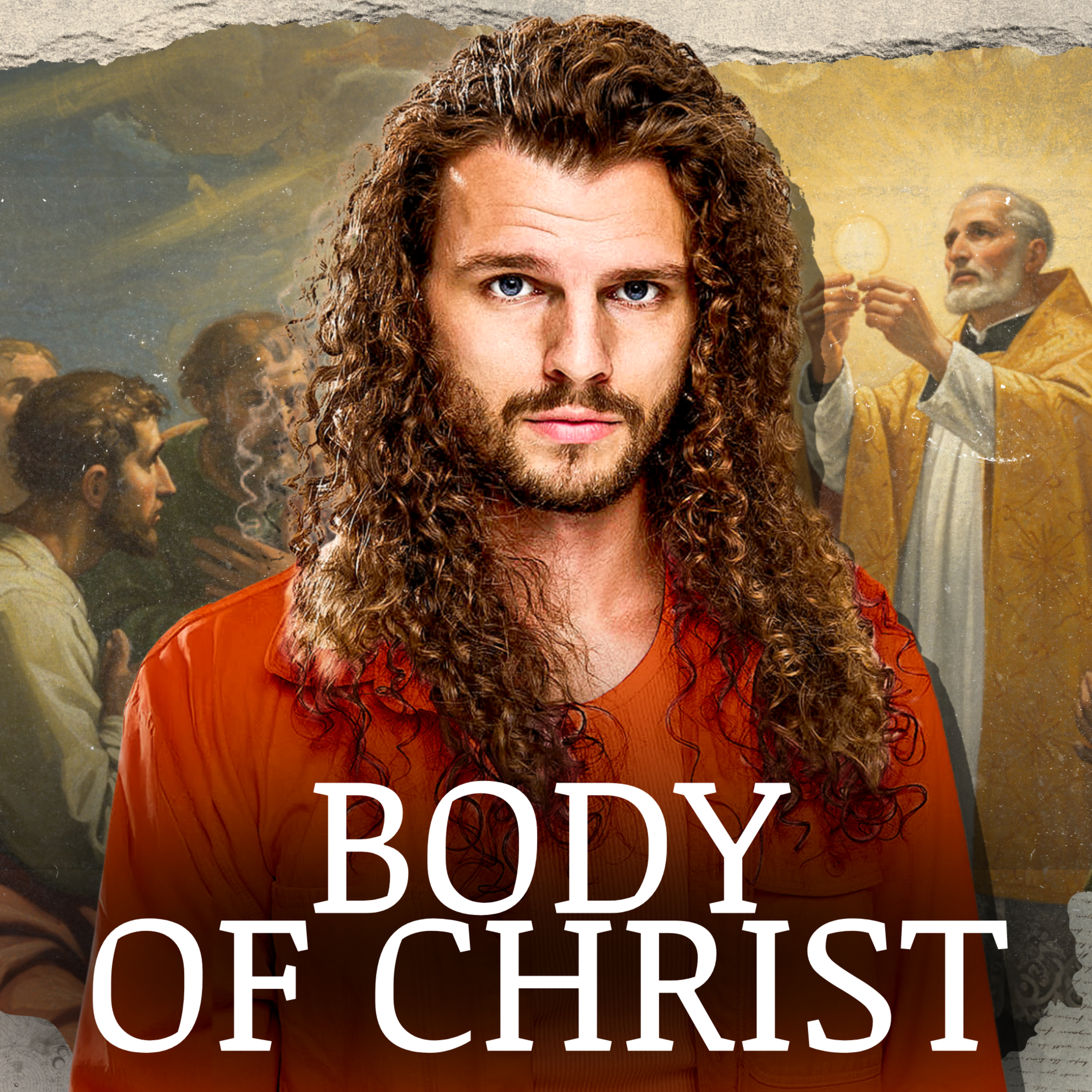
What if I told you over a billion people believed they were eating the literal presence of Jesus Christ every Sunday? Not symbolically, but kind of literally. Well, welcome to transubstantiation. This is a fancy term that the Catholics believe that during Communion, bread and wine don't just represent Jesus, they become him. Now, if this feels like magic or cannibalism or something, you're not alone. For centuries, other Christians would call it cannibalism. And they weren't just chatting about it. They were kind of going to war over it. This belief split church churches, fueled the Reformation, sparked riots, and helped trigger some of Europe's bloodiest religious conflicts, all over one simple concept. So today, we're diving headfirst into this theological landmine. What is transubstantiation? Why has it divided Christians for 800 years? And why does it still matter so much today? And whether you see it as a sacred mystery or some type of weird spiritual ritual, once you understand it, you will never look at communion the same way again. As a Catholic, I'm going to do my best to explain this as properly as I can. So sit back, relax, and welcome to Religion Camp. What's up, people? And welcome back to Religion Camp. My name is Mark Gagnon and thank you for joining me in my beautiful tent to explore the most interesting, fascinating, controversial stories from every religion from around the world, from all times, forever and always. Yes, that's what we do here in Religion Camp every Sunday. And I'm not alone. I'm not. I'm guided by my guardian and angel, and I'm surrounded by the legions of God's choir, as well as my friend Christos. I didn't say. I didn't even. I didn't even ask you a question yet and you're already chiming in. How are you doing? Great. Good. Glad to hear it. Guys. I'm in a great mood because we are talking about Catholicism. Yes, the one holy, Catholic and apostolic dude. This is the faith tradition I was raised in. But even though I'm Catholic, I might mess up some things. So I don't want to offend any other Catholics out there. You know, there's different levels of Orthodoxy and I do my best as a Catholic. You know, I try to honor the Lord Jesus Christ and, you know, try to be a good Catholic in my day to day life. I'm also a regular recipient of communion, which is exactly what we are talking about today. Now, for Catholics, communion is a little different for, you know, many, many Christian denominations will practice a version of communion because you Know, as we'll discuss at the Last Supper, Jesus Christ says, this is my body, this is my blood. Eat of it, yada, yada, yada. Probably shouldn't say yada, yada, yada about what Jesus says, but we'll get to that later. Anyway, so different denominations do different things. And for Catholics, we believe in something called transubstantiation. Yes. Now, if you don't know what that is, don't worry, I'll explain. Basically, in order to understand the Word, you need to understand something else. This isn't just some theological debate that happened between, you know, intellectuals way back in the day. People are still arguing about this concept today. And, you know, they were talking about it way back in the day in even more, you know, direct ways. And it wasn't between enemies either. This is brothers and families. It was between Christians, brothers and sisters in Christ. We're talking about family disagreements that got so intense that it ended up splitting Christianity in half and it led to wars of millions of people and ended up becoming one of the biggest religious fights in history, which is saying something because there have been quite a few all over this one concept. And of course, this started in Italy. Where else? Right. If anyone's going to get pissed off about bread, it'll probably be the Italians. Real quick, for those of you that aren't super familiar with Christian practices, let me give some context. Okay. Transubstantiation is a part of communion. Communion is a holy ritual. It is also called a sacrament in the Catholic Church. And, you know, it takes place also during Protestant services and Catholic masses. Some churches do it every week, some do it every month, but the Catholic Church offers it at every single Mass. It is the high point of the mass. Transubstantiation is, you know, an issue for some people because Catholics believe in it and Protestants do not. But we'll get to that in more a minute. Communion comes from a story in the Bible, right? In the New Testament, the night Jesus was arrested, the day before he died, he and the disciples are at, you know, a house. They're having dinner in the attic. And this is how the story goes. According to the Book of Matthew, while they were eating, Jesus took bread, said the blessing, broke it, and gave it to his disciples, said, take this and eat. This is my body. Then he took the cup, gave thanks and gave it to them, saying, drink from it, all of you. For this is the blood of the covenant. For this is my blood of the covenant, which shall be shed on behalf of many for the forgiveness of sins. There's a lot to unpack there. Okay. This small passage in the Gospel of Matthew was the start of what we call communion, or if you've heard this term before, the Eucharist and Christians get together, they say the same prayer, they share bread and wine, and they remember Jesus and his sacrifice. All branches of Christianity acknowledge this and practice it in one way or another. It's one of the most basic foundational requirements of the faith. So communion is basically a Christian ritual or sacrament where believers will. Will share bread and wine in remembrance of Christ. Now, where does transubstantiation fit into this? Okay, let's start by dissecting the word. First part, trans. You know that one, right? It means across or change. Okay? Think transformation, transportation, all that stuff. Something basically goes from one state to another. Okay, Second part, substantiation. This comes from the word substance, but not in the way you might think. We're not talking about a substance, like chemical or, like, material. In medieval philosophy, substance meant what something really is underneath all the superficial or physical stuff, like the essence of a thing, right? Like a human being is, you know, carbon and water, but. But the essence of it, the substance of it, is human, right? I am a human. You guys are all humans. Maybe your dog's listening, in which case, sorry, dude, you're not a human, but you put them together. Transubstantiation means the substance, or the core essence changes while everything else stays exactly the same. So now, I know that might sound kind of confusing, so let me give you, like, an analogy. Imagine you're like a coffee mug, right? You drink from it every morning. You know how it feels in your hand, how much it weighs, like, what it looks like. Now imagine overnight, through some type of, like, magic, the mug is now made of gold. But here's the catch. It looks exactly the same. Same color, weight, feel. You would never know it necessarily just by looking at it, but this is kind of what Catholics believe happens during communion. And people will be like, whoa, that's crazy. How can a thing be imbued with the essence of Christ? The same thing happens if you believe in, like. Like, demonic possession of, like, an item. You know, like, could, like, a doll be possessed or, like, you know, a house be possessed or a person, right? If demonic possession could happen, thing, then in a similar way, you know, the essence of a thing can now be imbued with the spirit of Christ. What's up, people? Let's take a break really quick because I want to talk to the fellas. Let me ask you something. Are you stuck do you feel like you're struggling with work or relationships or maybe your marriage or just feeling like you're not like the, the dude you want to be? You ever just, you know, thinking to yourself, like, man, I should be farther along right now, I just get caught in these cycles where I just kind of lose self control. Well, here's the thing that nobody likes to admit. It is possible that porn might be part of the problem now. Yes, I know I said the P word. Now look, I don't want to be overly moralistic here, okay? But if you're someone that struggles with pornography and you know, research has shown that regular porn users actually leaves men feeling more anxious and less connected and ironically, less satisfied. And then it creates a cycle that then you gotta be a little secretive about and you tell yourself like, I'll quit. And then you come back to the same cycle and now you're in a trap. Well, that's where Relay comes in. Relay is a therapist backed app with actual clinicians designed to help men quit pornography and actually feel better and get control of their lives. And the difference with Relay is that you're not doing it alone. With Relay, you basically join a small group of guys that are kind of on the same road. They're sharing accountability and encouragement and actual tools to help when triggers hit and you're feeling, you know, anxious or alone. Relay helps you feel a little more connected and you can stay totally anonymous. But for the first time, you're not going to be in this battle alone. I mean, think of it like a gym membership, but with your brain and for your habits and for the future of your relationship maybe. Right? Thousands of men and their families are already seeing some change because the men, their lives are a little bit less stuck. So if you're feeling stuck, check out Relay. Don't wait another month to be the man that you want to be today. And you can break the cycle with Relay. So go ahead and use the code gagon gag no N for a seven day free trial. If you feel like this thing has just got a grip on you that you're not able to let go, that is JoinRelay j o I n relay r e l a y app a pp camp and use the code GAGNON for a 7 day free trial. Don't put it off. Be the man you're supposed to be today. Today. Now let's get back to the show. It's okay not to be perfect with finances. Experian is your big financial friend and here to help. Did you know you can get matched with credit cards on the app. Some cards are labeled no Ding Decline, which means if you're not approved, they won't hurt your credit scores. Download the Experian app for free today. Applying for no Ding Decline cards won't hurt your credit scores. If you aren't initially approved, initial approval will result in a hard inquiry, which may impact your credit scores. Experian. So remember, you know the bread and wine that Christians have in remembrance? Well, Catholics believe that something mysterious happens during this ritual. The bread is still bread. Like, if you took it under a microscope, you'd be like, it is bread. It tastes like bread, it feels it's bread. But underneath it, the essence of what the bread is is it's the actual body of Christ that Christ is imbued inside. This bread and wine tastes like wine. You know, it looks like wine. It'll stain your shirt. But again, Catholics believe this is the blood of Christ. Now, the holy bread and wine don't start out holy. They start out normal, right? The, you know, that's basically just bread and wine. And then the actual transubstantiation when the bread takes on the essence of Christ happens at a specific moment during Catholic Mass. The priest says what they call the words of consecration, basically repeating what Jesus said at the Last Supper. So the priest will say, this is my body, this is my blood. And as Catholics, we believe that in that exact moment, boom, transubstantiation, this transformation happens. But here's what makes the belief interesting. There's not a scientific way to really prove it, right? There's not a chemical analysis, no microscopes. The bread's DNA is still bread DNA. The wine's molecular structure is still wine. So by every measurable standard, nothing's changed. Just this incomprehensible change of essence. So over a billion Catholics around the world believe that this transformation is, you know, the most real thing that's happening in their lives every single week. And this is why Catholic communion feels different from Protestant communion. If you ever been to both, right, because you go to, like, a Protestant, you know, church service, and, you know, they will approach the altar or sometimes they'll pass around, like, little, like, trays with bread and wine, and they're thinking about Jesus, sacrifice for their sins, and they're offering respect to the Lord Jesus Christ, and they're eating it, but they're not actually thinking that. They're, you know, they think it's symbolic. Where Catholics, when they approach the altar, they're not just remembering Jesus or thinking these spiritual thoughts. They believe that they're about to consume God. They're literally about to take in this Last Supper ritual, literally eating the body and drinking the blood of the divine. And again, not to bash the Protestants, you know, communion is, of course, very sacred to them, but in a different way. And Catholics put it at a way higher level. And it's also why Catholics have a lot of rules around communion. You can't just walk up there and receive communion if you're not Catholic. You're supposed to fast for an hour beforehand. You have to be in a state of grace, which means you basically have to go to confession or have not committed any mortal sins, which is a whole different topic. But basically, if you kill someone, you can't have communion. And so because of this perspective, you're doing something very spiritually serious. You're receiving the actual essence of Jesus Christ as you're consuming this communion. And so that shouldn't be done casually. So if you ever went to a Catholic funeral and they're like, if you're not Catholic, cross your arms, you receive a blessing. That's why. So if you're wondering how medieval people would, you know, even, like, formulate this concept, this is where things get interesting. Because this belief didn't just come out of nowhere. It took some time to kind of develop. And it involved some of history's, you know, smartest theologians and borrowed, you know, from Greek philosophy. It eventually became so controversial that it would actually split Christianity into two. Now, the word itself didn't really get used until, like, the 1100s, but the ideas behind. Behind it had been brewing for basically a thousand years before that, basically since the time of the original disciples and the resurrection of Jesus himself. And once this doctrine became official Catholic teaching in 1215, it set up one of the most explosive religious conflicts in European history, one that would eventually lead to accusations of cannibalism, like I mentioned before. So how exactly do we get from this moment at the Last Supper with Jesus sharing bread and wine to this elaborate church doctrine about, you know, substance transformation? The development of this thinking led to some consequences. So let's start at the beginning. Jesus is having his last meal with the disciples, takes the bread, said, this is my body. This is my blood. Simple enough. But here's the thing that's been driving theologians crazy for 2000 years. What did he actually mean? What did Jesus mean when he said, this is right? Like, if you read the text, like, he's. He's not saying, like, hey, guys, this is a symbol of my body. He is saying, this is My body. So for the first couple centuries of Christianity, most people were generally pretty chill. The early church was trying to figure out exactly what this meant. And, you know, some, you know, presumably thought Jesus was speaking literally, right? And others were thinking maybe he was being symbolic. And it wasn't like a massive deal because the Christians had way bigger problems to worry about. You know, like Nero basically, you know, feeding them to lions or burning them at the stake for allegedly setting Rome on fire, which is not true, but we cover that in a different episode. Anyway, the Roman Empire is actively persecuting Christians, so debates about the exact nature of communion weren't exactly tip top priority. They had bigger fish to fry. Christians did what Jesus told them to do. They shared bread and wine together and remembered a sacrifice. But once Christianity became legal under emperor Constantine in 313, suddenly theologians really had to figure all this stuff out, right? If this is going to be the official religion of the Roman Catholic Church or of the Roman Empire, then what does it all mean? So by the late 200s, early 300s, the church had to become more organized and structured. And since it was becoming more widespread, they had to get all their stuff in order. So they had to be in agreement on certain beliefs and decide exactly what rituals and practices they were going to do collectively. Now, as this united global Catholic religion, right, some church leaders looked at communion and started to say, like, all right, Jesus isn't being metaphorical. Maybe this is literal. One of the first guys to really push this idea was a church father named John Chrysostom around 400 AD. And he would write things like, it is not man that causes the things offered to become the body and blood of Christ, but he who was crucified for us, Christ himself. But even then it wasn't official doctrine. So different regions of Christianity still had some different takes. Some churches leaned more literal, others a little more symbolic. They're all trying to figure this out collectively. The real heavy hitters didn't come until around like 800, when Monk named Pescasius Redbertus. And basically this guy wrote the first major theological treatise arguing that communion was actually physically transforming into Christ's body and blood. He didn't have any time for this whole symbolic stuff, right? No more wishy washy nonsense. Jesus literally said that is what it was. But he didn't have the word transubstantiation at the time, but he basically nailed down this concept that we know today. Naturally, this caused a massive controversy. Another theologian, Retromnus, fired back with his own treaties, basically saying, are you Crazy. It's obviously symbolic. This stuff is not actually changing into Jesus body and blood. And thus began one of Christianity's longest running theological debates. And I'm going to call them the literal team and then the symbolic team. So medieval scholars on the literal team started to borrow ideas from Greek philosophy, looking for ways to explain how this type of transformation could work. Specifically, they actually looked at concepts from Aristotle about substances and accidents. Aristotle had this idea that everything has substance, what it really is, and then accidents, what it appears to be. So a red apple has the substance of an apple and the accidents of redness and roundness and sweetness, I might call a substance almost like the spiritual identity of something. And then accidents are the ways that it manifests in our physical world. So medieval theologians took this concept and kind of leaned on it, and they're thinking, perfect, right? The bread substance changes into Christ's body, and then all the accidents, like the taste and the texture and the appearance, those are saying the same, right? I mean, philosophically, you know, they're leaning on Aristotle. If it's Aristotelian, they're like, all right, cool. Checks out. Then a couple hundred years later, in the 1100s, the actual word transubstantiation first shows up. It's originally coined by theologians who basically needed, like, a precise term for this very, like, unique concept. And the Catholic Church have been trying to nail down exactly what Christians were supposed to believe, hence, you know, the need for the official terminology. And transubstantiation made the list. So 1215, Pope Innocent III and the Fourth Lateran Council made it official Catholic doctrine. It's not an optional belief. It's not like, oh, you guys do this thing, we do this thing. It's not theological opinion. It is official. This is what the Church does. So even though this was now centralized Catholic doctrine and the Church had basically said, this is what Christianity believes, not all Christians were fully on board. So, again, different regions have different practice and different beliefs and interpretations. And besides that, those who were in the Catholic Church were being overrun and oppressed by the leaders, the ones who had made all those doctrinal and sacramental decisions. And besides that, there were those who were even in the Catholic Church who felt that the Church was starting to get, you know, bureaucratic and overrun. And so the things in early Christianity here are really starting to splinter. And transubstantiation is a part of it now. It is also worth mentioning that by this point, when the Catholic Church had actually declared transubstantiation as an official doctrine, there was already A schism within, you know, European Christianity. So this Eastern Western split, known as the schism, and it was largely because of, like, you know, papal authority, was the, you know, true papal secession, Was it in Rome or was it in Constantinople? And there was also some clauses in the Nicene Creed, and there was some linguistic and political divides, but eucharistic theology was still a part of it, but not in the way that you might think. So Eastern Christians basically, you know, like the Orthodox Christian Church, they still believe in the real presence, but they never liked the Latin term transubstantiation or like the aristocratic Italian framing. And so the Eastern Catholic Church will emphasize the mystery that the bread and the wine truly become Christ, but they don't really get into the details of how it happens. So this is kind of the. Where the Church is at all the way up until 1500. And this is one of the main points of the Reformation. This is the other great schism you could say, that happens within the Catholic Church. Now, we could probably do an entire episode on the schism between, you know, Eastern Orthodox and the Catholic Church, as well as the Reformation, which we probably will do at some point. But if you don't know, the Reformation was essentially a bunch of Catholic theologians coming together, and they were basically saying that the things that the Catholic Church had decided were true Christian belief and practice were a little bit off. And that's what Martin Luther famously nailed to the door of the Church in his town, the 95 theses, or rather the disputation on the power and efficacy of indulgences. And we'll get to that in a later episode. But basically you've got reformers like Martin Luther, who, you know, was a Catholic priest who basically says, wait, this whole transubstantiation thing has gotten completely out of hand. Now, Luther didn't actually reject the real presence of Christ in communion outright, but he thought that the Aristotelian philosophy stuff was too much. And then other reformers like John Calvin went even further, basically arguing for a more symbolic understanding. And then you have other reformers like Ulrich Zwingli, who basically said, this is all symbolic and it's a memorial meal, not some type of magical, you know, transformation that happens. And then suddenly what had been a gradual theological development over a thousand years became one of the major points and the fault lines that split Western Christianity. Catholics doubled down on transubstantiation, Protestants largely rejected it, and the fighting was just getting started. So now, if this is not clear, Martin Luther was the basically the founder of the. You know, Protestant faith. These people were protesting the church. And I'll give some credence that the church, with all the indulgences and stuff around the 1500s was. They were going too far. They were doing too much. But you didn't have to break off from the whole church. Come on, guys. Right? Getting out of hand. So what happens next? Right, you have Catholics that are claiming that, you know, they are eating the actual presence of Jesus Christ on Sunday, and Protestants basically saying, hey, this is crazy. And it doesn't take long before people start throwing around slurs. Yeah, they call us cannibals. And that's where things get crazy. Now for some clarification. The Catholic Church, in my opinion, that's the og they're the ones that actually develop the practices and the theologies. And, you know, that includes transubstantiation. And then at the time of the Reformation, other theologians start to push back, and that's when Christianity is split. So all those Christian dominations that you hear, like Evangelicals and Baptists and the Reformed and the Unitarians, the Methodists, there are thousands of them, and they are all subsets or sex sects. It's a tough word to say, sects of Protestantism. So like those regions back in the day, they basically stuck to their own way of doing things. And there's way more into this that we could probably get into. But basically, one of the other main things is that, you know, you are able to have a divine experience with God quickly and that you actually can have a personal relationship with quite with Christ. And, you know, that kind of became a foundational doctrine within Protestantism, but then also rejecting this idea of the literal presence. So we got Catholics saying that they are, you know, down with transubstantiation. And then, you know, you have the Protestants for being like, hey, this is not exact. I don't actually buy this. So you can kind of, you know, you can see it, right? And as a result, the Protestants start getting a little freaked out about this whole thing. So Martin Luther, who, like I said, was a Catholic monk, tried to be diplomatic about communion. But other Protestant reformers, they started to go. They started to push back heavy. And so there was actually pamphlets that would get passed around like the Catholic cannibals and like ancient Romans were even talking about the Catholic cannibals, like having the secret meetings, like, you know, eating the body and the blood. And they were like, whoa, this is crazy. So one of the most brutal critics was a guy named Andreas Karlstadt. And this is in 1521. He wrote that Catholics were devouring Christ like wild beasts and that they were engaging in abominable cannibalism. Which. Dude, little. Little tough there, right? Abominable. Like, come on. I mean, it's a good. I mean, good, you know, PR for their side. This. This is just crazy. But sure, he got the message across. And then you have this Swiss guy that I mentioned before, Aldrich Zwingli, who took it even further. He believed that believing in transubstantiation is not just wrong, it's literally the same as being a proponent for some type of evil cannibalism. So in his mind, there's no difference, right? In his opinion, he says that if you say it's okay to literally eat Jesus, then you're literally eating flesh and blood. And that's not good. And this is where things get crazy. So these aren't just academic debates. These are accusations that are happening in the streets. People are shouting at each other, these printed pamphlets, and this is going all across Europe. Protestants are bullying us, dude. And so Catholics obviously didn't just take this, so they got creative with the counter argument. They started to fire back and they were like, look, it's not cannibalism because it doesn't feel and smell like flesh. You know what I mean? We're consuming the substance of Christ, but you guys are making it weird. But then they would also argue things like, you know, cannibals are eating dead flesh. We consume the living, the glorified body of Christ. Now, I don't know if these are the strongest rebuttals here, but as you can imagine, the damage is done. And as a result, the Protestants are now sweeping through Europe. In some German cities, Protestant majorities literally banned Catholicism from holding any type of public office because they were considered, you know, like, strange. And, you know, there was obviously the political, cultural stuff, and people would throw around flesh eaters. It was crazy. Switzerland. Mixed marriages between Catholics Protestants became basically impossible. And some Protestant merchants refused to do business with Catholic traders. Protestant landlords wouldn't rent to Catholic families. The social fabric of these European communities was getting torn apart over not only this one doctrine, but this doctrine was a part of it. Now here is what is an ironic little twist. Early Christians had dealt with the same accusations. So way, way back in the first and second centuries, Romans accused basically all Christians of cannibalism because they heard Christians were talking about, you know, eating the body and blood of Christ. So the Romans were like, whoa, these people are obviously doing some type of weird thing in their secret meetings. So you had Christian writers like Justin Martyr, you probably heard the name. That's where martyrdom comes from. And Tertullian. They spent a lot of time in the 1000s and 2000s defending Christians against these cannibalism charges, explaining to the rest of the world that this was communion and they're not literally eating someone's body. But now, over a thousand years later, Catholics are getting called the same thing from other Christians. Now. The whole thing reached a peak during the German peasant war in 1525. And the German Peasant War has a ton of, you know, political, you know, underpinnings that, like, kind of undergirded the entire, you know, sort of war that happened. But basically, Protestant peasants, fired up by, you know, a lot of, like, anti Catholic rhetoric, started to attack Catholic churches and monasteries. And some of them would literally go in and they would shout things like, cannibal, da, da, da. And they would try to, like, destroy Catholic altars and stuff. And this wasn't just like a theoretical debate anymore. This was like actual war in a way. You know, like, there were actual, like, battles that were happening. People were literally getting violent. And, you know, these are religious wars that kind of tore Europe apart for centuries. I mean, you know, people. Hundreds of thousands of people are dying, and we're still talking about them to this day. I mean, we can go into more specific detail. But basically, Catholics and Protestants continued to fight, not just about communion, but, you know, all sorts of other things. So the Thirty Years War, for example, which devastated Central Europe from like, 1618 to 1648, was partially fueled by, you know, many of the. Many of the doctrinal issues between Catholics and Protestants, and communion being one of them. And it's just kind of sad, right? Both. Both sides love Jesus, but here they are fighting, you know, and Catholics genuinely believe that they're participating in the most sacred act ever. They're literally having direct communion with their Savior, Jesus Christ. And the Protestants are genuinely scared to believe that they had fallen into, like, this barbaric superstition that was on, like, on, like, borderline pagan vibes. And so this controversy wasn't just, you know, a humble disagreement that we can both just set aside. It was an actual, like, disdain for each other. And Catholics looked at Protestants as people who had, you know, abandoned this gift that Christ had given them and, you know, a way to commune with the Savior. And the Protestants would basically look at Catholics like, yo, you guys are crazy. And the battle lines are still there today, right? Most Protestants won't take Catholic communion. And Catholics still have strict rules about who can take communion and participate in this eucharistic ritual. And what started in the 1500s still plays out in how billions of Christians actually relate to each other today. So you might be thinking, like, all right, this is some cool history, but why should I care about some old religious argument? Well, understanding this helps explain why Catholics and Protestants might feel different today. And sure, there's many other issues. I don't want to just say communion or transubstantiation is the only one, but there are a bunch. This being one of them, I mean, they feel sometimes like completely different things altogether. You walk into a Catholic church, and there's. It's very formal and reverent and ceremonial. You have the tabernacle that you know is very sacred. It houses the actual essence of Jesus Christ, and there's, like, a very specific ritualism that goes on to it. And then you go into a Protestant church, and, you know, the pastor might be wearing jeans, and, you know, there's, like, concert music. People are, like, sipping coffee. And there is a communion element, but it's not as. It's much more relaxed. And why is that? It's partially because of transubstantiation. So for Catholics, right, that moment when the priest says, this is my body, it's not just a remembrance of Jesus. They believe that there's actually something divine happening. And that's a big deal. And that's why there's so many different rules about communion, right? The state of grace, all of these things. So from a Catholic perspective, taking communion when you're not in a worthy position isn't just disrespectful, it's spiritually dangerous. So St. Paul in the New Testament even warned that people who take communion in an unworthy manner might bring judgment on themselves, which, I mean, it seems like St. Paul was, you know, saying that this communion thing was a pretty big deal. So when you believe you're literally consuming God and you want to participate in the ritual, it's not something you should do lightly. Now, Protestant churches, on the other hand, they see communion as a beautiful symbol and a memorial, and, you know, it's sacred and meaningful, but it's not actual transformation. So their approach is much more open. You know, you go to a Protestant church, and if you're there, you can take communion, or, you know, you can participate or not, and anyone can be a part of it, which feels much more inclusive because to them, it is not the literal essence of Christ. And this is why I think there's so much difference in how things feel when you actually walk into a Catholic church versus a Protestant church. I mean, even the way that Catholic churches are designed, everything sort of centers around the tabernacle, where the essence of Christ is. Everything is the architecture, the seating. It's all focused on the actual body of Christ. Whereas Protestant churches are usually designed around the pulpit or the stage where the actual sermon happens, where the pastor will speak. And the focus is much more on hearing and understanding God's word and listening to the Gospels and not around this ritual or on the essence of Christ, because they don't believe that the essence of Christ is inside the tabernacle. They believe it is all around us and is within us. And it exists, you know, in the space where Christians are gathering. And this can go into how people actually interact with each other. You know, like Catholics and Protestants. Like, if there's a Catholic guy and a Protestant girl to get married, they might notice things and have actual issues with the faith, despite from the outside that's appearing to be so similar. You know, the Catholic guy might be like, hey, we need to raise our kids Catholic. We need to go to Mass. We got to be in a state of grace. We got to go to confession in order to receive communion. And the Protestant would be like, yo, this is way too ritualistic, and this is like, such a superstitious way of worshiping. And then you got, you know, a Protestant girl and a Catholic guy shows up and he's like, where's the reverence and the ritualism and the sense of what is sacred? And again, this isn't just personal preference. These are fundamental understandings of how this church service is actually supposed to operate. And it goes even beyond the church, right? You have Catholic hospitals that have chaplains who bring communion to people that are dying and that want to receive the Eucharist one more time. And Protestant hospitals will focus much more on prayer and, like, emotional support. And Catholic schools will teach kids that, you know, communion is very sacred. It's one of the most important things they'll do all week. Whereas Protestants will be like, focus on your Bible and your personal relationship with Jesus. Which, as like, an aside, there's like, even, I think, relationships like Protestantism and, like, you know, the Scottish Enlightenment, where, like, if you have to actually read the Bible in order to have a relationship with God, which is kind of what came out of the Reformation, then as a result, far more people are going to be literate. And when more people are literate, more people are thinking of things. You're able to share ideas faster. And as a result, you actually get things like the Scottish Enlightenment that I think are directly related to the Reformation, whereas within the Catholic faith, it was like, hey, you don't need to read or write because we'll just read to you, you know, the. The Bible, much of which will be in Latin. But then we will explain what happens, you know, the priest. When I say we, the priest will explain to you what exactly is going on through the Gospels in your, you know, your native language. So when Protestants say Communion, they're speaking more symbolically. And then Catholics will say Eucharist or Mass, and they're speaking much more ritualistically. And the language itself kind of reveals sort of the way that they see this very, you know, sacred thing that happens within the service. And this is probably the main reason why Catholics take Mass so seriously, why so many Catholics will go to daily Mass. They go to Mass every Sunday. You can't miss it. It's not because it's like, oh, you should go, and it's nice to link up with your buddies. It's like, hey, you actually have a real obligation to have a direct relationship and an actual, I guess you could say, like, physical connection with the divine. And that's what happens when you're receiving Communion. So there you have it. That's transubstantiation in a nutshell, right? It's not. I know it probably was like some weird church word that you never heard before, but that is ultimately what the big difference is. It is a belief that has shaped centuries of Christian history and caused battles, and 500 years later, people are still talking about it. And honestly, it's just one example of how religious beliefs might seem abstract or irrelevant, but when you actually think about it, it shapes so much of the way you understand Christianity, right? The architecture of the church on your block, the reason your Catholic friends won't skip Mass, even if they're, you know, tired or hungover or something. You know, the tension between, you know, Christian and. Or Catholic and Protestant denominations and why Protestants sometimes feel a little bit more open and, you know, accepting of all different types of people, where the Catholics might feel a little bit closed off, it's all comes down to the belief around Communion. And at the end of the day, despite so much division and debate and fighting, I think it's important to also mention that, you know, the thing that unites Catholics and Protestants, and there are many things, but one of them is kind of the meaning behind the Eucharist, right? And that Jesus was The Son of God. The, you know, the Son of a living, loving God who, you know, the second person of the Trinity who humbled himself before one of us as humans, sacrificed and died and was resurrected so that all of us, every person who's ever lived, could be forgiven of our sins and reunited with God the Father. Right. Ultimately, that is, you know, what all Christians believe. And we share the same story of humans just kind of messing things up. Right? God loves us, trying to save us from ourselves, and then humans get in the way and battle each other over, you know, specific doctrinal issues. But whether transubstantiation sounds like a sacred mystery or medieval superstition to you, now at least you understand it, and you understand why it matters so much to Catholics, why it freaked out the Protestants, and why it is still a topic causing tension today. So next time you encounter something religious or weird or foreign, just remember this transubstantiation story that there's probably a fascinating, deep history behind it with philosophical debates and conflicts and all sorts of things, and there are probably far more commonalities than people choose to remember. So there you have it. That is, to the best of my knowledge, everything you need to know about transubstantiation. Now, Christos, as a Greek Orthodox, what did you think of this? Did you know all about transubstantiation? I didn't realize that they actually believe that they're eating the body of Christ. That's what you believe, bro? No, look, Google, I'm telling you, the Greek Orthodox, actually, they believe that the essence is in. They just don't try to explain it all too much. Did you just play Uno reverse on me? I'm just telling you what it is, dude. I'm telling you, we're not so different, you and I. I really think it was just all, like, papal secession stuff. And, like, where is the actual, like, center of the church? Was it, you know, in Turkey or was it in Rome? I'm pretty sure the Catholic Church still recognizes the sacrament of the Greek Orthodox, but I don't think you guys recognize us. Like, we'll pull up to y' all and be like, no, this is. This is good enough. You know, if I find myself stuck in the middle of Athens somewhere and I need to go to church, I think I can pop into your guys' church. All right, I stand corrected. In several sects, they agree in a valid divine liturgy, bread and wine, truly, and actually become the body and blood, Blood of Christ. Another point for the Catholics. See? Told you. Which is what I believe. Yeah. It's exactly what you believe. The right thing. Exactly. As a die hard Greek Orthodox, that's the least you could do at fatty stone. So there you have it. And again, Protestants. I think that this is partially why people see Protestantism as so open and accommodating. Because it's like, yeah, everyone comes in, everyone takes communion. It's all fine. You know, we don't have to draw hard lines about it because they don't think that it's actually Jesus. They think it's just a symbol. And it's also. I've actually heard stories growing up Catholic that like Satanists would go to Catholic mass and they would, like, receive the Eucharist and then they would take it home and do rituals. So they wouldn't eat it. They wouldn't eat it. They would put it in their mouth and then they would hide it and then leave. Then they would take it home and do rituals and do, you know, Satanic black masses. Isn't it a wafer that melts instantly in your mouth? I think you're thinking of something different. Okay. No, I mean, you've taken communion before. It's a little piece of bread in wine, where I take it. Oh, you guys do it in wine? Yeah. Oh, that's not how we do it. It's awesome. We have. I mean, it is awesome, dude. It is the literal essence of Christ. But no, the way we do it at like, Catholic Church, it would just be like, you got the wine station, then you got the. The like. Basically everyone gets communion and then if you want to slip off, you can also get the wine too. No, you get a piece of bread in the wine and then you actually get a little piece of bread. Well, I. I know that's how we do it with ours. Well, like, there's a little bit of, like the bread in the wine, but you don't really taste it. It's just kind of like wine. There's little pieces. I mean, a little. Yeah, there's a little bit. But it's not like you're not getting a whole bunch. But are there two separate stations for you or is it just one? You go and get the wine with a little bit of bread in from the priest, and then you walk down, there's a basket of bread that you grab. Whoa, a basket of bread? Yeah, like, holla. It's very dry, but it's like. Is it like a big. Do you have to break it? No, it's all cut up and I think another priest hands it to you. Is it actual bread? Like bread. Bread, yeah. No way. Yeah. Well, I think that's valid. It doesn't have to be like, these wafers. Like, that's just what people do now, Right? Because it's easy. But, like, I'm pretty sure, like, a priest could basically consecrate, like, effectively any bread and any wine, to my understanding. And Catholics take it so seriously that, like, even when they have to dispose of it. Because, like, if you think, like, oh, we consecrated this wine, but it wasn't all consumed. Either the priest will finish it off or it gets poured directly into the earth. Little hint, I know a bunch of altar boys, they downed it at the end. Whoa. I'm glad it goes somewhere. Yeah. You know what I mean? Can't go to waste. They can't go. I mean, that's the whole thing. You can't go to waste. You can't throw it out. You can't desecrate the essence of Christ. So it has to either go into the earth. And so a lot of, like, I forget. I'm almost positive, like, most Catholic churches will actually have, like, a sink that goes directly outside. And so, like, it'll be like a pipe that goes to the ground and so they can pour it in there and then it goes directly outside, if I'm not mistaken. And, like, they kind of like block it off so it goes into the earth. Still wasting it. It's not wasting it. You bury it and you say, hey, this is back to the earth. If you say so. This is not what I say. This is what the Catholic Church says. The one holy, Catholic and apostolic. Let's go, baby. But anyway, if you guys are Catholic and know your stuff better than me. Did I miss anything? If you guys aren't Catholic and you're just tuning in to hear some religious history, what did you learn? Does this give you a better framing of how, you know, Catholics and Protestants see each other? I also want to just state again, the transubstantiation was not the only thing that caused the Reformation. There were many, many things. The indulgences and then, you know, like the Mary and like, the Pope. There's a bunch of stuff. Sola scriptura, sola fides. Are you saved by faith alone? You know, like, is the Bible the only way to get an actual, you know, is that. That the only truth of, you know, God and etc. So there's a bunch of stuff. But that, you know, transubstantiation is one of the major ones. So, anyway, thank you guys so much for tuning in. Also, I just want to highlight the top comment on this episode, we'll be getting free merch. That's right. We'll be reaching out to you. We'll find you some way. We'll show up at your house. Maybe that part is not true, but we will find you. We will get you some merch. So top comment on this video, we'll find you. Guys, please drop a comment. Let me know what you thought, what you learned, what you think. We read all of them, so please be nice. Religion Camp is the only place that I have left in the world that makes me feel safe. So just don't ruin it. Anyway, thank you guys so much for tuning into another episode of Religion Camp. And I will see you next Sunday because like we said here, life is better with belief. Peace be with you. What's up, people? Quick announcement. If you are a fan of Camp Gagnon or Religion Camp, I have great news because we are dropping History Camp. That's right. This is the channel. We're going to be exploring the most interesting, fascinating, controversial topics from all time throughout all history. Right? You probably know about Benjamin Franklin, I don't know, Thomas Jefferson, Nikola Tesla, interesting figures from history and you probably learned about in school and they were pretty boring, but not here. Now, as you know, I was raised by a conspiracy theorist. So I'm going to be diving deep into all of the interesting, strange, occult and secretive societal relationships that all of these famous, influential men from our shared past have. So if you're interested, please go ahead and subscribe to the YouTube channel. It will be pinned in the description as well as the comments. And if you're on Spotify, this doesn't really apply to you, but these episodes will be dropping as well. Just go ahead and give us a high rating because it really helps the show.