Loading summary
Transcript85 lines
- [00:00]
Mark Gagnon
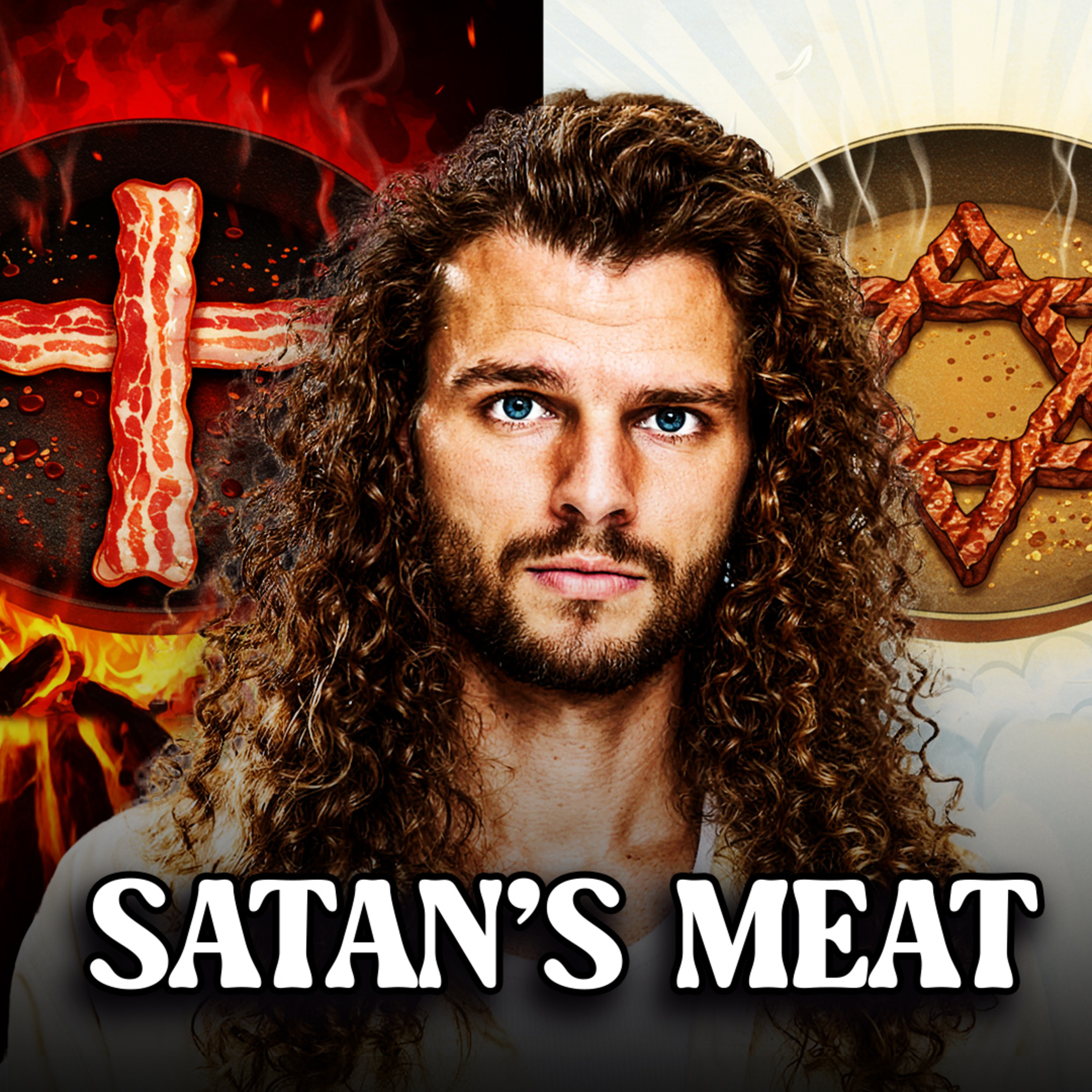
Why do most religions hate pork? I grew up eating pork. Pretty uncontroversial, but it seems like almost every religion around the world doesn't eat pork. Muslims, Jews, Seventh Day Adventists, Jainism, Rastafari, Ethiopian Orthodox.
- [00:15]
Christos
Any vehicle can take you places, but why stop there? The Alfa Romeo Tonale combines luxurious Italian design and electrifying performance to make every mile a masterpiece and every arrival a unforgettable. When precision meets instinct and power moves with purpose, you never have to stay in a lane. Experience a world without limits in the Alfa Romeo Tonale Plug In Hybrid. Tap the banner to learn more. Alfa Romeo is a registered trademark of FCA Group Marketing SpA. Used with permission.
- [00:48]
Mark Gagnon
You don't wake up dreaming of McDonald's fries. You wake up dreaming of McDonald's hash browns. McDonald's breakfast comes first.
- [00:58]
Jesus
But.
- [01:01]
Mark Gagnon
Branches of Buddhism, some Chinese folk religions, and apparently it goes deep. It's from like Buddhist compassion to Native American traditions to biblical explanations. And is reinforced in Deuteronomy 14:8, which adds, the pig is also unclean. Pigs are scavengers. They're gross. They eat everything. Eating non kosher foods like pork is believed to create a spiritual barrier between the person and their ability to connect with the divine. The religious texts of Islam go beyond simple prohibition, right? Describing pigs as inherently impure creatures, both spiritually and physically. It was not a proper article of food for man. Principles of compassion For Buddhists, this is known as karuna. Like some Jains, and I think we'll probably get to it, are so strict that they won't eat anything except for what has fallen from the tree. So they're like, if an apple falls, you can eat it. That's like the most hardcore. I don't know if you can even do that. Many elders teach that during slavery, pigs were fed the same poor quality food as enslaved peoples. The pig was the garbage disposal of the plantation, linking food choices to the liberation from colonial influence. So let's jump in to the story of pork. What's up, people? And welcome back to religion Camp. That's right. This is a show where I sit in this beautiful tent and explore the most fascinating, interesting, controversial stories and myths from all religions from around the world, from all times, of course. I'm joined today by my friend Christos, the Greek freak, also the producer of this wonderful, of this wonderful program, and also the researcher of a lot of this stuff. So if anything's wrong, you go ahead and just harass him. I'll put his personal information, his phone number and his address and his Family's address. If you're willing and interested in, I don't know, putting some type of religious, I guess you could say restitution.
- [03:02]
Jesus
Hex.
- [03:02]
Mark Gagnon
A hex, maybe. And also, my friend Jesus did a lot of the research on this, so I'm gonna be learning along with y'all. Okay? And this is a great question, the question that is posed in the title of this video. It's probably the reason why you clicked it. Why do most religions, it seems like, hate pork? It's a good question, right? Christos, have you ever thought about this? Like, in. In what? Greece? Eastern Orthodox. Like Greek Orthodox. You guys eat pork?
- [03:29]
Jesus
We do.
- [03:30]
Mark Gagnon
I grew up eating pork. Yep. Pretty uncontroversial, you know, but it seems like almost every religion around the world doesn't eat pork. I mean, just name one off the top of your head.
- [03:40]
Jesus
Muslims.
- [03:41]
Mark Gagnon
Muslims, Jews, Seventh Day Adventists, Jainism. You ever heard of Jainism?
- [03:48]
Jesus
I've not heard of Jainism.
- [03:49]
Mark Gagnon
This is a religion that's found in India and South Asia. Rastafari, Ethiopian Orthodox, branches of Buddhism, some Chinese folk religions.
- [04:00]
Jesus
You're telling me the Rastafarians have munchies and they don't eat pork?
- [04:04]
Mark Gagnon
Nope.
- [04:04]
Jesus
It's crazy.
- [04:05]
Mark Gagnon
No pork allowed. Crazy. So what is the reason for this? Seems like an interesting. Again, on this show, we like to explore and appreciate all religions. If you're looking for some type of atheistic takedown, it's not the show for you. All right. I think that many religions around the world have something to contribute, whether big or small. And if all of them are saying something, then there might be something to it. So the pig. Why does everyone hate the pig? Or maybe not hate the pig? Why do they love the pig? Why do we hate the pig? That's a better question. And apparently it goes deep. There's a lot of stuff like. So some, I guess my, you know, off the top explanation was like, oh, it probably was dirty and like, you could. You would get sick or something. That's partially true. But there are fundamental religious approaches from, like Buddhist compassion to Native American traditions to biblical explanations and. And everything else you can imagine. So let's jump in to the story of pork. Let's start with the Jews, shall we? One of the earliest ones to outlaw the use of pork. One of the oldest religions in the world. And this comes from Jewish Kashrut law within the Torah, which, if you are a Christian, you also read the Torah. First five books of the Bible. Genesis, Exodus, Leviticus, Numbers, and Deuteronomy. Crush that Sunday school Holler at me. Or Torah school. Do Jews have like a, like a Shabbat school or something? Jews. Let me know. Comment below. Let's just jump in. Leviticus 11:7 declares, and the pig, although it has a divided hoof and is cloven footed, yet it does not chew the cuddle. It is unclean for you. This command is reinforced in Deuteronomy 14:8, which adds, the pig is also unclean. Although it has a divided hoof, it does not chew the cud. You are not to eat their meat or touch their carcasses. So why pigs specifically? According to Jewish law, for an animal to be considered kosher, which Jews. Kosher is fit for consumption is. It must possess two distinct characteristics. It must chew its cud. What is that? This is a process where an animal will regurgitate and re. Chew partially digested food and have split hooves. Those are the two things. Chew the cud. Split hooves. Now pigs have split hooves. Can we get a picture of a pig hoof real quick? But they don't chew their cud, making them problematic. Interesting that that's what kosher would want. That's the, that's the Jewish law, that they have to chew their cud. The distinction isn't just a technicality. It represents a fundamental principle in Jewish law where partial compliance isn't enough. You need adherence to the divine specifications. Historical context deepens our understanding of this prohibition. Ancient times, pigs were known as scavengers. They would eat anything. Like there's like old mob stories where like they would throw a body to the pigs and the pigs would just eat it up because they go crazy. Pigs are scavengers. They're gross. They eat everything, feces, dead animals. And unlike the cud chewing animals like cows and sheep that primarily eat grass, pigs indiscriminately eat basically everything and therefore are seen as spiritually and physically unclean. Jewish scholars have long interpreted this as divine wisdom that protects both the body and the soul, seeing the pig as a symbol of impurity that could contaminate their mind, body and spirit. The concept of maintaining spiritual purity through dietary observance goes just beyond certain foods. Right? Like Judaism has this thing known as kosher. Also. It comes from the Hebrew word kasher, which I think is probably pronounced kosher, I don't know, spelled differently. And basically it literally just means fit or proper, suggesting that following these dietary laws helps make a person spiritually sick. Sound. As the saying goes, you are what you eat. And in Jewa tradition, eating non kosher foods like pork is Believed to create a spiritual barrier between the person and their ability to connect with the divine. Perhaps the most significant of these dietary laws, they have played a crucial role in preserving Jewish identity through the millennia. That's right. Beyond the Jewish diaspora and persecution, Jewish communities were scattered across across the globe. So their adherence to kosher laws, particularly the visible abstention from pork, became a powerful way to maintain their identity and connect with their heritage. What's up, camp family? What's up, campers? Two big announcements. Don't skip this. Two massive announcements. The merch store is back open. That's right. Camp Goods is back in stock. We got these hats that I'm wearing right now. I've been rocking them both on here, on. On flagrant. I've been wearing them on stage. We got a bunch more hats like the ones behind me. You can see them all here on the website. We also got some shirts. Oh, man. What is this one right here? Come on now. Come on now. Camp gear for all terrain. We got some other ones. What is this one right here? Oh, this one's beautiful. This one might be one of my favorites. The colors. The colors are absolutely crazy. This is Camp Gagnon vintage wisdom across the globe. Come on now. We got all that and more on the store. We also got these sick mugs right here. You might have seen me maybe sipping from one of these in some of the recent episodes. These are sick. They are all available on the website Camp Goods Co. Check it out. Link is in the description. And by supporting the merchandise, you are obviously supporting the show. You're supporting me, and you're obviously, you know, supporting all the amazing people that make the show happen, like Christos, who is currently throwing me T shirts from underneath this desk here. So please check that out. Additionally, I'm on the road. That's right. I'm doing my one hour of standup comedy. Some of some of the greatest jokes ever written. Okay, that's not true, but they are my jokes, and I wrote them. I'll be in Portland, Maine on April 27th. And that one I'm doing with Joey Avery. You know Joey Avery, friend of the show. He sat across from me many times, and I'm explaining some things to him. And he might be my dumb friend, but he is a brilliant standup comedian. And we will be there in Portland, Maine. If you are in these areas, please come out. And we're adding a ton of dates all through the summer. So check out my website, themarkgagnon.com for all tour dates and updated info. Come hang out with me. I talk to every single person. After the show, if you want to kick it with me, maybe have a drink, I'll be there. And I will see you guys on the road. Here is a bullet. Imagine this. You're 30ft underground, digging through frozen earth with spoons and mess hall plates. Nazi guards patrol overhead. One wrong move, one loose pebble, and it's over. But on this night in 1944, 76 Allied prisoners would attempt the impossible, tunneling their way to freedom in the largest prisoner of war escape of World War II. And centuries earlier, in a cold stone chamber, a teenage girl in armor stood before her accusers. Her crime. Leading armies, speaking to angels, and daring to challenge the most powerful men in Europe. Joan of Arc's trial would become one of history's most infamous moments. These are just two stories from Today in History, the newsletter that brings you the most fascinating events from the past, delivered fresh to your inbox. From epic wars to religious rebellions, ancient mysteries to modern marvels. Don't miss another piece of history. Scan the QR code now or click the link in the description to sign up for today in history. Even today, many secular Jews. When I say secular Jews, these are people that are ethnically Jewish but do not observe. You know, many of the religious practices still avoid pork as a way of honoring their cultural identity and also because they probably just think it's gross. A lot of my Jewish friends are like, yeah, I just don't eat pork. I never grew up eating it and I don't want it. But to them, I say, try bacon. It's awesome, especially if you get it crispy. But you go to, like, get diner bacon. It's like real thin, just like glass. That's what you really want. So those are the Jews. It's written in the Bible. Can't argue with God. Well, technically you can. Abraham does it and all. Basically, the whole Talmud is just like, you know, loopholes. Jew magic, as you could say. Which a lot of people think Jews are magical, which I disagree with. Okay. I don't think Jews have magic. But let the record show that all the greatest magicians ever are Jewish. Name one. Name a magician.
- [12:16]
Jesus
David Copperfield Jewish. Really?
- [12:18]
Mark Gagnon
Yes. I mean, Google it. I think. Chris Angel. Criss angel is not. He's Greek. Yeah. So technically mentioned him. Technically, he's Greek Orthodox. He's one of the few. But Angel, Angels are Jewish, so I think he's technically would fall into the subset. David Copperfield Jewish. Right.
- [12:35]
Jesus
David Copperfield is very Jewish.
- [12:37]
Mark Gagnon
David Blaine Jewish. So Jews Obviously don't have Jew magic, but a lot of magicians are Jewish. Just something to think about. Anyway, let's move on to another one, shall we? Islam the Halal dietary laws. So why don't my Muslim friends eat pork? And again, I, I'm not Muslim, so I don't know specifically. This is just what Christos and Jesus have kind of found on the Internet. So any Muslims listening? Happy Ramadan, Ramadan, Mubarak. And let me know if I get any of this wrong. All right, let's dive in. The answer lies in Islam's clear and unequivocal position on pork consumption. The Quran, the Islam's holy book, explicitly prohibits pork in multiple verses. One of the most direct statements appears in the Surah al Baqarah, which declares, he has only forbidden you dead meat, blood, the flesh of swine, and that on which any other name has been invoked besides that of Allah. This prohibition is so important that it's repeated three other places in the Quran, emphasizing its significance in Islamic law. The religious texts of Islam go beyond simple prohibition, right? Describing pigs as inherently impure creatures both spiritually and and physically. In Muslim tradition, pigs are considered najis, which is ritually unclean, a status that extends beyond just their flesh to include their entire being. This is elaborated in various hadith, which again, if you don't know what the hadith is, this is the recorded sayings and actions of the Prophet Muhammad, peace be upon him. Where pigs are described as creatures that shouldn't even be kept or raised except under specific circumstances. The Quran states in Surah al Anam al An. I think I said that right? Say, I do not find within that which was revealed to me anything forbidden to one who would eat it unless it be dead animal or blood spilled out or the flesh of swine, for indeed it's impure. A unique aspect of Islamic dietary law is the belief that Allah's wisdom in prohibiting pork extends beyond human comprehension. While modern science might discover, you know, certain health related reasons for avoiding pork, specifically back in the old days, Islamic scholars emphasize that the divine prohibition isn't solely based on health concerns. As stated in the Hadith collection of Saha al Baqari, Allah and his messengers know best, suggesting that there are deeper spiritual reasons for the prohibition that might not. That humans might not fully understand. The historical connection to Prophet Muhammad's teachings about pure food forms another crucial layer of understanding. The Prophet emphasized the importance of consuming not just physically clean food, but spiritually pure food as well. In one famous hadith, he stated, o people. Allah is pure and accepts only which is pure. This teaching establishes a fundamental principle in Islamic dietary law that what Muslims consume should be both physically and spiritually clean, a standard that pork, according to Islamic teaching, fails to meet in Islamic tradition.
- [15:46]
Christos
More rewards, more savings with American Express Business Gold earn up to $395 back in annual statement credits on eligible purchases at select shipping, food delivery and retail subscription merchants, including the $155 Walmart plus monthly membership credit and $240 flexible business credit.
- [16:04]
Mark Gagnon
Enjoy the benefits of membership with the.
- [16:06]
Christos
Amex Business Gold Card. Terms apply. Learn more@americanexpress.com Business Gold AmEx Business Gold Card built for business by American Express. Your data is like gold to hackers. They're selling your passwords, bank details and private messages. McAfee helps stop them. Secure VPN keeps your online activity private. AI powered text scam detector spots phishing attempts instantly and with award winning antivirus you get top Tier hacker protection. Plus you'll get up to $2 million in identity theft coverage, all for just $39.99 for your first year. Plus visit McAfee.com cancel anytime terms apply.
- [16:45]
Mark Gagnon
There's a strong association between poor consumption and moral corruption and spiritual contamination. Many Islamic scholars point to Surah al Mahadiya Maida Al Maida, I think I pronounced that correct, where those who incur Allah's anger were transformed into apes and pigs as punishment, suggesting a symbolic connection between pigs and spiritual degradation. This belief has created a deep rooted culture and spiritual aversion to pork in Muslim communities worldwide. So there you go. That's Islam. It's written in the Quran. It's reiterated in the Hadiths. That's all you need. Don't argue with Allah. But what about Christianity? We got a couple Christian sects of the great faith of Jesus Christ that prohibits pork consumption. Maybe the most infamous, perhaps, is the Ethiopian Orthodox Church. And this is significant because it is one of the oldest branches of Christianity. So let's dive in, shall we? The Ethiopian Orthodox Church, one of the oldest, if not the oldest, Christian churches in the world, maintains many Old Testament dietary laws, including the prohibition of pork. The practice finds its biblical foundation in the same passages observed by Judaism, Leviticus 11:7, 8. The continuation of Jewish dietary customs in Ethiopian Christianity has historical roots tracing back to the ancient kingdom of of Aum. Unlike other Christian denominations that interpret Peter's visions in Acts 10 as abolishing dietary restrictions, Ethiopian churches maintain these practices as a part of their unique spiritual heritage. The Ethiopian Orthodox Orthodox Taedo Church views these dietary laws not as mere regulations, but as spiritual disciplines that connect modern believers to the ancient faith of Israel. The perspective is reinforced by their interpretation of Acts 15, which advises early Christians to, quote, abstain from food sacrifices to idols, from blood, from the meat of strangled animals. That's actually, I feel like a good justification for like, vegetarianism, you know what I mean? Because we all know that the animals that we're eating are not loved, you know what I mean? A lot of them probably are not having a great time towards the end. So if you are a biblically adherent Christian, check out Acts 15. Maybe that'll challenge you a little bit. One of the most fascinating aspects of Ethiopian Christianity's dietary laws is their connection to the historical narrative of Queen Sheba. Sheba.
- [19:13]
Jesus
Sheba.
- [19:13]
Mark Gagnon
Sheba. According to Ethiopian tradition recorded in the Kebra Nagast, this is the glory of Kings. When the Queen of Sheba visited King Solomon as described in 1st Kings 10, she not only embraced his wisdom, but also adopted Jewish religious practices, including the dietary laws. The text states that upon her return to Ethiopia, she established these practices as part of the kingdom's religious observance, again creating a direct line between the ancient Israeli practices and Ethiopian Christianity. The Ethiopian church maintains these food restrictions as a way of preserving biblical purity, again viewing dietary observance as a physical expression of spiritual devotion, similar to Judaism and Islam. This is reflected in the interpretation of Daniel 1, 8, 16, where Daniel and his companions refuse to eat the king's food to maintain their religious purity. Ethiopian Orthodox Christians see their dietary practices as a similar act of spiritual dedication, believing that what enters the body affects the soul. The church teaches that these restrictions help believers maintain a state of spiritual readiness for prayer and communion with God. These dietary laws have become deeply ingrained within the Ethiopian identity. The practice of avoiding pork and other biblically unclean foods has become more than just a religious obligation. It is a fundamental part of Ethiopian Christian heritage. This integration is so complete that even during periods of modernization and outside influence, these dietary practices have remained steadfast. As one Ethiopian Orthodox scholar noted, our dietary laws remind us daily of our unique calling of as keepers of an ancient Christian tradition that bridges the Old and the New Testaments. Well, there you go. So some Christians don't do pork either. And furthermore, there are actually Christians that I know here in America known as Seventh Day Adventists. Do you know any Seventh Day Adventists?
- [21:07]
Jesus
I do.
- [21:07]
Mark Gagnon
Apparently they don't do pork either. They also don't do what, like birthdays? Maybe I'm thinking of Jehovah's Witnesses?
- [21:15]
Jesus
No, they Seventh Day Adventists do a lot of church time though.
- [21:18]
Mark Gagnon
They do a lot of what?
- [21:19]
Jesus
Church time.
- [21:20]
Mark Gagnon
Oh, like they go to church a lot. Yeah, they're hardcore. My Seventh Day Adventist friends are like, are about it same and they don't do pork. Seventh Day Adventist Church offers a unique perspective by again interpreting these biblical dietary restrictions through a lens of holistic health and wellness. They adhere to the Old Testament dietary laws that we've seen in the Torah, also the Ethiopian church. But it's not just about this religious observance. It's viewed as divine guidance for optimal health. Again, it goes back to Leviticus. The church's interpretation of pork prohibition as divine wisdom for physical well being was significantly influenced by one of its founding leaders, Ellen G. White. In her seminal work, Councils on Diet and foods, written in 1938, White wrote, Pork, although one of the most common articles of diet, is one of the most injurious. Injurious? Injurious. God did not prohibit the Hebrews from eating swine's flesh merely to show his authority, but because it was not a proper article of food for man. This perspective aligns with First Corinthians, chapter 6, verses 19 and 20, which states, do you not know that your bodies are temples of the Holy Spirit, therefore honor God with your bodies. Ellen G. White's teachings on clean and unclean meats went beyond simple prohibition. She extensively wrote about the connection between diet and health, often citing scientific discoveries that were ahead of her time. Her writings emphasize Daniel, Chapter one, which we've read before. And she says that Daniel and his companions, when they denied the king's meal, proved healthier. That's right. At the end of the 10 days, they looked healthier and better nourished than any of the young men who ate the royal foods. The biblical account serves as a cornerstone for Adventist dietary principles, demonstrating the practical benefits of following divine diet dietary guidance. Well, there you go. I mean, that's Seven Day Adventists. They're pretty hardcore. The Seven Day Adventist Church also teaches that physical and spiritual health are inseparable, just like many of the other traditions that we looked at. They point to the Third Book of John, chapter one, verse two, which states, dear friend, I pray that you may enjoy good health and that all may go well with you, even as your soul is getting along well. The church interprets this verse as evidence that God cares about about both the physical and the spiritual. They view dietary choices not just as matters of health, but as spiritual decisions that affect one's ability to serve God. I like when the, I like that the Bible has letters. There's lots of nice letters in the Bible. It's like dear group of people, let's talk writing to churches and stuff. It's kind of nice. It's also worth noting that Adventists, Seven Day Adventists have a huge health focus interpretation that goes on, you know, even in their secular lives. It's kind of wild, right? Like you can look at Adventist health studies. Like in my hometown there was like a big like Adventist Health hospital. Like do they have those where you grew up? Like in Florida, there's like Adventist health was like a massive like hospital, like medical establishment.
- [24:25]
Jesus
So they fund it?
- [24:26]
Mark Gagnon
I think so, yeah.
- [24:27]
Jesus
Wow.
- [24:28]
Mark Gagnon
And like all people go there. Like it's just like, oh yeah, Adventist health, like down the block, like it's just a hospital. But I guess it makes sense if they're super concerned with like spiritual and physical well being. Yeah, actually that checks out. So the Loma Linda University showed that Adventists who follow these dietary principles tend to live longer, healthier lives. They point to Isaiah 55 which says, why spend money on what is not bread and your labor on what does not satisfy. This is a biblical foundation for making wise dietary choices. So there you go. If you ever go to like an Adventist hospital, you can trust that these people are, you know, about that life. So that gets us through a lot of like the Abrahamic religions. So as you can see, Judaism, Islam, Christianity, they all adhere to the Quran, to the Torah, to the Bible as their fundamental reason for abstaining from sweet delicious bacon. But Jains are a little different. At the core of Jainism, which again is one of the world's oldest religions, they have this principle of ahimsa, ahimsa, which is this principle of non violence. This extends far beyond just avoiding pork, but encompasses respect for all living beings. As stated in the Acharanga Sutra, one of the Jain's oldest texts, it says all beings are fond of life. They like pleasure, hate pain, shun destruction, like life long to live. To all life is dear. That's beautiful. This fundamental teaching establishes the foundation for Jane's strict vegetarian dietary laws. Like Janes are like the most like hardcore like dietary religious people I've ever met in my life. Like my friend that I went to college with, we'd all go eat in the cafeteria and be like, I can't like some Janes and I think we'll probably get to it, are so strict that they won't eat anything except for what has fallen from the tree.
- [26:24]
Jesus
I was just about to mention that you pluck plants that are living.
- [26:27]
Mark Gagnon
Exactly. So they're like, if an apple falls, you can eat it. That's like the most hardcore. Like, I don't know if you can even do that. I mean, I'm sure there's some. James are listening, probably starving and they like, they're super hardcore. So they have like different, different ideas around like root vegetables, which I'll explain in a second. This is a built on this belief, like we said, nonviolence, minimizing harm to all living things. It's actually exemplified in the Tattvartha Sutra which declares, quote, the function of property is to benefit living beings. To use it otherwise is wrong. So this goes on to dietary choices where even the cultivation of root vegetables is avoided because harvesting them kills the entire plant. It's elaborated. A person who wishes to practice dharma should not cause harm even to the smallest living being. Therefore, consuming pork or any meat is seen as a direct violation of this core principle as it inevitably causes harm to the sentient beings. The Jain philosophy goes even deeper. In another text, the Acharanga Sutra, it says all souls are equal. All souls are alike. Also souls are pure and perfect. They're sure, therefore they should not be injured. This perspective sees all living things as being worth respect and protection. And that makes all consumption of meat fundamentally incompatible with the spiritual practices. As stated in another text. He who harms animals has not understood or renounced deeds of sin. In this world and in the next, there is much suffering for one who kills living beings. Sorry bodybuilders, if you're crushing whey protein, just know that there might be Jane hell to pay. So yeah, Jane teaching is pretty hardcore. The karmic consequences of meat consumption are very severe and far reaching. As it says in some of the texts, what you sow, so you shall reap. Emphasizing that causing harm to animals creates negative karma that impedes spiritual progress. The text further explains that consuming meat not only creates new negative karma, but also binds one to the cycle of birth and death. This view is reinforced in the Acharanga Sutra which claims those who kill animals for food will be killed in their next lives by their victims. Dang. So you go to. You go to Chick fil a, you eat some chicken, next life you're going to get killed by that chicken. Whoa. That is. That is a lot. And I've eaten a lot of meat.
- [29:00]
Jesus
Can you imagine a pig killing someone?
- [29:02]
Mark Gagnon
Yeah, easily. Yeah. Have you seen pigs? Look at their tail? No, no, no. Pigs will absolutely Destroy you. I'm telling, like if you just went into like a pig sty or like a pig pen, just even just you. Now, if you think you're undesirable, go in there and you will be chewed alive. I'm telling you, like two pigs would probably take you out like an afternoon. So this belief in karmic retribution has helped maintain, maintain Jainism, strict vegetarian traditions for thousands of years, making the consumption of pork or any meat unthinkable for the devout Jains. If you're like me, you probably read a news story and you're like, this is crazy. What is the truth about this? Is this a partisan spin? Is this funded by some media company or some country, by their state sponsored media to try to warp my brain? I genuinely read news articles now with so much skepticism because I have no idea if this is from the right or the left and what the agenda is and why it's being presented in front of me. And that is why I follow and support Ground News. That's right. So even before I started working with this company on the podcast, I've been following them on Instagram because I just thought they gave a very, very great, unbiased, nonpartisan approach to media. It's awesome. Basically, you're going to get a headline and they will show you sort of the different media splits as it comes to understanding the story. They will compare the reporting from different outlets across the political spectrum in one place to show you how the framing and word choice can affect our understanding of a story. I mean, here's a story that my mom sent me from a couple months ago. Robberies, assaults, surge in Central park, leaving New Yorkers and NYC tourists terrified. What is the purpose of this story? Who is writing it? Where is it coming from? Now I can go to Ground News, read this headline, and be able to make an assessment as to whether or not this is predominantly being reported by the right wing or by the left wing and make some type of deduction like, oh, this is actually being used, you know, as some sort of political apparatus. So if you're like me, if you're a truth seeker, if you're trying to find unbiased news, I would absolutely recommend Ground News. It is completely independent, nonpartisan, subscriber funded. It allows readers to think critically about the world around them and it doesn't tell them what to think, but instead lets them think for themselves. And ultimately it avoids misinformation and tries to heal polarization within our country, which I think is absolutely amazing. So don't let Misinformation and sensationalism influence how you think. Save a massive 40% on Ground News's top tier vantage plan with my link Ground News Gagnon J A G, N O N. Or scan my QR code right here or go to the description and click on the link. This unlocks access to all of their news analysis features. Something that I think is, I don't know, super important to have. Yeah. Make decisions based on facts, not spin. This November, check them out. In a secret CIA facility, doctors administered mysterious substances to unwitting Americans. Their goal, mind control. The year was 1973, and as agents frantically burned thousands of documents, Project MK Ultra's darkest secrets nearly vanished into smoke. Now step back to Friday the 13th, 1314. The Grand Master of history's most powerful military order kneels before the flames. As the fire rises, Jacques de Molay, last leader of the Knights Templar, utters a curse so chilling that when both the French king and Pope die within the year, whispers of dark prophecy spread across Europe. Now these aren't crazy conspiracy theories or something you read in, you know, some fan fiction. These are real historical events you'll discover in Today in History, the newsletter that uncovers the strange, shocking and sublime moments that shape our world. Get your daily dose of mind bending history. Scan the QR code or click the link below to join Today in History. Now, while we're on some Eastern philosophy, let's go to some branches of Buddhism. Yeah, that's right. Some Buddhists don't do pork or any other meats because like I said, it is deeply intertwined with these fundamental principles of compassion. For Buddhists, this is known as karuna, the Mahayana, Mapur. I'm not Just put it up on the screen. I don't know how to say that. The eating of meat extinguishes the seed of great compassion, reflecting a core belief that consuming animal flesh conflicts with cultivation of universal compassion for all sentient things. So, yeah, for many Buddhist practitioners, consuming pork directly violates the first precept of Buddhism, basically saying the commitment to abstain from killing or any living being. You don't kill stuff. So the Lankavatara Sutra elaborates on this by saying, for the sake of love and purity, the Bodhisattva should refrain from eating flesh, which is born of semen, blood and the like. Whoa. So they're making it gay?
- [33:54]
Jesus
A little bit.
- [33:55]
Mark Gagnon
Like if you eat meat, you're basically eating grown up semen, bro. That's a good point. Whoa. Because you wouldn't eat cow semen, but you would Eat a cow. Right. Which is basically calcium.
- [34:09]
Jesus
But is the semen in the meat?
- [34:11]
Mark Gagnon
Yeah. Because how do you make meat? You need semen.
- [34:17]
Jesus
Whoa, I don't think I follow.
- [34:18]
Mark Gagnon
How do you make a cow?
- [34:21]
Jesus
Oh, okay.
- [34:22]
Mark Gagnon
You first get cow semen.
- [34:24]
Jesus
Right.
- [34:24]
Mark Gagnon
Cow egg. Mix it together. Cow. Now you're eating cow semen. That is why that they did a whole. A bit of a reach the whole. I mean, some of these Buddhists are like, yo no diddy, don't eat a cow, or else. That is gay. So in the Pali canon, particularly in the Jivika Sutta, the Buddha permitted monks to eat meat if it was not specifically killed for them and if they had not seen, heard, or suspected that the animal was killed for their benefit. So what would that mean?
- [34:58]
Jesus
Like, you find a dead cow somewhere, roadkill or something? Yeah.
- [35:03]
Mark Gagnon
Or like if a cow was killed because it was like suffering. Oh, so maybe like a cow breaks its leg and you're like, oh, this cow suffering. It's gonna die. Let's kill it. You didn't see it get killed. You didn't hear it get killed. La la la la la la la. And then you get to technically eat it only under that condition.
- [35:22]
Jesus
Or basically anyone that gifts you a cow meat.
- [35:25]
Mark Gagnon
Yeah.
- [35:26]
Jesus
Because it wasn't for you.
- [35:27]
Mark Gagnon
I guess this is why there's not that many Buddhist restaurants. Like, I've never been to a Buddhist restaurant.
- [35:32]
Jesus
Same.
- [35:33]
Mark Gagnon
But you'd have to get cow meat that was like, hey, no one heard this thing get killed. It broke its leg. So you get like that much because we got to share with the whole restaurant. Now, later Buddhist teachers, particularly in the Mahayana tradition, interpret these guidelines more strictly. So the Buddhist master and Emperor Wu of Liang, who lived around 464 AD wrote, the consumption of meat diminishes the seed of compassion. So kind of reiterating one of the earlier Buddhist texts that we just read, the connection between dietary choices and spiritual cultivation and Buddhism extends beyond the rules of food. They say that eating the flesh of being increases the karma of killing. Much like the Janes. Many Buddhist PR practitioners believe that consuming pork and other meats generates negative karma that you got to deal with in your next life. Dang now. Interpretations of these teachings vary significantly across Buddhist traditions. Some Buddhists, particularly in East Asia, avoid pork and other meats. Some Tibetan Buddhists permit meat consumption due to the geographical and historical circumstances. The 14th Dalai Lama has addressed this adversity, noting that while vegetarianism is admirable, it's not mandatory for all Buddhists.
- [36:46]
Christos
I can say to my new Samsung Galaxy S25 Ultra hey, find a keto friendly recipe restaurant nearby and text it to Beth and Steve. And it does without me lifting a finger so I can get in more squats anywhere I can.
- [36:57]
Mark Gagnon
1, 2, 3 will that be cash or credit?
- [37:02]
Christos
Credit. 4 Galaxy S25 Ultra the AI companion that does the heavy lifting so you can do. You get yours@samsung.com compatible with select apps. Requires Google Gemini account. Results may vary based on input. Check responses for accuracy. Spring Fest and Ego Days are here.
- [37:19]
Mark Gagnon
At Lowe's right now. Get a free select EGO 56 volt.
- [37:24]
Christos
Battery with purchase of a select trimmer.
- [37:26]
Mark Gagnon
Blower or mower kit. Plus, shop today for new and exclusive items you need for your lawn. So get ready for spring with the latest in innovation from Ego, the number one rated brand in cordless outdoor power. Only at Lowe's we help you save offer valid through 4 2.
- [37:43]
Christos
Selection varies by location while supplies last.
- [37:47]
Mark Gagnon
This reflects Buddhism's adaptability to different cultural contexts. That's kind of nice. The Buddhists are like reasonable about it. Like, hey, you just. If you need to, you can. It doesn't make you. Doesn't mean you're gonna get killed by a pig later. But still, you should be, you know, chill with that. All right, let's move on to another Eastern tradition as we're going farther east. Now, if I had to ask you what country you think eats the most pork? Random guess.
- [38:17]
Jesus
United States?
- [38:18]
Mark Gagnon
That's actually a good question. Let's find out which country eats the most pork per capita, because I think that's a good distinction. Wow. Hong Kong eats the most pork per capita in the world, 121 pounds per person each year. Whoa. So what if I told you that some Chinese folk religions don't eat pork? That'd be news. Yeah, but it's true. The classic rites, also known as the Liji, describe the specific taboos surrounding pork consumption, stating that in the first month of autumn, one should not consume pork as it disturbs the harmony between heaven and earth. This ancient text reflects how early Chinese civilizations viewed dietary restrictions as essential for maintaining cosmic balance. The pig holds a sacred connection in several Chinese deities, most notably Zhu Bejiai, who appears in the classical novel Journey to the west as the divine being trapped in pig form. The classic of mountains and Seas, known as Shan Hai Jing, describes how certain mountain spirits take the form of pigs, suggesting that these animals serve as bridges between the the mortal and spiritual realms. The duality of pigs, both as sacred and profane, has led to Complex rules about when and how pork can be consumed. So that's interesting. That's different than the Abrahamic religion. It seems like the Abrahamics are a little bit like, hey, pigs are impure. They just eat anything. They don't chew their cud, so don't eat them. Whereas like some of these Chinese folk religions are like, hey, pigs are actually so divine and they are a connection to these gods who embody the pig form that we gotta actually respect them. For that reason. Traditional beliefs around ritual purity in Chinese folk religion place significant emphasis on the proper handling and consumption of pork. Now this is something known as the Huangdi neijing, the Yellow Emperor's inner canon. Why is it that color? I don't know. I'm just saying what it is. There is no joke here. I have respect for the Chinese people. This warns that improperly preparing pork can disturb one's chi, the vital energy, and affects spiritual clarity. So during important ceremonies, particularly those honoring ancestors or celestial deities, specific guidelines dictate how pork should be prepared and presented. So the Book of Rights, that thing I was just talking about before, that emphasizes that when making offerings, the purity of the sacrifice is more important than the quantity, highlighting how spiritual significance of pork transcends its material value. Again, there's seasonal restrictions on pork consumption that follow the Chinese lunar calendar. So with specific prohibitions during key festivals and observance, the Ghost Festival, many communities avoid pork consumption, believing that the strong smell might attract hungry ghosts. The Annals of Spring and Autumn records how different seasons have different dietary observations, with pork restrictions being particularly stringent during transitional periods between seasons when the spiritual and physical worlds are believed to be closely connected. So there you go. If you tune into this episode being like, oh, for sure the Chinese eat a lot of pigs. Technically you're right. But there are some Chinese folk religion adherents that refuse to do it. Now let's switch it up and go someplace completely different. We're going to the island of Jamaica and we're going to look at the Rastafari. Rastafarian tradition interprets the biblical dietary laws uniquely blending African spirituality with Judeo Christian teachings. Again, I didn't grow up Rastafarian. I don't know a ton about it, to be honest with you. We should do an episode on Rastafarianism because that sounds fascinating, but Rastafari will draw on Leviticus 11, which again, as we've seen in Judaism as well as Ethiopian texts, that the pig is unclean. So Rastafarians have developed this distinct African centered understanding around this ancient prohibition, Leonard Howell, one of the early leaders of the Rastafari movement, taught that these biblical laws were originally African wisdom preserved through the Hebrew scriptures, emphasizing how these dietary restrictions serve as a path to spiritual liberation and cultural resistance. That's so interesting. Can you look up if Rastafari, if Rastafaris eat pork? That is like news to me. I'm so surprised by this. I don't know why. I just assume like, yeah, you know, a little oxtail, little beef patty.
- [42:52]
Jesus
No, Rastafarians do not eat pork. They follow a strict diet called. What we will find out soon is et al.
- [42:59]
Mark Gagnon
Wow, that's fascinating. The Rastafari movement places profound emphasis on the connection between food and spiritual consciousness known as livity, as expressed in the teachings of Marcus Garvey. What we put in our bodies directly affects our ability to reason and to see things in their true perspective. Christos, I'm glad you brought up Ital and the principle of et al. Living. This is fundamental to the Rastafarian practice. It goes beyond simple dietary restrictions to embrace a holistic approach to natural living. The word Ital derives from vital. Yeah, there you go. Vital. Vital. Ital and its dietary guidelines emphasize life affirming foods as stated in the recordings of the early Rasta elder Leonard Howell's teachings. Can we get a picture of Leonard Howell, by the way? It's so fascinating. This Leonard Howell, I'm not familiar with this guy. He says that the food of earth must be pure as Jah created it, untouched by Babylon systems. Wow, Leonard Howell. Handsome guy. Good hairline too. The philosophy views pork not as merely as unclean meat, but as a symbol of spiritual and physical degradation. Rastafarians associate pork consumption with colonial oppression and historical trauma. Many elders teach that during slavery, pigs were fed the same poor quality food as enslaved peoples, making them carriers of physical and spiritual pollution. As noted in the writings of Mortimo Plano, a significant Rastafari elder. The pig was the garbage disposal of the plantation and to eat of it is to eat of the system of downpression. This historical context adds to the layer of cultural resistance to the dietary prohibition linking food choices to the liberation from colonial influence. That is fascinating because I feel like I knew that even just growing up that like barbecue is basically like food that slaves made good. Have you heard that before? Like, I was taught that. I was taught that in school. Like basically all the barbecue food that we eat, like pulled pork and like ribs. Ribs, I mean, like brisket, hot dogs, I think are German. But, like, a lot of, like. Like, if you go to a barbecue restaurant, you're gonna get pulled pork, get ribs. All that stuff apparently was like the. It was like the waste meat that was given away to the enslaved peoples in America and obviously, you know, probably in, like, the colonial islands and stuff. And so as a result, they turned it into, like, amazing food that now, like, white guys in Texas are like, yeah, we made it.
- [45:35]
Jesus
But they also say that the pigs and enslaved people ate the same diet.
- [45:40]
Mark Gagnon
Yeah, I mean, the pigs are just eating, like, the, you know, waste. They'll just eat anything. So that's interesting that the Rastafari tie it in saying, like, hey, this is a sign of our colonial oppression. Shout out to the Rastafari. That's awesome. Rastafarians interpret Isaiah 52 also to say, you know, don't touch any unclean thing. And they again, see this bodily and spiritual purity through conscious eating. And so you have Rastafari figures like Leonard Howell and Marcus Garvey who emphasize that true spiritual elevation requires attention to what you put in into your body. One traditional chant proclaims, pure food, pure thoughts. Papa John's. No. Pure food, pure thoughts, Pure meditation brings irration to the nation. This holistic approach to food purity represents a radical reimagining of biblical dietary laws through the ends of African spirituality and postcolonial consciousness. Wow, that's awesome. I. I have way more respect for the Rastafari now. That's sick as hell. It doesn't just end there. We also got some Hindu sex that don't do it. So, you know, if you haven't seen the. The Hindu episode, we did a whole episode on the different sects of Hinduism. Hopefully this lines up. Hindu philosophy particularly is outlined in the Bhagavan Gita. Foods are categorized into three fundamental qualities. You have the sattvic, which is pure, the rajasik, which is passionate, and the tamasic, which is impure. The sacred text states that foods that promote life, purity, strength, health, joy, and cheerfulness, which are savory. And oliganius. What is that word? Look up what that means. Oliganius, substantial and agreeable, are dear to the Sattvic people. Pork, along with other meat products, is traditionally classified as tamasic, believed to promote darkness and spiritual dullness. There's another text that elaborates. What you eat determines the quality of your mind, and the quality of your mind determines the quality of your thoughts. Again, the connection between food and spiritual consciousness is deeply embedded into Hindu spiritual practices. Wow, that's Fascinating. Did you find out what that word.
- [47:51]
Jesus
Means rich in, covered with or producing oil? Oily or greasy?
- [47:56]
Mark Gagnon
Oh, wow, that's interesting. So, again, some Hindus will also adopt this idea of ahimsa, which we found in the Jain tradition, which is this principle of non violence. Basically, you know, this potentially has influenced some Hindu practices which says that, you know, ahimsa is the highest dharma. Many Hindu sects interpret this as divine mandate for vegetarianism, viewing the consumption of pork or any meat as a violation of this fundamental principle. And of course, there's regional and sectarian variations in pork prohibition that, again, reflects the vast diversity of the Indian cultural landscape. Now, while many North Indian Hindu communities maintain strict vegetarian diets, some Hindu communities in East India and Nepal have included pork in their diets. Many modern Hindu spiritual movements, such as the International Society for Ka Consciousness, known as iskcon, informally prohibited pork consumption, citing Vedic injunctions against meat eating. Wow, that's fascinating. So there you go. Some of the Hindus also, again, it seems like every religion sees food as the influence of your thoughts and your consciousness, and that what you consume becomes you in some capacity. So therefore, everything you consume needs to be pure, which I think is just a good lesson in general. I think all people can adopt that. While on the topic of Indians, we'd be remiss to not discuss the American Indian, AKA the Native American. Some Native American tribes also hold pork in this unique position even prior to European colonization. So the Black Elk, a renowned Oglala Lakote holy man, spoke of this in his teachings. So this is what Black Elk said. Our people lived from the natural foods of our lands. Each creature that sustained us held sacred meaning. The introduction of pork represents not just a new food source, but a departure from traditional relationships with the land and its creatures. Oh, that's interesting. Pigs are not indigenous to North America. Wow. So if pigs aren't over here, the natives are like, hey, this is outsider food. This is not for us. Wow, that's really interesting. So the introduction of pork represented not just new food, but a departure from the traditional relationship with the land and its creatures. Wow. Many tribal elders, such as those of the Navajo people, teach that pork lacks the spiritual connections that define traditional foods like buffalo, deer, and corn, which are embedded in creation stories and ceremonial practices. The spiritual connection between traditional foods and culture runs deep in Native American traditions. So, for example, the Hopi people, H O P I. They say, when we eat foods of our ancestors, we consume their wisdom and their strength. So we can only eat the food of our ancestors if you eat someone else's food, you might be consuming the wisdom of their ancestors. Wow, that's really interesting. Traditional foods are seen as gifts from the creator, each with its own spirit and purpose in maintaining cultural continuity. The Cherokee speak of this idea that, quote, every plant, every animal that gives itself for food carries medicine and stories. This worldview sees food not merely as sustenance, but as a link to ancestral knowledge. Native American spiritual. Spiritual traditions emphasize maintaining harmony with natural order through dietary practices. Lakota Elder Luther Standing Bear taught that, quote, what we eat becomes part of our spirit, and our spirit must remain in balance with Mother Earth. This philosophy view views food choices as sacred agreements with the land and its creatures. Wow, this makes a lot of sense, actually. If you're like, hey, we eat the food of our land, and we absorb the wisdom of our elders and our ancestors that also ate the same food, we have to continue eating the food that is of our land. Wow, that makes a lot of sense. The integration of food choices with ceremonial practices remains central to. To Native American spiritual life. During the Green Corn ceremony, many Southeastern tribes emphasize the consumption of traditional foods as a way of renewing spiritual connections. As documented in Pueblo tradition, each food offered in ceremony carries prayer to the spirit world. Notably, pork is absent from these practices as it lacks the spiritual significance of indigenous food that have been a part of ceremonial life for countless generations. So, yeah, I guess Thanksgiving didn't have pork. Just turkey and cranberries, I guess. Wow, this is wild. I feel like I learned a lot just by going through all this. Which tradition's your favorite, would you say? No, wrong answer here.
- [52:42]
Jesus
Purely based on them not eating pork.
- [52:44]
Mark Gagnon
Yeah.
- [52:48]
Jesus
I don't want to get political, but the Native American one is the coolest.
- [52:52]
Mark Gagnon
Yeah. Being like, yo, we got our right. We eat ours, and you come over here with your freaking, you know, Bojangles or whatever, it's like, no, we don't have Bojangles here. Yeah, we just eat.
- [53:03]
Jesus
It's also not religious at all.
- [53:05]
Mark Gagnon
Yeah, it's kind of like the Rastafari one, where it's, like, a little religious, but it's also like, yo, that's. That's plantation. We. We don't do that. We are rising above it.
- [53:14]
Jesus
Right.
- [53:14]
Mark Gagnon
Which I think is. That's fire. Also. I love, like, Rastafari language. Like, Gideon Sidequest, who was describing this, like, even in one of the. The Rastafari elders we were talking about, he. He says down pression instead of impression. Oppression.
- [53:29]
Jesus
Oppression. Okay.
- [53:30]
Mark Gagnon
That, like, the words have meaning. So, like, you don't fall in love, because falling is bad. You stand in love. You don't understand something because that means you're under it. You overstand. So even when he was writing, he's like, yo, we. We're not. We're not giving in to that down pression. Because oppression sounds like it's up. No, no, no. It's down pressure, and they're pushing us down. So they change language in a way that, like, fits what they're trying to communicate, which is kind of fun because you never say down pression, I guess, maybe unless you're talking about, like, a weather system or something. But I think it's fascinating. I'll be honest. I. Yeah, I like the Rastafari tradition and all these people not eating pork. It kind of makes you wonder, like, yo, should I phase out pork? I don't know. I will say the. The common thread, like I was saying before, is that all these cultures have this strong, fundamental belief that what you put in your body impacts your thoughts. It impacts everything. It impacts who you are, which I think is generally true. Like, goes beyond pork. I think you could say the same for, like, processed foods eating garbage at the 7 11. When you pop in, grab a taquito, you know, eat, like, a beef jerky. It's like, what even. What is that? You know what I mean? Like, is that even food? Like, I don't know. RFK might make me a Jane. I'm close. But if I missed your tradition, if. If you belong to a faith background that we didn't discuss, I would love to know what it is and why you don't eat pork. Please comment below. And furthermore, if I did talk about your faith tradition and I got something wrong, I would love to know the correct answer. Please correct me gently, nicely. All right, I'm trying my best. And as always, this has been another episode of Religion Camp. Okay, so maybe today, take a break off pork. Think about the words that we've been discussing, and I'll see you guys next Sunday. Thank you so much, and peace be with you. If you've made it to the end of this episode, that's because you rock with us. And for that, we rock with you. You are sophisticated. You enjoy honest, true communication. A highbrow type of person that understands. Understands this history is not just dates and names. It is a tapestry of human triumph and tragedy from the day Nostradamus made his first prophecy to the morning Paul Revere took his midnight ride from ancient oracles to modern revolutionaries. That is why I need you. If you have not already, please sign up for Today in History. Our free newsletter, Today in History brings you the stories that matter, the moments that changed everything, and the secrets hidden in time. Join thousands of history enthusiasts who get their daily journey through time. Don't let another day of history pass you by. Take the conversation to your inbox. Sign up now through the QR code or link in the Description Today in History because history's stories shape tomorrow's world. Thank you for watching the episode. We'll see you next time.