← Camp Gagnon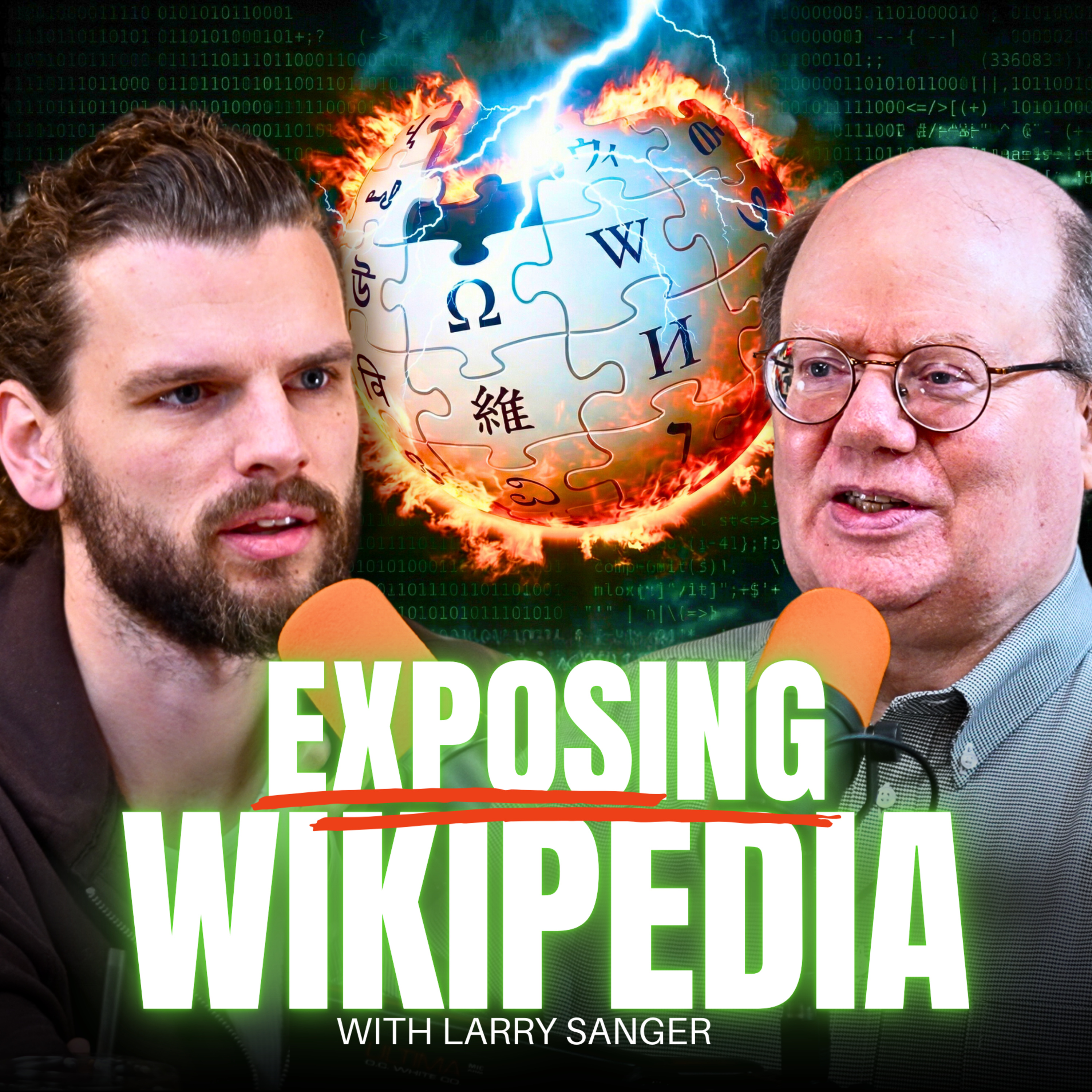
Camp Gagnon
Wikipedia Co-Creator Reveals All: Secret Editors, Banning Content, & Ignoring Rules
01:34:01
Loading summary
Transcript262 lines
- [00:00]
Larry Sanger
My claim to fame is I am co founder of Wikipedia.
- [00:03]
Camp Host
Could you say you're like the Wozniak of Wikipedia?
- [00:06]
Larry Sanger
I've been called that.
- [00:07]
Camp Host
Do you see it as a compliment? Because you should.
- [00:09]
Larry Sanger
Well, I mean, if I really were very proud of Wikipedia, I might.
- [00:13]
Camp Host
We've seen your former colleague Jimmy Wales was recently on a podcast where he was asked a similar question.
- [00:19]
Larry Sanger
Just to be clear. Right. Jimmy was one of three partners. So these guys are sort of like the institutional founders, but the person who actually got it started was. That's me.
- [00:30]
Camp Co-Host/Producer
This is Larry Sanger, Internet pioneer and the co founder of everybody's first stop in Internet research, Wikipedia. He was there at the very beginning, naming it, shaping it, and watch it explode into tens of thousands of articles in its first year. But years later, Sanger says something went wrong. The man who helped build the world's largest encyclopedia now believes that it's quietly shaping how millions think, and not always.
- [00:56]
Camp Host
In the most honest way.
- [00:57]
Camp Co-Host/Producer
He argues that Wikipedia has drifted from neutrality into framing bias, and in some cases, even propaganda, where subtle word choices can decide who's right, who's wrong, and what ideas are pushed outside the acceptable conversation. And today we break down how neutrality is different from objectivity, how Wikipedia articles can quietly manipulate public opinion, who really controls these controversial pages, and why. Sanger believes neutrality and free speech rise together and fall together. So if you are interested in how the media can be manipulated, how information and disinformation actually work, and who is using propaganda in order to manipulate your.
- [01:34]
Camp Host
Feelings about global events, this is the episode for you.
- [01:37]
Camp Co-Host/Producer
So sit back, relax, and welcome to camp.
- [01:46]
Camp Host
Larry Sanger. Thank you so much for joining me.
- [01:48]
Larry Sanger
Oh, it's good to be here.
- [01:49]
Camp Host
Thanks for coming into my tent and for taking an adventure all the way to New York City. So really quick, just explain to the audience, who are you and what specifically is your concern that you're wanting to talk about today?
- [02:06]
Larry Sanger
Well, my name is Larry Sanger. I guess my training is in philosophy, so I still think of myself as a philosopher. My claim to fame is I am co founder of Wikipedia. I like to call myself ex founder now.
- [02:23]
Camp Host
Now you'd said that pretty easily. You said, I am the co founder of Wikipedia. We've seen your former colleague Jimmy Wales was recently on a podcast where he was asked a similar question. And he said that he was the founder, and then the host asked if he was actually the co founder, then he said he didn't care and then he walked off. And this seemed like sort of a bombastic, you know, may we say apoplectic response to a fairly simple question. So I'm curious, why did he respond in this way?
- [02:56]
Larry Sanger
He's responded that way often in the past, saying that he doesn't really care why he got so upset this time. I'm not sure. I think it's mostly because the interviewer just repeated the question so many times and he thought he was being disrespected, I suppose.
- [03:13]
Camp Host
I see. But he is the co founder, as are you, the two co founders.
- [03:18]
Larry Sanger
Well, I suppose that's a matter of opinion, isn't it?
- [03:22]
Camp Host
Well, per Wikipedia, as we said, I've read it and you were the co founder, so we'll go with that.
- [03:27]
Larry Sanger
He used to say I was. He put it in the first three press releases anyway.
- [03:31]
Camp Host
So strange. So you have sort of come out since that founding day of as, you know, a founder of Wikipedia and spoken about some of the potential issues as far as Wikipedia as a tool for, you know, the information, coercion, can we say, the manipulation of how people think and understand, you know, news and information. And you haven't really let up. And this has led you to publishing a sort of thesis about how we can reform Wikipedia to be more neutral.
- [04:03]
Larry Sanger
Right.
- [04:04]
Camp Host
So I guess maybe just for context for the audience, could you take us just to the beginning of Wikipedia in brief, how that was sort of formed and what the original mission of this encyclopedia on the Internet was supposed to be.
- [04:16]
Larry Sanger
Sure. 9theses actually is what you're referring to on LarrySanger.org and actually posted from my, my user page on Wikipedia. That's where I first put it. So the origin story of Wikipedia, basically I knew Jimmy Wales from actually one of the very first discussion groups I ever got into on the Internet in 1994, I think, was something called the moderated discussion of Objectivist philosophy mdop, which Jimmy Wales was the owner and moderate narrator of. And so we got into some like, debates and so forth. And like, he called me up one time after we had a, like an argument or something and tried to smooth things over. So I thought that was nice. And later I was taking a trip across the country and visited him and a mutual friend of ours who also lived in Chicago at the time, on my way over to visit my uncle. And we actually got to know each other face to face. So, you know, we weren't, we weren't really close friends, but we were friends sort of. And, and when I was looking around in 2000 for like a way to pivot my work on the Internet, because I had started a Website. Before this, I was looking for advice from friends about, you know, what to. What to do with. With the website that I had been working on that was new media. Yeah, it's called Sanger's Review. I see. Yeah, it's. It's no longer online. And he said, well, don't work on that. Come and actually work for me and you'll start a new encyclopedia called Nupedia.
- [06:14]
Camp Host
I see.
- [06:16]
Larry Sanger
So I thought that was a great idea. I actually had dreamt of working on an encyclopedia. Like, I thought, if I'm not going to be a philosophy professor, which for reasons I don't need to get into, I decided against. As I was finishing my PhD, I thought maybe working on an encyclopedia would be a good alternative. And so here I had the opportunity of not just working on one, but starting one. So that was the mission essentially, to start Nupedia, to organize the people, to set the policy and the processes and actually be the editor in chief. So I worked on that for a year, but it was very slow going because we wanted the whole product to be very reliable and high quality. And a friend of mine was telling me January 2, 2001, about wikis, which was a type of website that had been around for, at the time, like six years. The original wiki was called Wikiwiki Web, which means fast, after the Hawaiian word wiki.
- [07:36]
Camp Host
Wiki, like the wiki taxis?
- [07:39]
Larry Sanger
Exactly. At the Honolulu Airport, apparently. And so he told me how they worked, how if somebody edits a page, another person can edit it and correct errors and so forth, and they negotiate with each other. The edits are all immediately visible as if you were working on your own computer.
- [08:10]
Camp Host
And that's what these wiki sort of websites were. They were more open, less like centralized sort of information sources that people can kind of adjust.
- [08:18]
Larry Sanger
Actually, they were just as centralized as they are now. It's just that there wasn't all of this massive infrastructure behind them. You know, Wikipedia, if they wanted to simply change their policies, could become just like they used to be. It would be probably a little more of a mess. But that isn't necessarily a bad thing all the time, right? So the Newpedia editors didn't really want to have anything to do with a wiki. And so after about a week or so of just talking about it with them, we decided to launch the Nupedia wiki under its own name. So I named it Wikipedia. And, you know, Jimmy Wales got the domain name. And just to be clear, right, Jimmy was the. The CEO of a company called Bombus and one of three partners. Right. There was a silent partner and then there was another friend of Jimmy's called Tim Shell, and he became a friend of mine when I was working there. Um, and he is another partner of Vomis. So these, these guys are sort of like the institutional founders of Wikipedia, but the person who actually got it started. That, that's me.
- [09:53]
Camp Host
Right. Could you say you're like the Wozniak of Wikipedia? Are you like the Steve Wozniak of Wikipedia?
- [10:00]
Larry Sanger
I'm not actually that familiar with his story, but really I've been, I've been called that.
- [10:06]
Camp Host
Really? Do you see it as a, as a compliment? Because you should.
- [10:11]
Larry Sanger
Well, I mean, if I really were very proud of Wikipedia, am I fair?
- [10:16]
Camp Host
I guess Steve Jobs is sort of this, you know, enigmatic, you know, like frontman, so to say. And then, you know, Wozniak is sort of the genius, the brains behind it, sort of the guiding sort of spiritual moral force of this thing, perhaps, at the onset, at least.
- [10:32]
Larry Sanger
I see, I see. Okay.
- [10:33]
Camp Host
That's where that comparison comes from.
- [10:34]
Larry Sanger
Right, right, I see. I. Jimmy was right there in the middle of things from the beginning. I don't want to deny that. Yeah, of course. And he, he had his own requirements, for sure. It didn't all come from me. Okay. So. And then the site just grew up, just grew very quickly. It blew up in the first year. We got 20,000 articles. Um, and yeah, I have to say I was, I was amazed, very sort of taken aback at, at this sort of success that sort of dropped in our lap. Had no idea that it was going to be so successful. And I can tell you also that, that one of the main reasons for this success is that we front loaded the effort for a year beforehand, collecting people who are already interested in writing an encyclopedia. Those people are be sort of thanked and congratulated as much as any. Like, we didn't have to go out and find a bunch of early adopters. We already had them. I see, yeah.
- [11:49]
Camp Host
But from the onset there was always a commitment to neutrality, which is a very difficult thing when it comes to writing an encyclopedia. Right. How do you create a platform that can present information in a neutral way? Because things just little tweaks of language can shift how the public sees a person, an event, an institution. And it's a difficult task, but it was one that Wikipedia was committed to from the very beginning. And per, I guess, your, you know, kind of your words, it's maybe deviated in that commitment to neutrality. So can you explain how neutrality works? And maybe some of, maybe an example of how that could be manipulated.
- [12:28]
Larry Sanger
Sure, yeah. How it can be manipulated can be manipulated in a lot of ways. At any rate. The basic idea of neutrality really needs to be distinguished from objectivity. So actually let's start there because a lot of people don't understand the distinction and I want to get this out clearly. So objectivity is a feature of persons of minds. Right. So a person is objective and what that means is their approach to a problem. A question is unemotional, it's not driven by prejudging the situation. It is focused on evidence above all else. And especially it requires training, careful use of logic. So all of these things are part of the virtue of objectivity, has nothing to do with neutrality as such. So neutrality is not a feature of persons, it's a feature of texts or of communication, generally speaking. So we can say that teaching and journalism and reference works can be, and I think should be neutral. And what that means is when there is an area of disagreement, then the communication doesn't take a side. Right. The writing doesn't take aside. Again, this is not talking about the authors of the, of the article. The author actually might think that one position is correct. But if the author writes something neutrally, then he is simply presenting the, what we call the dialectical landscapes, like the, the conversation. Right. Teaching the deb is one, you know, fraught phrase that you know will piss people off. But nevertheless it was a phrase used for good reason actually. It's actually important if you really want to understand any subject that is controversial, to understand the debate. And you actually have to teach the debate before you and really study it before you can understand it and take a really well informed position.
- [15:08]
Camp Host
Now this seems challenging, right?
- [15:11]
Larry Sanger
It's extremely challenging because you kind of.
- [15:13]
Camp Host
Have to steel man. Both positions.
- [15:15]
Larry Sanger
Exactly.
- [15:15]
Camp Host
And you also need to steel man them. And when I say steel man, just obviously presenting the most sound sort of valid, logical reasoning for both sides of an argument, but also I guess creating some type of distinction that, that maybe they don't both hold similar weight. I guess, like this is something I wonder with, like trying to find like a middle ground, like you might think of like, you know, some type of tyrannical dictator or demagogue. And he might have a reasoning for why he wants to commit some type of atrocious act. And I think in good faith you probably should explain why that is the case. Yeah, but you need to be able to explain it in a way to say, well, he's obviously wrong, but it's showing his reasoning for why he's doing this.
- [15:59]
Larry Sanger
Yes. Again, in your explanation of what such an article was up to, you actually talk about the intentions of the author. Right. And what I'm saying is true of a neutral text, you don't even consider the authors at all. In other words, you literally don't take a side. Now there is such a thing as the over tin window, I suppose, and you cannot talk about literally every potential or actual view on any question that comes up because there's not enough space. So you actually have to be selective. Nevertheless, journalists especially and good encyclopedia writers are trained and actually they're experts. They actually understand, because they have to think about these things whenever they write, how important it is to essentially not just weigh sides equally, but, but explain each position sympathetically. The best journalism, right, about problems actually makes a real attempt to sort of get inside the skin of everyone that's involved in controversy.
- [17:37]
Camp Host
Right.
- [17:39]
Larry Sanger
So now if you want to say, for example, that an article about, you know, the shape of the earth should just rule out the flat earth theory and, and so it's sort of out of the Overton window or something like that, or if you are, I don't know, and, and editing an English encyclopedia and you don't think there is such a thing as a right to bear arms, right. Then that would be out of your, your Overton window. But then what you have to say is the, the encyclopedia might be neutral within its bounds, but it has bounds and therefore to that extent it is actually biased and I'm comfortable saying that. So there are degrees of neutrality.
- [18:33]
Camp Host
Yes. So for like the, the shape of the earth argument, because it seems fairly non. Controversial, but maybe a good illustration of the point that we agree that the Earth is not fl. But is it worth mentioning that there are groups that do believe this and should they be framed as fringe?
- [18:51]
Larry Sanger
Yeah, well, I think in, in a really robust, robustly neutral resource, they shouldn't be framed as fringe. They shouldn't be framed by the authors of the article at all because the authors are not involved, not engaged in the, you know, act of framing. That is not what they do. Rather they say that the flat earth theory is framed as fringe by mainstream geologists.
- [19:26]
Camp Host
I see.
- [19:26]
Larry Sanger
Yeah. So, so you. And, and that's really all you need to say. I see.
- [19:31]
Camp Host
That makes sense. So it's not fringe ontologically.
- [19:34]
Camp Co-Host/Producer
Right.
- [19:34]
Camp Host
It's not just like this is ob. This is fringe. It is fringe in the perspective of the mainstream or by, you know, the, you know, whatever institution of, you know.
- [19:45]
Larry Sanger
Cosmologists if there is a question about which there is some dispute and a claim is made that somebody important, reasonably important, anyway, disagrees with, then it's attributed. That's the rule, basically.
- [20:00]
Camp Host
I see.
- [20:01]
Larry Sanger
Wikipedia used to follow that rule. Right? It doesn't anymore. I see.
- [20:05]
Camp Host
And that's how it's fallen short, that there is sort of framing by the authors to make specific issues, you know, less palatable or outside the Overton window. And you feel like that is subjective by the, you know, individual editors themselves. I see. And then that shapes public opinion.
- [20:23]
Larry Sanger
Right.
- [20:25]
Camp Host
And in your view this is now maybe acting as. I refrain from saying propaganda. I don't know if you would use that term.
- [20:33]
Larry Sanger
I use that term all the time.
- [20:34]
Camp Host
Okay. That this has now become a tool to manipulate people into believing specific, you know, sets of information.
- [20:41]
Larry Sanger
I think it clearly is. I think that there are, I mean, one of the biggest Wikipedia editing companies is called literally Wikipedia. Right. Public relations was started by a guy who invented the word propaganda. Right. Or, well, I don't know if he invented, but he certainly taught the concept to, to the world.
- [21:06]
Camp Host
Edward Bernays, the neph of Sigmund Freud.
- [21:10]
Larry Sanger
Right. So yes. And so of course it's used. I think there are people that essentially have to pay PR flax to essentially massage their articles and we don't know which of the Wikipedia accounts are actually paid in that way.
- [21:36]
Camp Host
I see. And so who has co opted Wikipedia? Is this being done by all sides? Is this being done by one side, specifically? One institution? Specifically? How would you sort of classify that type of framing?
- [21:48]
Larry Sanger
The best explanation there is, we don't know because of the very nature of Wikipedia. Wikipedia allows people to participate without even making an account. When they make an account, they usually don't share their real names or other personally identifying information. And so basically there is no way of knowing who is ultimately in, in control or, or how it all works out. It'd be fascinating if somehow somebody took a God's eye view and you know, had doxxed everybody and or at least had a database of all the information and said, okay, who is working for who in what countries? But nobody knows. Right. I think it's got to be some fairly wealthy and powerful people with regard to certain articles. Because there are some people who are working like full time as necessary to shore up their own influence over particular articles.
- [23:02]
Camp Host
Of course. And not just in America, but.
- [23:03]
Larry Sanger
But around the world, I think.
- [23:05]
Camp Host
So I mean, you can imagine, Right. With any type of conflict, right. Like who's the good guy, who's the Bad guy. And you're going to have opposing forces on either side trying to frame the. The article to suggest that, you know, we are actually the good guys here.
- [23:18]
Larry Sanger
Right. But I would say this as a whole. Wikipedia has what I call a framework. Now you could call it a bias, I suppose, although I think a framework is slightly different from a bias. I won't get into that anyway. But the framework I call gasp, so globalist, academic, secular and progressive. So globalist in the sense of multinational institutions trying to impose their will on the globe. Academic, meaning whatever is the leading view among academics is presented as fact. Minority views, if they're permitted at all, which sometimes they aren't, are labeled as such or disdained. Let's see, secular means essentially that in articles about religious topics, especially anything that is a point of controversy, that essentially historical or critical Bible scholars, for example, and other, you know, secular scholars in philosophy or in religion, they tend to assume methodological naturalism, which, which means basically you can't assume or, or assert that any. Anything supernatural has happened at all, which is as prejudicial as it sounds. And then P and gasp stands for progressive. And well, I guess that doesn't really need a lot of explanation. We more or less know what that means. There are lots of examples that you can give on all of these points. But a good recent example is of something that I would call progressive is the Gaza genocide article.
- [25:46]
Camp Host
So is it worth pulling that up?
- [25:48]
Larry Sanger
What's that?
- [25:49]
Camp Host
Is it worth pulling it up just to take a look at it as well?
- [25:52]
Larry Sanger
In this article, in the first paragraph, if you read it over, you will see that Wikipedia claims, in what's called WikiVoice in its own voice, that Israel committed genocide in Gaza does not represent, even to attribute to them, the Israeli view on the subject. And so it's clearly biased against the Israeli point of view, which is also held by a lot of Americans.
- [26:30]
Camp Host
I see.
- [26:31]
Larry Sanger
So I'm not saying that it's incorrect. I'm not saying that Gaza didn't have a genocide. I'm simply saying that it's an obviously biased article and that just bias from the very title, because a lot of people dispute the idea that there was in fact what is properly called a genocide in Gaza.
- [26:56]
Camp Host
Now, are they using primary sources for this specific description? Where are they sourcing this information and what would be a better framing?
- [27:04]
Larry Sanger
Well, they probably refer to some primary sources in the sense that they are attributing opinions to the people who hold them, but they, they tend to, as by policy, use secondary sources. Right. So rather than, you know, directly pointing to a copy of a UN speech or whatever, wherever the opinion might have been, you know, published, they will talk about a, a news story in the New York Times or something like that. So they prefer secondary sources because they are more carefully vetted, I suppose, than the original. It's actually, it's very problematic. But we can read it here if you like.
- [27:54]
Camp Host
Yeah, sure. So it says here the Gaza genocide's ongoing intentional and systematic destruction of the Palestinian people in the Gaza Strip carried out by Israel during the Gaza war. It encompasses mass killing, starvation, bodily and mental harm, prevention of birth. Other acts include many other terrible things.
- [28:14]
Larry Sanger
Right. So I mean, just look at the very first sentence there. The Gaza genocide is the ongoing intentional and systematic destruction of the Palestinian people. So it doesn't say it is, is a hypothesis or it is the widely held view or anything like that. It's talking about the thing itself, which actually exists. It's a genocide and it involved in the ongoing intentional and systematic destruction of people in the Gaza Strip, the Palestinian people. If it really was a genocide, then I'm certainly against it. But I'm now talking about whether such a statement is neutral in the context of an encyclopedia. And no, it clearly is not neutral because there are people with skin in the game, a lot of them actually, who disagree with it. I see.
- [29:20]
Camp Host
Now, what would be a more neutral framing of this?
- [29:24]
Larry Sanger
Oh, something like, like the bombardment of Gaza is represented by Palestinians and their many allies as a genocide and as part of a war campaign by Israelis. I see. Something like that.
- [29:51]
Camp Host
I see. And then if, if it's the point, and then maybe the rebuttal point, would that be the idea that you have, you know, the genocide point, and then following up the, you know, Israeli state or the Israeli government has claimed that this is an ongoing war effort to show both sides. Is that effectively the idea?
- [30:09]
Larry Sanger
Sure. Well, and if you wanted to, to say that the, the topic properly should be the very notion that there was a genocide in Gaza, then what you would say is the Gaza genocide accusation or something like that. In other words, there would be some sort of distancing device used in the very title and of course, in the first sentence. I see. Okay, so the idea then is that an article that's actually unbiased, that is neutral, doesn't take a stand. It allows the reader to make up his or her own mind. That's the general idea. The great advantage, the, the, the great virtue of neutrality is that it respects in, you know, the individual person's autonomy, you can think what you like, decide what you like. There's a lot of people in the world that don't like that, though.
- [31:19]
Camp Co-Host/Producer
What's up, guys? We're gonna take a break really quick because I gotta tell you something. The holidays wrecked me.
- [31:23]
Camp Host
Yeah.
- [31:24]
Camp Co-Host/Producer
Travel.
- [31:24]
Camp Host
I mean, it was eating whatever I wanted.
- [31:27]
Camp Co-Host/Producer
I wasn't working out, and I just hit January and I felt like I.
- [31:30]
Camp Host
Was 100 years old.
- [31:31]
Camp Co-Host/Producer
What I didn't realize that I now know is that your body. My body starts losing collagen way earlier than you think. Like mid-20s. And that's why recovery sucks. I mean, your joints will feel stiff and your hair will get thin and your skin will look tired. All that. And that's why I started taking Bubs Natural Collagen Peptides. Yes. Everyone's tossing around that P word. And I'm telling you, Bubs is the best one. I toss in my coffee in the morning and you don't even taste it. It dissolves instantly. It doesn't like clump up or anything like that. And honestly, I feel better. I recover faster, my joints feel better, and I just feel less like I got hit by a car. It's like the first New Year's resolution that I actually kept up with. And what I also like is that Bubs is a legit brand. There's no sugar, there's no fillers. It's third party tested. It is Whole 30 approved. It's NSF certified. Sports, all the good stuff. And on top of that, they donate 10% of the profits to charity honoring Glenn Bub Dy, who is a Navy SEAL who was killed in Benghazi. So it's not just wellness and going to make you feel better. It's also built on something real that'll make the world better. They also do electrolytes, MCT oil, creamer, all the clean stuff. So great news for you is that right now you're going to get 20% off your entire order. Yes, that's what you get for being a camp listener. 20 off the entire order when you go to Bubs Naturals. That's B U B S naturals, N a T U r a l s.com and use the code Camp at checkout. And after you buy, they're going to ask you how you heard about them. Tell them that Camp Gagnon sent you. Yeah, the diesel peptided up, bro. Over at Camp Gagnon. All right, let them know. And it actually helps the show grow and it helps keep the fire burning.
- [33:05]
Camp Host
Here at the campsite.
- [33:06]
Camp Co-Host/Producer
All right, now let's get back to it. What's up, people? We're going to take a break really.
- [33:09]
Camp Host
Quick because I got to tell you a little story. All right?
- [33:11]
Camp Co-Host/Producer
This is a story about a man who turned 29 years old, and slowly.
- [33:15]
Camp Host
Everything started to fall apart.
- [33:17]
Camp Co-Host/Producer
Not in, like, a dramatic way. Life just got more difficult, all right? You know, the same workouts, all of a sudden, not getting the same gains, you know, in the musculature area, same diet all of a sudden, just, you know, still being a little bit soft around the middle. And around 2pm every day, just feeling terrible brain fog, you know, and not to mention, you know, hair falling out, thinning. And that man is my friend David Sanchez. And so naturally, what did he do? He started to panic. Google, okay? He was like, low testosterone.
- [33:44]
Camp Host
What do I do?
- [33:45]
Camp Co-Host/Producer
What do I do? And terrifying, because doctors act like, oh, the solution's casual. Like, yeah, just inject yourself with testosterone forever. Use needles, dirty old needles from the streets of Kensington, Pennsylvania, Philadelphia, whatever. All right? But then you actually look at, like, trt, you know, it's thousands of dollars a year. Could have fertility issues. It could shut down your body's natural production. I mean, yeah, you look better, but it might actually leave you worse in the long run. And that's why there's something natural. Something I found called Mars Men.
- [34:15]
Camp Host
Yes.
- [34:15]
Camp Co-Host/Producer
And I've been taking it consistently, and some men have actually reported, I mean, better energy all day, better focus, stronger lifts. Not just a spike, but a steady, consistent drive. And yeah, it's not trt. There's no needles, no synthetics, no dependency. It's designed to support healthy testosterone using real ingredients like zinc, boron, you know, tonga ali. Things your body actually recognizes and needs to fuel testosterone use. Yeah, I genuinely like it. I just wake up in the morning, toss a couple pills back, and I start feeling better, and so can you. With Mars Men, I feel great. And you should start feeling great, too. And the way you do that is you go to mengotomars.com and for a limited time, the listeners of this program are going to get 50 off for life, plus free shipping and three free gifts@ Mengotomars.com that's right, use a promo code camp. And you're going to be getting all that and more. And better yet, 90 days money back guarantee. If you don't like it, just be like, hey, this isn't for me. Send it back if you feel no difference, which odds are you won't. Because 91% of men say that they feel more energetic when they're taking it, but maybe you're in the 9%, you send it back, money back. I'm telling you, there's no reason not to try it. And after you purchase, they will ask you how you heard about them. Please say you heard about it from the good old folks here at camp. It really helps the show and it keeps the fire burning. Let's get back to it.
- [35:36]
Camp Host
Yeah, ideally, all people are thinking for themselves, but I guess I'm curious what the line is when it comes to like, some type of like, legal sanction, right? Like in the case of like, you know, a specific case of like, a murderer. A murderer is convicted of killing someone, but he has retained his innocence the entire time. Does the article then say, you know, the alleged killer, despite, you know, this killer being in prison, but once legal action has been taken and he's been convicted in a court of law, does that no longer apply?
- [36:08]
Camp Co-Host/Producer
Tax act is here anytime you want to easily file your taxes. Tax act is here for the early birds who like to knock them out.
- [36:15]
Larry Sanger
As soon as the season opens, and for the procrastinators who like to wait.
- [36:19]
Camp Co-Host/Producer
Until the very last minute. TaxAct is also here for the middlers who file right in the middle of tax season. No one ever talks about the midlers, but taxact sees you and taxact respects you.
- [36:34]
Larry Sanger
Taxact. Let's get them over with. I don't know what Wikipedia's policy is now, but it used to be something that I approved of, which is that as soon as there's a conviction, then the person can be referred to as a murderer. But of course, you would also want to say if the person maintains his innocence, that. Yeah, something to that effect. I see.
- [37:05]
Camp Host
So take like, you know, World War II, right, or like, you know, the, the Third Reich because of the Nuremberg Trials. Would these people be seen as war criminals within the Third Reich that were committing, you know, atrocities because of the Nuremberg Trials? Then the framing would be more to the. To the effect of like, yes, this was. This is less neutral, I suppose.
- [37:30]
Larry Sanger
And, and let's just put it this way, when you actually start taking neutrality seriously, then such questions like the one that you ask, well, was it a properly constituted tribunal? I mean, I think so, but maybe not everybody does. Does that have a bearing on the application of neutrality policy? Well, all of those things need to be debated. And I'm not saying that, that they're obvious and straightforward and people can have good faith disagreements about how to solve such problems, but something like that Gaza genocide article simply cannot be justified for the very simple and straightforward reason that, you know, the people who are involved and a lot of other people outside or disagree with the description.
- [38:35]
Camp Host
Right.
- [38:38]
Larry Sanger
So I do want to acknowledge that it's not easy, of course. Right. But there are clearer examples and less clear examples. And this is one of the clearer examples. So clear in fact, that Jimmy Wales himself weighed in on the Top Talk page of that particular article and said that it's biased. And I followed up and said, well, here's something we actually agree on. And a lot of people were up in arms about that because Wikipedia does tend to take, as I say, sort of progressive stance and apart from the some Jewish progressives, they tend to be very much pro Palestinian on any issues connected to the war. And that that shows itself in, in the Wikipedia articles.
- [39:46]
Camp Host
So with that article specifically, what would be the standard of information or the standard of knowledge perhaps that would make that article justified? Would it be some type of like military tribunal against, you know, the actors in the conflict? Would it be a cons from the UN and all other sort of global governing bodies? What would that look like?
- [40:09]
Larry Sanger
See, this is difficult because here we're not, we're talking about the law of nations, not, you know, criminal law, which is very different there, you know, international tribunals have never been regarded by legal philosophers is quite the same thing as other sorts of, you know, ordinary tribunals. And that actually does affect how people write history books. At least it can. You know, if somebody in good faith who is in good standing in other respects and on the global stage takes another view that tends to affect how it's reported. But now we're talking about just traditions of how things are reported and we're not really talking about the issue itself. So I mean, if you ask my opinion, the fact that some international organizations are opposed to the bombardment of Gaza, not all of them even, but. And so, so much so that they call it a genocide, then that in itself, that doesn't mean that they are fact stating. Right. When you're talking about geopolitics in general, it's kind of, of important to remain neutral in any sort of reference work, I think.
- [42:06]
Camp Host
Right, Well, I guess that would be my concern is that I would be again, I don't know the totality of every geopolitical conflict, but I would assume that most nations and most governments are acting in such a way that they don't really think that they're committing any type of genocide in any capacity throughout history. I don't think the Serbs thought that they were committing a genocide. You Know the Turks. I don't, you know what I mean? Like, I don't know of any nation that we all would kind of be like, oh, that technically was a genocide. Historically. I don't think any nation would ever say like, well that's what we were doing. I think they would say like, no, we were protecting our border or we were trying to, you know, care for our citizens in our ethnic group. And they would denounce that framing. So at what point? Because then if that is the case, then no, there's never been a genocide ever would be. It would be my concern.
- [42:55]
Larry Sanger
Well, and you, you wouldn't learn that from a neutral encyclopedia though, right? Because that would be a very, very opinionated sort of thing, wouldn't it? I see, yes, you would go to the article about the various alleged genocides and, and maybe none of the articles would be called genocides if they were still controversial. Right. Nevertheless, one of the very first things that you would learn and as, as is the case in an article about the, the so called Gaza genocide, is that, yeah, like a lot of people on the world stage think that it is actually a genocide. It's really important to know these days actually the, a notion of neutrality is that the resource doesn't make up your mind for you. That's the whole point.
- [43:58]
Camp Host
So what are ways that people in an individual sense can try to protect themselves from framing of articles that would lead them to believe one thing or another and then maybe this can parlay into your theses as to how the platform itself can remain more important neutral. But I guess I want to start with the individual sort of quotient because that to me feels like the most empowering thing.
- [44:23]
Larry Sanger
Yeah. Then, then what we're talking about is something called methodology. Even just study method or epistemology to a certain extent. But epistemology concerns the actual definitions of knowledge and justif justified belief and things like that, whereas methodology concerns the actual procedures that you go through and rules that you apply. So it's a hard question. You have to read a lot of different sources. For example, just reading the assigned text is generally not enough when you're talking about difficult, controversial geopolitical topics or topics in religion or whatever sort of, whatever sort of thing you're trying to, to avoid bias about. So yeah, so it's obviously it's, it's important to find the best representatives of multiple sides, try to get a lot of different opinions, just random opinions is what I have tried to do. And then you get your own notion of the lay of the Land. And then it's simply a matter of going and systematically exploring. Yeah. And to get back to the point then, about an encyclopedia article, a neutral encyclopedia article, does that work for you in advance? That's sort of the beauty of neutrality. That's why we actually appreciate and even feel gratitude for, toward a journalist that like, takes something, takes a topic that is normally just a matter of, of, you know, acrimony. And, and they usually take one side, whether explicitly or, or, you know, implicitly. But somebody who actually makes an attempt to, as you say, steel man, both sides is doing hard work, important work that people like, like to have in front of them.
- [46:54]
Camp Host
I see. So trying to aggregate as many different perspectives as you can on a specific topic.
- [46:59]
Larry Sanger
Yeah.
- [47:00]
Camp Host
And maybe starting with the encyclopedic sort of description that gives you more or less the facts of both sides, and then going into more biased sort of perspectives for one side or the other to form an opinion.
- [47:12]
Larry Sanger
Yeah. Assuming that the encyclopedia sources is reasonably neutral or at least represents the field, because sometimes the entire field is biased and you need to consider are things that are considered fringe or whatever alternative. If you want to have a truly broad idea of what's going on in.
- [47:40]
Camp Host
A field right now. What can the platform do in order to uphold and maintain these values of neutrality?
- [47:49]
Larry Sanger
What can a platform do? Well, I mean, write neutral articles, essentially. I mean, if your question is how can it organize people to do it? That's another question, I guess.
- [48:02]
Camp Host
How can Wikipedia now, per your theses, try to maintain that?
- [48:07]
Larry Sanger
Well then we're getting into basically the first four theses. I can sort of go over those quickly.
- [48:15]
Camp Host
Yeah, please. And it might be helpful to pull them up.
- [48:17]
Larry Sanger
Yeah, that would be a good idea to pull them up. Okay, Right, so. So the first. These are just the headlines, of course, but that's quite enough for me. The first is end decision making by consensus here. The idea is that Wikipedians have this unfortunate practice of pretending that after a topic has been discussed enough, when they have arrived at a decision that should be dubbed the consensus view, when often it's not one side is the loser, the other side is the winner. And if they're just taking the winning side, that doesn't make the winning side the consensus view. So all I'm saying there is that in the interest of neutrality, stop calling this decision making procedure consensus, because that's not what it is.
- [49:28]
Camp Host
Do you have an example of how that could be done or how that has been done?
- [49:35]
Larry Sanger
Well, Let's see.
- [49:41]
Camp Host
I know there's probably many examples, but I find examples are helpful to make sense.
- [49:44]
Larry Sanger
Essentially whenever Wikipedia has a debate on any, any topic at all, it goes through a process of sort of discussion. Sometimes there's dispute resolution and so forth. And, and often what happens at some point is there's a kind of vote taking. It's not supposed to be democratic. They say it's not democratic, but to that extent it is. They don't necessarily tally the vote, but usually the vote is strongly on one side or the other. And when it is, then they say that's the consensus. Sometimes though, when there is such vote taking, some administrator will or just very distinguished, you know, long lasting Wikipedia editor steps in and, and overrules the whole procedure.
- [50:54]
Camp Host
Oh really?
- [50:54]
Larry Sanger
And says, yes, this is not in keeping with our policy, obviously. And so I'm just going to shut this down. They do that sort of thing quite a bit, just ending discussions, including ending these sorts of, this sort of vote taking.
- [51:11]
Camp Host
Do we know who these people are? You'd mentioned before that they're sort of anonymous.
- [51:14]
Larry Sanger
Now we're skipping ahead to Thesis six.
- [51:17]
Camp Host
Okay, I don't want to jump too far.
- [51:19]
Larry Sanger
Okay, yeah. Okay. So the second one is enable competing articles. So I've already explained this idea about gasp. The gasp framework again, globalist, academic, secular or progressive. Now if Wikipedia continues to. And again this flows out of the, the very policies that they have now, especially if you look at, at certain commonly cited, what they call essays on Wikipedia, it's very clear that they have this framework in that it is in operation. So what about everybody else who disagrees with some aspect of it? There's an article, for example, about Yahweh, which is the name of my God. Okay. It's the name of the Christian God and the name of the Jewish God. It is the name that is translated the Lord in the Bible. And the article in Wikipedia about Yahweh, that's the title of the article, Yahweh. Nothing else says Yahweh was, past tense, the head of a pantheon of ancient, I don't know, Israelite gods. Or maybe they say Canaanite. I think maybe Canaanite. And it's. Well, first of all, that's very speculative, right? So we don't know that for sure. That is widely believed by especially secular Bible scholars.
- [53:12]
Camp Co-Host/Producer
I see.
- [53:12]
Camp Host
So yeah, the way it's written here, Yahweh was an ancient Semitic deity of weather and war in the southeastern ancient Levant and the nation God of the Iron Age kingdoms of Israel and Judah. Judah. That's interesting because myself growing up Catholic Right. I would read the Old Testament, I would read the. The Tetragrammaton of Yahweh, and you'd be like, all right, this is the God of the Israelites. And the secular view, I understand is that, oh, this is a desert God of war. And that seems like it is at odds with what the religious belief of who Yahweh is. And I can see that the framing of this makes it pretty clear. If you're in a debate with someone about the nature of Yahweh, someone could pull this up and be like, yeah, this is a deity of war. This is no different than Ra or some type of Norse God or something like that, which I can see being a conflict with someone that believes, no, this is the one true God.
- [54:07]
Larry Sanger
And the line is that this deity then was sort of pressed into service and made the only God, the creator, Creator God. But it took a long time for this process to happen. Whereas if you actually ask believing Christians and Jews and even Muslims, they will tell you that, no, in fact, God gave his name to Moses. Right. And his name was at least used in the book of Genesis. And it's used all throughout the Torah. The first five books of the Bible, and these, again, on a traditional confessional view, were written by Moses, who actually talked to God. And so that's where we got the name, the Tetragrammaton, as you say, and not this way. So this just tells one view and simply ignores the religious view. Now, I'm not saying that the religious view is correct and that it should be stated in WikiVoice, but this should not be stated in WikiVoice. This view that's stated here should be in the second or third paragraph and attributed to its owners.
- [55:41]
Camp Host
I see.
- [55:42]
Larry Sanger
Right.
- [55:43]
Camp Host
Secular scholars will say, yes, that Yahweh was a desert deity, yada, yada, but amongst, you know, Jews and Christians, Yahweh is the God of the ancient Israelites.
- [55:53]
Larry Sanger
Yeah. And I'll tell you this, this article is not totally devoid of value because it does tell you what people like that think. Right. But the fact that it only tells you that means that it's biased in favor of what they think. I see.
- [56:10]
Camp Host
Yes, this makes sense. This makes sense. I can see that the subtlety of the framing can really lead people into believing one thing or another when it's not as clear as your argument.
- [56:23]
Larry Sanger
So the second thesis, then enable competing articles would say, okay, look, if Wikipedia is.
- [56:33]
Camp Host
Is.
- [56:34]
Larry Sanger
Is set on having that particular article, right, then you should declare that this is according to the GASP Framework. Right. And other frameworks should be permitted. And therefore, you know, a Christian framework, perhaps it'd be a Catholic framework and a Protestant framework. Who knows exactly where the lines will be drawn there and whether people will be able to just, you know, create their own frameworks willy nilly and whatever. And of course, if an article is not well rated by anybody, then it shouldn't even get into the main namespace, as it's called in Wikipedia. Shouldn't be shown to the public easily anyway. Yeah. So the idea then is then there, there can be multiple competing articles on the same topic. Topic. So a number of different articles on Yahweh, for example, or on the violence in Gaza.
- [57:36]
Camp Host
I see. Could I ask you a question on this specifically? So I've heard a criticism of centrism generally is that it offers equal weight to two ideas when one of them deserves little weight.
- [57:49]
Larry Sanger
This is completely wrong. People are centrists. Articles are not centrist. All right, so people are objective or people are biased on one side or to the other side. In other words, they're opinionated. Right. Articles can be biased or neutral. If they're neutral, they're not centrist. They're neutral. Centrist actually is a different. It's an opinion in. Right, I see. If you're going to actually take a centrist, express a centrist view in an article, then you're, you're expressing a view. I see.
- [58:33]
Camp Host
Okay, maybe. I think that makes sense. I'm curious, like, what would be the, the line for this? So, like September 11th. Right. There's, in my opinion, as an American, this was a terrorist attack taken course by, you know, the Al Qaeda radicals.
- [58:49]
Larry Sanger
Okay.
- [58:50]
Camp Host
Should there be a competing Wikipedia entry for the Al Qaeda side, that is the freedom fighter that was basically doing an act of war against American meddling in the Middle East?
- [59:02]
Larry Sanger
Why not?
- [59:04]
Camp Host
Is it possible these two articles in tandem could lead people to believe that, oh, there's actually two really good sides to this, or do you hope that they're idiots?
- [59:12]
Larry Sanger
I suppose. I mean, I mean, and I'm being a little flippant, of course, but one would hope that in a media atmosphere in which neutrality is more robustly understood and practiced, that one wouldn't draw such a conclusion. Right, right. So as a matter of fact, you can go and learn, learn online from online resources. Takes a little, quite a bit of digging actually, and find different competing, you know, views on things. Of course, with AI, it's becoming easier and easier. They'll actually be able to do that research for us. They're not very good at it yet, but they will be better, I'm sure. Nevertheless, if you were to make a, an encyclopedia resource that respected all different views by policy, right, not because they are all morally equally, then someone could learn quite a bit. I think it would be frankly fascinating to have a set of articles on different religious topics written from different religious points of view. You know, so articles about God or about salvation or the afterlife or whatever from different frameworks. I think it's important to again to distinguish between a bias and a framework. I think it's possible for an article to be written about God from a Hindu framework, for example, that is nevertheless quite neutral by their lights, if you see what I'm saying. Whereas if you just read a piece of Hindu propaganda about God then you would simply be, I mean, you still learn what Hindus think. Right. But the style of writing would be different. The approach to topics, the setting views in contrast with each other would not be there, et cetera. And that's all important if you're actually trying to learn about different points of view.
- [62:01]
Camp Host
Right, Yeah, I can see that from like a theological or almost, you know, sort of a hypothetical kind of framework. But I guess once it gets into concrete events where people feel very emotionally about them, this type of, you know, this multitude of different opinions, I could see that being offensive, but I guess in the desire for neutrality you have to allow some people to be offended by the framing of certain articles.
- [62:25]
Larry Sanger
There's unfortunately a lot of people in the world who are simply so closed minded about topics that they disagree with that they, they just don't want to give any support, any to countenance the use of any public resource to, to share views that they disagree with. So yes, you know that the Israeli view of, about the Gaza genocide, if we want to call it that, is simply offensive, extremely offensive to Palestinians and a lot of their progressive supporters. That's okay. I mean, I'm not saying that they're wrong to be offended, but they are wrong, I think, to not allow the other side to speak. Right. So I actually say neutrality and free speech are very close. They are mutually supporting. And a society that has lost neutrality is in danger of losing free speech as well. Its commitment to free speech.
- [63:52]
Camp Host
I think that's a good point.
- [63:53]
Larry Sanger
Yeah.
- [63:53]
Camp Host
I mean I've always sort of taken the perspective that I think it was Aquinas that said that the truth fears no interrogation, that you know, if like whatever the truth is, can be sort of, you know, scrutinized and attacked, but because it is the Truth, sort of in a capital T sense, if there is such a thing, that it will sort of withstand these attacks. And that I would hope that. That human beings with the ability to reason and apply the principles of logic can see something and see all of the information without any type of censorship and draw similar conclusions.
- [64:30]
Larry Sanger
I love that.
- [64:31]
Camp Host
That's my hope. But also I recognize that people are busy and they have jobs and they do things, and they don't always have time to parse through every different article. And perhaps different people have different logical reasoning abilities, and especially when it's shrouded with emotion, that my fear is that people see the totality of information and then draw improper conclusions. And I guess this is putting a lot of faith, which I personally have, in the ability for people to reason when given all the information. But I recognize that there are many people, specifically in the global stage, that look at human beings with a fairly cynical view, with their ability to reason for themselves, that they must be thought for.
- [65:12]
Larry Sanger
Yes, for sure.
- [65:14]
Camp Co-Host/Producer
What's up, guys? We're gonna take a break real quick because we gotta have some real talk.
- [65:17]
Camp Host
All right?
- [65:17]
Camp Co-Host/Producer
If you've ever brushed off white flakes from a black T shirt. Okay, that's not dry scalp or whatever you're telling yourself, right? That's dandruff. And dandruff is caused by a fungus. Now, most shampoos don't actually fix that. No, they just dry out your scalp even more. So you just keep on buying the shampoo. And honestly, a lot of these formulas haven't even changed since the, like, the 1960s. Every big shampoo brand was developed then, which is also when doctors were like, hey, take a cigarette for some stress. And that's why I like flakes. See this right here? This is flakes. It is an anti dandruff shampoo and conditioner that actually targets the problem. It's got two times the active ingredient peritheone zinc than the standard drugstore brands. And it was developed by a top dermatologist out of New York City. Now, here's the part that most people miss. Scalp health is. Is hair health. That dandruff fungus irritates your scalp, which then causes you to itch it all the time, then leads to more inflammation than even shedding. Yes. It even can cause you to lose your hair. Clear the scalp and your hair will look better and fuller and healthier. And flakes to something that's great. They don't do, like the two in one lazy thing. No. Shampoo clears the fungus and the Flakes. And then the conditioner puts moisture back into your scalp with MCT oil so that your hair actually stays soft. Soft and flexible instead of breaking off in the shower. Also, it smells great, like clean. You know, it's not medicinal, it's not overpowering. There's no harsh junk in it that makes your scalp even worse off than it was before and keeps you in the cycle. I mean, straight up, I just used flakes today, all right? I'm telling you, it's the, it's so moisturizing. It makes your hair feel great even if you don't have dandruff. It's great for your hair and it'll keep you from ever getting dandruff. It is. Dermatologists developed, it's already used. Used by hundreds of thousands of guys. And honestly, it's just a grown up move. And right now you can get 20 off plus a free scalp brush. All right? And a 30 day money back guarantee.
- [67:08]
Camp Host
If you use the code camp. That's C A M P. And if.
- [67:11]
Camp Co-Host/Producer
It doesn't work for you, you're not stuck with it. Yeah, that's right. The promo code camp, C A M P for 20 off free scalp brush, which feels incredible on your scalp. And a 30 day money back guarantee. There's literally nothing at to look lose. Give it a shot. You're going to get 20% off and if you don't like it within 30 days, just tell them, hey, this wasn't for me. You're getting your money back and nothing is going to be lost. Except obviously the, the flakes on your shirt that you've been brushing away. So look, take care of the roots, get better hair. Your black shirts are actually going to be black again. The itch on your scalp is gone. That's the flakes promise. Now let's get back to the show.
- [67:45]
Larry Sanger
What is the.
- [67:45]
Camp Host
The third here?
- [67:46]
Larry Sanger
So abolish source blacklists. There's been a lot of talk about this one lately, and I don't know if we need to go into it in much depth, but it's shocking for people who have not heard about it. So Wikipedia has a page called the Perennial Sources page, which is a list of many, many different news media sources. And the New York Times, the Washington Post, BBC, Le Monde, Der Spiegel, they're all in there and it's color coded. So the ones that can be used on Wikipedia as sources without attribution, except in footnotes, of course, are green lit and the ones that I just named are all green lit, of course. Then there's some that are, they've got a yellow background. The ones that are yellow are. You can cite them, but it's better to cite another one instead.
- [68:57]
Camp Co-Host/Producer
ABC's David Muir, the most trusted anchor in America. The most watched anchor in America. Thank you for making World News Tonight with David Muir the number one newscast in America. Most trusted, most watched. David Muir on abc yes.
- [69:15]
Larry Sanger
So academic repositories, so they can be cited. Articles in preprint, preprint services can be cited, but generally speaking you should try to find something that isn't. And then the, the red ones are generally off limits. At least you're supposed to attribute only opinions to them. And usually the way it works is they're not able to be used on Wikipedia at all. In fact, that's true most of the yellow ones as well. In practice.
- [69:56]
Camp Host
In practice, which I can see why this was instituted. I can understand the reason why this.
- [70:00]
Larry Sanger
Was done, I suppose.
- [70:02]
Camp Host
Like if you don't want to, you know, necessarily publish state sponsored propaganda, right. You could, you could have a media apparatus that functions to just lie on behalf of a government that then gets put in.
- [70:14]
Larry Sanger
What if you, what the article is about is the state sponsored propaganda? What if, if it's, you're writing an article about a war in which that state is a participant, then it's actually pretty important that you, that you be able to report about what their propagand is because that's like part of the story for sure. Most of the stuff that they blacklist, if you, if you go down the list is either conservative or, or it's fringe and in some other way considered fringe. But on Wikipedia, basically everything conservatives is fringe unless it's, unless it is explicitly establishment. But yeah, even, even the, you know, National Review is yellow, if I'm not mistaken, and it's, you know, as establishment as they come. I see. So there really does seem to be some. But other ones like you know, whatever, the Federalist, the Epoch Times, Breitbart, those are all like either red listed here or, or in. There's another category, gray, which means they can't even be linked to. The software will stop you from, from linking to them. So even in an article that is like, I guess about Breitbart, I'm not sure.
- [71:54]
Camp Host
Interesting.
- [71:54]
Larry Sanger
Maybe they have an override. I'm not sure how that works.
- [71:58]
Camp Host
Interesting. I guess I'm curious, how would you prevent from someone just lying, right? Like if we take an example, let's say I don't even have a Wikipedia.
- [72:05]
Camp Co-Host/Producer
Entry, but let's say I did.
- [72:07]
Camp Host
And, you know, there's a long section about how I'm a Satanist and some person a bad actor. Just, you know, I'm using this as sort of a silly example, but made a news article and they made a whole website and they published it and they said Mark is a Satanist because he went to these Satanists Titanic meetings. All of which is untrue. But now that is an entry on my Wikipedia.
- [72:27]
Larry Sanger
Yeah.
- [72:28]
Camp Host
For no reason other than a bad actor wanted to frame me as a Satanist. Just as a hypothetical.
- [72:32]
Larry Sanger
Right, right.
- [72:33]
Camp Host
What is like, should that view also be considered despite it being completely erroneous?
- [72:40]
Larry Sanger
I think you have to have some sensible policies about things like that. I'm not saying you should just throw open the doors to any source whatsoever. So I'm certainly in favor of considering issues of credibility. I see. Okay. I think that's true. I do think, on the other hand, that, you know, if the person has a big following and has made this accusation that there can be grounds for including it. It really depends on, you know, that's kind of an edge case. You see what I'm saying? I'm imagining a situation in which the, you know, the massive preponderance of evidence is that you're not a Satanist.
- [73:36]
Camp Host
Right.
- [73:36]
Larry Sanger
Okay. And it's just this one guy who's saying that you are. And maybe it's Alex Jones, for example. Right. And he, he's the only one who says it. Should that be included? Maybe. I actually would have to think hard about that one. So there are edge cases.
- [73:55]
Camp Host
That's fair. And I use the edge case, obviously, to illustrate sort of the point, just to beg the question, to push it to its farthest conclusion.
- [74:02]
Larry Sanger
Anyway, so my reasonable proposal and all of my proposals in the nine theses are extremely reasonable. There's nothing, nothing particularly outlandish about any of them, except to Wikipedians, because they're really stuck in their ways, but to everybody else, they make a lot of sense. And so here I'm simply saying, abolish the Blacklists. Okay, so get rid of the perennial sources page. It began as an essay, if I'm not mistaken, and so it should be made a subpagency age of the person who ever started it. And then you simply say that if there is a source which is not supported, that is regarded by many Wikipedians as not reliable, etc. Then when there is a claim made in such a source, source, depending on the circumstances, it can be made, but it has to be attributed to the source and the Other side obviously should be given an opportunity to respond with its own sources as needed. I see.
- [75:29]
Camp Host
Yeah, the fourth here, this is the original neutrality policy, which I think we've.
- [75:35]
Larry Sanger
Spoken about, which is what we have been speaking. Speaking about. So I don't really think that's necessary to go into any more detail about. But that particular article, each of these has an article that it's linked to. That particular article is good as a sort of introduction to the issues. Right, so number five, repeal ignore all rules. So yeah, there's in. In the early weeks of Wikipedia, there were a lot of people who were shy and not bold enough about making edits, which you really have to be if you're going to work on. On wiki. And so I was like encouraging them by saying be bold in updating pages and so forth. And one of the other things that I said is ignore all rules. If the rules make you nervous and make not desirous of participating in the wiki, then ignore them and go about your business. That's, that's essentially the original wording and the, the all ide. The whole idea is that tongue and cheek expression of our, our good faith trust in, in people to, to get things right, more or less. And if, if they actually do, you know, know, step over the line somehow, we're not going to get too upset. Too upset about it, at least not right away, you know, so it was a way of welcoming the newbies. I see. Now it's actually used by people who are very much part of the system and it's sometimes used simply in lieu of a better argument or when an argument isn't even available. It's like, oh, you guys know what I mean? This sort of thing cannot stand ignore all rules.
- [77:36]
Camp Host
I see.
- [77:37]
Larry Sanger
Yeah. So it really doesn't have a legitimate use any longer. I kind of wish it did. I kind of wish that Wikipedians were much more welcoming to new people and actually did, you know, not kick them out so quickly, but creating an open.
- [78:01]
Camp Host
Environment that people are so voracious and eager to contribute new information.
- [78:06]
Larry Sanger
Well put. And that actually is Thesis eight End Indefinite blocking. It's related to that anyway. But I don't actually mean to skip.
- [78:17]
Camp Host
Ahead.
- [78:20]
Larry Sanger
So I'm simply saying I invented that rule, I made that rule, let's get rid of it. Okay, Number six, I don't know if you want to keep going through all.
- [78:30]
Camp Host
Of the rules or. Yeah, I mean, I'm enjoying this. I mean, 6 seems fairly. I actually, I think most people would be pretty much in. In lockstep with this, like, yeah, we should know who the people are that are editing this, like any type of newspaper or any type of media source. Right. Like, if I'm reading an article and I see who it's written by and I've read other articles by them, it'll imply me, or it'll sort of clue me into what their implicit bias is so that at the very least I can understand why they are writing this or where this information is coming from.
- [78:57]
Larry Sanger
Right. But I'm not saying this is true of all Wikipedians. I'm simply saying that there are some Wikipedians who are trusted enough that they have been given certain rights in the system. So the arbitration committee, the bureaucrats, and the Czech users are 3. I don't know if they're necessarily the most powerful groups, but they sort of represent some of the most powerful people on wikipedia. There are 62 people who are in one or more of those groups right now, and of them, 85% are anonymous. Us?
- [79:42]
Camp Host
That's strange.
- [79:43]
Larry Sanger
Yeah. How can that be? We don't even know who they are, and they're essentially leading Wikipedia.
- [79:52]
Camp Host
So is there pushback on this point? Do people disagree with you here?
- [79:56]
Larry Sanger
Oh, yes. Wikipedia, you mean?
- [79:58]
Camp Host
Well, I can imagine these 62 would disagree, but does the. The vast majority of other people. Do they. Do you get pushback on this point?
- [80:06]
Larry Sanger
This one seems fairly pushback, yes.
- [80:09]
Camp Host
What is this? The strong. The, the, the. The steel man to support their.
- [80:14]
Larry Sanger
What they say is simply that this places the, the editors in great danger. Don't you know that there has been someone who was threatened once? And of course, there have been people who have actually been assaulted. You know, I'm sorry, that's happened to a lot of journalists too. Right. I think what's important, though, here is not to make all of the editors anonymous, but make the ones anonymous who actually have a reason to be anonymous.
- [80:57]
Camp Host
Or give a justification for why this person specifically is anonymous, perhaps.
- [81:02]
Larry Sanger
Yes. Yes. There is no need for all of the leadership, especially of the. Of the English Wikipedia, to be anonymous. And it's actually very important that somebody be able to take responsibility for what's going on, because Wikipedia has become an engine of defamation.
- [81:27]
Camp Host
I could see the case of someone living in some type of totalitarian regime, or any type of criticism against the leader can lead to death. That that person, if they are sourcing and sort of writing about a leader in potentially a negative light in the interest of including the totality of what they've done or who they are, that they would be at risk of dying. So in that case, I could see that person. I could see a benefit for that person being anonymous.
- [81:55]
Larry Sanger
Sure. I think it depends. It depends on a lot of things. Let's put it this way. Let's suppose there were some Wikipedian who just happened to be really influential, you know, so the. The person was named like my. My proposal is adopted. And so because the person was a bureaucrat, that therefore he. He had to reveal his name. He. And then after that he became like this massively influential figure, like a media figure who is followed and so forth. And when he would weigh in on Wikipedia, people would listen and so forth. I can easily imagine this happening. And then, of course, there are death threats. Right. Well, should Wikipedia then give such a person a security detail? Yeah, they should. It's that important. I suppose they should. They've got the money for it, actually. They're collecting $200 million. And if there was a need for it, I'm sure the money could be found for that use in particular. Right. But I mean, obviously that's not the case for most journalists. Right. But we have to acknowledge that these people are powerful. It's ridiculous to suppose that just because they use these sort of tweed 1990s gamer handles. Right. That therefore it's. They are just, you know, powerless college students or something, you know, basement dwellers. Right. Probably they're being paid by, you know, Microsoft or, you know, Germany or the CIA or whatever.
- [84:12]
Camp Host
Right. That's interesting.
- [84:14]
Larry Sanger
Yeah.
- [84:14]
Camp Host
You had even mentioned, I think, in your conversation with Tucker that there were some entries from Language Langley at one.
- [84:20]
Larry Sanger
Point and probably still discovered in 2007 by the Wiki scanner.
- [84:25]
Camp Host
Right.
- [84:26]
Larry Sanger
That's not even, you know, it's no conspiracy theory.
- [84:31]
Camp Host
Langley obviously being the. The head of CIA headquarters.
- [84:34]
Larry Sanger
Right.
- [84:35]
Camp Host
That the CIA itself as an intelligence operation is sort of changing the narrative and changing facts about specific articles.
- [84:44]
Larry Sanger
Yes.
- [84:46]
Camp Host
Which to me is like. All right, yeah, that makes sense. I imagine that every intelligence not doing.
- [84:50]
Larry Sanger
Their job if they don't do that, I suppose. Right. That's sort of the nature of warfare and spycraft in the 21st century, actually. Right. So the reason that I say that intelligence agencies are. Or editing Wikipedia has nothing to do with, you know, some crazed conspiracy theory. It's simply strong inductive reasoning. You know, it's what, you know, we know, we know that they do whatever they can to sort of manage certain points of public opinion. That's like what they do now. You can look at their books, they say so. Right. And okay, why wouldn't they be using Wikipedia to do that because Wikipedia is one of the most influential media sources.
- [85:52]
Camp Host
Today and they should have their own entry, perhaps, or they should have the ability to continue to edit.
- [86:01]
Larry Sanger
Oh, who's going to stop us? Them? I mean, maybe they shouldn't in some sense. I mean, if we could identify them, then, yeah, I would say, yes, let's get rid of all the spooks from everywhere.
- [86:14]
Camp Host
Yeah. It seems like a difficult task because the point of being a spy is that no one knows your spy.
- [86:20]
Larry Sanger
Yes. Yes.
- [86:22]
Camp Host
So I can understand the, the nobility and the, and the desire to want to eradicate any type of foreign intelligence to change it, but to me I'm like, I, I don't. Perhaps I'm resigned and perhaps I'm nihilistic, but I think that's an inevitability of the platform, is that so long as you allow people to edit, you're going to have foreign agents or even internal agents with sort of spy agendas to do it.
- [86:46]
Larry Sanger
I think the way to fight back is to require an identified leadership. Right. So don't allow them to operate in the shadows.
- [86:56]
Camp Host
Mm.
- [86:58]
Larry Sanger
Right. That the people who, who have the most responsibility should be required to take real world responsibility. I see. Yeah.
- [87:08]
Camp Host
Now, just to go through the rest of these quickly.
- [87:10]
Larry Sanger
Sure.
- [87:10]
Camp Host
Letting, letting the public rate articles, you sort of like crowd wisdom, decide whether or not things are, are good or not.
- [87:17]
Larry Sanger
Well, not necessarily letting them decide. The people can still decide for themselves. But the idea is that you would. I actually think a good place to begin would be with an LLM which has been trained to, to be perfectly neutral. Right. And, and of course, people can make and adopt a, a free version of an LLM and, and, and then negotiate about exactly what the prompts should be and that sort of thing. And then. Yeah. And then the rating then would be reasonably useful, I think. I won't go into the details why I think so, but I've tested it.
- [88:10]
Camp Host
That makes sense.
- [88:10]
Larry Sanger
Yeah.
- [88:12]
Camp Host
Indefinite blocking. This is, I think, similar to one of the other points.
- [88:16]
Larry Sanger
Sure.
- [88:17]
Camp Host
Users or editors that are basically just like banned off the platform for wrong think.
- [88:25]
Larry Sanger
Yes. Often that's the reason. Sometimes it's just because they're, they're cussed and they don't like somebody and they just say get rid of them and they're gone forever. And yeah, it's, it's a big problem because it is a way for the, the inner circle to exclude people that they don't like. Like we're not falling in line.
- [88:51]
Camp Host
And then the ninth and final thesis.
- [88:54]
Larry Sanger
Right.
- [88:55]
Camp Host
Is a legislative process.
- [88:57]
Larry Sanger
Exactly. So throughout its history, Wikipedia has had a very slow method of making any sort of changes. There have been changes, but they tend to be very incremental. And so there hasn't been any really radical change to Wikipedia, apart from this sort of redefinition of words like neutrality or reconceptualization of the policies about reliable sources, that sort of thing. But if you wanted to allow multiple competing articles, for example, there really isn't any good way to have that discussion and to adopt it. There is such a zeal about sticking to the current system, whatever it is, that anybody who disagrees with it is sort of shoved out or leaves in disgust. And having a legislative process would then allow a lot more creativity. You know, we could start considering important new, you know, reform proposals. So I, I, I put it last, but in some ways it actually comes first. If a legislative process were installed, if there were a, a Wikipedia editorial assembly or whatever it would be called, then it would be really interesting to watch. And, and I can imagine, you know, these sort of legislators from around the world coming together, meeting face to face and, you know, debating in, in the way that politicians do various policies, and presumably they would represent the, the editors very well. One thing that would make such a thing much more legitimate than at present is that again, we don't know how many people are standing behind the active accounts. Right? Might be just one entity that is controlling multiple accounts, and there's really no way of knowing.
- [91:45]
Camp Host
I see. These are all very interesting. I can admit that the challenge of understanding and sort of implementing policy to, to capture the totality of human knowledge is extremely difficult.
- [92:00]
Larry Sanger
It is.
- [92:01]
Camp Host
And I mean even just the philosophy of epistemology, of the philosophy of what is knowable of knowledge and where it comes from is challenging and has been debated ad nauseam. But I do think that your commitment to neutrality is really admirable, and I think it is probably a more difficult position in many ways and I think ultimately hinges on, to me, I see it very much analogous to the free speech sort of argument. Right. There are people that are strong free speech absolutists that say in the marketplace of ideas everything is able to go, and that good ideas will trounce on bad ideas, and that ultimately with the fullness of information, the good things will sort of matriculate through. And I retain that in a theoretical sense, where I'm like, that is the way that things should be. But I do also see the other side, and I understand the concern that perhaps not all people are rational agents and that we don't always operate with, like, pure logic and reason and that people can sort of be seduced by very evil agendas and bad ideas because of their emotional predilections and the way that they feel about the world. And that can also be scary. So I recognize the counter sort of argument to this that, you know, no things have to be framed in a certain way to sort of. Of quell any type of ideological, you know, I guess wandering into bad territory. So I don't know. I'm conflicted.
- [93:29]
Larry Sanger
The beauty of neutrality is precisely that such reservations and even strong pushback can be expressed sympathetically. Right alongside the views that are so offensive.
- [93:44]
Camp Host
Yeah, I can see that being the case. But I do think your commitment to neutrality is, I think, an important voice. And I think in the way that, you know, I wouldn't consider myself like, perhaps like a. I think free speech is. Is foundational to America. Do I consider myself a free speech absolutist? Maybe not.
- [94:02]
Larry Sanger
Yeah.
- [94:02]
Camp Host
But I do value the free speech absolute voices as, you know, as a part of the dialectic.
- [94:11]
Larry Sanger
Right.
- [94:11]
Camp Host
And I think the commitment to neutrality is. Yeah, I think it's important. And I think it's important to have people like you advocating for the fullness of information on both sides. Well, I'm excited to read your book and if you ever have an early copy that you want to send over, I would gladly go through it. I'll probably read it very slowly or maybe I'll have to use an LLM to even get to the bottom of it, but I'm always open. Larry, thank you so much for joining me. I really appreciate. This is a fantastic conversation. I appreciate you sharing.
- [94:42]
Larry Sanger
Thank you for having me.
- [94:44]
Camp Host
Of course. Let's do it again soon when your book comes out. Thank you.