← Carne Cruda - PROGRAMAS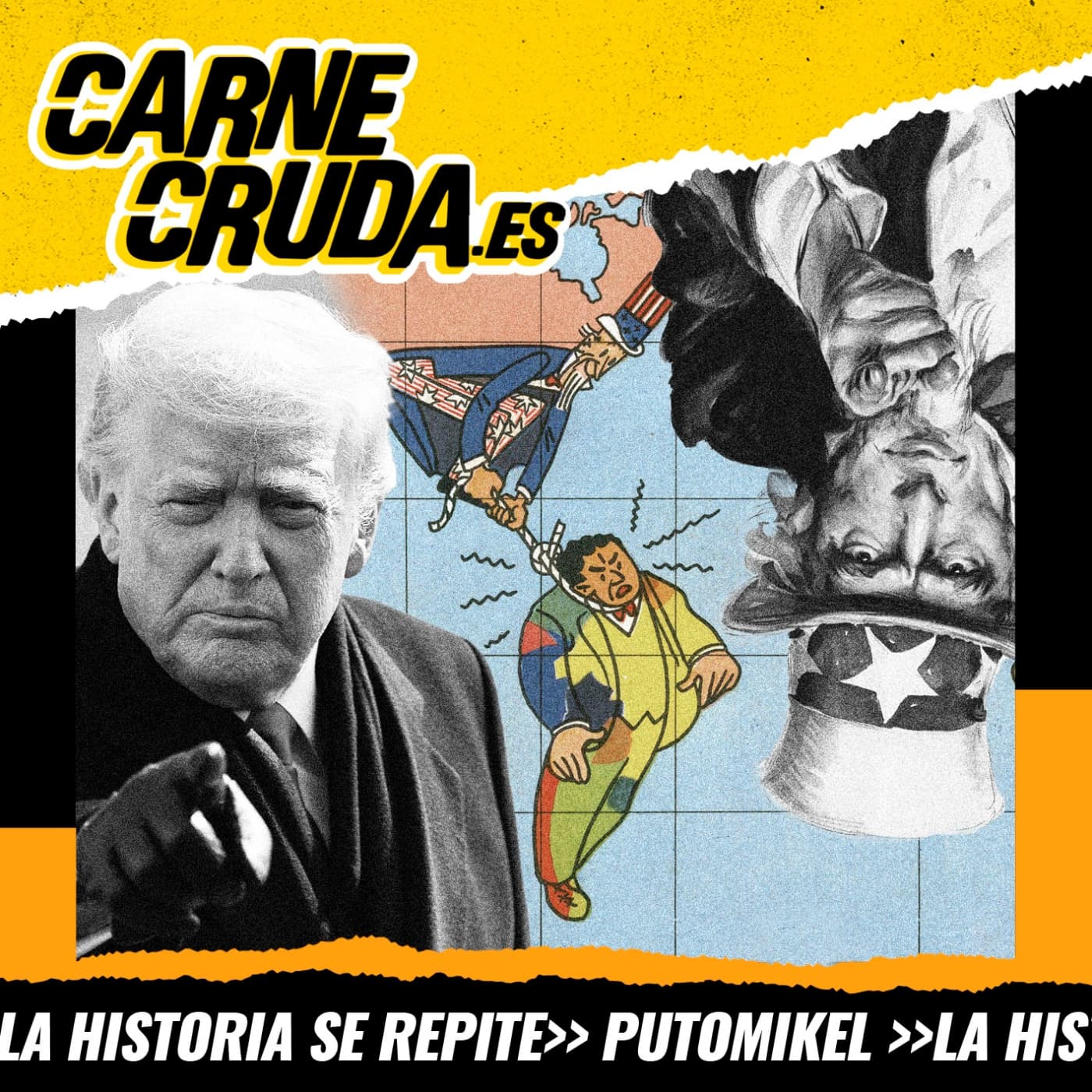
Carne Cruda - PROGRAMAS
América no es EEUU: dos siglos de imperialismo yanqui (PUTO MIKEL - CARNE CRUDA #1612)
00:59:08
Loading summary
Transcript212 lines
- [00:00]
A
Viole. ¿Has visto este mail que ha llegado?
- [00:01]
B
Lo estoy viendo ahora. Es de un cordobés que se llama Javier.
- [00:04]
A
Bueno, o sea, más o menos como una fusión entre tú y yo. Sí lo lees, que así le das su acento. Venga, o sea, tu acento.
- [00:11]
B
Hola, carnicería. Soy Javier, un cordobés viviendo en Minneapolis. Llevaba varios días pensando en sacar un hueco para escribiros, pero la velocidad de los eventos que estamos viviendo aquí no me lo ha permitido. Protestas, reuniones sindicales, acciones de apoyo comunitario, reparto de alimentos, acciones atender a estudiantes en situación vulnerable. En fin, lo que viene a ser lucha antifascista. Os quiero dar las gracias por ese programa dedicado a la ocupación federal en Minnesota. Esto es una lucha constante. Y saber que la verdad es amplificada a través de la onda da mogollón de energía. Juntas y juntos somos la resistencia. Producir carne cruda es ser la resistencia.
- [00:48]
A
Muy bien dicho. Aplaudo, aplaudo. Yo también. Gracias, tocayo, por estas palabras. Gracias por formar parte de esa lucha que estáis llevando a cabo en Minnesota. Y gracias por recordarles a otros y a otras que os necesitamos.
- [01:01]
B
Haceos productores, productoras en carnecruda es ayudadnos.
- [01:05]
A
A llegar a 12.000 por estas 12 temporadas.
- [01:07]
B
Producir carne cruda es ser la resistencia.
- [01:09]
A
Y ahora más que nunca necesitamos resistir y responder frente a estos tiempos en los que la ultraderecha persigue al diferente y al disidente y hasta los cómicos.
- [01:17]
B
Se tienen que retirar por miedo a las amenazas de muerte de los fascistas. Amenazas que se cumplen en países como Estados Unidos.
- [01:22]
A
De eso hablamos hoy, del imperialismo supremacista yankee que ahora también ataca al resto de americanos en casa. Como recordó ayer en los Grammy Bad Bunny, que ganó el primer Grammy a mejor disco otorgado a un disco en español y que será el primer latino que encabezará una actuación en la Super Bowl cantando en español.
- [01:44]
C
Antes de darle las gracias a Dios, debo fuera hice. No somos salvajes, no somos animales, No somos somos humanos. Y somos americanos.
- [02:09]
A
Habremos de considerar cualquier intento de extender el sistema europeo a cualquier porción de este hemisferio como un peligro para nuestra paz y seguridad. En las existentes colonias europeas no interferiremos. Pero con los gobiernos que han declarado su independencia y cuya independencia hemos reconocido, no podemos considerar ninguna intromisión europea como algo que no sea una manifestación de una disposición hostil hacia los Estados Unidos.
- [02:41]
B
El 2 de diciembre de 1823, el presidente estadounidense James Monroe pronunciaba este discurso del Estado de la Nación que consagraba lo que se conoce como Doctrina América.
- [02:52]
A
Para lo americano, más concretamente para los gringos, que desde el bombardeo del Palacio de la Moneda en el golpe de Estado contra Allende en 1973, al bombardeo de Caracas con el secuestro de Nicolás Maduro en 2026, no han dejado de intervenir de forma explícita en los gobiernos latinoamericanos y.
- [03:10]
C
Alto, Javier. Las manos en alto. Queda usted detenido por cargos que yo me invente por incordiar. Por ejemplo, ahora marchandito a los USA, que tengo entendido que aquí tenéis otros. Petróleo.
- [03:23]
A
Me está poniendo las esposas.
- [03:26]
B
Yo creo que el único oil que tenemos es el de oliva de aliñar la ensalada.
- [03:29]
C
Pues me viene muy bien al precio que está, la verdad.
- [03:31]
A
¿Qué es esto de intervenir el programa? A ver, vamos a poner orden. Lo primero, tu, careta.
- [03:36]
C
¿Sabes hacia dónde va la historia? El planeta está ardiendo y vamos a morir todos. Bueno, tampoco hay que ponerse tan dramáticos.
- [03:43]
D
Puto Miquel. Otra vez en carne cruda. Otra vez en carne cruda. Puto Miquel. Otra vez en carne cruda. Otra vez en carne cruda.
- [03:49]
E
Otra vez.
- [03:49]
D
Otra vez en carne cruda.
- [03:50]
F
Me aburro.
- [03:52]
D
No es un déjà vu, es que la historia se repite. Se repite, se repite, se repite, se repite, se repite, se repite. La historia se repite.
- [04:06]
A
Ahora sí puedes intervenir el programa. Adelante, Mike.
- [04:09]
E
Muchas gracias.
- [04:09]
C
A ver, el 8 de enero de 2025, cuando Trump todavía no había empezado su segundo mandato, el New York Post sacaba en primera plana el titular de Don Row Doctrine. La doctrina Don Row ya entonces incluía anexionarse Groenlandia y Canadá como el estado número 51. Aparecía el Golfo de México rebautizado como el Golfo de América, el Canal de Panamá rebautizado como Canal de Panamaga y Groenlandia como nuestra tierra.
- [04:32]
B
Algunos de esos escenarios ya estaban en marcha y otros, como el de Venezuela, no aparecía ni anunciado.
- [04:37]
C
Monroe era un juego de palabras en Ted D. Por Donald Trump y Monroe por.
- [04:44]
A
No es esta Monroe.
- [04:45]
C
No es Monroe.
- [04:46]
A
No. La buena de Marilyn Monroe.
- [04:48]
C
Por James Monroe, el quinto presidente de Estados Unidos al que hemos citado al principio, precisamente en el discurso que se considera el que inicia. La doctrina que lleva lleva su nombre.
- [04:57]
F
La doctrina Monroe es importante, pero la hemos superado con creces.
- [05:01]
C
Ahora la llaman el documento Don Row.
- [05:05]
B
¿Y qué hilo une a esos dos presidentes y esa doctrina?
- [05:07]
C
Pues la Doctrina Monroe era una posición dentro de la política exterior estadounidense que en origen se formuló como una oposición al colonialismo europeo en lo que llamaban el hemisferio occidental, es decir, en el continente americano. Y esto podría incluso sonarnos como algo positivo, algo antiimperialista en la época de colonialismo europeo, si no supiéramos exactamente hasta dónde llega.
- [05:26]
A
Vamos a poner un poco de contexto. ¿Cuándo aparece la doctrina?
- [05:28]
C
Pues la idea de que el continente americano tenía que cortar sus lazos con las potencias coloniales europeas realmente es tan vieja como Estados Unidos. En los Federalist Papers, una serie de ensayos escritos por James Madison, John Jay y sobre todo Alexander Hamilton, veían que Estados Unidos se convertiría en una gran potencia que actuaría de intermediaria entre Europa y los países que se independizasen en el resto del continente. Tengamos en cuenta que esto lo escriben.
- [05:53]
B
En 1788, cuando aún no habían estallado las revoluciones de independencia en Latinoamérica.
- [05:58]
C
Pero cuando James Monroe da ese discurso que funda la doctrina en 1823, el panorama era muy diferente. Las revoluciones criollas e independencias habían tenido éxito en la Gran Colombia, México, Chile, Guatemala, Argentina, en Perú, en Brasil todavía se estaban librando guerras, pero quedaría muy poco para la independencia. Y en Estados Unidos había un cierto miedo a que Europa intentase recuperar sus colonias y restaurar las monarquías.
- [06:19]
A
¿Y cuál fue el efecto de esa declaración?
- [06:20]
C
Pues en este momento ninguno realmente, porque Estados Unidos no tenía poder militar o naval para conseguir mucho, solo era una intención ambigua. Y no sería hasta décadas después que ya se empezase a hablar de esta idea como una doctrina dentro de la estrategia de Estados Unidos para adaptarse al tablero internacional a lo largo de los siguientes 150 años.
- [06:48]
A
Bueno, hay que comentar, sí antes de seguir adelante, lo podéis ver en el vídeo, en el Twitch, en el YouTube, el sombrero de cowboy que se nos ha clavado el señor Bonanza.
- [06:57]
C
Claro, es que aquí el Destino Manifiesto ha tenido unas manifestaciones también estéticas que nos hemos tragado, que son el mito del cowboy y yo he venido a representar al yankee.
- [07:06]
A
Muy bien, pues vamos a tratar de entender, ya con el disfraz puesto, cómo un discurso contra los imperios europeos se convirtió en una justificación del imperio. Y lo vamos a hacer con dos grandes analistas.
- [07:17]
C
Miquel Hoy nos acompañan Mario Espinoza Pino, profesor de filosofía política en The Core School, investigador marxista, mestizo y analista, y Alejandro López Canorea, analista político, director de Descifrando la Guerra.
- [07:28]
A
Pues crudos días a los dos.
- [07:30]
E
Muy buenas.
- [07:31]
A
En base al imperialismo de Estados Unidos en la base del imperialismo de Estados UnidOS está la idea de Providencia y de Destino Manifiesto. Mario, ¿Qué papel ha jugado la Providencia o esa idea de misión civilizatoria en el desarrollo de Estados Unidos Pues un.
- [07:45]
F
Papel fundamental, la verdad? Y de eso desde básicamente la colonización. La idea de Providencia está presente sobre todo por las ideas puritanas. Es a través de las ideas puritanas y calvinistas cómo se introduce una idea de destino, de predestinación. Y ahí es donde encontramos, ya en momentos incluso como el siglo XVII, a ministros puritanos como Peter Bakley, diciendo que el señor, hablando de Estados Unidos, que el señor espera más de ti que de otros pueblos, tú serás un pueblo especial, un pueblo único, y no habrá como tú otro en toda la tierra. Esto en The Gospel Covenant, para que veáis cómo ya en el XVII se empieza a construir esa ideología, que luego se amalgama, como os decía, con la teoría de la predestinación calvinista, pero también con la teoría del progreso ilustrada, y a partir de ahí se genera una especie de amalgama que habla de la expansión material, necesaria y providencial de Estados Unidos. Eso se concreta justamente en la doctrina del Destino manifiesto de John o' Sullivan, en la Democratic Review, en 1845, donde ya se habla a las claras, en ese contexto de anexión de Texas, que la Providencia es la que marca el destino de Estados Unidos en su expansión. Y a partir de ahí se construye toda la mitología de la frontera, la expansión hacia el oeste, que no es otra cosa que el genocidio de los pueblos nativo americanos. Eso es la expansión, básicamente, colonialismo de los blancos anglosajones sobre los pueblos originarios. Y luego la expansión hacia el sur, hacia México, inmediatamente después de esta doctrina. Y luego ya esa expansión global, vamos a decirlo, estos son los discursos justificatorios. Siempre hay una concepción del pueblo elegido, que luego se va a amalgamar muy bien, además, con el racismo biológico, hay que decirlo así. Los blancos anglosajones conquistan y luego, obviamente, el racismo biológico va a hacer su papel también justificando todo el proceso de colonización interna.
- [09:33]
C
Alejandro, ¿Ha abandonado Trump este discurso civilizatorio?
- [09:36]
E
No, lo que pasa es que ahora ha evolucionado un montón porque desde estas raíces que acabamos de comentar hasta ahora, imagínate el mundo, pero también Estados Unidos cómo ha cambiado. De hecho ahora mismo son grupos evangelistas en los que se apoya de vez en cuando. También tenemos otros grupos sencillamente integristas más religiosos. También a nivel económico, esa amalgama de los que quieren reventar la hegemonía del dólar con los que quieren un ultra liberalismo o anarcocapitalismo, cada uno que elija la palabra que quiera. Grupos conspiranoicos de toda clase que en algunos casos sirven para justificar la superioridad de esos blancos que todavía en Estados Unidos reivindican la expulsión de los migrantes, que es una rama que estamos viendo. Y por otro lado ese expansionismo que recuerda muchísimo sencillamente al Destino manifiesto, es decir, lo hago porque lo hago y punto, pero con la justificación de que ahora sí son una gran potencia. No es vamos a aprovecharnos de que hay unas potencias en declive como eran los europeos para ganar peso, sino que como yo soy la principal potencia del mundo y hay otros retos para evitar que nadie me quite ese peso, yo voy a imponer mi hegemonía. Hasta aquí, hasta hace unas décadas pensábamos que esto no iba a volver porque no interesaba tanto América como el planeta entero. Entonces era una gran competición de potencias. Y ahora que no pueden o no parece que puedan imponerse en todos los puntos del globo con China, Rusia, etc. Pues han decidido centrarse en lo que serían sus provincias, que es prácticamente lo que le falta decir. Algunas lo dice como Canadá, pero son América y Europa. Europa porque se han avasallado y no parece que exista un plan B. Y América porque, como decimos, es el patio trasero que señalaba la doctrina Monroe que convenientemente reconvierte para intentar mantener su hegemonía.
- [11:19]
A
Hay un hilo que une el imperialismo yanqui desde el siglo XIX hasta el siglo XXI con algunos aspectos que han cambiado y otros que no tanto.
- [11:40]
C
Esta providencia y misión civilizatoria que hoy se dirige a Venezuela o México o Groenlandia, se dirigió primero a las tierras de los nativos americanos, como bien ha explicado Mario, a medida que las 13 colonias se expandían hacia el oeste con ese Destino manifiesto.
- [11:51]
A
Esta expansión colonial hacia el oeste ya dio algunas señales de las intenciones de Estados Unidos de intervenir en otros países y no respetar su soberanía.
- [11:59]
C
Tal vez el mayor caso fue la guerra entre Estados Unidos y México que estalló en 1846, pero cuyos antecedentes están en las colonias estadounidenses en Texas. Realmente aprovecharon los deseos de las élites criollas de México de controlar un territorio que no tenían bajo mucho control. Toda la zona de Texas, Nuevo México y grandes partes de California estaban poco habitadas y eran territorios de apaches, comanches y navajos, entre otras culturas indígenas. Así que el imperio español y luego el gobierno mexicano intentaban atraer a colonos.
- [12:26]
B
Blancos, que en este caso venía de Estados Unidos.
- [12:28]
C
Porque en este momento Estados Unidos tenía una baza a su favor. Estaba creciendo económicamente. Así que el gobierno de México dio tierras a empresarios estadounidenses como el banquero Moses Austin, para poblar esa frontera. No sé si habéis visto El Zorro. Pues vamos, Antonio Banderas haciendo de mexicano. Pues ahí estamos. Si os acordáis de algo más que eso de Antonio Banderas dando espadazos y Catherine Zeta Jones también haciendo de mexicana siendo de Gales. El Zorro ocurre en este contexto de intervención estadounidense en México y particularmente en California. Pero pronto empezó a haber problemas.
- [12:59]
A
¿Qué tipo de problemas?
- [13:00]
C
Pues a lo mejor no suena. A todos estos colonos les parecía genial que les dieran tierras. Tenían la mentalidad de estar revolucionando el mundo, de estar civilizándolo. Pero cuando les pusieron condiciones como subirles los impuestos de propiedad o que no podían tener esclavos porque México había abolido la esclavitud, esa mayoría decidió que ya no les convenía y decidieron independizarse en la República de Texas. Y unos años después, Estados Unidos conseguiría que se uniese como estado mientras intentaba algo parecido en California. Allí México había acumulado deuda con los colonos estadounidenses que había traído. Y ahora Estados Unidos se ofrecía a comprar los territorios. Y la deuda también.
- [13:33]
B
Perdón, pero que yo me emociono con.
- [13:34]
C
La música del zú ¿Y quién no?
- [13:36]
A
¿Y que no?
- [13:38]
B
Qué horror. Y ahora vemos algo parecido cuando Trump amenaza con comprar Canadá como estado. 51 o Groenlandia. Como comentaba antes Alejandro, el intervencionismo estadounidense siempre ha sido económico además de militar. ¿Le hace falta a Trump un ejército para intervenir en el continente?
- [13:53]
E
Esta pregunta es difícil porque te diría que sí, que no porque le hace falta invadir. No. ¿Pero le hace falta ese ejército? Sí, porque lo que ha hecho es atacar de manera quirúrgica Venezuela. Ha sido un día, unas horas, digamos, intentar que se rindan, pero a cambio de mantener ese establishment. Porque sabe que una invasión puede ser equivalente a un Afganistán o un Irak, que es justo lo que él dice que quería evitar desde 2016, porque tiene un coste económico, político y militar muy fuerte. Y él no quiere gastar dinero fuera, quiere el dinero America first, es lo que siempre te dice. Pero al mismo tiempo tiene el Make America great again, que es un poco contradictorio, aunque parezca que no, porque tiene que llevar la hegemonía pero priorizando sus intereses. Entonces con este ejemplo lo que intenta es tutelar, y gracias a ese enorme despliegue en el Caribe, ese ejército que ya es más de un billón de dólares el que este año creo que quiere gastar hasta un billón y medio el año que viene. Es decir, necesita ese gran músculo para poder imponer esa tutela y que los países se rindan ante la amenaza de una intervención que sí que es realista.
- [14:53]
C
Hacer rendirse a los países de Latinoamérica no era parte originalmente de la Doctrina Monroe, al menos como la pronunció James Monroe, que él seguía enfocado en ese poder europeo. Pero sí que ayudó a crear esa idea junto con el destino manifiesto de la primacía de EEUU sobre el resto del continente. Porque ya lo ha dicho Mario, venía de muy lejos esa idea de que Estados Unidos era un pueblo elegido. Y gracias a la expansión colonial hacia el oeste y la industrialización para la segunda mitad del siglo XIX, con armada y con un ejército profesional, Estados Unidos podía dar algo más de fuerza a esas intenciones en el continente. Esta es la idea del hermano mayor, como la formularía el político James Blaine, que era Estados Unidos la que tenía que liderar la aplicación de la doctrina, porque por algo se había independizado primero y el resto de países de Latinoamérica tenían que seguirle y obedecer.
- [15:37]
B
América para los americanos, concretamente para los de Estados Unidos.
- [15:40]
C
Esto no es nuevo, ya en 1830 anda que ha llovido. Mientras las repúblicas latinoamericanas debatían sus relaciones con el vecino del norte, el político y empresario chileno Diego Portales escribió en.
- [15:49]
D
Una carta a un hay que tener mucho cuidado. Para los americanos del norte los únicos americanos son ellos mismos.
- [15:57]
A
De hecho son los únicos que se autodenominan americanos por encima del resto. Hemos visto que esa idea incluso la puso de manifiesto Trump cuando decidió que el Golfo de México debería llamarse Golfo de América. Mario, ¿Cómo se separa Estados Unidos de las repúblicas latinoamericanas? ¿Cómo construye esa idea de que son excepcionales de que todo el mundo tiene que seguirles a ellos?
- [16:16]
F
Pues justamente hemos un poco esbozado ese camino. Yo creo que por una parte está esa idea del Destino manifiesto, que es como el substrato cultural y político, pero luego está la concreción de la Doctrina Monroe y la evolución de la propia Doctrina Monroe. Hay que pensar que al principio cuesta al principio lanzar la Doctrina Monroe porque no se quiere reconocer de todo a las repúblicas criollas, porque se piensa que la metrópoli va a ganar al final, a partir del 23 eso cambia un poquito antes. Y luego lo que hemos visto es a Estados Unidos directamente. Al principio esa doctrina pretende echar a Europa, pero la evolución de esa doctrina es una doctrina que al principio no es intervencionista. Y cuando va con el correr de los años, y justamente a finales del XIX, cuando Estados Unidos pasa a ser una gran potencia mundial, a partir de ese momento llega el corolario Roosevelt, que yo creo que es el elemento importante, en 1904. Y ahí lo que tenemos es ya la concreción de esa doctrina de que el sur de América es el patio trasero y que además se va a intervenir militarmente y económicamente de manera discrecional, pero de manera constante a partir de ese momento. Eso sólo se verá suspendido en momentos específicos, como con la doctrina de la buena vecindad por Franklin de Roosevelt más adelante, pero por otros intereses. Pero va a ser una constante de cómo va a construir esa excepcionalidad, esa visión del hermano mayor del gran garrote. Todos esos elementos están ahí ya. Yo creo que lo que va a hacer Estados Unidos es justamente imponer muchas veces manu militari sus intereses en Latinoamérica, y lo hemos visto en todo el siglo XX, básicamente hasta el Plan Cóndor. Pero quiero decir, cómo ha intervenido en Panamá, cómo ha intervenido en República Dominicana, cómo ha intervenido en Puerto Rico, etc. Pues es lo que tenemos y cómo se ha construido esa estacionalidad por poder militar y por poder económico.
- [18:06]
A
No hay que confundir el primer Roosevelt al que has citado, Theodore, el de 1904, con el Franklin del aunque son familia.
- [18:18]
C
Estados Unidos lleva tiempo valiéndose de distintas herramientas para implantar el mensaje de que se trata de un pueblo elegido que debe salvar el proyecto civilizatorio y hacerse con el mundo. Eso me dijo también Carolina Meloni, filósofa argentina y especializada en filosofía política y pensamiento feminista y profesora en la Universidad de Alcalá. La primera herramienta que tiene Estados Unidos es la ideológica.
- [18:37]
D
La llamada guerra cultural que hoy vemos reproducirse en redes procede en realidad de técnicas de propaganda que ya pusieron en marcha a principios del siglo XX. Como bien sabemos, tras el final de la Primera Guerra Mundial y como en cualquier periodo posbélico, comenzaron a utilizarse toda una serie de dispositivos simbólico materiales. Pensemos por ejemplo en las técnicas de propaganda que popularizó Edward Vernet. Por cierto era sobrino de Sigmund Freud y utilizó muchísimas tesis del psicoanálisis para sentar las bases del consumismo moderno, apoyándose además en estrategias bélicas de resolución de conflictos, manipulación, propaganda clásica y domesticación de las mentes.
- [19:22]
C
Estas técnicas se perfeccionaron dentro y fuera de los Estados Unidos en su lucha contra el comunismo y se hicieron efectivas también más allá de sus fronteras, como contaremos después. Vamos con otra herramienta, la economía.
- [19:32]
D
Desde el papel del Fondo Monetario Internacional, el Banco Mundial, el Departamento de Tesoro, a la Escuela de Chicago y sus tesis neonecroliberales a la elaboración del famoso Consenso de Washington, cuya disciplina económica basada en políticas fiscales concretas, restricción del gasto público, inyección de dólares y creación de deuda como mecanismos de sometimiento a los países latinoamericanos, privatización de empresas y de recursos naturales y un largo etcétera que ha hecho posible la creación de una cartografía del endeudamiento y del vasallaje eternos.
- [20:12]
C
Cuyas huellas e impactos son aún más profundas.
- [20:16]
D
Quienes hemos vivido en nuestros territorios estas políticas económicas sabemos de sobra que FMI es sinónimo de hambre, de miseria, de devaluación de las economías locales, de expropiación de recursos. Lo estamos viendo.
- [20:30]
B
Bueno, llevamos décadas viéndolo y lo estamos viendo ahora en Argentina con Millet, la privatización de recursos, la venta de tierra en Patagonia. Así que tenemos guerra cultural, guerra económica. ¿Cuál es la última herramienta?
- [20:39]
C
Pues precisamente la política.
- [20:41]
D
EEUU se ha garantizado siempre su éxito imperialista, ya sea a base de terror económico y financiero o directamente a base de terror a secas. Todo el Plan Cóndor no fue más que eso y el resultado son miles de personas asesinadas, desaparecidas, encarceladas, torturadas, exiliadas. Estados Unidos ha estado detrás siempre de los golpes de estado más cruentos de Latinoamérica.
- [21:08]
C
Solo hay que pensar en el papel que cumplió la Escuela de las Américas a la hora de apoyar el terrorismo de Estado en esos países.
- [21:13]
A
Aprovecho para recomendar el último libro de Carolina La instancia subversiva. Decir lo femenino es posible publicar por Akal. Esta música también te emociona, ¿Verdad?
- [21:28]
B
Me pone riquísimo.
- [21:30]
C
Dan ganas de sacar una bandera con estrellitas.
- [21:33]
A
Ponte el gorro, anda.
- [21:38]
C
Las marchas de Susak. Es que no hay nada más yankee que eso. Bueno, ahora con todo este marco ideológico que tenía EEUU a fines del siglo XIX, el excepcionalismo americano y el Destino Manifiesto o la política del Hermano Mayor, la Doctrina Monroe empezará a tener añadidos y cambios. Esto es lo que llaman corolarios.
- [21:54]
D
Proposición que no necesita prueba particular y se deduce con facilidad de lo demostrado previamente.
- [22:01]
A
Es decir, una aclaración, un por qué Lo digo yo que soy tu padre. Básicamente como los que nos tiene acostumbrados Trump.
- [22:07]
C
Pues el primero sería el corolario Olney. Según lo declaró el secretario de Estado Richard Olney en 1895 precisamente por una intervención en Venezuela que se se disputaba con Gran Bretaña una parte de Guayana conocida como la Guayana Esequiba. Estados Unidos se postuló para mediar porque según Olney, la Doctrina Monroe les daba su autoridad para mediar en disputas fronterizas que ocurriesen en su hemisferio. Venezuela aceptó porque pensaban que estarían de su parte porque están en contra de los europeos. Me van a favorecer. Y Gran Bretaña acabó aceptando también.
- [22:35]
B
¿Pero Estados Unidos estuvo de parte de Venezuela?
- [22:37]
C
Pues claro que no. Vamos a ver. De hecho formaron una comisión con delegados británicos y estadounidenses, pero ninguno venezolano. Y acabaron dándole a los británicos el 90% de ese territorio. Estados Unidos había conseguido el reconocimiento de Europa como el país responsable de los países latinoamericanos.
- [22:53]
A
Volvemos al paternalismo.
- [22:54]
C
Estos corolarios no son más que una justificación que se busca en el momento para las políticas de intervención y que se dicen en voz alta citando a Monroe para darle un supuesto peso. De hecho, sería citada de nuevo por otro presidente con otro corolario propio que definiría el imperialismo de Estados Unidos de la primera mitad del siglo XX, que ya lo hemos adelantado. El corolario Roosevelt por Theodore Roosevelt, que defendía que Estados Unidos tenía derecho a intervenir en Latinoamérica en casos de mala praxis flagrante y crónica por los países latinoamericanos, sobre todo si acumulaban deuda con países europeos, en cuyo caso podían decir que intervenían ellos primero para impedir que lo hiciera Europa.
- [23:28]
A
Así que reducimos Latinoamérica a ser o manejada por los imperialistas de la vieja escuela o manejada por los nuevos. Hombre, claro, Alejandro, ¿Se puede simplemente citar un discurso para justificar una agresión? Porque la doctrina Monroe no es es ni un texto legal ni algo extraído del derecho nacional o internacional.
- [23:47]
E
Claro, pero es que es una doctrina. Es decir, cada país establece lo que quiere hacer con su defensa, con su política exterior. Y esto es una declaración de intenciones. ¿Hasta dónde vamos a permitir la soberanía de países que están en la periferia económica del mundo? No les vas a dejar que se vayan por su cuenta y por supuesto tampoco vas a dejar que un rival sistémico tenga la influencia en ese país. Pero bueno, es que el corolario Trump, que ya de por sí es expansionista y dudo que vayamos hacia un colonialismo porque implicaría limpiezas étnicas en América y guerras, pero sí que podemos hablar de imponer el control económico, que es otra forma de colonialismo. La cuestión es que a día de hoy todavía no hemos visto, aunque empezamos a ver ese señalamiento a otras potencias, es decir, igual que los europeos ahora es China, no puedes hacer negocios con China, China tiene que estar fuera. Y algunos otros rivales, Rusia, Irán, se ha mencionado hasta Cuba, no pueden tener negocios con México, con Canadá, con Venezuela, porque si no empezamos a subir el tono y a imponer condiciones. Esto es otra doctrina. Esto lo que yo quiera hacer se va a hacer porque puedo imponerlo.
- [24:49]
B
Claro. Mario, ¿Cómo se llega a que Estados Unidos, ya sea con Roosevelt o con Trump, sienta que no necesite justificar esos corolarios? ¿De dónde salen estos términos como seguridad nacional que usa ahora Trump?
- [25:01]
F
Bueno, es que la verdad es que ser una potencia imperial y enunciar directamente el corolario es una doctrina política. Asusta bastante después de las intervenciones militares de Estados Unidos durante el siglo XX. Eso para empezar esta. Pero bueno, yo creo que ¿De dónde sale el concepto de seguridad nacional? Es interesante porque justamente yo creo que el concepto de estrategia de seguridad nacional está muy relacionado con todo esto que hemos visto también del Destino Manifiesto. De hecho, recordemos que Trump invocó el Destino Manifiesto hace un año, a comienzos de año. Para mí el concepto de seguridad nacional tiene que ver, si queréis un poco por hacer una cierta analogía con el concepto de Lebensraum nazi, es decir, un espacio de expansión que es necesario para que la nación prospere. Recordad, Trump ha dicho que promete una serie de prosperidades absolutas, infinitas a Estados Unidos. ¿Pero cómo se promueve eso? Pues con expansiones específicas. Groenlandia es un caso, Alaska otro, lo hemos visto. Eso está ahí. Yo creo que el concepto de Eleven's Round es comparable. Es comparable porque es el espacio necesario que necesitamos para crecer. Para crecer. Y no importa, y esto es lo importante para mí, nos saltamos cualquier tipo de dimensión democrática. Antes Estados Unidos invocaba la democracia, los derechos humanos o el humanitarismo. Ahora directamente no lo invoca directamente es lo que necesitamos para prosperar los norteamericanos y punto, se acabó. Eso es un poco lo que está detrás ahora mismo. Es un grado de agresividad mucho mayor. Hemos visto un cambio de discurso donde todos los derechos humanos, las invocaciones a la ONU, bla, bla, bla, todo eso se ha deshecho absolutamente por el nudo poder y los recursos o se utilizan solo de manera muy estratégica, nada más, yo creo.
- [26:40]
A
De hecho, ese expansionismo está recogido en la Estrategia de Seguridad Nacional presentada en diciembre, bueno, finales de noviembre, principios de diciembre. Y eso es lo que hace que no sea contradictorio el movimiento MAGA de voy a ocuparnos, vamos a ocuparnos de nuestros asuntos, porque lo de fuera también son nuestros asuntos. Hablemos de otros términos imperialistas. Suena Big Stick de los maravillosos Minutemen, en referencia a la Big Stick Ideology o ideología del Gran Garrote. Miquel, ¿Qué es esto?
- [27:21]
C
Pues lo hemos dicho antes, pero tal y como enunció Theodore Roosevelt, él lo dijo en su frase, habla con suavidad y lleva un gran garrote que llegarás muy lejos.
- [27:29]
A
Es decir, haz la diplomacia sin ocultar tus amenazas.
- [27:32]
C
Esto motivó, por ejemplo, la intervención militar en República Dominicana, en Nicaragua, en Cuba, obligaron a la firma de la Enmienda Platt, que ponía siete condiciones para que Estados Unidos retirase sus tropas de la isla que llevaban ahí tras independencia de España y convertían Cuba básicamente en un protectorado estadounidense. En Colombia financiará una revolución para conseguir la independencia de Panamá, que era parte de Colombia. Y en 1903 el líder del movimiento independentista panameño, Manuel Amador, se reunió con Roosevelt en una suite del Waldorf Astori en Nueva York y recibió un cheque por valor de cien mil dólares, de los de entonces, obviamente, y lo mandó de vuelta a casa. Lo informal de esta financiación da un poco idea de cómo EEUU se veía.
- [28:09]
B
Bajo R como los dueños de un feudo que aunque no controlasen directamente podían meter mano en él de forma directa cuando quisieran.
- [28:16]
C
Claro, porque tras la independencia Estados Unidos obligaría al recién nacido país a cederle la zona donde se estaba construyendo el Canal de Panamá. Como una zona de control gobernada y explotada además por Estados Unidos. Pero no hacía falta intervención militar para garantizar el llamado imperio liberal estadounidense.
- [28:31]
B
Supongo que otro factor importante era el dinero.
- [28:34]
C
Eso es lo que se llamaba la dollar diplomacy. La diplomacia del dólar que intentaba favorecer ya no sólo préstamos a otros países para endeudarlos sino también los intereses de bancos, corporaciones e industrias de Estados Unidos para garantizar el control de mercados extranjeros.
- [28:48]
A
Me interesa mucho esto, Mario. ¿Qué papel han jugado las empresas privadas en el discurso y las políticas imperialistas?
- [28:54]
F
Yo creo que las empresas han jugado un papel esencial en expansión del poder económico norteamericano. De hecho la expansión de ese poder económico era la base para luego además, en un momento determinado poder intervenir militarmente. Como que hay casos muy clásicos como el de la United Fruit Company, fundada en 1899. Que cuando hay un momento determinado en Guatemala en el que hay una serie de intereses que contravienen a esta empresa. Estados Unidos no tiene ningún problema en derrocar gobiernos. Y es lo que ha hecho básicamente. Yo creo que hay una estrategia siempre de expansión del poder económico inicial. Y obviamente luego hay una serie de fiscalizaciones políticas. Y cuando las empresas multinacionales ven sus intereses limitados por ejemplo por reformas agrarias. Pues directamente lo que hay es una intervención militar y a veces no tan quirúrgica como la de Venezuela. Sino mucho más sostenida financiando directamente grupos paramilitares. Aparte estas empresas lo que han hecho normalmente, pienso también en la Standard Oil, pienso también en Monsanto. Quiero decir que podríamos hablar de varias han luchado siempre contra los derechos sindicales. Han destruido el poder obrero en los países latinoamericanos y han evitado que haya organización obrera al mismo tiempo.
- [30:05]
A
De hecho la intervención en Venezuela es para favorecer a las empresas del petróleo. A las que por cierto, ni siquiera había consultado Trump antes de ir a defender sus supuestos intereses. Entonces Alejandro, cuando se habla de cosas como interés nacional se está hablando de interés corporativo.
- [30:21]
E
Se está hablando del interés económico, del interés político de Estados Unidos. Evidentemente en unas democracias liberales lo que significa es capitalismo salvaje, es el interés de las empresas. Pero es que esto pasa también en Europa. A veces preocupa más que el esquina activos a tus empresas a que tenga que pagar el Estado contra cualquier otro rival. Y en este caso, en el de Estados Unidos, me parece bastante evidente por todo el entramado electoral que hay, porque los candidatos dependen del dinero de los empresarios y de los lobbies, y dependen de países extranjeros, dependen de Israel. Hay una batalla por ver quién está más cercano al que financia. Y esto tiene siempre unos ecos en el exterior porque es como una evolución de lo que llamamos complejo militar industrial, que ya podríamos hablar casi del complejo militar político. No sé muy bien cómo lo podríamos definir, pero es básicamente esas necesidades y demandas que tienen los lobbies y las empresas traducirlas en ganancias en el extranjero.
- [31:17]
B
Volvamos a principios del siglo pasado, cuando esta diplomacia del dólar favoreció toda una nueva oleada de intervenciones de las que nos han quedado expresiones como la de república bananera, maravillosa y horrible a la vez. ¿De dónde viene?
- [31:32]
C
El término en sí fue acuñado por el escritor estadounidense Sidney Porter, referido a un país ficticio, Anchura, cuya economía dependía de la explotación del plátano por estas empresas. Este país ficticio estaba inspirado probablemente en Honduras y en otros países de Centroamérica, como Guatemala, donde esa multinacional estadounidense, la United Fruit Company, después rebautizada como Chiquita Banana, acumulaba tanto poder que no dudó en intervenir en los gobiernos de los países donde tenía esas plantaciones. En Honduras controló el transporte y sobornó a políticos para perseguir a los sindicatos. La cuya Mel Fruit Company llevó a cabo un golpe de Estado contra el presidente electo Miguel Dávila en 1911 con ayuda de mercenarios estadounidenses, e instaló a Manuel Bonilla, ex presidente y oficial del ejército.
- [32:11]
B
¿Y Estados Unidos dijo algo de eso?
- [32:12]
C
Por supuesto que no. La defiende donde sea, en su casa si quiere, pero ahí no le importaba. Lo justificaron diciendo que Dávila era demasiado liberal. Sorprendente oír esto de Estados Unidos Y que estaba endeudando al país con Gran Bretaña. La deuda, de hecho, aumentó exponencialmente hasta hacerse impagable y el dólar se convirtió en la divisa del país. Y por supuesto, Bonilla cedió más terrenos e infraestructuras a las empresas de frutos que le habían colocado en el poder, que pasaron a controlar también ferrocarriles puertos, telégrafos y teléfonos.
- [32:41]
A
Hijos de fruta, Creo que aquí sí era adecuado decirlo. Y el término república bananera ha perdurado como algo peyorativo que criminaliza a quienes sufrieron estas intervenciones y no a los perpetradores, los hijos de fruta, que por aumentar sus beneficios en manos privadas hacían y deshacían a su antojo. Escuchamos un anuncio de chiquita banana de 1947, empresa que creció gracias al imperialismo.
- [33:13]
C
Estadounidense y que encima usó como imagen de marca a Carmen Miranda, la cantante y actriz brasileña con sus volantes y sombreros cargados de frutas, convirtiendo un estereotipo de la mujer latina y una mezcla de los trajes nacionales de los países donde intervenía en algo monetizable, otro producto.
- [33:27]
B
Más que vender para su beneficio. De hecho, Miranda fue la musa de otra fase del imperialismo yanqui, una que.
- [33:34]
C
Haría especial uso del poder blando, la Good Neighbor Policy o política del buen vecino, que fue implementada sobre todo por otro Roosevelt, el Franklin D. En medio de la Gran Depresión, que buscaba evitar intervenciones militares y favorecer el comercio con Latinoamérica por vías más pacíficas para que se viera a su antiguo agresor como un amigo.
- [33:52]
B
Pero precisamente por todas las intervenciones militares que ya se habían hecho, no iba a ser realmente una relación de igualdad.
- [33:58]
C
¿Cuánto le gusta, le gusta, le gusta.
- [33:59]
D
Le gusta, le gusta, le gusta, le gusta?
- [34:01]
A
¿Cuánto le gusta, le gusta, le gusta, le gusta, le gusta, le gusta?
- [34:04]
D
¿Cuánto le gusta, le gusta?
- [34:06]
C
Carmen Miranda, ella. Fascinante.
- [34:07]
B
Inigualable.
- [34:09]
C
Para que nos hagamos una idea, en el momento que Roosevelt anunció su política del Buen Vecino, Estados Unidos seguía ocupando militarmente Haití desde hacía 18 años, mientras que Fulgencio Batista había orquestado ese mismo año su golpe de estado de Cuba desde Florida.
- [34:21]
A
Y bajo Batista, de la economía cubana se entregaría completamente a Estados Unidos, que controlaba, por ejemplo, enormes plantaciones de azúcar en la isla.
- [34:28]
C
Así que buen vecino, ya veis. Pero como parte de esta política se favorecieron muchos productos culturales. La Agencia de Relaciones Interamericanas incluso convenció a Disney para producir películas como Los tres Caballeros o a Carmen Miranda convertir en una estrella de Hollywood. Hacienda de mexicana, de brasileña, de lo que hiciera falta.
- [34:44]
A
Alejandro, en ese sentido, ¿Cómo ha usado Estados Unidos a Hollywood para extender su imperialismo?
- [34:49]
E
Hombre, es que con el imperio también vino el imperio cultural. Entonces ya todo el mundo prácticamente se siente parte de esa provincia estadounidense gracias o por culpa de Hollywood. Entonces ahí una de las cosas que yo creo que ya estarán manejando unos y otros. Quizá en Hollywood ha habido un establishment más demócrata, pero hasta hace no mucho había un consenso demócrata republicano para el intervencionismo por el mundo. Es verdad que cambian las formas. Ahora estamos ante una visión mucho más descarnada en la que se habla más de áreas de interés. Entonces probablemente veamos interés en crear películas sobre la intervención en Venezuela como algo heroico. Eso seguramente lo acabemos viendo. No me sorprende nada el tema de Hollywood. Cada equis tiempo, no se, sale el meme de esta intervención acabará siendo convertida en una película donde lloraremos por el trauma que sufrió el soldado estadounidense al destruir un país. Eso ocurre de vez en cuando sale ese meme y además creo que tiene razón. Luego le dan Oscar siempre y es bastante llamativo. Creo que los demócratas ahora ya con esta ruptura que tienen con Trump, creo que estarán pensando más en hacer una peli de Epstein.
- [35:48]
B
Claro. ¿Cómo sirve el poder blando para asentar un imperio?
- [35:53]
F
Yo creo que el poder blando es fundamental sin productos de Hollywood, sin extender el modelo de democracia norteameric como el mejor modelo democrático del mundo, los grandes valores norteamericanos de la libertad, el individualismo, sin eso que se hace a partir de productos culturales como el cine de Hollywood, novelas, también a partir de la diplomacia, que es un elemento importante del poder blando. Todo eso permite generar una cierta anuencia, un cierto consenso y hegemonía sin entrar directamente a utilizar elementos de poder duro como los que hemos citado. Economía directamente o directamente manu militari. La cuestión está en que el poder blando. Actualmente ha habido muchísimos artículos, entre otros de republicanos, hablando del desprecio de Trump por el poder blando. Estamos viendo, yo creo que una reconfiguración.
- [36:41]
B
Ahora mismo ella no necesita toda esa.
- [36:44]
F
Parafernalia, va directamente, de hecho se sale de organismos multilaterales sin ningún problema, rompe con ayudas sanitarias globales como USAID, etc. Y parece que no lo usa. Hay una reconfiguración, yo creo también en el discurso. El poder blando ahora mismo está pasando un segundo plano en el trumpismo. Y lo que estamos viendo son intervenciones directas y amenazas directas, que yo creo que eso es importante.
- [37:08]
A
Y no olvidemos una de las justificaciones para todo supremacismo imperialista de extrema derecha desde el siglo XX al XXI, que vienen los rojos.
- [37:24]
D
Impulsamos la paz peleando contra el águila imperial.
- [37:28]
A
Nuestra voz ahora grita Viva la guerra popular.
- [37:32]
D
Las agencias noticiosas tratan siempre de negar.
- [37:36]
C
La lucha de nuestro pueblo que ahora forja su unidad. Por supuesto, estas herramientas para justificar el intervencionismo, la política, la económica y la cultural no se usan y se descartan del todo, sino que se combinan de forma eficaz.
- [37:49]
A
Como ya indicó Carolina el poder blando.
- [37:52]
C
Pasaría a un segundo plano después de la Segunda Guerra Mundial cuando empezase la Guerra Fría. Cuando estalló la revolución cubana en 1953 contra el gobierno de Batista, revolución apoyada por la Unión Soviética, el presidente Eisenhower y todos sus sucesores volverían a invocar la Doctrina Monroe de marras para decir que efectivamente podían intervenir en Latinoamérica para prevenir la expansión del comunismo.
- [38:12]
B
Ideología que, por cierto, no existía en tiempo de Monroe, o sea que era otra interpretación muy libre lo que ellos hacían siempre.
- [38:19]
C
Como lo pondría un memorándum del gobierno estadounidense en 1963 desde los días de.
- [38:24]
D
La Doctrina Monroe hemos afirmado una relación protectora hacia las naciones latinoamericanas y hemos esperado amistad y lealtad a cambio. Somos demasiado ricos y poderosos como para dejar que las naciones de nuestro hemisferio se dejen llevar solas al estancamiento económico y la agitación social.
- [38:41]
A
Lo que viene siendo un señor feudal de toda la vida o un mafioso.
- [38:44]
C
Sí, sí alguien quita que tú no sabes y hago yo por ti y que tengo tus mejores intereses en mente. Este marco ideológico permitiría una nueva fase del imperialismo yanqui en el que la intervención militar se enunciaría como una salvación de esos países de las evidentes garras del comunismo. Y para esto se usarían todas las armas habituales, no sólo la propaganda del poder blando o las intervenciones militares, también las operaciones encubiertas para provocar golpes de estado. Y el pobre estadounidense se vería obligado.
- [39:13]
B
A intervenir Canadá, México, Panamá y Jamaica, Perú, República Dominicana, Cuba, Caribe, Groenlandia, El Salvador, Puerto Rico, Colombia, Venezuela, Honduras, Guyana. Y siempre hay más. Guatemala, Bolivia, después Argentina, Brasil, Costa Rica, Belice, Nicaragua, Bermuda, Albahama, San Juan, Paraguay.
- [39:32]
C
Uruguay, Surinam y Guyana Francesa, Barbados y Guam.
- [39:36]
B
Es un trabajo ingente de los estadounidenses también te digo.
- [39:39]
A
No paran, no paran, no paran, No paran.
- [39:41]
C
Ellos tampoco. Pues si tuviéramos que discutir aquí cada intervención en Latinoamérica en la Guerra Fría. Estábamos aquí esta mañana. Estados Unidos, por un lado, financió y apoyó golpes de estado para derrocar gobiernos e instalar dictaduras.
- [39:53]
B
El caso más conocido es la ayuda que dio la CIA a Pinochet y los militares golpistas contra el gobierno democráticamente elegido de Salvador Allende en el 73.
- [40:01]
C
El primer marxista que llegaba a la presidencia por medio de elecciones generales. Pero su oposición había intentado por todos los medios impedir que llegase al gobierno, llegando incluso a intentar asesinar al comandante del ejército para intentar forzar una intervención militar.
- [40:14]
A
Aquí hay muchos intentar.
- [40:16]
C
Es que de hecho no le intentaron secuestrar y le acabaron asesinando, que eso es lo más grave. Fue todo terrible. Pero bueno, pobrecito. En casos que Allende llegó al gobierno.
- [40:25]
A
Eso sí, durante su gobierno planteó una transición al socialismo, nacionalizando riquezas como el cobre, haciendo una reforma agraria y construyendo vivienda pública.
- [40:35]
C
Antes siquiera de llegar al gobierno, Richard Nixon ya había dado la orden de derrocarle sin importar el coste. Su secretario de Estado Kissinger, planeó la operación por dos ví La primera, la presión económica y política o el uso de la propaganda para, como dijo el embajador estadounidense en Chile, condenar a los chilenos a la miseria.
- [40:52]
B
Es decir, crear las condiciones necesarias para generar descontento y desestabilizar al gobierno de Allende.
- [40:58]
C
Y la segunda vía era buscar a la oposición interna entre los oficiales del ejército chileno y coordinarlos y financiarlos para que diesen un golpe. Esto no era una estrategia nueva para los Estados Unidos. Ya lo habían hecho en Brasil contra el socialdemócrata Joao. Lo hizo en Ecuador, por ejemplo, cuando el presidente Velasco Ibarra se negó a cortar relaciones con Cuba y después con su vicepresidente, poniendo una junta militar para que prohibiese, entre otras cosas, el Partido Comunista.
- [41:22]
B
Es decir, creando una serie de dictaduras que le dejarían manejar a su antojo el continente. Mario, en este contexto de terror rojo, el miedo al comunismo, ¿Cómo conjuga Estados Unidos su supuesta defensa de la libertad y la democracia con el derrocamiento de gobiernos perfectamente electos?
- [41:37]
F
La verdad es que ahora mismo, si miramos hacia atrás, probablemente nos parece alucinante. Pero claro, en un mundo polar con dos polos muy fuertes, después con el tema del telón de acero y la Guerra Fría, desde mi punto de vista era mucho más fácil para Estados Unidos justificar este tipo de cosas. Justamente por el terror rojo es que nuestros intereses estratégicos y el avance del comunismo están ahí. Entonces van a empezar a entrar por toda Latinoamérica eso Se están generando gobiernos que están virando hacia la izquierda, que beben de ideologías comunistas Y entonces yo creo que era bastante sencillo para Estados Unidos promover que lo que había en el bloque soviético era todo pobreza, autoritarismo, destrucción, subyugamiento de los pueblos y que ellos eran los grandes garantes de la libertad Y por lo tanto la CIA parecía que tenía manga ancha para poder intervenir en toda Latinoamérica. En todo lo que habéis estado comentando, desde Allende al reconocimiento de Videla, podríamos recorrer todo lo que sucede en la Guerra Fría pero yo creo que contra el terror rojo siempre ha habido una capacidad de justificación aludiendo al gran poder del liberalismo, de la fundación de la república norteamericana. Siempre se han hecho ese tipo de discursos y yo creo que en ese momento era fácil relativamente poder hacerlo.
- [42:57]
A
Y esto ha tenido un coste en vidas humanas y en vidas rotas altísimo. De hecho vamos a volver con Carolina Meloni que es protagonista de esto. Porque la ha sufrido en sus propias carnes.
- [43:16]
C
Una vez instalados estos gobiernos favorables al intervencionismo recibieron un apoyo continuo. Estados Unidos les proporcionaba tanto inteligencia como ayuda militar para que esas juntas reprimiesen a sus propios ciudadanos y llevasen a cabo terrorismo de Estado.
- [43:29]
B
Siendo el caso más claro la Operación Cóndor, también orquestada por Kissinger, Felizmente muerto en 2023, qué ojo, recibiría el Nobel de la Paz.
- [43:36]
C
Sí, sí, el Nobel de la Paz nunca ha estado muy cotizado, la verdad. Pero esta operación se aprobó en 1975. Incluyó operaciones de tortura, secuestro, asesinato y de detención en Argentina, Bolivia, Brasil, Chile, Ecuador, Paraguay, Perú y Uruguay. El resultado fueron decenas de miles de exiliados del cono sur, unos 80.000 asesinados y casi medio millón de presos políticos. Pero más allá de números, esto deja una herida profunda y duradera en el territorio y en su gente. Lo sabe bien Carolina Meloni, que además de una gran filósofa es superviviente y familiar de víctimas de la última dictadura argentina.
- [44:07]
D
Se trata de procesos profundos de desestructuración sobre personal y psíquica. Hay que tener en cuenta que el intervencionismo militar produce violencia extrema y arbitraria. Hablamos de ocupación territorial y militar de determinadas poblaciones, de apropiación de recursos, de utilización del miedo. Las consecuencias materiales son infinitas y las podemos contabilizar en cifras de muertos, de traumas y de huellas indelebles. Cifras de pueblos arrasados de recursos, 10. Producción casi sistemática de tercermundización. Cifras ecológicas de territorios contaminados, destruidos. Pensemos, por ejemplo, en Gaza. Pensemos en toda esa tierra intervenida, arrasada, cubierta de huesos y de cenizas. ¿Qué efecto va a tener en todas esas niñas y niños que están sufriendo la violencia de la deportación? ¿Cuánto dolor que durará años en la vida de una persona que hoy es un niño o una niña, está produciendo toda esta gente? ¿Cuánto terror acumulado?
- [45:08]
C
Sí, ha habido una constante a lo largo de la doctrina Monroe, al menos en los últimos 130 años. Esa idea de seguridad nacional que se invoca para justificar hacer lo que te salga fuera de tus fronteras, que, como dice Carolina, es parte misma del imperio.
- [45:20]
D
Quizás no sea del todo una contradicción. Ese discurso que conjuga cierta paz interior con una hostilidad exterior, creo que es la base filosófica de una política muy schmittiana, podríamos decir, para la cual la paz no es sino la guerra por otros medios, delimitando de una manera radical esa frontera ante amigo enemigo. Es lo que siempre ha hecho Estados.
- [45:43]
B
Unidos, esa idea de que intervienen para salvar democracias agotadas.
- [45:47]
C
Aunque Carolina no cree que la idea de salvar a la democracia se haya.
- [45:50]
D
Agotado, al menos desde Europa, y al menos de cómo Europa percibe ese concepto de democracia, que también es un mito fundacional de la propia Europa. Si bien es cierto que lo que hemos presenciado en este interminable y apocalíptico mes de enero ha marcado un punto de inflexión respecto a Europa y Estados Unidos, todavía seguimos, quizás no justificando, pero sí considerando a Estados Unidos como la democracia más desarrollada del mundo.
- [46:18]
C
Y precisamente señala algo que estamos viendo mucho en prensa estas semanas con las redadas de LAIS, que parece que la gente se sorprende de estas políticas autoritarias.
- [46:26]
D
Como también resulta hasta aburrido seguir anclados en esos marcos comparativos cuya única referencia histórica pareciera ser la Alemania nazi. Les diría a todos aquellos que sólo ven a la Gestapo, el ICE, que se pasearan solo un poquito por el patio trasero de América, ese patio que les sirvió como centros de detención clandestina, como cárceles ilegales, a la CIA, como antesala de los vuelos de la muerte. No tienen que irse tan lejos en la historia para intentar comprender lo que sucede. Estados Unidos lleva décadas vendiendo una imagen de democracia que está teñida de sangre y expolio.
- [47:02]
A
Muy necesaria esta aclaración que hace Carolina, que nos pone delante del espejo. Nosotros la semana pasada, de hecho, comparamos a la ICE con la GESTAP en un programa, pero hay que decir que lo hicimos porque es la comparación que los propios estadounidenses están haciendo, no porque olvidemos la barbarie de la CIA. Aunque los propios estadounidenses deberían mirarse a sí mismos en el espejo y reconocer que no hace falta irse a la Alemania nazi para ver nazismo en sus propias filas. Miquel, esas dictaduras terminaron gracias a los movimientos sociales y a la lucha por la democracia de los y las Latinoamérica. También lo hizo la Guerra Fría. Bueno, en parte, pero el intervencionismo siguió y no sólo al sur del continente.
- [47:46]
D
¿Sabes lo que ha hecho Dinamarca para aumentar la seguridad?
- [47:48]
B
En poner un trineo más con perros.
- [47:51]
D
Es cierto, pensaron que era un gran movimiento. La Unión Europea necesita que tengamos Groenlandia y lo sabe.
- [48:00]
C
Porque aún sin el terror rojo el imperio no se mantiene solo y aún busca el control de recursos con las tierras raras de Groenlandia o el petróleo de Venezuela.
- [48:08]
B
Pero como analizamos en el programa que hicimos tras la intervención y el secuestro de Maduro, más allá del petróleo, la razón también era impedir la influencia de China en el comercio y la deuda venezolana, algo que Trump ha omitido en este caso. Alejandro, ¿Hay un corolario, D. Row, ¿Y cuál es la guía de todos sus actos desde Groenlandia hasta la amenaza a Colombia o México?
- [48:28]
E
Sí, porque claro, hemos hecho un buen repaso por esa diferencia de enfoques dentro del imperio. Yo quiero señalar que aún así, el imperio liberal, que es a lo que dice Donald Trump que se opone, pueden estar todavía representados por los demócratas, incluso por los republicanos no trumpistas, ese gran big tent que representó Kamala Harris en las últimas elecciones. Y los países europeos, ese imperialismo no es más limpio que el que está promoviendo Donald Trump. Y quiero decirlo, claro, no es más limpio, simplemente es diferente y en Europa cala mejor. Pero esa propuesta que hace Trump con ese corolario es simplemente más descarnado. Es una cosa más explícita. Quiero Groenlandia por seguridad nacional. ¿Por qué? Pues porque allí no puede encontrar un cártel de los soles que es falso, ni puede encontrar armas de destrucción masiva, ni puede encontrar narcoterrorismo, ni puede encontrar nada. Entonces, directamente, si no lo tenemos nosotros, China y Rusia tendrán influencia. Bueno, también quiero decir que China y Rusia no están intentando invadir ni controlar Groenlandia. Pueden incluso debatir sobre otros países que si quiere tener influencia en Venezuela, en Cuba podemos debatir, pero igualmente cada país creo que es soberano para decidir lo que hace con sus recursos, con su territorio, con sus alianzas. Se supone que es lo que dijeron en otros casos. Así que claramente este corolario no va de todo esto, sino va de intentar imponer la hegemonía de EEUU donde aún puede, que es en el continente americano.
- [49:49]
B
De hecho Miquel, este programa está como pidiendo otro sobre el imperialismo europeo, lo está aclamando.
- [49:54]
A
Ese sería el corolario.
- [49:56]
C
Yo veo que vengo aquí, hago un programa y me pedís segunda parte y.
- [50:00]
A
En cada continente incluso se viene segunda parte. Mario, ¿Sigue teniendo algún peso el derecho internacional? ¿De hecho lo ha tenido alguna vez o ha sido una vía de mantener un orden imperialista y desigual?
- [50:12]
F
Pues es una gran pregunta y te diría que sí, a las dos en cierto sentido. Es decir, sigue teniendo algún peso el derecho internacional en la medida que hay potencias que lo hacen valer, pues sí, pero hay una indeterminación en el derecho internacional profunda que depende de qué quieren hacer las potencias y por otro lado si ha servido para mantener desde luego un poder desigual globalmente. También ponemos ejemplos así rápidos, por ejemplo el Consejo de la Seguridad de la ONU. ¿Recordáis la ocupación iraquí de Kuwait en 1990? Inmediatamente sanciones inmediatas contra invasión de un millón de efectivos a Irak, pero la ocupación israelí de Cisjordania, ¿Cuánto tiempo lleva durando, por ejemplo? Con ese ejemplo mínimo vemos claramente cómo se aplica de manera desigual el derecho internacional o si vamos directamente al genocidio en Palestina actualmente. Si lo vemos actualmente vemos que el derecho internacional siempre ha tenido aplicaciones muy concretas dependiendo también de las potencias. ¿Desde mi punto de vista sirve, es una herramienta? En parte sí lo es. Por ejemplo ahora mismo estamos viendo que mientras EEUU pasa bastante, China sin embargo está hablando de que el derecho internacional les vale sea esto real, no lo sea de fondo, quiero decir, porque estamos hablando de potencias imperialistas, pero yo creo que el derecho internacional ha permitido justificar cosas. Y bueno, también recordemos otros momentos de conflicto como Yugoslavia cuando directamente se saltaron el derecho internacional para intervenir directamente y no pasó nada. Kofi Annan puede que sea una intervención que no es legal, pero quizá es legítima. Fijaos el lenguaje que torticero es. Llega a un punto en el que no es legal. Es legítimo.
- [51:58]
A
Claro, pero el derecho internacional entendida como una herramienta para defender los derechos fundamentales, los derechos humanos y la convivencia entre países, no ha saltado por los aires con Trump.
- [52:07]
E
Yo creo que siempre ha estado utilizado de manera totalmente arbitraria. Es decir, es que esas frases que se decían en Yugoslavia son las mismas que está diciendo Putin en algunos casos. Es decir, es que te lo pueden echar a la cara. Lo que tú has hecho en los Balcanes se está haciendo ahora en Ucrania. ¿Y quién eres tú para imponer ahora mismo una doble rasero? Y esto se puede aplicar al continente americano, se puede aplicar a Asia, porque se ha hecho lo que se ha querido, se ha intervenido siempre se justifica. Habéis dicho democracia, derechos humanos, etc. Y un montón de parafernaria liberal que puede compartir la población, pero cuando se lleva a unos sitios por la fuerza no se aplica y a otros sitios se les tolera. Ese derecho internacional es humo para justificarse.
- [52:47]
A
Parece que Trump no ha inventado nada ni surge un vacío.
- [52:51]
C
Miquel Desde luego que no. Vamos. Por eso es importante no fijarnos tanto en Trump como figura individual. Nos fascina por cómo habla, pero ni él ni el imperio estadounidense surgen de la nada, por supuesto. Y en gran parte sus actuaciones en Venezuela o sus pretensiones con Groenlandia o el uso de El Salvador como una colonia penal son algo que casarían con la política exterior de otros presidentes anteriores, sean demócratas o sean republicanos, porque son políticas que van más allá de las líneas de partido y van en pos del imperio, las industrias o las oligarquías dentro de Estados Unidos.
- [53:21]
B
Acabemos con algo de luz, por favor. ¿Qué espacio hay ahora en el tablero internacional para estos estados que han sido internacionales una y otra vez por el norte global?
- [53:31]
F
Mario Pues bueno, yo creo que los espacios que han sido intervenidos allí tenemos como varios problemas. Venezuela ha sido intervenida, ya nadie habla casi de Venezuela, ni de Maduro. ¿Dónde estará de Maduro, por ejemplo? Ha desaparecido del mapa. Yo no sé si puedo acabar de manera alegre esta situación porque me parece que Afganistán desaparece del mapa, Irak desaparece del mapa, pasan estas cuestiones. ¿Qué sucede? Yo creo que obviamente a nivel global hay espacios de resistencia profundos contra el trumpismo y yo creo que hay que ponerlo de manera manifiesto y lo voy a hacer directamente en Estados Unidos. Directamente porque creo que también es importante todas las protestas contra el ICE y lo que está generando también en otros países de solidaridad y países en los que han sido intervenidos, por ejemplo, hablamos de Latinoamérica. Yo creo que hay una solidaridad profunda con esas protestas. Yo creo que se generan espacios y cartografías de resistencia frente a esta nueva reconfiguración del poder global liderada por Trump. Yo creo que eso está ahí. La cuestión es qué solvencia va a tener de aquí a futuro. Porque estamos viendo obviamente que la fuerza imperialista de Trump es brutal. Es decir, está amenazando directamente. De hecho Trump ha cambiado de estilo y lo que hace es hablar como un señor de negocios, como un hombre de negocios. Nos deben tanto, hacen esto, les hemos pagado demasiadas armas, ahora tienen que pagarnos mucho más en la OTAN. Pero yo creo que espacios de resistencia hay y muchos. Lo único que es cierto que por donde pasa Estados Unidos tardan muchos años en crecer la hierba, vamos a decirlo así. Solo pensad en Irak un poco, un momento o simplemente la velocidad en que transcurre Venezuela o Irán, por ejemplo. De repente Irán aparece, de repente Irán desaparece. ¿Qué sucede? Yo creo que es importante.
- [55:09]
B
¿Tú crees que hay espacio para otro multilateralismo en el que el sur global tenga más peso, los no alineados y demás?
- [55:16]
E
Claro, es que para entender esto hay que ver las experiencias. Y si América Latina es un máster de intervencionismo e imperialismo, Oriente Medio igual es un doctorado. Porque es que, quiero decir, ahora mismo ya nadie se acuerda de esos países. Y la fórmula que tenía Estados Unidos de imponerse es que la gente va a celebrar que se intervenga Venezuela. Hay gente que lo ha celebrado porque claro, Nicolás Maduro tiene una imagen tóxica. Pero esto lo que está haciendo es justificar una forma de actuar simplemente posicionándose de alguna manera o que tu gobierno, presionando porque tiene un efecto político, como tuvo en Gaza, decida mantener una alianza con otro país o mantener tu defensa de tus intereses. Eso es algo que puedes promover desde una base. Y eso se puede hacer cuando hay esa intervención de Estados Unidos en Venezuela, en lugar de celebrarlo, buscar esto que se va a hacer en América, este corolario que se va a imponer, a lo mejor podemos dudar de él o podemos no querer una alianza con un país que aplique esto a Colombia, México, Brasil. Bueno, podemos repetir la canción, pero es que en Oriente Medio pasa igual. Se quiere imponer sobre Yemen, Líbano, Siria, ¿Y a dónde se apunta? Al que tiene la imagen más tóxica que sin defenderlo, va a ser Irán. Pero ahora justo hay que hablar de ello. ¿Por qué se quiere intervenir?
- [56:26]
A
Pues quizás podríamos llamar para el corolario imperialismo europeo. Mario Espino Zapino. Alejandro López Canorea. De verdad, muchísimas gracias. Ha sido un placer.
- [56:34]
F
Gracias.
- [56:36]
A
Pues de Monroe a Dunro. 200 años de historia del imperialismo estadounidense con un futuro cuanto menos incierto en un Estados Unidos sacudido por el autoritarismo, la red de lais y la criminalización de los migrantes.
- [56:46]
C
Citando a Mohamed Safa, si Estados Unidos viera lo que Estados Unidos está haciendo en los Estados Unidos, los invadiría para liberar a Estados Unidos.
- [56:53]
B
Y si viera su reserva de petróleo, también.
- [56:57]
A
Mikel, gracias por otra lección de historia que no puede terminar de otra manera que con este temazo de Carlos Puebla. Yankees go home. Hasta la siguiente.
- [57:08]
C
Hasta la siguiente.
- [57:09]
A
¿Ya estás preparando Europa?
- [57:11]
C
Bueno, es que Europa. Nos tenemos que ir más lejos.
- [57:13]
F
Ese es el problema.
- [57:16]
C
Pues solamente hablo en español, pero entiendo a los pueblos cuando dicen yanqui. El inglés que yo tengo es muy escaso. Es un inglés de Mr. Y Halo. Pero entiendo a los pueblos cuando exigen yanqui go. Lo dicen en Manila y en Corea, en Panamá, en Turquía y en Japón. El clamor es el mismo en todas partes.
- [58:30]
A
Yanqui. Pues eso, yankees, que os vayáis para casa. A vuestra casa.
- [58:43]
B
Nosotras también nos vamos, pero volveremos como siempre, mañana, hablando de casa, de los problemas domésticos, de una suerte de imperialismo interno, el centralismo que abandona a las periferias.
- [58:54]
A
Hasta entonces, salud y república. Y que la radio os acompañe.
- [59:02]
B
Aquí Ayuso sería Donald Trump.
- [59:04]
A
Claro, exactamente. ¿No la ves?