Loading summary
Transcript143 lines
- [00:00]
Presentador Principal
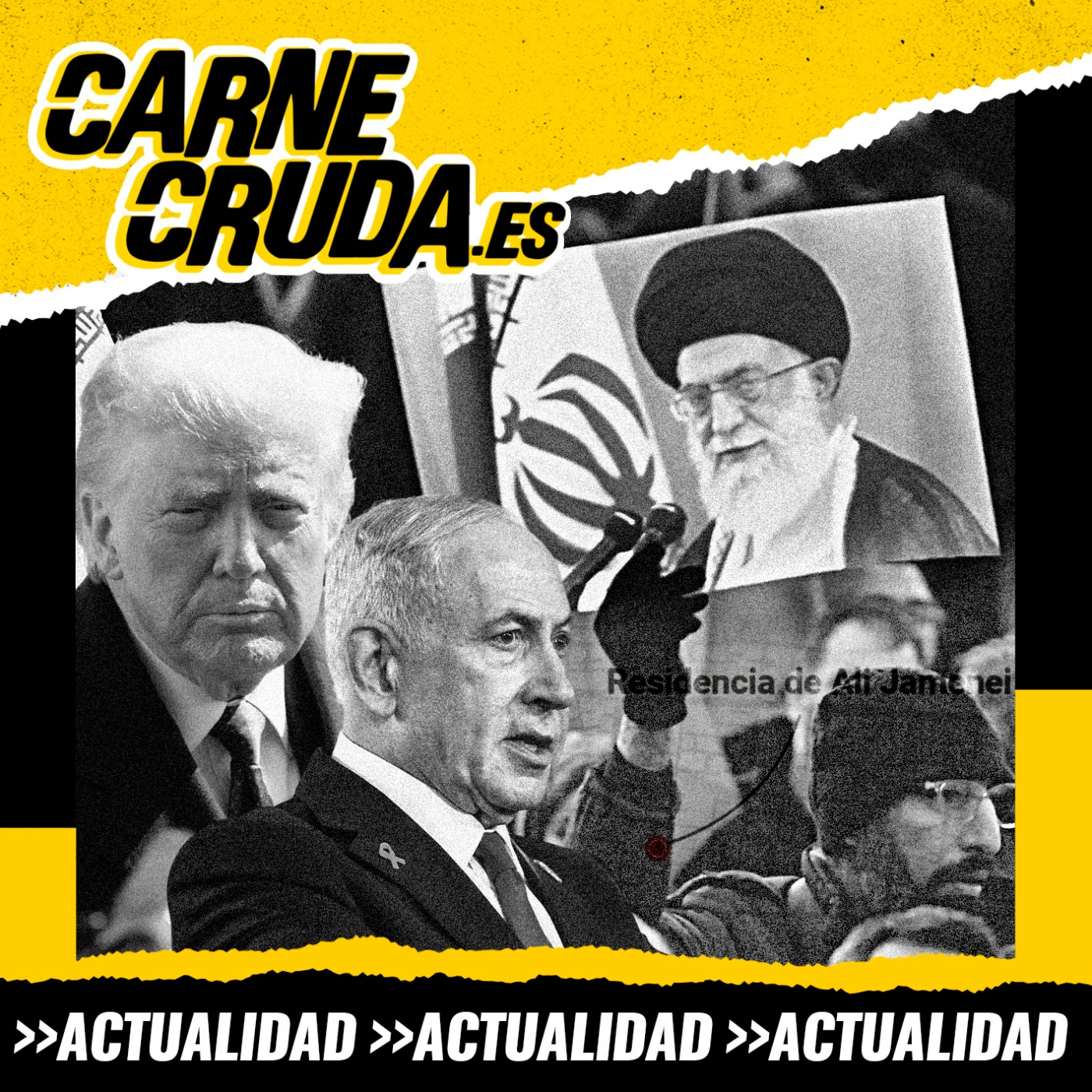
Evidentemente los acontecimientos de este fin de semana nos han obligado a cambiar la programación prevista y preparar este especial sobre el ataque de Estados Unidos y de Israel sobre Irán.
- [00:09]
Co-presentador / Moderador
Por eso recordamos que para hacer periodismo independiente y programas especiales como el de hoy necesitamos tu ayuda. Si puedes, hazte productor o productoraencarnecruda es.
- [00:17]
Presentador Principal
Hoy analizamos qué ha pasado en Irán y qué puede pasar en el mundo.
- [00:22]
Analista Crítico / Comentador Político
El antiguo líder supremo de Irán, el ayatolá Jamenei, ha muerto. Este hombre miserable y vil ha tenido la sangre de cientos e incluso miles de estadounidenses en sus manos y ha sido responsable de la matanza de miles de personas inocentes en muchos países.
- [00:49]
Presentador Principal
Estados Unidos e Israel atacaron este sábado Irán y acabaron con la vida de su líder desde 1989, el ayatolá Jamenei y parte de su cúpula.
- [00:57]
Co-presentador / Moderador
Trump y Netanyahu ordenaron la ofensa a plena luz del día cuando fueron informados por sus servicios de inteligencia de una reunión de los mandos del régimen iraní en la que estaba Jamen.
- [01:09]
Presentador Principal
El ataque ilegal, para el que Trump no pidió permiso a su Congreso, como tampoco lo hizo en la operación en Venezuela, se produce en mitad de las negociaciones en Ginebra, Suiza, para prohibir armas nucleares a Irán.
- [01:19]
Analista Crítico / Comentador Político
Nuestro objetivo es proteger a los estadounidenses eliminando las inminentes amenazas del régimen iraní.
- [01:26]
Co-presentador / Moderador
La operación, bautizada como Furia épica por Estados Unidos y el rugido del león por Israel, bombardeó edificios oficiales e instalaciones del programa nuclear iraní en varias ciudades, matando a 555 personas, según la Media Luna Roja.
- [01:42]
Presentador Principal
También destruyó una escuela de niñas situada cerca de una base de la Guardia Revolucionaria, el ejército paralelo del régimen iraní.
- [01:51]
Co-presentador / Moderador
Un ataque verificado por medios internacionales en el que habrían muerto hasta 153 personas, entre ellas decenas de menores, según fuentes oficiales.
- [02:01]
Presentador Principal
La respuesta de la República Islámica de Irán no se hizo esperar.
- [02:08]
Co-presentador / Moderador
Desde el mismo sábado lanzaron ataques contra los países árabes que acogen bases de Estados Unidos como Qatar, Bahrein, Emiratos Árabes, Arabia Saudí, Jordania, Kuwait y Omán, en su mayoría interceptados, aunque han provocado algunas bajas estadounidenses y algunas víctimas civiles.
- [02:22]
Presentador Principal
Y en las últimas horas se ha sumado Hezbollah, la milicia libanesa aliada de Irán, que ha lanzado varios proyectiles en territorio israelí, que han sido interceptados también por Israel o han caído en zona deshabitada.
- [02:34]
Co-presentador / Moderador
La respuesta de Netanyahu no se ha hecho esperar y ha matado a 30 personas en nuevos bombardeos sobre el sur de Líbano y Beirut, donde no ha dejado de atacar casi a diario en los últimos meses.
- [02:44]
Presentador Principal
En Irán, las calles esta vez se han llenado de partidarios del régimen. Que le piden venganza a un gobierno muy contestado los últimos meses con manifestaciones en la calle de signo contrario.
- [02:59]
Co-presentador / Moderador
Recordemos que entonces Trump apoyó las protestas y ahora ha vuelto a decir que llevarán la libertad al pueblo iraní. Incluso ha ofrecido una salida pacífica a las fuerzas policiales y militares del régimen.
- [03:10]
Analista Crítico / Comentador Político
Depongan las armas y tendrán inmunidad total. Pero si no lo hacen, se enfrentan a una muerte segura.
- [03:17]
Presentador Principal
La verdad, como sabemos, es que ni a Trump, ni a Netanyahu ni a su aliado Arabia Saudí les importa la democracia en Irán, sino controlar la zona y su petróleo, eliminando y sustituyendo a un gobierno enemigo por uno bajo su control con la excusa de las armas nucleares.
- [03:32]
Analista Crítico / Comentador Político
Lo no pueden tener un arma nuclear.
- [03:36]
Presentador Principal
De hecho, el ataque de este fin de semana contradice lo que el propio Trump afirmó el año pasado después del anterior ataque a Irán.
- [03:42]
Co-presentador / Moderador
En ese momento el presidente americano afirmó que habían acabado con la posibilidad de los iraníes de construir armas nucleares que según la propia inteligencia estadounidense, no existen hoy en Irán.
- [03:53]
Presentador Principal
La amenaza nuclear es la nueva armas de destrucción masiva que sirvieron de excusa para la invasión ilegal de Irak en 2003.
- [04:00]
Co-presentador / Moderador
¿Y como entonces, cuenta con el apoyo de los aliados tradicionales, como la Inglaterra del laborista británico Starmer, la única forma
- [04:08]
Experto en Estrategia Militar
de parar la amenaza es destruir los misiles en su origen en los depósitos de almacenaje o los lanzadores de esos
- [04:14]
Ruth Ferrero Turrión
misiles
- [04:17]
Co-presentador / Moderador
o la Alemania del conservador Mers
- [04:19]
Ruth Ferrero Turrión
wie sie wissen die Vereinigten Staaten?
- [04:21]
Co-presentador / Moderador
Que ha ofrecido una vez más su apoyo al sionismo israelí, como también ha hecho Francia.
- [04:25]
Presentador Principal
La Unión Europea, dividida internamente, ha vuelto a ponerse de perfil, pero del lado del agresor.
- [04:29]
Co-presentador / Moderador
Von der Leyen ha pedido a Irán una desescalada sin nombrar el ataque previo de norteamericano e israelí.
- [04:35]
Presentador Principal
Por contra, el presidente español Pedro Sánchez ha condenado la intervención.
- [04:38]
Joan Cavacés
Se puede estar contra un régimen odioso
- [04:41]
Oyente Jose
como es el régimen iraní y estar
- [04:43]
Joan Cavacés
a la vez en contra de una intervención militar injustificada, peligrosa y fuera de
- [04:48]
Presentador Principal
la legalidad que puede tener consecuencias imprevisibles en la región y en el mundo, empezando por la respuesta de Rusia y sobre todo de China, preocupada por el petróleo iraní. ¿Como vamos a analizar con un completo plantel de voces?
- [05:01]
Analista Crítico / Comentador Político
El ataque de Estados Unidos e Israel contra Irán es ilegal y constituye lo que en derecho internacional se llama crimen de agresión. El gobierno israelí de Netanyahu lo ha denominado ataque preventivo. No hay nada preventivo en bombardear un país que no se disponía a atacar.
- [05:18]
Presentador Principal
La primera de ellas, Olga Rodríguez, periodista y analista especializada en Oriente Medio que escribía estas letras que escuchabais en nuestro medio asociado eldiario, es Olga, crudos días, crudos días.
- [05:28]
Olga Rodríguez
¿Cómo estáis?
- [05:28]
Presentador Principal
¿Por qué ahora?
- [05:30]
Olga Rodríguez
Porque ahora Irán está débil. Porque ahora Netanyahu ha conseguido por fin a un presidente estadounidense que le haga caso en su deseo de bombardear y de atacar. Irán lleva intentándolo muchos años. En 1992, por primera vez, Netanyahu decía ya que Irán podía fabricar pronto armamento nuclear. Llevamos escuchando lo mismo 30 años. Pero ha conseguido en Trump un tipo que le sigue la corriente a quien más le beneficia esto es a Israel. Trump ha dicho muchas veces que Sheldon Adelson y su viuda le han dado mucha pasta, ellos son muy pro israelíes y que tiene que cumplir. Lo ha dicho textualmente. Por ejemplo, lo dijo en el parlamento israelí hace unos meses. Esta es una de las razones. Es la continuación de ese proyecto de Israel buscando reforzar su hegemonía regional. Y Trump le sigue el rollo.
- [06:21]
Presentador Principal
¿Y en las negociaciones que estaban teniendo lugar en Suiza eran en realidad una cortina de humo?
- [06:28]
Olga Rodríguez
Pues lamentablemente parece que sí. Hay cuestiones muy diferentes a la invasión de Irak en 2003, pero hay cuestiones que se parecen mucho y esta es una de ellas. En 2003 nos marearon con las armas de destrucción masiva y luego también se sacaron de la manga la asistencia de unos misiles Scud. Estuvimos hablando desde Bagdad de ojivas, muelles, en fin, un sinfín de cuestiones de estas características. Y ahora ha sido algo similar. El pobre ministro exterior es omaní de Omán, que ha estado como mediador y con muy buenas intenciones. Llevaba todas las semana pasada diciendo que había grandes avances, que se podía alcanzar un acuerdo mañana mismo, que Irán estaba dispuesto a comprometerse a nunca más acumular más uranio para poder fabricar armamento nuclear, a dejar la entrada, permitir la entrada de inspectores de la Organización Internacional de la Energía Atómica. Pero esto no importaba. Mientras estaban acumulando portaaviones, tropas y estaban preparándose para ello, no querían un sí. No querían un sí. El sí les venía mal.
- [07:26]
Presentador Principal
Hemos analizado. Has analizado el porqué, el cómo en esas negociaciones que se estaban produciendo era en realidad una excusa para ir preparando el ataque. ¿Pero para qué? Dices que no es la libertad ni por supuesto acabar con una amenaza.
- [07:40]
Olga Rodríguez
Esto no tiene que ver ni con el programa nuclear ni con dar libertad a un pueblo. Ya sabemos bien que ni Israel ni Estados Unidos se deberían atrever a proclamar eso. Quizás haya gente que olvide la historia, pero otras muchas personas no la olvidamos. Y conocemos bien qué ha pasado en los últimos 30 años y cómo en nombre de la libertad se han hecho auténticas barbaridades que además han abierto la caja de los truenos y el infierno en muchas zonas del mundo. Lo que hay detrás es una búsqueda de reforzar la hegemonía regional de Israel para poder afianzar su anexión ilegal de territorios palestinos, sirios, libaneses e incluso más allá. Y por parte de Estados Unidos, llevarlo de la mano y estar apoyando a Israel. Y también poder tener acceso a yacimientos y a rutas de gas y de petróleo en la región con ese estrecho de Ormuz que controla Irán y que puede cerrarlo, como ha anunciado ya el sábado que lo cerraría Estados Unidos. Y Trump tiene un afán por controlar los flujos y los precios del petróleo, por reforzar el petrodólar. Tenemos que recordar que Irán vende el 13,4 de las importaciones de petróleo de China. Y se lo vende en moneda china o a cambio de inversión en infraestructuras. Es decir, ahí no hay rastro del dólar. Eso no le gusta a Trump. Todas estas cuestiones están ahí. Y por supuesto, en un año electoral en Israel, a Netanyahu esto le puede venir muy bien. Y Trump lo contempla como una manera más de poder obstaculizar el crecimiento de China.
- [09:10]
Presentador Principal
Son razones muy similares a las que analizaba en el diario Público. Nuestra siguiente invitada
- [09:17]
Experto en Estrategia Militar
es una operación cuidadosamente planificada que persigue un triple objetivo estraté El primero, degradar las capacidades militares iraníes para favorecer una desestabilización interna que permita eventualmente un cambio de régimen. El segundo objetivo es consolidar la supremacía israelí en Oriente Medio. El tercero es doméstico. Tanto Netanyahu como Trump afrontan un año electoral complejo. La tentación de utilizar la escalada militar como herramienta electoral es tan vieja como
- [09:47]
Co-presentador / Moderador
peligrosa es Ruth Ferrero, profesora de Ciencia Política en la Universidad Complutense de Madrid e investigadora de Relaciones Internacionales.
- [09:55]
Ruth Ferrero Turrión
Crudo Díaz Ruz Buenos días, ¿Cómo estáis?
- [09:57]
Co-presentador / Moderador
¿Qué posibilidades de éxito tienen Washington y Tel Aviv en cada uno de esos objetivos que tú desgranabas?
- [10:02]
Ruth Ferrero Turrión
En relación con la primera premisa que era la de aprovechar, como decía ahora Olga, debilitar, aprovechar la debilidad del régimen iraní. Bueno, pues intentar efectivamente darle la puntilla, debilitar incapacidades militares. Lo primero es atacar no tanto los recursos nucleares iraníes que en principio nos habían dicho que el año pasado ya habían sido muy dañados o estaban muy dañados, sino sobre todo controlar los hilos de los misiles balísticos, que es precisamente lo que está utilizando en este momento Irán para regionalizar el conflicto. La idea era que efectivamente esos misiles podían atacar en algún momento con éxito a Israel y por tanto había que desactivarlo. Esa es una de las primeras cuestiones. La segunda tiene que ver con ese cambio de régimen. Yo ahí diría que viendo un poco el éxito o el pseudo éxito que según Donald Trump ha tenido en Venezuela intentado algo similar, y de hecho las declaraciones de ayer por la tarde apuntaban un poco en esa dirección, parece que se quieren sentar a negociar cuando se ha dado cuenta de que todos los que se iban a sentar a negociar con él están muertos bajo las bombas de este ataque. Y en relación con el tercero, y luego añadiré un cuarto que no estaba en el artículo pero que tenía que haberlo metido, en relación con el tercero, que es cómo va a impactar a nivel doméstico a estas dos grandes democracias, digo esto entre comillas, en el caso de Estados Unidos, Donald Trump ha lanzado este ataque en un momento que coincide efectivamente con la agenda de Netanyahu, pero además con la suficiente marco temporal para que no esté encima de las midterms y por tanto le dé cierto tiempo a reaccionar y a plantear una guerra que no se alargue demasiado. Y esta es una de las claves. ¿Cuánto va a durar esta guerra para poder vender algún tipo de victoria también a una opinión pública que está absolutamente dividida, su propia base maga está muy dividida, muy quebrada y donde los índices de popularidad general de Donald Trump en este momento están muy dañados? Y en el caso de Netanyahu es conseguir no ser procesado a través de la guerra. Es decir, sabe que manteniendo situaciones de crisis, de tensión y de guerra en la región en las cuales Israel está involucrado, esos procesos que le persiguen pueden quedarse paralizados de nuevo. También tenemos elecciones a final de año, en noviembre aproximadamente, octubre noviembre, y también pretende llegar con una mejor popularidad o con algún tipo de garantía de que no va a ser procesado. Y decía que quería añadir un último pilar a esto que tiene que ver un poco con la visión global de Estados Unidos. Al igual que sucedió en el caso de Venezuela, se trata no solamente de controlar los recursos petrolíferos, las energías fósiles en Venezuela también en Irán también el gas natural y sobre todo que no lo tengas a la mano China, con la intención, de nuevo, lo apuntaba también Olga, de controlar esos recursos, dejarle más aislado a China en la medida de lo posible, aunque esto es complicado. Y sobre todo, y esto es fundamental tanto en el caso de Venezuela como en el caso de Irán, que la moneda refugio sea efectivamente el dólar. Porque esto es algo que se habla de manera muy por encima, pero me parece que es ahí donde tenemos que también poner atención. Si el dólar cae, Estados Unidos cae. Y estábamos viendo un proceso de sustitución de moneda refugio en muchos escenarios hacia el yuan. Y de hecho en Europa ya empezamos a hablar o se empieza a hablar de que quizás teníamos que empezar a hacer nuestras operaciones en euros después de
- [13:57]
Presentador Principal
el por qué y el para qué vamos, con las consecuencias que esto puede tener. La operación contra Irán abre la puerta a un escenario de inestabilidad y caos con múltiples ramificaciones en la región. Y la primera escalada significativa en Líbano.
- [14:08]
Co-presentador / Moderador
Esta madrugada, el grupo milicia chií libanés Hezbollah lanzó varios misiles contra el norte de Israel en represalia por la muerte de Jamené.
- [14:18]
Presentador Principal
Y como decíamos, la respuesta de Israel no se ha hecho esperar y ha matado a 31 personas, hiriendo a 150 en ataques en el sur y en la capital, Beirut, desde donde nos escucha Joan Cavacés. Joan, crudos días.
- [14:29]
Joan Cavacés
Crudos días. ¿Cómo estáis?
- [14:31]
Presentador Principal
¿Cómo es la situación en este momento en el país?
- [14:33]
Joan Cavacés
Bueno, pues en este país se cumplen los peores temores de la población y también del gobierno. Estamos ahora mismo en un país que padece una ofensiva a gran escala por parte de Israel, que se podría decir que está haciendo lo mismo que viene haciendo en los meses anteriores de alto en Líbano, pero lo hacen a una escala mucho mayor. Hay tres regiones en concreto que están siendo en estos momentos fuertemente bombardeadas. Hablamos del sur de Líbano, recordemos, fronterizo con Israel. Hablamos de la región montañosa de la Beká, fronteriza con Siria. Y hablamos también de los suburbios de Beirut. Estos son territorios donde Hezbolá controla esas zonas. Hezbolá es la autoridad de facto, también social y política de esos territorios. Y hace apenas minutos hemos oído que ha habido una nueva oleada de bombardeos contra estos suburbios de Beirut que, recordemos, aunque a menudo se diga que son el feudo de Hezbollah, son también el hogar de 700.000 libaneses.
- [15:28]
Presentador Principal
Recordemos que Irán es el principal aliado y patrocinador de este grupo que vive horas bajas después de que Israel acabara con muchos de sus dirigentes en los últimos dos años, incluido su líder Hassan Nasrallah, en septiembre de 2024 y de que hiriera a cientos de combatientes en aquel ataque masivo a través de buskas manipulados por el Mossad. ¿En qué condiciones se encuentra y qué capacidades militares tiene en este momento el grupo chií?
- [15:53]
Joan Cavacés
Lo cierto es que se desconoce cuál es la fortaleza del grupo chií en este momento con exactitud. Ellos son muy herméticos a la hora de calibrar públicamente cuáles son sus fortalezas. Sí que se sabe que Desde octubre de 2023, cuando la milicia decidió abrir este frente contra Israel en solidaridad con la Franja de Gaza, son unos 5.000 los combatientes que la milicia ha perdido. Hay que recordar que desde la tregua de noviembre de 2024 Israel no ha dejado en ningún momento de bombardear Líbano, también matando con frecuencia combatientes de la milicia. Pero hay que recordar también que aunque los enemigos de Hezbollah, tanto dentro como fuera del país, insistan en que la milicia está en un momento de debilidad y en que hay que aprovechar para asestar un golpe definitivo contra este grupo, Hezbolá continúa a día de hoy siendo el mayor actor armado en Líbano. Lo sigue siendo más incluso que el propio ejército regular libanés. Antes de la guerra con Israel iniciada en el 23, se calculaba que eran unos 100.000 los combatientes que tenía Hezbolá. Podría ser que ahora tuviera, por decir algo, cuanto menos decenas de miles. Pero sigue siendo sin duda una fuerza temible para Israel, con algunos miles de misiles de corto y medio alcance.
- [17:09]
Co-presentador / Moderador
¿Y qué implicaciones puede tener para la región? ¿Como estaba diciendo, la entrada de Hezbollah en el conflicto?
- [17:14]
Joan Cavacés
Bueno, en primer lugar, yo creo que el objetivo de Hezbollah hoy es un poco el mismo que le motivó a abrir ese frente contra Israel en octubre de 2023. Es decir, arrastrar parte de la potencia militar de Israel hacia Líbano para apartarla de uno de sus aliados. En esa ocasión fue jamás en esta es la República Islámica. Además, la entrada de Hezbollah puede ser un indicativo de que los hutíes de Yemen, otro de los aliados de Irán en la región, también vayan a entrar de manera decidida en esta guerra. Recordemos que durante meses estos hutíes de Yemen fueron el único grupo armado de la región que continuaba disparando misiles contra territorio israelí. Lo hizo hasta que se firmó la tregua en la Franja de Gaza en octubre de 2025. Por último, también parece evidente que la entrada de estos actores refleja que para la República Islámica esto es un todo o nada. Esto es una lucha por la supervivencia. Es un régimen que se encuentra cada vez más aislado y con menos cosas que perder. Y esto, por supuesto, hace que el intercambio de golpes con esta alianza occidental israelí estadounidense se prevé que vaya a ser más fuerte de lo que la región haya visto hasta el momento. De hecho, hay que decir que Halil Arishani, uno de los altos mandatarios en Teherán, ya ha avanzado que Irán no piensa negociar con Estados Unidos y que Estados Unidos e Israel no van a conseguir nada manteniendo este frente bélico contra Teherán.
- [18:41]
Co-presentador / Moderador
¿Joan Si cae Irán, cae Hezbolá?
- [18:44]
Joan Cavacés
Lo cierto es que sí y de hecho hay que vincular ese elemento seguro con la decisión de Hezbolá de abrir hoy un frente de guerra que la mayoría de la población en Líbano no quería que sucediera. Este momento es también un momento, una lucha existencial para Hezbollah puesto que la caída de la República Islámica, que es el principal sostén de este grupo armado, político y social que existe en Líbano desde hace cuatro décadas, es también seguro un golpe definitivo no sólo a sus económico sino también al marco que ampara su existencia desde un punto de vista ideológico. Hay que recordar que Hezbolá y los seguidores de Hezbolá no son solo unos aliados estratégicos de la República Islámica, sino que la República Islámica es en sí mismo el liderazgo que ellos persiguen aunque se encuentre a miles de kilómetros de la capital libanesa, Beirut.
- [19:41]
Presentador Principal
Joan, has contado que algunos de los ataques de Irán han conseguido impactar en los países del Golfo, entre otros, los dirigidos a los aeropuertos de Kuwait y la capital de Emiratos, Dubái, lo que ha obligado a interrumpir y cancelar miles de vuelos. ¿Qué fuerza de respuesta tiene Irán contra los países de su entorno después del asesinato de su líder, Khamenei? Un hombre, por cierto, recordemos que estaba enfermo y que había indicado que podía llegar a dejar el poder antes de ser asesinado.
- [20:08]
Joan Cavacés
Pues tampoco se sabe de lo cierto. Hay muchas especulaciones. Lo cierto es que Irán, en estos últimos dos años de guerra en la región, ha habido varios momentos que los observadores han estimado que se estaba reservando buena parte de su arsenal o buena parte de sus golpes. Por ejemplo, todos recordamos en abril del año pasado, cuando hubo esta contienda de pocos días de duración con el Estado de Israel, cómo telegrafió el lanzamiento de 300 drones contra el Estado de Israel, en un lanzamiento que fue comunicado de manera previa. Entonces se cree y se teme que Irán tiene unas capacidades que no ha demostrado hasta el momento. Algo, por cierto, que también se cree en relación a Hezbollah, que durante la guerra con Israel de 2024 en varias ocasiones hizo volar drones por encima de bases militares o de ciudades israelíes y decidió no disparar con esos drones. Eso, por supuesto, es un mensaje hacia el Estado de Israel. En este momento hay que ver, o está por ver, si tanto Irán como Hezbolá deciden apostar fuerte y utilizar sus plenas capacidades militares o si continúan por el momento dirigiendo buena parte de sus hostilidades contra estas monarquías del Golfo en un intento aparente de presionarlas para que ellas, a su tiempo, intentan convencer a EEUU de que esta guerra no va a ser de provecho para nadie en la región.
- [21:34]
Presentador Principal
Joan Cavacés, como siempre, muchísimas gracias. Es un gusto escucharte y sobre todo ahora cuídate mucho por allí, por Beirut.
- [21:40]
Joan Cavacés
Un abrazo desde Beirut a todos vosotros. Gracias.
- [21:44]
Co-presentador / Moderador
Aunque el objetivo de los bombardeos de Irán en los países del Golfo eran las bases estadounidenses, también han supuesto pérdidas civiles, el cierre del espacio aéreo y muchas preguntas como nos contaba este oyente.
- [21:55]
Oyente Jose
Hola, muy crudos días desde Bahrein, mi nombre es Jose. Lo primero que quiero decir es que las familias y amigos de españoles residentes en el Golfo solamente sigan medios oficios y que no hagan caso de absolutamente nada que escuchen de cryptobros ni de concursantes de MasterChef. Tanto los gobiernos locales como las embajadas nos están tratando y nos están informando bastante bien de absolutamente todo. Y lo segundo decir que aquí la situación es bastante inestable. Hay momentos de bastantes bombardeos y hay momentos de tranquilidad, lo cual nos deja en una situación bastante tensa continuamente. No podemos obviamente dormir bien, no podemos descansar, estamos en una tensión constante, pero sabemos que en el momento en el que se pueda, nos abrirán algún salvoconducto, nos abrirán forma de salir. Yo como español, afortunadamente mi pasaporte me permitiría salir de aquí, del país por tierra, pero no puedo dejar a mi pareja, que es una de las personas afectadas por no tener visado en países aledaños. Y bueno, ahora mismo es imposible conseguirlo. Es bastante frustrante que un solo papel nos separe probablemente de la vida o la muerte. Así de duro suena.
- [22:56]
Co-presentador / Moderador
Desde aquí mandamos ánimo y suerte a este oyente, a José Olga. ¿En qué lugar quedan ahora países como Bahréin, Emirato Árabe, Jordania, Kuwait?
- [23:04]
Olga Rodríguez
Bueno, yo esta mañana hablaba con amistades, todos estos países que has mencionado, no sé si nos hacemos una idea aquí de cómo se está viviendo esto. Esto no es algo que haya ocurrido normalmente, es toda una región padeciendo una escalada con mucha incertidumbre y con muchos riesgos. Por lo tanto hay muchísima tensión. No debemos olvidar que Irán además ha lanzado también dos ataques simbólicos contra una base francesa en Emiratos y una base británica en Chipre, suelo europeo. Y esto lleva un mensaje implícito claro, tenemos una situación muy diferente a la de 2003. Tenemos una Francia y una Alemania que están diciendo sí en 2003 dijeron no a la guerra, ahora están diciendo lo contrario. Más las consecuencias que pueda tener indirectas en la población, más allá de lo que está sufriendo la población en toda la región con con el miedo y el temor lógico, sino qué puede pasar a la población europea. Por ejemplo, de momento ya hemos visto como hoy ha subido algo la gasolina. ¿Qué más puede subir? ¿Puede subir la luz? Estamos hablando del estrecho de Ormuz, que es una vía comercial muy importante por la que pasa el 20% del comercio de petróleo del mundo, e Irán el sábado ya dijo que lo cerraba. Esto va a poder tener consecuencias en el mapa global, porque estamos viendo que pasan cosas en diferentes lugares del planeta. Pero están interconectadas. Los objetivos de los que hablábamos al principio de Estados Unidos son los mismos en todas partes. En enero de este año Trump, cuando lanzó el crimen de agresión con los bombardeos y el secuestro de Nicolás Maduro en Venezuela, también lo concibió, más allá de los intereses vinculados a Venezuela, como una forma de asegurarse acceso a reservas de petróleo venezolanas en caso de que posteriormente se produjera un ataque contra Irán y se cerrara el estrecho de Ormuz y subieran los precios del petróleo.
- [25:08]
Presentador Principal
Como ha ocurrido.
- [25:09]
Olga Rodríguez
Como ha ocurrido. Más allá de que incluso fuentes de Washington señalan que también se concibió como un entrenamiento militar para el ataque posterior contra Irán, como la invasión de Panamá en 1989, se concibió también como un entrenamiento para el ataque posterior contra Irak en 1991. Lo que pasa que, bueno, aqu explicado bien, que no es lo mismo Venezuela que Irán por muchísimas razones. Irán es un estado muy debilitado. Israel quiere debilitarlo y fragmentarlo mucho más. Saddam Hussein ya decía que el sueño ideal eran 5 mini irans en vez de un gran Irán, un país que tiene casi 100 millones de habitantes a día de hoy. Pero por muy debilitado que esté, sí que tiene unas estructuras y unos planes de sucesión muy específicos y muy atados, como hemos podido ver asesinado a Jamenei, el primer asesinato directo, sin disimulo por parte del ejército estadounidense con Israel en más de 100 años. Y tras él nos ha derrumbado el régimen. Por lo tanto, en las próximas semanas pueden pasar muchísimas cosas con muchos riesgos. Esto es jugar con fuego. Y creo que es muy legítimo preguntarnos aquí desde ¿Esto interesa a Europa? Porque esto es un plan, el plan de Israel. ¿Esto interesa a Europa o nos va a perjudicar como suelen perjudicar este tipo de aventuras militares ilegales?
- [26:31]
Presentador Principal
A eso llegaremos después, pero antes queremos seguir analizando lo que pasa en esa zona.
- [26:35]
Co-presentador / Moderador
Sí le pregunto a Rut por el papel de Arabia Saudí en esta intervención,
- [26:39]
Ruth Ferrero Turrión
bueno, parece que está trascendiendo que efectivamente Arabia Saudí e Israel fueron los que presionaron a EEUU contra los asesores precisamente en materia de seguridad e inteligencia de EEUU, que decían que no iba, que no había ningún riesgo en este momento de ataque de Irán. Por tanto, no se trataba de un ataque preventivo, sino que esto ha obedecido a inter de potencias regionales o potencias medias regionales, como es el caso de Arabia Saudí, y que han conseguido convencer, hacer una pinza entre Israel y Arabia Saudí a Estados Unidos para forzarle a colaborar. De esta manera se junta el principal ejército mundial que es Estados Unidos, con la principal fuerza en materia de inteligencia y tecnología que es Israel, máquina de matar, como muy bien sabemos, probada además en el terreno de manera eficaz ante la impasividad de la comunidad internacional. Y algo que, siguiendo un poco el hilo de lo que planteaba Olga, que me parece que es relevante, es que otra de las diferencias entre Venezuela e Irán es que en el caso de Irán hay una capacidad que es muy evidente de internacionalización del conflicto. Venezuela no. En Venezuela ha quedado todo mucho más acotado a la cuestión del Estado, del control del gobierno, etcétera. Irán es muy diferente, es mucho más grande, tiene una capacidad mucho mayor de desestabilizar, no solo a nivel regional, sino también, como vamos a ir viendo probablemente los próximos días y semanas, a nivel internacional también con las derivadas que tienen que ver con las alianzas con China y también, por qué no decirlo, con Rusia, que ha perdido otro de sus grandes aliados a nivel global ante este estancamiento que tiene, ese empantanamiento que tiene también en el caso de la guerra de Ucrania. Y por tanto, yo creo que ahí una de las características esenciales es cómo se está demostrando, y creo que lo decía Joan antes, la capacidad ingente militar que tiene Irán, que hasta ahora estaba controlándola de manera muy meditada y que ahora mismo ha ido a la guerra total y sacando todo lo que tiene, porque esto ya se trata de una lucha existencial del propio régimen de los ayatollah.
- [28:58]
Presentador Principal
Antes de ir a esas derivadas internacionales que van más allá del territorio de la zona, queremos hablar de esa posible internacionalización en la región. En la vecina Pakistán han sido reprimidos brutalmente los apoyos de la población al régimen de los ayatolás.
- [29:12]
Co-presentador / Moderador
Al menos 22 personas murieron y otras 120 resultaron heridas en las protestas proiraníes ante el consulado de Estados Unidos en la ciudad de Karachi.
- [29:20]
Presentador Principal
Allí está Irene Martínez, que es profesora de Geopolítica en la Universidad Aga Khan. Es experta en Irán y en la región del Golfo. Irene Cruz, dos días.
- [29:28]
Rima Sher Mohammadi
Hola.
- [29:28]
Irene Martínez
Hola, buenos días.
- [29:29]
Presentador Principal
Lo primero, ¿Qué ambiente se respira allí en Pakistán y qué papel puede jugar y qué papel juega en el resto de países del entorno?
- [29:37]
Irene Martínez
Bueno, actualmente en Pakistán esto se mira con temor, pero siempre con la vista puesta un poco al eje regional. Pakistán ahora mismo se encuentra también sumido en una batalla en el norte con Afganistán. Entonces esto les ha pillado un poco a contrapiétarse. Es verdad que se sigue todo, pero hay una calma tensa, no ha pasado nada más. Pero también esto era previsible porque al final Pakistán tiene la segunda comunidad chi más grande del mundo después de Irán. Entonces tampoco es sorprendente que haya movimientos a nivel social aquí en Pakistán.
- [30:11]
Presentador Principal
¿Y los países del Golfo Pérsico que han sido atacados pueden revolverse de alguna forma contra Irán? ¿Se podría producir una guerra regional?
- [30:21]
Irene Martínez
Bueno, desde el punto de vista regional, es verdad que hay una alianza estratégica que se firmó hace relativamente poco entre Pakistán y Arabia Saudí, con lo cual esto sí que es importante, porque a nivel disuasorio sería una cosa importante para tener en cuenta si Irán decide seguir atacando a Arabia Saudí, porque podrían arrastrar a Pakistán a un conflicto regional al cual Pakistán por ahora no está interesado en entrar. Luego a nivel regional con los demás países árabes, obviamente la situación de muchísima tensión porque esto les está provocando pérdidas económicas millonarias cada día que los países están cerrados. No solo el espacio aéreo está cerrado, la economía está cerrada. Al final esto también afecta a la reputación de los países, los inversores. Esto tiene un desgaste muy grande para los países árabes, que es un poco lo que cuenta Irán.
- [31:12]
Presentador Principal
Hablemos de lo que va a ocurrir dentro de. Lo que escucháis. No es una risa, es un lloro. Este sábado un presentador de la televisión estatal iraní confirmaba entre lágrimas la muerte del líder del régimen 40 años después de llegar al poder.
- [31:36]
Co-presentador / Moderador
El régimen declaraba 40 días de luto nacional. Y mientras una parte de la sociedad lloraba la pérdida de la ayatolá, miles de personas salían a las calles de varias ciudades del país para celebrarla. El régimen vive protesta recurrente desde 2009. Se calcula que en enero murie unas 7.000 personas en las manifestaciones por la pésima situación económica y por la corrupción generalizada. Irene, ¿Es posible que veamos un enfrentamiento civil en las calles de Irán?
- [32:00]
Irene Martínez
A ver, al final son 47 años en los que la revolución islámica ha creado todas las instituciones del Irán moderno. Forma parte al final de todo el estado de Irán. Ver una oposición coordinada civil en Irán es algo que es bastante improbable porque no han tenido nunca la capacidad ni siquiera de coordinarse dentro de Irán. Ha habido manifestaciones que han sido, como hemos visto durante muchísimos años, aplacadas con mano de hierro. Pero a día de hoy, saber que hay una oposición coordinada dentro de Irán, la mayoría de analistas pensamos que eso no existe.
- [32:47]
Presentador Principal
Poco después de que se confirmase la muerte de Jaminei, se contó que se había designado el Consejo del Liderazgo, un triunvirato con el presidente, el jefe del poder judicial y un líder islamista que dirigirá el país hasta la elección de un sucesor. ¿Crees que estarán dispuestos a dialogar con Donald Trump?
- [33:03]
Irene Martínez
Bueno, el caso de que haya un triunvirato es muy importante porque de esta manera también crean una deslocalización del poder. Entonces es muchísimo más difícil volver a atacar al poder, porque ya son tres. Además, por lo último que se ha visto, el poder de comunicación se ha separado un poco del comando a nivel militar, con lo que no hay tanta coordinación entre los tres. Y esto también ha dado paso a que haya confusión. Por ejemplo, por un lado es verdad que ha habido un ataque a Omán, pero por otro lado, la rama diplomática, el brazo diplomático de Irán, sí que se ha intentado poner en contacto con la diplomacia omaní para ver qué podían sacar de ahí. Entonces, a día de hoy, yo creo que la estrategia de Irak primero es la contención a nivel interna, estabilidad interna sobre todo, bloqueo de cualquier movimiento social, y luego también imponer costes a nivel regional. Porque si esta guerra se vuelve muy cara para todos los actores de la región, puede tener muchas consecuencias y se pueden volver a replantear la situación de la guerra no sólo para Israel y para Estados Unidos sino también para todos los actores regionales.
- [34:16]
Presentador Principal
Para aclarar algo de lo que acaba de hablar Irene, Omán era el país negociador en Ginebra, donde se estaban produciendo esas negociaciones entre Estados Unidos e Irán.
- [34:27]
Co-presentador / Moderador
Quien sí se ha postulado desde fuera es el hijo del Shah Reza Pahlabi, exiliado desde el derrocamiento de su padre por la revolución islámica del 79.
- [34:36]
Analista Crítico / Comentador Político
El presidente de Estados Unidos está ayudando al pueblo. La ayuda que prometió a Irán ha llegado. Es una intervención humanitaria.
- [34:43]
Co-presentador / Moderador
¿Qué posibilidades reales tiene? ¿Con qué apoyos cuenta dentro y fuera del país este descendiente de la monarquía?
- [34:49]
Irene Martínez
Pues a nivel fuera del país, externo, está claro que cuenta con muchísimo apoyo por parte de la diáspora iraní. No con todo el apoyo, por supuesto, pero con muchísimo, si. Luego a nivel interno, esta es la gran cuestión. ¿Cuánto apoyo tiene ahora mismo dentro de Irán? Es una incógnita, porque al final casi todo lo que viene de Irán es una incógnita. El control es muy férreo. Es verdad que han habido movimientos en redes sociales a favor del Shah, pero contabilizar y poder de alguna manera saber cuál es el apoyo real que existe en Irán al Shah, yo creo que es una incógnita bastante, bastante grande.
- [35:35]
Presentador Principal
Y la incógnita fundamental es que si el régimen podrá resistir después de 45 años. ¿Tú qué crees, Irene?
- [35:42]
Irene Martínez
Bueno, el régimen es Irán. Al final la revolución islámica, creó el Irán moderno, son todas las instituciones iraníes. Entonces la Guardia Revolucionaria está en modo supervivencia. No es solo la supervivencia de Irán, es la supervivencia del régimen.
- [35:59]
Ruth Ferrero Turrión
Total.
- [35:59]
Irene Martínez
No tienen. Es una salida hacia adelante porque no tienen otra opción. ¿Qué opción les queda entonces? ¿Van a seguir adelante? Claro que van a seguir. ¿Van a intentar negociar? Depende un poco de su situación estratégica. Por ahora la situación estratégica es de ganar más tiempo, porque esto les da quizás más tiempo para reorganizarse y también para causar más costes regionales que quizás puedan poner más presión ahora mismo dentro de la guerra. También la cuestión de intentar mover a todas sus milicias en la región para desestabilizar los focos y para no centrar el foco de la guerra dentro de Irán, que también es muy importante para ellos, sino que asestar golpes fuera de Irán para mover la guerra fuera de su propio país.
- [36:46]
Presentador Principal
Irene Martínez, muchísimas gracias.
- [36:48]
Irene Martínez
Gracias a vosotros.
- [36:50]
Co-presentador / Moderador
Tenemos al teléfono a Rima Sher Mohammadi, traductora y activista de origen iraní, residente en Barcelona, que trabaja a favor de las mujeres y las personas refugiadas. Está a punto de coger un avión, pero no atiende porque queremos saludarla a Rima Cruz. Dos días.
- [37:04]
Rima Sher Mohammadi
Hola, buenos días.
- [37:05]
Co-presentador / Moderador
¿Cómo estás viviendo tú lo que está sucediendo en tu país de origen? No sé si has podido hablar con familiares y gente allí. ¿Qué te están contando?
- [37:12]
Rima Sher Mohammadi
No hay conexión de Internet, con lo cual todo tipo de comunicación está interrumpida. He recibido ayer un SMS, pero realmente un medio a través del cual no puedo recibir información por ahora no existe. Y me consta que en algunas partes del país ni para SMS no hay absolutamente ningún tipo de medio. Y realmente lo vivo con mucha preocupación porque todos sabemos que en momentos así, si ya en las protestas en las que salieron tantos iraníes a las calles, ya ha habido una auténtica masacre donde el Estado, donde el régimen iraní, el propio Estado se ha levantado contra su propia gente una vez más. Masacrarlos, a detenerlos, a condenas de ejecuciones. El mismo portavoz del poder judicial dijo que más de 10.000 casos legales habían abierto de los 50.000 detenidos que ha habido. Digamos que el país, la sociedad no ha podido levantar cabeza de eso que le ha llegado este episodio del bombardeo, donde finalmente la comunal internacional sí está hablando de ir. Curioso que durante las protestas nada, pero a la mínima que hay algún discurso de Trump o alguna situación como el drama actual que estamos viviendo, que ya está afectando a más países que Irán, entonces sí que se habla. Y entonces sí que. Por eso digo que me preocupa mucho mi gente, porque veo que cuando lo hacen de una manera tan pacífica, queriendo el cambio, nadie les hace caso.
- [38:54]
Presentador Principal
Sobre esto quería preguntarte. Tú has trabajado, lo hemos dicho antes, con mujeres sinaníes, incluida la premio Nobel de la Paz Siren Ebadi. Las mujeres han protagonizado y encabezado muchas de las protestas contra el régimen. ¿Crees que aprovechando esta debilidad esas protestas populares podrían hacerlo caer?
- [39:11]
Rima Sher Mohammadi
¿Es tan difícil realmente ahora decir algo con absoluta certeza de que no va a ser así? No hay que olvidar que hay muchísima represión ahora mismo. Ayer mismo decía un una organización de derechos humanos que están llevando a los detenidos, a los presos que aún no han sido juzgados, les han llevado a lugares donde saben que habrá algún ataque. Estamos hablando de ese tipo de Estado y también sabemos por patrones, por otras protestas, que hay un patrón que se repite, que en momentos así la represión aumenta dentro del país. Honestamente ahora mismo lo dudo, pero Irán siempre nos ha mostrado que hay maneras increíbles de llevar a cabo la voluntad. Realmente la ciudadanía sale antes de la propia intervención de Estados Unidos. Recuerda hablar con un periodista y decirle desde 10 universidades de Irán, los universitarios han salido a la calle y me apena que no lo veo en ningún medio de comunicación de aquí de España, teniendo en cuenta que saben qué es lo que les espera cuando salen a la calle.
- [40:23]
Co-presentador / Moderador
¿Qué piensas tú de la intervención militar de Estados Unidos e Israel?
- [40:27]
Rima Sher Mohammadi
Yo personalmente no estoy de acuerdo con. No creo que la solución. La democracia no sale de una guerra. Pero pongo un pero en mayúsculas. Aquí tampoco se me ocurre una respuesta cuando alguien me dice bueno, y cuando la gente ha salido una, dos, cuatro, cinco, siete veces de manera pacífica, cada vez más personas, cada vez más sectores, cada vez más lugares del país y les han masacrado, han disparado contra los niños, han disparado contra los ojos de las mujeres que han salido, ha habido detenciones. Irán es el país con mayor número de ejecuciones solamente de lo que llevamos de año. Más de 400 ejecuciones ha habido en el gobierno de reformista Pérez Khan. Lo digo porque alguien me decía hoy que el reformista parece ser que sea más moderado, queriendo decir que seguramente algo bueno habrá pasado en el país. Pues ahí dejo el dato, que cada cual juzgue. Cuando ha habido todo eso y nadie ha hecho nada, ni el Consejo de Seguridad de Naciones Unidas, ni la comunidad internacional, ni la Unión Europea, nadie ha hecho absolutamente nada. ¿Qué se puede hacer realmente? ¿Quién va a ir a rescatar a esa gente? ¿Y quién les va a hacer caso? Yo ante esa pregunta no sé qué responder. Honestamente no sé qué responder. Ahí me quedo en que bueno, yo cuando le digo a mis amigos que están a favor de la intervención, les digo esto y me dicen rimanosas, tan utópica y romántica. Mira el país, mira la historia y si han masacrado a más de 50.000 y nadie ha sacado eso en ningún titular. ¿Tú realmente crees que alguien que la gente de por sí sola podría llevar el cambio, podría hacer algo? Yo creo que sí, pero realmente contando con los mecanismos que tenemos y con los que pensamos que tenemos. Tenemos mecanismos, tenemos instituciones que nosotros mismos como ciudadanos del mundo hemos establecido porque venimos una lectura de la historia y la crisis que ha habido en el mundo, las guerras mundiales que hemos tenido y hemos creado estas instituciones para que realmente actúen en momentos de ese tipo. Pero si realmente a la hora de la verdad tienen las manos atadas porque hay el derecho al veto y demás, entonces nosotros mismos estamos creando también un sistema en el que los aliados de los dictadores tienen también algo que decir. Entonces siempre serán los ciudadanos los que pagarán el precio.
- [43:10]
Co-presentador / Moderador
Nosotras desde aquí seguiremos haciéndonos estas preguntas que tú planteas y también creemos que sí, que deberían ser los propios iraníes y las iranías las que decidan sobre su país. Rima SHER Mohammad Muchísimo ánimo y muchas gracias por atendernos hoy.
- [43:21]
Rima Sher Mohammadi
Muchísimas gracias a vosotros.
- [43:23]
Presentador Principal
Un abrazo y buen viaje. Vamos ahora sí con las reacciones y derivadas en el resto del mundo más allá de la región.
- [43:30]
Experto en Estrategia Militar
No necesitamos otra guerra en esta región, ya tenemos muchas. Es cierto que Irán está en su punto más débil hasta ahora y realmente deberíamos aprovechar este momento para encontrar una solución diplomática.
- [43:42]
Presentador Principal
Esto decía la portavoz de la Unión Europea, Kayakalas, y lo decíamos al inicio.
- [43:46]
Co-presentador / Moderador
La Unión Europea como conjunto llama a la contención sin entrar a valorar los ataques de Estados Unidos e Israel. Pero las tres grandes potencias, Reino Unido,
- [43:54]
Presentador Principal
Alemania, Isla nous devons multiplier les initiatives pour que les questions.
- [43:58]
Co-presentador / Moderador
Han decidido sumarse militarmente a la operación para defender sus intereses en Oriente Medio para acabar con las capacidades de Irán, aunque aclarando que no fueron avisados por Estados Unidos de la operación inicial.
- [44:08]
Presentador Principal
La presidenta de la Comisión Europea, Úrsula von der Leyen, sentará hoy a su gabinete entre críticas por la lentitud de la toma de decisiones, pero ayer escribió en sus redes que la respuesta iraní es injustificada e inaceptable. ¿Qué os parece? ¿Qué te parece, Olga? La tibia reacción de la Unión Europea, que siempre parece estar fuera de juego, a la que las noticias siempre llegan tarde y cuando se pone, se pone o de perfil o del lado de los agresores.
- [44:32]
Olga Rodríguez
Fuera de juego o no tan fuera de juego porque realmente está cerca de Israel. Se ha empeñado mucho durante dos años y pico de genocidio en no suspender el acuerdo preferencial comercial con Israel. Por cierto, ¿Alemania fue avisada por Israel previamente del ataque?
- [44:50]
Presentador Principal
Sí, pero siempre va a la zaga de lo que decide Israel. Israel no llama a la Unión Europea para pedirle permiso, por descontado.
- [45:00]
Olga Rodríguez
Me refería a que ahí están cuadrándose y dispuestos siempre a seguir el guión de Israel y de Estados Unidos. ¿Dónde deja esto a la Unión Europea? Porque cada vez está más debilitada también por estas razones. ¿Entonces? Bueno, pues ahora estamos viendo cómo se han cuadrado. Alemania, Francia, el llamado e Alemania, Francia y Reino Unido están dispuestos a participar en esta guerra. De hecho, Reino Unido ya ha facilitado ayuda militar en este sentido. Y esto es muy preocupante. Es que es terrible, porque el problema es que estos que aquí en Occidente hablan de los derechos y de las libertades también tienen aliados que son dictaduras. Es decir, en la región tenemos varios gobiernos autoritarios en Oriente Próximo, que son los grandes aliados de Estados Unidos, grandes aliados de Europa. Entonces esto no va lamentablemente de derechos y libertades, la paz y la armonía no llega a través de las bombas, esto va de otra cuestión. Y realmente hay un interés por parte de Israel en crear esa fragmentación de Irán y el caos, porque en un escenario de enfrentamiento perpetuo y de caos, e incluso de guerra civil, que es lo que desearían, Irán se debilita. Por lo tanto Israel, que tiene diez veces menos población que Irán, puede reforzar su hegemonía regional y consolidar sus planes neocoloniales y de anexión. Hay otra cuestión, creo que muy a menudo, bueno, dos cuestiones muy rá cuidado con todas las informaciones, entre comillas, que salgan estos días, hay que comprobarlas. Hace dos semanas o tres, cuando Trump se frenó y finalmente no atacó Irán, hubo incluso informaciones en medios de comunicación estadounidenses que decían que es que Israel la había convencido para no atacar, lo cual cuidado, porque en un escenario de régimen de guerra hay mucha propaganda. Entonces nos acogemos a los hechos, a lo que es tangible, a lo que va ocurriendo y por supuesto a los análisis y proyecciones sensatas. Pero hay muchas cosas que tenemos que coger con pinzas porque no todas pueden ser reales. Ya sabemos que la primera víctima en estas cuestiones es la verdad. Y en segundo lugar, rápidamente las consecuencias. Entendemos muy bien causa consecuencia cuando hay bombardeos y muertos, pero ojo, que en geopolítica, en las relaciones internacionales, en la política en general, en el mundo, hay muchísimas consecuencias que no ocurren inmediatamente, son consecuencias a medio y largo plazo. Incluso a veces ocurren cosas que no entendemos por qué ocurren. Pero cuando se juega con fuego, como se está jugando en estos momentos, bueno, me estoy acordando de Bus aquí no hay una invasión, pero hay un ataque ilegal. Me estoy acordando de Bush en 2003 cuando anunció el fin de la guerra de Irak, que había durado, según él, solo unas semanas y había sido limpia, breve y estupenda, y aquello no había hecho sino empezar
- [47:51]
Presentador Principal
a uno de los grupos terroristas más longevos y más letales que hay ahora mismo en el mundo. Precisamente sobre esa posible intervención e invasión en el territorio, quería preguntarle a Ruz, teniendo el apoyo de Reino Unido, Francia y Alemania, teniendo el apoyo por supuesto de Israel, Estados Unidos, ¿Se podría plantear la entrada en el territorio iraní Donald Trump?
- [48:12]
Ruth Ferrero Turrión
Eso no se lo puede permitir en términos de opinión pública ni en términos de base. Maga lo comentaba antes, cómo está ya muy y muy dividida la opinión pública estadounidense. De hecho salían unas encuestas de opinión la semana pasada ya planteando un cambio en las tendencias demoscópicas en Estados Unidos en el posicionamiento en relación con Palestina, por ejemplo, algo que era inédito y ha sido histórico. Y esta mañana salían de nuevo encuestas urgentes realizadas por Ipsos en Estados Unidos que también planteaban que una buena parte de la opinión pública estadounidense estaba en contra de esta intervención. Por tanto, de momento estamos en una deriva hacia un régimen controlado por Trump, pero todavía estamos en régimen democrático en crisis. En el caso de EEUU no creo que vaya a poner botas en el terreno. Irán es muy complicado y por eso se esmera mucho Donald Trump en apelar a la movilización social en Irán para que sea la propia población iraní la que dé un vuelco al régimen. Y de hecho esta mañana también estaban trascendiendo noticias que me parecen bien relevantes, donde por un lado estamos viendo cómo se está bombardeando esos silos de misiles balísticos y todas las cuestiones que tienen que ver con la defensa iraní, pero también, y cuidado, todas las comisarías de policía, instalaciones que tienen que ver con la represión interna dentro del propio régimen iraní. Por tanto, no solamente Donald Trump está diciendo que quiere que sea la población iraní la que plante cara al régimen, sino que además, a través de los bombardeos también está dañando todo el aparato de seguridad interior del régimen iraní. Y en relación, si me permitís, con la posición de los europeos, me parece muy acertado lo que ha planteado Olga. No solamente estamos en una situación de fragmentación del bloque comunitario, sino que estamos viendo de nuevo alianzas intergubernamentales. Esto ya lo venimos diciendo desde hace meses, no solamente en este caso, sino en casos anteriores en donde los europeos están admitiendo su absoluta irrelevancia y donde están dando prioridad a intereses nacionales de materia económica. Es decir, si nos fijamos en los intereses nacionales franceses, tienen que ver con exportación de armamento a la zona del Golfo, a países del Golfo de los Rafael, que justamente es lo que quieren construir de manera más acelerada con el incremento del gasto en defensa. Exportaciones, por tanto, de armamento. En el caso del Reino Unido hay intereses también de tipo financiero. Las enormes inversiones de esos países del Golfo en la City. Y en el caso alemán, de exportación de industria alemana a esa región, en un momento de enorme crisis de exportación de producción Germana en general. ¿Por qué? Porque los chinos le están comiendo el terreno y necesitan tener esos mercados y atrapar esos mercados. Y, por supuesto, de intereses en materia energética con grandes inversiones de Total Energies de Francia o de BP en el caso del Reino Unido, también en la región. Eso quiere decir, y me parece que esto es muy relevante, que directamente ya los principales actores dentro del bloque europeo dan por finalizado la era del multilateralismo del derecho internacional de manera fehaciente y de manera activa. Podría animarme a ya no estamos en un momento de irrelevancia del bloque europeo, sino de la total supeditación y de la total renuncia a la defensa del orden internacional. Algo que, por cierto, también va en contra de los propios tratados de la Unión Europea.
- [52:08]
Presentador Principal
Me gusta mucho que a veces no. Necesito haceros algunas preguntas que os voy a hacer y resumir perfectamente lo que queríamos contaros y lo que queríamos que contarais a la audiencia. Como muy bien ha adelantado Ruth, en Estados Unidos el universo maga está dividido, en uno de los momentos más críticos de la presidencia de Trump, por esta nueva guerra internacional.
- [52:26]
Analista Crítico / Comentador Político
Son el principal patrocinador del terrorismo en el mundo y nosotros somos la nación más grande y poderosa, así que podemos hacer algo al respecto de sus acciones. Estas amenazas intolerables ya no continuarán más.
- [52:38]
Presentador Principal
Hay un cisma entre los referentes del
- [52:40]
Co-presentador / Moderador
uno aún celebra la intervención estadounidense contra los enemigos de la nación, mientras otros aparecen en redes y tribunas criticando la pérdida de vida de militares estadounidenses en otra absurda guerra en el extranjero.
- [52:51]
Presentador Principal
Recordemos que sólo uno de cada cuatro estadounidenses apoya los ataques de Estados Unidos contra Irán. Ataques que han condenado, aunque de momento con la boca pequeña, los dos grandes aliados del régimen iraní.
- [53:05]
Co-presentador / Moderador
China reclama el cese inmediato del ataque contra Irán y el embajador de Rusia en la ONU critica que Estados Unidos e Israel usen falsas negociaciones para despreciar la diplomacia y atacar militarmente en el punto álgido de esas negociaciones. Rut, ¿Podemos esperar alguna acción directa o indirecta de apoyo a Irán desde Rusia o China?
- [53:24]
Ruth Ferrero Turrión
Los rusos están extenuados por el fango en el que se han metido en Ucrania y no parece que vayan a tener que apoyar de maniobra. Y en el caso de China tenemos que pensar que la forma de actuación del gobierno chino en estas ocasiones es mucho más silenciosa. Hay muchos intereses económicos involucrados y como decía Olga, en geopolítica y en geoestrategia hay un primer golpe y luego hay una onda expansiva que se puede ir ampliando a otros escenarios en los cuales quizás ahora mismo no estamos prestando atención. Pero cuidado, porque como también planteábamos antes, el tema de la moneda de refugio a nivel global puede ser una de las grandes batallas. Desde el bloque de los BRICS desde hace. Desde el año 14, año 15 aproximadamente, ya se lleva planteando la posibilidad de establecer un sistema financiero paralelo al sistema vigente gobernado por el Fondo Monetario y el Banco Mundial. Y se está planteando en muchas ocasiones el proceso de desdolarización de la economía global. Os quiero recordar que cuando Donald Trump llega al poder, una de las cosas que planteó fue que todo aquel que quisiera quitar al dólar su papel protagonista a nivel global lo pagaría con creces. Y estamos viendo que precisamente está atacando a dos exportadores potenciales muy potentes como son Venezuela e Irán, que estaban operando en monedas que no necesariamente eran doradas a los rusos. Ya quedaron por morde las sanciones fuera de los SWIFT, es decir, también fuera de ese marco. Y por tanto lo que estamos viendo es cómo se está atacando primero a los eslabones más débiles de toda esa cadena de aliados estratégicos para quizás en un futuro no muy lejano otro tipo de actuaciones. Pero me parece que es muy relevante prestar atención a las cuestiones macroeconómicas y al tema del dólar como moneda refugio y la percepción de ataque que está sintiendo EEUU en ese sentido.
- [55:33]
Presentador Principal
Y voy con el otro gran aliado. Se ha publicado que Irán estaba ultimando la compra de misiles supersónicos a China con un acuerdo a punto de cerrarse sin que se conozca la fecha de entrega de ese armamento. Olga, ¿China puede cambiar su tono diplomático hacia un perfil más militar? Entre otras cosas hay que recordar que ahora mismo China está teniendo dos portavocías. Una es un militar y otra es una portavoz diplomática. Claramente está jugando las dos bandas.
- [55:57]
Olga Rodríguez
Sí, China siempre dice que no le gusta lo que llama la diplomacia de micrófono, es decir, el gran hermano público, donde se saca la mierda públicamente.
- [56:07]
Presentador Principal
Lo que le gusta tanto a Donald Trump.
- [56:09]
Olga Rodríguez
Exactamente. Prefiere la gestión siempre entre bambalinas y con cuidado, en todo caso. Y es verdad, y está muy bien que lo menciones, hay dos tonos públicamente, pero China no va a asumir riesgos, no va a asumir riesgos innecesarios en un momento en el que es la gran hegemonía económica y en el que esto le interesa que siga siendo así. Es muy consciente de que Estados Unidos está jugando la carta de intentar romper o dañar las relaciones estrechas que tiene con algunos países en el mundo y que le pueden beneficiar. Pero en estos momentos China también, evidentemente, necesita, por ejemplo, el petróleo iraní, pero tiene bastante petróleo que puede conseguir de otros lugares. Es decir, no un daño irreparable el que le podría provocar a China como para jugar la carta militar. Siempre ha pensado a largo plazo está esta metáfora que siempre se usa, a mí me la contó un diplomático chino hace unos años. Está un chaval ahí haciendo un camino y le dice ¿Y tú qué haces? Pues un camino al mar. Y si el mar está miles y miles de kilómetros, bueno, ya seguirá luego mi hijo y luego mi nieto. Este es el pensamiento a largo plazo de China. Y en general funcionan así. Aquí lo que tenemos que ver ahora y preguntarnos, y con esto termino, ¿Quiso la libertad Estados Unidos cuando impulsó junto con Londres en 1953 un golpe de Estado porque el gobierno democrático de Irán había nacionalizado el petróleo para que no lo pudiera explotar indefinidamente? ¿Londres quiso la libertad de Irán cuando aumentó al Shah que reprimió y gobernó autoritariamente y reprimió al pueblo iraní? ¿Quiso la libertad de Irán o de la región cuando incentivó una guerra de desgaste durante ocho años con un millón de muertos entre Irak e Irán, armando primero al régimen de Saddam Hussein y luego también introduciendo armamento en Irán para que la guerra pudiera continuar y desgastar a ambas potencias regionales? ¿Ha querido la libertad cuando ha hecho estas intervenciones, operaciones que además suelen conllevar víctimas mortales civiles? Creo que esta es una pregunta muy lógica y muy legítima.
- [58:21]
Presentador Principal
Y la respuesta, evidentemente, amigos y amigas, es no. Y eso me lleva hacia el final, a la conclusión de este programa. Escribía Ruz en su artículo que lo que está en juego no es sólo el futuro de Irán, ni el equilibrio en Oriente Medio, es la vigencia misma del régimen internacional de derechos humanos. Y antes has dicho algo que me pareció muy interesante y muy esclarecedor. Es el fin del multilateralismo asumido ya no sólo por los aliados más cercanos a Estados Unidos, como puede ser Israel, sino por los que van después a la cola, que son los europeos. ¿Eso a dónde nos lleva? ¿A qué mundo nos lleva, Ruth?
- [58:55]
Ruth Ferrero Turrión
Pues nos lleva a un mundo donde se habla aquello que se decía de hablar el lenguaje del poder, del poder y de la fuerza. En eso estamos. Y esa es un poco la deriva en la que estamos ahora mismo. En el caso además del bloque europeo, la inconsciencia o a lo mejor la consciencia por parte de los grandes poderes económicos, lo que está haciendo es que esa mayor fragmentación del bloque comunitario precisamente ahora nos lleve a una mayor irrelevancia de la que ya tenemos. Es decir, no es que viniéramos de una situación boyante, sino que ya estábamos en una situación irrelevante en términos geopolíticos. Todos estos planes de construcción de autonomía estratégica en el marco europeo, con estas decisiones del eje franco alemán, en mi opinión, rompen por completo cualquier posibilidad de efectivamente avanzar en términos de autonomía estratégica, no solamente en cuestiones de defensa, que esto es lo fácil, entre comillas, pero en cuestiones de avanzar en proceso de unión política, de construcción de un demos europeo que avance también en cuestiones que tienen que ver con propuestas de cambio de modelo económico hacia otro tipo de derivadas, como es las políticas verdes o la transición verde y digital, y otro tipo de cuestiones que están también sobre la mesa. Y el refuerzo sobre todo de las democracias liberales. Esto solamente da alas a los que no creen en esas democracias liberales, desafortunadamente. Y estamos viendo que estamos a menos de un año de las elecciones presidenciales en Francia, tenemos a afd en Alemania como segunda y en algunos Landes como primera fuerza política. Y no tengo mucho más que decir en relación con el Reino Unido, donde está siendo tragado literalmente el partido conservador por la ultraderecha. Cuando compran los marcos de la ultraderecha, lo que haces es que gane esa ultraderecha en términos de seguridad. El marco de seguridad, el marco de la defensa y avanzar en guerras lo único que hace es darle más munición a esa quinta columna que tenemos dentro de los países europeos.
- [61:03]
Presentador Principal
Lo hemos dicho muchas veces, una vez que se transgredió toda legislación internacional en el genocidio en Gaza, como muchas veces habéis dicho aquí en este programa, lo demás es un efecto dominó.
- [61:14]
Olga Rodríguez
Absolutamente, absolutamente. Y si Europa hubiera reaccionado y la Unión Europea y Reino Unido. De otra manera quizás hoy no estaríamos aquí. Pero se ha normalizado ese crecimiento de la impunidad y un marco de guerra en el que se normaliza los discursos de la extrema derecha. Estamos en un régimen de guerra y estamos en un rearme europeo que lo están defendiendo. Tenemos a Starmen que es un socialdemócrata agitándolo, pero también tenemos por ejemplo al ministro de Defensa alemán, otro socialdemócrata que en octubre pasado decía quizás este verano, refiriéndose al de 2025, ha sido el último verano en paz. Hay una especie de afán de profecía autocumplida con una apuesta por ese rearme que además implica, como ya está ocurriendo en algunos países, evidentemente menos inversión y recortes en cuestiones sociales que nos sitúa en un escenario de una inmensa vulnerabilidad donde van a perder las poblaciones europeas.
- [62:14]
Presentador Principal
Hay que recordar que fueron la socialdemocracia y los demócratas cristianos los que permitieron y propiciaron la llegada del nazismo al poder en Alemania hacia un siglo. Ruth Ferrero Turrión, Olga Rodríguez Es siempre un placer enorme escucharos. Un abrazo muy fuerte a las dos.
- [62:28]
Olga Rodríguez
Otro para vosotras.
- [62:29]
Rima Sher Mohammadi
Hasta luego.
- [62:31]
Co-presentador / Moderador
Nos vamos con Sarín, nombre artístico de Sara Koch Sanz, emigrada de su país hace seis años, que se ha convertido en todo un símbolo, especialmente entre los más jóvenes que reclaman libertad en Irán. Irán se llama esta can. A mis ojos nadie es más hermoso que tú Para mí ningún lugar es como Irán El camino está pavimentado con muros Para mí ningún lugar es como Irán Me entristece tu belleza Mi noche es tan oscura como tus ojos iraníes.
- [63:33]
Presentador Principal
Mañana volveremos con un programa que teníamos pendiente desde hacía mucho tiempo y que teníamos muchas ganas de hacer en la misma zona, vamos, estar muy cerca en Siria con los kurdos Royaba. Hablando de una utopía que tristemente llega a su fin. Hasta entonces salud y república y que la radio os acompaño.