← Carne Cruda - PROGRAMAS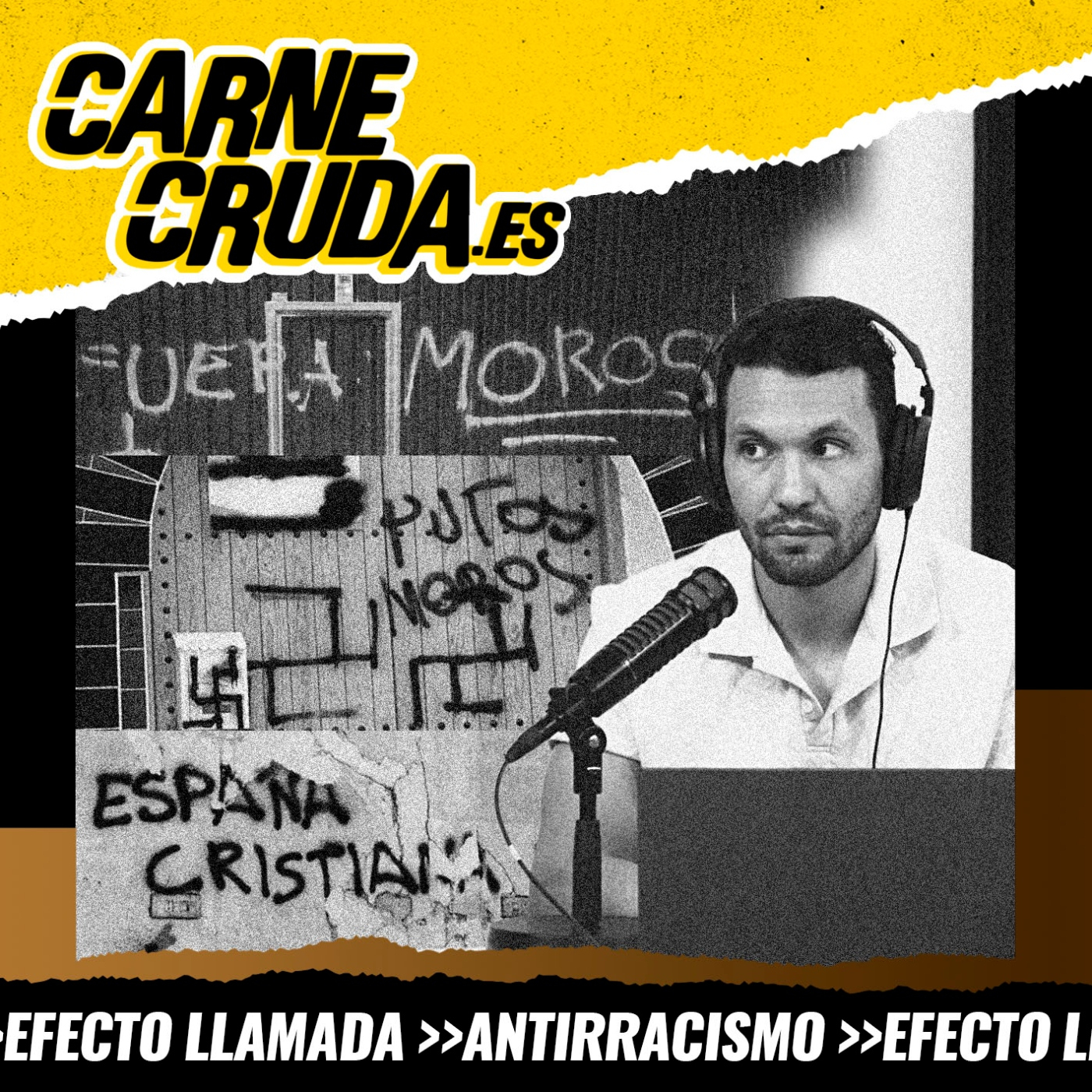
Carne Cruda - PROGRAMAS
Morofobia, un racismo ‘marca España’ (EFECTO LLAMADA - CARNE CRUDA #1610)
00:59:58
Loading summary
Transcript247 lines
- [00:18]
Presenter
Imagina salir de tu casa para trabajar, solo que no es tu casa porque no puede aparecer en el contrato y tampoco es del todo tu trabajo porque no estás dado de alta. Imagina que tu hijo lleva meses pidiendo wifi en casa pero no puede abrir una cuenta bancaria para contratar. Imagina que te notas un bulto extraño pero no puedes tratártelo porque no puede ir a tu centro de salud, porque no tienes tarjeta sanitaria, porque no puedes demostrar que vives en tu no casa porque no puedes empadronarte porque no dan citas desde el siglo XIX. Imagina que fallece tu madre o tu padre y no vas a su entierro porque no puedes salir del país o no lo imagines. El laberinto kafkiano en el que viven miles de personas en nuestro país y que extremó su crueldad durante la pandemia cuando un centenar de colectivos recogieron 700.000 firmas, presentaron una iniciativa legislativa popular por la regularización ya. ¿Y sabéis por qué pudieron hacerlo? Pues porque estaban aquí. Ellos y ella ya estaban aquí, viviendo, trabajando, consumiendo, durmiendo, pagando, comiendo, soñando, respirando, existiendo aquí, en un país que hace como que no están. Gallinita ciega, luz de gas. 500, 800 personas en las cocinas de nuestros bares, en el campo, cuidando a nuestros vecinos. Qué raro, no lo habíamos notado. La regularización de los llegados antes de 2025 arrancada al gobierno por Podemos no es en realidad tan extraordinaria. Lo hicieron PP y PSOE otras seis veces en los últimos 40 años, pero hoy parece casi una revolución contra los tiempos. Mientras Elais caza y deporta migrantes de la manera más violenta y humillante. Y Europa paga dictaduras para deportar a personas a países que ni siquiera son el suyo. Hoy tenemos que celebrar estar en la portada del New York Times o en la campaña electoral de Portugal por esta noticia. Que esta sea la marca España, No hay que ser ilusa. Aquí tenemos los mismos ultras que querrían expulsar y esclavizar a los que llegan, que asocian migración y delincuencia. Tenemos Torres Pachecos, tenemos redadas por color de piel y tenemos un sistema estructuralmente racista. Pero hoy, al menos hoy, esta batalla la han ganado los que ya estaban aquí. Aguanta migranta de nuestra querida GAT ll es el tema que nos recomiendan desde la plataforma Regularización Ya. Lo que no puede callar Un sentimiento que es enorme le absorbe la felicidad Vive sin querer pensar en las deudas y el que dirán Un sentimiento que es enorme y que absorbe la felicidad Es que sabe que no hay pal piso que tiene que ahorrar pa que coma su hijo Que tiene que tragar y vivir donde sea de eso está cansa pero sigue y pelea Aguanta migranta ya no quiere soportar esas miradas No aguanta mi granta te ves el mundo entero menos nada y baila migranta te mando este bebé que te encanta Todos.
- [03:21]
Josep Boulet
Los días son iguales, todos los días son.
- [03:32]
Presenter
Desde aquí un abrazo a Gadiola que sabemos que es muy fan de Carne Cruda y que nos recomienda en redes así que nosotros hacemos lo mismo y recomendamos su música. Temazo que nos recomienda Silvana Cabrera, una de las portavoces de la plataforma Regularización Ya con la que hablamos tras la dana en Valencia sobre la indefensión precisamente de los que no tienen papel en regla cuando encima ocurre una catástrofe. Silvana Crudos días.
- [04:09]
Silvana Cabrera
Buenos días Hoy. Buenos días hoy.
- [04:12]
Presenter
Buenos días. ¿Cómo habéis recibido el anuncio?
- [04:16]
Silvana Cabrera
Pues bueno, esto es algo que en lo que hemos estado trabajando estas últimas semanas para que esto sea lo más garantista y amplio en derechos. La verdad es que yo sin poder creerlo hasta que no. Como que no lo tenga en el BOE pero porque estamos tan acostumbradas a las traiciones políticas, estamos tan poco acostumbradas también a las grandes victorias que o sea, como no me lo creía ya van a salir con algo. Pero bueno, o sea, me siento muy obviamente muy muy contenta porque como lo había dicho esto, detrás de cada expediente es que hay una persona, hay una vida y sabemos las múltiples dificultades a la que se enfrenta nuestra comunidad todos los días por no poder tener su situación regularizada. Entonces esto es un logro, pero sobre todo es un logro y un sueño para mucha gente migrante.
- [05:33]
Presenter
¿Y a qué punto de este acuerdo dirías tú que hay que estar más atentas? ¿Qué pedís al gobierno una vez que se anuncie y que de hecho se publique en el BOE esta medida?
- [05:42]
Silvana Cabrera
Sí, que se anuncie y que se publique en el BOE tal cual lo hemos ido haciendo. Entendemos que esta ha sido una negociación bastante dura y que se ha tenido que meter muchísima presión pero lo que a nosotras nos interesaba era que abarque a la mayor cantidad de personas posible y que sea una fecha pues lo más pronto a hoy. Entonces este corte es hasta el 31 de diciembre, que se mantengan los requisitos que están escritos en el acuerdo, que los hemos publicado también en las redes de regularización para que así se puedan, o sea, sí puedan acceder a esto la mayor cantidad de personas posibles. Ahora, una vez escrito el BOE, yo creo y con la experiencia que hemos tenido en la regularización extraordinaria de la DANA, creo que es fundamental por parte del Gobierno primero informar a todas las instituciones que van a participar en esta regularización, pero que llegue la información de manera correcta, porque eso fue una dificultad enorme que tuvimos en todas las instituciones públicas que participaron en la DANA, o.
- [07:04]
Presenter
Sea que no hubo una correcta información tanto hacia las instituciones como hacia la población.
- [07:09]
Silvana Cabrera
Exacto, hacia las instituciones y hacia la población y que esté varios idiomas también, pensemos que las personas migrantes que viven en territorio español pueden acceder fácilmente al castellano.
- [07:23]
Presenter
Pues de todas esas peticiones, de todas las cosas que hay que estar muy atentos para que se cumplen, para que esta medida sea lo más garantista posible. Seguiremos pendientes de todo lo que haga regularización ya. Silvana, te agradecemos mucho que hayas estado aquí hoy y enhorabuena por el trabajo conseguido.
- [07:38]
Silvana Cabrera
Muchas gracias. Un saludo.
- [07:40]
Hazar Baharawi (Hazar Brown)
Podemos ha conseguido un acuerdo con el Partido Socialista para que el Gobierno apruebe de inmediato una regularización extraordinaria de personas migrantes.
- [07:51]
Presenter
Josep Boulet Compañero, activista e investigador antirracista. Crudos días.
- [07:56]
Josep Boulet
Crudos días.
- [07:56]
Presenter
Tenía que preguntarte qué te parece este anuncio.
- [08:00]
Josep Boulet
Bueno, estoy muy contento, pero sí que es verdad que quienes creemos en la justicia social y en un sistema igualitario, a pesar de que celebramos esto, somos conscientes de que hay mucho trabajo por hacer, porque no hay que olvidar que al final esto es una regularización extraordinaria. El sistema permanece, se siguen creando jerarquías de personas y se sigue deshumanizando a las personas que vienen del sur global. Y también quedan otras muchas cuestiones pendientes y sobre todo aquellas que tienen que ver con la lucha por la ciudadanía, por los derechos de la ciudadanía migrante y sobre todo queda un trabajo muy grande por hacer en la lucha contra el racismo social y el racismo institucional.
- [08:34]
Presenter
Pues una suerte que hoy tuviéramos preparado este programa contigo porque precisamente de eso vamos a hablar hoy.
- [08:42]
Hazar Baharawi (Hazar Brown)
Lo sufro a diario en transporte público, por las calles, incluso en las tiendas, miradas, seguimiento, como si fueras a robar.
- [08:49]
Fátima Tahiri
Hasta que he crecido no he entendido realmente a lo que llaman moro.
- [08:52]
Josep Boulet
Se sienten con libertad de hablar mal.
- [08:55]
Nordín
De nosotros respecto a otros países.
- [08:57]
Presenter
Considera de manera inconsciente que son ciudadanos de segunda categoría, que se les asocia una serie de estereotipos, prejuicios.
- [09:05]
Josep Boulet
Yo creo que antes simplemente, o al.
- [09:07]
Nordín
Menos como yo lo entendía, era un marroquí y una forma despectiva de llamar a un marroquí. Pero ahora cada día que pasa me.
- [09:14]
Josep Boulet
Da la sensación de que el término cada vez es más grande. Ya cabe casi todo lo que no.
- [09:18]
Nordín
Nos gusta, que tenga la piel un.
- [09:21]
Josep Boulet
Poco más oscura que nosotros. Bueno, es una forma de buscar un enemigo.
- [09:25]
Fátima Tahiri
Para mí moro era que venía cualquier persona que venga del Magreb o sea.
- [09:28]
Presenter
Una cuestión de origen.
- [09:29]
Fátima Tahiri
Pero ahora mismo moro es todo lo peorativo. Una palabra cargada de odio, insulto hacia.
- [09:35]
Josep Boulet
Cualquier persona distinta a una persona occidental.
- [09:39]
Presenter
De hecho, cuando no cumples con ese tipo de estereotipos se sorprenden e incluso te felicitan. Que España es racista es una realidad imposible de apelar. También que el racismo se ceba más con unos que con otros. Según el Observatorio español del Racismo y la xenofobia Más del 90% de los mensajes de odio en redes sociales en 2025 estaban dirigidos contra personas norteafricanas y musulmana. Un porcentaje elevadísimo en relación a su peso poblacional.
- [10:08]
Nordín
Mano, vete de ahí que te va.
- [10:10]
Presenter
A llevar el viento, capullo. Organizaciones y partidos ultra descargan cada día con mayor impunidad su violencia verbal y en ocasiones física contra la población de origen árabe o religión musulmana de nuestro país. Y no hace falta llegar a lo que vimos en Torre Pacheco, las microagresiones. Acabamos de oír a los afectados y también una de esas agresiones son cotidianas. La Asociación Marroquí para la Integración estima que menos del 7% de quienes sufren algún tipo de agresión islamófoba en España llega a denunciar ante la justicia. Puto moro. Puto moro. ¿Por eso hoy nos preguntamos en quién pensamos cuando hablamos del moro? ¿A quién nos referimos? ¿Qué imágenes nos vienen a la cabeza? ¿Es racista hablar del moro? ¿Y qué es eso de morofobia? ¿Qué tiene que ver con la islamofobia y con nuestra historia y pasado colonial? Hoy hablamos del odio, antimoro o morofobia, un racismo muy marca España, de su historia, significado y usos. Pero sobre todo hablamos del impacto que tiene sobre quienes son llamados así. Y lo hacemos con alguien que no solo lo sabe todo de este tema sino que además es el rey del moro postureo en redes nuestro morólogo particular Josef Ulait. Antes de empezar, ¿Qué es el moro postureo? Uy, para quien no haya visto tu.
- [11:21]
Josep Boulet
Instagram, pues presumir de ser moro.
- [11:24]
Presenter
Básicamente presumir bien presumido.
- [11:27]
Josep Boulet
Hay dos palabras que se han demonizado mucho.
- [11:30]
Nordín
¿Cuántas personas están esperando para entrar en el continente europeo? Se les ponen los pelos como escarpia.
- [11:35]
Josep Boulet
Sistema migratorio que nos trae aquí de.
- [11:37]
Nordín
Forma masiva que la solución es dejarles venir todos con los efectos llamada con los taxistas del mar se trata de parar.
- [11:43]
Josep Boulet
Vamos con esa cosa llamada, el efecto efecto llamada llamada, efecto llamada, efecto llamada.
- [11:53]
Nordín
Que España está ejerciendo hace muchos años.
- [11:56]
María Ben Nuna
Ya.
- [11:59]
Presenter
Es un día álgido para el efecto llamada. Menos mal que llamamos y siempre viene Josep, a quien le quiero preguntar algo muy básico ¿Qué es un moro?
- [12:07]
Josep Boulet
Pues no está muy claro en principio este término sí que se ha venido empleando, como decían algunos de los testimonios, para referirse a la población norteafricana, también conocida como población magrebí. Pero hoy en día, como decía otro de los testimonios, parece que un moro es todo aquello que es negativo y todo aquello sobre todo que está relacionado con el Islam, por lo tanto con personas musulmanas.
- [12:25]
Presenter
Claro. Y la pregunta retórica del día ¿Es un término ofensivo?
- [12:29]
Josep Boulet
Para mí que una persona no mora me llame moro me parece ofensivo y hay que tener en cuenta que es una de las muchas etiquetas racistas que existen y que se han construido a lo largo de la historia. Y estoy pensando en negro, en gitano, en indio. Y es un concepto que encierra una diferencia negativa que se ha usado y que se viene usando para justificar a lo largo de la historia la persecución, la expulsión, incluso la aniquilación. Por lo tanto yo me pregunto ¿Para qué llamar a alguien moro si no es para diferenciarse de él?
- [12:58]
Presenter
Claro, para ser no moro. Tú hablas y presumes de ese moro postureo.
- [13:03]
Fátima Tahiri
Hashtag.
- [13:03]
Josep Boulet
Ahí me has pillado. El imaginario social español está lleno de adjetivos y dichos sobre el moro y ninguno es positivo.
- [13:10]
Presenter
Se nos viene muchísimo a la cabeza, no lo vamos a decir porque sí.
- [13:13]
Josep Boulet
Moro es sinónimo de feo, de malo, de sucio, algo en lo que desconfiar. Y como yo realmente no soy una persona vengativa, el moro postireo sí es una venganza y es una forma de decir bueno, pues que aquí estoy, que no me escondo y no me avergüenzo de lo que soy. Y si bien nadie sabe muy bien que es un moro, yo creo que cualquiera que me ve sabe que soy moro.
- [13:33]
Presenter
Y a ti personalmente, ¿Cómo te ha marcado ser señalado y tratado como tal, como moro?
- [13:38]
Josep Boulet
A lo largo de nuestra infancia, de nuestra vida en general, creo que es la palabra que más veces escuchamos, es decir, que nos marca desde que nos levantamos hasta que nos acostamos. Lo vemos en los libros de texto, en los medios de comunicación, en los discursos políticos y nos señala con recelo y como causa de todos los males sociales. De hecho, yo diría con cierta seguridad que hoy soy activista y me dedico a lo que me dedico porque se me ha llamado Moro.
- [14:03]
Presenter
¿Les ha salido mal llamarte moro desde chiquitito? Entonces, una imposición desde la oposición porque se usa para referirse a todo lo opuesto al español. Pero otra ¿A qué nacionalidad remite el omoro?
- [14:16]
Josep Boulet
Pues por mucho que se nos mande allí, no existe ningún lugar geográfico que se llame Morolandia. Y creo que sobre todo lo que se pretende es consolidar una idea de qué es lo que es ser español, de excluir que no solo, repito, nos afecta a los moros, también a los negros, a los gitanos y entre otros. Aunque hayas nacido aquí.
- [14:35]
Presenter
Sí, y de hecho durante las cacerías racistas de Torre Pacheco se hablaba de cazar al moro, aunque muchos de los vecinos a los que se señalaba habían nacido en Murcia.
- [14:43]
Josep Boulet
Como cuentan investigadores como Salma Ams, Gianni, No a Nadia, en su libro La radicalización del racismo, la palabra moro es una categoría colonial que se ha venido utilizando para describir a un grupo de población muy heterogéneo que comparte una serie de características comunes.
- [14:58]
Presenter
¿Y esas características cuáles son?
- [15:00]
Josep Boulet
Bueno, yo creo que alguien a quien se le puede preguntar sobre estas características es la policía y no es broma, porque ¿Acaso no son ellos los que están constantemente parándonos por esos controles en los que utilizan criterios raciales? Pero bueno, el imaginario colectivo está lleno de estereotipos y prejuicios acerca de lo que es un moro. Esas características creo que todos las tenemos en la cabeza y esta es una realidad que está muy explotada en el ámbito cultural.
- [15:23]
Nordín
¿Que me siento un poquito moro? Sí, quizás sí me sienta un poquito moro.
- [15:27]
Josep Boulet
Y a lo que se refiere al.
- [15:28]
Nordín
Tema, al tema este del morito Juan.
- [15:30]
Josep Boulet
Quizá en principio lo hice con un.
- [15:32]
Nordín
Poquito sentido, un poquito moro, porque la letra. Os voy a explicar más o menos cómo empezaba.
- [15:37]
Josep Boulet
Decía yo soy un moro de Tánger.
- [15:39]
Nordín
Que lleva la voz de mando, yo me monto en el camello y ella que se vaya andando así. Luego me puse a pensar y digo.
- [15:46]
Josep Boulet
No, no, voy a suavizar un poquito.
- [15:47]
Nordín
Las cosas porque si no las mozas me van a dar una gran paliza.
- [15:51]
Presenter
Bueno, el Fari, como cúspide cultural de este país, nos da algunas pistas de qué se entiende por moro, pero cuéntanos ¿Cómo se ha definido lo moro a lo largo de la historia?
- [16:01]
Josep Boulet
Pues de muchas formas. En el libro La imagen del magrebí en España, escrito por el doctor en Historia Moderna Eloy Martín Corrales, se recogen ilustraciones de lo más variada sobre lo que ha sido un moro en los últimos cuatro siglos. Y de verdad que os sorprendería saber cómo se nos ha descrito, incluso cómo se nos ha dibujado.
- [16:17]
Presenter
¿Cómo se os ha dibujado?
- [16:18]
Josep Boulet
Pues sí, se nos ha dibujado como animales, se nos ha puesto bozal, se nos ha encerrado en zoológicos, se nos ha pintado con pieles oscuras, desde la lógica del binomio de que lo oscuro es igual a lo malo. Y es que, como decían Ainhoa y Salma, lo moro es un continente y contiene todo aquello que no somos aquí. Y cuando no encajamos en los moldes de lo que se entiende por moro, se nos ah, es que no pareces tan moro.
- [16:42]
Presenter
No parece moro.
- [16:42]
Josep Boulet
A ti te lo han dicho en varias ocasiones. Sí, algo mal estaré haciendo. Lo peor es que se dice desde la creencia de que es un piropo. No pareces moro como el resto de los moros, pero en realidad es que han encontrado una afinidad contigo o que se les ha quebrado un prejuicio y en vez de cambiar el esquema mental, se prefiere pensar que lo que pasa es que esa persona que tienes delante es una excepción. Así que, por favor, no digáis a la gente que no parece mora solo porque creéis que es mejor que otros moros.
- [17:09]
Presenter
Por favor, por favor. Yo me he quedado con lo que comentaba de que lo moro se ha construido en realidad en oposición a lo español y que esa imagen ha ido variando.
- [17:17]
Josep Boulet
Sí, en el libro de Corrales se puede observar muy bien esto. Mientras que hoy en día el moro es el sumum de la homofobia y del machismo. Hace no tanto se pintaba y se representaba como una figura muy feminizada y muy homosexual. No era como un blandengue el moro.
- [17:32]
Nordín
Siempre he detestado al hombre blandengue.
- [17:36]
Presenter
¿Tú nos quieres matar hoy aquí con el Fari?
- [17:39]
Josep Boulet
Es que representa lo mejor.
- [17:42]
Presenter
¿Y alguna vez ha sido positiva la imagen del moro?
- [17:45]
Josep Boulet
No, ni de cerca. Si tú quieres describir algo de manera positiva no lo homogeneizas y no lo describes desde la diferencia. Tened en cuenta que el moro en este país no solo fue derrotado, también fue aniquilado y expulsado a partir de 1492 porque se consideraba que no se podía asimilar a lo español. Y a día de hoy esto se celebra en las calles a través de esos eventos como moros y cristianos donde siempre perdemos los mismos. Hablamos de procesos históricos que hoy en día están explotando las ultraderechas a lo largo de todo Occidente señalando al que es el enemigo por antonomasia, el moro. Más muros y menos moros, de esos que no respetan a las mujeres.
- [18:23]
Presenter
Estamos aquí, evidentemente. Estamos escuchando al líder de Vox, Santiago Abascal, pedir más muros contra los moros Y es evidente que si hay un grupo de población diana de la ultraderecha a nivel global, ese es el moro, lo que se asimila como musulmán.
- [18:35]
Josep Boulet
Sí, total. De hecho se puede ir país por país señalando estos discursos en los líderes de la ultraderecha. Podemos pasar por la Francia de Le Pen, la Italia de Meloni, la Holanda de Wilders o la Alemania de la FD. Pero la morofobia, el racismo antimusulmán y la islomofobia, a nuestro pesar, no son monopolio exclusivo de la ultraderecha.
- [18:53]
Presenter
¿No? Has dicho además que morofobia, racismo antimusulmán, islamofobia son tres términos que no sé si son lo mismo. ¿En qué diferencian?
- [19:01]
Josep Boulet
Yo no os voy a contestar a eso. Os he traído a una invitada que nos va a arrojar luz sobre estas cuestiones. Ella es Fatima Tahiri, es doctora en Estudios Árabes e Islámicos y profesora en el grado de estudios de Asia y África en la Universidad Autónoma de Madrid y además es fundadora del blog Mektu, un espacio de debate y análisis de las vivencias de la diáspora mora y musulmana en el Estado español.
- [19:21]
Presenter
Fátima, crudos días.
- [19:22]
Fátima Tahiri
Crudos días.
- [19:23]
Presenter
Te hago esa misma pregunta. ¿Cómo se interconectan morofobia, islamofobia y racismo antimusulmán?
- [19:28]
Fátima Tahiri
La morofobia es todo lo que tenga que ver con racismo antimoro tiene que ver sobre todo con esas personas que tienen origen magrebí o que tienen ascendencia norteafricana. España es el país donde podemos hablar por excelencia de la morofobia. Ese término podemos decir que puede ser marca España incluso.
- [19:49]
Josep Boulet
Fátima, tú y yo hemos comentado que en el mundo anglosajón la figura del árabe ha sido abordada desde un cierto orientalismo, desde cierta fascinación, sexualización, exotización, sin que aquí nos haya dejado de hacer todo esto. Sí que es verdad que esta estas connotaciones son más de enemigo al que combatir constantemente. ¿Qué papel tiene la historia de España en esto?
- [20:10]
Fátima Tahiri
¿Se construye esa figura del moro no sólo como alguien diferente sino como el enemigo para antonomasia en los siglos XII a XVIII de la Iglesia católica y posteriormente como el enemigo a la secularización, a la civilización, etc. Ha ido adaptándose diferentemente del momento histórico?
- [20:32]
Presenter
¿Y cómo se enseña todo eso, esa historia de los moros en el sistema educativo español?
- [20:37]
Fátima Tahiri
No se enseña principalmente no se comenta.
- [20:40]
Presenter
Bueno, se comenta con esa oposición que tú estás contando.
- [20:43]
Fátima Tahiri
Sí que hay una connotación expresa de invasión de lo musulmán y lo árabe a la península. Esa connotación combativa, violenta que ha generado todo este imaginario sobre la comunidad mora y musulmana.
- [21:00]
Presenter
¿Y tú dirías, perdón, que en Europa hay otra manera de contar esto o de verlo? ¿Somos distintos a los países de nuestro entorno en este sentido?
- [21:07]
Fátima Tahiri
A ver, por ejemplo, me viene a la cabeza una famosa cita que dijo Aznar cuando empezó a ver el problema del llamado terrorismo yihadista y su cita fue que el problema de España con Al Qaeda empezó en el siglo VIII.
- [21:23]
Presenter
Tenía ese problema ya de antes.
- [21:25]
Fátima Tahiri
Claro. Entonces ya de contar la historia desde un prisma de violencia afecta gravemente a la situación que tenemos actual. Tenemos a Francia que tiene un discurso islamofóbico institucional muy fuerte. Es verdad que tiene otro tipo de sistema de integración, a diferencia de España, tenemos a personas de orígenes diferentes que ocupan diferentes ámbitos en el mercado laboral, en la política, en los medios de comunicación, pero eso no quita que hay un fuerte discurso racista, islamófobo.
- [22:03]
Presenter
Y cómo ha contribuido también a esa imagen la industria del cine y del.
- [22:06]
Fátima Tahiri
Entretenimiento por ahora en España lo que ha contribuido es incluso a acentuar mucho más los estereotipos y prejuicios ya existentes en el imaginario colectivo. Luego la cuestión que yo veo que es crucial, que todos los personajes que aparecen en las series o películas y que son musulmanes o de origen árabe, su única trama en la película o en la serie es que son musulmanes. Se esencializa tanto a la persona árabe musulmana. Masih, el mor es un concepto para esencializar toda esa heterogeneidad que hay, porque somos muchas cosas aparte de musulmanes o.
- [22:45]
Josep Boulet
Árabes, etc. Y yendo por último a esto que mencionabas del rol ese del terrorista, ¿Cómo crees que ha contribuido, cómo está contribuyendo la geopolítica a reforzar y a generar esa figura del moro terrorista?
- [22:59]
Fátima Tahiri
Hombre, los últimos años tenemos que las políticas que han tenido que ver con ausencia políticas estatales para gestionar la diversidad religiosa y la diversidad étnica en general, y se ha abordado desde siempre todo lo que tiene que ver con las comunidades musulmanas desde una perspectiva securitaria. Siempre el musulmán se ha considerado como la amenaza al estado de bienestar, a la democracia, etc. Negándolo de cualquier forma de parte de inclusión al sistema, etcétera. Entonces si tú a una persona la estás poniendo trabas y la estás así hablando como más de una forma más simbólica, poniendo el pie en el cuello, no la dejas respirar por las trabas. Ya habéis comentado al principio del programa la cuestión de la regularización. Tenemos que tener en cuenta que gran parte de la comunidad mora son inmigrantes. Entonces ya tienen esa precarización administrativa que trae un montón de problemas en la vivienda, a nivel de salud, a nivel laboral. Y aparte le sumas todo este imaginario y toda esta securatización que lo que hace es estigmatizar y criminalizar aún más a la persona. Es imposible crear un ambiente de convivencia o de que esa persona se sienta incluida en el país de bienvenida, en el país de acogida.
- [24:27]
Presenter
Fátima Tahiri, muchísimas gracias por esta clase acelerada de historia Antimora de España. Estaremos muy atentas a la que publica en el blog mexicano tú. Muchas gracias.
- [24:45]
Nordín
Bueno, humanos. No sé esta gente si son humanos o no. Qué asco de sitio. Que me.
- [24:49]
Hazar Baharawi (Hazar Brown)
Que.
- [24:53]
Presenter
Youssef No sé ¿Qué estamos escuchando que suena tan bien?
- [24:57]
Josep Boulet
Bueno, estamos escuchando a dos policías nacionales que a mediados de diciembre acudieron a un local de comida rápida en Alcorcón, al sur de Madrid, donde se había producido un robo. Cuando llegaron allí empezaron a vomitar todas estas lindezas que habéis escuchado, sin ser conscientes de que las cámaras de seguridad del local estaban grabando su conversación, o.
- [25:15]
Presenter
Sea que los garantes de la seguridad asisten por un robo a un local y acaban dañando el establecimiento robado insultando al dueño y a su clientela.
- [25:21]
Josep Boulet
Sí, pues imaginaos la sorpresa de Sami, el dueño del local, al recurrir a las imágenes para ver si se podía identificar a quién había cometido el robo y escuchar estas lindezas. Y aún así acudió y presentó una queja ante la comisión.
- [25:32]
Presenter
Muy bien hecho. Porque aunque la policía no genera confianza, este tipo de comportamientos no pueden quedar impunes. Y siempre que se pueda, y que bueno, que la persona se atreva, hay que acudir a denunciarlo.
- [25:42]
Josep Boulet
Sí, siempre que se pueda. Porque yo me estoy acordando de cuando me robaron el coche y fui con esta cara de moro que os decía antes, a la comisaría de Móstoles, también pegada al corcón, a denunciarlo. Y bueno, ¿A que no adivinas qué fue lo que me preguntaron?
- [25:54]
Presenter
No me la juego. Sorpréndeme.
- [25:55]
Josep Boulet
Bueno, pues fui a denunciar el robo de mi vehículo y acabé interrogado sobre vehículos robados y me preguntaron si tenía denuncias por robo y cuánto. El estereotipo, básicamente es una persona fundamentalista en su concepción es que practica el Islam, ayuna, reza, viaja a la Meca, da el zakat, que es el impuesto anual. Porque otro clásico es presuponer que en todo musulmán hay un potencial terrorista. Escuchamos al politólogo y sociólogo Mohamed Mustafa, especialista en análisis del terrorismo y diputado de Ceuta, en el documental Es por tu seguridad. Engranajes institucionales de la islamofobia.
- [26:31]
Presenter
Claro, porque en todo musulmán hay una amenaza potencial para la seguridad.
- [26:36]
Josep Boulet
Bueno, eso criticó, eso señaló el Relator especial de Naciones Unidas sobre la libertad religiosa en el año 2001 al denunciar mecanismos institucionales que menoscaban el derecho de las personas musulmanas a la libertad religiosa. De hecho, el informe Sospecha, discriminación y vigilancia de la Red Europea contra el Racismo también señala que las medidas antiterroristas de países como España construyen y refuerzan esa imagen.
- [26:59]
Presenter
Claro, y que te pueden acusar de terrorismo en realidad en cualquier momento.
- [27:03]
Josep Boulet
Sí, como le pasó a Nordin Liemlahi. Nordin Workout en YouTube, donde tiene más de medio millón de seguidores. Como experto en calistenia y street workout, o sea, entrenamiento de calle, Empecé con.
- [27:14]
Nordín
Un móvil, haciendo vídeos para unos pocos, para mi grupo de amigos, y ahora desde esta cámara me dirijo al medio millón de Hermanos. Soy Nordin World y bienvenidos una vez.
- [27:26]
Josep Boulet
Más a mi canal de YouTube español. De padres marroquíes, está considerado uno de los pioneros en España en esta disciplina, que empezó a practicar en su barrio, Leganés, en el sur de Madrid. Y de hecho fue allí, en su casa de Leganés, donde En enero de 2025 fue detenido por Grupo de Acción Rápida de la Guardia Civil acusado de terrorismo.
- [27:45]
Presenter
Nordín Crudo Díaz Crudo Díaz. ¿Nos puedes describir ese momento en el que tú, que te dedicas a divulgar contenido de deporte para ganarte la vida, te llega ese Grupo de Acción Rápida de la Guardia Civil a tu casa?
- [27:59]
Nordín
Yo siempre lo describo como las películas que vemos de Estados Unidos, que te entra un grupo, te revienta la puerta y aparecen con sus fusiles de asalto. Alto, alto, alto. Estamos hablando de un grupo enorme de veinte, treinta personas.
- [28:12]
Presenter
Veinte, treinta personas.
- [28:13]
Nordín
Fueron enormes. Estamos hablando de la élite de la Guardia Civil en este caso. Para tener una persona que yo en ese momento yo pensaba hasta o que se habían equivocado, no sé imaginario de mi cabeza. Me acuerdo que pensaba que se iba a caer el edificio entero de los golpes que era. Y que estás en ese momento flasheado y en shock. En estado de shock de oye, ¿Qué está pasando aquí? ¿Y por qué está entrando esta gente a mi casa? Y ya cuando me dicen por qué, yo me acuerdo, siempre lo digo, miré a mi mujer y me ¿Quieren joder?
- [28:41]
Presenter
¿Pero de qué te acusaban? ¿Qué te dijeron en ese momento?
- [28:44]
Nordín
En ese momento me acuerdo que entró un inspector, Tomás, todos entran tapados, con la cara tapada. Y me excepto los de Guardia Civil, fuertotes, eso da igual. Y me estás acusado de delito de adoctrinamiento a través de redes sociales del movimiento salafista yihadista. Y dije yo, salafista.
- [29:01]
Presenter
Primera noticia.
- [29:02]
Nordín
Claro, en ese momento yo me quedé en blanco. Y bueno, ya está.
- [29:06]
Josep Boulet
Sabemos que pasaste más de tres meses en prisión, pero no de cualquier forma, sino que estuviste en aislamiento total por la supuesta amenaza que representabas. Como te dijeron ¿Cómo fue esto?
- [29:15]
Nordín
¿Cómo fue esta reclusión? Mira, hace cuatro días fue cuando entré en prisión el año pasado, el 24 de enero del año pasado, y me acuerdo que fue una de las experiencias más duras que puede pasar un ser humano, porque aparte venía escuchando un podcast de camino de un periodista que le secuestraron en Siria y contaba lo que es el estar aislado y es algo bastante similar en el sentido de que te sientes con incertidumbre, sientes que te han quitado tu intimidad, tu dignidad, te sientes cuestionado, una sospecha, una sensación casi de traicionado por tu propio país y al mismo tiempo también un montón de pensamientos en tu cabeza que te están dando una y otra vez ¿Cuándo voy a salir de aquí? ¿Y por qué estoy aquí? ¿Y por qué me están tratando de esta manera? ¿Y por qué a mí?
- [30:00]
Presenter
¿Cómo era ese régimen?
- [30:02]
Nordín
Es un régimen en el que como mucho vas a salir al patio cuatro horas al día. Sí, en el mejor de los casos, pero que normalmente suele salir dos o tres horas al día. ¿Habéis visto el día que hace hoy? Imaginaros salir a un patio al aire libre con apenas nada. El resto del tiempo estás en la celda y aparte como mucho puedes salir con 5 compañeros y normalmente el primer mes se sale solo, directamente se los estás dando vueltas, no tienes casi contacto con nadie, no hablas casi con nadie, como mucho en las llamadas con tus familiares y el funcionario que te da la comida y ya está. Y el resto del tiempo estás absolutamente solo comiéndote la cabeza durante esos tres.
- [30:34]
Presenter
Meses, ¿Qué se te pasaba a ti por la cabeza? Claro, ¿Cómo te comías la cabeza?
- [30:37]
Nordín
Pues en ese momento pensaba ¿Cuánto tiempo va a durar? Si voy a estar aquí, los dos años que se puede estar en prisión provisional, si me lo van a prorrogar otros dos, es decir, que puedes llegar a estar incluso cuatro, qué se van a inventar más para poder mantenerme. ¿Por qué todas las apelaciones que hacemos, ninguna de ellas se ha visto? ¿El fiscal realmente quién soy? ¿Ha prestado atención el juez sabe quién soy o ha hecho un mínimo esfuerzo o simplemente todo lo que dice la policía, en este caso la Guardia Civil, se pasa y se da y para no arriesgar, por si acaso le metemos.
- [31:09]
Josep Boulet
A prisión Nordín, te dejaron en libertad en julio y pasaste de ser un peligroso terrorista a ser liberado sin cargos? ¿Cómo se explica?
- [31:19]
Nordín
Pues en ese momento yo me acuerdo que cuando fui a declarar, que aparte no pude ni hablar, ya se había acordado previamente que me iban, porque no había nada, no había nada por donde cogerme. Intentaron miles de cosas, no había nada. Y entonces me liberan y me acuerdo. De hecho, justo en el mismo, sales con una sensación, ni siquiera te alegras, sales con una sensación de esto tenía que ser. Yo me acuerdo decirle al funcionario que me oye, te vas hoy, me ¿No te alegras? Y no, no, yo hasta que no salga no me lo creo, porque no sé por dónde vais a venir. Y aparte luego tú tienes que luchar por rectificar tu nombre. En mi caso soy una persona privilegiada, yo soy consciente de ello, el hecho de tener un alcance, etc. Otras miles de personas no lo tienen. Y aparte tienes que luchar por borrar tus antecedentes policiales.
- [31:57]
Presenter
Para eso tienes que tener medios, digamos, pagar abogados.
- [32:01]
Nordín
La cuestión graciosa de aquí es que yo paso todas las vistas con mi hermano que es abogado. Es decir, mi hermano está sentado atrás tenemos otro abogado y mi hermano está sentado, y un juez está mirando a una persona que le están juzgando determinismo. Y detrás suya su hermano que es abogado. Entonces tuvo esa facilidad de poder pasarlo. Pero tienes que estar persiguiendo. Ahora, por ejemplo, en las fronteras tengo que borrar mis antecedentes, porque me paran en las fronteras, me cachean de más, me miran más a fondo, y eso lo tengo que hacer yo con mis propios medios. Nadie me ha indemnizado, nadie me ha oye, te vamos a ofrecer un perdón. No, no, no. Además te soltamos un poco a regañadientes, en el sentido de que no queremos decir que nos hemos equivocado, porque no lo van a decir nunca, sino que te vamos a dejar ir. Pero oye, que tampoco molestes mucho.
- [32:42]
Presenter
No te han compensado de ninguna manera absolutamente nada.
- [32:45]
Nordín
Ni los espero, no espero nada.
- [32:47]
Presenter
Bueno, pues espera que vamos a seguir hablando contigo. Porque los hombres musulmanes cargan la sombra de la sospecha, pero al otro lado están ellas, las moras, las otras.
- [32:58]
Josep Boulet
Ellas son representadas como víctimas perpetuas de un sistema patriarcal dominado por sus hombres. Ojo, no otros y por otro lado construidas como mujeres sin voz, infantilizadas y sin agencia que necesitan ser salvadas por las feministas blancas o por cualquiera salvo por ellas mismas.
- [33:12]
Presenter
Y creo, tengo constancia de que nos trae alguien que va a desmontar muy bien esa imagen.
- [33:17]
Josep Boulet
Y tanto. Bueno, ella es una rompedora de estereotipos y referente de muchas. Ella es Hazar Baharawi, conocida como Hazar Brown, y es una actriz polifacética que marcó a toda una generación por su interpretación de Amira Nayvet en la serie de SCAM España en Movistar.
- [33:31]
Hazar Baharawi (Hazar Brown)
¿Por qué no vas a la fiesta de tus amigos? Ya sé lo que va a pasar.
- [33:37]
Josep Boulet
Humo.
- [33:38]
Hazar Baharawi (Hazar Brown)
Gente desconocida, gente nueva preguntándome por lo que llevo en la cabeza.
- [33:41]
Josep Boulet
Es una persona que es muy conocida en los ámbitos activistas y además es una persona muy concienciada con Esto.
- [33:48]
Presenter
Sí. Crudo Díaz Hayar, ¿Cómo estás?
- [33:50]
Hazar Baharawi (Hazar Brown)
Crudos días. Muy bien. ¿Qué tal vosotros?
- [33:51]
Presenter
Pues muy bien. Te quería preguntar ¿Qué ha supuesto para ti, con poco más de 20 años, convertirte en la primera musulmana en tener un papel protagonista en la televisión española usando velo?
- [34:02]
Hazar Baharawi (Hazar Brown)
Nunca lo he sabido porque como nunca lo había.
- [34:05]
Presenter
No te has puesto ese título.
- [34:06]
Hazar Baharawi (Hazar Brown)
Claro, ni siquiera fui capaz de me encantaría ser actriz porque sabía que era algo imposible. Entonces era como una idea vaga que tenía dentro de mi cabeza. Entonces el día que se hizo realidad, pues aún sigo asimilando porque no entiendo cómo ni por qué, pero ha pasado y es algo que he disfrutado muchísimo porque no sé cuándo volverá a pasar.
- [34:30]
Presenter
Bueno, es que el mundo de la actuación, tremendo. ¿Qué barreras tiene precisamente una mujer musulmana o cualquier persona, también te digo, de tu edad, siendo una mujer joven en la pantalla, mezclando todo eso?
- [34:40]
Hazar Baharawi (Hazar Brown)
Pues cualquier barrera, desde que sales de casa, tener que explicar absolutamente cómo funcionas, como si fueses un alienígena, que no se respeten un poco tus creencias o prácticas, sobre todo. Ellos tienen sus cinco minutos para fumar, pero yo no para rezar. Que no se tenga en cuenta mi vestimenta, por ejemplo. Es algo obvio que llevo un hijo en la cabeza. Entonces a la hora de hacer pruebas de vestuario, como Pero es verdad, tráetelos tú. Entonces yo voy con mi maletita de 10 kilos, con mis 80 mil hijabs y me los tengo que poner yo en el set sin tener ese tiempo, como tienen el resto de peluquería. Simplemente, como no han tratado ninguna vez con una persona musulmana pues lo tengo que hacer todo yo porque sé que si no no lo va a hacer.
- [35:32]
Presenter
Nadie, o sea que más allá de exigencias o de peticiones es más bien como un desinterés, una desinformación, ¿No?
- [35:40]
Hazar Baharawi (Hazar Brown)
Sí, desinformación diría yo.
- [35:42]
Josep Boulet
Y no es también un o lo tomas o lo dejas o ¿Ha habido algún momento en el que has dicho mira, yo por aquí no paso?
- [35:48]
Hazar Baharawi (Hazar Brown)
¿Sabes qué pasa? Que a mí ya me conocen bastante cuál es mi carácter, ya sabes, ya saben que sí, que no saben que soy yo de las que si tú me das un contrato yo también tengo otro con mis condiciones. Entonces en concreto conmigo sí que saben lo que hay, pero sé que tengo, conozco de otras compañeras también que se quieren dedicar a este mundillo y me hablan porque saben que yo me muevo mucho por ahí y que no es igual. Entonces depende también del nombre que tengas o la influencia que tengas.
- [36:18]
Presenter
Por eso quizá HQ te ha incluido en su serie Generación Hype, esa nueva hornada de actores y actrices que conocemos por series y pelis en streaming y por las redes sociales. Y ahí explicabas esto, al ser creo.
- [36:31]
Hazar Baharawi (Hazar Brown)
Que de las pocas representaciones tan fieles a lo que es una adolescente musulmana en España, tenía un sentimiento de querer abarcar todo lo bueno que no se ha visto en el resto de personajes, querer hacerlo en Namira. Entonces yo he vivido dos la mía chunga, traumática que tenemos todos, y luego la de Amira, la que siempre he deseado.
- [36:50]
Presenter
¿Cómo viviste esa responsabilidad? Que no es poca cosa.
- [36:54]
Hazar Baharawi (Hazar Brown)
Es que una mujer musulmana con hijab siempre tiene una responsabilidad. Además yo por ejemplo, cuando salía de la universidad y tenía y había suspendido un examen, sabía que no podía llorar hasta llegar a mi casa por si pensaba que me había pegado mi marido o si necesitaba cualquier ayuda. Entonces cuando una vive con esa responsabilidad sobre la sociedad, sabe la gente bueno, yo me tomo como que mi hijab es un estandarte del islam y que cualquier cosa que haga más siendo mujer, estamos más vigiladas, pues va a repercutir porque estamos muy politizadas. Entonces cuando ya vives día a día, desde muy temprana edad con esa responsabilidad, ponme donde quieras porque va a ser exactamente lo mismo. Entonces es como una responsabilidad obligada.
- [37:40]
Presenter
Si hubiera sido todo el rato en.
- [37:42]
Hazar Baharawi (Hazar Brown)
Cualquier ámbito, entonces dentro de esta industria ha sido como cualquier barrera que cruzo más, no hay mucha diferencia.
- [37:51]
Presenter
¿Recuerda alguna anécdota algo que te haya pasado en los rodajes que te llamara especialmente la atención?
- [37:56]
Hazar Baharawi (Hazar Brown)
Después de haber rodado dos años la serie, Un técnico me saliendo, ya hemos terminado la jornada de grabación y tal. ¿Y salimos y me ay muchacha, pero aún sigues con eso en la cabeza? Quítalo ya, que ya hemos terminado de trabajar. Y yo en plan después de dos años, sabes que vengo todos los días al set con esto, salgo con esto y hablamos en la serie sobre esto. Me ah, quítate eso ya de encima. Pensabas que todo era un disfraz, un personaje. Entonces es guau, Teniéndolo enfrente.
- [38:33]
Presenter
Aún así, otra vez, mucho desinterés.
- [38:36]
Josep Boulet
Tú decidiste dejar de lado la interpretación y centrarte en estudiar. De hecho eres ingeniera civil, pero también influencer de moda, embajadora de marcas. En todos estos ámbitos, ¿Sientes que tienes que seguir explicando las cosas, aclarando qué decides por ti misma?
- [38:49]
Hazar Baharawi (Hazar Brown)
Sí, porque al haber tan pocas, es decir, dos contadas, sé que mi objetivo principal es fisurar cualquier departamento que pueda tocar. Necesito estar presente, porque ya con estar presente se dice mucho. No hace falta que me llene la boca de hablar súper bien o decir esto aquí, o hacer esta ser excepcional o ser tal. Simplemente con estar creo que ya es suficiente. Entonces, hasta que no haya muchas hijabis no pienso el monopolio. De momento voy a tocar todos los ámbitos posibles para al menos seguir estando.
- [39:31]
Josep Boulet
Haciendo honor al nombre del programa, excepto llamada, si no lo sabíais, he llamado a una persona más para montar una tertulia de moros y moras en toda su dimensión.
- [39:39]
Presenter
Que esté la mesa llena.
- [39:41]
Josep Boulet
Muy bien.
- [39:41]
Presenter
Ya mismo me voy yo y estáis todos ustedes.
- [39:43]
Josep Boulet
Ya hemos hecho a Javier. Solo faltas tú. Ella es María Ben Nuna, es una marroquí andaluza conocida por su activismo feminista y antirracista y es una labor que desarrolla principalmente como presidenta de esos racismo.
- [39:53]
Presenter
Y que teníamos muchas ganas de que estuviera por fin por aquí. María Cruz, días crudos días. ¿Cómo está nuestro termómetro de racismo en este momento? ¿Y dónde queda en esa escala el racismo antimoro entre todos los racimos que hay?
- [40:05]
María Ben Nuna
Hombre, creo que el día de hoy deja claro que el racismo antimoro está bastante arriba. Dentro. El termómetro del racismo está caliente. Creo que es una cuestión evidente que en los últimos años tenemos una tendencia hacia una polarización muy grande y esto lleva a que Diana normalmente seamos las personas racializadas, inmigrantes. Parece que hemos entendido que el patriarcado es una estructura de opresión, pero seguimos sin entender que el racismo también lo.
- [40:37]
Presenter
Es y la colonialidad. Claro. ¿Pero sientes que de alguna manera algo ha mejorado? Aparte de que tenemos por otro lado esa ola ultra que nos va a ahogar algún día. Pero no sé si sientes que en algunos ámbitos, en algunas ciudades, pueblos, la gente empieza a entender que no es el otro.
- [40:57]
María Ben Nuna
Uf, no sé, creo que eso es quedarse muy centrado en mapas de grandes ciudades tipo Madrid o Barcelona, donde igual esto se podría aplicar un poco más. Pero yo que vengo de Huelva, la realidad creo que es totalmente diferente. Creo que si salimos de las grandes ciudades y la metrópoli creo que cambia la cosa y no creo que haya cambiado mucho. Lo que sí que creo que ha cambiado es la forma igual en la que las personas racializadas nos autopercibimos y ocupamos los espacios.
- [41:23]
Presenter
¿Un mayor empoderamiento en ese sentido y una mayor reclamación de espacio?
- [41:27]
María Ben Nuna
Yo creo que sí, yo creo que hemos empezado a entender que o nos lo peleamos nosotras o nadie nos va a dar espacio.
- [41:32]
Presenter
Ahora que has dicho Huelva, que ahí hay esos asentamientos en condiciones infrahumanas donde siguen viviendo miles y miles de personas que trabajan en los campos y generan la comida que comemos, ¿Nos puedes contar un poco qué es lo último que has visto? ¿Cómo está esa situación allí?
- [41:50]
María Ben Nuna
Pues yo que tengo mucha relación con los compañeros de Agnuzzi, por ejemplo, los compañeros de Asnuci que trabajan en Lepe, en Palos, en los diferentes sitios de Huelva, la realidad es que siguen los asentamientos chabolistas, seguimos en situación de hipervulnerabilidad, vulnerabilidad de las personas que trabajan en el campo. En esa zona y en Andalucía en general se siguen viendo casos de abusos a las compañeras jornaleras. Esto no cambia, lo que pasa que que es mucho mejor decir que no está pasando y no mirarlo.
- [42:17]
Josep Boulet
Esto no cambia. Pero hablando del racismo en general, ¿Cómo crees que va impactar la regularización?
- [42:24]
María Ben Nuna
Bueno, yo espero que funcione. Realmente creo que ayer estábamos todas muy contentas, han sido muchos años del movimiento antirracista, de pelear día a día. Al conseguir esta regularización el último año y medio ha sido especialmente de mucho trabajo para este tema. Creo que va a tener evidentemente una parte positiva y es con lo que creo que nos estamos quedando todos. En estos días va a haber 700 mil personas que van a ser regularizadas. Me preocupa dentro de un año, cuando ese primer permiso se acabe, qué va a pasar.
- [42:59]
Presenter
Voy con la pregunta del día a los tres ¿Qué pensáis cuando llaman moro o qué pensáis del uso de la palabra moro o mora?
- [43:05]
Nordín
Nordín Depende de cómo se utilice y quién me lo esté diciendo. Pero yo me recuerdo que de pequeño yo no lo había escuchado la palabra, hasta que de repente un día en el colegio me dice un niño como moro, pero de una forma despectiva. Y ahí es cuando ya cambió el chip y ah, es que yo pensaba que era como los demás niños, pero de repente yo soy una categoría diferente. Y entonces ahí fue como una cosa interior que me cambió para siempre. Pero normalmente se suele utilizar de forma despectiva. Otra cosa es que yo con amigos a lo mejor estemos hablando entre nosotros de moro, Pero el uso despectivo es evidente y no lo están utilizando como los tiempos de hace mucho con los árabes. Oye, esto es lo moro, lo bonito, ¿No? No se está utilizando como algo de ciudadano de segunda y algo que se tiene que expulsar.
- [43:51]
Presenter
Ni siquiera está ese exotismo ni ese orientalismo también irreprochable, pero no queda. ¿Y tú Hayar, cómo lo ves?
- [43:58]
Hazar Baharawi (Hazar Brown)
Pues más de lo mismo. Creo que en esto coincidimos todos súper bien. A mí me llama mora cuando caigo mal. Entonces ahí ya entiendes que es despectivo. Ahí entiendes que no te lo dicen hasta que pasa algo que no les agrada. Y ahí ya eres moro o moro de mierda según el nivel de cómo le caigas mal. Los únicos que me gusta que me llame mora, aparte de yo misma, que incluso ni eso me dejan, porque ahora como todo el mundo está un poco más. No sé si os pasa, pero concienciaos. Cada vez que yo me nombro como mora me no, pero no digas eso porque si ya hemos dicho que los moros es un término despectivo, que le digas tú pues es que es como yo sí puedo decirlo, porque yo no lo digo de manera despectiva. Sé desde dónde lo digo y porque lo soy. No quiero que lo digas tú porque tú me lo dices de manera despectiva. Los únicos que me gusta que me llamen mora son los gitanos. Porque sí que para ellos ser humor, una mora qué cara de mora no.
- [44:51]
Presenter
Sé qué es Ay, vale, está relleno de un contenido.
- [44:55]
Hazar Baharawi (Hazar Brown)
Bueno, un besito para el pueblo gitano.
- [44:58]
Josep Boulet
Moros y gitanos, primos María Bueno, yo.
- [45:01]
María Ben Nuna
Creo que estamos todos en la misma línea, en plan, a mí el moro muy bien si lo utilizo yo, si decido yo qué valor tiene, evidentemente ser moro en este país es bastante complicado, entonces creo que mientras que nos lo reapropiemos los moros y las moras todo.
- [45:17]
Josep Boulet
En orden como moro os pregunto, vosotros que sois moros, moras, porque constantemente como sois personas muy conocidas todas, se dice eso de es que representáis, es un poco lo que comenta. ¿Cómo veis eso? ¿Eso de estar representando, que se os diga que representáis y cómo impactáis en vosotros?
- [45:34]
María Ben Nuna
Yo creo que no representa nadie, me cuesta representarme a mí misma como para pensar que represento a la moritud, a todo el Magreb, a los amasij, los árabes. Creo que también es una presión bastante injusta para los que nos toca estar en ese lugar a veces.
- [45:53]
Hazar Baharawi (Hazar Brown)
Mira, yo tengo la suerte de que soy mora y también musulmana, practico el Islam, me encanta el Islam, soy fan del Islam, Entonces ya dentro de nuestra doctrina ya te exige sin querer un poco ser ejemplo, hacer las. Intentar hacer las cosas bien. Intentar hacer las cosas bien, que la intención al menos sea hacer las cosas bien. Entonces como ya lo llevo en día a día en lo que practico, pero también estoy muy aferrada al error, sé que es algo que que siento que sobre todo los moros que representamos tenemos que permitirnos errar y sobre todo humanizarnos porque es esta cosa de estar expuestos o tenemos que ser el moro excepcional, El que saca 10 es la ingeniera, la que hace todo, la que invístela todo y feminista, sí, tenemos que serlo todo y yo reivindico hacer las cosas como el resto.
- [46:54]
Presenter
Cagarla tú también ¿Te he equivocado alguna vez?
- [46:57]
Nordín
¿No, yo es que la verdad que estaba pensando la pregunta y cuántas mochilas he cargado de este tipo? En el sentido de decir no solo la mochila de oye, mis padres han hecho un sacrificio muy grande, yo tengo que demostrar aquí en casa un nivel alto, ya no solo de estudios, ya no solo de no liarla y que nunca venga la policía a casa jamás de los jamases, porque eso podría ser grande.
- [47:19]
Presenter
Ahí no lo hiciste fino.
- [47:21]
Nordín
Menos mal que estaba ya independizado pero luego después también en el trato diario sí que es verdad que sin quererlo. Y esto es algo que la gente no se da cuenta. Tú cargas con una presión de tienes que hacer las cosas muy bien, porque como tú te equivoques va a ser una cuestión que va a afectar a todos los de la mesa indirectamente. Entonces tú estás diciendo, ostras, es que es una presión tan grande que yo salgo a la calle y tengo que ponerme un traje de persona perfecta. Buenos días, ¿Qué tal? ¿Cómo estás? ¿Te ayudo? No sé qué. Y a mí ya me sale natural, porque ya por peor Islam, como ha dicho la hermana de Jar, te impulsa a ser un este. Pero es verdad que cuando tú te equivocas en ese aspecto, te puedes permitir muchísimo menos que otra persona equivocarte en eso, porque ya te van a hacer un clip, sobre todo si ya eres una persona que tiene un cierto seguimiento, te van a hacer un clip y van a esto es lo que piensan todos los marroquíes o de origen marroquí.
- [48:18]
María Ben Nuna
Esto.
- [48:18]
Nordín
Y entonces no es justo en ese aspecto, pero bueno.
- [48:21]
Presenter
¿Y qué pensáis de un concepto como el de integración? Ya lo ha dicho todo.
- [48:28]
Hazar Baharawi (Hazar Brown)
No basta con nacer aquí, no basta con tener este acento. Yo creo que el lenguaje que uno tiene te habla del origen de uno. Bro, mi acento súper madrileño. ¿Qué más? ¿De verdad crees que tengo que integrarme simplemente porque no luzco exactamente como tú estás mazo integrada Ya esa palabra la odio?
- [48:49]
María Ben Nuna
Y además la idea de la integración desde perder lo que eres, o sea, claro, tu bagaje o de dónde viene, tienes que elegir. Claro, o soy lo que la cis hetero norma blanca española elige o no sirvo. Entonces creo que integración es una palabra que tengo totalmente eliminado.
- [49:09]
Presenter
Vamos a no usarla aquí ya nada más.
- [49:10]
Josep Boulet
No, vamos a quitarla. Nordín, tú muy integrado. No, que creo.
- [49:13]
Nordín
No, yo poquito. De hecho es una cuestión que a mí cuando me preguntan a veces la típica ¿No os integráis igual? ¿A qué te refieres con integrar? Defíneme, a ver lo que es. ¿Qué es comer jamón? Hay gente que es vegana, no están integrados. ¿Qué es ser cristiano? Hay gente que no tiene ninguna religión, que es atea, tampoco son español. Y entonces al final se acaba reduciendo la conversación a ser blanco y ser de unas concretas formas de pensar que sólo es un colectivo concreto. Entonces muchas veces esa pregunta, si se la haces y empiezas a hacerle tal, no tiene ningún sentido. Porque integraos, qué es integrar, pagar impuestos, formar parte de la sociedad, aportar a la cultura, aportar. Bueno, pues aquí creo que hay muchísimos ejemplos que no es que ya estén integrados, que son un ejemplo en la sociedad y que a lo mejor para otra persona no es parte de la sociedad, pero bueno, si no te gusta pues te jodes y te aguantas.
- [50:02]
Presenter
A llorar a tu país también como se dice. A llorar a tu país. Aquí tú sí eres ponente hayar por decisión propia de un feminismo interseccional, que no sé si te cuesta mucho explicar continuamente que eres musulmana y feminista.
- [50:14]
Hazar Baharawi (Hazar Brown)
Sí, sí, por el imaginario este de que en el Islam son todos súper machistas y lo único que hacen es gente barbuda tapando a las mujeres que tengan a su alrededor madres, hijas, primas, hermanas. Y ya. Entonces como que primero tengo que. Es que claro, tengo que atravesar varios prejuicios que van entrelazados. Entonces me hace muy complicado este tema, muy complicado porque es explicar primero desengranar el racismo, la islamofobia, el feminismo y luego decir existe, hola. Y aún así que no sea suficiente.
- [50:55]
Presenter
Muy rápido. ¿Última qué deberes tenemos pendientes como sociedad en esta revisión en materia de racismo antimoro concretamente?
- [51:02]
Hazar Baharawi (Hazar Brown)
María Recordemos, deber grande, grande.
- [51:05]
María Ben Nuna
Yo siempre pienso que el primer deber que tenemos es revisar cómo estudiamos la historia y cómo hablamos de la reconquista de Al Ándalus y toda esta historia. Si entendemos que la historia antimora de españa empieza en 1492 igual entenderemos todo lo que viene detrás.
- [51:20]
Nordín
Nordi Pues mira, yo creo que a mí una de las cosas que más me ha decepcionado y lo estaba pensando el otro día y digo hostia, estamos en un medio de un gobierno progresista, pero hay ciertas. Ciertas políticas institucionales súper racistas y súper islamófobas que no se están abordando y que nos afectan a todos indirectamente. Da igual que no seas musulmán porque con que seas un poco moreno ya te van a catalogar. Y que me parece increíble que se mantengan cierto tipo de narrativas, que se mantengan cierto tipo incluso de los parámetros que hablábamos a la hora de determinar quién es radical y quién no es radical y cómo se está contando esa historia desde la propia institución cuando supuestamente estamos en un gobierno progresista que está avanzando etc. Y eso es un total abandono. Entonces a mí me parece que es una problemática muy grande, porque cuando ya continuamente eres un sospechoso, entonces tu forma de actuar en el día a día cambia y eso te perjudica en tu día a día. Y eso no solo me afecta a mí, que me ha pasado, afecta a todos los demás, porque eso lanza un mensaje indirecto a todos los demás. Oye, cuidado que si te equivocas un mínimo o si tienes algo, da igual que no te equivoques, te vamos a poder buscar las cosquillas y te vamos a poder hacer daño.
- [52:23]
Presenter
Entiendo que te refieres tanto redadas policiales, paradas por perfil racial y todo el mundo securitización, es que eso empieza por.
- [52:32]
Nordín
Ahí y acaba por lo grande que es el terrorismo, etc.
- [52:38]
Hazar Baharawi (Hazar Brown)
Por mi parte voy a tirar más a lo que a mí me toca y sobre todo en medios de comunicación que siento que hace muchísimo en la sociedad. Y el tema de cuando se trata gente mora, sí, mora, musulmana, racializada en general, que siempre se ha desde un avistado excepcional se ha hecho millonario. Ana San Andalusí con 19 años desde su casa o desde el victimismo. Entonces esas son las únicas narrativas por las que pueden hablar de nosotros. Entonces sobre todo el victimismo, que eso como el morbo llama mucho la atención. Y creo que el estar todo el rato con un constante discurso victimista también siento que discriminación hace el mismo efecto que el racismo.
- [53:35]
Nordín
¿Puedo añadir una cosa? Yo también con mi mujer también lleva velo y que también sufre mucho ciertas cosas. Acceder a un puesto de trabajo con un hiyab es una cosa que no se habla, porque aparte es que a los hombres musulmanes se nos ataca directamente hacia nuestra mujer. Es decir, tú eres el machista, tú eres el que haces a tu mujer esto o lo otro, pero cuando una mujer intenta de alguna manera acceder a un puesto laboral, poneros a pensar cuántas mujeres y jebis habéis conocido trabajando en cualquier puesto de carácter público o en cualquier trabajo y eso las hace que al final se vean excluidas del mundo laboral, con una carrera, con unas preparaciones increíbles, porque las mujeres musulmanas tienen preparación sobre preparación en muchos casos y que no pueden acceder a un puesto de trabajo. Y a mí eso me parece, porque te vas al Reino Unido y la ves en todos los sitios y dices ostras, qué cambio. Y aquí nada, ni lado.
- [54:23]
Presenter
Nos queda muchísimo por caminar y os agradezco que hayáis estado aquí hoy Hayar, María Nordín para desmontar esas narrativas y bueno, avancemos un poquito más en el camino que nos queda. Muchas gracias.
- [54:33]
Nordín
Gracias a vosotros.
- [54:40]
Presenter
Tenemos poquito tiempo, pero ius queremos sacar una conclusión de a dónde nos lleva todo esto en un momento como el actual, donde aquí tenemos esta maravillosa noticia de la regularización extraordinaria, pero no quita que asistamos a la criminalización y persecución del diferente. Especialmente lo estamos viendo con la cacería montada por el ICE, pero también aquí en España.
- [54:58]
Josep Boulet
Sí pienso que lo que hace el ICE en Estados Unidos, lo que hace Israel en Palestina o lo que hace la Unión Europea en el Mediterráneo se parecen en una cosa que tienen como víctimas a grupos de población que han sido históricamente deshumanizados. Y esta deshumanización no es repentina, sino que se institucionaliza y se normaliza socialmente. Y como hemos visto, palabras como moro son las que hacen posible este proceso de deshumanización. Los diferentes policías del Estado español que paran a diario personas que leen como moros, los centros de internamiento extranjeros que están llenos de moros y como hemos dicho ya, las políticas fronterizas que tienen como objetivo que los moros no lleven vivos. Lo que quiero decir es que no se llega al ICE de la noche a la mañana, sino gracias a años de políticas de normalización de situaciones que luego la ultraderecha lleva al extremo cuando llega al poder. Y tenemos que desnormalizar esto, me levanto y aplaudo.
- [55:46]
Presenter
Del blanco también se sabe.
- [55:51]
Josep Boulet
El blanco también se sale.
- [55:54]
Presenter
Yo creo que nos va a ser mucho más fácil desnormalizar todo esto si nos recomiendas cosas que ver, hacer y leer.
- [56:00]
Josep Boulet
Cosas moras. ¿Queréis caldo? Y os voy a dar dos tazas.
- [56:03]
Presenter
Cosas moras, Sí.
- [56:04]
Josep Boulet
Hablando de teatro, si estáis en Las Palmas, os recomiendo mucho la adaptación musical de El éxito literario de Meriem El Mehteti, una canaria de nacimiento y de raíces marroquíes, en el que narra la tensión constante entre la identidad y la pertenencia, cuyas funciones eran el 6 y 7 de marzo. Pero las entradas vuelan.
- [56:20]
Presenter
La verdad que tiene una pintaza increíble.
- [56:21]
Josep Boulet
Si Las Palmas os pilla lejos, os podéis ir al otro extremo, a Bilbao, donde Younes shave estará el 12 de abril con sus monólogos mordaces, donde habla precisamente también de la tensión entre raza e identidad. Alguien a quien esperamos tener muy pronto por aquí.
- [56:34]
Presenter
Hombre, ya que se ha mudado a Madrid y dice que no le gusta, por lo menos que aproveche y venga.
- [56:38]
Josep Boulet
A la República totalmente en formato audiovisual. Es verdad que ya he comentado el documental de Es por tu seguridad de Engranajes de la institucionales de la islamofobia, pero hay otros como Arhas Arr, H A S H y Los soldados de Franco, la historia secreta de los marroquíes en la guerra civil española, que ambos hablan de la historia de España y su relación con el moro, y que estos tres documentales están todos gratuitos en la red.
- [57:01]
Presenter
Lo voy a repetir. Es por tu seguridad, engranajes institucionales de la islamofobia, Arras, que se traduce como veneno en amazigh, o el documental Los soldados de Historia secreta de los marroquíes en la guerra civil española.
- [57:13]
Josep Boulet
Muy bien. Y todo esto lo podéis complementar con lectura. Os he nombrado ya a dos autoras, al Mamá Amziania y No a nadie. Pero también os quiero recomendar a mi tocayo Youssef El Maimouni, quien acaba de publicar su primera novela en catalán, Kendire del día de Abuy, que pronto saldrá al español. Lo que sí que está en español son sus dos maravillosas novelas anteriores, Cuando los montes caminen y Nadie salva a las rosas. Dos libros que debes de tener en tu biblioteca sí o sí.
- [57:38]
Presenter
Muy bien.
- [57:39]
Josep Boulet
Y una última recomendación, en realidad es todo el trabajo de ella, pero especialmente su novela gráfica Mal olor. Estoy hablando de Nadia Hafiz, en la que desde un pensamiento nada autocomplaciente, aborda el racismo y la hipocresía de la sociedad actual.
- [57:54]
Presenter
Tenemos deberes.
- [57:55]
Josep Boulet
Como veis, recomendaciones todas para mororizaros a cuotas máximas, porque el moropostureo, como hemos dicho, no se hace, hay que hacerlo.
- [58:02]
Presenter
Pues a mororizarnos todos con estas recomendaciones y con este programa que os pedimos que escuchéis y recomendéis por ahí. Youssef Ulet, muchísimas gracias. A mí. Yo me lo he pasado genial. ¿Y tú?
- [58:12]
Josep Boulet
Yo también, muchísimo.
- [58:13]
Presenter
Nos vemos en la próxima. Nos vamos con Al Gorba de Rachid B. Músico y artista marroquí originario de Asilá, que combina sonidos de su tierra con el pop y el blues. Algorba significa algo parecido a morriña. Echar de menos, extrañar tu casa, No.
- [59:18]
Josep Boulet
La melancolía, la nostalgia de tu tierra. Sí.
- [59:32]
Presenter
Os dejamos con este precioso tema. Y lo que nosotros echábamos de menos es salir por las carreteras, así que tengo que anunciaros y recordaros que mañana viajamos a Navarra. Estaremos en un programa especial desde lodosa a las 7 en la casa de la Cultura. La entrada es gratuita, así que os esperamos allí. Hasta mañana, salud y República y que.
- [59:51]
Josep Boulet
La radio os acompañe.