Loading summary
Transcript108 lines
- [00:00]
Commercial Narrator
While holiday shopping is almost always fun, credit can be confusing. That's when you get my FICO. Download the MIFICO app now and shop with confidence knowing that you can stay on top of your credit. Twenty four, seven get your FICO score straight from the people that created it. Plus free credit monitoring and a free credit report every month. No credit card required FICO scores are used by ninety percent of lenders so trust the Myfico app to keep you in the know. Visit myfico dot com free or download the MYFICO app today.
- [00:32]
Narrator/Host
Todos los años por estas fechas, os dejamos un cuento de Navidad, Una historia que nos ha tocado y que queremos compartir contigo.
- [00:37]
Doha
Y este año no podía ser de otra manera. Esa historia es este podcast que ha creado y dirigido Javier y que hemos elaborado en la productora que nació de Carne cruda, la República Independiente de la.
- [00:47]
Narrator/Host
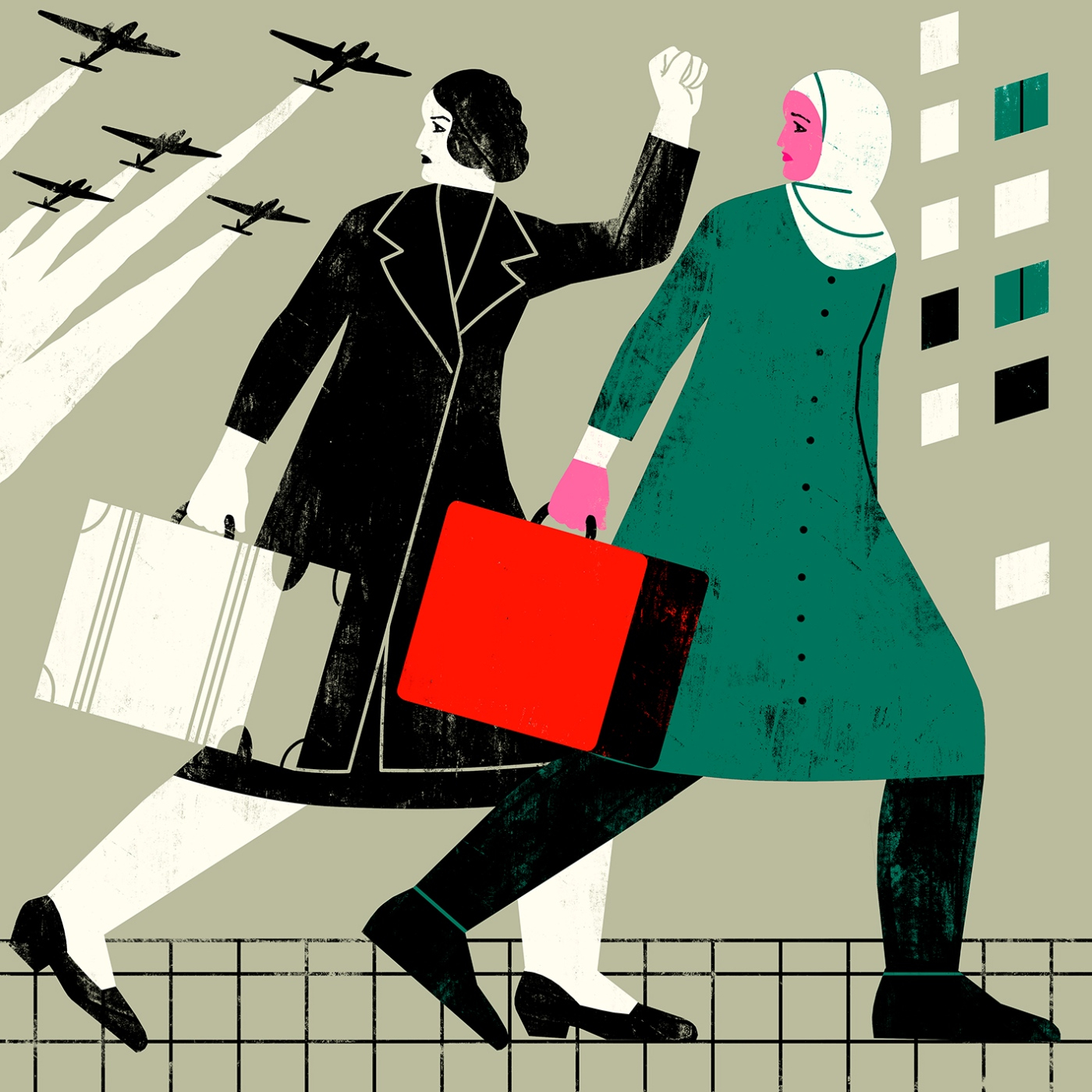
Radio, en el aniversario, el 50 aniversario de la muerte del dictador y cuando se cumplen dos años del genocidio en Gaza, pensamos que teníamos que unir las dos guerras, la española y la palestina.
- [00:57]
Doha
Y lo hemos hecho en esta serie de cinco capítulos que cuenta el exilio de una republicana, interpreta por Victoria Luengo y una palestina, Duhal Saidi, que cuenta su propia historia.
- [01:07]
Narrator/Host
Hoy os dejamos con los dos primeros capítulos, los dos siguientes los subimos mañana y el último, el día de Nochebuena.
- [01:13]
Doha
Si te gusta, compártelo, coméntalo, recomiéndalo. Es el mejor regalo de Navidad que puede hacernos.
- [01:18]
Narrator/Host
Bueno, ese. Y hacerte productor o productora, ¿No?
- [01:21]
Doha
También.
- [01:21]
Narrator/Host
Sí, que si no lo eres, ya estás tardando para que podamos seguir contando historias como esta cruda Navidad y feliz año.
- [01:51]
Lola
El exilio comienza cuando has de abandonar la casa. El exilio comienza cuando tienes que abandonar la casa. Cuando tienes que dejar atrás todo lo que amas y te marchas sin saber a dónde vas, si volverás o no volverás.
- [02:05]
Narrator/Host
Salvar el pellejo. Para mí el exilio era eso, pasar las putas, que decía yo, Pero salvar el pellejo, no dejarte la piel en el camino.
- [02:18]
Lola
Cuando tú veías aquello, cuando veías a toda esa gente tan deshecha, te dabas cuenta de que ibas a pasar calamidades porque había gente que se moría. Yo he visto a gente muerta que se quedaba en las cunetas.
- [02:36]
Narrator/Host
Y teníamos esa esperanza, la esperanza de acabar de una vez por todas con los padecimientos que habíamos pasado, de quitarnos las enfermedades que traíamos. Y en cuanto cruzamos los pirineos, nos dimos cuenta de que estábamos equivocados.
- [02:57]
Lola
Y yo tuve este pensamiento. Tú estás sola. Tú estás sola. No sabes dónde está la familia. No tienes a nadie en quien apoyarte. Pero ahora en adelante, ¿Qué pasará? ¿Continuarás estando sola? ¿Seguirás estando sola? Esto es Nacional 2 La Ruta del.
- [03:34]
Doha
Exilio capítulo 1 Tienes que irte.
- [03:40]
Lola
Es la mayor avalancha humana de nuestros días. Cerca de medio millón de refugiados españoles han huido a Francia en estas dos semanas de enero y febrero de 1939.
- [03:49]
Narrator/Host
Se calcula que entre 40 y 60 millones son los desplazados por esta Segunda Guerra Mundial, el mayor éxodo registrado en la historia.
- [03:56]
Lola
De 14 a 18 millones han dejado.
- [03:59]
Narrator/Host
Sus hogares por la división de India.
- [04:01]
Lola
Y Pakistán en este 1947, una cifra nunca alcanzada dentro de un país.
- [04:06]
Narrator/Host
El número de refugiados en el mundo ha alcanzado los 51,2 millones en este 2013, la mayor cifra desde la última contienda global.
- [04:14]
Lola
Casi 14 millones y medio de sirios se han exiliado desde el estallido de la revolución en el 2011 hasta la caída del régimen en el 2024.
- [04:23]
Narrator/Host
11 millones de ucranianos se han visto obligados a salir de sus casas desde el inicio de la invasión rusa en 2022 hasta este 2021.
- [04:32]
Lola
Hay casi 13 millones de refugiados por.
- [04:33]
Narrator/Host
El conflicto y el genocidio en Sudán que empezó en 2003 y aún hoy continúa.
- [04:38]
Lola
En este primer cuarto del siglo XXI son ya 123 millones de personas refugiadas en el mundo, un número que no ha dejado de crecer debido al genocidio de Israel en Palestina. Recuerdo el día. El día en que se decidió que tenía que irme porque la guerra estaba terminando.
- [04:58]
Doha
Recuerdo el día en el que, al llegar a casa, me nos vamos.
- [05:06]
Lola
Esa mañana había ido a la Universidad de Barcelona, donde siguieron dando clases los tres años de la contienda, a pesar de las bombas.
- [05:13]
Doha
Fue un día como otro cualquiera, porque para nosotros era muy normal que nos bombardearan en cualquier sitio, a cualquier hora.
- [05:25]
Lola
Éramos muy pocos en clase, cada vez menos hombres, porque los mandaban al frente, y yo una de las escasísimas mujeres. Mis padres siempre quisieron que estudiase y mi abuela se preocupó de que cumpliera su deseo, aunque ellos ya no estuvieran.
- [05:38]
Doha
Para mi familia, estudiar siempre ha sido importante. En casa de mi madre. No habían querido que fuese universitario, pero cuando se casó con mi padre, le vas a ir a la universidad. Y se matriculó con ella.
- [05:50]
Lola
Yo tenía una beca de estudios porque éramos pobres. Soy hija de dos sindicalistas de la CNT, y como ellos, yo también lo fui, Pero a mí me crió mi abuela. Mi madre murió cuando me tuvo y mi padre Cuando yo tenía cinco años, en 1923, en la represión contra el anarquismo que llevó a la dictadura de Primo de Rivera.
- [06:08]
Doha
Yo estudiaba con mis primas y con amigas. Me recuerdo ahora de los descansos que iba con ellas a la cafetería a comprarme una bolsa de esas patatas picantes que me encantaban. Estaban riquísimas y picaban muchísimo.
- [06:21]
Lola
Me acuerdo de que una compañera, al despedirse, me dijo que quizá ese era el último día que nos veíamos, porque las clases se suspendían, y que yo le no seas tonta, que seguro que volveré a verte. Porque me aferraba a esa sensación de que todo seguía como siempre. Las mujeres tejiendo al sol, los niños en los colegios, las fábricas cerradas y el tranvía averiado, como siempre. Por eso ese día tuve que volver a casa andando cinco kilómetros a la mitad. Me quité los zapatos y seguí con los pies descalzos, mis uñas coloreando de rojo el sucio asfalto. Así que yo empecé a caminar antes incluso de haberme ido, Hasta que tuve que salir corriendo porque volvían los aviones. Y mientras la gente era engullida por las bocas negras de los refugios, yo seguía la carrera hasta casa. Ahí sí hubo algo diferente al resto de días. Sonaron las sirenas, pero las baterías antiaéreas se quedaron mudas, Como si ya no tuviéramos respuesta.
- [07:46]
Doha
Volvía corriendo de las clases. Mi padre nos estaba esperando. Mi madre preparaba la comida. Yo entraba a la cocina para ayudarla. Ella decí haz esto, haz lo otro, venga, rápido. Hacía makluba bloheya Msahan. Aquí también hace esos platos, pero no saben igual que ahí. No sé. No es lo mismo, es otra cosa.
- [08:13]
Lola
Aquel día mi abuela había preparado lentejas.
- [08:16]
Doha
Era invierno.
- [08:26]
Lola
Comimos las dos solas, en silencio, con el ánimo sombrío, removiendo la sopa como quien remueve los pensamientos. Creo que ahí empecé a darme cuenta de la situación. Miyaya era una mujer recia y fuerte que había soportado mucho. Pero nunca la había visto tan para adentro, tan callada. Me parecía escuchar cómo se quebraba allí mismo el espejismo en el que yo vivía.
- [08:54]
Doha
Y entonces mi padre. Nos vamos. Él siempre decía que teníamos que irnos, pero ninguno creíamos que fuera en serio. Mi madre se quedó en shock. Se opuso. ¿Cómo iba a dejar ahí a mi familia, a su madre? Y él respondió no quiero que mis hijos sigan viviendo esto. Ella tampoco podía separarse de nosotros. Así que ese mismo día se lo comunicaron a mis tíos, a todos. Recuerdo que los hermanos de mi padre siempre le decían nunca sales de tu cueva. Porque mi padre siempre se quedaba en casa. Y cuando sales, sales del todo, sales del país.
- [09:51]
Lola
Y entonces, esa misma tarde, Millaya rompió su silencio y tienes que irte, Lola. Era el 15 de enero del 39. Un invierno en que las noticias te lavan la sangre tanto como el frío.
- [10:04]
Narrator/Host
Ya habiendo el glorioso ejército nacional recuperado en el día de hoy, la ciudad de Tarragona, las tropas valeras.
- [10:12]
Lola
Había caído Tarragona y nosotros éramos los siguientes. Lo escuchamos en la radio. Teníamos una en casa, la única del edificio, y venían todas las tardes los vecinos a escucharla con nosotros. Podéis callaros de una vez, que así no se escucha nada.
- [10:33]
Narrator/Host
Qué carácter, Lola.
- [10:34]
Lola
Qué carácter ni qué carácter. También estaba Manel, mi mejor amigo, anarquista y cenetista como yo, con quien me integré en las milicias de defensa de Barcelona.
- [10:44]
Narrator/Host
Por fortuna, el triunfo del bando nacional está poniendo fin a la tragedia de este país, que hoy se dedica a vitorear incansablemente al ejército salvador y a su caudillo. Viva España. Viva. Hay que huir.
- [10:57]
Lola
Hay que no cagarse en los pantalones, Manel. Hay que no dejarse matar.
- [11:00]
Doha
Sinrazón.
- [11:01]
Lola
Es la sinrazón a la que hay que hacerle frente. Yaya, Lola.
- [11:04]
Narrator/Host
Aquí ya no hay pueden ferres.
- [11:06]
Lola
Siempre se puede hacer algo. No si te matan. Tienes que irte, Lola.
- [11:19]
Doha
Cuando te vas, no piensas que es para siempre.
- [11:22]
Lola
No piensas que no vas a volver.
- [11:24]
Doha
Que hay gente a la que quieres, a la que no vas a ver más.
- [11:26]
Lola
Que hay calles que amas que no vas a volver a pisar.
- [11:37]
Doha
Mi calle era estrecha, aunque ahora ha sido destruida por las bombas. Era una calle pequeña que daba una plaza mayor. Bueno, una plaza así grande, que ahí jugaba siempre al hajla Bueno, la Bahuela. Y que también jugaba al fútbol, aunque los chicos protestaban, como todos lados. Pero a mí me daba igual. Era un barrio lleno de vida, a pesar del terror, como mi casa, donde siempre había gente. Venían los vecinos, venía mi familia. En nuestro salón se juntaba hasta 50 personas.
- [12:09]
Lola
En mi barrio la vida se hacía en la calle. Las mujeres a la fresca, los corrillos de hombres, el correteo de los niños, el trasiego de los obreros, el trajín de las tiendas. Pero ese último día, el bullying era los llantos de despedida, las carreras ansiosas, los motores en marcha. Y no solo el ruido, sino el olor. El olor de las hogueras en las que quemaban los recibos, pasquines, cartas y libros comprometedores que se arrojaban al fuego como restos de una ruina. Las mismas piras que los fascistas encendían en cada ciudad que tomaban, ahora las prendíamos nosotros ante el temor de su llegada. Éramos muchos en ese barrio que teníamos que temer por nuestras vidas. Éramos muchos los que participábamos en sindicatos, en partidos políticos y en las milicias.
- [13:13]
Narrator/Host
Camaradas, el gran exilio es ya una realidad. Desde Cataluña han emprendido el camino de la retirada miles de compatriotas, entre catalanes que abandonan su tierra y españoles de otras regiones que huyen de la represión. La carretera general hacia Francia se ha convertido en un embudo por el que también marchan nuestros soldados. Ante la imposibilidad de defender Barcelona por más tiempo. Hombres y mujeres, niños y ancianos, heridos y enfermos, avanzan cargados y doloridos bajo el frío invernal, la mayoría a pie, dejando a su paso un reguero de vehículos rotos y objetos tirados en las cunetas como muebles viejos.
- [14:00]
Doha
Yo aún no era consciente de lo que pasaba. Creía que nos íbamos de vacaciones. Era muy pequeña, no entendía nada. Sabía que no era como en verano. Sabía que no íbamos a la playa y tampoco a la casa de los abuelos. Así que pensaba que nos íbamos de vacaciones a otro país, como siempre veía en la tele.
- [14:19]
Lola
No me fui inmediatamente. Miyaya tardó en convencerme. Yo era obstinada, como ella, y como dicen que eran mis padres, le fui dando largas hasta que no hubo más remedio que irse. Porque tenía una razón poderosa para Ramiro, mi novio.
- [14:35]
Doha
El día de antes. Estuve haciendo fotos con mis amigas, muchísimas fotos al salir de clase. Y entonces vino una amiga mía, que era una amiga muy cercana y estaba en otro cole. Vino llorando, no paraba, y le no seas tonta, que seguro que volveré a verte. Pero creo que ella sabía que no era así.
- [14:56]
Lola
Ramiro estaba en el frente. Yo esperaba que apareciese en cualquier momento, entre ese desfile de soldados barbudos y sucios, de mejillas hundidas y rostro ojeroso, que se arrastraban por las aceras camino del Norte.
- [15:08]
Doha
Ella sabía que no iba a volver a verme.
- [15:11]
Lola
Yo creía que no iba a volver a verle.
- [15:13]
Doha
Era como si supiese que si me iba, no volvería a verla con vida.
- [15:18]
Lola
Era como si pensase que mientras me quedara, él aún podría seguir con vida.
- [15:23]
Doha
Murió el año pasado.
- [15:25]
Lola
Pero que si me iba, lo mataría.
- [15:28]
Doha
Mejor dicho, la mataron.
- [15:34]
Lola
Las despedidas. He tenido tantas. He tenido que despedirme tantas veces de tanta gente, de tantos sitios, de tantas cosas, que a veces me parece que mi vida ha sido una despedida. El exilio es un adiós que no se acaba.
- [15:56]
Doha
La última mañana mi casa se llenó.
- [15:59]
Lola
De gente, vecinos, amigos, familia.
- [16:03]
Doha
Todos lloraban.
- [16:05]
Lola
Hice un hato con una sábana donde metí un poco de ropa, unas mudas y una edición de las poesías completas de Antonio Machado, entre cuyas páginas guardé fotos queridas mías, de mis padres, de Ramiro y de mi abuela. Ella me dio. ¿Cómo lo dijo? Unas tonterías para que te acuerdes de tu yaya. Un collarcito de plata que llevó en su boda y una bufanda larguísima que me había estado haciendo desde primavera.
- [16:29]
Doha
Mi madre me olvídate de tu ropa, olvídate de tus cosas, solamente lleva lo importante. Era como olvidarte de tu vida. Yo conseguí convencerla de llevar al menos unos recuerdos, como unos cuadernitos que tenía de notas que me habían dejado mis amigas, y una muñeca, un peluche blanco y morado con el que duermo. Todavía no puedo dormir sin ello. Se llama Palestina.
- [17:10]
Lola
Al final del día fuimos a la casa de la CNT Fay, que había tomado el edificio de Fomento al Travail, la sede de la patronal en Vía Layetana. En la puerta hacían guardia unos milicianos con ametralladoras. Había mucha gente con bultos y maletas, muy ansiosa porque los camiones no llegaban. Salieron unas mujeres cargadas con cajas de cartón. Y de una de ellas cayó un bote de conservas que rodó hasta mis piernas. Era leche condensada. Me la metí en el hatillo. Me haría falta.
- [17:44]
Doha
Entonces llegó la hora. Abracé a mi prima, que era mi mejor amiga y que no paraba de llorar. Y me eché a llorar con ella. Empecé a llorar y ya no paré de hacerlo hasta que llegamos a la frontera. Porque ahí es cuando me di cuenta de que nos íbamos y quizá no volvería.
- [18:02]
Lola
Y ahí es cuando yo pensé que ojalá esos camiones no llegaran nunca. Era la noche del 25 de enero. La víspera de que los fascistas entraran en Barcelona. El cielo tenía una enorme luna roja. Los pájaros escapaban en bandadas. Yo no quería seguirlos. Hija, me ha jurado que te iba a subir en ese camión. Y bien sabe Dios que lo voy a hacer.
- [18:39]
Doha
Lola.
- [18:39]
Lola
Harem. Joan. No es negociable. Lola.
- [18:46]
Narrator/Host
Vamos.
- [18:47]
Lola
Vamos, que se va. No me puedo ir sin Ramiro.
- [18:50]
Narrator/Host
Al camión. Samba va.
- [18:51]
Lola
¿Y si llega ahora, Niña, próxima? ¿Quién luchará contra los fascistas? ¿Vais a luchar las viejas? Niña, no lo entiendes. Ramiro y yo queríamos. Nosotros. Hola.
- [19:06]
Narrator/Host
Siusplau. Siusplau.
- [19:08]
Lola
No nos podemos separar. Lo único que yo entiendo, mi amor, es que si no te vas, lo que os separará será la muerte.
- [19:16]
Narrator/Host
Última oportunidad. Nos vamos.
- [19:18]
Lola
Venga, sube ya arriba. Dile a Ramiro que yo se lo digo. Cuídate mucho, Niña. Espero volver a verte. Y así es como marché. Así abandoné mi país. Nunca volví a ver a Miyaya.
- [19:54]
Doha
Yo no he vuelto a Gaza.
- [20:00]
Lola
Por eso estoy aquí. Por eso quiero contarte mi historia y que tú me cuentes la tuya. Porque yo he pasado por lo que tú estás pasando. Y quiero acompañarte en el camino que te queda. Porque aún te queda camino.
- [20:13]
Doha
El exilio es un adiós que no se acaba.
- [20:22]
Lola
Yo estuve sola aunque me acompañaba un amigo. Aunque hice amistades en la carretera los perdí y me quedé sola. Había dejado a mi familia. Pero tú tienes a la tuya. Y ahora me tienes a mí. Me llamo lola.
- [20:47]
Doha
Me llamo doha.
- [20:55]
Lola
Cuando estalló la guerra en 1936, yo tenía 20 años.
- [20:59]
Doha
Cuando nací, en 2002, el genocidio siempre había estado ahí.
- [21:03]
Lola
Cuando salí de España, aún no había cumplido los 23.
- [21:07]
Doha
Cuando salí de Palestina, aún no había cumplido los 14. Los cumplí en Egipto dos meses después.
- [21:13]
Lola
Yo cumplí los 23 en Francia.
- [21:16]
Doha
Es la edad que tengo yo hoy.
- [21:18]
Lola
Yo dejé mi país en febrero de 1939.
- [21:21]
Doha
Y yo el mío en diciembre del 2015. Era invierno.
- [21:34]
Lola
¿Puedo hacerte una pregunta?
- [21:36]
Doha
Claro.
- [21:39]
Lola
¿Qué decían las notas de los cuadernos que te escribieron tus amigas?
- [21:44]
Doha
No lo sé. Diez años después aún no he sido capaz de leerlas.
- [22:10]
Lola
Nacional 2 La Ruta del exilio es un podcast de la República Independiente de la Radio creado y dirigido dirigido por Javier Gallego con las voces protagonistas de Victoria Luengo y Duha Al Saiti y la música y diseño sonoro de Pablo de Diego.
- [22:41]
Commercial Narrator
Cafe is this home no doubt where customers bank and get their cash out. There's no fees or minimums on checking accounts, so your money stays most capital one cafes are open all seven days. This magical place, as some people might call it is where the capital one bank guy says what's in your wallet, such a lovely talent terms.
- [23:01]
Lola
Applied. See Capital One dot com bank for details Capital One NA Member FDIC.