← Carne Cruda - PROGRAMAS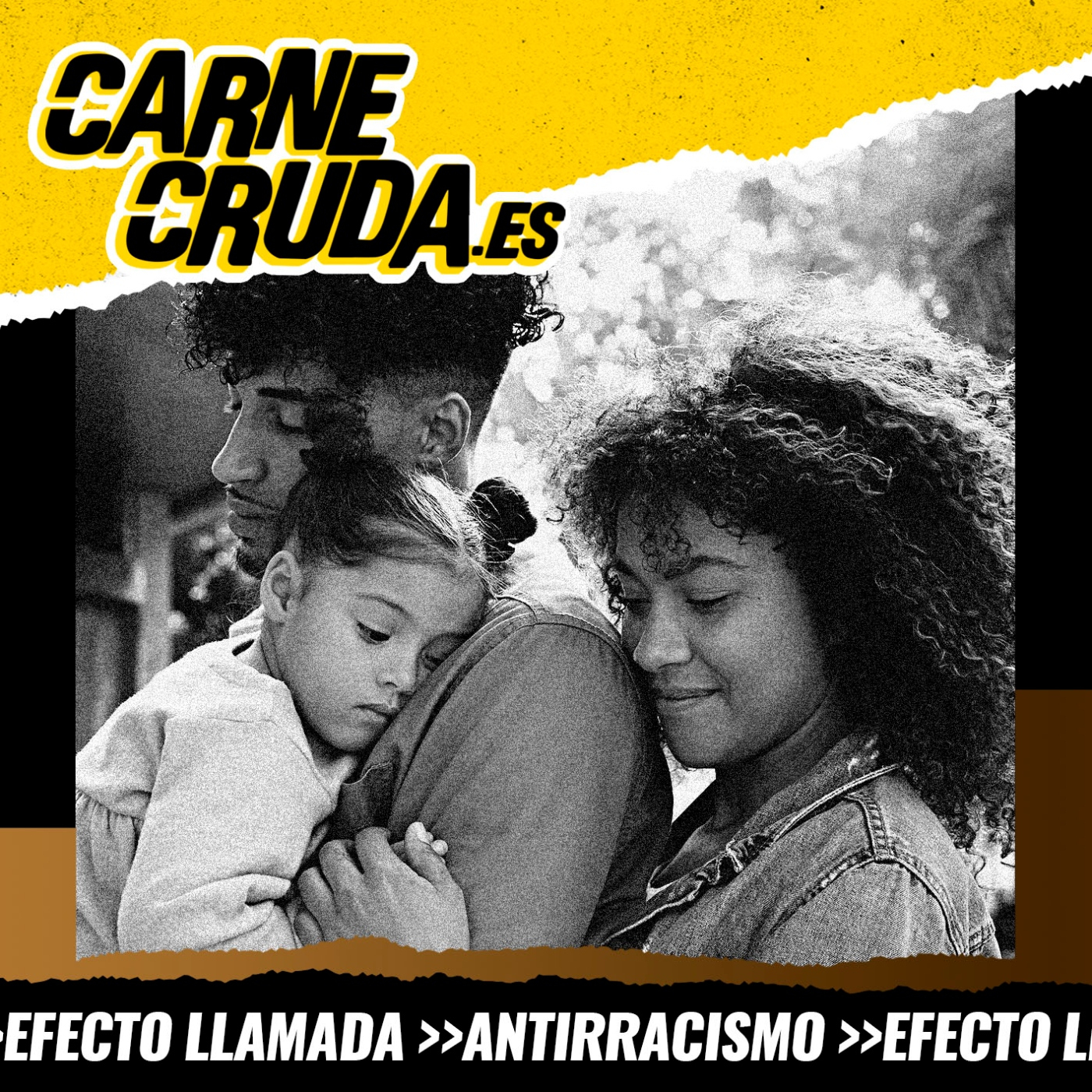
Carne Cruda - PROGRAMAS
Ni de aquí ni de allí: infancias racializadas (EFECTO LLAMADA - CARNE CRUDA #1639)
00:59:43
Loading summary
Transcript219 lines
- [00:00]
Javier Gallego
¿Te acuerdas Violeta, de que ayer hablábamos de un oyente que había dejado de ser productor? Se sentía muy culpable y decíamos, oye, pues a ver si otros os hacéis productores la culpabilidad para que él pueda no sentirse tan mal porque él ha estado pagando el programa para que otros lo puedan escuchar cuando no han podido.
- [00:19]
Violeta Herrero
Eso es. Creo que es muy recomendable que pensemos en quién está haciendo posible que podamos escuchar esto.
- [00:24]
Javier Gallego
Bueno, pues esto le ha hecho reflexionar a Emilio. Nos ha enviado este mensaje. Al fin hoy ha sido el día. Dice, tras años de aprovechar la generosidad de otras, hoy me he decidido a convertirme en productor. No quiero entrar en excusas, pero soy la prueba viviente de que en este país se puede ser precario incluso teniendo un trabajo fijo. En cualquier caso, aquí estoy. Mi situación ha mejorado lo suficiente como para permitirme algún pequeño lujo como hacerme productor. Ojo, que esto no es solo un acto solidario, es también un acto de puro egoísmo. Claro, claro que sí. Carne cruda me acompaña cuando voy al curro los domingos, cuando me cocino para toda la semana y en otros muchos momentos, alimentando no solo mi rabia, tristeza o desesperación, sino también muy a menudo el humor, la esperanza y la alegría de conocer proyectos e iniciativas que mantienen viva la brasa de la que algún día aprenderá la chispa que haga estallar la revolución que tanto necesitamos como especie.
- [01:18]
Violeta Herrero
Por favor, Emilio.
- [01:19]
Javier Gallego
Ole. Gracias por practicar este periodismo no solo diría necesario, sino imprescindible que practicáis en estos tiempos tan oscuros que nos ha tocado vivir. Mucho ánimo, mucha fuerza. Abajo el capitalismo y viva Palestina libre.
- [01:35]
Violeta Herrero
Cosa clara.
- [01:36]
Javier Gallego
A ver, yo no sé si después de este mensaje no te haces productor o productora es que no tienes corazón o no tienes dinero.
- [01:42]
Violeta Herrero
A ver, si es eso segundo se entiende, pero si es lo primero, no. Así que haz como Emilio, date un gusto, dáselo a otros que realmente no se lo pueden permitir y. Y hazte productor en Carnecruda es para que podamos hacer programas como el de
- [01:55]
Javier Gallego
hoy, como Los mosqueteros, Todas para una y una para todas.
- [01:59]
Desiré Bela Lobede
Ella nunca me habló bubi, siempre me habló castellano porque me decía que el bubi a mí no me iba a servir para nada porque mi madre tiene un discurso muy concreto sobre Guinea y yo lo he hecho mío y eso para mí es fuente de mucha contradicción, de sentimientos muy encontrados. Pero Guinea nunca ha sido parte de mi crianza. Primero porque no está presente en la vida de mi madre y segundo porque mayoritariamente no me crió mi madre, me crió mi tata. Por eso yo tengo un vínculo más fuerte con Andalucía y por eso eso he crecido bailando flamenco, sevillanas, tocando las castañuelas con José Manuel, escuchando Camarón.
- [02:48]
Javier Gallego
Uno de cada cuatro niños o niñas nacidos en nuestro país ya son de mad extranjeras. Pero no siempre fue así.
- [02:54]
Violeta Herrero
En los 70 y 80 la inmigración en España y el número de bebés con padres foráneos era insignificante comparado con la actualidad.
- [03:02]
Javier Gallego
Durante esos años, esos niños y niñas de distintos orígenes o color de piel conformaron su experiencia vital sin un espejo
- [03:08]
Violeta Herrero
en el que mirarse, sin entender por qué se sentían diferentes, ni de aquí ni de allí.
- [03:12]
Javier Gallego
Hoy esos niños y esas niñas se han hecho mayores y por fin se
- [03:15]
Violeta Herrero
nombran, se escuchan, se narran, reclaman su derecho a relatarse sin ser traducido, porque no son de fuera, son de aquí
- [03:21]
Javier Gallego
y también de allí.
- [03:22]
Violeta Herrero
Hoy queremos escuchar su historia.
- [03:25]
Youssef
Hay dos palabras que se han demonizado mucho.
- [03:28]
Javier Gallego
¿Cuántas personas están esperando para entrar en el continente europeo?
- [03:31]
Youssef
Todos de izquierda, se les ponen los pelos como escarpia. El sistema migratorio que nos trae aquí
- [03:35]
Desiré Bela Lobede
de forma masiva que la solución es
- [03:36]
Javier Gallego
dejarles venir todos con los efectos llamada
- [03:38]
Desiré Bela Lobede
con los taxistas del mar se trata de parar. Vamos con esa cosa llamada el efecto,
- [03:44]
Youssef
efecto llamada llamada, efecto llamada, efecto llamada que España, España está ejerciendo hace muchos años ya.
- [03:57]
Javier Gallego
Pues le hemos llamado y siempre acude. Josep Ulet, ¿Cómo estás?
- [04:00]
Youssef
Muy bien. Buenos días.
- [04:01]
Javier Gallego
Hoy nos va a enseñar a entender por qué escuchar estas voces y estos relatos no solo desde lo social, sino desde lo personal y por tanto desde lo político.
- [04:08]
Violeta Herrero
El último día dedicamos el programa a hablar de lo moro y lo poco que sabíamos de nuestros vecinos y vecinas así leídos, de lo poco que sabemos de determinadas historias que están ahí pero que no se narran.
- [04:18]
Youssef
Sí, eso es. En efecto, siempre han existido, siempre han estado allí, pero nunca han sido contadas o casi nunca.
- [04:23]
Javier Gallego
Youssef, como persona racializada que vino aquí siendo muy pequeño, ¿Qué importancia tiene para ti rescatar historias de infancias racializadas en España?
- [04:31]
Youssef
Pues si, no toda, mucha. Yo llegué aquí con cinco años, crecí en un pueblecito que se llama Mejorada al campo, en Madrid. Y escuchaba, crecía escuchando dichos, refranes y lugares comunes sobre mí, es decir, sobre los moros. Y bueno, eran cosas duras, obviamente, dichas como verdades absolutas que nadie cuestionaba porque era lo normal y lo común.
- [04:49]
Javier Gallego
¿Como por ejemplo?
- [04:50]
Youssef
Por ejemplo, esa asociación innata de lo moro con lo machista, con lo terrorista y con lo delincuencial. Ese tipo de cosas.
- [05:00]
Javier Gallego
¿Y tenías otras referencias?
- [05:02]
Youssef
Ninguna. Ni en clase, donde era el único racializado, y mucho menos en la tele, donde no había negros, ni moros ni chinos. A no ser que fuera en forma de clichés, como hemos visto de forma recurrente todos estos años en series como Aída o El comisario, donde era frecuente que aparecieran esos moros terroristas o esos inmigrantes criminales.
- [05:22]
Javier Gallego
Los médicos no saben si saldrá de esta.
- [05:24]
Youssef
Parece que el agresor es extranjero, por el acento, procedente del área del Caribe dominicano. Quizás Intentaremos conseguir un retrato robo. El comisario quiere que demos prioridad a este caso. Ya sabéis que estas cosas siempre traen cola.
- [05:34]
Javier Gallego
No sé cómo nos lo hacemos, que
- [05:35]
Juan Crudos Díaz
siempre nos cae lo peor de cada país.
- [05:36]
Youssef
Tú no tenías un abuelo sin referencia
- [05:38]
Violeta Herrero
en el cole, ni tampoco en los medios. Eso pesa muchísimo.
- [05:41]
Youssef
Claro. Y es un no existes, pero cuando existes es para mal. Durante mucho tiempo en España se han construido una idea muy cerrada de quién pertenece y quién no. Y por eso me parece tan valioso rescatar historias que nos narren de forma diferente, desde diferentes ángulos. Contarnos desde dentro y no desde lo que otros nos dicen que somos.
- [06:00]
Desiré Bela Lobede
Yo no tengo nada contra vosotros, no soy racista. Solo digo una me parece súper mal que siempre tengáis que estar con mafias y trapicheos. Así nunca vais a integraros
- [06:10]
Youssef
El yo no soy racista, pero que nos encontramos cada día. Y esto que escuchamos es un extracto del viaje de Said, que ganó el Goya al mejor corte de animación y cuenta cómo un niño migrante llega a un país lleno de promesas, pero recibido con barreras y rechazos. En su momento me gustó mucho porque de alguna forma me reconocí en ciertas experiencias de la infancia que hemos vivido, que nos fuimos críos y crías racializados en este país.
- [06:33]
Violeta Herrero
¿Y tú por qué crees que durante tanto tiempo han estado tan ausentes del relato público en España?
- [06:38]
Youssef
Bueno, creo que tiene que ver con algo estructural quién cuenta las historias y cuáles son las historias que nos importan. Y durante mucho tiempo las experiencias de las personas racializadas en España han quedado fuera de ese foco. No porque no existieran, sino porque no se han considerado parte central de la narrativa de este país.
- [06:55]
Javier Gallego
Como si fueran historias periféricas. Exacto.
- [06:58]
Youssef
Cuando en realidad hablamos de algo profundamente español, de migraciones, de familias que se reinventan, de infancias que crecen entre varios mundos. Pero también de cómo se construye la identidad cuando el entorno constantemente te recuerda que eres diferente.
- [07:12]
Lucía Bomío
Claro.
- [07:12]
Violeta Herrero
Y en ese sentido, escuchar estos relatos también cambiará algo para quienes lo viven.
- [07:17]
Youssef
Muchísimo. Para muchas personas racializadas, crecer en España significado hacerlo sin apenas referencias, sin ver en los medios, en la televisión o en los libros a gente que se pareciera lo más mínimo a ellas y que tuviera una experiencia lo más mínimamente parecida.
- [07:33]
Violeta Herrero
Recordemos cuando salió la nueva versión de La Sirenita protagonizada por la actriz racializada Halle Berry, y se viralizaron vídeos de niñas negras mirando la peli. Absolutamente maravillada de identificar a alguien como ella en la pantalla. Y en una peli de Disney.
- [07:47]
Youssef
Sí, total. La importancia de los referentes. Por eso, cuando aparecen proyectos que ponen de relevancia lo que hemos vivido, pasa algo muy poderoso. Y es que de repente esas vivencias que parecían individuales se convierten en algo reconocible como colectivo.
- [08:01]
Javier Gallego
Descubres que no eres la única persona a la que le ha ocurrido.
- [08:05]
Youssef
Totalmente. Y eso tiene un impacto enorme porque permite poner palabras a experiencias que muchas veces se vivieron de forma muy intuitiva o en silencio. Pero también tiene un efecto hacia afuera. Ayuda a que la sociedad entienda que forma parte de la historia de España, que no son historias paralelas, sino historias contemporáneas del país. Y además contadas desde lugares muy cotidianos. Una casa, una familia, una niñera, una cocina. Espacios donde se construyen vínculos, efectos y también identidad.
- [08:32]
Javier Gallego
Pues con esa preciosa idea arrancamos el recorrido de hoy. Un viaje por memorias familiares, infancias, maternidades, migraciones y vínculos inesperados.
- [08:40]
Violeta Herrero
Historias que se quedaron fuera del relato oficial y que ahora empiezan por fin a ser escuchadas.
- [08:46]
Juan Crudos Díaz
¿Alguna vez te has preguntado en tu restaurante chino de toda la vida que por qué eligieron tu pueblo o tu ciudad para sentarse? ¿Qué hacían los dueños del restaurante antes de llegar a España o por qué su hija o su hijo pasaban tanto tiempo sirviendo mesas, si el restaurante abría todos los días, ¿Quién cuidaba de esos niños? Si te preguntaste cuál es la vida secreta de los que habitan en los restaurantes chinos, quédate y escucha un poco más sobre la vida de Sara Chiu, que al igual que yo, es una restaurant kid, una chica descendiente de migrantes chinos que se crió en un restaurante chino.
- [09:21]
Youssef
Y para empezar, os traigo un proyecto que rescata historias invisibilizadas de la España reciente. Se llama Mi familia española y lo dirige Kwanzu, ilustradora y autora de cómics como Gazpacho Agridulce y andaluchinasporelmundo.
- [09:33]
Javier Gallego
A ver, si esta es una vieja conocida de este programa, yo creo que deberíamos darle una colaboración porque es una de las mayores y más frecuentes invitadas. La hemos tenido muchas veces en el programa con distintos trabajos, como este tan interesante que ahora presenta Juan, que nació
- [09:46]
Youssef
en Algeciras y creció en Estepona, y ha contado su infancia en el restaurante chino de sus padres. Pero ahora va más allá, reconstruye historias que no habían tenido espacio en el relato oficial. Y hablamos de hijos e hijas de familias migrantes de los 80 y los 90 que crecieron entre la vida de sus padres y las familias españolas que los cuidaban mientras ellos trabajaban.
- [10:04]
Violeta Herrero
Porque con los padres trabajando jornadas maratonianas, alguien tenía que cuidar a esas niñas y niños.
- [10:09]
Youssef
Y así se formó una generación con dos familias, como dice Kwan, que ha creado un proyecto que funciona como un archivo de memorias invisibles a partir de un trabajo de investigación íntima y coral.
- [10:19]
Javier Gallego
Me parece maravillosa la idea, la vida secreta de todos esos niños y niñas detrás de los restaurantes chinos. Juan Crudos Díaz, ¿Cómo estás?
- [10:27]
Juan Crudos Díaz
¿Qué tal? Buenos días. Yo súper feliz, la verdad, que tenga este espacio aquí, salvando las distancias de 600 kilómetros, no que nos separa, pero
- [10:36]
Javier Gallego
súper feliz, no hay barreras entre nosotras,
- [10:39]
Violeta Herrero
sobre todo para la alegría de Juan, que siempre ha sido alegre.
- [10:42]
Javier Gallego
Oye, una cosa, primera pregunta casi obligada. ¿Por qué sentiste la necesidad de contar esta historia?
- [10:47]
Juan Crudos Díaz
Porque, a ver, yo he tenido esa experiencia, además, a mi tata, mi mami, Loli de Algecira, la quiero un montón, pero yo pensaba que solo pasaba con la familia china, o sea, que era algo que solo los chinos contrataban a españoles en su momento. Y de repente un día escucha Desire, que él ha criado su Tata andaluza en otro podcast y esto merece ser estudiado. Y así empezó un poco todo, Yo recopilando historias de bastante gente y luego huye, llegó un día y eso le tengo que dar forma artística y acabé
- [11:18]
Javier Gallego
en un documental porque hay muchas historias como la tuya.
- [11:22]
Juan Crudos Díaz
Bueno, muchas en términos cuantitativos no sé porque no tenía los medios para hacer esa investigación, pero claro, yo pensaba que era algo tan específico y no lo es, porque tú vienes a España y migras sin red y entonces claro, si estáis criando es esa pregunta de quién cuida a esos niños, ¿Qué pasa, ¿Por qué están en el restaurante? Y es muy fácil criticar y si no, ¿Dónde van a estar?
- [11:47]
Violeta Herrero
En el podcast hablas precisamente de eso que estás contando, de ese fenómeno invisibilizado, las infancias de hijos e hijas de migrantes que pasaban gran parte del tiempo con familias españolas mientras sus padres trabajaban jornadas muy largas, historias como la tuya. También ha mencionado a Desirebe, con la que hablaremos luego. Y la de otra de las protagonistas es Valeria.
- [12:05]
Desiré Bela Lobede
Valeria es mi primer nombre. Bueno, ya los profesores me empezaron a
- [12:08]
Juan Crudos Díaz
llamar Valeria y entonces como que acepté el Valeria también un poco con este
- [12:13]
Desiré Bela Lobede
car, un poco de identidad aquí en España, en fin, cosas así.
- [12:17]
Juan Crudos Díaz
A Valeria le encanta escribir y al contactar conmigo escribió un pequeño relato precioso sobre su historia. En ese relato hablaba de Anabel, la persona que la cuidó en su niñez. Te leo aquí un fragmento. Anabel me enseñó casi sin saberlo lo que significaba ser de aquí.
- [12:32]
Violeta Herrero
¿Por qué crees tú que estas experiencias han quedado tan fuera del relato sobre la historia reciente de España, como estábamos comentando con Josef antes?
- [12:39]
Juan Crudos Díaz
Bueno, bueno, yo aquí voy a ser un poco polémica. Yo creo que las infancias racializadas importar mucho no importa, o sea, porque a ver, yo he recibido unos ghosting enormes cuando he presentado este proyecto la gente decía bueno, es de nicho, no me lo decían así, pero ese silencio me da a entender que no. Y luego la respuesta a este podcast ha sido todo lo contrario. Entonces claro, en mi cabeza no cabe que interese, pero luego me hayan cerrado puertas. Entonces claro, si los cuidados y las infancias están invisibilizadas, los cuidados y las infancias racializadas el doble, porque ahora sí que se habla mucho de Montessori y de crianza respetuosa y no sé cuánto y eso son infancias muy blancas, que no quiere decir que no haya personas racializadas en los Montessori, pero al final también te da a entender que no hablamos de clase aquí y a lo mejor mis padres no tenían tiempo para pensar. Crianza respetuosa, Montessori, guardería privada bilingüe. Yo aprendí inglés en el restaurante chino, al final mi madre también. Y claro, al final pues ¿Quién está en los medios de comunicación para producir estas historias? Antes se hablaba de convertirte bien productor. Pues yo pienso mucho en eso de qué pasa con nuestras historias, por qué no han llegado a prime time, Pero los migrantes no se invaden, eso está en prime time todo el tiempo qué llega y qué no llega. Yo siempre digo de nicho, ¿Cuál nicho? Porque yo creo que mi nicho es muy grande.
- [14:09]
Violeta Herrero
Totalmente.
- [14:09]
Juan Crudos Díaz
El nicho de ser buena persona, el nicho de la educación gigante.
- [14:15]
Javier Gallego
Bueno, por eso está teniendo éxito el podcast y por eso lo queríamos recomendar hoy.
- [14:18]
Youssef
Youssef, justamente sobre esto que acaba de comentar Javi, el éxito que has mencionado tú, a mí me gustaría preguntarte ese éxito, ¿Has podido ver en qué público en particular o te refieres al público en general?
- [14:28]
Juan Crudos Díaz
Bueno, es un público amplio porque por ejemplo hay periodistas españoles que justo estaba en la competencia, que me han dicho en Caser y en otras cadenas que les ha dado mucho que pensar, que nunca se habían planteado qué pasaba con esas infancias. Pero yo siempre que barro para lo mío. A mí lo que me interesa es cuando me escriben hoy personas racializadas, ya adultas. El último mensaje que recibí fue que había sido sanador, que de repente había podido colocar cosas de su infancia y había encajado y te coloca y te sientes visa. Y eso para mí ha sido súper bonito. Los podcast cuesta mucho tener un espacio en medios de comunicación, en periódico, entonces han salido unas entrevistas que yo he visto que otros podcast no han tenido ese espacio y en eso estoy muy contenta.
- [15:16]
Javier Gallego
Sí, menos mal que existe el podcast precisamente para dar voz a estas voces que en los medios generalistas no se quiere escuchar y no entiendo por qué. ¿En tus cómics tú ya habías contado tu propia infancia en el restaurante familiar, pero aquí decides utilizar este formato sonoro y empezarlo con la historia de Sara Q u otro restaurante kid como tú y como la llamas? ¿Cómo es la vida de esos niños y niñas en los restaurantes? ¿Cómo fue la suya? ¿Por qué empiezas con esta y también cómo fue la tuya?
- [15:43]
Juan Crudos Díaz
Bueno, es que a mí me interesaba porque no sé si Sabéis que el 60% de la población china, cuando se cogía estas estadísticas en España, viene de mi pedanía, y le llamo pedanía porque para estándares chinos nadie lo conoce. Si yo voy a Pekín o voy a Shanghai y dice mi pueblo, nadie lo conoce, pero es muy importante para la migración china en España. Entonces Sara, de repente, yo la había visto en redes sociales que se había ido en bicicleta sola a China, a nuestra pedanía, tres años, y dije bueno, pues me escribió ella y me yo también tengo esta experiencia y no sé. Y así empezó todo, porque luego resulta que cuando llegó a China en bicicleta, mi prima fue a recibirla, sus padres conocen a los míos porque van a la misma congregación cristiana, o sea que de repente había muchos puntos en común que bueno, no es la mía, pero podría ser la mía. Y aparte es que siempre estar yo hablando de mi vida un poco egocéntrica,
- [16:38]
Javier Gallego
pero ¿Cómo son esas vidas aparte de la tuya? ¿Qué es lo que las ha marcado para ti? ¿Qué es lo fundamental, lo que las determina?
- [16:47]
Juan Crudos Díaz
Es que eso es muy difícil. Yo creo que lo que determina un poco es la intimidad y el amor a esas dos familias, porque cuando yo hice la investigación la gente pensaba que yo hablaba de adopción internacional y yo no estoy hablando de eso. Yo tengo familia biológica, la que quiero, pero de repente tengo una familia española que es más que una tata. Yo a Loli es que la llamaba mi mami Loli. Y entonces estas cosas. También hablo mucho del multilingüismo afectivo o el bilingüismo afectivo, que de repente el amor se transmite de otra manera y tú de niña no lo sabes interpretar. Y de repente mi plato favorito es las patatas fritas con huevo y mi madre chica, no sabía hacer eso y entonces freía también la parte amarilla del huevo, la yema, y así no se hace. Y entonces de repente se te va haciendo la cabeza un lío hasta que vas colocando el miltius bilingüismo afectivo gastronómico y eso. Lo que pasa es que claro, en las narrativas de niñeras nannies, pues habían quedado un poco más escondidas y tenemos que sacar y visibilizar la red de cuidados de que hay una persona española que me ha querido profundamente y yo a ella, y nos seguimos queriendo, porque de esto va la primera temporada y que ha conformado una parte indispensable nuestra identidad. Porque yo creo que a lo mejor mi identidad barrería, o sea, barrería mucho más para hacia lo chino, no en plan en términos porcentaje, pero hablaría mucho mejor chino si no tuviera esta figura de apego andaluz. Eso pienso yo, sí.
- [18:21]
Javier Gallego
Y eso cómo te rompe la cabeza el ver que tienes como dos familias, dos madres, dos culturas gastronómicas, dos acentos, dos idiomas.
- [18:34]
Juan Crudos Díaz
Pues es que mira, yo pensando al hacer el podcast ya, porque claro, me conocéis de novela gráfica, pero yo aquí estaba escribiendo guiones, entrevistando, luego dije ¿Dónde está el recuerdo primordial? De repente la separo y fue un cliente restaurante chino que me decía si tú llamas a tu madre mamá y a tu mami loli, mami Loli, ¿Cómo sabes quién es tu madre? Y para mí en ese momento me daba igual. Y luego este señor me pregunta esto y ay, hostia, que tengo que elegir. Como cuando la gente me pregunta mi identidad, tengo que elegir. Claro, no hace falta, pero te hace como cuando te dicen qué quieres más a tu madre y a tu padre y tú dejas al nene muñeco
- [19:19]
Youssef
y
- [19:20]
Juan Crudos Díaz
la lealtad dónde va. Entonces te empiezas a elegir unas cosas que te quedas Eso, muñeca.
- [19:25]
Javier Gallego
El podcast acaba conectando historias muy distintas de familias chinas, afrodescendientes, latinoamericanas, pero con experiencias de infancia que en el fondo se parecen mucho entre sí.
- [19:32]
Violeta Herrero
Precisamente para profundizar en esa idea pedimos a Valeria, de quien oíamos hablar antes en el podcast, que nos enviara un audio y en él habla de cómo se construye la identidad a partir de todos esos elementos culturales que han formado parte de su infancia.
- [19:44]
Juan Crudos Díaz
Yo nací en Madrid a los pocos meses de que mis padres llegaran. Mis padres eran bastante jóvenes y no sabría decirte exactamente qué hicieron en aquellos primeros años, pero sí qué rituales mantienen hoy 40 años después y que por tanto creo que han estado siempre presentes. Creo que la mayor parte están relacionados con las personas que han formado nuestra familia, ya sea en bolivianos o años después españoles, entendiendo la familia como, yo
- [20:10]
Desiré Bela Lobede
creo que como nuestro principal núcleo de apoyo para prosperar.
- [20:15]
Violeta Herrero
Claro, esa pregunta te la lanzamos a ti. ¿Cómo hiciste para conservar tu identidad china creciendo entre dos mundos?
- [20:21]
Juan Crudos Díaz
Bueno, es que a mí, en mi caso, yo renegaba de mi identidad china.
- [20:24]
Violeta Herrero
Claro.
- [20:26]
Juan Crudos Díaz
¿Es decir, imagínate después de esa pregunta de quién es tu madre cómo lo sabe? Y de repente el bullying racista en el colegio. Yo pensaba que tenía que pronunciar la R mejor que nadie, que tenía que saber lo de España mejor que nadie. Oye, me lo sé para ser aceptada. Entonces pasas una parte de tu infancia renegando fuerte, porque es que además ser china no es cool, ser china es trabajar en restaurante chino, no tener reyes, no tener comunión. Y digo pues vaya caca. Es que claro, no había nadie. Estás en plena rebelión de mi madre y creando tu identidad individual. Entonces no hay contrapeso, no hay referentes, no había más comunidad china porque vives asimilada. Entonces claro, para mí no ha sido preservar, para mí ha sido reclamar mi identidad china, ir creando con China un lazo, ir viajando cuando he podido, ir conociendo la tierra de mis ancestros y eso ha ido sanando, porque claro, al final yo soy china y renegar de mi identidad china es matar una parte de mí. Para mí ha sido super sanador integrarla
- [21:36]
Javier Gallego
ha sido muy sanador para ti y para muchas comunidades racializadas, porque como muy bien contabas, muy bien cuentas en el podcast, no es solo la comunidad china. Hay un momento clave que mencionas en entrevistas cuando escuchaste a Desiré Bela contar que ella también fue cuidada por una familia española, rompiendo tu idea de que esa experiencia era algo que sólo había vivido la comunidad china.
- [21:54]
Desiré Bela Lobede
Como mi madre trabajaba a todas horas, la Tata aprendió a peinarme, aprendió a hacerme los mismos peinados con hilo que me hacía mi madre. No tengo muy claro cómo aprendió porque no creo que mi madre tuviera tiempo de enseñarle, pero sé que la Tata me peinó en alguna ocasión.
- [22:11]
Youssef
Désirée Bela Lobede es escritora, comunicadora y activista antirracista afrodescendiente nacida en Barcelona, de familia originaria de Guinea Ecuatorial. A través de sus libros, conferencias y colaboraciones en medios reflexiona sobre racismo, identidad y pertenencia a la sociedad española. Es autora de obras como Ser mujer negra en España, donde analiza desde la experiencia personal y política qué significa crecer y vivir siendo mujer negra en España.
- [22:32]
Javier Gallego
Y está en medio de una formación precisamente sobre racismo de la que se ha escapado unos minutos para entendernos. Desiré Crudos Díaz Hola, buenas.
- [22:40]
Desiré Bela Lobede
¿Qué tal?
- [22:40]
Javier Gallego
Muy bien, encantadísimos de saludarte. Tu familia es de Guinea, pero tu infancia en Barcelona estuvo marcada por los vínculos con otra familia, una pareja andaluza, Manuel y Fina, a quien llamas Lolo y Tata, como acabamos de escuchar. ¿Cómo te marcó tener esa segunda familia blanca inmigrante a la vez?
- [22:55]
Desiré Bela Lobede
Bueno, claro, estas son respuestas que tú te das después, al cabo del tiempo, cuando te encuentras con personas tan maravillosas como Chuen, y te pones a reflexionar sobre lo que supuso, pero lo haces siempre a toro pasado, porque en el momento tú estás allí, eres fruto de unas circunstancias y siendo niña no tienes tampoco la capacidad analítica de ver cómo eso te afecta. Cuando yo después, con el paso de los años me siento y hago el ejercicio de pensar, de reflexionar, me doy cuenta de que evidentemente eso ha contribuido a mi construcción identitaria de una manera muy determinada, de ser una persona que de repente no cumple los estereotipos que pesan sobre mí como persona negra, porque crezco con un acento de kite loquísimo, bailando flamenco, tocando las castañuelas, pero escuchando a tijeritas con José Manuel, y eso forma parte de mi construcción identitaria. Pero claro, el hecho también de haber sido criada por una familia española, como decía Chon ahora, también hace que yo no tenga un vínculo cultural ni físico en muchos casos, con mis ancestros, con mi ancestralidad, con mi cultura, con lo que implica las celebraciones y el ser una persona bubi. Entonces eso es una lectura que una hace después que no hace en el momento. En el momento tú estás ahí existiendo, siendo y poco más.
- [24:28]
Youssef
En el podcast habláis del bilingüismo del amor para describir la relación con tu madre y la familia que te cuidó. ¿Cómo describirías ese lenguaje emocional que se construyó entre esos dos mundos?
- [24:37]
Desiré Bela Lobede
Bueno, yo creo que de nuevo, también las criaturas tienen una capacidad de adaptarse a lo que se encuentran tremenda. Entonces al final tú dentro de tu corta edad aprendes unos códigos determinados y sabes que en tu casa hay determinadas expresiones y en la casa de tu tata hay otras. Entonces yo en casa de mi tata sabía que podía meterme en su cama el sábado por la mañana con ella y con Lolo, y que mi tata me comía besos, y que el amor se expresaba de una forma muy física. Pero con mi madre guineana eso no estaba ahí. Es una cosa que siempre hablamos de los padres africanos, que el tema del contacto como que no es. No forma parte de cómo expresan tu amor. Sí que hay un momento en el que a lo mejor piensas, ostras, a lo mejor mi madre no me quiere porque no me da besos, porque no me abraza, porque es muy distante, porque no. Te crías con tú. Esto lo sabes también con ese respeto férreo a tus mayores y llega un momento en el que a veces incluso dudas de ¿Me querrá? ¿No me querrá? Pero luego te das cuenta de que tu madre te expresa el amor a través de otro tipo de cuidad, de tenerte en casa, la comida, no sé, son otras formas de expresar que no pasan tanto por lo físico. Y lo aceptas, lo aceptas ahí yo
- [26:10]
Juan Crudos Díaz
puedo añadir algo a eso.
- [26:11]
Javier Gallego
Claro, por favor.
- [26:12]
Juan Crudos Díaz
Es que estaba hablando también cuando entrevisté a Safia como experta y en este mundo el materialismo, capitalismo, pero nuestras familias vienen de un contexto de pobreza y entonces claro, nosotras no éramos capaces en aquel momento, en la infancia, de valorar una cama, ropa, comida, que es como lo básico. Eso también, como dice a toro pasado miramos, pues tiene la cama. Pues es que mi madre comía en China, me decía ella, no teníamos ni para comer arroz, todos los días comíamos batata, yo he comido carne en mi infancia. Pero todo esto como. ¿Con quien te comparas? ¿Con tu madre que come batata todos los días? ¿Te comparas con tu compi de clase que se porta fatal en Reyes y luego tiene aquí una PlayStation y se van de vacaciones a Canarias y tú estás pringando en el restaurante? Pues qué horror de ser china, que era mi conclusión, o sea, el jumping into conclusion. Pero el caso es que parece que está muy manida la frase nos fuimos a España para una vida mejor, pero literalmente nos fuimos a España por una vida mejor, el del campo rural, porque Tin, quién es muy rural y era muy muy pobre en ese momento, había una pobreza extrema por debajo del nivel de la UNESCO hasta el 96. Entonces claro, el amor son muchos besos y mucho abrazo, pero el amor también es tener unas zapatillas que no estén rotas y también es tener libros en el cole. Y lo que pasa es que claro, todo eso tampoco se habla explícitamente.
- [27:48]
Violeta Herrero
Totalmente. Y por eso es importante que escuchéis este podcast y la historia que cuenta directamente la madre de Siré, que es, vamos, a mí me ha dejado con el culo torcido, te lo digo. En el podcast de Siré hay una reflexión muy interesante en la que tú cuentas que José Manuel, el hijo de Lolo, a quien describes como un hermano. Él recordaba que de pequeña quizá tú no te veías a ti misma como una niña negra, precisamente porque tenía una familia blanca. ¿Cómo fue ese proceso de tomar conciencia de esa diferencia?
- [28:14]
Desiré Bela Lobede
Bueno, pues también a trompicones y a te lo pasado siempre. Todo llega después, claro. Y esto se lo preguntas. Pues no sé, Chuen también te lo dirá, que ella de pequeña no tenía conciencia de ser china, yo no tenía conciencia de ser negra, incluso a pesar de con personas que no fueran como yo. Pero en ese momento el amor y el vínculo difumina esa diferencia. Y la diferencia surge cuando tú sales de ese ámbito amoroso y de cuidados y de cariño, y empiezan por la calle el negra china. Entonces ahí es cuando tú bueno, ¿Qué significa eso? Que la gente lo dice y se ríe, o sea, que lo dicen para que de alguna forma eso a mí o me avergüence, o me siente mal, o me cabree o lo que sea. Entonces, de nuevo, tú no sabes de dónde surge eso cuando tienes. No sé, yo la primera vez que me llamaron negra por la calle tenía a lo mejor 6 años. No entiendes de dónde surge eso, ni por qué pasa, ni qué se supone que tú tienes que hacer con eso. Todo eso llega luego a toro pasado, cuando tú empiezas a acercarte a las teorías antirracistas y empiezas a darte cuenta de que eso no solo te pasaba a ti, que le pasa a todas las personas. En mi caso, todas las personas negras, que eran la única persona negra en su entorno, hemos vivido eso. Pero luego le pones nombre y luego ves que eso está atravesado por la supremacía blanca, por la historia del colonialismo, por el racismo flagrante en una sociedad que no se reconoce racista. Pero siempre son reflexiones que tú puedes
- [29:50]
Youssef
hacer después te sirve para acabar, y siempre que te veo aprovecho para sacarte información, para quedármela para mí. Pero me vas a permitir que te vuelva a preguntar por tu experiencia como madre de chicas racializadas y para preguntarte cómo les transmites esa identidad y ese orgullo para que se sientan seguras de quién son, pese al racismo que nos encontramos.
- [30:11]
Desiré Bela Lobede
Pues yo lo he hecho de una forma muy natural. Creo que ahora nos encontramos en una generación diferente de la de nuestros padres, porque mi madre estaba aquí sobreviviendo, mi madre estaba aquí pluriempleada al máximo, y entonces ella no podía hacer el ejercicio de pararse a sentarse y explicarme determinadas cuestiones con las que yo me iba a encontrar, ella también, fruto de su propia experiencia de haberse criado con la dictadura franquista. No nos olvidemos de que en Guinea Ecuatorial la dictadura franquista fue muy real y estuvo muy presente. Mi madre era, o sea, su mensaje hacia mí siempre no destaques, no contestes, no, él da las gracias. Pero eso también estaba implícito. Yo estoy en otro lugar, yo no estoy en el punto de supervivencia en el que estaba mi madre. Yo me puedo sentar y hablar con mis hijas sobre lo que implica ser personas negras en una sociedad abiertamente y mayoritariamente blanca. Entonces, desde pequeñas empiezas a explicarles por cosas del día a día. Lo primero que les enseñas a decir cuando ya pueden hablar por favor, no me toque el pelo. Siempre da mucha risa, pero es muy triste, porque de repente no te imaginas
- [31:38]
Javier Gallego
que eso pasará entre blancos, la gente tocándose el pelo sin parar.
- [31:41]
Desiré Bela Lobede
Claro, eso no ocurre. Y a partir de ahí, a partir de todas estas pinceladas, les vas haciendo entender que la gente las va a tratar de una forma determinada y que no tiene nada que ver con ellas, que no es culpa suya. Y luego, a partir de aquí, empiezas a. Conforme crecen, empiezas a complicar un poco o a complejizar el discurso. Y ahora que mis hijas tienen 17 y 19, pues ya el discurso anticonceptivo, racista en mi casa es súper político. Y las dos son muy.
- [32:16]
Juan Crudos Díaz
Yo lo sé.
- [32:17]
Desiré Bela Lobede
Entonces creo que ahora nos encontramos en un momento en el que las familias hemos tenido un acceso mucho mayor a la información, al antirracismo. Podemos desarrollar esas teorías, podemos transmitirlas. Y eso es algo que mi madre no tuvo el tiempo para hacer, porque mi madre tenía que trabajar, porque su objetivo principal era su forma de amarme y de cuidarme, era que yo tuviera la mejor educación posible. Entonces, para eso ella tenía que estar pluriempleada a full. Y ahora la situación es diferente y permite espacios de diálogo, de sentarnos y de poner sobre la mesa todas estas cuestiones.
- [33:00]
Javier Gallego
Pues a ver si un día nos sentamos aquí, en esta república, te vienes y hacemos un diálogo más largo, que tenemos muchas ganas de hablar contigo. Desiré Bela Lobede Muchísimas gracias. Un abrazo muy fuerte.
- [33:10]
Desiré Bela Lobede
Gracias a vosotras. Que vaya bien.
- [33:12]
Javier Gallego
Te dejamos con el curso y seguimos con el curso acelerado que nos está dando. ¿Cuán para ti cómo ha influido este documental en tu relación con tus padres y en la manera en que miras ahora tu propia historia?
- [33:22]
Juan Crudos Díaz
Bueno, yo creo que eso para mí en la mía personal ya estaba muy masticado y creo que porque yo Gazpacha Uniduce lo publiqué ya hace como 11 años y que era mucho de exorcizar, joder qué difícil esta palabra, exorcizar y dejar en ese libro muchos recuerdos y también pensar en mis padres como personajes y empatizar con ellos. Entonces claro, para mí ya mi historia estaba muy muy colocada. Lo que me ha gustado del documental es que no estoy yo sola, ver esta voz coral y ver que somos niñas, no solo chinas, sino que niñas de Guinea Ecuatorial, Guinea de Bolivia, que hemos tenido esta historia y luego tras grabar es que nos hemos hecho amiga. Es una grabación tan íntima que ha sido muy guay. Hemos hablado de Valeria y lo que me encantó de su capítulo es que ella, mira, es más cercana de sereneidad, pero se empezaba a preguntar cosas de Bolivia ahora y yo estuve de testigo en primera línea grabándola de cuál era su camino de reclamar su identidad. Eso que yo he transitado, bueno, empezó a transitar hace diez años y ha sido como muy bonito porque lo que decimos antes de lo personal vamos a lo colectivo y ya no es que yo sea egocéntrica o yo sea una rara, es que de verdad ha pasado más. Nuestras historias merecen ser preservadas como pues también digo esto es que esto es memoria histórica, no sólo la memoria histórica tiene cierto color de piel o ciertos apellidos. Hemos convivido en este territorio y esas historias merecen ser recordadas. Y bueno, hay muchas personas mayores en el podcast, bueno, las tatas es que tienen 80-90 años, una de ellas ha fallecido y le hemos recordado el capítulo de Sara y dije para mí esto también ha sido urgente de recoger y de dejar como valioso porque para mí es precioso y para la gente que le está escuchando también. Entonces pues bueno, ha sido también, también como muy íntimo y muy político, muy muy político. Este de recojo me autoexploto para crear esto, madre mía, cuánto trabajo. Pero bueno, es una producción independiente
- [35:40]
Violeta Herrero
gracias
- [35:41]
Juan Crudos Díaz
al dinero público, quiero decir, yo gano una subvención, ayuda al podcast y videojuego y también parece muy interesante y muy importante reivindicar que el dinero público llega a esta normativa porque otra cosa, Las subvenciones, madre mía, cómo expedirlas y cómo. ¿Cómo es esta cosa de la burocracia, amiga?
- [35:56]
Javier Gallego
¿Nos lo dices o nos lo cuentas? Llorando sangre. Aquí también hemos estado, que de hecho nuestro Nacional 2, que es una historia del exilio, el exilio español y el exilio palestino, lo hemos contado también gracias a esa subvención del Ministerio de Cultura. Pero lloramos sangre para conseguirla, como ha llorado Kwangzhou. ¿Gazpacho agridulce para hacer esta obra tan imprescindible, Mi familia española, de la que habrá segunda temporada?
- [36:21]
Juan Crudos Díaz
Espero que sí, Espero que sí. Pero bueno, aquí hago un llamamiento porque también me gustaría mucho llevarlo audiovisual. En cuanto he terminado lo estaba haciendo, dije es que esto tiene también que ser vídeo, tenéis que ver a las personas. Y eso que me encanta la radio y me encanta el sonido, pero de repente dije me encantaría poderlo llevar a un festival de cine o de documental o lo que fuera y que vierais las caras porque los reels son tan bonitos que la gente pensaba que esto que se hizo para red había un largometraje.
- [36:52]
Javier Gallego
Pues ya está tardando ese largometraje en llegar. De momento podéis escucharlo en todas las plataformas de audio. Juan, como siempre, un gustazo, Un abrazo muy fuerte.
- [37:02]
Juan Crudos Díaz
Muchísimas gracias.
- [37:06]
Violeta Herrero
Bueno, después de escuchar a Gazpacho y a Desirebella me queda claro que la infancia racializada en España se vive entre el cariño de los hogares y la tensiones invisibles de un país como el nuestro que no siempre reconoce la diversidad de sus habitantes. ¿No, Josep?
- [37:19]
Youssef
Sí. Historias como la que recoge Kwan, que muestran cómo el amor y el cuidado conviven con la necesidad de enseñar a sobrevivir en un entorno que puede ser hostil. Y de esto he conversado con la siguiente persona a la que vamos a escuchar.
- [37:30]
Lucía Bomío
Yo siempre he sido negra, no es que me haya vuelto negra ahora o mestiza, pero llega un momento en el que tú no solo te lees como tú te lees, sino que ves cómo te ven los demás. Yo he tenido que responder a cosas siendo una niña que no tendría por qué responder.
- [37:44]
Javier Gallego
Esta también es una vieja voz conocida en este programa.
- [37:46]
Youssef
Sí, total. Lucian Bomío es alguien que ha hablado y escrito bastante sobre esas tensiones. Ella es periodista y escritora, conocida por dar voz a las experiencias de mujeres racializadas y de familias mixtas como la suya, puesto que su padre es guineano y su madre segoviana. Es autora de Las que se atrevieron, donde recopila relatos de mujeres blancas que rompieron barreras al casarse con hombres racializados, de Hija del camino, donde aborda la identidad, el racismo y la pertenencia, y de Tierra de la luz, sobre vidas migrantes marcadas por la explotación laboral. Y con ella charlé sobre los retos específicos que enfrentan las infancias racializadas. Ella nació a principios de los 80, en una época en la que no se daban estas conversaciones sobre racismo e identidad.
- [38:23]
Lucía Bomío
Era como algo mucho más intuitivo. Guinea está muy bien, pues en casa somos guineanos, pues vamos al aeropuerto, el lugar en el que recibimos la comida, recibimos las cintas de VIH, donde recibimos las cintas de casete de una música que luego bailamos los sábados. Cómo preparar una receta era algo más que hacer un plato para que comiéramos, era una manera de trasladarnos.
- [38:47]
Youssef
Lucía nos habla de un tiempo en que los hechos hablaban más que las palabras. El racismo se experimentaba, no se discutía, y cuando surgía la respuesta de la familia era proteger, educar y fortalecer.
- [38:58]
Lucía Bomío
Me habían llamado negra de mierda. Y entonces yo subí a casa y siempre soy bastante rabiosa. Le decía a mi me he pegado. Y mi madre nunca me decía no hay que pegar. Mi madre me decí pues muy bien, te tienes que defender y está bien lo que eres, que no te hagas sentir pequeñita. Eran como muchas cosas en esos 80 que no eran, supongo, sencillas para gestionar. Por una madre blanca que no sabe a qué se va a enfrentar su hija negra, porque nunca ha sido negra, y por un padre negro que no ha sido niño en la España metropolitana, porque él sí fue niño en la España colonial, en Guinea Ecuatorial, con todo lo que eso conlleva, que debió ser terrible. Quizá no se daban esas conversaciones porque ni yo contaba, ni yo entendía, ni mi madre podía imaginar ciertas cosas.
- [39:42]
Youssef
Y un mecanismo que la madre empleaba para que sus hijos enfrentaran el racismo desde pequeños era tratar de convertirlos en excepcionales, sin que eso significara eliminar los riesgos.
- [39:52]
Lucía Bomío
Había ciertas prácticas, como el hecho de que fuéramos vestidos arregladísimos para ir a clase, tanto mi hermano como yo, porque mi madre ya sabía que nos iban a mirar más Y luego hay otra cuestión también y es la dutificación de las infancias migrantes de ascendencia migrante, que no solo te haces dura porque en casa sabes que se están apagando fuegos todo el rato, y eso que yo he tenido muchos privilegios en comparación con otras familias migrantes y ascendencia migrante, sino porque, insisto, forma parte de tu cotidianidad y porque cuando llega la juventud, si tú contaras todo lo que estás viviendo, tu madre no te deja salir a la calle.
- [40:25]
Javier Gallego
Me imagino.
- [40:26]
Violeta Herrero
Y esa no es la única dificultad de la infancia racializada.
- [40:29]
Youssef
No, no lo era. Sobre todo poder definirse a sí mismas, porque a menudo se nos define desde fuera.
- [40:35]
Lucía Bomío
Yo soy una persona de padre guinea ecuatorial, de madre segoviana, nacida en Alcorcón, o bueno, en Madrid, pero residente en Alcorcón de toda la vida. Pero pocas personas me ven de esa manera y eso tiene consecuencias en mi día a día. Eso implica, por ejemplo, que cuando yo hago una crítica, pues no se admite, porque se entiende que como estoy de prestado tengo que decir a todo que sí, tengo que aceptar absolutamente todo. Esto es algo que en mi caso ha tenido consecuencias en la crianza.
- [41:00]
Violeta Herrero
Y aquí lo decimos desde el principio del programa, jugamos un importante rol los medios de comunicación reproduciendo estereotipos.
- [41:06]
Youssef
Exacto. De las personas racializadas, como personas negras, siempre recién llegadas, siempre huéspedes, nunca vecinas, donde las mujeres racializadas además enfrentan toda la hipersexualización y la narrativa de migrante buena que cuida, mientras sus experiencias cotidianas quedan absolutamente invisibles.
- [41:22]
Lucía Bomío
Si los bulos de las redes sociales se creen es porque en los medios de comunicación la cobertura que se ha hecho de lo que se supone que somos es muy concreta.
- [41:30]
Youssef
Y Lucía señala algo también muy importante, que es lo que estábamos mencionando. Las niñas y los niños racializados no se ven en la televisión, no tienen referentes y eso marca toda su infancia y su autoestima. En ese contexto, criar hijos e hijas racializadas implica un equilibrio delicado. Proteger sin sobreproteger, preparar sin asfixiar, enseñar orgullo sin crear miedo.
- [41:50]
Javier Gallego
Qué difícil.
- [41:51]
Youssef
La verdad es que sí. Y es un acto político y afectivo a la vez, que exige reconocer la historia y la identidad.
- [41:57]
Javier Gallego
Y por eso son muy valiosas las voces como la de Lucía para reflexionar sobre la construcción de nuestra identidad, no solo individual, sino colectiva como país diverso que queremos ser. Le mandamos un abrazo muy grande a ella.
- [42:09]
Youssef
Hablar con Lucía de hijos e hijas racializadas me llevó a pensar en sus padres, en las madres, en los abuelos y en las abuelas. Porque sus experiencias y cuidados configuran la infancia, pero también transmiten memoria, resiliencia y orgullo cultural de generación en generación.
- [42:25]
Javier Gallego
Y sobre este tema trabaja nuestro siguiente invitado, que ya está aquí.
- [42:28]
Youssef
Sí, para terminar, hoy os quería traer a alguien que desarrolla proyectos artísticos y culturales sobre memoria afrodescendiente y experiencia migratoria en España.
- [42:37]
Javier Gallego
No sé si tenéis esta experiencia. Cuando te ven te preguntan ¿Dónde eres? ¿Por qué un español no puede ser un negro?
- [42:48]
Desiré Bela Lobede
Cuando yo llegué aquí no entiende nada español. Cualquier persona dice cosas yo gracias, gracias. Acepta una persona cuando me habla mal, yo gracias, gracias.
- [43:04]
Youssef
Él es Lauren Leger, fotógrafo y documentalista nacido en La Reunión y residente en Madrid, que se ha especializado en la representación audiovisual de las comunidades afrodescendientes. Y uno de sus trabajos más conocidos es Afromayores, del que acabamos de escuchar unos fragmentos y que está creado precisamente junto a Lucía Ambomi y un proyecto
- [43:22]
Javier Gallego
que, por cierto, acaba de ser premiado en la séptima edición de los Premios de Salambre, organizados por nuestro medio asociado Eliare Es sí.
- [43:30]
Youssef
El jurado les concedió el galardón al mejor trabajo periodístico multimedia en este proyecto de y expositivo que retrata personas afrodescendientes mayores de 65 años que vive en España y recoge sus testimonios.
- [43:41]
Javier Gallego
Pues Lauren Crudos Díaz y enhorabuena por el premio.
- [43:44]
Lauren Leger
Muchísimas gracias. Muchísimas gracias por la invitación.
- [43:48]
Javier Gallego
En Afromayores retratáis, lo decía Youssef, a personas afrodescendientes mayores que han vivido décadas en España. Como fotógrafo, ¿Qué es lo que te interesaba captar?
- [43:57]
Lauren Leger
A mí lo que me interesaba captar no solo era rostros, pero historia, historias que muchas veces han sido sistemáticamente invisibilizadas. Y también enseñar la dignidad, ¿No? Devolver la dignidad, porque esas personas son dignas por sus historias, por lo que han pasado, por todo lo que han hecho. Entonces era una manera de enseñar esa dignidad, de mostrar esos que para nosotros, para Lucía y yo y para nuestra comunidad, son superhéroes. Y eso se trata también como la forma que lo he retratado también. Y lo que me interesaba también era, sobre todo, que sea un retrato con consentimiento, que no sea un robado. Y eso se ve en la forma como hacemos Afro Mayor es que desde la mañana traemos el desayuno con ellos, nos pasamos 5 horas con ellos, fácil, y al final nos convertimos en. Bueno, Youssef, lo sabes, que nos convertimos en hijos, nietos de esas personas y ahí facilita mucho luego la comunicación en el momento de hacer esos retratos.
- [45:14]
Javier Gallego
Son superhéroes y superheroínas, porque hay que recordar que en la época en la que vinieron a España, ver un negro era una cosa rarísima. De hecho me estoy acordando de Amanece, que no es poco, esa escena que se repite una y otra vez, es este hombre que tiene un hijo negro, blanco, y cada vez que se encuentra con él coño, un negro, pero padre, que soy su hijo. Ya, pero que no me acostumbro, No me acostumbro. ¿Cómo ha sido para estas personas venir a un país que no tenía referentes de personas racializadas?
- [45:39]
Lauren Leger
Pues complicado, porque creo que todos necesitamos un referente, uno una referente y cuando llegas a una tierra un poco que al principio todo está diseñado para que tú no existas, tiene que ser bastante complicado. Y muchas veces lo que hacemos es ir a nuestra propia tierra, buscar un poco esos referentes, pero lo que pasa es que esos referentes no tienen una vivienda de aquí y lo que necesitamos es alguien que nos guía un poco
- [46:16]
Javier Gallego
y no tenía que abrir camino eso
- [46:18]
Lauren Leger
es que abren camino y eso, y ellos ahora nos han abierto camino ellos. Por eso que hemos decidido hacer Afromayores para esa nueva generación que diga no, mentira, yo tengo referentes, están en casa, no hace falta buscarle en EEUU como yo he tenido que hacerlo, o buscarlo en la música norteamericana o lo que sea, ahora lo tienen aquí y vamos a sentarnos y vamos a escucharles muchas. Uff, muchas historias
- [46:52]
Javier Gallego
tienes que resumir, pero quiero decir, ¿Qué cosas te han llamado la atención de esas historias que os han ido contando?
- [46:57]
Lauren Leger
Ay, tantas referencias. A mí lo que me sorprende mucho es que como mucha nuestra cultura afro, comunicar a veces con los hijos no es lo más fácil, Entonces lo que sorprende es cuando. Cuando tenemos uno de los descendientes, un hijo o nieto que nos acompaña, escuchar a su madre, su padre, contar una anécdota y se queda ah, sí, pero yo eso no lo sabía. Ay, hijo, si supieras lo que he pasado. Pero sí que esas personas sobre todo es lo que echan un poco en falta es que llevan muchos años aquí trabajando, muchísimos años. Y Marco Suca lo ha dicho el día de la entrega del premio. Parece mentira que ahora España se da cuenta que hay gente negra, mayor, vieja y no solo recién llegada, no solo jóvenes que acaban de llegar en patera o lo que sea, o de viaje o lo que sea, pero que están aquí y que no han tenido este reconocimiento y que todavía hay gente que le dice, ¿Pero qué haces aquí?
- [48:05]
Javier Gallego
¿De dónde eres?
- [48:06]
Lauren Leger
¿De dónde eres? Pero señor, llevo años aquí. ¿Lucía diciendo, contando una anécdota de que cuando se fue a ver al hospital con su padre, que le diagnosticaron con demencia con cuerpo de Luri, la enfermera empezaba a decirle, oye, pero usted habla español? Se llama José José, viene de Guinea Ecuatorial, ¿Sabes?
- [48:32]
Javier Gallego
Colonia, Colonia española.
- [48:34]
Lauren Leger
Española. Y todavía
- [48:38]
Violeta Herrero
me ha llamado la atención antes cuando has dicho que son retratos que no son robados, son retratos construidos a partir de una larga conversación, de una escucha real. Hemos formado nuestras imágenes de estas personas con eso, con robados.
- [48:50]
Lauren Leger
Pues sí, o de manera documentalista. Esas fotos colonial de mira, un negro mide esto, es así, es como robados. Eso es lo que he comentado. Recién llegado en pateras, hacemos una foto, ni siquiera le preguntamos cómo se llama. Y eso ha hecho un trabajo tremendo César Desfuri, cuando se fue acompañando y ha sacado fotos y les han preguntado sólo el mero de preguntar, el hecho de preguntar cómo te llamas, de dónde vienes, ¿Quién eres? Nadie había hecho eso. Y nosotros, yo en particular, con la foto con Afromayor, ese si, sentarme con ellos, charlar y luego sacar una foto. Y esa foto también es un regalo, porque muchas personas de esa generación no han tenido un retrato, o si lo han tenido, pero en el proceso migratorio lo han dejado, lo han perdido. Y esa forma para mí es un regalo también de mira, para honrar tu historia, tu presencia, pues te regalamos este fantástico retrato. Y hemos decidido también no hacerle presentarle como triste o con la cara dura o lo que sea, no, sonriendo, sonriendo porque sus historias son fantásticas, hay traumas, no voy a decir que todo es fantástico, pero están aquí, han criado personas fantásticas. Bueno, no voy a citar todos, pero hay padres olímpicos, hay madres de raperos muy conocidos, de todo. Y también quiero aportar una cosa muy importante de lo que es Afromayor es. No hacemos casting, es decir, cualquier persona merece ser su historia contada. No vamos a ir con la excepcionalidad de bueno, tienes que ser médico, que hemos entrevistado a médicos, pero va de médicos hasta ama de casa, abuelas que han venido solo para cuidar a los niños, enfermeras, cuidadora. Hay de todo y cada historia es una historia fantástica.
- [51:04]
Javier Gallego
Loren, la gente que nos está escuchando está preguntándose ¿Y dónde puedo verlo?
- [51:08]
Lauren Leger
En YouTube y en Instagram. En Afromayores Romayores. En YouTube y en Instagram igual.
- [51:15]
Javier Gallego
Pues ha sido un placer conversar contigo y sobre todo conocer la serie que habéis hecho. Enhorabuena 2, porque es una pasada y además era muy necesario crear esta memoria que espero que se siga extendiendo así.
- [51:26]
Lauren Leger
Lucía y yo hemos dicho lo haremos hasta que nosotros seamos la protagonista. Eso es. Y vamos, en serio, no es una broma.
- [51:35]
Javier Gallego
Bueno, pues hasta ahí seguiremos la serie. Lauren Legeralam, ha sido un placer.
- [51:39]
Lauren Leger
Muchísimas gracias.
- [51:40]
Javier Gallego
Y la familia es importante. Sí, lo estamos diciendo hoy. Lo estamos contando hoy. Nosotros también tenemos una familia amiga por todo el planeta.
- [51:50]
Juan Crudos Díaz
Hola, has contactado con el contestador de
- [51:53]
Desiré Bela Lobede
Carne Cruda, el teléfono en el que conectamos contigo. Cuéntanos tu historia después de la señal y entra a formar parte de nuestro álbum familiar de voces.
- [52:04]
Youssef
Buenos días, me llamo Juan y me acabo de hacer productor. Estuve 10 años viviendo en China. Os escuchaba ya desde aquella, me buscaba la vida con VPN y cosas así para escucharos. Y hace tres años me mudé a este pueblecito de Irlanda de apenas 1500.
- [52:21]
Javier Gallego
Vivo enfrente de un lago.
- [52:23]
Youssef
Hay días que veo muchos más ponis que personas. Se llama Clifton. Y todo este proceso Carne Cruda, yo sigo escuchando, ya no solo por programas más de carácter político. Yo confío en vosotros al mil por mil. Te sientes como acompañado, como que no estás solo.
- [52:40]
Violeta Herrero
Este mensaje ha sido enviado y recibido gracias a Somos Conexión, la cooperativa de
- [52:45]
Juan Crudos Díaz
telefonía e Internet que mejora condiciones y
- [52:47]
Violeta Herrero
precios a medida que suma más personas al proyecto.
- [52:52]
Javier Gallego
Nosotros sí que nos sentimos acompañados, nos sentimos como que no estamos solos. Gracias a vosotros y a vosotras. Vamos cerrando ya el programa, pero antes, ¿Tienes algo que decirnos, Youssef?
- [53:00]
Youssef
Efectivamente. Compañeros y oyentes de Carne Cruda, dejadme deciros todas Las historias que hemos escuchado a lo largo de este programa no son excepcionales, sino parte de la historia de España. Durante mucho tiempo las infancias racializadas han quedado fuera del relato colectivo, como si fueran ajenas e irrelevantes. Nombrarlas es un acto de justicia. Lo que no se cuenta no se reconoce ni se conoce. Y lo que no se reconoce no se protege.
- [53:24]
Violeta Herrero
¿Por qué el racismo no se expresa solo con el rechazo o con la violencia?
- [53:28]
Youssef
Exacto. El racismo es también el silencio y la falta de referencias, como hemos visto. Y escuchar estas voces es un acto de responsabilidad colectiva. Ampliar el nosotros para que deje de excluir y asumir que estas experiencias son parte del pasado y del presente de este país.
- [53:42]
Javier Gallego
Es que es en nosotros. Nosotros también formamos parte de ello. Y desde luego, las historias de vida que nos has traído nos obligan a repensar la identidad y la pertenencia y repensarnos como sociedad diversa y multirracial.
- [53:52]
Youssef
Y además sirven no para cerrar una conversación, sino para abrir una deuda. Seguir contando, escuchando y reconociendo. Porque sólo cuando todas las infancias tienen lugar en el relato común podemos entonces hablar de una igualdad real.
- [54:04]
Javier Gallego
Gracias por traernos estas historias. Y del pasado saltemos al presente. Porque, como siempre, también nos trae las mejores recomendaciones para, aprendiendo y deconstruyéndonos ahora, mirar al futuro. Del blanco también se sale.
- [54:19]
Desiré Bela Lobede
Del blanco también se sale.
- [54:20]
Javier Gallego
Del blanco también se sale.
- [54:22]
Juan Crudos Díaz
Del blanco también se sale.
- [54:24]
Javier Gallego
Venga, sigue ayudándonos a salir del blanco.
- [54:25]
Youssef
Hoy mis recomendaciones van a hablar de eso, de historias. Y por eso voy a insistir. Bueno, voy a insistir en algunas que ya se han nombrado, como las de Sirebella y Kuang Tzu. Pero también me parece interesante recordar que estamos muy cerca de la Semana antirracista porque el 21 de marzo es el día de la discriminación racial y que Kwan estará en el Museo Reina Sofía a las 19.00 en la sexta edición del festival antirracista Cool Futura, organizado por Sorracismo Madrid, que será junto a Verónica Ruz Frías interpretando la performance I'm not a woman, pieza que utiliza la estética del videojuego para cuestionar los roles impuestos en la identidad femenina a lo largo de la historia. Y mañana viernes y el sábado también en el Museo Reina Sofía, habrá diferentes actividades y conciertos con la participación de Laura Jabur Ouyanzu, que también estuvo por aquí, Nora Ben Yesef, Margarita Guerrero, entre otras, y con el cierre a manos de Halal Arab Queer Party de la asociación FDEJA. Pero a nivel estatal estamos en la Semana Antirracista, como decía, así que entre hoy y el 27 de marzo, el Ministerio de Igualdad organiza exposiciones y eventos culturales centrados en historia, memoria y diversidad.
- [55:34]
Javier Gallego
Mirad en vuestra ciudad, que hay cosas,
- [55:35]
Youssef
hay cosis por ahí en todos lados.
- [55:37]
Javier Gallego
¿Por ejemplo?
- [55:38]
Youssef
Por ejemplo, en Sevilla, el 25 de marzo se realizará el itinerario Rutas contra el odio, esclavitud, memoria, resistencia y el día 26 Sevilla Global, historia gitana de Sevilla, que ofrece una visión gitana de la ciudad. Y para terminar, para terminar, me vais a permitir que me marque un umbral.
- [55:54]
Javier Gallego
Muy bien, muy bien. Estábamos esperando que lo hicieras muy bien.
- [55:56]
Youssef
Muchas gracias. Porque este año me estreno como escritor y he publicado mi primer libro y lo he hecho junto a Silvia Agüero y Nicolás Jiménez, y se llama Vivir contra el pogromos y violencia racial en España, publicado con la editorial Catarata, y lo presentaremos el próximo martes 24 de marzo en la librería Balkis de Madrid.
- [56:12]
Javier Gallego
Un libro en el que habláis de un caso por el que queríamos preguntarte antes de despedir el presunto asesinato a manos de la Policía Nacional de Haitham Mehri, un hombre de 35 años, padre de un niño de 7, que murió en diciembre pasado en un locutorio de Torremolinos cuando era reducido por los agentes que le aplicaron numerosas descargas eléctricas de lo que la policía conoce como el Taser, la pistola de descargas, como se puede escuchar y ver en los vídeos que ha publicado eldiario. Es.
- [56:48]
Violeta Herrero
Bueno, el vídeo y los audios son terribles, son durísimos de ver. La familia ha recibido un informe pericial que concluye que falleció por una insuficiencia cardiorrespiratoria severa, causa por la presión de los agentes sobre su cuello y tórax, unida al uso de gas irritante y una decena de descarga de ese táser.
- [57:04]
Javier Gallego
La investigación está paralizada tres meses después a la espera de que la jueza reciba el informe y la autopsia que ella ha pedido. Pero lo que está claro por los vídeos es que murió mientras los policías lo reducían y le daban las descargas. Youssef, ¿Qué muestra este caso?
- [57:17]
Youssef
Pues como hemos escuchado, las imágenes son igual de estremecedoras y son muy claras y desmontan completamente la versión policial. Y es que además los informes médicos refuerzan lo que se ve y se escuchan. Y hay una conclusión muy clara y es que Hightam no habría muerto si se hubiese producido esta brutal actuación policial. Es una actuación, además, que no hay que ver como un caso aislado. Estamos acostumbrados a ver intervenciones seguidas de justificaciones falaces que se repiten siempre sobre los mismos cuerpos, los de los hombres racializados. Y como todas y todos hemos escuchado y visto, esperamos que esta vez sí haya justicia. Y no como pasó con Mame, con el Ajín de Aye, con Mahmud Bakum, entre otros muchos hombres raciales muertos tras actuaciones policiales.
- [57:55]
Javier Gallego
Lo que resulta, bueno, todo resulta estremecedor del vídeo. Pero aparte de esa violencia explícita, es la frialdad de los agentes cuando muere Haitham. Incluso hablan de ponerle sentado en una silla para que cuando llegue la ambulancia no piensen que lo han matado ellos.
- [58:06]
Violeta Herrero
Y este es solo un caso más de los que contáis en Vivir contra el racismo, pogromos y violencia racial en España, en el que habláis de esa violencia estructural del desprecio por las vidas migrantes hasta el punto de provocar la muerte de seres humanos a los que se deshumaniza, como el caso de Haitham.
- [58:22]
Javier Gallego
Joseph, gracias por el trabajo. ¿Que hacéis? ¿Que haces para denunciar estas violencias intolerables? Mucha suerte con el libro y nos vemos en Valkys el martes.
- [58:31]
Youssef
Perfecto.
- [58:33]
Javier Gallego
Y escuchamos lo último del rapero Copoet o Copawet, un artista gitano criado en Aranda de Duero y referente del rap burgalés. Compositor y cantante de rap desde 2002. No me acostumbro. Sahamba se agarra el bolso. No tengo antecedentes, pero la susto exitoso. Están votando a Vox y su abuelo en el foso. Yo hablo de lo que sé, si no la boca me la cos. Una voz antirracista y antifascista, como escucháis frente a quienes están utilizando el rap para defender el racismo en contra del mismo origen de la cultura hip hop. Soso me esperas, Khan Toso Tu mente se hace a cachos como si fuese un leproso. Hay que natar al primo, El agua está en el cuello, no se moja pa en lancha el político con el camello, Copoet con K, podéis encontrarlo en todas las redes y la verdad es que merece mucho la pena escucharlo. Nosotros nos vamos con ganas de quedarnos, pero es que nos tenemos que marchar y si queréis que el programa de mañana sea tan bueno como el de hoy, pues no tenéis más que financiarlo, que Queremos llegar a 12.000 productores. Ya sabéis, en Carnecruda es hasta mañana,
- [59:32]
Youssef
Salud y República y que la radio os acompañe.
- [59:39]
Javier Gallego
Ha venido gente de distintas partes, bueno, algunos que se han pedido hasta su día libre.