Loading summary
Transcript189 lines
- [00:00]
Host 1
Hoy hablamos de un sueño de la izquierda que se ha cumplido. Una forma política autónoma, igualitaria, asamblearia, libertaria.
- [00:07]
Host 2
Un referente para quienes intentamos hacer sostenible un proyecto también autónomo, libre e independiente.
- [00:12]
Host 1
La utopía de la que hoy hablamos está amenazada. Y por eso te volvemos a recordar que nosotros, nosotras, dependemos enteramente de tu ayuda para seguir sosteniendo este proyecto.
- [00:21]
Host 2
Hazte productor o productoraencarnecruda es. No nos dejes caer.
- [00:25]
Narrator / Reporter
He venido a decirle que quiero ser soldado. ¿Lo has pensado bien y lo dices de corazón? ¿Que quieres ser soldado? Sí, de todo corazón. Y quiero ir.
- [00:33]
Consuelo Núñez
Sabéis que vuestro deber es defender a
- [00:35]
Narrator / Reporter
la gente de Kurdistán. Vuestro deber como soldadas kurdas es sagrado. Gracias a todas. Podéis iros.
- [00:52]
Host 1
Democracia directa y autogestión.
- [00:54]
Host 2
Feminismo y ecología.
- [00:55]
Host 1
Laicismo e inclusión.
- [00:56]
Host 2
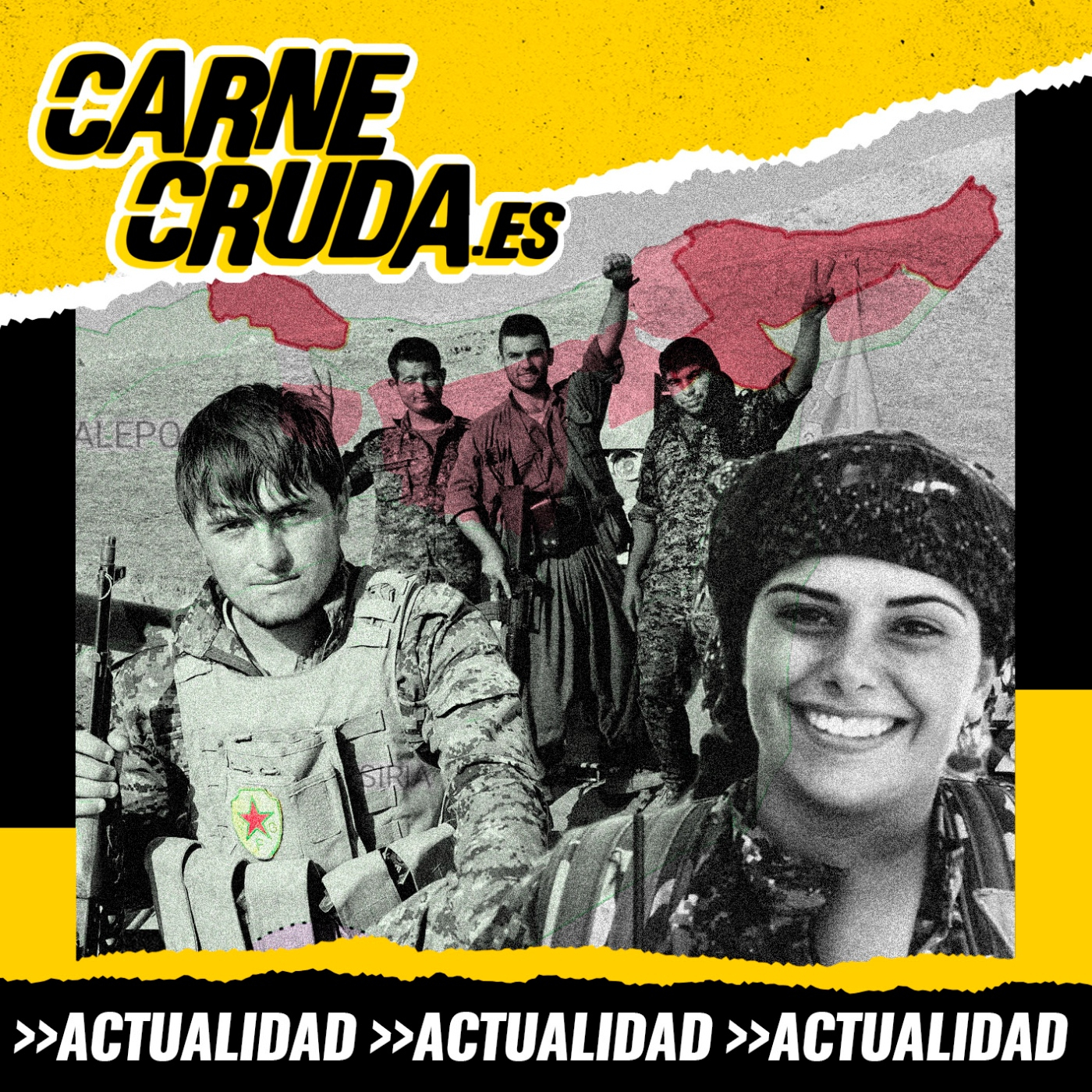
Durante más de una década, Arroyava ha representado la utopía.
- [00:59]
Host 1
Una utopía libertaria hecha realidad. La administr. La Administración Autónoma Democrática del Norte y este de Siria, también conocida como Rojava Poniente en kurdo, ha sido un proyecto único de revolución social y política.
- [01:12]
Host 2
Nacido al calor de las primaveras árabes, logró cristalizar el sueño anarquista en el corazón de Siria. Un estado dentro de otro Estado creado por los kurdos, el mayor pueblo sin Estado del mundo.
- [01:22]
Host 1
Una nación que se extiende por Turquía, Irán, Irak y la propia Siria, y que ha sufrido la persecución y el exterminio. Rojaba es todo lo que soñamos ser. Un modelo para la izquierda en todo el planeta.
- [01:35]
Host 2
Confederalismo de y municipalismo libertario. Inspirados por el historiador anarquista Murray Bukchin y por el líder revolucionario kurdo Abdullah Oyalam, fundador del Partido de los Trabajadores del Kurdistán, el mítico PKK.
- [01:47]
Host 1
Mientras él permanece encarcelado por Turquía desde 1999, sus ideas han servido para emancipar a su pueblo en una comunidad igualitaria en la que hombres y mujeres, luchando hombro con hombro, han logrado derrotar a la mayor amenaza integrista del el Estado Islámico.
- [02:02]
Host 2
Pero hoy, Rojaba se encuentra al borde de su desapar.
- [02:08]
Host 1
Un año después de la caída del dictador sirio Bashar al Assad, los acuerdos de los kurdos con Damasco han fracasado.
- [02:13]
Host 2
El nuevo gobierno de transición ha sitiado a las fuerzas kurdas y amenaza con devorarla.
- [02:17]
Host 1
El sol de Rojava que iluminó al mundo parece llegar a su ocaso.
- [02:20]
Host 2
El sol del poniente está a punto de desaparecer en el horizonte.
- [03:18]
Host 1
De Stan a Jenim, este tema del grupo tradicional Coma Botán es una celebración de la cultura kurda.
- [03:23]
Host 2
Porque hoy celebramos a ese pueblo que nos ha invitado a soñar.
- [03:34]
Host 1
Hace casi un año de este momento, el 10 de marzo de 2025, tras la caída de Basar al y 14 años de guerra en Siria, el nuevo gobierno y las Fuerzas Democráticas Sirias, lideradas por los kurdos, llegaron a un acuerdo histórico para reunificar el país.
- [03:52]
Host 2
Un plan que prometía derechos de ciudadanía para la población kurda históricamente discriminada y el derecho a volver de los desplazados.
- [03:58]
Host 1
También ponía toda la infraestructura civil y militar de la región kurda, incluidos petróleo y gas natural, bajo control del Estado sirio.
- [04:06]
Host 2
Y suponía fundir a las llamadas fuertes con el ejército de Damasco para mantener una lucha conjunta contra los restos del régimen de Al Ásad y Estado Islámico.
- [04:19]
Host 1
Pero las negociaciones colapsaron.
- [04:21]
Host 2
El ejército sirio lanzó una gran operación militar capturando grandes franjas de territorio.
- [04:25]
Host 1
Con la última tregua del 20 de enero pasado, los kurdos han perdido cerca de un 80% del territorio bajo su control y resisten en el noreste.
- [04:34]
Host 2
Para entender qué futuro les espera, hemos llamado a la periodista kurda afincada en Barcelona, Amina Husein, que ahora mismo se encuentra allí en Rojaba, concretamente la localidad de Camislo, desde donde ha seguido la última ofensiva del gobierno. Amina Crudo Díaz.
- [04:48]
Amina Husein
Hola, buenos días.
- [04:49]
Host 2
¿Cómo está la situación allí ahora, en este momento?
- [04:51]
Amina Husein
Pues la situación es de calma, pero sin saber bien bien qué pasará mañana.
- [04:58]
Host 1
Amina, para entender qué es lo que ha pasado, ¿Por qué dos fuerzas que parecían entenderse como era esa Fuerza Libertadora de Damasco y la Fuerza Libertaria de los Rojava han terminado desencontrados?
- [05:10]
Amina Husein
Todo empezó cuando atacaron dos barrios de mayoría kurda que estaban bajo el control de las fuerzas kurdas en Alepo. Desde ahí, en menos de 15 días, llegaron casi a la frontera con Irak. Vimos ataques directos de drones del ejército turco contra poblaciones y puntos de control que controlaban las fuerzas kurdas. Además del avance territorial de las fuerzas del gobierno, había el acuerdo del 10 de marzo de 2025 que, como habéis dicho al principio, dejaba un margen de control de las fuerzas kurdas en las zonas de mayoría kurda, que es Koban, Hasaka y Derek. Pero las negociaciones colapsaron. La administración autónoma declaró la movilización general y declaró la guerra cuando todo se colapsó el 19 de enero en Damasco. Desde entonces empezó la guerra. Empezaron los ataques, empezaron la gente a desplazarse, a huir, a buscar un refugio seguro. Y se colapsó todo. Llegamos a este momento de hoy de casi no tener absolutamente nada claro.
- [06:22]
Host 1
Pero ¿En qué momento se rompió esa negociación? ¿Por qué?
- [06:26]
Amina Husein
Pues en enero 18 había la reunión entre el enviado especial de Estados Unidos y el embajador de Estados Unidos en Turquía, Tom Barak, responsables, digamos, políticos y militares de la administración autónoma, además de líderes el Kurdistán de Irak. Habían acordado de que las fuerzas kurdas se retirarían y las fuerzas de gobierno entrarían en la localidad. Pero eso no pasó. Antes de que salieran las fuerzas kurdas, las fuerzas sirias atacaron. Empezó, digamos, la guerra ahí. Y la reunión empezó mientras estaba la guerra. La mesa ante negociaciones se convirtió en una mesa de guerra. El día siguiente en Damasco, el presidente sirio pidió entregar las armas directamente e inmediatamente se colapsaron.
- [07:15]
Host 1
Este año de negociaciones también lo ha seguido el periodista Carlos Zurutuza. Él es uno de los mayores expertos de la cuestión kurda en nuestro país y coautor, junto al periodista David Messager, del libro Respirando fuego en las entrañas de la lucha kurda por la supervivencia. Carlos. Egunón.
- [07:32]
Carlos Zurutuza
Crudos días, crudísimos.
- [07:34]
Host 1
El acuerdo suponía integrar las fuerzas kurdas en el ejército sirio. Pero tú dices que la pretensión real de Damasco desde el inicio era entreguen las armas y disuélvanse. ¿Por qué?
- [07:45]
Carlos Zurutuza
Bueno, porque básicamente esa ha sido la historia de los kurdos o de la represión que han sufrido los kurdos en la región, sea a manos del basismo del régimen anterior sirio, o sea manos de este nuevo ejecutivo, que al final no son más que los rescoldos del Estado Islámico, de Al Qaeda y de todos esos grupos rigoristas suníes que en su día secuestraron lo que fue un legislador levantamiento legítimo contra el régimen de la dinastía Assad que llevaba 50 años en el poder y que hoy lo que busca es acabar con las minorías. Lo que ocurre es que los kurdos, a diferencia de los drusos o los alawitas, que son las otras minorías principales de Siria a las que ya han atacado, lo hemos visto en meses anteriores, los kurdos son bastantes más y tienen un ejército. Entonces es un proceso más complicado.
- [08:37]
Host 2
¿Tú crees que es el fin que la lucha kurda por la autonomía en Siria está acabando?
- [08:42]
Carlos Zurutuza
Quiero pensar que estamos en una especie de transición de un modelo federal que básicamente se les impuso a los kurdos en 2015 por mandato de Washington. Eso que llamamos Rojaba era básicamente la región noreste del país donde los kurdos eran mayoría. ¿Qué es lo que ocurre? Que en 2015, con el avance de la guerra contra Assad, los americanos, entre otros proyectos, tienen la pretensión oficial de luchar contra el Estado Islámico. Ya sabemos que los kurdos fueron clave, una pieza fundamental en ello, pero también de asfixiar a Damasco bloqueando el petróleo sirio, que estaba en una zona donde los kurdos no son mayoría, son minorías. Es una zona de mayoría árabe. En 2015 ya creo que todos veíamos que estar en esas zonas de mayoría árabe como Terzor, Raqqa, que a medio plazo era una trampa, que antes o después eso traería una vuelta. ¿Y cuál ha sido la vuelta? Pues que ha habido un cambio de régimen en Damasco. Se ha pasado de un régimen Al Hawita a un régimen suní. Con lo cual los árabes de esa zona bajo control kurdo árabe ven que su gente, que los árabes suisan en Damasco. Entonces ya no le ven sentido a esa alianza.
- [09:54]
Host 1
Lo que nos gustaría saber exactamente qué es lo que crees que pretende hacer Damasco con la región autónoma y con todo el movimiento Rojava.
- [10:02]
Carlos Zurutuza
Yo creo que la pretensión de Damasco es acabar con cualquier pretensión autonomista que puedan tener los kurdos. No diría que no lo dicen abiertamente, pero lo han verbalizado en muchas ocasiones. Este ejecutivo, por llamar alguna manera, árabe, es un rigorista. No tiene ningún respeto hacia las minorías, entre ellas los kurdos. Porque es que de hecho hemos visto vídeos bastante gráficos durante la última ofensiva donde se ejecutó a mujeres kurdas en ciudades como raqqa, en el segundo 1 de la ofensiva. Entonces creo que no se puede esperar nada.
- [10:34]
Host 1
Vamos a repasar los principales hitos desde el nacimiento de Rojava hasta hoy.
- [10:39]
Host 2
Al inicio de la guerra siria en 2011, Al Assad retira el Ejército del norte del país para proteger sus bastiones de Alepo y Damasco. Y las fuerzas kurdas aprovechan ese vacío de poder para controlar varias ciudades, iniciando de facto su autonomía.
- [10:52]
Host 1
Ese año se proclama arroyaba con tres cantones autó Afrín, Kobane y Yassira.
- [10:56]
Host 2
Entre 2014 y 2019 los kurdos desarrollan su revolución política y social mientras combaten a los fundamentalistas de Estado Islámico.
- [11:04]
Host 1
Su victoria sobre los yihadistas en la batalla de Kobane, que duró meses, convierte a la ciudad en símbolo internacional de resistencia.
- [11:09]
Host 2
En 2015 nacen las Fuerzas Democráticas Sirias, alianza militar multiétnica liderada por los kurdos que amplía la lucha contra el ISIS a otras zonas de mayoría árabe en Siria.
- [11:19]
Host 1
Y en 2016 proclaman la administración Autónoma del norte y este de Siria, Un sistema federal y descentralizado con representación no solo kurda, sino también árabe, asiria y de otras minorías como los yazidíes.
- [11:32]
Host 2
Tres años más tarde, en 2019, derrotan al grupo yihadista y ponen fin a su califato en Siria. Amina. ¿Qué supuso pasar de un proyecto autónomo de mayoría kurda a uno multiétnico y confederal? ¿Que supuso esa unión para los equilibrios de poder dentro de un país en guerra?
- [11:49]
Amina Husein
Esta región es conocida en Siria por su diversidad cultural y de componentes. No sería justo, como lo está haciendo ahora el gobierno de Damasco, tener un gobierno central, o digamos, un gobierno aquí en la región, solo controlando por kurdos, no permitir a los restos compartir el poder o tomar decisiones. Estaba, además de este sistema diverso, también era el sistema copresidencial, o sea, una mujer y un hombre que estaban en todas las instituciones, desde las comunas de los barrios del nivel más bajo del poder, hasta el sistema, digamos, ejecutivo de la administración autónoma. Era un sistema, la verdad, que representaba a todos, especialmente a las mujeres. La mujer representaba más del 50% en algunas ocasiones, en algunas instituciones de la administración autónoma habían árabes, cristianos, yids, turcos, kurdos. Estaban todos compartiendo y dibujando el futuro de la región. Pero creo que era un proyecto que amenazaba al gobierno central. Un gobierno que no permite que en todo su gobierno sólo tenemos una ministra. No hay diversidad de todos los componentes del país.
- [13:10]
Host 1
En todo este tiempo, Turquía no ha dejado de combatir a los kurdos y de financiar a grupos islamistas que les atacan, incluidas células durmientes del ISIS.
- [13:18]
Host 2
También ha hecho todo lo posible para evitar un acuerdo entre Rojava y Damasco.
- [13:21]
Host 1
Pero su problema, el problema de la autonomía, no ha sido solo Ankara, también sus supuestos aliados.
- [13:28]
Narrator / Reporter
Me gustan los kurdos, pero he de
- [13:30]
Host 2
decir que se les pagaba muchísimo dinero.
- [13:32]
Narrator / Reporter
Les dimos petróleo y otras cosas. Lo hicieron por sí mismos, mucho más que por nosotros, pero nos llevamos bien con los kurdos e intentamos protegerlos, ya
- [13:41]
Host 1
no es así, porque Estados Unidos ha dado por amortizados a los kurdos y ha abandonado completamente a quienes fueran sus aliados contra el Estado islamista. Carlos, ¿Cuál ha sido el papel de Turquía y de Estados Unidos en este año de negociaciones y en la historia de Rojava? Yo creo que hay que recordar que
- [13:54]
Carlos Zurutuza
Turquía se ha hecho varias veces. Ha sido la mayor amenaza para los kurdos en la región y en realidad para todo Oriente Medio. Es decir, si hay un elemento desestabilizador en la región ha sido Turquía, que no puede soportar ni a los kurdos dentro de sus fronteras ni a los que están al otro lado, como es el caso de Rojava. Turquía siempre ha sido para todo un pivote muy estratégico. Tenemos que recordar que es un miembro clave en la OTAN, y mientras es miembro clave ha financiado a todo el arco de milicias yihadistas desde Nurra, desde Al Qaeda, desde el Estado Islámico. Entonces, por un lado ha estado su pretensión desde 2011 de hacerse con el control de Siria, cosa que no ha conseguido, aunque tenga mucha influencia, y por otro lado mantener ese equilibrio con Estados Unidos.
- [14:42]
Host 1
Y en el caso de Estados Unidos, ¿Por qué ahora parece haber retirado esa puerta?
- [14:45]
Carlos Zurutuza
Porque ha habido un cambio de régimen en Damasco que ha ocurrido con el beneplácito, por supuesto de Turquía, pero también de Israel. Vivimos tiempos en los que pasan demasiadas cosas demasiado rápido y hemos visto como alianzas que parecen más o menos sólidas se desmoronan y a partir de ahí los kurdos tenían todas las de perder.
- [15:04]
Host 1
Recordemos que hace un año Abdullah Ojalán, líder del Partido de los Trabajadores del Kurdistán e ideólogo de referencia de los kurdos, como estamos contando que lleva más de un cuarto de siglo en prisiones turcas, llamó a los suyos a disolverse y de poner las armas. Amina, ¿Por qué?
- [15:18]
Amina Husein
Pues la mayoría de analistas y casi toda la gente aquí piensa que Oyanan quiere que se acabe la lucha armada y que empiece un proceso político democrático y negociaciones para el futuro de la cuestión kurda tanto en Turquía como aquí en Siria. Todos pensamos que ha tenido mucha influencia aquí en la región. Además, este proceso de PAS empezó el 27 de febrero con su llamado. Desde la presión del 2025, que se cumplió un año hace dos, tres días, pues tuvo mucha influencia aquí. Turquía desde entonces ha dejado de atacar directamente, digamos entre comillas, porque antes sí que atacaba, habían ataques cada dos por tres. Sus drones atacaban coches de política kurdos aquí en la región. Pero desde febrero mayo, cuando el PKK respondió a la llamada de Ocalán, pues sus ataques pararon, no atacó más la zona. Pero con el régimen sirio ataca de otra manera.
- [16:26]
Host 1
Recordemos que Oyalan no ha sido solo el líder en la distancia de la lucha kurda. Sobre su ideología se asientan las bases de esta utopía libertaria.
- [16:35]
Narrator / Reporter
Durante los últimos 14 años las kurdas sirias han puesto en marcha un laboratorio de democra radical y feminista en el espacio ultrapatriarcal de Oriente Medio.
- [16:45]
Host 2
Su modelo de gobernanza es frontalmente contrario
- [16:47]
Narrator / Reporter
al que conviene a los estados del entorno y las hegemonías globales. Desde los túneles y las plazas de Rojaba las mujeres kurdas muestran hoy al mundo su convicción de que la libertad y los derechos logrados a lo largo de los años no les serán arrebatados sin luchar.
- [17:02]
Host 2
Una lección de dignidad para un mundo rendido a la trivialidad y la indolencia.
- [17:08]
Host 1
Democracia directa, autogestión, ecología, feminismo e inclusión. Los mismos derechos a todos los grupos étnicos y religiosos que participan de él. La revolución social de Arroyava ha sido vista como la realización última del comunismo libertario.
- [17:23]
Host 2
Y para entender mejor su alcance, enseñanzas y aportaciones sumamos a la mesa a Consuelo Núñez, que es integrante de Royaba Azadi Madrid, colectivo de solidaridad con el pueblo kurdo y autora de la columna en el diario Público que acabamos de escuchar. Consuelo crudos días Hola, ¿Qué tal?
- [17:39]
Consuelo Núñez
Buenos días.
- [17:39]
Host 2
¿Cómo explicaría el proyecto político de Rojaba y lo que ha supuesto como utopía libertaria? ¿Alguien que no haya oído nunca hablar de esto?
- [17:46]
Consuelo Núñez
Bueno, pues este proyecto que comenzó hace 14 años en Rojaba, la verdad es que venía gestándose en las montañas de Kurdistán ya desde los años 80. A través del Partido de los Trabajadores de Kurdistán y también del Partido de las Mujeres de Kurdistán, creo que se ha dicho ya. Al albur de las primaveras árabes, el gobierno sirio de alguna forma abandonó esta zona del norte y dio paso a poderse movilizar la población kurda. A través de un partido, el PID, y del Movimiento por una Sociedad Democrática pudieron empezar a crear comités, instituciones para gestionar la vida social de la región. Básicamente los tres cantones kurdos que tenían acceso los kurdos estuvieron varios años, bastantes años en la clandestinidad trabajando en el proyecto basado en las ideas del Confederalismo democrático de Oyalan y del PKK. Y cuando se dio la oportunidad salieron a la palestra. Utilizaron ciertas estructuras que ya existían, que había dejado el régimen, para ponerlas a favor del pueblo. Porque es una política que utilizan los cuatro estados en los que se ha dividido Kurdistán, de abandonar las regiones kurdas. Son siempre las zonas más pobres de esos países y muy perseguidas a todos los niveles, claro.
- [19:16]
Host 2
¿En qué consiste Consuelo, ese confederalismo democrático y el municipalismo libertario en la práctica?
- [19:21]
Consuelo Núñez
Pues mira, es un sistema que tiene como tres patas, tres patas principales. Una es la democracia directa con la creación de las comunas, los comités que trabajan en los diferentes sectores de la sociedad. La segunda pata es la liberación de la mujer, y para mí es precisamente esta la que más se ha desarrollado en Rojava. Y la tercera es esa ecología social que está muy basada en las propuestas de Murray Bukchin y que personalmente pienso que es la pata menos desarrollada, porque de alguna forma requiere unas bases o unas estructuras y unas infraestructuras que no son fáciles, sobre todo en una situación de bloqueo como el que viene sufriendo rojava desde hace 14 años. Desde el año 2014 que se legislaron esas leyes de la mujer que eran frontalmente contrarias a lo que venía siendo la ley del estatuto personal sirio, las mujeres comenzaron a movilizarse, a tomar posiciones dentro de las estructuras políticas, sociales, militares. Y de alguna forma esta lucha de las mujeres ha cambiado la fisonomía de la sociedad de Royaga. Y precisamente porque las mujeres se han hecho visibles y han cambiado esta fisonomía social, son ahora las primeras víctimas de este nuevo régimen yihadista que allenda más.
- [20:54]
Host 1
¿De qué manera han cambiado esa fisonomía las mujeres y de qué forma han sido fundamentales en la lucha contra el Estado Islámico?
- [21:00]
Consuelo Núñez
Es precisamente la parte social y de trabajo político que han hecho las mujeres lo que realmente ha cambiado esa fisonomía. En una región en la que el patriarcado está muy desarrollado, en el que si una mujer quiere tomar las riendas de su vida se considera que va en contra de los designios de Dios y que por tanto merece los castigos más tremendos. Estas mujeres, con esa legislación de las leyes de la mujer dieron una esperanza y una fortaleza de alguna forma a las mujeres kurdas en primer lugar, pero luego también a las mujeres asirias y árabes. Creo que la mujer, en esto estoy de acuerdo con Oyala, la mujer está mucho más cerca de la naturaleza, tiene una capacidad de sentirse más unida a lo que son los seres humanos, la naturaleza en general, y siempre trata de gestionar los problemas de una forma pacífica, de diálogo y respetando a los demás. Parece que los hombres, por esa característica que vienen teniendo desde hace miles de años, son más proclives a tratar de solucionar los problemas por medio de la confrontación. Entonces las mujeres en Royava tienen una organización paraguas que se llama Congrastar, el congreso Star, que realmente ha hecho un trabajo ímprobo para visibilizar y dar voz a las mujeres en la sociedad. Por ejemplo, en el contrato social sí que se estipula que el 50% de las posiciones de representación en instituciones y organizaciones tiene que haber una paridad, pero la realidad es que en muchas de las instituciones la representación de la mujer es muy superior. Yo estuve en Rojava hace 3 meses, después de 7 años de no haber ido por allá, pude comprobar que se había desarrollado mucho esta representación de las mujeres y además se habían desarrollado otras organizaciones que en un principio, hace siete años, eran apenas una semilla y que ahora tienen una expansión por otras zonas, ya no son no solo de la administración autónoma, sino también en Damasco, por ejemplo, la asociación SARA que lucha contra la violencia de género y que también recibe peticiones de otras mujeres en otras zonas de Siria.
- [23:25]
Host 1
Consuelo, te mandamos un abrazo y te damos muchísimas gracias por ayudarnos a iluminar sobre lo que este movimiento ha significado y sigue significando en el mundo.
- [23:34]
Amina Husein
Venga.
- [23:34]
Consuelo Núñez
Gracias a vosotros.
- [23:37]
Host 1
La liberación de las mujeres es uno de los pilares fundamentales de esta revolución, como nos estaba contando con su Su
- [23:42]
Host 2
lucha ha inspirado decenas de documentales, libros y proyectos periodísticos en todo el mundo y hoy nos hemos querido fijar en mujeres, lucha, trauma y autonomía.
- [23:54]
Narrator / Reporter
Diciembre de 2022. Cerca de Camislo cae el sol. Operación de las fuerzas kurdas con el apoyo de la Coalición Internacional contra Células Durmientes del Estado Islámico. Dos jóvenes milicianas de las fuerzas femeninas, una enmascarada, otra con el rostro descubierto, buscan sospechosos en una zona residencial. Una mujer con su bebé en brazos las observa desde la puerta de su vivienda. Las mujeres de las IPJ, que quiere decir las Unidades de Protección de las Mujeres y otras minorías cristianas como son las asirias y las siriacas. Nacieron en el año 2013, estimuladas por la Revolución de Rojav, el 19 de julio de 2012. Estas mujeres no solo cogieron las armas para defender su territorio, su población y su cultura de contra el régimen del Bashar al Assad y del Estado Islámico,
- [24:41]
Host 2
sino también para transformar radicalmente su rol
- [24:44]
Narrator / Reporter
dentro de la sociedad.
- [24:47]
Host 2
Escuchamos a su autora, la fotoperiodista catalana Victoria rubira. Ella dedicó cuatro años a este proyecto documental entre 2021 y 2025, en el que viajó a la zona y convivió con estas mujeres. Su proyecto aparece en el nuevo número de la revista w llamado Resistencias.
- [25:04]
Narrator / Reporter
28 de agosto de 2022 Campamento de Alhol en Axaca noró este sitio durante la operación Al Jazeera Thunderbolt contra el Estado Islámico. Las fuerzas femeninas kurdas identifican a miles de mujeres vinculadas al grupo yihadista.
- [25:19]
Host 2
Son mujeres que viven en el campo junto a miles de niños bajo control
- [25:22]
Narrator / Reporter
de las fuerzas kurdas. Son aproximadamente 54.000 personas que viven dentro mujeres y niños vinculadas al Estado Islámico
- [25:29]
Host 2
y también a población civil. Elegí esta fotografía porque es muy representativa de un proyecto. Refleja que el Estado Islámico no ha
- [25:38]
Narrator / Reporter
desaparecido y mantiene células durmientes activas.
- [25:41]
Host 2
Durante mi trabajo allí pude hablar y
- [25:44]
Narrator / Reporter
entrevistar a varias de estas mujeres. Y la imagen habla también de seguridad,
- [25:49]
Host 2
pero también de abandono, de infancia perdida
- [25:51]
Narrator / Reporter
y de un conflicto que sigue sin resolverse.
- [25:53]
Host 2
Amina, ¿Qué son y cómo funcionan esas Unidades de Defensa de la Mujer, las IPJ, y hasta qué punto han conseguido la igualdad real entre hombres y mujeres en ese territorio?
- [26:02]
Amina Husein
Mi trabajo final del maestro era sobre el movimiento feminista aquí en noreste de Siria, digamos en Rojava. Y un capítulo era sobre el tema militar, sobre las Unidades de Defensa de la Mujer, las IEPG. Cuando empezó toda la guerra en 2011, los jóvenes luchaban para defender el territorio. Habían unas mujeres entre ellos. Empezaban como tres, cuatro mujeres. Cuando ya empezaba la guerra todo el territorio sirio, pues más mujeres se unieron a las Unidades de Defensa del Pueblo, que eran hombres. Cada vez había más mujeres. Al final, el 4 de abril de 2013, decidieron fundar estas Unidades de Defensa de la Mujer, las IEPJ. Y Desde entonces, de cuatro o cinco mujeres, ahora tienen más de 3.000 mujeres combatientes que lucharon en casi todos los frentes, luego contra el Estado Islámico estaban en las primeras líneas de frente, lideraron batallas como la batalla de Iraka, que estaba liderada por una mujer, el último bastión del Estado Islámico en Teresor, también la batalla estaba liderada por otra mujer de estas unidades de defensa. Ahora mismo, tras el último acuerdo en el ejército sirio, pues no existen mujeres, no hay representación de mujeres. Estas unidades se ven amenazadas a desaparecer o entregar sus armas, eso no lo aceptan. Y la segunda, ahora está el tema en negociación, si pueden seguir o no. El último día en una entrevista con la comandante de estas fuerzas, de estas unidades, pues me dijo que aunque tengamos cuatro combatientes mujeres, no nos rendiremos, no entregaremos nuestras armas, queremos que haya representación de mujeres en el ejército sirio, aunque no lo permitan, aunque no tengamos una brigada de mujeres, pero no aceptaremos rendirnos y seguiremos luchando, protegiendo a todas las mujeres del país e incluso las mujeres del mundo.
- [28:15]
Host 1
Carlos, también se ha mencionado que tienen un sistema político basado en comunas y asambleas locales, un poder descentralizado, democracia directa y de base. ¿Podrías explicarnos cómo funciona eso?
- [28:27]
Carlos Zurutuza
Sí, bueno, este era el desafío, construir un modelo político y social de abajo arriba. Descentralización es una de las palabras claves, sobre todo en una región como Oriente Medio, donde hablamos de regímenes monolíticos. Hay que pensar que tenemos a Irán, a Turquía, a la Siria de los Assad, al Irak de Saddam Hussein en su día. Entonces ya sólo la palabra descentralización ya es un auténtico desafío en la región. Hablaba Cónsulo antes de la democracia directa, de gente que toma sus propias decisiones y las ejecuta. Y esto se articula a través de comunas que por supuesto están en contacto entre sí, coordinadas, y que también incluyen a las mujeres y al resto de los grupos étnicos, a las minorías, a los armenios, a los asirios, a los circasianos. Entonces es ese modelo horizontal de abajo arriba. Y sobre todo el organismo principal es
- [29:25]
Host 1
la comuna y además un modelo de economía basado en cooperativas autosuficientes, como nos cuenta también, volvemos con ella, Victoria Rovira, la fotoperiodista catalana que ha hecho ese reportaje que se publica en W.
- [29:40]
Narrator / Reporter
20 de agosto de 2022 Hasaka Ginguar, refugio exclusivo para mujeres y sus hijos inaugurado el 25 de noviembre de 2018, Día Internacional contra la Violencia de Género. Jinguar significa tierra de mujeres. Actualmente viven allí unas 10 mujeres kurdas, árabes y otras minorías que reciben formación diaria para ser autosuficientes. Desde el trabajo en el campo y la gestión de huertos, hasta hornos de pan autogestionados y escuelas para sus hijos.
- [30:09]
Host 2
Este proyecto refleja un modelo de reconstrucción
- [30:12]
Narrator / Reporter
y autonomía femenina, comunidades, cooperativas, refugios gestionados
- [30:15]
Host 2
íntegramente por mujeres, donde básicamente se promueve la autodefensa, la cooperación y experimentos ecológicos y solidarios.
- [30:23]
Host 1
Amina, ¿Cómo funciona la economía autogestionada de Royava?
- [30:26]
Amina Husein
Pues se basa para tener todo del mismo territorio y no dependerse mucho de exportaciones fuera. Por ejemplo, en esta ciudad donde estoy ahora hay muchos proyectos dedicados a la economía de la mujer. Todos son proyectos, digamos, administrados por mujeres. Hay por ejemplo restaurantes, hay panaderías, luego hay huertos que solo trabajan mujeres y especialmente las mujeres que han perdido sus parejas o sus familiares en la guerra en los últimos años. Ellas mismas son la clave para estos proyectos. Y además desde el principio de este proyecto, desde el 2012, digamos, se han criado muchos puestos de trabajo. Por ejemplo, en mi pueblo solo una mujer cuando yo salí de Siria, una mujer del 2006, cuando salí trabajaba. Ahora casi, digamos más de 50 mujeres de este pueblo que tiene 90 casas, más de 50 mujeres trabajan. Me doy cuenta de que no solo eran militares, no solo eran enfermeras, sino maestras, porque se ha hecho como clases de las escuelas, están en un culto, pues muchas mujeres han empezado a dar clases en su lengua materna. Luego las comunas, los consejos del barrio, casi todas las mujeres ahora trabajan. Aparte de esto también más puestos que se han hecho de trabajo para tener autogestión y también no necesidad de exportar casi nada de fuera.
- [32:09]
Host 1
Y ahora ese modelo desgraciadamente está amenazado. Para entender el futuro inmediato del pueblo kurdo en la región de Roberto nos acompaña Carla Fribla, que es periodista, es investigadora y representante del Instituto Internacional por la Acción No Violenta Novak en Siria y en Irak.
- [32:26]
Host 2
Y ahora está en Ammán, Jordania, porque la ofensiva contra Irán la pilló fuera y con el cierre del espacio aéreo en la región no ha podido volar de vuelta al Kurdistán iraquín donde reside. Carla Crudos Díaz Muy crudos. ¿Tú ves posible el diálogo o al pueblo kurdo solo le queda la respuesta armada, la defensa armada si quiere conservar todo lo logrado?
- [32:46]
Narrator / Reporter
Bueno, nosotros trabajamos intensamente porque esa no sea la única respuesta y creemos que los cultos tampoco quieren eso. Es cierto que yo tuve la ocasión en octubre del año pasado de estar en Damasco y estar con los negociadores kurdos que estaban intentando que esas negociaciones de marzo que os han comentado Carlos y Amina fueran que consiguieran resultados positivos. Y la verdad es que estaban completamente paralizados, que no se les había incluido en esos supuesto diálogo nacional que el actual presidente lanzó en su momento. Tampoco se les había tenido en cuenta para ni siquiera otras tipos de negociaciones, pero estaban pacientemente esperando ese momento. Luego todos estos acontecimientos que os han ido contando ahora lo ha hecho que todo se acelerara muchísimo. Es cierto que yo estoy muy de acuerdo con casi todo lo que se ha dicho aquí precisamente de lo arriesgado que era mantenerse no solamente Rojava, sino el noroeste de Siria, que es como el autogobierno se proclamaba en todo el territorio noreste de Siria. Y eso llevaba una complicación tremenda a muchísimos niveles que estamos viendo. Incluso hemos visto luego en las siguientes semanas a este acuerdo del 29 de enero, como por ejemplo con la gestión de las cárceles de miembros del ISIS o de las familias o toda la situación que se está viviendo ahora. Pero yo creo que realmente los kurdos por supuesto no van a dejar de luchar por su identidad y por lo que les corresponde. Y en estos momentos están intentando sobre todo hacer una posición mucho de equilibrios, de ver cómo pueden gestionar la situación al mismo tiempo que siguen defendiendo sus derechos.
- [34:36]
Host 2
No sé Carla, si tú puedes explicarnos qué puede suponer el fin de Rojava, no solo para Siria, para el Kurdistán, sino como ejemplo político en todo el mundo y en materia de derecho de las mujeres.
- [34:46]
Narrator / Reporter
Hemos visto por desgracia que realmente un Kurdistán unido, mi experiencia aquí prácticamente dos años viviendo en el Kurdistán iraquí, entre el Kurdistán iraki y el sirio, es que no he visto nunca esa unión. Ahora mismo por ejemplo ha habido algunas muestras de solidaridad entre los kurdistanes, por supuesto con todo lo que pasó en enero y febrero en Siria, ha habido manifestaciones también en Irak, en el Kurdistan iraquí y sí que se ha podido ver un poco la situación. Realmente tiene unas consecuencias también para las otras poblaciones, pero siguen funcionando mucho de forma muy independiente y eso yo creo que merma la capacidad que tendrían y que pueden tener por toda su historia. El caso de las mujeres en concreto, precisamente ellas son las que han estado liderando muchísimo esas manifestaciones. Unas imágenes, por ejemplo, de. Creo que fue una niña, ahora no recuerdo, la población en el Kurdistán sirio, que le cortaron la trenza, que fue un gesto que es parte de la identidad de las mujeres kurdas. Y luego las manifestaciones, por ejemplo en Erbil o en otras poblaciones del Kurdistán, ir aquí dentro de las manifestaciones, las mujeres se hacían la trenza. Entonces iban intentando mantener esa solidaridad. Pero claramente las mujeres tienen un papel muy importante, sobre todo en el Kurdistán sirio, diría, porque lo que habéis comentado antes del contrato social es lo que les da esa fuerza.
- [36:15]
Host 1
Carla como hemos contado también en el programa, sirvió el Rojava como freno al ISIS y al yihadismo, pero una vez que ya no les sirve a las potencias occidentales, el problema es que han dejado solo al proyecto autónomo.
- [36:30]
Narrator / Reporter
Sí, de hecho ha habido muchas organizaciones, entre ellas Jimen Razgo, por ejemplo, que han denunciado la situación en la que vivían las familias en Aljol. Comentabais cincuenta y tantas mil familias. En esta última época ya había bajado mucho el número, porque desde la que ida del régimen, muchas de las familias iraquíes las habían trasladado y había bajado prácticamente a la mitad el número de familias, de mujeres y de niños que no recibían realmente una educación, que estaban en una situación muy precaria y donde todas las organizaciones también veíamos que había una radicalización elevadísima. Sí es cierto que ellos jugaron ese papel tan importante, que como también pasó en su momento con Mosul, con los kurdos iraquíes, se reconoce eso en ese momento, pero luego parece como que se olvida que jugaron ese papel. En estos momentos, por ejemplo, por daros un poco un dato, de esas 25 mil personas más o menos de al hall, eso estamos hablando solamente de familias, mujeres y niños, prácticamente quedan solamente mil, porque en un momento dado, con la retirada de la SDF, se quedó aquello, llegó el ejército de Damasco y entonces hubo muchísimo descontrol. Y todas esas familias están ahora mismo por. Por Raqqa, por Idlib, por diferentes lugares de Siria. Ahora mismo a esas familias que antes, en los proyectos, por ejemplo, que teníamos nosotros, las identificaba como familias del ISIS o cercanas al ISIS, ahora mismo, por ejemplo, ese calificativo ya está completamente prohibido. Las organizaciones locales con las que trabajamos nosotros nos dicen que ahora solamente podemos hablar de familias de la comunidad, o sea, que automáticamente han pasado a formar parte de una comunidad donde hay muchísimas dificultades y donde está creciendo muchísimo la atención.
- [38:20]
Host 1
Pues nos ha gustado también mucho escucharte, Carla Fibla es, como os decía, investigadora del NOVACT, el Instituto Internacional por la acción no violenta. Un abrazo muy fuerte.
- [38:28]
Narrator / Reporter
Un abrazo.
- [38:32]
Host 1
¿Cuál creéis que es el futuro de Rojaba, del proyecto y de la zona autónoma?
- [38:37]
Carlos Zurutuza
Sí, es difícil saber lo que va a pasar, pero mirando atrás, lo que hemos visto es que los kurdos, y sobre todo diría que los kurdos de Siria, siempre han estado al límite. Es decir, han tendido la mano, han tocado todas las puertas, han intentado. Intentado hacer. Buscar aliados, buscar la convivencia con literalmente todo el mundo dentro de la región y fuera de la región. Vemos que funciona por un tiempo, luego ese modelo se cae. Entonces a mí la verdad es que no deja de sorprenderme la capacidad que tienen los kurdos de reinventarse. Me parece fascinante. Y bueno, quiero pensar que conseguirán mantener un nivel de autonomía que al menos les permitirá gozar de los derechos humanos más básicos, los más fundamentales, de los que se incluye el derecho a la educación en tu propia lengua. Luego veremos también lo que pasa con Irán. En Irán hay muchos kurdos y está por ver cómo va a afectar el conflicto Irán a toda la región, porque bueno, es que eso supongo que haréis otro día otro programa, pero las consecuencias de eso pueden ser no sólo desoladoras para la región, sino que para todo el mundo. En fin, ahí lo dejo. Prefiero que nos lo cuente Amina, que para eso es kurda y está sobre.
- [39:52]
Host 1
Ayer hicimos un programa especial sobre lo que está pasando en Irán y cómo afecta la zona, pero sin duda tendremos que hacer más. A nosotros también nos fascina el proyecto Rojaba. Y yo, para terminar, quería preguntarle a Mina si piensa que la opción que propone Oyalan, la vía democrática, puede salvar la autonomía.
- [40:08]
Amina Husein
Si me permitís solo una cosa, Carla lo dijo y se equivocó, porque dijo que le cortaron la trenza a una niña en una manifestación y eso no es cierto. Los mercenarios del gobierno sirio le cortaron la trenza a una kumba kurda que estaba luchando defendiendo sus derechos. Y yo aquí, como una mujer kurda, pues voy a hacer mi trenza. Porque si cortan una trenza habrán más millones de trenzas de mujeres kurdas, de todas las mujeres del mundo, que muchas mujeres se solidarizan con este movimiento publicando vídeos en las redes en solidaridad con la combatiente. Yo creo que el proyecto político de Rosawa, aunque ahora todos pensamos que ha llegado su fin, la lucha no se acabará. Seguiremos luchando y seguiremos existiendo. Seguiremos defendiendo nuestro territorio y nuestra manera de pensar y esa vía democrática, diplomática, de negociaciones. Estamos aquí para defender esta esperanza y esta experiencia democrática en todo Oriente Medio. Solo aquí las mujeres estamos armadas y estaremos luchando. Y yo como periodista, no armas, la existencia seguirá y el sol que habéis dicho, la primera frase del programa que desaparece, sale el día siguiente, iluminará este territorio. Seguiremos aquí, seguiremos luchando.
- [41:35]
Host 1
Así lo esperamos también de oeste a este, nunca mejor dicho, la lucha. Así que cueste lo que cueste. Amina Hussein, Carlos Zurutuza. Un abrazo muy fuerte a los dos y muchísimas gracias. Y no queríamos terminar este programa sobre la gran resistencia kurda rojaba sin hablar de otras resistencias, que es el tema precisamente de la revista W, nuestro referente en información internacional.
- [42:08]
Narrator / Reporter
La visión apocalíptica del mundo nos invade, que este es el peor de los tiempos, que nunca estallaron tantas guerras, que los horizontes colectivos se han borrado. La visión pendular de la historia tiende
- [42:20]
Host 2
a ignorar la luz que se enciende
- [42:22]
Narrator / Reporter
en los momentos más duros. Es esa débil luz de invierno, delicada
- [42:26]
Host 2
y taciturna que aún no tiene la fuerza para vencer al frío.
- [42:30]
Narrator / Reporter
No sabemos si esa luz ganará, pero vale la pena infundirle toda nuestra energía. ¿Queremos luchar?
- [42:36]
Host 1
Sí, queremos luchar. Como muy bien estaba diciendo Amina, resistir frente al caos, frente al odio como única opción. Es lo que proponen los compañeros y compañeras de nuestra querida revista W en su nuevo número. Lo presentan esta tarde en el Teatro del Barrio, pero se han acercado antes a enseñárnoslo en primicia. Queridos Maribel Izquier Aguz Morales, redactora jefa y director de W, crudos días. ¿Cómo estáis?
- [43:01]
Maribel Izquier
Todo un clásico.
- [43:02]
Host 1
Carne cruda, por favor. Claro, claro, claro.
- [43:05]
Host 2
Es como cita anual que no puede faltar.
- [43:07]
Maribel Izquier
Exactamente.
- [43:07]
Host 1
Bueno, esta pregunta es casi retórica. ¿Por qué habéis llamado resistencia a este último número? Bueno, es que tendría que ser ser así, tenía que ser así. Pero explicarnos vuestras razones.
- [43:18]
Maribel Izquier
Yo pienso que al final somos todos presos y presas de esa impotencia por todo lo que vemos. A lo último Irán, pero antes Gaza, antes etc. Y también, no sólo como ciudadanos, ciudadanas, sino como periodistas. Y queríamos ver la otra cara, la cara B, el reverso. Y es que es imposible no verlo. Y que son todas esas personas, esos colectivos que resisten, que luchan por cambiar las cosas, cosas. Y creemos que ahí tiene que. Bueno, y hay épocas de la historia en las cuales toca resistir. Tenemos muchos ejemplos en el pasado y sin ninguna duda, yo creo que esta es una de ellas y por eso nos lanzamos a hacer esta revista. Y enseguida Maribel dijo que sí, tiene que ser resistencia.
- [43:58]
Host 1
Tiene que darte el OK, Maribel, si
- [44:01]
Maribel Izquier
no, no se hace nada.
- [44:03]
Aguz Morales
Bueno, todos, todos. Esto es colectivo.
- [44:05]
Host 1
¿Y tú por qué dijiste que sí?
- [44:07]
Aguz Morales
Bueno, porque estamos en la era de la resistencia. Es así. Nosotros, la revista mismo es un ejemplo de resistencia, que el año pasado cumplimos 10 años, algo que no nos imaginábamos cuando empezamos.
- [44:18]
Host 1
Me lo dices, No, me lo cuenta.
- [44:21]
Maribel Izquier
Esta es la casa. Resistencia.
- [44:23]
Host 1
Carne cruda.
- [44:24]
Aguz Morales
Absolutamente. Este ejercicio de resistencia es que lo estamos viendo en todas las esferas. Al final yo me lo imagino como un mar movido en el que puedes o dejarte llevar, vivir, flotar cómodamente o agarrarte a la roca y resistir e intentar encontrar terrenos en los que resist. Y la revista es un ejemplo de estas personas y colectivos que buscan estos terrenos. Así que bueno, esto fue un sí unánime de toda la redacción.
- [44:51]
Host 2
¿Y qué resistencia vamos a encontrar en este número?
- [44:54]
Maribel Izquier
Aquí tenemos, como siempre hacemos este discurso global con poesía, ensayo, reportaje, que va desde Madrid, que luego hablaremos pasando por Afganistán, por ejemplo. Yo creo que es, para mí una de las grandes imágenes de la resistencia. Es una mujer en Afganistán, una joven en Afganistán, yendo a un sótano, a una escuela clandestina para ganar su libertad prácticamente, con la proyección que hay de los talibanes allí, por ejemplo. Ahí, por ejemplo, un reportaje de Jay Feixas, con fotos de Ana Sureñak, sobre ese ejercicio de resistencia ya brutal en un contexto de apartheid de género. Pero también hablamos con Yumna, esta periodista palestina que estaba con Al Jazeera en El Cairo, sobre Gaza, este ejercicio de resistencia también extremo, etc. Intentamos tener esa visión global sobre esos procesos de resistencia colectivos, individuales.
- [45:50]
Aguz Morales
Efectivamente, en un montón de temas, a través de crónica y fotografía. Uno de los temas fotográficos que me gusta mucho de la revista es el de Severin Sajou, es un tema que se llama Botellas en el mar. Y habla de la resistencia de las familias, de las personas desaparecidas en el mar intentando llegar a Europa. ¿Y cómo lo hace? A través de fotografías que son botellas con mensajes escritos por los familiares a estas personas y que a veces se nos olvida. Estas personas que simplemente resisten en la. Bueno, simplemente no, que de una forma muy compleja resisten en la lucha de buscar a los suyos. No sé, como este hay un montón de temas de colectivos muy distintos y como siempre, atravesando todo y como ha
- [46:37]
Host 1
dicho antes Agus, en Madrid está uno de esos ejemplos.
- [46:45]
Narrator / Reporter
Este refugio, trinchera, espacio liberado o parroquia, según quien lo nombre, ha sido y es una cesta de diversidad e implicación colectiva para buscar soluciones junto a quienes sufren la pobreza y la marginación. En los 80 la droga arrasó con dos géneros y la parroquia se convirtió en punto de encuentro para esa juventud a la que la sociedad daba la espalda. También acogió a muchos adolescentes que escapaban de los centros de reinserción. En el año 2000 y a partir de 2006, la comunidad de la Borromeo se volcó en la movilización por el cierre de los CIE, la bienvenida a las personas refugiadas y la defensa de los derechos de niños y niñas que emigran solos.
- [47:28]
Host 1
Hablamos de una uno de esos pequeños grandes centros de resistencia en el mundo la iglesia de San Carlos Borromeo, una humilde parroquia del barrio madrileño de Entrevías.
- [47:38]
Host 2
Escuchaba ahí un fragmento del Templo de la Resistencia, que es el reportaje que abre la revista con fotos de Olmo Calvo y texto de Fabiola Barranco, a quien tengo aquí a mi lado. Fabiola Crudos Díaz Crudos Díaz de acoger a Madres contra la Droga, a la lucha contra las muertes en el Mediterráneo. ¿Cómo explicas tú que la San Carlos Borromeo sea ese templo de la resistencia? Y bueno, ¿Quién era Enrique de Castro, el cura Romeo y cómo entendía el Evangelio él?
- [48:01]
Aguz Morales
Yo creo que sobre todo es un lugar de memoria. Por un lado de memoria por el sitio en el que se ubica, está al lado de esa casa fotografiada en la Guerra Civil que fue bombardeada. Y es un lugar de memoria que pusieron una semilla muy importante las Madres contra la Droga, que creo que ellas marcaron una forma de enseñar a resistir, que muchos movimientos sociales han bebido de ello. Hemos aprendido y seguimos aprendiendo sin saber que existieron entonces creo que esa base está ahí. Y luego Enrique de Castro era el cura que empezó antes de que llegara Javier Baeza, Javi, y fue el que supo dar esa acogida, ese espacio para esa resistencia.
- [48:58]
Host 2
Es una simbiosis con el contexto, porque como estabas diciendo, no se entiende la San Carlos Borromeo sin su vinculación con las vecinas. ¿Qué papel ha jugado allí la Coordinadora de Barrios?
- [49:06]
Aguz Morales
La Coordinadora de Barrios es un poco la fórmula civil social que Enrique de Castro, según me contaba Javi Baeza y otras compañeras de la parroquia, fue la que inventaron un poco o pusieron en pie para no tener nunca que depender de la Iglesia para que esa labor social, esa resistencia, esa lucha contra esas injusticias y esa acogida. Porque no solamente la resistencia, a lo mejor a veces en el imaginario colectivo lo tenemos como algo duro, algo doloroso y puede que lo sea, pero la resistencia también es cariño, esa alegría, ese abrazo, esa acogida, es abrir la casa, es tender el colchón y que pueda pasar la noche quien esté fuera en la calle. Y eso también es símbolo de este espacio.
- [49:55]
Host 1
Es que es una Iglesia que es como debería ser la Iglesia y que se resiste a la Iglesia.
- [50:00]
Host 2
Son curas en vaqueros resistiendo a la Iglesia.
- [50:02]
Aguz Morales
Sí. Y bueno, tampoco a la Iglesia le ha gustado mucho, tampoco ha comulgado mucho con esta forma de entender la Iglesia.
- [50:11]
Host 1
¿Y cómo han resistido, asistido a esas presiones?
- [50:14]
Aguz Morales
Bueno, pues el año más importante fue en 2007, cuando hubo una amenaza, por así decir, cuando se pretendió cerrar la parroquia, hubo una lucha social, una puesta en pie de vecinos, de vecinas, desde los bucaneros de Vallecas hasta también fuera de nuestras fronteras, en movimientos sociales, todo lo mundo, otras comunidades, la comunidad islámica que se puso en pie para que no se cerrara ese centro y bueno, se llegó al acuerdo que se sigue manteniendo aunque pasaron a la categoría de centro pastoral, pero bueno, da igual, siguen resistiendo igual.
- [50:56]
Host 1
Siguen resistiendo y siguen siendo fundamentales como dique de contención frente a los discursos del odio, los discursos xenófobos y racistas. Otros diques aparecen en este número en el que predominan historias protagonizadas por mujeres, comunidades queer, minorías. Son precisamente esa de pie en pared para evitar que terminen de arrasarlo todo.
- [51:15]
Maribel Izquier
Sin duda. Y además me ha gustado mucho lo que contaba Fabiola porque a veces efectivamente la resistencia se puede asociar a una cosa dura y una cosa que destacamos mucho, que hay una belleza en esa resistencia y sin duda esas comunidades, esas personas que luchan pese a todo. En ese sentido, la foto de cubierta que es una manifestación en Washington D C. Había manifestaciones de la extrema derecha estadounidense y luego se organizó una contra manifestación de varios colectivos, entre ellos Black Lives Matter. Es un momento de resistencia porque es una manifestación en la cual se gritan consignas, etc. Pero hay momento de ternura entre dos manifestantes también. Esa parte creo que es importante, creo que se deja mucho, se trasluce mucho en la revista también esa vulnerabilidad, pero también ese deseo de cambiar las cosas.
- [52:06]
Host 2
Maribel, ¿Y vosotros cómo resistís?
- [52:10]
Aguz Morales
Bueno, pues yo creo con mucha pasión por lo que hacemos y somos muy conscientes de la necesidad de resistir y del papel que juegan, que jugamos todos los medios independientes ahora mismo y lo hacemos con la ayuda de las socias y los socios son nuestro pilar fundamental desde que nacimos y ahí vamos para adelante también inventando nuevas cosas, inventando nuevas vías de negocio y de llegar a más gente. Pero sobre todo con mucha pasión y agarrándonos muy fuerte a esa roca de seguir haciendo lo que hacemos desde el principio, que es periodismo desde el terreno, el contar las historias desde un punto de vista humano, algo que ningún algoritmo puede hacer, que no se pueda sustituir por la inteligencia artificial y esta piel, dejarnos la piel en que se vea
- [53:05]
Host 1
esta piel haciendo algo que ya está inventado. El mejor periodismo, las crónicas de larga distancia que tanto nos gustan de W. Ya sabéis, viejos colaboradores de este programa, amigos queridísimos, pues por otros 10 años
- [53:17]
Maribel Izquier
más igualmente aquí estamos, lo más importante, en la casa de la resistencia.
- [53:20]
Host 2
¿Carne cruz, carne curda, hoy carne curda
- [53:23]
Maribel Izquier
De hecho aquí también está Kurdistán, lo sabéis? Está Kurdistán también.
- [53:27]
Host 1
Aquí está por supuesto, en este número 11 de la revista W Resistencia. Fabiola, Agus, Maribel, muchísimas gracias por lo que hacéis y por venir a contarlo aquí.
- [53:36]
Maribel Izquier
Gracias y como siempre, salud y periodismo.
- [53:40]
Host 2
No recuerdo de que estábamos huyendo ni por qué rendí el castillo. Me desangro como ser desangra el tiempo que en los últimos anillos.
- [54:07]
Amina Husein
Qué mentira tan perfecta que la cosa
- [54:12]
Host 2
buena cuesta La verdad se quedó vieja,
- [54:18]
Host 1
caducó la moraleja por fin habrá que
- [54:24]
Aguz Morales
deshacer el mundo y que otras manos
- [54:28]
Host 2
lo hagan de nuevo iremos a la
- [54:31]
Aguz Morales
guerra juntos a comprobar si el amor es ciego.
- [54:37]
Host 2
No temo deambular sin rumbo puedo esperar
- [54:41]
Host 1
a que amaine el fuego.
- [54:44]
Host 2
Habrá que deshacer el mundo y hacerlo de nuevo.
- [54:50]
Host 1
Ahora que nos están deshaciendo el mundo, nos invitan a deshacerlo para hacerlo de nuevo en esta canción de Ocristo, nuestro querido o Cristo que colabora con la artista ecuatoriana La Torre. Oh, Cristo que es familia, es familia
- [55:10]
Host 2
y presenta aquí su disco Un cantautor debe morir este jueves en carne cruda
- [55:14]
Host 1
en esta República independiente de la radio, donde tú también puedes presentar tu disco escribiendo a Hola.
- [55:31]
Host 2
Por cierto, que hemos pedido en Twitch y YouTube proyectos anticapitalistas colectivos como el kurdo y Esta es la marinaleda, Más
- [55:37]
Host 1
lesbiñes zapatistas, cuellilargo furor tv, ek 28,
- [55:41]
Host 2
plot aadk, boicot contra israel, Zonas a defender las zafiras francesas, Cooperativa Mondragón, Feco
- [55:48]
Host 1
se sola en Venezuela, Parque Alcosa en Valencia, Pícara, magacín, Plataforma de Soberanía Alimentaria
- [55:53]
Host 2
de Madrid, Radio Clara en Valencia, Hola.
- [55:57]
Host 1
República Independiente de la Radio, aquí mismo, en carne cruda. Volvemos mañana. Hasta entonces, salud y República y que la radio os acompañe.