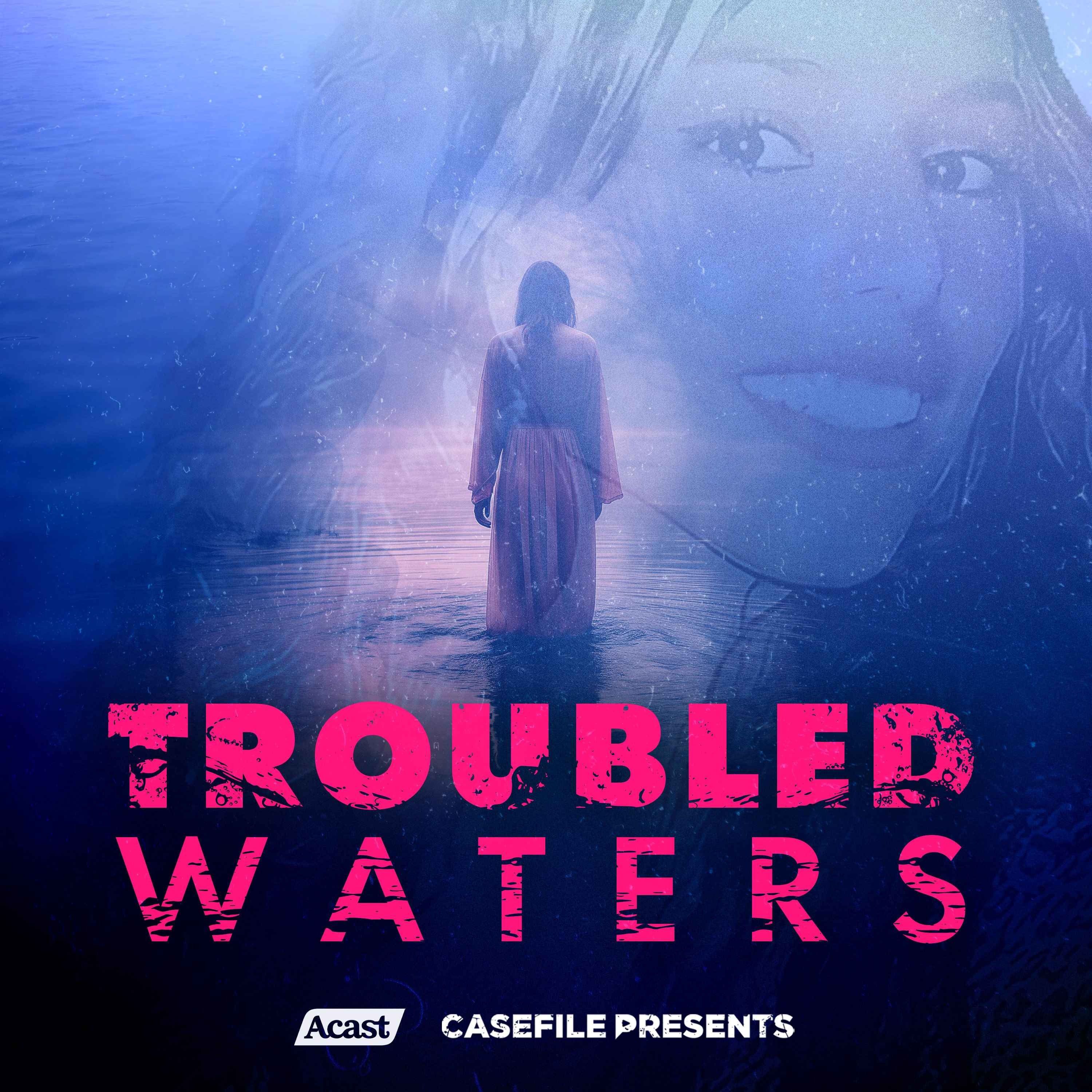
Loading summary
Transcript1 lines
- [00:00]
Boost Mobile Representative
Listen up. You can get the new iPhone 16e with Apple Intelligence for just $49.99 when you switch to Boost Mobile. We pulled so many all nighters to give you this deal and hey, stop messing with the mic. I'm just helping this catch people's attention. This is a great deal. Exactly, so it doesn't need all that. Fine. Head to your nearest Boost mobile store right now. Visit your nearest Boost Mobile store for full offer details. Apple Intelligence requires iOS 18.1 or later restrictions apply if you're an experienced pet owner, you already know that having a pet is 25% belly rubs, 25% yelling drop it. And 50% groaning at the bill from every vet visit. Which is why Lemonade Pet Insurance is tailor made for your pet and can save you up to 90% on vet bills. It can help cover checkups, emergencies, diagnostics, basically all the stuff that makes your bank account nervous. Claims are filed super easily through the Lemonade app and half get settled instantly is get a'@lemonade.com pet and they'll help cover the vet bill for whatever your pet swallowed after you yelled drop it. Hi, it's Casey here. There's not long now until Casefile returns, with all new episodes dropping from July 19 onwards. In the meantime, you might have noticed something a little different here on the casefile feed. We've been releasing the first episodes of some of the other series we produce under the Casefile Presents banner. The decision to do this came after something surprising kept cropping up in conversations I'd had with people at our recent live shows. Many Casefile listeners had no idea that we produce other shows outside of casefile, and some had never even heard of Casefile Presents. The realisation dawned on me that if someone is a big enough supporter of our show to come to a live event, but hasn't heard of our production company, then clearly we need to do a better job of highlighting the other stories we've put so much care and work into. For those who don't know, casefile Presents is our broader production platform. While Casefile is our flagship show, we've also created a number of other podcasts under the casefile Presents banner. Our level of involvement differs from project to project, but we've played a direct role in all of them, whether that's financing, research, editing, music, or production. I even narrate a few of these shows myself. I first discovered the work of private investigator Julia Robson when listening to her hit podcast Chasing Charlie, which was released in 2020. We connected sometime after that, and during our chat Julia mentioned she'd been a longtime Casefile listener, but had no idea we were involved in producing other series or that Casefile Presents even existed. After listening to Chasing Charlie, I knew Julia was exactly the type of person I wanted to collaborate with, so I made sure to let her know to reach out if she ever had another story in the works. A few years later, Julia did indeed reach out with troubled waters. In 2011, the body of 24 year old Louisa Ioannidis was found in a suburban Melbourne creek, driving dressed in a pink dressing gown. Louisa was a strong swimmer and the water was shallow enough that she could have stood up even if she wasn't. Regardless, the police quickly concluded that there were no suspicious circumstances surrounding her death and her story barely made the news. But Louisa's brother Tass never accepted that explanation, and more than a decade later, Julia Robson and producer Claire McGrath embarked on a fresh investigation into the case. What they uncovered is a gripping narrative full of intrigue from an international kidnapping, a daring escape, and a family's desperate bid to stay together. It all unravels into a downward spiral exacerbated by a toxic relationship, all the while revealing flaws in a family violence support system that desperately needs fixing. Troubled Waters is a powerful, deeply moving series that brings Louisa's life and the unanswered questions surrounding her death into full focus. We're releasing episode one here on the Casefile feed. If you like what you hear, you can find the rest of the series by searching for Troubled Waters wherever you get your podcasts now, here's episode one. This podcast contains content that may be upsetting to some listeners. Before continuing, please prioritise your own wellbeing and mental health. Please check the show notes for more detailed descriptions of the episodes. Have you ever heard a story about someone you've lost touch with? Perhaps a friend of a friend that just doesn't seem to add up? It's as if you're only getting pieces of the truth and the rest seems too exaggerated or too strange to even be true. It's like that childhood game of telephone where the message evolves and twists with each retelling. You say to yourself, this isn't right, so you do your own digging, maybe asking around, looking on social media, but there's no reliable way to confirm the accuracy of any of it. Imagine, for example, you hear that an old friend was in a tragic freak accident, but you haven't been in touch with them for years. You go online, hoping to find a news report or something about the accident, but you find nothing. Eventually, you just convince yourself that wherever whoever this story originally came from must have been mistaken. But then, years later, that same story resurfaces, perhaps in a slightly altered form, and you find yourself asking, did this really happen? And if it did, what am I meant to believe? This is one of those stories. Emergency Services for hello? Where do you need the police? I've just. I think I've seen what looks like a dead body. In where? I just need to find out. Where is this? Ellis? Where's this place? We just came for a walk along the the Darwin Trail Creek and we pass Northlands. And you don't think an ambulance is required? No. This person's gone, ma'. Am. Episode 1 locate and identify Chances are, unless you've spent time in the northern suburbs of Melbourne, Australia, you've likely never heard of Darebin Creek. I've lived and worked as a private investigator in Melbourne for over 15 years. Yet it's this case, the mysterious death of a 24 year old woman, that first introduced me to this body of water. I'm Julia Robson and I'm committed to working on cases that have been otherwise overlooked. Together with My producer, Claire McGrath, we're taking on a challenge that has all the elements of a Hollywood blockbuster tragedy, secrets, an extraordinary international rescue, and a fresh investigation that reveals startling new evidence. Honestly, I don't know a lot about the way she died, but all I know is it's mystery, absolute mystery how she died. For those already familiar with this death, it's always been a topic of speculation and rumor, but over time has slowly stopped being told. There's a reason why you're suspicious about this case. Even though it's been several years now, we have every right to be suspicious about this case cause it's suspicious. So with this podcast, our goal is to re evaluate certain aspects that have gone unquestioned for far too long. But first, let's head back to the creek. Darebin Creek, winding through Melbourne's northern suburbs, is a natural boundary to connecting quiet neighbourhoods before joining the Yarra River. During daylight hours, the sheltered trails along the banks of the creek attract families, fitness enthusiasts, cyclists and dog walkers with a keen eye. They may even catch a glimpse of a wedge tailed eagle or kingfisher among the trees, although the distant hum of the freeway is never too far away. Despite all of its beauty, Darebin Creek also has a reputation among some locals as a place to avoid after sunset. Accessible via dead end streets, it offers Only minimal lighting as darkness falls, making it a hotspot for late night activities. That raises safety issues when walking alone on the isolated pathways. And it's at Darebin Creek, the Preston entrance of the parklands, to be exact, where this case begins. It was 11 October 2011, and newcomers to the area, Diane and Alice, were exploring their local backyard. Diane, originally from Ireland, and Alice, an ecologist, would often venture into remote natural areas that many of us might otherwise avoid. Yeah, we get a lot of cyclists coming along here and runners and I think there's a football pitch up there where people play games and stuff. So it's pretty active around here, but I guess not a lot of people go down back where we went there. But we like being the nature lovers we are. We kind of went a little bit off track. It's very common for us to do that. Nearly 12 years later, Diane and Alice have returned to Darebin Creek with me to revisit the spot of their tragic discovery. Yeah, it was a nice day. It was probably a bit of a similar day to today. We were enjoying the wool. We were worried about snakes and then I was, I'm always worried about them. Yeah. Still paranoid about all the things in Australia that can kill you as we walk. Diane and Alice shared their vivid recollections of that evening in 2011. This was the kind of walk we were having. Like a lovely, calm, not very breezy day at all. Sunny, bright blue skies, sounds of birds. Yeah, you've got lorikeets and musk lorikeets and rainbow lorikeets around here. Oh, I think it's up further. I don't think we're in the right spot. I think it's much further on. Back then, it was while strolling along the waterway around 6pm dusk, settling in, they noticed something unusual in the creek. I saw big thing in the water and I kept saying, is that a teddy bear? It just looked wrong. I feel like my gut reaction was probably, is it like a person? But also like my second one was like, can't be a person. It's got to be like a teddy bear or something like that. But it was something that had a form. I suppose that's the best way to describe it because I was putting a form to it. It wasn't just a rock and it wasn't just a bit of limb or, you know, tree stump or anything. It was a formed thing which, which alerted us. And Alice, probably more alert. She was the one that probably went, oh no, there's something more. She said it up there. Approaching the object, they soon realized it was definitely not a teddy bear. So, as I said, I picked up a stick, thinking, well, I don't know what I'm going to come up to, so I'll just know, poke it, whatever it is, just see if it's a teddy or, or, or, or a person. And so we made our way to the place and yeah, we kind of tried to get in a bit closer and we just, we didn't need to use the stick, to be honest. We could kind of observe much closer up that it was potentially, I thought it was a female. Weren't quite sure initially, but we kind of went in a bit closer to look and yeah, we thought, yeah, that's, that's a, that's a person. At this point, any doubts were dispelled. They had discovered a fully clothed body among the branches, partially submerged in the water. I could tell it was someone. I could see the hair at that point and skin, and I knew like it was a person at that. But there was a bit of hair. Like I remember seeing it kind of flowing out like this. Upon their discovery, they knew they needed to seek emergency assistance. In a quick thinking move, Diane found a discarded aerosol paint can nearby. She used it to mark the grass with pink paint, leaving the can as a guide, and promptly dialed triple zero for help. The following is an excerpt from the actual emergency call. Is it moving? Is it in the river or is it still? So is it moving or is it still? It's in the river, yeah. Is it right up on the side, though, and against the side of river, or is it flowing downstream in the river? It's still. It's not moving in the river. Okay, but what I'm saying is, is it floating or is it up against the side? It's up against the side. It's up against the side. Okay. Yeah. On the same side as you. Yeah, yeah. Woman. She's on her side. Looks like a woman to me. I don't know how far away from it are you? About five meters. Okay, then. Are you, are you happy to wait for the police? You don't have to wait right near it. No, it's fine. Because what I'm going to do is I'm going to give them your phone number and they have any trouble finding you, okay, they're going to call you, but I've let them know I do think I know where you are. Okay. If You've walked about 3 kilometers from Northlands, all right. Just after 7pm Only half an hour before sunset, two police cars pulled into Blake Street, Preston, and made their way down to the car park at a nearby sports stadium bordering the parklands by Darebin Creek. In one car, two divisional patrol constables and in the other, an acting sergeant. Upon hearing about the discovery of a dead body, Diane and Alice might have expected a larger team of police detectives and specialists. They were certain it was a body, but it seemed the police needed to verify this themselves before escalating the situation. With police officers now in tow, Diane took the lead, guiding them through the parklands towards a footbridge over the creek. I can't remember what we spoke about, to be honest. I remember that we must have said something to prompt them to say, no, we have to wait for the dive squad, which I thought was a bit weird. I was like, the dive squad, it's 300 mil of water. Like what are you diving after? That's what I was thinking. Well, that's what you said, oh, they're probably looking for evidence, you know, go check in the water. And I said, oh, that probably makes sense. The officers, after thanking Diane and Alice, continued on their own, vanishing into the dense shrubbery. They soon found the pink aerosol can Diane had left lying in the grass. Looking over the steep bank into the creek, they were confronted with a disturbing sight. A body, partially submerged in the water, clad in a pink dressing gown amidst the branches. Even for experienced officers, it was an unsettling sight. As the appearance suggested the body had been in the water for some time. They decided to leave everything untouched, securing the scene for the detectives from the Criminal Investigation Unit ciu, as well as calling in the water police. But what about the Homicide squad? Yes, they were notified, but the responsibility for the scene rested with detectives from the ciu. The homicide squad's involvement hinged on whether the CIU detected any suspicious circumstances. Currently, the detectives were working with few clues. The body of a young woman in a pink dressing gown, her slender build and long brown hair hinting at her age, somewhere in her 20s. One detective's examination led to an initial assessment of non suspicious circumstances. The deceased was placed on a tarp and I examined the deceased for any wounds or signs of violence. There appeared to be no obvious signs of any types of wounds or trauma caused to the deceased. The deceased appeared to be female, in her early 20s, wearing a sock on her left foot, no sock on her right foot, tight fitting dark jeans, dark coloured singlet, tucked in a red bra, a pink dressing gown, a tiger pattern hair clip, a bling type ring on her right ring finger and an anklet on her left ankle. It was deemed at this stage that the circumstances were not suspicious. I then contacted and updated the homicide squad in relation to the incident. The homicide squad would not be handling this case and it would remain with the CiU. But despite the absence of obvious injuries or suspicious items, you have to admit it was still pretty odd. So why were the police so sure it wasn't suspicious? If it was a medical related matter, then sure they can happen without warning. And we've all heard of stories where the fittest people out running have suddenly dropped dead due to cardiac events. But whoever this was clearly hadn't been out for a jog or cycle along the beautiful paths in her dressing gown. Ex homicide detective Charlie Bazzina in his book the Fighting Crime from the Front Line, sheds light on police decision making in such cases. I was very selective about which scenes we attended. We couldn't afford to waste resources on a whim because it might have caused another genuine homicide investigation to suffer. The decision not to involve the homicide squad also meant no additional experts were called to the scene. The homicide squad has access to a selection of raft of forensic specialists, including a crime scene examiner, chemist, biologist, botanist, anthropologist, pathologist, entomologist, arson examiners, blood spatter experts, ballistics, gunshot residue and clandestine drug labs, along with the police air Wing and K9 units, just to name a few. We will be back after a short break. Hey, it's Matt here from P1 with Matt and Tommy. And this episode is sponsored by ebay. You're halfway through a DIY car fix, tools scattered everywhere, and boom. You realise you're missing a part. It's okay because you know, whatever it is, it's on ebay. They've got everything. Brakes, headlights, cold air intakes. Whatever you need. And it's guaranteed to fit. Which means no more crossing your fingers and and hoping you ordered the right thing. All the parts you need at prices you'll love. Guaranteed to fit every time. EBay. Things people love. We all belong outside. We're drawn to nature. Whether it's the recorded sounds of the ocean we doze off to or the succulents that adorn our homes. Nature makes all of our lives, well, better. Despite all this, we often go about our busy lives from moved from it. But the outdoors is closer than we realize. With alltrails, you can discover trails nearby and explore confidently with offline maps and on trail navigation. Download the free app today. Hi, I'm Kristen Bell and if you know my husband Dax, then you also know he loves shopping For a car. Selling a car, not so much. We're really doing this, huh? Thankfully, Carvana makes it easy. Answer a few questions, put in your VIN or license and done. We sold ours in minutes this morning and they'll come pick it up and and pay us this afternoon. Bye bye Truckee. Of course, we kept the favorite. Hello, other Truckee. Sell your car with Carvana today. Terms and conditions apply. The detectives noted debris in the trees indicating higher water levels in previous weeks, which led them to consider drowning as a cause of death. However, without knowing her identity, they couldn't progress further that night. Within the hour, the woman's body was transported to the mortuary and the scene was cleared. As darkness fell over Darebin Creek, the woman in the pink dressing gown, still nameless, remained a mystery. The next day, a different detective in the CIU took on the formidable task of of identifying the yet unnamed woman. But where would they begin? Starting with photographs taken at the creek from the previous day, the officer noted she was wearing only one sock on her left side, triggering a return back to the creek in search of the missing right. Despite an extensive search, it was nowhere to be found. A label in the dressing gown pointed to the cotton on brand, but inquiries at a nearby store in Northlands Shopping Centre revealed no recent purchases of such an item. There was also no reports of recent thefts of these either. Attention then turned to outstanding missing persons reports. For this task, the detective called in the assistance of a leading senior constable who we'll refer to as tl. TL was the obvious choice to help as he was one of the first officers on scene at Darebin Creek the day before. This is also an officer we will come back to according to police statements and this is important. TL spent all of the 12th and 13th of October searching the Victorian police database for missing persons reports in and around the metropolitan area in an attempt to locate any outstanding missing persons. Surely there was a report of a woman missing in the Preston area somewhere in that list. But all roads led nowhere and it was Back to square one. On 14 October, just three days after the body was discovered, a post mortem examination was performed. While initial investigations by detectives didn't raise suspicions, perhaps the forensic pathologist could shed more light on the woman's fate. According to the pathologist, the body was described as that of an adult Caucasian female, measuring approximately 170cm in length and weighing 54kg. Given her youthful appearance, it was not surprising that there was no evidence of any significant disease process. A thorough examination revealed nothing to suggest her death was the result of a medical episode or health related matter. Focus then shifted to any signs of injury on the body. It was noted that aside from some minor bruising on her legs and right arm, there was no evidence of trauma, particularly no injuries to her head or neck. With no medical or trauma related issues emerging from the post mortem examination, the forensic pathologist concluded that the cause of death was consistent with drowning. This now explained the how, but without identifying who she was, the police were still no closer to explaining why this happened. The mystery of her identity continued. It was around this time Diane and Alice, who made the tragic discovery of the body in the creek, reached out to police to find out if there had been any updates. And I was very upset that the police couldn't find anyone belong to her. Yeah, for many reasons. I was like, for that poor person, they must have people who love them and worry about them, even if they don't know she's missing. When they do find out, they're going to be upset. While still actively monitoring reported missing persons and exploring the option of a media release. On the 18th of October, one week after the discovery in the creek, police arranged for a door knock and letter drop within the surrounding residential area. When a Preston resident living in Seston street came home and checked her letterbox, she discussed the letter with her family. Their collective concerns were enough to make contact with Crime Stoppers reporting they believed the unidentified woman was their neighbour. So they said that they found a young female in the creek and they were trying to identify her just based off descriptions like hair colour. And I went, oh no, no, come on. And when we read it and we knew straight away, oh my goodness, that's Louisa. Finally, a lead. Receiving this information, the detective working this case entered Louisa's name into the Victorian police database and identified a record of her fingerprints already in the system. A request was made to make a manual comparison between these records and the prints obtained during the postmortem. At 7.55am on 19 October 2011, eight days after inquiries began to identify her, the body in the creek was formally identified as 24 year old Louisa. Ioannidis. Described Louisa bubbly, fun to be around, smart, but very mischievous, you know, at the same time. This is Louisa's older half brother, Anastasios, better known to his family, friends and those around him as Tass. Louisa and Tass share the same beautiful mother, Helen. As the older brother of 13 years, Tass's relationship with Louisa took on more of a fatherly role than the Typical sibling dynamic. So you felt like there was things that she was holding, things that she wouldn't say or something once you saw that smile. Because she would always smile whenever we saw, you know, whenever we saw each other. I just held onto that and made our conversation, in most cases, great. There were times in the early days that our relationship wasn't great because I had to step in and try and give him some guidance. Stay out of trouble, go to school, stop wagging, you know? Cause there was a bit of that going on too. And just to keep away from scumbags. That's it. Those who knew Louisa all shared the same sentiment about her. She was a glamour. Oh, she was glamorous. Yeah, they used to do my makeup. Even Louise's sister, she used to do my makeup. Come on, let's get you dressed and do your hair. So they were always. I'm like, where do you get your clothes? You gotta teach me. So she was always ready for the whole day, like she was going to conquer the whole world. You never saw her, not dressed at all, head to toe. Her beautiful hair, her makeup. She was just beautiful in and out. Taslar spoke to his sister on September 26, 2011, just two weeks before her body's discovery. Louisa had turned up at his house unannounced. She seemed down, not quite herself, and didn't stay long. I do. I do recall just her. Darn. She was leaving, just turning around a couple of extra times just to. Just to see me and just to. Just to wave goodbye kind of thing. And then I stayed to the end until they actually got in their car and zoomed off and just to wave and that was it. And yeah, I don't usually wait. I just let people out the door and that's it. But this time I remember vividly just out on my porch, on that porch that you saw, just waved her off. That was the last time I saw Louisa. Tas was naturally protective over his naive yet courageous younger sister. Since the passing of their mother in 2009, two years before Louisa's death, he had tried to bring as much stability as he could to Louisa's life, helping her to find work and ringing her on a weekly basis. It was when she stopped answering Tass's calls and wasn't ringing him back that he really started to worry for a period of time, for a week or two, I was trying to get a hold of her via her phone that just kept just going straight to her message bank. I also sent her emails as well. He eventually became so concerned that he drove over to her unit in Preston, hoping to find her out back playing with her puppy or feeding their mother's beloved parrot, Gina, who was a bird with an eerie ability to repeat every word she heard. When he arrived, however, he found the house locked up and Louisa nowhere to be found. The birdcage once occupied by Gina, the talking parrot, was empty, with the cage door left wide open. Louisa cared deeply for her animals and Tas knew in his heart something just wasn't right about all of this. He drove directly to Reservoir Police station and explained his concerns about his missing sister. He provided as much information as he could to the officer, including a description and her address at Seston Street, Preston. It wasn't long before Tas received the worst possible news. A week or a few days later she was received a phone call from John, which is my mum's cousin that works in the police force, telling me that they located her body, located her in a creek deck. I remember that moment very vividly. I was in my car, just heading to work for my aunts and got me to pull over first, got pulled over and at that point I had an inkling that what I was about to hear was going to be extremely terrible because we hadn't heard anything whatsoever. And he goes, tass, they found her, she's dead. They found her in a crate. She was still in her. And I went into shock. I went into shock. Tas was visited by two CIU detectives who had been working relentlessly to identify Louisa. They credited a neighbour's Crime Stoppers tip for providing the crucial lead. Another officer, who we've previously referred to as TL and had attended both the scene and assisted in helping to identify the body, did not go to Tas's house. If TL had gone, Tas would have recognised him immediately. So how would Tass have recognised him? Two days. Two days before Louise's body was found in the creek, Tas had gone to the Reservoir police station and reported her as missing. The officer he spoke with was none other than tl. Somehow, within two days of taking down Louise's details as a missing person and then attending a body found at Darebin Creek, it seems that no connection was made by TL that they could be linked. This was despite the Creek being only 450 metres away from her home. It would then be another eight days of searching by police, part of which was done by TL before it was a neighbour who ran Crime Stoppers and gave police the lead they were looking for. It is truly hard to comprehend how such a vital link went unnoticed during that crucial period. You're kidding me. It can't be miscommunication. It can't be said that the left hand didn't know what the right hand was doing. This is Professor Kerryn Carrington, and you can expect to hear more of her forthright approach in upcoming episodes. Just a note here. We sought comment from Victoria police well before recording, and the response they provided on the eve of recording day didn't really clarify this issue. We don't know exactly what TL or his colleagues would say about his apparent failure to join the dots. Meanwhile, Tas held his own reservations regarding how his sister's case had been handled. I knew what the police investigation had involved. They had related it all to just an accident. So of course I was. I was pretty expecting. I was expecting the coroner's decision that it was going to come back as an accident or death. While police concluded there was no suspicious circumstances, concerns continued to linger for Tas as the months went by and he worked through the emotions dealing with the passing of his tenacious sister. He decided he needed answers about how his sister came to be at the creek. He needed to know what had happened, A family friend explains. Tas was not happy with what the coroner came back with because he did not believe that Louisa drowned or whatever, and he wanted the case to reopen and no. 1. Case closed. And they basically said that the finding was that she drowned. In 2013, a year after Tass had made a formal request for an inquest into his sister's death, he received a response from the coroner advising it had been refused. Tass was advised that based on the evidence made available to the coroner at that time, there was no apparent issues that would be likely to be elucidated by an inquest and no legitimate coronial purpose which would be likely to be served by holding an inquest into Ms. Ioannidis death. Since her death in 2011, Tas has continued to search for answers around her sister Louisa's tragic passing. Do you believe she drowned? No, I don't. I mean, not on her own accord. Okay. Because the river, the creek was not deep as far as I'm concerned. All right? She knew how to swim, right? I don't buy that she's just drowned in a little creek. I just. I don't buy it. Tas doesn't buy it. But do we share his doubts? What do other experts in their field think? Now, 13 years after her death, we step in to undertake a fresh investigation. We'll speak to those who knew her story, re examine the evidence and explore all theories in our pursuit to find truth behind Louise's fate in the troubled waters of Darebin Creek. One thing is clear. From speaking to Tas, it's evident that attempting this on his own was taking a significant toll on him. How are you feeling? This is. You've gone through a lot, Getting a little bit fatigued to be honest. Yeah, and that's been my problem since this illness as well. I'm getting very losing fatigue so but I do really want to finish so you know the matter can progress. Still to come on Troubled Waters, I kept telling my mum, listen Mum, be careful going there. Her brother and her mother supported her at the time and said go back and we will connect you with a few people we know there's that will be able to help you. And yeah, surely enough it wasn't all right, thanks for listening. If you'd like to hear the rest of Troubled Waters, just search for it wherever you get your podcasts. It's a Casefile Presents Production Created by the same team behind Casefile with the same high standards you've come to expect expect from us. We hope you find the series as compelling as we do. This is Paige, the co host of Giggly Squad. I use Uber Eats for everything and I feel like people forget that you can truly order anything, especially living in New York City. It's why I love it. You can get Chinese food at any time of night, but but it's not just for food. I order from CVS all the time. I'm always ordering from the grocery store. If a friend stops over, I have to order champagne. I also have this thing that whenever I travel, if I'm ever in a hotel room, I never feel like I'm missing something because I'll just Uber Eats it. The amount of times I've had to Uber eats hair items like hairspray, deodorant, you name it, I've ordered it. On Uber Eats. You can get grocery alcohol everyday essentials in addition to restaurants and food you love. So in other words, get almost anything with Uber Eats. Order now for alcohol you must be legal drinking age. Please enjoy responsibly. Product availability varies by region. See app for details. Ready to elevate your everyday Quince has the luxe Staples Insider swear by. Minus the markup from 100% European linen styles and 14 karat gold jewelry to gorgeous leather bags and elevated home finds, Quint has it all. And by partnering directly with top artisans and ethical factories Quince delivers premium quality at half the cost of similar brands. Discover everyday luxury without the markup at quints. Go to quince.com styleupgrade for free shipping and 365 day returns. Quince.com styleupgrade.