← Catholic Answers Live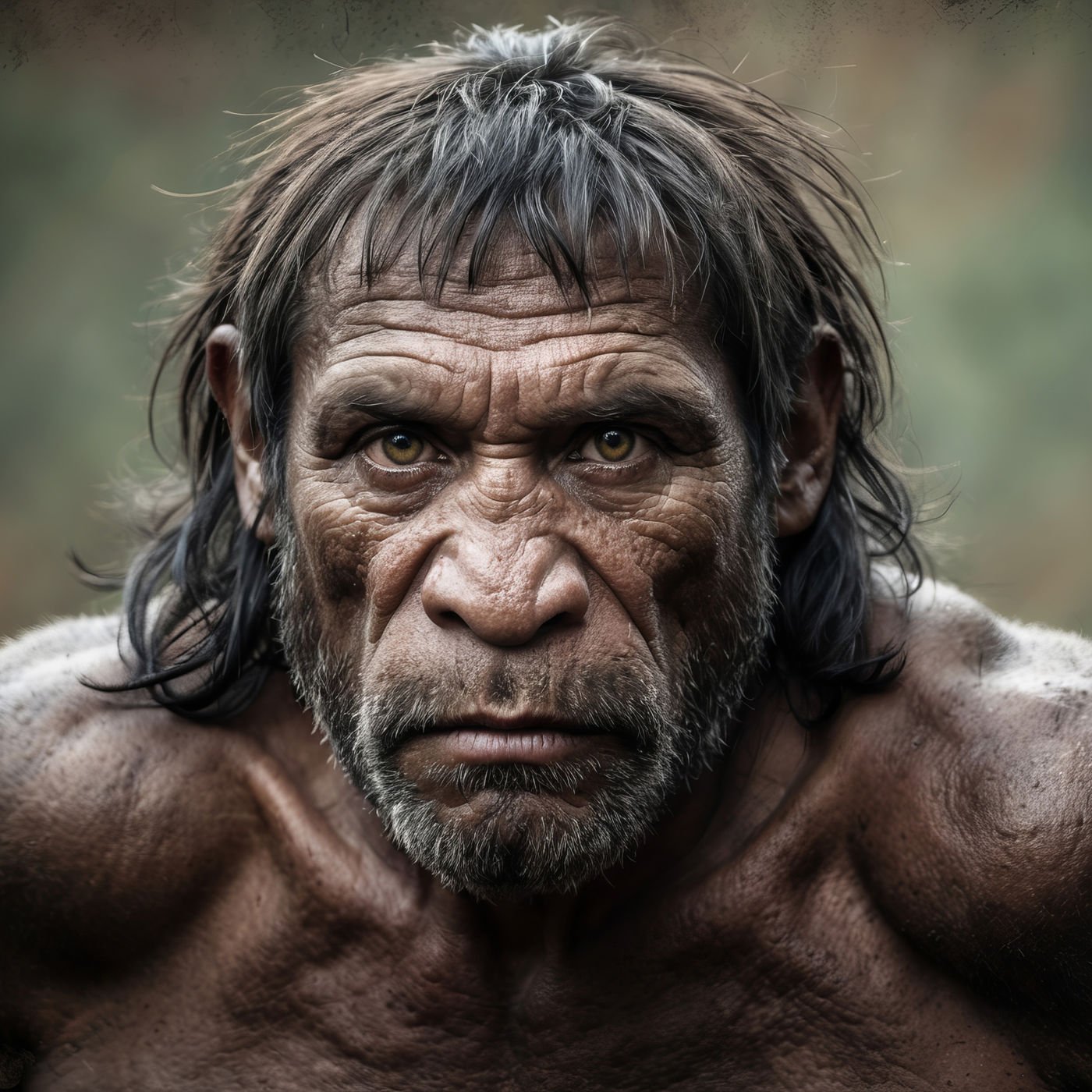
Catholic Answers Live
#12140 How Should We Theologically Understand Neanderthals? - Jimmy Akin
With evidence of burial rituals and culture, were Neanderthals spiritual beings like us? We explore their place in theology, along with topics like praying in dreams, moral behavior in animals, the nature of heaven, and whether we could ever learn like computers. Join The CA Live Club Newsletter: Click Here Questions Covered: 01:13 – What physical explanation can parapsychology offer? Because one thing is describing phenomena, another one is explaining it in a physical framework. 11:15 – How are we to consider our Neanderthal cousins? They were hominids, close enough to us that we interbred (I have more than the average Neanderthal DNA), they had a culture, and there is evidence that they not only buried their dead, but buried flowers and grave goods with them, hinting at a belief in the afterlife. Yet, they were different from us, and they went extinct millennia before the Incarnation. Theologically, how are they considered? semi-Neanderthal minds want to know! 16:31...
Loading summary
Transcript47 lines
- [00:00]
A
Buying or selling your home. Real Estate for Life can connect you with a pro life real estate agent. When Real Estate for Life receives a referral fee, they donate 65% to Catholic Answers. Learn more at realestateforlife.org welcome back. Catholic Answers.
- [00:33]
B
Live.
- [00:34]
A
That lovely music, and I really do love that music, is also the indicator that we're going to have some fun whenever we hear that music. That means we're going to do weird questions with Jimmy Akin. Jimmy Akin, our guest. Jimmy, of course, senior apologist here at Catholic Answers and the proprietor of Jimmy Akin's Mysterious World and the Jimmy Akin Podcast, and also keeping a whole bunch of other Catholic podcasters in business, author of many books and willing to take any question quite seriously and do his very best to give you an answer. Thank you for coming back for another hour. Jimmy Akin.
- [01:07]
B
Yeah, no problem. All right.
- [01:10]
A
Well, let's go right back to the questions. This one comes from Giuliano. What physical explanation can parapsychology offer? Because one thing is describing phenomena, another one is explaining it in a physical framework.
- [01:29]
B
Okay, so the answer is I'm interpreting what Juliano says here in terms of is there an overall physical theory that explains parapsychological phenomena? And the because there are other theories, some of which involve physical matters that apply to aspects of parapsychology. Like, for example, there have been studies done of the brain waves of individuals talking to spirits, and they're distinct from the brainwaves that are displayed in in other situations. So, for example, they'll have people who are skilled in talking to spirits, and they'll say, okay, talk to a spirit now and we'll watch your brain waves. But then they'll say, okay with same person. They'll say, okay, have a conversation with with this live in person and see is it is are the brainwaves similar or different? And they're different. They're using different parts of their brains when they're talking to spirits versus when they're talking to a living person. And then they'll say try to be psychic and pick up information psychically. And that again, produces different activation patterns in the brain. And then they'll say, have a conversation with an imaginary person. And that also involves activation of different parts of the brain. So it looks like when they're talking to spirit that they're using different parts of their brain than they are when they're talking to a living person or an imaginary person or when they're picking up information psychically. So it looks like that's a distinct thing. Now, obviously, the brain is a physical organism. And so the theory that talking to spirits involves different parts of the brain and different brain activation patterns than other activities is something that involves physical matters, you know, namely your brain. But that's. I interpret Juliano as asking about parapsychology overall, because talking to spirits is just one little piece of parapsychology. And the answer, if you're asking about an overall theory, is parapsychology doesn't have one. And it may. It may not be possible, depending on what you mean by physical, because one of the things parapsychology studies is the survival of human consciousness beyond bodily death. And if human consciousness survives beyond bodily death, as many, not all, but many, parapsychologists hold, and as the Christian faith teaches, then parapsychology is going to involve matters that are not physical. And so now you could just redefine physical to mean everything that exists, but that's not the way people normally use the word. Nor they. They would consider human consciousness or the human soul or the human spirit to be something that's not physical. So parapsychology may or may not, depending on how you define your terms, be able to provide a physical explanation for all of the phenomena it studies. On the other hand, it may be able to provide physical explanation for some of the phenomena. And I would say that if there is a physical explanation for. I would also add this, that if there is a physical explanation for the phenomena that parapsychology studies, which includes not only survival of bodily death, but also psychic functioning, well, any physical mechanism to explain that is currently undiscovered. We don't know what it is. But there, you know, parapsychology is currently working on that. There are various theories. In fact, I just finished taking a class in theories of parapsychology. They're working towards trying to provide an explanation whether it ends up being physical or not. But the mere fact that. That the explanation for something is undiscovered doesn't challenge a field's validity as part of scientific inquiry. For example, there are lots of things we don't know in other branches of science, like physics, for example, we don't know what causes gravity. We can observe gravity, we can describe gravity. You know, that's one of the things that Juliano mentions. It's one thing to describe phenomena like psychic functioning or whatever. It's another thing to explain it in physical terms. Well, we can describe the effects of gravity really well. You know, Newton's equation did it for us for a long time. And then we got Einstein's refinement of Newton in the early 20th century. But we still don't know what gravity is. Einstein said we could imagine it as if. It's as if massive objects are causing dents in space time, but we don't know that's what it is. There's also discussion of, you know, can we find a quantum explanation for gravity? Like are, are there force carrying particles like gravitons? We, we just don't know. We don't know what causes gravity. We are even more in the dark about what so called dark matter and dark energy are. There are various theories, but it's currently wide open whether dark dark matter even exists and if so, what it is. We can describe the rotation of galaxies and so forth that could be interpreted as caused by dark matter, but. But we don't know for sure if it exists or if, if it does exist, what it actually is. Similarly with dark energy we have some proposals, but we don't with dark energy is different from dark matter. Dark energy is the force that causes the universe to expand faster, and we don't know what it is either. There are some explanations, some of which are simpler than others, but these are currently unknowns in science. And so unfortunately, we don't have a central organizing theory in the field of parapsychology yet. Parapsychology is currently at a stage similar to biology before the 1800s, you know, today and beginning in the 1800s, the idea of either Darwinian or Lamarckian evolution became the central theory. It's more Darwin, but, you know, with today with some contributions from Lamarck. But evolution is the central organizing theory of biology today. And there are actually two central organizing theories in physics. One of them is relativity and the other is quantum mechanics. And together they explain lots of what we see in physics. We also know they're both incomplete because they don't play well together. They conflict with each other and we don't know how to reconcile them. But before the proposal of evolution and before the proposal of relativity and quantum mechanics, there was still lots of good biology being done and lots of good physics being done. You don't have to have a central organizing theory, much less one that's exclusively in physicalist terms. In order to have a scientific field of inquiry that's currently the stage that parapsychology is at.
- [09:28]
A
Thank you very much, Giuliano, for the question. That takes us to the first break right back with more weird questions for Jimmy Akin on Catholic Answers Live.
- [09:34]
B
Stay with us for more Catholic Answers live.
- [09:38]
C
Are you looking to study Catholic theology in a formal way with the guidance of faithful scholars. Underwriting for Catholic Answers Live is provided by the Augustine Institute, offering master's degrees in theology, pastoral theology, and Catholic education with flexible study options on campus, online, or both. The Augustine Institute equips students to serve Christ and his church in schools, parishes, dioceses, apostolates, and the home. Learn more today at augustine.edu. underwriting for Catholic Answers Live is provided by Magnificat. Published monthly, Magnificat features texts of daily Mass, prayers, articles, meditations, art commentaries, and more in step with the liturgical rhythm of the church. On the web@magnificat.com.
- [10:26]
A
Hi, this is Fr. Mike Schmitz. Please join me for Ascension's Bible in a Year and Catechism in a Year here on EWTN Radio. We're going through the entire Bible and the Catechism in 365 days. If you've ever wanted to understand what it means to be Catholic and allow those truths to shape your life, this is for you.
- [10:43]
C
Bible in a Year and Catechism in a Year with Fr. Mike schmitz tonight at 10pm Eastern, 7pm Pacific on EWTN Radio.
- [11:04]
A
Welcome back to Catholic Answers Live. Jimmy Akin, our guest, and it's Weird Questions with Jimmy Akin today. Next question comes from Terry. How are we to consider our Neanderthal cousins? They were hominids, close enough to us that we interbred. I have more than the average Neanderthal DNA. They had a culture and there is evidence that they not only buried their dead, but buried flowers and grave goods with them, hinting at a belief in the afterlife. Yet they were different from us and they went extinct millennia before the Incarnation. Theologically, how are they considered semi Neanderthal? Minds want to know.
- [11:47]
B
Okay, so I'm glad you used the word theologically. How are they considered? Terry, because the Church doesn't have a teaching on Neanderthals. That means they are not a subject of Catholic doctrine. Doctrine is different than theology. Doctrine is what the Church teaches. Theology is a matter of opinion to try to understand divine revelation in a deeper way. And so since the Church doesn't have any teachers teaching on Neanderthals, they're in the province of theology. We can speculate on them and offer educated opinions about them, but we can't say with certainty. Okay, so one question that a lot of people might have is do Neanderthals have an afterlife if they're not Homo sapiens, which is our subspecies? I think a lot of people are constrained in their thinking on this because They've associated having an afterlife too closely with being a human there. It has historically been a very popular theological opinion. This is not church teaching, but there's been a very popular theological opinion that you need a rational soul in order to have an afterlife. But I looked into that and I actually don't think the arguments for that work. I think that we actually also have some empirical evidence that at least some animals may have an afterlife. And if you want to learn about that, you can listen to episode 203 of Jimmy Akin's Mysterious World. It's at Mysterious FM, like FM radio, Mysterious FM 203. So if it's true that some animals have afterlives, well then Neanderthals being a kind of human, they would definitely have afterlives. Even if animals don't have afterlives, though, I think if you have the concept of an afterlife, that is very strong evidence that you have one. And so assuming that the claims are correct about Neanderthals burying flowers and grave goods and things like that, that would indicate, and even burial itself, but especially the flowers and the grave goods, that would indicate they have a concept of an afterlife. And if you've got the concept, I think you definitely have an afterlife. I would mention I have seen it challenged that, like they buried the flowers. I've seen it proposed that the pollen that was found in that case could have gotten there in some other way, you know, just accidentally. But I haven't looked into that in detail yet. I do plan on devoting at least one future episode of Mysterious World to the Neanderthals. And I've been gathering research material, so I'm going to be looking into their burial practices in more depth and seeing what, what can we really confirm about it? But assuming they did bury, assuming we know they buried people, and I think that's prima facie evidence for an afterlife. And if they also buried grave goods like tools and flowers and things like that for the deceased to use in the afterlife, that's why you bury things with someone, so they can at least spiritually use it somehow, that would be extra powerful evidence that they have the concept of an afterlife. And thus I think that they did have an afterlife. Also, we can say that they were almost certainly fallen creatures like us because we can see their bones and the kind of injuries they had. And it looks like they, like our ancestors, practiced warfare. So I would suspect, and I can't prove this, but I would suspect that if you had the author of Genesis and you introduced him to some Neanderthals he would say, yeah, they're just another kind of men, but they're us. They may be a different subspecies, but they're us. And so they would be redeemed by Christ, just like we are. If they asked to be baptized, I would have no hesitancy in baptizing Neanderthals. So my suspicion is they're just another kind of human, but they fundamentally fit within the same salvific framework that other humans do.
- [16:27]
A
That was Terry. Terry, thanks very much for the question on we go to Devin's question. Can animals act in ways that are morally good or evil? For example, the dog that saves the child versus the dog that bites the child. What implications, if any, would that have on the prospect of an animal afterlife?
- [16:49]
B
Well, so I already mentioned episode 203 of Mysterious World where I cover the EV regarding and at least some animals have in an afterlife. You can check that out for more information on that. I think the question here is would be more what effect would animals performing good or evil actions have on their afterlives? So I would say a few things here. No known animals have human level reason and therefore they don't have the moral. They don't have the capacity for morality the way humans do. And that means they're not as responsible. Now in terms of what is good or evil that flows and Aquinas would agree with this, that flows from the nature of an organism. So if you're a human, human nature dictates that certain things are good for humans to do and certain things are bad for humans to do. If you're a dog, then certain things are going to be good for dogs to do, and certain things are going to be bad for dogs to do. And that's going to depend on the nature of being a dog as opposed to a human. So for example, they're not always going to be the same. For example, humans because of the way because of a variety of factors, including the fact that human infants are born freaky helpless and have to be taken care of for decades to become adults. You need humans to have marriage. You need the spouses to stay together, not only for their own goods, but for the good of the children. And so marriage is a human institution, but it is not a canine institution. Puppies grow up much quicker than human infants do. And so you don't need male dogs and female dogs to get married the way you need male humans and female humans to get married. So that's an example of how the different nature that dogs have shifts. What's more, good or bad for dogs to do. Now, one of the things that's going to be trans species is to the extent an organism has the capacity for love, which is what God's highest priority is, we're even told that God is love to the capacity, to the extent that an animal has the capacity for love, acting in a loving way is going to be good for that animal and thus morally good. And so dogs, one thing, they've got love. Dogs love people. They don't love all people, most of them, you know, they love those who love them. But at least that's something that is morally good. On the other hand, if a dog. So if a dog saves a child, well, that's morally good, objectively speaking. If a dog bites the same child, that's objectively bad under ordinary circumstances. So I would say objectively speaking, the dog can do both good and bad things. The question is then, how responsible is the dog going to be for what it did? Because they don't have human level reason, they're not going to be as accountable, which means they're not going to get as much credit for doing good as a human would, and they're not going to get as much blame for doing bad as a human would. They'll only get credit or blame to the extent that they morally understood and were in control of their action. Now, we do see animals performing moral reasoning. Animals, for example, have the various animal species, I'm not talking about insects, but higher animals like dogs and chimps and gorillas and so forth and Dolph. They have concepts like reciprocity. You know, if you did something for me, then I should do something for you. They have ideas of fairness. We see things like that. So we do see them engaging in a primitive form of moral reasoning. And I would say that that's an indication that if I'm right that they have afterlives, then they'll be rewarded or blamed in those afterlives for what they did, you know, to the extent they were responsible for it. On the other hand, I wouldn't expect their afterlives to be as intense as human afterlives one way or the other. Humans are likely to soar higher in heaven than animals. Humans are likely to go deeper in hell than animals. In fact, I don't know if animals are fundamentally capable. If they do have afterlives, I don't know that they're fundamentally capable of damning themselves because they don't have the ability to reject God in the fundamental way that a human can. And so I could imagine A situation where you've got an animal that's done, let's say, it was abused growing up and it's done a bunch of bad stuff, and it's partially responsible for that. I could see animals having a purgatory, but I don't know that any animals would go to hell because I don't know that they have the capacity to reject God in the fundamental way that humans do, and that's necessary for hell. But all of this is speculation, so if you find it helpful speculation, that's great. If you totally disagree, that's great too. But those are my thoughts.
- [22:40]
A
All right, thank you very much for the question, Devin. Appreciate it. This one comes from Kevin. If I am asleep and I dream that I am praying, is it possible that God and the saints I ask for intercession hear those prayers? And if I receive a blessing in the context of my dream, is it possible that some minor intercession has occurred?
- [23:02]
B
So, in regard to the first question, it's definitely possible that it's not only possible, it's certain that God knows what you're praying in your dreams because he's omniscient. He knows everything. He knows what you're dreaming. If you're praying in your dream, God knows that it's also possible that saints could know what you're praying in your dreams. We have evidence for that because we know some saints actually are aware of dreams, namely the angels who are good, the sainted angels, because we see them intervening in people's dreams all the time in scripture. You know, like an angel Gabriel appears to Daniel in a dream, an angel appears to Joseph in a dream. Angels show up in dreams all the time, so they at least can know what's going on in dreams. And I would think the same thing is true of humans, human saints, certainly, given the reports of apparently veridical communications with humans in dreams, in apparitions of human saints. So I think it's definitely, it's certain in God's case, and it's definitely possible in angels and human saints cases that they may hear your request for intercession in dreams. That leads us to the question of if I receive a blessing in the context of my dream, is it possible that some minor intercession has occurred? Well, I'm not sure what you mean about receiving a blessing in context of the dream. That could mean receiving the blessing in waking life as a result of the dream or following the dream. Or it could mean receiving a blessing in the dream itself. Like if I pray for an ice cream cone in a dream and then all of a sudden I'm holding an ice cream cone. Well, that could be an answered prayer if I receive, if I receive a dream ice cream cone. But it also could just be my subconscious, so I couldn't really establish whether that's intercession. On the other hand, I think it's quite possible if you're praying for something in a dream and it's good that God could give it to you and wake. In life, we are not fully responsible for what happens in our dreams, but that doesn't mean that we can't do intellectual, we can't use reason in dreams. I mean, I regularly, I'm not every night. But periodically I will have debates with myself in dreams on moral theology. You know, I will argue is would it be moral to do this or not? And I will tick through the, the reasons on both sides of the argument. And when I wake up I find, yeah, I agree. I concur with my dream self. That would or would not have been moral. So if I can do moral theology in my dreams, I see no reason that people can't intercede or ask for intercession in their dreams.
- [26:02]
A
Kevin, thank you for the question. Lots more questions to come. It's Weird Questions with Jimmy Akin on Catholic Answers Live. Have you ever wondered about the mysterious, even obscure aspects of the Catholic faith? Dive into the Jimmy Akin Podcast where Jimmy brings together information from many fields as he pushes the boundaries of apologetics. Tune in today to the Jimmy Akin Podcast Mysteries of the Faith, a highly entertaining, informative and at times humorous show that will help you grow in your faith. Visit jimmyakinpodcast.com today to subscribe.
- [26:45]
C
Lots of people have big questions about Catholicism. It needs a big Book of answers. And now it's got one. The Big Book of Catholic Answers is filled with helpful replies to more than 250 questions about the faith. Questions about God, salvation, history, the Creed, the Bible. The list goes on and on. Order your copy of the Big Book of Catholic answers today@shop.catholic.com or ask for it at a good Catholic bookstore near you.
- [27:15]
A
What was the Church like in its infancy? In a word, Catholic. And Joe Heschmeyer has the receipt in his best selling book, the Early Church Was the Catholic Church. He gives you the details from the historical records of the first two centuries of Christianity. Right now, get a copy for just $10 plus free shipping if you live in the continental United States. Get more information and order. The early Church was the Catholic church@the.
- [27:42]
C
Earlychurchwascatholic.Com if you're not a Bible scholar, the full message of how the Sunday Mass readings fit together can be tough to comprehend. Apologist Carlo Broussard is here to help. Join Carlo every Friday for the Sunday Catholic Word podcast. In each episode, he unpacks the scripture readings for that Sunday and brings them all together so you can better understand and defend the faith. Visit sundaycatholicword.com to subscribe. That's sundaycatholicword.Com.
- [28:23]
A
Jimmy Akin, our guest. And it's an awful good thing because it's Weird Questions with Jimmy Akin this hour. A whole bunch of weird questions. And the Internet or the folks who use the Internet have apparently an endless supply of weird questions. If you'd like to get them to us, you can always send them to us. Radioatholic.com we just when we see them, we forward them on to Jimmy. And if I don't even send any comment with them, Jimmy, I figure you know what this is when they come.
- [28:51]
B
Yeah. Well, at least if it's flagged for weird questions, I know what file to put it in.
- [28:55]
A
Yeah. Or just, you know, Jimmy's pretty available. You'll find him. Look for Jimmy Akin on the Internet. You'll find him. He's on the Internet. Let's see, this one comes from Steven.
- [29:07]
B
Well, specifically, you can Google Jimmy Akin email. And I have a bunch of email addresses that work.
- [29:14]
A
Oh, ok. Steven wants to know this. If a seer. Come on, Steven. Oh, wait, that was me. He spelled it right. I said it wrong. If a sincere penitent in the confessional confesses that he has set a bear trap outside the priest's confessional set to go off the moment the priests exit the confessional, could the priest require the penitent to remove the bear trap as part of his penance? Or can the priest not make requirements like that in order to give absolution? It says he's actually gotten this question from students.
- [29:50]
B
Okay. So I'm going to assume, even though I don't know exactly how this would work in terms physically, I'm going to assume that the bear trap will clamp down on the priest and injure him the second he steps foot out of the confessional. Because if it's not going to do that or if he can just step to one side quickly or something, then, then there wouldn't be any any necessity if you know, to move the bear trap if the priest can easily evade it. So I'm going to assume that the priest is going to suffer definite injury if that bear trap is not moved. In order to have the strongest version of this question, I don't know exactly how that would work, because if you have a bear trap on the floor outside a door of a confessional and the door opens outward, you can just knock the bear trap out of the way with the door. But I'm going to assume that can't be done for some reason, like maybe the door comes in instead of going out in any event, and the bear trap is too big for the priest to step over it or step to one side or something like that. What the priest cannot do is break the seal of confession, which means he cannot himself reveal who confessed what. So that requires two elements to be revealed. Who confessed a sin and what they confessed the. And, and, and that he also cannot take action, including assigning a penance that would force those things to be revealed by someone else. That's just breaking the seal by proxy. So let's suppose I go. Let's suppose I'm a murderer and I go into the confessional and I say, father, I. Jimmy Akin committed a murder. Well, he cannot, he cannot go blab into other people and say, jimmy Akin confessed to murder. Okay? That's. Those are the two things. The penitent and what the penitent confessed he also cannot commit. Breaking the seal by proxy, which would be saying, oh, well, Jimmy Akin, you've got to go down to the police and confess as your penance. Because then he's just forcing me to break the seal on myself. So that is not allowed. But it doesn't seem to me that anything in this situation as it's been described, involves breaking the seal. So it could be that, you know, he. Unless other circumstances apply, unless you change the conditions of the thought experiment, it seems to me the priest could say, and as your penance, I want you to disarm that bear trap when you leave the. When you leave the confessional, because no one's revealing that this person confessed setting the bear trap. You know, there could be any number of explanations here. Someone might have even seen the penitent set the bear trap, but then they already know he set the bear trap, and then they see him come out and remove the bear trap. Well, they don't know that the priest, they don't know that he confessed, that maybe he just thought better of it or maybe they didn't see him set the bear trap, you know, and it's. And you just. He just comes out of the, out of the, out of the confessional and it's like, oh, there's a bear trap. I better disarm that. So I don't see any reason why the priest couldn't require the penitent to disarm the bear trap as long as that's not going to reveal the fact that he had confessed this. So I don't see a problem there. You could argue, well, it's still revealing that he committed the sin of setting the bear trap, but it doesn't reveal that because either there was a witness who already knew that he set the bear trap or, or there was no witness, in which case disarming the bear trap does not reveal that you said it. So I don't see any reason why he couldn't in this situation.
- [34:27]
A
Stephen, I hope that addresses your students concerns. Thank you very much for the question. This one comes from Alyssa. Jimmy, tell us about your Arkansas accent. It's coming on pretty thick these days. I assume you lost it when you moved to California and now that you're back, you just naturally fell back into it.
- [34:48]
B
Well, it's a little more complicated than that. When I moved to California 32 years ago, I consciously, I didn't just lose it. I did substantially lose it, but I didn't A, I didn't do so completely, and B, I did so consciously. I consciously suppressed Southern elements in my speech. This is a linguistic phenomenon known as code switching, and lots of people engage in it. Code switching is where you change the way you speak. Often people will do it semi consciously if they're around people they're talking to and those people talk different. They'll begin to imitate or adapt how they speak to the way those around them are speaking. It can happen subconsciously. It can also happen semi consciously, and it can happen fully consciously. And so when I moved to California, I, as a conscious decision, decided to suppress most of the Southern elements in my speech. I didn't suppress them all. There were a few things I hung onto. Like I continued to use the word y', all, which is a it's that's becoming standard in mainstream American English anyway. But I continue to hang on to that. I also would pronounce, I wouldn't say sola scriptura. I would say sola scriptura, which is how it was always pronounced here in Arkansas. And even though I would hear other apologists saying sola scriptura, I would continue to just say sola scriptura. And there were a few things like that also. There's and this was unconscious, but there's a double subjunctive that gets used in Arkansas, which has a certain nuance that a single subjunctive does not have an example would be, yeah, we might could do that. Okay, might and could are both subjunctive terms, but it has a different nuance to say we might could do that. There's more tentativeness there than if I just said we could do that or we might do that. And so I would continue to do that. And initially I didn't even know that other people didn't have the double subjunctive. But, you know, I would continue, I would continue to use it anyway, but it was a conscious decision. And then when I moved back to Arkansas, I said, well, I'm going to be speaking with an Arkansas accent now, and I can either get us there fast or slow. And the more I drag it out, the more confusion it's going to cause. So I said, I'm just, just like I did when I moved to California. I'm going to flip the switch and I'm going to begin speaking with an Arkansas accent in any, in any transitional period after 30 years of speaking in another way for a long time. It's going to be inconsistent at first, but I, I think I'm substantially through a lot of that inconsistency, but not completely. I can still feel a tug sometimes when I'm talking with someone. Like, I got a phone call yesterday from someone who had a Mountain Western accent, and he, in talking to him, I could feel a tug to start code switching to Mountain Western because that's actually what my interim accent was. It was not fully Californian. It was mountain Western, according to a linguist I talked to. And so I could feel that tug back to Mountain Western when I was talking to him. But so there will be some inconsistencies. It'll probably deepen a little bit further than where it is now, but not a whole lot. I think I've substantially made the transition. And so I just decided as a conscious act to do it quickly rather than slowly so that we'd get it over and people get used to it and there wouldn't be this, oh, wait, his accent keeps changing. What's going on here? It's better to just do it all at once.
- [39:09]
A
Alyssa, thank you. That question brought us right to the break. It is weird questions with Jimmy Akin. More weirdness to come right after this on Catholic Answers Live. You're listening to Catholic Answers Live. Underwriting for Catholic Answers Live is provided by Real Estate for Life. Real Estate for Life connects home buyers and sellers to real estate agents while supporting pro life organizations. The web@realestateforlife.org the most original and exclusive.
- [39:40]
B
Catholic content is on EWTN radio.
- [39:44]
A
Human beings are God's greatest masterpiece.
- [39:47]
B
Every person is made in the image.
- [39:48]
A
And likeness of God, but every saint, that is every person who accepts God's.
- [39:52]
B
Invitation, his upward call to make them holy.
- [39:55]
A
And so every story presents us with.
- [39:58]
B
A unique masterpiece that God is writing. The Journey home, Monday night, 8 Eastern.
- [40:03]
C
On EWTN Radio and television.
- [40:07]
A
Who was the first Catholic in your family? Were they evangelized by a friend, a co worker, a stranger? Did you ever think that you could be that person that God uses to save a soul, and that soul could save their family, their grandchildren and generations to come? At St. Paul Street Evangelization, a Catholic nonprofit, we train, equip and mobilize Catholic disciples to do the urgent work of evangelization. Catholic Answers is supported in part by St. Paul Street Evangelization. Streetevangelization.com Welcome back to Catholic Answers Live. Jimmy Akin is our guest. Lots and lots and lots and lots of people know Jimmy from Jimmy Akin's Mysterious World. Now it has become one of the most popular corners of the podcasting world. You can find it at Mysterious fm. Jimmy covers a lot of mysteries there, but I would say right here when we do weird questions, it is we cover what would take years because it's one mystery at a time over there. And here it could be 20, 30, 40 mysteries you get in two hours. As I have said, it seems inexhaustible, the number of weird questions that are out there. So this one comes from Anna. Anna says, I've never heard anyone address this. After the resurrection, we will be reunited with our physical bodies. So is heaven a physical place?
- [41:45]
B
The way this issue normally gets framed is in terms of the bodies that we know are currently in heaven, like Jesus and Mary. So I would say that heaven is a place that is at least capable of receiving physical bodies, and thus they can exist there. They may not exist there in the same mode that they exist down here on earth, where they're, for example, extended in three physical dimensions. But they are at least Jesus has his body with him right now in heaven. Mary has her body right now with her in heaven, and there can be a few others, too. But I think what that shows us is it's at least capable of receiving a physical body and preserving that body in some fashion, even if it's not the same way the body would manifest here on earth. But and if you want to call that a physical place, you can. But you also might say it's not A physical place. It's just capable of receiving physical bodies. Now, what Anna's asking about is about the state of affairs after the resurrection. And that's a little different. That's not what's going on. Now, we often hear people talk about dying and going to heaven, and they kind of ignore the resurrection. But the vision that's presented by the New Testament is not that we're going to go up to heaven and stay there forever. Instead, the vision that's presented, and this is found in a number of passages, but most clearly at the end of the Book of Revelation, is that when the resurrection occurs, we're going to be living on the new Earth. And heaven, the new heaven is going to come down from God's going to live on the new earth. He's going to dwell with men. And so the picture that we're given of the state after the resurrection is not being up in heaven with God, but God being down here on earth with us. And so if we're going to be on the new earth, well, that's a physical place. So we're going to be in a physical place. It's just not identical with heaven as it currently exists.
- [44:11]
A
Anna, thank you very much. Great question. On we go. Dalton wants to know this. Growing up, I was told that our souls wander about while we sleep as an explanation for deja vu. I know in the past you've attributed deja vu to remote viewing. How similar are these two ideas?
- [44:32]
B
Well, if you know that, then you know something I don't, because I don't recall ever attributing deja vu, which is the experience of having a situation seem oddly familiar to you, even if you can't remember the reason for that familiarity. I can't recall ever attributing that to remote viewing. I can recall getting the question of what causes deja vu. And I've listed numerous possible options, some of them natural, most of them natural. Some like, you know, suppressed memories or forgotten memories where you actually have experienced something before, you just don't remember it. Or maybe you dreamed about it and you just don't remember the dream. But still, subconsciously, your subconscious is going, hey, this is familiar. And in terms of psychic functioning, I could imagine precognition, which is not the same thing as remote viewing, being responsible. If you precognized subconsciously what's going to happen tomorrow. Maybe you did it in a dream, and then you wake up and then that thing that you foresaw happens. It could seem familiar to you. You just don't Remember the dream where you precognized it. And evidence gathered by Louisa Rhine in the mid 20th century actually suggested that dreams are the most common mode for precognition to manifest in about 60% of precognitive. Spontaneous precognitive experiences happened in realistic dreams. So you might have had a dream about what you're going to do tomorrow and you picked up on information about what you were genuinely going to do tomorrow. And then when you encountered that situation, it seemed familiar. So it seems to me that if deja vu had a, or in some cases has a psychic explanation, precognition would be a likely candidate. Having said that, remote viewing, I guess if I think about it, I could see a possibility there too in that remote viewing is a form of clairvoyance. It's just an application of clairvoyance, which is getting information about a distant or hidden location. And so if, let's say I've never been to. This is not true. But let's suppose I've never been to the Northwest Arkansas mall. And then one night as I'm sleeping, I clairvoyantly go to the Northwest Arkansas mall and I see what it's like. And then the next day I visit it physically and it's like, even though I don't remember my dream, I'm like, hey, this seems familiar. Well, in that way clairvoyance or remote viewing could be responsible. But precognition to me seems more likely. But it could be possible in. So that's some on how the two ideas are related. Let me make sure I. Oh, I wanted to address the souls wandering thing. I knew there was an extra part to that question. Well, okay, this is an idea that appears in various cultures. But and I would say people do sometimes report having out of body experiences when they're asleep. In fact, this is a technique that's sometimes taught in terms of how to begin having out of body experiences. Now an out of body experience is an experience where your point of view is not inside of your body. Normally your point of view is inside your body and it's inside your head and it's behind your eyes. But in an out of body experience, your point of view shifts from that and is outside of your body. Hence the name. People report out of body experiences, for example, as part of near death experiences where they'll suffer, let's say cardiac arrest and then they'll like be floating up at the top of the room looking down at the doctors and nurses working on their, on their body. This may or may not involve anything leaving your body. There is a difference of opinion about what happens in an out of body experience. According to some practitioners, something does leave your body, but not necessarily your soul. A psychic named Alex Tannis, who was an out of body experience or who did experience with the American Society for Psychical Research back in the 1980s, he would do experiments where they would have him like lay down, they'd bring him into the lab, they'd put him in a room, they'd have him lay down, and then he would, he would have, he would initiate an out of body experience. And they'd say, we want you to go down the hallway and look at the target that we've got for you and then come back and tell us what that target was. So he didn't know he was blind to the target. Now, according to Alex, he said something does leave his body when he has an out of body experience. He said it was not his soul. He said, if my soul left my body, I'd be dead. But he referred to what left his body as Alex 2 in Distinction from Alex 1, his actual self. On the other hand, not all out of body experiencers think something leaves their body. I, I know another one who's currently active named Graham Nichols. And Graham Nichols, he's a British gentleman. He, he has out of body experiences that he can control and he thinks nothing leaves his body. He thinks what he's doing is what's known as traveling clairvoyance, where it's just ordinary clairvoyance, but you're just shift in your point of view one step at a time. So instead of like directly clairvoyantly leaping to the northwest Arkansas mall, I might clairvoyantly leap a few feet to my left and then a few more feet to my left, and then I might eventually get to the northwest Arkansas mall. But I do it a stage at a time, so I'm traveling in my clairvoyant perceptions to get there. Well, there, there is a practice that some people will teach about how to initiate out of body experiences that involves dreams. The way it commonly is taught is first you need to learn how to have lucid dreams where you're in control. You're aware of the fact you're dreaming and you're in control of the dream, and then you can tell your subconscious while you're dreaming. I want to have an out of body experience now. And that's how some people initiate out of body experience dream. On the other hand, you can do it while you're fully conscious, which is how Graham Nichols does it. But if it can happen, and I'm not saying any of this happens for real, I'm just describing the phenomena. If it is possible to initiate an out of body experience in a dream, then it could. If you can be trained to do that, then it could also happen spontaneously. And so there may be cases where people have, you know, out of body experience dreams just randomly. And it may be that something's leaving their body when that happens, not their soul or they'd be dead. I'd agree with Alex Tanis on that. Or it may just be traveling clairvoyance like Graham Nichols says. But either way, it could be responsible for some cases of deja vu if you have an out of body experience where you see something that you haven't yet seen in Wakand life and then you later encounter it in waking life. But there are lots of natural explanations for deja vu as well. Like I saw this in wakened life and just don't remember it.
- [52:45]
A
Thanks very much, Dalton. I'm going to read the next question quickly, see if we can get an answer. Jimmy Frank wants to know the mystery of learning and memory. Why can't humans learn, store and recall information in the same way a computer does? With massive storage, data compressibility, extractability, can download and upload information, etc. It would seem extremely beneficial if humans could learn via download and share via upload like computers, just to qualify, I mean the speed of data transfer as well. For example, instead of spending years learning a new language, just download it and have a perfect fluency similar to the Matrix.
- [53:18]
B
Well, the reason we can't do that is that's not how we're designed. We didn't. Whether you look at it from a scientific perspective, we didn't evolve to do that. From a religious perspective, God didn't design us to do that. So our brains are not structured to do that. Instead they are capable of doing things no computer is capable of doing. And I don't think we're ever likely to have true artificial general intelligence. We can genuinely do things computers can't. And part of the price for that is we don't have some of the efficiency that computers do. Because our information processing is not based on, is not based on silicon, it's not based on computer chips. It's based on carbon to the extent it's physical at all. And there's actually a challenge about is it even really based in the carbon. But if just because we don't do this natively doesn't mean it'll never happen because good old Elon Musk is working on his neuralink interface. And you may be able to have your brain pal, to use the term, from John Salza. John Salza. You may be able to have your brain pal do this kind of processing for you.
- [54:37]
A
And good luck with that, Frank. I hope that works out for you. I just want a self driving car. All the rest of it, I just. I want the car to drive me. I don't want to drive the car anymore. Jimmy Akin. It's always fun. Thanks for two hours of weird questions.
- [54:50]
B
My pleasure.
- [54:52]
A
And that will do it for us. We'll see you again next time, God willing, right here on Catholic Answers Live.