← Catholic Answers Live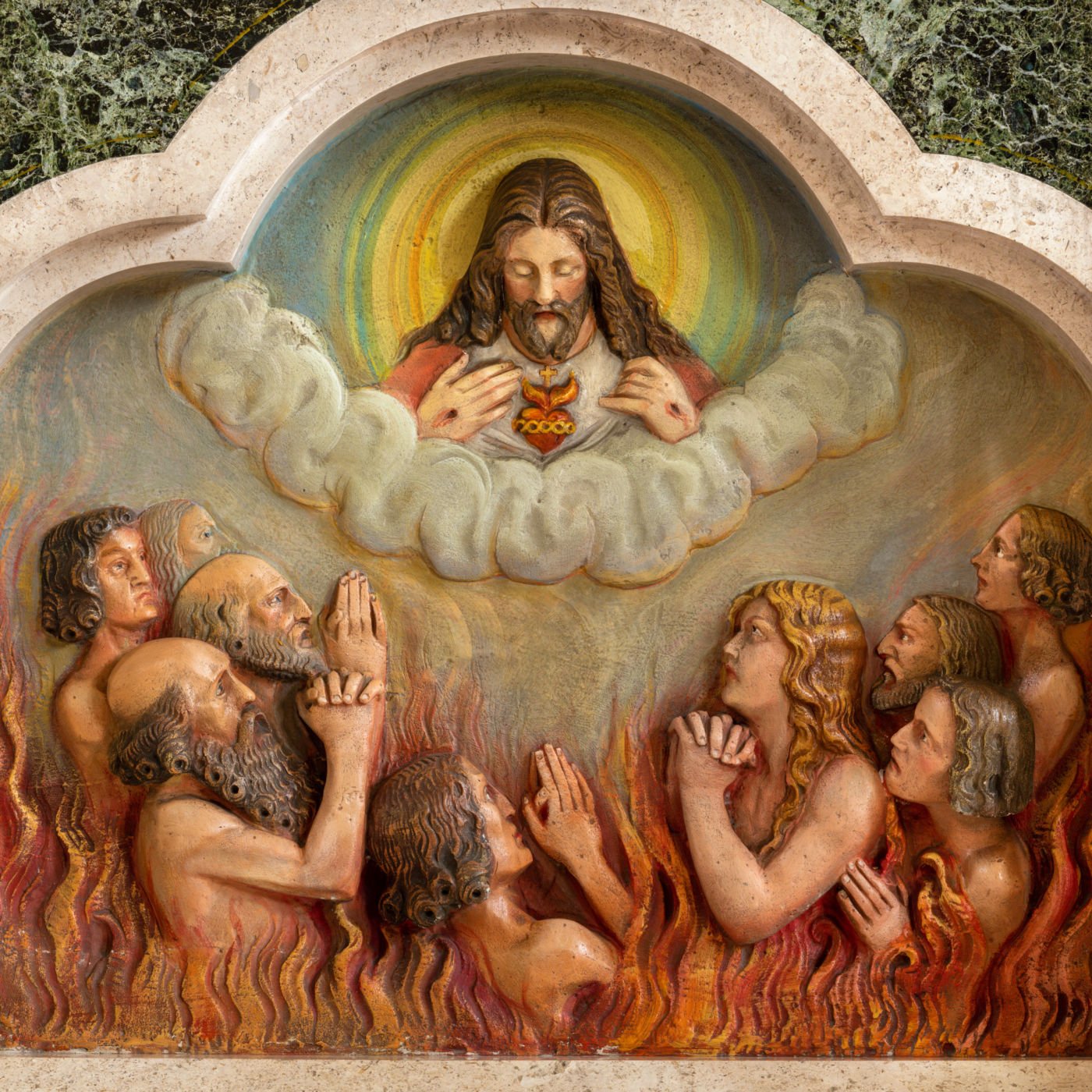
Catholic Answers Live
#12450 Can I Understand Indulgences, Sacrifices, and Vatican II? - Jimmy Akin
“Can I understand indulgences?” This episode dives into the topic of indulgences and their origins, while also addressing a variety of questions such as the reasons behind the cessation of Old Testament sacrifices and the validity of crystal healings. Join us as we explore these intriguing aspects of Catholic faith and practice. Join the Catholic Answers Live Club Newsletter Invite our apologists to speak at your parish! Visit Catholicanswersspeakers.com Questions Covered: 02:42 – I’m recently getting more into apologetics. What can I read to get myself more familiarized with it? 07:15 – If there is a pleasing odor to the lord, why did we stop those sacrifices? 15:11 – I don’t understand Indulgences. Where did they come from? 23:58 – Is there validity in crystal healings? 36:01 – Rev. says 144,000 are only going to heaven. Can you explain what it means? 43:01 – Did the Catholic Church ever try to assassinate Martin Luther? 48:11...
Loading summary
Transcript155 lines
- [00:00]
Announcer
Buying or selling your home. Real Estate for Life can connect you with a pro life real estate agent. When Real Estate for Life receives a referral fee, they donate 65% to Catholic Answers. Learn more at realestateforlife.org.
- [00:30]
Jimmy Akin
Welcome back.
- [00:31]
Host (possibly Sy Kellett)
Catholic Answers Live. Jimmy Akin, our guest, already had a little bit of groovy music. We did, didn't we? Yeah, I thought so. I thought I was not hallucinating. We'll probably get a little bit more groovy music.
- [00:43]
Announcer
But look at this.
- [00:43]
Host (possibly Sy Kellett)
You are free to call and there are lines open. 888-318-7884. You know what you can ask on an ask me anything. Anything. It's because we mean it. Especially when Jimmy's here. You can ask whatever you want. 888-318-7884. He's not going to turn up his nose at your question. I asked you Jimmy before. I was on last week on Jimmy Akin's Mysterious World. But get me through the I mean not Jimmy Akin's Mysterious World, the Jimmy Akin podcast, but get me through the weekend. What's coming on Monday.
- [01:10]
Jimmy Akin
Okay, this coming Monday I have a debate for the first time on the Jimmy Akin Podcast. I, a while back was part of a debate with an Australian gentleman named James Fodor, who's a skeptic, who and this debate was on the resurrection of Jesus. Did Jesus rise from the dead? We were invited by Joe Schmidt to debate this topic and we did. It's a nice two hour discussion. We both make opening statements and then we basically cross examine each other for the remainder of the debate and we get into some territory that is different than what a lot of skeptics than a lot of debates on Jesus resurrection because a lot of skeptics aren't proposing an alternative hypothesis to the resurrection. And and Fodor to his credit actually does.
- [02:06]
Host (possibly Sy Kellett)
Oh, how interesting. So you can get that on The Jimmy Akin YouTube not page channel or you can get the podcast wherever you get your podcast. Just look for the Jimmy Akin podcast and get it. That's exciting. So is it a long debate? How long does it go on?
- [02:23]
Jimmy Akin
It's two hours.
- [02:24]
Host (possibly Sy Kellett)
Nice. Very nice. I know there are many people that would like to hear that. All right, I'll tell you what, I'm going to go back to the phones. Phones have filled up again. That's very nice to see. Peter's in Pennsylvania listening on Catholic.com. that's our website. Hi Peter, got a question?
- [02:41]
Caller
Yeah, thank you for taking my question too. I would like to ask, I've been a Catholic all my life, and I'm trying to learn. I always struggle to learn more about the faith. And the Gospels appeared to change the meanings of them. As I grew and got older in the church, which I'm grateful for, it's kind of like my understanding grew. And I would like to know what I can read without going to college on Catholic Apologetics. What can you recommend that I can read, that I can learn more?
- [03:23]
Jimmy Akin
Well, so I see you're listening on Catholic.com and that's good because that means you're already at a website that contains hundreds of thousands of apologetic resources. So we've got a ton of material right there on Catholic.com for free, that is dominantly about apologetics. All you got to do is search on what you're interested in, and lots of resources will come up. Now, if you're looking for an overview, there are a number of different resources I can recommend. Some of these are not free, you know, if you go to. But if you go to shop.catholic.com There's a lot of ones. There's a lot of books that cover different aspects of apologetics. We also have the School of Apologetics, which has courses that online courses that you can take. They're just, you know, it's a series of videos that you can work your way through at your own time. There's a beginning apologetics course that surveys the whole field that I did. Then there's a set of four courses that build on that. There's Evidence for God, which Trent Horn did, which deals with arguments for God's existence. There's Evidence for Christ, which I did, which offers evidence for Christian apologetics specifically, why be a Christian rather than just a believer in God? There's an Evidence for the Church course that Tim Staples did that that specifically hones in on why be a Catholic rather than some other kind of Christian. And there's also a moral theology course, among others, that Trent Horn did. And there are other courses as well. We also have books, one that I did, that is the broadest survey of apologetics in one volume that I'm aware of, is called A Daily Defense, and it contains responses to 366 objections to the Christian faith and the Catholic understanding of the Christian faith. So it's. And with literally hundreds of different objections considered, it's the broadest survey of different apologetic objections that I'm aware of. It's not the same thing as a Here's a course of like how to make the case positively. For that I'd Recommend as a starting point, the beginning apologetics course that I did, but for how to respond to objections. A Daily Defense is the most comprehensive thing I'm aware of. And since it's a book and you're here in North America, we can send it to you. So if you'll hang on the line, we'll get your address and send you a copy of A Daily Defense.
- [06:17]
Host (possibly Sy Kellett)
Peter, please do. Just hang on the line. Edgar will be with you momentarily as he finishes screening calls. He'll be happy to get your address and we'll send it off to you. A daily defense, 365 days plus one to become a better apologist. Thanks, Peter. Maybe we'll talk again. Ben is in Spokane, Washington. Ben, thank you for waiting. Go ahead with your question for Jimmy. Hi, Ben. Okay, Ben, I'll tell you what.
- [06:46]
Jimmy Akin
Yeah. By the way, pro tip for the listeners, once you get on the line, listen to your phone rather than your radio because there is a time delay and you won't know when we come to you if you're listening to your radio. So it's important to listen to your phone.
- [06:58]
Host (possibly Sy Kellett)
And I'm going to come back to you, Ben, but just hang on the phone and we'll do that. But now I'm going to another Ben, surprisingly. But this Ben is in San Antonio, Texas, listening to 89.7 FM. Glad to have you, Ben, in San Antonio. Go ahead with your question.
- [07:14]
Caller
Yes, hello, can you hear me?
- [07:15]
Host (possibly Sy Kellett)
Yes.
- [07:18]
Caller
Great. Thank you. Thank you for taking the call. My question is. So I know we don't do sin offerings because Jesus died on the cross as the ultimate sacrifice, but in regards to peace offerings and burnt offerings that were a pleasing aroma to the Lord. Lord, why do we not do that anymore? If it's not as a. As a sacrifice as. Because we're sorry, but it's more. If it's a pleasing. If it's pleasing for the Lord, why do we stop doing that?
- [07:43]
Jimmy Akin
Okay. Well, I, I guess I'll say a couple things. The first one is, I like that you use the biblical phrase an odor pleasing to the Lord. This is something that I think adds color to our understanding of what was going on in ancient Israel. Sykelet.
- [08:05]
Announcer
Yes.
- [08:06]
Jimmy Akin
Have you ever been to a barbecue?
- [08:08]
Host (possibly Sy Kellett)
I have, yes.
- [08:10]
Jimmy Akin
And so you've been at a barbecue where they were cooking meat and stuff. This wasn't like a vegetarian barbecue or anything?
- [08:17]
Host (possibly Sy Kellett)
No, I've actually never been to a vegetarian barbecue, no.
- [08:20]
Jimmy Akin
Okay. So they weren't roasting, you know, zucchini. Zucchini on the barbecue Instead, they were roasting maybe a cow or pig or some kind of animal. Yes. How did it smell while that was cooking?
- [08:35]
Announcer
So good.
- [08:37]
Host (possibly Sy Kellett)
So good.
- [08:38]
Jimmy Akin
And that's exactly the reaction that the ancient Israelites had when they smelled the sacrifices that they were burning to the Lord. And it pleases us. And they thought of God as, like, like us. So it would be pleasing to God too. Now, really, God doesn't need food. In fact, he makes that point, and he says, if I did, I mean, he says, I wouldn't need it to get it from you. I own the cattle of a thousand hills, and if I needed anything, I wouldn't even tell you about it. But, you know, since we're doing something that pleases us, it can be spiritually, namely, creating that smell. It can be something that pleases God too. But God doesn't really need those sacrifices. And so when. So here's where I zoom in on your specific question, Ben. When Christ came, the early church understood that he didn't just fulfill the sin offerings that were commanded in the Old Testament, he fulfilled the entirety of the whole, scholars use a phrase for it, the whole sacrificial economy that God had endorsed for the Jewish people. So Christ not only fulfilled the sin offerings, he fulfilled the guilt offerings, he fulfilled the peace offerings, he fulfilled the fellowship offerings, he fulfilled the grain offerings and the drink offerings. He fulfilled it all. And that, that's why we've discontinued them. Because if we kept doing those things, if the church had just absorbed those sacrifices and kept going, then since they were commanded in the Old Testament, people in the early church would have thought, okay, they were commanded in the Old Testament and we're still doing them, so they must still be something we need to do. And that would diminish the church's awareness of what Christ did, because Christ fulfilled everything. And so because Christ fulfilled everything, we needed to discontinue the other sacrifices lest they distract us away from appreciating what Christ did. And so even though, yeah, it has a pleasing aspect, you know, those burnt offerings would smell great when they were cooking. It would serve as a distraction away from what Christ did for us. And so to keep the focus on Christ, we don't do those old sacrifices anymore.
- [11:20]
Host (possibly Sy Kellett)
Okay, San Antonio, Ben.
- [11:23]
Caller
No, that makes more sense because, like, I was thinking, like, if my kids give me a gift with the allowance I give them, I was like, that's nice, you don't have to do that, but I appreciate it kind of thing. So I was saying the same thing is, like, we don't have to do an offering to the Lord. But it makes sense that giving an offering will distract us from the sacrifice that Jesus already did for us.
- [11:42]
Host (possibly Sy Kellett)
Ben, thank you. It was a great pleasure talking with you. Now all I want is barbecue. You know what? I don't even know. Does Arkansas have a regional barbecue? Everybody seems to brag about their barbecue.
- [11:54]
Jimmy Akin
Yeah, we have Arkansas barbecue.
- [11:57]
Host (possibly Sy Kellett)
And what's special about it?
- [12:00]
Jimmy Akin
I can't give the secret away.
- [12:02]
Caller
Oh, okay.
- [12:03]
Jimmy Akin
All right. I'm also not a barbecue chef. Yeah. But I do know the principal rule of Arkansas barbecue, which is the more rundown the barbecue joint looks, the better the food is going to be.
- [12:17]
Host (possibly Sy Kellett)
I totally believe that. I totally believe somebody in there knows how to cook.
- [12:22]
Announcer
Okay.
- [12:23]
Jimmy Akin
All right.
- [12:23]
Host (possibly Sy Kellett)
Well, I'm going to just think about barbecue for the next couple minutes. No, it's only about a minute we'll be away, but you can call if you'd like. 8883. He's not giving you the key to Arkansas barbecue, but you can call with anything else you want to know.
- [12:35]
Jimmy Akin
Ad you can look up how to cook Arkansas barbecue on the Internet if you want to know that.
- [12:41]
Host (possibly Sy Kellett)
Yes, you can. They have white barbecue sauce in Alabama. Have you ever had that? I didn't.
- [12:47]
Jimmy Akin
I haven't had that.
- [12:48]
Host (possibly Sy Kellett)
I don't even know if they tell people outside of Alabama about it. It's really good. Edgar, stop making a face. It's good. 888-31-8-7884. Right back. Oh, barbecue. With more Jimmy Akin on Catholic Answers Live.
- [13:05]
Sponsor/Promo Voice
Miss a show? Make sure to catch up by downloading the podcast, available online@catholic.com underwriting for Catholic Answers Live is provided by Magnificat. Published monthly, Magnificat features texts of daily Mass, prayers, articles, meditations, art commentaries, and more in step with the liturgical rhythm of the church. On the web@Magnificat.com St. Carlo Acutis shared.
- [13:28]
Host (possibly Sy Kellett)
A dream in which Sister Lucia appeared.
- [13:31]
Announcer
To him, saying the First Saturday devotion.
- [13:33]
Host (possibly Sy Kellett)
Could change the destiny of the world. The Blue army of Our lady of.
- [13:37]
Announcer
Fatima invites you to practice this devotion. Join a First Saturday virtual pilgrimage beginning December 6th.
- [13:44]
Host (possibly Sy Kellett)
Experience spiritual meditations while traveling virtually through.
- [13:47]
Announcer
Portugal and Spain to 12 sacred sites.
- [13:50]
Host (possibly Sy Kellett)
Tied to the Fatima story. Track your journey with a passport and stamps. Visit bluearmy.com and select First Saturday Pilgrimage to learn more.
- [13:59]
Announcer
Sponsored by Our Ladies Blue army, underwriting for Catholic Answers Live is provided by.
- [14:05]
Jimmy Akin
Real Estate for Life.
- [14:06]
Host (possibly Sy Kellett)
Real Estate for Life connects home buyers.
- [14:08]
Jimmy Akin
And sellers to real estate agents while.
- [14:10]
Announcer
Supporting pro life organizations. On the web@realestateforlife.org we should pray because prayer is conversation with God and conversation.
- [14:20]
Jimmy Akin
Is the only way to build a relationship.
- [14:23]
Host (possibly Sy Kellett)
We need that relationship with God.
- [14:25]
Jimmy Akin
We should pray and talk with God.
- [14:28]
Announcer
About what's on our hearts, what's on.
- [14:30]
Jimmy Akin
Our minds, what's active in our lives.
- [14:32]
Host (possibly Sy Kellett)
The joys we have. We should share all of these with God.
- [14:35]
Announcer
Prayer is conversation, and conversation is the.
- [14:38]
Jimmy Akin
Only way to build a relationship with God.
- [14:41]
Announcer
If it's the most important relationship, all of our other relationships depend on this one.
- [14:57]
Host (possibly Sy Kellett)
Welcome back, Catholic Answers Live.
- [15:00]
Jimmy Akin
All right.
- [15:00]
Host (possibly Sy Kellett)
We had a little trouble connecting with Ben in Spokane, Washington before, but I'm going to try that again. Ben, you with us?
- [15:07]
Caller
Yes, sir. Thank you for your patience with me.
- [15:09]
Host (possibly Sy Kellett)
Oh, we're happy to have you. Ben. Go ahead with your question for Jimmy.
- [15:13]
Caller
Yeah, so I've read the Catholic Answers article and I've asked people and I am just, I must be slow because I'm still not getting it. Could you explain indulgences to me like I'm a five year old, like where they came from, what the history, like what the purpose, how you hold one in your hand. If that's like you get what I'm saying, I don't understand what they are.
- [15:35]
Host (possibly Sy Kellett)
I like your 5 year old thing. I ask ChatGPT to do that sometimes.
- [15:40]
Jimmy Akin
Jimmy okay, so indulgences are not a physical thing. So you can't hold one in your hand. Indulgences are a spiritual act that the church performs. I'm not going to take the five year old thing strictly literally, so I'll allow myself to use words like developed. But indulgences developed. If I was talking to a five year old, I might say they came from. But since you're really an adult, I'll use adult vocabulary. They developed out of the church's practice of penance. Now they rest. You said you read an article and I don't know what article it was. I wrote an article many years ago that is on catholic.com it's also on my personal website, jimmyakin.com it's called a Primer on Indulgences and in it I go through and break indulgences down step by step and show you the basis in the Bible for each of the steps. So I suspect you may have read someone else's article on this because mine is really simple and so I'll briefly explain them now. But I would suggest going to either catholic.com or jimmyakin.com or just google in Jimmy Akin indulgences and especially look for a primer on indulgences, and it should show up. But basically, what an indulgence is is when the church steps in to help a person who has already repented of a sin. But that sin has some consequences that the person still needs to deal with. Let me give you an example, this worldly example. Let's suppose, Ben, that you have a teenage son, and your teenage son misbehaves and breaks the rules that you've established for your house. And let's say, you know, smashes somebody else's window. You know, let's say they were. He was playing baseball where he shouldn't have been, and he smashed somebody else's window. Well, okay, you. He needs to learn his lesson. And so you may say, hey, son, you're grounded for two weeks. And he may repent and say, I'm so sorry, I'll pay for the window. I didn't mean to do it. I'm so sorry. And you say, that's okay. I forgive you. So at this point, your son is forgiven. But if every time your son just says I'm sorry, you let him totally off the hook, he's unlikely to learn his lesson. And so you may still say, well, I appreciate that you're sorry, son, and I do forgive you. I'm not going to be mad at you forever. I' mad at you now, but you need to learn your lesson. So you're still grounded for two weeks. So even though he's repented of his action and been forgiven for his action, he still has some lingering consequences from his action to help him learn his lesson. Okay, now suppose that your teenage son really takes it on board that. That I need to learn my lesson. I need to prove to my parents that I have learned my lesson. So I'm going to be extra good this week. I'm going to do things I don't have to do. I'm going to voluntarily take out the trash without being told to. I'm going to help my little sister with her homework. I'm going to do all these things to show that I've really reformed myself, that I really have learned my lesson. Well, if you see your son doing that, then you may want to say to your son, you know, I see how hard you're trying. I see you've really been doing good. It looks like you've really learned your lesson in this case. So guess what? Now you're not going to be grounded for two weeks, but just one. And so you've diminished the consequences that your son has to experience. You may still let him. You may not let him totally off the hook because he does need to have this lesson cemented in his mind. But you've lessened the consequences because he's. He's taken it on board and is trying to be good and seemingly has learned his lesson. Well, that's essentially the principle that's involved in indulgences, because even though we're not teenagers, we're still human beings, and we're still a lot like teenagers. And so when we have committed a sin, we need to repent, and God will forgive us, but he may still leave us with some consequences as a result of our sin so that we will learn our lessons. This is something that the Book of Hebrews talks about. It says that God disciplines every. It uses similar analogy of God is our Father. It says God disciplines every son that he receives. And for the moment, no discipline is pleasant but painful. But God disciplines us for our good, and the discipline he gives us will ultimately lead us to having holiness and peace. So God isn't just like if you had a teenage son who you're helping grow and mature. God's doing the same thing with us. Okay, so suppose I've committed a sin and I've repented of it, and God has forgiven me. God may still have me deal with some consequences as a result of the sin. But suppose I did the same thing that your son did. Suppose I decide I really want to take this on board. I really want to grow and mature. And so I'm going to go out of my way to do good things for other people. I'm gonna. This week I'm gonna go volunteer at a soup kitchen, or I'm gonna donate money to the poor, or I'm gonna, you know, whatever it is, I'm gonna do good things for other people. Maybe I'm doing good things in direct relation to God, like I'm gonna spend extra time praying, or I'm gonna spend extra time reading the Bible or things like that. Well, God may be willing at that point to diminish some of the consequences I have to deal with. But there's also another party involved in this situation because God has me in the world and he has me as part of his church and under the authority of his earthly church. And he gave his earthly church the power of the keys. And so over the centuries, the church has discerned that it can use the power of the keys to help people who are trying to grow spiritually by doing good things. Like, let's say reading The Bible, you can get an indulgence for that. So if someone has already been forgiven of their sins, but they may still have some consequences to help them learn their lesson after the sin, and. And they then decide, I want to be proactive about this. I want to get on board. I'm going to start doing good things. To help me learn the lesson that I need to learn, I'm going to say, read the Bible for 30 minutes. Well, okay. The church can intervene using the power of the keys that God gave it to help reduce the consequences of the sin that you would otherwise have to deal with. And that's what an indulgence is. It's when you've already been forgiven. But the church uses the power of the keys to intervene and help lessen the consequences that still remain, even though you've already been forgiven.
- [23:40]
Host (possibly Sy Kellett)
And I am going to leave that there because I am looking at full lines, but I hope that that was helpful to you. And I want to send you a book that Jimmy himself wrote. It's called 20 Faith and Works, if you will. Hang on. We will send you 20 answers. Faith and Works. Been there. In Spokane, Washington. I'm going down to Copenhagen, Costa Rica. Our friend Emma down in Costa Rica. Emma, thanks for joining us. Go ahead with your question for Jimmy.
- [24:06]
Caller
Hey, Jimmy. So my. My son is a naturopath, and he just opened his first practice with two other naturopath doctors, and they use crystals for healing.
- [24:20]
Jimmy Akin
Okay.
- [24:21]
Caller
And he said he's keeping an open mind, but I don't know. I thought I heard on, like, one of your mysterious world. You were talking about that, but I went back, and I couldn't find it.
- [24:31]
Jimmy Akin
Mm. So what would you like to know?
- [24:35]
Caller
Well, what did you find out? He. He really wants you to. He really wants your opinion.
- [24:41]
Jimmy Akin
Okay.
- [24:42]
Caller
That they were.
- [24:44]
Jimmy Akin
Well, so I guess let me frame it this way, because you'll sometimes hear people who. Who don't. Who've never really studied this issue, who will say things like, oh, crystal healing. That's new age. You can't have to do with that. That's all demonic. And such people, frankly, don't know their history at all. Because the idea that crystals have healing properties is some. And some crystals do cycle it.
- [25:14]
Host (possibly Sy Kellett)
Aspirin.
- [25:14]
Jimmy Akin
Have you ever? Have you ever. That's not a crystal.
- [25:17]
Host (possibly Sy Kellett)
Okay.
- [25:18]
Jimmy Akin
But salt is.
- [25:20]
Host (possibly Sy Kellett)
Okay.
- [25:22]
Jimmy Akin
Can someone be salt deficient?
- [25:24]
Host (possibly Sy Kellett)
Oh, absolutely.
- [25:24]
Jimmy Akin
Yeah. And by ingesting salt, can that have a healing effect on someone who's salt deficient?
- [25:30]
Host (possibly Sy Kellett)
Yes.
- [25:31]
Jimmy Akin
Yeah. So some. Some crystals, namely halite, which is what salt the name of the salt crystal is can have a healing effect. So the idea that no crystals have healing effects is clearly just scientifically false. But there's more to say and we'll keep talking on the other side of the break.
- [25:52]
Host (possibly Sy Kellett)
Emma, I hope you'll hang on. We'll get a conclusion to Jimmy's answer right after this on Catholic Answers Live. There's one line open, 888-318-7884.
- [26:15]
Announcer
Have you ever wondered about the mysterious, even obscure aspects of the Catholic faith? Dive into the Jimmy Akin Podcast, where Jimmy brings together information from many fields as he pushes the boundaries of apologetics. Tune in today to the Jimmy Akin Podcast Mysteries of the Faith, a highly entertaining, informative and at times humorous show that will help you grow in your faith. Visit jimmyakinpodcast.com today to subscribe.
- [26:45]
Sponsor/Promo Voice
Lots of people have big questions about Catholicism. It needs a big book of answers. And now it's got one. The Big Book of Catholic Answers is filled with helpful replies to more than 250 questions about the faith. Questions about God, salvation, history, the Creed, the Bible. The list goes on and on. Order your copy of the Big Book of Catholic answers today@shop.catholic.com or ask for it at a good Catholic bookstore near you.
- [27:14]
Announcer
We hope that one of the things that we communicate here at Catholic Answers Live is that our Catholic faith allows us to be fully serious about all the problems we encounter in the church and in the world.
- [27:24]
Host (possibly Sy Kellett)
But it also lets us have light.
- [27:25]
Announcer
Hearts and maybe even mix in a bit of fun. And that is exactly what our good friend Joe Heschmeyer does in his popular podcast Shameless Potpourri. You should check it out@shelessjoe.com Joe's got a deep grasp of the the faith, morals, the teachings of the Church, all that. But he's also got a witty conversational style. He entertains and informs, but you will leave equipped to better answer the most common challenges, misconceptions and questions about the Catholic faith. He's got insightful guests he does on air debates, and he takes a close look into all the things that you want to know about as a Catholic living today. You'll walk away knowledgeable and filled with joy. Look for Joe on his YouTube channel. Check him out@shelessjoe.com or wherever you get your podcasts. And if you like what you hear, become a patron.
- [28:17]
Host (possibly Sy Kellett)
Matt Swaim here. Monday on the Sunrise Morning show, we'll take a look at this week in Catholic History with Kevin Schmeesing, plus all the Latest news, weather, sports and a whole lot more. Now back to CATHOLIC ANSWERS live. CATHOLIC ANSWERS Live. Jimmy Akin, our guest, Emma, she's down in Costa Rica. She calls us from various places. Costa Rica being one of those. And we're talking her son wants to know about crystals and using crystals in healing.
- [28:58]
Jimmy Akin
Yeah. So before the break, we established that some crystals, like halite or salt Duke, can be used to have therapeutic effects in people. Like if someone is salt deprived, you know, you can give them some extra salt. I mean, that's Gatorade's whole business.
- [29:16]
Host (possibly Sy Kellett)
Oh, yeah, Right.
- [29:18]
Jimmy Akin
So electrolytes, of which there are several. It's not just salt. Sodium chloride. Yeah, absolutely. Some crystals have healing properties in at least some circumstances for some people, which is the way every medical treatment is. It's not there's no medical treatment that every person needs or that will be effective for every person. Medical treatments are always specific to the people who need to be treated. Well, okay, what about the idea that this is new age, it's of the devil? Well, okay, there are a bunch of doctors of the church who would disagree with that. And this is something I often find a lot of people, they hear rumors about, oh, that's new age or that's demonic or something like that. And they never research the history. And actually, and this is true even in the traditionalist community, a lot of traditionalists, and I have traditionalist leanings myself, but a lot of traditionalists aren't very deep in the tradition. They know a little surface level, but they've never really done broader reading. Well, when you do broader reading about the history of Catholic tradition, you find a bunch of doctors of the church. Now, the doctors of the church are basically the top 40 theologians of all time. They're not quite 40 yet, but we're almost there. And lots of them wrote about healing properties of crystals. For example, earlier in hour one today, I mentioned St. Albert the Great, who wrote a whole book on mineralogy. He was the guy who organized the field of mineralogy, and he talks about how different minerals have different healing properties. Another doctor of the Church, and this one I've mentioned previously on Mysterious World, Saint Hildegard of Bingen. She wrote about different minerals and crystals and healing properties that she believed they had. For example, she believed, just off the top of my head, she believed that emeralds could be useful in treating epilepsy. That if she thought that if someone is having an epileptic fit that you could, like take an emerald and put it under their tongue and the fit would subside and that's just one example. She's got a book where she just goes through all different kinds of minerals and the healing effects that she thinks they have. St. Thomas Aquinas was the same way. This was normal. This was just the science of the day. And so the idea that crystals have healing properties is not something that Catholics should dismiss as new age or demonic because it's actually part of the Catholic tradition. Okay. Now, Hildegard of Bingen, Albert the Great, Thomas Aquinas, they were all dealing with the science of their day. And they all lived before the scientific revolution where we began studying science in an experimental way and actually not just proposing hypotheses that seemed reasonable based on the data we had, but where we actually started doing experiments to test them. And so, for example, today we'll do double blind experiments to establish is this medical treatment effective or not, is it more effective than placebo? And a lot of the science that was used in the Middle Ages that Hildegard Bingen and Thomas Aquinas and Albert the Great believed in has not been replicated since the scientific revolution. And so my own view is that a lot of the claims that they made about this crystal has this healing property are likely to be false. And the same thing is going to be true of various currents of modern claims about crystals and their ability to heal. A lot of those claims are going to be false. They're going to be the scientific equivalent of superstition. But that doesn't mean that it's all that way. So I'm open. If someone wants to claim crystal X has healing property Y, I'm okay with that as a claim. I want to see it backed up by evidence, but I'm okay with it as a claim. And so I want to, I would say if you want to try to heal someone with a crystal, well, well, try it. See if it works. Report accurately whether it works or not. And you know, I would say, do you know, peer reviewed double blind studies to see does it actually help people or not? It may help them. Even if the crystal itself has no effect, it may help them via the placebo effect where they just the mere fact they're being treated makes them start feeling better and may trigger their own body's healing ability. It may actually have nothing to do with the crystal. That's why modern medical experiments want to see a therapy prove to have effectiveness beyond placebo. I suspect many crystals do not have effectiveness beyond placebo, at least for the medical conditions they're being used for. But even just the idea of Here, I'm gonna put this crystal on you and it's gonna make you feel better. And the person does start feeling better. Well, okay. It had a therapeutic effect, even if it was via the placebo effect. There's more depth I could go into here, but my basic opinion would be that there's nothing fundamentally unchristian here. The attitude of the medievals was God made all this nature for mankind to use, and we can try to use it to, you know, have therapeutic effects. Science will help us identify those effects. And we shouldn't be either too credulous or too skeptical. We should open mindedly follow the evidence wherever it goes.
- [35:23]
Host (possibly Sy Kellett)
And Emma, I'm gonna leave it there and move on. I hope that's helpful to your son. Thanks for calling. It's always good to talk with you. Diana is in Cleveland, Ohio, watching on YouTube. Diana, welcome.
- [35:37]
Caller
Hello.
- [35:38]
Host (possibly Sy Kellett)
Hi.
- [35:40]
Jimmy Akin
Oh, by the way, one follow up.
- [35:41]
Host (possibly Sy Kellett)
Hang on.
- [35:43]
Jimmy Akin
One follow up on Hildegard of Bingen's epilepsy treatment. I strongly recommend you, if someone's having an epileptic fit, do not put an emerald under their tongue. They might choke.
- [35:56]
Host (possibly Sy Kellett)
I'm glad we got that out. Diana, back to you. Welcome. Yes, go ahead with your question.
- [36:05]
Caller
My question is that in Revelations, I.
- [36:08]
Think chapter seven to 14, it states something about only 144,000 people are going to heaven. And I was wondering if you could.
- [36:16]
Explain that to me.
- [36:17]
Host (possibly Sy Kellett)
Okay.
- [36:18]
Jimmy Akin
Well, it doesn't say that. Chapter 7 and chapter 14 of Revelation both identify a group that consists of 144,000 individuals. They're described as 12,000 male virgins from each of the tribes of Israel. And they follow God. And there have been a variety of different theories about them and what they represent. Sy Kellett and I actually discussed this not that long ago. I believe it was the first question of the hour. Lately, they've taken to having Psy Kellett ask me opening questions at the beginning of the first hour of the show. And so if you look back through the last month or two, you should be able to find where I answered this question for Psy, but I went through a bunch of the options and I'll tell you what my, my conclusion is. The 144,000 are the evidence would suggest that they are a symbol of the entire Christian community. This is based on a type of symbolism that we frequently find in Revelation. Frequently, John will hear something and then he'll turn and see something else. And both what he heard and what he sees represent the same thing. So we see this, for example, in Revelation chapter four and five, where he's up in the heavenly throne room and he first hears that the lion of the tribe of Judah is gonna come and open the book with seven seals. And then he turns and looks and sees a lamb that has been slain with seven eyes. And this lamb represents Jesus. So both the lion he heard about and the lamb he saw both represent Jesus, even though they're different imagery. A lion, of course, is a fierce, obligate carnivore, and a lamb is a docile little herbivore. And so this type of symbolism involves an expectation and then a surprise about the same thing. John first hears about this lion as a symbol of Jesus. And so you might expect him to turn and see Jesus as a conquering warrior, but instead he sees a little lamb which is meek and mild and has itself been slain, which Jesus was on the cross. So even though Jesus conquers, the way he conquers is by self sacrifice and dying on the cross. So that's the surprise that comes in the wake of the expectation that the initial thing John heard sets up. Well, we find the same thing happens with the 144,000. First, John hears about the 144,000, 12,000 from each of the 12 tribes of Israel. Then he turns and sees, and they're all Israelites. And then he turns and sees, in his words, an innumerable multitude that no one could count from every tribe and tongue and language, and they all worship the land. And so, based on the setup, you would think, oh, I'm about to see a small, relatively small number of pious Jews. And then he turns and sees this innumerable international multitude of pious people worshiping God and his Son, the Christ. And so that's the surprise that pays off. That comes in the wake of the expectation set up by what John heard. And it also communicates the idea the church today, with all of its people from all of the different nations, the church is the new Israel. Just like St. Paul says in Romans that anyone who is a person of faith in Christ is a son of Abraham, whether they're an Israelite or not. And so there's a sense in which Gentiles who believe in Christ have become part of the family of Israel. And John seems to be reflecting that same thought Here, where the 144,000 are a symbol that represents the entire Christian community. And that's my conclusion. There are other opinions about this, but if you'd like to see me work through some of them, I would suggest checking the recent Friday broadcasts that I was on And I think it's just within the last couple of months that I did this question for SAI. You also could search on Catholic Answers on Catholic.com or on Catholic Answer's YouTube channel for 144,000 Jimmy Akin, and it should come right up.
- [41:12]
Host (possibly Sy Kellett)
I gotta take the break. Diana, thank you very much for the call and for the question. And we will be right back with more Jimmy Akin on CATHOLIC Answers Live.
- [41:20]
Sponsor/Promo Voice
There's only one Catholic Answers Live.
- [41:24]
Announcer
The catechism defines evangelization as the proclamation of Christ and his gospel by word and the testimony of life. But what does that look like in real life? It looks like St. Paul street evangelists out in the public square sharing the good news. We're a Catholic nonprofit that starts conversations by handing out free sacramentals. Then we employ our method of listen, befriend, proclaim and invite. Catholic Answers is supported in part by St. Paul Street Evangelization. Visit streetevangelization.com to learn more.
- [41:55]
Sponsor/Promo Voice
The Wisdom of Mother Angelica.
- [41:57]
Jimmy Akin
I told him about the woman who.
- [41:59]
Caller
Came to me and said her two children hadn't spoken to each other for two years. Their grandma died and she was very wealthy.
- [42:06]
Jimmy Akin
She left half to each one.
- [42:07]
Caller
She said, they're arguing over a commode.
- [42:10]
Jimmy Akin
She said, inlaid. Can you imagine being in hell?
- [42:14]
Caller
And somebody saying to you, what are you here for?
- [42:19]
Jimmy Akin
EWTN Live Truth, Live Catholic.
- [42:36]
Host (possibly Sy Kellett)
Jimmy Akin, our guest. We've still got folks on the line, but there might be time for you. As a matter of fact, I think we'll get you on. If you call now, I think we've got enough time to get another call or two on. If you've got a question for Jimmy, just dial 888-3187-848831-87884. And while you're dialing, we'll go to Jordan in Moorhead, Minnesota, listening on Real Presence Radio. Glad to have you. Jordan, go ahead with your question for Jimmy.
- [43:05]
Caller
Hey, Jimmy, before I left the Lutheran Church, one of the pastors made the claim that the Catholic Church tried to assassinate Martin Luther. Not that I couldn't find anything really of substance on it. And I was wondering what your thoughts were.
- [43:18]
Jimmy Akin
Okay. Well, so the Catholic Church did excommunicate Martin Luther, but the church itself did not carry out hits on people. Now, in order to say the Catholic Church did something, it would need to be authorized by the pope because otherwise, I mean, even if some other Catholic had authorized it, like a bishop or something, they would just be a rogue bishop. They wouldn't be Acting on. They wouldn't be acting for the church unless the Pope himself had authorized something. You know, like if, let's say, God forbid, the bishop of Yeehaw Junction, Florida. I'm going to pretend there is a town called Yeehaw Junction, Florida. And I'm going to pretend it's a diocese. It's not really. It's within a diocese, but it's not a diocese itself. So let's pretend that there is a bishop, not just of northern Florida, but of Yeehaw Junction specifically. And. And we'll call him Bishop Bob. And let's suppose that Bob really doesn't like someone in his diocese. Let's say there's a guy who did muffler work on Bishop Bob's car, and he wasn't happy with the muffler work that the mechanic did. And so Bishop Bob hires. He's so mad, he hires a hitman to go kill the mechanic that did his muffler work. Okay, so let's suppose that happens. One less mechanic, at least for the time being, in Yeehaw Junction. He's been Xed. He is an ex muffler man now. Okay, Sykellett. Given that this was a decision by one bishop living in Yeehaw Junction, Florida. Yes. Would it be appropriate to say the Catholic Church assassinated a muffler man in Yeehaw Junction, Florida?
- [45:24]
Host (possibly Sy Kellett)
No, it would not.
- [45:25]
Jimmy Akin
No. So in order to say the Catholic Church did something, you would need the person in charge of the Catholic Church to do something, and that would be the Pope. So what did popes do with regard to Martin Luther? Well, Pope Leo excommunicated him. But in excommunication situations, the Church never performed executions. Sometimes executions followed from excommunications, but not always. In fact, the purpose of excommunication was not to lead to someone's death. It was to get them to wake up and repent. But Martin Luther had powerful allies, and so the effects of the excommunication were blunted. And I am very unaware of any pope ever. Like hiring a hitman. You know, it's not like Dan Brown was right in the Da Vinci Code. There's no secret league of Catholic assassins, much less are they albino monks. But the Pope did not hire anybody to go kill Martin Luther. In fact, for various occasions where Luther and other reformers would have to travel into Catholic territory to try to patch this situation up, which happened for a while, Luther and other reformers were granted safe passage so that people could meet and try to hash these things through. But I am unaware of any pope, you know, trying to get an assassin to go kill Martin Luther. Luther may have thought that the Pope was trying to do that. I'm not aware of it. And just. Just to check myself, I asked Google's AI, did the Pope ever try to assassinate Did a pope ever try to assassinate Martin Luther? And it scanned the Internet and came back quickly and said, no. So as far as I know, what you heard was mistaken.
- [47:35]
Caller
All right, that sounds great.
- [47:37]
Jimmy Akin
Thank you very much.
- [47:39]
Host (possibly Sy Kellett)
I think Martin Luther is still dead, though. Despite the church not killing him, he didn't make it.
- [47:45]
Jimmy Akin
And this just in generalissimo from Francisco Franco is still dead.
- [47:52]
Host (possibly Sy Kellett)
Jordan, thanks for the call. If you don't know that reference, you got to look it up. If you don't know that reference, you got to look it up. Emily in Houston, Texas, listening to EWTN on channel 130, Sirius XM Satellite Radio.
- [48:09]
Announcer
Glad you're here.
- [48:10]
Host (possibly Sy Kellett)
Emily, go ahead with your question.
- [48:13]
Jimmy Akin
Hi.
- [48:13]
Caller
Thanks for taking my call.
- [48:14]
Jimmy Akin
Sure.
- [48:17]
Caller
My question pertains to choir ministry. I've done choir and I guess a ministry in a lot of different churches in my life. And I had a choir director once who's very sweet, man, but I, I think I mentioned to him, like, oh, why don't we use our choir loft? It's really nice. Nice, there's nothing up there. And he kind of just casually mentioned, oh, well, Vatican II got rid of them and said we couldn't use them anymore. And I was really confused. I was a lot younger at the time, and I didn't go look it up later. But I guess. Two questions, I guess, is that true? And I assume no, because I've also been at many churches where they use their beautiful choir lofts and acoustics. But two, I've always wondered where he might have gotten that belief from that somehow churches that don't use choir lofts and instead, you know, sing near the altar was influenced by Vatican ii.
- [49:12]
Jimmy Akin
Okay. Well, I don't know. You'd have to ask him. I can only guess. But I'm happy to guess for you. One of the things that happened after One of the things that happened after Vatican II is a lot of people lied about it and said that Vatican II said things that it, in fact, didn't say. Sometimes they tried to justify this by claiming that, well, even if Vatican II didn't say it, it was the spirit of Vatican ii. Also, what a lot of people would try to do. And this particularly affected liturgists. In fact, I actually have. It's coming out in A couple of weeks. I have an episode of the Jimmy Akin Podcast coming up where I talk about this phenomenon because I recently ran across some arguments from a priest who was imposing what I call a pious little legalism. A pious little legalism is where someone makes up some person or group of people make up a rule that is not in the law itself and then insist everybody follow it. And they may even misrepresent what the law says. And this priest was doing that. So I'm going to name names, and you can hear about that in a couple of weeks on the Jimmy Akin Podcast. But what happened after Vatican II was a lot of liturgists wanted to impose their own pious little legalisms on the church. Like, oh, well, the choir needs to be up by the altar so people can see it now, even though the law didn't require that. And in fact, Vatican II did not issue any documents saying, get rid of choir lofts. This is total bs. But I would suspect that your friend at church had encountered people who communicated to him the idea that, oh, Vatican II said we can't do that anymore, when in fact, Vatican II said no such thing. This was an attempt to. To promote their preferences by attributing them to Vatican ii, even though Vatican II said nothing of the kind.
- [51:30]
Host (possibly Sy Kellett)
What do you think?
- [51:32]
Caller
Oh, that makes way more sense. Thank you.
- [51:36]
Host (possibly Sy Kellett)
All right, Emily, thank you very much.
- [51:38]
Announcer
I'll tell you what.
- [51:38]
Host (possibly Sy Kellett)
I'd like to send you Jimmy's book, A Daily Defense as well, if you'd like it. Just hang on. A daily defense, 365 days plus one to becoming a better apologetic. I have heard a lot of things blamed on Vatican II over the years, and sometimes you just gotta ask, really, was that a Vatican II thing?
- [51:56]
Jimmy Akin
So, Emily, always good to ask. What's your source?
- [52:00]
Host (possibly Sy Kellett)
Yeah, right, Exactly. All right, let's go to Prince Frederick, MD. Ellen is in Prince Frederick. Why am I having trouble with Frederick? Prince Frederick, Maryland. Ellen, welcome. Go ahead with your question. Question?
- [52:14]
Caller
Yes.
- [52:14]
Thank you for taking my call. My question is with regard to adoration on Televised. On. On the tv. And Mass. Specifically adoration. It's recorded and I want to know. I have heard that Jesus really isn't there. It's just a. It's just a video to. Should I kneel and be in adoration when it's videotape and Mass, when the Eucharist is elevated. Also I. I tend to kneel because I believe it is Jesus. But it's a recording. Can you help me with this?
- [53:06]
Jimmy Akin
Sure. Well, I would say that it's up to you, you, whether you want to kneel at that point or not. On the one hand, if it is a recording, and it's not always a recording, sometimes it's a livestream. But if it is a recording, then God knows that you are expressing reverence for Jesus when he was as the recording depicts him. So God is outside of time, and you're inside of time. And you can show devotion to Jesus on the cross. Now, you know, you could or, or you could, you know, show devotion to Jesus on the altar last Sunday. Now, God knows what your devotion is. That's all you're doing is showing devotion to Jesus. And, and you know, anything, whether the cross 2000 years ago or the altar last weekend. And they both can be things that you can direct your reverence and veneration towards, even if you're not personally there now. So if you want to do that, I think that's totally fine. That's not a problem. I would also say you're not required to do it because you're not physically in the presence of the Eucharist. And if you were to generalize the, the principle, if I'm gonna kneel for anything where Jesus is in the world, you would constantly be kneeling your entire life. You could never get off of your knees. Cause he's always on some altar somewhere in the world. So I would say it's a matter of choice. And does it affect, does it help you with your personal devotion or not?
- [54:49]
Host (possibly Sy Kellett)
Ellen, thank you so much for the call. You can hear the music. That means I've got to go. Jimmy Akin, thank you so much for these two hours.
- [54:56]
Jimmy Akin
My. My pleasure.
- [54:57]
Host (possibly Sy Kellett)
And that will do it for us. Again, thank you to everyone who supported us this week during our pledge drive. And we'll see you next time, God willing, right here on Catholic Answers Live.