← Catholic Answers Live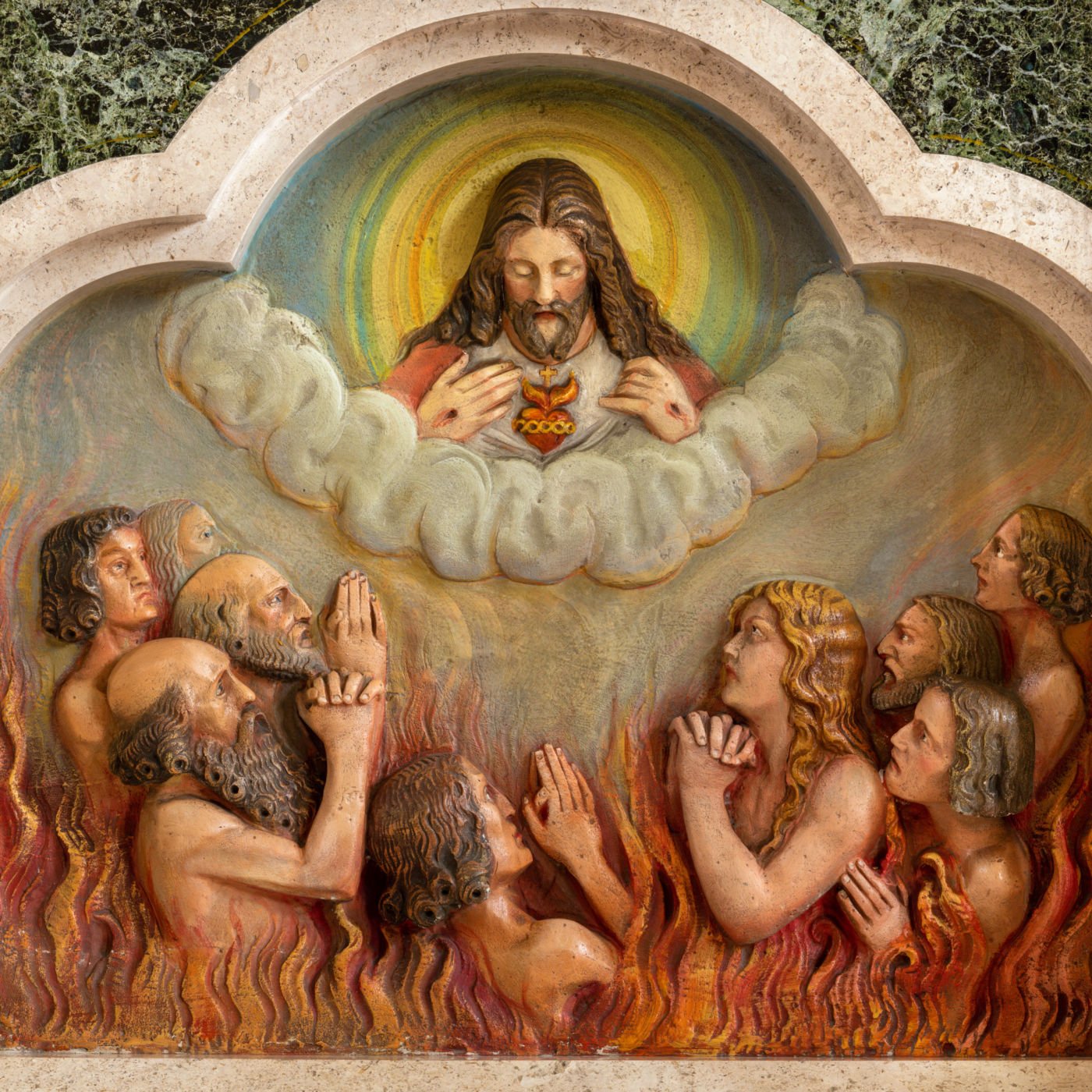
Catholic Answers Live
#12463 Does Purgatory Undermine Jesus’ Sacrifice? Eucharist and Salvation - Karlo Broussard
“Does Purgatory Undermine Jesus’ Sacrifice?” This episode explores the relationship between Jesus’ sacrifice and the concept of purgatory, addressing whether it diminishes His atonement. Additionally, we delve into questions about the nature of salvation, the significance of the Eucharist, and the practices surrounding communion and adoration. Join the Catholic Answers Live Club Newsletter Invite our apologists to speak at your parish! Visit Catholicanswersspeakers.com Questions Covered: 05:45 – If Jesus’ death on the cross was sufficient to take away all sin, and all the punishment for sin, then why would anyone need to suffer for sins after death, like in purgatory? Wouldn’t purgatory be an insult to what Jesus already accomplished? 19:24 – I think Catholicism preaches a different Jesus and a different salvation. Specific issue about salvation on eternal security? 34:40 – Is the Eucharist the end all be all? 47:17 – Why can’t the so...
Loading summary
Transcript67 lines
- [00:00]
Announcer
Buying or selling your home. Real Estate for Life can connect you with a pro life real estate agent. When Real Estate for Life receives a referral fee, they donate 65% to Catholic Answers. Learn more at realestateforlife.org.
- [00:32]
Thomas Graff
Hello and welcome to Catholic Answers Live. It is a great day here to talk to Dr. Carlo Broussard, our staff apologist. The number to call is 888-318-7884. I am filling in for Sy Kellett today who is traveling. He will be back with us Thursday, Is that right? Sykelt will be back with us Thursday. Until then, we are here on I will be with you here today and tomorrow to fill in for Siah Kellett and guide you through two great shows of Catholic Answers Live. The number to call is 888-3187-884881-87884. And the topic today is which Catholic doctrine troubles you? 888-318-7-884. As I said, here to help us, here to help you with your questions about which Catholic doctrine troubles you and is the one the only Dr. Carlo Broussard, author of books such as Baptism Now Saves you, the Saints pray for you. I'm holding them up to the camera right here. Purgatory is for Real, Meeting the Protestant Response and Meeting the Protestant challenge. Dr. Carla Broussard. I didn't even name all the books, but welcome to the show.
- [01:38]
Dr. Carlo Broussard
Anyway, Thomas, thanks for having me, bud. It's great to be on with you today, man.
- [01:43]
Thomas Graff
It's always great to have you on the show. Carlo, I have a question. Any other Catholic assertions that you would like to turn into full length book treatments? Anything else that you want to any other declarative statements that you could write a whole book on?
- [01:59]
Dr. Carlo Broussard
Yeah, I haven't I don't have anything in my back pocket immediately. It would be really cool to write a book on the ministerial priesthood, like the ministerial priesthood is real kind of thing. But that if that's just an idea, there's no traction on that whatsoever right now. So I don't know. I would have to give it a little bit more thought as to which Catholic assertions would be fun to write on.
- [02:26]
Thomas Graff
I'm wondering now if maybe tell me if this is right. You've heard so many questions on shows like this. Which Catholic doctrine troubles you? Did you sort of go through the list with these ones on purgatory and the intercession of saints and now baptism? Were you kind of going down the list of which ones as an apologist you hear the most about. Were these like the most common questions that you were receiving as an apologist?
- [02:48]
Dr. Carlo Broussard
Well, for purgatory and the saints, the answer is yes. It is true that because those were two top ranked topics that were often asked about on Catholic Answers Live, especially for those episodes where we do Catholic Protestant distinctives and dialogue, we decided to write a book on those topics because of the interest that people had and frankly because we didn't have any resources on them in book form in our catalog. So I wrote the books in order to plug those holes when it came to baptism. Similarly, that was a result and due to the plethora of questions we were getting on Baptism, whenever we would do shows about baptism and salvation, we had began to do some episodes of Catholic Answers Live on that particular topic. And we're noticing that we were getting lines, full lights lit up with people asking questions about baptism, which gave us good justification, good grounds to push forward and write a book and publish a book on baptism.
- [03:53]
Thomas Graff
Fantastic. And you can get all those, of course, at shop.catholic.com Purgatory is for real. The saints pray for you. Baptism now saves you. Or if you're listening right now and you want to call in right now and just ask Carlo, hey, I want to know more about purgatory. That Catholic doctrine troubles me. You can pick up the phone right now and call 8883-1878-8488-8318-7884. You don't have to be a non Catholic to call either. You can be a Catholic and you can have Catholic doctrines that trouble you as long as you don't formally deny them obstinately and formally deny those doctrines. You can wrestle with them just as Jacob wrestled with God. You can wrestle with these doctrines and still believe in them, but seek greater understanding. That's what we're here to help you do. So call 888-318-7884 and get in a little mental wrestling match with Carlo. Not physical because you'd be turned into a pancake, but try mental, which you'll probably be turned into a mental pancake there too because Carlo has a PhD. So let's move away from the combative metaphors and just lean back into the fact that this is a call in show. You can ask your questions at 888-318-7884. Carlo, I mean I play basketball with you, man. I'm not gon any wrestling anytime soon. But what we can do is we can start things off by talking about one of those doctrines that we hear a lot about and why it troubles a lot of people. And this is, of course, the doctrine of purgatory. There's some people, not some people. Many of our Protestant brothers and sisters have serious problems with the doctrine of purgatory. The idea that there is a postmortem state of purification that many of the faithful departed who die in friendship with God nevertheless have to go through to purify their souls of the remaining effects of sins that they've built up in their life. And so many of our Protestant friends object that this basically, this denies or spits in the face, if you want to be really. If you want to be really graphic about it, denies or spits in the face of the efficacy of Jesus sacrifice. The idea is that Jesus's death on the cross was sufficient to take away all sin, and not just sin, but the punishment for sin. So why would anyone need to suffer for their sins after death like they would in purgatory, for example? Wouldn't purgatory be an insult to what Jesus had already accomplished?
- [06:22]
Dr. Carlo Broussard
Yeah, this is a great question. It's a common objection, probably the most common objection to the Catholic understanding of purgatory. And the answer is going to depend upon what the objector means by quote, unquote sufficient and quote unquote needing to suffer. Because one way of interpreting sufficiency is by way of power, like Jesus's death on the cross is powerful enough to take care of the guilt of sin and all punishment due to sin. And the way the objection reads is that it assumes that we are saying as Catholics that we need to suffer in purgatory in the sense that because Jesus's death is not powerful enough to take care of anything, and that we have to sort of make up in what Christ's death is lacking for. Now, Thomas, on this assumption, purgatory would be an insult. If that's what we taught, namely, we must suffer in purgatory because Jesus death is not powerful enough, not sufficient enough, well, then purgatory would be an insult. But here's the key. We do not believe that we must suffer for our past sins because Jesus's death was not powerful enough. In fact, the Catechism of the Catholic church in paragraph 1263 teaches that Jesus death takes away all things involved with sin, both the guilt and all punishment, temporal and eternal. In baptism, it's all washed away. So the issue is not whether we think Jesus's death is powerful enough to take care of everything that's involved with sin, rather what we believe and where purgatory fits is within this theological framework that involves our belief that Christians must suffer for post conversion sins for the sins that have been forgiven already, precisely because God wills to apply the merits of Jesus's death according to a particular order, the application of the merits of Jesus's death fully to take care of past sins initially in baptism, but in that particular order, Christ wills to apply the merits of his death in degrees for post conversion sins for the Christian as he or she journeys throughout the Christian life, such that the eternal debt of sin would be remitted through repentance. And according to this order, the temporal debt, debt of temporal punishment due for past forgiven sins being discharged whenever the Christian undergoes suffering for those past sins, and then of course, that suffering being completed in purgatory. So on this assumption that sufficiency means Jesus's death is powerful enough, the objection holds no persuasive force against the Catholic position because it assumes we're saying we must suffer for a particular reason, namely Jesus's death is not powerful enough. But that's not what we believe. So this particular objection, as phrased, has no sticking power. It has no persuasive force against the Catholic understanding of purgatory. Thus we can conclude that according to this argumentation from our Protestant friend, purgatory is not an insult to the death of Jesus Christ, at least according to this view of sufficiency and the need to suffer.
- [09:51]
Thomas Graff
Okay, well, some of our Protestant friends might hear that explanation and say, all right, that's all well and good, you don't believe that, but they would still maybe take issue with what you said in your answer about how when the merits of Jesus death are applied to us, when we believe that that remits not only the guilt and debt of punishment for our past sins, but also the guilt and debt of punishment of all our future sins. Some Protestants might say, well, doesn't that still insult the sufficiency of Jesus death on the cross anyway?
- [10:20]
Dr. Carlo Broussard
Yeah. And here is where the key issue lies, namely our Protestant friends particular understanding of sufficiency. And this is what they normally mean by the sufficiency of Jesus death. In their mind, they are already they have a prior theological understanding that Jesus's death is such that when the merits are applied initially to us as believers, as you stated in the objection, it not only takes care of the guilt and debt of punishment for sin for past sins, but also guilt and debt of punishment for all future sins. And that is the issue which we challenge, because the question becomes is that What God has is that particular order. Is what God has revealed to us. Or do we see in Sacred Scripture another order of Providence that's different and more consistent with the Catholic understanding? I argue the latter. And here's two examples. Thomas, real quick. In 1 Corinthians 3, 11, 15, St. Paul articulates how he's articulating a post mortem state of existence. We normally appeal to this passage for purgatory itself, Thomas, but even if we put that off the table for now, First Corinthians 3, 11, 15 reveals to us that God wills to bestow punishment even for those who have already been converted, that is Born again Christians. Paul talks about one who is built upon the foundation of Jesus and how he is saved. So we're talking about a Christian. Nevertheless, Paul envisions a state where a Christian undergoes purification, suffers loss. He says, quote unquote, on account of works represented by wood, hay and straw, which would be like venial sins. So there Paul explicitly teaches that a Christian who is born again for sins post conversion, he still has to undergo suffering for past forgiven sins. And so that reveals that reflection refutes the Protestant understanding of the quote, unquote sufficiency of Jesus. It is not the case that the merits of Jesus's death are applied to us initially in such a way that the guilt and debt of sin is remitted for all future sins. And then finally, Hebrews 12:5 6 is another great text. I go into great detail on these two biblical passages in my book Purgatory is for real, but check it out. Thomas. In Hebrews 12:5 6 we read this My Son, do not regard lightly the discipline of the Lord, nor lose courage when you are punished by him. For the Lord disciplines him whom he loves, and chastises every son whom he receives. Notice the author is envisioning a son of God that's a born again Christian. And in both verses 5 and 6 the author uses Greek terms that imply and connote punishment. There in verse 5, you are punished by Him. There in verse 6, the Lord chastises every son. The Greek terms in both of those verses imply and suggest and mean punishment. So this reveals to us that God still wills to impose suffering on account of past wrongdoing, I. E. He still wills to punish those who have already been born again. So that teaches us, Thomas, that the merits of Jesus's death on the cross are not applied to us initially in such a way that the guilt and debt of sin for all future sins is thereby remitted. Rather, as we teach as Catholics and what the Bible is revealing to us. The merits of Jesus's death are applied to us initially to wipe away the guilt and debt of sin for past sins, but that as a Christian incurs guilt and debt of sin. Moving on for post conversion sins, the Christian can have the eternal debt of sin remitted through repentance. And for that debt of temporary punishment due for those past forgiven sins, we're going to undergo suffering to participate in the providential plan of God to discharge that temporal debt due for past forgiven sin. And so with this understanding of the the of this order of providence, Purgatory fits perfectly. Because if the debt of temporal punishment due for past forgiven sins is not completely discharged in this life through enduring suffering for that sake, then it will be completed in the final purification of.
- [14:50]
Thomas Graff
Purgatory and listener and viewer. If that is not enough to whet your appetite about the subject of Purgatory, you can learn so much more in Purgatory is For Real Good news about the Afterlife for those who aren't perfect yet by our very own Dr. Carla Broussard, who you just heard give two excellent answers to objections to the doctrine of Purgatory, he will explain in so much more depth both the doctrine itself and the objections to them in this book. Purgatory is for Real. Mosey on over to shop.catholic.com to pick it out. And while you're there, you can take advantage of maybe our most popular promotion to date, the Ultimate Buy One Get One Flash Sale. We are literally giving resources away. Here's how it works. You visit the Ultimate Bogo category and you can browse over 450 resources, books, eBooks, digital videos, all of our School of Apologetics courses. Find any two items, place them in your cart. You will get the lower priced item for free. No promo code needed. You can grab Purgatory is For Real and then you can grab any other one of Carlo Broussard's books. The Saints pray for you. Baptism now saves you the corpus of the Meeting, the Protestant Challenge and Response Books. And it works in multiples of two. So if you buy four items, you'll get the lower price, two for free and on and on. For every two you choose, you will get one for free. This special will not last long on shop.catholic.com it's only today through Thursday only for products in the Ultimate Bogo category and only until Midnight on Thursday, November 20th. Go to shop.catholic.com to take advantage. We've got callers on the line. Stay on the line We've got two lines open. Which Catholic doctrine troubles you? We will take answers to that question and then give answers to those people right after this.
- [16:33]
Sponsor/Promotions Voice
Catholic Answers Live do you have a question but prefer to ask it privately? Catholic Questions can help. Go to CatholicQuestions.com to ask your question online. Email us, drop us a letter, or give us a call. Longtime Catholic Answers Live apologist and author Jim Blackburn or another Catholic Questions apologist will be happy to assist you. Catholic Questions proudly supports Catholic Answers Live, so Visit us@catholicquestions.com today. That's CatholicQuestions.com underwriting for Catholic Answers Live is provided by Magnificat. Published monthly, Magnificat features texts of daily Mass, prayers, articles, meditations, art commentaries, and more in step with the liturgical rhythm of the Church. On the web@magnificat.com proclaiming the faith, changing lives.
- [17:24]
Caller
The year was 1987.
- [17:26]
Thomas Graff
EWTN programming expands to 24 hours, reaching 10 million subscribers.
- [17:31]
Caller
This was implemented to cover the visit.
- [17:33]
Thomas Graff
Of the Holy Father, something not done by any other network, helping the audience have a direct connection, even if they couldn't see him in person.
- [17:41]
Announcer
To learn more about Mother Angelica's life and the history of EWTN, visit ewtn.com motherangelica.
- [18:01]
Thomas Graff
Welcome back to Catholic Answers Live. Thomas Graf, the social media manager most days here at Catholic Answers, filling in for Cy Kellett today and tomorrow until he returns from his travels back here to the office. 888-318-7884 is the number to call and tell us which Catholic doctrine troubles you. If you have a problem, if you have an intellectual, hang up. If you just plain don't like any Catholic doctrine that you can think of, call 888-318-7884 and we will put you on the air with our staff apologist, Author, speaker, podcaster, Dr. Carlo Broussard, who is here and ready to help you out with whatever you want to ask about. Carlo, are you ready to dive into our questions?
- [18:45]
Dr. Carlo Broussard
Yeah, let's do it. Looking forward to it.
- [18:47]
Thomas Graff
Let us head up to Rapid City, South Dakota, where Mike has been waiting patiently. Mike, you are on air. Go ahead and tell Dr. Carlo Broussard which Catholic doctrine troubles you. Mike, do we have you? It's on. Oh, I'm sorry. I'm sorry, Mike. That was my fault. Do we have you now?
- [19:10]
Caller
Yes.
- [19:10]
Thomas Graff
Okay. Okay. Sorry about that. Go ahead, Mike.
- [19:13]
Caller
Okay. Yeah, I called in Friday, But I think Mr. Akin misunderstood what I was saying and he started answering something about confession. So my question is about I was raised Catholic and I left the church in the late 70s after I was done with high school. I became a Christian in 1986. And of course, I look back at the Catholic doctrine to see if I wanted to return to it. And I decided not to. So when I witnessed the Catholics, I always ask them, do you know if you're going to go to heaven or not? And I guess that would be my question to you. And then why do they give the answer that they do? And then I have a follow up to that. So my question is, if you were to die right now, would you go to heaven or hell?
- [20:03]
Dr. Carlo Broussard
All right, well, the answer to that is that I have quote, unquote, knowledge that I am in good standing with God and that I am not guilty of any mortal sin. So I can say that I know that if I were to die today, I would die in friendship with Christ and thus receive the reward of heaven. But here's the key, Mike, that not there's different kinds of knowledge. So the real question is, which kind of knowledge do we say we have in a. In a way that's consistent with what the Bible reveals? And so my. I would argue, according to Catholic teaching, that the knowledge we have is what we call in moral philosophy and theology, moral certainty. Like, I have good reason to think and conclude that I am in a good standing with God and have grace in my soul and not guilty of anything that would send me to hell. But that's different than knowing with absolute certitude in a way that precludes all possible doubt. It's this latter kind of knowledge that we would say is not what the Bible teaches. And if you're interested, we can get into some biblical texts where I would justify that claim that would indicate the possibility in Sacred Scripture of losing the saving relationship with Christ, falling out of that saving relationship with Christ for one who is legitimately saved initially at the beginning of their Christian walk with the Lord. And so given the fact that it is at least possible for myself or any Christian to eventually fall out of relationship with Christ to be quote, unquote, severed from Christ, to quote St. Paul in Galatians 5, 4, then it follows that I cannot have absolute certainty that excludes all possible doubt that I'm going to persevere and die in friendship with Christ because I don't know whether I'm going to fall out of relationship with Christ tomorrow. Christ hasn't revealed that to me, that he will preserve me in friendship with Him. So what I can say is that on account of the fruits that I'm manifesting and the fruits that Thomas is manifesting. I look at Thomas, he loves the Lord. I look at myself, I love the Lord. We're believing in the things that God has revealed to us. We're loving neighbor. And that gives us good reason, Mike, to conclude that we're in a saving relationship with Christ and even indication that Christ will continue to preserve me in that relationship. But it's not enough evidence that would preclude the possibility of all doubt. So from the Catholic perspective, we simply reject the belief that we can know with the absolute certainty that precludes all possible doubt. That's what we're objecting, rejecting. But at the same time, we can affirm a different kind of knowledge, a real knowledge, but not up to the degree of that absolute certainty. And that's all we're saying as Catholics, because we want to respect what has been divinely revealed to us, namely that it's at least possible for one who is legitimately a Christian to behave in such a way that they are severed from Christ after initially being in Christ. What are your thoughts on that? And do you have any follow ups?
- [23:34]
Caller
Yes.
- [23:34]
Okay, so everybody I've heard on your answer program here says you cannot absolutely know. So what that does is that turns it into a works, salvation, a workspace salvation. Because it depends on what you do next. You could be a lifelong Catholic and jump through every Catholic hoop you got to jump through. And like you said, be in a right standing with God and say you're standing on the side of a street and you look over and you see the most gorgeous creature you ever saw and you have a lustful thought and you get lost in that and you step off the curb and get hit by a bus and die. Now you've, you've done everything the Catholic Church tells you to do and you sin and you go to hell because you have a mortal sin on your, on your body. But Jesus died for every sin. Before we were Christians, after we were Christians. That's what First John 5:13 is very clear. It says, I write these things that you may know who have eternal life. If it's anything other than 100% Jesus saving me, then it turns into a workspace doctrine.
- [24:46]
Dr. Carlo Broussard
Ah, there's the key, Mike. Okay, so a couple of things you brought up right at the end, 1st John 5:13, we have, we have a plethora of information on that particular verse@catholic.com so for the sake of time, I'm just going to invite you to visit Catholic.com. type in 1st John 5:13, Eternal Security, and you're going to find some articles that offers a Catholic understanding of that verse, which I will give you a sneak peek. Leads us to the conclusion that the type of knowledge John refers to is that moral certainty, knowledge that I was articulating earlier, not the absolute certain knowledge that excludes all possibility of doubt. So I'm going to have to put that all for aside right now. But the real heart of your trouble, I think, Mike, is this idea that if we're not eternally secure in the Lord and it's possible to fall out of relationship with the Lord, then we're promoting a works based salvation. Now here's the key question. What do you mean by works based salvation? And boy, that's a cliffhanger there. So please, Mike, hang on to the other side of the break. Pick back up there.
- [25:56]
Thomas Graff
Excellently timed, Mike and Carlo to get us right to the break for that cliffhanger. What do we mean by a works based salvation? We will get into the nitty gritty of that question on the other side of this break, right here on Catholic Answers Live.
- [26:15]
Announcer
Why do Catholics pray to dead people? Bow to statues? Venerate relics? And where do we find any of this stuff in the Bible? In the delightful book the Saints pray for your, Dr. Carla Broussard convincingly defends the ancient Christian belief rooted in Scripture, that the saints care for us, that they're our allies. Order your copy of the Saints Pray for your today@shop.catholic.com or ask for it at a good Catholic bookstore near you.
- [26:46]
Sponsor/Promotions Voice
Why We're Catholic is the one book you can hand to anyone to invite them into or back to to the Catholic faith. With more than 400,000 copies sold, Trent Horne's book has had a number one ranking on Amazon.com for five years running. Now available in softcover book cases, ebook and on audible Find out what the excitement is all about. Order your copies of why we're catholic@shop.catholic.com or visit whywearcatholic.com we hope that one.
- [27:16]
Announcer
Of the things that we communicate here at Catholic Answers Live is that our Catholic faith allows us to be fully serious about all the problems we encounter in the church and in the world. But it also lets us have light hearts and maybe even mix in a bit of fun. And that is exactly what our good friend Joe Heschmeyer does in his popular podcast Shameless Potpourri. You should check it out@shelessjoe.com Joe's got a deep grasp of the faith, morals, the teachings of the church, all that. But he's also got a witty conversational style. He entertains and he informs, but you will leave equipped to better answer the most common challenges, misconceptions and questions about the Catholic faith. He's got insightful guests he does on air debates, and he takes a close look into all the things that you want to know about as a Catholic living today. You'll walk away knowledgeable and filled with joy. Look for Joe on his YouTube channel. Check him out@shelessjoe.com or wherever you get your podcasts. And if you like what you hear, become a patron.
- [28:18]
Thomas Graff
Matt Swaim here. Tomorrow on the Sunrise Morning show, we'll talk to Bishop Frank Schuster from the Apostleship of the sea, plus all the latest news, weather, sports and a whole lot more. Now back to CATHOLIC ANSWERS Live. Welcome back to CATHOLIC ANSWERS live. The lines are all full, so I'll give out the number anyway in case the line opens up. It's 888-318-7884. And we are talking about which Catholic doctrine troubles you? And we have been on the line with Mike, who's been waiting patiently through that break. Mike called us because he took issue with what we teach about salvation and the certainty with which we can know we are saved. And after a little back and forth between Mike and Carlo Broussard, we think we arrived at the heart of the question, which is essentially that if I'm right, as Mike put it, if we believe that we can lose our salvation, then that turns Christianity into a works based salvation which would seem to contradict the Gospel. So, Carlo, what were you about to say about that?
- [29:32]
Dr. Carlo Broussard
Okay, so Mike, if you're still with me, my friend, what I was going to say before the break is that if by works based salvation you mean that our salvation would thereby become dependent solely on what we do of our own power, then I would agree with you that such a view would undermine the sufficiency of Jesus's death on the cross and take away from the glory of the Lord. But here's an alternative way of viewing the Catholic paradigm and understanding of this. We view the salvific relationship with our blessed Lord, Mike, as a relationship of love and the love that I manifest to Christ through my good deeds of feeding the hungry, giving drink to the Thursday clothing the naked, as Jesus articulates in Matthew chapter 25, verses 31 through 46, or any other exterior act of love that is because of the grace of Jesus Christ that he won for me by his death on the cross. Such that we can say with St. Paul, whatever work of love I do for the sake of my saving relationship with Christ, I cannot boast in that. Mike. So we believe as Catholics because it is 100% the grace of God working through me, such that the act of love as a result, not only of me in virtue of my own power, but primarily because of the grace of God working through me. That's what St. Paul teaches in Philippians 2:13. God works in and through us to accomplish his will. So the works that I perform that contribute to my relationship with the Lord, this relationship of love is on account of the grace of God. And because it's a relationship of love, Mike, then it follows from that that there will be some deeds that are not loving, some actions that are inconsistent with that loving relationship with the Lord, such that if I perform them and choose to do them, my will cannot possibly be compatible with the loving relationship with the Lord that we call salvation. This is why, Mike, we say that if we commit a mortal sin, we're going to be severed from Christ. St. Paul taught this in Galatians 5, 4. He told the Christians in Galatia that some of them were seeking justification by the old law. And that, Mike, is a works based salvation as you understand it. Seeking justification by their own power, works of themselves apart from belief and faith in God. And Paul tells them, you Christians who are doing that, you have fallen from grace and are severed from Christ, which implies they once were in Christ and now they're not in Christ. That's mortal sin. So too we just go with Paul and we teach that we who are born again Christians in this saving, loving relationship with Christ, it is at least possible that I could engage in an action that would be diametrically opposed to that love and consequently not be in love with Christ because of what we call the mortal sin. So if by works based righteousness or salvation, you mean works of ourselves apart from belief and faith and love of God, I would agree with you. We reject that, Mike. But if we mean the biblical paradigm where works of love are involved in our saving relationship with Christ because they are the result of God's grace working within us, well then we have to go with that paradigm because as I've said, we would argue that's the biblical paradigm. So hopefully that's helpful. I know that's a lot, but hopefully you can see the distinction between these two paradigms. One that we would reject and you're rejecting as well. But then another paradigm that we profess and I would invite you to consider.
- [33:39]
Thomas Graff
Mike, thank you so much for that call. We would love to continue, but there are a lot more people on the line who have been waiting patiently. So please do call again if you'd like to continue this conversation. Thought we covered some pretty good ground there. Thank you for that call, Mike. Let's move on now to Raymond calling from San Antonio, Texas, listening on the Catholic Answers app. Raymond, you are on the air with Carlo Broussard. Go ahead with your question for him.
- [34:03]
Caller
Hello, Carlo.
- [34:06]
Forgive me for a very. Hi. Hi, Carlo. Please forgive me for a very tough question. I'm a lifelong Catholic and I just want you to know that I am. I defend the Catholic faith and church up one side.
- [34:26]
Thomas Graff
Raymond, the other. I'm sorry, Raymond, are you breaking up there?
- [34:32]
Caller
Yes, I. I'm sorry. I defend the Catholic Church and faith up one side and down the other, okay? But I no longer believe that any of the sacraments really impose grace. I don't. I don't. I don't. I believe that the human condition can defeat all of the sacraments on a daily basis. On a daily basis. Administered. I don't believe that any person. It's like the woman who touched the hem of the cloak, okay? It was only. It was.
- [35:20]
Thomas Graff
It was.
- [35:22]
Caller
It was only one person that really did something to touch the heart of Christ. I don't believe. I really don't believe because the evidence is not there and it's. You want to call it works, Call it works if you want to. Call it works if you want to. But I don't believe, and I've seen it way too many times in my life that people that go to church, they partake of all the sacraments, and yet what you receive is so unbelievably prickly, right? The love and the truth, okay, that's supposed to stem. That's supposed to stem from all of the novenas and everything else and all the prayers and all the sacraments still seems to come across as very harsh and unfair. And that's the point that I'm trying to make, is that there was a woman that became a widow and she went to church every day and everybody thought that she was a saint. True story. And when she died, she had an out of body experience, near death experience. And when she went to heaven and met Jesus, thankfully she came back into her body. Jesus looked at her and said, just leaves, like the leaves of a tree without fruit. And she was wonder about that.
- [36:51]
Dr. Carlo Broussard
Sure. Okay. Okay. All right. So. So, Raymond, it seems to me, first of All, I hear that you're getting choked up about this question, which tells me, Raymond, that you're really struggling with this issue and that the Holy Spirit is actually working in your heart and the darkness of this doubt. So, first of all, I just want to say thank you for calling us here at Catholic Answers Live and trusting us enough, Raymond, to offer some insights that hopefully will help you. And so it seems to me that you're struggling in believing that the sacraments give us grace, because according to this instance and scenario, the individuals receiving the sacraments aren't manifesting the great fruits that you would expect, okay? So regardless if it's this woman who had the quote, unquote vision of Jesus or experience of Jesus or anybody, Raymond, remember this, my friend. The efficacy. That's a big word. Let me try again. The fruits that come forth from the sacraments is dependent upon not the minister administering the sacraments, but rather the disposition with which I receive the sacraments. So consider this, Raymond. It's like water flowing through a water hose in the garden. And that water is going to come out full force if we don't kink it up. But if we kink it up, whether a little bit or all the way, the kinking of the water holes, that's going to determine how much water comes out to water the garden or the grass. Similarly, the devotion with which we receive the sacraments, Raymond, our own interior dispositions with which we receive the sacraments is going to determine the amount of the fruits that will bear from receiving the sacraments. Which means, Raymond, that it's not. The issue is not with the sacraments themselves, since Christ works through the minister to give us the sacraments. But rather the issue is with the devotion and love with which we receive the sacraments, such that if we receive the sacraments, in particular Holy Communion, with a high degree of love, more fruits will bear. If we receive the sacraments just going through the motions, less fruit will bear. And so the issue here, my friend, is. I would invite you to consider that the issue here is not with the sacraments themselves because Christ has divinely instituted them. So we would argue. But rather the issue is with. With. With the devotion with which we receive those sacraments. And so for this particular instance of Raymond, with this lady who had this supposed experience. Experience. Let's just grant for argument's sake. That's her experience, and it was real. Remember, our Lord does seem harsh sometimes, even in the Gospels, but it's always ordered to call the individual to higher and higher and higher levels of Sanctity. Why? Because at the higher levels of sanctity, you're able to experience the loving embrace of our blessed Lord in a deeper way. You can still experience his loving embrace at lower levels of holiness. Absolutely. But sometimes, Raymond, our Lord comes to certain individuals in extraordinary ways and calls them to higher levels of holiness because he wants them to experience his love in a deeper and more profound way. So I would invite that you would look at this scenario, Raymond, through this lens, through this kind of paradigm that I'm articulating. And hopefully I'll pray for you, my friend, that can help you see that the sacraments are still real, regardless of how it affects us. The sacraments are still real. And this is a call for you, Raymond, to embrace our Lord, to run to our Lord and to receive the gifts that he wants you to receive so that you can experience his love in a deeper way.
- [41:19]
Thomas Graff
Raymond, I do want to get your thoughts on that question. Was Carlo able to help you at all? Even if maybe we weren't able to just completely reverse your opinion on whether the sacraments work, because it does sound like you're really struggling with it. But does that help you see things in a new light at all?
- [41:36]
Caller
I appreciate the answer, and it makes absolute sense. I don't believe that God is constrained or obligated. This is another thought that I have inside my head.
- [41:46]
Dr. Carlo Broussard
Oh, we don't believe that either, brother.
- [41:47]
Caller
Strained or obligated.
- [41:50]
Dr. Carlo Broussard
You know what, Brandon?
- [41:51]
Caller
I would say this. I would say this, Carlo, is that there is such an emphasis within the church and the faith that when we go to church and we do the prayers and we genuflect and we receive the sacraments and everything else that is church, that we are in good. We are good in good standing. And that's I'm addressing is that. Is that the church. And we come in and we go out and we're wooden and we're mechanical.
- [42:20]
Dr. Carlo Broussard
Yeah. So, Raymond, this is not the point. Yeah. So I'll just offer a couple of final thoughts here. Yeah. So I agree with you on both points there, Raymond. God is not bound by the sacraments. I can give you a catechism quote to back that up. Check out paragraph 1257. God has bound salvation to the sacraments, but he himself is not bound by the sacraments. He could give grace as he so pleases. My friend, the sacraments is just ordained by God to be the ordinary way to give those graces. So you're actually spot on with Catholic teaching there. Secondly, I agree 100%, Raymond. That just because you check off the boxes, go through the motions and do the genuflections and do all the rituals, that somehow you're in a good standing with God. Hogwash. To use my best theological terminology. Why? Because I'll just share St. Paul with you. If I had faith to move mountains and I could speak in tongues and have prophecy, but I have not charity. I'm a resounding gong. So, Raymond, you're actually preaching the word there, brother, and the Catholic Church agrees with you 100% that if we're going to Mass void of love in our hearts and ain't nothing gonna happen and we're gonna walk away from Mass, like you said, just pieces of board. I like that analogy, my friend. So we agree, Raymond, that we need to beg the Lord to give us the grace of love so that when we receive the sacraments and perform the rituals in the liturgy, that those acts of love will increase love within us and they can be exterior manifestations of our love for God and for others. So hopefully that's helpful.
- [43:59]
Thomas Graff
Again, thanks so much for your call, Raymond. And as I told the previous caller, we do have a lot more calls to get through, so I'm afraid we'll have to leave it there. But thank you for your call. Just like Carla was saying, you sound like St. Paul there in one respect. You sound like a lot of the prophets who said over and over again on God's behalf, I desire mercy, not sacrifice. And so I appreciate you calling in and just reminding us that, yeah, the faith isn't just a checklist that we tick off and then say, because of that, we're in right standing with God. There is actually a real inner transformation that he wants to effect in us. So I think your call certainly moved me and I think it moved a lot of our listeners as well. That is going to bring us to our final break of the hour. We will be right back to talk about more Catholic doctrines that trouble all of you with Carla Broussard right after this.
- [44:46]
Announcer
There's only one Catholic Answers Live.
- [44:51]
Sponsor/Promotions Voice
Underwriting for Catholic Answers Live is provided by Real Estate for Life. Real Estate for Life connects homebuyers and sellers to real estate agents while supporting pro life organizations. On the web@realestateforlife.org one of the biggest.
- [45:05]
Announcer
Mistakes a Christian can make is to try to do good without God's help. St Therese said, When we trust only ourselves and not God, our soul becomes incapable of virtue. Her remedy? Works of charity. And the greatest work of charity is to share the Gospel at St. Paul Street Evangelization, a Catholic nonprofit. We encourage you to share the gospel with someone who doesn't know Jesus. Catholic Answers is supported in part by St. Paul Street Evangelization.
- [45:32]
Sponsor/Promotions Voice
Streetevangelization.com EWTN offers the Holy sacrifice of the Mass live every morning at 8 Eastern and provides you with daily readings to follow along and enrich your experience. To be sure you don't miss out on the daily Mass or to get access to previous recordings, we can send a link to your email inbox every day. It's easy. Visit ewtn.com and click subscribe. EWTN, the global Catholic Network.
- [46:16]
Thomas Graff
Welcome back to Catholic Answers Live. That was my best psy kellett impression. It's not that great. As you can tell from that. I am not Cycallet. My name is Thomas Graff. I run the social media most of the time here and today I'm filling in for Sykellett. Not doing a great job of imitating his voice, but I hope I'm doing a good enough job of hosting the show and getting us through these callers who want to tell us what Catholic doctrine troubles them. The lines are all full, but call anyway in case someone drops. The number is 888-318-7884 and we will put you on the line to talk with our author, our speaker, our apologist, our Ph.D. maybe the only Ph.D. on staff, Dr. Carlo Broussard, who has lots of years of experience in apologetics and helping people out with whatever Catholic doctrine troubles them. Let's go now to John calling. I'm sorry, sorry, John. You will be after Joe, who is calling from San Diego, California, right in our backyard, listening on Sirius xm. Joe, go ahead with your question for Catholic on Catholic Answers Live for Carl.
- [47:18]
Dr. Carlo Broussard
Yeah, thank you for taking my call. I'm just curious as to why it is said that the souls in purgatory.
- [47:26]
Caller
Can pray for us.
- [47:27]
Thomas Graff
However, they cannot pray for themselves.
- [47:30]
Dr. Carlo Broussard
Yeah. Yeah. So I think the key here, Joe, is the understanding that in the afterlife the soul can no longer merit that is, they can no longer perform an act of love that would have the consequence that would increase holiness within themselves, increase sanctifying grace, or increase the virtue of charity. If the souls could pray for themselves, well, then wrapped up in that idea would be the understanding or the possibility to increase in charity. But since given sacred Scripture in this particular order of providence, God has revealed it to us that once we die and we rest in the Lord from our trials of this life and fighting sin, we can no longer receive Wages for our works we can no longer increase in grace or charity. And so therefore, we would be able to conclude that the souls in purgatory cannot pray for themselves. And a couple of examples of this in Sacred Scripture comes from Hebrews, chapter 4, verse 10. Whoever enters God's rest also ceases from his labors, as God did from his. Those labors are conceived of as laboring for themselves through love and relationship with the Lord, so those labors cease. Revelation 14:13 says the same thing. Blessed are the dead who die in the Lord, that they may rest from their labors, for their deeds follow them. Those labors, again, we can conceive of as deeds that are performed for the increasing of their own holiness and charity. Well, we're told by the Sacred Scripture that those labors cease. And given the fact that St. Paul teaches the labor needs to receive his wages according to his labor. So if our labor ceases and wages are received according to labor, then it follows that wages are no longer received when we rest in the Lord. Even the souls in purgatory are at rest because they're no longer fighting sin, although they're waiting for the entrance into the beatific vision. So on account of this biblical paradise, that souls in the afterlife who are resting in God, whether in purgatory or in the beatific vision, perfectly. They can no longer labor to increase their own holiness, virtue, or charity. And so for this reason, we would conclude that they are not able to pray for themselves. Now, with regard to praying for others, that's part and parcel of being a member of the Mystical Body of Christ. They're still able to love. Of course they love themselves, but they're still able to manifest love for others because it belongs to the role of a member. Christ says God has revealed this to us through First Corinthians 12. It belongs to the function of a member of the Mystical Body of Christ to assist other members of the Mystical Body of Christ. That's part and parcel of being a member of the Mystical Body of Christ. And so it would follow that that would remain. But remember, even the love they're manifesting for another Christian and praying for us, functioning as a member to assist another member of the Mystical Body of Christ, that still doesn't increase charity within their own soul. So because, you know, merit ceases to exist in the afterlife. So we can see, according to this biblical paradigm, that their function as a member of the Mystical Body of Christ, assisting others would remain. But that common act of assisting themselves while in this life doesn't remain because Assisting ourselves has to do with the doctrine of merit, which the souls in Purgatory are no longer able to merit. So hopefully that's clear. What do you think? Any thoughts in response?
- [51:36]
Thomas Graff
I'm sorry about that, Joe. Was that right?
- [51:39]
Dr. Carlo Broussard
Yes, got it. Okay, fantastic.
- [51:42]
Thomas Graff
Thank you very much for that call, Joe. Moving right along because we are nearing the end of the hour. I do want to go to John in Oklahoma, who I accidentally faked out earlier. Sorry about that, John. You are now on the air with Carla Broussard. Go ahead with your question.
- [51:56]
Caller
No problem, no problem. Okay. Two part question for the good doctor. Now, in rcia, we were taught that you kneel when it comes to taking the Body and blood of Christ during Mass. That's part of it. Where did that practice come from and when did it start? And the second part is Eucharistic adoration. When did that start? And why did the church feel like it was necessary to start doing that?
- [52:25]
Dr. Carlo Broussard
All right, so with regard to the kneeling in the liturgy, you know, I'm not an expert when it comes to the historical developments of liturgical actions, John. I would suspect, and I think this is a reasonable suspection that inspect suspicion, that early on in the beginning centuries of Christianity, communion was most likely received either in a standing posture or in the early church with the house churches within the context of a meal, probably sitting down. Now, with regard to kneeling, I have a general vague knowledge that it's perhaps the kneeling as adoration within the liturgy as a sign of a gesture of humility in the presence of Christ. I guess around the fifth century, perhaps in the fifth through the ninth centuries, we have this growing practice of kneeling as a sign of adoration. And then of course, in the Middle Ages, 9th to the 13th centuries, kneeling becomes very common within liturgical celebrations. So, you know, if I were to take a guess without further research, I think it would be safe to locate the kneeling within the liturgical practices. Maybe 4th, 5th century, as the kneeling grows to become a sign of adoration. Now, with regard to the second question. You know what? I thought I had it. Remind me, what was that second question? Help me out here.
- [53:55]
Caller
Stick. Adoration.
- [53:56]
Dr. Carlo Broussard
Oh, yeah, Adoration. Okay. Eucharistic adoration. Well, that develops from the early Christian belief that our Lord remains present in the Eucharist and that he is reserved in the Eucharist. So we have in the early documentation of the historical record of deacons, taken the Eucharist to those shut ins who are sick. If my memory serves me correctly, that's the dedicated and from that belief would follow exterior, outside, extra liturgical signs of adoration, probably again, 4th, 5th century. But I would have to do further research on that one.
- [54:31]
Thomas Graff
Thank you for the question, John. Thank you to everyone who called this hour. And just like that, we are at the end of the hour, and now there are some lines open. So if there's a Catholic doctrine that troubles you, pick up the phone right now and call 888-318-7884, because we have a whole other hour of this show with Dr. Carla Broussard. Which Catholic doctrine troubles you? Call 8883-187884-88831-8784. As I said, that's one hour down, one to go. We'll be right back to take you through that second.