← Catholic Answers Live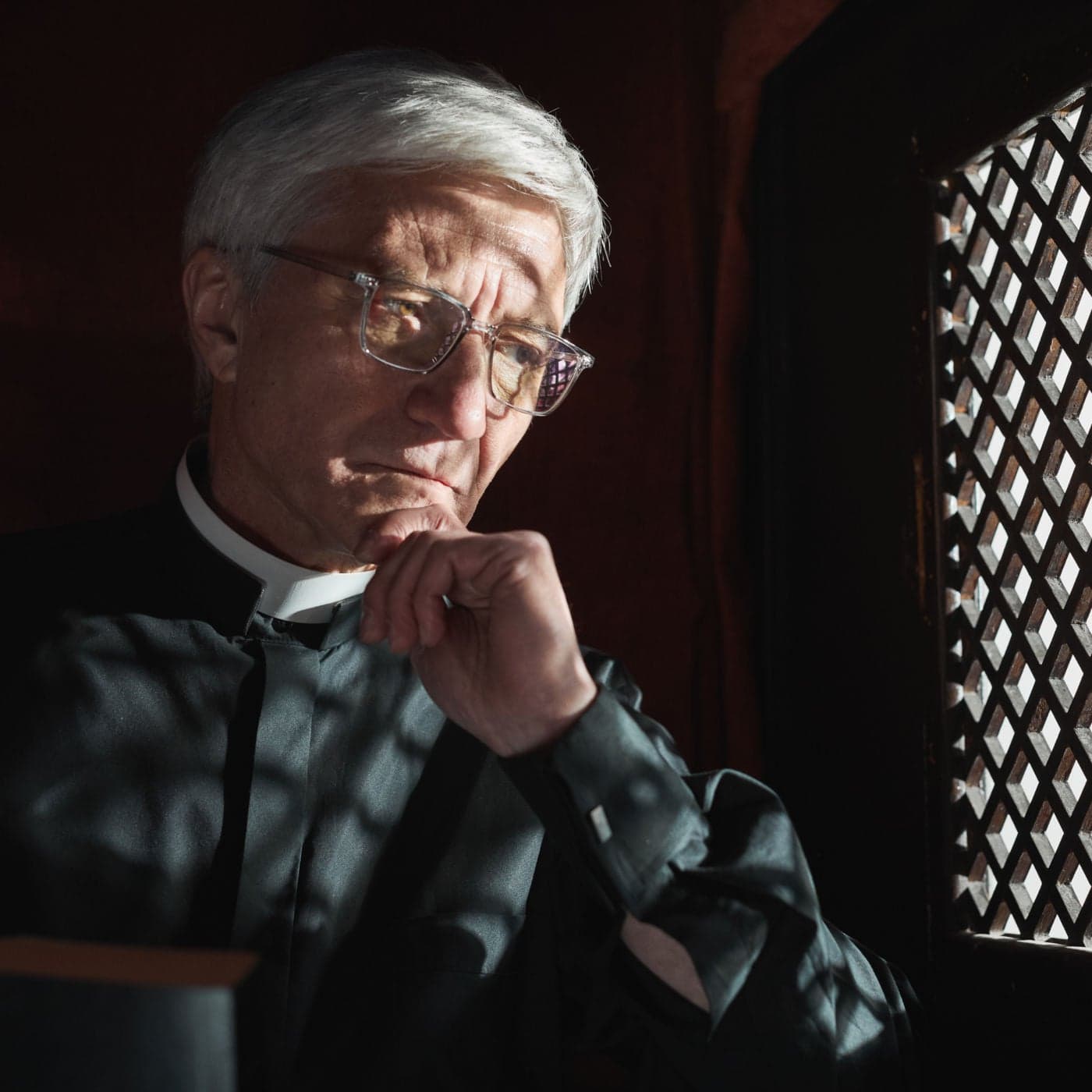
Catholic Answers Live
#12470 Must We Forgive the Unrepentant? Eucharist and Confession - Jimmy Akin
“Must we forgive the unrepentant?” This question delves into the complexities of forgiveness as taught in Luke 17:3-4. Additionally, the discussion touches on the Church’s teaching regarding the “Sons of God” in Genesis 6, clarifies why the Eucharist is not cannibalism, and examines the tolerance of Old Testament polygamy compared to New Testament teachings. Join the Catholic Answers Live Club Newsletter Invite our apologists to speak at your parish! Visit Catholicanswersspeakers.com Questions Covered: 04:45 – Church teaching on the “Sons of God” in Genesis 6 11:58 – Must we forgive someone who is not repentant? (Luke 17:3-4) 20:35 -How to explain that the Eucharist is not cannibalism 29:10 -Why Old Testament polygamy was tolerated but not in the New Testament 40:04 -Recommendation for a good book for a 14-year-old interested in Catholicism 44:35 -Parallels between confession and the sin offering in Leviticus
Loading summary
Transcript105 lines
- [00:00]
Announcer
Buying or selling your home. Real Estate for Life can connect you with a pro life real estate agent. When Real Estate for Life receives a referral fee, they donate 65% to Catholic Answers. Learn more at realestateforlife.org.
- [00:30]
Edgar Lujano
Welcome back, Catholic Answers live. My name is Edgar Lujano. I'm filling in for Sykella. Today on this show, all across time zones and on this earth and in this dimension, I think should be specific enough. So try to cover all my bases here, Jimmy. So good job.
- [00:50]
Jimmy Akin
Thank you.
- [00:51]
Edgar Lujano
Appreciate that. Today we haven't asked me anything, so I'm gonna give the phone number out one more time because there is one line open. So 888-318-7884. That's 8831 truth to ask your question to Jimmy. That's three tallied for today. And before we get back to calls, Jimmy, it is Friday. So today another episode of Mysterious World drops. So what came out today?
- [01:15]
Jimmy Akin
Today we were looking at. Now this is November 21st, and November 22nd is the anniversary of the JFK assassination back in 1963. So we've been doing a two at one theory of the JFK assassination, namely that rogue agents within the CIA were involved and specifically a gentleman named E. Howard Hunt. He was accused of being involved. He sued the people that accused him for libel and the case went to trial in the 1980s. And last week we looked at what he had to say when he took the stand and, and his credibility was absolutely shredded on cross examination. He claimed to have not been in Dallas on the day of the assassination, but to be at home with his family, including his children. And yet the grounds he was claiming for why he needed to be compensated was the accusations against their father had caused friction in his family and he'd somehow never noticed that. Usually when you're saying my children needed to be reassured by me that I was, that I was not in Dallas, they would have remembered it if you and your whole family were together for the event and watch television for three days, you know, to watch all the coverage. So his credibility was absolutely shredded. But that didn't prove that he was involved. So this week we are looking at what happened later in the trial when a woman named Marita Lorenz took the stand. And she was a former mistress of Fidel Castro who had been recruited by the CIA. And she had worked with E. Howard Hunt before and she had a very interesting story to tell about what happened in the run up to the assassination. And once the jury heard her story, they concluded E. Howard Hunt had not been libeled.
- [03:33]
Edgar Lujano
Wow. Okay. Well, there you have it. If you want to dig deeper, go to Mysterious FM and check that out. Or anywhere you listen to a podcast. I never heard of this before. I remember as a kid watching Discovery Channel and watching all these things about jfk. I've never actually heard of this, so I'll have to go back and listen to that.
- [03:50]
Jimmy Akin
Yeah, it's a really fascinating account.
- [03:53]
Edgar Lujano
Didn't they recently declassify all the or most of the jfk?
- [03:57]
Jimmy Akin
Almost. Almost all of them, yeah.
- [03:59]
Edgar Lujano
Have you read through them?
- [04:01]
Jimmy Akin
There's hundreds of thousands of pages. No, I let the hardcore. I mean, I've read multiple books about the JFK assassination, so compared to most folks, I'm a bit of an expert on it. But I leave it to the real fanatics to go through the hundreds of thousands of pages connected with it.
- [04:20]
Edgar Lujano
I didn't realize there were that many. So God doesn't multiply. Time for you for to read documents.
- [04:26]
Jimmy Akin
And my time machine is in the shop right now.
- [04:29]
Edgar Lujano
All right, just let me know when it gets back because I'd love to use it sometime. With that, let's go over to Jonathan in Oceanside, California, listening on Catholic.com Jonathan, go right ahead with your question.
- [04:42]
Caller
Hello. Thank you for taking my call. I really appreciate it.
- [04:47]
My question concerns the Church's teaching on the identification of these sons of God in Genesis chapter six.
- [04:56]
And I asked the question because I.
- [04:58]
Looked up the nephilim on Magisterium AI.
- [05:03]
Which I know is AI and may not be 100 accurate, but it did generate an answer saying that the Church.
- [05:09]
Rejects the interpretation of the sons of God as angels. So I wanted to just clarify, is that what the Church actually teaches or is it a open to interpretation whether or not they are from the line of Seth, or they are divine angelic beings?
- [05:29]
Jimmy Akin
Based on the research that I've done, and I've done quite a bit of research into this topic and it's featured both in recent episode of Mysterious World and in a recent episode of the Jimmy Akin podcast. This is not something the Church has a teaching on. Magisterium AI, as you said, is AI, and so that means it can be wrong. And during the break, I queried Magisterium AI, not about who the Nephilim were, but about who the sons of God in Genesis 6 are. And I got a similar answer to what you got. But one of the things I found is people often are not precise in what they say. When you like, you'll hear people, for example, call in all the time and say, what is the Church's teaching on subject X? And you'll hear me say, well, the Church doesn't have a teaching on subject X. And then I'll try to address their question. What they're really interested in is, you know, what's an informed opinion on this question? Because the Church doesn't teach as much as people think it does. Well, the same kind of thing happens with AI And AI is not good, at least not at the present stage of clearly distinguishing between is this a common opinion or is this something the Church actually teaches and requires Catholics to believe? And in order to show that it's something the Church teaches, you need to find it in magisterial documents that are binding on the entire Church and you need to show it hasn't been superseded. So if it's something that was said by a Pope or a council in a non infallible way 1500 years ago, well, doctrinal development has occurred since then. And you need to take into account has the Magisterium's approach to the question shifted in those 1500 years? Oftentimes though, what people will do is represent stuff that isn't even magisterial as if it were. So people will, for example, quote St. Thomas Aquinas opinion on something as if it were Church teaching, and they'll say, oh yeah, the Catholic church teaches X. St. Thomas Aquinas says, well, St. Thomas Aquinas was not a member of the Magisterium. He cannot give Catholic Church teaching. He can cite Catholic Church teaching and he can give his opinion, but he can't himself deliver Catholic Church teaching. And that is not taken into account by a lot of folks. And I'd say based on my knowledge in this case, it's not being taken into account by Magisterium AI it just is not sophisticated enough at this point to do the kinds of research and make the kinds of distinctions that are needed. There are like one of the things, for example, it does is scan the Catholic Encyclopedia. You know, that came out in the early 1900s. Well, okay, in the early 1900s it was a common opinion among Catholics that the sons of God were human descendants of Seth, that it'd make a Church teaching. But what will happen is when it's scanning these sources, it's likely to summarize it as if like the common Catholic teaching is this and it's not. And it'll cite something from the Catholic Encyclopedia which when that's not actually Church teaching, it's just a common opinion and the Magisterium AI is just not sophisticated enough to parse out what's actual teaching versus what is or was a common opinion, Jonathan. That's my understanding of the subject anyway.
- [09:37]
Edgar Lujano
Okay, Jonathan, thank you so much for your question. We'll leave it right there because it's time for the first break. When we come back, more questions with Jimmy Akin.
- [09:46]
Announcer
Miss a show. Make sure to catch up by downloading the podcast, available online@catholic.com underwriting for Catholic Answers Live is provided by Magnificat. Published monthly, Magnificat features texts of daily Mass, prayers, articles, meditations, art commentaries and more in step with the liturgical rhythm of the church. On the web@Magnificat.com St. Carlo Acutis shared.
- [10:09]
A dream in which Sister Lucia appeared to him, saying the First Saturday Devotion could change the destiny of the world. The Blue army of Our lady of Fatima invites you to practice this Devotion. Join a First Saturday virtual pilgrimage beginning December 6th. Experience spiritual meditations while traveling virtually through Portugal and Spain to 12 sacred sites tied to the Fatima story. Track your journey with a passport and stamps. Visit bluearmy.com and select First Saturday Pilgrimage to learn more. Sponsored by our Ladies Blue Army Underwriting for Catholic Answers Live is provided by.
- [10:46]
Jimmy Akin
Real Estate for Life.
- [10:47]
Announcer
Real Estate for Life connects homebuyers and sellers to real estate agents while supporting pro life organizations. On the web@realestateforlife.org EWTN Global Catholic Network.
- [10:59]
Is the largest religious media network in the world. 11 global TV channels, English and Spanish radio networks with over 500am and FM radio effect affiliates, one of the largest Catholic websites in the world, dozens of podcasts every week, social media, electronic and print news services and EWTN Publishing. EWTN is the global Catholic Network. For more about EWTN, visit ewtn.com.
- [11:38]
Edgar Lujano
CATHOLIC Answers Live. Ask me anything. Catholicism lines are full, so no phone number for you. Let's go over to the Philippines where Michael is listening us on a radio app. Michael, welcome to the show. Go ahead.
- [11:53]
Caller
Good morning from the Philippine Islands. I have a question about Luke 17:3 4 unforgiveness because I have been severely offended in my life when I was younger and I wonder it says if people have repented, we have to forgive. But what about those who never repented and seemed to be very perhaps enjoyed what they did?
- [12:24]
Jimmy Akin
Mm. To me? Well, they, they may have repented. And you, you may not have, you may not be aware of it. When I moved back to my hometown of Fayetteville, I was at Mass. And one day coming out of Mass, I Met someone who introduced himself as somebody I'd gone to elementary school with. And I was delighted. It's like, oh, hey, yeah, I remember you. How you doing? But he was really upset and all and actually started to tear up because he had been. He had kind of bullied me as a boy on some occasion, and it had been weighing on his conscience all these years, these decades since I had seen him. And I just. I didn't even remember him bullying me, you know, it's not like he did it all the time. I remember some people who were regular bullies, but he wasn't one of them. And I just felt so bad that this had been weighing on him for all this time. And I had absolutely no hard feelings towards him. I didn't even remember what he said he did. So it's quite possible, and in principle, I don't know your situation, but it's quite possible for someone to later realize what they did. And if they don't see you, they may not ever apologize, or they may have forgotten what they did and not realize they need to apologize. Now, having read Luke 17, as you have, you're right, it does say we need to forgive people when they repent. Jesus says, if your brother turns to you seven times a day and says, I repent, then you need to forgive him. And that's true. And I think that there are people who use rhetoric of absolute forgiveness in a way that does not correspond to the. The way the concept of forgiveness is used in the Bible. The way some people talk, it's like they want you to out God. God. Because God doesn't forgive people who don't repent and saying, oh, well, we need to forgive everybody whether they repent or not. Well, God doesn't do that. So I think that there is an important aspect of the truth that is not captured by people who use this kind of language of forgiveness in an absolute way. In fact, a number of years ago, I wrote an article that's on Catholic.com called the Limits of Forgiveness. So if you Google Jimmy Akin Limits of Forgiveness, that should come up and you can read it at more length. But what I would say is whether we need to forgive people who are unrepentant. It depends on how you're using the term forgive. If you mean that you have to want the person to repent and you want them to, for example, go to heaven and be united with God, well, we need to do that for everybody. No matter how bad they are. We need to want them to end up in heaven and so if that's what you mean by forgive, well, then we do need to forgive. But that's not what Jesus is talking about here, talking about having restored relations with someone in this life. And if someone persists in breaking faith with us or treating us cruelly and they just keep going, well, then. And they don't repent, well, then we're not required to have positive relations with them in this life. We still need to hope for their salvation. We still need to pray for them. Just like Jesus said, pray, eat, even for your enemies. But that doesn't mean you have to have positive relations with people who are actively trying to hurt you and have not repented. On the other hand, there's also another situation that has to be borne in mind here, because let's go back to the gentleman who bullied me in grade school or says he bullied me even though I didn't remember it. Let's suppose I did remember it, and let's suppose I've been festering about it for all these years. I've just been so mad at him all this time. And for decades I've been harboring this grudge against him. Did that grudge. Edgar, you can help me out here. Did that grudge, if I had been keeping it for all these years, did that help me or did that hurt me?
- [17:14]
Edgar Lujano
Definitely hurt you.
- [17:16]
Jimmy Akin
It hurt me if I've been feeling these and fostering these negative emotions all these years, that hurt me. Negative emotions are painful. I'd been inflicting pain on myself by harboring this grudge. And so it would be better, whatever he did to me in the past at some point, to just let it go, you know, I might still recognize, okay, you want to be careful, you know, But I'm not going to actively be hating on this guy because that's only hurting me. And so if that's what you mean by forgive, meaning not actively pursuing, you know, angry thoughts about someone, well, then I'd say we do need at times to forgive people who are not repentant, not for their sake, but for our own, so that we're not actively hurting ourselves. Now, I, in this case, from real life, I. I had forgotten it. I didn't hold him any ill will. I was just delighted to see him. And I hope that I was able to give him peace because I wouldn't want him to continue to feel bad about this because he had repented. It's so long ago, and it's little childhood stuff, so who cares? But I'd much rather have positive relations with him as a brother in Christ. Now, but in terms, Michael, of your situation, you mentioned you've been harmed pretty severely over the course of life. What should you do? Well, I would say a, you should will the good of the people who have hurt you, including willing they're going to heaven, willing that they go to heaven, and you should pray for them, like Jesus said. If you determine that the anger you feel towards them is not helping you right now, but is hurting you right now, then I would try letting that anger go. Now, that doesn't mean that would be easy, but I would try at least not to think about it much, you know, not dwelling on it, not letting it fester. And then if they at some point do come to you and say, you know, I'm sorry for what I did, I repent. Well, then you do need to forgive them in the sense of trying to restore positive relations with him in this life. That doesn't mean you trust them. If they've hurt you over a long period. It doesn't mean you hang around with them. But I would say that you need to forgive them in a greater way and tell them, well, I forgive you to try to build some kind of positive relation with them, even if you're not planning on being around them, and even if you don't really trust them, given what they've done in the past. Does that help you, Michael?
- [20:09]
Caller
Yes, it does. Fantastic response. Thank you, Jimmy.
- [20:13]
Jimmy Akin
No problem.
- [20:14]
Edgar Lujano
Thank you, Michael. Thanks for. Thanks for your call. Thanks for holding. I know you're holding there for a while. I guess we can take one more call before we go to the break. Bernard in Endicott, New York. I believe that's how you say it listening on YouTube, Bernard. Go right ahead.
- [20:28]
Caller
Hello, Jimmy.
- [20:30]
Jimmy Akin
Howdy.
- [20:32]
Caller
Yes, I gotta. I was talking to a friend yesterday, and we're talking about the real presence. And we got in deep into the discussion. We talked about substance accidents. And the talk eventually led to cannibalism. And I was talking to him like, we're not diminishing the Lord and we're not, like, preventing a corpse. But I guess I wasn't convincing enough because at the end of the day, it was like, if we're consuming any body or blood, then it's cannibalism. So I need a better way of explaining.
- [21:08]
Jimmy Akin
Okay, well, as I often say, you can lead a horse to water, but you can't make him think. And you just can't convince everybody. So it may not be possible to convince this gentleman that the Eucharist is not. Cannibalism why did he. Now? It sounds like you. You gave him the baseline reason why. It's not cannibalism. We are not metabolizing Jesus's body. We're metabolizing the appearances of bread and wine so they cease to exist. But we are not metabolizing Jesus's body. I mean, what happens in actual cannibalism is, you know, you take, like, let's say, somebody's arm, and then you take a big bite out of their arm and you chew up that flesh and you swallow it and it goes. The saliva in your mouth already starts the digestive process. And then when it gets down into the lower part of your digestive tract, it starts using acid to dissolve the chemical bonds that keep the flesh together. And then your body breaks that down into compounds that can be used nutritionally just like it does any other meat you would eat. So that's what actual cannibalism involves. But, Edgar Lujano, when you receive the Eucharist, do you actually bite a hunk out of Jesus's body in heaven and then tear it apart with the acid in your digestive system so that he's got a big chunk missing?
- [22:51]
Edgar Lujano
No, absolutely not.
- [22:52]
Jimmy Akin
No, you don't. So this isn't cannibalism. And, you know. So, Bernard, I don't know how you articulated it exactly with him, but it sounds like you were on the right track, and it may not be possible to convince him otherwise. This may be too useful a rhetorical claim in his mind to abandon. Also, I never expect people to abandon their views in front of me because there's too much psychological pressure to maintain them. So it could be that you actually did give him what he needs to let go of this view. It's just he won't do it in your presence. You got to give him some time to think about it. On the other hand, he may have had other concerns, like he may have defined cannibalism a particular way. Merely having someone in your mouth does not amount to cannibalism. I mean, I don't know if you've ever seen the movie the Fantastic Voyage. It was based on a science fiction story by Isaac Asimov. But basically, in order to do surgery on somebody, scientists shrink a little crew of people to go in and perform needed surgery on the guy, and they're inside his body, but they haven't been cannibalized. You know, being inside someone else is not cannibalization. So, Bernard, we've got a little bit. We're coming up on a Hard break. But were there other things that he was objecting to? Or did he use some weird definition? Or is there something else I can help you with on this cannibalism issue?
- [24:30]
Caller
I think you explained it really well, because I don't think I made it clear, as you just did. But basically it was, if we say that we're consuming body and blood, then it has to be cannibalism.
- [24:45]
Jimmy Akin
Yeah. And that's not true if by consume you mean put into your mouth. That's not cannibalism. Cannibalism involves metabolizing or tearing apart human flesh. And that does not happen in, I should say tearing apart in order to extract nutrition. That's what has to happen with human flesh for cannibalism to occur. Or drinking human blood, you could call that cannibalism. But neither of those is happening in the case of the Eucharist. Jesus's body and blood are just fine up in heaven. And undamaged. Completely undamaged by the fact they're also present in the Eucharist, which we receive.
- [25:32]
Caller
I think that was a good answer. Thank you.
- [25:34]
Edgar Lujano
All right, no problem. Thank you, Bernard. And just to remind you, you can always go back and listen to the answer on our YouTube channel and play.
- [25:41]
Jimmy Akin
It for your friend.
- [25:42]
Edgar Lujano
Absolutely. So if you're having a hard time repeating it, then just show them the clip. And there you have it. Bender. We might have to take that and make it into an actual clip. All right, all right. He's already thinking about it. Alright, well, when we come back, we're gonna take some more questions. It's an Ask me anything on Catholicism with Jimmy Akin. There are two lines open, so one more time with the phone number 888-318-7884.
- [26:15]
Announcer
Have you ever wondered about the mysterious, even obscure aspects of the Catholic faith? Dive into the Jimmy Akin Podcast, where Jimmy brings together information from many fields as he pushes the boundaries of apologetics. Tune in today to the Jimmy Akin Podcast Mysteries of the Faith, a highly entertaining, informative, and at times humorous shows that will help you grow in your faith. Visit jimmyakinpodcast.com today to subscribe.
- [26:45]
Lots of people have big questions about Catholicism. It needs a big book of answers. And now it's got one. The Big Book of Catholic Answers is filled with helpful replies to more than 250 questions about the faith. Questions about God, salvation, history, the Creed, the Bible. The list goes on and on. Order your copy of the Big Book of Catholic answers today@shop.catholic.com or ask for it at a good Catholic bookstore near you.
- [27:14]
We hope that one of the things that we communicate here at Catholic Answers Live is that our Catholic faith allows us to be fully serious about all the problems we encounter in the church and in the world. But it also lets us have light hearts and maybe even mix in a bit of fun. And that is is exactly what our good friend Joe Heschmeyer does in his popular podcast, Shameless Potpourri. You should check it out@shelessjoe.com Joe's got a deep grasp of the faith, morals, the teachings of the Church, all that, but he's also got a witty conversational style. He entertains and he informs, but you will leave equipped to better answer the most common challenges, misconceptions, and questions about the Catholic faith. He's got insightful guests, he does on air debates, and he takes a close look into all the things that you want to know about as a Catholic living today. You'll walk away knowledgeable and filled with joy. Look for Joe on his YouTube channel. Check him out@shelessjoe.com or wherever you get your podcasts. And if you like what you hear, become a patron.
- [28:26]
Edgar Lujano
Welcome back. Catholic Answers Live. Again, it's an Ask Me Anything with Jimmy Akin. And as per usual, lines are pretty full. So let's continue with Sherry in Park Hills, Missouri, listening on Covenant Radio. Sherry, go right ahead.
- [28:43]
Caller
Hi. Thanks for taking my call.
- [28:45]
Edgar Lujano
Of course.
- [28:46]
Caller
I just have a question. I. So I'm still new at this. I just got confirmed last Easter.
- [28:53]
Jimmy Akin
Oh, congratulations.
- [28:54]
Caller
Convert. So thank you. There's a bunch I don't know, obviously.
- [29:01]
Jimmy Akin
But there's a bunch everybody didn't know, me included.
- [29:06]
Caller
I'm reading the Bible from the beginning to the end, like straight through, because I've never done it. I mean, I'm in Second Chronicles right now. And I was noticing there's so many times in there where God has provided wives, plural, tons and tons of wives, therefore tons and tons of kids to men throughout the Old Testament. But then where, where is that? Like, where did that shift into just, you know, you know now just know it's marriage is one man and one woman instead of like one guy and a whole harem of women and concubines and whatnot. Okay, that's what I'm curious about is where that, that ended and this started, I guess.
- [29:56]
Jimmy Akin
Yeah, well, it happened early in Christian history. Now sometimes I've, I've read people who will say, well, like Jews were already monogamous by the first century, that the polygamy custom had Just dropped out. And Jews didn't have multiple wives and none of them did. Now I should mention, because humans are born with sex parody so that, you know, basically it varies a little bit, but basically the same number of men are born as women are born. Monogamy is the norm in human cult, in human cultures. The vast majority of married people are married monogamously because. Because it couldn't work otherwise. If every man had three wives, well, there would need to be three times as many women born as there are men. And that's not the case. The ratio is basically one to one, not one to three. So monogamy is the norm in our species just based on the number of men and women that get born, the ratio of men to women that get born. So polygamy has always been an exception. It has always been something where, like for example, that rich men are able to do who can support more than one wife. And so it's always been an exceptional thing. And I've seen claims that by the 1st century AD that Jews had lost the polygamy custom that it was that all of them were monogamous. And if you run into claims like that, they're not accurate. There were Jewish polygamists in the first century, among them, one whose name people will even know, Edgar, who was the king of the Jews at the time Jesus was born?
- [32:03]
Edgar Lujano
Herod.
- [32:04]
Jimmy Akin
Herod the Great. Right. He was a polygamist. He had multiple wives. So there were Jews in the first century who were polygamists. But there is a monogamy ethic that we see growing in the New Testament. For example, in the Pastoral Epistles, St. Paul is discussing the office of presbyter or bishop. At the time, they weren't really distinguished, but he says that a presbyter or bishop needs to be the husband of one wife. And so we see already in the Christian community by the AD 60s when that letter was written, that even if this one wife mandate is not being applied to everybody, it is being applied to church leaders. There's also an earlier precedent for it that can be cited from Jesus own teaching on divorce, because he was asked, is it permissible for a man to divorce his wife? And he cited the case of Adam and Eve as the prototype. It's like God made Adam and Eve and he didn't provide a Barbara so that Adam could get divorced from Eve and get married to Barbara. And in the same way, you can take the same passage, if that's the logic Jesus is using, and say, well, he made Adam and Eve. He didn't make Adam and Eve and Barbara so they could all get together and get married and have a throuple. So God also did not provide for polygamy with Adam and Eve. And if the depiction of Adam and Eve in Genesis is what God intends for human marriage and human sexuality, then that's going to also rule out polygamy. God may have tolerated polygamy for a while, just like he tolerated other things because men's hearts were hard, but that would not be his will. In any event, we see the beginnings of this monogamy ethic in the New Testament, and it just grows from there in church history.
- [34:21]
Caller
Okay, yeah, because I was. I was wondering, like, because I don't recall many times where in the Old Testament where God was telling him, and by the way, you know, you're doing all this stuff I don't like, and I don't see him saying, get rid of some of those wives or don't marry a whole bunch of women in the first place. You know, And I thought there was somewhere I just read it's like, and I'll bless you with wives, plural. Yeah, like he was okay with it, and then he changed his mind. Are, you know, like, no, actually, I don't like it that way. Let's just do it.
- [35:00]
Jimmy Akin
God. But God doesn't change his mind. He's outside of time, and so his mind is eternal and therefore does not change. What can change is what he allows or deems appropriate for people in particular circumstances. Now, there are passages that at least seem to present polygamy as something God willed. Like, at one point, a prophet tells David, who has taken the wives of his predecessor Saul, after Saul's death. God is presented as saying, I gave your enemies wives into your arms. Okay, well, how are we to make sense of that? One way to make sense of it is to say, even though polygamy is not the norm, it is something that could happen legitimately on some occasions. You know, it's like killing people is not the norm, but there are legitimate cases of self defense. It's not what God wants. What he wants is for there to be no killing at all. But God understands there are some situations where you might need to take life in order to save life. Well, in the same way you could say God set up the human race so that we're born with a ratio of one to one with the sexes. And so monogamy is what he ultimately wants. But there can be circumstances like the ones David was in that would permit polygamy to be an acceptable option. And then he instituted a new rule for us. That's one way of approaching that. Another way of approaching it, though, is to say that Scripture is inspired on a deeper level. And there's a human element that affects the phrasing in terms of how this prophet communicated with David, such that we shouldn't take it. This passage is implying literal approval of polygamy. The message that God was giving David was not it's okay to have multiple wives. The message was, hey, dude, I've favored you. I've put you in favorable circumstances. And so it would, according to this approach, be a mistake to read the passage as endorsing polygamy. It may be the human author, the prophet, assumed polygamy was okay and therefore used it as an illustration of how David had led a favor her life. But that doesn't mean that God literally wanted this to happen. So there are unresolved questions in this area that still need to be thought through and via doctrinal development. The Holy Spirit may clarify some of these in the future, but that's a sketch of at least my understanding of where things are right now, and I hope that's helpful.
- [38:16]
Edgar Lujano
Sherry, thank you so much for your question. Hang on the line. We do want to give you a copy of Daily Defense. As I say, welcome home. And we're going to go to our final break. And when we come back, it's more questions with Jimmy Akin.
- [38:29]
Announcer
There's only one Catholic Answers Live.
- [38:33]
The catechism defines evangelization as the proclamation of Christ and his gospel by word and the testimony of life. But what does that look like in real life? It looks like St. Paul street evangelists out in the public square sharing the good news. We're a Catholic nonprofit that starts conversations by handing out free sacramentals. Then we employ our method of listen, befriend, proclaim and invite. Catholic Answers is supported in part by St. Paul Street Evangelization. Visit streetevangelization.com to learn more.
- [39:04]
Edgar Lujano
The EWTN home video highlight for October.
- [39:07]
Jimmy Akin
Is They Might Be Saints.
- [39:09]
Announcer
Father Michael McGivney Miracle hunter Michael O'.
- [39:12]
Jimmy Akin
Neill follows the trail of Father Michael.
- [39:14]
Announcer
McGivney, founder of the Knights of Columbus.
- [39:16]
Jimmy Akin
And America's first parish priest to be beatified. This documentary explores the miraculous cure that led to Father McGivney's Beatification.
- [39:25]
Announcer
Order your DVD at ewtnrc.com or call 1-800-854-631.
- [39:43]
Edgar Lujano
CATHOLIC ANSWERS live. Welcome back. We're taking your questions on Catholicism. We go over to let's go to Harry in Caldwell, Indiana. I almost said Illinois. Indiana. Listening on Salt and Light Radio. Harry, welcome to the show. Go right ahead.
- [40:00]
Caller
Thanks for taking the call. And that's Idaho. We My granddaughter, I'm 77 years old. My granddaughter came over for dinner last night, about 14 years old, and she says that she's interested in becoming Catholic all of a sudden. She has no religious training nor family beliefs up till now. So I was wondering if there was a book, a publication that would be suitable for a 14 year old. She also wants a Bible for her birthday, which is soon as translations most appropriate at this time.
- [40:36]
Jimmy Akin
Okay, well, so in regard, let's deal with the Bible question first. There are loads of Bible translations that are just fine. For example, there is the English Standard Version, the Revised Standard Version, Catholic Edition and the New American Bible. Those three are commonly used in Catholic circles. I would get her, since she's just looking at the faith, I would get her a Catholic Bible. Normally if someone's educated in the faith, I would say it doesn't really matter which one you get. But for someone who's only now being exposed to the faith, I would say definitely get her a Catholic Bible. The one I would probably get her is the Ignatius Study Bible because it has notes that are genuinely supportive of the Catholic faith. So I would recommend that one, the Ignatius Study Bible, they have a version that is just the New Testament, but they also have a version that's the whole thing. And so either one of those, I would say would be good for her when it comes to books that I would recommend. Well, not being a 14 year old myself and not having a 14 year old, I tend not to read such books. But I wrote a book called the Words of Eternal Life that's designed to be a very simple explanation and defense of the Catholic understanding of the Christian faith. And I think it would be suitable for a 14 year old. So if you hang on the line, we can see about sending you a copy of the Words of Eternal Life. It's a very short read. It's designed to be very easy to read. Also, Catholic Answers publishes a set of three graphic novels. And if you're not familiar, graphic novel basically means a big comic book, but they are entertaining stories that teach about the Catholic faith and lessons connected with it. And so if you're interested, if she might be interested in basically a comic presentation of the Catholic understanding of the Christian faith, I would recommend this set for her. The three are called the Truth is Out There, the Big Picture and Weapons of War, that being a metaphor. And so when we put you on hold, Harry. We'll definitely send you the words of eternal life. And if you think she would be interested in a comic presentation of the faith, we can also send you the three graphic novels.
- [43:36]
Caller
Sounds excellent.
- [43:38]
Edgar Lujano
Okay, great, Harry. We'll go ahead and put you back on hold. John will take your information to get that. Also, if you, if you're interested in getting that Bible, you can actually pick it up@shop.catholic.com we do provide it there. So hang on the line here. We'll get your information. Let's go over to Hannah in Tuscaloosa, Alabama, listening on the Catholic Answers app. Hannah, welcome to the show.
- [43:59]
Caller
Hi. Thanks so much. Hey, Edgar. Hey, Jimmy.
- [44:02]
Jimmy Akin
Hi there, Patty.
- [44:04]
Caller
Well, Jimmy, I just want to say I may be living in Alabama, but my heart will always be in the Arkansas Ozarks where I grew up.
- [44:11]
Jimmy Akin
Oh, awesome.
- [44:13]
Caller
Yeah, it's always when I listen to your content, the accent sounds like home. So thanks so much for that.
- [44:19]
Jimmy Akin
Well, thank you for saying so.
- [44:22]
Caller
For sure. So I'm newly Catholic.
- [44:27]
Jimmy Akin
Congratulations. Yay.
- [44:29]
Caller
Thank you so much. I'm glad.
- [44:31]
Jimmy Akin
Yay.
- [44:32]
Caller
You're excited. I'm excited. My parents are none too thrilled, so that's great. And one of the big gotchas for them is that is confession. In particular, the penance that's required after confession. My mom's big thing is that it's a work for forgiveness. They're also really big into the Mosaic ceremonial law. So I was wondering if there's any merit to drawing a parallel between confession as the new covenant, continuation of the sin offering in Leviticus 7, or if I'm way off base with that one and any other resources you might have for drawing parallels between the Catholic churches, the New Israel, and the Mosaic ceremonial law.
- [45:18]
Jimmy Akin
So I want to understand, I want to make sure I understand where your parents are coming from. Do they go to a particular church that teaches them about the Mosaic Law? You said they were very into the Mosaic Law.
- [45:32]
Caller
Yes. So they, I mean, they've been going there. No, they are not denominational themselves. They've been attending a Baptist church since I was six years old. But that's just a particular interest of my dad's, that he spent a lot of time studying that.
- [45:48]
Jimmy Akin
Okay.
- [45:48]
Caller
In his personal study and his teaching of Sunday school and that kind of thing.
- [45:53]
Jimmy Akin
Okay. Well, so go ahead.
- [45:59]
Caller
He's. He's particularly interested in the. The liturgical calendar in the Old Testament, but I think anything would be helpful.
- [46:08]
Jimmy Akin
Okay. Well, I would say you're not off base when you are drawing a parallel between the sin offering and the sacrament of confession, There are several elements here that are parallel. You know, if you were an Israelite and you committed a grave intentional sin, then you ritually needed to take a lamb, and for a typical person, it would be a ewe, a female lamb, and sacrifice it. And so you take it to the temple or the tabernacle before they had the temple, and you'd put your hands on its head and then it would be slaughtered and the blood would be offered, and that would make reconciliation between you and God. Now, I've seen some people say that when you put your hands on the lamb's head, you also confessed your sins and there was a priest there. But that's sketchy to me. There are situations like on the day of atonement where the high priest confesses the sins of the people on a goat's head. And there were priests around when you offered a sin offering. But I don't know of a passage that says. There is a passage in Leviticus 4 that says you put your hands on its head. But I don't know of. I could be missing it. But I don't know of a passage that says you put your hands on it and then confess your own personal sins that may have happened. I just, based on my, my memory, I can't prove that from Scripture, so I wouldn't exaggerate the importance of confession here. But there is a parallel in that this is an action that you do in order to have reconciliation with God. And then when you commit new sins, you need to go back and do it again. You need to offer a new lamb. So there are parallels here. Now, there are also differences. One of the differences is because as the book of Hebrews tells us, the blood of bulls and goats can never take away sin. That's why Christ needed to be sacrificed. So this didn't literally pay for your sins. It did establish a kind of reconciliation between you and God, but it wasn't empowered by the blood of Christ because he hadn't yet been offered on the cross. Now that he's been offered on the cross, we don't need to kill Jesus over and over again because that was a once for all sacrifice. But there's still a question of should we engage in some form of confession? And the answer to that based on the New Testament is pretty clearly, yeah, there are multiple places in the New Testament where it says to confess. Now, what it doesn't always do is spell out to whom. So like in first John, it says, if we are faithful and confess Our sins. God will forgive them. But it doesn't say how you confess. It could be just based on what the text says. It could be your private. You're praying directly to God, you're confessing to him. It could be you're confessing to God through a priest. It could be you're confessing your sins publicly in church and confessing to God in the presence of these other people. So that passage doesn't settle who you're confessing through, just that you are confessing. And as you commit new sins, you're going to need to confess again. Just like Jesus has us pray regularly. Forgive us our trespasses or debts as we forgive those who trespass against us. You know, that's part of the model Christian prayer. We're meant to say it regularly because we sin regularly. Now, if your family has been going to a Baptist church, they may have been taught that when you get saved, God forgives all your sins, past, present and future. So he even forgives future sins you've not committed yet. But that flies in the face of the Lord's Prayer. If we had already been forgiven for all the sins we will ever commit, then we wouldn't need to pray, forgive us our trespasses or forgive us our debts as we forgive those who trespass against us. That wouldn't be part of the model Christian prayer. So there is an implication that as we commit new sins, we need to deal with them. One way is by praying. But there are explicit commands to confess in addition. Sometimes the word confess, though isn't used. But there is a connection between the priests or presbyters. The Greek word is presbuteros. It's where we get the word priest and, and being forgiven of sins. In James, it says that if somebody is sick, they should call for the presbyters or elders, it's sometimes translated, of the church to come and they'll lay hands on the sick person. And if he has committed sins, he will be forgiven them. And so that establishes a link between the forgiveness of sins and the presbyters of, of the church or the priests or elders of the church. So that's a link there. Then we've got John, chapter 20, where after the resurrection, Jesus comes to the disciples and he breathes on them and says, receive the Holy Spirit, a breath. The word in, well, in Greek. In John's Greek, it's pneuma. It means breath or spirit. So Jesus breath becomes a symbol of the Holy Spirit. He breathes on the 12 and says, as my Father sent me, so I send you. Whoever sins you forgive, they are forgiven. Whoever sins you retain, they are retained. Well, okay, so the Father sent Jesus to forgive sins, and now he's sending the disciples to forgive sins. And he empowered them with the Holy Spirit to do that. But you'll notice he didn't just empower them to forgive, he also empowered them to retain. He says, if you forgive someone's sins, they'll be forgiven. But if you retain someone's sins, meaning if you don't forgive them, they'll be retained. So how are the disciples supposed to know whether they should forgive a sin or retain a sin? Well, they'd have to know about the sin in the first place. And they'd have to know are you genuinely repentant or not. And if you're not repentant, they shouldn't be forgiven you. But if you are repentant, repent they should. So you need to tell Christ's minister, I did this sin, so they know about it, and you need to say, I'm sorry so that they know that they should forgive your sin. So we have Jesus given his ministers the power to forgive sins. And it implies, since he said you either forgive or retain the sin, it implies, well, you got to tell them about it, and you got to tell them if you're sorry. And that's the sacrament of confession. So there's not a single passage I would point to. I think you're on the right track. There are similarities with the sin offering in the Old Testament, but there are also differences. However, when you look at other passages in the New Testament, they fill in the rest of the pieces of the puzzle.
- [53:58]
Edgar Lujano
Sound good, Hannah?
- [54:00]
Caller
Yeah, that's great.
- [54:02]
Edgar Lujano
All right. Thank you so much, Hannah. We're coming up at the end, but I do want to go ahead and give you a book, the Daily Defense, one of Jimmy's books for you, and as a congratulations. So we had a lot of people come call today that have just entered into the church or are coming to the church.
- [54:17]
Jimmy Akin
Yeah. That's awesome. And, Hannah, since the music's coming up now, but you're welcome to play this little link. You can even get it at the timestamp in the video. And send that to your father and say, well, here, I asked about this, and here's what I was told.
- [54:33]
Edgar Lujano
Absolutely. Great. Thanks, Hannah. Thanks for your question, Jimmy. That was a fun two hours.
- [54:37]
Jimmy Akin
Yeah.
- [54:38]
Edgar Lujano
We should do this again. Maybe Knox next weekend, because it's Thanksgiving.
- [54:42]
Jimmy Akin
Okay, well, maybe the week after.
- [54:45]
Edgar Lujano
Let's do that. All right, perfect. Well, thanks again. And thanks for all of our callers. Thank you for calling. Calling Daryl, apologies we weren't able to get to give us a call on Monday. We'd love to take your question then. That's going to do it for us here on Catholic Answers. Thank you for your questions and we will see you on Monday. Have a great weekend. God bless you all.