← Catholic Answers Live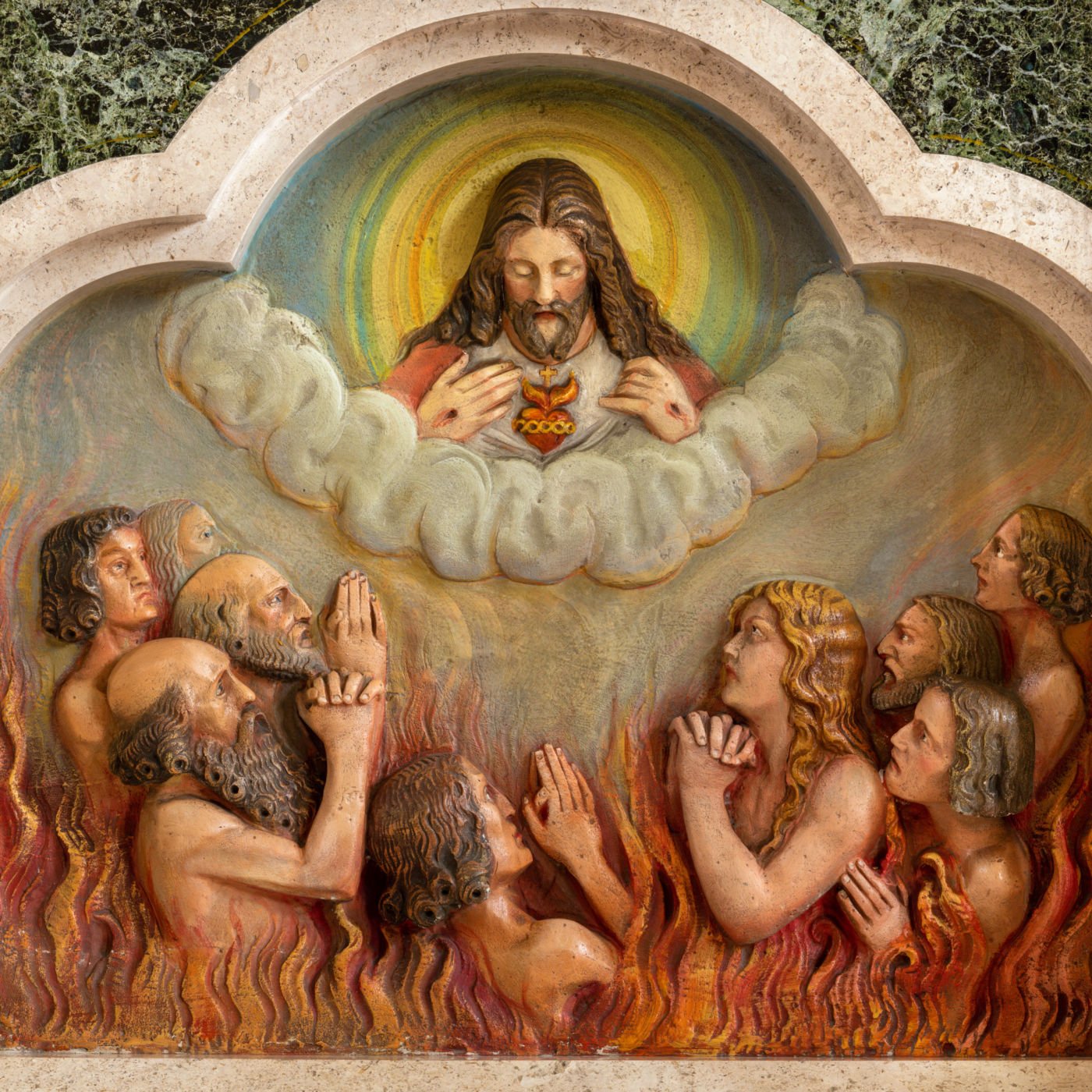
Catholic Answers Live
#12479 Is There an Actual Burning in Purgatory? Gnosticism and Mary - Joe Heschmeyer
“Is there an actual burning in purgatory?” This question opens a discussion on the nature of purgatory, alongside inquiries about addressing Protestant objections to John 6 and the Catholic Church’s stance on Gnosticism. Other topics include the interpretation of biblical imagery and the role of Mary in scripture, providing a rich exploration of Catholic beliefs. Join the Catholic Answers Live Club Newsletter Invite our apologists to speak at your parish! Visit Catholicanswersspeakers.com Questions Covered: 08:41 – Is there an actual burning in the cleansing of purgatory? 14:53 – How do I answer the protestant objection to John 6 when they say that Jesus said He was talking about the spirit and not the actual flesh? 24:54 – I don’t understand Gnosticism . Does the Catholic Church say this is wrong? 35:16 – How do we dissuade people from thinking biblical stories are in the same vein as Greek mythology? Example: Jesus calls James and John th...
Loading summary
Transcript88 lines
- [00:00]
A
Buying or selling your home. Real Estate for Life can connect you with a pro life real estate agent. When Real Estate for Life receives a referral fee, they donate 65% to Catholic Answers. Learn more at realestateforlife.org. Hello and welcome to Catholic Answers Live. I am Cy Kellett. Your host, Joe Heschmeier is our guest today. And we've got a drop. Calls. Ask me anything. All the calls are in already. These were calls that they came in. We liked the question, but the caller left before we got to get him on the air. So we saved the question and let the caller go. I hope you're feeling all right today. Are you feeling all right today? Have you recovered? Are the, are the pans washed? Thanksgiving festivities you made from the thanks Thanksgiving feast. How are you feeling, Joe?
- [00:55]
B
How do you, you know, I'm not going to reveal this might be a prerecorded episode so that we can actually take the day off, but I will.
- [01:01]
A
Pretend like this is live, please.
- [01:03]
B
Exactly. There's. Yeah, I remember they used to advertise reruns of Saturday Night Live by saying Saturday Night Live, but not on Saturday, not at night, and not live. And I'm kind of doing a similar thing with Catholic Answers Live. Yeah, you don't want to call it like Catholic Answers dead. So Catholic Answers prerecord. Not as, not as catchy. It doesn't. I will say October, November, December, are these months that all have this common thing where you end the month with eating too much junk. So.
- [01:34]
A
Oh, that's right.
- [01:35]
B
That's a guy.
- [01:36]
A
I hadn't thought about that. It's a, it's a monthly thing that we do here in the U.S. by the way, if you're listening around the world, yesterday was Thanksgiving in the United States. So right now, whatever country you are in is one behind America because we just thank God for a whole day yesterday. So whatever, wherever you are, we are one ahead of you today. I don't know who keeps the rankings.
- [01:58]
B
I don't know what that means, but I agree with.
- [02:00]
A
No, I agree with it.
- [02:02]
B
Yeah.
- [02:03]
A
So, yeah, Thanksgiving, I have no idea why we eat turkey, but we eat turkey. We feast. I do agree with the idea of feasting to thank God. The Eucharist is a feast. Feasting is, that's, that's an appropriate way to thank God for his gifts. I, I don't know why we feast in the way we do. Like, I don't know why sweet potatoes with marshmallows gives glory to God. I have no idea why a Stuffed turkey gives glory to God. Do you have any idea on any of these things, Joe? Or we just go along with it.
- [02:35]
B
Seem to go back to pilgrim customs or what we imagine pilgrim customs to be, because, you know, I mean, the history of Thanksgiving, it starts as a national holiday during the Civil War. As you know, the Civil War was a great spiritual crisis in America. And you. You see this reflected in a lot of, particularly Abraham Lincoln's addresses where he. He views this as kind of the visitation of divine wrath on America for. For her many sins, but particularly the sin of slavery, which is a part of the story you don't normally hear in kind of a secular telling of the Civil War, that this was understood, at least by the north, as a spiritual battle and that the war itself was viewed as. As an ill being inflicted upon us for. For abiding this evil for so long. And so in the face of that, having a holiday that was explicitly religious of giving thanks to God, but also trying to turn back to God during the war was. That was the immediate kind of cause of the feast of Thanksgiving. But it was also recalling, of course, earlier times where the pre American colonists seemed like they weren't going to survive. And then they were aided actually by a Catholic squanto. And then, you know, what is it, the Pequot Indians up in Massachusetts? Yeah, maybe. Yeah, that's right. I think you're right about that. And so, you know, they survived a winter. Didn't seem like they would survive. And so I think it is a good thing to get in the habit of saying even in these very dark moments where you think, wow, it's a wonder I've even made it, that this is a good time to give Thanksgiving to God. And I think to honor that, we use what feel like old timey pilgrim foods, which may or may not accurately.
- [04:21]
A
Reflect, oh, these are old timey pilgrim foods all right.
- [04:24]
B
I mean, at least some of them I get it to be. Yeah. So there's a lot of just kind of casual, traditional, you know, this is what we always do. And yeah, let me put it this way. If these foods were as good as people act like they are at Thanksgiving, we would eat them year round. Yeah, I know, I know.
- [04:41]
A
That's exactly right. Like, although some of them really are good, like pumpkin pie, it's worth the wait for some. You don't like pumpkin pie, Joe?
- [04:50]
B
I think it's too. It's like eating baby food. The flavor is fine, the texture.
- [04:56]
A
And you're saying that's a bad thing?
- [04:57]
B
Yeah, I am. Saying, I think my views on this have changed over time. About 39 years ago and, you know, I kind of grew out of that and haven't gotten back into it. Maybe as I'm older, if my teeth go, might, might see if pumpkin pie does it for me then.
- [05:14]
A
Well, I'm glad to have you all, everybody here with us on the day after Thanksgiving. For some people, this may be the first time you've heard us because maybe you're in different circumstances, you're in a different place geographically or you're riding in a car when normally you'd be working at this time of the day or whatever. If this is the first time hearing U.S. catholic answers, you can find out all about us@catholic.com it's an Apostol of the Catholic Church devoted to answering questions. And that's what we're going to do. We're going to answer questions about the Catholic faith with Joe Heschmeier. Oh, we are so full from dinner yesterday. We're so full. But we're going to fight our way through and we're going to have wait. I feel like one time I asked you about celebrating and I apologize if I have you confused with somebody else, maybe somebody more charming and a better storyteller. But did you celebrate Thanksgiving in Italy when you were there?
- [06:03]
B
Oh, I did.
- [06:04]
A
And did they make you turkey or did they make you Italian food for Thanksgiving over there?
- [06:09]
B
Good. I'm trying to remember what we actually had. It was okay. So when I went to school for seminary for three years at the North American College in Rome. And essentially your first Thanksgiving is like the first real oh wow, I'm not in the US Kind of moment. You know, like at first you're just like, oh, this is great, I'm studying abroad. But then you have this extremely American holiday that is not celebrated at all, of course, in Italy. And a lot of the food we would normally eat are just not available. You can't even go to the store and get a lot of the things you would need to kind of make your own.
- [06:41]
A
So they don't have Mrs. Cubbins stuffing over there in Italy.
- [06:46]
B
You don't understand over there.
- [06:48]
A
They don't have like pearl onions in a jar over there in Italy.
- [06:54]
B
How are you calling yourself a first world country without all this pre processed. What's wrong with you? Italy? So yeah, basically they, I think they had a very nice but very Italian dinner. But in the morning, each of the different halls, like on the floors in the residential side would make an American style breakfast. So we would actually bring in bacon from America and it was like a much looked forward to event. And then Americans who were living or visiting Rome would join at dinner. And so, you know, one year Newt Gingrich and his wife were there and everybody sits by state and it's a real rah rah America kind of dinner. And they have a big celebration and there's, you know, speeches and everything else. It really was a blast. They knew how to lean into kind of this very patriotic day that the, the non American students sort of abided because, you know, you'll have like Canadians and Australians who are there as well. And, you know, they, they're good sports about it. And yeah, it was great. It was something that we looked.
- [07:57]
A
Canadians have a Thanksgiving Day.
- [07:58]
B
That's.
- [07:59]
A
Australians do not. Yeah, there is something wrong with Australians. They don't have. They don't have a Thanksgiving Day. And if you lived in Australia, just look around. If you live in us, you should be giving thanks.
- [08:11]
B
You should have. I don't know what foods they would use. Like if, if you had the Australian version of Thanksgiving instead of turkey. What are you going to emu.
- [08:20]
A
I don't know. I don't know. I think everything goes good with kangaroo. You know, every holiday goes good with kangaroo. So I don't know if you could outdo that.
- [08:33]
B
Yeah.
- [08:34]
A
All right, let's tell you what, let's kind of recover from all that food we ate yesterday. I'm so full still. We'll be right back. We'll get a lot of questions for Joe. It's drop calls on this day after Thanksgiving where for one day, America is leading the world in its praise of God. We are the top country in the world today because yesterday we spent the whole day thanking God. Right back with questions for Joe right after this.
- [09:01]
B
This is Bishop Robert Barra, and you're.
- [09:02]
A
Listening to Catholic Answers Live. Are you a coffee drinker? If so, you can now enjoy a coffee roasted to perfection by the Carmelite monks of Wyoming. Delicious Mystic Monk coffee is roasted and prepared by monks in a hidden cloistered monastery and is available in over 25 varieties. All Mystic Monk coffees are works of perfection and labors of love. For more information on how to purchase Mystic Monk Coffee, visit mysticmonkcoffee.com that's mysticmonkcoffee.com.
- [09:35]
B
Hi, this is Mike Aquilina with a.
- [09:37]
A
Few words about Saint Athanasius. Saint Athanasius really embodies holy intransigence. I think from Athanasius we learn a certain kind of Holy stubbornness. We learn how to doggedly stick stand by the faith in our own time. When it faces new challenges, we've got to be there to stand up for it, even if it means you against the world.
- [10:00]
B
This is what we're called to do in our time.
- [10:16]
A
Welcome back, Catholic ANSWERS Live. I just realized that this show shouldn't be called the Drop Calls. Ask me Anything. It should be called leftovers. We're serving leftovers today. These are calls we didn't get to. And since you see what I'm. What I did there, Joe, because it's a big deal.
- [10:34]
B
I like it.
- [10:35]
A
Some people like leftover day better than they like Thanksgiving. They like their turkey sandwich. They make. They put the whole. Some people put the whole Thanksgiving dinner on bread. They just put it between two slices of bread with the cranberry and the stuffing and the turkey and the just everything.
- [10:51]
B
And they really quick fun Catholic Thanksgiving Day after fact. I don't know if you know this or not, but, you know, Fridays traditionally are a day where you don't eat meat. And Pius XII gave a special dispensation for Americans to eat their leftovers the next day.
- [11:07]
A
What a great Pope.
- [11:08]
B
What a great pope.
- [11:10]
A
I like that Pope. All right, let's get to some leftovers. Jen called from Massachusetts, wasn't able to on the line and asked this is there an actual burning in the cleansing of purgatory?
- [11:26]
B
It yes and no. So if you're wondering if that means a literal fire the way we would envision a fire, that would not be the right way to understand it. Because what is a physical fire going to do to a soul? That rather, when we talk about the fires of purgatory, this is as Benedict XVI observed in 2011 in talking about St. Catherine, it's a reference to an interior fire. That purgatory is that interior fire of purification. Now, this image of fire is used throughout the Bible to describe purgation. So for instance, in what Is that? Isaiah 6? Or is that Ezekiel 6? Isaiah 6? Isaiah has a vision of God in the temple. And he says, woe is me, for I'm lost from a man of unclean lips. And I dwell in the midst of a people of unclean lips. For my eyes have seen the king, the Lord of hosts. And God doesn't say, oh, relax, don't worry about it. Rather, one of the seraphim flies to him and has in his hand a burning coal which he'd taken with tongs from the altar. And he touched my mouth and said, behold, this has touched Your lips, your guilt is taken away and your sin forgiven. So there's this idea twofold. Number one, to stand in the presence of God, you have to be purified. And number two, this purification, even though it's good, it's not a punishment in the sense of just, you know, like God rejecting you or something. It is discipline. Then it is purification. But it is painful, like burning. And so in 1 Corinthians 3, similarly, St. Paul talks about those who've built on the foundation of Jesus Christ. And some have built well with gold, silver and precious stones. Others have built poorly with wood, hay and stubble. And he says, each man's work will become manifest for the day. That is, the day of judgment will disclose it, because it will be revealed with fire. And the fire will test what sort of work each one has done. If the work which any man has built on the foundation survives, he will receive a reward. If any man's work is burned up, he will suffer loss, though he himself will be saved, but only as through fire. So what we see there very clearly is some kind of experience after these individuals have died, before Judgment Day or as they approach Judgment, where there is a fiery purification. And these fires both reveal the nature of our works, but also destroy those impurities within us. And that interior pain is what we're talking about when we talk about the fires of purgatory. So that's what I would say to that. It's not for nothing that we use the language of fire to describe this, but it's not a burning of the body, but a sort of searing of the conscience and a purification of the soul.
- [14:09]
A
That was Jen in Massachusetts. Jen, thank you very much. I gotta say, I admire whoever is running the cameras there. They changed the name of the show from Dropped Calls Ask Me Anything to Leftovers. Ask Me Anything. Almost as soon as I said it. So I don't know who Edgar did that job.
- [14:28]
B
Edgar.
- [14:29]
A
So the show now is officially called Leftovers. That's what we've got for you today. Leftovers. It's. It's.
- [14:34]
B
This is.
- [14:35]
A
This is not questions we've answered before. This is questions that are left over that we didn't get to that the caller. The caller dropped. And this one came from Patrick right here in San Diego. He was listening on 93.7 FM. That's JP2, Catholic Radio Downtown. How do I answer the Protestant objection to John 6 when they say that Jesus said he was talking about the spirit and not the actual flesh?
- [15:03]
B
The problem with this read. So maybe I should. I should Back up and give a little bit of the biblical context here. So Jesus sometimes uses figures of speech, and Even in John 6, I think it's fair to say he uses some figures of speech. For instance, he talks about himself as the bread of life, and he's not literally bread. And when people wonder how it is that he can give bread from heaven, he answers them and notice their Objection in John 6:42 is, is not this Jesus, the son of Joseph, whose father and mother we know? How does he now say, I have come down from heaven? Because he'd said, I'm the bread which came down from heaven. So they understood bread was just a metaphor for himself in some way. And he doesn't say, oh, that's wrong. He explains further like he. He is going to tell them they don't have the full picture. But he doesn't say, oh, the bread is just my teaching or something. Rather, he says, I am the bread of life. So notice not his teaching or something like that. He says in two verses later, this is a bread which comes down from heaven, that a man may eat of it and not die. So the importance of this image of the bread of life is that we have to eat the bread. Then he says, I am the living bread which came down from heaven. If anyone eats of this bread, he will live forever. And then the critical line is this, and the bread which I shall give for the life of the world is my blank. So let's just pause for a moment and realize what he's doing. He's explaining the metaphor for us. He's like, yeah, that language of bread was metaphorical. And here's what it's a metaphor for. The bread which I shall give for the life of the world is my flesh. He doesn't say, it's my teaching. He doesn't say, it's believing in me. He says, yes, the bread of life you have to eat. That's a metaphor for eating my flesh. Now that understandably causes a reaction. And verse 52, they say, how can this man give us his flesh to eat? But notice they didn't just rashly jump to the idea that he wants to actually have us eat his flesh in some way. He told them that's what the metaphor meant. It'd be very strange to say, oh, he just means his teaching. And bread is a metaphor for his flesh, and flesh is a metaphor for his teaching. Because how many layers of metaphor do you have there point to even one place anywhere in scripture where there's a metaphor for a metaphor that Jesus Uses, I don't know of that happening anywhere. So people say, it's just. It's spiritual, etc. To disembody this. When he says, it's his flesh, that sounds pretty embodied, doesn't it? So when he says, how can this. When they say, how can this man give us his flesh to eat? He doesn't say, you've misunderstood me. He says, truly, truly, I say to you, unless you eat the flesh of the Son of Man. And you should know there's. He's now amplified the verbiage to the verb trogon, like tanaw. And then he adds, and drink his blood. Now think about how shocking that is because the Jews couldn't even drink the blood of animals. You couldn't have meat with the blood still in it. It wasn't kosher. And specifically, the reason the Torah forbid you from doing this is it was viewed as communing in the life of the animal. And that it was a kind of bestial act to commune with an animal in this way. And so when he says, drink the blood, he. He's giving this image that on the one hand is very shocking and on the other hand points towards communion. So we have to gnaw his flesh and we have to drink his blood. And unless we do those things, he says, you have no life in you. And then he says in the next verse, he who eats my flesh and drinks my blood has eternal life, and I will raise him up at the last day. And if that's not enough, he then says, for my flesh is food indeed, and my blood is drink indeed. Then he says, he who eats my flesh and drinks my blood abides in me, and I in him, as the living Father sent me, and I live because of the Father, So he who eats me will live because of me. This is the bread which came down from heaven, not such as the fathers ate and died. He who eats this bread will live forever. So there's all of this kind of language suggesting he doesn't just mean this as a metaphor within a metaphor. I don't know how much clearer he could be. I don't know what more he could say that would convince people that this is what he means. And I think a couple of questions to ask if you're someone grappling with what to make of this is to say, if you're tempted to believe this is just a metaphor, what does this metaphor mean? Now I can understand the eat my flesh maybe to mean sort of chew on the teachings. You know, we have like, chew on this and other kind of phrases in English, you kind of, you know, you. You ruminate on something. Those kind of images. I get it. That makes sense. Drinking the blood of Jesus, though. How does that mean belief in him? How does that mean accept his teaching? The only time we see drinking the blood used in a metaphorical sense in the Bible is Revelation 17, verse 6, where the whore of Babylon is described as being drunk with the blood of the saints and the blood of the martyrs of Jesus. And what does it mean in that context? I.
- [20:19]
A
It means to eat and drink.
- [20:22]
B
No, it means that she's. She's murdered the saints and martyrs. Oh.
- [20:26]
A
I.
- [20:26]
B
It's. It's a killing image. It doesn't mean that she has, you know, carefully followed the teachings of the saints and martyrs. So this, like, that's what we. It doesn't make any sense as, As a metaphor there. The verse that people go to is verse 63, in which Jesus says, it is the Spirit that gives life. The flesh is of no avail. The words that I've spoken to you are spirit and life. And the question we should ask is, whose flesh is of no avail? Because the people who say this is all a metaphor are reading this as if Jesus is saying his flesh is of no avail. But that makes no sense because he just said, the bread which I shall give for the life of the world is my flesh. He's just said, unless you eat the flesh of the Son of Man and drink his blood, you have no life in you. He's just said, he who eats my flesh and drinks my blood abides in me. That doesn't sound like the flesh of Jesus is of no avail. So what does it mean to say the flesh is of no avail? Well, the flesh is a way of describing our unaided human reasoning. So flesh here is referring to our fleshly understanding. And St. Paul uses this language as well. He will delineate between the flesh and spirit, but he's not delineating body versus soul. He is delineating between whether we're guided by ourselves or whether we're, you know, guided by the Holy Spirit. So, for instance, in Galatians3, he says, are you so foolish? Having begun with the spirit, are you now ending with the flesh? There's, you know, plenty of passages like this that we, you know, he says the. The works of the flesh. For instance, in Galatians 5, when he lists the works of the flesh and contrasts them from the fruit of the Spirit, that includes things that are clearly spiritual sins like pride. And so it's not the case that he is saying body bad, soul good, or something like that. We can see this in a couple of ways. 1 Corinthians 15, when St. Paul delineates between the physical body or the fleshly body and the spiritual body. Now he's not saying your literal body goes in the grave and your metaphorical body rises. Again, that doesn't make any sense. Likewise in Romans 12 when he says that we're to offer our bodies as a living sacrifice only and acceptable to God, he says this is your spiritual worship. That for Paul, your body is involved in the spiritual and likewise your mind can be involved in the fleshly. So it's not. Don't read passages about spirit and flesh as putting a fight between your body and your soul the way a Gnostic would. The biblical understanding is who are you going to trust in yourself, flesh and blood or the living God, like the Holy Spirit? That's the flesh and spirit contrast going on. So what John six actually means is if you want to understand the Bible, you don't just take your own man made personal interpretation of it. Don't rely on your own human understanding, rely on the Holy Spirit instead. And the Holy Spirit doesn't just lead you individually, he leads the church into the fullness of truth. And so believing in the church, that's what you should do to use a spiritual understanding of this passage. So very last thing, and I know I've gone long on this, when we read about spirit and flesh, that doesn't mean metaphor and literal. At no point in the New Testament is that what this means. So people who take John 6. 63, that the flesh is of no avail and say therefore literal is of no avail, they are giving meanings to spirit and flesh that they just don't mean in the Bible. It actually means don't use your own human understanding of what it means to eat the flesh of Jesus because your own human understanding would be wildly inaccurate. It'd be something like cannibalism, that instead it's something that needs the guidance of the Holy Spirit, something like the Eucharist.
- [24:26]
A
Patrick, I'm very grateful for the question. Thank you. Sorry we got to it as leftovers, but that's what we're doing today, leftovers. Joe Heschmeier, our guest. I think I have. I'm having a little trouble with the clock today, but I think I have time for another question, Joe, before we have to go to a break. So I'm going to try Marilyn Angela in Maryland, who was watching on YouTube when she called. I don't understand Gnosticism. Does the Catholic Church say this is wrong?
- [24:53]
B
Yes. Gnosticism is one of the first opponents of Christianity and it claims to be Christian, but it's teaching something radically unchristian. And one of the key features of Gnosticism. Now, within the umbrella of Gnosticism, there's a lot of different beliefs that aren't, you know, not every Gnostic believed the same thing as every other Gnostic. Some had a whole like pantheon of different gods, etc. But they believed principally in a couple of things. Number one, they believed that the body was bad. And some of them went so far as to say, therefore Jesus didn't really become incarnate. He only appeared to have a body. This is a belief called Docetism. He only appeared to die on the cross. He only appeared to rise from the dead. Oh, and I will, I will tell you the other things. The Gnostics are believed on the other side of the brink.
- [25:43]
A
Even if you can't keep track of the clock on the day after Thanksgiving, the music will play when it is time. So we'll finish with Joe's answer and get more leftovers for him right after this on Catholic Answers Live. We hope that one of the things that we communicate here at Catholic Answers Live is that our Catholic faith allows us to be free, fully serious about all the problems we encounter in the Church and in the world. But it also lets us have light hearts and maybe even mix in a bit of fun. And that is exactly what our good friend Joe Heschmeyer does in his popular podcast, Shameless Potpourri. You should check it out@shelessjoe.com Joe's got a deep grasp of the faith and morals, the teachings of the Church, all that. But he's also got a witty conversational style. He entertains and he informs forms. But you will leave equipped to better answer the most common challenges, misconceptions and questions about the Catholic faith. He's got insightful guests, he does on air debates, and he takes a close look into all the things that you want to know about as a Catholic living today. You'll walk away knowledgeable and filled with joy. Look for Joe on his YouTube channel. Check him out@shelessjoe.com or wherever you get your podcasts. And if you like what you hear, become a patron.
- [27:06]
C
Throughout history, some Catholics have been among the worst kind of villains, right? Or were they in cancelled? Historian Steve Weidenkopf digs into the lives and controversies of some of these Catholics whose reputations have been blackened Often unfairly, he takes on the anti Catholic versions of history and defends not only these figures, but the faith they represent. Order your copy of Cancel today today@shop.catholic.com or ask for it at a good Catholic bookstore near you.
- [27:36]
A
When the resurrected Jesus appeared to disciples on the road to Emmaus, they didn't recognize him until the breaking of the bread. The same is true today in the Holy Eucharist we really meet Jesus in the Eucharist is really Jesus. Author Joe Heschmeier explains how knowing Jesus in the Eucharist is the key to understanding all of Christian faith. Order your copy of the Eucharist Is Really Jesus today@shop.catholic.com or get it at a good Catholic bookstore. Welcome back to Catholic Ancestors was live. Happy Thanksgiving weekend to you. It's Thanksgiving weekend here in the U.S. if you're outside the U.S. none of us are working.
- [28:28]
B
Well, very few.
- [28:28]
A
I shouldn't say none of us are working because some people work hard all the way through the Thanksgiving weekend and God bless them and thank them for doing it. Otherwise we couldn't get the gas and the food and the healthcare and all the other stuff we need. But the vast majority of us are off today and recovering from the feasting that we did yesterday. And one of the things we like to do is eat leftovers. And we've got leftovers for you. These are questions that came in. The caller had a great question that we wanted to get to, but we didn't get to the caller in time. One way or another, we lost that caller. So Angela in Maryland was watching on YouTube and said she doesn't understand Gnosticism and wants to know if the Church says Gnosticism is wrong. And Joe, you were in the midst of an answer.
- [29:14]
B
Yeah, that's right. So one of the key features and so first of all, yes, the Church strongly rejects Gnostic. Gnosticism always has. The early Gnostics, particularly those Gnostics who denied that Christ had come in the flesh, are denounced in Scripture as being Antichrist because they are denying the Incarnation. So they are quite literally opposed to Christ coming into the world. And the reason they were opposed to it is because of their view that the body was bad. Now the, the Christian view for 2000 years is not that the soul is good and the body is bad. You'll sometimes hear people talk like that even within Christianity. They'll treat the body as, you know, this bad thing that is, you know, the conduit of sin. And this is where all of the sin is. And Your soul is this pure thing and, you know, nice and spiritual and etc. Etc. That's closer to Gnosticism than it is to Christianity. And this is one of the reasons, as an aside, that we take such an interest in things like sacraments, because it shows, just as Jesus's ministry showed, that the body is worth redeeming. The body is tainted by sin, but so is the soul. But the body, like the soul, is also created by God in goodness, and so it is worth redemption. And so Jesus comes to heal bodies and souls, to heal the whole human person. And the early Christians talking about this would point to things like the Eucharist as clear evidence that Christ comes to encounter us at the level of the body and the soul, to redeem the whole human person. He doesn't just want to redeem your soul, he wants to redeem all of you. And so this is part of a much bigger conversation I think we could have. A lot of Christians have the idea that Christianity is just about leaving the body behind. It's a. It's a prison and all of that, so that you can go and be disembodied in heaven forever. That's not Christianity. The Christian belief as articulated in the Creed, is that we look forward to the resurrection of the dead. What does that mean? We look forward to bodily resurrection, as St. Paul talks about in First Corinthians 15. We want our bodies back, but glorified. And that's what we're. That's the actual Christian promise. Just like it wouldn't have done any good to have a Christianity in which Jesus died on the cross and metaphorically rose from the dead or spiritually rose from the dead while his body remained in the grave. No, the whole point of Christianity is that Christ encounters the human person, becomes human, redeems humanity, and glorifies it. And then we see this both spiritually and bodily. So Gnosticism gets that wrong. And that means that they're wrong about the incarnation, about Jesus's ministry, about Jesus's death on the cross, about the Eucharist, about the bodily resurrection. And so early Christians call them out on this, particularly their rejection of the Eucharist. Very early on, St. Ignatius of Antioch, writing about the year 107 in his letter to the Smyrnians, explicitly calls them out for this. That the. These, you know, these Gnostics, these Docetus Gnostics don't believe that Jesus really gives us his flesh and blood in the Eucharist, and therefore we can't be in communion with them. So it's a remarkable kind of thing. This is one of the major dividing lines between Christianity and Gnosticism. But second, because of this you have these really convoluted schemes some Gnostics have where they'll claim the Old Testament God is this bad God who created the physical world as a prison, and the New Testament God is a good God who's trying to free us from the physical world. And so they have two different gods, or sometimes many different gods, a sometimes very complicated cosmology of, you know, all these different basically pagan deities. And, and critical to a lot of this is this idea of secret knowledge. That's where the word Gnosticism comes from. Gnostic means knowledge. And so the idea is the apostles taught one thing publicly, but they taught a very different thing privately. So publicly they taught what was good enough for the masses, but for the real chosen few, they taught them the secret teachings of Jesus which were these radically different things. Now if you read the New Testament you'll see that's not true. Jesus is quite clear that he was presenting his teachings in the temple day after day. He's not trying to give some second secret set of teachings that contradicts the first set. And the early Christians are emphatic on this point as well. Saint Irenaeus points to apostolic succession in part to rebut Gnosticism, because he makes a simple point. If there was some secret set of teachings, we would certainly expect the Bishop of Rome, the Pope to know about it. And yet we don't get the slightest clue that he does. And that seems like a pretty good indication that this secret set of teachings doesn't really exist. This is just a figment of the Gnostic imagination. So there's much more that could be said, but that is the, the basic kind of breakdown. A lot of Gnostics also had strongly kind of anti woman sort of teaching. So in some forms of the Gospel of Thomas it ends. This is one of the Gnostic texts claiming to be written by Thomas, but actually written much later. At the end of it, Mary Magdalene is told that she can be saved by becoming a man so that she can be worthy of eternal life. And so this hatred of the earthly, of the physical, also often took a very sexist view of being a hatred of women as well.
- [34:48]
A
It's like the original religion of mansplaining narcissism.
- [34:53]
B
Let me tell you the real thing. And you know. Yeah, exactly. I'd never thought of it that way. I like it.
- [35:00]
A
Angel, thanks. Thanks for the question. It's Leftovers. We got more leftovers for Joe John in Atlanta, Georgia was listening on the Catholic Answers live. Apple. We didn't get to the question then, but we can do it now. How do we dissuade people from thinking biblical stories are in the same vein as Greek mythology? Example, Jesus called, calls James and John the sons of thunder, would be considered imagery of Zeus.
- [35:27]
B
I think it is a mistake to imagine that people are going to think of Zeus or exclusively Zeus when they hear about thunder or even sons of thunder. You know, that expression isn't some Greek expression for Zeus's children or something. You can create a kind of contrived meaning where you say, well, Zeus is associated with thunder and he has children and therefore it's kind of like that. I think the obvious counter to that would be number one, that the earliest Christians don't think this is all a myth. So this is part of this pretty recent move by some fringe figures, you know, Richard Carrier and the like, who. I don't think there's a single, I may be mistaken about this. I'm not sure there's a single professor at a university teaching mythicism as their own view of, of the historical evidence because it is that ridiculous of it. Like it, it is that French, it's popular on the Internet. But amongst people who actually understand the scholarship, it's not. And I'm not just saying scholarly consensus, therefore it's right. I'm saying the scholarly consensus exists because, you know, if there was an argument that easily disproved Christianity, I think a lot of scholars would be happy to see something like that. This one is so flimsy, it doesn't hold up. So you'll have people who say the Christian narratives are something like the ancient Greek myths. But when you look at the ancient Greek myths, they're always set in a kind of once upon a time timeline. They don't give specific times and dates, they don't have very specific locations. Usually, you know, Mount Olympus is about as specific as I think you're gonna get. And so there's nothing that you could ever fact check with this. You could hear this story and then you could hear a different contradictory story about the same figures. And you know, you, you go back and compare the ancient Greek myths and it's not clear that the ancient Greeks believe these things because they're telling these contradictory stories that are just fun stories. It's much more like the way you might have three different spider mans or spiders, men, Spiderman, I don't know the plural of spider. Spider Mans, spiders, men, spider. Okay, but you. You have something like that. And it's okay if the different spider man stories contradict each other, because they're fun stories that you're not meant to take overly literally. They might have an important message. You know, with great power comes great responsibility, but they're not claiming to be historical accounts. And so if they contradict, they contradict. No big deal. That's not how the early Christians treat the Bible. It just isn't. It's certainly not the New Testament, like Gospel accounts of Jesus and. And his disciples. You can talk about certain stories in the Old Testament. You can talk about Jesus's parables. Of course, I'm not saying everything written in the Bible is presented in this historical mode. It's not. You've got entire books like the Psalms that are written in a poetic form. But I am saying that the Gospels are written with a clear sense that this is ancient history, and it's being treated that way by the Christians of the first century who take it seriously enough that they think that this is all true and they're willing to die for it. So if this was some kind of Aesop's fables, it's number one. Bizarre that they don't immediately realize that since they could go and, you know, see the body of Jesus for themselves or go and look to see if they could find an actual eyewitness and then be told, oh, no, this is all just a myth. This is a story. There are people who would know whether these things had happened or not living in the first century, and yet they come away with the clear sense that these things did happen. And so emphatic are they for that fact that they're willing to die for it. I don't think you can explain that along the lines of, this is a beautiful, powerful myth because that it doesn't make sense because they don't speak and write in that way. And the fact Jesus, you know, for example, gives a nickname to a couple of his friends doesn't immediately put it in the category of myth. These are the flimsiest kind of parallels that you could point to.
- [39:27]
A
All right, that takes us right to the break. So I've got to take a quick break. I want to thank John for that question. Lots more questions to come. Questions we couldn't get to then, but we can get to now. And Joe Heschmeyer here to answer them on Catholic Answers Live. This is Bishop James Conley of the Diocese of Lincoln. Keep it right here on Catholic Answers Live. Who was the first Catholic. In your family, were they evangelized by a friend, a co worker, a stranger? Did you ever think that you could be that person that God uses to save a soul and that soul could save their family, their grandchildren, and generations to come? At St. Paul Street Evangelization, a Catholic nonprofit, we train, equip and mobilize Catholic disciples to do the urgent work of evangelization. Catholic Answers is supported in part by St. Paul Street Evangelization.
- [40:16]
C
Streetevangelization.com Mother Angelica had a simple goal when she began EWTN to reach the world with a gospel message. Today, EWTN offers an online learning series, its own YouTube channel, the Daily Mass, and devotionals, and audio and video on demand. We've never wavered from our mandate to proclaim the truth and majesty of the Catholic faith. Thank you for joining EWTN in this mission.
- [41:00]
A
Welcome back, Catholic Answers Live. Thanks for being here with us on this day after Thanksgiving. We're awful glad you took the time to be with us. Joe Heschmeyer is our guest. I'm Cy Kellett, your host. And all the questions are already in.
- [41:14]
B
Today.
- [41:14]
A
We gather them up and save them for days like this when, you know, people would like a day off at Catholic Answers, they gotta digest their turkey. So that's probably what Joe and I are actually in the real world doing right now is digesting turkey or cleaning pans or something like that. This one, Joe, comes from Sydney in South Bend, Indiana. I think I know what the main business of South Bend, Indiana is, too. I think I know their main industry. Their scholarships. Yes, that's exactly right. Scholarship. Well, that and football. Those are the two, two big businesses. Why do we not hear about Mary's sisters?
- [41:58]
B
I think a lot of the reason is because that's just not the focal point. You know, you don't hear very much about Jesus's genealogy or lineage. I mean, you, you get a genealogy, but you don't hear very much about his cousins. We get these strange little glimpses. We've got the impression, you know, Elizabeth and John the Baptist are connected somehow and seemingly, you know, Elizabeth might be related to Mary. That would make sense of her going to visit her. But this is like Mary's cousin, perhaps. So you, you have those kind of things where we talk about, you know, John as, you know, the cousin of Jesus. But if you actually read the, the New Testament account, Luke 1:36, Gabriel says to Mary, behold your kinswoman, Elizabeth. So Elizabeth and Mary are somehow related and not siblings. This might be the cousin of Mary, which would make John the second cousin of Jesus. So we get a very vague kind of look at the, the family of Jesus and, you know, aunts and uncles and everything else are only vaguely in view because it's just not the point of the story. We would be interested in those things from a modern perspective, but from an ancient perspective, that's not the kind of detail you include in a history. And so this is actually relevant for some of the conversations we have about, you know, allegedly Jesus has brothers and sisters. Now there's an easy way of disproving this, which is that at the cross, Jesus entrusts Mary to the apostle John, who's a non relative. And that would be unthinkable if Jesus had brothers and sisters who could have cared for Mary in her old age. When the ten commandments say to honor your father and mother, one of the chief things that meant in the ancient world was not leaving your elderly parents to die. And so it would be again unthinkable to, to not do that. And the person who does that is worse than an unbeliever. And we're told that explicitly in First Timothy 5, 8. If anyone does not provide for his relatives and especially for his own family, he has disowned the faith and is worse than an unbeliever. So if you believe Jesus had brothers and sisters, you'd have to believe they were all horrible people from either a Christian or Jewish perspective, which is a real stretch that they would be behaving in this way that was absolutely socially unacceptable. But then you say, well, why would anyone believe that Mary has other children when it's so clear that she doesn't? And it's because of the ambiguous way relationships get talked about. Now you need to know here, Hebrew doesn't have terms like aunt and uncle and, you know, cousin and second cousin and all of this. And so everything is being described by a pretty small handful of terms. Brother, sister, mother, father, son, daughter, and then kinsman, kinswoman. That's a very limited relational vocabulary to describe a lot of different relationships. And so we know the term brother, for instance, is used to describe not only what we would describe as brothers, but also things like stepbrothers, half brothers, and even uncle and nephew. In the case of Abraham and Lot, in Genesis, they're called brothers. And so it has this very elastic kind of term. It could easily mean cousins. Well, then you get to a place like Mark, chapter six, verse three, where the people in Jesus's hometown say, is not this the carpenter, the son of Mary and Brother of James and Joses and Judas and Simon. Now remember, these people would be speaking Hebrew and then they say, and are not his sisters here with us? So there are brothers and sisters of Jesus, and apparently a lot of them, and apparently not one of them can take care of their mom. James and Joseph and Judas and Simon and all these sisters. Now that should be our first clue that these are not literal brothers and sisters of Jesus. Besides the fact that we know Jesus doesn't have a biological father, so they would at most be half siblings or step siblings. But James and Joseph in particular, we hear about them again in Mark 15, verse 40, when we read about the people standing, looking on from afar. You know, Mary's there at the foot of the cross looking on from afar are Mary Magdalene and Mary the mother of James the Younger and of Joses. Now you start to triangulate these pieces and say, okay, well, who is that Mary the mother of James and Joseph? Obviously it's not the Virgin Mary. And so if James and Joseph have a different mom and they obviously don't have the same dad, these look like cousins or some other kind of relation rather than literal brothers and sisters. Who is this Mary, though? Well, John 19 says standing by the cross of Jesus were his mother and his mother's sister, Mary, the wife of Clopas and Mary Magdalene. So one theory is that Mary the mother of James and Joses is Mary the wife of Clopas. And it's even more confusing because Mary of Clopas is what it actually says, which could mean that she's the wife, or it could mean she's the daughter of someone named Clopas. And so it gets really complicated. But the best guess we have, and this is based somewhat on early histories like hegesippus in the 1000s. The best understanding we have is that Joseph has a brother, and both Joseph and his brother marry women named Mary. And so you have these two different Marys who have kids. Mary has Jesus, the other Mary has James and Joses. And that's what these cousins look like. But because all of this is told with a very limited relational vocabulary, and because it's not the focus of the story, we are trying to put a lot of pieces together without a ton of puzzle pieces.
- [47:51]
A
So there you have it. It's funny because I do sometimes think we are so. I would almost say Germanic in the precision we have for familial relationships. And we just impose that on a society that was not. They were not Germanic.
- [48:15]
B
Right. I mean, I was thinking about this recently my, my 5 year old recently had her mind blown and realizing that the woman she's been calling Aunt Katie is actually her great aunt. And it's. Oh, yeah. And right. You know, we, she now knows the term great aunt and she wants to call her Great Aunt Katie, which I don't think Katie's gonna like. But, you know, like, we have these very precise terms. We can say second cousin twice removed and you might need a chart to figure it out. But like, all of that means something, that vocabulary simply is not there. So in the same way that it would be absurd to expect careful delineation and say, marine biology between a whale and a fish in ancient Hebrew, when there isn't a different word for these different creatures to say, well, you know, in Jonah, is this a whale or a fish? The Hebrew doesn't specify because there's not a difference in the language. You are assuming that words have the exact same range of meaning in English as they do in ancient Hebrew. And there's just no reason to assume that ancient languages often would use one word for a much broader range of things. And the language becomes more specific, more narrow as it goes forward to be more precise.
- [49:22]
A
Yeah, I feel like we have that problem every year around Easter. How many days was Jesus in the tomb? Because it says, and there's just a thing. That was clearly just not a problem for the gospel writers. They did not treat it as, as unclear. They were just. It was as clear as day to them. We act like they made some kind of mistake or something just because we don't understand their way of understanding time.
- [49:49]
B
Yes. This is what's called inclusive versus exclusive numbering. When you say three days later in English, that means three days after today in some other languages. And this is true when we're talking about the biblical accounts, it means three days including today. So we would say two days later. So Friday to Sunday is after three days or three days later. And we just have to get our minds around that. You can actually, you can do that the long way around of looking at the dating of things in Acts and realize very clearly that when it says three days later, it means we'd say it's two days later. But this is very confusing when you're, when you're doing some of the internal chronology. I remember hearing a Protestant pastor argue that we should stop celebrating the Last Supper on Thursday. We should move it to Wednesday, because he thought the numbering was all off by a day. And it turned out he just didn't realize the difference in the numbering systems that no we were right about Thursday, Friday, Saturday, Sunday, you're just expecting ancient Hebrew and ancient Greek to work the way modern English does. And this is one of a bazillion examples in which it doesn't.
- [50:58]
A
I love it when people seem to read the gospel to suggest that the gospel writers don't know how to do basic arithmetic. Like, well, they said it was going to be three days. Well, okay.
- [51:08]
B
All right.
- [51:09]
A
John in Kansas wants to know this. Could a person with non Catholic, non water believers, baptism be saved? According to the Catholic Church, yes.
- [51:18]
B
But it's not that the believer's baptism is a thing that is doing anything for them as such that we are bound by the sacraments. God is not bound by the sacraments. So you can think of several cases. Number one, you could have someone who comes to faith in Christ, has not heard of water baptism. And maybe, you know, case number one, they hear about water baptism, they hear in rcia, they get hit by a car on the way to their baptism. Very explicitly, we believe that person still has what's called baptism of desire and would be saved. A harder case is in number two where they're just told, oh, yeah, you don't need to be water baptized. And so they don't. But they're not trying to be disobedient. They've just been lied to or misinformed. In that case, there is something deficient. But if, if it is the case that they would have wanted baptism had it been explained to them more clearly, we can still hold out hope for their salvation. So we don't simply write off everyone who is not successfully baptized. Or if you take another example, you could have a case where, you know, somebody gets baptized as a baby and it turned out, you know, the priest didn't, you know, he, he messed around with the formula. He used some invalid formula. It wasn't technically a proper baptism. In that case, we don't believe that all of those people just automatically went to hell. They think they're baptized and they've got good reason to believe they're baptized. But someone who knowingly and willingly rejects baptism, which Jesus says is necessary for salvation, that person is saying no to salvation. And there's plenty of biblical evidence for baptism saving you. Mark 16:16, whoever believes and is baptized will be saved. First Peter 3, after describing how Noah and his family were saved by passing through water in the ark, says in 1st Peter 3, 21, baptism which corresponds to this now saves you and corresponds to what? Salvation through water explicitly Acts chapter two. They're told what they have to do to be saved is to be baptized for the forgiveness of their sins. And so there's all of these texts that point very clearly to the necessity of baptism. Somebody who receives all of that and rejects it is turning their back on the means of salvation. Somebody who tries to follow that but misunderstands the instruction, God is merciful, and we entrust them to the mercy of God. So we wouldn't just write them off completely.
- [53:47]
A
Thank you very much. That was John in Atlanta, Georgia. Excuse me, Would that. Oh, that was Jake. It can't. I'm sorry. I got myself a little confused here. Do you want to do another question? Joe, do you feel like I don't.
- [53:58]
B
Know if we have time before the next hard break?
- [54:00]
A
I don't think we do. So you should probably tell us what you. Oh, then you better just tell us about your podcast because everybody's listening right now. They're new listeners. Where do they go for your podcast?
- [54:11]
B
Yeah. Shameless Potpourri every Tuesday and Thursday.
- [54:16]
A
Shameless potpourri. Go to shameless joe.com and find out all about it. Shameless joe.com have you had enough leftovers? We haven't. We've got a full hour of leftovers coming up. These are questions that are left over from earlier shows. You can eat your leftovers, and we'll share our leftovers with Joe Heshmeyer right after this on CATHOLIC Answers Live.
- [54:44]
B
Sam.