← Celebrity Jobber Podcast with Jeff Zito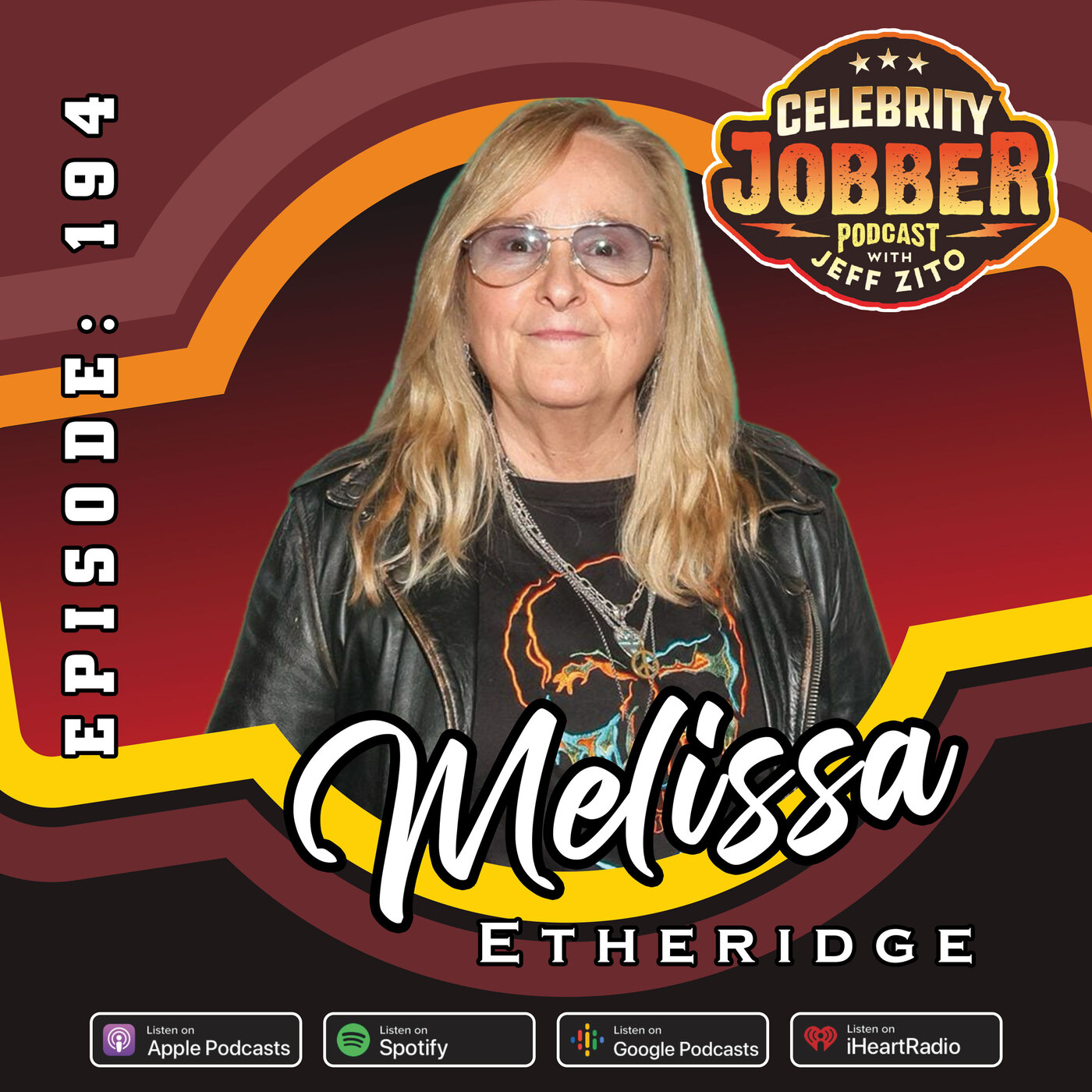
Loading summary
Transcript53 lines
- [00:00]
A
Foreign. Thanks again for checking out another episode of the Celebrity Jobber Podcast. Streaming on Spotify, Apple Podcasts or wherever you listen to podcasts. And if you could please hit that subscribe button. Yes thank you very much. If you could also give us a five star rating. Would love that. And please leave a comment or a review. I was asking people last week on social media they could please leave a review if they happen to listen to the Celebrity Jobber podcast. Thank you so much. I got some great reviews. Frank Valentino wrote. An interesting group of guests and a tremendous host. Great combination. Got another one from Rhino 1070 who writes I don't know how the hell Zito gets the guests that he gets, but it's damn good. Not many can talk the talk like Jeff who's a bit of a jobber himself. Sort of a left handed compliment right there. Thank you Rhino 1070. MrBeach House.com writes awesome to check in and just scroll the latest jobbers. Love the comedians, artists and gross as hell pimple poppers. Ha. She is great even for those with a weak stomach. Ugh. So thank you to everyone who left a comment and or a review. I truly appreciate it. And if you want to check out the past guests and and episodes, you can easily do so by going to celebrityjobber.com please follow us on Instagram celebrity_jobberpodcast and you can also follow on YouTube.com the signce celebrity jobber some really great videos. Great content up there for you. So I'm pretty excited for this week's guest because she's a big rock star and I've never talked to her in my 30 years of broadcasting. You know, we all know a lot of her backstory. She came out as openly gay in the early 90s, which was something a lot of people didn't do back then. She famously had a child with David Crosby who didn't do it the old fashioned way, you know, because Melissa Etheridge isn't into dudes. But David was Melissa's sperm donor. We know all these things about Melissa Etheridge, but really we know nothing about who she was before she was famous. In 1993 she released what would become her mainstream breakthrough album, Yes I Am. Huge songs, I'm the Only One if I Wanted To. And of course Come to My Window. It was a huge album and spent 130 weeks on the chart. She won Grammy Awards. But what about Melissa Etheridge before all of that fame, who was she? Who were her parents? What did they do? Were they musicians? What about Jobs. What did Melissa do before she became a rock star? What was her first job? So how did this all happen? What was her big break? She just came out with a new album recently, just turned 65 years old, and has a big tour coming with legendary country artist Winona. So excited to speak with the legendary Melissa Etheridge this week on Celebrity Jobber, the Celebrity Jobber podcast with Jeff Zito. If you like what you hear, please subscribe, give a five star rating and leave a review. Check out all our past episodes on Apple podcasts, Spotify or wherever you pod. What if these celebrities weren't famous? What would they have become? What was their first job? We're about to find out. Hi, Melissa, good morning.
- [03:30]
B
Hey, Jeff, good morning to you.
- [03:32]
A
Oh, man, I'm so excited to talk to you. I've been in this business for 30 years and I've never talked to you. So, I mean, your songs and that album back when I graduated high school back in 1993, I mean, bam. Can you, can you, can you tell me a little bit about that time of your life when all of that happened at once?
- [03:57]
B
That was a very exciting time. The, the good news is I had started years before that. That big album was my fourth album. So, you know, I don't know how I would be if it was like my first album and I just, boom, had a big hit and then just kind of faded away. I'm really glad I kind of got to ease into it. And it, and it, even the song Come to My Wind about a year to, to run its course. It was, it was a very slow, wonderful transition. So I got to enjoy it very, very much.
- [04:30]
A
Now, Melissa, I'm looking at a little bit of, of your bio, and I see that your parents are extremely educated people. Your mom was a computer consultant. Your dad worked as a teacher at the local high school. So these are very smart people. And I, I can, I can see you starting to play guitar when you're young, eight years old, you start taking lessons, and I can see your folks saying, that's nice, dear. Have an extracurricular, you know. But at what point, I mean, when you told them, mom, dad, I want to be a rock star, were they supportive or they were like, wait, wait, let's talk.
- [05:15]
B
Well, that was a process also. It was one of me falling in love with the guitar. My father actually bought a guitar and brought it home for my older sister and I, I had to beg and plead. They said, oh, you're too young. I was 8 years old at the time. You're Too young. You're too young. But eventually they let me take lessons and I started playing, and that turned into a talent show. And then when I was like 12 years old, 13, all of a sudden, there was a local band that was asking if I would come and do some songs with them. And that was the point where it was kind of like, wait a minute. This is getting real, right? And my father's like, yeah, come on. And my mother's like, wait a minute.
- [05:58]
A
No.
- [05:58]
B
You know, and so it caused kind of a little. Little trouble there for a couple of years. But as my mother, before she passed away, she would always say, well, it turned out all right. Everything turned out all right. So they. They were. My mother, understandably, didn't want her daughter in, you know, bars and clubs when she was a teenager. But my father was always there with me, and he helped me. He would go every single show. And so without that, I wouldn't have been able to be the performer I am.
- [06:27]
A
Right. Wow, that's cool. Though. They. They eventually came around. Mom eventually came around, and dad was there with you in the beginning. That's cool. So. So you're all in music. All in. You never thought. Did you ever think at. At some point in time? Because I know you went to Berkeley, and if, if anybody goes to Berkeley, they are serious about being a musician. It is the best school to go to in the country as far as. If you want to pursue music as a career. Melissa, did you think performing, being a rock star, did you think that was going to be your living when you went to Berkeley? Or did you think maybe, hey, I'm gonna write scores for movies, or I'm. I want to do this. What did you think was going to happen or be your life?
- [07:12]
B
Well, it was the ultimate goal. It was always the. The, the dream. And that never, ever, ever wavered. I remember kind of thinking, well, there's things I can do on my way to my dream. But fortunately, I was able to get work and sing and play and just grow as a musician over the years.
- [07:36]
A
So. So that was your ultimate goal. And I find also when I talk to people like you, big stars, and they get. And they get famous, they all have this one, like, one trajectory. It's like, you know, rock or bust. They don't have a backup plan. You know what I mean? They don't have a backup plan because you're too young. You're too. I mean, that's. You got to be too mature to be like, well, I gotta have a backup plan. When you're talking about somebody in, you know, in high school and college. Was. Was there ever a backup plan if you said to yourself, well, if this music thing doesn't work out, what. What could I do? Ever came across your mind?
- [08:15]
B
No, no, no, because I really, I didn't want to do anything else. I couldn't do anything else. I. And, And I had enough support. I had. I. I could play a small bar, a restaurant, I could do. And I had enough just to day going, all right, this is what I'm going to do. And it just slowly grew that way.
- [08:35]
A
And did you find Melissa back. Back when you were trying to get to where you're at today? It was tougher for. I mean, things are different today. But did you find that uphill battle? You're a woman in this business. It's going to be an uphill battle for you. Was that. I mean, seemed like it was on your mind every. Every day, but didn't affect anything.
- [08:59]
B
Yeah, there was. There was reality, you know, you. When I finally made my first record and we went to our, you know, try to get it played on the radio, we would be met with, well, we're already playing a woman. And so it was kind of rough back in 19, you know, 80, in the 80s.
- [09:16]
A
Yeah.
- [09:17]
B
But, but, but still, it was. It was so real. It was so. There was just enough people who believed in it that it just kept moving forward. And so I really did not want to ever say, oh, I. It's not working. That, that wasn't. That just wasn't an option for me.
- [09:36]
A
Wow. You know, so many people would have been discouraged. So many different points along the way. And I think that's what, you know, it takes a big.
- [09:44]
B
It takes.
- [09:45]
A
It takes that big inner, you know, that you have to. To keep going forward, you know.
- [09:51]
B
Yeah. You know, there. It's not to say there weren't nights I drove up to Mulholland, you know, road and. And looked out and said, why won't this happen? Why won't anybody? You know, I had those moments, but I got back up the next morning and did it again.
- [10:06]
A
Wow. The Celebrity Jobber podcast with Jeff Szeto.
- [10:10]
B
I'm Kiana. And I leveled up my business with Shopify. Once I figured out that Shopify was a thing, I never turned back. I can create a site with my eyes closed. Shopify thinks ahead of us, you know, and it thinks about the customer more than anything. Every day I'm thinking about some other new business, but Shopify is doing it to me because it's so easy to use. It's like, I can't stop. I'm addicted.
- [10:35]
A
Start your free trial@shopify.com the Celebrity Jobber podcast with Jeff Zito. Tell me a little bit about some of the jobs that you had while. While working towards your. Your dream. You had to have some side gigs, right, to pay the bills. So were they all just performing at bars or did you ever have, like a regular job? And if so, I want to know what they were. And your very first job, if you could tell me.
- [11:03]
B
Well, my very first job was actually singing and working, so I was able to do that at a very young age. And it wasn't until my senior year in high school where I actually decided, you know, I want to live like a. Like a high school kid. You know, I, I never had my weekends. I was always working on the. I played in a professional band of these older gentlemen, and. And we would go play. It was very professional. And. And so my senior year, I'm like, wait a minute, I want to go do what all the other kids do before I, Before I run out. And so my. I decided to get a regular job, and it was at the Kentucky Fried Chicken. I was a packer. I was the one that I. I can put together a nine piece, all white, extra crispy meal like you never seen.
- [11:57]
A
Do you learn anything from that job? Is anything that job taught you that
- [12:02]
B
I'll never go to Kentucky Fried Chicken again?
- [12:05]
A
I gotta tell you, Melissa, this is so funny there. I do this podcast, it's called Celebrity Jobber. It focuses on. Is what we're doing, right? It focuses on your first job, your big break, and you are the second person to have the same first job. And it's another famous guitarist who is Warren Haynes from the Allman Brothers Band. His first job was at Kentucky Fried Chicken. I asked him if he learned anything from that job. He said, yeah, I did. I learned that I never wanted to work in fast food. So, you know, I. I find that incredibly, incredibly hilarious. After 200 episodes, I have two people with the same first job and the same answer. So that's awesome. What, what else did you have? Did you have any other kind of gigs that were. That. That when you were working towards becoming Melissa Etheridge?
- [13:02]
B
Yeah, when I first got to Boston, I, I was in school, and then I decided to get a job and I, for some reason, I didn't think about, well, I'm gonna do. I'm gonna go find a job in a lounger. I, I thought I'd have to get just A real job. So I. I was a security guard in a hotel. In a. Not a hotel. In a hospital for a couple months. And that was really hard work. That was, you know, you. You. Yeah, you walk and you. And, you know, I would work the night shifts and stuff, and. And it was tough. And I had about two months of that. And that's when I said, look, I need to. I either need to do music or not. And. And this is going to break me. So I. I knew I was making $7 an hour, and so I went. I took my guitar and I went down to the park street station, which is nice. Subway station in Boston, and I opened it up and I sang songs as the commuters got in and out of this. Out of the subways, and I made $7 in an hour. And that's when I said, okay, I'm gonna do this. And then I did. I ended up walking down the street and getting a job at a restaurant lounge.
- [14:17]
A
Okay. Performing.
- [14:19]
B
Yes. And.
- [14:21]
A
And can you tell me about the time everything changed for you? Can you tell me about. Because this is not an overnight success, right? You. You were at this for such a long time, and I know you got a new album out, but I want to know that pivotal moment where everything changed in your life. Was it a phone call? The hearing your song on the radio, a perform? What was the pivotal moment where everything changed for you? And you look at yourself in the mirror and you're like, this is. This dream is coming true.
- [14:57]
B
Wow. You know, there. It really was just a collection of those things, I would say, if I had to say. The. The biggest was when, after four years of record companies coming to see me at the bars I was playing at in Los Angeles, that Chris Blackwell of Island Records finally walked in. And where other record companies would. Would watch me, and then they'd come back and weeks and weeks, and of course, well, maybe, maybe. And more people come in and see me until they finally said, you know, no, thank you. Chris Blackwell came in here, four songs, and he said, well, I don't know why no one signed you yet. I want you on my label. And that was it. I was on his label.
- [15:40]
A
Wow. Wow.
- [15:42]
B
Yeah.
- [15:42]
A
Oh, my goodness. So here we are. Fast forward to today. New album, big tour with Winona. And I do know there's a lot of personal stuff on this album. Your. Your son passed away from a heroin overdose, and I know there's a song inspired by that experience. Can you tell me a little bit about that? The Celebrity Jobber podcast with Jeff Szeto. I started Ornod in 2013 and we make bike apparel. The best part of Shopify for me is our ability to run the business as essentially none technical people. We're able to admin everything on the back end, front end, and sell things online easily. If Shopify were a bike accessory, I think it would actually be the bicycle. It's the thing that you do the thing on. We run the business on Shopify. Start your free trial on shopify.com celebrity jobber. Your son passed away from a heroin overdose. And I know there's a song inspired by that experience. Can you tell me a little bit about that?
- [16:51]
B
Yeah. One of the songs is called call you now. The. The loss of my son was, of course, a, you know, a devastating thing and. And unfortunately it happens to way too many families today in our world. And I. I knew when I was making this record that I had to. I had to address that. I had to get that emotional situation I had. I had to put it in a song so that I could just put it up there and say, okay, there. There it is, and I can get on with the writing of the rest. So it was the first one I wrote and it's. It's just a statement of. Of unimaginable loss, of how to deal with unimaginable loss and how to. How to come to the point of. Yes, I miss you. I miss you every day. Every time I pick up the phone, I. I think of you. I want to call you, but I can't. And so I'm going to keep you in my heart. I'm going to know that you're in a. In a place where you have no more pain. And. And I'm going to keep a connection of love with you, but I am going to keep on living. I'm not going to roll up and. And die. That. That's. That does no one any good. The rest of my family or myself. And that's what out.
- [18:13]
A
And I think that can definitely help other people. It's very relatable for other people that are going through some kind of tragedy like that and, and help them get over things. I mean, I think it's very brave of you. You know, you've. You've been called brave once or twice in your career, Melissa. Yeah.
- [18:32]
B
Well, thank you very much.
- [18:33]
A
I mean, you know, let me talk about the new album Rise. You can get more information. You can purchase the new album Rise. The tour is the Raised on the Radio tour with Winona. How. How has. How has the. The business these days? The touring, the working with the, you know, coming out with the albums. How's all this changed from the early days in the beginning?
- [19:00]
B
Oh, I've seen our business change so much.
- [19:02]
A
Big time.
- [19:03]
B
It's. Yeah, yeah. Used to be there was the, There was one pipeline, you know, you, you, you finally got a record company that says, okay, I'll. I'll take a chance on you. And then as my manager very smartly told me, he goes, you don't sell the records to the people. You sell the records to your record company and to the radio station, and they sell the records to the people. And so we knew we had to really connect with radio, with the record companies. I played in many boardrooms and things, and, and it was just a. It was a matter of getting people to know and trust that they're going to like this music, that this music is heartland rock and roll. And it's just been a journey of that.
- [19:54]
A
Biggest influences growing up, like who made you Melissa Etheridge? Like, what song, what artist made you really get into the type of music that, that you're into?
- [20:07]
B
Well, I tell you, our, Our new tour is called Raised on Radio. And that is ultimately the truth, man. I, I grew up in the 60s and 70s, and it was a miraculous time of glorious music coming out of the radio. And it was one song after the other, and you could listen to them all in one place. I could, I could hear Tammy Wynette and I. Then I could hear Marvin Gaye, then I could hear Led Zeppelin, then Tommy James and the Shond songs were, were delightful and, and from the soul and R B to country to everything just really, you know, rocked me. And, and it was, it. There were so many songs. I mean, it started with the Beatles and it, it, it keeps going to this day. And it was just. I had a whole early childhood filled with that amazing music and.
- [21:01]
A
The Raised on Radio tour with Wynonna Judd kicks off June 24th in, in Virginia. And you can get all of the tour dates for where Melissa is coming near you on her website, which is melissaethridge.com the album, of course, Rise. Different. Is it different? Is it a departure from anything you've done in the past? Or are we going to be expected to hear stuff along the same lines?
- [21:27]
B
Yes, stuff along the same lines. Yeah. I wanted to go do what I do best, which is to sit down, write a song that I can play on my guitar, just me and you in a room. I could play them for you and do it with my live touring band and, and just Present these songs like I always have. So they're very, it's. You're not going to be surprised. You're going to. It's going to feel like a good friend when you listen to this.
- [21:56]
A
Like a comfortable old shoe, as they say.
- [21:59]
B
That's what my father in law calls me, an old shoe.
- [22:03]
A
Melissaethridge.com for information on the Raised on Radio tour with Wynonna, the new album Rise, available everywhere. Melissa, people can get the new album anywhere and support you, and it's been an honor speaking with you. I haven't talked to you in 30 years in the radio business, which has changed drastically over the last 30 years. So great speaking with you and good luck this, you know, from this point forward.
- [22:34]
B
Well, thank you so much and I look forward to seeing everybody come on out and it's a great night of music.
- [22:40]
A
Thank you, Melissa. Have a good day.
- [22:42]
B
You too. Bye. Bye.
- [22:44]
A
Born in Leavenworth, Kansas, Melissa, the younger of two daughters. Her mother worked in computers. Her father was a teacher at Leavenworth High School. And Melissa started taking guitar lessons when she was eight years old. Her dad bought the guitar for her older sister, but then found out Melissa had the real passion for guitar. And she said it was kind of a process as far as getting mom and dad to be supportive of her choice to become a musician. Educated people, you know, you would probably think that they would push her to go to college, get a degree, you know, and have a real job like normal people have, being a rock star kind of a dream. But they noticed something in her. And as Melissa points out, dad was always there when she was a teenager. He was with her at the bars and the clubs, performing. And mom eventually came around, but she said that support was a process. Couple of great jobs that she had before she became Melissa Etheridge. Her very first job, senior in high school at the kfc. And I thought it was pretty funny, and so did she, that she and Warren Haynes from the Allman Brothers had the very same first job at Kentucky Fried Chicken. And when she got to Boston to attend college at the Berklee College of Music, she got a job as a security guard at a hospital. And she said that was hard work and it was not working out. So she quit that after a few months and found a gig performing at a lounge. That big break that she said, said there was a few of them, a collection of things that happened to her. But it was meeting Chris Blackwell from Island Records, who heard four songs and said, man, I can't believe nobody signed you yet. I want you on my label. She points that out as being the pivotal moment where everything in her career changed, you know, and that happened in like the mid to late 80s. She came out with her debut album in 1988 and the big album, Yes I Am with Come to My Window and I'm the only one that came out in 1993. So a big gap to where she started and that breakthrough album. So definitely not an overnight success. She had time to kind of digest it over, over the years. You know, talked about the tragedy with her son passing away from a heroin overdose and the new song that she wrote about that experience on her new album Rise. And big tour with Winona this summer called the Raised on Radio Tour. You can find all of her tour dates up on her website, melissa atheridge.com you know, I heard from people that Melissa was very difficult to interview. You know, she's a big star. And I've heard from other people that it was, you know, challenging to talk to her, but did not find that at all to be true. Very lovely person. And once again, another great story of who Melissa Etheridge was before she became Melissa Etheridge. Well, again, thank you so much so much for checking out another episode of the Celebrity Jobber podcast. Don't forget to check out our substack account for bonus content. That substack.com celebrity jobber who were these people before they hit big and what did they do? She said she could pack a nine piece white extra crispy at Kentucky Fried Chicken like nobody's business. And a security guard at a hospital said she wasn't very good at that. I think she found her calling again. Her new album Rise and the Raised on Radio tour with Winona. Melissa etheridge.com for more details. Great episode of the Celebrity Jobber podcast and thank you once again for listening and supporting. And until next week, we'll see you then. I'm Jeff Zito.