← Celebrity Jobber Podcast with Jeff Zito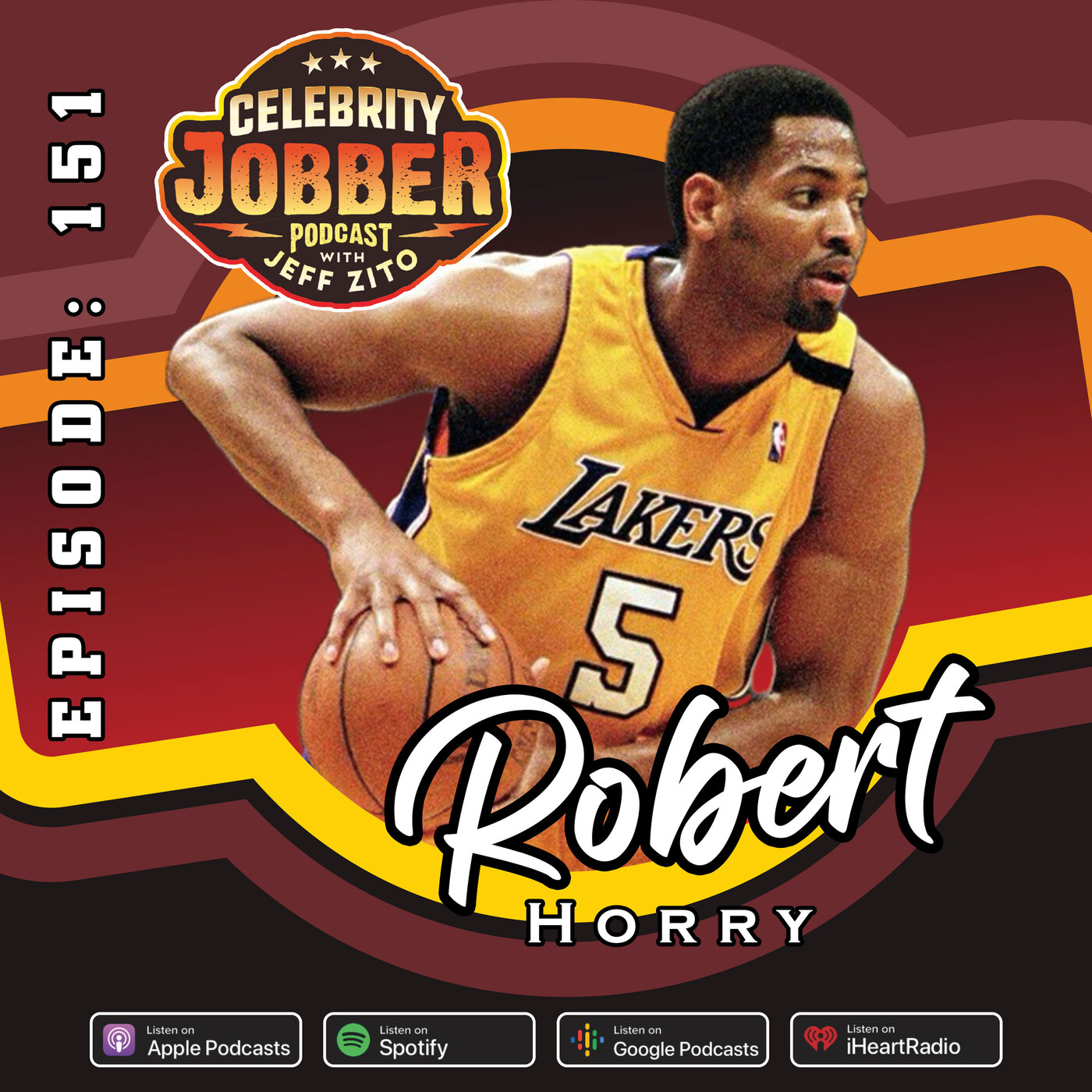
Celebrity Jobber Podcast with Jeff Zito
Celebrity Jobber with Jeff Zito - Robert Horry, aka "Big Shot Bob"
00:32:45
Loading summary
Transcript83 lines
- [00:00]
Robert Horry
Foreign.
- [00:05]
Jeff Zito
And thanks again for checking out another episode of the Celebrity Jobber podcast streaming on Apple Podcasts, Spotify, Iheart. Wherever you listen to podcasts, you can Follow on Instagram, celebrityjobberpodcast and YouTube.com theatsigncelebrity jobber. Who were these people before they became famous? What was their original plan in life and their first job? You know the name Robert Horry, who not only played with the Houston Rockets, but also the Phoenix Suns, of course, the Los Angeles Lakers and the San Antonio Spurs. I don't know if you know this, but Robert Horry has seven NBA championship rings.
- [00:50]
Robert Horry
Seven.
- [00:50]
Jeff Zito
That's more than Michael Jordan. And he won those seven rings on three different teams, which I find pretty amazing. We'll find out where this all started. You know, the NBA wasn't Robert's original plan. We'll find out what the original plan was. Maybe a moment or two that changed his life. He's an NBA broadcaster and he's also the host of his own podcast, the Big Shot Bob Pod, which just so happens to be on the same podcast network as a celebrity jobber. The podcast playground, seven time NBA champ Robert Horry. Big Shot Bob is my guest this week on Celebrity Jobber.
- [01:33]
Advertisement Voice 1
Corporate megastores are spending millions lobbying D.C. politicians on one sided policies that send small businesses tumbling. They want to enact harmful credit card mandates that take resources away from your local credit union and community bank, leaving Main street businesses with less access to credit, making it harder for your family to pay for everyday goods like gas and groceries. Tell Congress to guard your card and oppose the Durbin Marshall credit card mandates.
- [02:01]
Advertisement Voice 2
Paid for by electronic payments Coalition. The Celebrity Jobber podcast with Jeff Zito. If you like what you hear, please subscribe, give a five star rating and leave a review. Check out all our past episodes on Apple Podcasts, Spotify or wherever you pod. What if these celebrities weren't famous? What would they have become? What was their first job? We're about to find out.
- [02:24]
Jeff Zito
Robert. I mean, first of all, seven ring. I had no idea they had seven rings. I mean that's pretty, pretty unbelievable.
- [02:33]
Robert Horry
Seven rings, 16 seasons. Seven rings. I was hoping for a little bit more, but.
- [02:40]
Jeff Zito
Really?
- [02:40]
Robert Horry
Yeah, I mean it was a great journey, man. I was lucky, man. I played with some great players, man, and we had great chemistry. More importantly, you know, because I played with great players before and had no chemistry. If you don't have no chemistry, man, you know you don't win, man, no matter how good the coach is. Yes, but as a players, you gotta like each Other, is it all about.
- [02:59]
Jeff Zito
Just liking each other off the court?
- [03:01]
Robert Horry
I think it's liking people on the court, and sometimes it can cross over to off the court because you see how a lot of guys, like, man, we would do a lot of team dinners together, we would do a lot of things like that. But more importantly, man, this, this is what I thought was the best thing. After practices, we will literally sit in the locker room and talk to each other and just shoot the shit, man, to be honest with you.
- [03:24]
Jeff Zito
And so you had to know like the guy's moves, right? You had to be like, okay, yeah, Sprewell, I know he's going to do this. I don't even have to look at him, and I know where he's going to be. Is it. Was it stuff like that, just knowing the guys so much to what they were going to do before they did it?
- [03:41]
Robert Horry
Yeah, pretty much, man. You know, that comes from a lot of practice. You know, if you look at NBA now, a lot of people don't practice a lot. It's the weirdest thing because they all about low management. The guys need to stay off their feet, but yet then the guys are going to work out for an hour to two hours doing their own thing. It was like, that's the craziest thing ever, you know? So for me, you look at how much practice time we used to spend together, you know, we would practice and we would, you know, the second team will go hard at the first team, the first team will go hard, the second team making each other better. And then we'd get in the locker room, we'll laugh and talk about it. And if we lose, we say we kicking your butt the next day, right? So many things like that, competitive nature. And then we might, you know, some of us might go to lunch together, you know, but more importantly, when we're on the road, we all, we all, we try to do as many dinners together as possible on the road. Because you're on the road, it's just you guys at home, you got your family's deal, you got your wives, you got your kids, you got your girlfriend, whatever it may be. So that's a lot of things that we did, man.
- [04:38]
Jeff Zito
Rewind a little bit, if you will. Robert, growing up in Andalusia, Alabama, when did basketball become like a major part of your life?
- [04:51]
Robert Horry
I think it hit me in the eighth grade, because in eighth grade, that's when I started getting pretty good. My brother, who's older than me, he's three years older than me. You know, we all and you in small towns, like, you got your little crew, you got your little clique, and everybody in your crew is around your age. And since there was a three year separation, my clique and my brother clique was different. And they wouldn't let us play with them. They always play against because they had, they enjoyed kicking our butts and making us cry and all this kind of stuff, right? And so by the time I was in the eighth grade, we, you know, my brother's about to. He's going into his senior year, I'm going to, you know, junior. I mean, his junior year going to my eighth grade year, we starting to kick their butts sometime, you know, even, you know, out of 10 games, we might win one. And so at that point, you know, my brother was like, man, you gonna play with me now? You know, instead of playing against him. And that's when it just started clicking. And by the time I got to ninth grade, you know, I'm like, you know, my one goal was like, man, we can win a ninth grade championship. Because they had those back then in Alabama. But my high school coach was like, nah, you playing varsity. I'm like, I don't want to play varsity. I want to win a championship, you know. And so I played varsity as a freshman and I was just like, each game I got better and better and better. And by the time I was a sophomore, I'm averaging 23 points a game. As a sophomore in high school, going from averaging like nine points because I learned so much. And that's why I tell kids now they all want to play all these AAU games. I said, you get more out of just getting your boys and going to a local gym and playing all day. Because you go to AAU game, you might play one game a day, and you got 12 other guys that got to play. You know, you might not get that much run.
- [06:41]
Advertisement Voice 2
Right?
- [06:41]
Robert Horry
You think about, you took all that traveling to get to where you're going, and you get a total of maybe like 20 minutes of play while you're there. But you can take that travel money, go up, rent out a gym and play for like six hours of total game time in one day compared to 20 minutes.
- [06:58]
Jeff Zito
Right?
- [06:59]
Robert Horry
And parents don't look at it like that. And I think that was the best thing for me. Yeah, I even noticed that with my younger son, the more playing time he got, the better he got, right?
- [07:09]
Jeff Zito
I. I could see, I totally understand, you know, parents today though, they think that they, their kid is an advantage if they're on The AAU team or on the travel team. You know, there's this. There's this thing out there that people think that high school's not enough. That, you know, the scouts or whoever, they're not coming to a high school game to look at your son. They're going to an AAU game to look at 10 kids. And that's. I guess that's the misnomer with sports today compared to when we were younger, growing up. So you're. You're playing. You're just developing on your own. You're getting good on your own. Was bask. So you said your brother a few years older than you. I know your dad was a military. Your dad was a military man. Was he. Was he a. Was he a baller? Did he. Did he was. Did he have anything to do with basketball and you.
- [08:02]
Robert Horry
No, no. It was all. It was my. My brother because at the time my mom, my dad was separated, my dad was living in Columbia, South Carolina. I'm in Analujah, Alabama. And it was just in the streets with my friends. I was. You know, when they say it takes a village, it really. My street was we. You know, nowadays, it's called a cul de sac. We lived on a dead end.
- [08:22]
Jeff Zito
Yeah, a dead end where the street.
- [08:24]
Robert Horry
Just stopped and everybody. It was like. It was literally 12 kids in that neighborhood all around the same age. It was two down. It was like, below my house was two more houses. It was three kids there. Across the street from me was two kids there. And we all just would get in the street. We played baseball, we played basketball, we played football. Football. We just played whatever season it was, is what we did. And it was like. And we were all competitive, and we all knew who was going to be good at what. Abc to my best friends, he was going to be good at football. He was one of the fastest dudes you would ever see. And then I was going to be good at basketball. And I had another friend who was a really good baseball player, and we were all, like, would just, you know, determine, okay, we playing football, we determine to kick your butt because you're the best football player, you're the best basketball. You determined to kick your butt. And that made the competitive nature came out, and we just laughed about it and had so much fun competing, man. It's just, you know, you want to beat someone's butt so you can have the bragging rights, right?
- [09:21]
Advertisement Voice 2
The Celebrity Jobber podcast with Jeff Zito.
- [09:24]
Advertisement Voice 3
This is the story of the one as head of maintenance at a concert hall he knows the show must always go on. That's why he works behind the scenes, ensuring every light is working, the H Vac is humming, and his facility shines with Grainger's supplies and solutions for every challenge he faces. Plus 24. 7 customer support. His venue never misses a beat. Call quickgranger.com or just stop by Grainger for the ones who get it done.
- [09:55]
Advertisement Voice 2
Celebrity jobber.
- [09:56]
Jeff Zito
You got drafted. Were you a junior when you. Were you a sophomore or junior when you went into the NBA? You didn't get your degree.
- [10:02]
Robert Horry
But I was a senior.
- [10:04]
Jeff Zito
You were a senior, but you didn't get your degree, though I was a senior. Your degree. Just a few years ago you went back and you got your degree. I think that's so admirable.
- [10:14]
Robert Horry
Correct?
- [10:15]
Jeff Zito
Was that like something that stuck out in the back of your mind? Was mom like in the back of your mind saying like, hey, man, didn't get your degree? I know you're successful, big shot Bob, but what made you go back all those years later to get your degree?
- [10:29]
Robert Horry
You know, you know, the job wasn't finished. And my whole thing is when I, when I left, I. When I went to college, I noticed my first two years I was taking a lot of classes and I was like, man, this is stressing me out, man. So I put myself on a five year plan. I said, I ain't got to pay for it, so why should I be in the hurry to graduate, right? So I put myself on a five year plan and by the time I was a senior, I. If I would have had another fifth year, which I, you know, I thought I was. But I got drafted in the NBA, so I left college and. But I said that because I had like maybe five classes to take before I graduated, even when I was in college, right? But when I went back to NBA the first year, it was weird because the summer school, you had to offer professional courses and they offer them every other year. So the first year I had, you know, when I went back, they didn't offer them that year. Then my second year, we won a championship. I wasn't trying to go back to school, I was partying, to be honest with you. And then the third year, we, my other league, I won it. And then the fourth year when I was going to go back, I got traded. So that was, you know, preoccupying my mind. So after four years removed from college, I was like, man, forget this. And then Covid came about and I was like, I already had been talking to all the professors and I Mean, the guidance counselor and everybody I need to talk to about finishing my degree. And I said, you know what? I'm gonna do it. And Covid hit. And it was just the perfect time, right? I'm like, oh, crap.
- [11:55]
Jeff Zito
It was.
- [11:56]
Robert Horry
It was sitting at home doing that anyway. Absolutely perfect.
- [11:59]
Jeff Zito
Either on the golf course or get your degree, right?
- [12:03]
Robert Horry
Exactly. I don't play golf, so it worked out perfectly.
- [12:06]
Jeff Zito
What about if basketball didn't work out? I mean, was there anything in the back of your mind when you were playing for Alabama back then? What was, like, the direction you thought you might go into in this world if not for professional basketball?
- [12:25]
Robert Horry
It's funny. You said my backup plan was the mba. My plan A was to be a teacher.
- [12:30]
Jeff Zito
Oh, wow. Really?
- [12:32]
Robert Horry
Yeah. Yeah. Because coming out of, you know, high school and college, everybody in my mom's side of family are teachers, educators. So my whole thing was, okay, I want to be a teacher, and then I want to be a coach. And so that was my whole thing. Coach, teach, coach, teach. And then next thing I know, you know, I'm like. My sophomore year in college, I got ranked as one of the top 10 small forwards in the country. And my whole perception changed. I went from, like, when I talked about. Remember, I was killing myself with all the classes. I went from, like, taking, like, six courses a semester to taking, like, three. And my coach, like, you know, if you flunk one, you're gonna be ineligible. I'm like, dude, you think I'm gonna flunk, right? Heck, no.
- [13:17]
Jeff Zito
Right?
- [13:18]
Robert Horry
And so it took. And so I started focusing more on basketball and everything, and then it just. It just worked out that way.
- [13:24]
Jeff Zito
That's incredible. I wasn't expecting that, because usually the kids. Everybody's got a dream. They want to be in the NBA. Obviously, you had to dream, too, but you seemed, like, mature enough at that age to be realistic. You like coaching. I know that you've coached your. Your son's AAU team, right?
- [13:40]
Robert Horry
Yeah, I did that just because the parents talked me into it. I'm like, I don't want to coach, but, like, because I was. I was doing stuff with them on the. Anyway, just trying to educate them and get them, you know, to think basketball, not just play it. And the next thing you know, the past. I. I started out with my son and two of his friends, and then one day, I look up, I got. Damn, the whole team in here. And it's like, you should just coach the team. Like, I don't want to coach the team. I said, because this is. Hey, I I get paid to do this stuff, I do it for free. And like, I don't think you guys gonna pay me what I want. It's like we just, we'll just pay for everything. So I had, I probably had the first AAU team that was free. Everybody, every kid did everything free because everything was sponsored, everything. I'm like, every kids weren't paying no money, you know, and it was just fun for me. They had a great time, which was the most important thing to me.
- [14:27]
Jeff Zito
You look at this whole career of yours, Robert, where I mean, we're talking about seven NBA championships, which still blows my mind. Do you think there was a big break or the moment that you really consider, you know, everything happened for you? Was there a moment like that in your career?
- [14:47]
Robert Horry
It was multiple moments. You know, even in high school where you, you miss a free throw, you lose a game and you walk in the locker room, all your teammates are crying because you just, you know, got kicked out of your own, your own Christmas tournament and, and then you go to college and you, you think you're the best player on the team and you're mad because you're not getting enough shots and you get into it with the coach and you get kicked off the team. And it's just so many things that, you know, put you in perspective. Is it about you or is it about we? And I think that the moment where I realized is about we was those two collective moments, you know, because I think about my skill set and what I could have did in NBA. You know, I, if you look at my first couple of years, I had plays run for me, I'm averaging like double figures and all of a sudden you go to the Lakers and you, you know, you say, oh, you're a good spot up shooter. That's what we're going to regulate you to. You can only do spot up shoot. And it kind of, you say, okay, you don't want that, but can you complain about it? Because you're winning and you say, okay, but we're winning. And so you don't want to, you know, stir the pot. And it's like from those moments together, you're like, okay, well is it, is it about you or is it about winning? What's more important to you? And I said, okay, if we win, you automatically gonna get paid, you know, but I'm also saying the back of my, but if you put up numbers, you don't get paid, you know, but you know, so I just was like to say, okay, let's just do the ultimate sacrifice and do what's important for the team and not what's important for me. And it's just. You just sacrifice so much of your skill set to, like, you know, be the best for your team. And I think for me, that was the one thing that I hung my hat on, that I sacrificed so much of my game in order for a team to win. But the bad part about that is, after a couple of years, that's who you become. And you start working on things that make you better as a player. You just start working on things that make you that perfect part of what the team needs.
- [16:39]
Advertisement Voice 2
The Celebrity Jobber podcast with Jeff Zito the Celebrity Jobber podcast with Jeff Zito.
- [16:45]
Jeff Zito
Was there a particular shot, a game? When did that whole thing start to where Robert Horry is big shot Bob Clutch?
- [16:55]
Robert Horry
It's probably when I got the day I got the nickname back in my junior year. Oh, not junior year. My third year in the NBA, where we planned San Antonio spurs, who was. Who pretty much owned us throughout the regular season. We were. They were 50 against us, and we playing them in the playoffs in game one, you know, I was able to, you know, be 0 for 8. And then I knocked down shot at the end of the game, now one for nine. And then all of a sudden, Craig Kilborn starts calling me big shot Bob. And so that's how it started, man. And the thing about me, my rookie year, I made a big shot against Seattle SuperSonics to take the game into overtime in game seven. That shot never gets talked about because we went on to lose that game. So it doesn't, you know, it can't get brushed under the rug.
- [17:44]
Jeff Zito
Right?
- [17:45]
Robert Horry
And so. But there's little things like that that you. When you sit down after a season, you start analyzing not just your past season, but previous season. You realize, oh, man, I can play this game. You know, I just need people to believe in me. I need to believe in myself. And so all those moments collectively just started coming together. And then you think about 95, you win your second championship. You go down in Orlando, and you averaging 20 and 10 in Orlando series, and nobody talks about that. You're like, oh, I'm coming to tomorrow. That confidence just hits you. You think about my third year in the league. I've already won three already in two championships.
- [18:20]
Jeff Zito
Wow.
- [18:21]
Robert Horry
I almost, you know, they even mentioned my name of being MVP of the Orlando series. And like, that's just all confidence booster. So you go into your second year, your fourth year with the Rockets, you playing good. You're averaging 14 points a game. You're old and all of a sudden you get traded and then your life changes, you know, and that. And it goes to show you how if you have a coach that believes in you, a coach that's going to run plays for you, your game is going to be totally different from a coach saying, yo, we have Shaq, we have Eldon Campbell, we have Kobe, we have Nick Van X, so we have Eddie Jones. Someone has a sacrifice. Oh, you the new guy. You gonna be spot up shooting, play defense because you know, your game is not predicated on getting offensive plays because you like to play. And so. And at the moment, that's who I became, you know, the guy who's the spot up shooter, you know, big shot Bob. But, you know, if I could have to do all over a part of me, the selfish part of me, the ego part of me, we want to tell these coaches, man, F that you gonna run some plays for me because I need to get some shots.
- [19:22]
Jeff Zito
I mean, I just think there's. There's a certain type of guy, you know, that comes in off the bench on a baseball game, you know, as a pinch hitter in the bottom of the ninth, you know, coming off the bench cold. Not like that was you because you were in the game. It seems like that's a special type of mentality. Do you even think about this? Is it like this is a pressure shot or are you just in the moment and you're. It's not even going in, going through your mind?
- [19:48]
Robert Horry
Yeah, you know, I don't, I don't think about it. I just do it. You know, it's. You spend so much time in the gym working on your craft that you, you don't think about anything but doing what you need to do to be successful and be good and be better and all this kind of stuff. So for me, I've always been the guy to just go out and just do what's natural. I play the game, I do what I need to do to get better. I keep, you know, trying to, you know, talk to my teammates, you know, get them to understand, you know, me as a person, me is who I am. Because that communication part that you have is so important, you know, because I talked to like, you know, you think about it, you. You catch Shaq alone, you talk to them, you get a sense. And so you catch Tim along, you catch Dream alone. The guys who are the anchors of your teams that, you know, you get to know them say, yo, man, how do you like this, what do you think about what's the plus of team? Yada, yada yada. And for me, I've always been that leader in the sense of just talking to my teammates. You know, you get all these guys who are rah rah guys and they pound their chest and do this like, that's just anti sweet. That's just for show. That's for you. You know, when you see a guy beating his chest and yelling at his teammates, that's not for his teammates, that's for him. Right? And for me, you get a guy who, pulling the guy to the side, you know, talking to a guy in his ear, that's for that player, that's for the team as a whole. Because now you telling that player to be in a certain situation that can help the team.
- [21:19]
Jeff Zito
Look, I don't want to throw anybody under the bus. I'm a Yankee fan. A rod when he played for the Yankees and it was in the playoffs and it counted and it was like it was time. It was do or die. A Rod's up, it was a strikeout. But on the other hand, if it was do or die, you're in the playoffs, ninth inning, scores tied and Jeters up. You knew the guy was going to come through for you.
- [21:39]
Robert Horry
I remember when we get those guys in the locker room, they, you know, they get up and they start doing these speeches and I'm looking at, man, excuse my name, I'm like, man, shut the up and sit down. I'm like, you ain't doing them but putting somebody to sleep, right? And so, and I, and I, and I, and you know, I know everybody attitude ain't like mine, but that was my whole attitude like that. Just take a guy, pull him to the side and talk to him. You know, I think, and I think sometimes people forget a calm voice is a perfect time during a storm to get you in the, in the right position to be successful, right?
- [22:12]
Jeff Zito
Three different teams, seven rings. Is there a favorite team that you just think about like the guys you just, just were, you were. The chemistry you're so in tune with. Is there one team that stands out one season, one year?
- [22:26]
Robert Horry
No. You know what? It's, it's so weird. I think about who I am as a person in my career. Each team represented the perfect time in my career. You know, my first four years with Houston, it was about learning, you know, learning from vets. Think about learning from Vernon. No dream oldest. You know, learn about the business of basketball from Tree, Rollins and Sleepy Floor. And then, you know, you get to a point where you're like, man, I want to be noted for my craft. What better place to be in the LA Laker uniform?
- [22:53]
Advertisement Voice 2
Right?
- [22:53]
Jeff Zito
Right.
- [22:54]
Robert Horry
And. And you playing in front of Jack Nicholson, Denzel Ross and Halle Berry, all these people, and you get to know these people. You're meeting the execs from Disney, all that sitting on the sideline, you meet these people, you get to talk to them, and all of a sudden you're like, man, I'm tired. I just want to play the game and go home to my kids. What better place than San Antonio, right? You think about it. San Antonio wins championship. If nobody ever talks about them, you know, they probably the most underrated, untalked about team ever in sports, but they win chips, and that was perfect. Like, I just want to play and win and go home. And that's who I was in San Antonio. So my whole career was kind of just like the teams I were on were perfect for me to be who I was and to help me, you know, become who I am to this day.
- [23:32]
Jeff Zito
Perfect timing for you on all of those things, right?
- [23:36]
Advertisement Voice 2
The Celebrity Jobber Podcast with Jeff Zito.
- [23:40]
Advertisement Voice 1
This is the story of the 1. As a custodial supervisor at a high school, he knows that during cold and flu season, germs spread fast. It's why he partners with Grainger to stay fully stocked on the products and supplies he needs, from tissues to disinfectants to floor scrubbers, all so that he can help students, staff, and teachers stay healthy and focused. Call 1-800-GRAINGER Click grainger.com or just stop by Granger for the ones who get it done.
- [24:10]
Advertisement Voice 2
Celebrity Jobber Post basketball.
- [24:12]
Jeff Zito
You know, great career and going to broadcasting and now a successful podcast.
- [24:18]
Advertisement Voice 2
What.
- [24:19]
Jeff Zito
Where did that come from? When. When did you get the idea to do Big Shot Bob the Pod?
- [24:24]
Robert Horry
You know, it's. It's. It's weird when you talk about, you know, the podcast and Rob Jennings and B Dog. Without them, I wouldn't be doing it because it was something that I always thought about doing. When you're doing a podcast, you got to have the right people with you. Trying to think of the guy's name right now. Crap. You know, he. He had approached me with doing a podcast about two, three years before we started it. And I like, man, I want to do no podcast. He said, man, you got a lot of stories to tell, yada, yada, yada. And then he. It was. What was this? I can't think. No, no, no.
- [24:57]
Jeff Zito
You'Re talking about Norm. Norm Pattis from Westwood One, Norm Patties.
- [25:01]
Robert Horry
Yeah, yeah, this is talking about it. This goes back to all the connections you talk about when you meet as a Laker.
- [25:07]
Jeff Zito
Yeah, he's a big. He's a legend. He a legend in the radio broadcasting biz and Westwood One and all that. So, yeah, you're talking about a, A big timer, for sure.
- [25:19]
Robert Horry
Yeah. And that's the badge of playing for the Lakers. You get to meet so many influential people like this. And so I did, he said, and it, like everything else, I did the podcast and I did education all during COVID Covid made me try different things I never thought I would do. And I think doing the podcast helped me so much as far as translating over to, you know, my broadcasting. Because you get to talk about sports more, but you want to know about sports more because when I first started doing Laker television, I only watched the Lakers, you know, now I watch a little bit, A little bit more. I watch more teams so I can be more educated. So when we do talk about the podcast, which kind of, you know, trickles over into what I do for the, for the Lakers or for Spectrum, I.
- [26:02]
Jeff Zito
Should say big shot Bob. The podcast, it's on the podcast Playground. And it's everywhere. Everywhere. You listen to podcasts, whether it's Apple Podcasts, Spotify, iHeart, wherever. It's on all of them. And my last question, Robert, is your very first job. What was your very first job ever? First paycheck?
- [26:31]
Robert Horry
If I tell you, not gonna believe me because they always say black people can't swim. I was a lifeguard.
- [26:41]
Jeff Zito
You are a life. Your very first gig was a lifeguard. And how old were you?
- [26:47]
Robert Horry
I was a lifeguard. I was in my. I was my junior year in high school, going into my senior year. And so what we would do is we had the thing called play school. And it was, it was held for. It was pretty much for black families that went to. Their kids could go and hang out when their parents were at school. And it was held at our middle school. So. And my, my high school coach, Richard Robinson, who I love to death, who's probably, you know, he is probably the integral part to my success because he was just always on me. And so you. What I would do is you had to be there in the morning at 7 o', clock, you feed the kids breakfast, you would play games with them, you organize, you do softball, but all kind of sports, right? And then at 12 o', clock, I will leave to go to the local pool, which was considered the black pool. We'll go to the pool, I will clean up everything and then the pool will open up from one and I'll be there from one to five as a lifeguard. And then at five o', clock, I would close the pool down, clean it up. And so what I would do is I would jog home. And so that year, going into my senior year, I was in the best shape of my life because I would swim then, you know, my mom would be doing whatever she do. I said, no, I just jog home. I jog home. I was in great shape. So basically I was a lifeguard for one year. That was my first paycheck.
- [28:05]
Jeff Zito
That is awesome, man. Big Shot Bob the Podcast and seven time NBA champ Robert Horry. Big shot Bob Clutch, baby. So great talking to you, man. You're a cool guy. I really appreciate the phone call and good luck with, with the podcast. Good luck with, with everything, man. And good luck to your son at ucla. I'm keeping an eye on him.
- [28:30]
Robert Horry
Thanks, Jeff, man. I appreciate it, man. It's been fun.
- [28:32]
Jeff Zito
And we're, we're on the same podcast network, the podcast Playground. Big Shot Bob the Pod. Listen wherever you listen to podcasts. Seven time NBA champion. Can you believe that? More rings than Michael Jordan. Guy is a very humble man. Grew up in a small town in Alabama. Went to play college ball for the Crimson Tide for the legendary coach Wimp Sanderson. You know, when I talked to him about his big break or his moment that changed him, it was kind of funny because he brought up two negative circumstances. One, when he was in high school, missed a free throw, got bounced out of his team's own Christmas tournament. Kids crying in the locker room, talked about being in college and having it out with the coach and getting thrown off the team. Those moments were really important for Robert as they showed him that it was about the team and he had a particular role to play. And I think understanding that actually really helped him in his career, which enabled him to be a great role player and succeed 16 years in the NBA. Big Shot Bob, he's known as being clutch and he was all through his career with the Houston Rockets. Played a year for Phoenix. Of course he played with the Lakers and finished his career in San Antonio. You know, I thought it was interesting that his backup plan was the NBA. His original plan was to graduate from college and become a teacher and a basketball coach from a whole family of teachers. And that was his original plan and just went back to Alabama to finish up his degree during COVID Really cool at the end of the interview because I almost forgot to ask him what his very first job was. Being a lifeguard and talking about that job and the community and how much it taught him about life. I thought was a really, really cool guy, was a really nice guy, humble guy. And again, don't forget to check out his podcast, the Big Shot Bob Pod, Apple Podcast, Spotify, I heart wherever you listen to podcasts. And the same with the Celebrity Jobber Podcast. We are everywhere. So please listen, stream, subscribe, would love a five star rating and please leave a review. We've got past episodes Posted online@celebrityjobber.com can hear all of our past guests from the last 150 episodes and I thank you so much once again for listening to another episode of the Celebrity Jobber Podcast. Until next week. I'll see you then. I'm Jeff Zito.
- [31:16]
Advertisement Voice 3
This is the story of the One as head of maintenance at a concert hall, he knows the show must always go on. That's why he works behind the scenes, ensuring every light is working, the H Vac is humming, and his facility shines with Grainger's supplies and solutions for every challenge he faces. Plus 24. 7 customer support. His venue never misses a beat. Call quickgranger.com or just stop by Grainger for the ones who get it done.