Podcast
Cellmates by Lumicity
Hosted by Mike Norton and Jackson Lyons · EN
Cellmates provides a focused, expert-led exploration into battery tech, energy and storage in the US renewable energy sector - whether materials, manufacturing, testing & analytics, business models, policy, or recycling.
Co-hosts Mike and Jackson talk with the brightest minds in battery tech; featuring in-depth conversations with engineers, founders, researchers, and experts shaping the energy transition.
Key topics include battery innovation, grid-scale storage, clean energy policy, supply chain challenges, and the role of energy storage in decarbonization.
www.linkedin.com/company/lumicity/
17episodes
Episodes
Newest firstAll episodes
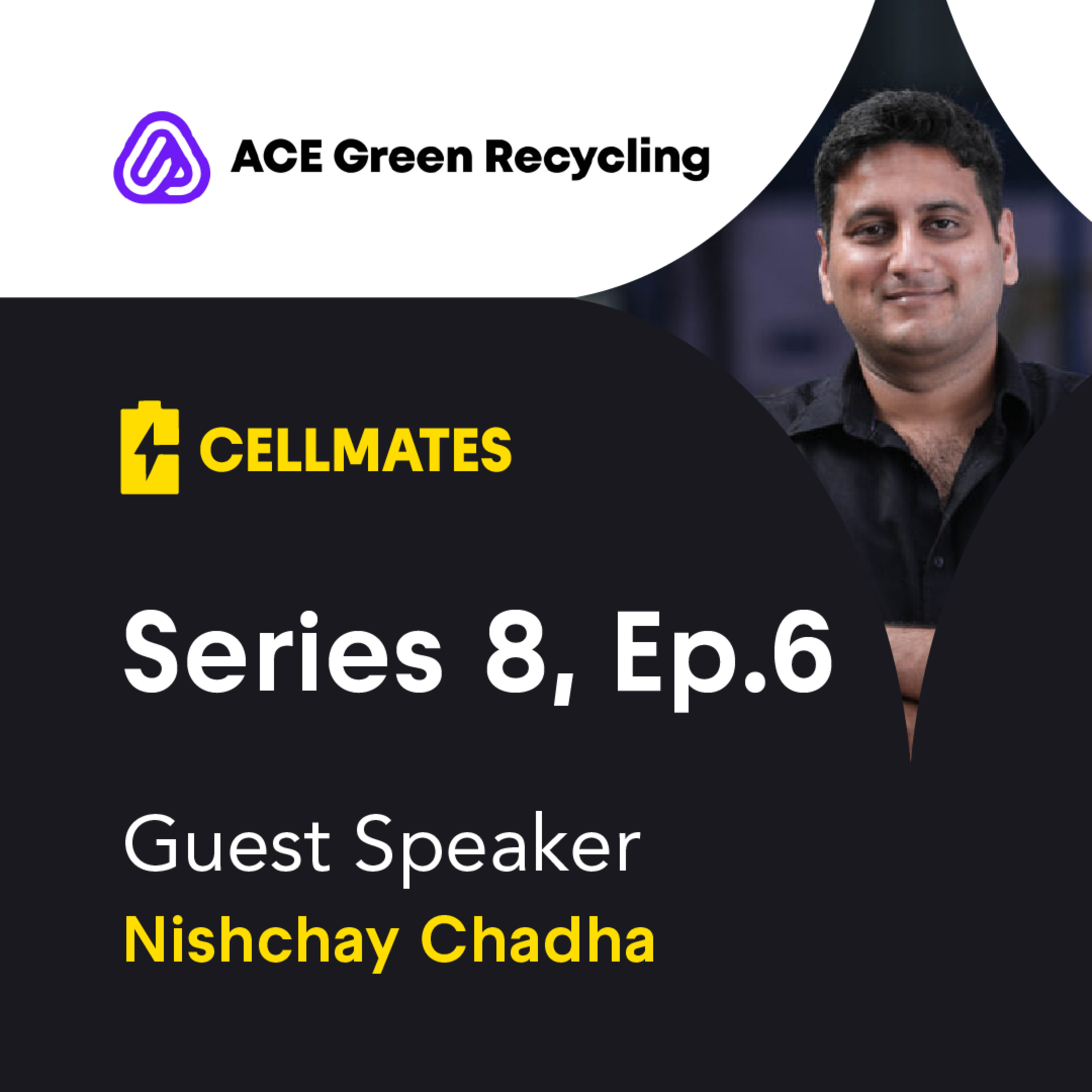
Nishchay Chadha, Ace Green Recycling — Cleaner Battery Recycling and the Case Against the Smelting Furnace
3w ago00:35:42Tap to summarizeBattery recycling startup Ace Green Recycling: building a cleaner, modular alternative to the smelting process that's been polluting the industry for decades.Mike Norton and Jackson Lyons sit down with Nishchay Chadha, co-founder of Ace Green Recycling — a company that's been quietly doing battery recycling differently since 2019, and is now building its first US facility in Texas.Nishchay's path to founding a battery recycling company started at the bottom of an IIT engineering ranking list, took him through commodity trading in Singapore, global recycling operations, and a chance encounter with a technologist co-founder who'd spent six years developing a process to eliminate the smelting furnace entirely.The result: a room-temperature recycling process, no toxic slag, organic food-grade chemicals - and a business model built on licensing and supply chain before anyone else thought that was the right order of operations.In this episode:Why smelting is the defining problem of the battery recycling industry - and why most players haven't solved itHow Ace Green eliminated the furnace and runs a room-temperature process that produces no toxic solid wasteThe Texas facility: Phase 1 at 30,000 tonnes per year, scalable to 150,000 tonnes - and why getting it operational is 90% of their current energy as a companyWhy Ace Green switched from NMC to LFP recycling two and a half years ago - before the rest of the industry caught upThe uncomfortable truth about battery recycling investment: investors want billion-dollar spreadsheets, and that's pushed startups toward oversized plants that can't get feedstockWhy nobody is a competitor in this space - and what it actually looks like to run a recycling business as a platformThe human side of recycling: the children Nishchay saw working in global recycling operations, and why that's what actually drove him to start the companyOne of the most grounded, opinionated conversations of Series 8.Nishchay Chadha | LinkedIn(4) ACE Green Recycling, Inc.: Overview | LinkedIn
Transcribe →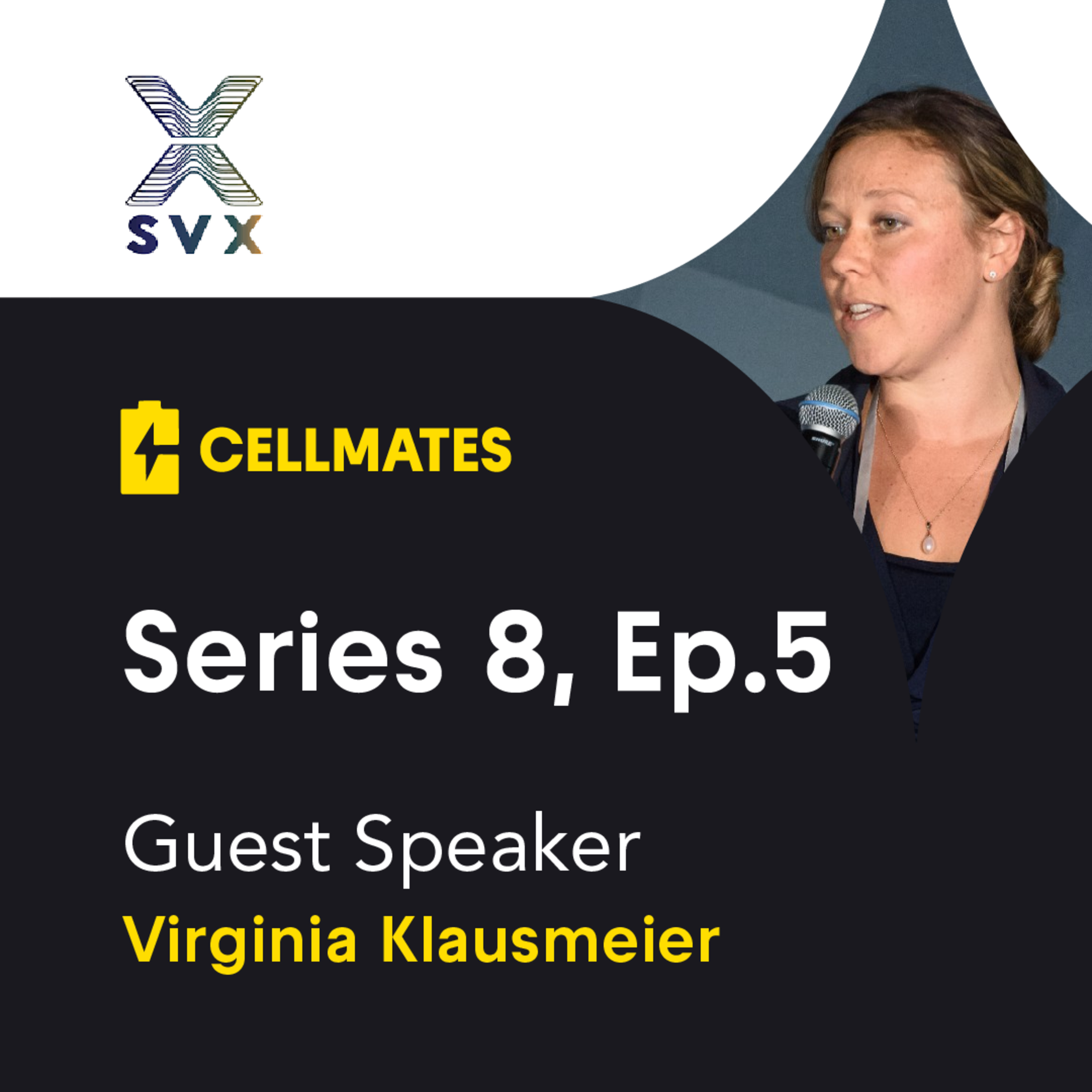
Virginia, Sylvatex - Building Cathode Materials Before Anyone Knew They Mattered
Jul 700:26:50Tap to summarizeSylvatex founder Virginia on building a battery cathode materials company ahead of the curve - and surviving long enough to be proved right.Mike Norton and Jackson Lyons close out Series 8 with one of the most personal and most commercially sharp conversations of the whole series. Virginia, founder of Sylvatex, has been building in the cathode active materials space since before it was considered interesting. What she's built, and how she's built it, is a case study in patience and conviction.Virginia grew up in Bangkok, surrounded by diesel pollution at a level she describes as equivalent to smoking a pack of cigarettes a day. Her father was a chemist who pioneered low-emissions diesel fuel and biofuels. She started her career in medical devices. She walked away from all of it - a secure, well-paid, hard-to-get career - to start Sylvatex based on her father's work, after he passed away.That's the foundation. Here's what she built on it:Why cathode material is the highest-cost component of any battery - and why almost the entire global supply chain runs through a single region in ChinaSylvatex's manufacturing-first, chemistry-agnostic approach: designed to work with locally available feedstocks, scalable to any region, using off-the-shelf equipment rather than novel machineryWhy battery materials should be thought of as commodities, like petrochemicals - and why regional production is the only way that makes long-term senseHow Sylvatex is positioned to qualify for IRA tax credits that most cathode manufacturers can't access — because their process is genuinely disconnected from Chinese precursor supply chainsWhat it looks like to survive the hype cycle without chasing disproportionate capital - and why that positions them better now that the bubble has burst"If you're on the right side of history, you always win the long game."Virginia is one of those founders who operates at a civilizational scale while staying completely clear-eyed about the next milestone. This is a conversation worth your time.Virginia Klausmeier | LinkedIn (36) Sylvatex (SVX): People | LinkedIn
Transcribe →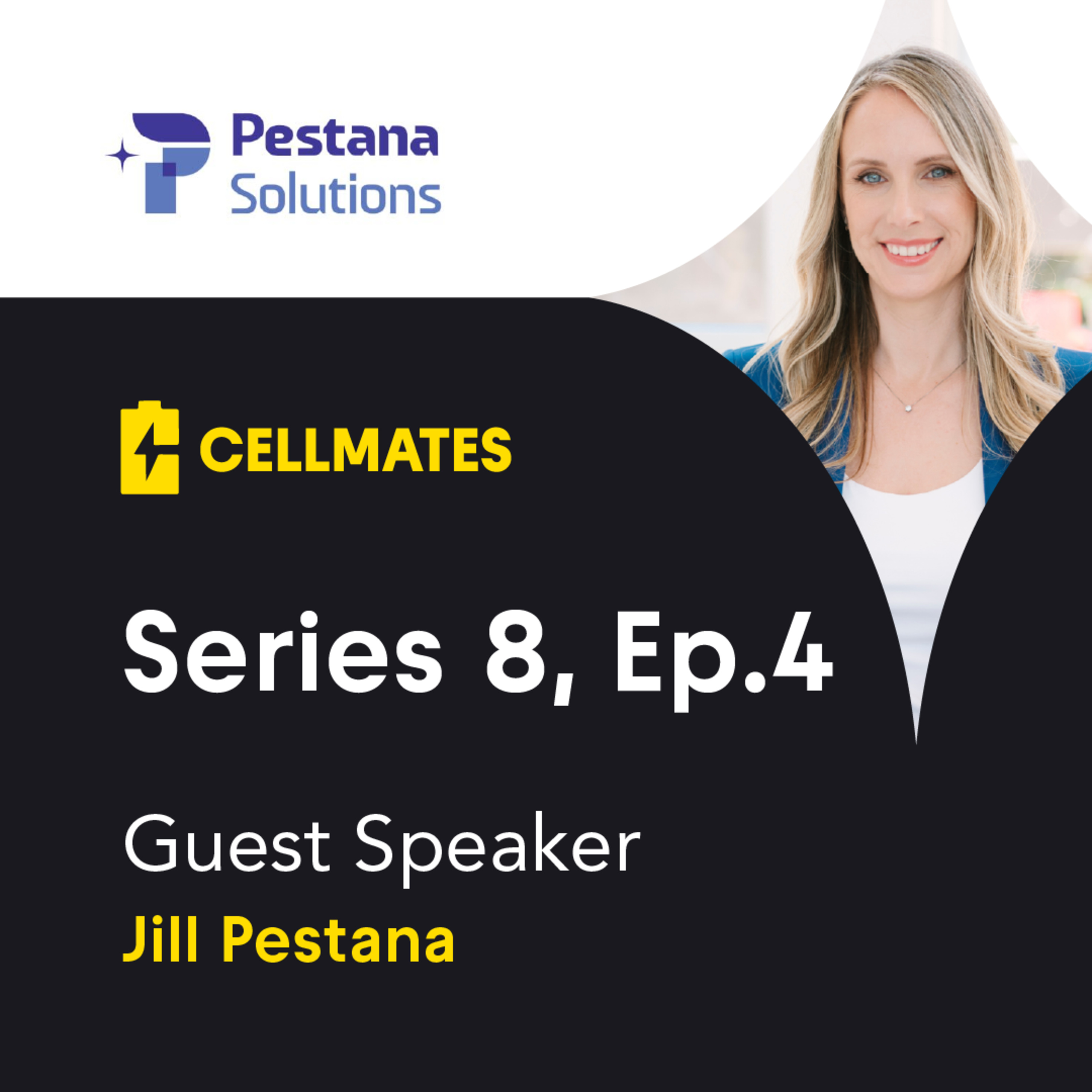
Jill Pestana, Pestana Solutions — Why Communication Is the Battery Industry's Missing Infrastructure
Jun 2300:35:26Tap to summarizeBattery industry consultant Jill Pestana: 15 years in the field, and one clear conviction - communication is as critical as the technology.Mike Norton sits down with Jill Pestana, founder of Pestana Solutions - a strategic advising firm helping battery companies translate complex technology into messages that move investors, customers, and partners to act.Jill's story is one of the most interesting in Series 8. Physics undergrad. NASA intern. Boeing. A pivot into electrochemistry and material science once she realized that batteries - not fuel cells - were going to define the energy transition. Years as a senior scientist working on silicon-dominant anodes, publishing patents, building expertise. Then Accenture, leading their North American battery consulting team. Then the moment where she had to choose: keep saying no to the battery companies knocking on her door, or start her own firm.She started her own firm.In this episode:Why communication is the missing infrastructure in the battery industry - and why it matters as much as the technology itselfHow Jill built one of the most recognized personal brands in the battery space - by accident, starting with a YouTube channel in 2018 before anyone else was doing itWhy 2025 wasn't a bust for the battery industry - it was a reset, and 2026 is where we find out whose plans actually holdThe Nano Battery Courses platform launching this spring - a lithium-ion fundamentals course designed to compress five years of industry learning into seven hoursHer role as Director of Research & Programming at NAATBatt, and the career pathways work happening across the US battery belt right nowWhy the battery industry needs to think of itself as a community - and what it looks like when it actually doesThis is a different kind of Cellmates conversation. No scale-up challenges or seed rounds - just an honest look at the human infrastructure the battery industry is still building around itself.Jill Pestana | LinkedIn (36) Pestana Solutions: Overview | LinkedIn
Transcribe →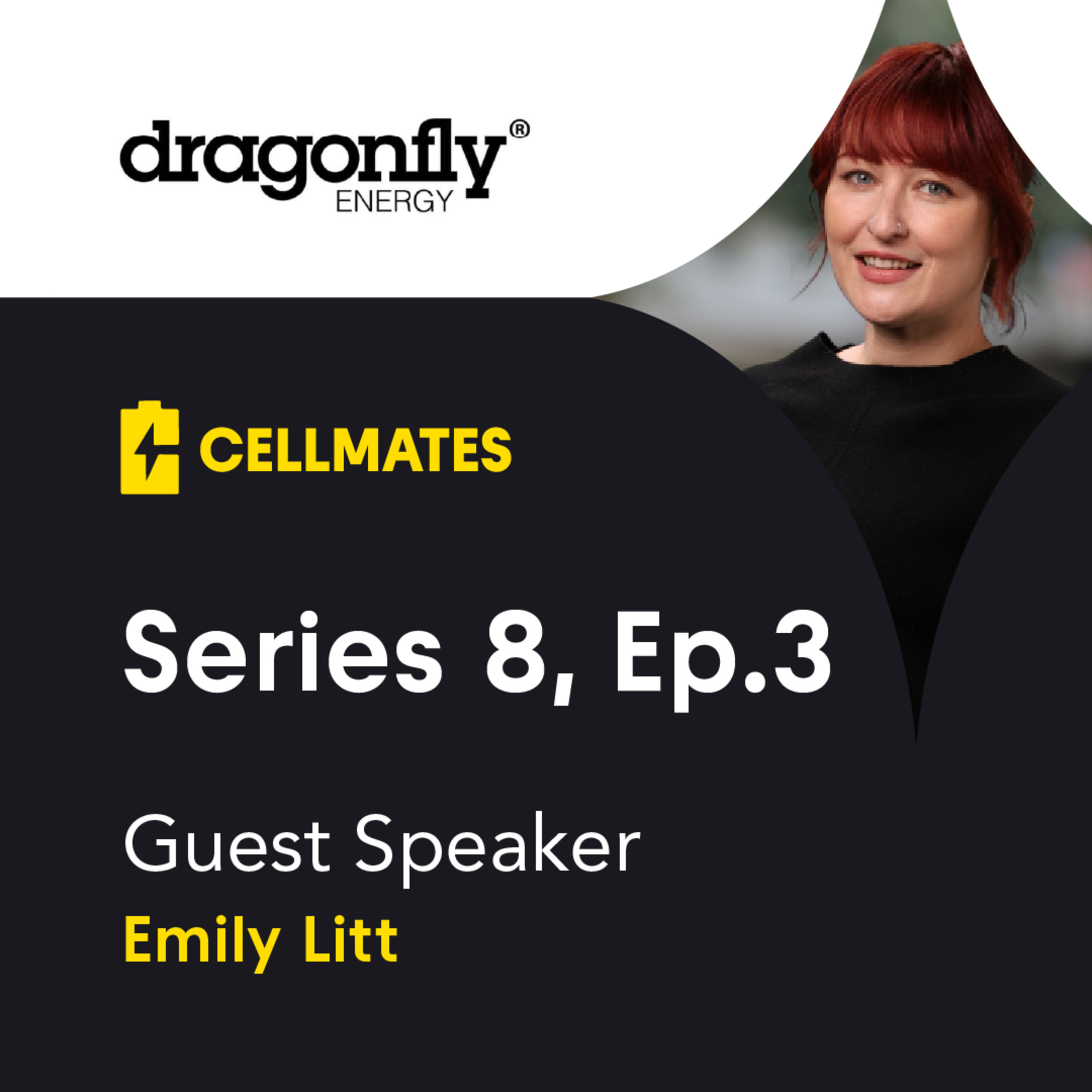
Emily Litt, Dragonfly Energy — Safer Batteries and the Road to Solid-State
Jun 900:23:36Tap to summarizeDragonfly Energy's Director of Product Development on building safer lithium-ion batteries - and why solid-state is the only real end goal.Mike Norton and Jackson Lyons sit down with Emily Litt, Director of Product Development at Dragonfly Energy - a Nevada-based battery company that's been making lithium-ion packs for off-grid applications since 2012, and quietly building toward something much bigger.Emily's background is anything but linear. A decade leading sales and marketing teams, then a deliberate decision to retrain in materials science because she wanted to work on something that genuinely mattered. She joined Dragonfly as an intern, held every role in the R&D lab, and is now directing product development for a publicly traded company with a patented dry electrode manufacturing process and solid-state batteries on the roadmap.In this episode:Why Dragonfly's patented dry electrode process - which eliminates toxic solvents from battery manufacturing - was always designed for solid-state, not just cleaner lithium-ionThe one word that drives every product decision at Dragonfly: safetyHow understanding what's happening at the electrochemical level inside a cell is what makes genuinely innovative product development possibleWhy the Lithium Loop forming in Reno, Nevada is one of the most exciting developments in US battery supply chains right nowWhat it actually means to work at a company where your opinion counts even as an intern - and why that culture translates into better productsDragonfly's take on the US supply chain challenge and why vertical integration mattersPlus: Emily's honest perspective on the non-linear career path, and why the skills she built outside of tech turned out to be some of the most valuable she has.Emily Litt | LinkedIn (36) Dragonfly Energy Corporation: Overview | LinkedIn
Transcribe →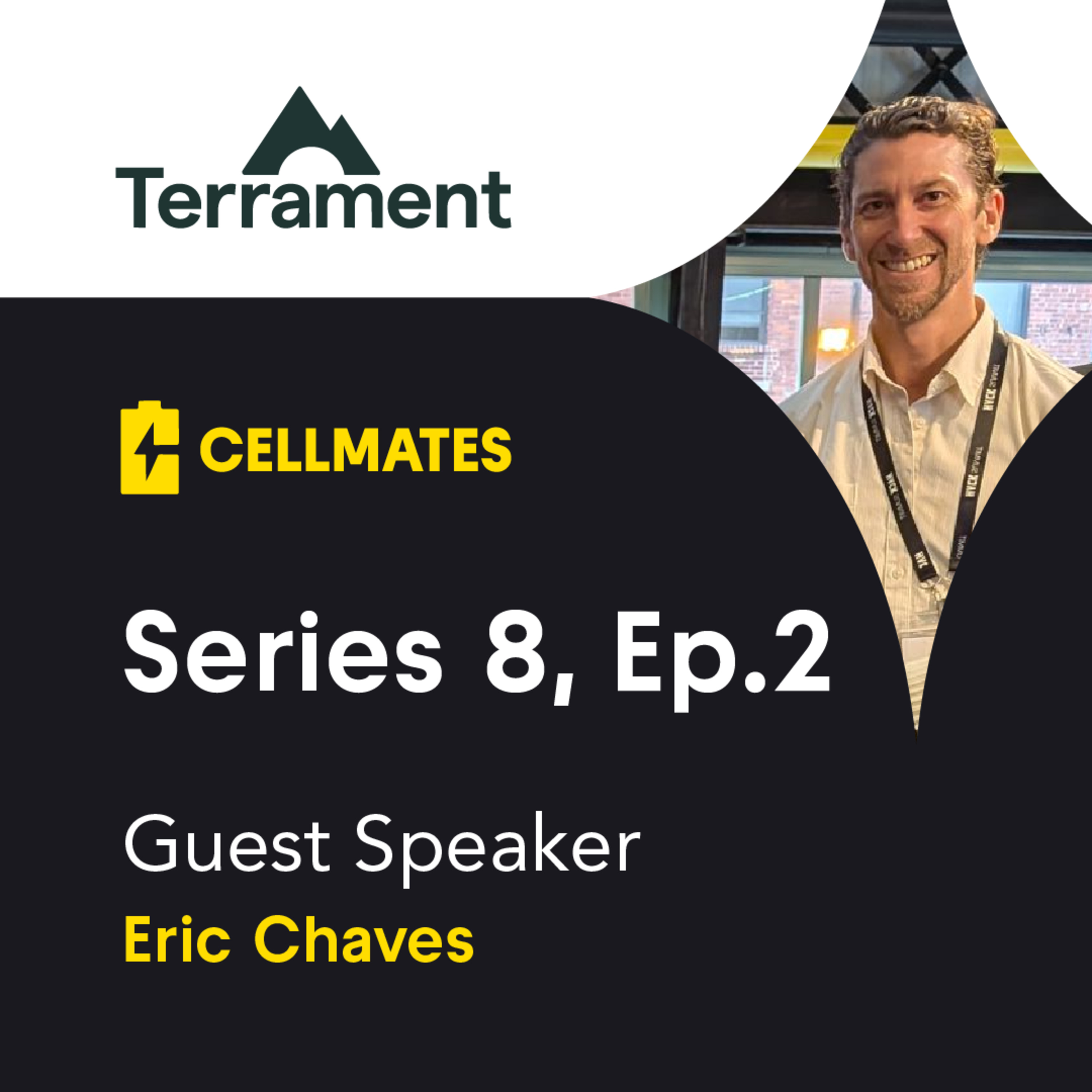
Eric Chaves, Terrament — Gravity Storage and the End of the Grid Waitlist
May 2600:22:25Tap to summarizePumped hydro is 95% of the world's energy storage. We're running out of mountains. So what comes next?Mike Norton sits down with Eric Chaves, founder of Terrament - a company building large-scale, long-duration energy storage that replicates what pumped hydro does, but without needing rivers, reservoirs, or geography on your side.Eric's path to founding Terrament is genuinely unusual: architecture degree, industrial design, a decade in software, and then a moment of deliberate research where he asked himself what the single most important unsolved problem in energy actually was. The answer pulled him toward gravity storage - and a solution that's both ancient in principle and entirely new in execution.In this episode:Why pumped hydro still dominates global energy storage - and why we can't build much more of itWhy lithium-ion hits a hard cost wall beyond 8-10 hours of duration, and what the grid actually needs insteadHow Terrament uses deep underground shafts and a modular train of weights to replicate the physics of pumped hydro — buildable almost anywhere with suitable geologyThe AI data center energy crisis: grid connections are now backlogged 5+ years, gas turbines the same - and why Terrament can be built right on-siteWhy across-the-aisle political support exists for what Terrament is building - energy is universalThe grant process, building research partnerships, and what early-stage looks like when you're validating a technology that's genuinely never been done at scalePlus - Eric's honest take on the administration's impact on the energy transition, and why he's still optimistic.Eric Chaves | LinkedIn (36) Terrament: Overview | LinkedIn
Transcribe →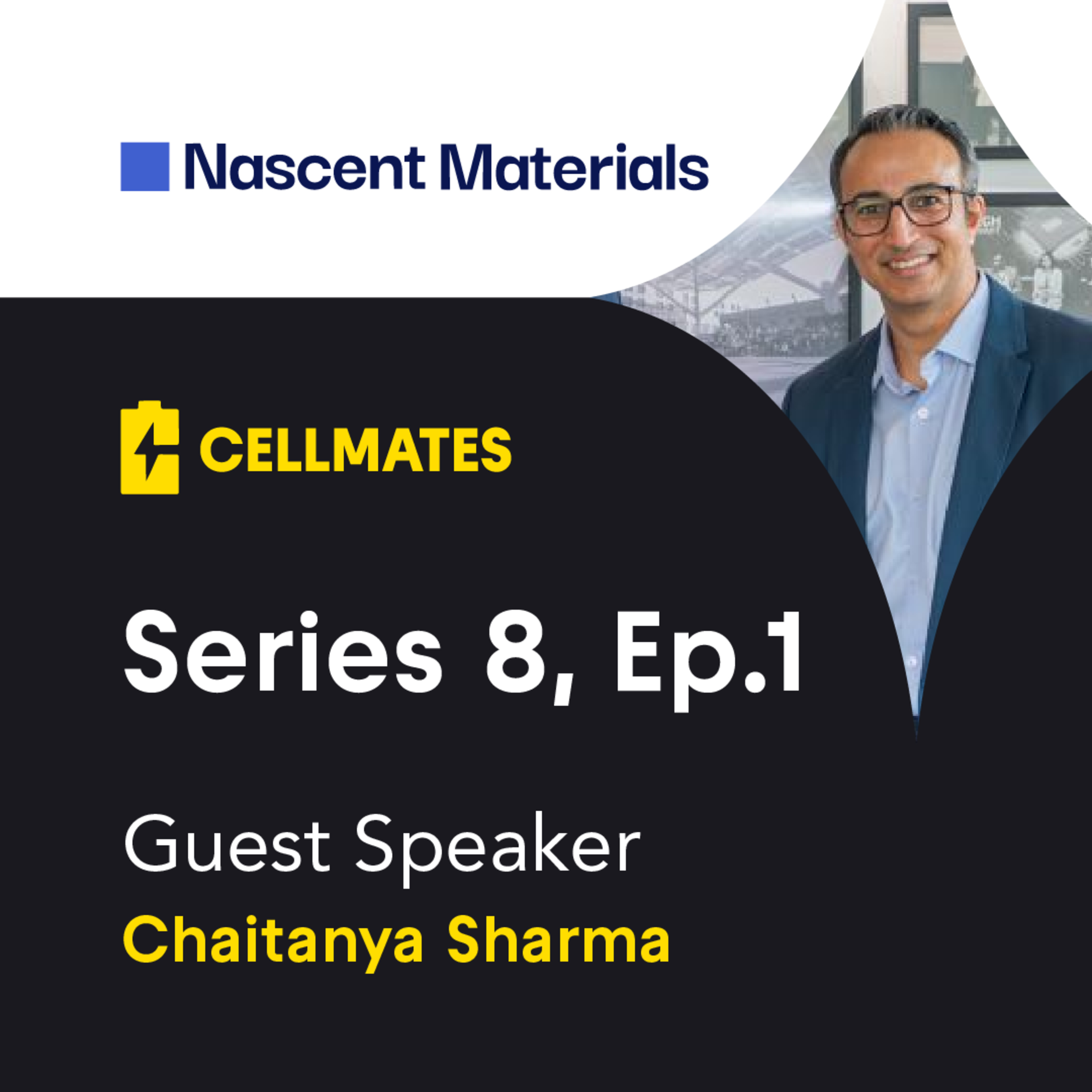
Chaitanya, Nascent Materials - Building the Battery Supply Chain the West Actually Needs
May 1200:30:59Tap to summarizeBattery cathode materials startup Nascent Materials: founded by a former Tesla Gigafactory engineer fixing the supply problem he saw from the inside.Mike Norton and Jackson Lyons kick off Series 8 with Chaitanya Sharma, founder and CEO of Nascent Materials - a battery cathode materials startup based in Newark, New Jersey, that just closed its seed round.Chaitanya's CV is unlike most founders in this space. He was one of the first engineers hired at Tesla's original Gigafactory in Sparks, Nevada - the facility where the term Gigafactory was literally coined. From there: a stint at Lithium Americas working on novel lithium extraction from soil deposits in Nevada, then co-building Imperium 3 New York - a ground-up Gigafactory startup in upstate New York.Every step pointed to the same problem: getting hold of consistently high-quality cathode materials is one of the hardest things a battery startup has to do. Nascent Materials exists to change that.In this episode:Why materials control ~80% of a battery cell's cost - and yet get a fraction of the attentionThe brutal reality of scaling up from lab to production - why a process that works perfectly in a small container can fail completely in a larger oneWhy the Western world can't simply copy the Chinese manufacturing model - the raw materials, labor structures, and government support systems are fundamentally differentHow Nascent is designing cathode materials with the end-use case embedded from day one, drawing on Chaitanya's experience running factories that consume these materialsClosing a seed round in a tough investment climate - and why the technology spoke for itselfWhat it actually means to be a CEO: speaking every department's language and aligning your whole team behind the missionIf you work in battery manufacturing, materials supply chains, or you're building a deep tech startup and want a masterclass in thinking from the ground up - this is the episode.Chaitanya Sharma | LinkedIn(35) Nascent Materials: Overview | LinkedIn
Transcribe →CIBI Episode 7: What’s Next for CIBI
Dec 1600:31:17Tap to summarizeIn this closing episode, we sit down with Dean Hossein Haj-Hariri to reflect on the major themes of the series and look ahead to the future of CIBI. We cover:Key learnings from across the seriesWhy the Carolina Institute for Battery Innovation is central to South Carolina's energy strategyThe power of partnerships and ecosystem buildingA vision for the future of US Battery InnovationCIBIUniversity of South Carolina
Transcribe →CIBI Ep.6 - Phenogy and the Power of Partnerships
Dec 200:34:32Tap to summarizeThis episode spotlights Phenogy, with CEO PeterBraun and Director North America Suzanne Dickerson,exploring how industry partnerships accelerate energy storage innovation.CIBIUniversity of South Carolina
Transcribe →CIBI Episode 5: Strategic Partnership Spotlight: Siemens
Nov 1800:30:13Tap to summarizeIn this week's episode, we speak with Sam Phillips, Digital Strategies Lead at Siemens, about the company’s role in driving innovation at the intersection of research and industry. We cover:CIBIUniversity of South Carolina
Transcribe →CIBI Episode 4: Building South Carolina’s Clean Energy Ecosystem – Inside SC Nexus with Cristina Paredes
Nov 400:26:12Tap to summarizeThis week's exciting episode spotlights SC Nexus, a key player in building the collaborative ecosystem surrounding CIBI. We talk with one of the most informed and influential women in South Carolina, Cristina Paredes (Executive Director of SC Nexus) covering:How SC Nexus connects research, industry, and investmentThe strategic importance of ecosystem thinking for energy innovationSouth Carolina's role in strengthening US clean energy leadershipCIBIUniversity of South Carolina
Transcribe →