
Podcast
CEO Sales Strategies
Hosted by Doug C. Brown · EN
Do you want to dramatically increase your sales revenue and have faster company growth? Do you want your business to run smoother, lessen your stress, and be a happier owner or executive? If you are an entrepreneur who wants to scale your business sales by millions, this show is for you!
Welcome to the CEO Sales Strategies Podcast, where America's number one sales revenue expansion expert, Doug C. Brown interviews CEOs with $5M plus companies to uncover and share actionable tips and strategies behind their bulletproof sales strategies.
Is your current sales growth frustrating you? Are your sales numbers so imprecise that you cannot make accurate sales forecasts? Do you think your sales teams or salespeople could do better in finding prospective clients and/or selling more with higher profitably? Want to enhance your hiring process to consistently produce top sales performers for your teams? Do you wish you could sell more to clients with larger revenues?
If you have experienced any of these problems, you are not alone. Many companies find themselves stuck in a futile struggle to gain more revenue and profit, get frustrated with their salespeople and sales teams, and find themselves mired in stress, burnout and even hopelessness. You may already own or run a multi-million-dollar business, but it takes quite another leap to turn your company into a major industry player worth tens of millions, or even hundreds of millions of dollars.
Could there be something you can do about your pitching strategies? How is your sales process looking? Are you hiring the right people in your sales teams? How is your internal talent development? What does your company culture look like? Are your salespeople accountable enough for their numbers and performance? Most importantly, are you in the right mindset to be able to scale your business exponentially? There are but some of the numerous factors in your business that may be holding you back from growing your company beyond its current worth.
How badly do you want to finally see a change in your quarters? Will you do whatever it takes to get out of that bind and take your business on a trajectory to become something bigger? Are you sick of waiting at the back of the line to be on par with the A-players in your industry? Are you willing to challenge your beliefs, change your mindset, and take steps to optimize your processes?
If you are, then you have come to the right place. There is no better way to learn how to increase your sales than to take it from the people who have gone through the process themselves and succeeded. In this podcast, Doug sits down with owners and CEOs of top-performing companies, who share their failures, struggles, secrets, and processes that are all part of their phenomenal rise beyond the $5 million marks. This is your chance to take these loads of insider information and apply them to your own business!
There is no better person to lead you through this learning process than your ...
36episodes
Episodes
Newest firstAll episodes
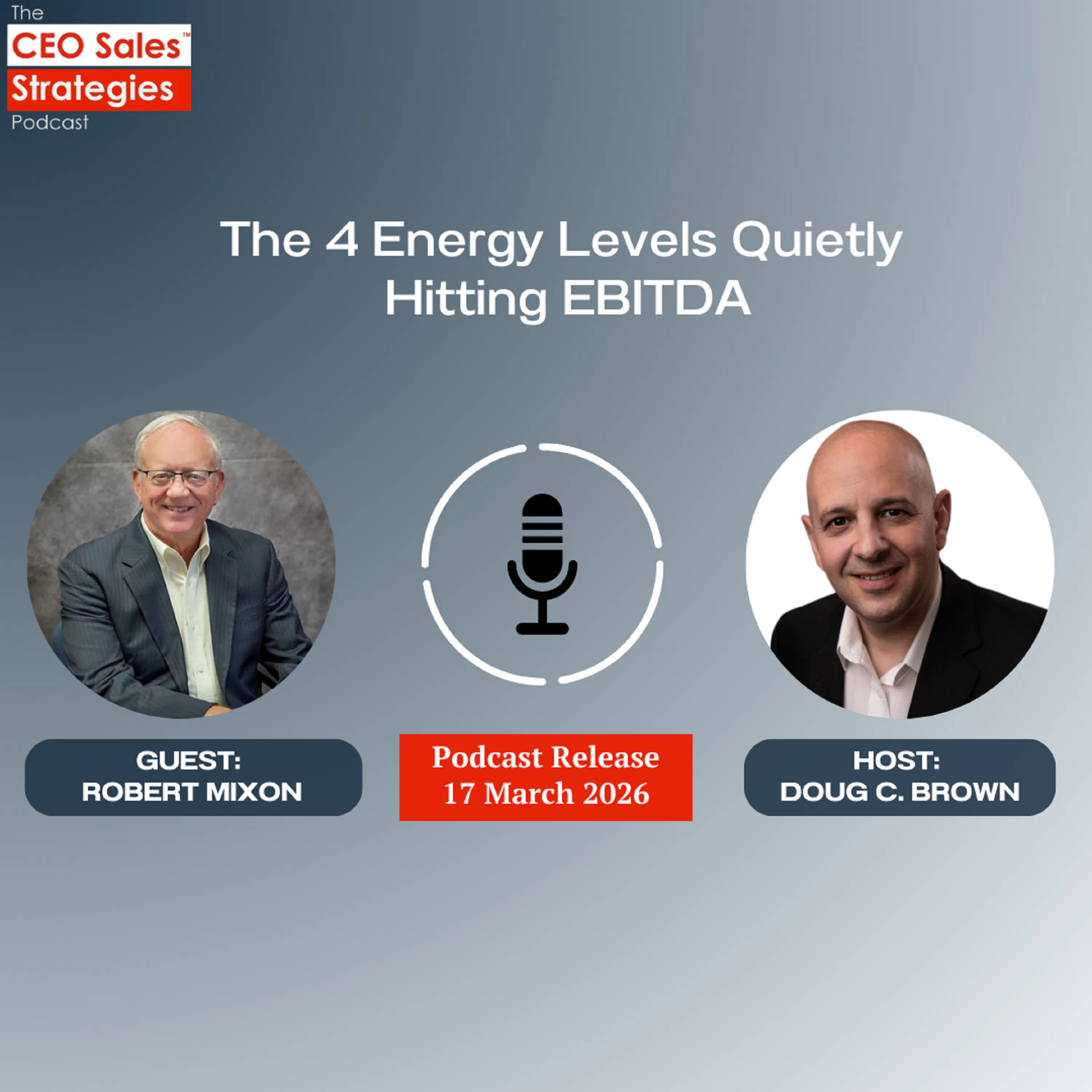
The 4 Energy Levels Quietly Hitting EBITDA
Mar 1700:34:02Tap to summarizeBurnout rarely looks expensive at first. Then it starts showing up in cash flow, EBITDA, and decision quality. Most founders treat balance like a time problem. The bigger problem is what depleted leadership energy is already costing. When physical, mental, emotional, and spiritual energy start breaking down, clarity narrows, patience shortens, and recovery slows. The damage usually begins before anyone calls it burnout. What follows is rarely dramatic at first. It appears in judgment, in how pressure gets carried through the organization, and in the quality of decisions made when the stakes are highest. By the time the impact is visible in performance, the pattern has often been compounding for longer than the CEO realized. Robert Mixon brings the perspective of a retired U.S. Army Major General who led in high-pressure environments where resilience, recovery, and decision quality had real operational consequences. Learn more about your ad choices. Visit megaphone.fm/adchoices
Transcribe →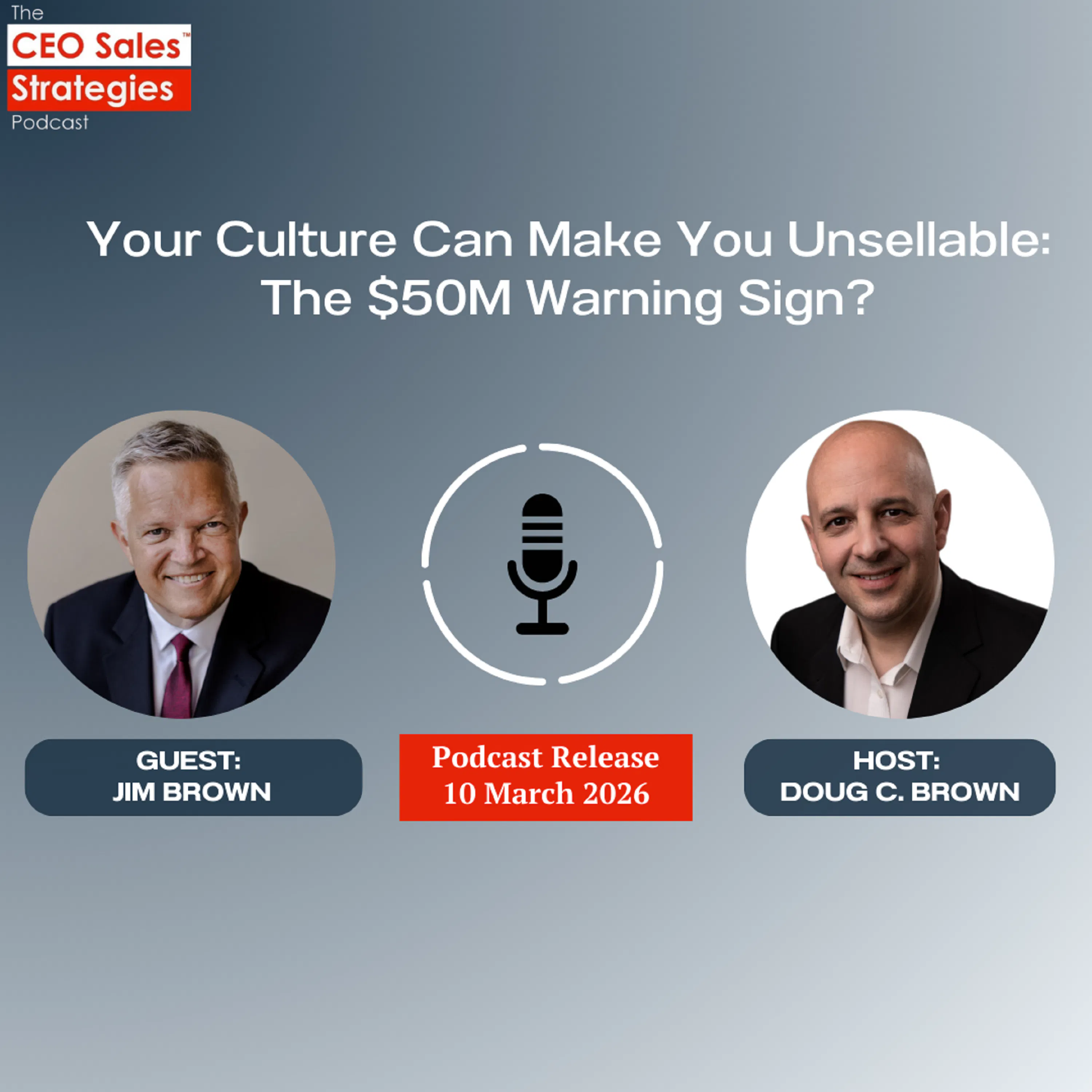
Your Culture Can Make You Unsellable: The $50M Warning Sign?
Mar 1000:40:27Tap to summarizeWhen growth is “working” but the business feels heavier every month, that isn’t burnout — it’s leakage. Avoidance turns into operational drag long before revenue forces the conversation. When accountability gets selective, follow-up drops, decisions slow, and differentiation disappears. You don’t get beaten by the market — you get commoditized by your own execution. That drag doesn’t just feel bad. It quietly re-writes EBITDA and margin while the leader is often the last one to hear what’s actually happening. Jim Brown brings the buyer lens: what most teams call “culture” is a performance multiplier — and when the CEO becomes the bottleneck, key-man risk compounds fast. He’s seen $50M companies become effectively unsellable because the business can’t run without the leader. Learn more about your ad choices. Visit megaphone.fm/adchoices
Transcribe →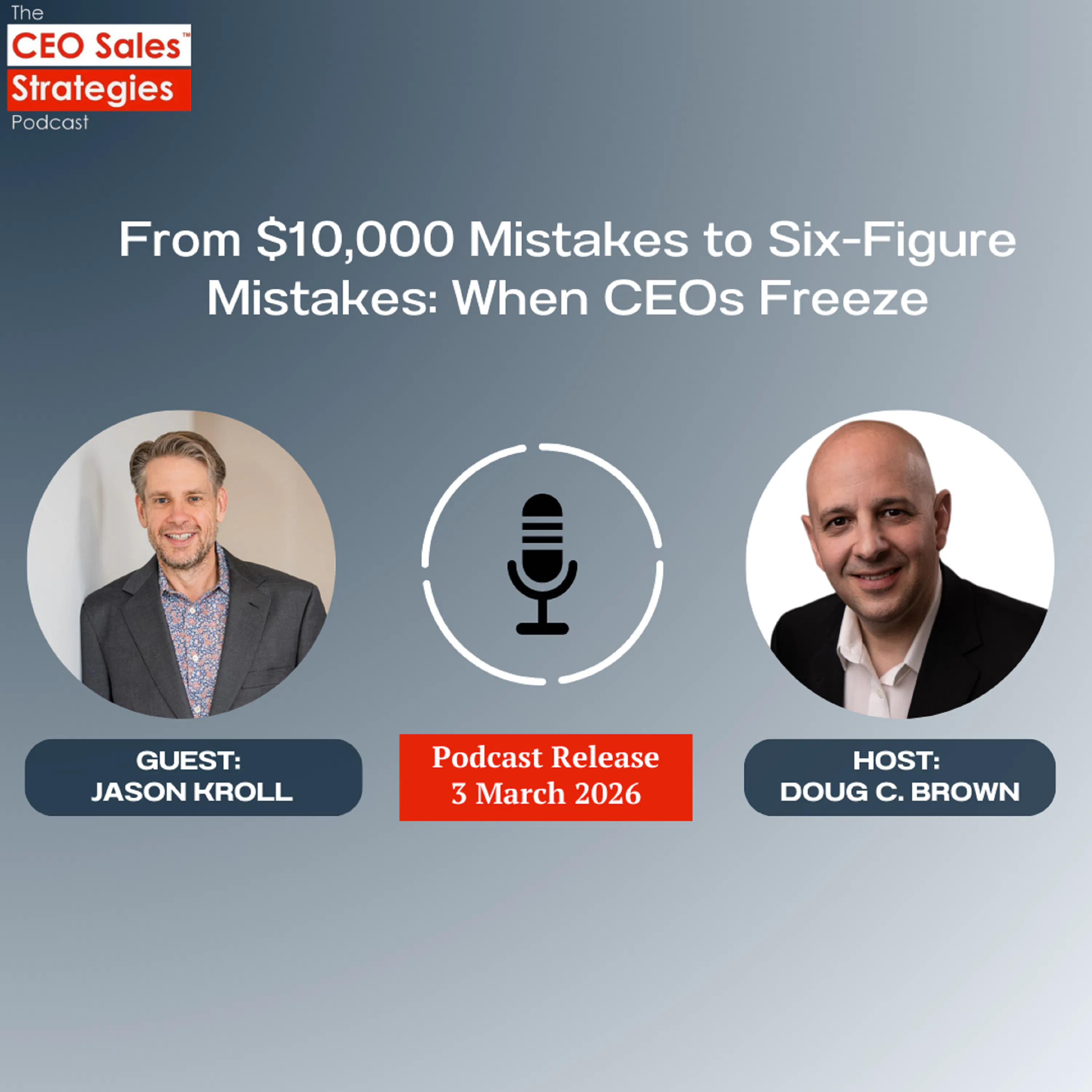
From $10,000 Mistakes to Six-Figure Mistakes: When CEOs Freeze
Mar 600:51:38Tap to summarizeMost growth stalls don’t start with bad strategy. They start with a “safe” decision that felt responsible — and quietly reduced momentum. As companies scale, the cost of being wrong feels higher. So CEOs delay hires. They pause expansion. They protect cash. What once made them decisive at $1M becomes hesitation at $20M — and hesitation compounds into stalled revenue, overbuilt teams, and expensive course corrections. Hot markets hide weak decisions. Down markets expose them. Overconfidence in expansion cycles, overstaffing based on temporary demand, and slow pivots when conditions shift can create six-figure consequences that feel sudden — but weren’t. Markets move. Technology accelerates. Talent expectations change. The real risk isn’t making the wrong move. It’s making no move while the environment recalibrates around you. Jason Kroll shares how building BankW Staffing from three founders and $36,000 into a multi-brand firm with more than 100 employees forced hard decisions about scale, risk, hiring, and capital discipline — and what he learned when momentum turned. Learn more about your ad choices. Visit megaphone.fm/adchoices
Transcribe →
There’s an 82% Certainty Your Company Is Worth $1M Less
Mar 200:34:02Tap to summarizeThere’s an 82% certainty your company is worth $1M less than it should be. And it’s not because revenue is weak. Hidden credit card fees and expense creep quietly erode EBITDA while you focus on growth. The damage compounds monthly — small basis-point increases multiplying across thousands of transactions and inflating your cost structure without triggering alarms. Most CEOs never see it. The charges are automated. The increases are incremental. Meanwhile, private equity buyers and strategic acquirers calculate valuation on the EBITDA that remains — not the revenue you’re celebrating. A 20% EBITDA recovery doesn’t just improve margins. It can mean seven figures in enterprise value. If growth feels harder than it should, the leak may not be on the sales side. Jeff Shavitz shares the hard-earned lessons he learned building Merchant Advocate—and the hidden fee patterns that quietly compress EBITDA before most CEOs ever notice. Learn more about your ad choices. Visit megaphone.fm/adchoices
Transcribe →
Your $10M Delusion: Why Growth Is Killing Your Valuation
Mar 200:42:05Tap to summarizeYour business can be growing — and still getting weaker. Revenue rises, but margins thin, cash tightens, and valuation quietly slips without triggering alarms. Many founder-led companies mistake pressure for progress. Sales close. Operations stay busy. Revenue posts. But inefficiency compounds underneath — changing the economics of the business long before it shows up as a visible problem. Growth doesn’t fail loudly. It erodes leverage quietly — through operational drag, delayed decisions, and cost structures that harden as volume increases. By the time leaders are forced to react, the correction is far more expensive — in EBITDA, flexibility, and valuation. Doug C. Brown is joined by Bill Bither, a founder who has built and scaled manufacturing technology businesses through multiple growth cycles, to expose where efficiency breaks first — and why ignoring it during growth permanently changes the math of the company. Learn more about your ad choices. Visit megaphone.fm/adchoices
Transcribe →
Your Business Will Be Automated — Or Dead by 2030
Mar 200:57:26Tap to summarizeYour business is already competing against AI — whether you’ve acknowledged it or not. The gap between human-speed and machine-speed is now a valuation problem. AI isn’t a future upgrade. It’s an operating-model shift. While many companies debate tools, others are replacing manual processes, collapsing cost structures, and compounding advantage daily. In this conversation, Doug C. Brown and Brad Hart examine what breaks first when businesses stay slow — EBITDA compression, cash drag, and shrinking exit windows. This isn’t about trends or software. It’s about whether your business is structurally fast enough to survive what’s already happening. Learn more about your ad choices. Visit megaphone.fm/adchoices
Transcribe →
The $400K Leak: Is your revenue rotting?
Mar 200:45:25Tap to summarizeRevenue can be growing while the company is quietly losing value. Margins thin. Cash tightens. And the math behind your valuation shifts — without triggering alarms. This is what happens when sales, operations, and finance aren’t economically aligned. Deals close, work gets done, and revenue posts — but EBITDA erodes in small, compounding ways that don’t show up until optionality disappears. This conversation exposes where value actually leaks inside growing companies, why “healthy” revenue often hides financial risk, and how CEOs end up scaling complexity instead of enterprise value — right up until the cost becomes unavoidable. Learn more about your ad choices. Visit megaphone.fm/adchoices
Transcribe →
The Million-Dollar Mistake After You Close
Mar 200:49:25Tap to summarizeClosing the deal doesn’t create real growth — what happens after does. Most founders make a million-dollar mistake after they close, and they don’t see it until growth gets harder and more expensive. The biggest risk isn’t losing deals — it’s what happens after you win them. When the post-sale phase resets instead of compounds, growth slows, costs rise, and momentum disappears. This conversation exposes why many businesses get harder to grow after they scale — and what changes when leaders stop treating the close as the finish line. Learn more about your ad choices. Visit megaphone.fm/adchoices
Transcribe →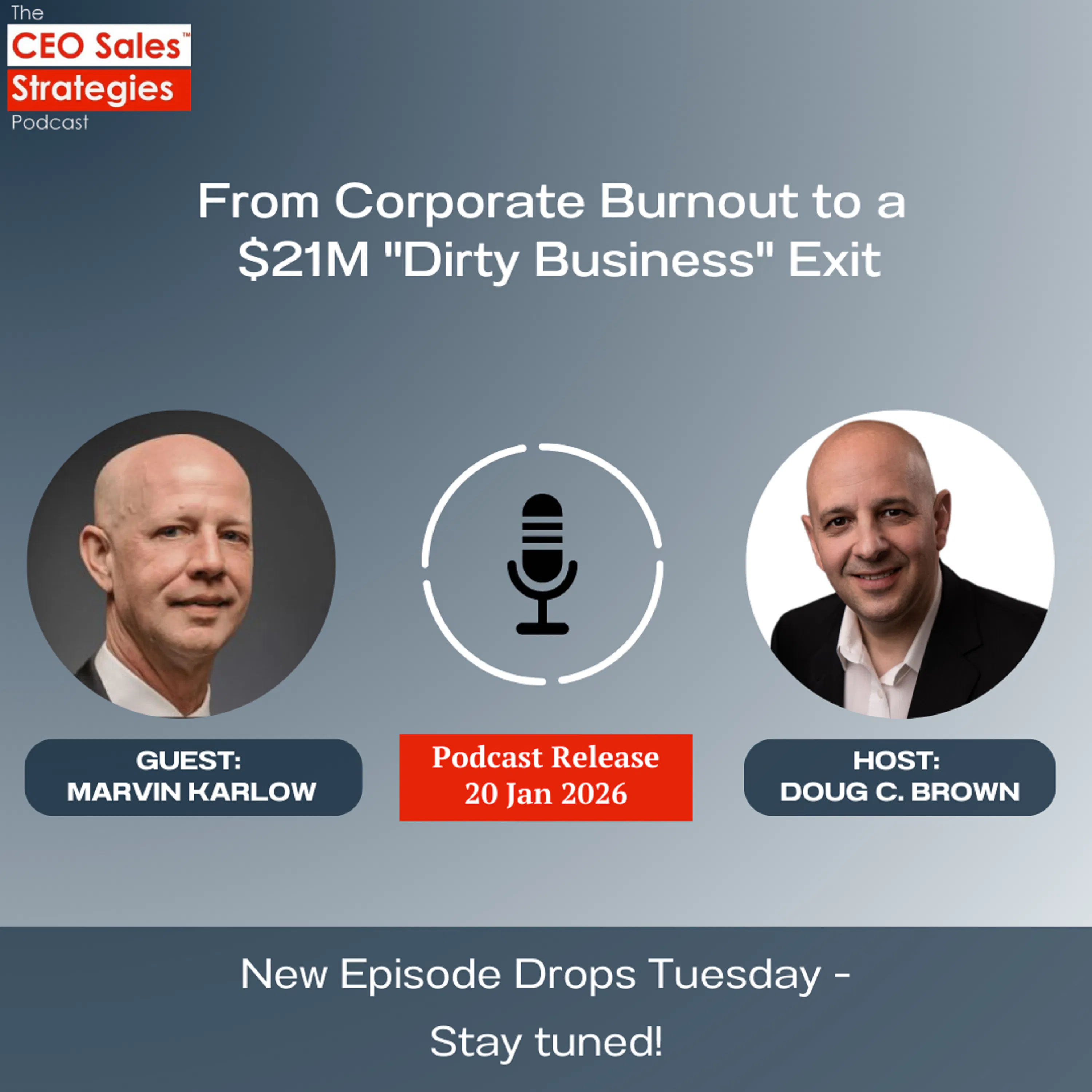
From Corporate Burnout to a $21M "Dirty Business" Exit
Mar 200:53:19Tap to summarizeMost founders wait too long to sell. Learn why timing, systems, and self-awareness are the real drivers of a high-value exit. In this episode of the CEO Sales Strategies Podcast, Doug C. Brown sits down with Marvin Karlow—former corporate exec turned M&A advisor—who scaled a “dirty business” into a $21M exit. They dive into why most deals fall apart during due diligence, how burnout silently reduces enterprise value, and what it really takes to pass the "Two-Week Vacation Test." What You’ll Learn in This Episode: ✅ Why most deals die after the Letter of Intent ✅ The "Death Zone" that sabotages 8-figure exits ✅ How to use systems to de-risk your valuation ✅ The #1 question every buyer is silently asking ✅ Why burnout is one of the most expensive mistakes founders make 🎧 Full audio + show notes: https://ceosalesstrategies.com/ebitda-multiple-expansion-strategy 📈 More tools for high-performance leaders: https://ceosalesstrategies.com 📩 Reach us: youmatter@ceosalesstrategies.com Learn more about your ad choices. Visit megaphone.fm/adchoices
Transcribe →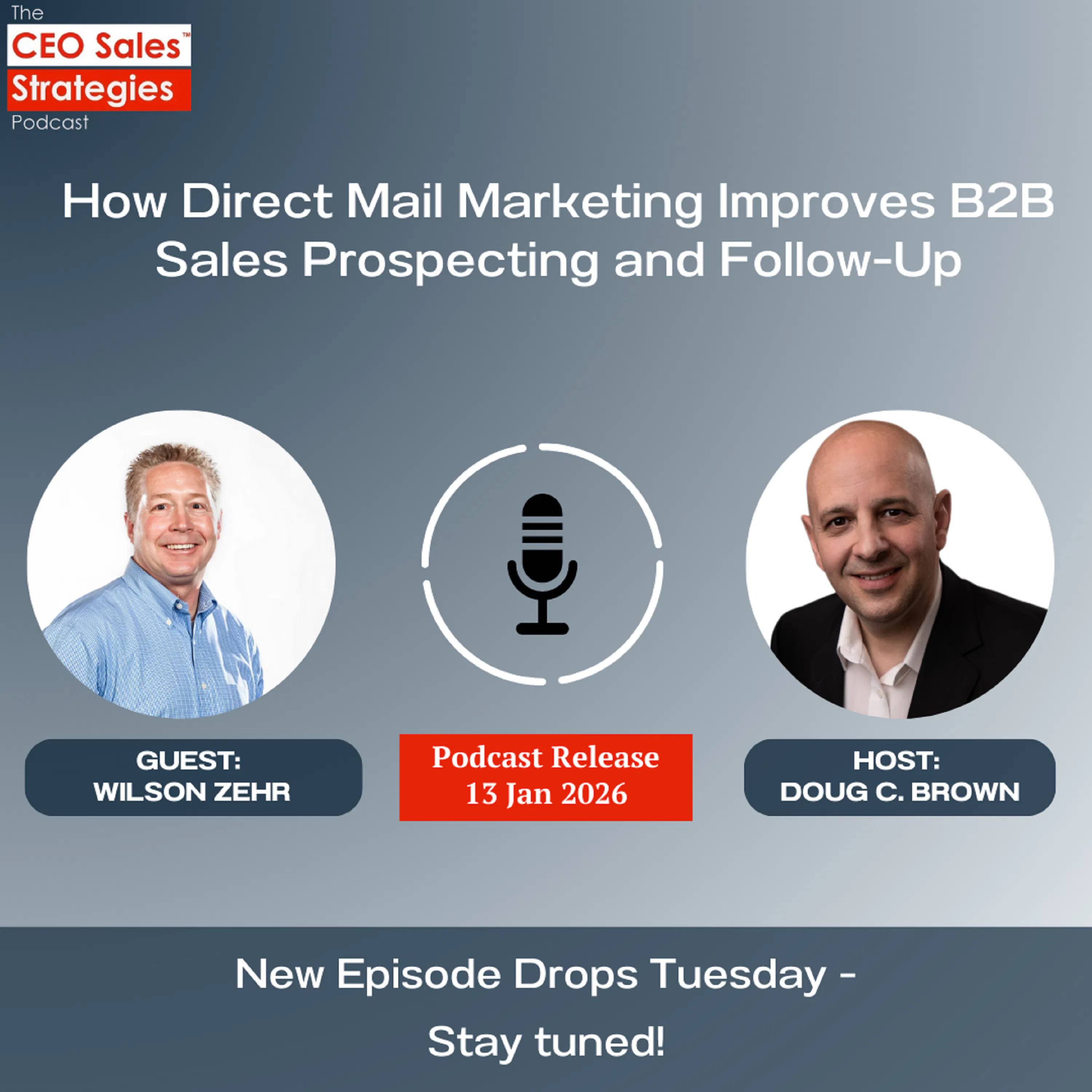
How Direct Mail Marketing Improves B2B Sales Prospecting and Follow-Up [Episode 220]
Jan 1300:42:43Tap to summarizeIs your outreach being ignored? Try the one channel your competitors have forgotten. In this episode of the CEO Sales Strategies Podcast, Doug C. Brown sits down with Wilson Zehr, CEO of Zairmail, to break down how direct mail is making a powerful comeback in high-ticket B2B sales. They explore how physical mail can outperform digital in both prospecting and follow-up—and how to do it in a way that’s scalable, personal, and profitable. You’ll discover: – Why direct mail builds trust and gets opened – The 70/20/10 formula behind winning campaigns – How to blend automation with personalization – When to use mail for cold vs. warm outreach – How direct mail fits into a modern outbound sales strategy If you're relying on 1:1 sales, long-cycle deals, or high-margin offers—this episode is your new playbook. 🎧 Full episode + show notes → https://ceosalesstrategies.com/direct-mail-b2b-sales-prospecting 🎙 Hosted by Doug C. Brown 🌐 Learn more at: https://ceosalesstrategies.com #B2BSales #DirectMailMarketing #SalesProspecting #EnterpriseSales #CEOPodcast #SalesFollowUp Learn more about your ad choices. Visit megaphone.fm/adchoices
Transcribe →