Loading summary
Transcript100 lines
- [00:00]
Francesca Hayward
Hi, Alison.
- [00:01]
Alison Katz
Hi, Francesca.
- [00:02]
Francesca Hayward
Such a pleasure to meet you.
- [00:03]
Alison Katz
You, too.
- [00:07]
Jana Peel
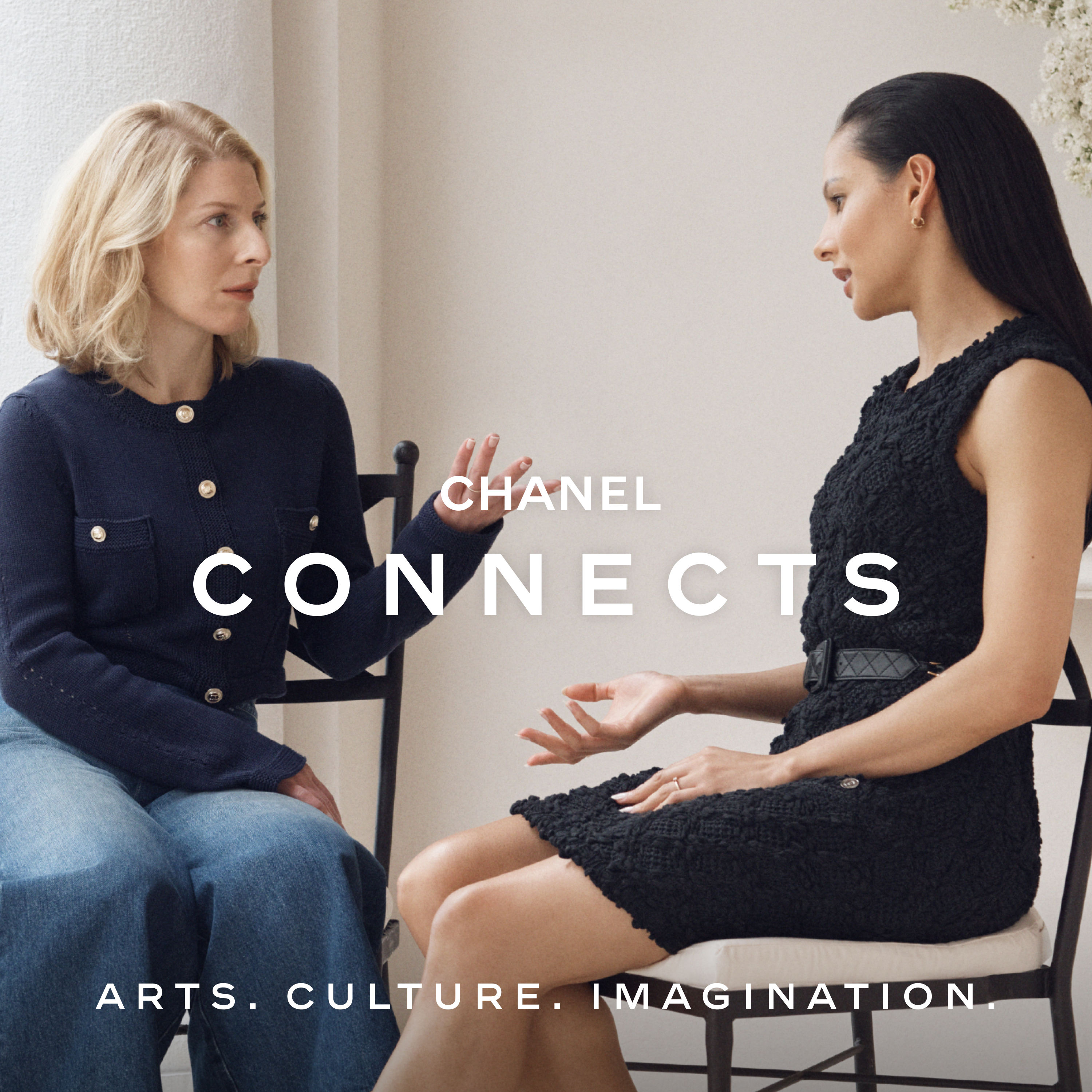
Welcome to Chanel Connects. I'm Jana Peel, president of arts, culture and Heritage at the house. For season five, we journey to La Pausa, Gabrielle Chanel's villa on the French Riviera. You'll hear artists and innovators discuss the future of creativity and the innate curiosity that powers their work. For our second episode, Francesca Hayward, principal dancer in the Royal Ballet, connects with artist and painter Allison Katz.
- [00:36]
Alison Katz
I have never met a ballerina. Hi.
- [00:40]
Francesca Hayward
Ballerina then.
- [00:42]
Alison Katz
And I wanted to be a ballerina when I was a little girl. I think this is common. But I remember writing a note and I was saying, I want to do the turns, and I want to stand on the toes and I want to turn. And it was like this obsessive kind of attempt at getting at the magic.
- [01:06]
Francesca Hayward
Yeah.
- [01:07]
Alison Katz
And I think, actually one of the things I really wanted to ask you about was illusionism, because with painting, I can never get over this kind of thing that painting can do where you can take a flat surface and turn it into something that has depth. And I was thinking about ballet and the way that there's so much illusionism about taking the body and almost making it do something that you can't imagine it could do. It's like a magic trick or an enchantment that I have when I look at paintings. And I was just wondering if you see it like that.
- [01:43]
Francesca Hayward
Totally every single time that I'm preparing for a role. Some are easier than others, obviously. And sometimes I think, you know, it's. It seems so far from where I am at that point, like, technically and physically and maybe even emotionally. So I think it's all part. That's the bit I enjoy the most, is, like, that transformative process. And sometimes I feel like I only really become the character at the very last second. Like, there's so many layers. And that's what I love more than anything, is becoming someone else and all the levels to that and going on that journey on stage.
- [02:23]
Alison Katz
I like, actually, that you say levels, because I think it's the same with painting, that you could just look at a painting or you could go deeper into it. You could understand the story, the narrative, the history, the references, but you could also simply just look at it and. And I think that that's the freedom and why painting still captivates people, because you're not necessarily overly directing how to look at a painting or experience it. I feel that must be with dance as well. But when you say character, do you respond first to the narrative to the story or more to the movement, or are they the same thing for you?
- [03:03]
Francesca Hayward
It really depends on the ballet. So I always think, let's take Romeo and Juliet, for example. So that's such a. Obviously, that story's been told so many times in so many different ways. So then there's so much material to take inspiration from. But I'm very keen to never, ever. I never copy anyone, obviously, but sort of take what I think works from someone's performance and just take sort of focus on that idea or whatever it was that I loved about it. For example, with Juliet, obviously, then I've got so much freedom with. To tell. There could be so many different versions of Juliet that still work. And then there are other stories where it's much more set, much more everyone. The audience's idea of what that should be are much narrower. So I'm trying to fill that space without going too far and making it unrecognizable. So, yeah, that's something I also really enjoy. Like, how much can I get my teeth into this? And some roles, like Manon, I can change, even show to show, depending on I'm still in the same character, but I am also playing off other people on stage, determine how I react to something. Yeah, there you go.
- [04:11]
Alison Katz
Does that mean you change your performance.
- [04:13]
Francesca Hayward
Every night so the steps always stay the same? Yeah, and that's what I think so beautiful about ballet is. And also what I find fascinating about talking about our art forms together is I'd love to know from you how amazing it would feel just to have, you know, you're deciding what comes out on, you know, on your canvas or, you know, I've been told already what I have to do, and it's up to me to sort of transform it in my own way. But my steps remain the same. But I might do them completely differently from another ballerina.
- [04:41]
Alison Katz
Yeah, that's kind of amazing. I mean, I think painting also thrives on the constraints. I really believe in the canvas and the oil paint and the brush. There's some things that are a given, but then, of course, there's total freedom. But that freedom is also responsive to the moment and to the experiences that are coming up. So I always say that I like to almost come to every painting day with 50% of the idea or of the energy. And then I sort of await the other 50%. And that could be that things are changing, because even when I have an idea, I have to also see how it's coming out through the form itself.
- [05:24]
Francesca Hayward
And in A way it doesn't surprise you sometimes?
- [05:25]
Alison Katz
Yeah, totally.
- [05:26]
Francesca Hayward
Depending on your mood and.
- [05:28]
Alison Katz
Yeah. And just how it evolves. And I think ideas, if they're followed too closely, can be problematic, because that's not the whole story of painting. You know, there's these other sensorial components, and there's also inspiration, which I like to follow, and that could be a detour. So I think there's this confidence to kind of not stick to the plan. But with ballet, it's fascinating to me how you could deviate from steps.
- [05:56]
Francesca Hayward
Yeah. I mean, technically not. But like I said, it's like so much on how I'm feeling that evening, or, you know, every time I done Romeo and Juliet, for example, you might have a different Romeo, and that just completely softens. You could be softer Juliet, or you could be a feisty and Juliet. But you're still staying within the steps. But just how you do them, like, the flavor that you give to them can be so different every time. And how you play with everything, you know, play with the music. And the music will be different every time because we have the orchestra. So some conductors play so slowly that sometimes you've got only one movement to do and you've got too many counts of music. So you have to really change your feelings inside to make that moment stretch out and out and out and go on and on and on. And then other nights, you barely get a second to do that moment, and you have to move on to the next. So it's always so exciting to me, that part of it, I think that.
- [06:47]
Alison Katz
Works with viewers as well. People who come to painting with. Yeah. Different approaches. I think it does change. Maybe like a kind of classic ballet script. People interpret it differently. So you can look at a painting, but it's inexhaustible on how you will see it. And even the next day, you can look at the same painting and have a completely different reaction.
- [07:09]
Francesca Hayward
Yeah. And how do you feel about. If you created a painting and you know what the real meaning is, and someone was to say, this is what I see in it, and it's something entirely different. Is that you love that. I love that.
- [07:20]
Alison Katz
Yeah. I think that's also the truth. You know, I think that there's things that I also learn from the way other people see it. And I almost make the painting in a way, not to alienate myself, but to understand that it is me and it isn't me, and that there are these other mysterious processes at play. It's also kind of how I finish a painting. I suddenly Can't I almost feel this, like, force where I just can't continue on it as if it's now done.
- [07:53]
Francesca Hayward
I was going to say, when did you know how to step away?
- [07:55]
Alison Katz
I think this is a question that a lot of people have to painters. How do you know when it's finished?
- [07:59]
Francesca Hayward
And.
- [08:00]
Alison Katz
And I think that is actually one of the most interesting things, is that it tells you or it tells me.
- [08:07]
Francesca Hayward
Yeah.
- [08:08]
Alison Katz
This inanimate object will suddenly have a force where it says, I'm done. Yeah.
- [08:18]
Francesca Hayward
It's so amazing.
- [08:18]
Alison Katz
Yeah. Which is also why timing can be difficult. You know, I think, oh, I'd like to finish this quickly and then it takes months. Or I'd like to take my time with something and then it's done.
- [08:30]
Francesca Hayward
Yeah.
- [08:31]
Alison Katz
So it doesn't really. It's not consistent. The only thing that's consistent is my drive.
- [08:39]
Francesca Hayward
And I had to go to ballet school for many years to train in ballet. So how did you even start painting? Or was it painting or was it sculpting? Like, how did you get into art? And do you remember the first time that you thought, that's what I'm going to do?
- [08:55]
Alison Katz
I became very drawn to the protracted form of storytelling through painting and taking my time. So I sort of discovered it as a teenager and I went to art school. I think I figured out pretty early on that I'm an artist, but I didn't really know what that meant. And I also just understood that I was kind of obsessive and restless, but consistent. So I also understood that devotion is key and that I would have to sacrifice to do it, and that somehow that I understood before I even really got into it, and I was game for that. It felt really focusing and clarifying, and it structured my whole life and moving around different cities and places, always being led by this pursuit and this. This drive, which I imagine must be similar for you, too, because it. It does seem like an all or nothing kind of choice.
- [10:02]
Francesca Hayward
Absolutely. Yeah. And I think we're so lucky, always. I realize maybe more in hindsight, to have always had a purpose, like, even from a young age, to know exactly where I was aiming for. Yeah. But it's definitely. It's a tough life, you know, also having to do boarding school at age 11, so. And I'm still friends with so many of the. My friends from my first junior ballet school, the Royal Ballet School.
- [10:30]
Alison Katz
Do you think about it at all now that, like, the weight is a sacrifice, or does it also feel more just how it is?
- [10:42]
Francesca Hayward
No, I definitely think even More so recently now I'm devoting even more time, I'd say, to my body and recovering from injuries and sort of. It's consuming sometimes. It's totally consuming. And I do think I put so much of my. My life on hold. Sometimes when I have a performance coming up, I just literally, you know, everything has to revolve around that performance. I have to be. It's not selfish for me, but it's more, you know, the performance comes first.
- [11:10]
Alison Katz
Yeah.
- [11:11]
Francesca Hayward
And I'll do whatever it takes to make sure that when I leave the stage. I would never be able to forgive myself if I didn't know that I'd done everything possible to do the best I possibly could. And I know that even if something didn't work out 100% on stage, as long as I knew that I worked hard and I tried my best, I'd never have any regrets.
- [11:31]
Alison Katz
Yeah.
- [11:31]
Francesca Hayward
So I'm always happy with my performance in that. In that way. Even though I can always make improvements. Yeah, yeah, yeah, yeah.
- [11:37]
Alison Katz
I think the same. I mean, especially with. When you're given the choice because it's on you. And in many ways, I mean, you're dancing inside a company. Like, there's a lot of different kinds of support to maybe push you through more moments of doubt. Is that what it feels like?
- [11:55]
Francesca Hayward
Yeah. I think also feeling the responsibility of being the principal dancer on stage and everyone else, obviously, is there also creating the story with you, but ultimately, I feel like the story is carried by you. And so I feel that is a huge responsibility, and I take. I have to respect it and just, you know, take it incredibly seriously, which also. There's so much joy from it and so much fun to be had.
- [12:20]
Alison Katz
Yeah.
- [12:21]
Francesca Hayward
And also spending so much time with all the dancers around me in the rehearsal process. Yeah. I just think I genuinely love being there spontaneously in the moment, and it's sort of like a bonding moment with all these people that we created this. This whole world within three hours, you know, together. I was just curious to know if you also. If you have the idea in your head and then the next thing is literally making that first bold stroke onto the canvas, or is there any sort of sketching or sort of like, more gentle preparations, or do you just take that really brave first step and just go for it?
- [12:58]
Alison Katz
No, I mean, everyone is different, but for me, actually, I think it's a very cerebral process where I might be trying to settle into the idea of how I'm going to work with a glimpse or a kind of flash of something, because an initial idea can be totally inspiring, but then you have to follow through with the process of making a painting. And that could take however long it takes. So I have to find ways to almost, like, sustain my initial passion for it. I feel like so much of painting is a combination of the rehearsal and the performance moment, where with each layer, I want it to be the performance, like the final. But it could end up being a rehearsal. And it sort of toggles between the sense of preparation and then the sense of all the stakes and the moment. And I think that actually that's why I'm still so involved in the act, because I haven't figured it out. It doesn't stay the same. So each painting, each idea almost runs a different course. But a good painting or a painting that I love to look at, you do sense some kind of live quality, which is hard to put into words, but it could even be tracing a brush mark or feeling a sense of breath that runs through it. And I feel like all those have the same quality as seeing a performance.
- [14:27]
Francesca Hayward
And I have. I have so many questions. So how do you also. How do you like to work? Are you, like. Do you have something you like to wear or like to listen to or, like, are there things that get you into the flow or.
- [14:38]
Alison Katz
Well, I often actually can't listen to music because it moves me too much. I feel distracted.
- [14:46]
Francesca Hayward
It influences you, maybe.
- [14:47]
Alison Katz
In a way, it does.
- [14:48]
Francesca Hayward
Direction from the idea.
- [14:49]
Alison Katz
Exactly. I try and stay really close to a kind of. Yeah. A space of more listening to silence. And then I'm not too ritualistic. I don't do things all the time at the same time, but. But lately I do find that I need to be physically relaxed. Something is changing where I feel like I have to prepare my body differently. And that is kind of exciting because it is kind of reminding me that a lot of ideas come through the body. And I think for the last couple years, I've been very focused on what's coming through my mind. And now I'm understanding that you don't have to sort of, like, paint in this explosive way for the body to play an increasingly bigger role. And so, yeah, I'm particularly intrigued by how you manage pain and also just a physical schedule in terms of ideas or inspiration. Because do you think that things come through your body first, or is it the script and the, let's say, the sort of overall theater.
- [16:03]
Francesca Hayward
It's a really good question. I think the audience is definitely impressed by when you're physically doing something really spectacular. But I always think that probably 95% of the audience actually don't know about ballet technique. And so what they've actually come to see is a story and to be moved and for it to help them escape from their daily life. And they don't know if you did the most perfect pirouette or not. You know that. And obviously some people will know that and appreciate that extra level, and we always strive for that too. But, yeah, I think really it's about. If someone says to me after a show or, you made me cry, like, very happy. It's my favorite compliment. But I do find also that now I'm a little bit older. When I was younger, I just used to sort of fling myself around and there were no consequences. But now I think I have to take much better care of my body. And I'm also at the stage where I hopefully have got, you know, many years left of dancing, but I have to take care of it to make sure that that happens.
- [17:02]
Alison Katz
Yeah.
- [17:03]
Francesca Hayward
So, yeah, I'm really taking, like. I'm just so much more aware of everything. And I take recovery, like, very seriously now, whereas I never did before.
- [17:10]
Alison Katz
Interesting, because you just didn't need to.
- [17:12]
Francesca Hayward
I just didn't need to. It wasn't. Wasn't fun.
- [17:15]
Alison Katz
Yeah.
- [17:16]
Francesca Hayward
Whereas now I enjoy feeling good and I feel the difference. So I really just put that extra time in now.
- [17:22]
Alison Katz
Yeah. I'm also finding, for example, my painting arm. I'm kind of really understanding it. It's a tool, and it's also real meaning. Yeah, it needs to be really taken care of. But that also, a lot of ideas kind of come from muscle memory or from this other place in the body, and I wasn't quite as conscious of that. And a few weeks ago, I was in an accident, and I learned so much. It's kind of crazy. I would not have wanted to repeat this accident, but I couldn't use my body in the same way. And the constraints and the limitations and the pain really put me into a place, a different kind of consciousness. And it was reflected in the image making. I mean, when I watched a ballet, all I could think of was, it makes it. Well, I think there's something really interesting about ballet and labor because it looks easy, and that is a kind of enchantment because it clearly is the most demanding of forms of dance. So I sort of, in a way, sometimes I think about how that might be similar to painting with. When someone looks at a painting, they shouldn't know the struggle or the difficulty or what went into it, and they shouldn't know how long it took. That should all be kind of the mysterious part of the energy that it gives off.
- [18:58]
Francesca Hayward
Totally agree. I'm so happy you said that, because I have the same thought that every time someone watches ballet or dance of any kind, they should feel like they could go home and do it themselves and then realize that they can't. But, yeah, to have that, that's exactly what I want them to feel because, yeah, I went through the hard work so that they could just be transported, I suppose, somewhere else. And that is. That's my art.
- [19:21]
Alison Katz
Exactly. Yeah. And I think that is the art part, because otherwise it's. Let's say, anyone could do it. Exactly. But I think it's also the reason why art inspires is because it does give off permission and energy to try something and to expand in some way. You know, like while I was watching ballet, I did feel differently in my body, and I did think that I could possibly have more space or I could move. I also started thinking about how movement is so narrative without words, which is also the thing I love about painting. You know, it's telling a lot of stories, but not in a sort of straightforward way. And also the story is not necessarily narrative, but there is emotion and there's depth and there's all these pieces, but they don't have to sort of line up in a verbal kind of order.
- [20:18]
Francesca Hayward
Sometimes I think in your artwork, it's like, maybe not a self portrait, but you yourself, you're portrayed in your art. Do you enjoy that, or is that kind of tough to really put yourself on the canvas? I can imagine.
- [20:33]
Alison Katz
I think it's important to risk my own face or risk my own experience, risk my own story to get at something that goes beyond it. And I don't feel like objectifying someone else or I want to think differently about what it means to portray and be portrayed. And so I think it all. I need to examine my own bias, my own taste, my own perspectives. I think a lot of ideas come from just acknowledging my own conditions and not aiming for any form of objectivity, you know, to begin with, the subjectivity of my own experience. And I think moving forward or developing as a painter really means questioning my own taste. You know, why do I like certain things? Why do I think something is good and then being uncomfortable? I mean, I wonder how you judge if something is working.
- [21:32]
Francesca Hayward
Yeah, I'm sort of thinking also whilst you were talking, that in ballet, we rely so much on, you know, we have a coach that is sort of like an integral part of the process. And you have to have so much trust in them, because so much of the time, if you want to be truly concentrated on what you're trying to do in rehearsal, you know, we do have the mirror. We're constantly looking in the mirror.
- [21:56]
Alison Katz
Right.
- [21:57]
Francesca Hayward
To check technically how we look and then that sometimes a shock when you get on stage and you have to be careful not to look in the mirror. You know, there's no mirror there, it's the audience. So you have to rely on that person sitting at the front of the studio to tell you so much about yourself and whether you trust their opinion. And does that sit. What they're telling you, does that sit with how you feel? And I think the best coach is the ones that you can have conversations about that with. You know, they might say, could you do that differently emotionally or technically? But you might want to reply and say, you know, I listening to you. But also, that doesn't feel right for me, or can I try it? But I might not do that in the performance. Like, you have to see what fits and feels right individually, whilst everyone is actually doing the same steps. Hard to explain.
- [22:45]
Alison Katz
Do you deviate a lot? From what? From feedback.
- [22:49]
Francesca Hayward
No. I've been so lucky with the coaches that I've had. My very first coach at the Royal Ballet was the very first ballerina that I ever saw on a video of the Nutcracker. So Leslie Collier was the Sugar Plum Fairy on that video that I watched when I was three years old. And I used to dance to all the time at home for hours and hours and hours. And then when I joined the Broad Ballet and I was lucky enough to do the Sugar plum fairy about 10 years ago or more, she was coaching me for the Sugar Plum Fairy all those years later. So full circle. Yeah, it was a really incredible moment. And just having so much trust in her because we were sort of similar dancers in the way we heard the music and everything. So, yeah, I relied on her enormously and still would. I suppose you don't have so much external influence on your. Your art. You're very much.
- [23:38]
Alison Katz
No, I think. I think that's a kind of interesting maybe idea of the artist still, that they're sort of like totally solitary alone in the studio.
- [23:47]
Francesca Hayward
That's how I imagine.
- [23:48]
Alison Katz
Yeah. No, I mean, I think there's definitely, at the end of the day, you know, I'm the one making the final call, but there's a lot of conversation. There's conversations with people who are painting now and then there's conversations in my head with Painters from the past. By looking at the paintings with my mentors, with peers, with assistants, with my partner, my mother, my grandmother, I will. I will sometimes seek a lot more conversation and other times I actually need to just listen to the painting. But there are so many influences at any moment. And I also find that in a way, sometimes I would love the idea of a coach. I would love to give up agency because it would seem so nice to do things by committee. And I try as best I can. I have a few very special people who I trust. And it's a small circle that I would really trust. What they say, how they see it. I don't always respond, but I like to hear it. And those are long term relationships as well. Because in a way, it's not about a single painting. It's bigger than that. It's a bigger arc about trying to push through and evolve into the unknown. So the main thing is to not judge a work on what kind of merit. I wouldn't know, except if it feels truthful in that moment, to that time. And I can imagine that's maybe your standard for a performance.
- [25:27]
Francesca Hayward
I love that you said truthful, because that's a word that I think about a lot. Because I think that's when I know when my performance has gone well. Because I feel like I was just true to what I was trying to do, whether it was to the choreography or the story or hopefully a combination of the two.
- [25:43]
Alison Katz
Yeah.
- [25:44]
Francesca Hayward
Not trying to add anything, anything that doesn't need to be there. Just sticking true to what it is and not going beyond that, because that's enough. And that I think that speaks louder than, you know, trying to be different and do something for the sake of it. Like I've never do that.
- [25:59]
Alison Katz
Right.
- [25:59]
Francesca Hayward
That really doesn't sit well with me.
- [26:01]
Alison Katz
No. Well, also, I guess by being truthful, you're being unique. And also the definition of that truth, because it's an artistic truth, it is allowed to change.
- [26:11]
Francesca Hayward
For me, I think it's actually where I'm most vulnerable as well. You're not masking anything, right? You're sort of. Yeah, I think it's more exposing in a way to stay true to what it is. And yeah, it can feel quite scary sometimes.
- [26:26]
Alison Katz
Yeah. How do you keep your sense of humor?
- [26:30]
Francesca Hayward
There's a lot of funny moments on stage, usually if things go wrong.
- [26:34]
Alison Katz
Yeah. So you chose ballet or ballet chose you. And ballet is still happening, but how do you see it changing?
- [26:46]
Francesca Hayward
Yeah, I think ballet now is at a really interesting point where we have so many traditional ballets, but we're also making new work all the time. We're so lucky at the Royal Ballet, we have so many modern choreographers that want to come and work with us and to move our bodies in such different ways. That can be quite painful, but so liberating as well. I think where ballet's going is exciting because I think we're really, like, breaking down barriers with sort of the stories that we are telling on stage, breaking through any stereotypes. And. Yeah, I mean, also, you know, in the world of AI and all that sort of thing, I mean, you can't really replace real life performance. So whilst we've really got to keep ballet alive and keep it interesting and keep audiences coming in, hopefully we'll be strong in the future, because I don't think anyone wants to watch a robot doing ballet. So hopefully we'll. Yeah, will survive. Yeah.
- [27:48]
Alison Katz
That's actually a really crucial point, which is that some forms are just not replaceable. And I wondered even how you feel about watching ballet on video or, like, in a film or in a still, because that's also so different. Right. Like, the essence of it is to see it moving in real time and nothing takes that away.
- [28:08]
Francesca Hayward
It's like if I go to an art gallery and I've been totally blown away by a painting, you know, it's like taking my breath away. And then you go to the gift shop and you see the postcards and you just think, yeah, you just will never, ever know. You'll never feel what you felt when you stood there seeing it in the flesh. So, you know, and also live performance, I just think you can't. You can't match a live performance. It's the energy, it's. Everything about it is electric. And, you know, whilst we're so lucky to have all these recordings of incredible dancers from the past, you know, I always wonder, like, you know, I hear stories about, oh, I was there at Margot Fontaine's performance, and I just can't think of anything more exciting. And when I think about all the roles that inspired me or all the performances that I've been to as a child, you know, that stays with you forever.
- [28:54]
Alison Katz
Yeah, exactly.
- [28:54]
Francesca Hayward
Remembering everything about that.
- [28:56]
Alison Katz
Yeah, I totally agree. I lament the way that most paintings are seen in reproduction and that people think they can understand the image, but that's not the same as the experience of the object in real. And it's very hard to convince people sometimes that it looks different.
- [29:15]
Francesca Hayward
Yes.
- [29:16]
Alison Katz
A reproduction is not the same thing. And I think that, you know, actually, as we progress towards more extreme forms of technology. These more consistent or constant forms of humanity, like dance and painting, actually take on a completely different vitality. And painting is in no sign of decline. It's proliferating, if anything, because it offers a balance, a counterpoint. And forms of technology have always informed painting. It is, in fact, a technology of looking. It uses illusion and tricks of the brain that still work. So if anything, I think it just emerges stronger against all this competing noise.
- [30:05]
Francesca Hayward
I just love sharing, like, all the parallels between our art.
- [30:09]
Alison Katz
Yeah. I mean, there has been a long dialogue between dancers and painters.
- [30:13]
Francesca Hayward
I know. I just found out that Dali and Diaghilev have both been here together, and.
- [30:18]
Alison Katz
It makes sense because there's impossibility and there's the body and there's movement and there's all these constraints that both lead to magic. It has been such a pleasure, truly, to meet you.
- [30:31]
Francesca Hayward
So I enjoyed talking to you. I was so excited. I had so many questions. Thank you so much.
- [30:36]
Alison Katz
Thank you.
- [30:40]
Francesca Hayward
Okay, now let's go holding hands.
- [30:42]
Jana Peel
Yes, this is Chanel Connects, available to listen on Spotify, YouTube Music, and Apple podcasts. Next time, writer Lauren Collins connects with artist duo Gerard and Kelly Sam.