Podcast
Channel
Hosted by Joshua Citarella, Interdependence, New Models · EN
Joshua Citarella, Interdependence, New Models
26episodes
Episodes
Newest firstAll episodes
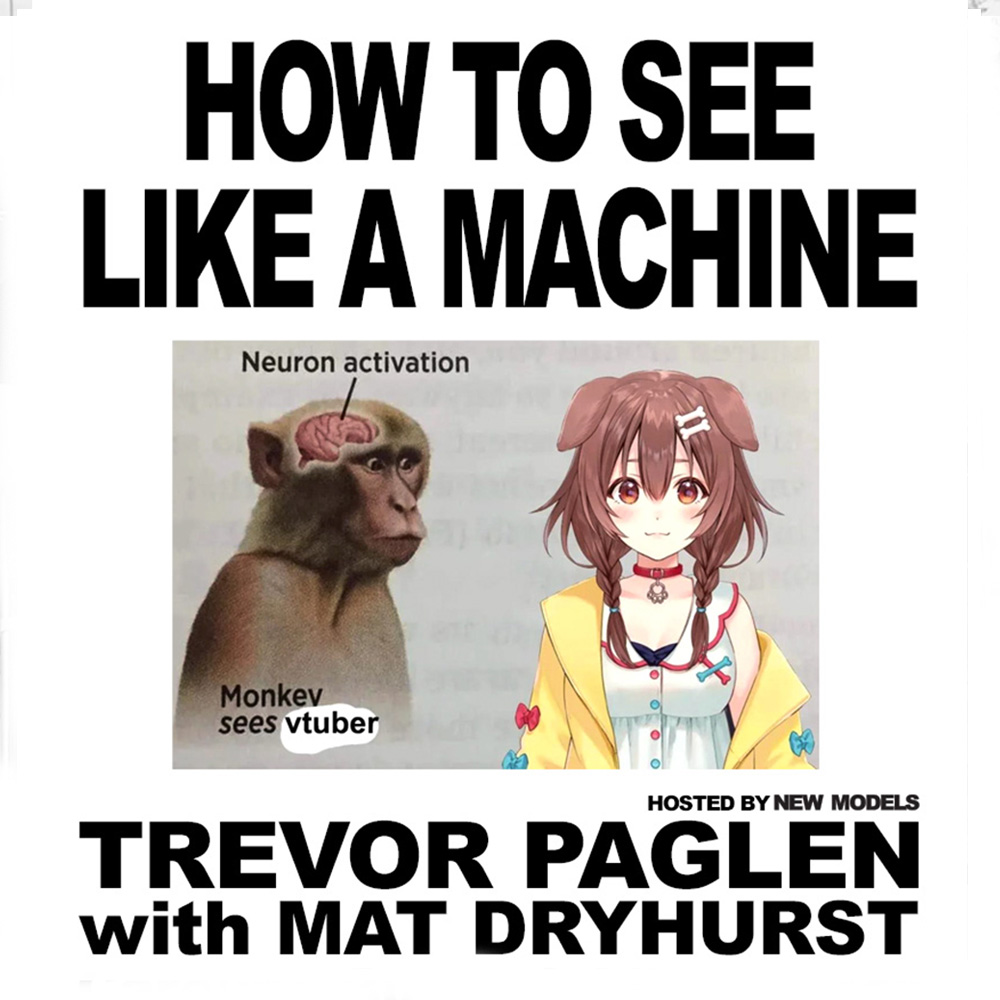
NM Live | Trevor Paglen “How to See Like a Machine” launch w/ Mat Dryhurst @ Sybil, Berlin (2026)
2w ago00:45:30Tap to summarizeIn June, on the summer solstice, New Models hosted the Berlin launch of artist Trevor Paglen’s How to See Like a Machine (Verso, 2026) at Sybil in Berlin-Kreuzberg. If you are listening via the audio RSS, you are hearing the audio from this post-talk discussion.Part 1 (video lecture): We bring you the talk that Trevor delivered during the launch, presented here via a video by Lil Internert.Part 2 (subscriber only): Following Trevor’s talk, Mat Dryhurst joins for a conversation moderated by Carly & Lil Internet. If, as a Channel member, you'd like to see the panel video, please DM.Special thanks to Trevor and Mat; to Sybil‘s Alex GVN, Beth von Undall, and Stefan Cantante; and to all who came out to join us live.The book is available from Verso. Order your copy now!
Transcribe →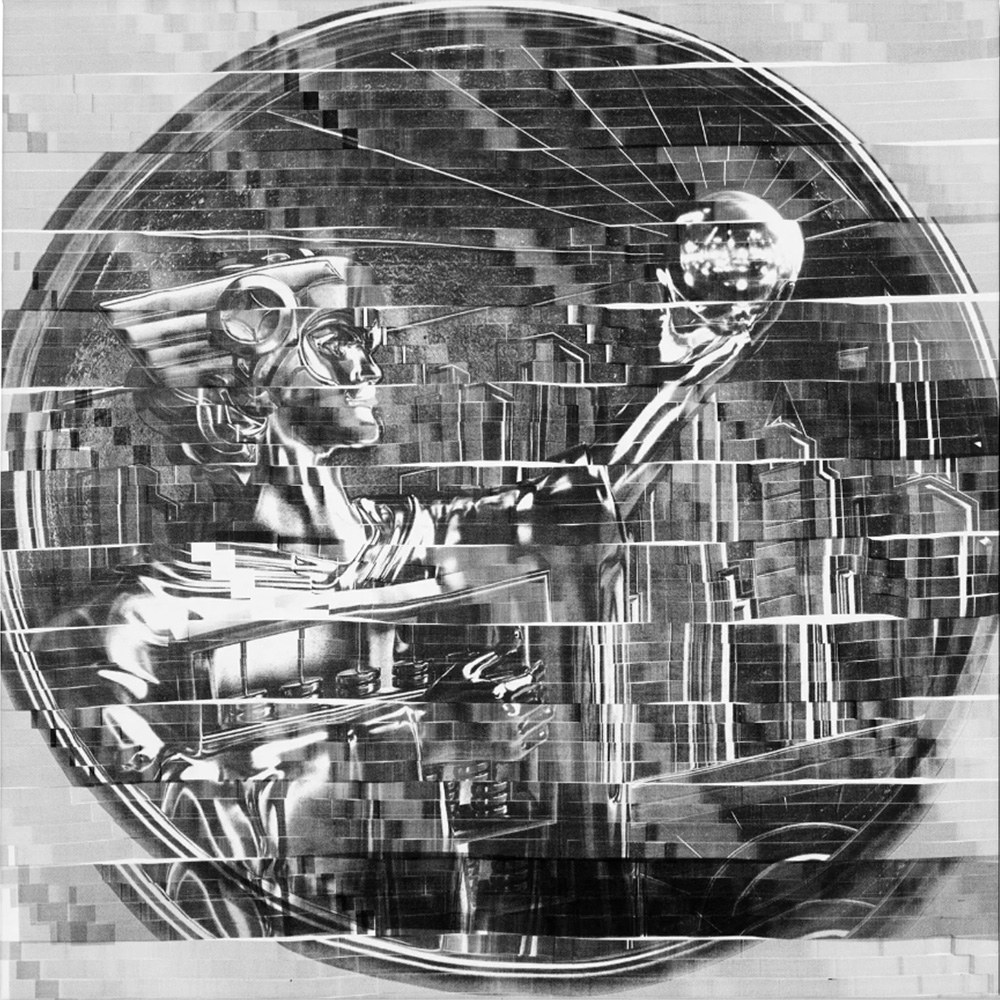
NM 94 | Simon Denny on defense tech’s aesthetic turn (2026)
3w ago01:37:50Tap to summarizeArtist Simon Denny returns to New Models to discuss the American defense tech sector's newfound dedication to style. Distilling the branding languages of companies like a16z, Palantir, and Anduril—which draw heavily on Italian Futurism, return-to-order neoclassicism, and the graphic idiom of modernist institutions—Denny shows techno-libertarian leaders to be positioning themselves as a progressive counter-elite, priming the public to receive its revanchist turn toward war as natural, just, and inevitable.“Why is Andreessen reaching for art and culture in general? He doesn't have to reach for culture... What is useful for him in reaching back towards Futurism…?"This conversation builds on “Epic Fury: the Dark Art of Defense Tech” Simon’s feature for the May 2026 issue of Artforum; as well as his installation “Monsters Between Worlds” with Venkatesh Rao, which is on view in Venice as part of Palazzo Diedo’s “Strange Rules” exhibition (through Nov. 21); and “Rules Based Order” in Munich, his solo show at Gallery Kraupa-Tuskany-Ziedler.
Transcribe →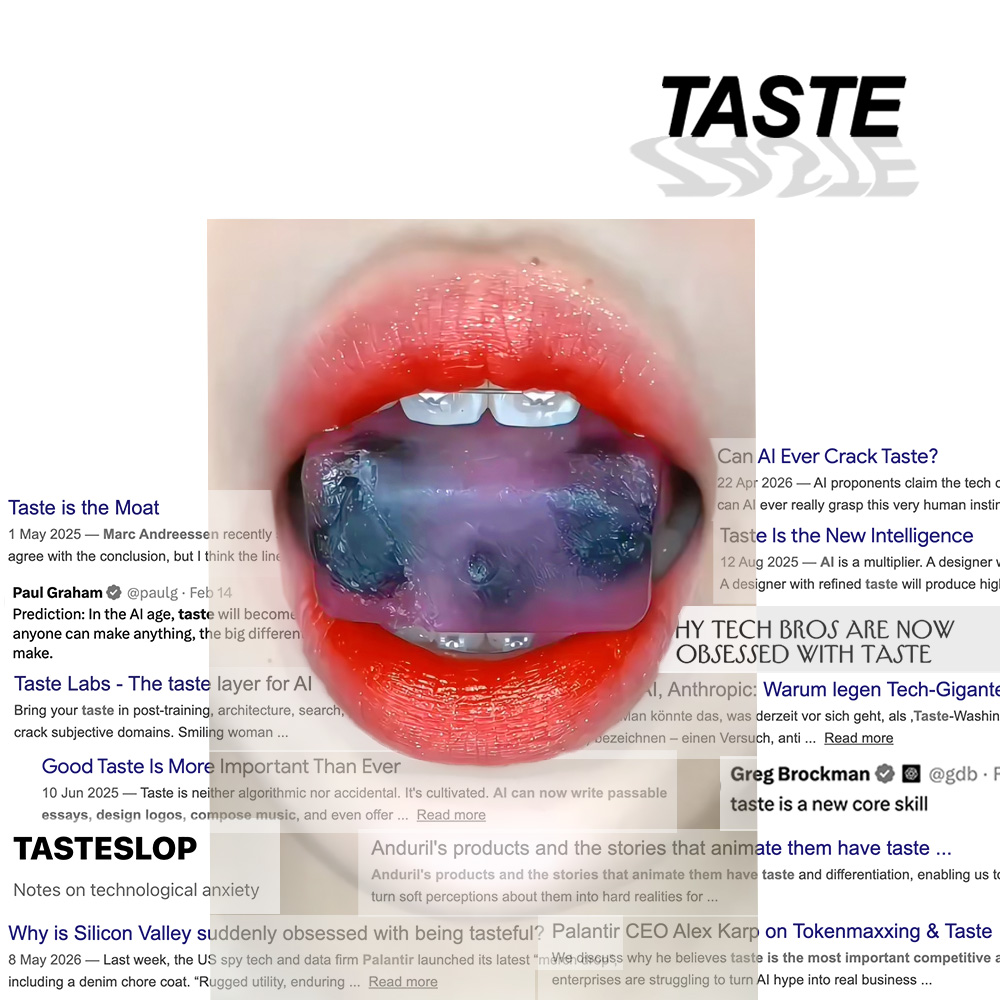
NM Content Today | Taste (2026)
Jul 500:39:08Tap to summarizeWhen Enlightenment-era scholars taxonomized humankind, they chose homo sapiens, in part because of what they observed as a uniquely human aptitude for “taste.”[“Taste” comes from the Latin taxare (to handle, to assess) – an intensive form of tangere (to touch). It is a term that via vulgar Latin blended with gustare (to taste, to try) to express the act of appraising something by physically handling or even consuming it. In proper Latin, there is the related term sapere, which carries a double meaning of “to taste” and “to be wise.” To taste, in the sense of sapere, is to possess wisdom through tangible experience.]It’s remarkable that in recent years, and intensely in recent months, the idea of “taste”—“having taste,” “deploying taste,” “taste agents,” “integrating a taste layer,” “taste as a core skill,” “taste as moat”—has become an ultra-present concern in tech circles. Isn’t having taste (wherever one falls along the taste spectrum) an inherent quality of being human?To be sure, there’s already a lot of writing on this phenomenon: “Tasteslop” by NEMESIS‘s Emily Segal and “Why Tech Bros Are Now Obsessed With Taste” by Kyle Chayka for the New Yorker being among the best takes. The most confounding, in our opinion being Y-Combinator cofounder Paul Graham’s “Taste for Makers” (Feb 2002, but highly cited this year).There is also “Against Taste,” by Will Manidis, which makes some good points (patrons used to fund art for a higher power or at least public display whereas contemporary collectors tend to buy art for their own private use) but in its theory-of-everything aspiration, feels LLM-ish and contextually ahistorical. So in pure “Content Today” form, we are adding to the pile-on with our own fashionably late, probably factually botched but definitely human, free-associative conversation about taste.--> Channel.xyz subscribers DM for link to full NM notes on taste, and recap of recent events
Transcribe →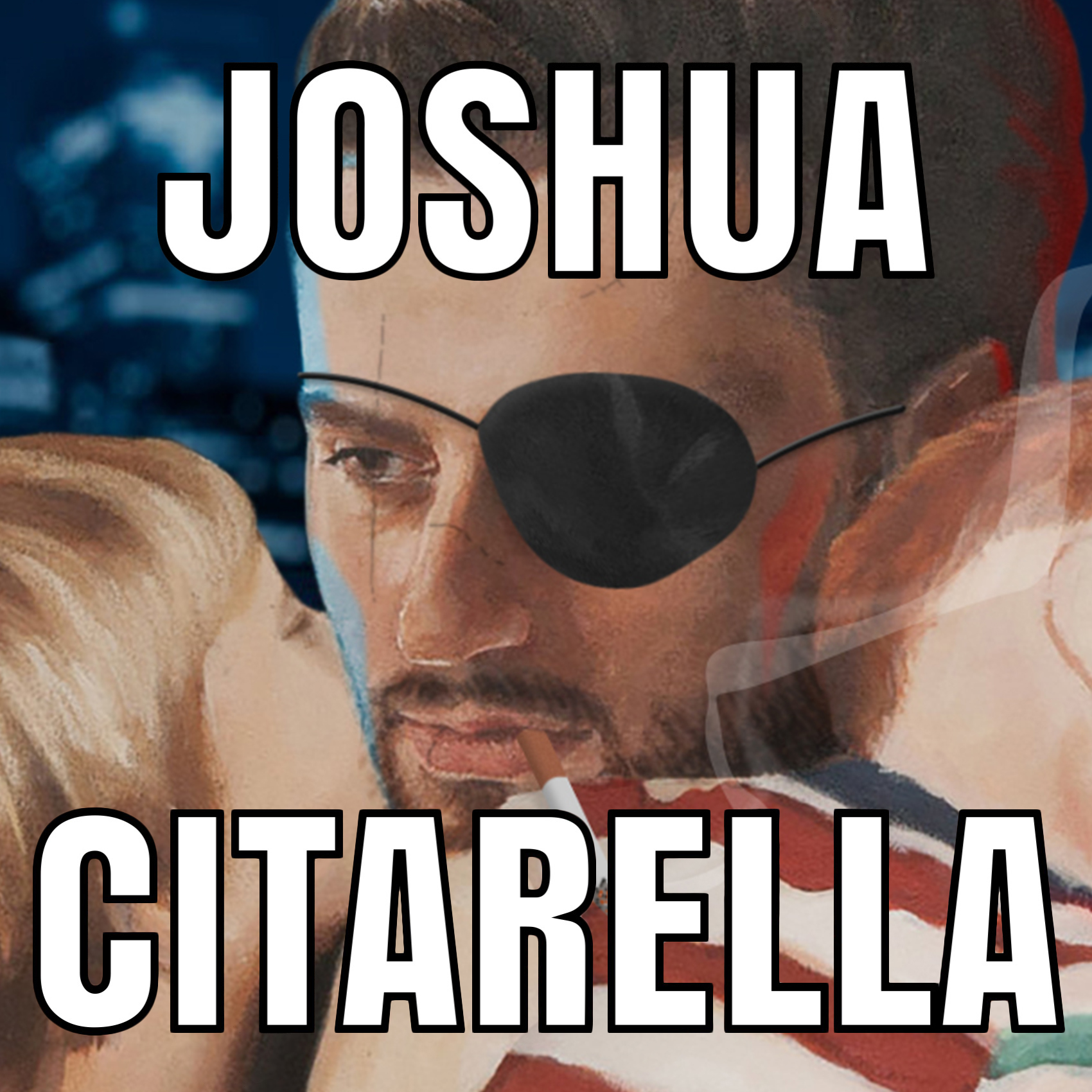
Doomscroll 49.5: Julian Feeld
Jun 2500:26:04Tap to summarizeWe discuss strategies of reform vs revolution, electoralism vs internationalism, and more. Our conversation continues behind the paywall.
Transcribe →
Doomscroll 49: Julian Feeld
Jun 2500:51:54Tap to summarizeMy guest is Julian Feeld, an author, journalist and co-founder of the QAA podcast. He is the host of Superstructure with comedian Jon Gabrus. Our conversation explores the impact of media, political speech and “influence” in our extremely-online society. What do we hope to accomplish through content? When does education and information impact real material forces in the world? From differing viewpoints, Julian and I explore the theory and practice of political-education.
Transcribe →
Doomscroll 48.5: Claire Valdez
Jun 2500:25:31Tap to summarizeWe discuss Claire’s background in art, working at Sculpture Center, studying at SAIC and navigating the extreme inequality of American life. I share some war stories about the hazards of DIY creative life, freelancing and healthcare.
Transcribe →
Doomscroll 48: Claire Valdez
Jun 2500:46:12Tap to summarizeMy guest is Claire Valdez, a union organizer, artist and democratic socialist running for congress in NY-7. Valdez has garnered an impressive list of endorsements; Bernie Sanders, Zohran Mamdani, UAW’s Shawn Fain, DSA, Mahmoud Khalil, Zephyr Teachout, and many others. We discuss the American labor movement and the power of democratic majorities. The NY primary election is on June 23rd.
Transcribe →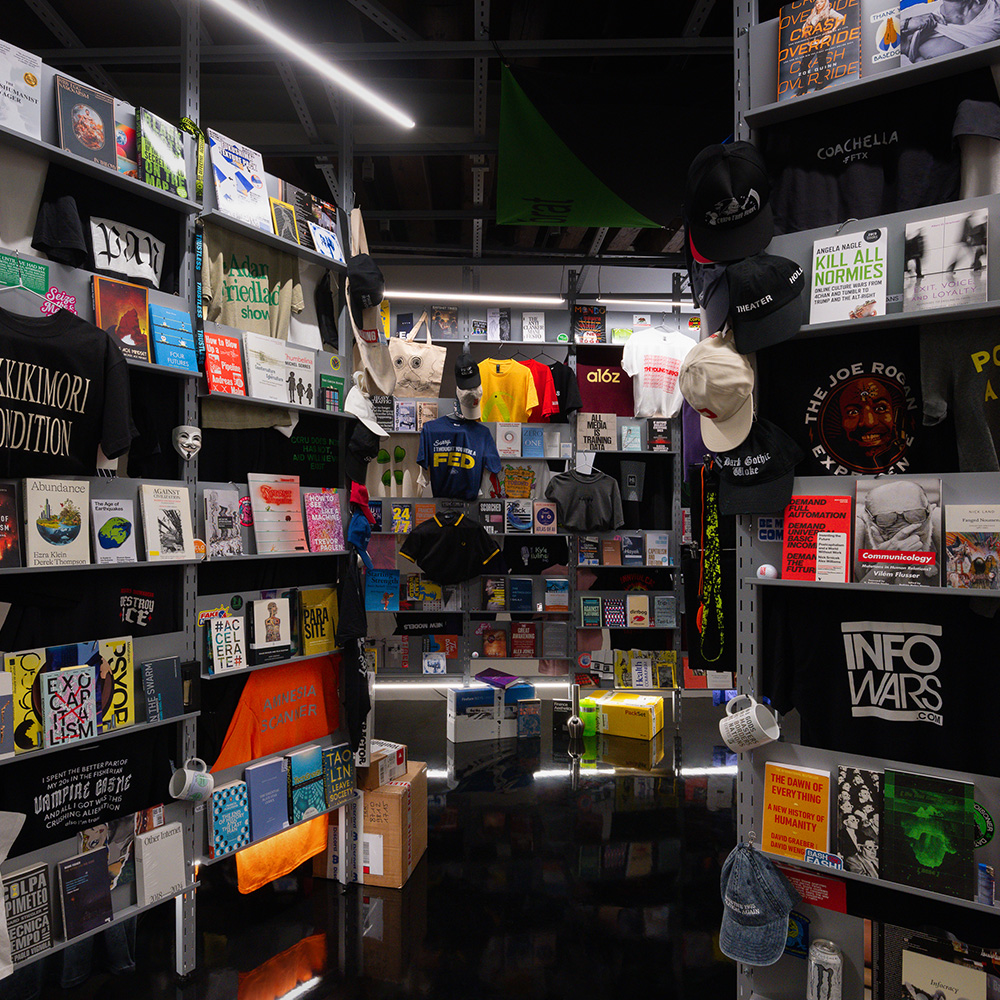
The Online Marketplace of Ideas w/ Joshua Citarella
Jun 1001:01:28Tap to summarizeIn recent episodes, you’ve heard us mention the project we created this spring with Joshua Citarella, together with the spatial design studio sub, for “Strange Rules” at Palazzo Diedo, Venice. On this episode, we chat with Josh about this work.The exhibition, which was curated by Holly Herndon, Mat Dryhurst, and Hans Ulrich Obrist with Adriana Rispoli, presents practices that engage with the "protocol layer” — in other words, the rules that determine how culture is created, transmitted, remembered.https://www.youtube.com/watch?v=f1SXuZsjh1kChannel members: DM for more text and images
Transcribe →
NM Talkcore | Artist Steven Warwick on making music in the time of “content” (2026)
Jun 200:52:50Tap to summarizeWe talk a lot on this show about the “content” layer being compromised; how, given the physics of the feed, the creative act increasingly happens at the protocol level. While this is true, good books and films and records are, in fact,still being made. On this ep, friend of New Models Steven Warwick comes by on the occasion of his two new albums — SW Live at Café Oto (P-A-N) and, from his new band with Iván Brito, GUSH, Splash of Milk (Huntleys + Palmers) — to chat about making music, touring, putting out albums — in 2026.For more:@ohmygushhhhh@sweetie_darling_bebehttps://stevenwarwick.info/
Transcribe →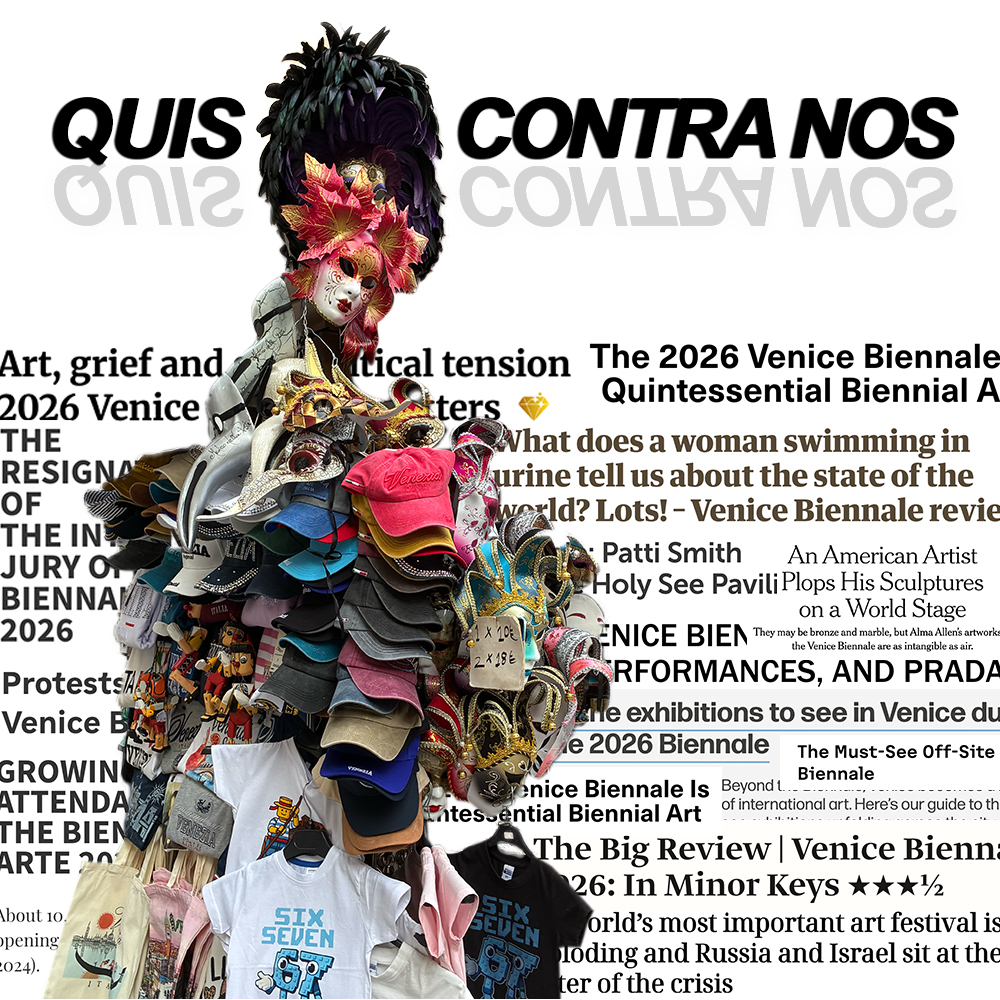
NM Content Today | Quis Contra Nos, Venetia (2026)
May 1800:53:36Tap to summarizeIf the stats are correct, 3,733 registered journalists attended the preopening of this year’s Venice Art Biennale, a group that is projected to produce some 2500 pieces of legacy media style coverage. It just so happens that we, too, were in Venice — there to install our work with Joshua Citarella, The Online Marketplace of Ideas, at the Palazzo Diedo for the “Strange Rules” exhibition curated by Holly Herndon, Mat Dryhurst, Hans Ulrich Obrist, and Adriana Rispoli. (Stay tuned for an ep next week with Josh discussing the collab in detail). And so here we are with our unaccredited, unsolicited content about Venice, alongside a bonus travel special featuring a visit to the Lake Garda home of Italian decadent poet Gabriele D’Annunzio (1863-1938). | Channel subscribers, please DM for access to image content and we'll send U pdf.
Transcribe →