Loading summary
Transcript34 lines
- [00:00]
A
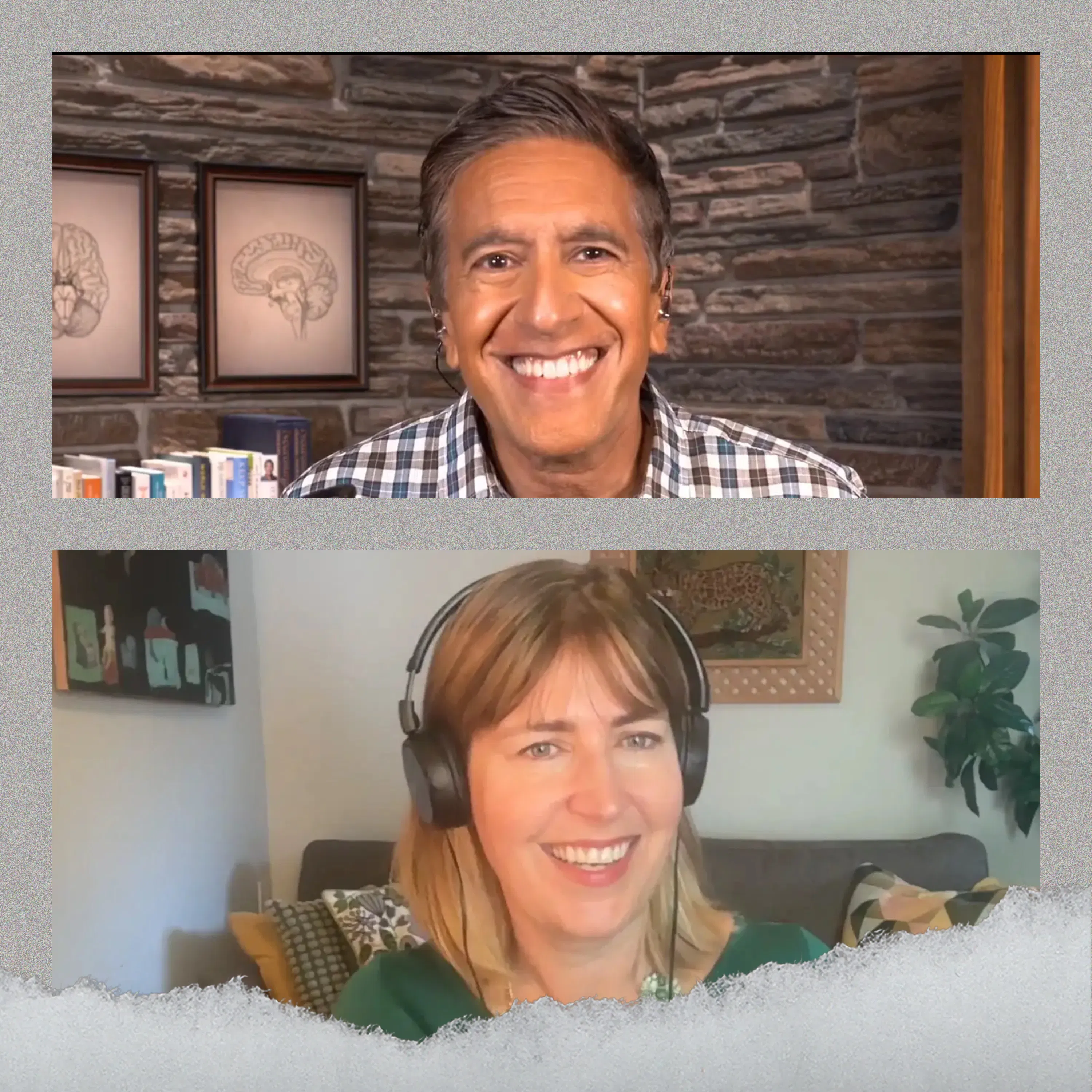
Foreign welcome to chasing life. You know, I have taken on a lot of different roles in my life. I've been a son, I've been a husband, a neurosurgeon, a journalist. But, you know, when I really think about it, I think being a dad to my three daughters is the most important role in my life, no question about it. Because I think no matter how busy things have become at times, that is the role that I always come back to. That's the role that seems to anchor everything else in my life. And my girls have gotten older. Now two of them are out of the house. I got one more who's starting her senior year now in high school. They've started to move on with their life. And as a result, I think it's really made me reflect on fatherhood in a new way. I think when you're in it, life is just so procedural. You're getting through one day to the next, sometimes just one hour to the next. But at this stage of life, you get a chance to reflect. And I've been thinking a lot more about how being a dad has changed me. How am I different, not only emotionally, but maybe even ways that I'm not even fully aware of. And my guest today has been thinking about this for a long time as well, has been studying this for years. Dr. Darby Saxby is a psychologist at USC who has been researching what happens to men as they become dads. How do their brains change? How do their hormones change? What happens to their mental health and to their other relationships? She is the author of a new book. It's called Appropriately dad the New Science of Fatherhood and How It Shapes Men's Lives. So today, dad brain, what is really happening to men when they become fathers? And what might we all learn from this? I'm Dr. Sanjay Gupta, CNN's chief medical correspondent, and this is chasing life.
- [01:59]
B
If you've ever blasted synth beats from your boombox or burned CDs for your besties, this one's for you. As people get older, much like their music tastes, their health needs change. AG1 is the simple daily health drink designed to deliver over 75 essential daily nutrients in pre and probiotics to support energy, digestion and mood. So you can make the most out of every decade and dance break. Learn more@drinkag1.com
- [02:27]
C
Mornings have a rhythm. You can hear it, feel it. And at Quaker, we fuel it with 100% whole grain oats and a good source of fiber in every bowl, helping you turn that rhythm into your soundtrack for a great Day fuel to start. Whatever's next Quaker official sponsor of FIFA World Cup 26I.
- [02:50]
B
Oh, let's go. Oh, let's go.
- [02:57]
A
I think sometimes the sentiment is moms are the natural parents and that dads are sort of catching up to moms in some way when it comes to parenting. I mean, I have three daughters, so maybe it's not a surprise that they tend to go to their mother for a lot of things, more things than they come to me for. I'm usually reserved for like the big sort of crisis sort of situations. But the idea that moms are natural parents, dads are catching up, how much of that is supported by science?
- [03:25]
B
Yeah, I mean, honestly, that was one of the big reasons I wanted to write this book is because I think we do have these really powerful narratives that women are wired to mother, that they're sort of built to instinctively know what to do with a young child. And dads are just clueless, right? They're. They're just not sort of, you know, equipped in the same way. And what I wanted to show and what the science is telling us is, is that we can all adapt to our circumstances and our demands. And so men are built with the brain architecture that can adapt to parenthood. And I think of caring and parenting not just as traits that you're born either being good at or not, but as skills that you can hone through time and repetition and practice. And so women are really socialized to expect to occupy a primary parenting role. And we don't necessarily raise our boys with that objective in mind. But there are men who can become really sensitive and really capable fathers. There are also men who might be absent from their kids lives. Right. So there's a big breadth of what fatherhood looks like. But I think when men choose to invest in care, they have a biology that reflects that. And so it's not so much that only dads are wired a certain way or only moms are wired a certain way. We're all wired to be flexible and adaptable and that's kind of our human superpower.
- [05:03]
A
Do the dad's brains, and I guess mom's brains for that matter as well, do they change in response to behavior? Or, or when you say hardwired, that almost makes it sound like they are hardwired to adopt a certain behavior, to adapt to certain situations. Is that the default position for dad's brains? Is that what you're saying?
- [05:25]
B
Yeah. So I mean like, if you think about not so much the mothering brain or the fathering brain, but there's this sort of shared parenting brain that helps us think about other people's minds, engage in social cognition. Right. So if you're thinking the parent of a young infant, you, you know, if you think about just in the first few minutes of a baby's cry, you have to be able to orient to distress, you have to be able to problem solve, to soothe. You have to be able to modulate your own irritation or emotion. You have to be able to find the interaction rewarding enough to want to repeat it. So all of these areas are areas of the brain that change in parenthood. Right. Like emotion regulation, salience detection, revision, reward processing, social cognition. And so those are sort of shared, but then there are some differences in how they emerge and when they emerge for both mothers and fathers. So in mothers, it looks like the brain starts to remodel in pregnancy and in the early postpartum period. And the influence of pregnancy hormones is probably driving a lot of that remodeling. For fathers, it looks more like a story of experience dependent plasticity. So, you know, where we think there's change happening in dads is as they start to interact with babies and spend time with them. So I found in my lab, we see bigger changes to fathers brains when they report spending more time with kids and when they find interactions with their kids to be more engaging. So it's father's motivation that seems to play a really important role in, in what's happening to men's brains. But where you see the changes are in some of the same parts of the brain.
- [07:10]
A
What sort of changes are we. Are we talking about here? Like, if you were to look at a highly engaged dad's brain, someone who's highly engaged with their kids, what are the changes and what do they fundamentally mean?
- [07:23]
B
Yeah, so what we see from prenatal to postpartum in both moms and dads sounds scary to some folks, but we think is adaptive, which is a loss of gray matter volume. So when we're losing brain volume, it's tempting to adopt kind of a deficit framework that you have less brain, but it actually seems to reflect a process of becoming more efficient and more streamlined. So we also lose gray matter volume in early childhood as we prepare for school age, for example. It reflects a process of learning, and we kind of become canalized along certain pathways. And so where you see volume reductions are in what's called the mentalizing network. And that's the part of the brain that helps us think about other people's minds. And it's considered kind of a seat of empathy. And so you see some kind of shrinkage and streamlining in those areas. When you compare expectant moms and early postpartum moms, as well as expectant dads and early postpartum dads, you seem to be seeing this shrinkage across the transition to parenthood. What it looks like from some of the newest studies of moms is there's also a rebound effect. So it's really like a U shaped pattern of change. And that's likely what we'll see in dads as well. But we're still doing the longitudinal studies to kind of look at that time course in dads over months and years.
- [08:52]
A
So what does it mean then? What, what does someone experience when they have these changes in the brain?
- [08:59]
B
Yeah, so they might feel like they're more able to focus on understanding what a new baby might be thinking or feeling. And so they're sort of honing their ability to essentially bond with a new baby. And that's what the research seems to be telling us, that when the brain changes more, and this is true in studies of both mothers and fathers, and there is better bonding, so that these brain changes, which appear to be really normative in pregnant and newly postpartum women, and a little more variable and experience dependent in dads, these changes are kind of supporting the construction of a healthy parent child bond. And that's probably due to that increased sensitivity and understanding of what a baby needs.
- [09:56]
A
Just compare fathers to non fathers. When you look at that men who become fathers versus men who never have children, is something like testosterone level likely to be different? Men who are fathers have lower testosterone levels.
- [10:14]
B
Yeah. So actually one of the best studies of this was done in the Philippines by Lee Gettler, who's a researcher at Notre Dame. And he had a very large kind of population level cohort of men who he followed from pre parenthood. So starting in their late teens, early 20s. And so there's been a lot of work on both human fathers and then in biparental animals like birds and primates and rodents, finding that testosterone does drop around a transition to fatherhood. And, and Gettler's study was really clever because he had this long term design, so he could answer the question of is it that lower testosterone men are selecting into fatherhood and so testosterone starts low and will stay low in these men, or is there something about becoming a father that changes our testosterone level? And what he found is actually that the higher testosterone men were more likely to become fathers across the study observation time period. But they then showed lower testosterone if they were partnered and living with children. And men who were spending more time in hands on care showed the lowest testosterone levels of all. And so we think that testosterone is tied to our reproductive strategy and our caregiving motivation. And some of the first work on this was actually done in birds and found that testosterone levels are high at the start of breeding season and typically drop after mating has been accomplished and chicks are hatching. And it's that, you know, it's somewhat costly for the body to maintain really high testosterone levels in perpetuity. And we don't necessarily need them if our objective is to invest in caring for children. So we need high tea if we're competing for lots of mating opportunities and we want to maximize our odds. But if we're shifting from a mating oriented reproductive strategy to more of a nurturing oriented reproductive strategy, testosterone will not necessarily play as essential of a role.
- [12:30]
A
That's fascinating. I mean, I guess this is sort of an evolutionary biology sort of explanation, the idea that the higher levels of testosterone play a role, but then when you have your kids and you're an engaged caregiver, it's sort of met its purpose in some ways, which was to mate and have children and now care for the children. So now you don't need testosterone levels that are as high. This is a theory, obviously, right? I mean, or is this pretty well founded?
- [13:01]
B
Well, I mean, there's a pretty solid literature at this point, and like I said, across both humans and animals, linking testosterone to reproductive transitions in men. And I think the, the subtlety to sort of keep in mind is we're not talking about medically low kind of risky levels of dampened testosterone that will interfere with men's well being. We're talking about sort of natural fluctuations. And, and those fluctuations appear to, you know, kind of reflect our social role. And so t might drop in early parenthood, it might rebound, you know, maybe when a dad is thinking about having additional children. So, you know, we want a biology that is sort of linked with our life circumstances and demands.
- [13:54]
A
Quick question. Same sex couples, were they part of your study at all? Do you, is it different for same sex couples in terms of the actual changes happening in their brain, or did you not study this?
- [14:06]
B
Yeah, we still don't know very much about same sex couples because most of the studies have focused on heterosexual couples with, you know, limited sample sizes. I felt like I wanted to be able to fully do justice to same sex parents, which would really require having, I think, a whole study where they're adequately sampled and you can look at their variability there. There is one study of same sex parents that was done in Ruth Feldman's lab in Israel. And in the heterosexual parents, she looked at primary caregiver mothers and secondary caregiver fathers. And what she found is really interesting, which is that the primary caregiver gay male dads had brains that looked a lot like the primary caregiver moms. Which to me shows you just how much the male brain can adapt to parenthood. Right? There's no mom brain that only is owned by women. It's a parenting brain that develops when somebody is in a primary caregiving role.
- [15:09]
A
Up next, leaning into your dad's superpowers, even if you're not a dad. We'll have that after the break.
- [15:19]
D
This episode is brought to you by Google Health. Stop chasing someone else's definition of health. What matters is what's healthy for you. Google Health offers a new kind of coach built with Gemini for effortless tracking, sleep insights and holistic coaching tailored to you. Visit googlestore.com to learn more and start a new relationship with your health. Requires Google Account, Google Health app Internet and Google Health Premium subscription. Features subject to change availability and results vary. Not intended for medical purposes. Works independently of Gemini apps. Check responses for accuracy.
- [15:49]
C
If we knew more about our sleep, what would we do differently? Would we go to bed at a consistent time or take steps to reduce interruptions to our sleep? With sleepscore, Apple Watch measures your bedtime consistency, interruptions and sleep duration. Then every morning it combines these factors into an easy to understand score from 1 to 100. So you'll know how to take the quality of your sleep from okay to very high. Know your sleep score With Apple Watch iPhone 11 or later required
- [16:22]
A
this idea again of behavior driving neuroplasticity versus your brain being hardwired to sort of inform your behavior. I get that there's probably a two way relationship to this like you sort of alluded to, but I'm just wondering if you can explain that. So for example, you said that these changes that happen in my brain as a dad around the time that my kids were born, as part of those changes, it may have made me more attentive to my children, understanding their communication when they were crying before they could speak, all these types of things that empathy. But may have also put me at higher risk of not sleeping as well, having depression, having anxiety. Was that preordained? I mean, like, is that something that fathers who are listening to this podcast can just reasonably expect?
- [17:17]
B
Yeah, I mean, I Hope that fathers who are listening don't say, oh, wow, okay, I need to get out of this parenting relationship. It's not serving me well, you know, quite the contrary. And in fact, some of the newest research suggests that parenting experience is actually really neuroprotective for the brain in late life. So we can hopefully come back to that. But the question of whether it's preordained is interesting because our cultural expectations for fathers change so much across history and across societies. So I talked to an anthropologist who's looked a lot at hunter gatherer societies, and in those societies, you actually have more egalitarian gender roles a lot of the time, because women are bringing in essential calories through foraging. And so you have fathers who are very involved and hands on and active in care. He studied one society where males are within arm's reach of an infant 47% of the time. So it's very common for men to be holding young babies, you know, sitting in a circle, drinking wine, and everybody's got a baby or a toddler on their lap. So, you know, there are a few universals when it comes to parenthood and especially when it comes to fatherhood. And the degree to which it's risky to our mental health, again, I think comes back to what is the level of societal support for parents. We don't raise kids in a village anymore in the way that maybe we evolved to. And so many parents find themselves socially isolated and cut off from their networks. And I think that is one reason why parenting stress can be so pernicious. And I think that can be experienced by dads as well as moms, depending on how involved dads are getting.
- [19:11]
A
I want to ask you about some of the lessons that people should take away from this, but maybe this is a good opportunity to jump into one of those. So I will tell you, just, just candidly speaking, I think everything you said sort of tracks for me in terms of, I think how I was feeling around the time that I had kids. And. And to be totally honest, Darby, you know, in the. In the beginning, I had a harder time making the connection that seemed to come so easily to my wife. You know, it just took me a little bit longer, but when it came, it was there and it was powerful. They were sort of these amorphous blobs in the beginning. And, you know, I needed something back in terms of like, show me some interaction. But as soon as it came, and it might have even been eye contact or babbling or reaching out and touching my face, whatever it may have Been, it was like, okay, now I get it. But the idea of anxiety and depression and sleeplessness, Sleeplessness, just because you have a young baby in the house, they wake you up at night. The anxiety of the fact that I now have this other human and subsequently three humans that I have to care for, that raises a certain amount of anxiety. You know, just the finances and all that sort of stuff. And maybe the idea of the depression is a little bit more that, you know, you have. I had a different life before I had kids. And so you, you have, you. You see the death of certain parts of your life that are gone, at least for the time being.
- [20:40]
B
Yeah, yeah. I mean, I think we think of postpartum mood disorders as, you know, again, a mother only phenomenon. But there's plenty of evidence that depression and anxiety risk are increased in new dads as well. So the prevalence in new fathers of depression is twice that of men in the general population. Like, these are riskier times for our mental health. And I think everything that you just described, right, your identity is changing, your relationships are changing. And I also think what you said is something I heard from a lot of the dads I talked to, which is that they feel a little left out from the kind of charmed circle of the mother baby relationship right after birth. And that's compounded by the fact that for a lot of men, their primary social support relationship is with their partner. All of a sudden she's totally preoccupied, right, because she's got these. This baby to care for. And so the couple relationship can also struggle. And so men can find themselves kind of a little bit adrift. And exactly what you told me I heard from other dads, that they really felt like once there was more they could do and they could get to know their children better, it started to get a lot more fun. And so I think that's another message to dads in this book is, you know, don't worry if it feels challenging. Like anything that's worth doing could be hard, but requires practice, requires time. You can build that confidence. But you may find that your best window for fatherhood is when your kids are teenagers and, you know, you have a totally different kind of relationship with them.
- [22:22]
A
I am, I'm sort of fascinated by this idea again, that the brain is changing. There's these gray matter volume reductions in certain areas of the brain. It seems to correlate with certain patterns of behavior at different times in life. But then ultimately, I think the point you made earlier is that it can be neuroprotective, ultimately to be a parent. In this case, we're talking about dad specifically. How does that work?
- [22:49]
B
Yeah, this is a really interesting new line of research that's been coming out of one of the biggest sources of data is the UK Biobank studies. And so this is a big repository of scans, tens of thousands of neuroimaging scans from adults in their 50s and 60s and beyond. So kind of mid to late life. And what they found is that parity. So whether or not you're a parent and then the number of children that you have, it's linked with markers of sort of a more youthful brain. So if you use a brain aging algorithm to try to figure out how old the brain looks and then compare it to a participant's chronological age, you can kind of measure the brain age gap. And it looks like the more children you have, the more you look younger than your chronological age when it comes to the appearance of the brain in brain scans. And that's really interesting, I think, because as we just talked about, some of my work shows some kind of risk factors in the early postpartum window. But ultimately, over the long term, there seem to be this benefits. And so the brain age is reflecting structural brain data. There's also work on resting state. So resting state is another kind of functional brain scan where you're looking at connectivity of the brain at rest. And so you're kind of looking at what parts of the brain are talking to what other parts. And again, there's evidence that when older adults have been parents, they show kind of livelier, more connected patterns of brain resting state. So there's sort of these dual sources of evidence that there seems to be some resilience that comes when people have parenting experience and when you look at them in later life, it's clearly something about parenting experience that is important. And my hunch is it's something to do with social integration. When you've had kids, you are less likely to be isolated. You're more kind of tied to other people in your life. And we know that relationships are really protective in aging, especially for men. And so I think this brain health literature is kind of reflecting that.
- [25:14]
A
Just in closing, we've talked a lot about, I think, surprising similarities between the dad brain and the mom brain, especially at that phase of life when you're becoming parents, are there sort of superpowers of dads? You know, you think, I don't know, roughhousing, things like that, Just the different type of engagement that that dads might have versus moms. Is there is, is there A hidden superpower, definitely.
- [25:38]
B
Yeah. There are some really special ways that dads play with kids. And so when we think about father child play, we often think about kind of vigorous, like what's called proprioceptive touch, which is like picking a baby up, chasing them, tickling them, just that really, like, active kind of hands on play. And kids really enjoy that kind of play. It's thrilling and they benefit from it. Right. There's evidence that when kids have more father play time, they're more confident with their peers and they're more comfortable taking risks. So it's a really healthy form of play. And, you know, I always want to be careful as a researcher. I never want to be like a biological essentialist. Like, dads are driven to play in just this one way and moms always play in this way. Like, I think we need to be really, you know, subtle about these distinctions. And it's probably socialization and then a little bit of biology too. And what's interesting is you see that signature kind of father style play, even in like male mountain gorillas and other primates, that there's that sort of active approach to interacting with kids that seems to feel really unique.
- [26:57]
A
Do you think there's a lesson for everybody, I mean, even if you're not a parent from what your research has shown?
- [27:05]
B
Definitely, yeah. Which is, I think, you know, you just use the word superpower. I would also say our superpower as humans and is that we're adaptable, we're flexible, our minds and bodies can shift according to what the environment needs from us. And that's what makes us resilient, that's what makes us humans able to occupy lots of different ecological niches and survive and raise healthy offspring. And so we're all kind of built to have these brains that can parent and that can care. We evolved as cooperative breeders, which another way to say is alloparents. We raise children collectively. That's how we were kind of designed to operate. And so we all have this kind of architecture that makes us empathetic caregivers. We have these big social brains that motivate us to look out for the vulnerable. And I think that's a pretty powerful set of traits.
- [28:15]
A
And that was Dr. Darby Saxby, professor of psychology at the University of Southern California. She's the author of the book dad the New Science of Fatherhood and How It Shapes Men's Lives. You can find it anywhere you get your books. Thank you so much for listening and happy Father's Day Day. We'll see you next week.
- [28:43]
C
Ryan Reynolds here from Mint Mobile. I don't know if you knew this, but anyone can get the same Premium Wireless for $15 a month plan that I've been enjoying. It's not just for celebrities. So do like I did and have one of your assistant's assistants switch you to Mint Mobile today. I'm told it's super easy to do@mintmobile.com
- [29:01]
B
Switch upfront payment of $45 for 3 month plan Equ equivalent to $15 per month required intro rate first 3 months only then full price plan options available, taxes and fees extra. See full terms@mintmobile.com the most memorable gifts aren't found, they're made. Zazzle is a custom marketplace where you pick any product, a mug, a card, a tote, a phone case and make it personal. A photo, a name, an inside joke. The kind of gift that actually fits the person. That's what 30 million customers have been coming back to Zazzle for over 20 years to find. Right now, save 25% on your first order@zazzle.com that's zazzle.com make it zamazing.