← Chief Change Officer™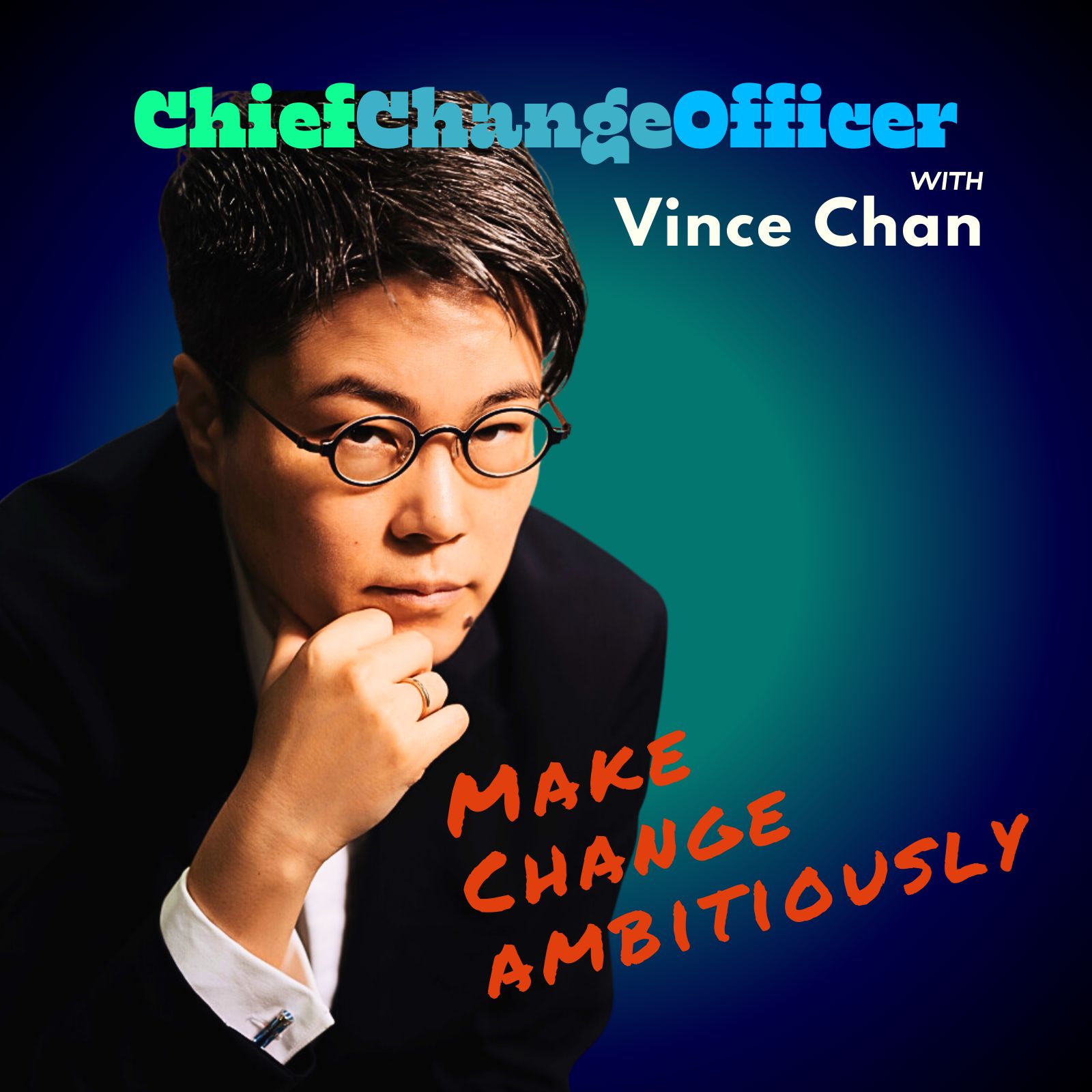
Chief Change Officer™
Deborah Perry Piscione: The End of Traditional Work Begins — Part Two
00:24:15
Traditional employment is on life support, and Deborah Perry Piscione is here to explain why. In Part 2 of this two-part series, she breaks down the radical shift in how we work, hire, and learn—plus what it means for companies that refuse to adapt. This isn’t about quitting work—it’s about reinventing it. Listen now before your job description gets disrupted out of existence. This is Part Two of a 2-part series.
Loading summary
Transcript13 lines
- [00:14]
Vince Chen
Hi everyone. Welcome to our show. Chief Change Officer, I'm Vince Chen, your ambitious human host. Our show is a modernist community for Change for progressives in organizational and human transformation from around the world. A few days ago we published a three part series with George Dream, the co author of the book Employment is Dead. But we are not done yet. We are doubling down on this conversation today. I've invited his co author Deborah Perry P. An entrepreneur, Silicon Valley Insider and best selling author of the book Secrets of Silicon Valley. Before diving into the world of startups, Deborah spent 18 years in Washington D.C. working in the White House, on Capitol Hill and as a political commentator for msnbc, Fox News and cnn. But everything changed when she moved to Silicon Valley. Instead of politics, power and division, she discovered a culture built on collaboration, innovation and risk taking. That shift led her to build six companies, write multiple best selling books, and now co found the Work3 institute helping businesses navigate the future of work. We're featuring Deborah in a two part series. In part one we explore her incredible journey from shaping policy in Washington D.C. to securing venture capital through a chance encounter at a Starbucks. She shares how risk taking, adaptability and breaking the old rules shaped her success. Then in part two we tackle the future of employment, why degrees aren't what they used to be, how AI and Web3 are reshaping jobs, and what companies must do before it's too late. And of course we'll answer the big question, Is employment really dead? Get ready for bold eye opening conversation. Let's jump in. I had the privilege of reading through the book before it was published. Now I'll be honest, I skim through a lot of it. Certain chapters really stood out to me, especially the one on credentials. Before starting my podcast, especially before COVID I, I was deeply involved in the learning and education technology space. I was speaking at conferences around the world on the future of work, including south by Southwest. So when you covered credentials, education and training, that chapter really caught my attention. Now looking at one of the quotes from that chapter you wrote, getting more employers to rethink their degree requirements will take hard work. Employees have grown up in a system where the four year degree is the proxy and that's a perception that it's risky to do things differently. I completely agree, but the big question is how do we actually change that mindset? What's your take on making this shift happen?
- [04:29]
Deborah Perry Pistroni
I'll share that I'm living this. I have twin boys. Both would have been sophomores in college by now. One is at a traditional four year college the other one got wait listed at Harvard and was thinking about the Naval Academy as well. And he had started a business during. He had started a streetwear company called faith versus fury during COVID because he was 15 and very bored sitting at home. The business sustained him in a six figure annual revenue. He knew that he wanted to take a gap year and he took that gap year in South America and Antarctica. And some of the experiences that he had down there are what we look for in entrepreneurs. It's really about survival. It's about when things go really awry or go very tough, are you able to carry through? And my son Drake had many risky situations including crossing the Drake Passage, being pulled off a bus in the middle of the night in Argentina and being left in the cold. But it's learning how to survive and what you come to realize. He fully intended to go back to university, but at the end of the day he didn't realize the value based on what he was going to spend. And both my boys are off the payroll. The other one made nice money on NFTs and crypto. I told him I would pay for private school in K through 12, but they were on their own in college. They were going to have to figure it out. And so when you look at the growth or the maturity when somebody goes through difficult experiences, that's really the future of skills and the mindset that individuals need because there's going to be no guarantees moving forward. We are not going to have the security of the big company behind us anymore. So looking back, we've missed out on so many extraordinary young people because they couldn't afford to go to school. And many of those young people have had the most traumatic situations growing up, whether they were in the foster care system or single parent drug infested environments. I've worked with a lot of these kids. They are unbelievable positioned to be entrepreneurs. And everybody has to think of themselves as an entrepreneur moving forward. It's the only way to survive. And Google and many of the companies in Silicon Valley kind of set the trend and said we don't. And Peter Thiel, of course, we don't want to wait for you to the smartest to waste their time on a four year degree continuing to sit in a classroom. We want you to come work at Google as a high school graduate and just get moving. And so this idea around apprenticeships or certifications in AI, which many of them are free now. My son who opted not to go to school ended up paying for a certificate program at Cornell. But many of These programs are free. And so I think it really the onus is up to the individual to feel secure enough in themselves. Is my son who doesn't go to college going to get a job at Goldman Sachs? Probably unlikely, but there are many companies in Silicon Valley that recognize the value of that individual rather than a degree that's on a piece of paper, if.
- [08:15]
Vince Chen
I'm hearing you correctly. And I say this aligns with my own perspective as well. Some jobs still operate within a value system where having a degree is essential. Take for example a two year mba. When I was on a call with Josh, I told him, you and I are both beneficiaries of a formal brand name degree. He went to Harvard Business School, I went to Yale School of Management and I even earned two MBAs myself. Now I'm 51, turning 52 soon. Which means I grew up in the 70s in a world where the playbook was clear. Study hard, get a degree, work hard in a corporation, climb the ladder, that's success. That was the mainstream and proven belief at the time and there was nothing inherently wrong with it because it worked in that era. But with the Internet and new technologies, the world has changed. We're now exposed to so many more possibilities with different ways to achieve the same goal. If you want to earn a million dollars a year, there are multiple legitimate legal ways to do it. In the past, one clear path was joining Goldman Sachs, earning a solid salary plus bonuses. And if it was a good year, you would hit that million dollar mark or even more. And that's still a path that works for some people today. But does that mean going to Goldman Sachs is outdated or not trendy anymore? Not at all. It's still the perfect fit for certain individuals. The same goes for Google, any other top tier company. It all comes down to to finding the best fit for your needs, skills, interests and strengths. I believe if technology can be open source, then career development can be open minded in the same way. In the end, technology is the enabler of it doesn't dictate how we succeed, but it empowers us to choose our own version of success.
- [11:12]
Deborah Perry Pistroni
Yeah, and that's why we talk about the bifurcated work track right now. There's options. Who fathomed that we could actually make money off cryptocurrency, a digital asset or an NFT and make a lot of money. I think at the end of the day, we've now evolved into this portfolio career. It's almost like what was heralded during our generation is almost frowned upon now. It's about maximizing the T shape of who you are. Maybe you take advantage of the vertical aspect of you in what you studied, but the horizontal part of you is really about all the things I'm interested in, all the things I'm passionate in. Now I can actually make money at these things. It really is. In some respects, I think many of us, we look back so favorably on what we call simpler times. But I also struggled greatly. And I'm not saying anything that that struggle didn't help me enormously. But now this next generation, how lucky they are. If you are entrepreneurial, if you are comfortable taking risks, that you can cobble so many things together, you can work with upwork, you know, that platform when you need certain projects. And then eventually we'll see the blockchain and smart contracts and DAOs and all sorts of other technologies coming into play where we can work from anywhere at any time and really engage in the things that we love to do versus the things we have to do.
- [13:05]
Vince Chen
So far, we've talked a lot about what we as individuals can do, how we navigate our careers and lives in this new era. But for employers, it's a whole different challenge. In your book, you lay out a full transformation map. And when I saw it, I thought, wow, that's a lot a company can do. Let's say I'm the CEO of, of a sizable company, and you and George come to me and say, vince, there's so many opportunities to rethink and transform your organization. My first reaction would be, great, but where do I start? What would you advise me to tackle first? The one thing I absolutely must focus on before everything else.
- [14:11]
Deborah Perry Pistroni
The first thing is great transparent communication with your employees and really learning. That's why I say that one of the most important roles moving forward is that Chro. Of course, a Chief AI Officer is going to be critical with the cto, the Chief Innovation Officer, the Chief Information Officer. But it is going to be about people and what their level of comfort is, where they feel comfortable upskilling, where they feel comfortable using AI. Where are those learning gaps that we can help support as we make this transformation. So a lot of it is rather than just the technology aspect and the integration that's going to happen, that's going to happen no matter what. It's really bringing people along on the train and making them feel comfortable in what's about to happen. And I will always go back to that example, when IBM was transitioning from a hardware company into consulting and other elements, that CEO really went around the world, talking to IBM offices everywhere and say, look, here's what's happening. Our organization is making a radical shift. We want you to be a part of it, but we understand if you're not comfortable moving into this next generation, we'll help you find a new job. I don't know that in this day and age companies are going to be willing to help people find other opportunities because everybody's going to be dealing with massive shift. But it really is about making work more human and making your employees feel like they're a part of the family. Because every person has played a role in the success or sometimes the failure of a company. So for those who help make your organization successful, just be human, be empathetic and really just allow your guard to come down to let people know that you are there for them no matter what. And you're going to help in this transition. If where the future of the company is heading doesn't work.
- [16:29]
Vince Chen
Great. Now, last question of the day. But before I ask, let me share a quick story. A friend of mine has a niece, 27 years old. She still hasn't graduated from college. She's been stuck in school, hasn't worked a single job, not even part time. Not volunteering, not freelancing, not investing, nothing. Her parents, who are middle class, fully support her. But in their eyes, she isn't being productive, not even trying to do anything meaningful. It's not about making big money, it's about learning something, adding value, contributing in some way. But she seems to have taken the idea of not needing a traditional job to the extreme, believing that work itself isn't necessary for her generation. Now, the reason I bring this up is because your book is titled Employment is Dead. I understand what you mean by that. I don't misinterpret it, but I can see how some people might. They might take it at face value and think, oh, we don't have to work anymore, we don't need offices, five day work weeks, or even jobs at all. I don't think that's the message you're trying to send. So my last question to you is this. Do you really believe employment is dead? And more importantly, what is your true interpretation of that phrase? Whether someone watching this is 15, 25, 35 or 45, how do you want them to understand what you mean so the title doesn't get misinterpreted as something superficial.
- [18:59]
Deborah Perry Pistroni
It's such a, it's such a great question. I really appreciate, appreciate you asking me this because no one's ever Asked me this before, but obviously we are taking on traditional employment in a command and control Taylorism setting where people are just cogs on a wheel. They don't have emotions, they don't have feelings, they're just there to do a job. And we are in this era where we don't have to take that anymore. We don't have to take someone's crap of making us feel bad. We, what we do need to recognize is we are in the era where we have the benefit of embracing life stage flexibility. Now the point, and obviously I don't know all the circumstances, it's not helping anybody if you've got a 26, 27 year old who's downstairs in the basement and who plays video games all day and doesn't contribute to the rent or the food or things. Best thing you can do for any individual is get them out there to figure out survival because they'll learn so much about themselves. And so that would be not my parenting recommendation. But even just from a neuro standpoint, if we don't use our brain just like we don't use our physical bodies, eventually we deteriorate. And so it's really important that people identify authentically with what their interests and passions are and then figure out how to make a living on that. So the, the real messages that we want to get out there is traditional nine to five work has not worked for a long time. You could be a recent college grad and want to be in an office five days a week, but you don't need to be there all those hours. We can reduce traffic, we need to fix the planet, we need to clean it up. But maybe you've had your first child and you only want to work two days a week and AI is going to give us that opportunity to do. And so we're at a remarkable period of time in which we have more choices, more, more opportunities than ever before. And so it's very exciting not only to see where work is heading, but where we as individuals head. As individuals, as family members, as community members, we are going to be in a, in an era of not necessarily utopia, but certainly to have more freedom in the way that we want to live life and not be so beholden.
- [21:34]
Vince Chen
To traditional embrace life stage flexibility with purpose. We need to work, we need to contribute, put in the effort and build our lives and careers. There are so many different ways to do that now. That's the message. In that sense, employment isn't dead, is just evolving. The traditional model may be fading, but it's being reimagined in new and meaningful ways.
- [22:12]
Deborah Perry Pistroni
Absolutely.
- [22:14]
Vince Chen
Deborah, thank you so much. I really appreciate you taking the time for this conversation. And congratulations on the entire journey of putting this book together. If I make it to the US I'll be sure to grab an autographed copy from both of you.
- [22:34]
Deborah Perry Pistroni
Yes, absolutely we will. I know Taiwan and I think China has bought the book as well, so we'll definitely be in Asia at some point. But I do want to share that you've asked me some very interesting questions and I thank you for that because it makes it for a much more dynamic interview.
- [22:52]
Vince Chen
Of course, I'm not Bloomberg. I don't ask cookie cutter questions. And that's the web. On this two part series with Deborah Perry Pistroni, we've torn apart old, dated career playbooks, reimagined what work could be, and tackled how both workers and companies must evolve. The question now is, are you ready for what's next? Because the future of work isn't coming. It's already here. If you found this conversation valuable, share it, rate the show, and let's keep pushing these conversations forward. Thank you so much for joining us today. If you like what you heard, don't forget, subscribe to our show, Leave us top rated reviews, check out our website and follow me on social media. I'm this Chen, your ambitious human host. Until next time, Take care.