← Chief Change Officer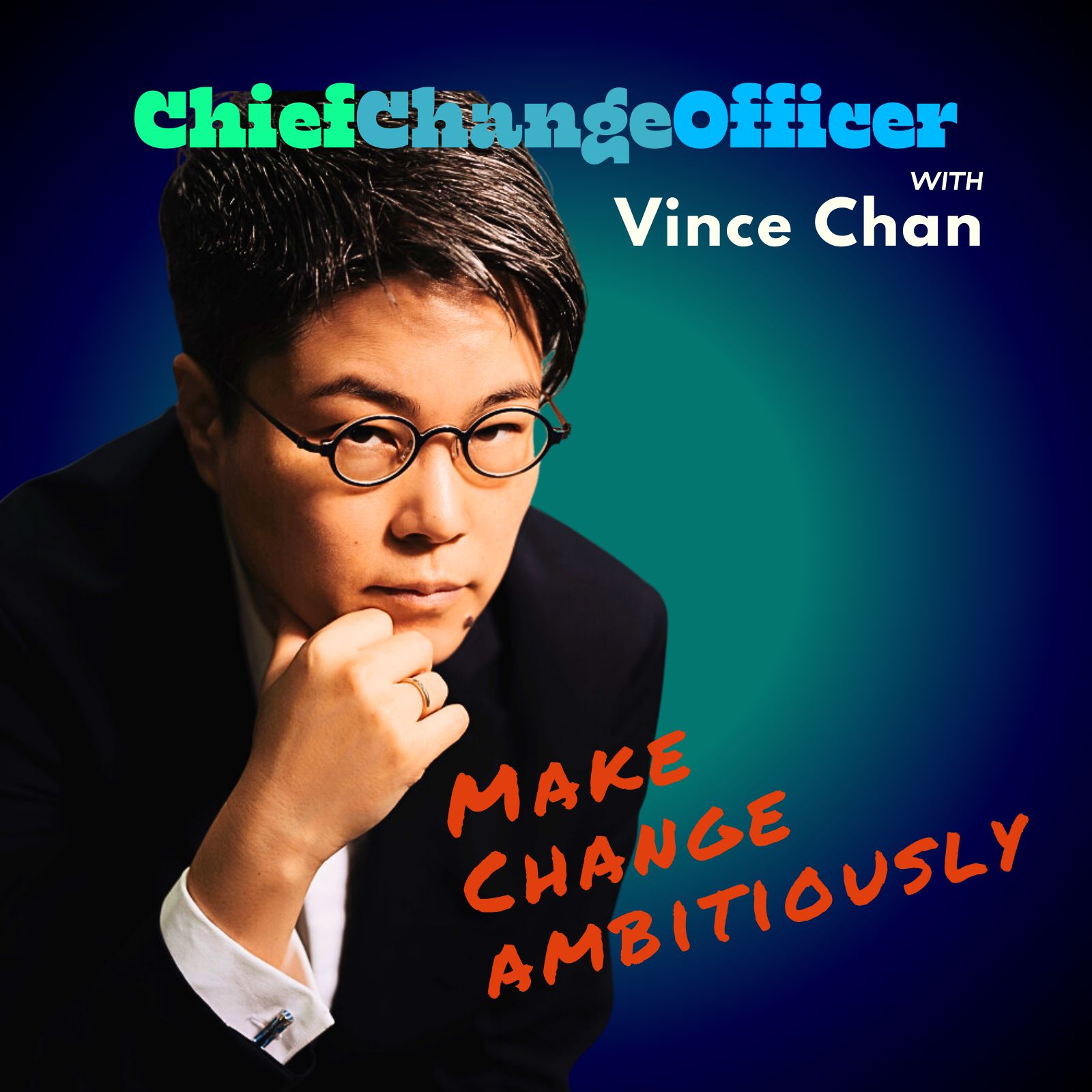
Chief Change Officer
Overalls COO Alison Stewart: Laundry, Leadership, and the Business of Caring – Part One
00:22:52
When COVID flipped the script, Alison Stewart, now COO of Overalls, swapped corporate comfort for bold innovation—one spin cycle at a time. With LinkedIn as her launchpad, Alison embraced change and redefined employee benefits. What’s laundry got to do with it? Everything. Listen in to hear how she turned her pivot into purpose. Part One.
Loading summary
Transcript21 lines
- [00:01]
Intuit QuickBooks
Start a business that sells and designs decorative plates. Find out. You have to keep up with invoices and paying vendors realize that you're better at selling plates than keeping them spinning. With Intuit QuickBooks, you can make quick work of unpaid invoices and auto track expenses all in one easy to use place so you can keep spinning selling those plates. Manage and grow your business all in one place. Intuit QuickBooks your way to Money Money movement services are provided by Intuit Payments, Inc. Licensed as a Money Transmitter by the New York State Department of Financial Services.
- [00:30]
Talkspace
This podcast is sponsored by Talkspace. You know when you're really stressed or not feeling so great about your life or about yourself? Talking to someone who understands can really help. But who is that person? How do you find them? Where do you even start? Talkspace Talkspace makes it easy to get the support you need. With Talkspace, you can go online, answer a few questions about your preferences, and be matched with a therapist. And because you'll meet your therapist online, you don't have to take time off work or arrange childcare. You, you'll meet on your schedule wherever you feel most at ease. If you're depressed, stressed, struggling with a relationship, or if you want some counseling for you and your partner or just need a little extra one on one support, Talkspace is here for you. Plus Talkspace works with most major insurers and most insured members have a $0 copay. No insurance, no problem. Now get $80 off of your first month with promo code SPACE80 when you go to talkspace.com match with a licensed therapist today at talkspace.com, save $80 with code SPACE80 at talk.
- [01:30]
PEMCO Mutual Insurance
This message comes from PEMCO Mutual Insurance Company. At PEMCO, their mission is to help customers worry less and live more. That's why they're all in on sharing prevention tips that empower you to prevent some of life's pitfalls before they happen. Visit pemco.com prevention.
- [01:55]
Vince Chen
Hi everyone. Welcome to our show. Chief Change Officer, I'm Vince Chen, your ambitious human host. Our show is a modernist community for change, progressives in organizational and human transformation from around the world. Are you thinking about stepping away from corporate America? Or maybe you've already left? You're still trying to figure things out? If so, this episode is just for you. Today I'm sitting down with Alison Steward, who made the big shift from the stability of corporate Life, specifically over 10 years in finance and insurance, to the chaotic world of new ventures. Her new baby focuses on redefining employee benefits and experiences. And she made this leap right in the middle of COVID This is actually part one of a two part series. Today we are diving into the personal changes Alison has experienced, her motivations, the steps she told, and her LinkedIn story of connecting with her current co founder. Tomorrow we'll talk about the new venture called Overalls, which is making waves in the employee benefits space. They're building a network of life concierge, including stay at home parents, the underemployed and the retirees, and linking them with employers to help reduce the day to day stress on employees. Will this model make employees feel more loyal, more willing to return to the office? We don't know yet, but it's definitely an idea worth exploring and building. Let's dive in.
- [04:47]
Alison Stewart
Morning Vince. Thanks for having me.
- [04:50]
Vince Chen
Alison works in the employer employee space. Before we look into that though, let's get to know her a bit better. Alison, tell us about your career journey, your evolution and the transformations along the way. Then we'll explore different elements of what has brought you here.
- [05:19]
Alison Stewart
Yes, I'm Alison Stewart. I get to call Massachusetts home in the United States, just north of Boston. And my career has largely been focused in the insurance industry. Right out of college, I think I actually prioritized location over job, but moved to Washington D.C. had a great group of colleagues and worked as the insurance broker. Didn't think that's what I wanted to do long term. Spent about five years with that company and then went back to business school to figure out my next debt. And from there took a really interesting internship, spent some time learning about coffee and doing marketing. Had a lot of fun, but really found that I enjoy change. I don't want to be in a vertical in my career. I didn't want to grow up in a specific lane, which was the case at the company that I was working for. In that marketing role, just continuing to only touch marketing, I found I really gravitated towards operational roles where you just naturally have your hands in more things. And so despite my best efforts after business school, I ended up back in the insurance industry at a large insurance carrier that had this program where they took really talented folks and moved them around in an organization in an internal consulting role which really helped feed that desire in me to keep learning and try different things. And so that was a really great experience. And through that, you know, my business unit was sold and I was introduced to a new company, another Fortune 100 company, very large environment, and got to a point where I just felt like the impact I Was having wasn't what I wanted it to be. Large companies are great. They offer a ton of benefits, but I really wanted to try to do something that was a little bit more risky. I wanted to find something that I could learn and grow faster. And that's how I ended up where I'm at today. I'm at a company called Overalls, and we're an employer benefit personal assistant for the workforce. And I've been growing this company for the last three years, and it's been amazing.
- [07:41]
Vince Chen
Earlier you mentioned you actually enjoy change. We talked about growth, about risk. And I find it interesting because the show is called Chief Change Officer, where we dive into change from all angles, organizational, personal, and beyond. But when you say you enjoy change, let's be real. Most of us enjoy change when we own it, when we are in control. So tell me, what is it about change that resonates with you personally? I remember you once told me that growing up, you experienced quite a bit of change. Would you say those early experiences prepared you for all the transitions you've navigated as an adult?
- [08:44]
Alison Stewart
Yeah, absolutely. So growing up, I moved around a good amount. Nothing crazy, but between the ages of 5 and 14, I moved five times. Moving from south in the United States to north. Not cross country, not international, not. He's like crazy cultural changes, but these shifts where as an elementary school student, as a middle school student, as a high school student, very trying times or big developmental changes going on at that age, and then having to navigate new communities, make new friendships. And I think certainly that experience growing up has helped me really get excited and look forward to change in ways that I think some people around me are maybe more hesitant. And when we first started moving, I think the first two moves I was hesitant and I had built great friends and I was very sad to leave them. But then once I got to the new community, I realized that I didn't have to leave my old friends behind. I could still. This is before Facebook and all of the means of communication that we have today, but I was still able to keep in touch, writing letters, visiting a friend's, but at the same time build a new network and meet new people. And that was always very exciting to me or became very exciting to me through my experience moving around. And I do believe that's what has that kind of shaped how I think about change and understanding that sometimes, as you mentioned, change happens to you. And that is a very different experience experience than you driving and controlling that change. But I really think that it's a mindset shift. So change is being forced on you in some cases. When I was at a company and my business unit got sold, that was a forced change. I didn't necessarily want to go to this new company, wasn't sure if I was going to have a job at that new company. I was also pregnant with my second child. I gave birth a week after that deal had closed. So there was a lot of uncertainty and it could have been a very trying time for me. But I always like to think that it's a new beginning. What good am I going to make out of this? How do I take control of the situation? Because I believe that there's always an opportunity to take control of the situation and help shape where it goes. And I think a lot of that is from my experience moving around as a child, owning my new community, taking advantage of the opportunity to meet new people and explore new things.
- [11:24]
Vince Chen
It sounds like your childhood set the stage. You got used to going with the flow, adapting to new places and people, and it seems you even enjoyed it. But then as you grew up, you took a more stable path. You went to business school, joined well established companies like Wells Fargo, Liberty Mutual and Lincoln Financial. You could have stayed on this secure track. In fact, you did stay in the financial industry for about 10 years. But then you made a big change during the once in a lifetime global health Crisis right around 2020. So what happened then? What was it about the environment or the timing that either pushed or pulled you towards making that change?
- [12:38]
Alison Stewart
Yeah, that's a great question. I think a lot of people during that health crisis, during this pandemic, something we'd never seen before in our lifetime, felt like in some ways we were on a wheel, like every day. Just time started, blended together and at one point I had to stop and say, what am I doing? What do I want to be doing? Am I happy? I realized that my time at those big companies, I had learned a ton. But I also started to see a bunch of patterns where we bring on some new leadership teams and we would almost have to take 10 steps backwards in order to move that step forward. And we were about to take that step when someone else came in. And I just felt like I kept getting reset and it wasn't serving me anymore and I needed something different. And I think during the health crisis, for me personally, it was this realization that things can change overnight. I never in a million years expected that we were going to basically not leave our homes for that first six months of the pandemic. You wouldn't be Able to see family and friends like that had never crossed my mind as something that would happen in our lives. And so having experienced that, I think in some ways you start to think about, well, what do I want to get out of my life and am I getting that right now? And if not, what needs to change? And so I really went through the self reflection process to understand what, how would I be fulfilled? Like, how could I be the best version of myself and where were the gaps and what did I need to do to make a change? So for me, I was fortunate enough that my husband and I both work full time. And so I had a little bit of flexibility to make a decision and make a change and kind of take a little bit of a risk in my next move, but also took the time to make sure it wasn't too much of a risk, that if it failed, I would be in a position to bounce back. For me, the crisis and that change just was wake up call. That was like you, Allison. You haven't really been fully fulfilled in this role for some time and now's the time to make that change. But one thing that I think I did that helped mitigate the risk of making a change is it wasn't just searching, skimming LinkedIn for jobs, reading all these job descriptions and being like, oh yeah, I could do that job. I didn't wrote it as can I do this job? And oh, that that job is a better title, that probably better salary. I can do it. Like I want to apply for it because I know I can do that job. I stepped back and said I could do that, but then I don't think I'm going to be happy because I'm really good at the job that I was doing and I know I can do this job and still something's missing. And so I wanted to step back and say, all right, what do I really like about the job that I'm doing right now? What am I good at? And really step back and dissect that to understand all of those pieces together. What did I want in my next opportunity? So I think I was very, just deliberate about that process to help mitigate the risk, but also ensure that I achieved my goal of finding that job satisfaction, that next adventure, the next challenge, that was going to satisfy me.
- [16:08]
Vince Chen
So from what I'm hearing, you had a bit of a safety net. Your husband's full time job gave you the financial cushion to take some time off, which allowed you that space to figure things out. You were able to reflect on who you are. What you're good at and whether you wanted to keep doing what you know or challenge yourself with something entirely new. At the same time, you were exploring the market, looking at different opportunities to understand where you could take a risk but still manage it in a way that sound comfortable and aligned with your goals. Does that sound right?
- [17:06]
Alison Stewart
Yeah. And I'll just clarify that I didn't take any time off. I was doing the self reflection in my role, you know, because there were opportunities to make changes within. I was at Lincoln Financial at the time, within Lincoln, and I was trying to evaluate was that going to, you know, meet my need. It was that next role. And sometimes you can get caught up in that safety net of having a strong company, great group of colleagues, and new opportunities coming at you. If it. You can get caught up in that. It's fun. You keep seeing the next thing, but it might not be that what you're truly looking for, what truly motivates you. And so I had to make that time to do that evaluation and kind of force it for me. But one of the factors I was considering when thinking about leaving Fortune 100, very financially secure job, very predictable, good benefits, structured raises and bonuses, and all of that was me understanding, like, financially what my family could sustain and then being real with that as part of a decision factor and how I manage that risk with wherever I went next. Because you see some folks that will make very drastic, rash decisions, and I'm like, oh, I'm fed up. I can't do this anymore. But they haven't put that time, energy, and thought into it, and they jump into something that is not a perfect fit and then might not have kind of the financial safety net around them to allow them the time to find that right fit. So as much as I could, I was trying to control for those risk factors or at least account for them and be aware of them. And what was I comfortable with? How would it impact my family, which is something that's extremely important to me. And so that I can balance both my professional aspirations as well as my personal aspirations.
- [19:07]
Talkspace
This podcast is sponsored by Talkspace. You know, when you're really stressed or not feeling so great about your life or about yourself, talking to someone who understands can really help. But who is that person? How do you find them? Where do you even start? Talkspace. Talkspace makes it easy to get the support you need. With Talkspace, you can go online, answer a few questions about your preferences, and be matched with a therapist. And because you'll meet your therapist online, you don't have to take time off work or arrange childcare. You'll meet on your schedule wherever you feel most at ease. If you're depressed, stressed, struggling with a relationship, or if you want some counseling for you and your partner or just need a little extra one on one support, Talkspace is here for you. Plus Talkspace works with most major insurers and most insured members have a $0 copay. No insurance, no problem. Now get $80 off of your first month with promo code space80 when you go to talkspace.com match with a licensed therapist today at talkspace.com save $80 with code space80@talkspace.com this message comes from PEMCO.
- [20:09]
PEMCO Mutual Insurance
Mutual Insurance Company at PEMCO, their mission is to help customers worry less and live more. That's why they're all in on sharing prevention tips that empower you to prevent some of life's pitfalls before they happen. Visit pemco.com prevention you just realized your.
- [20:24]
Indeed
Business needed to hire someone yesterday? How can you find amazing candidates fast? Easy. Just use Indeed. Stop struggling to get your job posts seen on other job sites with Indeed sponsored jobs. Your post jumps to the top of the page for your relevant candidates so you can reach the people you want faster. According to Indeed data, sponsored jobs posted directly on indeed have 45% more applications than non sponsored jobs. Don't wait any longer. Speed up your hiring right now with Indeed and listeners of this show will get a $75 sponsored job credit. To get your jobs more visibility at indeed.com podkatz13 just go to indeed.com p o d k a t z 13 right now and support our show by saying you heard about Indeed on this podcast. Terms and conditions apply. Hiring Indeed is all you need.
- [21:22]
Vince Chen
A few weeks ago, I released an episode with an executive coach. We covered a lot and one of the things she shared was how some of her clients set up with their jobs, decided to move on, but then in a lot of cases, they ended up just trading one toxic ball for another. So clearly it wasn't the best move. Therefore, it highlights the importance of of making career transitions thoughtfully and mindfully. You've also shared an interesting backstory with me about how you ended up at Overalls and how you connected with the co founder through LinkedIn. Now, these days many people use LinkedIn for job searching, but there's a lot of skepticism around job postings. Some of them are fake and networking can feel hit or miss, but your experience was a real LinkedIn success story. Can you walk us through what happened then and how you used the platform to make a genuine connection?
- [22:54]
Alison Stewart
Absolutely. So I'll start by saying I had already been thinking about my next move. I had been scanning the LinkedIn jobs, trying to get a sense for what I thought was exciting about different jobs that I read and pulling out those pieces, what's going to do it for me, what's going to satisfy me. And at the same time, using my networks and actually talking to a group of alumni from my MBA program and listening to their stories about how they made job changes. At this point in my career, I'd been pretty squarely in the insurance industry and I was interested in exploring something outside of the insurance industry, which I was thinking in my head, how does my experience, how do my skills translate and how do I communicate those skills effectively when I'm talking to that next company? So I was doing my own scanning of LinkedIn jobs, pulling elements from different job descriptions that were intriguing to me, and then also talking to my network, talking to folks in a very low risk environment about these types of job changes and what folks had done in the past. I was sitting at work one day and I got this newsletter in my inbox that was talking about the launch of Overalls that I was reading about the company and the mission and I got really excited about it. And then I went on to LinkedIn to do some more research. I saw our CEO on LinkedIn and I happened to have my meeting that day with like my networking group and I was talking to them about something that I had come across, this company about overalls and people almost stopped when they're like, Alison. It's very clear to me, like everything you've talked about up until this point, like, nothing gives you like as much excitement as this opportunity. I didn't even know if it was an opportunity. I had just seen this company announced and I was like, wow, that is what I'm looking for. It could use my insurance expertise, but it's in a startup environment and would help me make that transition into a more innovative start. Is.
- [25:14]
Vince Chen
So what happened with the link in story? Well, we'll web it up tomorrow in part two. We'll also dive into Alison's current venture, Overalls, which is shaking things up in the employee benefit space. They're building a network of live concierge people like stay at home parents, the underemployed and retirees, and connecting them with employers to help ease the everyday stresses on employees. Will this model inspire more loyalty or maybe even a willingness to return to the office? We don't know for sure yet, but this is certainly an idea worth building and exploring. See you tomorrow. Thank you so much for joining us today. If you like what you heard, don't forget, subscribe to our show. Leave us top rated reviews. Check out our website and follow me on social media. I'm this is Chen, your ambitious human host. Until next time, take care.
- [26:53]
PEMCO Mutual Insurance
This message comes from Pemco Mutual Insurance Company. You know that moment when things take an unexpected turn and you get that sudden sinking feeling that maybe it could have been avoided? Pemco Insurance wants to help you avoid that feeling by sharing prevention tips that empower you to prevent some of life's preventable pitfalls. Because Pemco's commitment to their customers goes beyond the moment of acclaim, it's about being with their customers every day. More@pemco.com Prevention.
- [27:24]
Intuit QuickBooks
Start a Business that sells decorative plates. Find out you have to track expenses. Use Intuit QuickBooks to auto track expenses so you can keep spinning selling those plates. Manage and grow your business all in one place. Intuit QuickBooks your way to money.