← The Daily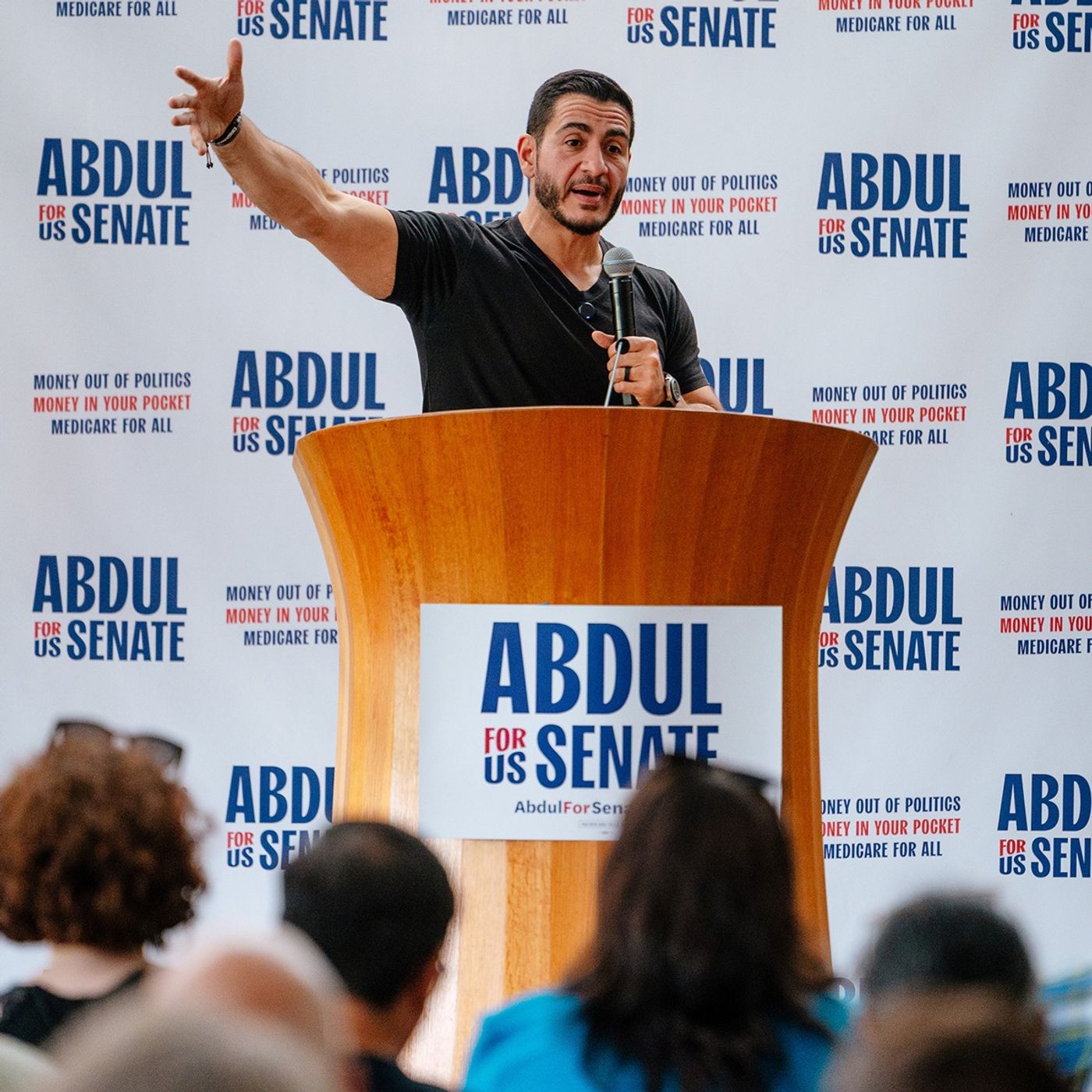
The Daily
Are The Democratic Socialists Winning or Losing?
00:29:40
Progressive Democrats have been gaining ground in primaries across the country, but recent wins and losses in Michigan and Wisconsin show the strength and the limits of the movement.
Loading summary
Transcript85 lines
- [00:00]
A
Accenture is working together with the NFL to drive international growth by evaluating markets, developing audience insights, and creating new ways to engage fans in cities around the world. The NFL is building a global game, and Accenture is helping make that vision a reality by striking the right balance between what makes the NFL beloved in America and tapping into the passions and preferences that make each market unique. Accenture, the official business and technology consulting Partner of the NFL, learn more at Accenture.com NFL
- [00:37]
B
from the new York Times, I'm Natalie Kitroweff.
- [00:40]
C
This is the Daily.
- [00:49]
B
The left wing of the Democratic Party has now faced key tests in two swing states, and the results were mixed. On Tuesday, Democratic socialist Francesca Hong lost the Democratic nomination for governor in Wisconsin in an upset after leading by double digits in the polls. And last week in Michigan, despite being heavily outspent by his opponent, Abdul EL Sayed won the Democratic nomination for Senate by a slim margin today. My colleague, chief political analyst Nate Cohn, is helps make sense of those conflicting outcomes and explains what they tell us about the state of the populist left in Democratic politics. It's Thursday, August 13th.
- [01:43]
C
Nate, welcome back to the Daily. It's wonderful to have you here.
- [01:47]
D
Thank you for having me. Great to be here.
- [01:49]
B
So we want to talk today about what this moment means for the Democratic Party. For the past 10 years, it feels as though we've been talking about this divide in the party between the progressive left and the moderate establishment. And it feels like the story of this primary season for Democrats is to what extent is that progressive flank ascendant in the party and in national politics? In the last two weeks, one of those candidates narrowly won in Michigan and another narrowly lost in Wisconsin. I don't totally know what to make of that. It feels a little confusing to me.
- [02:22]
C
But fortunately, that's what we have you for.
- [02:26]
B
So, Nate, what should we make of that?
- [02:28]
D
Fortunately, I think it isn't very confusing. It's pretty clarifying. We've had two races in two weeks in states that are presidential battleground states reasonably representative of the country politically in different ways, where the progressive left has essentially been tied a little bit ahead or a little bit behind with their establishment rivals. This is pretty different from what we've seen over most of the last 10 years, when the progressive left has basically only been reliably competitive in heavily Democratic, young, highly educated urban areas. Now that can happen twice in two weeks. After all, in presidential battleground states and therefore perhaps even nationwide, that still comes with limits. There are large parts of these states where the progressive candidates aren't faring very well. And that suggests there are also large parts of the country where the progressive left wouldn't fare very well. But this represents a really significant improvement in their standing within the Democratic Party compared to where they seemed to stand just a few years ago.
- [03:26]
C
Okay, I want to dig deeper into what you actually mean by the limits that these candidates are facing and what they've actually gained. But before we do, can you just spell out what we mean exactly when we talk about the left here? Like, who are these candidates? I heard a sigh.
- [03:45]
D
It's a little challenging to define. We don't just mean progressives after all.
- [03:49]
E
Right?
- [03:49]
D
Progressives have been winning Democratic primaries for decades. Half of Democrats in Congress could be said to be progressives in some form or another. We mean a new kind of young activist backed candidate of, for lack of a better word, the progressive left. I think the core of this new activist progressive left are the self identified Democratic Socialists, Mamdani Alexandria, Ocasio Cortez and their allies. Beyond them though, there is a group of politicians who looks a lot like them but does not necessarily characterize themselves as democratic socialist.
- [04:23]
C
Like who?
- [04:23]
D
Dr. Abdul El Sayed in Michigan is one great example. He was endorsed by both Sanders and Ocasio Cortez, but he doesn't call himself a Democratic Socialist. But it's hard to see why he's not a Democratic Socialist. He doesn't distinguish himself from them on the issues in many ways, and he's comfortable allying with them and importantly allying with them against the mainstream of the Democratic Party.
- [04:43]
C
So data wise, when you look at the numbers, which are your bread and butter, you're looking at candidates who are either members of the Democratic Socialist organization or are effectively part of that platform. They are aligned with many aspects of it.
- [04:58]
D
Yeah, there are a lot of different ways to define it, but they stand apart from not only the establishment moderate in the Democratic Party, but also the kind of progressive candidate who's been winning in the Democratic Party for a long time.
- [05:08]
C
Okay. And the question going into the last couple of weeks, right, was whether this progressive left could win not just in places like New York, deep blue areas, but in purple areas, states like Michigan and Wisconsin. So let's get into what we learned from the two Democratic primaries in those states.
- [05:28]
D
I think the most obvious thing we learned is that yes, the progressive left can compete in these states. Now it's worth noting that each of these races are idiosyncratic primaries. They have different candidates with different strengths and weaknesses. In Michigan, in a primary for U.S. senate, Democrat Dr. Abdul El Sayed ran a campaign that received a lot of enthusiasm from progressives across the country. And he ran against Congresswoman Haley Stevens, an establishment backed candidate who had the advantage of tens of millions of doll and advertisements, even though she had her own liabilities, like being a really strong supporter of Israel at a time when that's pretty unpopular among rank and file Democrats. There was a totally different set of circumstances in Wisconsin. That was a race for governor where Francesca Hong, a Democratic Socialist, did not run an especially strong race. She did not earn endorsements from people like Alexandria Ocasio Cortez or Bernie Sanders. She had a long track record of posting and making remarks on social media that did not make her seem like a terribly compelling politician. Much of the final week of the campaign was spent litigating social media posts about how she had problems with Thanksgiving and Halloween. This was not necessarily the best candidate that the progressive left has put forward. On the other hand, the moderate wing of the Democratic Party almost failed to put forward a candidate in this race. It cycled through multiple potential frontrunners who entered the race and dropped out of the race and in some cases came back into the race. And only in the final days of the campaign did the party appear to coalesce behind David Crowley, who was a relatively unknown candidate from Milwaukee county, but who did not have any, you know, statewide reputation or tens of millions of dollars backing him during the campaign. But despite all the differences that we just worked through between these two different races, we still ended up with the same basic result. Michigan and Wisconsin ended up essentially dead even. The progressive candidate narrowly won one race and narrowly lost the other. But the story was basically the same. The same demographic groups aligned between each ones. They showed the same strengths, they showed the same weaknesses. And the fact that the results are so similar suggests that the most powerful factor that's shaping what's happening in these races are these underlying big divides in the national Democratic Party, not the idiosyncrasies of these races. And so I think we can learn a lot from them as a result.
- [07:48]
C
All right, Nate, walk us through those underlying divides. What were the demographic groups that aligned behind these progressive left candidates?
- [07:56]
D
I think you have to start with age. The most obvious thing that's driving support for the progressive left, both in the actual results, when you look at it precinct by precinct or county by county and in the polling, is that young voters overwhelmingly back the candidates of the progressive left, while older voters support moderate establishment candidates. The polls say that they won overwhelming margins like 60, 70, maybe even 80% of the vote. And that's what we see in the youngest neighborhoods and precincts of these states, particularly on the college campuses of the big flagship universities like the University of Michigan or the University of Wisconsin at Madison. There are precincts where El Sayed won 95% of the vote. In Ann Arbor, there are precincts that are sort of, for lack of a better word, young, hip, gentrifying neighborhoods in Milwaukee where you see similarly, maybe not 95% lopsided margins, but 70, 80% margins. Even for Francesca Hong, that is crazy.
- [08:49]
C
Why do you think that is? Do we have a sense of what is driving young voters and not older voters to these candidates?
- [08:55]
D
Well, in some sense, this is a story that we've seen in the Democratic Party for decades now. Young voters who come of age and are dissatisfied with the country and want to see changes then look naturally to something that's even farther to the left of what the Democratic Party has offered in the past. And then that's what the young voters campaign on, whether it's in the 1960s in the civil rights movement, Barack Obama versus Hillary Clinton, or now the Democratic socialists against the kind of mainstream progressivism of the Obama era. I think that sentiment's been supercharged by some particular factors to this moment, the struggles that young people think they have in today's post financial crisis economy. And I think it's also worth mentioning the way that, for lack of a better word, the intellectual climate of today's age shapes the views of young voters. There are ideas from academia about capitalism and sexism and white supremacy and intersectionality that are all very familiar to us today, but which an older generation of college graduates had never heard of, even while we're all familiar with Judith Butler or something. So I think this really shapes the kind of ideas that young college educated voters are receptive to. So although in the past they've always been kind of receptive to the most left candidate, it's now being channeled into a particular set of ideas that older generations don't even know about, let alone support.
- [10:11]
C
Okay, so these candidates did numbers with younger voters. What else does the data say about the divides here, about the coalitions?
- [10:20]
D
I think the next biggest divide, it's maybe easier to talk about by flipping it around and saying, where did the moderates do best? And in both states, high income neighborhoods, high income voters stand out as a major area of strength for moderates, with income in general just being one of the key fault lines here in neighborhoods where people make $150,000 or more. There were often cases where the moderate candidates won by 2 to 1. I don't think this should be terribly surprising. If the progressive left in general, and these candidates specifically really stand for anything in terms of policy, it's to take on the billionaires, corporations and wealth inequality in the country. And it makes sense that high income voters would be particularly hesitant to embrace those kind of candidates. When you go below the high income group, there's a lot more heterogeneity in the results. And part of that comes down to age, right? There are low income voters who are young college kids or people just out of college who are very supportive of the progressives. And then there are also low income older voters. And those low income older voters may still support the establishment. And I think there's one additional point to make, and that's the divide over race. The establishment candidates in both of these contests did really well among black voters. Now, it's worth noting that as I've mentioned, both these races are idiosyncratic and both of the establishment friendly candidates had particularly strong cases for black voters. Haley Stevens trumpeted her work with the Obama administration on the Detroit auto bailout. David Crowley is African American himself, so he had natural appeal to Milwaukee's black voters. But it's worth noting that we have seen over and over again that establishment backed candidates do better than progressive candidates among black voters.
- [12:06]
C
I feel like I'm turning into a broken record here, Nate. But why? Do we know why that is?
- [12:11]
D
I think the easiest place to start is to remember that black voters almost unanimously support Democrats and many black voters support Democrats regardless of their views on the issues. So there are many more moderate or even conservative black voters who vote for Democrats than other racial groups, because for other racial groups the moderate and conservative voters would just vote Republican. So in the black primary electorate, you have many more moderate and conservative black voters who at the very least are not exactly receptive to the case for Democratic socialism or may even outright oppose it. The other thing to keep in mind is that in many Democratic primaries as of late, older black voters have turned out at much higher levels than young voters. It may be the case that young black voters support the progressive candidates in these races. And it's just really hard to tell because the turnout among young black voters has been really low. Really, in some ways it's been really low since the Obama era. So we have a disproportionately older group of black voters who's participating in these primaries as well. And again, old voters, regardless of race are backing the establishment candidate.
- [13:14]
C
Bottom line, Nate, at this moment, when we see these areas of strength and of weakness for the progressive left being highlighted, should we think of this movement that Bernie Sanders more or less started in 2016 as Ascendant and gaining ground or stalling out?
- [13:30]
D
I think we should think of it as ascendant and gaining ground, especially if we bracket Bernie Sanders aside for a second. If you bracket aside his campaign, we've watched the progressive left grow from only occasionally winning a handful of primaries to in the nation's most highly educated and Democratic cities, to now competing statewide in classic battleground states like Michigan and Wisconsin. That said, this is a very different kind of progressive coalition than the one that Bernie Sanders put together back in 2016. And it's different in ways that say a lot about where the progressive movement might be heading in 2028 and beyond.
- [14:11]
F
Foreign
- [14:16]
C
we'll be right back.
- [14:18]
A
Accenture is working together with the NFL to drive international growth by evaluating markets, developing audience insights, and creating new ways to engage fans in cities around the world. The NFL is building a global game and Accenture is helping make that vision a reality by striking the right balance between what makes the NFL beloved in America and tapping into the passions and preferences that make each each market unique. Accenture, the official business and technology consulting partner of the NFL. Learn more@accenture.com NFL hey, it's Ben Fruman, editor in chief of Wirecutter.
- [14:55]
D
We put together the ultimate moving guide and I wanted to find out a few of our writers favorite tips.
- [15:01]
G
When you're first moving into your home,
- [15:02]
D
make sure that you change the batteries in your smoke detector by mattress bag. You can carry a mattress more easily because the handles are built in and it's going to protect your mattress from the truck and the street.
- [15:11]
H
Make sure you have towels on hand, you don't want to end shower, and using a dirty sock to dry off.
- [15:16]
D
Yeah, if you're getting ready to move, let Wirecutter help you make a plan@nytimes.com
- [15:22]
C
Moving Nate, describe exactly how the progressive coalition has changed since 2016.
- [15:30]
D
I think to understand, it's worth stepping back and remembering what the Bernie Sanders coalition looked like in 2016 against Hillary Clinton. At its core, there was the same young progressive Democratic socialist activist group that's still at the core of the progressive movement today. But what's changed is the group of voters beyond that Democratic socialist core, the sort of swing voters of Democratic primary politics, the people who aren't necessarily true believers but who preferred Bernie Sanders to his opponent Hillary Clinton. In that election in 2016, the voters who preferred Sanders to Clinton, even though they weren't true believers, were mostly working class and particularly working class white voters. Bernie Sanders swept rural parts of Michigan and Wisconsin. And he did so in part because he was relentlessly focused on a populist message and in part because Hillary Clinton was sort of the perfect foil on economic populist issues. She had backed nafta, right? And she, you know, had taken all of this money from speeches from corporations and so on. And she also campaigned pretty heavily on identity politics, for lack of a better word. In that election, she was the candidate trying to rally the supporters of Black Lives Matter. And she was also running as potentially the first female president. And those were major points of emphasis in her campaign. And together that seemed to give Bernie Sanders the edge among white working class Democrats across much of the northern United States in particular. And even once she became the nominee, Hillary Clinton still struggled among these voters. Many of them actually ended up backing Donald Trump and have been part of the Republican coalition really ever since. And they haven't even been available to candidates of the progressive left in many cases. If you were to look at the map of Wisconsin and Michigan the last couple of weeks, compared to the 2016 one, they look completely different. They're not winning those rural areas anymore.
- [17:19]
C
And just say, why, Nate? Because the core of the argument for a lot of these left wing candidates is economic populism, right? I mean, El Sayed's campaign slogan was money out of politics, money in your pocket, Medicare for all.
- [17:33]
D
It's absolutely an important part of their message. And as I alluded to earlier, they do tend to do better among lower income voters than certainly rich voters. But this is not necessarily nearly as central to their message as it was to Bernie Sanders message. And conversely, I'm not sure that today's moderate Democrats are as vulnerable on these issues as Hillary Clinton was. There is, on balance, compared to 2016, much more emphasis by progressives on non economic issues, period. Gaza, for instance. And now I'm not saying that Gaza alienates white working class Democrats, but every second that you spend talking about Gaza is a second you're not talking about, as Bernie would put it, the millionaires and the billionaires, right? And so if most of the conversation about your campaign is about the issues that animate activist progressives, the fact that you then try and turn your message back to putting money in people's pockets won't be as powerful as it would be if that were all you were talking about. And I think it's fair to say that's what the Bernie Sanders campaign did in 2016 that we just don't see from progressives since then.
- [18:33]
C
Got it?
- [18:34]
D
Now, today's progressives have made up for this by doing much better than Bernie Sanders did among a different group of voters who were sort of outside that core Democratic Socialist activist base, which is they're doing much better among, for lack of better word, kind of mainstream progressive liberals. You can imagine the sort of person who watches MSNBC in the suburbs, for instance, who voted for Hillary Clinton or Elizabeth Warren and Joe Biden in 2020. They're actually quite sympathetic to what the progressives have to say about all of the various issues we just talked about, like Gaza or the Black Lives Matter movement. They may not be Democratic socialists, but they are real progressives. And in the past, they didn't support Bernie Sanders and they have been voting for mainstream Democrats. But now they're pretty disillusioned with the Democratic Party. It's failed to make good on its promise to defeat Donald Trump. They want to see someone fight back against Donald Trump in Washington, and they're just looking for a candidate who offers bigger kind of changes to a country that voters have been dissatisfied with for decades. And right now, the Democratic Socialist progressive activist wing of the Democratic Party is offering something like that. And so these voters who have voted maybe for more moderate candidates in the past, they're pretty open to backing progressive candidates today.
- [19:44]
C
Those folks basically aren't alienated by some of that culture war messaging.
- [19:49]
D
They may even like it.
- [19:50]
C
They may like it, and they're so frustrated with the Democratic establishment that they want to cast a protest vote in some cases.
- [19:57]
D
And I think it could be even more than a protest vote. They may look at the Democratic Socialist and say, you know what? I've always supported universal healthcare. And that's what they say they support, too. I don't like what Israel's doing. I agree with that. So they may not again, consider themselves Democratic socialists. They may not be activists for the Democratic socialist cause, but they may not see themselves as very different on a long list of issues.
- [20:20]
C
I guess my question is, is that a winning coalition? Is that enough to win in purple places? In a general election?
- [20:27]
D
In a general election, no. I mean, you can win a Democratic primary with a core of Democratic Socialists plus sort of mainstream liberals, but to win a general election, you need to win a lot more than that. You have to win the rank and file of the Democratic Party and then a lot of more moderate voters who don't consider themselves, Democrats who are independents or who may even in some cases be relatively conservative voters, then does that
- [20:51]
C
suggest that these candidates will have to kind of win back those white working class voters, the ones who voted for Trump? And if they stick to the economic populism message and de emphasize the other stuff, is that a path forward? Do they need to do that to broaden their coalition?
- [21:09]
D
Well, I think that's what the progressives see for themselves. I think they want to try and win back some number of white working class, or at least working class voters in general, with a message focused on economic populism. I don't think that's necessarily very realistic. And you can sort of see that in its own way in these Democratic primaries. They can talk about economic populism a lot. They can even make that the focus of their campaigns to the extent they can. But they're going to be defined by the broader set of issues that they're associated with and that they're really passionate about. There's not going to be a version of Dr. El Sayed who doesn't talk about Gaza and who doesn't talk about all the other issues that progressives have been campaigning on for the last 10 years. But to win a general election, they're probably going to need to win in a fairly conventional way for a Democrat to try and be acceptable enough to voters who are dissatisfied with Donald Trump. Some of them are working class, some of them are rich and affluent. Some of them may be the kind of voters that progressives dream of winning, and some of them may bear no resemblance to that, but they're stuck playing, I think, a fundamentally conventional general election game.
- [22:16]
C
Nate Another big part of this debate among Democrats is whether these socialists or socialist adjacent candidates may drag Democrats down in other parts of the country by giving Republicans this opening to cast the entire party as too radical. How do you think that dynamic might play out as we get closer to the general?
- [22:35]
D
Well, I think it's true to some extent. When you vote for a Democratic candidate, you're voting both for the person and to put a party in power. And to the extent voters sour on putting the Democratic Party in power because they perceive it as being farther to the left than they are, that could hurt Democratic candidates in parts of the country who have nothing to do with the progressive left. That said, I think in most of these races that Democratic candidates will succeed in defining themselves. Certainly the strong Democratic candidates with their own individual brands who have the resources to air television advertisements about themselves, they have an opportunity to define themselves. So I wouldn't expect it to prevent more moderate Democrats from winning in much of the country, even if it is undoubtedly some additional burden that they have to overcome.
- [23:19]
C
Obviously, we've spent this time looking at, as you said, idiosyncratic races, so I don't want to extrapolate too much here, but given the broader dynamics that you've laid out about this left wing coalition, I wonder how you're also thinking about its place in the future of the party beyond these midterms. Like crystal ball a little bit for me.
- [23:40]
D
There's an unmistakable trend towards the progressive left in Democratic politics. We've talked about that already. And, and as generations turn over and more young people enter the Democratic electorate, and as more older moderates age out of the Democratic electorate, I think it's possible we could see this trend continue. It would not surprise me to see a candidate, progressive left, win the Democratic nomination in 2028 if they have a strong enough candidate to pull it off, or if the establishment is disorganized like it was in Wisconsin. Now, that said, it doesn't make it inevitable that progressive activists will take over the Democratic Party. Mainstream Democrats will try and co opt elements of this message. They're gonna try and appeal on the same kind of themes about economic populism. And we just saw Gavin Newsom say the divide in America in politics today isn't between left and right, it's between top and down. Mainstream Democrats are getting a message here, and this is pretty common in American politics, that activists elevate an issue and the mainstream of the party ultimately subsumes it.
- [24:33]
C
But then what would happen to all of the more hardcore supporters of that socialist DSA platform? I can't imagine that they would get on board for a much diluted version of the thing that has them so energized.
- [24:48]
D
This is a cop out answer, but it'll obviously vary from person to person, group to group. There are going to be some die hard Democratic socialists who will say that any person who doesn't reject the system of capitalism is complicit in the oppression of, you know, the working classes around the world.
- [25:02]
E
Right.
- [25:02]
D
There are also going to be progressives who understand that it's important to work within the Democratic Party to gradually change it over time. In different cases, the relative balance of which two paths, different parts of the left take is going to vary. If Gavin Newsom wins the Democratic nomination because he adopted a buzzword about top versus bottom, that's going to be a little different than if it's, say, a Jon Ossoff who centers corruption and taking on the billionaires in this campaign.
- [25:28]
E
Right.
- [25:29]
D
So there are a lot of subtleties here. But I think over the long run, the thing that's sort of guaranteed is that if the progressive left becomes strong enough in the Democratic Party, it is going to change the Democratic Party one way or another. If the mainstream of the party resists it, that's when you have the opportunity for a real hostile takeover like what happened to the Republicans. I think it's too early to say whether we're going to see something more like an hostile takeover or more like the mainstream of the Democratic Party letting the Democratic Socialists in and gradually allow it to change the party. In some cases, you'll see some of both. I think over the medium term, I would expect to see the mainstream of the Democratic Party try and embrace economic populism, try and take a more anti Israel stance, and that may be enough to prevent a true takeover of the Democratic Party by Democratic socialists, even as the Democratic Party moves to the left as a consequence. But the natural tendency for a party is to try and assimilate all of its parts and to forge a coalition, to use a word that we've used probably too many times in this episode, and that's the natural way for the party to end up.
- [26:43]
C
Well, Nate, I love having you in my coalition as a colleague and thanks for coming on the show.
- [26:52]
D
Thanks for having me.
- [27:07]
H
Hello?
- [27:08]
F
Hi, this is Jody.
- [27:10]
H
Hi, Jody, how are you? This is Caitlin calling for the New York Times.
- [27:13]
F
Good, how are you?
- [27:14]
H
I'm doing well. I really appreciate you taking some time to talk to me.
- [27:18]
F
Yeah, we're in an interesting state.
- [27:21]
H
No, you really are. How does it feel?
- [27:26]
F
It's stressful. Totally stressful because there's so much at stake.
- [27:34]
B
On Wednesday, one day after the Democratic primary for governor in Wisconsin, Daily producer Caitlin o' Keefe called voters there to understand how they were processing the results.
- [27:46]
H
Can you tell me who you voted for in the primary on Tuesday?
- [27:51]
F
Yes, I voted for Francesca Hong. Francesca was my choice. Ultimately, I ended up voting for David Crowley. I voted for David Crowley. I just thought more important than voting for exactly who I'd be more passionate about. We need to get somebody in there that can win the race.
- [28:10]
E
When I saw that Crowley had won with just over 3000 votes shy, it was a huge sense of relief for me, but a little bit of anxiety that we got that close.
- [28:20]
F
I really appreciated the progressive views on affordable health care, universal child care, public schools, the minimum wage. My two daughters are middle income and are struggling, and I don't see a way out of it. My grandkids, they're having such hard time finding jobs. It didn't used to be that way. So I'm just not for the establishment right now. I feel like they just keep going along the same path. I think we need to wipe the slate clean, start over. It's not working.
- [28:55]
H
What would you say to somebody who looks at Hong's loss in Wisconsin and thinks this is proof that the Democratic Socialists of America and that platform can't win? Across the country,
- [29:10]
F
good ideas have been coming from the progressive movement for years and sometimes they get more footing, sometimes they don't. They gotta wait their time.
- [29:20]
E
I think there are repairs we can make to our capitalist system without completely upending everything when essentially your platform is just tear it all down and rebuild. I don't think we need to tear it all down and rebuild. I think that we need to repair our democracy in progress and this experiment that we're on.
- [29:40]
C
We'll be right back.
- [29:43]
A
Accenture is working together with the NFL to drive international growth by evaluating markets, developing audience insights, and creating new ways to engage fans in cities around the world. The NFL is building a global game and Accenture is helping make that vision a reality by striking the right balance between what makes the NFL beloved in America and tapping into into the passions and preferences that make each market unique. Accenture, the official business and technology consulting partner of the NFL. Learn more at Accenture.com NFL
- [30:18]
G
the New York Times App Unlocked Everyone knows the Times is behind a paywall. Only subscribers have access to all the reporting. But what if you could explore the Times for a month for free without putting in a credit card? Now you can. When you download the New York Times app for the first time. Your first month in the app is free. A month to go behind the paywall to see what Times subscribers get every single day. All the investigations, the reviews, the recipes, the deeply reported fact based journalism. If you don't already subscribe to the New York Times, download the Times app today and get free access for 30 days.
- [31:02]
B
Here's what else you need to know today. The Trump administration plans to spend millions of dollars equipping immigration officers with gloves that can deliver electric shocks on contact to induce compliance. The gloves, which are sometimes referred to as stun gloves, take only a second to be switched on by pressing a button, and they're made by a Kentucky company called Compliant Technologies. The company says that the gloves emit a much lower voltage than a Taser. The Homeland Security Department described the gloves as a de escalation device, but didn't answer questions about whether they might be used to apprehend people or in encounters with protesters. Today's episode was produced by Caitlin o', Keefe, Jack Desadoro and Carlos Prieto. It was edited by Rob Zipko and Paige Cowett with help from Liz O. Balin and contains Music by Pat McCusker, Dan Powell and Marion Lozano. Our theme music is by Wonderly. This episode was engineered by Alyssa Moxley. That's it for the Daily I'm Natalie Kitroweth. See you tomorrow.
- [32:37]
A
Accenture is working together with the NFL to drive international growth by evaluating markets, developing audience insights and creating new ways to engage fans in cities around the world. The NFL is building a global game and Accenture is helping make that vision a reality by striking the right balance between what makes the NFL beloved in America and tapping into the passions and preferences that make each market unique. Accenture, the official business and technology consulting partner of the NFL, learn more@accenture.com NFL.