← The Daily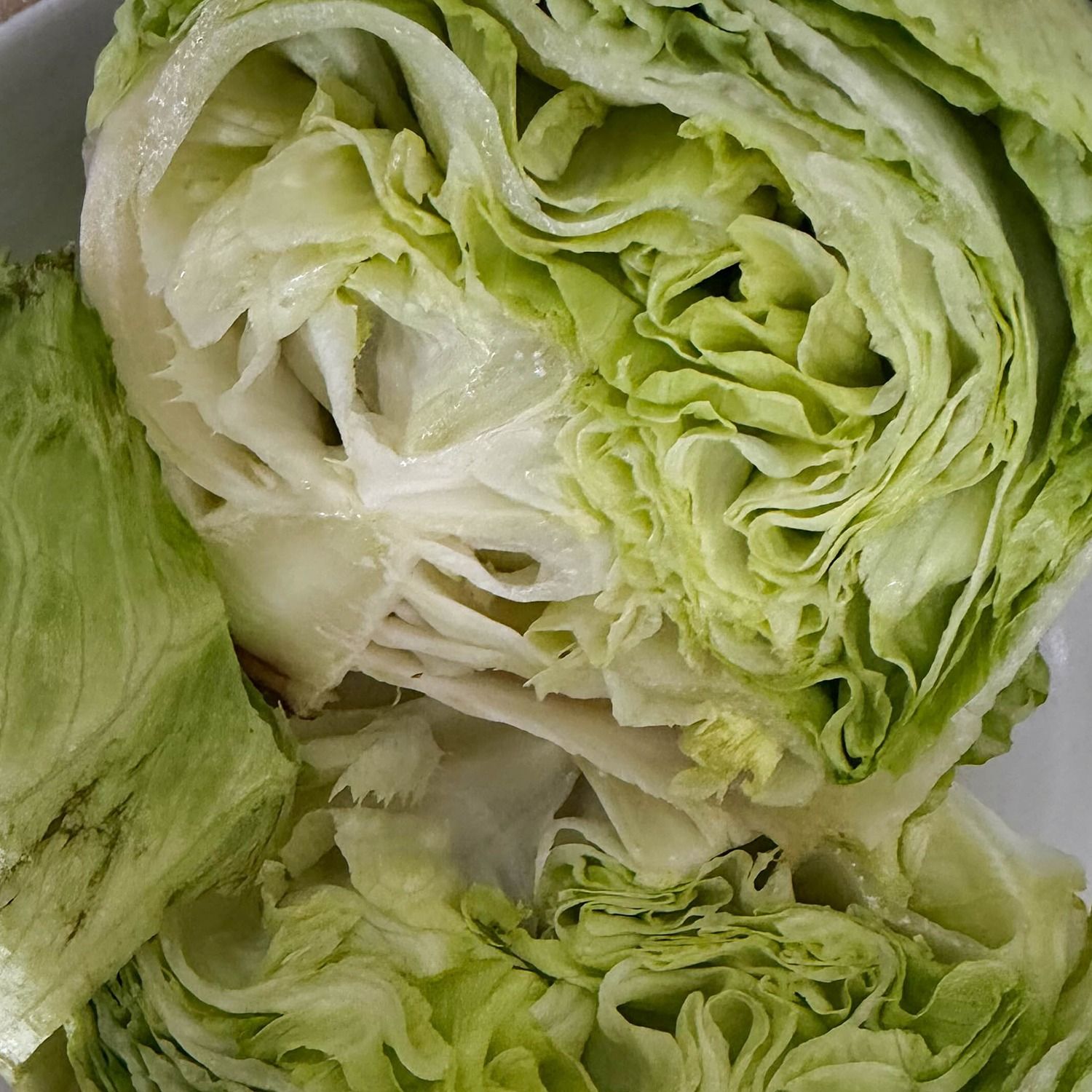
The Daily
The Cyclospora Mystery: How Human Poop Got on So Much Lettuce
00:30:25
U.S. health officials linked six more states to what’s now the largest outbreak of cyclospora in American history — an outbreak that has contributed to at least two deaths, sickened thousands of people and left the rest of us increasingly scared of salad. Today, Christina Jewett and Caroline Hopkins Legaspi, two public health reporters who have covered the parasite for The New York Times, discuss what’s been learned about where it comes from, how it spread so quickly and why our food safety system seems to be powerless to stop it.
Loading summary
Transcript148 lines
- [00:00]
A
This message is brought to you by AppleCard. Shave Ice by the beach, a trip to the state fair and a throwback flick at the local drive in. They're more than just items to check off the summer bucket list. They're also opportunities to earn 2% daily cash back when you use your Apple Card with Apple Pay. Apply for Apple Card now and use in minutes with Apple Pay. Subject to credit approval. Apple Card is issued by Goldman Sachs Bank USA, Salt Lake City branch terms and more@applecard.com.
- [00:34]
B
From the New York Times, I'm Michael Balbaro. This is a daily. So look, I had that little diarrhea
- [00:42]
C
bug, explosive diarrhea bullet week.
- [00:44]
B
Y' all can't even lie. Call me out guard. I was sicker than a dead dog on the side of the river, man. I ain't lying to you, bro. No lie.
- [00:51]
D
I don't know where I got it from.
- [00:53]
C
I think it was lettuce. I'm not 100% sure where I got it.
- [00:58]
B
I would get nauseous here and there. I had such, like, low appetite. And I'm a girl that loves to eat. On Wednesday, US Health officials linked six more states to what's now the largest outbreak of cyclospora in American history, an outbreak that has contributed to at least two deaths, sickened thousands of people, and has left the rest of us increasingly scared of salad.
- [01:28]
D
When I tell you I went 32 times in one day, I'm not being dramatic. I'm not making that number up. I'm being so truthful.
- [01:38]
B
I feel like every day the FDA got a whole new recall. Like they can barely keep up with what's getting recalled. And they can. Today, two public health reporters who have covered the parasite, Christina Jewett and Caroline Hopkins Legaspi on what we've learned about where it comes from, how it spreads so quickly, and why our food safety system seems so powerless to stop it. Do you know something? If you know something or you know somebody that knows somebody that knows something, let me know. Is it okay to eat the lettuces? Because I really, I really, I really want to eat lettuce. I need my greens, please. Thank you. It's Thursday, August 6th, So we're just going to test both of your mics real fast and tell us what you have for breakfast. That's how we do this.
- [02:40]
D
Pistachio muffin, no iceberg. Not on the side. Not on the muffin.
- [02:44]
B
No iceberg. Okay.
- [02:46]
C
Yep. No iceberg lettuce in my yogurt and granola either.
- [02:49]
B
Okay. And I as usual, had eggs and sausage. Okay. So, Christina, Caroline, thank you for coming into the studio for what I admit will be a somewhat stomach churning at times conversation.
- [03:03]
D
Glad to be here.
- [03:04]
C
Yeah, thank you for having me.
- [03:05]
B
So I just want to begin with the observation that it's genuinely surprising, at least to me, that we are still living with and talking about this outbreak because it began in June, late June, but June. And it's still somehow expanding. How can that be?
- [03:25]
D
Yeah, this really is expanding. So in a typical year, you would see about 3,000 cases of cyclospora done. But right now we're in August, and federal officials are still looking at 10,000 confirmed, 12,000 possible. So you're looking at potentially 22,000 cases,
- [03:43]
B
which is, from your math, seven times a normal year's worth of outbreak.
- [03:48]
D
Yeah, but you can see why this would pile up. For one, you do your typical washing procedure at your kitchen sink. That's not gonna kill the cyclospora. I mean, you can't kill it by cooking it, but, I mean, who's cooking their iceberg lettuce?
- [04:04]
B
Right?
- [04:04]
D
And it's been on the shelf for a while. The lettuce that was potentially infected, that was good all the way out through August 3rd. So you're just now starting to see that get a little brow and mushy in the back of the fridge. So for the cases to continue popping up is really not that surprising.
- [04:21]
B
Fascinating.
- [04:22]
C
And it can take weeks after you consume something contaminated with cyclospora to start feeling symptoms. Scientists call this a long incubation period. So you might not even start to have the diarrhea until a couple weeks after eating the thing. And then after that, you might not go to the doctor to get your stool sampled and tested for cyclospora for another few weeks. So this can be really a long process from when somebody eats. Eats the contaminated thing to when they get diagnosed. And then there's even more time between that diagnosis and when a public health official would officially report the case.
- [04:55]
B
Got it. So there's a long tail to this. And based on what you just said, Christina, people may just be getting around to eating the lettuce that makes them sick. So this is gonna be with us for a while.
- [05:07]
D
Yeah, this could last.
- [05:08]
B
Well, the reason you're both here is because you've somewhat unwillingly become authorities on this outbreak. So let's talk about how the outbreak has played out. What we've learned about its origins, and ultimately what we've learned about our food safety system in the process. So where does this outbreak begin?
- [05:27]
C
So this begins across the country, but mostly in the Midwest. Back in the beginning of the summer, people started to report severe diarrhea. And stool sample testing showed that it was this parasite Cyclospora. And more and more cases began to mount, which got the attention of state public health agencies, followed by the CDC. And on July 14, the CDC officially announced it's opening an investigation into this outbreak.
- [05:58]
B
And this is the moment where all of us are like, cycloha, like, tell us about this parasite.
- [06:05]
C
This is a parasite that spreads through food or water. That's just, I'll just say it. It's contaminated by human feces. So that's pretty much the only way that it spreads. At least that scientists aware of. So somewhere, somehow, there's a food source that has human fecal matter on it. Somebody eats it, and this parasite, it enters the body in these little pods called oocysts. And they're kind of like eggs, but they make their way down into the intestines where they burrow into the wall of the intestine. And the parasite emerges from these oocysts and starts to infect the cells that line your intestine. And so this whole process can take anywhere from a few days to two weeks as this parasite comes out of these little oocysts and begins to reproduce. First, you know, just asexual reproduction, then it's reproducing sexually. So with each other and just exponentially, there's more and more and more of these.
- [07:06]
B
I totally neglected the trigger warning that was required to have this conversation, because now we're talking about sexual reproduction of a parasite in our bodies. Okay, but I need you to keep going.
- [07:16]
C
Sadly, yes. So at that point, when these Cyclospora parasites have infected your intestinal walls to the degree that you can't absorb the nutrients and the fluids that you're eating and drinking, that's when you start to see this really, really bad diarrhea that people describe as explosive debilitating. They can't go to work, they can't go to birthday parties. They're just sitting on their toilet and they're miserable.
- [07:45]
B
It's a very nasty parasite. And as you said, if you've somehow gotten cyclospora, you have somehow ingested remnants of human fecal matter. So I'm guessing it's at this moment that the race begins to figure out how on earth that fecal matter got on food. So, Christina, maybe pick up the story from there.
- [08:07]
D
Yeah. So this is where epidemiology comes in. You have state public health officials, local officials, they want to do a 90 minute interview with you. They want to know everything you ate weeks ago, especially fresh raw produce that maybe hasn't been washed. They want your loyalty number for the grocery stores where you shop routinely.
- [08:30]
B
They're going through the Safeway shopping records.
- [08:32]
D
Yeah. And they want to know what's on your credit card and your debit card, if you ate at Taco Bell, if you ate at Subway, you ate. And they do these interviews with dozens and dozens of people and they're looking for commonalities. They want to create a big Venn diagram and see, you know, exactly what
- [08:50]
B
pops out and where does that Venn diagram ultimately point.
- [08:55]
C
So these interviews are tricky because few people can remember exactly what they ate for, you know, weeks, Weeks. And if they do remember, they might remember I had a taco, not I had a taco with shredded iceberg lettuce, cilantro and peppers. But with enough of these interviews, you can sort of start to tease that out. And that's how investigators landed on shredded iceberg lettuce from Taylor Farms, grown in Mexico, sold at Taco Bell.
- [09:23]
B
Okay, I think we should focus on Taylor Farms because it seems they're the distributor of this food. But tell us everything you know about Taylor Farms.
- [09:32]
D
Taylor Farms is a huge company, very, very big in fresh produce. They have contract growers all around the country, outside the country, in Mexico as well. Essentially, they ship bags of shredded lettuce to middlemen and middlemen of middlemen, and it goes out to cafeterias, mom and pop restaurants, chain restaurants, all the way through the food chain.
- [09:57]
B
One way or another, you've probably eaten lettuce that Taylor Farms touched, even if you didn't know it.
- [10:01]
D
Absolutely, yes.
- [10:02]
C
And those bags of salad mixes that you see on the grocery store shelves or you know, washed pre cut lettuce, that's often from Taylor Farms as well.
- [10:11]
B
So the way to think of Taylor Farms is that they're getting a lot of lettuce from a lot of farms and the authorities are suspicious of it. Sounds like Mexico as the source of this problem. What do they think? What do they suspect may have happened in Mexico?
- [10:27]
C
So we don't know what happened on this farmer farms in Mexico. And we honestly might never know because a lot of these outbreak cases end up as cold cases. They're never solved. But we can look to some of the cases that have been solved in the past as examples and sort of tease some hints out of those of what might have happened. And a lot of that points back to agricultural water. So the water that's used to irrigate the plants, to wash the lettuce, to spray it with pesticides, any of those uses of water, you're distributing potentially a contaminated water source over all of the crops.
- [11:00]
B
So but somehow that water has to be contaminated.
- [11:02]
C
Exactly. So that's where you go back to nearby bathroom facilities, latrines, sewage, overflow. Any of these explanations for how poop water essentially can get onto these plants?
- [11:15]
B
Yeah, yuck.
- [11:16]
C
Yuck is right. For example, in the late 90s, there were a series of outbreaks that they were able to trace back to some farms in Guatemala that grew raspberries. And in those cases, the leading theory was that this water source that they had used to mix with a powder pesticide to make it a liquid solution, they could spray all over the raspberries, that water source had been contaminated. And similarly, in 2020, they traced an outbreak that affected iceberg lettuce and cabbage and carrots back to some farms in Florida that had been contaminated with water from a canal.
- [11:51]
B
Interesting.
- [11:52]
C
And this also means that when you're in the grocery store looking at pre washed bags of lettuce, they're probably at an even greater risk than the whole heads of lettuce. And the reason for that is that the agricultural water that could have been contaminated is being used to wash this lettuce. So, you know, you're seeing triple wash. You might think that's safer, but in reality it's kind of ironic. That bag of pre washed lettuce might have been exposed to the contaminated poop water three times over.
- [12:19]
B
Right. Not what you think of when you think of washed three times.
- [12:24]
C
Exactly.
- [12:24]
B
Exposed three times.
- [12:26]
C
Right. And a lot of people at this point say, well, why can't we just treat the water with chlorine or with, you know, whatever standard. But Cyclospora is a really tricky bug. Cause this parasite is really resilient. And those standard techniques don't kill Cyclospora.
- [12:41]
B
Well, chlorine does not kill cyclospora.
- [12:44]
C
Right.
- [12:44]
B
Does that mean that people who have this parasite are putting it into our sewage system and it's potentially spreading that way?
- [12:53]
A
Or.
- [12:53]
C
No, we don't have any reason to believe that that's what's happening. I mean, Cyclospora does not pass from person to person.
- [12:59]
B
Got it. Okay. So Christina, at a certain point, after epidemiologists have figured out this is cyclospora, and they have determined that the leading Suspect is Mexican farms that are used by Taylor Farms. That's when a recall comes in. Can you just describe that recall and how it worked or didn't work?
- [13:20]
D
Yeah. Essentially the FDA leans on the company to do a voluntary recall. And we saw that in mid July with Taylor Farms. But what we saw come out from Taylor Farms was a little bit confusing. So basically, the supply chain of a company like Taylor Farms is sort of considered a corporate secret. I mean, it's considered a trade secret because it's the company's sort of relationships with vendors and suppliers, and that's something the company wants to protect. So the company put out information about what was being recalled. You see four and five pound bags of shredded lettuce. You see some 16 ounce bags. And then there were a whole lot of codes.
- [14:05]
B
Codes?
- [14:06]
D
Codes, yeah.
- [14:07]
B
Like what were these codes?
- [14:09]
D
PK S, Y, Mark, JB cv. So my colleague Julie Cresswell in the business department, all of us really just went to try to do some detective work and figure out what are these codes. I mean, my first step was saying, hey, Taylor Farms, what do these codes mean? Radio silence, no answer.
- [14:33]
B
Yeah, they don't want to say, for proprietary reasons, who's getting their lettuce.
- [14:39]
D
Right, right.
- [14:41]
B
Even though this is the moment when presumably the public very much wants to
- [14:43]
D
understand that and they don't even have to tell the fda and they sit on top of quite a food chain. I mean, we did find out that, you know, some of the lettuce went to bagged salads sold at Walmart under the market side brand. We found out that some went through Cisco, which is a pretty sophisticated kind of a middleman company that supplies college
- [15:05]
B
cafeterias, corporations, et cetera.
- [15:07]
D
Yeah, lots of different sites. So this was something that I ran by a food safety expert and she said, yeah, this is something food safety advocates have been talking about for years, saying FDA needs to have the authority to tell companies that you need to, in no uncertain terms, disclose your supply chain in the event of a recall like this. So everybody knows what's what. Because if you're a mom and pop restaurant and you're looking at this recall, you might be throwing your hands up and not even know if your regional supplier has been affected by this.
- [15:41]
B
So because of the way Taylor Farms communicates this recall through literally coded language, you're saying a bunch of people probably wouldn't necessarily have understood that they were subject to a recall and they could be sitting on and serving these bags of potentially contaminated lettuce that Taylor Farms is recalling, but these Folks wouldn't necessarily even know to take them off their shelves, not serve this lettuce.
- [16:08]
D
That's right.
- [16:08]
B
And that's how you potentially end up with a very long tail of this outbreak.
- [16:12]
C
And that's how you end up with people standing in the produce section of their grocery store saying, I'm not buying any lettuce. Hmm.
- [16:18]
B
My instinct is to question how something like iceberg lettuce could ever be a trade secret for anybody. Because it is iceberg lettuce. But also that an exception wouldn't be made in the middle of a very dangerous foodborne illness outbreak to put aside worries about trade secrets and just tell everybody who has this lettuce.
- [16:42]
D
Yeah, you would hope so. You would think so. I mean, in this case, a very high profile outbreak that had turned deadly. There was no high powered US Government pressure to make them disclose that. You know, I'm looking at this recall page right now and it's still a big list of codes.
- [17:02]
B
All these weeks later.
- [17:03]
D
All these weeks later.
- [17:05]
B
Well, Christina, what you're describing, I think, begins to hint at how much our entire food safety system ends up making it harder to get to the bottom of this outbreak. And we are going to talk about that in a lot more detail right after the break. We'll be right back. This podcast is supported by the American Petroleum Institute. Energy security affects how Americans live, work, travel and stay connected. America has abundant oil and natural gas, but resources alone are not enough. The country needs modern infrastructure like pipelines and transmission lines that can affordably and safely bring energy to families, communities and businesses. That's how to build a stronger, more reliable energy system for the future. Learn more@energysecurityframework.org
- [18:10]
A
this podcast is supported by Nertech ODT Remedipant. We know you didn't ask for an interruption, but migraine doesn't wait for the right moment to interrupt either. It just barges in, takes your time and throws everything off. So when migraine takes your time, take Nurtec. It's for the acute treatment of migraine with or without aura. In adults, Nirtech can provide pain relief in two hours, which can last up to two days. Ask your healthcare provider if Nertech is right for you because your time is for you, not migraine. Don't take if allergic to Nirtek odt. Allergic reactions can occur even days after use. Get help right away for trouble breathing, rash, swelling of face, mouth, tongue or throat. High blood pressure and Raynaud's syndrome can occur. Get help for high blood pressure, numbness, coolness pain or color changes in fingers and toes. Common side effect is nausea. For full prescribing information, call 1-833-4-NURTEC or visit nertec.com all right, back to your podcast.
- [19:10]
B
So, Christina and Caroline, we're going to talk now about the government systems in place that in theory might have caught this outbreak, but clearly didn't. And Christina, I want to start with you and the farms in Mexico where it's suspected this all started. Who's responsible for inspecting the conditions there?
- [19:32]
D
So it's the Food and Drug Administration. They inspect the food processing facilities and they have inspectors who go out all around the world. And when you're talking about the food processing facility that this has been traced back to, it was Taylor Farms plant in Northeast Mexico. The FDA actually has not set foot there since 2019.
- [19:54]
B
Wow. U.S. inspectors haven't been to that facility in seven years.
- [20:01]
D
That's right. And you know, that's not that surprising.
- [20:05]
B
Why not?
- [20:06]
D
300,000 is the number of FDA registered international food facilities that the US Government has an eye on, but they don't have that many inspectors.
- [20:18]
B
How many do they have?
- [20:19]
D
There's 450, and that's for the United States and the world.
- [20:23]
B
Wow.
- [20:24]
D
Roughly 450.
- [20:25]
B
Yeah. That math doesn't really add up.
- [20:27]
D
It really doesn't. So you're seeing facilities not getting visited for years and years.
- [20:33]
B
The number of inspectors you're describing and the number of facilities that they're responsible for suggests that the US Government must understand that it's not going to catch every contamination. So what's the logic there?
- [20:49]
D
I mean, that's really sort of a reflection of the funding that FDA has gotten over the years from Congress. And while that funding sort of stagnated, the FDA's passed rules for food processors to follow. And they really put a lot of reliance on the companies to know their business and take care of it. Basically, like, you know what you make, you know what the risks are. So test your products, be very careful and control your risks.
- [21:20]
B
That's interesting, Caroline. This reminds me of the US Government's reliance on several industries to kind of self police. And we've covered, for instance, the airline industry on the show a lot. The thinking is that airlines are deeply invested in the safety of their passengers. If there's an airline crash, it's terrible for the reputation of an airline. Obviously, it's terrible for the people who died. Everyone's incentives are aligned to keep airline safety really strong. Is that basically the argument here? When it comes to food suppliers, every farmer and farm in Mexico wants food to be safe too.
- [21:59]
C
Right. And these farms want buyers like Taylor Farms to want to buy their lettuce. And then Taylor Farms and similar companies don't want people to get sick from their produce because that would injure their business.
- [22:13]
B
Right. So in that case, incentives are aligned. But do we know if any or all or some of these farms are testing for cyclospora?
- [22:26]
D
We really don't know right at this moment. I mean, the FDA is going to be investigating this and they will issue reports that are made public. But on a farm to farm level, we really at this time have no idea.
- [22:39]
C
It is important to note that it's really hard to test for cyclospora in the environment.
- [22:43]
B
Why?
- [22:43]
C
So it was described to me as a needle in the haystack scenario. So you're looking for something that might not be evenly distributed across an entire batch of lettuce. So you take a sample, that sample might not have these microscopic oocysts on it. The same goes for a water source. It's sort of like testing the ocean. Right. If you're looking for a certain fish, it's not gonna be in that necessarily in that little bit that you're testing.
- [23:05]
B
Right. I'm gonna guess there are listeners out there thinking to themselves, you know, we can test for cancer in the blood, we can send men to the moon, we can find poop in the water on a farm in Mexico.
- [23:17]
D
This is really where science comes into play. I mean, I've covered a number of outbreaks and sometimes there are sort indicator species or a certain level of fecal contamination may be in the water. That should trigger deeper testing. I mean, you have a system in this country of food safety under the umbrella of the FDA and cdc. But as much as we care about not having poop tainted lettuce, we really don't heavily support these areas as taxpayers.
- [23:50]
B
Right, interesting. Basically not that much energy or money is being put into this testing processing.
- [23:59]
D
That's right.
- [24:00]
B
Well, I wonder if it's possible that cyclospora isn't seen as enough of a risk to put that much energy or money into. I mean, Christina, you said these companies are told by the US government, know your risks and take care of them. Caroline, is it possible that so far cyclophospora is not seen as one of those.
- [24:19]
C
Yeah, I mean, up until now it's just really not been that big of a risk.
- [24:23]
B
Right. Which means that could change. We just don't know yet. Okay. So I want to turn to the larger US Public health system and how it's handled this outbreak so far and how it's talked about it. I'm curious if you guys would agree with me on this. But it doesn't feel like US Health officials have talked and communicated all that much about this outbreak. I can't recall a major news conference from anywhere in Washington about it. And should I have expected one?
- [24:53]
D
Yeah, I mean, I think we've heard Robert F. Kennedy, Jr. At a event on a different topic, say, basically, we have this under control.
- [25:01]
B
Well, does that feel accurate?
- [25:03]
D
Does it feel accurate?
- [25:04]
C
Absolutely not.
- [25:05]
D
Yeah.
- [25:06]
C
And state public health officials are saying absolutely not.
- [25:10]
B
So why would the Secretary of Health claim something's under control that's not, and overall just not seem all that communicative about it?
- [25:18]
D
Yeah, well, he is part of an administration that's really heavily focused on deregulation. So to make this a centerpiece issue, you'd probably be looking at writing some new regulations. Regulations, yeah.
- [25:31]
B
Which is perhaps not so appealing to Robert F. Kennedy, Jr. Right now.
- [25:36]
C
And what ends up happening is a lot of the burden for doing these investigations, for doing this complicated traceback interviewing all of these people. This is falling on state and local public health departments. And that's happening in a time when they are really underfunded and they do not have the staff or capacity to do this type of work. I mean, in 2026, state health department said they received just 40% of what they asked for to monitor, detect, and respond to foodborne illness.
- [26:04]
B
And that's what they asked the federal government for.
- [26:06]
C
Right, that's what they asked for from the CDC that funds most of their work.
- [26:10]
B
Fascinating.
- [26:11]
D
And what I found in my reporting is that the Trump administration is working on a plan to actually hand off about 90% of all the food, facility and farm inspections that go on in the United States over from the FDA to the states.
- [26:27]
B
Wow.
- [26:28]
D
Yeah. So if the funding situation remains unchanged, that could be a really interesting transition to watch.
- [26:35]
B
So you're saying at the precise moment that states are already saying they're insufficiently funded to do this kind of stuff, the Trump administration, I'm presuming, for cost cutting purposes, is planning to shift more and more of this work to the states, away from the federal system.
- [26:53]
D
That's exactly right. Even to states that don't even really have a food safety program.
- [26:58]
B
I mean, tell me if I'm wrong. All of what you're describing seems to point to a food system that has a lot of risk baked into it. A system where we expect food from all over the world to show up at our grocery store, providing us with year round lettuce, strawberries, blueberries, whatever. And isn't that just a system as we now have it very lightly regulated by the government, where outbreaks should be expected? Or should we see what's happened here as a failure of that system?
- [27:34]
D
I mean, I think they are expected. I think it's to be expected. But when you have a parasite like this and you have the gross out factor on 11, I mean, I really do think that gets people's attention and it creates a moment where we can have these conversations and we should at a high level be having these conversations
- [27:54]
B
about whether the system's working right, Whether
- [27:56]
D
it's funded, whether it's supported, whether it's as important really as it should be, given its central place at the kitchen table with all of us and our families.
- [28:08]
B
Yeah.
- [28:08]
C
And we just heard on Monday that two people have officially died from cyclospora, which up until this point there hadn't been any deaths. I mean, the state of Michigan, where these people died did say that they had severe underlying health conditions. Even so, I mean, this has come to a point where people are really paying attention. This is dangerous, Right.
- [28:29]
B
When do you think, given all the factors you both described at the beginning of this conversation, this outbreak is gonna end?
- [28:37]
C
Food safety epidemiologists, everybody I've talked to said they're hesitant to predict the future, but there have been some early signals that at least in Michigan, which is the epicenter of this outbreak, and the rate at which new cases are increasing seems to be slowing a bit. But even after this contaminated food source is no longer in our food system, we still might see the cases go up because it takes so long to get sick.
- [29:04]
B
In the meantime, very quickly, how are you both navigating lettuce right now? News you can use?
- [29:12]
C
I'm sticking with dark leafy greens, the kales, the spinach. I haven't heard anything about any links to those. So I've been kind of a spinach gal for the last month.
- [29:22]
D
Christina, I'm with you there. I've also been on a bit of a roasted vegetable kick. I'm not gonna lie. Nothing like killing everything in the pot with a little bit of heat,
- [29:36]
B
Right? This is a strange moment for salad. Well, Caroline and Christina, thank you very much. Appreciate it.
- [29:47]
D
Thank you.
- [29:47]
C
Thank you for having me.
- [30:05]
B
We'll be right back. Foreign. This podcast is supported by Audible.
- [30:20]
E
Hey, Dan Tabursky here. I'm a podcast host, a journalist, and now with my newest project, the author of my own manifesto. Well, it's a manifesto about manifestos, my search for inspiration in a world that feels more infuriating, more out of its freaking mind with each passing hour. Manifestos are a call to action, an artful scream. They capture our anger and they try to do something with it. This is my attempt to take the manifesto back from mass shooters and nihilists and return it to its rightful place with the warriors, the visionaries, the regular folks with just the right amount of crazy. I compare notes with radicals, secessionists, Internet trolls out for a laugh, and punk singers screaming their guts out, all trying to turn their anger into the world they want to see. Listen to Manifesto wherever you get your podcasts. Audible subscribers can binge all episodes of Manifesto early and ad free right now. Join Audible in the Audible app or by subscribing on Apple Podcasts.
- [31:18]
A
Most people spend days researching a hotel, but life insurance? They take the first quote and move on. Select Quote fixes that select quote shops over 100 policies and finds you a better rate for free. In about 15 minutes you'll save an average of 30% on a $150 monthly premium. That's over $10,000 back across a 20 year term. They've been doing this for 40 plus years with 11,000 Trustpilot reviews rated excellent. Get your free quote@SelectQuote.com TheDaily that's SelectQuote.com TheDaily they shop, you save.
- [31:55]
B
Here's what else you need to know today. What a race you know. In the words of Muhammad Ali, we
- [32:00]
A
shook up the world.
- [32:01]
B
In a major victory for the progressive wing of the Democratic Party, Abdul El Sayed, who campaigned on Medicare for all and ending US Military aid to Israel, was declared the winner of the Democratic primary for U.S. senate in Michigan on Wednesday, narrowly beating his more moderate opponent, Congresswoman Haley Stevens, who was backed by party leaders and major donors. We took on a machine you're not supposed to be able to beat $70 million of outside spending. And what we showed is that the power of our many is greater than the power of their money. El Sayed now faces former Republican Congressman Mike Rogers, whom he immediately challenged to five televised debates. In an early sign of Rogers strategy in the general election, a Republican group backing him released a commercial on Wednesday calling El Sayed, quote, the most radical candidate in America. Today's episode was produced by Alex Stern, Eric Krupke and Diana Wynn, with help from O? Olivia Nat. It was edited by Paige Cowett and Liz O? Balin and contains music by Dan Powell, Marian Lozano and Diane Wong. Our theme music is by Wonderly. This episode was engineered by Alyssa Moxley. Special thanks to Alice Callahan. That's it for the Daily I'm Michael Balbaro. See you tomorrow.
- [34:01]
A
What's the one thing in business that's spreading as fast as AI? AI risk. Every new tool your team signs up for. Every vendor that turns on AI features, every new integration. Each one is an opportunity for something to go wrong. And most security programs weren't built for AI's pace of growth. Enter Vanta. Whether you're a fast growing startup or a global enterprise, Vanta is here to help you automate your security and compliance and earn and prove trust. Get started today@vanta.com daily that's V A N T A dot com daily.