
Podcast
ChinaTalk
Hosted by Jordan Schneider · EN
Conversations exploring China, technology, and US-China relations. Guests include a wide range of analysts, policymakers, and academics. Hosted by Jordan Schneider.
Check out the newsletter on Substack at https://www.chinatalk.media/
25episodes
Episodes
Newest firstAll episodes

EMERGENCY POD: Two Views from Israel on Hamas + China-Middle East Relations
Oct 10, 202300:48:49Tap to summarizeWe discuss their experience of the past few days, China's response, its broader policy and aspirations in the Middle East, and what comes next.Our first guest is Carice Witte who is the founder and director of the SIGNAL Group.Second in the episode is Ofir Dayan, a researcher at the Israel-China Policy Center at INSS.Outtro music: World Champion, sung by family members and victims of terrorism https://youtu.be/yofkk5Vaif8?si=JskMFXK3-srR5z8LLyrics translation:I'm a world champion in repressingAnything that scares me, anything stressful, I put on muteI'm a world champion in lovingFirstly myself, then at the stage and the streetThe hardest is to give it to someone closeI'm a world champion in not beingIn not solving your problemsEven the pictures on the wallsI wasn't the one who hanged themI'm only in charge of the melodies I'm a world champion in fallingAnd getting back up like a champYou'll see, like a phoenixI'm burning, but choosing every day to live onI'm a world champion in wantingAt least tryingYou'll see, how in the endAfter the losses, the victory is so much sweeterI'm a world champion I'm a world champion in justifyingWeaknesses and desiresThe urge is an old acquaintanceI know every old trick it keeps in its bagBut look, someday I'll be righteousDeep down what I have is not enough, at allI'm a little rat and life is a pipe1Falling down the hole because I can't distinguishBetween good and evil, and where does it all lead toYou're being all usualBut soon we'll run out of fuse I'm a world champion in fallingAnd getting back up like a champYou'll see, like a phoenixI'm burning, but choosing every day to live onI'm a world champion in wantingAt least tryingYou'll see, how in the endAfter the losses, the victory is so much sweeterI'm a world champion I'm a world champion in compensatingApologizing and pleasingSinning, cleansing myselfExposing, covering upSay, how can one write songs with a thousand expectationsMillions of views I'm a world champion in fallingAnd getting back up like a champYou'll see, like a phoenixI'm burning, but choosing every day to live onI'm a world champion Learn more about your ad choices. Visit megaphone.fm/adchoices
Transcribe →
Kurt Campbell on Grand Strategy and US-China
Oct 5, 202301:00:33Tap to summarizeKurt Campbell is the Deputy Assistant to the President and the White House Coordinator for Indo-Pacific Affairs. ChinaTalk recently joined Campbell in Washington to discuss US-China relations and mark the podcast’s 300th episode.We discuss: The nature of national power today; If China is peaking; How ideology impacts Beijing’s foreign policy; Campbell’s hopes and fears for the Biden administration’s Asia policy; Whether the US is still aiming to “maintain as large of a lead as possible” on chips and AI; How to think about the risk of and effectively deter military escalation; And the dark shadow of Tiananmen and its lasting impact on Chinese politics and US foreign policy. Outtro music: Brahms: Sonata in E flat major for Viola and Piano, Op. 120, No. 2 I. Allegro amabile https://www.youtube.com/watch?v=AYrC4rx5VrA Learn more about your ad choices. Visit megaphone.fm/adchoices
Transcribe →
Deep Tech VC On AI, Chips, and US-China Competition
Sep 30, 202301:07:20Tap to summarizeJames Wang, partner at Creative Ventures, joins to discuss: Huawei breakthrough implications and why NVIDIA's CUDA will make it particularly difficult to create a useful domestic AI chip Why China's AI companies have been underperforming my expectations How semiconductor industry dynamics parallel the challenges facing AI startups How pizza machines explain AI's future impact on the labor market Challenges and opportunities in investing in deep tech, including the eager but raw founder talent pool as well as the importance of market structure and distinguishing between R&D and engineering risk This show was brought to you by Creative Ventures. Creatives Ventures is at https://creativeventures.vc/James writes at https://weightythoughts.com/ and tweets at @AJamesWangOuttro Music: the legendary Combination Pizza Hut and Taco Bell Learn more about your ad choices. Visit megaphone.fm/adchoices
Transcribe →
Peak China with Noah Smith and Matt Klein
Sep 22, 202301:10:43Tap to summarizeNoah Smith of https://www.noahpinion.blog/ and Matt Klein of https://theovershoot.co/ join ChinaTalk to discuss:We get into: What's really happening with China's economy and why it matters strategically How China's potential peak parallels Japan's Why the world should and shouldn't be scared of China's progress in semis and EVs What another Trump Administration could do for US-China relations How Noah actually does his substack This was a fun one, I hope you enjoy! Learn more about your ad choices. Visit megaphone.fm/adchoices
Transcribe →
EMERGENCY POD: Huawei's Breakthrough, the Technical, Industrial and Strategic Implications
Sep 13, 202301:16:53Tap to summarizeHuawei’s breakthrough Kirin 9000s: what is it, why is it a big deal, and what if anything should the US do about it? Joining me, I have on two fantastic semiconductor analysis, Doug O'Laughlin of Fabricated Knowledge and Dylan Patel of SemiAnalysis. We get into: How this chip illustrates Chinese engineering excellence and the porous nature of the current export control regime Why we can expect AI chips on par with the A100 coming out of China in the next two years What steps the US government could take to tighten export controls and set back the Chinese semiconductor ecosystem How China has come to dominate both the lagging edge and the EV space Here's my piece on the topic: https://www.chinatalk.media/p/huaweis-breakthrough-the-strategicAnd here's Dylan's: https://www.semianalysis.com/p/china-ai-and-semiconductors-riseOuttro music: 潮州土狗 - 50元的檳榔 https://www.youtube.com/watch?v=mjl2qabfSNs Learn more about your ad choices. Visit megaphone.fm/adchoices
Transcribe →
Why Congress Can Save Us All
Sep 6, 202301:02:27Tap to summarizeThis episode of China Talk explores the past, present, and future of Congress with AEI's Philip Wallach. We get into: Origins of representative government trace back to medieval England, when the king consulted regional advisors – leading to development of Parliament Founders inspired by this model when establishing Congress, wanting representation for diverse parts of young U.S. But competing visions emerged for how Congress should work: Madison's view: embrace factional conflict and compromise Wilson's view: stronger centralized leadership These tensions played out through different eras of Congress: Early years: backlash against Hamilton’s Treasury power leads to first political party New Deal/WWII: Congress oversees executive branch while enabling key programs Civil rights era: Senate leaders allow extended filibuster, focus national attention, build enduring coalition 1970s reforms decentralize Congress but decrease cooperation between members over time Under 1994 Gingrich revolution, partisan centralization becomes norm – embraced by both parties Potential futures discussed, including a fever dream of Philip's where an immigration crisis actually prompts real lawmaking. Outtro music: Nixon's 1972 campaign song Learn more about your ad choices. Visit megaphone.fm/adchoices
Transcribe →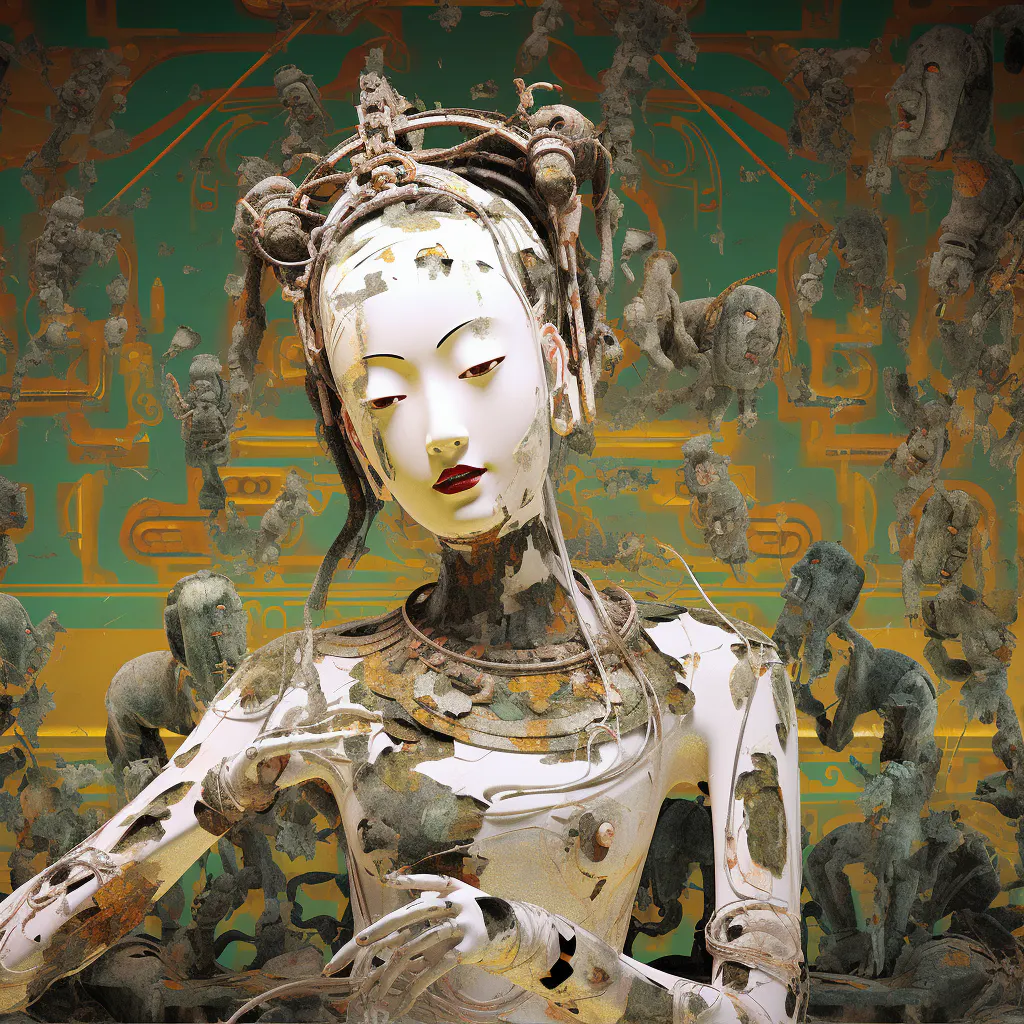
How China Regulates AI
Aug 29, 202300:56:48Tap to summarizeHow does the public, corporations, academia and civil society end up directly influencing some of China's most important regulations? What's the trajectory of China's approach to AI? Matt Sheehan of CIEP returns to discuss the AI regulatory policy process in China! Matt's paper: https://carnegieendowment.org/2023/07/10/china-s-ai-regulations-and-how-they-get-made-pub-90117Outtro music: 曾涵江Cup :天选 CHOSEN ONE https://www.youtube.com/watch?v=OB607_3sDYQImage: I took an image from Dunhuang and prompted it with "artificial intelligence" Learn more about your ad choices. Visit megaphone.fm/adchoices
Transcribe →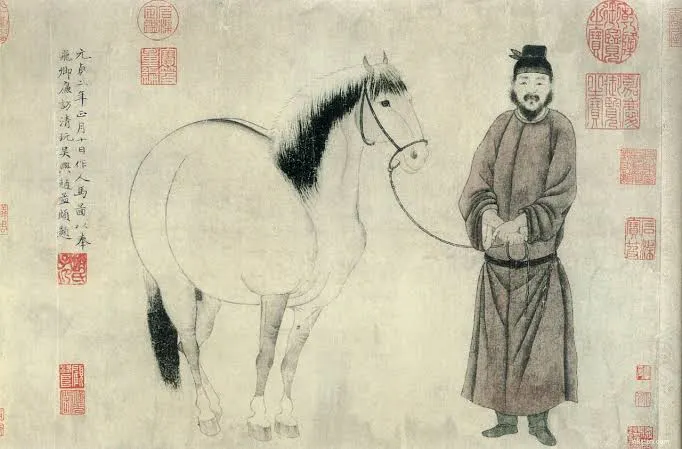
Culture Month! Painting in Premodern China
Aug 16, 202301:02:30Tap to summarizeCulture month continues with some traditional Chinese painting coverage!What was it like to paint in premodern China? How did a husband-wife and master-mentee team up to produce some remarkable art? Why is it okay to say Chinese art is "good" or "bad" while those who critique western art have so much heartburn over saying their opinion?Cohosting is Joseph Scheier-Dolberg, Chinese paintings curator at the MET.This episode is better experienced on YouTube. Check out the video on ChinaTalk's YouTube channel here: https://youtu.be/Rxr6xOj29A8Here's the link to the exhibit: https://www.metmuseum.org/exhibitions/learning-to-paint/exhibition-objects Learn more about your ad choices. Visit megaphone.fm/adchoices
Transcribe →
"Emergency" Pod: Outbound Investment Screening!
Aug 12, 202300:54:31Tap to summarizeEmily Benson (CSIS) and Martin Chorzempa (PIIE) come on to discuss the new executive order and Treasury's ANRPM (advanced notice of proposed rulemaking) on novel outbound investment screening rules on AI, quantum and semis.Treasury document: https://home.treasury.gov/system/files/206/Treasury-ANPRM.pdfOuttro music: 水碾河南三街 LSGCsikoriot https://www.youtube.com/watch?v=1Wzz1Deafh8Midjourney: used this 18th century Japanese woodprint and prompted it with "quantum semiconductor"https://www.metmuseum.org/art/collection/search/55371 Learn more about your ad choices. Visit megaphone.fm/adchoices
Transcribe →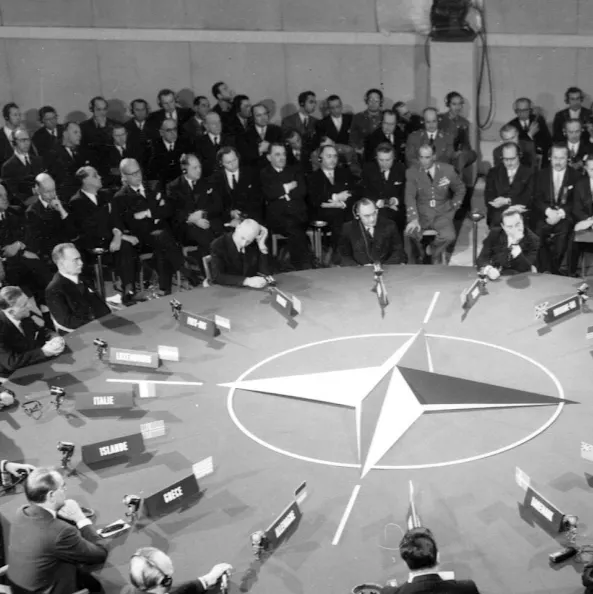
Beyond Decoupling: NATO for Trade
Aug 7, 202300:51:43Tap to summarizeShould democracies band together to protect themselves from Chinese economic coercion? What can deterrence theory teach us about geoeconomic strategy?To discuss these questions, I brought on Matt Goodman and Matt Reynolds of CSIS along with Matt Klein of The Overshoot and David Talbot of the Milken Institute.We discuss:–Why China uses economic coercion, especially against smaller states.–How democracies might join together to deter and respond to this aggression.–Why reslience beats retaliation when it comes to economic conflict.Outro music: "(You're The) Devil in Disguise," Elvis Presley.Check out our newsletter! chinatalk.media Learn more about your ad choices. Visit megaphone.fm/adchoices
Transcribe →