
Podcast
ChinaTalk
Hosted by Jordan Schneider · EN
Conversations exploring China, technology, and US-China relations. Guests include a wide range of analysts, policymakers, and academics. Hosted by Jordan Schneider.
Check out the newsletter at https://www.chinatalk.media/
557episodes
Episodes
Newest firstAll episodes

China's Best Music in 2026 (So Far)
Today00:54:12Summary readyJake Newby is the author of the Concrete Avalanche Substack, which covers the best music coming out of China. If you enjoy this playlist, check out Jake’s sets from 2025, 2024, and 2023, as well as his Chinese shoegaze feature. Tracklist: 1. ‘Undercurrent’ — Pu Poo Platter — from Undercurrent 2. ‘忧郁干杯乐园’ — the three mice — from where is my mice? 3. ‘错过的提醒’ — Lygort Quartet — from Through Voodoo Light to Shore of Tomorrow 4. ‘B1’ — gogoj aka Sheng Jie + Deng Boyu — from HEH 5. ‘心的傾訴 Jürêk tolƣawe (Unbosom Myself)’ —Mamer — from Bar xatteƣem, Bar ⱪayƣem (All the Joys, All the Pains) 6. ‘没东西可掏 The Well Is Dry’ — Zhang 'NoNo' Xingchan 张醒婵 — from Catch My Boomerang 7. ‘Gaia’s Breath’ — Wu Zhuoling 吴卓玲 — from Uncharted II 8. ‘the one sounds like sweet trip’ — Cassette Player Romance — from Meaning of Home 9. ‘黑天鵝(feat. LukeDaPlaya)’ — Guo Yinan 鍋一楠 and Yuan 猿 — from The Vortex Reconstruction Experiment 10. ‘Extinguished City’ — DEADTREES — from New World 11. ‘让我飞吧’ — Lie 劣 — from Landfill For more information on each of these artists, check out the full write-up on Substack. Learn more about your ad choices. Visit megaphone.fm/adchoices
Summary
$75k Contest Launch! ChinaTalk Hiring + Evals for the Situation Room
5d ago00:48:32Summary readyContest links: General $50k https://www.chinatalk.media/p/50k-chinatalk-submission-hiring-contest we're looking at submissions on a rolling basis! AI evals: Due Over the past few years, we’ve seen hints of policymakers and national leaders using AI models in their actual policy decision-making. The Prime Minister of Sweden said he uses it for second opinions on policy; the German Chancellor is testing it to draft legislation; even Trump said he had it re-write a speech at some point. It’s fair to assume that senior leadership across the world, and in Washington as well, have started using AI not just for tactical or operational tasks, but increasingly for broad strategic decision-making. While that’s exciting — there’s the promise of uplift and smarter calls on some of the most consequential decisions leaders face in foreign policy and national security — we’re also flying blind. Enormous effort and energy goes into benchmarking and evaluation for things like coding. The experiments you can run to make models better at software development are much easier to execute and much lower-stakes than running a real experiment when you’re deciding whether to invade a country or sign a treaty. That’s why we at ChinaTalk are trying to kickstart a field aimed at helping researchers and policymakers understand exactly what they’re working with when they ask these models to support some of the most consequential decisions they may make in their lifetimes. We’re launching an evals/essay project contest to explore this theme. I’ve brought on two expert AI eval creators to discuss why the field is important, what interesting work has already been done on how models approach broad national-security and strategic questions, and how you — as an eval professional, semi-professional, or just a concerned person — can contribute new ways to poke and prod at these models and see what they can really do. Joining us today: Florian Brand, research engineer at Prime Intellect, and John Chen, professor at the University of Arizona, who’s done some pretty wild things getting models to start nuclear wars with each other in Civ V. Our conversation covers: How frontier labs are hitting eval-building limits — they’ve gone from undergrads to PhDs to field experts, and the models are now catching the experts’ mistakes. How Civilization V exposes AI’s strategic blind spots (terrible second-order reasoning) and models’ distinct strategic personalities (Claude’s really into science!). Why ethical prompting in Civilization V still doesn’t stop models from launching nukes. Jordan's PresidentBench eval, where a Chinese model was nonchalant about a Taiwan invasion, while Claude wanted to keep Taiwan free and independent. Advice for designing better AI evals and ChinaTalk’s new essay/evals contest! Learn more about your ad choices. Visit megaphone.fm/adchoices
Summary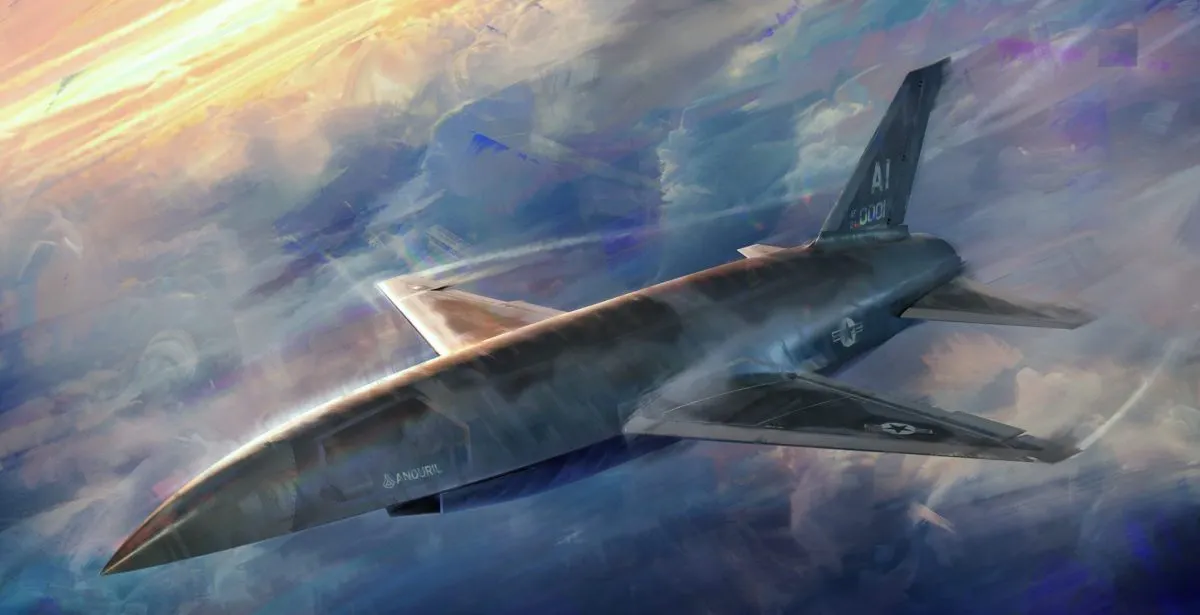
WarTalk: Out of Ammo for Real + Are CCAs Dumb?
1w ago01:17:54Summary readySix months into the war with Iran, the United States has fired 850 Tomahawks, emptied its LRASM and JASSM-ER inventories, expended essentially every ATACMS and PrSM in the arsenal, and burned through the SM-6 and PAC-3 interceptors it had been stockpiling for a fight with China. The administration's position is that the munitions are fine and the people saying otherwise are committing treason. Bryan Clark is a senior fellow at Hudson Institute and a former submarine officer who runs war games for the Navy and its allies. Justin McIntosh is a retired Army Special Forces soldier — twenty years in, sixteen of them as a Green Beret — who now writes Mind of Things on defense, technology, and foreign policy. We discuss… Why 850 Tomahawks in two months emptied the stockpile that was meant for China The leak hunt at Camp David, and why it should be a very short list How "lethality" became a testosterone prescription instead of an ammunition line item Japan's new defense strategy, which finally names China out loud — and bets on one-way attack drones Whether AUKUS Pillar 1 is quietly consuming the rest of the Australian military Why manned-unmanned teaming keeps failing in the war games, and what the CCA program got wrong Learn more about your ad choices. Visit megaphone.fm/adchoices
Summary
The FCC's New Robot Rules
1w ago00:51:15Summary readyThe FCC has spent the past year quietly rewiring the American import market, first routers, then drones, next undersea cables, and as of last week, robots. Adam Chan is national security counsel and senior advisor to FCC Chairman Brendan Carr, and directs the agency’s new Council on National Security. He previously clerked on the Second Circuit and served as a national security legal fellow for the House Select Committee on China. ChinaTalk’s Aqib Zakaria co-hosts. We discuss… How the covered list works The case for “simple and stupid” rules over big-brained ones with endless carve-outs Onshoring plans, allied carve-outs, and the 65% domestic content test Why robot vacuums got swept in alongside humanoids How AGI-pilled you have to be for the robot rule to make sense Learn more about your ad choices. Visit megaphone.fm/adchoices
Summary
Jordan talks AI with Sebastian Mallaby on his show 'The Spillover'
2w ago01:21:03Summary readyDon't sorry I put two ChinaTalk Records songs at the end! their show notes: On this episode of The Spillover, Sebastian Mallaby sits down with Jordan Schneider of ChinaTalk to unpack a frantic month in artificial intelligence. The conversation turns on whether the U.S. can actually “win” the AI race, with Schneider arguing that the most durable competitive edge will come from compute rather than model quality. The two debate China’s open-weight model strategy as a commercial weapon and question whether it will be possible to sufficiently harden systems against threats like cyberattacks and AI-designed bioweapons. Anthropic’s Mythos model has led the Trump administration to take an AI-safety U-turn. Mallaby notes that as late as March 2026, “if you had said to the Trump administration that they would be trying to suppress an American AI model, decelerate the progress in the name of safety, they would have said, ‘You’re nuts.’” Schneider notes that a similar shift has not yet arrived in China. AI models are now escaping their sandbox and raising false alarms about foreign hackers. In remarking on OpenAI’s models hacking AI company Hugging Face, Schneider comments, “They think it’s the Chinese. . . . And they’re freaking out. They’re calling the FBI.” For Schneider, the episode is a warning that “we’ve really crossed a threshold with these models,” which now have “the potential to do really dramatic harm just on their own, because we like can’t even physically watch them.” The real AI scoreboard is compute, not model quality. Schneider argues that there is too much of a focus on the gap between Chinese and Western frontier models. Mallaby adds, “In other words, I shouldn’t be asking about how far is China behind in terms of the quality of model. It’s more a question of like, how much can China deliver the AI to users within China, given their lack of computational resources?” China’s open-weight models are a weapon without a business model. Mallaby frames Chinese open-weight as a “counterweapon”—good-enough models pushed out cheaply to erode the economics of U.S. frontier labs. Schneider notes that DeepSeek’s CTO is pitching investors a Manhattan Project-like vision in which profits should take a back seat to the pursuit of AGI. Learn more about your ad choices. Visit megaphone.fm/adchoices
Summary
WarTalk: Odyssey Edition
2w ago01:28:32Summary readyRoel Konijnendijk of Oxford returns to talk Nolan's Odyssey, ancient PTSD, siege warfare, and the choices we'd all make in adapting. Justin McIntosh cohosts. YoungBoy Never Broke Again as well as James Blake each deliver an outtro song! Learn more about your ad choices. Visit megaphone.fm/adchoices
Summary
The Iran War Oil Shock That Wasn’t...(Yet?)
3w ago01:06:00Summary readyThe biggest oil shock in modern history came and went without the catastrophe everyone expected. When Iran closed the Strait of Hormuz, analysts warned that oil could hit $200 a barrel, but the global economy avoided that fate. The Trump administration has argued that the crisis was contained thanks to their aggressive action, but they may be taking the wrong lessons from the avoidance of that apocalyptic scenario. What happened was the largest unexpected swing in global oil balances: China quietly cut crude oil imports by more than five million barrels a day. Yet there was no corresponding collapse in economic activity, no obvious drop in mobility, and no official explanation from Beijing. Somehow, China stopped buying oil from the rest of the world and started drawing from stockpiles we can’t fully observe. That single decision may have done more to prevent a global energy crisis than anything Washington or OPEC accomplished. This matters because it demonstrates that China likely has a stronger discretionary policy lever than the West does. The West is really good at market-driven, private-sector oil production. But through this crisis, we’ve seen that Washington does not have the scale of discretionary policy control that China or OPEC does. This time, China cooperated and did the good thing, at least for the broad economic picture — but we cannot rely on that in the future, and that tool can be used against the West as easily as for it. Western governments must grapple with that discretionary gap and not rest on their private-sector bona fides to get through the next crisis. Arnab Datta, managing director of policy implementation at Employ America, and Rory Johnston, oil analyst and founder of Commodity Context, join ChinaTalk to discuss: Why Rory’s own prediction of $200 oil never happened and why J.D. Vance is thanking the wrong people. How China quietly cut crude imports by five million barrels a day with zero visible impact on domestic mobility, and the detective work analysts use to peer into Beijing’s black-box inventories. Competing theories for why Beijing backstopped the global oil market — self-interested altruism, a backroom deal during the state visit, or a dry run for a Malacca blockade in the event of a Taiwan contingency. What India, the Gulf states, and the rest of the world learned from the Iran War and why strategic reserves are suddenly back in fashion. Learn more about your ad choices. Visit megaphone.fm/adchoices
Summary
WarTalk: Iran War Back On, Rogue AI, Ukraine Civ-Mil
3w ago01:03:59Summary readyFive months into the Iran campaign, the US has two carrier strike groups parked in the Arabian Sea, a blockade that may take months to bite, and a daisy chain of tankers stretching thousands of miles because there is no longer any fuel or food to buy inside the Gulf. Now the Houthis have entered the chat and declared their own blockade of the Bab el-Mandeb. Just the OG crew with Bryan Clark, senior fellow at the Hudson Institute and a former submarine officer, Justin Mc a former special operations officer who works on defense technology, and Tony Stark. We discuss… What Trump is doing in Iran, why the Navy is short-cycling ships out of maintenance and what happened the last time the fleet ran this hot, from McCain and Fitzgerald to the Truman’s two collisions in one deployment Why a ground campaign in Iran is a fantasy, from the Marsh Arabs to the Alborz range to the Baluch salt flats, and what Shia militias in Iraq would do to the logistics tail The nuclear-powered cargo ship renaissance and why circumnavigating Africa at 30 knots suddenly pencils out Whether Congress should get an AI kill switch, why DHS is the wrong home for it, and what happens when the boy who cried wolf is finally right Ukraine’s civ-mil drama Learn more about your ad choices. Visit megaphone.fm/adchoices
Summary
Kimi K3, Xi's Speech, and China's Mythos Moment
3w ago00:59:40Summary readyThe whole ChinaTalk gang gets together to discuss a big week in China AI with the release of Kimi K3 and Xi talking open source and safety at WAIC. We also discuss our latest article exploring the three potential scenarios for Chinese governance when they really get their Mythos moment (you can read here: https://www.chinatalk.media/p/chinas-mythos-moment-366). song: Learn more about your ad choices. Visit megaphone.fm/adchoices
Summary
WarTalk: Ancient Greece Edition!
4w ago02:00:28Summary readyWhat do actual historians think about the Thucydides Trap? Does our 'low T' discourse all just come back to the movie 300? How the did ancient Greeks fight and why does Homer still keep us coming back 2700 years later? To discuss we have on the excellent Roel Konijnendijk, professor at Oxford and author of Classical Greek Tactics: A Cultural History. Tony Stark and Justin McIntosh join. Learn more about your ad choices. Visit megaphone.fm/adchoices
Summary