← ChooseFI | Financial Independence Podcast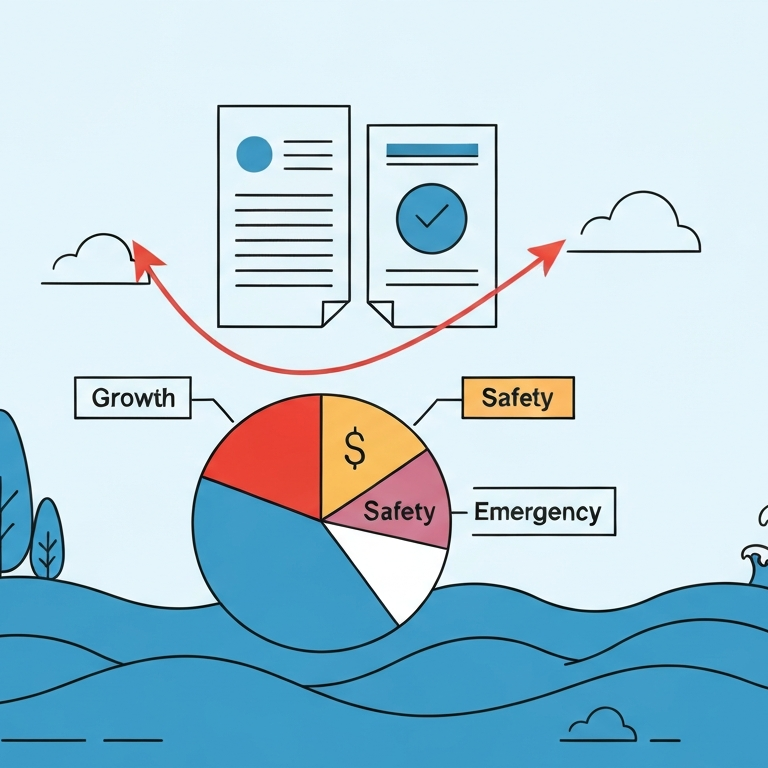
ChooseFI | Financial Independence Podcast
602 | FI 201 Beyond FI Basics: Asset Allocation & Market Psychology Mastery
01:01:39
Asset allocation, taxes, and market psychology
Loading summary
Transcript61 lines
- [00:00]
A
Hello, everyone. Today we're circling back and we're going to take a look at this idea of Financial Independence 201. You know, it's a gift. Christian and Alan have carved out a lot of time with us and they spent the whole last episode looking at the framework of Financial Independence 101. The FI community has kind of been circling the wagons on this idea and I think they have just done the most with it in recent memory to create something concrete and tangible. And people are excited about it. And, and you can see that in their local groups. But you can also see the trickle down effect to many other local groups across the country that are rolling out their own Financial Independence 101s. And our goal here is to aid and assist and create that lock in effect where financial independence 101 happens each and every year. Because there's always someone new that is trying to get started, while at the same time people that already found this one or two years ago are rapidly accelerating through the various stages. And we've talked about those with discovery and awareness and control, but if you remember, with the last episode that we recorded with them, we talked about how compelling this community is even for those individuals that are far down on the path to financial independence. And Alan notably said something along the lines of, I don't get something out of every episode, but when I'm listening intently, I get nuggets. When I'm actively looking, I get nuggets. And all of us can appreciate we don't know what we don't know. And our best shot of gleaning new insights that can help us with our particular stage of the journey is paying very close attention to this community and what this community is doing. This conversation Today, Financial Independence 201 gives us an opportunity to explore the transition between a 101 which goes from orientation to control to to now a 201 which takes us maybe from optimization all the way to independence and really has that appeal for those FI graduates, for those individuals that have been on the path for a while and are looking for that little piece that they don't know, that they don't know. Our hope today is to maybe just explore that a little bit and find something that will resonate with you and with local groups across the country and with that. Welcome to the ultimate crowdsource Personal finance. This is Choose a fi.
- [02:20]
B
Before we get started, I keep this podcast entirely ad free for two reasons. First, this is a FI podcast and I don't want to promote products that I don't want you to buy in the first place. And second, I really like the clean listening experience of a show where you don't have to fast forward ads to keep it ad free. All I ask of you as a listener is the next time you open a travel rewards credit card, go to choosefi.com cards and with that onto the show.
- [02:50]
A
All right, guys, very excited to get back into this week's episode. I love talking about financial independence and I love talking about tactics. And to help me with this, I have my co host Brad here with me today. How you doing, buddy?
- [02:58]
B
Hey, Jonathan. I am doing quite well. Yeah. So Fi201, this is a constantly evolving concept and we are trying to hone in on what these things are and that's what I love. So, Alan, you and Elliot presented each in early May of 2026 to the St. Louis group. You had 60 plus people show up for FI201. Where did you think to start?
- [03:25]
C
The idea basically came from looking at. We talked about the financial order of operations last time. Four of those ten steps involve investing. That's a big deal. And we talk about you can't save your way to fi. You have to invest. So to be able to take those concepts and even the pillars of FI starts with BTI or VTSAX and chill. So investing to me was the next logical step. So we started putting this together. Elliot and I worked on it together. We had Kristen and my wife kind of review it with us and say, you need to dumb this down. You need to, you need to.
- [04:11]
D
No offense anyone. No offense.
- [04:13]
A
These were the unfiltered words.
- [04:15]
D
Yeah.
- [04:16]
C
So, you know, I'm looking at the investopedia definitions of things and then I have to come in on another slide and say, okay, now enough of estopedia. Let's talk English. So it was a sense of being able to say, how do I take those concepts from maybe a 301 or even a 401 and just make them relatable to people. And I think we got pretty close. We said, why do we invest? What's important about investing? I think we got to a point where people still asked a lot of questions. I don't know if we had as many newbies looking at the information and I didn't see a lot of glazed over eyes during the presentation. So that was good. So I think we got to a point where we want to talk about investing. We want to talk about why it's important. Some of the concepts around investing like risk and allocations and things like that. So we probably got A little too deep into maybe some optimization stuff. But I think we wanted to cover the basic concepts and say this is why we do this.
- [05:20]
A
Kristen, welcome back. By the way, excited that you're both here again. We're thrilled to be getting a chance to talk to you. I'm curious, Kristen, if we're building on our conversation in the last recording where we were talking about Financial Independence 101. And again, it's not about necessarily exactly what happened because you did it for real, but it's more just through the benefit of hindsight and through the benefit of now having run both of these or seen both of these run and maybe you're going to be doing one again in the future. You have someone that's asking you for feedback. My question is what knowledge is the person coming in with that are just kind of what's table stakes to really get value? You're not having to go back, go through this stuff. You're just saying, I think that the person that's sitting in this room, I'm not saying they have a million dollar net worth or they are whatever, but I think person in this room is confident with these concepts and principles. And to Alan's point about how there weren't a whole lot of newbies for this particular one, where do you think the person is on their own, you know, stage or journey to financial independence, that they're really getting value for financial independence. You know, this 201 class and that both helps us think about what needs to happen in this presentation, but also how do we get them here? How do we get the person ready to enjoy the this conversation?
- [06:33]
D
Honestly, we did it a whole lot simpler than kind of what you're suggesting here. It was more just what are the questions that people have? Like we didn't want to get too into the weeds in 101 and some of the questions were coming up that we just didn't have time. There was no way we were going to be able to get through that before the library closed. We just kind of made a mental note as to what are some of these more advanced topics that are coming up that we can't cover here and created something around that. I mean it was just as simple as that.
- [07:03]
A
So Alan, when you're, when we're thinking about the 5101 and we, you know, we talked about it a little bit last time, but we just basically said, hey, we're going to cover a definition what is financial independence? We're going to cover 4% rule, we're going to take A look at fees. We're going to talk about why it's not just good enough to save, but you do need to invest. And we're going to take a look at some of these vehicles that you can use, financial order of operations, et cetera. And then as we kind of finish, we're going to go into now, you need to do the assessment. We're going to go with the awareness piece where they're going to start mapping out their own financial life and hopefully they've taken action. But I guess my question is if a newbie did all that. Right? If they did all that. And now it's been, you know, maybe a month or two. What was the gap between the two that you guys did, the 101 and this 201? How much space was there?
- [07:47]
D
Three months.
- [07:48]
A
Three months, 90 days. So individuals that were maybe newish, I'm not saying entirely new, but, you know, this was the first time that they'd really taken this seriously, and they were very excited about the idea of taking action on this. Do you think that there's enough time for them to kind of get some of these things in place and now come back hungry for what is next?
- [08:10]
C
No, I think that was enough time for people to digest what they learned. And we post the slides in our Facebook group so people have access to them and they can look at them, they can ask questions in the group. But it was enough time to be able to see some of the questions that were coming up in the Facebook group and say, okay, I think we need to maybe target this in the next presentation. You know, this is something a lot of people want to. Want to know about or hear about?
- [08:35]
A
Why don't we start there? What were the questions that were popping up? Do either of you have a sense for what the raw questions were that was driving the, you know, the reason to get it? Forget what answers you used and what you taught. What was the raw questions that. The patterns that emerged about the questions people had after the 5101 completed, I
- [08:54]
D
think a lot of people were confused about, like, what should I invest in? How do I determine what to invest in and how much to put into different things and asset allocation. And a lot of questions about that were coming up in the 101 that we decided to move over into this 201.
- [09:09]
C
I agree with that. We saw some. It's like, well, what do you, you know, do you invest in bitcoin? Do you invest in gold? Do you do this? Do you do that? And it's like, well, you that's why the disclaimers are in the front of the presentations. It's like, we can't give you that advice. What Elliot and I did was as we went through it is like we shared our information. We said, this is our portfolio, this is our allocation. And questions during the seminar came up about that. But a lot of it was, how do I invest? Should I invest in my 401k or do I have a 401k? I think we had some public employees that were like, we were talking 457s at one point. It's like, do I have that? It's like you might. So I think it really was, let's really delve into what these different accounts are and talk about why you might invest in one or another. Whether you want a pre tax or a post tax or just a brokerage account. You know, why do we do what we do when it comes to investing? So that was the basis of a lot of the questions. Just I don't know what to do
- [10:20]
A
that actually makes sense. And I think probably if individuals were listening to the 5 101, they should have realized that there is a lot to cover. There's a lot. There is. You have to be so selective on the highest impact things. It doesn't matter how accurate the information, I mean does here the second part of the sentence, but it doesn't matter how accurate or technically correct the rest of the information is. If the why is not the biggest part, then no action will be taken. But assuming that you nailed that and that that was all conveyed and I think the touch points that we hit on. Did you notice how we actually almost ran out of time to really talk about what they were just, you know, hitting on here? Like I don't think we went really into asset allocate. We basically just said VTSAX versus vti. We didn't talk about the difference between marginal tax rates and effective tax tax rates. We didn't talk about the, you know, the risk profile characteristics where someone realizes and this goes back to asset allocation. But why would someone invested. Why would you invest in a bond when you could make more in a stock? Why would you invest in a stock when you could make Bitcoin? And apparently it only ever goes up except when it doesn't. This is not a five minute conversation. Right. And so, you know, we'd love to say, okay, now we're going to get, you're not ready for Roth conversion ladder. You know that this is really the point of this. If you don't if, if this isn't table stakes and you kind of, you can put these things in boxes, then we do need to absolutely spend some time where. And there's no feasible way to do it justice in the other one. So what I'm hearing right now, you know, just thinking about it, an individual has a plan in place and now they know where they are, they know their rough time defy and they're starting to actually do some of these takeaways like, hey, go look. Does your employer offer a match? Are you getting the match? Do you realize the importance or you of your match? Do you know that like HR departments usually have to beg and plead with people to participate in the employer match? Whereas in our community, some people are choosing selectively to try to get a zero dollar paycheck so that they can max out there. That's the weird. I know it's weird. And you'll have to think about that. Why would that even make sense? But it does happen. In our community there are individuals that are very excited about how they got a ten dollar paycheck. Think about that. And you're like, well, it doesn't make sense. Yes, I agree. Unless you know what they know. And so that's the n these things, you need to spend a little bit of time because once you see it, you won't be able to unsee it. And you guys, I think with this 201, you're coming back and you're giving it the time and the space that it's due. So Alan, I'll give it back to you. Why don't you go ahead and just kind of talk through a little bit of that nuance. Asset allocation. Asset allocation. Someone's coming in. We're not doing financial advice, but we are talking about patterns over time, historical charts and et cetera. Just kind of best practices that have kind of stood the test of time. What are the asset allocation principles that you leaned on during this presentation?
- [13:17]
C
Well, that was one of those where, all right, I defined asset allocation. Friends at ChatGPT helped and Investopedia help. And there were several words that we filled up with a screen. But then we said, let's do this in English. It's your money pie. And I also likened it to where you can go into a grocery store and get a cheesecake with four different flavors on multiple slices. That's kind of the same thing. You want to have your portfolio split up. So where you have some growth that will be equities and stocks and things like that, you might want safety involved with Bonds. And you want an emergency slice of pie. You want cash sitting there just in case you need to do something. So we tried to take it 301 back down to 101 a little bit and then share. You know, this is why you do this. You know, it's important you think about your time horizons. You think about, how am I going to diversify these assets. You know, we talked a lot about risk. You know, what is your risk tolerance versus your risk capacity? Your tolerance is, are you emotionally able to see the market go down and not react? You know, if you start seeing, you know, 30% drops, what are you going to do? You know, we always kind of do a show of hands. You know, who went through 2008? You know, some of us old guys got to do that.
- [14:39]
A
Well, most people have Covid in recent memory.
- [14:41]
C
Exactly.
- [14:42]
A
Trial run there. All of us had a little. Okay, you think you got it. You think you're big stuff. You think you're not going to blink? What? You know, it's. It's March of 2020 right now, and this is your first chance of saying, seems like the whole world's shutting down.
- [14:55]
C
What do I do now?
- [14:56]
A
What, did you figure that in your plan, big guy?
- [14:58]
C
Yeah. So tolerance is a big deal. Can you emotionally handle it? But also, what was your capacity? Capacity? Can you. Do you have the time frame to recover from a 30% drop?
- [15:08]
A
But I think it's really important that these are not words with definitions, but through the benefit you said of 2008, and now I just pointed to, you know, the 2020, and there will be. You have maybe tariffs within the last, like, year or so, and there's a few other little things. You're getting these little trial runs. And instead of looking at an academic definition, having people there that said, I was at this, I had this plan, and some important date was coming up. And right as that important date is coming up, this happened. And I watched XYZ in my portfolio. Being able to have a place, a safe place, that you can say this out loud and share the perspectives, because everybody experienced the same chart, but they were at different stages on their financial journey. I think it's incredibly valuable and it's a rewarding conversation to get that, you know, in a group setting. Outside of, hey, there's a list that there's going to be a test at the end, and you got to match these definitions on multiple trade. No, no, no, no. This is. This is real. There's a real impact for you understanding this and then applying it to your Financial picture, it tells you something pretty important about what's going to, you know, how you're going to react in these definitely coming future situations.
- [16:19]
C
Yeah. And we did a guessing game on some charts. So we said just time periods, no dates, no numbers. So you couldn't pick a period because go back to the Depression, I think the market was 10 and now it's almost 8,000. We tried to get people to look at this and say, this is what happens, this is real life. The depression, we were down 90% and it took 36 years to recover. This year we had a little bump not too long ago and we're back to up almost 8% for the year. So getting people to look at charts and say bad things will happen, you will experience them, whether that is a 4% drop, an 8% drop, a 30% drop, it's going to come back most likely again, zombie apocalypse and all of that apart. But it's going to come back and you're going to be better than you were however many months ago.
- [17:18]
A
But even when you're talking about, this is actually the encouraging point. When you're talking about individuals, newbies coming in, you're talking about, hey, there's blood in the streets. But you're early on your journey, right. And you got a message, is there someone on the tail end of the journey? Now you're looking at the time horizon, the diversification, but someone early on their journey. You could never make more money, you know, when you're early on your investing journey than when you have a crisis like this. And your reaction in the absence of the average of the five would be to go squirrel away and hide. But through the lens of what you're seeing in this chart, this is, this is creating multiples of wealth for you. If you double down and get excited about this, that mindset shift only happens in conversation. And you know, you basically take a fearful outcome and you say it's a once in a lifetime opportunity.
- [18:05]
C
Yeah. The one thing we forgot to talk about is when these dips happen, you essentially get to buy the market on sale. If you love a bargain, this is it. Load up, keep doing your dollar cost averaging. You've got your 401k mat. If you got any on the sidelines, maybe this is the time to invest. Don't time the market, we don't advocate that whatsoever. But if you do see a dip, maybe put a little more in there.
- [18:30]
D
I like to liken it to going to the mall or whatever and seeing your favorite brands on sale. Our natural psychology is like, oh, my gosh, my favorite thing is half off. I want to buy all the things. And then I'm like, why in the world do we not think that way? When it comes to the market, for whatever reason, our brain completely flips. We're like, ah, we're scared. And I try to tell people, I'm like, no, this is great. And I remind them of this shopping thing. I'm like, no, stock up, stock up. But it's so hard for people. And I feel like giving them these examples kind of teaches them how to flip that mindset.
- [19:03]
B
Yeah. I mean, you can understand on a lot of levels why it can be hard because you're sitting there with a net worth that has just been cut by X percent, 10, 20, 30, whatever the number is. But having people who have gone through it, I think that's a major, major value of a presentation like this in a local group. Because it's easy to say, right. But we've all felt that pit in our stomach when the world is coming to an end, or it seems like it, and it's all well and good to say, oh, I'm going to be fantastic the next time this happens. But unless you've actually lived through it, you don't know. You really don't. And I think we need to extend some kindness, not that any of us weren't, but extend some kindness to people who haven't been through one, because you do not know how you're going to react. And I think that's why we talk about investor policy statements, which is when there isn't some crisis happening, when you are in a position of psychological strength and contentment, you say, all right, look, this is what I'm going to do. It's still going to be hard, but you can still. Look, you can go to that investor policy statement and say, this was the plan. This is the plan all along. And then you can go to people in the FI community who talk about, like, Kristen, you just said buy when it's on sale. And you hear that over and over again. And you see people, maybe most importantly, you see people like many of us on this call, who have been through 1, 2, 3, 4 of these supposedly catastrophic events, and we're still fi. We've come through the other side. I think that, to me, is the great equalizer here of, like, why, maybe not equalizer, but the. The great value of why we're doing this in Community. Chris, in our first episode that just recently launched, you talked about the value of community over and over and over. Again, I think it extends not only for our actual regular lives, but in our money as well. And I think this is the perfect example of it.
- [21:09]
D
Yeah, If I'm freaking out, I'm calling Alan. Alan talk me off a ledge. Right. And I know that he's going to talk me off that ledge and I'll be better off for it. Right. Because we have these people to bounce these ideas off of the individuals that
- [21:20]
A
make money in those scenarios. And there are definitely those, but are the ones that see it through the lens of opportunity as opposed to trying to proactively be fearful and hoard and just like, oh, I know I can't. Because if you live in that place, you might get it right once or you might get it right. But the problem, the psychological problem is, well, how do you know when it's time to go back in? And your predisposition was fear. And if you were rewarded for the fear by a better outcome, it actually means more fear. It actually locks in the fearful behavior which then locks in the, the poor return over time. This is why JL Collins has been such a figure in this community and just continues over time to have this book that's really changed the paradigm for, you know, probably it's by millions of people at this point, whether they know it or not or give them credit for it or not, either directly from the book or from someone that read the book or was book aware. The Simple Path to Wealth was just an absolutely life changing book. Probably one of the most influential investing books that I ever read. Started out as a blog series on his website which is still available. JL Collins nh.com the simple path to wealth is just a. And and the stock series, which was the art, is just a must read series. And it hits in absolutely pitch perfect tone all of these points. And he extended up expanding it to probably 22 or 23 parts which then as you can figure probably became the book. It's a must read for anyone. But if we can at least get these big points across, it actually informs everything else. So now we're talking about asset allocation. Well, why would I want to be in stocks versus bonds? Because it's what's going to let you sleep at night. It's great when it's going up. But what if the market is going down? Is there something that can just kind of be stable or maybe pick up a little bit? It won't go down as much. You can soften the blow. What's your time horizon? When are you going to need this money? We talked about the individual that had time to look for the opportunity and double down. Well, someone that's going to need this money imminently can't afford that same time horizon. Which means they need to now order of operations, think about their risk tolerance through the lens of time horizon. And with both of those in mind, now they can think about asset allocation. These phrases don't work independently, they work together. It's not that you are brave, so you have more. Risk tolerance has nothing to do with your cowardice level at all. It has to do entirely with facts on the ground. Objective and subjective facts on the ground lead you to the perfect combination. But if you haven't even been introduced to the terms, then they are just meaningless things that you equate with cowardice or with bravery or with whatever. No, no, no. You know that you live in a job that is susceptible to various cuts. You know that if this money were to drop by 30 or 40%, the odds are at the same time you are going to lose your job. You need to think about your life through these lens and say what if the worst were to happen? Not for the purposes of enabling fear or living in a fearful place, but just realizing that someone that's well on the path to financial independence, even when the market is down 60 or 70%, still has a dramatic amount of power over someone that was not aware of this concept or has not even considered or been on the path for any period of time. You have options. And so we need to really take these out of Investopedia and start applying them to individuals lives so that everyone else can kind of benefit from that. Alan, I love the, the charts idea. I think it's so fantastic, especially because with charts you can zoom in or you can zoom out and people get so fixated on performance over an interval and they lose sight of performance over longer periods of time. Whether you're going to call it 12 or 20 or 30 years, you know, you can create a compelling chart that tells any story you want it to tell. But if you look over charts over longer periods of time, you pick up some pretty important patterns that can kind of anchor you to reality and help inform some of these decisions.
- [25:19]
C
No, I agree. I mean, if you, you know, we did four individual charts of different time periods, but if you take all of them and put them together, guess what? They go up and to the right. It's not a hard concept to understand. Sometimes it's hard to believe, especially when you're staring at the teeth of a market decline. But you know, again, a lot of ours are just don't do anything, don't. You don't have to double down, you don't have to do anything, just don't do anything. We talked about, I think, I don't know if it was Vanguard, I'm pretty sure it's been on the show. But when there's a study of who was the most successful over a 20 year investing period, it's dead people, they don't tinker with their portfolios, they just let them grow. So stand there and do nothing. I think is the best investing lesson. If you're invested, just don't do anything and you're going to be rewarded.
- [26:15]
A
You know, with this 201 type content, we introduced some big terms, time horizon, asset allocation, risk tolerance. Probably the next thing after you've done these broad definitions and you've started to think about charts, you're probably starting to want to get more focused now. This is where financial independence community because it's growing so much, it's becoming international and we kind of got a fork in the road here. I love that. And when you're doing base. But up to this point everything that we've done 5, 101 to now has been universal to every country. So at this particular point, local admins in their country are going to be able to kind of front run this. It will translate. But your particular tax structure and your particular, you know, tax benefit style accounts, Canada, Australia, UK etc are going to steer some of the opportunities. And this is where we're going to kind of diverge and go in different ways. But inside the United States this is a great opportunity for us to really spend a little bit of time talking about the difference between a provider and an investment type account. And we could say it's taxable investments or you could say it's retirement investments or you could say it's whatever. But it's important for us to think not just about the asset allocation, but where are we investing and what is the tax treatment on that account. Because in terms of a comprehensive investing strategy, it's not just the fees and it's not just the type of account that it's in and what is it invested in. The tax structure provides significant opportunities for us regardless of how it's actually structured. There's various options and we can use them in various ways. So Alan, I'm sure did you go into this with any level of detail?
- [27:54]
C
Probably too much, but no. We talked about location, you know, asset location and then different accounts within those locations. So we looked at you know, as something taxable. I mean, we call that our taxable accounts. It's a dumb name, but that's what everybody knows it by. It's just your brokerage account. That's where your leftover money goes, your tax deferred accounts. So you're looking at your 401ks, 403bs, anything that allows you to avoid paying taxes initially on your contributions, but you may have to pay taxes on it later. We talked about tax free accounts or, you know, some people call them post tax accounts. Those are your Roth accounts, your HSA accounts, things like that. We added an extra one. A lot of people don't talk about an other blended. My own example is our Grandkids529 plans. There could be tax free, they could not be tax free. You make the joke in the middle of a presentation that says, well, if everything hits the fan, guess what? Grandkids aren't going to college because they're mine. So we kind of look at it in that aspect to say, where are you putting your dollars and how does that benefit you in the long run? And there's a number of, especially with Cody and Sean's book that really talk about asset location and the taxable impact of all of those.
- [29:14]
B
Cody and Sean's book is Tax planning to and through early retirement. It has been an absolute game changer for the community. So, yeah, I'm glad you mentioned that one, Alan.
- [29:24]
A
I think what Cody and Sean talk about, which is it's really people should embrace this and think about it more and more, is it's not what's my tax this year. It is what is going to be my tax burden over my lifetime. And you want to manage it over your life. And that's the reframe, that's the rethink, and that's what rewards financial independence. You know, kind of thinkers, people that have been in this community is moving in that direction. And so with this, you know, kind of 201 approach, I think we're moving through the stages of five. We're dealing with optimization on the path to independence. And let's just say that the community starts to have an appreciation for. All right, I understand, I understand why risk tolerance matters. I understand kind of the basics between asset allocation, stocks, bonds, et cetera. I, I understand time horizon and where I am on this journey and why if I my time horizon is shorter to when I'm going to need the money, then that means my risk tolerance is also, you know, not. It's going to be lower. It's not going to be as high because it very much matters what's going to happen in the short term. These three things are coming into place. But then now the reason I think these additional conversations is you have this additional layer of tax treatment. It's US specific in this particular case, but other countries have their own various versions with what you just said. You dropped a couple of them there and you mentioned, you know, taxable versus pre tax versus post tax. One pattern that emerges, at least here in the United States, probably does in other countries is that disproportionately we can get a lot of benefit by lowering our marginal tax rate now, or maybe not lowering it, but rather reducing the amount of income that's going to hit those higher marginal tax rate by loading up pre tax accounts. So we're going to invest, but we're going to invest inside of our 401ks or if you have access to it, your 457s. And some of these accounts have really interesting quirks and cool things about them. Like the 457B in particular is one that our community continues to be blown away by. And I probably would write it off except that for whatever reason over and over again it comes up as being one of the most high impact things that people mentioned. I had no idea. I've had access to this the whole time and I didn't really understand the power of it. The reason that we start to get interested in tax accounts and tax treatments is your money's fungible. So you want to access your money in the way that gives you the best tax benefits, but through the lens of your tax burden over your whole life. And now we've just determined that's a multifactorial equation. So you want to have a lot of moving parts kind of nailed down. That way you're limiting the variable so you can figure out for me what's my situation. But typically if we can reduce the amount of income that's going in at those higher marginal tax rate. Brad, you mentioned this a lot and I think it's, it's picking up weight. There's a high likelihood that when you retire and you, you have left your income, your taxable income, your tax income rate will be far less than it is than while you're working. And that's not even necessarily because you're living on less, but because the tax treatment on the assets that you're living off of are treated at a more favorable rate. Capital gains versus, you know, income tax rate.
- [32:38]
B
Yeah, well, like you said, it Multifactorial also. And yeah, I'll get into that in a second. But just to give as many specifics on this episode as we can, as opposed to just generality. It's like you said, 457B. This is a really important one. After separating from your employer, you can withdraw money from a 457B without the 10% early withdrawal penalty. So for people who have options of, hey, I'm a public service employee, I have a 457 and a 403B. Okay, 457 is really pretty phenomenal. It has that extra little bonus. That's not something to scoff at. That's massive. Now, a lot of people have access to both of those. Okay, well, there's some ordering rules sometimes in this case, 457B, you can pull that out without the penalty. That's fantastic. This is what's so neat about the FI community is there's always some additional little thing that we figured out and I think, and we've, we've talked for years here at Choose a Phi, that traditional personal finance and even, frankly, in some corners, some significant corners of the FI world, people talk about maxing Roth IRAs and 401ks, whereas we believe very strongly and the aforementioned Sean Mulaney and Cody Garrett do as well in their book that lifetime burden of taxes on this money. Okay. I think when you put money into a tax deferred account, like a traditional IRA, traditional 401k, so you get the tax deduction in the current year. This is a control which you can control type scenario. You are locking that in at your current top marginal rate, which this is during your working years, presumably that's going to be much more significant. But because of the tenants of five, because of when you're at five, most likely your expenses are fairly under control. You might even have a paid off car. You might have a paid off house. Your life might only cost, and I'm not saying this is guaranteed or even necessary, but your life might cost 40, $50,000. Well, because of the tax treatment in the US because of the new dramatically increased standard deductions, you have a standard deduction for a couple of over $30,000. Now, that means right off the top, let's say your life costs $40,000.
- [34:59]
A
All right?
- [34:59]
B
Not unreasonable. If your house and car paid off, if you pull all that money out of your traditional accounts. Now you have said to the government, this is entirely taxable. All $40,000 of that is taxable. All right, well, all well. And Good. You go to your 1040, your tax return and you say, hey, government tax me on this $40,000. But they say there is a standard deduction for a married filing joint. I think it's like $32,000 this year. Don't quote me, but it's somewhere in that vicinity. 32,000 comes right off the top. So all you have left is $8,000. There's a reasonable likelihood you might have other deductions. But even if that's it, that's all going to be taxed at most at the 10% marginal rate. So your tax on that amount is literally $800 from the federal. That's on 40,000. $800 on $40,000 that you pulled out. That's a 2% effective tax rate. That is why I think for most people in the FI community, putting money into tax deferred accounts is going to be dramatically more beneficial than putting into Roth. Now that doesn't mean there's not a place for Roth. And Alan, I'm curious, how did you think about this when you were presenting to an entire audience of 60 people who are all coming from different places, have different current incomes, etc.
- [36:19]
C
Yeah, I think it really, it boiled down to and in my mind, and this is why we're going to do taxes as our next 201. People don't understand marginal versus effective. So we're going to really boil it down what that truly means. And you know, some people need to see it on the board, some people need to see it on a presentation. We'll get into that and explain. You know, if you're putting $23,000 this year into your 401k, you're at a 24% marginal tax rate. If you pull that same 24 out after you're retired with no other income, you're not going to pay taxes on that zero. We want to really emphasize that in the presentation. I've always used a third, a third, a third as a target. To me, that gives you a tremendous amount of flexibility. If you early retire, you've got Roth assets, you've got pre tax assets, and you've got a taxable brokerage account you can draw from.
- [37:19]
A
Let me speak to that for just a second, Alex. I think that's that, that, that actually gets to something that I really wanted to go to, which was people were like, all right, I know this is the fire community, the retire early community, but if I just do what Brad just said, I can't have the money without a penalty before, you know, 59 and a half. While that is maybe technically true practically for individuals in the FI community, it's almost irrelevant. So it's not true with the FI community, you become aware of all the various strategies that you can use to access that money. Brad mentioned one in passing with the 457. If you have a bunch of money in the 457 when you retire early, that's literally the criteria to be able to access the money without penalty. So done. Which is why people get very excited about that. But then in addition to that, we have the Roth conversion ladder, we have the 72T. You have the rule of 50, 55. These opportunities abound. The one that I have, I didn't put a whole lot of emphasis on, but it directly ties to what you're saying is the Roth conversion ladder. And in this particular case it helps to have some money to live on for around a five year window. And so if you have money that's outside of pre tax, whether it's in taxable or whether, you know, it's inside of your Roth ira. But this is very nuanced, nitty gritty stuff. And so the point I think in a 201 is not necessarily that in this particular session the person is going to be a master at 72T, Rule 55, Roth conversion, but they do need to know that it exists and they should be able to walk away feeling very confident that they don't need to just be, oh, worried about, oh, I'm going to pay penalty. The money, I can't touch the money until it's 59 and a half.
- [38:54]
C
And a lot of what we talked about. Well, and that's maybe optimal again, you're. Nope, no, I'm not there. You know, I don't expect any to be at this magical third or third or third. We're going to talk a lot about when it comes to taxes, if your current marginal tax rate is 12%, I'd probably load up on Roth assets. If you could, you know, get your match, maybe that's only in the 401k. They don't have a Roth available. Get your match. And then maybe you're investing in Roth IRAs outside of work. So it's really going to boil down to where are you in your own personal journey? This is not boilerplate stuff. You can't do everything that we list on this document because everybody's got their own personal situation to deal with. But we're going to try to emphasize, take advantage of what the tax code gives you and if the tax code says, yeah, you should be contributing to Roth assets, by all means, go for it. You're probably going to pay 12% later. Might as well get it into a Roth account now and pay the 12% now or 10%, depending on where you're at. Again, I think the community spends a lot of time on Roth conversions and I don't know that that's the direction we should be in right now. I think talking about taxes, marginal tax rates, 401ks, that's, that's the basics of all of this is try to minimize lifetime taxes.
- [40:21]
A
You know, as we're going through this kind of 201, I realize some of it, whether there's slides on the 201 presentation and by the way, financial independence 101, financial independence 201, all of those are available for local group admins and you know, by extension for their community. But local group admins have access to all the presentations. We're continuing to crowdsource iterate them. They're living documents. If you would like to, you know, be an admin, either reach out to your current existing admin team or you know, if you're in an area that doesn't have one, just raise your hand. I mean, we'd love to see this stuff be able to be used. What we're trying to do here is we're just establishing a cadence, a framework that all of us can kind of iterate and build. If we were to remake this episode a year from now, maybe a little bit of more of this is fine tuned. But what's become apparent over the last six months as Brad and I have been sitting down and doing these episodes together, is that the community says it's, it's overdue for standardization. It's overdue for kind of a baseline of best practices that we can take into our communities. And yeah, I mean, we'll fine tune it, we'll personalize it. You know, maybe Alan just mentioned, you know, maybe, hey, I tell you, just throw it through. And Brad's like, I'm a purist on this, you know, until, until, until I have to, until the tax rate's guaranteed, like I'm just going to go pre. Great. The FI community is not a monolithic group of people that all agree with each other on everything, which is amazing. You get to see in different directions. And a lot of times for unique individuals and individual circumstances, the advice is correct. But that leads us back to that old statement, personal finance is personal. Let's benefit from the diversity of opinion Now, Alan, I have a feeling, I just have a feeling at some point it's going to come up. Alan, should I be doing individual stocks? Like what are your, you know, like is there, is that, is that a big part of this? What, what should I do? Or I have individual stocks and some of them should do well or how does that fit into this conversation about asset allocation, et cetera? What sort of level of education do you bring into this?
- [42:10]
C
Mine is I personally have a few individual stocks. I like to tinker in some instances, but it's a really small portion of my portfolio. I found a study through Arizona State that was talking about what made up the wealth in the stock market in the past 100 years. And it turns out it's about 4% of the stocks over that period of time contributed to 100% of the wealth. So yeah, 29,000 stocks and little over 1,000 of them contributed all of the wealth. That's not saying. So you had several of them go bankrupt and you had several of them make some money, but if you line them all up against their returns, you take out 28,000 stocks, that's zero. And then the rest of them made everything. You can do it. Don't count on retiring early or retiring if you do it. You hate to say that, and I know Brian Feroldi would say anybody can invest in individual stocks and you can, and that may be your portfolio. But I think even he has the majority of his assets in index funds and things like that. So by all means, if you're interested, invest in individual stocks. Enjoy the process. Learn how a company actually returns money to investors, whether that's through growth or dividends, but do not make it the emphasis of your portfolio.
- [43:38]
B
Yeah, and I think the upshot there is it's just incredibly improbable that you are going to be the one that picks those couple of percent. In that case it's what, about 3% right over the last hundred years? It's possible. Obviously it's possible. I always look at this investing as what is my highest likelihood of success. When you buy a broad based fund, ETF or index fund, you're buying this self cleansing mechanism where the winners keep rising, the losers, of which there are many, just kind of drop out. But you get all those gains. You're not just getting lucky picking a couple of companies, even if you think you know what you're doing. It's so improbable. Warren Buffett had this famous 10 year bet with this hedge fund person who was able to basically hand Pick their fund of funds. Basically Buffett just took a net of fees which fees are critical. As we talked about in the 101 episode. Buffett took the market basically. I think he took the S&P 500 net of fees versus this handpicked. They know the insider information hedge fund. You get to pick the exact fund you want. And Buffett trounced them. Trounced them. Just The S&P 500 trounced them. And it was this million dollar bet that went to charity. It was fantastic. But so is it possible to pick individual stocks? Yes, it is. But what is your, your Highest likelihood over 40 plus years which is your investing lifetime? I think it's trying to just match the market. I think that is your by far your highest likelihood of success.
- [45:16]
A
This is so important. I think this is just absolutely mission critical. So you know, inside of the the Dave Ramsey community there's a bunch of individuals that would teach a financial peace university and, and they would talk about the evils of credit cards, et cetera. And then separately they would just say well of course I use a credit card because you'd be a crazy person to not use a credit card because that's how like you know, and I use it for travel rewards etc. But then inside that room they're like and, and, and to some degree, maybe rightfully so because there's a lot of people that are in credit card debt up into the eyeballs in the community. You have a bunch of people that publicly advocate for index funds, but then privately, or maybe not so privately, they also invest in some individual stocks. In this particular case, these. You're never going to talk the person out of investing in their individual stocks, but they will be the first to tell you or to hedge their bets that the vast majority of their assets are in broad based index funds. My point with all of that is to is is twofold. One all of us think at some level we think all right, we, we can beat this, we can beat the market. Like all you got to do is just pick a couple. We at some level you're like I think I could do this. But there's two things I wanted to come back with. One, you might to if you're really making money in individual stocks, you're doing it before long before anybody truly appreciates the value. So you're buying and holding for a long time or two. And this is what Brian talks about. When the market has a short term fear about something, you see a long term opportunity meaning you are buying when it goes down. But unlike the broad market, which might go down at some level, stocks can go down to a staggering individual degree. So when everybody is seeing like, you know, blood in the streets on this stock, you're like, ooh, that's an opportunity. Here's the problem. All of us with confidence can say if the market goes down 30 or 40 or 50%. All of history, all of the stock market history tells you that if you're invested in the broad based index fund, that is an actual opportunity. I had the chance this past week to watch the BlackBerry documentary on Netflix. Probably worth a watch for individuals. Does anybody remember BlackBerry? Like, I mean, I say that I know all of you do. And just for anybody that gets that, do you realize that it was in everybody's thumbs, everybody was excited about it. It was a game changer. And then Steve Jobs walks onto a stage and shows how the keyboard is the screen. Did you see a buying opportunity there when that BlackBerry started going down? Did you see a blind, a buying opportunity? BlackBerry went from a billion dollar company, 15 billion dollar company, to basically insolvent and bankrupt within a year and a half. Even if you got in on the bank on the BlackBerry early on, you have no guarantee that your smart bet at that time will still be here five years from now. Right? Tesla makes an amazing car. Somebody comes out and it just undercuts it in some way. Maybe it is, maybe you got in early and Tesla is the runaway. But there's no guarantee on this. And the problem is you only get one life. So, Brad, to your point about thinking in bets, you cannot go back. And yes, you may look like a genius that figured out value or no one else was looking at it, but if you missed it, you can't undo. You can't get that time horizon back. And so if you're thinking in bets, even if you feel like with a small percentage of your income, you want to take a stab at seeing if you can be the anomaly, you can be the standout. You should recognize that the odds are very stacked against you over long periods of time. And if it matters in terms of your net worth, you should try to make sure that thinking in bets, you have multiple ways to get you across that finish line. It's amazing when someone can beat the market, but the reality is most people bordering on everyone don't over periods of time. And when you're in one stock, even if it's a slam dunk, best thing on the market, like a BlackBerry in a world that moves fast, next year, something can undercut it. The point of encouragement is you don't need to pick the blackberries, you don't need to pick the apples, you don't need to differentiate between the Netflix versus the Blockbuster. You can just keep up with the market and you can become fabulously wealthy over time by just keeping up with a dead person and doing nothing. That's kind of the heart of this. And if you can get that across in a 201, if you can nail those practically, someone is going to have many multiples of what they would have otherwise and have a confidence in their plan that they wouldn't have had otherwise. So as I kind of think through what you did, it's not to tell you how to change your presentation or otherwise, but I think so much of it here is fabulous and I think really that's what we want to get across. We did not have time to get into all of this structure during that first 101 session. We needed to bring it in here, not conflate it with expense audits, not conflate it with everything else and just have some time to sift through these and apply them to actual scenarios and actual individuals life. And I think if any version of this was accomplished in the session, I think people went home, you know, kind of thrilled and having something to talk about. Alan, I'll just give this back to you. It sounds like what you're saying is you think the 201 needs to be further split and maybe just time wise you'd like to put, you know, if you were to do this again, maybe you'd put more focus on, you know, the asset allocation, the time horizon, the charts, that sort of thing. And then you would continue to extract out a whole nother session about the tax treatments, marginal, effective, et cetera.
- [50:38]
C
Yeah, and our next presentation is going to be on taxes and probably not just around the investing piece of it. We'll talk about how do taxes impact your life? Maybe talk a little bit about, here's a 1040, you know, how do you fill the dang thing out? Again, not a tax expert by any stretch of the imagination, but I've been paying taxes and doing my own taxes for 30 plus years. I paid a lot of taxes. So, you know, at least I have that experience. And it's just sharing some of the crowdsourced knowledge on how to take advantage of the tax code. I know it comes up a lot. We talk about some of us with more taxable assets and especially if they're in a government security, you don't have to pay state taxes on those, for the most part, on the interest that is generated by those. That's not clear on any of your 1099 information that I've noticed anyway. So getting people to see that, helping people realize that If I earned $1,000 from a Treasury bill last year, I'm not going to pay state tax on that. That'll pay for dinner out if I don't have to pay 5% on that. These are just the little things like that that people don't realize because sometimes they just want to be done. I filed it, I'm done. Or somebody did it for me, man. I encourage everybody to at least take a shot at doing your own taxes because it really opens to what could be available out there. But that's going to be our next presentation. I know we say taxes is a five superpower. Let's demonstrate that to some folks, but in a presentation format that allows them to think about it, ask questions, you know, bring their own personal, you know, tax scenarios to the group. I'll definitely share, you know, taxes, my taxes, and how we've done it over the years, and then hopefully everybody learns something.
- [52:36]
A
Now, Alan, you are retired, right?
- [52:38]
C
I am.
- [52:39]
A
If you were using yourself as a case study, it would be a pretty representative case study for, you know, living in drawdown with early retirement and having assets in various baskets and using those and how you actually construct your own. You know, you construct your income, you get to choose your tax treatment and your income. Is that right?
- [52:58]
C
That is correct.
- [53:00]
A
That's awesome, man.
- [53:01]
C
Yeah. And. And before the most recent legislation, I was going to do a lot of Roth conversions, but we're also on the aca. And now that the cliff has materialized again, I have a spreadsheet that shows every dollar that comes in that's taxable. And I'm going to make sure that I don't lose my subsidy by tracking it religiously and making sure I don't hit that cliff and go a dollar over it.
- [53:29]
A
You just nailed it. You just nailed why people need to increase, you know, who they are exposed to. Because a lot of people are just letting their tax treatment happen as opposed to realizing what you're realizing and you can control it. And I think one thing you're talking about here, we didn't hit it. I was actually thinking about talking with it about Brad, just off, you know, after we got off. But I think it's perfect here is people mentioned stocks, but then now the last part of this is dividends. I tell you, I think Brad has gotten more flack from People over the years about dividends than any other single topic. And Brady, you don't need to defend yourself on this one. Even though I know you're itching at the bit to go, but I'll just kind of tee you up for it. The thing about dividends regardless, and they are polarizing, but that is that there's nothing magical about them. I don't mean to steal your thunder. There's nothing magical. All that we're, all that the company is saying is, hey, instead of, you know, using this to grow our business, which you could then potentially sell for more value later, we're just going to push it out as income. Now, regardless of whether or not that works out for the company long term or otherwise, the one thing that's absolute indisputable is that when a company pushes return on you as income, you lose the ability to decide the tax treatment, you lose the ability to decide the timing and you lose the ability to decide how it's actually going to be treated. In light of what Alan just said, having that fine tuned control is incredibly important and the FI community likes to preserve the control and then flex it when they need it. Keep as many options available. So in terms of, you know, maybe you're like, well, where's dividends at all? What's my dividend portfolio? Well, what you've decided is you, that you, even though theoretically in a perfect world you could have been taking advantage of capital gains, capital gains, harvesting all these other things, you've decided, I'm just going to take my investments and recreate the same tax treatment I had as when I was working. Oh, okay. I mean, that's fine if that's what you want to do, but now you don't get to have the options over here where you decide the tax treatment around, you know, capital gains. You've just recreated your job inside of your investments. So options matter. Right. And so without getting into anything else on dividends, that's, you can't even argue that it's, it's not even, it's not subjective. You're making an objective choice to force income on yourself through what could have potentially been your most flexible, you know, tax treatment years.
- [55:43]
C
I 100% agree with that because I would rather, like I said, given the, the cliff, given the ACA subsidies and the value of those these days I just want to be able to understand where my next dollar of income is going to come from. And if there's too much, how do I figure out how to move that or change that in some Manner. If a company all of a sudden issues a special dividend and says, now you get $10 a share on December 29th, I'm going to have a problem.
- [56:14]
B
And that's massive, right? Nobody wants a forced taxable event, especially not in the FI community. We want to be able to control this. You mentioned, Alan, your ideal would be to have taxable accounts, pre tax and Roth accounts. You want to have very granular control over this. Another thing you mentioned, hey, I might not learn something from every episode, but we might have Sean Mulaney and Cody Garrett on to talk about, hey, the one big beautiful bill, or whatever nonsense it was called. This changed everything for the these subsidies. That in and of itself is critical, and that's what we do so well in the fight community. And that's why these are living documents. Not only this podcast, but these presentations as well. They will always be living documents because things change. And what we do is we stay ahead of these changes. Okay, it was all well and good when there wasn't this subsidy cliff for the aca, but it is now. And that's fine. You can cry about it all you want, or you can understand the rules and you can, in your case, very specifically, figure out what exactly my income can be. That's pretty fun. And also, there's still a way, again, you know what your expenses are in your life. You know what you have to pull out of all different accounts. So can I do tax gain harvesting on my taxable accounts? Can I pull some out of my Roth? Can I pull some out of my traditional accounts, which are going to be taxable events? So, as Sean Mulaney has discussed repeatedly, there are different. Sometimes you want to be over a certain threshold and then under this subsidy cliff. So having a little bit of flexibility, that's why this is so important. But really, at its essence, it's knowing the rules and understanding things can change, but you have to stay up to date on these things, and it's really critical. And, Alan, you've seen it in your own life. Just over these last couple years.
- [58:10]
C
One of the questions came back after we shared everything. It's like, well, how do you plan on changing your cash buckets, things like that? It's like I said, I don't have a plan for tomorrow. I don't know what's going to happen in the next six months, next two years, legislation's going to change. I have no doubt my mind, something's going to change. I know in 30 years I'm fine. Hopefully I live 40 more years we'll never know. But I know tomorrow something's going to change and I have the flexibility to react to it. And that's what I want to share and hopefully teach people that you don't have to follow this specific plan the rest of your life because you need to be able to react to it and be as flexible as possible to what changes are going to come. Not might come, they will come.
- [59:01]
A
This was so much fun and it was comprehensive. So huge. Thanks to Alan and Kristen for just making themselves available and having this conversation with us. As you could probably tell, Kristen had to head out just a little bit early, but we actually got her to stay longer than she was planning just because the information was really so compelling and we didn't want to truncate it or cut it short for you. If you want to get in touch with Kristen now, they are active inside, I'm excited to say it. They're very active inside the Choose Fi community app. I'll have links there. You can get in touch with them actually inside the community if you want to do that. I'm sure they would love to share, you know, any tips and resources that they've come up with. They're very committed to this idea of seeing community and seeing local groups flourish and be able to share this information. As you can tell with Alan, just super generous, nice guy, would really love to be able to help you out any way you can. So just go to the Choose Ify app and I'll have links in the show notes where you can connect with them in their various profiles there. For us, we're going to keep this going. This isn't the end of this conversation. As you could tell, like we're, we're. Brad and I really committed to this idea of standardizing this. And it's not that we've got everything nailed down yet, but with Kristen's help, Allen's help, we're gonna be talking with all the local admins coming up here very shortly. And then I would anticipate we're gonna have a few more of these conversations. But we're really going to try to thread this needle of extracting the actionable bits for you, but at the same time using this to encourage the conversations in the local groups. Every single little sound bite that you heard here could justify its own dedicated session to go into these. And Alan's teeing himself up for a dedicated session on marginal and effective. And I can tell you, as I think about the spacing, I'm also thinking, yeah, you're going to have to spend a solid chunk of time showing how marginal and effective can be woven in together to help you bring together these strategies. With anything that we want to do, we want to make sure that it's actionable. And that's the thread between the local groups doing these activities and events and the choose if I community app, hopefully starting to incrementally provide exercises and activities and that can accompany everything that's happening there. So if you're not sure what is my next step? Well, first of all, if you're in the St. Louis Are you not a part of the St. Louis group yet? You need to get in there and join them. You'll regret not doing that. And then more so all of us, we need to lean in to this idea of community. We need to lean into this app, this community app, and to these local groups and make sure that we are helping the admins out any way that we can. That's through participation. That's through doing various activities and volunteering for a case study. And guess what? It's the type of thing where by helping them, you're helping yourself. So as we like to say, and I like to say a lot, the fire is spreading, my friends. We'll see you next time. As we continue to go down the road less traveled.