
Podcast
Chris Riback's Newsletter
Hosted by Chris Riback · EN
11episodes
Episodes
Newest firstAll episodes

Dan Perry: Israel, Hamas, and The Big Picture
Oct 8, 202300:24:57Tap to summarizeI first met Dan Perry in Romania 1990. He was the AP Bureau Chief, and I was freelancing for the summer. There’s no one I’ve met who better understands collectively Israel, the Middle East, and the U.S.So after the Hamas attack and Israel’s declaration of war, I knew whom to call.Dan was awoken on Oct. 7 “by rocket fire over central Tel Aviv, with the Iron Dome system zapping the incoming missiles out of the sky, leaving debris to rain down on nearby streets. It is now evening, and air raid sirens continue to wail as volleys arrive from Gaza.”About Dan: Among other roles, he led the Associated Press coverage of Israel and the Middle East — from Pakistan through north Africa — for much of the 2010s. Today Dan lives in Tel Aviv and writes the excellent Substack “Ask Questions Later”. His columns appear in the Times of Israel and Newsweek, among other places. He appears frequently on the in i24 global television network. This is a public episode. If you'd like to discuss this with other subscribers or get access to bonus episodes, visit www.chrisriback.com/subscribe
Transcribe →
Ben Rhodes: After the Fall
Jun 4, 202100:41:29Tap to summarizeFor eight years, Ben Rhodes served as Deputy National Security Advisor to President Obama. Now Rhodes has written a book — After the Fall: Being American in the World We've Made — about his personal post-Obama journey that sought to answer a simple question: What happened to the world, America, and himself as the undertow of history pulled us into the currents of nationalism and authoritarianism – and what we should do about it?As he learned and you’ll hear, there may be simple questions. There are no simple answers.Ben is the author of the New York Times bestseller The World as It Is, a contributor for NBC News and MSNBC, and co-host of Pod Save the World.And as mentioned, sign up for a free trial of my daily briefing newsletter: chrisriback.substack.com/CRC This is a public episode. If you'd like to discuss this with other subscribers or get access to bonus episodes, visit www.chrisriback.com/subscribe
Transcribe →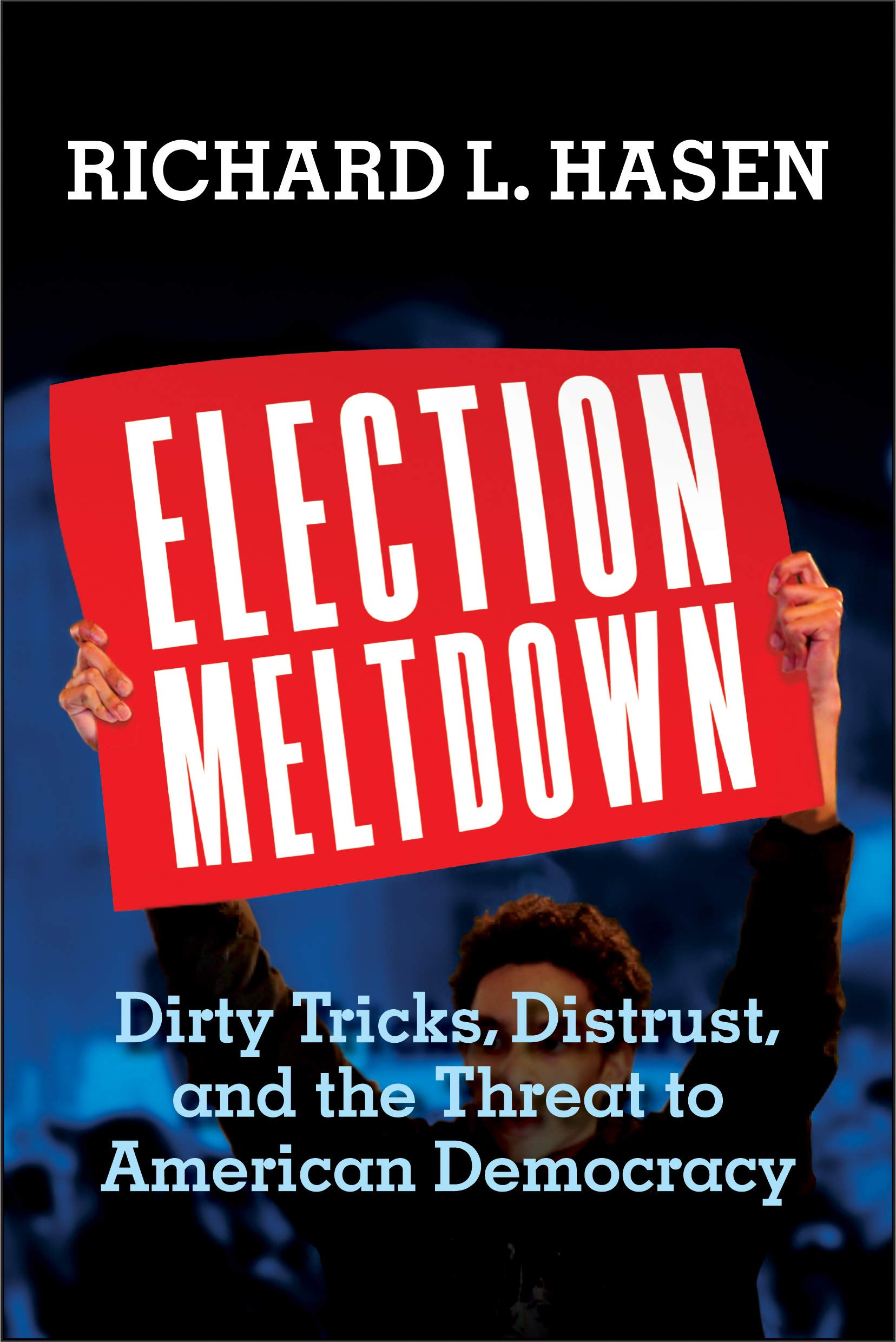
New Spike
Jun 14, 202000:06:18Tap to summarize(Click audio player above to listen)6 Minutes or Less: Can America Run a Fair Election?This newsletter-only feature will be available only to paid subscribers: I ask a thought leader or expert to educate/enlighten/explain an issue via audio in 6 Minutes or Less. Issue: Following the latest voting disaster this week in Georgia’s primary – broken machines, inadequate poll workers, 8-hour lines, voters who simply gave up and left – the question of whether we can run fair elections has again been raised. Guest: Rick Hasen, Chancellor’s Professor of Law and Political Science at the University of California, Irvine and author of the new book “Election Meltdown: Dirty Tricks, Distrust, and the Threat to American Democracy.” Like the newsletter? Help spread the word and share it with a friend. The WorldA new spike in Beijing Covid-19 cases mirrors early stages of outbreak in Wuhan, as the Chinese capital shut down its biggest vegetable market and declared “wartime management” in one district where more than 50 people tested positive. (South China Morning Post)The sister of North Korea’s leader warned of retaliatory measures against South Korea that could involve the military, in the latest escalation of tensions over defectors from the North who have been sending back propaganda and food. (Reuters)Majorities across racial and ethnic groups express support for the Black Lives Matter movement, while deep partisan divides exist over the factors underlying George Floyd demonstrations. (Pew Research Center)Protesters shut down a major highway in Atlanta and set fire to a Wendy’s restaurant where Rayshard Brooks was shot by police as he tried to escape arrest. Meanwhile, Atlanta Police Chief Erika Shields resigned. (Reuters, Atlanta Journal Constitution)Florida fired its coronavirus data scientist; now she’s publishing the statistics on her own. Meanwhile, turning down pleas from Gov. Mike DeWine to stay on the job, Dr. Amy Acton surprisingly resigned as director of the Ohio Department of Health. Acton became both a beloved and polarizing figure for her candid, personal talks at news briefings and for issuing orders closing down parts of the state’s economy that some found excessive. Separately, new research estimates that up to 45 percent of SARS-CoV-2 infections may be asymptomatic. (Washington Post, Columbus Dispatch, Science Daily)Profiles & ReadsThe story behind the photo: "Around 6:10 p.m., my phone buzzed in my pocket — I usually have it on silent when I'm working because I don't want an unexpected ringtone to distract me from the moments I'm photographing. I saw it was my photo editor Mary Ann Gerth. She said the paper needed a scene setter, an image that shows how many people are at a particular scene and what it looks like. I didn't think I could make the deadline if I relied on the usual work mode of a laptop and hotspot. ‘Probably iPhone pic at this point. 15ish minutes,’ she texted.” (Louisville Courier Journal)The city that really did abolish the police — and rebuilt the department from the ground up. The strange, hopeful, politically complicated story of Camden, N.J. (Politico)The death of engagement: Orville Schell writes that for almost a half century, the U.S. and China have operated under a fragile policy framework of "engagement." But with the two countries facing their most adversarial state in years, it’s worth revisiting how we got to this moment — and why it didn't have to end this way. (The Wire China)What Hannah Arendt can teach us about work in the time of Covid-19. The philosopher’s distinction between work and labour should guide our attempts to build a better society. (New Statesman)A 17-year-old’s guide to building the world’s biggest pandemic and protest trackers: The coronavirus pandemic and the protests have been the defining events of 2020 so far, and in both cases one 17-year-old has played a major role online: Avi Schiffmann, the creator of the web’s preeminent covid-19 case tracker and, more recently, a protest tracking site. (MIT Technology Review)Two conversations with Fiona Hill, the former senior director for Europe and Russia in the national security council who testified in Congress’ impeachment investigation. Hill discusses her working-class roots, studying Putin — and the turmoil of Trump’s White House, as well as noting that “Trump thought I was a secretary.” (Financial Times, The Guardian)Australia’s Water Is Vanishing. Scorched by climate change and drained by industrial farms, the country’s most important river system is nearing collapse. Meanwhile, the vultures aren't hovering over Africa – and that's bad news. (Bloomberg, The Guardian)Bob Dylan agreed to a phone chat from his Malibu home with historian Douglas Brinkley, which turned out to be his only interview before next Friday’s release of “Rough and Rowdy Ways.” Brinkley had a brief follow-up with Dylan one day after George Floyd was killed in Minneapolis: “Clearly shaken by the horror that had occurred in his home state, he sounded depressed.” (New York Times)Good NewsSundar Pichai is now the highly paid CEO of tech behemoth Alphabet—last year he earned $280 million. But he came from humble beginnings in India, as he recounted in a YouTube video aimed at students graduating from college this spring. Pichai’s family didn’t have a telephone until he was 10 years old. He didn’t have regular access to a computer until he was a student at Stanford. When he moved to California for grad school, he noticed that a backpack cost more than his dad’s monthly salary. The point of his comments was that students should be hopeful about the future. But it was a rare look at Pichai’s early life. (The Information)Did you like the newsletter? Why not subscribe now? During this trial period, you get 50% off the regular cost. Continued thanks to everyone who already has done so! This is a public episode. If you'd like to discuss this with other subscribers or get access to bonus episodes, visit www.chrisriback.com/subscribe
Transcribe →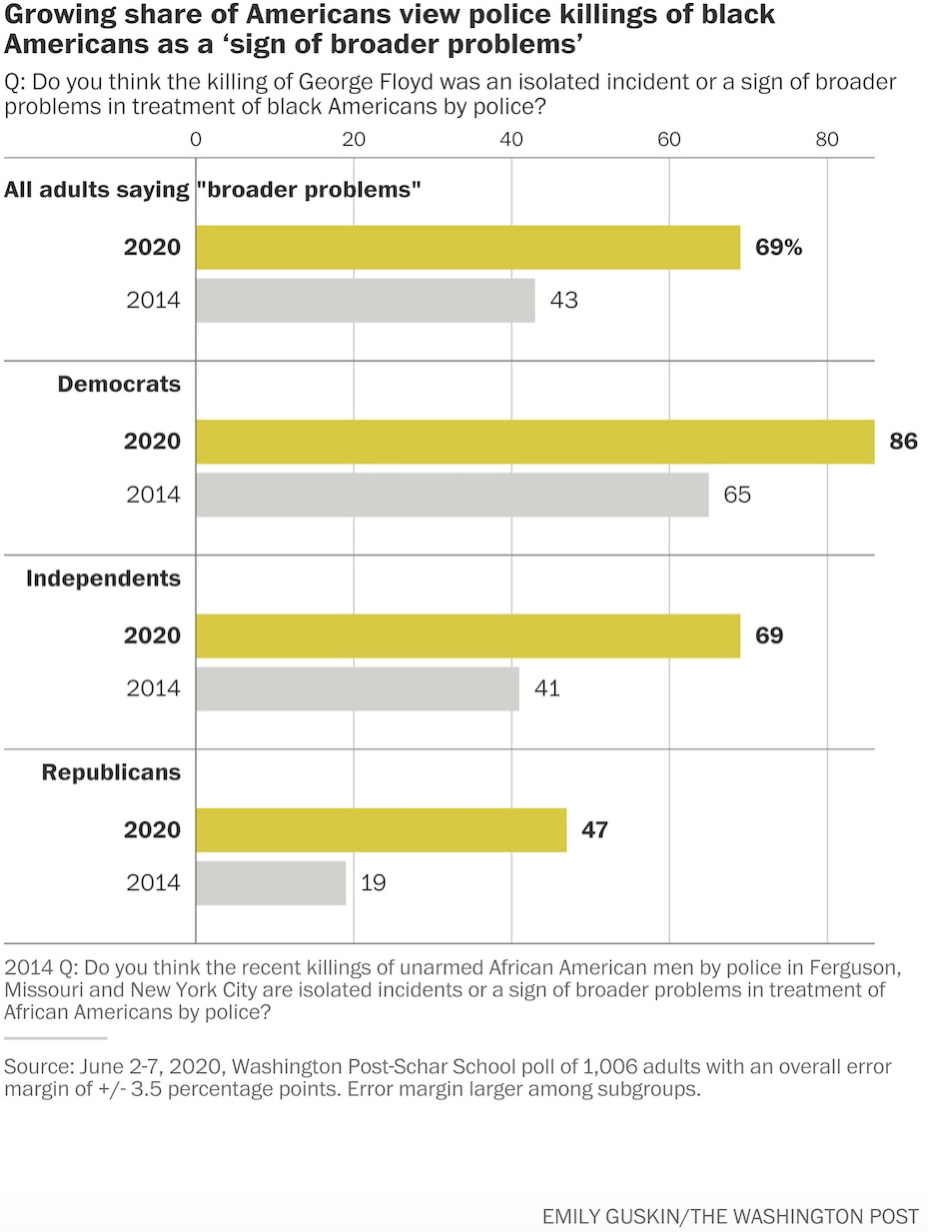
Blindsided
Jun 9, 202000:05:26Tap to summarize6 Minutes or Less: Einstein & Investment RiskThis newsletter-only feature will be available only to paid subscribers: I ask a thought leader or expert to educate/enlighten/explain an issue via audio in 6 Minutes or Less. Issue: Einstein said that the most powerful force in the universe is compound returns. Question: Was Einstein right? And if we’re told to diversify our holdings to manage risk, why does a cross-sectional diversification investment strategy fail during a shock? Guest: Nobel Laureate in Economics Myron Scholes is the Frank E. Buck Professor of Finance, Emeritus, at the Stanford Graduate School of Business and co-originator of the Black-Scholes options pricing model. Sharing is Caring: Like the newsletter? Share it with a friend. The WorldLayoffs in the U.S. fell in April, but remained the second highest on record, while job openings dropped according to the Labor Dept., suggesting the labor market could take years to recover despite May’s surprise employment rebound. Meanwhile, the U.S. budget gap more than doubled in May, pushing the deficit for the fiscal year to near $2 trillion as the recession became official, and the longest U.S. economic expansion dating back to 1854 ended. (Reuters, Wall Street Journal, Finance 202)74% of Americans support the nationwide protests, and 69% say police forces have not done enough to ensure that blacks are treated equally to whites. The finding marks a significant shift when compared with the 2014 reactions to police killings of unarmed black men in Ferguson, Mo., and New York. (Washington Post-Schar School poll) Thousands of protesters rallied in Hong Kong, facing off with police who had banned recent demonstrations to mark the one-year anniversary of a million-person rally that thrust the city into its biggest turmoil in decades. (Wall Street Journal)Investment agreement, 5G and Hong Kong are among the sensitive topics ahead of Wednesday’s EU-China dialogue, as Beijing pivots to Europe and President Xi calls top European leaders far more regularly. Meanwhile, China leap-frogged Russia to become the world’s second largest arms exporter. (South China Morning Post, The Times)President Trump’s decision to cut U.S. troop levels in Germany blindsided a number of senior national security officials, and the Pentagon had yet to receive a formal order to carry it out. (Reuters)The U.S. retook its position as the globe's top renewable energy market in an EY report. (Consulting.US)Since the start of June, 14 states and Puerto Rico — locations previously not hot spots — recorded their highest-ever seven-day average of new coronavirus cases. Meanwhile, fewer than half the states are following federal recommendations to report probable cases and deaths (Washington Post, Washington Post)More than half of U.S. school districts have buildings in need of major repairs, and 41% of districts have problems with their HVAC systems, according to a new GAO report. (EducationDive)EconomyThe recession is generating winners and losers in corporate America, with cash-rich behemoths set to grow while debt-heavy companies and the economy lag. Meanwhile, some 25,000 U.S. stores could close permanently — most mall-based retailers, led by department and clothing stores. (Bloomberg, Bloomberg)92% of private equity professionals globally believe distressed fund activity will increase in the wake of the coronavirus pandemic. PE managers viewed distressed funds as the biggest near-term fundraising opportunity, with 83% indicating more investor demand for strategies targeting distressed assets. (Institutional Investor)Hong Kong-based hedge funds are considering uprooting their operations as China prepares to impose national security legislation and the industry worries it could find itself in Beijing’s crosshairs. (Financial Times)Fitch anticipates annual enrollment declines could range from 5% to 20% for many universities this fall. Private colleges could experience more meaningful financial effects than public colleges, given a higher reliance on tuition and student fee revenues. (Fitch Ratings)TechnologyIBM told Congress it will no longer offer, develop, or research facial recognition technology, while Apple will announce a shift to its own main processors in Mac computers, replacing chips from Intel. (The Verge, Bloomberg)Pinterest is working to keep revenue flowing as it has received an increasing number of requests for payment extensions from struggling advertisers. (Wall Street Journal)A hackers-for-hire group targeted thousands of individuals and hundreds of institutions globally, including advocacy groups, journalists, elected officials, lawyers, hedge funds and companies. Meanwhile, the U.S. Homeland Security’s cybersecurity unit warns Windows 10 users to patch their systems, after exploit code for a “wormable” bug was published online. (Financial Times, TechCrunch)An extensive report explores social media content moderation and concludes that major companies have marginalized the people who do this work, outsourcing the vast majority of it to third-party vendors. (<s...
Transcribe →
Heckled & Spiraling
Jun 7, 202000:07:21Tap to summarize6 Minutes or Less: Gene Sperling on His Parents, Race & Economic DignityThis newsletter-only feature will be available only to paid subscribers: I ask a thought leader or expert to educate/enlighten/explain an issue via audio in 6 Minutes or Less. Issue: Gene Sperling’s new book is “Economic Dignity." He also wrote a moving tribute to his mother, Doris, who died last month. The two pieces connected for me. Question: I asked Sperling in a recent Zoom conversation if they were connected.Guest: Gene Sperling is the former director of the National Economic Council under President Obama and President Clinton. Founding Member Rate: Like the newsletter? During this trial period, you 50% off the regular cost. Continued thanks to everyone who already has done so!The WorldMinneapolis Mayor Jacob Frey was heckled and told to “go home” after he told DefundMPD marchers that he favors reforms over disbanding, as weekend rallies stretched nationwide and globally. (Star Tribune, Reuters, Financial Times)An overwhelming majority of Americans, 80%, feel the country is spiraling out of control and by a 2-to-1 margin are more troubled by the actions of police in the killing of George Floyd than by violence at some protests. The poll also reveals striking partisan divides. (Wall Street Journal/NBC News poll)Japan decided not join the U.S., Britain and others in issuing a statement scolding China for imposing a new security law. Meanwhile, Chinese President Xi’s September trip to Germany for a historic meeting with all EU national leaders has been postponed. (Reuters, South China Morning Post) HSBC warned Britain against a ban on the equipment maker Huawei in 5G telecoms networks, claiming it will face reprisals in China. Meanwhile, internal memos show how Huawei pivoted to counter Washington’s charges with lawsuits, reorganization; “the company has entered a state of war.” (The Sunday Telegraph, Wall Street Journal)In a significant shift, Boris Johnson ordered ministers to lift the lockdown quickly to avoid a possible “jobs bloodbath” — the loss of three million jobs. (The Sunday Times)The European economy is “through the worst,” but activity remains depressed. Shopping, leisure and work-related travel all begin to improve but tourism is subdued. (Financial Times)AstraZeneca has approached Gilead about a potential merger. The $96 billion deal would be a record in health care. (Bloomberg)Summer camps kids will be America’s coronavirus test subjects. (New York Times)Profiles & ReadsBryan Stevenson is a civil-rights lawyer and the founder of the Equal Justice Initiative, a human-rights organization that challenges convictions, advocates for criminal-justice reform and racial justice, and created the National Memorial for Peace and Justice, in Montgomery, AL, which honors the victims of lynching and other forms of racial terror during the Jim Crow era. He discussed the frustration behind the George Floyd protests. (New Yorker) Asia has prospered because Pax Americana, which has held since the end of World War II, provided a favorable strategic context. But now, the troubled U.S.-Chinese relationship raises profound questions about Asia’s future and the shape of the emerging international order. Will the new configuration enable further success or bring dangerous instability? (Foreign Affairs)The Loneliest Everest Expedition. No energy-bar wrappers litter base camp. No climbers clog the Hillary Step. Thanks to the pandemic, Mount Everest is taking a much needed break after last year’s record crowding. But amid the COVID-19 outbreak, three Chinese teams scaled the world’s highest peak. (Outside)Worst. Deal. Ever. Fifteen years after Eric Baker was fired from StubHub, the ticketing giant he cofounded, he bought it back for $4 billion—weeks before coronavirus utterly wrecked the business. Revenge isn’t always sweet. (Forbes)How Germany got coronavirus right. Combined with its six-week shutdown, Germany’s “track and trace” system has been instrumental in stalling the spread of Covid-19 and preventing it from overwhelming the health system. (Financial Times)The Lessons of 1884. When Grover Cleveland clinched the Democratic nomination and faced an allegation of misconduct, he wrote up a new political playbook. (The Atlantic)Comedian Sarah Cooper has become one of the hottest comics of the coronavirus era with her social media videos, in which she lip-syncs some of Trump’s most controversial pandemic-related pronouncements. He’s blocked her on Twitter. But she says he’s a fabulous “head writer.” (Los Angeles Times)Good NewsJapan companies are developing cool face masks as summer approaches. (Kyodo)Buddhist monk Matthieu Ricard explains the virtues of solitude — and the secret to a life well lived: “Eternity is awfully long, especially near the end.” (Financial Times)Thanks for reading. Did you like the newsletter? Why not subscribe now? This is a public episode. If you'd like to discuss this with other subscribers or get access to bonus episodes, visit www.chrisriback.com/subscribe
Transcribe →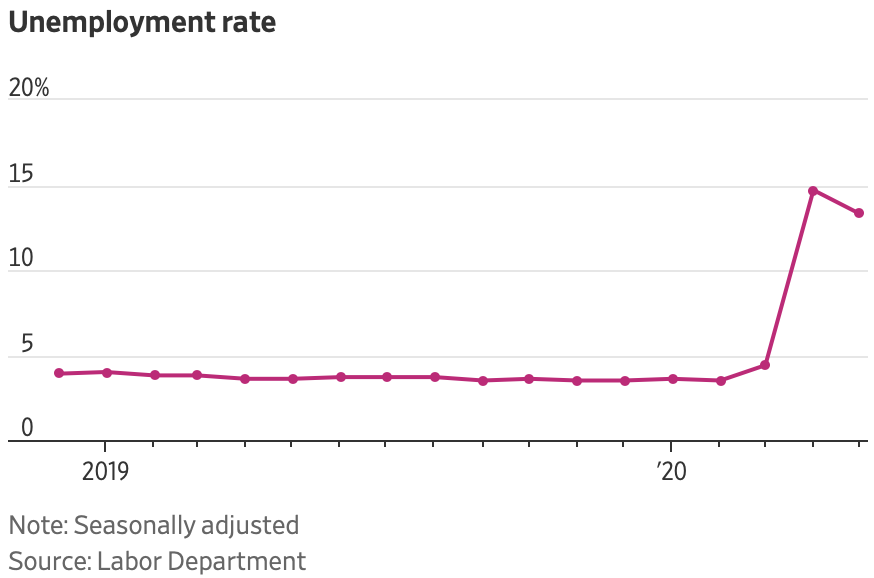
Stunning Rise
Jun 5, 202000:04:11Tap to summarize(Click player above to listen)6 Minutes or Less: The Neurobiology of AltruismThis newsletter-only feature will be available only to paid subscribers: I ask a thought leader or expert to educate/enlighten/explain an issue via audio in 6 Minutes or Less. Issue: As protests and the ongoing COVID-19 threat upend notions of safety and unleash deep-seated fury and grief, stress and worry abound, particularly for communities of color. Question: How can altruism reduce stress — and how can adults manage effects of stress on their children?Guest: Dr. Sheila Ohlsson Walker holds various science and teaching positions and sits on Turnaround for Children’s advisory board. She has written a series of articles for Turnaround called ”Back to Basics.” This audio excerpt comes from our full conversation for The 180 podcast.Founding Member Rate: Like the newsletter? During this trial period, you get 50% off the regular cost. Continued thanks to everyone who already has done so!The WorldEmployment stunningly rose by 2.5 million in May and the jobless rate declined to 13.3%, far better than economists had been expecting and indicated that an economic turnaround could be close at hand. (CNBC, Wall Street Journal)Restaurants and bars, health care employers and construction were among the sectors that drove the job market improvement. About 1.4 million people gained or took back their restaurant jobs, even as hotels continued to shed workers. About 460,000 were hired or rehired in construction, 370,000 in retail, and 390,000 in health care and social assistance. That latter boost came heavily from dentist’s offices, which took back some 245,000 workers. (New York Times)Unemployment for black workers continued to rise, while the Black-white economic divide is as wide as it was in 1968. President Trump said his plan to address racism is a strong economy. (New York Times, Washington Post, Washington Post)Politicians, civil rights legends and pro athletes joined family members at a Minneapolis memorial to mourn George Floyd, while new abuses are caught on camera and D.C. Mayor Muriel Bowser renamed the street in front of the White House “Black Lives Matter Plaza.” (Star Tribune, Washington Post, Washington Post)The U.S. scrapped plans to ban Chinese airlines after Beijing permits foreign carriers, but will limit flights to two a week. Meanwhile, airlines from America to Australia are ramping up June and July flights. (CNBC, Reuters)The latest UK-EU Brexit talks are set to finish without a breakthrough, with both sides stuck on trade and other crucial issues after another week of difficult negotiations. (Bloomberg)State-backed hackers from China have targeted Biden campaign staffers, while Iranian hackers recently targeted Trump campaign staff email accounts, Google said. (Reuters)Japan's fertility rate fell for the fourth straight year, reaching its lowest level in 12 years as births fall below 900,000, 2 years ahead of expectations. (Nikkei Asian Review)In Senate testimony, college presidents outlined plans to reopen campuses, highlighting the need for robust testing for the virus, contact-tracing measures and social-distancing tactics. (EducationDive)EconomyCompanies that protected their labor forces and supply chains during this year’s stock-market drawdown saw more net inflows from institutional investors and better returns than industry peers. (Wall Street Journal)Simon Property Group, the country’s largest mall owner, filed a lawsuit against Gap over unpaid rent and other charges it says amount to $66 million. (Wall Street Journal)The U.S. public-pension funding crisis worsened, as funding ratios fall while the cost of provision has risen. Meanwhile, debt-repayment problems are increasing in the rapidly growing private credit market. (The Economist, Wall Street Journal)Hong Kong’s monetary authority stepped into the financial market twice on Friday to rein back the local currencyahead of several blockbuster initial public offerings on the local stock exchange. (South China Morning Post)TechnologyZoom is in advanced talks with Google to use its cybersecurity service. (The Information)Slack announced an integration deal with Amazon, amid increased competition from Microsoft Teams. Amazon employees will start using Slack, while Slack will increase use of Amazon Web Services and migrate voice and video calling features to Amazon Chime. (The Verge)Fifty-two percent of U.S. adults say they are very concerned about fake video, up from 35% in June of 2019. (Civic Science)As China’s access to international markets has grown more unreliable, Chinese e-commerce platforms are partnering with manufacturers to launch their own domestic brands. (<stron...
Transcribe →
Mattis Speaks
Jun 4, 202000:04:17Tap to summarize(Click player above to listen)DocuPod: Gen. James Mattis’ StatementThis newsletter-only feature will be available only to paid subscribers. This is a DocuPod. No conversation; no interview. Just a reading of the document itself. I offer DocuPods because with our democracy under stress, certain documents are interesting and essential. And it’s really hard to find time to read them. Today, Gen. James Mattis’ statement on presidential leadership.Founding Member Rate: Like the newsletter? During this trial period, you 50% off the regular cost. Continued thanks to everyone who already has done so!The WorldTensions are building in Pentagon circles: Former Defense Secretary James Mattis denounced the president for dividing the nation, and accused him of ordering the U.S. military to violate Americans’ constitutional rights (full statement). Defense Secretary Mark Esper abruptly reversed a decision to order active-duty troops home from the national capital region. Gen. Mark A. Milley, the chairman of the Joint Chiefs of Staff, released a message affirming that every member of the armed forces swears an oath to defend the Constitution, which “gives Americans the right to freedom of speech and peaceful assembly.” (Washington Post, The Atlantic, Politico, New York Times)The House-passed anti-lynching bill won’t pass the Senate without changes desired from Sen. Rand Paul, who worries the current proposal might “conflate lesser crimes with lynching.” (Politico)VA Gov. Ralph Northam is poised to announce plans to remove the statue of Confederate Gen. Robert E. Lee in Richmond, where Mayor Levar Stoney wants four other famous statues honoring the Confederacy removed in the wake of protests. (Richmond Times-Dispatch)Far more African-American than white voters suffered a reduction in family income due to the coronavirus outbreak. 74 per cent of black voters reported a financial hit compared to 58 per cent of white voters, while more African-Americans lost jobs. (Financial Times) The U.S. trade deficit widened 16.7% in April from the prior month to a seasonally adjusted $49.41 billion. Meanwhile, 1.9 million unemployment claims were made last week, the first time they fell below 2 million since the week ended March 14. (Wall Street Journal, Wall Street Journal)Thousands crowded Hong Kong’s Victoria Park amid a police ban to mark the Tiananmen Square crackdown anniversary, as Hong Kong’s legislature passed a law making disrespect of China’s national anthem a crime. Meanwhile, China warned Britain to “step back from the brink” after Boris Johnson vowed to offer a path to citizenship for up to 3 million Hong Kong residents, and India and Australia signed a new military pact. (South China Morning Post, Wall Street Journal, The Times, Nikkei Asian Review)Brazil and Mexico reported record daily coronavirus death tolls as governments in Latin America battled the accelerating pandemic, while a second wave hit Iran. In the U.S., Texas, Arizona and Oregon saw significant spikes in new infections. (The Telegraph, Bloomberg, Axios) Earth’s carbon dioxide levels hit record high, despite coronavirus-related emissions drop. Meanwhile, China’s air pollution is back to pre-Covid levels, and Europe may follow. (Washington Post, The Guardian)U.S. public school students likely will start the new school year having learned 37% to 50% of what they ordinarily would have learned in math had schools remained open. However, the top third of students will have continued to make gains in reading despite education interruptions. (Brown University)EconomyThe Senate passed legislation to provide more flexibility to small businesses that have received forgivable loans under the Paycheck Protection Program, providing more time to use the money. Meanwhile, nearly half of commercial retail rents were not paid in May. (Washington Post, Washington Post)The European Central Bank said it would vastly scale up its bond-purchase program to €1.35 trillion ($1.52 trillion), putting its stimulus effort in league with the Federal Reserve’s. Meanwhile, Germany agreed to a €130bn fiscal stimulus centered on a big cut in value added tax. (Wall Street Journal, Financial Times)The coronavirus outbreak could trigger a $25tn collapse in the fossil fuel industry by accelerating a terminal decline for the world’s most polluting companies. (The Guardian)The S&P 500 is up 39% in 50 days and in the midst of its longest winning streak since February. Many big bulls are sounding distinctly...bearish. And while UBS sees Asia as ‘the only region’ with positive earnings growth this year, political tumult historically hasn’t dragged down the market. (<a target="_blank" href="https://www.bloomberg.com/news/articles/202...
Transcribe →
Escalating Unrest
May 31, 202000:05:17Tap to summarize(Click player above to listen)6 Minutes or Less: The Oxygen-COVID DiscoveryThis newsletter-only feature will be available only to paid subscribers: I ask a thought leader or expert to educate/enlighten/explain an issue via audio in 6 Minutes or Less. Issue: Doctors made the incredible discovery that putting COVID patients on their stomachs significantly reduced the need to intubate and should cause a logarithmic collapse in the resources needed to be thrown at COVID for intubation going forward. Question: How did we make the remarkable shift?Guest: Dr. Richard Levitan is an emergency room doctor and entrepreneur, who spent 10 days at New York’s Bellevue Hospital at the height of the surge and helped make the incredible discovery. He described his experience in the New York Times.Housekeeping:* Welcome to the Weekender — a combination of news, profiles, and good reads that you might not see during the week.* Founding Member Rate: Like the newsletter? During this trial period, you 50% off the regular cost. Continued thanks to everyone who already has done so!The World After a night marred by clashes and looting despite curfews and National Guard troops in the streets, cities across the country assessed the damage and looked for answers to the escalating unrest. In Philadelphia, a peaceful demonstration by thousands gave way over hours to anger and vandalism, and police reported 109 arrests as of early Sunday morning. In the Twin Cities, security forces moved aggressively to disperse protesters with tear gas, pepper spray and drawn weapons. In Georgia, Gov. Brian Kemp ordered additional National Guard troops to deploy ahead of several potential protests Sunday, as Savannah braced for an unsanctioned rally and the Atlanta curfew was lifted. In London, hundreds defied social-distancing rules to gather in Trafalgar Square to protest. (New York Times, Philadelphia Inquirer, Star Tribune, AJC, The Independent)President Donald Trump plans to invite Australia, India, South Korea and Russia to join an upcoming Group of Seven meeting, in a move that has stoked speculation that he is trying to form a bloc to contain China. (South China Morning Post)Beyond Hong Kong, an emboldened Xi Jinping pushes the boundaries. Less than four months ago, Xi Jinping faced the biggest crisis of his leadership — bruised by China’s initial, bungled coronavirus response. He has since pulled off an extraordinary turnaround, gaining ground in areas central to his “China Dream” of a strong unified nation. Meanwhile, the UK widened visa rights offer to almost 3m Hong Kong residents. (Wall Street Journal, Financial Times)The EU’s chief negotiator warned Boris Johnson that he must keep his promises if he wants to avoid the double economic hit of a no-deal Brexit and the coronavirus pandemic. In an exclusive interview, Michel Barnier accused the prime minister of backsliding on commitments. (The Sunday Times)Facebook’s decision not to take action against recent posts about mail-in ballots and the Minnesota protests by President Trump is roiling employees, some of whom are calling on executives to reconsider their stance. (The Verge)NASA astronauts arrived at the International Space Station on the SpaceX spacecraft. (NASA)Profiles & ReadsInside Twitter’s decision to take action on Trump’s tweets: A weeks-old policy about virus misinformation laid the groundwork for the social platform’s steps this past week to push back on the president’s posts. (Wall Street Journal)Steve Buscemi has spent a lifetime playing weirdos and lovable misfits. He also knows a thing or two about anxiety, grief and death. He was hit by a car and a bus as a kid, was once stabbed in a bar fight, volunteered as a firefighter during 9/11, and somewhere along the way became one of the most accomplished film actors of his generation. And then tragedy struck: In 2019, Buscemi lost his wife of over 30 years. (GQ)China’s move to curtail Hong Kong’s autonomy could have major implications for the tech industry, particularly the cryptocurrency sector, cloud services and tech financing. Venture capitalists and tech companies could shift operations to Singapore. The new rules could also slow the growth of firms such as Amazon and Google, which started offering cloud-computing services in Hong Kong. (The Information) The Class of 1970 Meets History. Twice. With graduation ceremonies canceled during the Vietnam War, coronavirus now puts off this group’s 50th reunion; “You will never forget your senior year at Grinnell.” (Wall Street Journal)How the pandemic turned Brené Brown into America’s therapist: But the best-selling author, unapologetic cusser, and fifth-generation Texan would rather not be called that. (Texas Monthly)The biggest global electricity power demand plunge since the Great Depression is reshaping markets and will continue after nations lift stay-at-home orders. The slowdown is squeezing coal, buoying renewables and foreshadowing the “grid of the future.” (Bloomberg)America’s Worst Year: The most traumatic year in recent American history—1968—offers some disquieting lessons for the present. (The Atlantic)How does TikTok work? The story of how 16-year-old Charli D’Amelio became its biggest star may help the rest of us understand. (Washington Post) Good NewsSome law enforcement took a different approach on Saturday. Camden, NJ:Flint, MI:Kansas City, MO: Thanks for reading. Did you like the newsletter? Why not subscribe now? This is a public episode. If you'd like to discuss this with other subscribers or get access to bonus episodes, visit www.chrisriback.com/subscribe
Transcribe →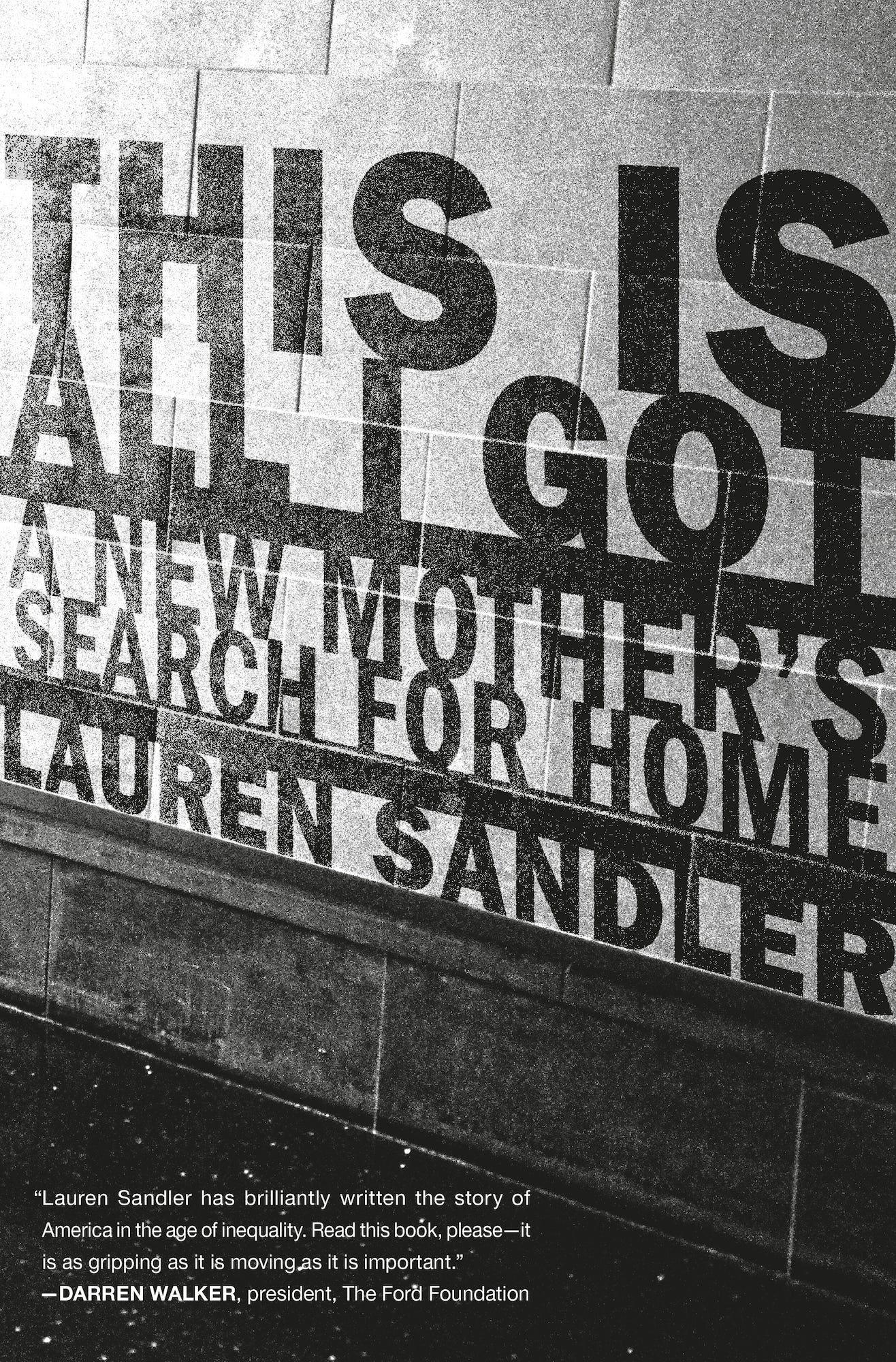
40 Million
May 28, 202000:06:13Tap to summarize(Click player above to listen)6 Minutes or Less: Poverty in Coronavirus AgeThis newsletter-only feature will be available only to paid subscribers: I ask a thought leader or expert to educate/enlighten/explain an issue via audio in 6 Minutes or Less. Issue: People living in NYC’s poorest neighborhoods are “dying from coronavirus at more than double the rate of more affluent neighborhoods,” Politico reported. Globally, an estimated 2 billion people are at risk of “abject poverty, according to the NY Times.Question: What does it mean to live in poverty in the age of coronavirus?Guest: Lauren Sandler is an award-winning journalist based in Brooklyn, and the author of This Is All I Got, a book of narrative nonfiction about a young homeless mother in New York.Founding Member Rate: Like the newsletter? During this trial period, you 50% off the regular cost. Continued thanks to everyone who already has done so!The WorldThe U.S. economy shrank even faster than initially estimated in 1Q20, with GDP falling at an annual rate of 5%. Economists expect a worse outcome this quarter. Meanwhile, breaking precedent, the White House won’t release formal economic projections this summer that would forecast extent of downturn. (CNBC, Washington Post)New jobless claims declined to a seasonally adjusted 2.1 million last week from 2.4 million the prior week. Total initial claims since March topped 40 million. The Fed’s Beige Book survey suggests a significant number of the overall job losses will be permanent. (Wall Street Journal, Finance 202)The Paycheck Protection Program largely missed the neediest businesses it aimed to save with its first round. Per a S&P Global report, 63% of the PPP’s initial $350 billion in forgivable loans went to sectors less effected by the shutdowns. The loans also skewed toward larger businesses. House Majority Leader Steny Hoyer said the House and Senate are close on a PPP loan extension. (Finance 202, Bloomberg)China passed legislation to extend the country's opaque national security law to Hong Kong, as the National People’s Congress annual session closed. The law would prohibit acts of secession, subversion, terrorism or conspiring with foreign influences in Hong Kong. (Nikkei Asian Review, South China Morning Post)Chinese Premier Li Keqiang’s post-NPC press conference did not address ongoing anti-government protests in Hong Kong, U.S. Secretary of State Mike Pompeo’s announcement that Washington no longer considered Hong Kong autonomous from Beijing, the China-India standoff, the Belt and Road Initiative or China’s relations with Europe. (South China Morning Post)The China-India border dispute is getting more serious. (Economist)The U.S. is ending sanctions waivers that allow Russian, Chinese and European companies to work on sensitive Iranian nuclear sites, dealing another major blow to the Iran nuclear deal and raising the prospect of covert advances in Tehran’s nuclear program. (Washington Post)During a second night of violent protests in Minneapolis, one person died after being shot by a store owner. Many businesses were looted and some were in flames early today. Mayor Jacob Frey asked the governor to consider calling in the National Guard and called for a fired officer's arrest in George Floyd's death. (Star Tribune)From City Lab: After Trump's attacks, Republicans are much more skeptical than Democrats their ballots will count if cast by mail and less confident they will be able to vote in November’s election if their state switches to all-mail voting. (Reuters/Ipsos poll)Only about half of Americans say they would get a COVID-19 vaccine: 31% weren’t sure if they’d get vaccinated. Another 1 in 5 said they’d refuse. (Associated Press-NORC Poll)The UK suffers the highest death rate from coronavirus, ahead of US, Italy, Spain and Belgium. The U.S. reached 100,000 dead. (Financial Times)EconomyPaul Krugman is pretty upbeat about the economy. Nouriel Roubini says the economy may be headed for a decade of depression. (Bloomberg, New York Magazine)American Airlines to cut 30% of management and administrative staff. Popeyes U.S. same-store sales soar more than 40%. (Wall Street Journal, CNBC)The UK is not Europe’s top destination for foreign investment for the first time in more than two decades after being overtaken by France. (The Times)Most CNN employees will not return to their offices this year. (Hollywood Reporter)TechnologyZuckerberg and Dorsey clash as Trump order looms: Tensions escalate between Facebook and Twitter founders ahead of US president’s threatened action. (Financial Times)Chinese rival launches TikTok challenger: Kuaishou, the $30 billion startup that’s the second-largest social video app in China, launched Zynn, an app that allows users to upload, edit and share sh...
Transcribe →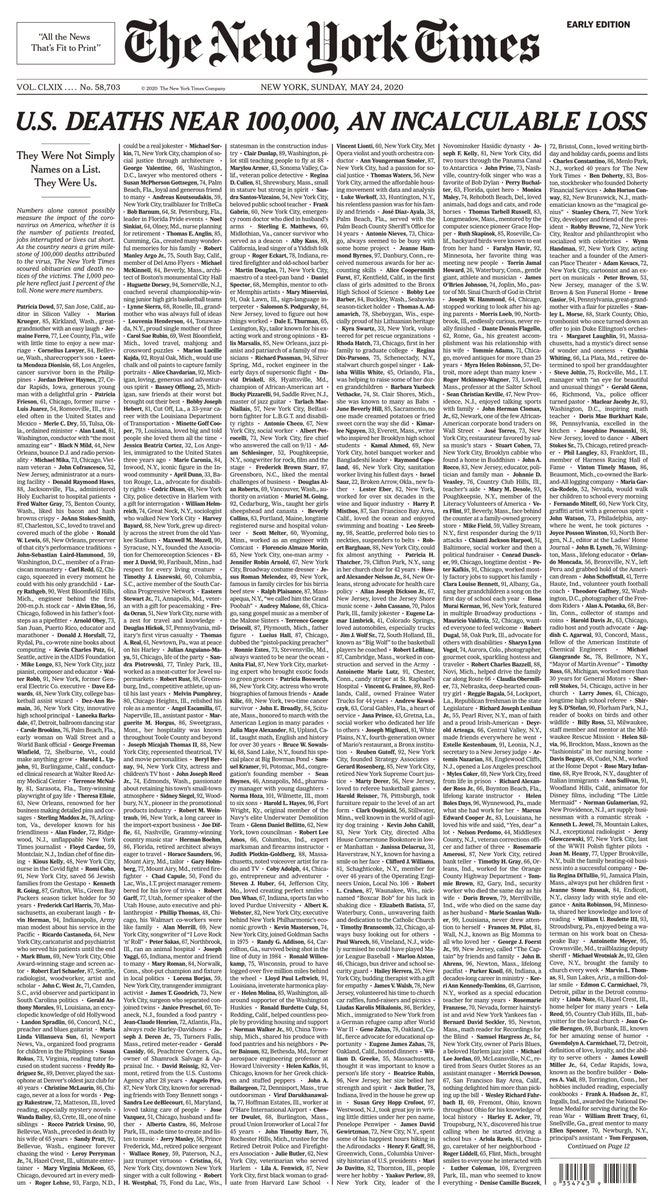
Honoring 100,000
May 24, 202000:07:33Tap to summarize6 Minutes or Less: 1918 Pandemic & Today’sThis newsletter-only feature will be available only to paid subscribers: I ask a thought leader or expert to educate/enlighten/explain an issue via audio in 6 Minutes or Less. Issue: All 50 states reopened. U.S. coronavirus deaths approach 100,000. The virus swells in South America. Question: What lessons should we apply today from the 1918 flu pandemic?Guest: Dr. Howard Markel studies the history of pandemics. He is the Director of the Center for the History of Medicine at the University of Michigan and a New York Times bestselling author.Housekeeping:* Welcome to the Weekender — a combination of news, profiles, and good reads that you might not see during the week.* Founding Member Rate: Like the newsletter? During this trial period, you 50% off the regular cost. Continued thanks to everyone who already has done so!The World New York Times devotes its entire Sunday front page to coronavirus victims. (New York Times) China’s Foreign Minister warned the U.S. to stop taking them “to the brink of a new Cold War.” Meanwhile, Hong Kong police fired tear gas and used a water cannon as thousands took to the streets to protest Beijing’s planned national security law. (Washington Post, South China Morning Post)North Korean leader Kim Jong Un hosted a military meeting to discuss new policies to bolster the country's nuclear capabilities amid stalled denuclearisation talks with the U.S. (Nikkei Asian Review)UK Prime Minister Boris Johnson plans to reduce Huawei’s involvement in Britain’s 5G network. Johnson instructed officials to draw up plans that would see China’s involvement in the UK’s infrastructure scaled down to zero by 2023. (The Telegraph)Prime Minister Benjamin Netanyahu became the first sitting prime minister to go on trial for public corruption. Netanyahu says he has been framed. (Jerusalem Post, Reuters)Global emissions plunged an unprecedented 17 percent during the coronavirus pandemic. But scientists say the drivers of global warming could quickly bounce back as social distancing ends and economies rebound. (Washington Post)Mexico and Brazil reported record numbers of infections and deaths almost daily this week, fueling criticism of their presidents, who have slow-walked shutdowns in an attempt to limit economic damage. Meanwhile, as Brazil solidifies its status as the world’s new hotspot, the nation’s disjointed response is fueling concern that the worst is yet to come. (Associated Press, Bloomberg)The University of Michigan won’t have a football season this fall unless all students are able to be back on campus for classes. And, according to President Mark Schlissel — an immunologist by training — that’s not a sure thing. (Wall Street Journal)Profiles & ReadsThe Twilight of the Iranian Revolution: For decades, Ayatollah Khamenei has professed enmity with America. Now his regime is threatened from within the country. (New Yorker)Economist and Freakonomics co-author Steven Levitt conducted a study that randomized decision-making for people who felt like they were at forks in their respective roads. Those who were told to—and did—make big changes were happier six months down the road. (Quartz)Venetians are retaking their city, both from the coronavirus and from tourists that have famously overrun it. After three months of near-total lockdown, Venice appears unusually quiet — and clean. Meanwhile, Italy’s leader of the far-right finds himself sidelined. (Associated Press, The Telegraph)Tempers rise as parents are divided on whether colleges should open this fall. Some schools intend to go online-only, while others say they are opening, leading to major disagreements over what families should do. (Wall Street Journal)Americans’ confidence in medical scientists has grown since the outbreak began, as have perceptions that medical doctors hold very high ethical standards. But this increase in confidence has come primarily among Democrats, not Republicans. (Pew Research Center)Bill Simmons just wants to win: Simmons sold The Ringer, his podcast-heavy digital outlet, to Spotify. The deal was finalized in March. Almost overnight, entertainment and sports — The Ringer’s primary coverage areas — ground to a halt. (New York Magazine)How a Johns Hopkins professor and her Chinese students tracked coronavirus: The story behind the incredible Covid-19 dashboard. (Wall Street Journal)Good NewsSummer reading suggestions, handpicked for your taste: If you know what you’ve liked in the past, these books might work for you now. (New York Times)Tiger and Peyton vs. Phil and Tom: Two of the best quarterbacks in NFL history face off again, this time on the golf course in a charity match with Tiger Woods and Phil Mickelson. (Golf Digest, Wall Street Journal)The English towers and landmarks that inspired Tolkien's hobbit sagas. (The Guardian)Thanks for reading. Did you like the newsletter? Why not subscribe now? This is a public episode. If you'd like to discuss this with other subscribers or get access to bonus episodes, visit www.chrisriback.com/subscribe
Transcribe →