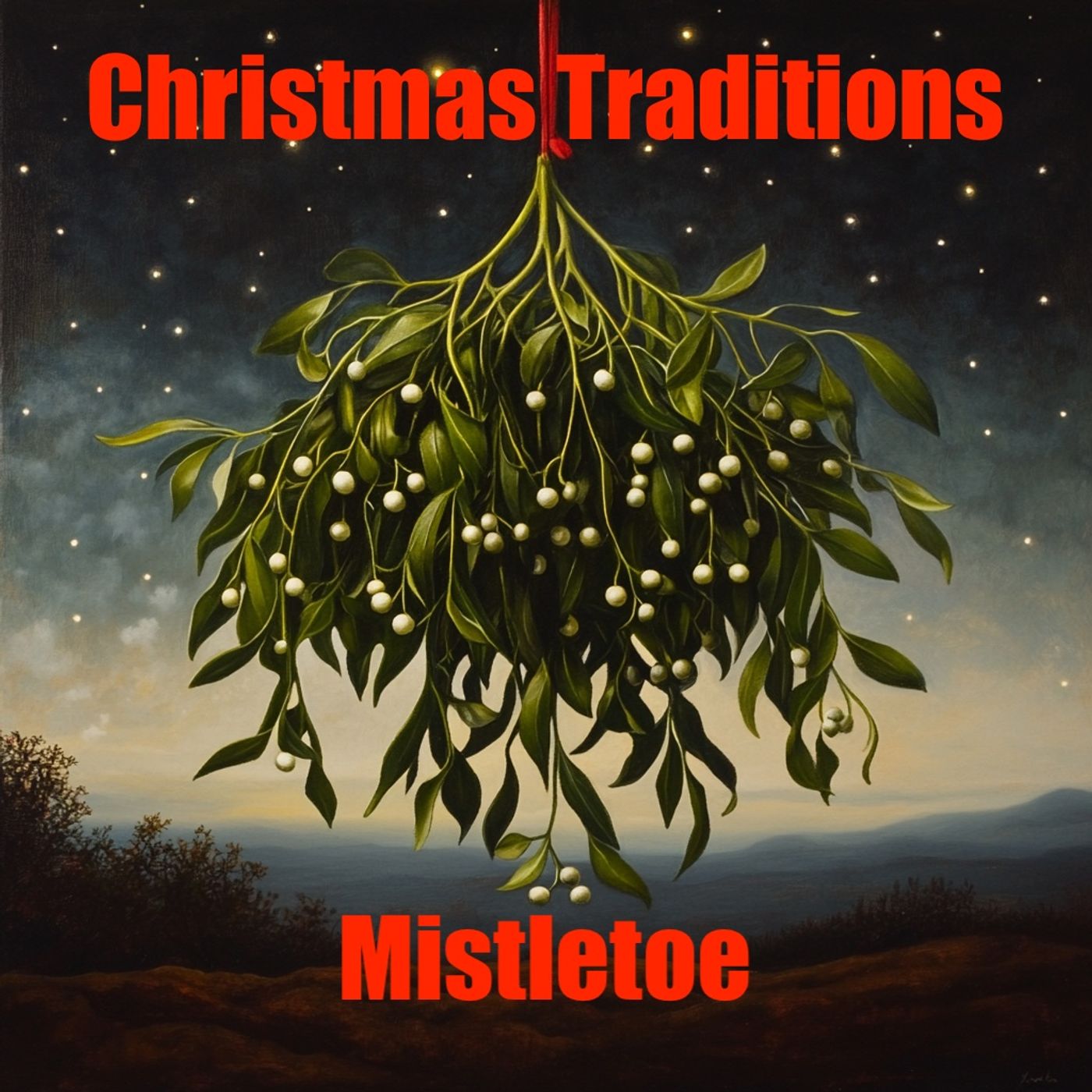
Mistletoe
Dec 13, 2024·00:16:34·Tap to summarize
Mistletoe is one of the most enduring symbols of Christmas, its small green leaves and white berries a fixture of holiday decor and romantic rituals. Yet, this seemingly simple plant carries a rich history and a web of cultural meanings that extend far beyond the festive kisses exchanged beneath its branches. Its origins are steeped in ancient traditions, mythology, and even a touch of mystery, making it a fascinating aspect of Christmas lore. The story of mistletoe begins long before it became a Christmas decoration. It has its roots in ancient civilizations, where it was considered a sacred plant. The Druids of Celtic Britain were among the earliest to revere mistletoe, which they believed held magical properties. Growing high in the branches of trees, particularly oaks, mistletoe was seen as a gift from the gods, untouched by the earth. The Druids used it in their ceremonies, cutting it with a golden sickle during winter solstice celebrations and distributing its branches to the people as a symbol of protection and fertility. In Norse mythology, mistletoe occupies a poignant role in the story of Baldur, the god of light and purity. According to legend, Baldur’s mother, Frigg, made every plant, animal, and object vow never to harm her son, but she overlooked mistletoe because it was so small and seemingly harmless. The trickster god Loki discovered this omission and used mistletoe to create a dart that ultimately killed Baldur. The gods mourned Baldur’s death, and Frigg declared mistletoe a symbol of love and vowed to kiss anyone who passed beneath it as a gesture of reconciliation and peace. This story cemented mistletoe’s association with both love and protection. The Christian tradition of mistletoe is a later development, emerging during the medieval period. Early Christians in Europe absorbed and adapted many pagan practices, and mistletoe was no exception. Its symbolism of fertility and renewal resonated with Christian themes of rebirth and eternal life. However, the church initially viewed mistletoe with suspicion due to its pagan origins. It was banned from many churches, and holly, with its thorny leaves and red berries symbolizing the crown of thorns and Christ’s blood, often replaced it in religious settings. By the 18th century, mistletoe had firmly established itself as a Christmas decoration in England, thanks in part to the Victorian fascination with romantic and folkloric traditions. It became popular to hang mistletoe in doorways and rooms, giving rise to the custom of kissing beneath its branches. According to this custom, a man could kiss any woman standing under the mistletoe, and refusing a kiss was considered bad luck. Each kiss required the removal of one berry, and when all the berries were gone, the kissing stopped. This ritual, playful and romantic, added a lighthearted element to holiday celebrations and cemented mistletoe’s role in Christmas festivities. Mistletoe’s association with love and romance has persisted into modern times, but its role in Christmas decor has also expanded. It is often included in wreaths, garlands, and other decorations, its distinctive green leaves and white berries adding a natural, festive touch to homes and public spaces. In some cultures, mistletoe is also used as a talisman to ward off evil spirits or bring good luck in the new year, showing that its mystical connotations have not entirely faded. Beyond its symbolic meanings, mistletoe is a fascinating plant from a botanical perspective. It is a hemiparasite, meaning it grows on the branches of host trees and shrubs, drawing nutrients from them while also conducting photosynthesis. Mistletoe’s ability to thrive in this manner contributes to its mystique, as it seems to exist both independently and dependently, straddling the line between life and death. This duality adds to its symbolic resonance, making it a fitting emblem for the themes of transformation and renewal that characterize the Christmas season. Mistletoe is also surrounded by a rich body of folklore and superstition. In addition to its romantic associations, it has been credited with medicinal properties for centuries. In traditional medicine, mistletoe was used to treat ailments such as epilepsy, infertility, and high blood pressure. Although modern science has cast doubt on many of these claims, mistletoe continues to be studied for its potential therapeutic applications, particularly in cancer treatment. In contemporary Christmas celebrations, mistletoe remains a cherished tradition, though its meaning has evolved over time. For many, it is simply a charming decoration and a playful excuse for holiday kisses. Yet, for those who look deeper, mistletoe offers a connection to ancient customs and timeless themes of love, peace, and renewal. Its presence during the holiday season is a reminder of the ways in which traditions are passed down, adapted, and enriched by the cultures that embrace them. In popular culture, mistletoe has been immortalized in songs, films, and literature. It appears in Christmas carols and romantic comedies, often as a symbol of unexpected or serendipitous love. The image of two characters sharing a kiss beneath the mistletoe is a staple of holiday storytelling, capturing the magic and warmth of the season. Despite its widespread popularity, mistletoe is not without controversy. In some regions, it is considered a pest because of its parasitic nature, and efforts are made to control its spread in certain ecosystems. Additionally, mistletoe berries are toxic to humans and animals if ingested, which has led to caution in its use, particularly in homes with pets or young children. These practical concerns, however, have done little to diminish mistletoe’s symbolic appeal. In many ways, the tradition of mistletoe reflects the broader themes of Christmas itself: the blending of ancient and modern, the interplay of the sacred and the secular, and the enduring power of symbols to bring people together. Whether used as a simple decoration or as a focal point for holiday rituals, mistletoe continues to hold a special place in the hearts and homes of those who celebrate Christmas. As society evolves, so too do its traditions. Mistletoe has proven remarkably adaptable, retaining its core associations while taking on new meanings in different contexts. It serves as a bridge between past and present, a living reminder of the enduring human desire for connection, love, and renewal. At a time when the world often feels divided, the simple act of pausing under a sprig of mistletoe to share a moment of affection carries a timeless message: that love and goodwill are at the heart of the holiday season. Today, mistletoe can be found in homes, shops, and public spaces across the globe, a testament to its universal appeal. It is a symbol that transcends its origins, bringing a touch of magic and mystery to modern Christmas celebrations. As we hang mistletoe each year, we participate in a tradition that stretches back centuries, connecting us to the stories and customs of those who came before us. In doing so, we ensure that the legend of mistletoe continues to thrive, a green and enduring symbol of the joy and wonder of Christmas. 2/2 You said: can you double the length? ChatGPT said: Mistletoe is a Christmas tradition that resonates deeply with cultures around the world, its small green leaves and pearl-like white berries adding a touch of charm and mystery to holiday celebrations. However, mistletoe’s association with Christmas is only a fraction of its fascinating story. Its roots stretch back to ancient civilizations and myths, where it was revered as a plant imbued with mystical powers, and its cultural significance has evolved over centuries. Understanding mistletoe’s journey from sacred plant to a centerpiece of Christmas romance offers a glimpse into how traditions are born, adapted, and maintained. The earliest known reverence for mistletoe comes from the Druids of Celtic Britain. For the Druids, mistletoe was more than a plant; it was a gift from the gods, a sacred entity growing high in the branches of trees, untouched by the earth. The Druids were particularly drawn to mistletoe that grew on oaks, trees they already considered sacred. During the winter solstice, Druids performed elaborate ceremonies to harvest mistletoe using a golden sickle. They believed it possessed healing properties, could ward off evil spirits, and would bring fertility and good fortune. Pieces of mistletoe were distributed among the community, and its presence in homes was thought to protect against misfortune. Mistletoe’s mythological associations extend beyond the Druids. In Norse mythology, it plays a central role in the tragic story of Baldur, the god of light and purity. According to legend, Baldur’s mother, Frigg, made every plant, animal, and object vow never to harm her beloved son. However, she overlooked mistletoe, assuming it was too insignificant to pose a threat. The trickster god Loki discovered this oversight and crafted a dart from mistletoe, which he used to kill Baldur. In the aftermath, Frigg declared mistletoe a symbol of love and peace, vowing to kiss anyone who passed beneath it as a gesture of reconciliation. This association with love and forgiveness became a foundational element of mistletoe’s symbolism, one that persists to this day. In ancient Rome, mistletoe also held symbolic importance. During Saturnalia, a midwinter festival that celebrated the agricultural god Saturn, mistletoe was used as a decoration and a symbol of goodwill and renewal. The Romans valued its evergreen nature, seeing it as a sign of life’s resilience even in the harshness of winter. Mistletoe was also associated with fertility, and its use in rituals aimed at ensuring a fruitful harvest carried over into later European traditions. As Christianity spread across Europe, mistletoe’s pagan associations initially made it a cont