← Church History Matters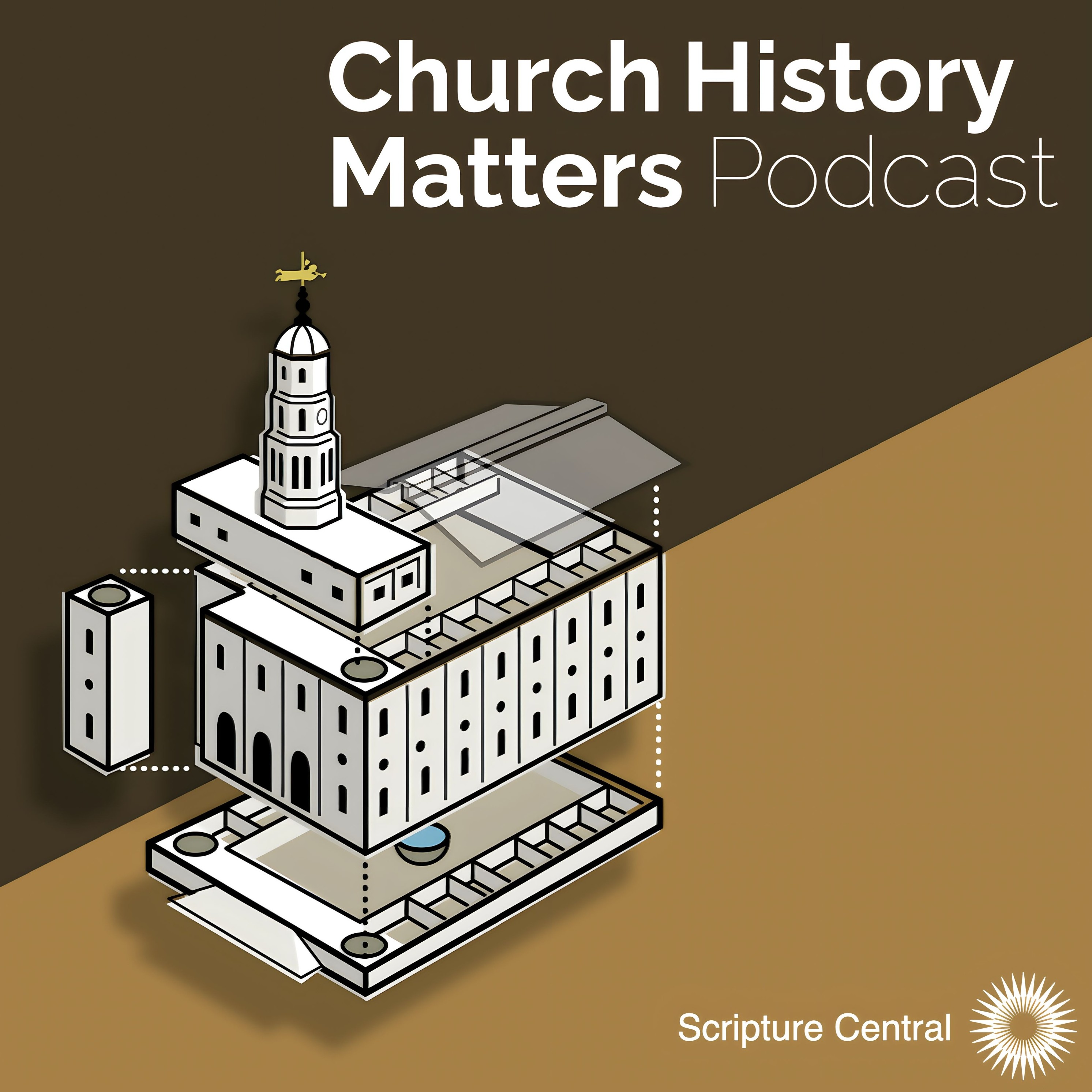
Church History Matters
141 - D&C 85-86 CFM - The Apostasy Isn’t All You Think - E32 August 4-10
01:05:52
Loading summary
Transcript69 lines
- [00:00]
Casey
Now this is a prophecy that has become so misinterpreted.
- [00:05]
Scott
Yeah, this sounds amazing, right? Like, it's definitely cinematic.
- [00:10]
Casey
I really find it fascinating because of how the Lord talks about apostasy and restoration kind of different than our typical cultural narrative about this case.
- [00:19]
Scott
It's Jesus Christ himself testifying that there was an apostasy and then giving some explanations as to what he means by that, what the apostasy was. Why would God allow this to happen? We usually simplify the apostasy by saying all the apostles were killed and the priesthood was taken from the earth and the church was gone. But this is leaving little hints that, no, it wasn't. The lineage of the priesthood was still here.
- [00:45]
Casey
His work never paused during what we call the apostasy. It continued in stride, just in some different ways than we're used to talking about. It gets such a good insight into the Lord's character to understand that he never abandoned his people, ever.
- [01:01]
Scott
Interesting. Interesting stuff there, huh?
- [01:04]
Casey
Hello, Casey.
- [01:05]
Scott
Hello, Scott. Good to see you.
- [01:06]
Casey
Good to see you. We are back, and this week we're covering sections 85 through 87. We got an excerpt from a letter, Joseph Smith translation, insight about the parable of the wheat and the Tares, which is super insightful. And third, we have a prophecy, maybe one of the clearest prophecies ever made by Joseph Smith. So an exciting week this week to study.
- [01:28]
Scott
Yeah. And even though each one of these sections is relatively short, there's a lot to discuss. So I think the way we're going to break it down is probably do section 85 and section 86 together, and then section 87 is a whole other thing that leads into section 88. So we'll probably do a second part of this video that just focuses on that remarkable prophecy found in section 87.
- [01:52]
Casey
Here we go.
- [01:58]
Scott
Doctrine and Covenants 85 is an excerpt from a letter that Joseph Smith wrote to William W. Feldman on November 27, 1832. One useful thing to keep in mind, especially in these midsections of the Doctrine and Covenants, is there's two church centers. There's Kirtland, Ohio, and there's Independence, Missouri. And a lot of what Joseph Smith is doing is regulating the affairs of the church between the two. From 800 miles away, he's dealing with this.
- [02:23]
Casey
No small task when you're only communicating via letter.
- [02:27]
Scott
Yeah. And it's not that long after he's made a trip to Zion to try and regulate what's going on in Missouri. And they're still having faults, so there still Continued difficult between church leaders in Kirtland, Ohio, and church leadership in Missouri. At the time, it was a requirement for all church members who wanted to emigrate to Missouri to commit to live the law of consecration. You can find that in section 72, verses 15, 24, 26. However, during this time, some members of the church who were relocating to Missouri, they were doing so without committing to live the law of consecration. William McClellan, for example, we brought up William McClellan a couple weeks ago, did not meet with Edward Partridge, the bishop in Zion, to consecrate his property. Instead, McClellan purchased two lots on Main street in his own name. And incidents like this caused distress to leaders of the church in Missouri who were sincerely and earnestly striving to try and live the law of consecration.
- [03:26]
Casey
So you show up to Missouri, you're supposed to immediately report to the bishop, and then you would talk about your stewardship. He would allot you a place, a piece, you and your family would live. But McClellan doesn't do that. He goes around that and just buys his own land and just plants himself there in Missouri. What's going on?
- [03:43]
Scott
That's one example of several where law of consecration was difficult for people. And again, this is before we have temples. But committing to live the law of consecration and getting a recommend to go to Zion was the equivalent of getting a temple recommend from the time. This is something that's going to come up when major troubles start up in Zion that we'll talk about when we get to section 98 and sect 101, which is there were contentions, envyings, and strifes among the saints in Zion. That's a major reason why they run into trouble as time goes on. So Joseph Smith anticipates these concerns over how the law would be administered among the saints of Missouri. And this is part of the letter that wasn't placed in canon. He wrote to them. I fancy to myself that you are saying or thinking something similar to these words. My God, great and mighty art thou. Therefore show unto thy servant what shall become of all these who are assaying to come up unto Zion in order to keep the command commandments of God, and yet receive not their inheritance by consecration by order or deed from the bishop, the man that God has appointed in a legal way agreeable to the law given to organize and regulate the church and all affairs of the same. That's his major question, is what do we do with these people that won't cooperate with the bishop that are kind of in the church but refusing to submit to the plan of the church, which they have a very complex plan in mind to build the city of New Jerusalem. This is just part of the story. Despite some trouble from the previous summer, during which Joseph smith had reprimanded W.W. phelps for his cold and indifferent manner, the prophet offers some warm words of encouragement and support in the following letter. So this is part of letter two. Brother William, in the love of God, having the most implicit confidence in you as a man of God, having obtained this confidence by a vision of heaven, therefore, I will proceed to unfold to you some of the feelings of my heart and proceed to answer the question. And then the letter contains instructions from Joseph and of revelation given by inspiration, providing instruction to the saints in Zion. After receiving this letter, W.W. phelps publishes portions of it in the January 1833 issue of the Evening and Morning Star. And then the full letter, except a brief postscript, was published in Nauvoo and the Times and seasons on October 15, 1844. But it's not placed in the Doctrine and covenants until 1876, when Orson Pratt, who was acting under the direction of Brigham Young, placed the portions in the letter that are now section 85, which were the revelatory portions of the letter. So this is a very common thing we see with Joseph Smith, is that he'll write a letter and then he'll place the revelation that he's received right in the middle of it. So Brigham Young and Orson Pratt kind of clip out the revelation part of the letter and put it into the Doctrine and Covenants. But it's worth your time to go and look up the full letter and read it so you get the complete context. Full letter is available on josephsmithpapers.com or you can go to Doctrine and Covenants Central, and you look up this section. We've got a link right there. So you don't have to search the Joseph Smith papers, which can be a little bit onerous.
- [06:47]
Casey
He's answering a question that he thinks they probably have, which is, what do we do about these people who are not submitting to the Church's plan of consecration? They're just moving in and buying private property. They didn't ask the question, but he's answering the question because he thinks it's a question they have on their mind, which turns out that they do. Right?
- [07:06]
Scott
Yeah, it appears that this is a major, major struggle. Consecration, admittedly, is difficult in both places, but it seems like in Missouri, where they're sort of surround by people that don't like them very much. And there's a lot of insecurity. People are worried, and they don't place a lot of faith in the system of consecration that the Lord's given them. This letter is also kind of a landmark in the Lord, reiterating again, the history of the Church, what kind of history the Church is supposed to keep, and why the history matters, too. So as historians, it's a big deal to us also.
- [07:38]
Casey
Yeah. And we find that it wasn't just people coming to Missouri that have troubles. We're also going to find in this revelatory portion that Bishop Edward Partridge is still struggling as the bishop to fulfill his duties and to not rebel or try to do things his own way. And so lots of interesting stuff as we get into the content now of section 85, verse 1, picks up mid letter, it says this. It is the duty of the Lord's clerk, whom he has appointed to keep a history and a general church record of all things that transpire in Zion, and of all those who consecrate properties and receive inheritances legally from the bishop, and also their manner of life, their faith and works, and also of the apostates who apostatize after receiving their inheritances. So the Lord's clerk that's referred to in this passage, this is John Whitmer, the church historian. And remember back in Doctrine and Covenants 69, he was directed to keep a history of the saints in Zion, including those who consecrate and receive inheritances from the bishop in Missouri, who again is Edward Partridge. But here Whitmer is also directed to record the details of those who leave the church after entering into consecration. So that's an interesting addition here. Continuing in verse three, the Lord says, it is contrary to the will and commandment of God that those who receive not their inheritance by consecration, agreeable to his law which he's given, that he may tithe his people to prepare them against the day of vengeance and burning, should have their names enrolled with the people of God. God. Okay, that's a long sentence. So those who don't receive their inheritance by consecration should not have their names enrolled with the people of God. He's saying, wow, okay, so that's a pretty stern consequence. In fact, he goes on, neither is there genealogy to be kept or to be had where it may be found on any of the records or history of the Church. Their name shall not be found, neither the names of the fathers nor the names of the children written in the book of the law of God, saith the Lord of hosts. Now this is not the first time that the Lord has said such things. Like back in section 51 of the doctrine and Covenants, the Lord gave instructions about what was to happen if a person left the church after entering into consecration. So what he said was that the individual would be allowed to retain the property stewardship that was given to them, but whatever they had legally donated or consecrated to the church would remain with the church and they could not get it back. And so that's part of what is being talked about here. But now the Lord is adding on, we need to remove them from the records of the church. We need to take their names out. They will not be known in the book of the law of the Lord, which, as I understand Casey, was a actual book that Joseph Smith kept of the names of, of people that he felt like were. Were blessed of the Lord.
- [10:30]
Scott
And this is dealing with an ugly aspect of consecration, right? Which is what do you do if a person commits to it and then won't enter into it? We've dealt with this earlier with Lehman Copley and the Colesville branch, who are literally forced to like, pack up and travel 800 miles. Because Leman Copley goes back, it seems like basically the Lord's giving instructions that the individual was allowed to retain their stewardship, but whatever had been legally donated to the church remained with the church. And by the way, it does use the word tithing here. But just to put things in context, the use of tithing in verse three is not the same tithing we think of. That law is given later on in July 1838. That's section 119. And this appears to just be a more general reference to the principle of donating to the church. It's a fact that sometimes people leave the church. Not everybody who makes covenants sticks with them. And also at times, and this is tough too, the church has to withdraw membership from people who have serious sins or transgressions. But as taught in this revelation, leaving the church causes an individual to lose many of the blessings that come from being a member of the church. And we don't take these actions lightly. These actions cause a lot of heartache for the person, a lot of times for their family. We should remember to deal gently with them.
- [11:49]
Casey
Them.
- [11:50]
Scott
There's a great quote from President Uchtdorf. He said, in this church that honors personal agency so strongly that was restored by young men who asked questions and sought answers, we respect those who honestly search for truth. It may break our hearts when their journey takes them away from the church. We Love and the truth we have found. But we honor their right to worship Almighty God according to the dictates of their own conscience. Just as we claim that privilege for ourselves. So there has to be some legal terminology surrounding a person leaving the Church. But we do honor the right that they have to leave the Church.
- [12:24]
Casey
I'll add to your President Uchtdorf quote a quote from Elder Ulises Suarez, which I think is really timely for like you said, any of those of us who have loved ones who have left the Church, he gives this great counsel. He says, it is hard to understand all the reasons why some people take another path. The best we can do in these circumstances is just to love and embrace them, pray for their well being and seek for the Lord's help to know what to do and say sincerely. Rejoice with them in their successes. Be their friends and look for the good in them. We should never give up on them, but preserve our relationship. Never reject or misjudge them, just love them. He says. The Parable of the Prodigal Son teaches us that when children come to themselves, they often desire to come home. If that happens with your dear ones, fill your hearts with compassion, run to them, fall on their neck and kiss them like the Father of the Prodigal Son did. Close quote. Yeah, this is a sad thing. But I like how he said, let's deal gently with him, let's love him, let's respect them. I think is what I hear President Uchtdorf saying. Respect their decision to do that. But section 85 is really talking about like legal ramifications of property. Like back then it was even more entangled than it is today in terms of giving tithing. Back then you're given like property by the Church and you've also consecrated property. And so there's a little more legal entanglement back then than we typically have today.
- [13:50]
Scott
And just as a refresher, because it's been a while since section 42 and the law of Consecration, they were given a stewardship sufficient for their means. So this stricture that's given here isn't robbing them of the means to take care of themselves. It was just basically saying what they donated to the church has to stay with the church. Otherwise everybody's kind of thrown into confusion and people are really put in a tough place like the Colesville Saints were when Leman Copley left his obligations, broke his covenants.
- [14:18]
Casey
Okay, let's move on now to verse 6, 7 and 8. Now. Now this is a prophecy that has become so misinterpreted probably the most misinterpreted prophecy in the whole doctrine and Covenants. Like I said earlier, verse 6. Yea, thus saith the still, small voice, Joseph Smith, writing in this letter, which whispereth through and pierceth all things. And oftentimes it maketh my bones to quake while it maketh manifest, saying, here's the prophecy. It shall come to pass that I the Lord God, will send one mighty and strong, holding the scepter of power in his hand, clothed with light for a covering whose mouth shall utter words, eternal words, while his bowel shall be a fountain of truth, to set in order the house of God, and to arrange by lot the inheritances of the saints whose names are found, and the names of their fathers and of their children enrolled in the book of the law of God, while that man who was called of God and appointed that putteth forth his hand to steady the ark of God shall fall by the shaft of death, like as a tree that is smitten by the vivid shaft of lightning. Close quote AC who on earth is that? The Prophecy of one mighty and Strong.
- [15:36]
Scott
First of all, yeah, this sounds amazing, right? Like, it's definitely cinematic in the sense that it fits our kind of mind the way we've been inculcated by modern media to have, like, make a person come out of the blue and save everything. But this verse has been taken out of context quite a bit, and the reference to the one mighty and strong who will set the church of order in God has been the subject of a ton of speculation over time. Like, it seems like every couple years somebody latches onto this prophecy and announces that they're the one mighty and strong.
- [16:12]
Casey
Like, dozens of splinter groups from the church have used this passage to justify their attempt to reform the church or to start their own church. It's just really interesting springboard into breakoff movements of the Church.
- [16:28]
Scott
It's easy to take this particular verse and kind of run with it, right, without looking what the entire context is or exploring what was really going on when this was given. This is a great example of proof texting where you kind of take a phrase and you latch onto it and you run with it. But, I mean, the first presidency actually had to comment on this in 1905, and this was around the time that the second manifesto was being issued, which forcibly ended plural marriage in the Church. It basically said if you carried out a polygamous marriage, if you entered into one, or if you even performed one, you'd be excommunicated from the church. So the First Presidency again issues this commentary on Section 85, because there are a lot of people at that time that are breaking off from the church because they think plural marriage is an eternal principle and needs to continue.
- [17:21]
Casey
Yeah, and maybe we could quote a little bit from that letter. I think it's such a great example of contextualizing Scripture and. And the conclusion that the First Presidency comes to, I think, is breathtakingly simple and. And beautiful. Like. Let me quote a little bit from that. So this is 1905, the First Presidency's commentary on the identity of the one mighty and strong. Quote. It is to be observed, first of all, that the subject of this whole letter, as also the part of it subsequently accepted as a revelation, relates to the affairs of the church in Missouri, the gathering of the saints to that land, and obtaining their inheritances under the law of consecration and stewardship. The prophet Joseph deals especially with the matter of what is to become of those who fail to receive their inheritances by order or deed from the bishop. Perfect context, right? They're laying out the context. They continue. It was while these conditions of rebellion, jeal, pride, unbelief, and hardness of heart prevailed among the brethren in Zion, Jackson County, Missouri, in all of which Bishop Partridge participated, that the words of the revelation taken from the letter to W.W. phelps of 27th November, 1832, were written. The man who was called and appointed of God to divide unto the saints their inheritance is Edward Partridge. And he was at that time out of order, neglecting his own duty, and putting forth his hand to steady the ark work. Hence he was warned of the judgment of God impending. And the prediction was made that another one mighty and strong, would be sent of God to take his place to have his bishopric, one having the spirit and power of that high office resting upon him, by which he would have power to set in order the house of God and arrange by lot the inheritance of the saints. In other words, one who would do the work that Bishop Edward Partridge had been appointed to do, but had failed to accomplish, continuing and inasmuch as through his repentance and sacrifices and suffering, Bishop Edward Partridge undoubtedly obtained a mitigation of the threatened judgment against him, of falling by the shaft of death, like as a tree that is smitten by the vivid shaft of lightning. So they conclude, the occasion for sending another to fill his station, one mighty and strong, to set in order the house of God, and to arrange by Lot the inheritances of the saints may also be considered as having passed away. And the whole incident of the Prophecy.
- [19:52]
Scott
Closed, by the way, the first Presidency here is Joseph F. Smith and John R. Winder and Anthon Lund. These aren't radical guys, right? Running around offering radical interpretations of scripture. Joseph F. Smith was very concerned with regulating and codifying the teachings of the church. That seems to be his big project during his entire presidency. But they're saying, hey, the context is the church in Missouri, not the entire church, which is how people that take this prophecy and run with it usually contextualize it. The second is, if you look at the actual text, it's clearly referring to Edward Partridge and his role in taking care of the inheritances of the saints in the church in Missouri. The third thing is it actually says that if he doesn't do this, he will, here's the words. Fall by the shaft of death, like as a tree that is spitten by the vivid shaft of lightning, which I don't think anybody is saying happened to Edward Partridge. So Edward Partridge basically got his acts together and therefore the need for one mighty and strong to take his place and set in order the inheritances of the church in Zion wasn't there any longer. There's nobody that's made a serious study of the early history of the church that will say that Edward Partridge gave anything less than 100% to everything he does. In fact, when we get to the persecutions in Missouri, Edward Partridge is a hero. I'm just going to say right now, he does everything he can to make sure everybody's safe, to protect the people. He is tarred and feathered in front of a mob that wants to kill him. And he disarmed them by his Christ like nature and way, like he's one of the most honored names in the church. And if you accept the prophecy of one mighty and strong, you're saying that Edward Partridge failed. Not just that he failed, but that he was like, struck down, which the historical record just doesn't bear up.
- [21:46]
Casey
Yeah. So that's really, really important. Right. To read these verses as they are, which is it's a conditional prophecy. Right. If Edward Partridge doesn't get his act together, he'll be replaced by someone mighty and strong that will do his job. But he did get his act together, so there was no need for that prophecy to happen. End of issue. He repented. Thank the Lord and so we're good. No need for one mighty and strong. That should be the end of it. Casey.
- [22:12]
Scott
But it's not scripture, I guess can have multiple fulfillments, but in this case, it really seems like an open and shut book. And I'll add this. The people that do this generally are doing so because they question the leadership of the church. And I think the Lord addresses that here, too. Look at verse eight. That man who was called of God and appointed the put forth his hand to steady the ark of God shall fall by the shaft of death. Which, again, can apply to Edward Partridge or can just be a general warning of people that kind of take it upon themselves to take over and lead the church. I mean, the phrase steady the Ark is an Old Testament reference that has to do with this episode where David. King David, was bringing the Ark of the Covenant back to Jerusalem after the Philistines had captured it and returned it. During the journey, the ark was shaken by the oxen pulling it. A man named Uzzah puts forth his hand to steady the ark. The passage which is in two Samuel just says, Uzzah put forth his hand to the ark of God and took hold of it. And the oxen shook it. And the angel of the Lord was kindled against Uzzah. And God smote him there for his error. And he died by the ark of God. Again, the record doesn't give us any insight into Uzzah's motives for reaching out the Ark. But the phrase steady the ark has become shorthand for a person stepping outside their stewardship to interfere in a matter in which they really don't have any authority to do so. And we can be sincere in our concern or our desire to help. But we also have to show a little trust and faith in the people the Lord has placed in positions of leadership. Other revelations emphasize this idea that we work through channels of authority. In this case, the Lord was referring to Edward Partridge and saying this could happen to you. And telling him to follow the counsel of leaders of the church in Kirtland. And the good news is that Edward Partridge repents and everything turns out okay. So, I mean, it doesn't turn out okay. The Saints get kicked out of Missouri, but Edward Partridge becomes one of the most honored names in the history of the church.
- [24:11]
Casey
I think that's really helpful, too. Just this idea, this concept of steadying the ark. Like people in Missouri keep pushing back against the counsel that they're being given from the leaders in Kirtland, particularly Joseph Smith. And that's the occasion that warrants this rebuke. And so here we are. In fact, there's a couple other rebukes that are coming here. Or warnings, I should say, in the concluding verses of this Revelation. For instance, verse 11. And they who are of the high priesthood, whose names are not found written in the book of the law, or that are found to have apostatized or to have been cut off from the church as well as the lesser priesthood priesthood, or the members in that day shall not find an inheritance among the saints of the Most High. If you leave the church or excommunicated, you're not going to have an inheritance with the saints. That makes sense. And then he says, therefore it shall be done unto them as unto the children of the priest as will be found recorded in the second chapter and 61st and second verses of Ezra. So those verses in Ezra2162 are speaking of the descendants of certain priests, priests who, quote, sought their register among those that were reckoned by genealogy, but they were not found, therefore were they as polluted, put from the priesthood. Close quote. So these verses are talking about the time when the Jews returned from their Babylonian captivity around 539 BC. And as the people returned to come back and rebuild the temple, they also sought to reconstitute the temple priesthood, which are the the temple workers right now. During this time, it became clear that many who claimed to belong to the lineage of the temple priesthood through Levi could not prove their claim through any kind of official records. Because of this, they were dismissed from the temple priesthood. That's what this is about. So the Lord is saying here that likewise those who do not honor their covenants in our day will similarly not find their names in the sacred records kept both on earth and in heaven, which document the works of the faithful. So that's the warning here, right? Two references back to back here, verse eight, we've got steady the ark. And now verse 12, this reference to Ezra. Two Old Testament references to remind us of the consequences that can come from pushing back against the Lord's leaders inappropriately and being excommunicated or apostatizing from the church. And what that will mean not only for you, but for your posterity in some situations. And so pretty stern reminders, rebukes, warnings from the Lord for a situation that warranted it in Missouri at that time.
- [26:48]
Scott
Context matters. You need to know the history behind the revelation and not just grab a verse and use it without contextualizing it. So interesting, interesting stuff. And some have speculated too that section 85, because of its emphasis on history as well and the command to keep a history, might have inspired Joseph Smith to sit down and write his history. Again, this is around the time that he probably does write it. Main thing for us to keep in mind is it's an artifact of its time and place. There's applicable principles here that work in any time. But some of the things in here really people have misinterpreted, and that's a shame.
- [27:22]
Casey
In fact, that leads us to our controversy of Section 85. Okay, so I think the big controversy of this one, we've already hit on it, Casey, is what is the identity of the one mighty and strong? We've read the First Presidency letter that was issued in 1905. That should have ended the controversy, right?
- [27:45]
Scott
It didn't. But it seems like almost every breakoff movement from the church has sort of taken this prophecy and said, well, this is fulfillment of this prophecy. People leave the church or start their own movements for a wide variety of reasons, some because they don't want to go along with changes made by the leaders of the Church. We've seen that in our time when church leaders have made changes or announced policies that were. Were difficult for some people. My heart goes out to people that sometimes struggle with those things. But I'll also say that I trust the leaders of the church. I really do. I think they're genuine and sincere and all my dealings with them. They're righteous people who are doing the best that they can. So we have to walk that line between having trust in the leaders of the church but also acknowledging their humanity and that they can make mistakes, but their mistakes don't disqualify them as inspired of God, chosen by God to lead the people.
- [28:40]
Casey
The prophecy was moot now that Edward Partridge had repented, but it just continues to happen. Like you said, it's based in a misreading of Scripture. Miscontextualizing a verse. Proof texting, we call that. And it's unfortunate the damage that's done by reading a verse out of context.
- [28:57]
Scott
It's fair to say that's the biggest controversy associated with section 85. But as far as I'm concerned, the First Presidency offered an official interpretation of what section 85 means. And I trust them. It doesn't seem like anything's changed since they issued that in 1905. And so, just like them, I kind of consider the matter to be closed.
- [29:15]
Casey
Okay, Casey, so consequences of section 85. What flows out from this revelation?
- [29:20]
Scott
Well, it does clarify a couple things concerning the administration of the law of consecration in Zion. And it emphasizes the importance of proper church records. This is one of those founding revelations that establishes our great legacy of recordkeeping and even keeping track of, you know, the people that leave the church, keeping track of the people who are faithful in the church. There's such an amazing infrastructure in the church to write and keep history. And it's because we value all parts of our story and value all people as well at the same time. Maybe this could have been another controversy, but I had someone come up to me at a conference once who wasn't a Latter Day Saint and say, why do you remove people from church membership? I never even questioned it to that point. And I had to sit down for a moment and think of an answer. And I think the answer to me was because church membership, something. If a person gets baptized and they have covenants, we have an obligation as their brothers and sisters to hold them accountable to keep those covenants. And sometimes the language in a section like section 85 can seem harsh towards those that have left the church. But that's partially because membership needs to mean something. The church isn't just a social club that you join because you think the people are nice or the food is good or the music is great. You know, all that, all that kind of stuff. Membership in the Church of Jesus Christ of Latter Day Saints carries deep meaning with it. And that's what the Lord's emphasizing here is that, hey, we've got a big job to do and if a person has apostatized from the church, there need to be some consequences. We're not going to do anything to threaten their livelihood or their life or anything like that, but there just needs to be a seriousness to being a member of the church or it doesn't mean a whole lot.
- [31:08]
Casey
Yeah, well said. Okay, that's section 85. Should we move on to section 86?
- [31:19]
Scott
Section 86 is another one of those sections of the Doctrine and Covenants that is related directly to Joseph Smith's project to translate the Bible. So we're getting to the last months of 1832, and Joseph Smith and Sidney Rigdon are continuing to work on their translation of the Bible, which we've talked at length about in his journal. On December 6, 1832, Joseph wrote, translating and received a revelation explaining the parable of the wheat and the tares, etc. Joseph had already worked through this parable more than a year earlier, which is an insight into the translation process that he doesn't just go through everything once he could go back and revisit, but he returned to it at this time and works through it again. And if you don't remember the parable, the wheat and the tares, it's found in Matthew 13:24 30. The language of the parable is saturated throughout section 86 the Savior taught the kingdom of heaven is likened unto a man which sowed good seed in his his field. But while men slept, his enemy came and sowed tares among the wheat and went his way. But when the blade was sprung up and brought forth fruit, then appeared the tares also. So the servants of the householder came and said unto him, sir, didst not thou sow good seed in thy field? From whence then hath it tares? He said unto them, an enemy hath done this. The servants said unto him, wilt thou then that we go and gather them up? But he said, nay, lest while ye gather up the tares, ye root up also the wheat with them. Let both grow together until the harvest and in the time of harvest. I will say to the reapers, gather ye together the first tares, and bind them in bundles to burn them, but gather the wheat into my barn. So somewhere in the translation process, Joseph and Sidney alter the order of the parable from I will say to the reapers, gather ye together first the tares to gather ye together first the wheat into my barn, and the tares are bound in bundles to be burned. And we don't know if this particular edit inspired section 86 or if it's the other way around, but the new order aligns a lot more closely with the earlier revelations given to Joseph Smith that revealed that the righteous would be gathered out from among the wicked before the destruction surrounding the second coming of Jesus Christ. For example, if you look in section 133, which is received earlier in this section, it's just placed at the end of the Doctrine and Covenants. It gives that order that the righteous are gathered, and then once they're gathered, the wicked are destroyed. And then section 86 recontextualizes the parable of the wheat and the tares as an explanation of the great apostasy and the restoration of the gospel in the latter days. So this passage, along with the first vision and Section 1 of the Doctrine and Covenants, is where the Savior directly himself explains how the apostasy took place and why there was a need for the gospel to be restored again. So part of the importance of this section is it's Jesus Christ himself testifying that there was an apostasy and then giving some explanations as to what he means by that, what the apostasy was. So big stuff, taking a parable, but applying it to a big span of world history.
- [34:35]
Casey
Exciting. All right, let's get into the content. Okay, Verse one Verily thus saith the Lord Unto you, my son, servants concerning the parable of the wheat and of the tares. Behold, verily I say, the field was the world, and the apostles were the sowers of the seed. And after they have fallen asleep, the great persecutor of the church, the apostate, the even Babylon, that maketh all nations to drink of her cup, in whose hearts the enemy, even Satan sitteth terrain. Behold, he saw with the tares, wherefore the tares choked the the wheat and drive the church into the wilderness. This is interesting on a lot of levels. When Jesus was asked why he spoke in parables, he told his apostles, quote, because it is given unto you to know the mysteries of the kingdom of heaven, but to them it is not given. Whoever hath to him shall be given, and he shall have more abundance, but whoever has not from him shall be taken away even that he hath. This is in Matthew 13. And then he said, therefore speak I to them in parables, because they, seeing, see not, not, and hearing, they hear not, neither do they understand. I take from that that parables are a way that Jesus would open gospel mysteries to those with the spirit, those with eyes to see, he puts it, while at the same time keeping the mysteries of the kingdom of God closed to those who are not ready to receive them. And so in this revelation, we're actually getting like an extra added level, right? We're having Jesus himself, himself talked to us about an interpretation of this parable that is about the restoration and what led up to the restoration. So this is. This is really, really keenly interesting. So in the original parable, actually the Savior identifies himself as the sower, but by the end of his ministry, he gives the charge to his apostles to go ye, therefore, and teach all the nations, enlisting them to serve as sowers as well. And that's where he leans in the interpretation here. So Section 86, however, he says, after the apostles had fallen asleep or died, many of them violent deaths, the apostate, the whore, even Babylon sowed tares. Now, we haven't defined what a tare is. A tare, you can Google it is like kind of like a weed that looks like wheat in its early stages, but ultimately it chokes the weed out that it grows around. And in fact, in a revelation that's coming up in just a couple weeks from this revelation, section 80, Christ actually identifies the tares as that great church, the mother of abominations that made all nations drink of the wine of the wrath of her fornication. This is a reference to a prophecy in the book of Revelation that persecutes the saints of God, that sheds their blood, she who sitteth upon many waters and upon the isles of the sea. So in that particular prophecy we're talking about the church of the Lamb of God and the church of the devil. And the church of the devil is also called the whore Babylon. Like some really strong language. And he's saying that's the Tares. The Tares. Are anyone associated with that? Now beyond interpreting the parable, the Savior more importantly witnesses that the early Christian church was driven into the wilderness. Now that is a really important phrase also coming from the book of Revelation, chapter 12, where the church in John's day is figured as a woman who fled into the wilderness to be protected from a dragon, a seven headed dragon dragon who was trying to devour her child, which represented the kingdom of God. So the church is bringing forth the kingdom of God. The dragon wanted to destroy the kingdom. And so the baby was taken up to heaven and the woman fled into the wilderness. Chapter 12 of Revelation says where she would be fed and nourished by God for a long time. Now this important metaphor is going to factor really importantly into how the Lord chooses to tie talk about establishing his church in the latter days. And we'll talk about that in a couple minutes. We'll come back to this idea that's really important. Let's bookmark that and move on to the next verses.
- [38:43]
Scott
This is where it starts to get really interesting because he's already testified that there's been an apostasy. The question that it is most reasonable to ask is why would God allow this to happen? Or why doesn't he intervene sooner? Why didn't the restoration take place in 1120 instead of 1820, 1820 or anything like that? Here's what he says. Behold in the last days. This is verse four. Even now, while the Lord is beginning to bring forth the Word and the blade is springing up and is yet tender. Behold, verily I say unto you, the angels are crying unto the Lord day and night, who are ready and waiting to be sent forth to reap down the fields. But the Lord saith unto them, pluck not up the tares while the blade is yet tender. For verily your faith is weak, lest you destroy the wheat also. Therefore, therefore let the wheat and the tares grow together until the harvest is fully ripe. Then shall ye first gather out the wheat from among the tares. And after the gathering of the wheat, behold the lo, the tares are bound in bundles, and the field remaineth to be burned. Taking this whole thing is looking at it as a parable about the history of the world and the history of religions in the world. With the restoration of the gospel, which we're just in the first couple of years when this revelation is received, there's new hope and a new harvest of wheat to be gathered. Harvest symbolizes the day of Christ's return and glory to the Lord. So the harvest is the second coming. Until that day, he's saying he's going to allow the wheat and the tares to grow alongside each other. He even goes so far as to say that if the tares were plucked up too soon, the wheat might be damaged or destroyed. And it's interesting that the passage even suggests that the wheat needs the tares to fully mature. So the two having this relationship, which I'm taking the wheat to be the righteous and the tares to be the wicked, that there is this interrelationship between the two. And if the wicked were immediately removed from the equation, it might actually damage the righteous, which is an interesting take on the problem of evil. The other thing is that in the early church and in the church today, there's still this anticipation that we are near the second coming. The church of Latter Day Saints, we're called. Speaking of angels crying day and night to be sent forth, Wilford Woodruff said this. This is one of my favorite Wilford Woodruff quotes. He said, God has held the angels of destruction for many years, lest they should reap down the wheat with the tares. But I want to tell you now that those angels have left the portals of heaven, and they stand over this people and this nation now and are hovering over the earth, waiting to pour out the judgments. And from this very day, they shall be poured out. Calamities and troubles are increasing in the earth, and there is a meaning to these things. Remember this and reflect upon these matters. If you do your duty and I do my duty, we'll have protection and shall pass through the afflictions in peace and safety. So Wilford Woodruff was saying, hey, when this parable, when this revelation was given, Lord was holding them back. Now they've been released and there are calamities and destructions happening, but we haven't made it all the way. So we still have to hang on and do our duty and fulfill our role before the second coming happens.
- [42:05]
Casey
So why is that one of your favorite Wilford Woodruff quotes?
- [42:07]
Scott
Wilford Woodruff had a way of mixing kind of the ominous with the hopeful. This is a guy who, if you've read some of his prophecies, is like, you know what? This will be said after the city of New York was destroyed by an earthquake, or the city of Albany was destroyed by fire, or I think he says Boston gets swept into the ocean by a giant wave. At the same time too. The guy was an optimist. He believed all of these things are necessary to move us from the world that we're in right now to the world that will exist when Jesus Christ rules and reigns, and that there's hope that we can still save more people, that the wheat can still be gathered out from among the tares before the final destructions happen. So I don't know, there's the 14 year old in me that is kind of fascinated with destruction. I don't want to say loves it, but like, awesome to live in the last days. But it's also a deep responsibility that we have to search out and find those that will hear the message, whose hearts are soft and who will choose to become elect.
- [43:11]
Casey
Okay, now the the revelation ends with some really interesting commentary on priesthood. Here's what the Lord Therefore Thus saith the Lord unto you, verse 8, with whom the priesthood hath continued through the lineage of your father fathers, for ye are lawful heirs according to the flesh and have been hid from the world with Christ in God. Therefore your life and the priesthood have remained and must needs remain through you and your lineage until the restoration of all things spoken by the mouths of all the holy prophets since the world began. Therefore blessed are ye if ye continue in my goodness a light unto the Gentiles, and through this priesthood a savior unto my people Israel. The Lord hath said it. Amen.
- [43:55]
Scott
Interesting, Interesting stuff there, huh?
- [43:57]
Casey
Yeah. These verses talk about priesthood in a way we're typically not used to talking about it. They're insightfully illuminating a key aspect about priesthood, which is that the legal right to belong to the Eternal Holy Priesthood Order was preserved through the lineage of the covenant faithful. Probably unbeknownst to them, down through the centuries, even in the midst of what we call the Great Apostasy, there was this legal or right to belong to this priesthood that continued, meaning that as the posterity of the faithful spread throughout the centuries, so did the number of those who had the right to one day receive all the covenant promises of the Lord associated with that eternal order. That's really interesting to think about how the Lord was using in the time period of the apostasy to spread and continue to sort of Seed, the heirs of the covenant throughout the world. Like his work never paused during what we call the. The apostasy, it continued in stride, just in some different ways than we're used to talking about. Maybe there's more that needs to be said about legal right to the priesthood, and priesthood being like a branch of the family of Abraham, like he says here in verse 11, Blessed are you if you continue in my goodness a light unto the Gentiles, and through this priesthood, a savior unto my people, Israel. That definitely echoes the Abrahamic promises that through Abraham and his his seed, all the nations of the earth would be blessed with the blessings of the Gospel. That's Abraham, too. And Abraham himself was praying to the Lord that the Lord would give him a priesthood meaning, like a node on the patriarchal order of priesthood, like a branch of that where he and his posterity could become the means of blessing the nations of the earth. And you know what? The Lord granted it to him and has promised all those who come through the house of Israel and all those who join the church and become adopted in the the house of Israel, that we are the seed of Abraham and that through us, the nations of the earth will be blessed. And so that's kind of the swirling context here. And it's all about this thing the Lord calls simply priesthood. And like we talked about last week, priesthood is a multifaceted word, particularly in the revelations here of Joseph Smith. The way that it's being used here is really rich and beautiful and meaningful and is worth careful study.
- [46:18]
Scott
It reflects that tension again that we Talked about in 1684, between priesthood lineage, but also priesthood being based on agency and choice, that, yeah, if God makes a promise to your ancestor, he keeps the promise. And a lot of times those promises were linked to their posterity. There's all kinds of places in the scriptures where you get a blessing because your ancestor was righteous, but you have to choose to accept that blessing. So someone like Gama the Younger got rebuked by an angel, and the angel actually says, I'm not here because you're great. I'm here because you're. Your mom and dad are really concerned about you. Alma the Younger repents, but he didn't have to. He could have said, well, I'm not going to repent, and continued on his merry way. We have to make good decisions to receive those promises.
- [47:04]
Casey
Okay, off to the controversies.
- [47:11]
Scott
This presents maybe a different narrative of the apostasy than most church members are used to, which is we usually simplify the apostasy by saying all the apostles were killed and the priesthood was taken from the earth and the Church was gone. But this is leaving little hints that no, it wasn't. The lineage of the priesthood was still here. The wheat and the tares are still growing together. So the apostasy wasn't a time of total darkness where everybody was wicked. There were still wheat out there, which is a little bit different than the narrative we sometimes present as a people. So did the Church really leave the earth during the apostasy? I guess would be the. The question we have to ask after we read this section.
- [47:52]
Casey
Yeah, such a good question. And I. I think the surprising answer is no, the Church did not fully leave the earth in some important sense. Right. Like, again, look at the end of verse three, where the Lord says, wherefore the tares choke the wheat? We're talking about in the first century, Right. And drive the Church into the wilderness. Again, for full context for that term, driving the church into the wilderness, you need to go read revelation church chapter 12, where the church is figured as this woman who's driven into the wilderness because this dragon is chasing her and wants to eat her baby. Like it's a. It's a wild ride. Reading Revelation 12. But what I find so fascinating about it is that the Lord continues to draw upon this imagery in the way that he talks both about the apostasy here, but especially about how he talks about the restoration. Like for instance, in section 5 of the Doctrine and Covenants, verse 14, in context of the Book of Mormon, coming forth in three three witnesses. The Lord says, and this is the beginning of the rising up and the coming forth of my church out of the wilderness. There it is, a reference to Revelation 12. Fast forward a year and some change and section 33, verse 5 and 6. The Lord says, verily, verily, I say unto you that this church have I established and called forth out of the wilderness. Fast forward to 1836, the dedicatory prayer of the Cross, Kirtland Temple. And Joseph Smith is praying to the Lord, quote, that thy church may come forth out of the wilderness of darkness and shine forth fair as the moon, clear as the sun, and terrible as an army with banners, and be adorned as a bride for that day when you will unveil the heavens and cause the mountains to flow down at thy presence, that thy glory may fill the earth. This is a continuous theme in the Doctrine and Covenants, that the Church is coming out of the wilderness. In fact, even section one, verse 30, that famous verse where the Lord calls us the only true and living church. And part of that context is knowing this Revelation 12 prophecy. The Lord is talking about those who he gave power to lay the foundation of this church and to bring it forth out of obscurity and out of darkness. The only true and living church upon the face of the whole earth. With which I, the Lord, am well pleased, speaking to the church collectively and not individually. This idea of coming out of obscurity, out of darkness is this woman who's gone into the wilderness, who the Lord is nurturing back and bringing her back out into the open. In fact, Casey, the crescendo of all of this is that the facade of the Nauvoo Temple has sunstones. Above the sunstones are these star stones, and at the base are these moonstones. And a lot of people have wondered what those represent because they seem out of order. If it's like celestial, terrestrial, and telestial, why would the stars be above the sun? But if you go back to Revelation chapter 2:12 and read this fascinating image of this woman who's being driven into the wilderness. The woman is actually wearing the sun, and on her head she has 12 stars, a crown of 12 stars, and her feet, she's standing on the moon. And the architects of the Nauvoo Temple were explicit and said that the temple facade is meant to represent the church, the bride, the Lamb's wife, of revelation, chapter 12. It's an announcement of up on the hill with light shining on it at night that the church has fully now come out of the wilderness. So I find this fascinating that the Lord continues to lean into this imagery of the church coming out of the wilderness. In fact, the phrase restored church is not in the Doctrine and Covenants. It's not in Joseph Smith's vocabulary. I think Elder Talmadge coined the phrase, and we started using it after Elder Talmadge's time. It's a fine phrase. We know what it means. But that's not how the Lord talks about the church. He doesn't say the church was gone in the apostasy, it left the earth, and then we had to restore it and bring it back. Like, he doesn't say that. He Instead he says, like here in verse three, the church was driven into the wilderness. And the restoration is this process of bringing the church back out of the wilderness. In some important sense, the church never actually fully left the earth. The teachings of Christ remained right. People who tried to follow Christ, the best they understood remained the keys of the kingdom, they were definitely taken to heaven. The apostles were killed. The Keys were gone, but the teachings remain. And as we just saw here in the, in the latter verses, the lineage of the faithful continued to spread from generation to generation down through time, who were lawful heirs to the priesthood. And so there's these different, interesting, fascinating angles and nuances of this time period we call the great apostles apostasy, where the Church isn't fully gone in some sense. And that this season of restoration is about bringing this woman back out of the wilderness in order to prepare people for the Kingdom of God, that that baby that the dragon wanted to devour the Kingdom of God, to like, nourish that and grow that. And so we have a people that are ready for Jesus's second coming. Anyway, I could go on for this a lot. Like, I say this like crazy. I really find it fascinating. Fascinating because of how the Lord talks about apostasy and restoration. Kind of different than our typical cultural narrative about this, Casey. But I love it.
- [52:59]
Scott
I like your take on this too, because sometimes we go so far to prove that there's an apostasy that we basically discount all the good that was done by Christians during those centuries before the restoration happened. Yes, priesthood was lost. Yes, priesthood keys were lost. At the same time, we believe that the Lord was kind of moving the pieces around the board to get everything ready for the second Coming. That there were some vital things that happened and I would say some really, truly sincere, valiant individuals during those years that moved the work forward. Now, at the same time, too, I'm not going to apologize for the history of Christianity because there's some pretty messed up stuff that happened. And the name of Christ was used to carry out horrific acts during those years as well, which does validate some of the other prophecies. Like in 2 Thessalonians when it says that Satan shall sit in the temple of God. At the same time, this is part of what the Lord calls a natural progression, that the wheat and the tares were growing together and these lineages that he discusses here are being spread throughout the earth while this is happening. And the Lord is really taking his teachings, which were really just existing on a small regional level, onto a worldwide stage, which then opens the door for this restoration that can bring everything fully back and get everything where it needs to be before the second coming occurs. So, yeah, I like your narrative here a lot.
- [54:32]
Casey
Yeah, I just think it's such a good insight into the Lord's character to understand that he never abandoned his people ever. Like, the heavens were not closed and the Lord withdrew for like 1800 years. Like, no, God was always at work. He's continued to nurture things forward so that his covenant purposes will ultimately be fulfilled. Like, God hasn't taken any breaks, like you said. He's this. Each of the pieces are kind of preparing the ground for the fullness of times which we now are squarely in. And so it's been line upon line, but without any breakage, without any pauses in God's work going forward.
- [55:19]
Scott
Yeah, and it's easy to find villains in that span of time that we call the great apostasy. But we should also keep our eyes open for the people that were doing what they were supposed to be doing. There's a lot of heroic people, and not just in the Christian faith, too, that move forward the cause of God, that get us ready for the great time the great live in right now.
- [55:36]
Casey
Even presidents of the church, like, praising, for instance, the reformers, like this one from President Joseph F. Smith. He said, Calvin, Luther, Melanchthon, these are like some of the. The founding fathers of the Protestant movement. He said, and all these reformers were inspired in their thoughts and words and actions to accomplish what they did for the liberty and advancement of the human race. They paved the way for the more perfect gospel of truth to come. Their inspiration, as with that of the ancients, came from the Father and his Son, Jesus, Jesus Christ and the Holy Ghost, the one true and living God. It was a great statement just to highlight this idea that God continued to reveal, continued to give inspiration, even during what we call the great apostasy. So that that kind of tweaks and modifies, at least for me, like how I want to teach the apostasy going forward.
- [56:24]
Scott
Yeah, definitely.
- [56:25]
Casey
Okay, I got a question for you, Casey. Another controversy. So the Lord seems to intimate here in section 8, 86, that it's necessary for the wheat to grow next to the tares, otherwise the wheat might not be able to become what it is intended to become. Like, it's almost like there needs to be an opposition of evil here. But that leads to this kind of deep philosophical question, which is like, why does God allow wicked people to carry out their works? Like, and is that fair to the wicked that he's allowing them to do what they're doing if it's only for the benefit of the righteous? How are we to read this? Do you want to get into some of the philosophical underpinnings of this?
- [57:07]
Scott
Yeah. There is this verse in section 86 that has just, like, puzzled me. I've thought about it again and again, but it's Verse six, he says, pluck not up the tares while the blade is yet tender, for verily your faith is weak, lest you destroy the wheat. Also that then in verse seven, therefore let the wheat and the tares grow together until the harvest is fully ripe. Now, again, that's kind of amazing because the way the parable is interpreted here is that the wheat are the righteous and the tares are the wicked. And sometimes people have that question of, hey, how come God doesn't stop the wicked from doing what they're doing? Where so much misery has happened throughout human history, why doesn't God intervene and stop bad people doing what they're doing? And it seems like the answer that's given here is that given the foreknowledge of God, people that ask why God allows wicked people to remain on earth where they can harm or cause grief for the righteous is that God is basically saying, I know who I'm going to eventually exalt and who's not going to be exalted, and that he lets us kind of become what we're seeing going to be.
- [58:18]
Casey
How does that answer the question?
- [58:19]
Scott
It pops up all over the Doctrine and Covenants, right? Which is the lost 116 pages. Why didn't God stop that from happening? God knew it was going to happen. He's clear that he knew it was going to happen, but he doesn't intervene. In this case, God's saying he knows who the wheat and the tares are, but if he intervenes with the tares, it might in some way damage the wheat. Like one way to look at it is that the tares, tares have to have the time to fully become tares and the wheat have to have time to fully become wheat. I have a friend who's a botanist, and he's just pointed out to me that when wheat and tares are young, they look almost identical to each other. So first of all, you can't identify the wheat from the tares. What he's saying is take a bad person and a good person and put them together as children, there might be no discernible difference to them. God has to allow us time to use our age agency to become righteous and to become wicked. And even if he knows the outcome, he already knows who the righteous and the wicked are. We don't. We have to have time to fully develop into the people that we're going to use our agency to become. So the issue at hand here is not whether or not God is omniscient. We believe God's Omniscient. We think that he knows everything, but it's about the agency and the accountability of mankind. God knows everything. Everything. But we don't. And he allows us a chance to use our agency to develop and become what we choose to be. A purified person who's worthy of God's kingdom, or a person who chooses a different path going outside of the Lord's presence. And to me, what's really fascinating is he actually says if the tares are removed too soon, it might damage the wheat. Is this Book of Mormon principle that there has to be opposition in all things, that if there was no wickedness, would there be any such thing as righteousness? If we didn't have to suffer at the hands of the wicked, could we become all that we're meant to be? That's a pretty deep dive into some of the major questions everybody wrestles with on a daily basis about why there's evil in the world.
- [60:24]
Casey
And even for the open theists out there, I've got a buddy who's like an adamant open theist, which again, we talked about this back with section 10. But open theism is that the future is open, it's not fixed. Even if you are a faithful Latter Day Saint with a open theist view. All right? We have to acknowledge that there, there is this peace in the plan of salvation that's in scripture enough to be taken seriously, that there has to be some type of opposition. Like you quoted the Book of Mormon. Here's one from the Doctrine and Covenants, section 29, verse 39, where the Lord says it must needs be that the devil should tempt the children of men, or they could not be agents unto themselves, for if they never should have bitter, they could not not know the sweet. Right, that's, that's just another verse that highlights, underscores this idea that there's got to be some pushback. There's got to be like in basic weight training, right? Like, you've got to have something to push against in order to like develop and grow the muscle. And, and so the Lord seems to be saying that the, the wheat and the tares being side by side provides the context in which there's something to push against or something to resist, like a resistance training because you're, you have something to push against.
- [61:31]
Scott
I do recognize the paradox, but you. Between the scriptures that say that God knows all things, past, present and future, and the fact that God allows us agency, like you put so well, Scott, we might not become the thing that we're meant to Be without resistance, without opposition, without the things that happen to us. And I know that that's a tough pill to swallow. I know that there's people out there right now that are struggling with the consequences of bad decisions that other people have made that they didn't have anything to do with. But the Lord is saying, no, if I took away the tares, it would harm the wheat. If God used his omniscience to just come down and say, hey, you're going to make it and you're going to make it, but you're not going to make it or anything like that, he wouldn't be giving us a chance to become what we're meant to be like. It really would harm us. Because the truth is, when I've grown the most spiritually hasn't been the most pleasant times in my life. Sometimes it's been times when it was deeply unpleasant, and sometimes it was times when I was suffering because of the wickedness of other people. So I know that it's a weird thing to be thankful for, but we should be thankful in large degree for the opposition we face sometimes because of the tares in our lives. That helps us become the wheat.
- [62:46]
Casey
So even the fact that we have gravity pulling on our bodies and we have something to push against that actually helps strengthen our bones, our muscles. We just live in a context of opposition. And I like what you're saying. We just have. Have to acknowledge that that's a reality of at least this estate. Right. What it will be like in the eternities. We'll see, but it's just imbued with like the whole program of growing to. To grow and to have strength, you must have opposition. Okay, Casey, final c for section 86. The consequences. What, what flows out of this revelation.
- [63:25]
Scott
A major consequence is this is a big reframing of the apostasy. And again, we develop our apostasy narratives later on in the 20th century. Joseph Smith and his contemporaries are feeling their way through this. Like, Joseph Smith just starts knowing that there's no true church for him to join in Palmyra, and then kind of has to explore these implications for the larger world. Another thing it talks about is that God's plan to save the world world has been running, I guess, in the background the entire time. The church, like you mentioned, wasn't completely destroyed. It was sent into the wilderness. It went underground, which is a little bit different. And Joseph Smith was just one of a multitude of descendants of the house of Israel whose lineage was preserved and kept hidden from the world. So that he and others could play their part in restoring the covenants given to Israel and the descendants of Israel who honor their heritage and who join Israel's descendants by adoption. Because that's another thing too, is you don't have to just be a blood member of the family. You can choose to join the family too. Are going to be the instruments that God uses to set up his kingdom in the last days. So there's no distinction in the blessings of God given to those who are literal descendants of Israel or a person who's adopted to the Israelite lineage through the sacred covenants of the gospel and later revelation. Revelations are going to explain to Joseph Smith how members of the Church of Jesus Christ in the latter days mirror the work of the Savior of all mankind by becoming saviors of their ancestors as well. So this is an early indication. It's dealing with that tension between lineage and agency, between God's foreknowledge and the agency we have to do things. But it's also setting us up for the idea that the Lord has been active in human history, that he didn't just close the door when the apostles died, but that he shifted tactics and started to work behind the scenes to bring back the church and bring it back in a big way that could reach all people in all nations and allow them to not only save themselves, but eventually to save their ancestors as well.
- [65:27]
Casey
Perfect. Well done. So that is section 86.
- [65:31]
Scott
Okay. Nice job.
- [65:43]
Casey
Sam.