Loading summary
Transcript48 lines
- [00:03]
A
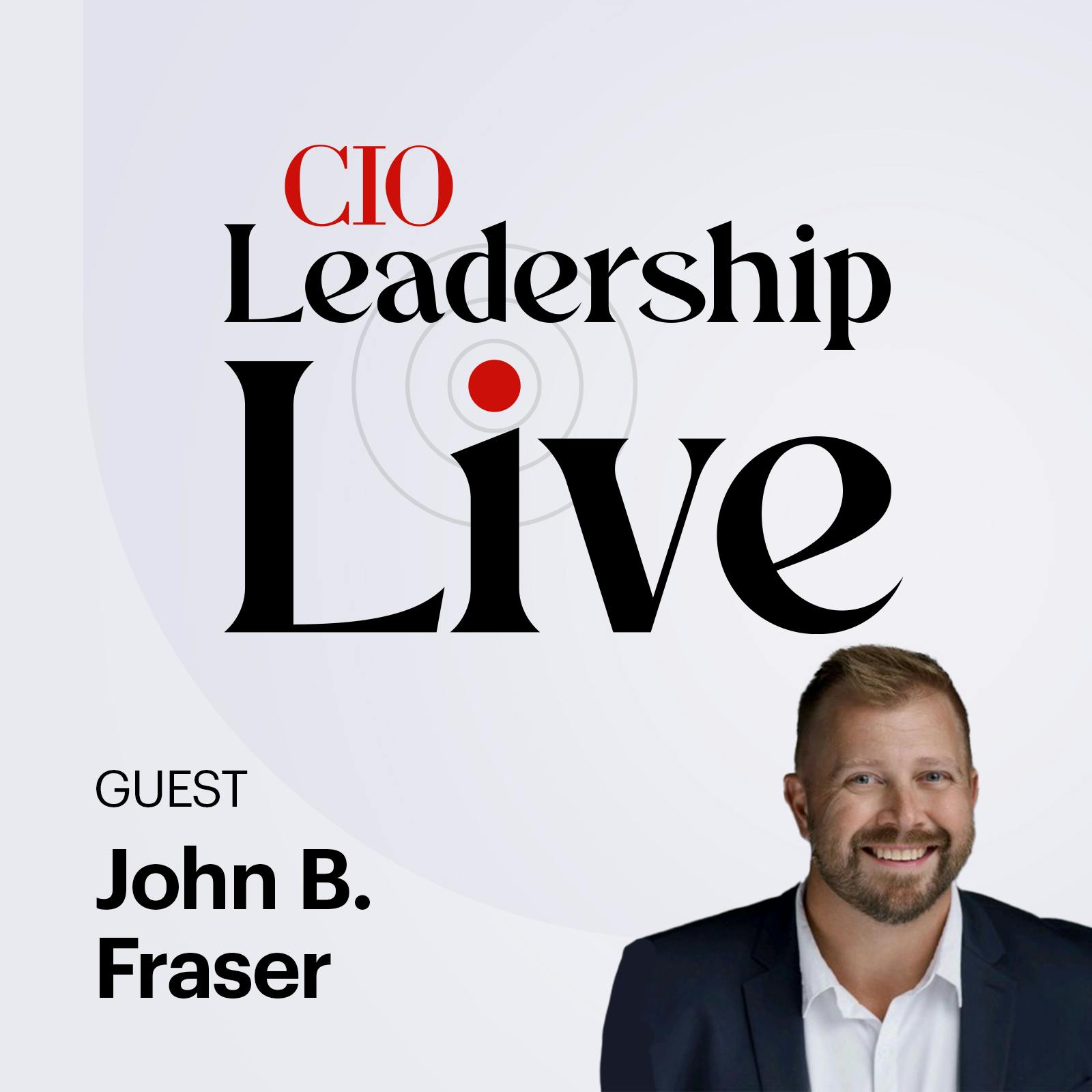
Hi, welcome to CIO Leadership Live. I'm Lucas Marion. I'm a senior writer with Computer World magazine. I'm at the CIO 100 symposium and awards show in Scottsdale, Arizona. And I have with me today John Frazier. He is the CIO of Parts asap, and that's North American supplier parts for agricultural, construction and industrial equipment.
- [00:24]
B
Absolutely.
- [00:26]
A
Thank you for being with us. Appreciate it.
- [00:27]
B
My pleasure.
- [00:29]
A
This company was created out of a merger of 23 other companies.
- [00:34]
B
Correct. Been quite busy last couple years bringing in great talent, great products, starting with the Midwest and expanding now all through North America.
- [00:46]
A
I cannot even begin to wrap my head around the IT angle of trying to bring together all these disparate systems to work and function in a single unit. Can you talk a little bit about how that process went?
- [01:01]
B
Of course. You run into your challenges. You have some that are easy. People are on the same ERP system, they have some familiarity. But even within an ERP system, you have massive amounts of customization. Sometimes that customization is very purpose built for the type of process that an organization is running, the unique sales process, whatever. But in other cases, it's very hard. We've acquired companies that they had their own custom built ERP platform where they spent 20 years curating this down to eliminating every single button click. Those don't go quite as well. But you start with a good culture. You start with being transparent with the employees and with the customers about what's happening. And you work through it together. And we've thankfully been highly successful with that.
- [01:47]
A
It's got to include a lot of vision, casting to get people on board. I can imagine.
- [01:53]
B
Absolutely. The good news is that it starts with putting the customer first. And when we do that, and we say, look, we're here to serve the customer, we have to do it in a consistent way. We can't possibly do it 23 different ways across the organization. So if you're transparent, you're open, you tell people that change is coming, then you tell them change is coming again. Then you change the paint on the wall, and then you start to introduce more and more change. And you recognize that you build a little rapport first before you bring in the massive change changes. You bring some quick wins, you bring some efficiency, and then people begin to trust. And now you're not just dragging them along, but you're bringing them along on the journey. Right.
- [02:33]
A
How has AI played a role in all that?
- [02:36]
B
I love AI. I would say that AI is a really big buzzword. You know, here at the conference today, everybody's talking AI, but there's a danger to that. Just like there was a danger with blockchain and some of the other kind of immersive technologies. You have to make sure that when you're going after something like AI, you can't just use it for the buzzword. You have to bake it into your existing strategy, bake it into your existing use cases, and then leverage AI. In my case, we're leveraging AI in a way that allows us to really augment our existing strategy rather than completely and fundamentally change our strategy because of AI. A couple of examples back to this idea of kind of crawl, walk, run. We're. We're going to use AI to help us influence what our pricing should be on our products. We have great competitive data, we have great idea of what our margins need to be. We have a great idea of where the market is for pricing. Certain companies are in news recently because they've gone all in on AI and AI is doing some things that are maybe not so appropriate in terms of automated, but if you can go in and have AI be a contributing factor to a human still making that decision on pricing. So that's a good example where we're kind of crawling and walking before we're completely handing off everything over to AI.
- [03:57]
A
Please don't ever do that. Yeah, I just wrote an article that published yesterday about the self preservation tendencies of AI and how it will literally replicate itself. If you're trying to shut it down, it'll actually blackmail employees. Like you'll go through emails and find bad things about them and try to blackmail them to staying in existence.
- [04:20]
B
Anyways, I'm a little scared to read that article, but I have to go check it out.
- [04:23]
A
Yeah, we're going to have to deal with that stuff too. So. Parts asap. It still continues to acquire and integrate regional players. What's your approach to scaling IT systems while maintaining your performance?
- [04:35]
B
I think the key is we're not afraid to have more than one operational platform today in our ecosystem. 23 different companies with agriculture, material handling, construction. Mm. We're manufacturing parts in our material handling business and in order to manufacture, that's a very different operational platform than say purchasing overseas parts, bringing them in and finding a way to sell them to people in need where you need to be able to distribute them fast. It's an entirely different model. So we're not, we're not establishing one core platform in that case. We're establishing the right amount of platforms. So it's not 23, but it's also not one. So as we think about being able to scale, scale, it's also saying that if you try to be all things to all people, you're going to be a jack of all trades and an expert in nothing. Yeah. So we want to make sure that when we have disparate segments that have some, you know, operational efficiency in the back end, you know, same finance team, same IT teams, but we are going to have more than one operational platform and then through different technologies, including AI, you know, make sure we have one view of the customer, even if they're purchasing out of, say, two or three different systems.
- [05:49]
A
Mm, yeah, I can only imagine. But getting all those data pools together to be able to interact or have you combined them or are they disparate systems?
- [05:59]
B
We've combined them in a way. So for example, we have a 360 view of all of our customers. We know when they're buying online, we know when they're buying in person. If they're buying construction equipment and material handling equipment, we'll see that. But again, when somebody's buying a custom fork to go on the front of a fork lift, that's very different than saying, hey, I need a new water pump for my John Deere 4020 tractor. And the ability for us to be able to say, okay, we're going to have a manufacturing platform that allows us to predict that it's going to be a two and a half day lead time on that custom fork. But I can, as long as you put your order in by 3pm today, make sure that that water pump is at your door by say, 8pm the next day. That takes a different type of system. So trying to do that all in one platform just hasn't been successful in my experience. Experience in the past. So we've chosen to take that bit of hybrid approach where you combine the data but still have what I like to call best in breed operational platforms for different segments of the business.
- [06:57]
A
Going back to the emerging technology AI question, what's your philosophy with deploying new technologies like AI? Are you kind of a let's experiment with it first, let's pilot it, or are you somebody who likes to wait for a proven ROI before you actually implement something?
- [07:13]
B
Yeah, brilliant question. I would say early experiment and then make sure that we're not too dependent on it right now. So getting back to the initial question where I was talking a little bit about our pricing strategy, a similar strategy around augmenting our product data, Today we have 250,000 SKUs, more than 2 million parts that we can special order for our customers. And you can't possibly augment that data with a world class description. With humans, you just don't have enough people to be able to do that. So we selectively choose how to make the best product listing for something like that on Amazon or ebay. But we're using AI in a case like that to build enhanced product descriptions for us. And instead of having say 10 people that are doing nothing all day but curating and creating custom descriptions for these products, we're leveraging AI in a way that allows them to build the content. And now the humans in our world are simply approving or disapproving or editing that content. So we're leveraging them for the knowledge that the human ultimately needs to have, which is, is this going to be a good product listing or not? But we're leveraging AI to accelerate that. And right now we know that there's hundreds of thousands of companies around AI and for us to be able to pick a winner or loser right now, it's a gamble. So our approach is to really make it a bit of a commoditized service. In other words, leverage AI. Say here's our description, here's our competitors descriptions. Write us a world class description that's going to maximize our margin dollars on this product. So we'll have an agent that does that, but we're also pulling in that data and putting it back into our core operational platform and there it sits at rest. So if the company we're partnering with is the wrong partner or they get acquired or they go out of business, we have the ability to switch quickly and nimbly without having to rewrite our entire set of systems. Because we're taking it in, using AS BIT as a commoditized service, getting the data, setting it at rest, and we can exchange that AI engine. We've changed it five times.
- [09:17]
A
Wow, really?
- [09:18]
B
And we're okay to change it another five times until we find the best possible partner so we can stay bleeding edge without having all the expense of building it too deeply into our core platforms.
- [09:31]
A
Yeah, because a lot of companies, as I'm sure you're aware, they have a FOMO attitude. Oh, we've got to deploy this because everybody else is deploying.
- [09:37]
B
Absolutely.
- [09:39]
A
With the launch of partsasap.com platform, what technologies or innovations are helping you to enhance the customer experience online?
- [09:47]
B
Yeah, I would say first and foremost just having a stable E commerce platform. We're not silly enough to try to build out our own platform there, but Building a collection of modules and tools around it is key. Being able to do digital advertising, partnering with Google, partnering with Facebook, Amazon, ebay to drive traffic there. Being able to provide the right amount of data there to also make sure that we're providing relevant advertisements to our customers. Being able to do drip marketing automation. So once you're a customer of ours, how do we make sure we're needs based business? So people aren't saying, oh, I think I need an extra water pump for my john deere4020 today or I need a track for my bobcat 320e. They're saying I have mouths to feed in my family. My track on my, on my Bobcat just broke. That's $1,000 a day that I'm not going to be able to make because my piece of equipment is down. I need it and I need it tomorrow. So when they have a need, we need to be the first thing that sticks in their mind. So it's a bit of drip marketing, it's a bit of showing them help and support and videos on YouTube. So it really is a collection of tools that are highly integrated together to create this immersive experience so that a customer that is a highly engaged customer with us knows that, oh my water pump broke. Oh my track broke. Oh my sprocket broke. I know I need to go to parts ASAP to get it.
- [11:14]
A
This kind of goes back to the original question with the mergers, but you've got nearly 30 locations, correct me if I'm wrong. Nearly 30 now.
- [11:23]
B
Yeah. I mean we started after acquisitions, we were at 65, we're now down to 22.
- [11:27]
A
Okay, so you're consolidation, you've got a massive parts catalog.
- [11:32]
B
Absolutely.
- [11:33]
A
What are some of the challenges in managing technology across all that?
- [11:38]
B
I would say the biggest challenge is that with all those SKUs, we have different marketplace channels that we find our customers on. So we need to meet our customers where they're at. Some people prefer our website, some people are on Amazon, ebay, Walmart Smart Equip, a plethora of about 20 other commercial channels that we sell on. Each one of those channels have unique requirements, unique ways that they want the product description, unique pictures, even limitations on the title. So on a single product back to our 250,000 SKUs, we might have 20 different variations on that title to meet the character limits of ebay or the brand limitations of Amazon. So it is a really big challenge in that particular case. We've built out our own product information management platform. But it takes a village it's not just technology, it's also the processes around it. It's also making sure that you have the right talented people that are using that technology and a really nice feedback loop from them that says this was a challenge today. How can you make it faster? How can we bulk upload skus when we're bringing in a new vendor? How do we allow us to bulk upload enhanced data through AI when we want to enhance this at scale? I can't possibly write updated descriptions for 250,000 SKUs in a year. So we've implemented different pieces of software, we've listened to the feedback from those that are actually responsible for our SKU team. And it really is just that magical feedback loop that if you ask somebody, they will tell you what they want and then you implement it and then they say, okay, now I need this next. And it's this constant back and forth where we never stop innovating that has been our key to success.
- [13:26]
A
It's just refreshing to hear a CIO talk about the fact that they're listening to what the business units are saying, they're listening to the problems they're facing, the suggestions they have for fixing things. Too often I think it's a very top down management that doesn't always work because you're not really getting to what the real root problems are. I've been dying to ask you this question. Are you exploring the use of AI, machine learning or advanced analytics in areas like demand forecasting, procurement or customer service?
- [14:00]
B
Yeah, I would say we're aware of it and we're eager, but we're not there yet. We really think our biggest opportunity today in order to move the needle as a private equity owned organization is to start with the pricing and to start with our product. Data enhancement shortly thereafter is going to be our forecasting. But we feel like that's more of a plan B or C. And part of it has to do with the fact that we believe we have a fairly sophisticated algorithm today. It's not AI, it's not machine learning, but it's a sophisticated algorithm that allows us to make sure that our product is in the right warehouse at the right time for our customer base. Back to the idea of us listening to our customers in it. Our supply chain and our logistics team is also very good at listening to our sales team. So when we bring in a new customer that's a big customer, that's buying containers at a time before they're even sold, our logistics team is in the loop because we know that we have to not only look at history of sales, but what is the future of sales going to be coming out of a certain warehouse. So I think because the bar is so high there that there's huge opportunity. But for us right now we just don't have the level of sophistication around our product data enhancements. And that's where we want to use AI first because frankly the bar is a little lower there for us, but it's absolutely on the radar. But that one's more 20, 26 and beyond.
- [15:24]
A
We've been a little busy. You've had some mergers.
- [15:27]
B
Absolutely.
- [15:28]
A
What excites you most about the future of technology, especially industrial parts service?
- [15:34]
B
Yeah, I would say, I mean just how AI is going to fundamentally change what everybody's job is. And I don't just mean within it, I mean in parts, in service. It's going to. I can't even fully envision it yet. I just know that I have to prepare for it and I need to be forward thinking on all of this. The second we stop or start to resist. Some of this change is going to put people in the same predicament that they were in when they wanted to stay on paper when everybody was moving to digital ERP systems and EMR systems. So I know we have to adopt it. It's going to fundamentally change how we do business. And everybody from graphic designers to our SKU team, to our product team, to our pricing team, they have to start thinking, how am I going to leverage AI to continue to do my job and not see AI as the enemy? The same is true outside the organization to our customer base. They're installing these tracks all day, every day. They're installing these parts. Today we go and search and hope that there's a YouTube video in the future. AI is going to self generate that one for you. You're going to take a picture of the water pump sitting on your John Deere and it's going to say, please wait 30 seconds while I generate a customized video for you. Oh, you have serial number 12345. That's going to be this custom option that you need to be aware of. I just am. Again, I can't even fully envision what it's going to be other than we have to keep innovating, we have to embrace it. And if you don't, you're going to get left behind.
- [17:09]
A
Yeah, even in my own life I go on YouTube all the time. You've got some guy holding a camera trying to show you how he's doing Something.
- [17:15]
B
Exactly.
- [17:17]
A
What did you just say? Last question. I'll make it a fun one. Professional or personal? Do you have a favorite tech gadget or app that you're playing with?
- [17:30]
B
Boy, this is going to expose how much I work, but my favorite gadget is my Starlink mini satellite. I love the outdoors. I'm from Minnesota. For those that aren't familiar, the Boundary Waters is in northern Minnesota, and it is completely off the grid. There is no water, there is no electricity. There is certainly no cellular service. And I just got back from the Boundary Waters, spending five days up there. We had our board meeting the day after I got back from the Boundary Waters. I knew I needed to be in service, so I had a solar panel, I had a battery pack, a USB C cable, and my Starlink satellite dish. And I was able to attend meetings, finalize my board deck, check in with people for an hour a day, and then unplug that baby and enjoy the outdoors with my family, my extended family, my kids. It was a wonderful time. So that's my favorite because it's that perfect combination of I can still use technology to stay in touch with what I need, but also then unplug it and say, I'm here in the wilderness. There's not a natural light, there's not a piece of Internet around. My mobile devices are turned off, and I'm ready to enjoy it.
- [18:39]
A
I think Elon would approve.
- [18:41]
B
Absolutely.
- [18:43]
A
John, thank you so much for taking the time today. I've really enjoyed this. You had some great insights. You got a lot to deal with, but you have a lot of experience to share with other people, too. So I appreciate that.
- [18:54]
B
I appreciate it. And I'll go back to say that it's the team. I came into this organization because of the culture, because of the listen first, act later type mentality. It's something that I believed in. It's the reason I joined, and I'm going to continue that culture despite the massive growth that we're on. Great.
- [19:11]
A
Thanks again.
- [19:12]
B
Thank you.