Podcast
Clef de voûte
Hosted by Timothé Frin | Stellar · FR
Apprentissages, méthodes, outils et conseils pour faire décoller ton Produit.
Je suis Timothé Frin, cofondateur de Stellar (https://www.wearestellar.io/).
Ma mission : aider les startups à créer les produits tech de demain.
Clef de voûte, c'est le podcast Product pour celles et ceux qui bâtissent les futurs produits indispensables de demain.
Chaque semaine, j'invite des entrepreneurs, des CTO, des VC, des designers à me parler de Produit.
L'objectif de Clef de voûte est que tu puisses t'inspirer des situations vécues par mes invités pour en tirer des enseignements applicables dans ton quotidien.
Tu y découvriras :
➡️ Les méthodes de mes invités dans le détail
➡️ Des tips pour devenir meilleur en Product
➡️ Les outils qu'ils utilisent au quotidien
➡️ Des ressources immanquables pour progresser
💫 Pour faire décoller ton produit grâce à nos top CPOs : RDV sur Stellar (https://www.wearestellar.io/) 💫
Hébergé par Ausha. Visitez ausha.co/fr/politique-de-confidentialite pour plus d'informations.
43episodes
Episodes
Newest firstAll episodes

[REDIFF] Tally’s secret to FORCE VIRAL ADOPTION and reach $4M ARR bootstrapped (Marie Martens) - #152
3d ago01:07:25Tap to summarizeWondering where your Product & Engineering organization stands on AI? Take our AI Maturity Check here (3 min).Get the in-depth analysis from every episode by subscribing to the Clef de voûte newsletter.--In today’s episode, I’m glad to be with Marie Martens, Co-Founder of Tally.Marie co-founded Tally, a simple yet powerful online form builder, to solve a small frustration, and ended up challenging the biggest software companies on the market without raising a single dollar of venture capital.With over 1 million teams worldwide using their product, her bootstrapped journey proves that keeping things radically simple can be your biggest competitive advantage.In this episode, we explore how ignoring traditional startup rules and giving away core features for free fueled massive product-led growth.We dive into the daily realities of staying intentionally small, turning down lucrative enterprise clients, and leveraging transparent public building to generate authentic word-of-mouth.Marie also shares her direct experience with the unexpected challenges of AI-driven customer acquisition.We talk about :Bootstrapping a global software product with a tiny team.Using a viral free tier instead of hiring a sales department.Turning down large corporate clients to maintain product focus.Acquiring the first users through unscalable manual outreach.Navigating the unexpected churn consequences of ChatGPT referrals.Have a good listening !---[00:00] Introduction[01:55] What's Tally ?[02:59] Radical simplicity[04:21] No signup friction[06:27] ICP focus[09:32] Saying no to enterprises[10:09] Features not built[12:58] Freemium model[17:34] PLG principles[23:58] Limits of PLG[26:08] LLM impact[29:19] Acquisition strategy[31:22] Early cold outreach[35:28] No sales team[38:06] Brand building[41:54] Lovable products[46:50] Building in public[56:42] Key hires[59:40] AI impact[1:05:24] Common product mistakes---💥 To support the podcast:1. Subscribe so you don’t miss an episode 🔔2. Leave a great review on Apple Podcasts or Spotify ❤️3. Join the YouTube channelHébergé par Ausha. Visitez ausha.co/politique-de-confidentialite pour plus d'informations.
Transcribe →
[REDIFF] 1M d’ARR en 90 jours : La stratégie de lancement de Submagic
1w ago01:01:30Tap to summarizeVous vous demandez où en est votre orga produit & Tech sur l'IA ? Passez notre AI maturity check ici (3 min)Reçois les analyses approfondies de chaque épisode en t'inscrivant à la newsletter Clef de voûte--Dans cet épisode, j'ai le plaisir de recevoir David Zitoun, co-fondateur de Submagic. Lancé en plein essor de l'IA générative, Submagic permet aux SMBs de créer du contenu vidéo sans réelles compétences.David a fait le choix radical du bootstrap à une période où les levées de fonds de Produits IA s'enchaînent. Ça ne les a pas empêchés de connaître une croissance quasi-instantanée avec leur 1er Million d'ARR atteint en 90 jours.Dans cet épisode, on aborde :Comment générer 1M d'ARR en 3 mois sans financement.Comment trouver son PMF grâce à 1 fonctionnalité.Quelles stratégies d'affiliation et d'influence activer.Comment scaler sans équipe Sales.Pourquoi recruter un profil Produit pour optimiser la conversion.Bonne écoute.---[00:00] Introduction[01:48] Origine de Submagic[03:23] Le choix du bootstrap[06:40] Tester les associés[10:26] Refuser de lever des fonds[15:34] Focus sur le format court[23:12] Influence et affiliation[26:23] Scaler sans commerciaux[30:03] Évolution de l'acquisition[32:07] Recruter en Product Growth[37:01] Lancement de Thumbmagic[40:49] Stratégie de prix[46:16] Améliorer l'IA[49:35] Prioriser les fonctionnalités[53:50] La distribution avant le produit[57:16] Le pouvoir du contenu[01:00:17] Conclusion---💥 Pour apporter ton soutien au podcast : 1. Abonne-toi pour ne rien manquer 🔔2. Laisse un super avis sur Apple podcast ou Spotify ❤️ 3. Rejoins la chaîne YoutubeHébergé par Ausha. Visitez ausha.co/politique-de-confidentialite pour plus d'informations.
Transcribe →
3 CPOs débattent de l’avenir du produit : rôle du CPO, impact IA, qualité produits
2w ago00:58:08Tap to summarizeVous vous demandez où en est votre orga produit & Tech sur l'IA ? Passez notre AI maturity check ici (3 min)Reçois les analyses approfondies de chaque épisode en t'inscrivant à la newsletter Clef de voûte---Le CPO “stratège” est mort.95% des projets IA n'ont aucun impact mesurable.L'IA dégrade la qualité des produits.Trois affirmations volontairement clivantes.Trois CPOs pour en débattre.Un nouveau format sur la chaîne.Pour ce premier débat, j'ai invité trois CPOs de la communauté Stellar :→ Nathalie Edlinger, CPO chez Paladin et Ex-CPO chez Jaji.→ Geoffrey Janvier, ex-Chief Innovation Officer chez Cegid.→ Arthur Rougier, ex-CPO chez JobTeaser, ex-VP Product chez Papernest.Une heure de discussion honnête, avec des convictions, des désaccords et des exemples terrain tirés de leurs missions chez les plus belles boites techs.Si tu es Product Leader, fondateur ou builder tech, ce débat est pour toi.Quelques questions abordées :Le rôle stratégique du CPO va-t-il vraiment disparaître ?Faut-il investir dans l'IA maintenant ou attendre ?Comment mesurer l'impact réel d'un projet IA ?Pourquoi shipper plus vite peut dégrader la qualité ?Quel conseil pour convaincre un Comex d'investir dans l'IA ?Bonne écoute.---[00:00] Introduction[00:50] Le format débat expliqué[02:24] Sujet 1 : le rôle du CPO est-il mort ?[02:32] Pourquoi un CPO doit faire les choses lui-même[05:28] Le produit n'a jamais été purement stratégique[06:36] Quand les Product poussent dans la codebase[07:28] Le workflow des Quick Wins chez Paladin[12:33] Le CPO du futur, encore plus stratégique ?[14:40] Le nouveau ratio Product / Engineering[16:17] Les squads atlantiques[23:03] L'indépendance qu'offre l'IA aux Product[25:06] Sujet 2 : 95% des projets IA n'ont aucun impact[26:20] Les 2 catégories de boîtes face à l'IA[36:28] L'anecdote Zuckerberg chez Meta[41:19] Sujet 3 : l'IA dégrade-t-elle la qualité des produits ?[47:42] Pennylane vs Qonto : deux philosophies opposées[56:03] Conclusion : le message controversé d'Arthur---💥 Pour apporter ton soutien au podcast : 1. Abonne-toi pour ne rien manquer 🔔2. Laisse un super avis sur Apple podcast ou Spotify ❤️ 3. Rejoins la chaîne YoutubeHébergé par Ausha. Visitez ausha.co/politique-de-confidentialite pour plus d'informations.
Transcribe →
Comment ce français a construit puis revendu une fintech à Stripe en 4 ans (Henri Stern, co-founder @Privy)
3w ago00:39:15Tap to summarizeVous vous demandez où en est votre orga produit & Tech sur l'IA ? Passez notre AI maturity check ici (3 min)Reçois les analyses approfondies de chaque épisode en t'inscrivant à la newsletter Clef de voûte---Comment on construit une fintech qui finit rachetée par Stripe en 4 ans ?C'est ce qu'a fait Henri Stern avec Privy.En 4 ans, il a co-fondé une plateforme qui déploie 130 millions de wallets crypto pour plus de 2 000 clients (Uniswap, Ramp, Gusto, Deal). Et en 2025, Stripe rachète l'entreprise.35% des utilisateurs de Privy créent aujourd'hui des wallets pour leurs agents IA.La crypto n'est plus une histoire de spéculation : elle est en train de devenir l'infrastructure du commerce agentique et des paiements globaux.Pour décrypter cette histoire, mon associé David a reçu Henri au Palais Brongniart, pendant les 10 ans de Stripe à Paris.Si tu es fondateur, CEO, CPO ou builder tech et que tu te demandes comment construire un produit qui compte dans un marché émergent, cet épisode est pour toi.Quelques-unes des questions abordées :Comment Privy a fini par se faire racheter par Stripe ?Pourquoi la crypto devient enfin utile dans le monde réel ?Comment les agents IA vont utiliser les wallets pour payer à ta place ?Quelles sont les erreurs produits les plus marquantes chez Privy ?Quels conseils pour un fondateur qui vise un rachat ?Bonne écoute.---[00:00] Introduction[01:42] 10 ans de Stripe à Paris[02:13] Comment la crypto devient utile dans le monde réel[05:17] Les 3 grands marchés de la crypto[07:03] Les stablecoins pour les entreprises globales[10:57] L'histoire du rachat de Privy par Stripe[13:19] Ce que Privy voulait protéger dans le deal[16:31] Ce que fait vraiment Privy[19:11] Passer de la recherche au produit[24:52] Les erreurs produits marquantes[27:24] 35% des wallets sont pour des agents IA[29:31] Comment l'IA a changé le quotidien d'Henri[31:08] La transformation IA en interne chez Privy[33:08] Mesurer l'impact de l'IA en équipe[34:30] Différences France / US sur l'IA[36:28] Les conseils pour se faire racheter---💥 Pour apporter ton soutien au podcast : 1. Abonne-toi pour ne rien manquer 🔔2. Laisse un super avis sur Apple podcast ou Spotify ❤️ 3. Rejoins la chaîne YoutubeHébergé par Ausha. Visitez ausha.co/politique-de-confidentialite pour plus d'informations.
Transcribe →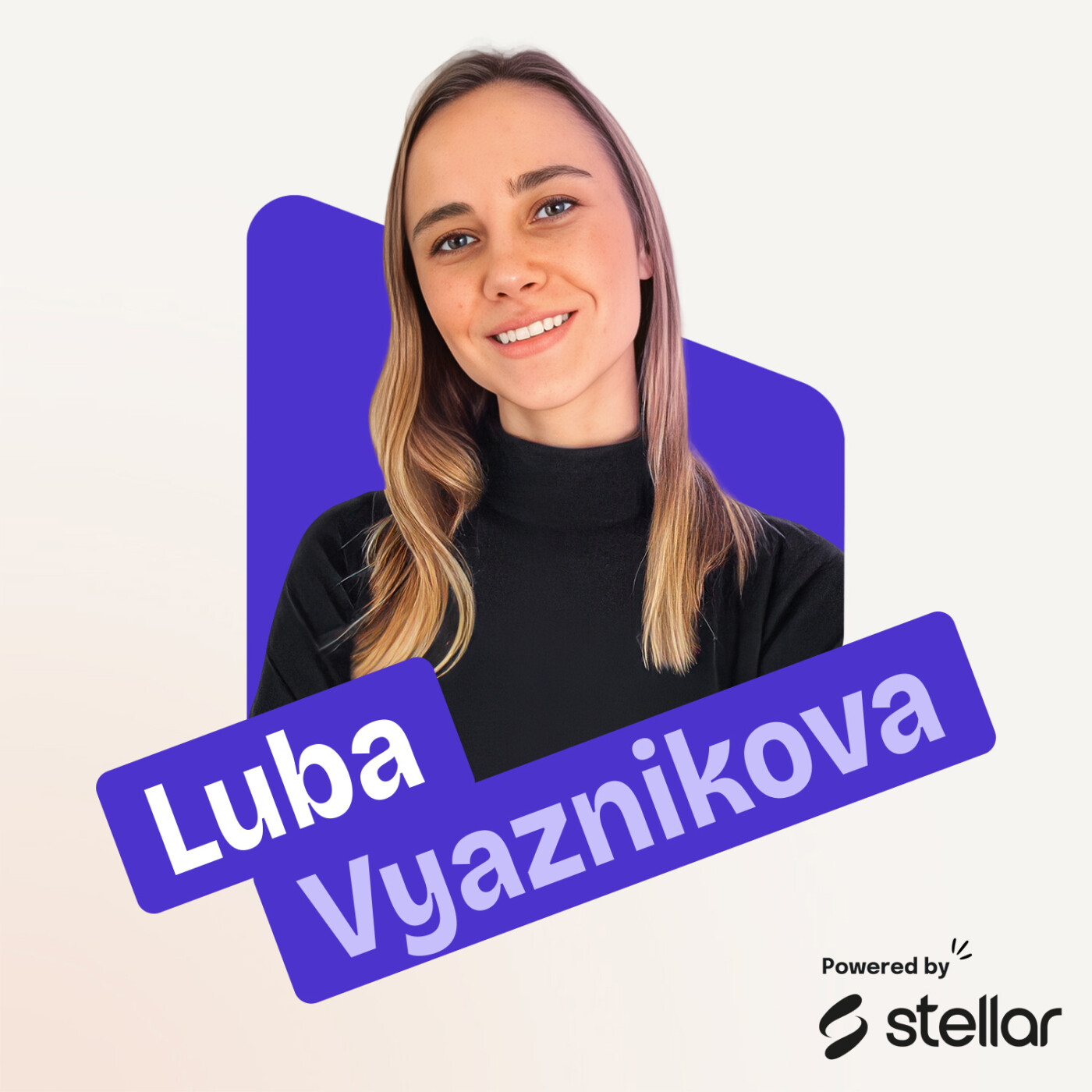
How Timeleft scaled a social product to 3M+ users in 3 years (Luba Vyaznikova, Timeleft)
Jul 1301:02:21Tap to summarizeWondering where your Product & Engineering organization stands on AI? Take our AI Maturity Check here (3 min).Get the in-depth analysis from every episode by subscribing to the Clef de voûte newsletter.--User feedback is overrated.AI is nearly useless for the hardest part of product work.These are two of the arguments Luba Vyaznikova makes in this episode.Luba is Head of Product at Timeleft, a social product built around a simple idea: two clicks, and tomorrow evening you're sitting at a dinner table with 5 strangers who want the same thing as you.Timeleft now runs in 60 cities around the world.Before Timeleft, Luba spent years at Bumble and Badoo, two of the largest social products in the world.She has seen the same product problems play out over and over, and she's built strong, contrarian views on how to navigate them.If you're a Product Manager, CPO, or founder building a consumer product, this conversation is for you.A few of the questions we tackle:Why is treating user feedback as gospel a beginner's mistake?How do you measure success when the value happens between people?Why did every new PM at Badoo want to remove a 40% revenue feature?Where does AI help in product work, and where doesn't it?What's the difference between individual and institutional AI?Enjoy the episode.---[00:00] Introduction[02:06] What Timeleft is really building[04:30] Ecosystem thinking in social products[07:55] Bumble : more than "women message first"[09:47] How to measure success in a social product[14:20] The metrics beyond experience score[17:42] Reading emotional user feedback[19:36] Bringing back angry users[23:55] The Emirates first-class analogy[29:25] Retention in B2B vs B2C[30:54] Why user feedback is overrated[34:05] The Badoo feature every PM wanted to remove[41:39] The BlaBlaCar analogy[43:49] Why AI can't help with product decisions[48:31] Where AI actually helps at Timeleft[52:34] The new bottleneck in Product teams[54:50] Individual AI vs Institutional AI[59:30] Why AI won't transform companies overnight---💥 To support the podcast:1. Subscribe so you don’t miss an episode 🔔2. Leave a great review on Apple Podcasts or Spotify ❤️3. Join the YouTube channelHébergé par Ausha. Visitez ausha.co/politique-de-confidentialite pour plus d'informations.
Transcribe →
Comment Stripe a transformé son infrastructure Produit pour rendre les agents IA autonomes (Arielle Le Bail, Head of Product @Stripe)
Jul 600:41:24Tap to summarizeVous vous demandez où en est votre orga produit & Tech sur l'IA ? Passez notre AI maturity check ici (3 min)Reçois les analyses approfondies de chaque épisode en t'inscrivant à la newsletter Clef de voûte---Comment ton produit doit-il évoluer pour les agents IA ?C'est la question que toute boîte tech va devoir se poser dans les mois à venir.Et chez Stripe, ils sont déjà en train d'y répondre.Le trafic des LLM sur leur documentation a fait x5 en 2025, puis x10 en 2026.Aujourd'hui, leur documentation est plus lue par des agents que par des humains.Quand tu sais qu'1,6 % du PIB mondial e-commerce transite par Stripe, ce qui se construit chez eux en ce moment va impacter tout l'écosystème.Pour décortiquer comment Stripe se prépare à ce nouveau monde, mon associé David a reçu Arielle Le Bail, Head of Product chez Stripe pour la France, l'Europe du Sud et le Benelux.Ce qui est hallucinant, c’est qu’Arielle s'est absentée 5 mois entre octobre 2025 et mars 2026, et à son retour, elle a vu un avant-après radical dans son métier de Product.Si tu es CPO, Head of Product, fondateur tech ou e-commerce leader, cet épisode est pour toi.Quelques-unes des questions abordées :Comment se préparer à l'arrivée des agents IA dans son business ?Comment passer de User Experience à Agent Experience ?Comment le métier de Product Manager va-t-il évoluer avec l'IA ?Comment industrialiser l'usage de l'IA dans une grosse équipe Product ?Bonne écoute.---[00:00] Introduction[01:41] Welcome au Stripe Tour Paris[03:00] Le parcours d'Arielle chez Stripe[05:05] 300 PMs chez Stripe[08:19] La doc plus lue par les agents[09:47] Le futur du e-commerce agentique[15:48] La chaîne de valeur Stripe[18:02] Stripe Project pour les agents[19:57] Le Machine Payments Protocol[21:41] Devenir agent-ready[24:39] De l'UX à l'AX[26:51] Le studio de prototypage[29:21] La revanche des Product Manager[31:39] Le Product Cycle avec l'IA[34:05] L'interface conversationnelle[37:24] Le message aux Product[38:58] Le message aux CEO---💥 Pour apporter ton soutien au podcast : 1. Abonne-toi pour ne rien manquer 🔔2. Laisse un super avis sur Apple podcast ou Spotify ❤️ 3. Rejoins la chaîne YoutubeHébergé par Ausha. Visitez ausha.co/politique-de-confidentialite pour plus d'informations.
Transcribe →
Comment Alan (800M€ ARR) a transformé son organisation Produit avec l'IA en 3 ans
Jun 2901:16:04Tap to summarizeVous vous demandez où en est votre orga produit & Tech sur l'IA ? Passez notre AI maturity check ici (3 min)Reçois les analyses approfondies de chaque épisode en t'inscrivant à la newsletter Clef de voûte---Alan, a fait une des transformations IA les plus avancées qu'on puisse observer dans la tech française.800 personnes qui utilisent l'IA tous les jours.Plusieurs centaines de pull requests en production écrites par des designers, des PMs et des ops.Toute la codebase ouverte à la boîte via une initiative interne baptisée "Everyone Can Build".Pour découvrir comment ils en sont arrivés là, j'ai reçu Alexandre Gerlic, VP Engineering chez Alan.Il a rejoint la boîte en 2019 quand l'équipe tech faisait 20 personnes et chapeaute aujourd'hui plus de 100 ingénieurs.Ce qui rend Alan particulier, c'est qu'ils ont démarré leur transformation IA avant la démocratisation de l'IA générative.3 ans plus tard, ils construisent leurs propres outils internes.Si tu es VP Engineering, CTO, CPO ou fondateur tech et que tu te demandes par où démarrer ou comment accélérer ta transformation IA, cet épisode est pour toi.Quelques-unes des questions abordées :Par où commencer une transformation IA dans ses équipes ?Comment ouvrir sa codebase à des profils non-techniques ?Comment construire sa propre stack IA interne ?Faut-il poser des métriques IA dès le début ?Quelle est l'erreur principale à éviter dans une transformation IA ?Bonne écoute.---[00:00] Introduction[02:17] Le pitch d'Alan[05:01] De 20 à 100+ ingénieurs[06:39] L'IA chez Alan dès le day one[08:14] Le Slack bot marmotte[14:47] Les "champions" en interne[15:49] Ouvrir la codebase à tous[18:26] Le lancement d'Everyone Can Build[27:04] Pourquoi Alan a refusé Lovable[30:31] Construire ses propres outils[37:09] Hopper, l'outil interne[41:58] Construire à 2 au lieu de 4[43:49] Le nouveau goulot : la code review[48:41] L'approche métriques d'Alan[54:02] Les Skills, le shift récent[58:57] Les obstacles rencontrés[01:04:51] Le nouveau process de recrutement[01:07:11] Le conseil pour démarrer[01:09:12] L'erreur à éviter[01:10:27] Aux ingénieurs sceptiques---💥 Pour apporter ton soutien au podcast : 1. Abonne-toi pour ne rien manquer 🔔2. Laisse un super avis sur Apple podcast ou Spotify ❤️ 3. Rejoins la chaîne YoutubeHébergé par Ausha. Visitez ausha.co/politique-de-confidentialite pour plus d'informations.
Transcribe →
Comment rendre son équipe Product AI-Native : 3 boîtes, 3 stades, 3 réalités (Conférence Produit & IA)
Jun 2200:50:37Tap to summarizeVous vous demandez où en est votre orga produit & Tech sur l'IA ? Passez notre AI maturity check ici (3 min)Reçois les analyses approfondies de chaque épisode en t'inscrivant à la newsletter Clef de voûte--Comment on transforme vraiment une organisation Product pour la rendre AI-Native ?Il y a quelques semaines, j'ai animé une table ronde sur ce sujet à La Product Conf, la plus grande conférence Product en France. Sur scène, j'ai invité 3 Product Leaders venus de trois entreprises à des stades radicalement différents :Christopher Parola, CPO chez Youtrust (ex-Yousign). 200 personnes dont 90 en Product & Engineering, en transformation depuis 1 an et demi.Justine Poggi, VP Product chez Weglot. 70 personnes dont 20 en Product & Tech, en transformation depuis quelques mois.Florian Cordel, VP Product chez Cegid. 6000 personnes dont 2000 en R&D, en transformation depuis 2 ans.Une discussion honnête, où chacun partage ce qui a marché, ce qui ne fonctionne pas, et ce qu'on découvre vraiment quand on essaie de reconstruire son équipe autour de l'IA.Si tu es CEO, fondateur, CPO ou Head of Product et que tu te demandes par où démarrer ou comment accélérer ta propre transition, cette discussion est pour toi.Quelques-unes des questions abordées :Pourquoi 80% du code généré par IA ne fait pas x5 sur la productivité ?Qui devient le goulot d'étranglement au sein de l'équipe produit ?Pourquoi le format "2h IA / semaine" ne marche pas ?Pourquoi monter une "AI Team" séparée a échoué chez Cegid ?L'erreur principale à éviter lors d'une transformation IA ?Bonne écoute.---💥 Pour apporter ton soutien au podcast : 1. Abonne-toi pour ne rien manquer 🔔2. Laisse un super avis sur Apple podcast ou Spotify ❤️ 3. Rejoins la chaîne YoutubeHébergé par Ausha. Visitez ausha.co/politique-de-confidentialite pour plus d'informations.
Transcribe →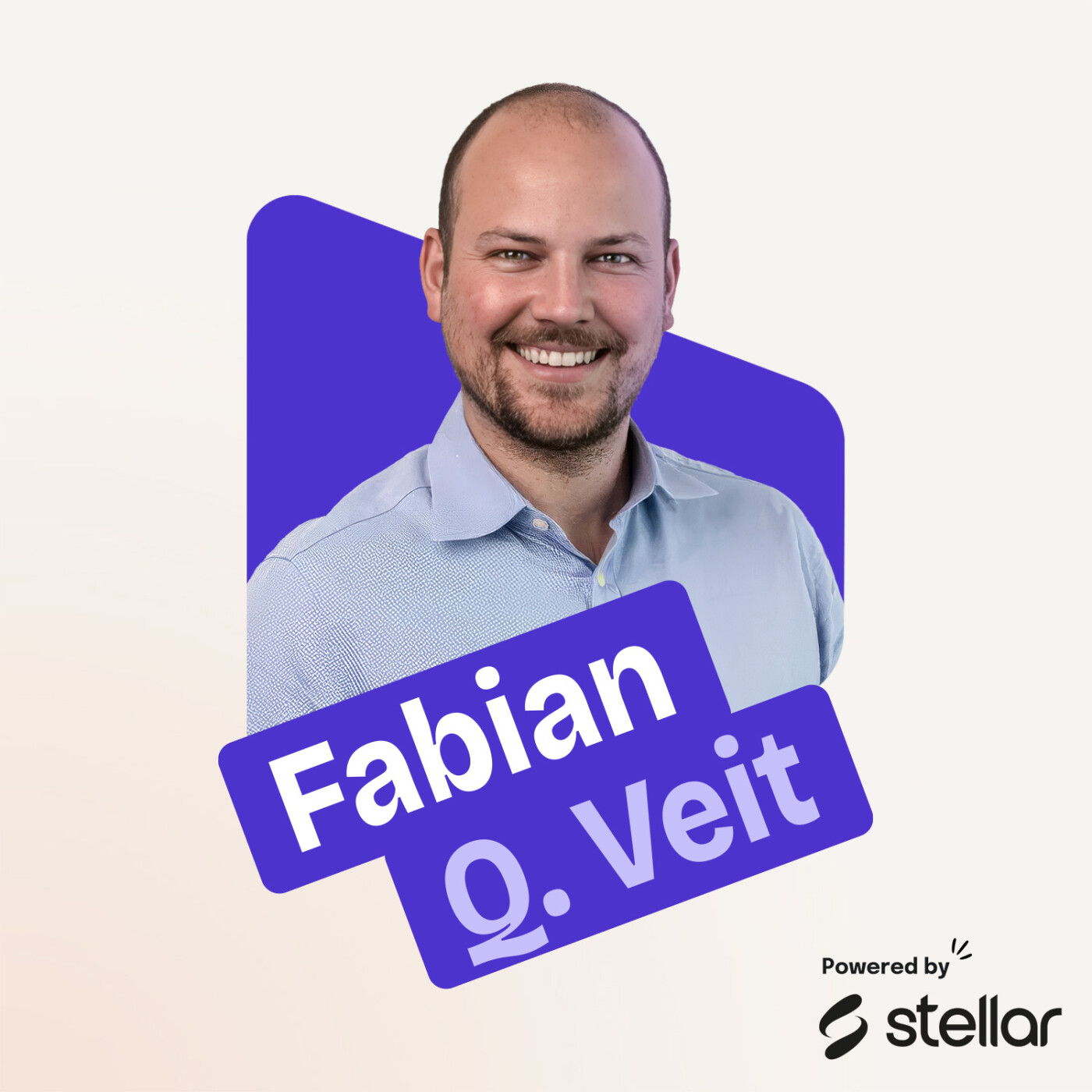
Inside Make's AI operating model: 50% revenue growth, same headcount (Fabian Q. Veit, CEO @Make.com)
Jun 1500:57:29Tap to summarizeWondering where your Product & Engineering organization stands on AI? Take our AI Maturity Check here (3 min).Get the in-depth analysis from every episode by subscribing to the Clef de voûte newsletter.--Make scaled its revenue and customer base by 50% in one year without hiring more people.I wanted to understand what actually changed inside the company, so I invited Fabian Q. Veit, CEO of Make.com.Make is a visual platform used by hundreds of thousands of companies to build and manage automations and AI agents. But beyond the product, Fabian has been rebuilding the way Make operates internally with AI.He also sees how thousands of companies are trying to do the same: what works, where teams get stuck, and why some AI projects never create real impact.This conversation is for CEOs, CPOs and founders who are trying to figure out where to actually start with AI inside their company.Fabian shares the framework he uses with leaders in the first 30 days of an AI transformation, the operating model that helped Make grow without growing the team, and why the companies making progress with AI are not always the ones hiring the most AI experts.They are the ones changing how work gets done.We get into questions like:What AI-first really looks likeWhy AI projects fail earlyWhere CEOs should start with AIHow to justify AI investmentWhat stays human vs automatedLeading a company run by agentsEnjoy the episode.---[00:00] Introduction [01:58] What Make does [04:16] The biggest AI transformation mistake [06:49] Top-down vs bottom-up adoption [09:07] Justifying AI investment without clear ROI [13:02] Why everyone flipped on AI [15:12] Skill, will, environment [18:08] How Make uses its own product [21:26] A marketer builds her own agents [23:12] Engineering at Make in 2026 [25:35] The "Triple A" framework [26:52] 50% bigger, same team [27:53] Real use cases: Celonis and a bank [30:54] What to automate, what to keep human [32:35] From doer to orchestrator [34:40] The AI jobs debate [38:36] Make's evolving value proposition [43:35] The future of triggers [46:28] Positioning in a crowded landscape [49:38] Can product still be a moat? [52:44] The OpenAI consulting move---💥 To support the podcast:1. Subscribe so you don’t miss an episode 🔔2. Leave a great review on Apple Podcasts or Spotify ❤️3. Join the YouTube channelHébergé par Ausha. Visitez ausha.co/politique-de-confidentialite pour plus d'informations.
Transcribe →
[REDIFF] Il créé une méthode radicale pour accélérer la performance des équipes Product (François Goldgewicht, Pictarine) - #147
Jun 801:15:16Tap to summarizeVous vous demandez où en est votre orga produit & Tech sur l'IA ? Passez notre AI maturity check ici (3 min)Reçois les analyses approfondies de chaque épisode en t'inscrivant à la newsletter Clef de voûte--Aujourd'hui, j’ai le plaisir d’accueillir François Goldgewicht, le COO de Pictarine.Après avoir été CPO puis CTO, François est désormais en charge des opérations chez Pictarine, une entreprise qui permet d’imprimer ses photos depuis son téléphone et de les récupérer en 20 minutes dans plus de 17 000 points de vente aux États-Unis. En première partie d’épisode, François revient en détail sur ce qu’est la Radical Performance, une méthode interne conçue pour améliorer à la fois la performance et le bien-être dans les équipes.Il nous montre ensuite, très concrètement, comment Pictarine l’a déployée à l’échelle de toute l’entreprise, avec 11 principes concrets, des rituels d’équipe précis et un accompagnement méthodique des PM, même les plus juniors.Enfin, il partage des conseils actionnables pour l’adopter dans votre propre organisation, que vous soyez fondateur, product manager ou manager d’équipe.---🔨 Comment recruter des PM sans expérience🔨 Les 3 ingrédients pour définir la performance🔨 Les 5 temps clés pour cadrer l’autonomie des PM🔨 11 principes pour piloter la performance collective🔨 Comment structurer le management dès 20 personnes🔨 La méthode pour structurer un cycle produit en 5 étapes---[00:00] Introduction[01:29] Présentation de François[02:29] Ce qu’est Pictarine[03:24] Le parcours de François[04:40] La Radical Performance[08:48] Genèse de la méthode[11:15] 3 dimensions de la performance[13:42] Rôle du COMEX[16:28] 2ème fondation[17:24] 3ème fondation[21:24] Organisation des 1-to-1s hebdo[23:02] Outils managériaux[24:05] Autonomie et limites[25:59] Les effets bénéfiques[28:32] Les 11 principes[29:05] Principe 1[34:16] Principe 2[37:32] Principe 3[44:09] Principe 4[47:02] Principe 5[51:07] Principe 6[53:23] Principe 7[56:33] Principe 8[59:33] Principe 9[01:02:28] Principe 10[01:05:03] Principe 11[01:08:11] Résultats obtenus[01:09:35] Système VS culture[01:10:37] Etre PM leader chez Pictarine[01:11:55] Rituels clefs du cycle produit[01:13:20] Exemple de framing produit[01:15:07] Progresser en tant que PM[01:17:58] Le bon niveau d’exigence[01:20:17] Outro---💥 Pour apporter ton soutien au podcast : 1. Abonne-toi pour ne rien manquer 🔔2. Laisse un super avis sur Apple podcast ou Spotify ❤️ 3. Rejoins la chaîne YoutubeHébergé par Ausha. Visitez ausha.co/politique-de-confidentialite pour plus d'informations.
Transcribe →