← Clotheshorse with Amanda Lee McCarty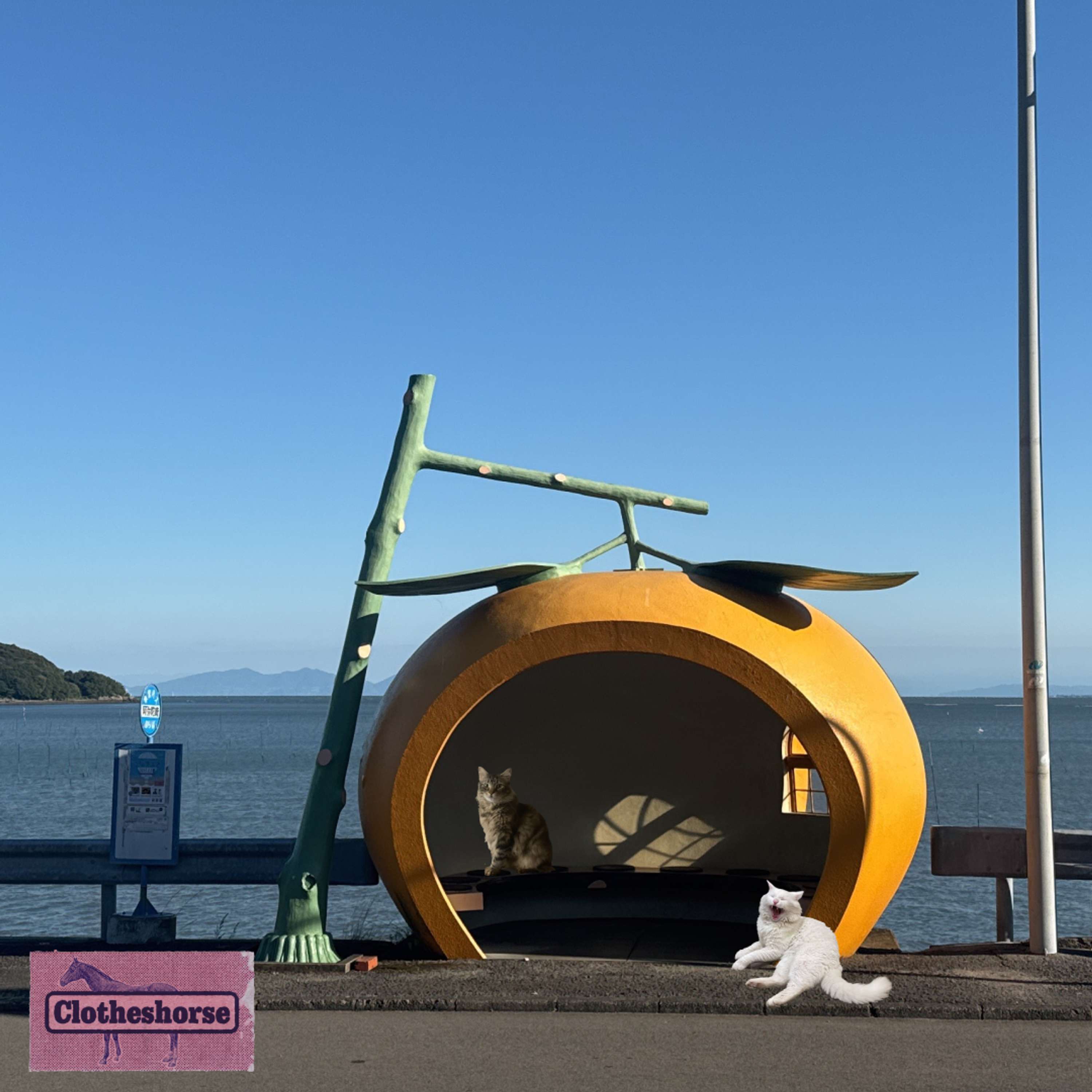
Clotheshorse with Amanda Lee McCarty
Episode 219: Clotheshorse in Japan: Why is Everything So Cute?
01:23:09
Loading summary
Transcript1 lines
- [00:00]
Amanda
Foreign. Welcome to Closed Force, the podcast that is really, really struggling with jet lag right now. I'm your host, Amanda, and this is episode 219 recorded in my office here in Lancaster county, because that's right, I'm back home. But I wanted to give you one last episode about Japan, because I did a lot of the research and writing about all of this while I was still on my trip. I just didn't have time to record it in my last few days in Japan because, you know, I was really busy and I was really trying to live it up before I came back home. So how did I finish out my final week and a half in Japan? Well, the last time I spoke to all of you, I was in Nagasaki, where I recorded the episode about fake food. My primary reason for traveling all the way down there, which is much further south in Japan than I have ever voyaged in the past. I went down there to visit the fruit bus stops along the highway in Konegai, a small town along the Ariake Sea. If you've ever spent time on Tumblr between, I don't know, 2015 and, let's say 2020, you've definitely seen these fruit bus stops. They've been living rent free in my brain for many years. They were originally built in 1990 for the Nagasaki Travel Expo, and they were inspired by the Cinderella pumpkin carriage. They cute. If you don't know what I'm talking about, go look at my Instagram profile right now. I did a post of them last week. Ish. And I had to see them irl. They are actually incredibly well maintained and they're still actively in use. Christine and I literally sat inside one of the mandarin orange bus stops to wait for a bus to take us back to the train station. One thing I will say about the fruit bus stops, though, is what was a great lesson in reality versus Instagram or Tumblr or Pinterest or whatever, because when you see photos of them online, they're so epically beautiful and scenic. Like, like a Wes Anderson film come to life right there. And they are in this amazing spot, like, right on the sea. Like really like one of them. The Mandarin bus stop where we actually waited for the bus. If you looked out the back window, you were literally looking down on the beach right there. So they look beautiful from that angle. Except not all of them are in scenic locations like that. Like, some of them are literally in front of a parking lot or in front of someone's house, or just in the middle of town. And furthermore, These bus stops are actually on a highway that is full of huge trucks and very fast moving cars. Fortunately, there was a sidewalk, but it wasn't this, like, desolate esthetic experience that one might imagine. There was also a surprising amount of litter, especially for Japan, I would say, like, in the grand scheme of things, not as much litter as we see here in the United States. And trust me, I'm used to seeing litter on a walk. Sometimes I walk down to the end of our driveway, which is really more of a gravel road, to get the mail, and there's litter down there. And I'm like, who threw that? Who was drinking, you know, a Baja Blast and threw their cup at my mailbox. But so litter, you know, I'm used to it. There wasn't as much litter along the highway there as there would be here in the United States. But there was. We even saw a huge bottle of pee. There were a lot of cigarette wrappers and things like. But it wasn't, I guess what I'm saying, this, like, flawless aesthetic experience that the Internet conveys. That said I would do it all again because it was still a nice long walk along the water. I saw a lot of cute gardens, and there were a lot of flowers still in bloom. And, of course, I still just love seeing places that I've never been. And I actually want to go back because I feel like Dustin would have loved that walk. To think he just would have thought it was so cool. He loves a lot of, like, decaying industrial stuff, and there certainly was a lot of that on the walk. And it was out there, like, we took a train from Nagasaki out to Kagai, and this is a town so small that no one even works in the train station. The train station is just a platform. You have to scan a QR code and show that to the conductor of the train so he knows how much to charge you for the trip. It's very like, you know, there was a bathroom in the station, but there's, like, not a store. In fact, if I were going to do this trip again, which, like I said, I want to, I would bring snacks and drinks, because there were neither. I mean, I did finally get something from a vending machine, but there weren't really, like, restaurants or stores. Although there was one restaurant that we passed. It was an Italian restaurant, and it was very close to the Tomato bus stop. And I just don't think that was a coincidence. It was an incredible day. The next day was a very long travel day back to Tokyo on the fastest of all the Shinkansen, which are the ultra fast bullet trains. The fastest one, the Nozomi. Nozomi translates to wish or hope. And I can only assume it was named that because passengers wish to not look out the window or hope not to look out the window by accident, because that's just how fast the train is going. About 185 miles per hour. That's 300 kilometers per hour for all you metric people. And it feels fast in a way that an airplane does not. Every time we went through a tunnel, I thought my ears would explode. I could not look out the window without feeling instantly nauseous and disoriented. I mean, it was just a blur. It was intense. I still managed to get a lot of work done on there, but I did have this strong feeling of hurtling through space the entire time. Like when we finally got off the train, it felt just good to be on solid ground. That said, it got us back to Tokyo in about five hours, which is pretty impressive for a distance of more than 700 miles. I spent the rest of my trip in Tokyo back at my favorite hotel, the Hotel Graphi Nezu. Once again, best breakfast, best vibes, great neighborhood, highly recommended. I took a lot of walks through Ueno park, again, which, you know, I love. I explored some new neighborhoods and I did. I will tell you, I did spend one day in bed with a stomach flu, literally shivering with a fever under my blankets. At one point, I got up and put a coat on over my clothes and laid under the blanket. That's how miserable I was. But I woke up the next day feeling okay. I mean, I took some medicine, I drank a lot of liquids. I was definitely a little delirious for a while, but it. I rebounded pretty fast. I'm really proud of myself because I was like, I can't be sick when I go home, and I have a lot of stuff I want to do before I go. And I rallied. I also. I finally got to visit this hello Kitty retrospective at the Tokyo national museum. It's the 50th anniversary of hello Kitty, and this exhibition actually opened the day after I arrived in Japan. I tried every day that I was in Tokyo the first time around to get into this exhibit, and I never could. And finally I was able to make it happen right before I left. And it was pretty cool in that, like, there was a. It was really more of a retrospective of the design of hello Kitty over the years, which I can really appreciate. You know, I love that cute aesthetic. I gotta say, I feel like I need to go to therapy after being there, though, because it was really crowded. People were being really poorly behaved. I don't even want to tell you what the gift shop was like, but let's just say you're only allowed to have 10 minutes in there. And people. People were acting like it was the last loaf of bread before a blizzard. It was pretty wild. And I lost my sunglasses in there, which were in a cute picnic wear case. And I'm very sad about that too. I spent the rest of my trip squinting because I also, like, couldn't find any more sunglasses. It was very weird. Still, I'm glad I got to go because I would have had FOMO forever imagining it as some, like, wonderland. So I'm glad I got to go and at least leave knowing that I saw it. I also, on that day, I was like, okay, I'm only gonna do cute things today. So I wore a really cute outfit. And, you know, I went to the hello Kitty thing. And then I went to Harajuku and Shibuya and looked at cute things and ate cute foods, culminating and going to a cafe that has been on my list of things I wanted to do for several years now. It's called Parfeteria Bell. That's right. It is a restaurant, a cafe, I guess, that specializes in parfaits. And you can see more about it in my saved stories on Instagram. But these are parfaits with, like, 30 ingredients that are as artful as they are delicious. And I got one that had a big white cat on it made of gelato. But there were many other things in there. They gave me a whole card that explained it all. And I have to say, it's one of my favorite experiences of the whole trip. And that says a lot because that trip was full of bangers. I think it was just so great because I knew that the Cafe opened at 3, and I also knew that there's usually a long wait. So I just went over there at 3:10. I went in and sat down, and there were a few other tables there. Everybody was just very quietly eating their parfaits and whispering to one another. And it just. It was so peaceful in there, which was wild because Shibuya itself, where this was located, was the opposite of peaceful at that point. Super crowded, super loud, super chaotic. And it just felt like this oasis in the midst of all of that. And to just sit down and have this beautiful, delicious food and a really good iced coffee and read a book while I was doing so. I don't know, it just. It was perfect, of course. Then when I went back outside to, you know, go to the subway and go back to my hotel, I was like, wow, this is a lauded wild world that I live in, or at least I'm in right now. What else? On my final full day in Japan, I traveled to a new neighborhood, or at least new to me, to record an interview with Sushmita of Ethical Fat Fashion. It was a delight. We spent all afternoon together. We ate some delicious muffins. We went and recorded in this, like, in this karaoke room. And it was just so fun. And it was so fun to meet someone I only knew on the Internet and just like get to know them as a person. So keep your eye out or your ear out, I guess, for that interview, which will be coming soon. So, yeah, I'm home. I'm home now. And I gotta tell you, being home has been a bit difficult so far. I. It is suddenly super cold, like in the 20s with windchill. Right now I am having major jet lag, including major sleep and stomach problems. I one night will sleep three hours, the next night I will sleep 12 hours. I'm confused about when to eat or anything. And I know it's going to take at least another week to be fully out of it. So I'm just trying to be gentle on myself and give myself more rest. That is not who I am. So it's very challenging. Also, just like, as a result of all of the lack of sleep, feeling like I'm in upside down land, all of my autoimmune issues, and like the related chronic pain that comes with that, they're back in a big way. Like I said, I'm just trying to be patient. I know I'll get through it. The whole trip home kind of got off to a bad start. When I landed in Newark, New Jersey, which is about a three, three and a half hour drive from where I live, Dustin was two hours late picking me up from the airport. And yes, I did cry. Things happen. Traffic happens. But it sucked. And it was not a good start because I was so tired already. But that said, I'm glad to be home. I'm glad to be sleeping in my own bed and snuggling with Brenda and Dustin and just being back into my own zone. That's definitely the sign of a pretty happy life. And I'll tell you, on past trips, I did not feel that way. In fact, this sense of like impending doom and despair would settle in, in like the final third of that trip. Like, that idea of like, The Sunday Scaries, but take it international. And started a few days early. That's. That's where I would be. I would be so upset. I would just spend the last few days so sad that I had to return home to a dumb, stressful job or a lonely life or whatever else was causing me despair at that point. I remember one trip to Japan specifically where I just started spontaneously crying on a train. And I'm not much of a crier, just knowing that I would have to go back to work at my worst job ever. Which, by the way, I always talk about the worst job ever. I'm just going to tell you, it's a company named Wildfang. It was the worst job I've ever had. It's just brutal in so many ways. I was literally like, I wish our plane would just crash so I don't have to go work at Wildfang next week. I mean, that's how bad it was. I just couldn't imagine how I could be on an amazing trip like that and then have to go back there. And I think I started to think that, like, that's what every trip is supposed to feel like, that you're supposed to be sad that it was over. But what I have found since I stopped working at bad jobs and I do these other things that make me so happy and I live in a place that I love, that it actually starts to feel good to be. To go home, that you're like, I look forward to going home. I've had a great time here. I'm going to have a great time at home too. And that is a major shift for me. I will say. Like I said, I'm home. I'm having trouble sleeping, My stomach permanently hurts. I also have this song stuck in my head and I just need you to hear the part that keeps playing through my brain. So let's just listen to that and apologies in advance if this gets stuck in your head too. So that's the theme song for Don Quixote, which is a store that somehow blends Walmart with Spencer's Gifts, but with like way more bright lights, like literally like migraine trigger lighting, neon signage, aisles that could never ever accommodate a wheelchair, much less a stroller. So much more stuff to buy than you would find at Walmart or Spencer's. Larger locations of Don Quixote, which are called Mega Donkey, have a full on grocery store, but they also sell electronics, clothes, makeup, personal care stuff, lots of souvenirs, colored contact lenses, knives, like 1,000 types of sheets, masks. It's all there. They have a huge medicine section. After a month in Japan, I've had to go to Don Quixote, various locations all over the country several times for motion sickness medication and contact solution. And even, you know, random electronic things like I needed a memory card and I needed something to charge my phone. And yeah, you just find yourself at Don Quixote way too often because they low key have everything. There's even a section behind a curtain, of course, that is sex toys. And just imagine that song playing on an endless loop the entire time while you're back there behind that curtain. It must really add an extra layer of something when you're shopping for the perfect dildo and that's playing in the background because it certainly adds a special layer of chaos anxiety. I don't know when you're just trying to find a charger for your phone. But the thing is, the cities and the train stations of Japan, they feel super loud to me, especially as a person who spends most days on a farm surrounded by Amish neighbors. It is so quiet outside, I can hear a cow who's mooing from like five miles away. And no, that is not an exaggeration. It's really happened. Even a trip to the drugstore in Japan, it feels like sensory overload with each aisle, including random little screens that are mounted on the shelves that play videos and songs about the products. There's always some electronic voice yelling at you about this toothpaste or this soap or what have you. That's in addition to whatever music or announcements are playing over the loudspeakers. And then there's the constant robot voices of the self checkout. And self checkout is everywhere at every kind of chain store in Japan now, whether it's a convenience store, a drugstore. I don't. Yes, I've actually used the self checkout even at Don Quixote. So it's. It's everywhere. It's just everything is so loud. And if you haven't gathered from my recaps of my trip, I took a lot of public transportation in Japan. Yes, I could have rented a car. I could have taken a taxi. I could have taken Uber, because even that's available there. But I'm always committed on every trip to taking public transportation as much as possible. For one, it reduces the total impact of my trip. And even better, it gives me a more immersive experience. And as I've discussed on previous episodes in this Japan series, it's really easy to get around via train, even to some far off places. And once you get that far out, there's probably a bus. It's incredible. Every train ride in Japan, whether it's a rural regional rail line, a subway, or even the ultra fast Shinkansen, every train trip is full of sounds and music. And it all starts when the train approaches a platform, when you'll hear this mostly unpleasant sound. Sound. Okay, maybe it's not that unpleasant, but sometimes it's just so loud and goes on for so long that it feels like your bones might break. Anyway, that sound, which you'll hear on the platform, is to tell you that a train is approaching. So you know, like, don't stand so close to the edge. In fact, stand behind the yellow blocks and don't worry, there will be posters everywhere reminding you. Adorable posters. Add that to stand behind the yellow blocks, along with so much other safety information about how to stay safe in the train station and on the train. When the train stops and the door opens, you'll hear another song. And this song is often unique to both the train line and the station. And it will play until the door closes. Now, my research indicates that the average stop at a station is about seven seconds, so these songs are about that long. And they become not only part of the soundtrack to your day, but also a reminder for riders that you've arrived at your final station. It's really difficult in the first place to get lost on any of the trains in Tokyo because every car has multiple screens that shift between the upcoming stop and then a list of upcoming stops with the time to each and then even a diagram showing which car you're in and which doors will open on the next stop. And in the big city trains, there are additional screens that are showing you the weather and short videos about local events and destinations. And of course, ads. In fact, I have spent so much time on trains in the past month and I have seen this recurring ad for this device. I'm going to tell you about it in a second. But when I came home, I told Dustin how I had been so beguiled by the ads for this device that I had gone to multiple stores, including Don Quixote to look for this item but couldn't find it and it turned into us looking for it on the Internet and you're like, what could this magical device that you've fallen in love with be? Well, it's sort of like a pitcher that you plug in and you fill it with vegetables and seasoning and broth, whatever else, and you plug it in and it just turns it into Like a pureed soup for you. So it's. Listen, I already have a device for that, right? It's called an immersion blender. But this is saying like, forget about cooking it on the stove and then using the immersion blender and all that stuff. It's like, here's just your soup. And as a major soup aficionado, I fell in love with this. Well, we were calling it a potage maker. That's what these soups are called in Japan, Potage. I've fallen in love with this potage maker. I don't think I'm going to buy it. It's expensive and it's kind of a single use device. Although the ads did say you could also make smoothies and soy milk with it. Anyway, I saw that ad so many times, I was like, I kind of want this thing. So I guess I did fall for advertising. I usually like to brag that I'm resistant to it, but there you go. So anyway, so there are all these screens of information and posters and whatnot in the trains. Like it's pretty easy to find your way around. That said, on a pack train. And let me tell you, I have been on some mega packed trains at rush hour where like the only thing holding me in place because there's nothing for me to hold onto is the bodies of other people and there's nothing for them to hold onto either. So my body is help holding is holding up their body as well. I mean, it's intense, right? Where you're like, wow, I've never been this close to someone I don't know. Well, when you're in a train that's that packed, you might not be able to see all of these screens with their potage maker ads and their maps of the route and whatnot. Or maybe you did snag a seat and you're absorbed in your phone or book. One thing that will pull you out of that focus is hearing the song for your stop. Same thing if you're jammed in with people and you can't see what's going on. You hear the song for your stop, which if you travel on this train regularly, you will know your song. You hear that song and you're like, okay, it's time for me to get off. I gotta go out that door. Like this song for Ueno station on the Yamanote line is. Well, I know it way too well by now. Catchy, right? These little ditties are called ekimelo. In Japanese that literally means station melody. And they're just another part of life in Japan. In 1971, the private railway Keihan Electric Railway introduced these train melodies. As more railways across the country were privatized after that, more of them copied this idea of ecchi melo because passengers really liked them. And while at first these songs were intended to function more as alarms, you know, like, get off the train, get on the train, stay away from the train. Over time, they served a different purpose. For one, they could mark a train's arrival and departure. And for regular commuters who knew the songs well, they could gauge, at least subconsciously, if there was still enough time to get on or off the train. And trust me, it really does work because you start to know these songs and you're like, oh, it's almost over. I'm not getting in that train. That door is about to close. Also, these songs, they kind of stood out over all of the voice announcements that you would also be hearing in the station. So they were very clear about where you were or what the train was or when it was leaving. They also, and this is really important, we kind of talked about this with the fake food. They made it easier for those who could not read or speak the language to know where they were. And interestingly enough, beyond all of those very utilitarian benefits to the songs, they make stressed out passengers and commuters feel calm and relaxed. Because all those trains and those stations, trust me, they are stressful. These little songs, they do kind of take the edge off. They're even intended to make you feel relieved that you got onto the train and you're sitting down and ready to go. I want you to put a pin in this idea of calm, because we're going to talk about this more later in this episode, Because a lot of public information in Japan, like science signage and informational posters, and even the colors of the interiors of the trains are intended to keep people calm, safe, and pleasant. The last thing is that on morning commuter trains, these songs are intended to prevent people from dozing off and missing their stops. I mean, it's funny that just like a little tiny song like this could serve all of these different purposes. Not everyone loves the Eik melo. Some say it contributes to noise pollution. And I will say that when I was staying in a hotel in Nagasaki that was literally next to the station overlooking the tracks, I did hear those tunes periodically, and of course I kind of loved it, but I could see it growing old over time. Others feel, and this is really interesting, we're going to come back to this point too, later in the episode. They feel that this music is just another example of the paternalistic attitude that the Japanese government has towards its citizens. Treating them like children with constant warnings and announcements and kind of treating them just in generally sort of like infantilizing them like oh well, here's some cute little music for you. I will admit that there are more caution signs in other directions in Japan than I have seen anywhere else. Signs showing you how to use the escalator properly, reminding you to keep your hands away from the train doors lest you pinch a finger. Reminding you in the bathroom that someone may check in on you if you've been in there too long. In fact, many bathroom stalls have a sign showing you how to use the toilet correctly. There are signs showing you how to take a suitcase on an escalator to hold onto your hat so it doesn't fall onto the tracks. On and on and on. So many signs. Not just in the train stations either, just like everywhere. I personally don't mind it because I do think that some people do live a little dangerously. Some people need a reminder, especially all of us travelers. But I can also see how it would feel oppressive. Like yeah, no shit, I know how to use the toilet right? But I don't know. I don't think you can over communicate things to people we take too much for granted. Let's take a moment to thank some of the incredible small businesses who keep clothes horse going via their generous Patreon support. Selena Sanders, a social impact brand that specializes in upcycle clothing using only reclaimed, vintage or thrifted materials from tea towels, linens, blankets and quilts. Sustainably crafted in Los Angeles, each piece is designed to last in one's closet for generations to come. Maximum style Minimal carbon footprint. Shift clothing out of beautiful Astoria, Oregon with a focus on natural fibers, simple hard working designs and putting fat people first. Discover more@shiftwheeler.com late to the Party Creating one of a kind statement clothing from vintage salvaged and thrifted textiles. They hope to tap into the dreamy memories we all hold. Floral curtains, a childhood dress, the wallpaper in your best friend's rec room. All while creating modern sustainable garments that you'll love wearing and have for years to come. Late to the Party is passionate about celebrating and preserving textiles, the memories they hold and the stories they have yet to tell. Check them out on Instagram. Latetotheparty People Vino Vintage Based just outside of la, we love the hunt of shopping secondhand because you never know what you might find. Catch us at flea markets around Southern California by following us on Instagram Vino Vintage so you don't miss our next event. Dylan Paige is an online clothing and lifestyle brand based out of St. Louis, Missouri. Our products are chosen with intention for the conscious community. Everything we carry is animal friendly, ethically made, sustainably sourced and cruelty free. Dylan Page is for those who never stop questioning where something comes from. We know that personal experience dictates what's sustainable for you and we are here to help guide and support you to make choices that fit your needs. Check us out@dylanpage.com and find us on Instagram ylanpage life and style Salt Hats Purveyors of truly sustainable hats, hand blocked, sewn and embellished in Detroit, Michigan. Find us on Instagram althats Gentle Vibes Vintage we are purveyors of polyester and psychedelic relics. We encourage experimentation and play not only in your wardrobe but in your home too. We have thousands of killer vintage pieces ready for their next adventure. See them all on Instagram entlevibesvintage Thumbprint is Detroit's only fair trade marketplace. Located in the historic Eastern Market. Our small business specializes in products handmade by empowered women in South Africa making a living wage creating things they love like hand painted candles and ceramics. We also carry a curated assortment of sustainable and natural locally made goods. Thumbprint is a great gift destination for both the special people in your life and for yourself. Browse our online store@thumbprintdetroit.com and find us on Instagram thumprintdetroit Vagavan Vintage DTLV is a vintage clothing, accessories and decor reselling business based in downtown Las Vegas, Nevada. Not only do we sell in Las Vegas, but we're also located throughout resale markets in San Francisco as well as at a curated boutique called Lux and Ivy located in Indianapolis, Indiana. Jessica, the founder and owner of Vagabond Vintage DTLV recently opened the first IRL location located in the Arts District of downtown Las Vegas on August 5th. The shop has a strong emphasis on 60s and 70s garments, single stitch tees and dreamy loungewear. Follow them on Instagram agabonvintagedtlv and keep an eye out for their website coming fall of 2020. One of the biggest, and I would say kind of well known composers of these train melodies is Minoru Mikaya and he's written more than 200 of these little jingles, including the 30 individual songs for the 30 stops on the Yamanote line in Tokyo. Mukaya is a legit musician. He's been the keyboardist of Jazz fusion band Cassiopeia since 1977. And when I mentioned this to Dustin, he got very excited because he's a big fan and automatically that gave this guy way more credibility in his eyes. But despite being in this band since the 70s, his most heard music is these achy mellow. He even has concerts where he only plays these train songs and people love it. It's actually a really good job for him because in addition to being a musician, he's a major train head. Okay. He's also the CEO of a company that produces professional train simulators for Japanese transit systems, and he's even worked on video games that are based on driving trains. He loves trains, which I get. I think. I think I love trains. Mukaya says a few things are essential to a good a key mellow. It should be comforting and like, total, like, easy listening, so no distortion pedals or feedback. He prefers to use bells for these songs because they are very soothing rather than jolting. He composes these songs to kind of leave people hanging, meaning there's no dramatic resolution or fade out on the music. That's so passengers feel the drive to get off the train works very subtly, subconsciously. And lastly, these songs must have what he calls a human groove, meaning the music must be played by a human, not generated by a computer. That little bit of imperfection that comes from the human hand, it helps people feel good. For me, as a person who has visited Japan many times now and has spent so much time on trains, some of these songs, well, to be honest, they fill me with a mixture of nostalgia, longing, and occasionally anxiety. For example, this achy mello that plays when the Yamanote Line stops at Tokyo Station. It kind of makes my mom sweat. It's a cute, soothing song, right? Except it also means that a ton of people are about to get on and off that train all at once. And it is going to be, well, it'll be orderly, but it'll also feel chaotic. It will definitely feel overwhelming, and things are about to get really stressful. Tokyo Station is a major hub for many different train lines. And even what I just said feels like a wild understatement once you've been there. It's also a massive station with its own underground city with many, like, sub basements of sub basements where Dustin and I have been lost so many times. And yes, we have gotten quite snippy with one another there. There have been fights, there have been confrontations with Google Maps and just despair and frustration and storming off and all of the Bad things that happen when you are lost and don't know how to find your way out. A couple of years ago, we found out that the train we were we needed to catch to Kyoto that we had tickets for wouldn't be leaving for two hours. So we put our suitcases in a storage locker also in like a sub sub sub basement of the station. And we set our minds on one mission, finally understanding the layout of Tokyo Station so we would stop getting lost and therefore fighting with one another. And wow, we, we really, we really explored every corner of the station. We found Character street, which was filled with shops for just about every Japanese cartoon comic or general kawaii character. We found many restaurants, including an outpost of my favorite vegan restaurant, Teas Tantan. I think about their sesame broth like every day and I've tried to copy it at home and I still haven't quite gotten it yet. By the way, if you are in Japan, in Tokyo and you want to try it, but you don't want to try to, you know, find it in Tokyo Station, there is a location in Ueno Station that's a lot easier to find. And there are locations in Narita Airport now too. So we found that. That was great. We found so many other food and shopping treasures and places to find bento boxes. We found an outpost of Travelers Company which is like one of my favorite stationery companies. Everything they sell is amazing. We figured it out. We also. Well, Dustin did accidentally order two coffees and then have to chug them in the doorway of a bookst in the train station. That still makes me laugh. The memory of the sight of him with these two little tiny coffees in one each hand trying to drink them as fast as possible. Whatever we did that day, whatever we figured out, it worked. Because I will tell you that on my last trip, the one I just came back from, I was able to get in and out of the station without finding myself wandering in circles. And that's a really big deal. It was such time well spent. I mean, I'll tell you, generally when I think about Tokyo Station, I immediately feel like super overheated because it's hot and you have a coat and a suitcase and blah blah blah. And I also feel just so lost. Instantly lost. So what a good investment of our time. Another standout for me is the music for Nippori, the stop before Ueno and home of a cute cat town neighborhood. It's called a cat town because a lot of stray cats live there. The community takes care of them. Trust me. These cats look very well fed, very healthy. They're living their best life. This cat town is so popular that there's actually an entire cat themed shopping district there. And if you're lucky, you go over there generally in the morning, I would say is the best time. You'll actually see some of the cats that live there and some of them will even let you pet them. There's also a huge cemetery full of enormous crows. You know, I'm a big fan of the crows. I'm also goth in my heart, so I love walking through a cemetery. And that stop, Nippori is actually walking distance from the hotel Graphi Nezu, my favorite hotel. And along the way I get to pass a Denny's, which by now you know, I love Denny's in Japan. I also get to pass a huge 711 that has this massive magazine section. This is a landmark to me. These are the things that get me excited. So sometimes I would just get off a stop early at Nippori just to do that walk back. And also the station song for Nippori is kind of my favorite one of all. Anyway, if you love train music as much as I do, I'm going to share a link in the show notes to this Entire playlist on YouTube that was created by the blog Gaijin Pot, which is a Gaijin means foreigners. So this is like a. A blog for international people living in Japan. And they've made this amazing playlist that is every song from the Yamanote line accompanied by video of that neighborhood. And it's really great. So check that out if you want to learn more or just want to see different neighborhoods in Tokyo. Okay, abrupt subject change here. Well, it all ties into what we've talked about so far, but it's going to feel abrupt, so brace yourself. I want you to close your eyes and picture a traffic cone. We really. We really have some good times together, don't we? Okay, this traffic cone, it's a neon orange, it's pointy, it's. Well, that's about it, right? But it sends you a message. It says caution or don't park here because I just shoveled tons of snow out of this spot cones, sometimes they don't work. I remember we were moving out of our place in Philly, moving out to Bird in Hand. It was the final big move. We're going to empty everything out of the house. And we lived on one of those streets that's really narrow where you can park kind of on the sidewalk. And then there's a Very narrow way to drive by. That's it. One way. And so if you have a moving truck, people can't pass. So what happened if you had a moving truck is that people would turn onto the street and then get stuck there. And then you'd have to go get in the moving truck, close up the moving truck, and drive down the street, around the block so that person can come through, which sounds like whatever, but when you're moving, it's really stressful, actually, because it happens nonstop. So Dustin, and this is peak pandemic. So, like, shopping options, very limited. We're talking 2020. Dustin managed to track down a cone, and we were. We were very excited about this. In a weird way, we were like, wow, we're finally cone owners. Like, we're going to be able to save parking spaces and warn people of dangerous caution situations. Right? Well, this cone at first seemed great, but then we realized it was a very small cone. I'm not really sure what this cone was for. More decorative, perhaps. And so when we put it at the end of our block to signal people, don't turn onto the street, well, guess what? No one saw it. And so Dustin was still having to move the traffic, you know, move the truck around the block over and over again. It was really slowing things down. And the final insult of the whole thing is that someone turned in, ran over the cone, it got stuck under the car. They kept driving with the cone, and we never saw the cone again. So not only did the cone not work, we were no longer proud cone owners. Wow. I never thought I'd tell you a story about traffic cones here, but when you think a lot about a lot of the sort of, like, caution and utility markings and objects like cones here in the United States, you know, just generally, I would say, like, in, you know, many countries, they all share a similar aesthetic. You know, we're talking like neon colors, like neon yellow, neon orange, often mixed with black. If there's going to be some stripes or a traffic sign will be neon orange with black writing. There'll be bold lettering like all caps. There'll be blinking signs. Just so much orange in general, even the lights will be orange. We're going to see some reflective elements. We're going to see lots of danger. Do not cross. Avoid that kind of language. Well, in Japan, these kinds of markers look different. Construction areas are cordoned off with cute bunnies or pandas or lions in lieu of plastic cones. And I promise I'll share some pictures of this with you because you have to see it to understand there's not an orange cone happening, you know, I mean, there are orange cones. There are cones in Japan. I've seen them. But they tend to be different colors. And there's a lot more of these different kinds of barriers. Safety signage shows cute animals warning you to be careful. An adorable shrimp tells you that you cannot smoke on the sidewalk. A turtle painted into the street reminds you to drive slowly and watch for pedestrians. A cute frog with an umbrella wants you to know that you know you should close your umbrella as you enter the station. A bunny. A bunny warns you to keep your fingers away from the closing subway train door. And while some of these posters and signs are brightly colored, most are pastel, or at least softer shades of primary colors. All of these signs embody the Japanese concept of kawaii. Now, non Japanese people often pronounce it as kawaii or. But the true Japanese pronunciation is closer to our pronunciation of Hawaii. So kawaii. I'm sure many of you are familiar with this term. In fact, I mean, just saying, kawaii evokes hello Kitty and Pokemon rilakkuma manga characters, pink hearts and pastel purple stars and just tons and tons of adorable merch, right? But kawaii is actually more than just products, although it is also a huge economic win for Japan. Let's just dig a little bit into the history of kawaii culture. A lot of Experts think of 1914 as the birth of Kauai, when an illustrator named Yumeji Takehisa opened a shop in Tokyo which sold goods aimed at schoolgirls. This is a pretty savvy move when you consider that now most companies focus on marketing to young people and people who want to identify young. But that was unusual back then. And Takahisa's shop sold woodblock prints, embroidery cards, illustrated books, dolls, etc. It was sort of your classic gift shop. To be honest, it sounds a lot like a sanrio store today. It's important to remember that these goods were primarily for upper middle class girls who might remember it's 1914. It's a very different time, but they might have a little bit of disposable income coming from their parents. The prints merged western style with eastern motifs. He called these illustrations kawaii. And they had a lot of the qualities that we tend to think of as kawaii, like an overall roundness to them. This business was highly successful, but unfortunately the Great Kanto earthquake all but destroyed his business in 1926, along with Yokohama and a big chunk of Tokyo. I've been reading a lot about the earthquake and it's pretty wild. Like for example, and I don't want to go too deeply into this, but one of the immediate sort of effects of the earthquake were these firestorms that began because the earthquake happened at a time of day where a lot of people were cooking dinner over fires in their home or outside. And that caused just these fires to spread was just so frightening. Like everything I've been reading about it, I've had weird dreams sometimes I'm like, wow, it's important for us to learn history, but damn, history is so scary sometimes. So, yeah, so Takahisa shop was destroyed and you know, like Kauai, not much happened with it for a while. Like a few artists here and there would sell these letter sets for schoolgirls that had sort of a little bit of that Kawaii influence. But there wasn't a huge leap forward otherwise. These letter sets are interesting to me because girls weren't allowed to have a lot of contact with boys. So instead they would use these letter sets to write love letters to their female classmates instead. And they blazed through this stationary writing letters upon letters every day to girls that they thought looked cute that day or just girls that they generally admired. And I'm sure there were also some like real romances in there too. There's something, I can't explain it, but just something so touching to me thinking about all these girls just writing these letters to other girls to show them how much they appreciated them. And I'm like, how do we take this practice, this example and how do we apply it to our own day to day lives? How do we show that love to the people in our lives, to the other women in our lives, even the non binary people in our lives, the trans people in our lives. How do we do that? I mean, I don't think a lot of us have time to sit down and write a bunch of letters. And to be honest, I've reached that point where my hand kind of hurts if I write for too long because I'm usually typing. But like, let's bring this back, this show of love and appreciation. Anyway, as we've discussed here on this podcast, many, many times, consumerism was truly born in its modern incarnation after World War II. That was the case here in the United States. But even Japan saw a massive cultural shift after the war. A little bit later, more like the late 50s and the 1960s, and girls and women were impacted the most. Previously, Japanese women had to mature and become adults very quickly. They were Encouraged to have a lot, and I mean a lot of children to provide a labor force and new soldiers. In fact, before the war, the average Japanese family had 70 to 10 kids. Much like here in the United States when the men went off to fight World War II, the women had to work. But unlike the U.S. the immediate period after the war was brutal in Japan also. The war was brutal in Japan. Whereas Americans, unless they were actually in the military, they didn't see any of the real fighting. Right? They didn't deal with bombings and just the terror and hardship of war in the same way at all. Right. Japan actually lived through it, or Japan actually bore the brunt and saw the ugliness of war firsthand. Life in Japan post war was marked by extreme devastation. Widespread air raids left the larger cities essentially in rubble. Of course, Nagasaki and Hiroshima were on a next level of suffering. Everyone was grieving the loss of loved ones in the war. There were shortages in food, medicine, any daily essential item. The economy was heavily damaged. It was a terrible time. And it's like my brain can't even fully compute the weight of just the collective trauma and loss of the Japanese people. The United States led the Allied occupation of Japan that lasted from 1945 to 1952. And a lot of this effort was spent rebuilding the country, rebuilding the government, dismantling the military. But it also brought a major cultural shift, with Western ideas around music, fashion, and even day to day life becoming integrated into Japanese life. We talked in the last episode about even American food becoming a trend in Japan during this time. But one of the many cultural shifts that happened was the idea of childhood and teenagerhood. In the US Companies were finding that the boom of new children and teenagers after the war was a major cash cow. Children could be sold toys, games, cereal and candy, and teenagers bought records, magazines, trendy clothes. A few episodes ago, I told you that even the sewing industry was like, ah, here's a whole new generation of sewists. Let's sell them sewing machines, let's sell them patterns, let's sell them sewing classes, let's sell them, tell them that sewing is so cool and, you know, get them on board so we have them forever. This idea of childhood and teenage years being less about work and more about learning and fun and, you know, the best years of your life, that kind of thing. It was making its way to Japan by the 1960s, kids didn't have to grow up as fast. That included girls. And while gender roles remained the same as always, girls weren't becoming wives and mothers quite as young, suddenly they could have hobbies and interests. And just like in the United States, this was encouraged because it was an economic boon to sell to kids. We see the rise of shoho manga, basically romantic comics for girls, and they began to blow up in the late 50s. We're talking the very kawaii aesthetic of big eyes, round faces, feminine details. This industry allowed women artists previously stuck at home to have careers drawing and even steering culture. This is a big deal. Another strange thing began to happen in the 70s. Schoolgirls began adopting this kawaii form of handwriting with cute rounded shapes and doodles. We're talking hearts, stars, emoji. This cute handwriting was called maruji round handwriting or even cuter konekoji, which was is kitten handwriting. The thing is, this kind of writing was forbidden. It's important to remember that Japanese society at this point was really rigid. Conformity was reinforced constantly. Even adorable handwriting was actually a significant act of rebellion. But this was the beginning of a youth driven cultural movement that changed what changed just about every aspect of culture. And it made more people determined to be individual. Ironically, years later, this style of writing with a mix of letters and cute symbols along with that roundness, actually would become the way to sell products to young people. You see it in so much packaging and marketing everywhere you go, even even in those ads on the screen in the subway that sell you potage makers. This is like the go to advertising direction. And this cute style of handwriting is considered the origin of something you use every day, which is emoji. The cute little images and symbols that these teenage girls were using, like hearts and smileys and stars, they were the original inspiration for emoji. So. So even if you think you are staunchly against kawaii culture, you hate all things cute. Well, if you've ever used the laughing face or the one with the little hand on the chin, that I think symbolizes skepticism, but always feels like an act of war to me. Well, you've taken part in kawaii culture. At the same time that this writing style was emerging, girls started dressing cuter and younger, sort of with like pastels and prints, etc. Even just this idea of wearing pastels and pink, it tells a bigger story of a cultural shift because there were. And to be fair, there still are a lot of rules around who can wear pink. But I think we've seen a huge shift there, right? It's customarily seen as something that only young girls can wear, and it's unbecoming for a woman, like a grown woman to wear pink. Pink. And to be honest, we've seen pink play out similarly here in the us thanks to the millennials and their supposed undying love of millennial pink, it's now a more acceptable color for adults to wear. But in the past, a grown woman who was really into pink, like think Paris Hilton or Elle woods in Legally Blonde, they were seen as not very intelligent, maybe a bit eccentric or childish. But in the 80s, it became more acceptable for adults in Japan to maybe wear pastels and engage in that kawaii aesthetic and culture. It was fine for adults to buy cute things for themselves, to wear cute accessories, to embrace their sort of inner child. And really this idea of people of all genders and ages wearing pastel linen, loving cute things, this was and is a radical shift from the gender roles and expectations around age and adulthood in Japan. And honestly, most of this world. Like, I can't help but think that in the wake of this most recent election, when Americans showed again that they think women have no value, I am reminded of how powerful pink and cuteness and anything feminine can be in a world that rejects these things. That said, kawaii culture is both a part of Japanese day to day life and a driver of the economy. Opportunities abound in Japan for buying cute trinkets. Seriously. I even saw machines on the train platforms where you could buy blind box things, paying with your transit card. There's always a place to shop in Japan. I've done a lot of reading and reflection on this and I think part of it is like, people don't shop online to the degree that we do here. They shop irl. And honestly, if Shein and Temu and Amazon were IRL places where we shopped to the degree that we do here, this country would be one big mall, right? So seeing all these opportunities to shop in Japan doesn't make me think like, oh, Japanese people buy more stuff per se. I'm not saying they buy less stuff either, but wow, you can buy a lot of cute trinkets really easily in Japan. The first time we went, it was like overwhelming to me and now I think I have a higher tolerance and resistance towards it. But it's pretty beguiling when you first get there. I see constant posts on the Japan Travel Tips subreddit that tell people that what they should do can, because they just did. This is go on your trip with two empty suitcases, don't bring anything and just buy everything you need and want while you're there and go home with two full suitcases and obviously. Obviously I'm not a fan of that advice, but I also see how if you've never been to Japan before, you would be like, oh my God, I am just shopping all the time and it's so easy and I want everything because it looks looks different than what I see at home. If you're enjoying this episode, then this is a great time to remind you that my work here at Close Source is made possible by the support of listeners like you. Just like NPR and these great small businesses, please go give them your support. Blank Casts or Blanket Coats by CAS is focused on restoring, renewing and reviving the history held within vintage and heirloom textiles by embodying the love, craft and energy that is original to each vintage textile. As I transfer it into a new garment, I hope we can reteach ourselves to care for and mend what we have and make it last. Blank Cast lives on Instagram at Blancasts and a website will be Launched soon@blankcast.com Located in Whistler, Canada, Velvet Underground is a velvet jungle full of vintage and secondhand clothing plants, a vegan cafe and lots of rad products from other small sustainable businesses. Our mission is to create a brand and community dedicated to promoting self expression as well as educating and inspiring a more sustainable and conscious lifestyle both for the people and the planet. Find us on Instagram shopvelvetunderground or online at www.shopvelvetunderground.com. st. Evens is a New York City based vintage shop that is dedicated to bringing you those special pieces you'll reach for again and again. More than just a store, St. Evens is dedicated to sharing the stories in history behind the garments. 10% of all sales are donated to a different charitable organization each month. New Vintage is released every Thursday@wearsainevens.com with previews of new pieces and more brought to you on Instagram at Wear Underscore St. Evans that's where St. Evans Country Feedback is a mom and pop record shop in Tarboro, North Carolina. They specialize in used rock, country and soul and offer affordable vintage clothing and housewares. Do you have used records you want to sell? Country Feedback wants to buy them? Find us on Instagram Country Feedback Vintage and Vinyl or head down east and visit our brick and mortar. All are welcome at this inclusive and family friendly record shop in the country. Republica Unicornia Yarns Handmade yarn and notions for the color Obsessed Made with love and some swearing in fabulous Atlanta, Georgia by head Yarn wench Kathleen. Get ready for Rainbows with a side of giving a damn Republica Unicornia is all about making your own magic using small batch, responsibly sourced, hand dyed yarns and thoughtfully made notions. Slow Fashion all the way down and discover the joy of creating your very own beautiful hand knitted, knit, crocheted or woven pieces. Find us on Instagram @republicaunicorniarns and at www.republicaunicornia.com picnic wear a slow fashion brand ethically made by hand from vintage and dead stock materials, most notably vintage towels. Founder Dani has worked in the industry as a fashion Designer for over 10 years, but started Picnic Wear in response to her dissatisfaction with the industry's shortcomings. Picnic Wear recently moved to rural North Carolina where all their sewing and accessories are now designed and cut, but the majority of their sewing is done by skilled garment workers in New York City. Their customers take comfort in knowing that all their sewists are paid well above New York City minimum wage. Picnic Wear offers minimal waste and maximum authenticity Future vintage over future garbage. Cute Little Ruin is an online shop dedicated to providing quality vintage and secondhand clothing, vinyl and home items in a wide range of styles and price points. If it's ethical and legal, we try to find a home for it. Vintage style with progressive values. Find us on Instagram. Utelittleruin Is there a little bit of Italy in your soul? Are you an enthusiast of pre loved decor and accessories? Bring vintage Italian style and history into your space with the pewter thimble. We source useful and beautiful things and mend them where needed. We also find gorgeous illustrations and make them print worthy tarot cards, tea towels and hand picked treasures available to you from the comfort of your own home, responsibly sourced from across Rome, lovingly renewed by fairly paid artists and artisans with something for every budget. Discover more at theputerthimble.com Deco Denim is a startup based out of San Francisco and it sells clothing and accessories that are sustainable, gender fluid, size inclusive and high quality. Made to last for years to come, Deco Denim is trying to change the way you think about buying clothes. Founder Sarah Mattis wants to empower people to ask important questions like where was this made? Was this garment made ethically? Is this fabric made of plastic? Can this garment be upcycled and if not, can it be recycled? Sign up@decodenim.com to receive $20 off your first purchase. They promise not to spam you and send out no more than three emails a month with two of them surrounding education or a personal note from the founder. Again, that's decodenim.com but the thing is like beyond just shopping in general in Japan, the kawaii aspect of it, the kawaii product aspect of it, but it's been successfully exported around the world. I could drive to Target or the mall right now and I could find hello Kitty band aids and Pokemon socks and Pusheen pajamas, maybe some animal crossing stickers. There are like an uncountable number of hello Kitty product collabs and merch options at just about every store right now. And to be honest, the merch aspect of it all, the over consumption of it all, it depresses me. It gives me anxiety. In fact, if I even look at the hello Kitty subreddit for more than a minute, I'm just, I feel I like this intense wave of grief washes over me because I see people fighting about fleece blanket hauls at TJ Maxx. Apparently there's a lot of hello Kitty stuff at TJ Maxx these days. Sanrio hair brushes at Costco hauls from five below. I mean, just people just bulking up on hello Kitty crap everywhere. I mean, there's a lot of mad money to be made in making and selling kawaii stuff. And I mean like everywhere in the world at this point. That said, I enjoy the, the aesthetic of it. All right? Like maybe not the western version of it. I have to say. Like, it's like, I don't know, like a kawaii aficionado, that a lot of the merch we get sold here in the United States, especially the hello Kitty stuff, is actually like not that cute to me. It's very like hot pink and just, I don't know, unappealing. But the actual day to day use of kawaii aesthetic in Japan on like signage and posters, all those animal shaped traffic cones, it delights me. And when I tell you that the first trip I took to Japan with Dustin was life changing for me, I am not kidding specifically, it inspired me creatively, particularly in the area of graphic design and how cuteness. This could be powerful. It's really the jumpstart for the entire aesthetic of clotheshorseven. If that trip came years before the actual launch of it, because it made me start thinking about it and it made me start exploring it and looking at art and color in a really new way. You know, I grew up in the same culture here in the United States that basically said that anything feminine is, has no value, right? I mean, we still hear that, right? Like it is totally the norm, the standard here in the United States. And you know, in the Western culture in general, to shit on anything that women and girls like, whether that's Taylor Swift or True Crime podcasts or Rose or throw pillows or whatever else that women love and are passionate about, right. We have to show up and say it's not good. And there was even this pressure I remember feeling around fourth grade where you couldn't like things that were pink. You had to say, like, you liked blue or green, because that was. That meant you were smarter and cooler and more interesting. You were a cool girl. You were going to eat hot dogs and know things about sports or whatever it was, right? All of that was just to, like, prove something to men and boys. It's really silly. And coming up in that culture where you know, you can't like romantic comedies and be intellectual or enjoy music from the Lilith Fair without just being, I don't know, having bad taste, whatever the general thought was there. And you certainly couldn't wear pink clothes without being a dum dum. It was mind blowing for me to go to Japan and see trains that were like light pink inside and no one was scoffing at them or worried that they would go off the tracks, right? To see all the ways that information was communicated in this cute pastel. I don't know, just more like soothing approach. It got the wheels turning for me. It was shocking at first and also just like, wow, I want more of this. And when you think about the way we tend to receive serious information in this world, we already talked about the neon and black and stripes and bold font of traffic signs, right? But just think about, even on social media, when you see serious information about the news or politics or sustainability, we're talking black and white, lots of Helvetica in the world of sustainability. Throw in some, maybe like olive green and tan, a hint of botanical flourishes maybe, but it's very neutral, right? I've said it before and I'll say it again. It shocks me to this day that I spend so much time thinking about social media every day. But a few months into making Clothes Horse, I realized that it was building its own community on social media and how to share information and connect with people. It was a creative and intellectual challenge. I still think all the time. Every day I'm thinking, how can we connect with more people? How can this message be more approachable? How can more people get involved and feel like they want to be involved? At the point I started, clotheshore's most sustainable fashion content was beige and green and filled with thin, young, wealthy, white Cisgendered women. I knew that I didn't want to do that. I wanted to reach working class people like me, people who were often invisible to fashion, people who were always left out or mocked. And I also knew that I couldn't afford models or photographers, so it wasn't like I was going to be doing photo shoots to make content. I also didn't want to post photos of myself. That's just not how I am. So I wondered if I could do things in a different way by sharing the aesthetic that I love. This aesthetic, this color palette that gives me comfort and optimism. Could. Could things be cute and pink? So that's what I did. And yes, I have received feedback over the years that this, quote, feminine approach was off putting to masculine people, that I should go more neutral and less cute. And I guess, trust me, I gave very serious thought to this. But listen, there are plenty of other creators out there making that. It's not true to me and who I am. And I am, in fact, clothes horse. So I'm gonna keep doing it the way I do it. Right. There's something powerful in sharing serious information and thoughts. And serious thoughts, big thoughts alongside kittens and hearts. I also believe that pink is a very powerful color. I actually like to surround myself with it when I'm working because it helps me feel safe and motivated and optimistic. And when I've been working in the past in a hellscape of fluorescent lighting and toxic co workers, it's been good to feel cozy at my pink desk. I'm not alone when it comes to finding a combination of peace and productivity in the proximity to cuteness. A 2013 study conducted at Hiroshima University found that participants were calmer, happier, and more productive when shown cute images. In fact, the field of cute studies, I swear to God, that's what it's called, is really a thing investigating why and how people are impacted positively by cuteness. That's real, and it certainly is the chosen path for sharing public information in Japan with the intention of keeping people engaged. But calm. Now, of course, this decision is not without its critics. Much like the achy mellow tunes on all the trains, some people feel that showing people cute signs and painting the train interiors pink, it just reinforces a paternalistic approach from the Japanese government. Treating the Japanese people like children who must be herded and watched and coddled with cute things and soothing colors and cute songs. And beyond that, kawaii as a fashion and social trend pressures women to stay young and feminine, reinforcing the gender binary. And of course, everyone's favorite ageism, which I can also see. I think where cuteness becomes a radical statement is when we remind the world that something shrouded in pink can be intelligent, important and valuable. That cuteness or even femininity doesn't mean stupid or silly. That these things are a choice and choosing them doesn't make us less of anything. I always give Clothes Horse guests a pep talk before we start recording. And yes, it includes things like I will edit out all burps and farts, but I also say this. Don't worry about saying like or don't worry about vocal fry or your voice being too soft or high pitched. This is how intelligent people speak, and we're here to challenge all of the tired patriarchal ideas of what intelligence sounds like, how serious information is delivered, and what radical thought and revolution looks like and sounds like. So I'll keep sharing cute graphics with serious information. And I'll keep wearing pink because that's who I am. And if you're more of a wearing all black or all gray or only red or whatever kind of color palette you like, that's fine too, because all of these are valid and important. I could talk about cute shit and Kawaii culture for hours. Like don't even get me started on Japanese mascot culture. That's an entire episode for another time. But that's all for this week. I hope you enjoyed the Japan episodes and you weren't too annoyed, but if you were like please stop. I hate this. Well one. Thanks for listening to this all the way to the end, but two, I'll be back next week with some more standard clotheshorse style content. Until then, thanks for listening to another episode of clotheshorse. Written, researched, edited, hosted, all the things by me, Amanda Lee McCarty. And yes, I am wearing a pink sweatshirt and a pink skirt and a pink hat while I'm telling you all this stuff. If you'd like to support my work financially, there are many ways you can do that. You can find them all in the show notes at my website clotheshorsepodcast.com or in my profile on just about every social media platform where I live as clotheshorse Podcast. If you liked this episode, if you had a good time, please leave a Rating A Review Subscribe Tell your friends all of those things. They all help to get Clothes Horse out to more people. I also want to let you know I'm back. I'm shipping out stickers, the iron on transfers are on their way, so go check out all the new designs from me and Dustin. You can find those@closehorsepodcast.com buying those items helps, you know, pay for my work and I really appreciate it. Lastly, but never leastly, thank you to Justin Travis White for our music and our audio support and I will talk to you all next week. Bye.