← Clotheshorse with Amanda Lee McCarty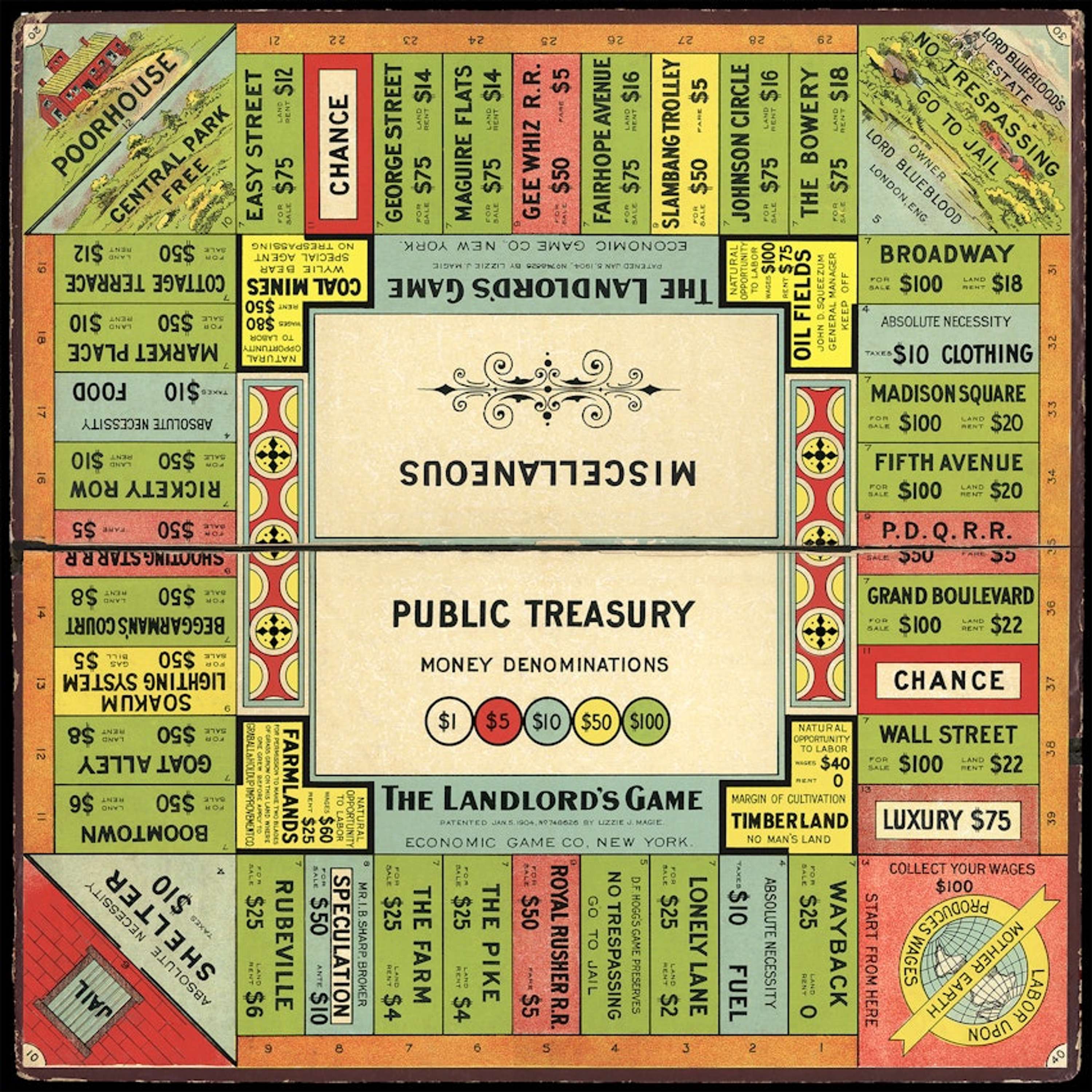
Loading summary
Transcript63 lines
- [00:00]
Amanda
This episode began at one of my favorite local thrift stores, Main Street Closet. It's on Willow street in a town called Willow Street. I don't know why creative naming there, and it's only a few miles from my house and I have such love for this thrift store. It's where I found my barely used Cuisinart food processor that is has upgraded my cooking experience exponentially. It was a great source of artificial fruit for the Clothes Horse jamboree. And as an aficionado of flannel grandma nightgowns, I found some good ones there. So Main Street Closet has a toy section in the back like any other thrift store, but they keep the interesting usually vintage, but not always the like, but you know, special games and toys up front on shelves that sort of rest atop the clothing racks. And one day last summer, Dustin spotted a game called Bargain Hunter, AKA to quote the box, the smart shopping game with lots of fun in store for you. Dustin said, this seems to align with your interests, meaning Clothes Horse, and I laughed. But ultimately I ended up buying it for $2, feeling confident that it would come in handy at some point. So Bargain Hunter was released into the World in 1981 by Milton Bradley, and the objective, per the BO, is to be the first player to complete your shopping list and owe nothing on your charge account. Wow. Sounds thrilling. Maybe add, I don't know, trying to find a doctor that takes your insurance and waiting in line at the post office to that list and you've got a game that really captures the tortuous moments of modern life. But like, you know, in game form, I thought games were supposed to be fun. Well, to be honest, if you spend as much time reading about games as I have for the past few weeks, you would know that board games were originally intended to teach children important life lessons about morality, and they were not supposed to be fun at all. For example, the 1843 banger just took the game world by storm. Mansion of Happiness. Let me just read the rules to you. Whoever possesses piety, honesty, temperance, gratitude, prudence, truth, chastity, sincerity. By the way, all of those are in caps Is entitled to advance six numbers towards the Mansion of Happiness. Whoever gets into a passion must be taken to the water and have a ducking to cool him. Whoever possesses audacity, cruelty, immodesty, or ingratitude, also in all caps must return to his former situation till his turn comes to spin again and not even think of happiness, much less partake of it. Okay, so would you rather play Mansion of Happiness or Bargain Hunter. Yeah, suddenly paying off your credit card via a board game sounding a lot more fun, right? However, the rules of Mansion of Happiness do tap into something important that we'll touch on again and again through this episode. How playing games can impact us socially and psychologically, really, at any age. All right, but back to Bargain Hunter. We all know now that, you know, Bargain Hunter sounds super fun in comparison to Mansion of Happiness. And as a kid, I'll just say I always felt like the most fun games had a lot of plastic pieces and bells and whistles. I mean, raise your hand if you too fantasized about owning Mousetrap, a game that involved building a Rube Goldberg style machine intended to trap mice. You know, let's listen to the commercial for Mousetrap because one, why not? And two, it kind of holds up. Hey, give that back.
- [04:26]
Dustin
Mouse trouble. Then you need Mousetrap. Mousetrap. I guarantee it's the craziest trap you'll ever see. The first to capture everyone else's mouse is the winner. Just turn the crank and snap the plank and boot the marble right down the chute. Now watch it roll and hit the pole. Knock the ball in the Robert up top, who twists the man into the fan. The trap is sitting. Here comes the man.
- [04:45]
Elisha
Ouch.
- [04:46]
Dustin
Trap. I guarantee it's the craziest trap you'll ever see. I knew you were a winner. Mousetrap from Milton Bradley.
- [04:53]
Amanda
I just want to say that I am surprised and low key disappointed to realize that I still know, you know, pretty much all of the words to the theme song for Mousetrap. Well, I guess it's not even a theme song. It's just the song from the commercial. Advertising really does work. Yeah. So the soundtrack to a Mousetrap is just taking up space in my brain that could be intended for, you know, solving climate change or curing cancer or whatever, but instead, I'm just over there singing about this game. Anyway, Mousetrap was just one in a series of board games that ultimately disappointed me as a kid. The machine, it never really worked quite as well as promised. And the game itself was kind of boring. The real fun was playing around with the machine pieces. So as a game, Mousetrap would get a tepid three out of five stars for me. But for ways one could fuck around and play with it outside of the game, I would give it a 5. I just loved a gimmicky game. And those geniuses at Milton Bradley, the company, we're going to talk about Milton Bradley the individual later. In this episode. But those geniuses at Milton Bradley who made Bargain Hunter, for example, they knew that kids wanted a gimmick and a, you know, they wanted like a plastic doodad to play around with. So Bargain Hunter boasts in all caps on the bar, featuring the Bargain Hunter plastic credit card machine. You just got so excited, didn't you? Okay, but if you were like nine, you would have been excited. Okay, if you were nine and it was like the early 80s, you would have been really excited. So the credit card machine in Bargain Hunter is neither a tap nor an insert your card situation. There is no Apple Pay involved. It's not even one of those decrepit old slide the card card situations. Instead, it is the very old school version that maybe only some of you remember. Strangely, I know this one really well because we use this kind of card machine, and I use the term machine loosely here in the aughts at Urban Outfitters when our very antiquated registers rejected a credit card. It's the imprinter style where you would put in the credit card, laying face up in a little slot that kind of held it in place. Then you would place a carbon paper slip on top of it. And if you don't know what carbon paper is, just please Google it. I can't explain it. I don't understand how it works either. So then you put that piece of paper on top of it, right? And then you would slide this piece over the whole thing, which would literally imprint the raised numbers and characters on the card onto the carbon slip. And that was how the credit card transaction happened. And that's the kind of credit card machine Bargain Hunter includes. Anyway, I brought the game home from Main Street Closet and put it on the coffee table in our living room. I wasn't sure when I would get a chance to play it, but I also didn't want to forget about it. Well, a few weeks later, Dani of Picnicware and her family came for a visit. And after plying them with grilled tofu and mocktails, really wining and dining them, I said, hey, does anyone want to play possibly boring board game? Who wouldn't want to? Well, fortunately, Dani and her husband Jason were down, so we set up Bargain Hunter and got to work. The premise of Bargain Hunter is. Oh, you know what? Let's just listen to the commercial first. Okay.
- [08:45]
Dustin
Where are the Davidsons? They're at home looking for bargains. That's Bobby with a stove, radio, and toaster, and Jane has a dresser clock and a dog. It's the exciting game called Bargain Hunter. Makes us really hunt out bargains, handle.
- [09:01]
Amanda
Money, and gives us each a credit card, too, and a credit card machine.
- [09:05]
Dustin
To run it through. First to furnish their apartment and be out of debt wins Bargain Hunter. And that's me, Bargain Hunter, the bargains game from Milton Bradley.
- [09:14]
Amanda
Okay, can we all agree that the commercial does not make the game sound very exciting? And that's because it's not. Basically, you have a list of things you have to buy for your new home, and your goal is to get them as cheaply as possible. Prices change based on cards drawn by other players, like their sales, and then prices go back up. And also, the pricing kind of depends on where the role of the dice lands you. If you're out of paper money, you can charge it using your credit card. But, and this is the most exciting part of the game, the machine may decline your credit charge. Now, that gets the pulse racing. And if your card is declined, you're out of luck. You can wait until your next turn to try again. Now, if you're approved, you can make the purchase, but you have to pay back the charge plus interest. And like a lot of these games, you get a payday every time you pass a certain spot on the board. So you can, in theory, pay it back over time. We did a playing for at least an hour before finally saying, okay, this is way too much like regular life and it's getting kind of boring. I shared some photos of this gameplay on Instagram, which led to a text conversation between my friend Janelle and me the next day. And we ended up kind of throwing up our hands in disgust. Like, how fucked up is it that kids are being taught to shop and use credit cards as a fun family game? And to be clear, the box for Bargain Hunter indicates that this game is appropriate for ages 9 and up. Our kids, including all of us former kids, being indoctrinated into capitalism and consumerism from a young age, with games like this being a part of it. Well, spoiler, but like, not really a spoiler. The answer is yes. We already know that consumerism is taught to us from a young, young age. We've been swimming in a sea of Saturday morning cartoon commercials and Barbie clothes and garbage pail kids cards and Pokemon collections. Sticker books. So much more since we were so small. Eventually Barbie clothes were replaced by fast fashion. Pokemon turned into makeup and skincare products and shelfies sticker books turned into all the other stuff were being sold every day. Throw pillows, I don't know. Pick your poison. We have been raised to buy shit So I already knew this, right? We've talked about it here on the podcast many times, but my conversation with Janelle got me wondering how many games were getting us comfortable with capitalism, teaching us the winner takes all aspect of late stage capitalism and or reinforcing that message that success equals stuff that ultimately fuels consumerism? I decided to find out, and that's what we're going to talk about in this episode, the final episode of 2024. Welcome to closed Source, the podcast that's still maintains that Scrabble is the best board game of all time and I will play you anytime you want. I'm your host Amanda, and this week we're talking all about Capitalism, the Board Game we'll take a journey through the history of board games with a deep dive into the game of life. We'll check out the shopping focused games of the 1980s and 90s, including Mall Madness. We'll touch on some other games that just seem agonizing for adults to play, like Payday. It's way too real. And we'll explore the origin story of Monopoly along with all of the other games that accidentally or otherwise seem to reinforce dumb ideas like the Bootstrap myth. But before we get started on all of that, we have one final small business audio essay for the year. And to be honest, since I'm not planning to do these next year, I'm glad to be finishing up with this amazing submission from Alicia of shift, a Refillery located in Narberth, Pennsylvania. Let's give it a listen.
- [13:57]
Elisha
Hello, I'm Elisha Eagle, co owner of SHIFT Sustainable Goods and Services in Narberth, Pennsylvania. When my business partner Kimberly and I think about community, we see it as a living ecosystem where every small business serves as a vital connection point. A place where neighbors become friends, where ideas transform into actions, and where sustainable choices become achievable realities. For us, community isn't just about geography, it's about shared values and mutual support. Small businesses like Shift act as community catalysts, creating spaces where people can gather, learn and grow together. We're not just a store, we're a hub where sustainable living becomes tangible and accessible. Since opening our doors, we've seen firsthand how a small business can nurture community well being. Our refillery has helped divert over 50,000 single use containers from landfills, but more importantly, it's sparked countless conversations about sustainable living. We host monthly workshops, from DIY crafting sessions to practical services like knife sharpening and candle refills. These gatherings do more than just educate. They build connections and inspire collective action. Small businesses are the backbone of community support. When local schools need raffle items for fundraisers or nonprofits seek silent auction donations, they don't call big box stores, they turn to us. They're neighborhood businesses. Throughout the year, we organize drives for essential items, from coats to school supplies. We recently collected 250 bras for I support the Girls, demonstrating how small actions can create meaningful change. We also provide free collection services for hard to recycle items like corks, plastic caps, and Styrofoam, making it easier for our neighbors to make sustainable choices. So what makes small businesses different? We're deeply invested in our community's success.
- [16:07]
Amanda
Because we live here too.
- [16:10]
Elisha
Unlike large corporations, we personally test every product we sell, ensuring it meets both environmental and performance standards. We prioritize partnerships with local artisans and women owned micro businesses, creating a marketplace that reflects and supports our community's entrepreneurs. Our consignment section isn't about selling secondhand items, it's about giving quality goods a second life while supporting local curators. Looking ahead, we're excited about expanding our impact. We're developing a container swap program and scaling our refill services to help more local businesses reduce their environmental footprint. We're also developing in house production of sustainable products, creating local jobs while maintaining a zero waste commitment. Each step forward creates new opportunities for community growth and environmental progress. If you believe in the power of small business to transform communities, you can find shift at 250 Haverford Avenue in Narberth, Pennsylvania, just one block from the SEPTA Regional Rail station. Visit us online@mainlineshift.com or follow us on social media. Ainlineshift whether you're just starting your sustainability journey or looking to connect with like minded neighbors, we're here to support you one small shift at a time. Together, we're proving that small businesses can be powerful forces for positive change. We hope to welcome you into our community soon.
- [17:43]
Amanda
Thank you Alicia for such a thoughtful and very true audio essay about the impact of small businesses on on the community around them. I know Alicia told you where and how to find shift, but I will also share all of that information in the show notes. Even if you're not as chronically online as I am, you have seen some mention of no buy year or no buy 2025. It's been making the rounds for the last week and I noticed on threads this weekend that it's becoming a source of concern for many small businesses out there. Like are people really going to skip buying anything in 2025? And it would seem that the people who are most committed to a no buy year would also be the people who are most likely to prioritize shopping from small businesses. So it's scary sounding right? And when you hear about how much impact a business like Alicia's has on the community around it, well, you don't want this whole no buy idea to end her work, or the work of all of these other small businesses out there who are actually doing good things. Like a lot of easy slogans, no buy year doesn't really convey the spirit of its intentions. And to be honest, it feels a little diet culture. But for shopping to me, after all, the moment we are forced by life circumstances to end our buy nothing, we're gonna feel like shit and maybe even buy more stuff after, possibly even feel weary of ever trying to do something so big in the future. And I don't want people to lose their motivation to change things. Right? And I'll tell you, I have experienced this myself. Just ask me about the year I had norovirus on Black Friday. Now, also, Black Friday is a day where many people don't buy anything. And I was trying to do the same thing that year, and I was really beating myself up about having to order Pedialyte and other liquids for delivery, but there was none of that in my house. And I felt like I was on the verge of death. And yet, even though I knew that this was kind of extenuating circumstances, I still felt like I was a failure who should never try to take a political stand ever again. So I'm always hesitant about things that feel very black and white, like, don't buy anything at all in 2025, and in many cases, not all. Of course, it may not be realistic. Right? And I think it also alienates people from the true meaning of this kind of statement. Right. Here's what no buy year really means to me. It means buy less stuff in the first place. It means think hard before you make a purchase. It means make the stuff you already have last as long as possible. Vi care and repair. We're talking about laundry and mending, of course. It means shopping secondhand first before buying something new, whether that's a food processor or a pair of jeans. It won't always be possible to find something secondhand in the timeframe you need it, but you will be surprised by how often it is possible and pretty convenient. It means shopping small and ideally local when you can. It means skipping the big brands, skipping the billionaires, opting out of Amazon, all of these things whenever possible. But most importantly, it also means thinking less about buying and shopping and more about learning, connecting, living, resting, sharing, and doing. Because we're going to talk about this a lot in this episode. Shopping and acquisition of stuff is so deeply programmed into us as like a source of pleasure and social acceptance. Acceptance and just something we have to do that actually thinking about shopping less is a really radical decision. It's a really radical and revolutionary thing to do. So that means finding joy in activities that have nothing to do with buying stuff. It means learning new things by reading and exploring, going to museums, or even just talking to the other smart people around you. It means making time for rest and relaxation. It means spending time enjoying nature. And that can mean going hiking or on a picnic. It can mean watching the birds from your window, staring at clouds and making up stories about them, learning more about butterflies, admiring a really nice tree. It means getting involved with your community, whether that's IRL or your virtual community. It means doing things that matter to you. It means getting creative, whether that's crafting, sewing, writing, cooking, collaging, drawing, painting. Making something is way better than buying something, just so much more satisfying. And you know what? It even means telling the people that you love that you. You know you love them and you're glad that they're around. On paper, this list sounds so easy, but like I said, shopping and the acquisition of new stuff has been baked into us since childhood. Teen movies frequently include a shopping montage. Malls were once a social hub for teens, although they still are In Japan, there are entire television networks solely for shopping. The Internet, including social media, is essentially a shopping center. And to be honest, shopping has been portrayed as not only a hobby and a social outlet, but an essential part of a healthy, successful adult life. And for many of us, it started by observing our parents and maybe even playing games that encouraged shopping.
- [24:08]
Dustin
Foreign.
- [24:14]
Janelle
Let'S take a moment to thank some of the incredible small businesses who keep clothes horse going via their generous Patreon support.
- [24:22]
Amanda
Spokes and Stitches is a size inclusive pattern making and sewing studio based in Philadelphia, Pennsylvania. Pattern maker Ruby Gertz teaches workshops for hobbyists and aspiring designers so that anyone can learn the foundational skills of designing and making their own clothes. If you're looking to expand your design skills beyond following store bought patterns, check out Ruby's flagship Sloper Workshop, an in person two day pattern making retreat where you will learn how to drape a set of basic block patterns that capture your unique shape and proportions. You can use these basic block or sloper patterns as a foundation for infinite styles of garments that are custom made to your body's one of a kind contours. No more full bust, flat seat or sway back adjustments. Start with a foundation that fits. Ruby also provides professional services such as pattern digitization, size charts, pattern making and grading services for indie slow fashion brands that want to prioritize inclusive sizing. You can find Ruby on Instagram @spokenSandStitches and get in touch with her for professional services at www.spokesandstitches.com Selena Sanders a.
- [25:32]
Janelle
Social impact brand that specializes in upcycle clothing using only reclaimed, vintage or thrifted material from tea towels, linens, blankets and quilts. Sustainably crafted in Los Angeles, each piece is designed to last in one's closet for generations to come. Maximum Style Minimal carbon footprint Shift clothing out of beautiful Astoria, Oregon with a focus on natural fibers, simple hard working designs and putting fat people first. Discover more@shiftwheeler.com late to the Party Creating one of a kind statement clothing from vintage, salvaged and thrifted textiles. They hope to tap into the dreamy memories we all hold. Floral curtains, a childhood dress, the wallpaper in your best friend's rec room. All while creating modern, sustainable garments that you'll love wearing and have for years to come. Late to the Party is passionate about celebrating and preserving textiles, the memories they hold and the stories they have yet to tell. Check them out on Instagram. Latetothepartypeople Vino Vintage Based just outside of la, we love the hunt of shopping secondhand because you never know what you might find. Catch us at flea markets around Southern California by following us on Instagram Vino Vintage so you don't miss our next event. Dylan Page is an online clothing and lifestyle brand based out of St. Louis, Missouri. Our products are chosen with intention for the conscious community. Everything we carry is animal friendly, ethically made, sustainably sourced and cruelty free. Dylan Page is for those who never stop questioning where something comes from. We know that personal experience dictates what's sustainable for you and we are here to help guide and support you to make choices that fit your needs. Check us out@dylanpage.com and find us on Instagram Ylanpage Life and Style Salt Hats Purveyors of truly sustainable hats, hand blocked, sewn and embellished in Detroit, Michigan. Find us on Instagram. Althats Gentle Vibes Vintage we are purveyors of polyester and psychedelic relics. We encourage experimentation and play not only in your wardrobe but in your home too.
- [27:51]
Amanda
We have thousands of killer vintage pieces.
- [27:54]
Janelle
Ready for their next adventure. See them all on Instagram entlevibibesvintage. Thumbprint is Detroit's only fair trade marketplace. Located in the historic Eastern Market. Our small business specializes in products handmade by empowered women in South Africa making a living wage creating things they love like hand painted candles and ceramics. We also carry a curated assortment of sustainable and natural locally made goods. Thumbprint is a great gift destination for both the special people in your life and for yourself. Browse our online store@thumbprintdetroit.com and find us on InstagramPrintDetroit. Vagavan Vintage DTLV is a vintage clothing, accessories and decor reselling business based in downtown Las Vegas, Nevada. Not only do we sell in Las Vegas, but we're also located throughout resale markets in San Francisco as well as at a curated boutique called Lux and Ivy located in Indianapolis, Indiana. Jessica, the founder and owner of Vagabond Vintage DTLV recently opened the first IRL location located in the Arts District of downtown Las Vegas on August 5th. The shop has a strong emphasis on 60s and 70s garments, single stitch tees and dreamy loungewear. Follow them on Instagram agabonvintagedtlv and keep an eye out for their website coming fall of 2020.
- [29:28]
Amanda
I have always kind of loved the mall. When I was a kid we would go there as a family once a week, usually on Fridays. Sometimes my grandma would join and you know, we would just like walk around. I mean, I guess people bought stuff but my family didn't really have money so I don't know if anything was being bought. I was, because apparently kids could just do whatever. In the 80s and the 90s I was allowed to go to certain stores by myself, specifically the bookstore and the toy store. And I'm talking like I'm eight and I'm just at these stores by myself. I was always treated like a weird little adult. Anyway, I actually was not freaked out by going to these stores by myself because it was actually a relief because watching my mom and grandma shop for clothing was as thrilling as watching paint dry. And if my grandma was along she might slip me $5 to buy a couple of new books, which was always really exciting. The evening might start with dinner at Sbarro, which to be honest is mid at best but felt fancied to me as a kid. They have those garlic knots. I bet they hold up. There was also this restaurant inside McCrory's which is like a five and dime and among other foods on the menu that I Absolutely cannot remember. They had tacos that felt very delicious to me. They were basically like a hard taco shell, some ground beef, a slice of what was probably American cheese, and then you got a little plastic packet of taco sauce. And I felt so sophisticated and worldly eating my tacos at the McCrory cafeteria. What a time. Kind of feel a little hungry for those tacos right now. The thing I loved most about the mall is that everybody seemed to have fun and it was kind of a happy place for me because home was usually pretty miserable and full of volatility. But at the mall, everyone got along. I loved the mall so much that my brother and I would occasionally build a mall for my Barbie using boxes and some leftover dowels and some wall trim that we'd found in the garage. And my brother usually played two different roles with my single Ken doll. One was the security guard who would bus shoplifters, and the other was the truck driver delivering the merchandise to the mall. Both very important jobs. Obviously the shoplifting incidents usually involved a high speed car chase with my knockoff pink Barbie convertible and like one of of my brother's, like trucks or vans, one of his Tonka things. It was pretty fun and it was one of the few playing scenarios that we both enjoyed together. So I love the mall. I love playing the mall at home. One day I would work at the mall. What a dream come true. So imagine my excitement when I saw a new game all about malls being advertised while I was watching cartoons one morning. Mall Madness. If my brain were full of all these filing cabinets organizing all of my thoughts and opinions about different events and random memories. While the Mousetrap game, for example, would be filed under things that were disappointing but not in a heartbreakingly traumatic way. Yes, there would be a folder for things that were disappointing in. In a heartbreaking, dramatic way. Not Mousetrap though, just your casual level of disappointment. Mall Madness would be double filed under that things that were disappointing but not in a heartbreakingly traumatic way. For sure. There's lots of stuff filed in there, I guess, including that hair tool. I want to say it was conair that had all of the different attachments for crimping one's hair in different shapes, including, what the fuck, a triangle. That thing was really disappointing. It made all my hair look really bad. Other things that would be in that folder would be the hello Kitty restaurant in Mexico City. Very disappointing. Many different dates I've had over the years. The other place that Mob madness would be filed would be in the most overt interaction with consumerism and capitalism that I experienced as a child. And. And to be honest, that might not even be accurate. There may have been more overt examples of consumerism and capitalism that were sort of propagandized into my brain as a child, but this one really stands out. So mob madness was introduced by Milton Bradley. Once again, not the individual, just the company in 1988. I didn't play it for a few years because I was, for the most part, kind of too young to be interested in it. It just like, wasn't where my brain was. But it continued to be heavily advertised to tweens for years afterwards. So I kind of always wanted it. But I remember that it was a little on the pricey side. And according to my mom, who may have been right, it was also stupid. In the 80s and 90s, Milton Bradley decided to develop more games for a mostly untapped market. Tweens and specifically tween girls. And to be fair, games for tween girls have proven to be pretty lucrative with titles like Girl Talk. I remember that being a very boring version of Truth or Dare. We played it at one slumber party and I swear we never played it again. Girl Talk, Dateline, which was for tween girls but about dating. And another heteronormative dating game from Milton Bradley called Heartthrob. There was also the Babysitter's Club game, which I was very amped on. Also a little dry and disappointing. Mall Madness and Dreamphone, another tween girl game. There were so many. These two leveled up by adding electronic elements to the gameplay. Electronic elements that would seem incredibly antiquated to us now, but back then were pretty state of the art. Dream Phone would come after Mall Madness, and it purported to combine the top interest of every 90s girl. Like this was in the press release, crushing on boys and talking on the phone, which. Okay, wow. Thank you, guys. The goal of the game, meaning how you won, was to figure out which of the 24 teenage bachelors in the game liked you. It was sort of like Clue, but, you know, kind of dumb. It did, however, have a phone in the center of the game board that you dialed to get recorded clues. So my friend Tanya, she had this game, she got it for Christmas. We were very excited. It's like, ah, a phone, boys. This seems great. Wow. I don't even think we finished a whole game of it. We were like, this is so boring. Can we just, like, fuck around with the phone instead and make it say weird things and record it on our Tape deck, which is exactly what we did. Okay, so as I mentioned, Mob Madness arrived on the scene a few years earlier in 1988. And the board was a two story shopping mall that players navigated. And the goal was to spend all of your money to buy six items from your shopping list and then return to the parking lot. Whoever did that first. Wonderful. Yeah, I mean, this sounds so tedious as an adult, like, oh cool, a game about errands. I can't wait. But once again, this game was like state of the art futuristic with electronics. The center of the game board was a computer that allowed players to make credit card purchases and hear mall announcements about sales. You know, let's just listen to that ad too, because it is quite a snapshot of a time that I was alive. Got your pedicard. It's Mall Madness. Sale at the shoe store. The new shop til you drop game that really talks. Sale at the fashion boutique. It's all the fun of a shopping spree. With Mall Madness, you get it all. A bank account and your own credit card.
- [38:06]
Dustin
Theron at the Sunglass boutique.
- [38:08]
Amanda
Mall Madness really talks. To win, buy everything on your list and be first out of them all. Mall Madness, the electronic shopping game that really talks. Milton Bradley. It's the mall with it all. Okay, so this game was intended for ages nine and up. So yeah, let's just get some nine year olds playing with a credit card. What seems weird about that seems great. And on one hand it's fun because as a kid you get to play at being adult, right? And that is fun. Adults have credit cards. That seems really cool and exciting. Of course then when you're an adult, it's not anymore. But it also teaches us as children, as former children, to be comfortable with using a credit card. It teaches us former children that the winner will be the person who buys the most stuff. You say it out loud. Sounds ridiculous. But then again, isn't that kind of the world we're living in? Later in this episode, we're going to talk about the granddaddy of capitalism games, Monopoly. And as part of my research for this episode, I watched an excellent episode of PBS's American Experience called Monopoly's Secret History. And in it, various game scholars and designers discussed the intellectual and social impact of playing games. Lindsey Grace, a gaming scholar, said, the whole idea in playing a game is that you get to experiment with things. You might not get to experiment without cost. And for kids playing Mob Madness, they get to try being the person who is trying to buy the most stuff without Real world consequences. And perhaps if you play Mob Madness enough, you fear the real world consequences of debt and over consumption a lot less. It's sort of like a dress rehearsal for consumerism and you just, you get cool with it, you know? Now I finally got to play Mob Madness in junior high when my friend Jessica's parents bought it for her for Christmas. And to be clear, except for the Dream Phone game, which my friend Tanya had, Jessica had all the other cool games that existed at that time that were for tweens. Her family was big into games. They would buy all of them so that we could play them when we came over. A whole closet of it. Definitely this is where I played Girl Talk. Definitely where I played Girl Talk, Dateline, definitely where I played the Babysitters Club game and so many more. So it's not a surprise to me that Jessica's parents got her mom Madness. But I gotta tell you, it was very exciting for our friend group. So we as a group, it was Jessica, it was our other friend Laura, and it was me. We eagerly unpacked the box for Malbanis a few days after Christmas. Like we could not wait. We had to play it before school started again. And I'll tell you, yes, using the loudspeaker and the credit cards was super exciting. But the game itself was kind of dull and we never played it again. It wasn't that fun. However, I have to admit that as an adult, looking back at the game, some of the store names are kind of hilarious to me. Even now I am coffin Drugstore novel Idea Books, Frump's Fashion Boutique, Ding A Ling phones. They were definitely probably selling that like transparent light up Swatch phone MT Wallets department store. Don't you feel like these are all written by someone's dad? I have to confess that this summer, the year 2024, I spent $75 on the original Madness game at Freedom thrift on Route 30 here in Lancaster County. I have no regrets. All the pieces are in there. It was like barely played ever. I've actually been kind of like gradually sort of accumulating these capitalism games in hopes of having a game night either at the next Clothes Horse jamboree or somewhere else. In fact, who wants to have a capitalism game night with me? If you have a place we can do it, let's make it happen. Get a bunch of the Clothes Horse community people there to play. Let's play some capitalism games. Okay. So unsurprisingly, the format of Madness and, you know, winning by spending all of your money on shopping, it was a little bit controversial. Although, to be real, okay, sure, it was controversial in the late 80s. I feel like no one would bat an eyelash at it now. I mean, like, shopping is so gamified. That's how TEMU is so successful. Shein does it to a certain extent. And even like how when you visit a brand's website for the first time, you might get that pop up with the spinning wheel that's gonna give you a prize, like shopping being a game. No one's horrified by it anymore, but back then, people were, which is also still kind of surprising to me because it was the decade of malls and shopping. But, yeah, people were appalled. Adweek reporter Farrah Warner said Mall Madness quote, makes women out to be bargain crazy. Credit happy fashion plates. Other critics felt that it cultivated impulse shopping among young girls. And many observers noted that no boys were shown in any of the commercials, further reinforcing shopping and over consumption as a female behavior. Meanwhile, Milton Bradley PR manager Mark Morris countered that the game taught players, quote, how to judiciously spend their money. Okay, Mark, but, you know, like, here's the thing. I don't think that Milton Bradley sat down. And I don't mean the person. I mean, you know, the executive team at Milton Bradley, I don't think they were like, you know, what we should do is we should design a game about shopping so that girls will get indoctrinated into shopping. I think that they were tapping into something that was in the ether that they knew people would want to buy. But maybe they weren't thinking through the ramifications of a game like that. Maybe they really did think it would teach girls how to budget for shopping. I have. I don't think so. Actually, as I say that out loud, no one thought that hard. They just thought they were making a game that people would want to buy. Well, well, Mall Madness was a hit, and it inspired other game companies to create shopping themed board games like let's Go Shopping and Meet Me at the Mall. The goal of the former, let's Go Shopping, was to create an outfit, while the latter, Meet Me at the Mall, tasked girls with buying as much stuff as possible before the mall closed. And yes, these also seemed as insidious and gendered as Mob Madness and Dreamphone. While Mob Madness seems like such an 80s or 90s invention mention, it's actually been reborn a few times in this century with a Miley cyrus version in 2008, followed by a Littlest Pet Shop version. And I believe it was re re released with like slightly updated art around 2020. Or at least there was talk of it. So a couple months ago when Dustin was on tour, I ventured to the vintage revival market. It's a pop up that happens periodically here in Lancaster. I went all by myself and I left with a copy of Meet Me at the Mall and yes, I was very excited about it, made by Tycho. The object of Meet Me at the Mall, the mall shopping game is to quote Shop till you drop, exclamation point, be the one with the most stuff and win. Another exclamation point. And it's intended for ages 8 and up and yeah, basically late stage capitalism in a nutshell. If you add and be sure to hate your job too. Right? Shop till you drop, be the one with the most stuff and win. Be sure to hate your job too. Yeah, that sounds about right. If I were going to file away my experience with Meet Me at the Mall in my mental filing cabinets, it would be tucked away in a folder called check the box before you purchase. Because while all of the pieces are in there and I check, the instructions are not, which I did not check for. And this game was so unsuccessful, very little evidence of it remains on the Internet. There's no commercials. God knows I tried to find one for you. There are no PDFs of instructions and only one person is talking about it on YouTube so I can't even play it right now. However, I did find a vintage game dealer called Dawn's Game Closet who was selling the instructions for $4. I have already paid via PayPal just now as I was writing this episode and I will keep you abreast of any future developments. It supposedly takes a day or two to get your instructions via email, but I am very excited. Dustin and I tried so hard to figure it out last night. We just could not. This is obviously a very important purchase, the instructions at least, because we need to play this game at our Capitalism game night. But also, I really want to play this game and so does Dustin. Because unlike the fake stores found in Mall Madness, Meet Me in the Mall has legit stores of the 1980s, like all the licensing agreements involved in producing this game that no one liked. We're talking Express B. Dalton, the Limited Suncoast Video Footlocker Sam Goody, which by the way, I was listening to a podcast today and that person didn't know what Sam Goody was and I got really sad. Anyway, Casual Corner Wild Pear Mrs. Fields Cookies. What I wouldn't do for a gluten free cookie cake right now. It's the icing on them that's so good. I'm an icing person more than a cake person. Anyway, this game, it just needs a tcby to make it complete. But perhaps it was released before the yogurt craze swept America. There are also these little cardboard shopping bags. And at the end, when the mall closes, everyone dumps out their shopping bags and whoever has the most stuff wins. That's all I can figure out from the game. So hopefully those instructions are going to come through very, very soon anyway. Ew. The goal is to just buy as much stuff as possible. But once again, if we go back to this idea of games, letting us practice behaviors and concepts, get more comfortable with them, Will a game like Meet me at the Mall with all of its, like, recognizable brands. Okay, maybe not recognizable to, like, children right now, but at the time this game came out, they knew all of these brands, right? They'd been in those stores. They're probably allowed to go to some of those stores by themselves, just like me. When you play a game like that, it makes you accept the paradigm of the person who buys the most stuff is the winner and it kind of becomes a part of our beliefs and behavior outside of the game. The familiarity of the stores that we recognize actually helps make it feel more real. That message of success equals the most amount of stuff. Don't believe me yet? Well, just wait until we get to Monopoly. By now. You know, I love a game with lots of parts and gimmicks. And the Game of Life had it all. It had fake money. Yes, you gotta have fake money, right? It had little cars with little pegs that represented people. It had three dimensional hills and bridges. It had a rainbow colored spinner. The Game of Life, for ages 9 to adult bills itself as a game of skill and chance. Players start off solo in their little plastic car, spinning the wheel and barreling down the highway of life. Perhaps that song life is a highway and you know you want to ride it all night long. Perhaps. I'm not saying that this is true, but it could be. Perhaps it was inspired by the Game of Life. Let's just start that rumor along the way. Players go to college or not. They get a career or not. They go into debt or not. They get married or not. They have kids or not. And maybe they end up in a millionaire in the retire in style spot, which also has a little plastic mansion. Or they end up bankrupt. That spot says retire to the country to become a philosopher. Either way, there's a cute house and some Trees at both endings. Let's listen to the commercial.
- [52:11]
Dustin
Winner of the Game of Life.
- [52:14]
Amanda
I'm on my way. Make a choice, make my pay.
- [52:17]
Dustin
You make a wall.
- [52:18]
Amanda
I wrecked my car.
- [52:19]
Dustin
Go to college, be a movie star. You can be a winner at the Game of Life.
- [52:26]
Amanda
Hey, look, I've got a wife, kids and taxes they can do.
- [52:30]
Dustin
Will you be rich? You can be your winner at the Game of Light. I win the Game of Life from Milton Bradley.
- [52:39]
Amanda
In my mental filing cabinet. The Game of Life is in a folder called Exciting as a kid, super boring, and to be honest, unrealistic as an adult. However, I will tell you that yes, I played this game a few times through with my brother, with babysitters, that kind of thing. But my brother and I love to just get this game out and make up all kinds of bizarro games using it. We love the money, the spinning wheel, the cars, the little people, pegs, the hills. We play all kinds of random games that we made up with the board. But let's say you're playing the game as it was intended. Well, there's boring adult shit like taxes and insurance along with loans and interest. Wow, fun. How do you become a winner at.
- [53:26]
Janelle
The Game of Life? Which, wow, that sounds like such a.
- [53:30]
Amanda
Deeply philosophical question that we could unpack for hours. You know, one who wins at life. Why would life be a win or lose situation? But anyway, strictly speaking, without metaphor only about this game, you win the game of life by having a lot of.
- [53:50]
Janelle
Money at the end.
- [53:52]
Amanda
And I think that's really important. We're going to come back to that. But if you are playing a game where winning at life, you're following this supposed lifelike trajectory as a player, that should reflect so called normal, successful life here in the United States. If you're playing the game of life and the way you win is by.
- [54:17]
Janelle
Accumulating a lot of money, you can't.
- [54:22]
Amanda
Tell me that doesn't get into your head and make you think, okay, that translates to real life. Like, this isn't even a huge logical jump, right? Like this is like we're using the same vocabulary here and you gotta wonder how that impacts children playing that game. But there's more than just that to think about to unpack here. Life perpetuates a narrative that we all start out in the same place with the same resources, a car and $10,000 in cash. And it's a combination of fate and alleged skill. I don't know where the skull comes into play in life, but maybe I need to replay it that determines our success, right? That if we just fate, luck, skill, they all come together and we all, we all have equal chances to have high quality lives as adults. We know that it is much more complex than that. I'll tell you, I think I was in high school before I realized that a lot of people had more advantages than me. Whether that was money, connections, supportive families, you know, the list. And at the same time, I also saw for the first time that others had less advantages than me. And while I hated to think that far ahead, as a teenager, I could see that everyone didn't have the same access to success. And to be honest, I think games like Life allowed me to believe as a kid that the playing field, or in this case the game board really was level. And we just know that that is not the case. The interesting thing or frustrating thing you decide about Life is that regardless of where you end in the game, both outcomes are actually not bad. Personally, I prefer the idea of being bankrupt and retiring to the country as a philosopher, and that means you lost the game. But we know IRL consequences are much less cozy. And actually the original version of Life presented a somewhat more accurate series of outcomes. Kind of Milton Bradley. It's the name is synonymous with board games for many of us. But for the man, he was born in 1936. He actually began his adult life as a printer. He owned one of the only lithography machines in Massachusetts. And this mini monopoly on printing made him very successful for a while. But then disaster struck. In 1860, he had invested a lot of money in printing thousands of portraits of presidential candidate Abraham Lincoln. Now we know that Lincoln eventually, you know, became the president. So you might be asking yourself, how was printing all of those portraits a disaster? Well, in the midst of his campaign, Lincoln grew his iconic beard. And the portraits unfortunately showed a clean shaven Lincoln. Nobody wanted the portraits of the beardless Lincoln. And Bradley was nearly bankrupted. One man's facial hair could destroy your life. Now I want to see how that plays out on a board game. Well, this loss inspired Milton Bradley to create a board game based on his own ups and downs. And he called it the Checkered Game of Life. And this game was an immediate hit, selling 45,000 copies by 1861. In 1866, he patented the game, ensuring a life of fortune for himself. The Checkered Game of Life is very different from the Game of Life I played as a kid. There's no plastic cars, there's no three dimensional aspects, there's no fake money. It is a Checkerboard, basically, hence the name, the Checkered Game of Life. Furthermore, Bradley was a deeply religious and conservative man. His passions were religion and education. So he created a game that would help people learn to live a more virtuous life, or his vision for a more virtuous life. Dr. Jennifer Snyder wrote her dissertation about Milton Bradley, that person, not the company, and how his games were created from a desire to educate about morality. She said, quote, everything Milton Bradley published had a really strong moral tone to it. When he was still in charge of the company, he viewed everything as an educational opportunity. It was an opportunity for people to be educated in the way he thought they should be. And the Game of Life is very much about taking the moral high road and walking the appropriate path. Like I said, the original version of Life did not include cash. Money was barely discussed. Rather, players accumulated points for making good moral decisions, and they lost points for making poor moral decisions. The goal was a happy old age. That was the final square, and the goal was to get there. And along the way, players could land on squares like honor, ambition, industry, bravery and honesty, while also risking landing on prison, idleness, intemperance, gambling, disgrace, and even suicide risk. Basically, the immoral squares led you on a path away from the happy old age square, while the moral squares led you on a path towards it. So, by the way, there were not dice in this game because dice were associated with gambling. Instead, players used a spinner, just like you do now. You chose which direction you were going to go and counted out the squares on the board based on the number of you had spun. In this version of the Game of Life, you win at the Game of Life by being a moral person, moral being, of course, relative to what Milton.
- [61:00]
Janelle
Bradley saw as a high moral fortitude, if you will. Money is not really a part of the conversation.
- [61:11]
Amanda
Truly winning at the Game of Life just means a happy old age. After Bradley's death in 1911, the game of Life began its transformation to its current incarnation, which prioritizes financial success rather than happy old age. The goal is wealthy retirement. Essentially, it's the more modern, materialistic American dream. And it tells us something. We've all grown up to one extent or another believing is the truth that money equals happiness, not a life well lived, Right? Like not making decisions that align with your own personal values and giving back to your community and all these things. No, it's not about the people in your life or the things you do or the things you believe. It is the accumulation of wealth and the Game of Life reinforces that does the current version still have the educational component that Bradley intended? It's hard to say. Once again, I just think it gets us comfortable with the idea that wealth is the goal. Another game that focuses on wealth is Payday, introduced by Parker brothers in the 1970s. The board, which, by the way, the 70s and 80s versions have amazing illustrations. It's in the format of a month with 31 days, with each square representing a different day of the month. The object, like life, is to have the most money at the end of the game. After dealing with expenses like home repairs, groceries, and even a new dress for the high school dance, players can take out predatory Payday loans seriously and get into, like, a horrible cycle of debt. They can have a savings account. They can play the lottery. They can purchase insurance. Once again, adult life is so fun. Let's listen to the commercial for this thrilling game, payday.
- [63:11]
Dustin
I get 325.
- [63:13]
Amanda
Not enough. You owe 600 on your bill.
- [63:15]
Dustin
Funny things happen when you play Payday, the funny money game from Parker Brothers.
- [63:19]
Amanda
I gotta buy a dress for the prom.
- [63:22]
Dustin
You play on a calendar, and every day brings a surprise. Some days it's bad news. Poor long lost aunt. Some days good news. She left me 500 bucks. Make deals, pay bills, win the lottery on your way to Payday. Payday. That's the name of the game.
- [63:39]
Amanda
Have you noticed a recurring theme here, minus small madness? Most of these games were sold as fun for the whole family. And while you can't see the commercials, they often feature a nuclear family of father, mother, one son and one daughter. Of course, they're all white, too. One of the many ideas being sold to parents here is the opportunity for family togetherness. But in my experience, most games are played with other kids or maybe the cool babysitter. And after a while, as I said, you're just not even playing the game using the right rules anymore. You're just playing with the pieces. I played Payday of Watt with my brother and my one cousin because it was the only remotely fun toy that she would let us play with when we visited her house. We played Payday all the time. Okay, so we know that, like, maybe all these board games weren't and still aren't being played with the whole family. But even today, games like Payday are being marketed as a tool for family bonding. The Amazon listing for Payday asks, how about an entertaining family night in without electronics? Got your attention? The game of Payday is the perfect star of the show. But the Amazon copy also guarantees education for kids via a few rounds of Payday saying Priceless Lessons it is never too early to start teaching your children about making money, paying bills, making investments, selling property, or about going into debt. It can all start here and Life 101. By playing, kids will learn how to pay bills, how to make money, how to afford investments, and entertainment and more. It's the perfect starter course for real life. Wow. Just told you earlier that Payday is probably the board game I kind of played the most following the actual rules, and I do not feel that in any way it prepared me for, you know, fiscal responsibility. I'll tell you though, I started looking at some of the reviews on the Amazon listing for Payday and there were people in there who were just going on and on about how it was teaching their kids and their students really important life lessons. I I don't know if you have a different memory of Payday where you're like, yeah, that's really legit. How I learned how to budget. Drop me a line, I want to hear all about it. Payday once again posits that we all start from the same place with $325 in cash. Ouch. And a guaranteed job. It's just fate and poor decision making that makes you lose at Payday and well, we know that's not true.
- [66:26]
Janelle
If you're enjoying this episode, then this is a great time to remind you that my work here at Close Source is made possible by the support of listeners like you. Just like NPR and these great small businesses. Please go give them your support. Blank cas or Blanket Coats by cas, is focused on restoring, renewing and reviving the history held within vintage and heirloom textiles. By embodying the love, craft and energy that is original to each vintage textile. As I transfer it into a new garment, I hope we can reteach ourselves to care for and mend what we have and make it last. Blank CAS lives on Instagram @blankcas and a website will be launched soon@blankcas.com located in Whistler, Canada. Velvet Underground is a velvet jungle full of vintage and secondhand clothing plants, a.
- [67:26]
Amanda
Vegan cafe, and lots of rad products.
- [67:29]
Janelle
From other small sustainable businesses.
- [67:32]
Amanda
Our mission is to create a brand.
- [67:34]
Janelle
And community dedicated to promoting self expression as well as educating and inspiring a more sustainable and conscious lifestyle both for the people and the planet. Find us on Instagram @shopvelvetunderground or online at www.shopvelvetunderground.com. st. Evens is a New York City based vintage shop that is dedicated to bringing you those special pieces you'll reach for again and again. More than just a store, St. Evens is dedicated to sharing the stories and history behind the garment. 10% of all sales are donated to a different charitable organization each month. New Vintage is released every Thursday@waresaintevens.com with previews of new pieces and more brought to you on Instagram. Wherest Evens that's where St. Evans Country Feedback is a mom and pop record shop in Tarboro, North Carolina. They specialize in used rock, country and soul and offer affordable vintage clothing and housewares. Do you have used records you want to sell? Country Feedback wants to buy them? Find us on Instagram countryfeedbackvintageinvinyl or head down east and visit our brick and mortar. All are welcome at this inclusive and family friendly record shop in the country. Republica Unicornia Yarns Handmade yarn and notions for the color obsessed.
- [69:03]
Amanda
Made with love and some swearing in.
- [69:05]
Janelle
Fabulous Atlanta, Georgia by head yarn wench Kathleen. Get ready for rainbows with a side of giving a damn. Republica Unicornia is all about making your own magic using small batch, responsibly sourced hand dyed yarns and thoughtfully made notions. Slow Fashion all the way down and discover the joy of creating your very own beautiful hand knit, crocheted or woven pieces. Find us on Instagram @republicaunicorniarns and at www.republicaunicornia.com. picnic Wear a slow fashion brand ethically made by hand from vintage and dead stock materials, most notably vintage towels. Founder Dani has worked in the industry as a fashion Designer for over 10 years, but started Picnic Wear in response to her dissatisfaction with the industry's shortcomings. Picnicware recently moved to rural North Carolina where all their sewing and accessories are now designed and cut, but the majority of their sewing is done by skilled garment workers in New York City. Their customers take comfort in knowing that all their sewists are paid well above New York City minimum wage. Picnicware offers minimal waste and maximum authenticity. Future vintage over future garbage. Cute Little Ruin is an online shop dedicated to providing quality vintage and secondhand clothing, vinyl and home items in a wide range of styles and price points.
- [70:34]
Amanda
If it's ethical and legal, we try.
- [70:36]
Janelle
To find a home for it. Vintage style with progressive values. Find us on Instagram Utelittle Ruin Is.
- [70:44]
Amanda
There a little bit of Italy in your soul?
- [70:47]
Janelle
Are you an enthusiast of pre loved decor and accessories? Bring vintage Italian style and history into your space with the pewter thimble.
- [70:57]
Amanda
We source useful and beautiful things and.
- [71:00]
Janelle
Mend them where needed we also find gorgeous illustrations and make them print worthy tarot cards, tea towels and hand picked treasures available to you from the comfort of your own home, responsibly sourced from across Rome, lovingly renewed by fairly paid artists and artisans with something for every budget. Discover more at theputerthimble.com Deco Denim is a startup based out of San Francisco and it sells clothing and accessories that are sustainable, gender fluid, size inclusive and high quality made to last for years to come. Deco Denim is trying to change the.
- [71:38]
Amanda
Way you think about buying clothes.
- [71:41]
Janelle
Founder Sarah Mattis wants to empower people to ask important questions like where was this made? Was this garment made ethically? Is this fabric made of plastic? Can this garment be upcycled and if not, can it be recycled? Sign up@decodenim.com to receive $20 off your first purchase. They promise not to spam you and send out no more than three emails a month with two of them surrounding education or a personal note from the founder. Again, that's decodenim.com.
- [72:18]
Amanda
I'm also just going to play you a commercial for another game that follows very similar rules. Just like, you know, buying a lot of stuff, you know, it's actually going to be a good transition into the final game we're going to talk about. And this game is called called Easy Money. Let's give it a listen.
- [72:38]
Dustin
Easy Money is a fun family game where you can win or lose millions, gamble at Las Vegas, invest on Wall street, but don't be greedy because your luck could change at any time. Easy Money, the clean family game where you get filthy rich.
- [72:56]
Amanda
Okay, that's Easy Money. Fun for the whole family. Which makes me think it's time for us to get down to brass tacks here. It's time for us to talk about the granddaddy of capitalist games, a game that I have never once successfully finished despite playing it so many times in my life. That's Monopoly. Like a lot of these games, the object of Monopoly is to be the person at the end with the most money money, perhaps even all of the money after everyone else has gone bankrupt by giving you all of their money for rent. Ah, Landlord the game. Right. Okay, well actually that's not too far off, so put a pin in that. I'm going to start this by saying that there's an excellent episode of PBS's American Experience about this and it's called called I mentioned it earlier in the episode Monopoly's Secret History. It is a great 52 minutes of television and I will link it in the show Notes, you should definitely give it a watch if you can. And I don't want to spend 52 minutes talking about Monopoly because American experience did a better job anyway. So I'm going to give you the Cliff Notes of it all. The story begins, strangely enough, in the 1970s with economics professor Ralph Anspach. He invented a game originally called Bust the Trust that was intended to be a response to Monopoly the game. Because ultimately, if you take a step back from the cute little hotels and the game pieces of Monopoly, I always like to be the little dog, and if I couldn't have that, I would be the car. But I never ever wanted to be the iron. And I really didn't want to be the top hat either. And I'm sure you had very strong feelings too. Well, when you take all of that, all the cuteness, all the bells and whistles, all the plastic doodads that make me love a game, take the fake money out of the game, all that stuff, and you just are like, what is this game really about? Monopoly is really about buying up all the property and utilities, about widening wealth inequality, about individualism over community. The winner is the person who has transferred everyone else's wealth to himself. And that happens by creating a monopoly of land ownership. Anspach renamed Bust the Trust to antimonopoly. And in the game, all of the utilities and real estate are formerly individual businesses that now exist under single ownership. You sort of begin anti Monopoly at the end of regular Monopoly game players. I can't even believe this. This is amazing. Game players are the federal caseworkers bringing federal indictments against these businesses in order to break them up into their original components. And believe it or not, the game was actually so successful that a year later, General Mills, the food company who at this point in the 70s also owned Parker Brothers Wild. They sued an Spock over his use of Monopoly in the name of the game, claiming trademark infringement. And to be fair, I don't want to victim blame here. He had it called Bust the Trust. He changed to Anti Monopoly. He kind of knew that this was coming, I think. Well, well, American experience goes into the legal. Into the whole legal case, and you should watch it to learn the rest of the story. But it turns out, and here's the interesting part for me, that the key to Anspach's case was proving who really invented Monopoly, because it wasn't Parker Brothers. Now, for years, the story of Monopoly was that a man named Charles Dallow from Philadelphia, Pennsylvania, had invented Monopoly after losing his job during the Depression and so he made this game. He sent it out to all of the major game companies, including Parker Brothers. Everyone said no, they didn't think anyone would want to buy it. So he just starts making it himself, printing it himself and selling it to different stores, including John Wanamaker's in Philadelphia. And it's a hit. So two years later, after seeing all these strong sales sales, Parker Brothers buys the game from Darrow. And that should be the end of the story, right? Except that it's not the truth. Well, the truth is, yes, that Parker Brothers bought it from Darrow. And it is true that Darrow was out there selling it himself. But that's where the truth ends. The true story of monopoly begins in 1903 when political badass, progressive, inventor, feminist, writer, poet, actress, basically all around Amazing person, Lizzie McGee creates a game called Wait for It. Wait for it. Are you ready? The Landlord's Game. Yes. I really did download an air horn sound effect for this moment. McGee was not only a feminist, she was also a loud and proud activist for Georgism. Georgism, also known as the single tax movement, was popularized by Henry George in the late 1800s. Basically, he and other Georgists believed that land ownership was exacerbating economic inequality. If you owned land, you made money off of everyone else who didn't own land via rent or selling that land to them. And it didn't seem right since land wasn't something made by people, it existed before people. Yet if you somehow had land, you had an instant economic advantage, often for life, over those who had never owned land. Notice how this is kind of opposite of all of the level playing field lessons of the board games we've discussed already. Furthermore, Georgists were reacting to the era of the robber barons like Rockefeller and Carnegie, who were creating monopolies while stomping on workers and the environment. Yes, even then, people were aware of pollution and its impact on quality of life. A tiny group of people seemed to have it all, while the vast majority of people had almost nothing. Georgists believed that rather than taxing income or having a sales tax, the government should collect taxes solely based on land ownership. Assessing the tax owned on a piece of land based on its size, location and usefulness. Any money left over after using that tax money to fund the government would be distributed to the people. And this would redistribute wealth and allow all people to enjoy the benefits of the land, which once again, no single human had made. Land, the argument was, should be a communal property, since it was there before human humans even existed. The Landlord's Game, designed by Lizzie McGee, known Georgist, was intended to show players why these land monopolies were bad for society, while demonstrating the single tax as a good solution. The Landlord's game could be played two different ways. In the first version of the rules, it was played essentially like modern day Monopoly. Players competed to be the last person with money at the end, right? Winner takes all. But in the second version of the rules, which was the demonstration of the single tax, instead of paying rents to the landlords, the rent would actually go into the public treasury which was in the center of the board where it would be reinvested in the community, AKA the players. So nobody ever ran out of money or worried about it. So no one specific won in that version of the Landlord's Game. Everybody kind of won just by having a good time. In the American Experience episode, game designer Eric Zimmerman said, quote, it perhaps de emphasized our traditional pleasures dominating other players, coming out ahead, being the winner in favor of critical points about how economy and the social fabric is structured, structured and might be structured differently. And once again, McGee, like Milton Bradley, was using gameplay as a means of teaching players the values that mattered to her. Gaming scholar Patrick Chagoda said in American Experience, quote, I get why Elizabeth McGee would have wanted to make the Landlord's Game to teach people about the single tax because games are such a powerful way of, of internalizing a new set of rules, of practicing it, of experiencing it in a hands on fashion. Lizzie McGee actually patented the Landlord's Game and it was the first patent by a woman for a board game in US history. Well, despite that patent, the game moved around college campuses and communities where people created their own handmade versions of the game board, adapting it to reflect their own geographical landmarks. And over time, players stopped using the second version of the rules, focusing instead on the first version with its winner take all objectives. In the 1930s, the Landlord's Game became very popular with the Quaker community in Atlantic City who renamed it with Atlantic City location like Boardwalk, park place, Atlantic Avenue, etc. The first time I went to Atlantic City I was like, oh my gosh, all the streets here are named after Monopoly. But in fact it was the other way around. These names actually remain a part of modern Monopoly. And if you look at the street names and their prices today on the board, they actually reflect the segregation of Atlantic city in the 1930s with the lowest priced purple properties. The first ones that you encounter on the board actually being the neighborhoods where the black community lived in the 1930s, with the higher Priced properties, referring to more middle class and then affluent neighborhoods. As you move around the game board. In 1932, a friend had Charles Darrow over to his house. And you probably recognize that name because he's the alleged inventor of Monopoly from the beginning of this story. Well, by now we know this isn't true, right? So this friend has Darrow and his wife over, and he, along with his wife, they. They play a version of the Landlord's game, specifically the Atlantic City version. Strangely enough, that couple never hung out with Darrow and his wife ever again. In fact, they only hear from him one time, ever, when Darrow reached out kind of rudely to ask for the rules of the Landlord's game, which he then turned into his own game and started selling as Monopoly. In fact, that friend sees a poster at the bank inviting people to come spend an afternoon with Charles Darrow, the inventor of Monopoly, and he's like, what? And the rest is history. At one point, Magee and her husband took legal action against Parker Brothers, who placated her with $500 and the promise to release the original version of the Landlord's game, which they did, but only via a small and forgettable print run. And of course, they also, as part of that, got her to sign away her rights to Monopoly. So most people have no idea that she invented Monopoly. The story of this game, of this quintessentially capitalist game that is Monopoly in itself. It shines a spotlight on many of the dark sides of American history, right? Wealth disparity, the erasure of women and other marginalized people, Individuality at the expense of others and, you know, just generally being shitty and opportunistic, right? All of these things feel relevant. Even now with housing being unaffordable, like low key. I've kind of given up on ever owning a house. House. And a time when Shein and Temu and all of the other fast fashion brands steal from artists and designers every single day. Billionaire fuckboy idiots buying entire elections. Like, wow, I guess some stuff really never does change, right? The story of Monopoly. We are the story of monopoly even in 2024. And furthermore, like the other games we have discussed, Monopoly reinforces the false idea that we all start off at the same place with the same advantages and with the right combination of luck and skill or hard work, if you prefer, we can end up rich too. No one mentions, of course, that all of the wealth that you do accumulate will come at the expense of other people literally transferring what they own to yourself. But we do play this game over and over again. Heck, there are even, like, Disney Princess versions and Peppa Pig versions of Monopoly getting kids in. Young generations have played it at this point. And if games really do teach us about how life works and the values we should use to make decisions as adults. But maybe Monopoly isn't such a great game for children to play. Is this version of society what we want everyone to accept as the right version? In the American Experience episode, historian Bryant Simon mused, it's an interesting question. If Monopoly creates a misguided view about the United States, and maybe the way to think about it is, what if the original game had caught on? Would that have paved the way for an alternative political vision of America? That puts a lot on a game. But I think capitalists have always wanted to tell a story about how in America, some people get ahead and other people fall behind. And that's either luck. That's the roll of the dice. That's because they didn't play the game the right way. It's just like Monopoly. I mean, when you think about it that way, Monopoly becomes a really heavy game. And really all of these games that we've discussed, they become really, really damaging, right? Because they tell us the way you win is by buying the most stuff or having the most money at the end, or maybe tricking everyone else you're playing against out of their money as well. And I don't know if people would have really loved playing the second version of the Landlord's game and everybody left feeling good all the time if it would have held people's interests. I have no idea. But it is interesting that what we see is that year after year, some of these games, they stick around forever, right? Teaching us these flawed messages. Or we'll see a game like Mob Madness be successful. And then there's all these copycat games that essentially send the same story, right? And as I said earlier, I don't think that the executives at Milton Bradley or Parker Brothers or Tycho or anyone else who made these games were sitting around like, huh, what if we created a game that gets people really brainwashed into consumerism? They weren't thinking that. They were thinking, like, let's sell things that people will buy. But what if they had not stopped the conversation there and said, how will this impact future generations? How will this impact the way children perceive the world around them? How will this affect their own priorities and values? Values? What's valuable to them in this world? What their goals are down the road? That's a bigger question, right? Like, why didn't that happen, because those matter a lot more to me. But that's never where the toy industry is going, right? That's not where the conversation goes. It's all about what can we sell and how much of it can we sell. It's not dissimilar to fast fashion. Thinking about all of this, taking this journey through board games, well, it's no wonder that we have such complex and sometimes destructive relationships with shopping and clothing and credit cards. It's no wonder that accumulating wealth and stuff is the goal with those with the most being seen as heroes by many. And of course, in that version of the world where we see capitalism as the only right operating system system, we're all worrying about money and how much we have or don't have at any given moment. And that is why we should only play Scrabble and Boggle. No, that's not true. There are plenty of great games out there. I'm not even saying you shouldn't play these games, but thinking about how these games impact us, mentally, impact children mentally, and having conversations about that during gameplay and afterwards, or even adapting the rules, all of this stuff, it's inside our brains. All this consumerism stuff, capitalism stuff, winner takes all, the winner has all, the most stuff, all of that is inside our brains, dropped in there years and years ago. And it's going to take a lot of work to untangle that. Recognizing it, naming it, that's step one in making these changes. But we can't give up and say, well, I can't help it, this is bigger than me. And go place an order on Amazon. Because we can help ourselves and we can help one another. When we start talking about it in a weird and totally accidental way. This takes me full circle to my conversation about no buy year. Because my version of that starts with untangling these things of letting ourselves see a different version of happiness, a different objective of the game, and a different winner of the game. Thanks for listening to another episode of Clotheshorse. If you liked what you're hearing, leave a Rating a review. Subscribe, tell your friends you know all the stuff. Just a reminder that the merch shop is open@closehorsepodcast.com and there are even a few iron on transfers that are on sale until the end of the year, which is basically like one day away. If you'd like to support my work financially, you know, gotta, gotta pay for that $75 mall madness game somehow. There are many ways you can do that, and you can find all of those@closehorsepodcast.com in the show notes and in my profile on all the social media platforms. Lastly, but of course, never leastly, thanks to my other half, Dustin Travis White, for trying to help me figure out how to play Meet Me at the Mall and for our music and audio support. I will talk to you all in two weeks. I'm taking next week off and when I'm back, we'll get back into our series about inclusivity and slow fashion. Bye.
- [93:13]
Elisha
SA.