← Clotheshorse with Amanda Lee McCarty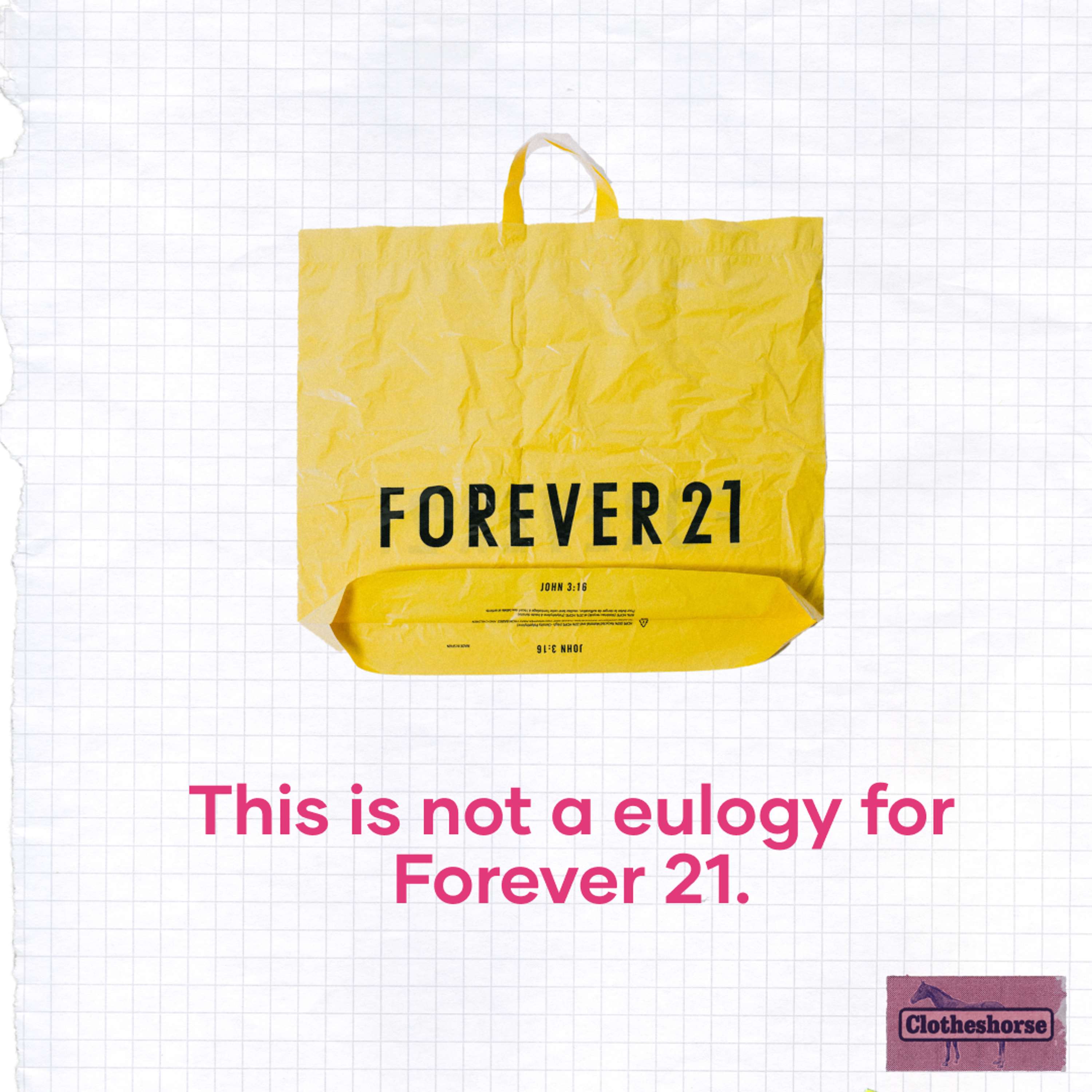
Loading summary
Transcript35 lines
- [00:00]
Amanda
We were biking to a house party when it happened. The side seam of my dress ripped practically from the very top, like just under my arm to the waist. I mean, it was just going to fall off of me if I moved even just a little bit too fast. And the ripping itself, I mean, you would imagine it would be this, like, sound. But it was very quiet. Just sort of a low sigh of resignation, like, I'm giving up. I felt the wind rushing into the bodice and I stopped and I. I yelled to my friend, who was about half a block behind me on her bike. I yelled, my dress has disintegrated. She rolled up to a stop and we moved over to the sidewalk, propping our bikes against a stop sign, just laughing at the silliness of it all. I mean, neither of us were particularly surprised, as my friend pointed out. I mean, you paid like 1990 for this thing and you've somehow managed to wear it half a dozen times. And it was true. As we saw it. These super cheap clothes from Forever 21 had a short expiration date. One couldn't expect to wear a 1990 dress for years on end. And apparently one, one couldn't even expect to wear it for months on end, certainly not for months on end of bicycling and dancing and rolling around in the grass and just, you know, generally having a good time. Fortunately, because my wardrobe was almost entirely comprised of thrifted clothes and random Forever 21 treats, I was always prepared for a wardrobe malfunction. You have to be when you bike everywhere, because going home naked is not an option. So I always carried an Altoids tin of essential items for sidewalk clothing repair. And yes, they did all smell a little minty. An array of safety pins, a mini stapler, and even a travel mending kit from the clearance section at Joann. In fact, before I started working from home, I always had a similar mending kit in my desk drawer at the office. And I carry a version in my suitcase when I'm traveling, even now. And yes, I usually have at least a few safety pins thrown into my purse. I mean, are you surprised? I already told you that I carry a measuring tape with me everywhere. I am prepared. Do you need some Advil? Don't worry, I have it for you. But it is, it is off brand. It's just ibuprofen. But back to that sidewalk in Southeast Portland. My brain remembers it as Ankeny, the bike highway for traveling east and west on the east side of town. And how many times did I ride up and down that hill for blocks on end. I mean, every day, multiple times every day. Here we are, we're on the side of Ankeny. Bikes are passing, just passing nonstop, Occasionally a car, maybe some pedestrians. And here we are trying to repair my dress. And we rigged up a line of safety pins that went from my waist, you know, into my armpit. Was it comfortable? No. Did it look kinda okay? Sure. And we laughed at our success. We high fived and we continued on our bike ride and the rest of our evening. And this was like peak house party, house show era in Portland, where one could pedal around from house to house all night long. Powered by sparks. If you don't know what that is, Google it. Basically, bright orange caffeinated malt liquor. Wow. How was that legal? Tasted terrible. Made me so hyper and drunk and sometimes a little paranoid. Anyway, we were powered by sparks. And the sheer. You know it if you live in Portland. The sheer excitement of summer in the Pacific Northwest. That summer specifically, Dylan was visiting my mom, and it meant that I could hang out with people my own age at night for the first time in years. So I had a lot of living to do that summer. And no disintegrating forever 21 dress was gonna stop me. By the time I undressed several hours later, a combination of sweat and body heat had sort of allowed the safety pins to settle into my skin, becoming one with my body, leaving their raw imprint behind. I mean, it hurts. Hurt. But at least the repair had held for the night. Did I learn some valuable lesson that night? Did I stop buying dresses that cost $19.90 in favor of quality? No. If anything, I just added a wider variety of safety pins to my Altoids tin. Because there was something about Forever 21 and its arrival in my life that had just like, fundamentally changed my view on the value and price of clothing. Well, fast forward, and I mean a lot of fast forward to last month and Forever 21 filed for bankruptcy for the second time in about 5ish years. It's planning to close all of its stores in the coming months. As it winds down its operations like, this is for real. It's like, goodbye, Forever 21. And this was a long time coming. Forever 21, who literally retrained all of us to think about clothes as disposable items, has been beaten in its own game by even cheaper, even more unethical competitors like Shein, Temu, and even Amazon. And while we don't tend to dig into every fast fashion brand that disappears, Forever 21 is more than just a purveyor of self destructing clothes. It was a pioneer in fast fashion here in the United States. It fundamentally changed our relationship with clothing and its value, along with our concept of how much clothing we should buy and own. There is no Shein or Princess Polly without Forever 21. So this week we're going to take a deep dive into the history of Forever 21 and how it changed fashion forever. Welcome to Clothes Horse, the podcast that is currently listening to a playlist of music from my years folding T shirts at Urban Outfitters in the aughts. And it is giving me all the feels. Some good, some bad, some, some neutral, some, I don't know, making me start drop folding clothes against my will. It's not even like happening consciously. It's just I hear block party and I gotta start folding, maybe size, tape, some denim. Anyway, haven't listened to any of that music for a really long time and it certainly is interesting. I'm your host Amanda, and This is episode 231. And this week we're gonna be talking all about Forever. I will say it's an adaptation and sort of an extended version of a post I shared on social media a few weeks ago. We'll be talking about the following how did Forever 21 change our relationship with clothing? Where did it all begin? Where did it get the stuff it sold? And why did it ultimately fail? And like so much more, there are going to be things that make you feel nostalgic. There are things that are going to make you feel angry. There are things that are just going to make you say wow. Like for Forever 21, going out of business isn't something to celebrate per se, because there are just worse things on the horizon. But at least one fast fashion brand is gone. I guess. I don't know. It's all complicated, right? I will say here we are, it's 2025. My post about Forever 21 reminded me of the opportunities we have when we talk to others about fast fashion in productive, encouraging ways. I intentionally make myself vulnerable by sharing my own experiences because I think it's really important to show that we are all in this together, that everything is we and us. Even if we've never shopped fast fashion in our lives. Because the moment it turns into you do this and I never do that, people don't want to hear what we have to say. End of conversation and the end of any potential progress with that person. In fact, last month, I guess two months ago now, I did a workshop as a fundraiser for LA Fire survivors that was basically like how to have conversations about difficult things like fast fashion with others. And I told everyone how my approach actually comes from my grandfather, but very indirectly and unintentionally. And that is, I would sometimes go to my grandfather, you know, wanting to get permission from him, maybe get five bucks from him. And I would say something like, hey, we want to go to Rutter's and get Garbage Pail Kids. Which Rutters was a convenience store that was walking distance from my grandparents house. And he would say, oh, we, because I only see you standing there. Do you have a mouse in your pocket? And I would always be like, oh, grandpa, you know what I mean? Just, will you give me $2?
- [09:54]
Dustin
Or whatever, you know?
- [09:56]
Amanda
But I always think about my grandpa and the mouse in my pocket, right? And when I talk to people about Faust f or really any issue that is really important to get other people involved in, I always talk about it with that mouse in my pocket there with me. Which means I never say I, I say we, I say us. And it's a good rule that helps me when I'm writing something and I finish, I go back through it, I'm like, is the mouse in here? I gotta make sure is. You know, change the I's to we's, change the me's to us. And the people's reaction to this Forever 21 post were pretty indicative of the opportunities we have to stop being I and start being we, right? So a lot of people showed up in that conversation, in the comments section to talk about their own experiences shopping at Forever 21, both good and bad. And it was actually a super fun conversation to have. After all, for all the bad things we're about to say about Forever 21 in this episode, there is a certain nostalgia to it. The way the stores were way too bright and way too chaotic. The jewelry was all a bit too shiny, the really ugly design of the store. A lot of them had this weird glittering floor. It was so emblematic of a time in my life. And I can let myself feel nostalgic while also being like, what the fuck, Forever 21. You're a bad, bad company. Life is complicated like that. And we can. We can learn from this, right? The most important thing is that conversations like this actually open eyes and bring people into the community. It's a good thing. But people definitely also showed up in the comments to flex, how they were too cool for Forever 21, how they always knew it was bad, how they knew too much about clothing way back then. To fall for forever 21 and listen congrats if all of that is true, but it makes everyone else in the comments section who is being honest and vulnerable about their experiences feel stupid and embarrassed. We can't be that way if we want more people to join the slow fashion movement. No one, it turns out. Trust me, I've been trying for years. No one wins a prize for being the most right or coolest person in the comments section of a social media post. It's just more for us to think about as we get better at having these conversations with one another and with people we're just meeting. Okay, that's the end of my lecture. Let's get back to some nostalgia and some Forever 21. I'm going to be honest with you, thinking back to that summer, the one I talked about in the intro. You know, biking around with orange stained lips. Once again, thanks Sparks. And kissing new people and falling asleep every night with my heart just so full of how much life there was to live every day. It legit makes my heart ache right now. I remember it as the summer I began to feel like the grief of my partner's death was finally lifting a little bit. The sadness was not gone, the pain was still there, but there was a little bit of room for something else, for new people and new experiences and long nights of riding my bike around and eating Chico sticks with my friend Rena, or watching the sunrise on my friend Tom's porch, or going to house parties with Alana and telling everyone we were mathematicians. And somehow it worked. It's funny. Maybe not ha ha, maybe not even ironic. Just funny. Interesting to think about how this summer that I remember life starting to get better is there's forever 21 entangled in there. I mean, lots of other threads entangled in that summer, but Forever 21 is in there too. It's like when you realize that a chunk of your childhood memories are Saturday morning cartoons and strawberry shortcake dolls and other licensed properties, right? When you're like, oh, my memory is yeah, capitalism. That's sad but true. It's interesting this summer that, like, my life was finally, finally getting better. I was also broke. I couldn't even afford to take the bus to work, so my bike was my primary form of transportation. I got really good at changing tires on it. Every morning before dawn, I packed Dylan into a trailer attached to my bike and I pedaled a few miles to daycare. I took them inside, locked up the trailer outside, then got back onto my bike and rode six miles to work. And after my shift, I repeated this in reverse Maybe stopping at the grocery store on the way home if the bus was out of my budget. New clothes, they were a major luxury. And just about everything we wore was either from the thrift store or the buffalo exchange. Every six months or so, I bought the same pair of $39 jeans from the junior section at Fred Meyer. I want to say they were Levi's 513s. They were definitely low rise. They were definitely boot cut. And I would wear them under my dresses that I wore, like, every day to protect my limited number of tights from pedals and gears and chains and weather. I patched them up over and over again until they were no longer wearable. And then a friend introduced me to Forever 21. At this point, fast fashion, it was kind of new, especially in Portland, Oregon. We didn't have H and M or Zara, but we did have Forever 21 on the first floor of the Lloyd Center. And the first time I walked through it, I was kind of shocked because there were tank tops for $1.90, like how. And jeans for $9.90. I mean, I was literally buying my jeans at Fred Meyer, which is, for those of you who don't live in the Pacific Northwest, a grocery store. And my jeans were way more expensive than 9.90. It just didn't make sense to me. Entire dresses were under $20, and socks were 90 cents. Jewelry was like two or three dollars. Tights were $3.90. These prices were in line with thrift stores. So it was just. It was just all so confusing. And none of it made sense to me because I worked in a clothing store. I worked in Urban Outfitters up on Northwest 23rd. Our tank tops were $18. Jeans started at 68. Tights were $20. And the most confusing element of it all, the clothes at Urban Outfitters were low quality, and they didn't last. Some days I spent hours processing returns on jeans where the ass had blown out because someone dared to have the audacity to walk upstairs. Shirts would shed their buttons within minutes of the first wear. And tights, we'd open the box and one leg would be a foot longer than the other. I mean, our jewelry broke if you breathe too hard. It was wild. And yet we were charging so much more. So if the clothes at my job were horrible at those prices, what were people getting at forever 21? At the same time, I could spend $25 and get a whole outfit. I didn't generally care very much about trends, but I also had to admit that most days I was Wearing the latest trends of like, I don't know, 1970. It might be nice to wear something contemporary. And so my first purchase at Forever 21 was a fruit printed jersey dress that I sewed back together many times that year. But it certainly wasn't my last Forever 21 purchase. And when I had slightly more money, I found myself visiting the store almost every week. I could spend $20 and leave with an entire bag of stuff. And the thing about Forever 21 is they had something for everyone. Well, with the caveat that there was something for everyone if the clothes there actually fit your body, which I'm not really sure if the clothes, they were fitting anybody's body very well, but certainly there were sizes that were completely left out. My aesthetic was definitely very like twee and vintage. You know, lots of Peter Pan collars and novelty prints and fit and flare dresses or things that were sort of like model. Definitely not like the same stuff that people might be wearing to like go to the club or be like more sporty or, you know, androgynous or any of the other many personal styles that someone could find at Forever 21 in the 2000s. But there were always things in there for me, just as there were things in there for everyone else, no matter what their taste was. And so even I, as a definite certified cutting my own bangs, hipster, only listening to stuff on vinyl kind of person, I could find clothes at Forever 21. And. And it was just so cheap, right? But. But this habit, this new way, had its drawbacks. For one, nothing fit very well. My boobs were always smushed or the torso was too long or something was just off about the whole thing. The necklaces left black and green rings on my neck. I didn't even mess around with earrings. I knew it was going to get bad. Zippers and seams. They would fail after a few wears. Sometimes on the first wear, stores like the Buffalo Exchange didn't accept Forever 21 because of the quality. So I was left with a closet that was slowly filling with these short lived, unwanted, cheap clothes that were sometimes kind of impossible to repair. And for a long time, I kind of accepted these issues just like my friends did. After all, what could we expect from a $90 tank top or a $2.90 necklace? That prices implied that these things were essentially disposable. We shouldn't expect much from them. And to say out loud that clothes could be disposable sounds crazy to me right now in 2025. But even back then, that was a pretty wild idea because none of us really had a lot of clothes unless we'd been thrifting pretty hardcore. But we weren't in the mindset of like, a new outfit all the time or only wearing something once that was like, unheard of. When I look at the few pictures I have from that time period in my life, I'm wearing like one of five outfits. Seriously, over and over again. That's just how it was, right? But something was changing. Something was changing in our minds where we could have a lot more clothes and we didn't have to wear them for a long time. And it was okay if they fell apart or didn't get much wear because they were so cheap. As a vintage lover and an avid thrifter, this all felt super weird to me at first. I mean, after all, some of my favorite dresses had been $1 at the bins. Like, I wasn't thinking about cost, meaning less value, right? And these $1 dresses I would get at the bins, well, with some cleaning and some quick repairs, they were built to last for decades. But these new, these brand new items at the same price were intended to be treated like Kleenex, used briefly, then tossed out and over time. While it never felt comfortable to me, I just accepted this. My brain just started to consider clothing differently than it had previously. Clothes were just less valuable to me. To be clear, not less important, just worth less money. Except if it was thrifted or vintage secondhand in any way. It was so much more valuable to me. And anytime I was cleaning out my closet, it was these forever 21 things that would go and the vintage would stay and move around the country with me. As my career progressed and I moved from city to city, the vintage always stayed. The fast fashion was gone. But we all kind of accepted this, right? We, we kind of just were like, these clothes, they don't mean much to us. And now, decades later, we're, we're unpacking it all. We're recognizing that disposable clothing isn't actually disposable at all right now. Is a good point to make. A few call outs that came up in the conversation on Instagram that I think are very important. Some forever 21 clothing was better quality than others. Knit pieces seem to hold up a lot better than woven stuff. And every once in a while, a necklace would last like 10 years without losing its finish. True story. I have a few things lurking in my closet from around like 2006 ish from forever 21 that are still pretty okay. They might be A little pilly, but they're, they're still kicking. Even the worst Forever 21 stuff was generally better quality than a lot of the Shein, Temu, and Amazon stuff I see in the thrift stores right now. And recently I walked through an Urban Outfitters and that quality seemed lower than like the peak forever 21 ever was. So there's that. What was once the worst quality in clothing is now kind of like, eh, that's not bad. I've seen worse. At least it's not Saran wrap. And because Forever 21 was, you know, importing this stuff into the US and going through customs inspection and bound to the consumer protection regulations of the United States, we weren't seeing clothes full of lead or other poisonous shit to the same level that we see with Shein and other factory direct brands at this point. In the past, I have talked about how Shein's prices are unnaturally, artificially low. On one hand, it's because they have not had to pay duties on anything they ship into the United States. And that might change now with the new US Tariff policy, but who really knows at this point? That policy seems to change every week. And the de minimis loophole was revoked, then reinstated. It's back again. There's a lot of confusion about whether the maximum duty on an order from shein can be $25 or if it's $25 per item or it's. It's chaos anyway, so who knows what's happening there? But in the past, at least, Shein was able to offer low prices, lower than anyone else's, because they weren't paying to import any of that stuff. They also don't have the expense of hundreds of stores like Forever 21 and, you know, every other chain out there. They don't have the overhead of the employees to staff those stores. And trust me, when we buy clothes in a store, we're paying for the clothes, but we're also paying for the store rent and the store utilities, the fixtures, the cash registers, the employees. Helping us, Shein avoids all of that. But Shein also keeps its prices artificially low via other tactics. Low quality, inexpensive fabrics. No team ensuring fit is right. Skipping the expense of designers, hence the concept constant daily theft of designs and art from small businesses around the world and underpaying the people making its products. And yes, we have documented proof of this time and time again. So knowing that that is how Shein keeps its prices low, let's think about how that might translate to Forever 21 in the 2000s, Forever 21 was offering low pricing unlike anyone else out there. Lower than any store at the mall, lower than H and M, which was just beginning its movement into the US Market. Lower than places like Walmart. And yeah, I'm sure someone is already writing me a DM right now about how they found stuff with prices as low as Forever 21 at Ross or Marshalls. But in general, Forever 21's pricing was significantly lower than anyone else out there. And I will tell you, it did force everybody over time to lower their prices. And so we did reach a point where now Target sells shirts for $4 and so does Walmart and other retailers, even in the mall space. I don't know, like Charlotte Russe, for example, were motivated to bring in clothes even more cheaply. But once again, Forever 21's pricing in the early aughts at least, was significantly lower than anyone else out there. $1.90 tank tops and $9.90 jeans were a revelation in a world where clothes were more expensive than they are now. And one of the reasons you'll never see me being shitty and judgmental about people who shop from Shein is that I get it. If she an existed in 2004 and I didn't know what I know now about fast fashion, I would have been shopping from Shein, period. Because it would have given me a chance to have clothing in a world where I could not afford clothing. It would have allowed me to have new birthday outfits and new party outfits and new underwear more than once every few years from the clearance rack at Marshalls like this. This would have been a revelation for me. And listen, do I think we need as many clothes as we seem to think we need? No. But do I believe when everyone else out there has all these clothes and new outfits all the time and you don't, that it makes you feel bad? Yes. Yes. And I think that that is one of the keys to Shein's success, is that for those of us who can't afford to keep up, we can pretend that we can afford to keep up, and it's not okay. But I get it, right? Forever 21 filled that void for many of us in the 2000s. And it helped that many of us didn't know a lot about the art and science of making clothing, specifically that all clothing is made by human hands. Even $1.90 tank tops at Forever 21, I definitely, if you had asked me back then, before I began my career as a buyer, thought that machines made clothes. Otherwise, how could they be so cheap? But also, it's not like I ever took five minutes to think critically about a 1990 dress breaking down the cost of the whole thing, the fabric, the trims, you know, like the zipper and the hook and eye and the binding on the sleeves, the sew in label, the price tag, the printing of the fabric, the design and production team that would have in theory managed the creation of this item, the humans who made the fabric, the trims, the garments, packed the orders, all of these things, and of course freight and duties. And I didn't think about that then, partially because I didn't know it, but also because no one else was thinking about it then. And even now, people aren't thinking about all of that until we tell them about it. But ultimately the math does not. Math when you consider all of that, that whole list of things I just gave you and a 1990 retail price, something is being cut somewhere. We know that Forever 21 would have shocking overhead with all of those ever expanding stores and the staff that ran them and the corporate infrastructure to keep the company going. They needed to mark up that 1990 dress a considerable amount to cover all of that. And so I would guess that dress probably cost at most six to seven dollars to make, including freight across the ocean to the United States and duties to bring it into the country. How do you make a dress that costs so little? Well, it's the same old story. Low quality everything. Stolen designs and underpaid workers working in bad conditions. Clothes that don't fit anyone well, right? Clothes that don't last. Once again, we didn't, we didn't know that then. Or at least we didn't let ourselves think about it too hard. And really, Forever 21 was a trailblazer in making people forget about these things in favor of low, low prices and infinite assortment.
- [31:29]
Dustin
Let's take a moment to thank some of the incredible small businesses who keep Clotheshorse going via their generous Patreon support.
- [31:37]
Amanda
Spokes and Stitches is a size inclusive pattern making and sewing studio based in Philadelphia, Pennsylvania. Pattern maker Ruby Gertz teaches workshops for hobbyists and aspiring designers so that anyone can learn the foundational skills of designing and making their own clothes. If you're looking to expand your design skills beyond following store bought patterns, check out Ruby's flagship Sloper Workshop, an in person two day pattern making retreat where you will learn how to drape a set of basic block patterns that capture your unique shape and proportions. You can use these basic block or sloper patterns as a foundation for infinite styles of garments that are custom made to your body's one of a kind contours. No more full bust, flat seat or sway back adjustments. Start with a foundation that fits. Ruby also provides professional services such as pattern digitization, size charts, pattern making and grading services for indie slow fashion brands that want to prioritize inclusive sizing. You can find Ruby on Instagram @spokenSandStitches and get in touch with her for professional services at www.stu.
- [32:44]
Dustin
Spokesandstitches.Com Selena Sanders a social impact brand that specializes in upcycle clothing using only reclaimed, vintage or thrifted materials from tea towels, linens, blankets and quilts. Sustainably crafted in Los Angeles, each piece is designed to last in one's closet for generations to come. Maximum Style Minimal Carbon footprint Shift clothing out of beautiful Astoria, Oregon with a focus on natural fibers, simple hard working designs and putting fat people first. Discover more@shiftwheeler.com late to the Party Creating one of a kind statement clothing from vintage, salvaged and thrifted textiles. They hope to tap into the dreamy memories we all hold. Floral curtains, a childhood dress, the wallpaper in your best friend's rec room. All while creating modern, sustainable garments that you'll love wearing and have for years to come. Late to the Party is passionate about celebrating and preserving textiles, the memories they hold and the stories they have yet to tell. Check them out on Instagram. AyteToThePartyPeople Vino Vintage Based just outside of LA, we love the hunt of shopping secondhand because you never know what you might find. Catch us at flea markets around Southern California by following us on Instagram Vino Vintage so you don't miss our next event. Dylan Paige is an online clothing and lifestyle brand based out of St. Louis, Missouri. Our products are chosen with intention for the conscious community. Everything we carry is animal friendly, ethically made, sustainably sourced and cruelty free. Dylan Page is for those who never stop questioning where something comes from. We know that personal experience dictates what's sustainable for you and we are here to help guide and support you to make choices that fit your needs. Check us out@dylanpage.com and find us on Instagram Ylanpage Life and Style Salt Hats Purveyors of truly sustainable hats, hand blocked, sewn and embellished in Detroit, Michigan. Find us on Instagram. Althats Gentle Vibes Vintage we are purveyors of polyester and psychedelic relics. We encourage experimentation and play not only in your wardrobe but in your home too.
- [35:07]
Amanda
We have thousands of killer vintage pieces.
- [35:09]
Dustin
Ready for their next adventure see them all on Instagram entlevibibesvintage Thumbprint is Detroit's only fair trade marketplace located in the historic Eastern Market. Our small business specializes in products handmade by empowered women in South Africa making a living wage creating things they love like hand painted candles and ceramics. We also carry a curated assortment of sustainable and natural locally made goods. Thumbprint is a great gift destination for both the special people in your life and for yourself. Browse our online store@thumbprintdetroit.com and find us on Instagram thumprintdetroit Vagavan Vintage DTLV is.
- [35:56]
Amanda
A vintage clothing, accessories and decor reselling.
- [35:59]
Dustin
Business based in downtown Las Vegas, Nevada.
- [36:02]
Amanda
Not only do we sell in Las Vegas, but we're also located throughout resale.
- [36:07]
Dustin
Markets in San Francisco as well as.
- [36:09]
Amanda
At a curated boutique called Lux and Ivy located in Indianapolis, Indiana. Jessica, the founder and owner of Vagabond Vintage DTLV recently opened the first IRL.
- [36:19]
Dustin
Location located in the Arts District of downtown Las Vegas on August 5th. The shop has a strong emphasis on 60s and 70s garments, single stitch tees and dreamy loungewear. Follow them on Instagram vagabondvintagedtlv and keep an eye out for their website coming fall of 2022.
- [36:44]
Amanda
Eventually, as you know, I accidentally found myself with a career in fashion. So I left Portland. Although don't worry, I would move back two more times and over time I left shopping at Forever 21 behind me. Not because I felt I was too good for it, not because I had some crisis of conscience. About $1.90 tank tops. There were just more options, often better options for cheap clothing. I had my employee discounts and thrifting and sample sales. All of that could fill my wardrobe. In fact, one thing I was painfully aware of as I worked at my desk at Urban Outfitters home office each day was that no one who worked there really wore Urban Outfitters clothes unless they were kind of uncool. Everyone wore much more expensive clothing from boutiques and brands that were mentioned in like Nylon and the $20 fashion magazines that one could buy at the coffee shop in Building 543, which was the hub of the urban campus, like where the cafeteria and the mail room and the gym and whatnot were and still are. Well, I couldn't afford those kinds of clothes any more than I could afford a 20 magazine. And I can only assume that all of my co workers had a trust fund because I don't know how they were affording them either. Maybe they had really bad Credit card debt. I settled into a wardrobe primarily composed of vintage from thrift stores and ebay. And that was kind of my thing, because I'm going to tell you, when you work in fashion, whether you're a buyer or a designer, it is very important that you have a strong look every day. It is hyper competitive. And yes, people are judging you and your ability to do your job well based on how you look and what you're wearing. So I settled into vintage. I felt like this. It's its own special thing. It looks like I have a point of view, which I do, and I can afford it. So people just began to expect me to show up in some outrageous vintage outfit every day. And that felt just fine to me. It actually set me apart from the rest of the buying team. And they're like $300 sweaters and $500 shoes. Despite everyone's desire to be way fancier than we really were, there were two brands that gave the executives at Urban Outfitters sleepless nights in the late aughts. And boy, were they two very different brands. Both LA brands, though Forever 21 and American Apparel, we feared these two companies so much. American Apparel was doing something very different. Making clothes in the United States, charging higher prices and making it work somehow. And of course, the branding, the store design, the creepy porno vibes, advertising, it was kind of the coolest thing any brand was doing in the aughts. And let me tell you, we had many meetings where we ask ourselves, how do we make Urban Outfitters sexier? And we definitely, yes, did a whole spring floor set in all of the stores and then three weeks later redid it to look more like American Apparel. Yep, those. Those were the times. At the Same Time, Forever 21, the other business that was concerning us was none of these things. No heartwarming Made in the USA story, no sexy advertising, no real coolness involved at all. But the company was on a tear. It was opening up bigger and bigger stores all over the world, even the Forever 21 at the Lloyd center back in Portland, Oregon. It gradually ate up the retail spaces next to it, then above it, turning into a two story behemoth. In 2019, when Forever 21 filed for bankruptcy the first time, the company released documents that portrayed the most iconic version of the American Dream imaginable. One section was titled Forever Striving, a story of grit, determination and passion. And this document was full of photos of the family running the business. And to be fair, in many ways, despite the cheesy title, the story of Forever 21 is a tale of immigrants moving to the United States, working really hard and building a better future for themselves and their family, husband and wife and immigrants from South Korea. Do Won Chang and Jin Suk Chang opened a store called Fashion 21 in the Highland park neighborhood of Los Angeles in 1984. They funded this new business with $11,000 in savings. Their target customer was the LA Korean American community. And initially the inventory was closeouts from local manufacturers. In the first year, they did about $70,000 in sales, which is not bad. Over time, they changed the name of their stores to Forever 21 because Mrs. Chang felt that 21 was qu the most enviable age. They opened more and more stores in Southern California, and Mr. Chang oversaw landlord and vendor relationships while Mrs. Chang led product design and in store merchandising. And they rapidly adopted this new, at the time, fast fashion model of doing business. Mrs. Chang and her team would identify new trends, then pressure vendors to provide the lowest costs for these items. And it was imperative that these stores were filled with a lot of of new styles all the time. And these stores were becoming huge in size too. On average, about 25,000 square feet, five times the size of your standard larger mall store like a Gap or an Abercrombie. So this meant churning out a lot of products. Even stranger, in 2007, Lisa Bossette, Forever 21's Vice President for merchandise, told the New York Times that the company had no designers, as Bissette said, just very savvy merchants. And somehow this team of savvy merchants, AKA buyers, managed to churn out a massive amount of new styles super fast, often within six weeks of first concept. And I want to be clear that now in 2025, six weeks sounds like 600 years, but back then in the 2000s, when I was working on products at Urban Outfitters, our lead time meaning how long it took us to develop a style from first concept until when it arrived in the store, three to six months. 3. If we were like fast tracking it and somehow most of the development had been done before six months. If we created the concept for that season, the designers designed into it, we sampled it, we did fittings, and we shipped it on a boat. So six weeks is wild because every other retailer out there was doing things the same way. We were at Urban taking six months to develop a style. Six weeks was even now, I mean, I know how it works now, but it still is just so shocking because how, how can you possibly take a process that normally takes half a year and distill it into six weeks. It seems impossible, doesn't it? Oh wait, you know what? Actually I know how that happens. By copying every designer and brand that's already out. Ah, a fast fashion classic. That means just sending photos and scans of magazine tears to the factory and saying make this. I would say that Forever 21 was innovative in this way, but heck, I worked for a brand in the aughts that inspired a blog called Urban Counterfeiters. So you know, maybe not the innovators there. Of course, this approach meant that Forever 21 found itself in a lot of legal trouble over the years for blatantly copying designs and art. In 2007 alone, Forever 21 was facing lawsuits from Anna Sui Harajuku lovers. Wow, Forgot about that one, Diane von Furstenberg and 16 other cases, all for copying designs. And I'll tell you that Anna Sui one was so blatant. For a long time, Forever 21 worked with the vendors in the San Pedro Apparel Mart in downtown la, a predominantly Korean group of businesses. And way back in my series about the rise and expansion of fast fashion, I talked about the San Pedro Apparel Mart because lots of online retailers like ModCloth, Nasty Gal and Lulu's were sourcing their inventory from the Martin in the 2000 and tens. In fact, I'm just going to go ahead and plagiarize myself by retelling you what I said about the Mart back in those episodes. Imagine about 300 different showrooms of inexpensive, high profit fast fashion clothing with new arrivals every single week, and everything you find there could ship to your warehouse in two weeks or less. It's hard to describe the Mart to someone who has never been there. One showroom after another with names like Hot and Delicious, Cotton Candy, Virgins Only. For real, I'm not making that up. Showroom is kind of a generous description for spaces crammed with rolling racks of new arrivals and stuff in the works. People are rushing around with racks and boxes full of shipment. Every showroom has a bowl of M&M's, and most of these brands are really acting as the middleman between factories overseas and the boutiques and retailers that shop there. In my early days at ModCloth, a big chunk of business at the Mart was coming from Forever 21. In fact, that's where a lot of the early Forever 21 inventory came from. But over time, Forever 21 elected to cut out the middleman, meaning these showrooms at the Mart and go factory direct for lower prices, more selection, more exclusivity, and faster delivery. So who shopped at the Mart. Well, boutique owners for one. Boutique owners from all over would fly down to la, go to the mart and buy a few months worth of inventory on the spot. Other shopkeepers would go to Magic, which is the big fashion trade show that happens twice a year in Vegas, and place the orders with these mart brands there. That show is huge for these mart brands. They have huge booths and they make a lot of money in just a few days. And in the years that I was working for Modcloth and Nasty Gal, more and more of these online retailers were shopping there in a major way too. Both at Magic and at the San Pedro Apparel Mart. We're talking Lulu's and Dolls Kill, Modcloth, Nasty Gal. Any brand that was selling online at that point, probably in one way or another, was at least dipping their toe into the mart. The Mart was great for these smaller online retailers who needed a ton of newness all the time, but didn't have the buying power or budget for a full on design team. And this mart clothing, it was profitable. Why? Because customers just couldn't Google it and find it for a cheaper price. This meant that we could charge as much as we wanted for it. A typical trip to the Mart meant walking around often for a full eight hour day from showroom to showroom looking at the new arrivals. You might find half a dozen new styles at this one, 20 at the next, and so on. And after a while it would sort of start to feel boring as you saw essentially the same thing over and over again. At that point, pricing becomes the deciding factor. Who has the lowest cost? And still we would trudge along, visiting 20, 30 or more places in one day. Each visit just a quick pop in to browse the racks and then off to the next spot. The vendors would drop off samples of everything at our office the next day and we would make our picks. We might be sifting through 100 to 200 different items every week, trying to find the best ones. Then we would write the orders and they would deliver a few weeks later. We did this at least once a week, if not more. When I was at Modcloth, part of my team basically went to the Mart almost every day. The San Pedro Apparel Mart still exists and I still see brands I recognize from there. In just about every boutique I visit. There are online retailers too who sell exclusively product from the Mart, like dressed in lala. And over time, online platforms arose that made it easier for online retailers and boutiques alike to order these brands directly, either from the vendors in the mart or directly from the factory. By the time I was working at Modcloth and Nasty gal in the mid 2010s. Forever 21 was doing a lot less work with the brands in the Martin going Factory Direct instead. But to be fair, Forever 21 helped all of those businesses grow and most of them were family businesses just like Forever 21. The Father and the mother might run the business, the adult children worked the showrooms and handled the communication with customers. That said, Forever 21 was able to make the math math in its ever expanding business by getting any cost it demanded out of its vendors, including these family run businesses. And when that wasn't good enough, they cut them out and went directly to the factories themselves. No one could say no to forever 21 if they wanted to stay in business, even if it meant they made pennies off of each unit they sold to Forever 21. And that extended beyond the products Forever 21 was selling to the companies, making bags for them, shipping their products. Everyone who worked with Forever 21. No one could say no to them. If you're enjoying this episode, then this is a great time to remind you.
- [51:18]
Dustin
That my work here at Clothes Horse is made possible by the support of listeners like you. Just like NPR and these great small businesses. Please go give them your support. Blank Cass or Blanket Coats by CAS is focused on restoring, renewing and reviving the history held within vintage and heirloom textiles by embodying the love, craft and energy that is original to each vintage textile. As I transfer it into a new garment, I hope we can reteach ourselves to care for and mend what we have and make it last. Blank CAS lives on Instagram @blankcas and a website will be launched soon@blankcas.com located in Whistler, Canada. Velvet Underground is a velvet jungle full of vintage and secondhand clothing plants, a.
- [52:14]
Amanda
Vegan cafe and lots of rad products.
- [52:17]
Dustin
From other small sustainable businesses.
- [52:20]
Amanda
Our mission is to create a brand.
- [52:21]
Dustin
And community dedicated to promoting self expression as well as educating and inspiring a more sustainable and conscious lifestyle both for the people and the planet. Find us on Instagram shopvelvetunderground or online at www.shopvelvetunderground.com. st. Evens is a New York City based vintage shop that is dedicated to bringing you those special pieces you'll reach for again and again. More than just a store, St. Evens is dedicated to sharing the stories and history behind the garments. 10% of all sales are donated to a different charitable organization each month. New Vintage is released every Thursday@wearsaintevens.com with previews of new pieces and more brought to you on Instagram.
- [53:13]
Amanda
That's where St. Evans Country Feedback is.
- [53:17]
Dustin
A mom and pop record shop in Tarboro, North Carolina. They specialize in used rock, country and soul and offer affordable vintage clothing and housewares.
- [53:27]
Amanda
Do you have used records you want to sell?
- [53:29]
Dustin
Country Feedback wants to buy them? Find us on Instagram, Country Feedback, Vintage and vinyl or head down east and visit our brick and mortar. All are welcome at this inclusive and family friendly record shop in the country. Republica Unicornia Yarns Handmade yarn and notions for the color obsessed.
- [53:50]
Amanda
Made with love and some swearing in.
- [53:53]
Dustin
Fabulous Atlanta, Georgia by head yarn wench Kathleen get ready for rainbows with a side of giving a damn. Republica Unicornia is all about making your own magic using small batch, responsibly sourced hand dyed yarns and thoughtfully made notions. Slow fashion all the way down and discover the joy of creating your very own beautiful hand knit, knit, crocheted or woven pieces. Find us on Instagram @republicaunicorniarns and at www.republicaunicornia.com. picnic Wear a slow fashion brand ethically made by hand from vintage and dead stock materials, most notably vintage towels. Founder Dani has worked in the industry as a fashion Designer for over 10 years, but started Picnic Wear in response to her dissatisfaction with the industry's shortcomings. Picnic Wear recently moved to rural North Carolina where all their sewing and accessories are now designed and cut, but the majority of their sewing is done by skilled garment workers in New York City. Their customers take comfort in knowing that all their sewists are paid well above New York City minimum wage. Picnic Wear offers minimal waste and maximum authenticity. Future Vintage over future Garbage Cute Little Ruin is an online shop dedicated to providing quality vintage and secondhand clothing, vinyl and home items in a wide range of styles and price points.
- [55:22]
Amanda
If it's ethical and legal, we try.
- [55:24]
Dustin
To find a home for it.
- [55:25]
Amanda
Vintage style with progressive values.
- [55:28]
Dustin
Find us on Instagram utelittleruin Is there a little bit of Italy in your soul? Are you an enthusiast of pre loved decor and accessories? Bring vintage Italian style and history into your space with the pewter thimble.
- [55:44]
Amanda
We source useful and beautiful things and mend them where needed.
- [55:49]
Dustin
We also find gorgeous illustrations and make them print worthy tarot cards, tea towels and hand picked treasures. Available to you from the comfort of your own home. Responsibly sourced from across Rome, lovingly renewed by fairly paid artists and artisans with something for every budget. Discover more at theputerthimble.com Deco Denim is a startup based out of San Francisco.
- [56:15]
Amanda
And it sells clothing and accessories that are sustainable, gender fluid, size inclusive, and high quality, made to last for years to come. Deco Denim is trying to change the way you think about buying clothes. Founder Sarah Mattis wants to empower people to ask important questions like, where was this made? Was this garment made ethically? Is this fabric made of plastic? Can this garment be upcycled? And if not, can it be recycled? Sign up@decodenim.com to receive $20 off your first purchase. They promise not to spam you and.
- [56:50]
Dustin
Send out no more than three emails.
- [56:52]
Amanda
A month, with two of them surrounding education or a personal note from the founder. Again, that's deco denim.com Forever 21, despite bringing in more than $4 billion in sales at its peak, all while employing 43,000 people worldwide, remained privately owned and family run for decades. And many analysts say that this insular approach to running the company was actually its downfall. But in the midst of the 2008 financial crisis, Forever 21 was practically printing its own money. While at Urban Outfitters, we were slashing prices and budgets. In 2005, Forever 21 had enough capital to buy mall chain gadzooks. And so 2008 rolls around, and they are just like in every mall. It also launched its own chain of freestanding accessory stores called for love. And Forever 21 was outshining every other retailer in the United States. Forever 21 was benefiting from a few things that were happening at that same time, right? Yes, there was the recession, but even before, it was benefiting from other sort of social and cultural trends. One was that millennials were, you know, collectively broke, but they were inspired by media to have lots of new outfits. Forever 21 meant you could have a lot of clothes for very little money, essentially just for your outfit of the day post. And like I said, we were already sort of like, we don't really need to wear clothes more than once now. That's how. That's how we are. And Forever 21 was great for that approach. Furthermore, I just want to remind you again, because these stores were so massive and they were jammed with so much product, there really was something for everyone, with a caveat, if you could fit into their clothes, right? But if you could fit into their clothes because they ran small and inconsistent and weird, but if it happened to work enough for you, you could probably find something in any aesthetic for you. But even more important, and this was like, I swear this was planned because this fed fast fashion so much. And it may have been also that, like, the magazines were sort of like, oh, it seems like this fast fashion thing is becoming bigger and we need to take their money. How do we do this without losing all of our cachet? It could have been that too. But high low dressing was being pushed by magazines and blogs alike. What was high low dressing? Well, it was exactly what it sounds like. Mixing low cost fast fashion with high end, far more expensive clothing and maybe, you know, also some really well curated vintage. And I gotta say, it's super interesting to me as a phenomenon, as a trend that lasted for a really, I mean, quite a few years. I think, I think it still exists, honestly, because, you know, I've said this here before and it has been the thinking for a long time. It has certainly launched a million think pieces on the Internet. But there was this idea, this conceit going around that fast fashion was democratizing style, meaning it allowed anyone, as long as the clothes were made in their size, to have strong personal style. But what it really meant was it allowed everyone to just buy lots of clothes and only wear them a few times. That's what it really meant, I think when we talk about democratizing style and, and giving fast fashion the credit for that. But we're really saying is it made it more possible for more people to just buy too many clothes and wear them very briefly, right? And then like, you know, post about it on social media and kind of normalize the idea for their friends of buying too many clothes and only wearing them a few times. Right? So not necessarily a good thing, this democratization of style, at least through the lens of fast fashion. I think that social media and street style blogs and just style blogs as a whole, and people posting their outfits did show that anyone of any size, of any income, of any age can have their own personal style. And we still see that going strong now. And I love it, but I don't want to give that credit to fast fashion. Furthermore, no matter how much someone wants to say that fast fashion democratized style, there is a stigma associated with low cost fast fashion, period. And I'm here to say that to you that if you think people are not judging your Shein dupe dress of something more expensive, they 100% are. Because there will always be classism and exclusivity baked into fashion. Right? It is an industry that is all about aspirational wealth. And so therefore, if anyone can tell that you are wearing something inexpensive, something from Forever 21, something from Shein, something from a store at the mall, they will most certainly judge you for it. And so here we are, we're back in time right now, right? It is the 2000s and we start to see magazines and blogs pushing this concept of high, low dressing. And I want to be clear as we talk about this more and I give you examples and I talk about how it really did fuel fast fashion. It didn't fuel fast fashion for people who had less money and could only afford fast fashion. Meaning at this point, mostly forever 21. It didn't empower those people. And it wasn't about those people, myself included in that economic group. What it did is it legitimized this idea for people who had the money to buy the high part of it too, the expensive stuff, right? And if you were just out there wearing head to toe, Forever 21, people would judge you because that is what fashion is. Fashion as it exists is so classist. And that's why I always talk about how I want slow fashion to be the opposite of that. But here we are, we're finding that the entire like fashion media landscape in the 2000s is saying, hey, it is not only acceptable, but really cool to mix high end stuff with this low price point fast fashion. And what it really did was drive new customers to fast fashion. People who would have never dared step into a Forever 21 because they wanted to be a part of this trend, this trend that told you that, that really stylish people mix the top and the bottom and they do it so well. So this was a boon for fast fashion. Right? It got more people in the doors of Forever 21, for example. But it didn't necessarily erase the classism baked into fashion. Nylon magazine, which was definitely like the coolest magazine of that time, it would show you how to pair a Forever 21 dress with thousand dollar shoes and a fur coat. Vice paired Comme des Garcons with Canal street knockoff gold jewelry. Bloggers like Agnes of Style Bites mixed up H and M with vintage and indie designers. And street style blogs captured people doing this in their own way. The idea was that it was totally acceptable and encouraged to mix low price, fast fashion with high end, expensive designer stuff. Even at Urban Outfitters we were on, we were bringing a lot of expensive clothing and trying to do collabs with designers. But we, I remember specifically this is when I was working in shoes. We went on a fool's mission. And I mean, it was a fool's mission because this initiative was a flop. We went, I remember this trip, we went to New York all day and all we did was meet with really expensive shoe brands. Like we were looking to bring in shoes in that like $500 and up price range that would be in select stores so we could show that we also were a high, low place. And let me tell you, I remember that day being so miserable because every showroom was like why would I work with you? Like you guys steal designs, you sell crappy, low quality stuff at high prices and you want me to sell shoes in your store so that you can copy them later. And to be fair, I get does feel weird to sell your $500 shoes to sit next to the $58 shoes that are probably a copy of someone else's $500 shoes. I get it. And also at that time our shoes were we were made using a lot of the same vendors as Forever 21. So it would be almost like putting your high end shoes right next to some Forever 21 shoes. And and they were not there for that. On the subject of shoes, when I shared this post about Forever 21 a few weeks ago, Liz Black commented that she had written a story for HuffPost back then about a crappy pair of shoes she bought from Forever 21. And I'm going to share that in the show notes because I have such a visceral memory of reading that article from the HuffPost at my desk at Urban Outfitters world headquarters in Philadelphia, Pennsylvania in the Navy Yard the day it came out. And I am fairly certain the shoes she was talking about, I I'm pretty sure I know who made them. Once again, we shared a lot of the Same vendors with Forever 21, at least in shoes at that time. So yeah, so we've got this high, low dressing, we got millennials being broke. We've got but the emergence of social media and like street style blogs and party photo blogs, all of this stuff coming together to say like, hey, you need to have a look all the time and you need a new look all the time. Right? So this is all working. This works in the favor of Forever 21. And here it was like Forever 21 was killing it. Like I said in an urban we were getting yelled at every day. So soon some of the most talented creatives at Urban Outfitters were defecting to Forever 21, swapping cold Philadelphia winters for constant sunshine in LA. And a few years into my buying career, I felt like I needed to leave Philly and Urban Outfitters for like many reasons. I was so unhappy in every single way and there was no one to date there and I hated the weather and the company was never going to pay me Enough money and I was always going to feel like an outsider there. And when I saw a job posting for Forever 21 that seemed like a perfect fit, I was like, huh, Should I go for it? Because a former coworker at Urban who worked over in Women's had made the shift to Forever 21 about a year before and rumors were that she made a lot more money and she was having the time of her life. So I emailed her asking how the transition had been and her response was very odd. She said, I can't talk about this via email. I will call you after work tonight. And I was like, okay. She called me very late that night. It was about 8pm in LA, which was a red flag in itself. Sorry I couldn't email you back because they read our emails. We aren't allowed to say anything negative about the company or we'll be fired. She had just left work for a few hours and she was going to teach a yoga class for extra money, then returned to the office. They paid her so little that she had to teach yoga every day and pick up other extra work on the weekend. The hours were grueling. Most days she had meetings at work at 6 or 7am and she would be there until close to midnight. The environment was hectic, stressful and often nasty. She ended it with, I'm glad I'm in la, but I miss how easy Urban was in comparison to this. Well, I didn't apply for the job, but over the years I met many people who had begun their career at Forever 21. Basically, once you get into this like fashion system, right, you start to realize that a lot of people have worked for the same bad companies that kind of churn and burn people. And when I moved to LA and was working there, I met a lot of people who'd started their careers either at Forever 21 or BCBG or Guess, and they all had nightmare stories like these were the really toxic places to work. The stories I heard about Forever 21 were definitely the worst. Everyone had really bad things to say of being only allowed to take red eye flights to trade shows, being forced to share rooms with co workers on trips, which let me tell you, is the worst, and always being expected to come into the office for a full day of work. After that red Eye flight landed at 5am, the pace was frantic and no matter how hard you worked, if Mrs. Chang didn't like you or something you wanted to buy, you were fucked. All decisions passed through Mrs. Chang and if she wanted you at work at 6am or 10pm to review potential new styles. You were there at the office friends and vendors, because remember, I shared a lot of vendors with them. They also told me stories of meeting rooms with Bibles, which didn't surprise me because the underside of Forever 21's painfully and iconically bright yellow shopping bag said John 3:16, which is a reference to a Bible verse. And I'm going to tell you today, for the first time ever, I looked up what that verse is. It is for God so loved the world that he gave his only son that whoever believes in him should not perish but have eternal life. I'll just say getting all biblical. That's a choice for a company that most likely exploited a ton of workers around the world to make $1.90 tank tops and oh my God has contributed to some landfills. But such is humanity, complex and sometimes hypocritical. Forever 21 was just one of many companies, including Urban Outfitters, that underpaid and overworked buyers and designers until they essentially broke. Those that came from more privileged backgrounds might launch their own brand or open a boutique, and the rest of us just moved from one bad job to another. That said, there was a period where even a fashion professional like myself, with all of my fashion industry trauma, could look at Forever 21 and their product concepts and their store merchandising and their brand partnerships. Except for that really weird collab they did with the US Postal Service. Still scratching my head on that one. But I could look at all of that and I could say, you know, they really are doing this well. You had to give them credit for making themselves an iconic part of millennial culture. They managed to catch every single trend. Hi, a collab with Taco Bell. And then they would have it in their stores, which, listen, I get that Shein does every micro trend all day, every day now, but they don't have to make the stuff and fill hundreds of stores with it and do it in some way where it looks kind of organized and makes sense in the store. I mean, this is an accomplishment. Somehow Forever 21 got it into the hands of its customers faster than anyone else. And a lot of this was based on strong relationships with factories in China, along with a brutal work culture. And over the years, Forever 21 was in every mall, even the small rural ones. In bigger markets, they took over entire department stores like their anchor spots, along with empty Borders locations, which, if you don't know Borders, let me just say massive bookstores with a cafe where I spent my teenage years feeling very cool. They take these huge stores and turn them into Forever 21s. And filling those stores was a challenge. In fact, years later, as they filed for bankruptcy in 2019, Linda Chang, the executive vice president of the company expected to be her father's son successor, told the New York Times, having to fill those boxes on top of having to deal with the complexities of expanding internationally did stress our merchant organization. Basically, the company needed to spend a lot of money to fill those stores and over time there were just too many stores in dying malls that still needed to be full of new stuff. And meanwhile, the company wasn't really making the pivot to E commerce. In fact, the Changs were reluctant to hire anyone outside their insular world, even if those new hires might bring much needed insight and expertise. And as a person who has worked for some CEOs with some major hubris and big time ego who made bad decisions about their companies, well I'm not surprised to hear this. Former employees told media outlets that many of the Chang's hires were from their church or extended family with little to no experience in anything they are responsible for managing. Eric Gordon, a management expert at the University of Michigan Ross School of Business, told the New York Times in 2019 regarding Forever 21 and its private ownership. On the founder side, this hubris thing is pretty common, but it's particularly deadly if you've already been successful. For a long time they didn't have a board of directors to give them a reality check and they didn't have equity and analysts to give them a reality check. You can live in your self created bubble for a lot longer but then the bubble pops. And reading that quote really actually you know what it gave me flashbacks to Nasty Gal which was in a very similar situation, early success that no one really learned anything from. And so as things got more difficult the wrong people were brought in to fix things and so nothing was fixed. And then Nasty Gal went bankrupt and things were amazing for forever 21. For a long time they expanded into men's and kids. They led the charge into plus sizing which was like so fucking smart of them. And in the late aughts they launched a brand that was designed to be a more premium version of Forever 21 called called Heritage 1981. It was kind of like you put Abercrombie, American Eagle and Free People into a blender. Most of the clothing was made of natural fibers unlike what you would find at Forever 21. The stores had like faux weathered wooden doors and wood framed windows, hardwood floors, quasi vintage Art on the walls. The merchandising was sort of a watered down version of a free people store. Please, someone raise your hand if you remember this place. I kind of can't believe it wasn't more successful, but I think it may have been that they were just throwing too much at the wall with the accessory stores and taking over all the gadzooks and doing this heritage 1981 and opening stores more and more everywhere all the time. I just think it was too much and nothing got to really succeed. In 2017, the company launched Riley Rose, which was a beauty concept. It was filled with a mixture of leg makeup brands and then Forever 21 makeup and accessories. Kind of a high, low concept for beauty. And the stores looked great. I visited one that was across the street from Penn Station and I was like, wow, this is sick. This is great. I think this is going to be really successful. It seemed like such a good idea in a Sephora world, but it just didn't work. With the Forever 21 business model. The company was used to getting any product cost it wanted. And the makeup companies were like, actually, that's not how it works. Because, spoiler, if you buy branded beauty products, like wholesale and sell them in your store, the markup is very small, right? And that doesn't work in a Forever 21 model where everything is highly profitable. So Riley Rose was trying to squeeze brands on pricing. And what happened is they lost a lot of these brands pretty fast. And more and more of the Riley Rose stores just became Forever 21. Stuff just didn't work. And actually that year 2017 was pretty bad for Forever 21. Riley Rose was kind of a flop. The company's international expansion was a disaster because no one did any research into local norms. For example, like knowing that most stores are closed on Sundays in Germany. There they were open. No one wanted to work there, no one wanted to shop there. It was a bad look. At the same time, Zara and H and M were doing fast fashion in a better way than Forever 21. All around the world, you know, H and M was starting to talk about sustainability. Zara was just really killing it from, like an aesthetic and product curation perspective. Forever 21 was doing neither of those things. And somehow to make it all worse, the company bought too little inventory that year. So they were never going to hit the sales plan they needed to hit in order to keep the business running. Then the next year, the pendulum swung the other way. They bought way too much and they bought the wrong stuff. I was reading this new York Times article about the bankruptcy and whoever they were talking to from the company, I think it was a former employee who was sort of like Anonymous was saying, like we didn't pick clothing based on category. We weren't like, oh, we need tops and dresses and pants. We did it more by like concept, like going out, date night work. And so we weren't really like assorting properly. And this did kind of blow my mind because that is exactly not how you want to plan a product assortment, especially one as big as Forever 21s. So yeah, things are really bad. And by 2019, the company owed $347 million to its vendors. You know, I'll say, when I moved to the Highland park neighborhood in LA, it was probably like 2013ish. I lived near the original Forever 21 store, the first location ever whose sign still to this day said said Fashion 21. And it felt like a pilgrimage of sorts. Like this was a place that is entangled in my memories that is sort of like an iconic millennial phenomenon. And you know, from a professional perspective, it's fascinating right inside it felt like any store at the mall. And it smelled strongly of plastic. And either the magic wasn't there anymore or I was no longer susceptible to it, but that's kind of like what was happening to Forever 21. It just, it didn't mean very much to anyone anymore. When Nasty Gal went bankrupt and I became unemployed, I applied for all of the retail companies in LA because let me tell you, I was so happy living in la. I had the most awesome friends. I did so much cool stuff. I had this awesome boyfriend named Tustin. We did cool stuff together all the time. And I just really felt constantly inspired and motivated by the city and all the amazing people living in it. So I did not want to leave la. I applied for everything. Ross Dress for Less, Guess, Lucky jeans, and even Forever 21. And a month later, I was in final interviews with Ross, Forever 21 and a startup in Portland called Wildfang Dustin. Then my fiance and I, we weighed our options. We didn't want to leave LA because we loved it, but we also didn't want me to work at Forever 21. And Ross was super corporate and I might have to wear business clothes, which I did not own. Wildfang meant leaving la, but it might be cooler. And so I ended up taking that job in Portland and going to work at Wildfang, which ultimately was the worst job ever. People ask me to comment on Wildfang all the time, and I'LL just say, don't you think it's pretty interesting that I've been working on Clothes Horse for almost five years and I've never encouraged you to shop at Wildfang or done a partnership with them or shouted them out anywhere, ever. Because if their marketing was what they say they were, wouldn't I be like, on top of that? I mean, I was their director of merchandising for several years. Of course I would be hyping Wildfang anyway. It's hard to say if working at Forever 21 would have been worse. At least I wouldn't have been able to stay in LA. At some point, though, I kind of forgot about Forever 21. And last year I was working on a series about Shein, and this forced me to spend time scrolling the Shein site. And wouldn't you know it, the most expensive clothing for sale on the Shein website was from Forever 21. Desperate to be saved from bankruptcy, Forever 21 had partnered with the company that was destroying it once and for all. I laughed and I laughed just thinking about Forever 21 being the more expensive brand of the two. And then I felt sick, because then I was thinking about how Forever 21 had convinced an entire generation of millennials that clothing could be disposable. And here was Shein doubling down on that, introducing new generations to even cheaper, more disappointing clothing. But this partnership was all part of Forever 21's plan to save itself. Get ready for a rapid fire of companies being involved in owning Forever 21. Okay, are you ready? After, by the way, decades of it being family owned. In 2020, the company sold all of its assets to three different companies. Simon Property Group, which my friend who works in mall real estate always calls a mall slumlord. And it had a lot to lose if forever 21 closed all of its stores. Brookfield Property also had a lot to lose if all of those stores closed. And Authentic Brands Group, which buys all kinds of brands and then licenses the rights to other manufacturers to use the brand names. Seriously, go to Wikipedia and search Authentic Brands Group. And look at this list. It's like Elvis and Marilyn Monroe. And Aeropostale, Billabong, Barney's. Gosh, have I ever told you how when I was at Nasty Gal, the goal, at least for a while, was to make Nasty Gal be Barneys for millennials. The hubris. The hubris man. Anyway, Barneys, Eddie Bauer, Fry, Ted Baker. So much more. And what happened is a new joint venture between Simon and Authentic Brands called Spark. Not to be confused with Sparks, the caffeinated malt liquor beverage. Spark took over the management of Forever 21 and Brookfield sold its stake in Forever 21 in 2021. And then in 2023, Shein and Spark Group entered into a joint venture where Spark bought a stake in Shein and Shein bought a stake in Spark. And so that makes Shein part owner of Forever 21. Despite all of that, business just kept dying for Forever 21. Too many leases and dying malls, an inability to compete with online retailers like Shein and Temu and Amazon, who were bringing Clothes Factory direct to customers at much lower prices. And also just something to be said here, the name Forever 21 is not cool. And it feels super antiquated in 2025, right? Like it's just not appealing to anyone on any level. Right? And, and I think it feels like a relic of a past that, that we're not into right now. The name, the aesthetic, the way the stores looked, the yellow bags with the Bible verses, everything about it just feels like a time capsule that no one's interested in. And forever 21 never evolved beyond that. The stores always looked the same, the bags always looked the same, the way it sold itself always looked the same. And it just became out of date, antiquated. And now this year, Forever 21 is officially done. No, I won't miss Forever 21, even if it is tangled up in my memories. But like many of us who worry about the future of our planet and its people, I will continue to spend a lot of time thinking about how Forever 21 changed our habits and the entire business of making and selling fashion. It opened the door for ultra fast fashion like Shein. It let us buy new clothes constantly, knowing that we would only be able to wear them a few times. And we got used to it. It offered us prices that were unnaturally low and the math never mathed. And at first it felt weird to us until eventually it became normal. Now we have to do the hard work of undoing that. And I know we can, but it will not be easy and we gotta put in the work. Thanks for listening to another episode of clotheshorse. If you liked what you heard, you know Leave a rating A review. Subscribe. Tell your friends you know all the things. If you'd like to support my work financially, there are many ways you can do that. You can find links for all of that in the show notes and in my profile on like all of the social media platforms including Instagram threads, TikTok, Bluesky, Substack, Tumblr and even Pinterest. So go find me on the Internet on your platform of choice. The Merch store is always open 247 and you can find that@clotheshorsepodcast.com and of course, thank you as always to my other half, Mr. Dustin Travis White for our music and audio support. It Bye.