← Clotheshorse with Amanda Lee McCarty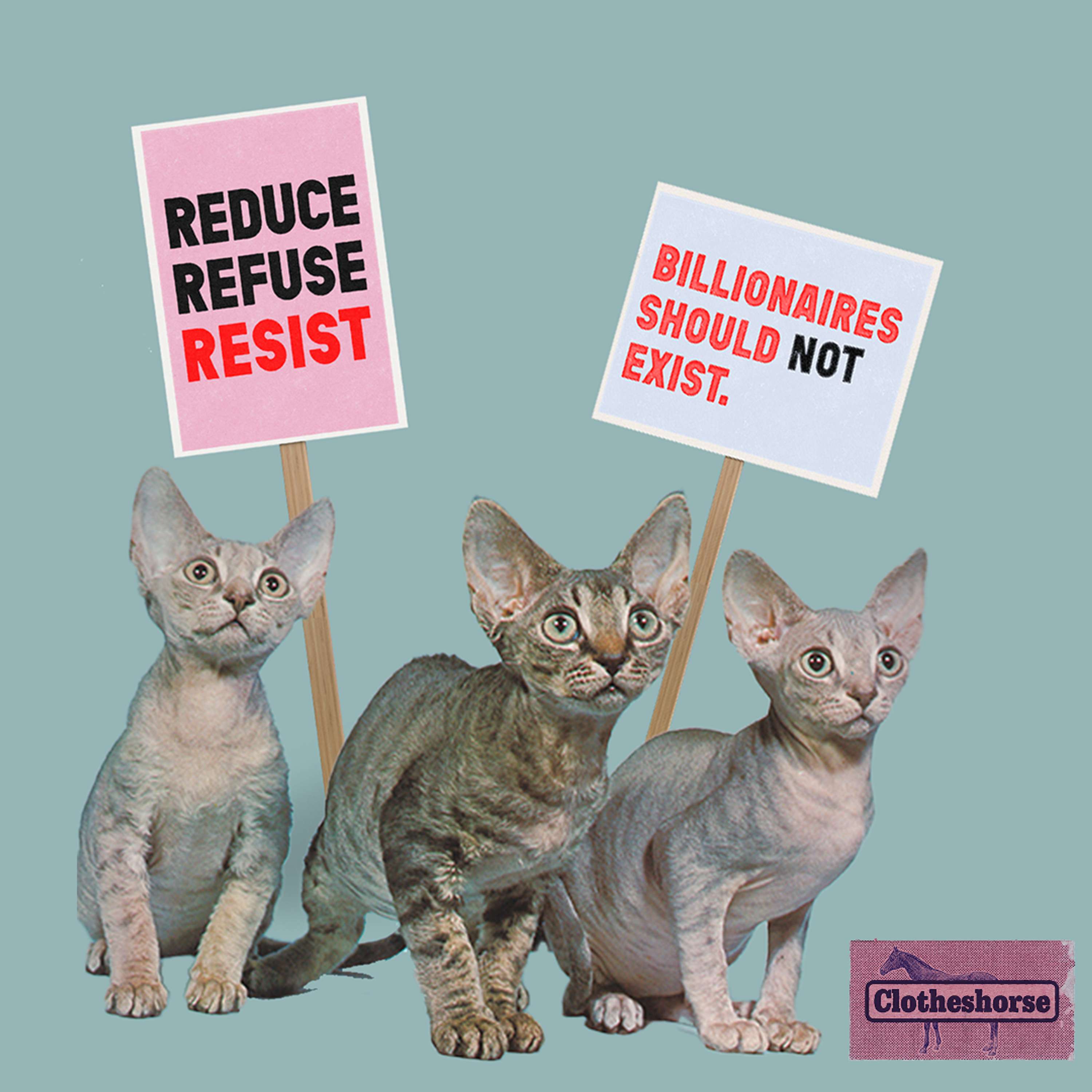
Loading summary
Transcript1 lines
- [00:18]
Amanda
Welcome to Closed Source, the podcast that loves a theme. Okay, I love a theme, but this episode's theme is that there is no theme. Yeah, it's kind of wild, right? I'll explain it all. Anyway, I'm your host, Amanda, and This is episode 236. And this week, I'm trying something a little different with y' all. Rather than one cohesive theme, I'm gonna be touching on a few different topics that are, I don't know, like, ripped from the headlines, including some things you have been sending emails about. And we are gonna talk about so much stuff. We're gonna talk about my trip to the UN we're gonna get a little update on the fashion act. We're. We're gonna talk about Target and specifically how boycotts have been impacting Target. We're also gonna talk about Target's nightmare disaster. Just, oh, my God, they really. They really blew it. Their pride collection this year, and why their pride disaster is a big deal. It's more than just some embarrassing product. We're going to talk about how CEOs really seem to fail upwards and have, like, the ultimate job security. Have you noticed this? We're going to talk about Joanne and her new boyfriend, Michael. We're going to talk about Torrid and how Torrid is closing a bunch of stores this year, why they're doing that, what it means. So, yeah, we're going to be talking about a lot of current event stuff that y' all have been reaching out to me about. I thought, like, oh, I can work these into different episodes. And it just didn't make any sense. And I said, okay, I'll just make an episode that is about all. All of these other little tiny things. And I have no idea what I'm going to name it, but we'll get to hit on all of these topics. And this is future me, Future Amanda. Not a distant future Amanda, just the future Amanda who edited this whole episode and came back to tell you, as I'm finalizing the edit and about to hand it off to Dustin, that as I was working on this episode, it really felt like it had no theme. It was just all these disparate stories that you've all been interested in hearing more about. And then as I looked at it all together, I was like, wow, there really is a theme here. And that theme, which I would say is often the theme of Closed Source, is, hey, we. You and me and everyone we know and everyone we don't know, we actually have the power to change all of these things. That are happening around us if we work together to do it. So that's the theme. This is not a themeless episode at all. And, yeah, let's. Let's just jump right in to all of it. Okay, well, let's get things started with a little recap of my trip to the UN a few weeks ago. For those of you who might be unfamiliar, the un, AKA the United nations, has its headquarters in New York City in a massive complex right on the river. I actually was shocked by how big it was. Really intense security to get into the building. But once you're in there, in the complex, there's amazing art, all kinds of, like, educational exhibits, and I don't know, there's just, like, a lot going on in there. And it felt like. I don't know, it felt kind of magical to be in there. So I was there for the United Nations Fashion and Lifestyle Network annual meeting. And if you're like, okay, well, that's a lot of words, what does that mean? Well, the UN Fashion and Lifestyle Network, per the UN website quote, plays a key role in advancing the sustainable development goals by connecting industry stakeholders, media, governments, and UN entities. And it was essentially just a day of different panel conversations and presentations about what's happening in the world of sustainability and fashion. And I gotta tell you, it was, like, such an honor to be invited. I mean, I'm pretty sure I'm the first person from my town of 600 people where I grew up, to be invited to United nations. And I've also been aware of this meeting for a few years. And I kind of was like, oh, it'd be cool to be invited to that someday. But I kind of assumed I never would be. So when I got the invitation via email, I went over to Justin's office across the hall and I was like, do you think this is real? Why would they invite me? And I actually went back and, like, you know, did a Google search of the people cc'd on the email, and I was like, oh, my God, this is real. But I have really intense imposter syndrome about all of this stuff. And I honestly for a while thought that they invited me by mistake. And that's just how I am, I guess. But, you know, also like, yes, my imposter syndrome is based on things that have nothing to do with my work on clotheshorse or the value of my work on Clothes Horse. But also, I hate to bring it up, but actually a listener emailed me about it a few days ago. What happened with Remake a few years ago was Deeply traumatic and still makes me feel incredibly anxious around any organizations involved in like, so called sustainable fashion. Like, I just try to stay away from events like that because it was such a deeply traumatic experience for me. For those of you who are unaware of what happened, like, very long story short, Remake did a post on social media that seemed to imply that they'd done some sort of interview with me where I talked about how having bipolar disorder gave me like a shopping addiction, which is not true. I do have bipolar disorder. I have never had a shopping addiction and I certainly have never talked about my bipolar disorder giving me a shopping addiction. And even if I had, that's my story to tell. And anyone else who wants to tell it should be doing so in close partnership with me. And I want to be clear that there was no partnership here. There was no contact in advance asking me if it was okay to post this. I had no awareness of it at all until I got a notification on my phone saying that I'd been tagged in a post by Remake. And yeah, I was excited at first because I was like, wow, this big organization has noticed my work. Until I clicked into the post and saw what was really happening. I was so embarrassed and deeply ashamed and felt so powerless to do anything about it that I didn't say anything. But so many other members of the community did. And I appreciate that. Like the people who showed up for me, it was a few days of really intense. It was just an intense emotional experience. And then I was forced, I mean, I would say bullied into having a zoom meeting with the CEO of Remake who wouldn't allow me to record the meeting or have anyone else in the room. This was a zoom meeting, by the way. And she did that so that she could be terrible to me and accused me of being someone who just wanted to be famous on the Internet and was willing to take down an organization that did good work in order to get clout, which is the exact opposite of me. And honestly, if I were going to chase clout on social media, it probably wouldn't be on the basis of bipolar disorder because, like, having that illness has made people treat me terribly, like my entire adult life, you know, so it was a really bad experience. Then they posted a weird. I don't know what they were trying to do. They were trying to show some receipts that I was like a liar or something, but it didn't really amount to anything. And all they really needed to do was just pull down the post and say they were sorry rather than dragging me through days of Drama and additional trauma. The entire social media post that they created, once again without consulting me, was an amalgamation of different things I'd written in captions of posts a few years prior. So the whole thing was just like super strange. No permission to use it, no consultation with me about it being okay or anything else. And then, yeah, them trying to, I don't know, cancel me on the Internet. Deeply traumatic scenario. I'm trying to explain this to you in the most like level headed way, but even as we're talking about it, I feel myself feeling kind of like sick, like I could cry. So yeah, that was a deeply traumatic experience. I actually, even when someone says that they work with remake or mention remake, I kind of, I take a pause for a moment and can I trust this person? Is this person going to harm me somehow? Not physically, but emotionally or reputationally, or what have you. And so any large events that are put on by large organizations or have large organizations involved, I'm immediately like, I don't know if I should do this. So when I got invited to this UN meeting, I was like, maybe they invited me by mistake, maybe they're going to change their minds on it. And I kind of expected that might happen. So I booked a hotel room in New York. I asked Dustin to go with me because my thought was like, well, if they, I don't know, retract their invitation, you know, between now and when we go, we'll just go up there and be together and have a fun trip. But they didn't do that. I mean, they really did mean to invite me. It's like I still didn't even believe it until I was actually physically there in the building. This is like how deep this kind of stuff runs sometimes. And yes, I know it's embarrassing to say out loud, but I bet you have felt similarly in some other kinds of situations yourself. So anyway, you also probably know by now that if you invite me to something and you send me a PDF of information about said event, especially at a place like the UN where there are a lot of procedures and rules, right. Many of them security based. Right. You know, I am going to read that thing multiple times and take it very seriously. So I hadn't gotten any details about like dress code, security or anything leading up to the event. And I was getting very anxious. It was on a Monday and it was of course feeding my, I don't know, delusion perhaps that I was invited by mistake or this was an elaborate prank. But I did finally get it Thursday night. So Thursday night, the event is on Monday. And of course, I read the thing multiple times. Instantly learned a lot about at the security, how it worked, what was allowed in the building, what was not. Like, you couldn't bring drinks or food. There were serious rules around the size of the bag you could bring. And the bag that I normally use for my laptop, which is, by the way, a vintage coach bag that I thrifted for 5.99 and lovingly restored. That bag was one inch too big, which meant I couldn't take my computer. And I was like, that's okay. I'm gonna take my iPad. I can take notes on there. I can actually write them with my, like, Apple pencil or whatever it's called. That'll be fine. And I'll just take this other bag. Okay, fine. Problem solved. But then the bigger problem arose, which was the dress code. Now, I don't know if you remember, but a couple years ago, I did an episode, maybe two episodes with Ruby and Maggie about dress code. And in that episode, I'm pretty sure I was very clear. Like, I've never actually had to dress business in my entire adult life. Because when you have a career in fashion, you just wear cool clothes, like what you think is cool. And it's. It has its own pressures attached to it. Trust me. Like, you have to look ahead of the trend at any given moment, or you. You, like, your livelihood depends on it, right? You won't get hired, you won't get raises. People won't take you seriously in meetings. So not that not dressing business is better. It's just different. So this means I have plenty of clothes. I have absolutely no business clothes. And the dress code was business formal, per the doc. But when I Googled that, business formal was literally, like, formal wear that you would wear to a business event. And I was like, no, I think they mean, like, straightforward, like, business business, which I don't have. And I was kind of, like, melting down, like, it's Thursday night. I have to be there on Monday. I don't think I'm gonna find anything secondhand between now and then. It's like, not a guarantee. And it turned into a whole, like, epic Google search where I ended up buying a blazer from Eileen Fisher, which the next day, we had to drive to King of Prussia mall outside of Philly to pick it up. So it was like, an hour and a half drive to go get this blazer. And then I wore it with a black dress and black tights and black shoes. And I just felt so alien to myself going to the UN on Monday. But I take this stuff very seriously, right? So I show up in my business clothes, which Dustin said I looked like a goth Mormon. Fine, I'll. I own it. You know, here I am. I'm, like, not dressed as myself. I feel very strange. I have this little horse pin that Maggie gave me, Maggie Green gave me when she visited me, like, I don't know, like a month and a half ago. And I wore that on my blazer, and it made me feel a little. Just a little bit more like myself, but still, there I was in my weird business clothes. I get there. No one is dressed business at all. People are dressed like, oh, I work in the fashion industry, right? And so I look like a weirdo in my goth Mormon outfit and feel very uncomfortable. Like, this is not how I normally dress. This is not who I normally am. And I'm just there, like, seething, like, over all of this. Although I will say the Eileen Fisher blazer is great and actually looks good with a lot of other stuff I have. And it's. It's like linen. So it's just, like, a really amazing piece of clothing. But I probably wouldn't have bought that, or at least I definitely wouldn't have bought it brand new if the timeline hadn't been so urgent. Anyway, I was waiting in line there, and I was waiting for my friend Katya from no Kill magazine, who's been on the podcast in the past as well. I knew she was coming and we'd been coordinating. I texted her and I said, I feel like an idiot. I'm dressed business formal and no one else here is. And she laughed in text and was like, I fell for that last, don't worry, it happens to everyone. And of course, she showed up wearing, like, an amazing cool outfit, including, like, these, like, printed, like, silky cargo pants. And here I am in my weird goth outfit. Anyway, very stressful start to the day where I was like, maybe I should just go home. But like I said, it was amazing to be there. I listened to a lot of really interesting conversations. The meeting itself was actually held in one of the meeting rooms where the UN assembly normally meets. So I was literally sitting at the, like, long desk thing and could put the ear piece on to hear the presentation, which made me feel very cool. A guy came around and gave us all sustainable development goal pins, which also felt very cool. I heard just so many great conversations. I took a lot of notes. It just really got the wheels turning in my brain more than anything else. And here are some of my key takeaways from that day. And I bet more will emerge over the next few months as I continue to process and mulligan what I observed that day. I mean, one of the major takeaways to me that is something that I'm talking about to you all the time also, is the power of working together. There was a really great panel conversation where the discussion was really like, look at what we've accomplished so far. You know, the Garment Workers Act, Fashion Workers Act. And while the Fashion act hasn't been passed yet, more on that in a few. Um, it's making progress, right? And it all starts with just people who are passionate, working together and getting out there and making change. And another point that came up many times throughout the day is, is basically how much of the work toward progress in terms of sustainability, whether it's in fashion or any other industry or category, that work and that progress is actually coming from individuals like you and me and small brands and grassroots organizations rather than big companies who have, I mean, honestly, like, significantly more resources, mainly money and people at their disposal to make and lead these systemic changes. Furthermore, big brands are still not being held accountable for their impact on the planet and its people. Of course, no, they're not being held responsible by the government, but we as individuals. And when I say we, I don't necessarily mean me and you, because we know the power of not giving our money to people who suck, right? But in general, the customer, the consumer, the general public are not holding these brands accountable either. You know, I think about, like, a company like Coca Cola that is just, you know, the number one polluter on the planet earth, yet people are buying tons of Coca Cola and Dasani and whatnot, like, every single day. Many of them may not know the truth about these companies, but others do and kind of raise their hands like, what can I do? And it feels really unfair, right? Because the other thing is that the smallest brands, the smallest businesses, are held to the most stringent standards by other businesses that they work with, by the government itself, and by customers, right? If you run a small business, I'm sure people, you've experienced this, right? People demanding that you dissect your pricing or show proof of this or that. They're holding you to a much higher standard than they're ever going to hold target. And it is unfair, right? And I don't have an answer to that. It's like, I see how the solution to all this starts with all of us working together, right? I do think the change comes from the bottom up rather than the Top down in most situations. But it does feel unfair that so many horrible companies doing horrible things to this planet. And it's people get away with it every single day. Right? I don't have an answer there, but it's one of those things that I'm mulling quite a bit, right? How do we get more people to hold more of these companies accountable? That's kind of like one of our homework assignments for this year. I think. The other topic that came up that I was like, oh, yeah, this is a clothes horse classic. I'm so glad we're talking about this is how little people know about laundry and fabric and fibers. How little they know about making the right decisions about what they buy based on what stuff is made of and the kind of care it will need and how. Because they don't know that they're unable to really extend the life of the things they own because they don't know how. Right. And it was interesting during that panel, someone asked, everybody, raise your hand here if you really don't know anything about laundry. And most people raise their hand. And what's interesting about this is one, we on a personal level, can't care for the things that we have. Right. And make them last if we don't know about laundry and fabric and fibers and whatnot. But also it kind of, it sort of ends circularity prematurely because in a circular economy, you would wear clothes until you no longer wanted to wear them or could wear them anymore. And there are a million reasons why you might not want that dress or that blazer or whatever anymore, Right? But in a circular economy, you would say, okay, I'm done with this, but now I'm going to pass it on to the next person. Right? I might resell it. I might have a clothing swap. I might just re home it. There are all these different ways that those clothes could go on to a new owner who would wear them again, and then when they're done with it, they would pass them on to someone else. But because we don't know enough about how to care for clothing or even choose the right clothing for ourselves. And once again, I'm saying the big we, it's not just you and me, we know these things. I'm talking like humans as a whole, humans who wear clothing as a whole, I guess, which is most humans, because we don't know that care and we don't know that much about fabric, we're kind of ending circularity prematurely. And really, we're often actually living a more linear model of clothing where it gets ruined or it becomes unwearable and we're just throwing it out, right, because no one wants to wear it anymore. But if we could care for it, we, we could continue that circularity, right? Where it would go from person to person, in person, because it would have a longer life. Now of course, another monkey wrench in this circular economy is that the vast majority of fast fashion clothing, which is, you know, the vast majority of brand new clothing being made right now isn't designed to last, right? Maybe not intentionally designed to fail so soon, but nonetheless the decisions are being made consciously otherwise to use cheaper fabrics, cheaper trims, faster sewing, just things that could never last because clothing that lasts isn't profitable in the fast fashion model. So that's another obstacle right there. But if we could get clothing quality to be higher, maybe even just buy as like a, a majority of us shopping from brands that make higher quality stuff, right? So the other companies are forced to either make better stuff too or go out of business. If we could all like drive our spending that way and then we would see the general quality of clothing improving and we were also caring for it properly, we could probably end so much of the clothing waste that's happening right now. When I say it out loud, it just sounds really easy, right? But it kind of goes back to this idea that I was touching on earlier, how like our big homework assignment is sort of like getting other people to know why these things are important and how they can make better decisions, what those better decisions are and how their individual actions actually do drive what happens next. Because I really do believe that we are the ones who are going to have to make the change, right? These companies are never going to make it. And I'll talk about this more in a little bit when we get to Target, because of course we got to talk about Target this week. I was telling Dustin last night as I was angrily making dinner, not angry at him, just angry at this fucking world right now. And I was telling him, you know, I said, listen, whether we like it or not, and I definitely don't like it right now, what corporations do, well, it has a major impact on our day to day lives, whether it's how much we get paid and then therefore our quality of life or how we get healthcare or access to medication and education and what we get to have, like what kinds of clothes we have and what kinds of computers we have and what we get to watch on streaming services and on and on and on. And in fact, corporations have such great control over our quality of life that they also kind of dictate, unfortunately, social norms, which we'll get to when we talk about Target. But right now, these companies kind of control our lives in a lot of ways. They're not going to change anything until we force the issue. And I think what I just said sounds like, so demoralizing, like, them having this control. But what's interesting about it is that we actually have a lot of power in changing what they're doing by just not buying stuff from them, not giving them our money anymore, because their power, strangely enough, comes from our money and labor. Right. And so if we can break that connection by having more and more and more people knowing why we need to hold these companies accountable and how we can do it, we could see some major changes here. I feel like I'm talking in a circle here, but I also feel like we kind of live in a circle right now, but not a circular economy, just a unfair loop of corporate bullshit. Right? Okay, so those are my key takeaways from the un. Like I said, I'm sure more will be coming up over the next few months, but definitely gave me a lot of food for thought about the future conversations I want to have here on clotheshorse, the kinds of information I want to share on social media, et cetera. So I'm really glad I got to go. Also, speaking of businesses who really walk the walk, I did spend about an hour in the cafe at the un. It's in the basement with Katya. We are just, like, gabbing about things between sessions, kind of catching up, talking about, you know, the challenges of essentially working for free in the world of sustainability and how hard it is and stressful and scary and all these things all at once. But so we were hanging out at the cafe, and, man, I gotta tell you, I mean, everything in the cafe was zero waste. So, like, I got some food and it was in a glass jar, and all the utensils were legit compostable. Right? I got an iced drink and it came in a paper cup with a paper lid. Everything was either compostable or recyclable. And it was incredible. Like, because this is, after all, the UN is who created the Sustainable Development Goals. And there they are walking the walk in their cafe. So I just wanted to give a shout out to that because it impressed me. And lastly, I just want to say, once again, it was so great to hang out with Katya, who, even though I've talked to a ton and we've been, like, Internet friends for years, it was our first time hanging out irl. It was so exciting to talk to her about what she's working on and just like learn more about her life. And afterwards we went to a bookstore and looked at books and we talked about Japan and then we took the subway together and I just, I felt like we had known one another for years and like years and years and years and I'm excited to hang out with her more irl. And honestly, my experience with Katya was not dissimilar to the experiences I've had with other people from our community when I finally got to hang out with them in real life. Just how everybody feels like an old friend, you know. And I just feel so blessed every day that I get to meet so many amazing people via my work on clotheshorse. So yeah, that was my trip to the UN and it was really fun and I will definitely do it again next year and I will not wear business clothes. Let's take a moment to thank some of the incredible small businesses who keep clotheshorse going via their generous Patreon support. Slow Fashion Academy is a size inclusive sewing and pattern making studio based in Philadelphia, Pennsylvania. Designer and fashion professor Rub Ruby Gertz teaches workshops for hobbyists and aspiring designers so that anyone can learn the foundational skills of making, mending and altering their own clothes several times per year. Ruby offers her flagship Sloper Workshop, an in person two day pattern making retreat where you will learn how to drape a set of basic block patterns that capture your unique shape and proportions. You can also use these basic block or sloper patterns as a foundation for infinite styles of garments that are custom made to your body's one of a kind contours or compare your slipper to commercial patterns to see where you might need to alter the shape. No more guessing at full bust, flat seam or sway back adjustments. Start with a foundation that fits. Ruby also provides professional design and pattern making services to emerging slow fashion brands and occasionally takes commissions for custom garments and costume pieces. She has also released several PDF sewing patterns for original designs under her brand's Spokes and Stitches and Starling Petite. Plus. I just want to also add here on a personal note that right now Ruby is actually working with me to create a one of a kind unique to me special dress that I will be wearing for all future clothes horse events including live episodes later this year in the Pacific Northwest. I am so excited to work with Ruby because she is so talented and so knowledgeable about all things clothing creation. Check out the schedule for upcoming workshops, download PDF sewing Patterns and learn about additional sewing and Design Services at www.slowfashion.academy and it's important for me to tell you that that's slow fashion.academy Selena Sanders A social impact brand that specializes in upcycle clothing using only reclaimed, vintage or thrifted materials from tea towels, linens, blankets and quilts. Sustainably crafted in Los Angeles, each piece is designed to last in one's closet for generations to come. Maximum Style Minimal carbon footprint Shift clothing out of beautiful Astoria, Oregon with a focus on natural fibers, simple hard working designs and putting fat people first. Discover more@shiftwheeler.com late to the Party Creating one of a kind statement clothing from vintage salvaged and thrifted textiles. They hope to tap into the dreamy memories we all hold. Floral curtains, a childhood dress, the wallpaper in your best friend's rec room. All while creating modern, sustainable garments that you'll love wearing and have for years to come. Late to the Party is passionate about celebrating and preserving textiles, the memories they hold and the stories they have yet to tell. Check them out on Instagram latetothepartypeople Vino Vintage Based just outside of la, we love the hunt of shopping secondhand because you never know what you might find. Catch us at flea markets around Southern California by following us on Instagram Vino Vintage so you don't miss our next event. Dylan Paige is an online clothing and lifestyle brand based out of St. Louis, Missouri. Our products are chosen with intention for the conscious community. Everything we carry is animal friendly, ethically made, sustainably sourced and cruelty free. Dylan Page is for those who never stop questioning where something comes from. We know that personal experience dictates what's sustainable for you and we are here to help guide and support you to make choices that fit your needs. Check us out@dylanpage.com and find us on Instagram ylanpage lifeandstyle Salt hats purveyors of truly sustainable hats, hand blocked, sewn and embellished in Detroit, Michigan. Find us on Instagram althats Gentle Vibes Vintage we are purveyors of polyester and psychedelic relics. We encourage experimentation and play not only in your wardrobe but in your home too. We have thousands of killer vintage pieces ready for their next adventure. See them all on Instagram. Entlevibes Vintage Thumbprint is Detroit's only fair trade marketplace. Located in the historic Eastern Market. Our small business specializes in products handmade by empowered women in South Africa making a living wage creating things they love like hand painted candles and ceramics. We also carry a curated assortment of sustainable and natural locally made goods. Thumbprint is a great gift destination for both the special people in your life and and for yourself. Browse our online store@thumbprintdetroit.com and find us on Instagram thumbprintdetroit. Vagabond Vintage DTLV is a vintage clothing, accessories and decor reselling business based in downtown Las Vegas, Nevada. Not only do we sell in Las Vegas, but we're also located throughout resale markets in San Francisco as well as at a curated boutique called Lux and Ivy located in Indianapolis and Indiana. Jessica, the founder and owner of Vagabond Vintage DTLV recently opened the first IRL location located in the Arts District of downtown Las Vegas on August 5th. The shop has a strong emphasis on 60s and 70s garments, single stitch tees and dreamy loungewear. Follow them on Instagram vagabondvintagedtlv and keep an eye out for their website. Coming fall of 2022 okay, next, let's give a little update on the Fashion Act. So for those of you who have been following along, I've been working with a coalition of people to get the Fashion act passed in New York, gosh, for like almost two years now I guess. And I've released a whole episode about it. You can go back and listen to that. I post about it pretty regularly on social media, so you can go see that on my profile and all the social media platforms except for TikTok of course. And let me tell you, passing legislation is really, really hard. And it's really hard when we're talking about clothing because the vast majority of the people that we talk to initially, they think clothing is stupid and why would it matter? And they don't know about Fast Fashion or Shein or anything like that. So we have been, there's been a lot of work to do. And once again, it did not get passed in New York this year. But there was great progress that makes me think it's going to get passed next year. For example, we've grown our co sponsorship support over this most recent session and we now have 69 co sponsors in the assembly and 24 co sponsors in the Senate. That's massive progress. That makes me feel like we're going to get passed next year. The votes are there. Basically what we need now is the Senate and Assembly leadership championing the bill next year, which we're going to be working on. And already this bill has moved forward in the assembly and also this year it started picking up momentum on the Senate side as well. So we think it's going to happen next year, but we're going to have to be really loud about it. I'm actually going to reach out to Maxine, who is really the force behind the Fashion act, and ask her, like, hey, do you want me to help y' all like coordinate on social media? Because I think that's a really important piece of it. Also, the Fashion act is in the works in California. And let me tell you, if we could get this passed in California and New York next year, we will 100% see a significant change in the world of fashion. And the impact of fast fashion like this would be a huge leap forward for us. So the bill for the Fashion act passed through ESTM and Natural Resources. These are committees now it needs to move through appropriations. There were many bills that moved through these committees that were axed, but the Fashion act was not. And it is one of 25 bills that while not passed this session will be heard in January. So this is a really good indicator that the legislature is interested in passing this into law. So there's a lot to do between now and then to get people hyped on it and to get people calling the representatives and pushing this through. So there's still a lot of work to be done, but there also has been progress and wow, legislation is just like really slow. It's not like an instant gratification situation. But imagine how incredible it will feel when it really happens. It's going to be worth it. So I mentioned Maxine, who's the force behind the Fashion Act. She has been a guest here on the POD in the past in the episode where we really explained the Fashion act and why it needs to happen. She wrote a great op ed for Business of Fashion called Dear Fashion CEOs stop undermining climate Action. I'm going to share that in the show notes for you to read. It's not that long. I think it'll get you really fired up. But she hits on a point that has really been on my mind a lot lately. And this is actually what I was talking about with Dustin last night when I was making dinner, angrily making dinner, when I was talking about how corporations have so much of an impact on our day to day life because this year we have seen all of these huge companies and medium sized and even some small companies really moving away from any social or climate progress. They've been ending DEI initiatives and quietly pulling any sustainability commitments from their websites and letting go of those teams. Quietly of course. And they've been staying silent on Pride this year. Even like it's silly, but a lot of companies will sort of change their logo, you know, for Pride month to rainbow. Very few of them did that this year. And yeah, we can talk about rainbow capitalism all day, blah blah, blah. I get it, people are talking about it on threads right now, probably. But I want to be clear that talking about sustainability or normalizing being queer, when companies do this because they have such an impact on our day to day lives, they make these bigger social issues, right? They normalize being queer, they normalize thinking about your climate impact and sustainability and plastics. When a company like Target highlights and buys from black owned businesses, they create economic impact within the black community. But they also normalize for tons of white people who just. It never even occurred to them because they have so much ingrained racism that. But black people can run businesses too. I mean, I know it sounds absurd to say out loud, but there is this social impact of companies doing these things. Do I love that companies have so much power in our lives? No. Like I said earlier, I definitely don't. But when they stop talking about these things, it feels a little scary. So listen, by now I've reached that point in my life where, thank goodness I work for myself, but I sure worked for a lot of corporations. And something I noticed pretty early in my career is it seemed as if the people at the top had the greatest job security, whereas the people at the bottom, me and my co workers, we could lose our job at any moment for the most minor infraction, right? You know, like you and I, we might get a performance review that, I don't know, knocks a few points off our score and prevents us from getting a raise because our boss doesn't like the way we use punctuation in emails. Or we might. You know, this is a true story ripped from the headlines of my life. I got a performance review that was stellar, except that people sometimes couldn't tell if I was being sarcastic or serious, which has really nothing to do with my job performance. But wow, gave me anxiety for the next like 15 years about if people could interpret what I was saying, we might miss opportunities at promotions, raises, just opportunities in general because we're not hitting some metrics right. Meanwhile, executives can roll in, scream at everyone, throw bad ideas at others, kind of just be like really terrible tyrant. Definitely not hit their metrics ever. And yet either they will continue to be CEO or they'll get paid out handsomely to leave the company and then go be a CEO somewhere else. And this happens kind of non stop. Like I laugh about it all the time. But not in a like fun haha way and more in a like, God, the world is just so fucking stupid way where, you know, someone will be the CEO of, I don't know, like Tyson Chicken and then suddenly they're like running, you know, Express, the clothing brand, or they might go from ebay to Nike, you know, and then back to ebay or what have you. Like, there's just, it's this failing upwards idea that, I mean, I was in the shower this morning and I had this light bulb moment where I was like, man, this entire administration running the United States right now is the most blatant and of course infuriating example of horrible people failing upwards. Right? Wow, what a time to be alive. But the point is, like, it just does seem like a lot of CEOs have kind of a wild amount of job security and I don't know, like, kind of nothing to lose. And no one seems to have greater job security than the CEO of Target, Brian Cornell. Now, now, I've mentioned this to you before and it's going to come up a bunch as we talk about Target here, but I lurk in a lot of subreddits, right? Specifically subreddits for companies where most people posting and commenting in that subreddit are employees of the company. I think that's how you get a really good feel for what's really happening behind the scenes at these companies. And so I've been following the Target subreddit for years and honestly, around, I don't know, early 2023, maybe late 2022, after reading so many of these posts, I was kind of like, I don't really want to go to Target anymore. Like it is a shitty place to work, you know, and it seems like a really dysfunctional company. And Brian Cornell gets brought up a lot for a lot of bad decisions that the company is making that really do impact customers, believe it or not, but really impact the employees of the company. I'm telling you, if you go to Target and you can't find anything and the shelves feel empty or the store is messy, you can thank Brian Cornell for that because he has been cutting payroll so much to stores that they can't even get the shipments out on the floor for people to buy things. Now, in the Joanne episode a few weeks ago, I talked about how understaffing stores can create this sort of cycle of declining sales and then more cuts to payroll and then even more declining sales, because basically without the staff there to provide customer service and to put Shipment out on the floor, products that the company has already paid for out on the floor, right? Then there's a decline in sales, right? So then as sales decline, the company's like, okay, well we got to cut payroll even more to accommodate these dropping sales. And so then even less people are on the floor to help customers and stock the store. And so sales go down even further. And so it just is this endless cycle where ultimately the stores become almost like unshoppable for customers. Which we saw happening with Joanne. Right. And I've been seeing this happening with Target for years. I don't think it's a pandemic related thing at all. I actually see it as a company that is just continuously not making the math math within its business. And rather than identifying what those causes might be, it is instead just cutting payroll to accommodate that. And so in the years that we lived in Austin, the Target that was closest to our house, we just stopped going to it altogether because I would go, you know, to get a bottle of Contact Solution and that entire aisle would just be empty or the store would say something was in stock online. We get there and it wasn't there, probably because it was sitting on a pallet in the back to no fault of the employees, right? Like this being just like there hasn't been enough people, There weren't enough people scheduled to work in the store to do these things. And this is, this is kind of long term. Repeating this pattern over and over again just means that sales, they never rebound because people stop shopping there because they can't find what they're looking for. Or in the case of Target, a store that has always really where it really succeeded was by having you come in for cat litter and Contact Solution, but then walking around the store and impulse purchasing other cool things that you saw along the way. For Target, that's not really working anymore because they don't have anyone there to get to put the stuff out on the floor, both the things you came there for and the random stuff you would have impulse shopped along the way. Furthermore, over the past few years, under the leadership of Brian Cornell, the company has prioritized online shopping and online order online pick up in store rather than people coming into the store to shop. Which means, surprise, surprise, people are impulse shopping less stuff because they're just ordering online what they need. And so of course, another contributing factor to Target's declining sales, but it's even bigger than that, right? Another phenomenon that's been playing out at Target over the past few years, which once again Speaks to poor leadership at the top of the company. Target just seems to be drowning in too much inventory. Like maybe they're overproducing. I mean, there's no maybe there. They definitely are. But it's a much bigger problem that is resulting in the company ending up all the time with way too much unsold stuff. It's hard to say which. Which is the problem here. Maybe it's a combination of both. And what I mean is, is the company picking the wrong product to sell in its stores? And I'm talking less about things like laundry detergent and cat litter and more about the stuff that people impulse shop. The clothing, the tchotchkes. Right. Is the company picking the wrong stuff to sell? Or is this cycle of understaffing stores, not getting product on the stores, leading to unsold inventory? Because either way, the company for the past few years has been dealing with a lot of excess inventory. Now, leadership itself has said it's because the company has been making bad decisions about products. I don't know if that's true because I think a lot of it isn't even making it to the sales floor in the first place. And then beyond that, going back to this decision from Cornell to prioritize online shopping and then picking up, you know, outside the store, people aren't even coming inside to see these things and impulse purchase them. Either way, the company has been ending up with like just a ton. I mean, and we're talking like tons and tons and tons and tons. If we're talking about literal measurement here, a lot of unsold inventory. And what I have seen where I live, and I would be curious to see if you are experiencing this where you live, is there's this whole sort of secondary economy out here where I live in Lancaster county that kind of relies on selling this Target overstock, right? So thrift stores have been buying that inventory, or, you know, it's being donated to them, depending on what the stuff is. And so the thrift stores out here, especially the Goodwill, tend to have just a ridiculous amount of brand new Target stuff, you know, with the target price tag still on it. But there are also all of these other, you know, I don't know, bargain stores, we'll call them, that are selling a lot of excess Target inventory. Whether, like, I don't know, there's a chain of stores out here that mostly is a consignment store, but they have a whole section that is just Target overstock, you know, and they're a chain. So like a local chain. So all of the store locations basically have a Target department. And I see this in other like sort of one off independently owned bargain stores. And so there's just all this unsold product that Target has paid for and is selling off probably for pennies on the dollar. So they're losing money there too. The company's just kind of like in a really, a really bad place, but it just keeps getting worse. And what troubles me most is I was doing just a little digging around about Target yesterday. Once again, I've got like no emotional connection to Target at this point. If Target failed, I wouldn't be sad about it. I think that people probably there are people who have like a parasocial relationship with Target, just like Joanne. But like, I think we've all been so phenomenally disappointed by Target year after year at this point that like, if it went, we wouldn't be surprised. Here's the thing about Target though, and I don't know if this number is 100% true, but I was doing some reading on the Internet yesterday and it appears that Target here in the United States employs 400,000 people. And when I see a CEO and leadership of a company making just like one really poor decision after another, like Brian Cornell, the CEO of Target is doing right now, I can't help but think about like, he's got no skin in the game. He has enough money to last him the rest of his life and to pass down to generations of his family, right? But the 400,000 people who work for that company, what do they have if Target goes under? I think about all the people who lost their jobs when Joanne closed. I think about myself and my coworkers who lost our jobs when Nasty Gal went bankrupt. And Nasty Gal also went bankrupt because of just like a lot of really bad decisions made by people at the top who had nothing to lose. And so the sales at Target have been in a decline. I think that the decline really started in 2023. I'd have to go like, pool all the reports and look. But I think 2023 was a big turning point for Target where the store experience was getting worse and worse. Finding product there was getting harder for customers, but people still put up with it. Because Target has always portrayed itself as the more ethical, nicer, more social justice minded alternative to Walmart. Right? Like it feels more premium than Walmart, although it really isn't. And let me tell you, spend enough time on the Target subreddit and you will realize that a lot of the stuff you can buy at Target, whether it's food, clothing, makeup, you name it, is made by the same people who are making the Walmart house brands. So it's all the same, right? Just better wrapping. For a long time, Target had some really incredible marketing, some of it paid advertising and whatnot, and some of it just organic virality of it all with people loving Target. Right? So Target really started to take a turn in 2023 where it was starting to lose some of that luster when it pulled its Pride collection that year. It pulled it from a lot of stores or pulled it to the back of the store, and others just straight up pulled product off the floor after a highly orchestrated and frankly, fucking stupid campaign from transphobic people, from homophobic people, from people who just hate people harassing store employees, calling in bomb threats, coming to the store and like, destroying displays and frightening people and threatening people. The company bowed to the fear and the pressure and pulled the collection. And as I've mentioned numerous times in this episode so far, decisions that companies make like this really do kind of have, like a larger social impact, whether we like it or not. And Target could have said, hey, jerks, we don't care that you hate that we have a Pride collection. We're not down with transphobia and homophobia and threatening our employees and creating an unsafe environment for everyone in our store. And so rather than bowing down to you and getting rid of this collection, we're going to take a stand and, and forbid you from coming in the store and keep our collection. Right. And by doing that, they could have set an example for kind of like every other. Every other business really, of like saying, hey, stand for what's right and it will be worth it. Instead, they took what is the easier route, honestly, and just pulled the collection. And what they said, what they told the world with that decision was, hey, you know, like, don't stick to any values, don't think about, like, the human impact of these decisions and just give in to people who threaten you, bigots who threaten you. Right? And they kind of set the example, like, hey, bigots always win. I know I've talked about it here before on the podcast, but at that time, that was when I was working my last corporate job in Austin where I was head of product, ostensibly leading this brand that was owned by a parent company and the parent company itself, interestingly, like, the CEO of that parent company is a major Democratic donor. Like, his office is basically wallpapered with framed photos of him with like every high profile Democrat of, like the last 40 years, you know, like, he went to Hillary Clinton's birthday party a few years ago, so he's not some, like, conservative Texas archetype at all. But as this was happening with Target, he told me in a meeting that he felt that I needed to start pulling gay product from the store, or at least moving it to the back and not reordering it so that we could get more. More customers, new kinds of customers. And this was really disheartening for me for many reasons, right? Personal and otherwise, but also, like, my team. And I took pride, no pun intended, in being the gayest store at the mall, of creating a safe space for our employees and our customers and being a place where people could go at the mall and hang out and feel. Feel like they belonged there and feel seen. And I know that feels like a heavy thing for a store selling tchotchkes at the mall, but we look for our third places wherever we can find them, right? And I was no way in hell gonna go back to my desk and tell my team that we were gonna stop being the gayest store at the mall. And that was one of the major factors in me leaving that job. I had planned to try to stay through the end of the year, but something explosive happened at work where I was like, I can't be screamed at and humiliated anymore. So now I'm quitting Spontaneous. I planned to quit because this company was asking me to walk away from my values, right? No one can pay me enough for that. And they certainly weren't paying me enough for that. So for me, that time period, 2023, was when I was like, okay, now I'm officially done with Target over this. And I think a lot of other people were starting to feel that way. And yet, as we've talked about here on the podcast in the past, it's not always easy to stop shopping from some of these companies when they are the only place available for you. When the alternatives, like, I don't know, Amazon, actually worse, right? So plenty of people were sort of begrudgingly still shopping at Target, but you could tell that Target was losing. Losing its appeal, except for, like, a very specific type of, like, Instagram mommy blogger, right? And then this year, major turning point, right? When Target, I mean, I still can't believe they did this. They took away the one thing that was keeping people shopping with them, which was this, like, illusion. It turns out that they cared about doing good things, that they were the better alternative to Amazon and Walmart. They full masked off and said, we're getting rid of dei, right? And we're letting go of people, executives who created DEI and advocated for it and helped us get these policies and initiatives in place. And I gotta say, it started a massive boycott. It was interesting to talk to people, talk to, I mean, like, message with and chat with on social media who had never engaged in a boycott before, who were not politically active, who were like, no, this is it. Like, this has changed my life. Boycotting Target has made me realize how powerful I have and what an important part of all of these things I am. And the boycott is still going strong. Q1 for target, the first quarter was bad. They were down to last year, which is like, in retail, we live in an economic system where every year should have higher sales than the previous year. Every year should be more profitable than the previous year. And here was Target first quarter down to last year. So they did last less sales this year in the first three months of the year than they did last year in the first three months of the year. And trust me, that's a bad situation. There were very stressful meetings happening at Target, I can assure you, I guarantee people have lost jobs. We just haven't heard about it. So then the second quarter of the year comes and passes, and sales continue to be down, and they are pretty significantly down to last year. And the world of finance is, you know, telling people, like, don't really buy Target stock, right. The company itself says it expects for the whole year that they will do less sales than last year, which is a bad thing. I know in last quarter they had almost a 6% drop in their store sales, which is pretty significant. Now they're trying to blame anxiety about the economy and tariffs, and I'm sure that's a tiny bit of it, but it really is that people are just like, well, now I know that shopping at Target is the same as shopping at Walmart or Amazon. So I could just go shop at those places or I could just totally change my life and change where and how and how much stuff I buy. And I think a lot of people are doing that. So Target is just. It's hard for me to see it coming back from this. I mean, it's not like I'm, like, weeping over this or anything. Like, it's a company, right? But they would probably have to let go of their CEO and do a massive, like, PR push. They'd really have to just. I don't know. I don't know how they earn people's trust back. But I will tell you this, if I were, I don't know an executive at Target, I would be thinking, listen, we're already kind of fucked right now because this company has lost a lot of people's trust, so we better nail it for Pride this year. Well, guess what? Target has definitely not nailed it for Pride this year. Now, since 2023, Target has pulled back pretty significantly on where you can find Pride in store. Like, about half of stores now have the Pride collection, whereas it used to be in every store. You can still buy the stuff online, but, you know, it's weird that it's not on the store. Like, it doesn't feel good, right? And this year, not only is it in half as many stores as it was in 2023, it's not up front. They've pushed it to the back of the store in favor of Father's Day and July 4th. And I will just say this, as a very experienced retail professional who has had to spend a lot of time in my adult life thinking about how to sell more stuff for every holiday, I will tell you that Father's Day and July 4th can never drive the kinds of sales that Pride can. So, like, not only is this, like, from an ethical standpoint, just like, such a dumb decision, it's also a bad business decision. But that, my friends, is not where the bad business decisions end. And what I'm about to tell you really speaks to, I would guess, a really chaotic and understaffed corporate environment. And I say this as a person who has experienced both of those situations many times simultaneously in the corporate world. So. So, as I said, I lurk a lot on these subreddits, especially the Target subreddit. And gosh, sometimes Reddit knows way too much what I want to see. And I was laying on the couch, I don't know, it was like a Sunday night. I was like, kind of doom scrolling. And wouldn't you know, this post comes up in the Target subreddit where someone's like, hey, have the rest of you received your Pride collection? And did you see something weird with the Hang tags? And there's a picture of the hang tag from the Pride collection. Now this, this particular tag was from an item that is part of a collab that Target did with the Fluid project for Pride this year. And the tag itself is actually, the hang tag would have said like, oh, this is a collaboration with Fluid Project and proceeds benefit, blah, blah, blah. And they'd probably see like rainbow graphic design direction. I have no idea. But it would be something like that. We've seen tags like this. We take them for granted. Because we probably barely even read them, and they end up in the landfill. But trust me, every hang tag on things like this, so many people worked on, there were drafts and meetings and revisions. So imagine my shock at seeing that this hang tag is actually sort of like the placeholder template from some sort of graphic design program, complete with the margin line still in place. And then what we call Lorem Ipsum, which is like, placeholder text that looks like Latin but isn't. And if you ever have created something in, I don't know, like, Photoshop, and you open, like, a font, like a text block in there to start typing in, it auto populates it with this, like, fake. Fake language. So the hang tag was that it was someone's blank template with absolutely no text copy applied to it, absolutely no design, just a placeholder. And apparently it was on all of the Pride stuff from that collection that arrived in stores. The chain kind of had to quietly pull that stuff and wait for new hang tags. Then a couple days later, someone's like, on Threads is like, well, have you seen this? And it is that multiple items in this collection also have egregious typos on the actual product. It was a group of items from the Pride collection that were called, like, be authentic or something like that. And, you know, that's what the copy said. You know, that was the name of the styles. Something authentic. Authentic with a T. No other letter between the T and the I. Authentic, the word that you and I both know. Right? Well, a couple of these garments had a typo on them that said authentic. Authentic as in a U, T, H E N, T H I, C. No, it was not a play on thick, which for you chronically online people, you know that one. For those of you who don't, it's T H I, C, C. It refers to being, you know, thick, curvaceous, meaty. This was not a play on that. This was a typo. And then all those garments had to be pulled. And I can't even imagine how many tens of thousands of T shirts and tank tops this encompassed and how they are completely unsellable or unwearable and will end up in the landfill. So just like a disaster. And listen, I'll tell you and anybody else who listens to this who works in any kind of, like, fashion or retail environment, like, on the corporate side, will tell you, like, stuff like this happens, right? And there are all these checks and balances in place to make sure it doesn't happen where you're asking for, like, you'll you know, you'll get pre production samples from the factory and you'll keep revising them until they get them. Right? Right. And then you're like, okay, now you can go into production and when they finish production, before they ship to you, just, this is not how it works. They've already, by the time they send you this sample, they've already shipped their order. But in theory, this is what's supposed to happen. They're supposed to pull a random unit from the shipment. It's called the top. Top stands for top of production. It's a sample that should be part of that production run they send to you. It should be very representative of what the final product looks like, what the hang tags look like, all that stuff. And then you as the buyer, take a look at the top and you either approve it, which hopefully you're approving it at this point and because that order's already shipped, or you're not approving it and you're saying, okay, we're not going to reject this order. Like, we got to come up with a plan to fix this, replace it, et cetera. So what this says to me is somewhere along the line, no one saw the top because they wouldn't have approved the hang tag. They definitely wouldn't have approved these spelling errors on the T shirts. And like I said, these things happen. You catch them before they end up in the store, right? But these didn't get caught by the corporate team. They didn't get caught in the warehouse when they were receiving that order. Often they'll be pulling random units from an order to just check them, make sure that there aren't any quality issues. No one did that there. They made it all the way to the store, and people put them out on the floor and then started finding the problems. I mean, they even got photographed for the website and no one caught it. So this just says to me, like, there's not enough people working at Target, and they're being rushed through things. And they're probably under a lot of pressure from, you know, the executives to get things done really fast and cheaply. And this is what happens. And so now there's even less Pride stuff to buy from Target. And once again, like, I don't think you need to buy new Pride stuff, like, ever, right? You can find stuff secondhand. You can swap with your friends. You can make your own rainbow stuff. You can literally wear the same outfits for Pride every year. You don't need to be buying new stuff like this all the time. But this still Illustrates a few points here that are concerning to me, right? So one Target at this point is like, we don't give a fuck about anything, I guess, right? Including pride. And we never did, I guess. And, like, you know, here we're. We're showing this on full display. We also clearly understaff all of our teams, and so no one can catch these things. And it's probably a miserable place to work. If you work at Target in the corporate side, please report back. I want to hear from you. We'll keep you anonymous. So there's that, right? But it also kind of underscores how Pride is being pulled back in so many companies and stores right now. And I don't love that people make a fortune off of selling Pride merch. But what I do love is that for people who might feel isolated because of their sexuality or their gender, they see things like this in stores and on websites and in ads and on commercials, and they feel like it's okay. I'm not alone, right? Because it can be very isolating and scary to be different than the people around you. And so in a weird way, selling Pride merch or sponsoring pride parades or changing your company's logo to a rainbow in June, it all sounds silly, but it actually normalizes being queer, being trans. These are both normal things, and they should be normalized. But of course, in our society, they're not. And more than ever, they're really being unnormalized, right? And, like, it's scary to be anything other than, like, a CIS het white dude right now. So I. I hate. I hate that we're seeing less corporate pride right now, I guess, is what I'm saying. I never thought I'd be saying that out loud, but it's a real phenomenon. It goes beyond even just like, changing your logo to a rainbow and not doing that this year. According to the New York Times, about 25% of corporate donors to New York Pride have canceled or scaled back their support this year. Now, a lot of them are saying that it's due to uncertainty regarding Tarif tariffs in the future of the economy, which I respect. But I can't help but think that it is more about kissing the ring of who's in charge right now. Because Target did not get rid of its DEI programs because it was worried about tariffs. Okay? It was trying to get on Donald Trump's good side. Right? And I suspect a lot of other companies are fearful that way, too. And I guess this just goes full circle to what I was saying earlier, which is, like, unfortunately, Corporations have, they really have a lot of control over how we live our day to day lives, which I hate, right? Like what the quality of our day to day lives is. And we are never going to be able to expect them to do the right thing. We can't have an honor system with them, right? So we need to remember that we actually have the power to control what happens in the world around us. And we need to work together to make things change. And that includes what I talked about earlier this year. Reduce, refuse and resist. Meaning we're gonna reduce what we buy from these companies, right? We're gonna refuse to be wooed back by their marketing and we're gonna resist the decisions that are being made around us that prevent all humans from having a happy and safe life. And I really do believe that we can do it. You know, I talked about this before. I've talked about like on the podcast earlier this year and I've talked about it on social media, but I don't have any spiritual beliefs, right? But I have a profound sense of faith and purpose and hope that comes from all the other people in this world. And what I believe that we can achieve when we work together, when we commit to pushing back to fighting for change and fighting for change together. And maybe it's disappointing that we haven't seen Target fix its bullshit because of our boycott. Maybe they never will. But I guarantee you other businesses are looking at that. I guarantee people's entire approach to shopping and consumption are changing thanks to this boycott. Like there is positive impact coming out of it. I see it around us all the time. And the bigger changes, they're going to become more evident as this year and next year progresses. So don't give up. I'm not giving up. I really believe in us. If you're enjoying this episode, then this is a great time to remind you that my work here at Close Source is made possible by the support of listeners like you. Just like NPR and these great small businesses. Please go give them your support. Blank cas, or Blanket Coats by cas, is focused on restoring, renewing and reviving the history held within vintage and heirloom textiles by embodying the love, craft and energy that is original to each vintage textile. As I transfer it into a new garment, I hope we can reteach ourselves to care for and mend what we have and make it last. Blank CAS lives on Instagram at Blankcas, and a website will be launched soon at Blankcas. Located in Whistler, Canada. Velvet Underground is a velvet jungle full of vintage and secondhand clothing plants, a vegan cafe and lots of rad products from other small sustainable businesses. Our mission is to create a brand and community dedicated to promoting self expression as well as educating and inspiring a more sustainable and conscious lifestyle both for the people and the planet. Find us on Instagram shopvelvetunderground or online at www.shopvelvetunderground.com St. Evens is a New York City based vintage shop that is dedicated to bringing you those special pieces you'll reach for again and again. More than just a store, St. Evens is dedicated to sharing the stories and history behind the garments. 10% of all sales are donated to a different charitable organization each month. New Vintage is released every Thursday@waresaintevens.com with previews of new pieces and more brought to you on Instagramst.evans. that's where St Evans Country Feedback is a mom and pop record shop in Tarboro, North Carolina. They specialize in used rock, country and soul and offer affordable vintage clothing and housewares. Do you have used records you want to sell? Country Feedback wants to buy them? Find us on Instagram Country Feedback Vintage and vinyl or head down east and visit our brick and mortar. All are welcome at this inclusive and family friendly record shop in the country. Republica Unicornia Yarns Handmade yarn and notions for the color obsessed. Made with love and some swearing in fabulous Atlanta, Georgia by head yarn wench Kathleen. Get ready for rainbows with a side of giving a damn. Republica Unicornia is all about making your own magic using small batch, responsibly sourced hand dyed yarns and thoughtfully made notions. Slow fashion all the way down and discover the joy of creating your very own beautiful hand knit, knit, crocheted or woven pieces. Find us on Instagram @republicaunicorniarns and at www.republicaunicornia.com. picnic Wear a slow fashion brand ethically made by hand from vintage and dead stock materials, most notably vintage towels. Founder Dani has worked in the industry as a fashion Designer for over 10 years, but started Picnic Wear in response to her dissatisfaction with the industry's shortcomings. Picnic Wear recently moved to rural North Carolina where all their sewing and accessories are now designed and cut, but the majority of their sewing is done by skilled garment workers in New York City. Their customers take comfort in knowing that all their sewists are paid well above New York City minimum wage. Picnic Wear offers minimal waste and maximum authenticity future vintage over future garbage. Cute Little Ruin is an online shop dedicated to providing quality vintage and secondhand clothing, vinyl and home items in a wide range of styles and price points. If it's ethical and legal, we try to find a home for it. Vintage style with progressive values. Find us on Instagram utelittleruin Is there a little bit of Italy in your soul? Are you an enthusiast of pre loved decor and accessories? Bring vintage Italian style and history into your space. With the pewter thimble, we source useful and beautiful things and mend them where needed. We also find gorgeous illustrations and make them print worthy tarot cards, tea towels and hand picked treasures available to you from the comfort of your own home, responsibly sourced from across Rome, lovingly renewed by fairly paid artists and artisans with something for every budget. Discover more at theputerthimble.com Deco Denim is a startup based out of San Francisco and it sells clothing and accessories that are sustainable, gender fluid, size inclusive and high quality, made to last for years to come. Deco Denim is trying to change the way you think about buying clothes. Founder Sarah Mattis wants to empower people to ask important questions like where was this made? Was this garment made ethically? Is this fabric made of plastic? Can this garment be upcycled and if not, can it be recycled? Sign up@decodenim.com to receive $20 off your first purchase. They promise not to spam you and send out no more than three emails a month, with two of them surrounding education or a personal note from the founder. Again, that's decodenim.com I have an important question for you. Have you listened to the who Killed Joanne? Episode of Clothes Horse yet? If you haven't, you should go give it a listen because I'm going to give you a little update on Joanne and it involves Joanne's, I don't know, arch nemesis? Secret lover? Hard to say. Michaels. So we know Joanne officially rip. That's it. They're all closed. There are people who have bought the aprons and the signs and even carts as a little piece of history to hold onto. And Joanne's is gone. But it was interesting. The week that joann all the remaining joann stores were about to close up, people started receiving a message in their inbox from Joanne. Not herself, but the store herself, I suppose the chain saying like, hey listen, the story's not over, the journey's not ending. Stay tuned. And of course people got excited like, oh, maybe another private equity firm bought Joanne. And I saw this email going around and I was like, oh yeah, I've seen this before. This means someone bought the intellectual property of Joanne. Like the liquidator Sold it off. Because remember, if you've listened to the Joanne episode, you know that private equity is going to sell off every single asset of a company in an effort to make maximum profit off of their investment, right? So, for example, we talked about Red Lobster and how a new private equity company bought Red Lobster after the previous private equity company drove it into bankruptcy by selling off its primary asset, all of the real estate it owned, right? And I told you I suspected that this new company bought Red Lobster with the hope of maximizing the profitability of the intellectual property, namely the Red Lobster brand. And I put out there that perhaps we would start to see Red Lobster merch, Red Lobster food products in the stores, that kind of thing. And wouldn't you know, I immediately got messages from people that told me two really important things that one, you can in fact go to the grocery store and buy Red Lobster Cheddar Bay biscuit mix. And two, many of you sent me this message. You can buy a gluten free version of Cheddar Bay biscuit mix. So naturally, I did go buy some. The local grocery store did not have it, although it did have the regular mix. Rude. But I did go to what we consider the fancy grocery store out here, Wegmans, and they did have it. I bought it. It's sitting in my pantry. Honestly, I haven't made the biscuits yet, although I peruse the box lovingly almost every morning and I do just drool a little bit thinking about them. I haven't made the biscuits yet because I don't know what to serve with them. It's an important question. My riddle for all of you is, what is a good vegetarian meal to serve with gluten free cheddar bay biscuits? Please send me your messages and thank you to all of you who informed me of this mix's existence. I'm really excited about it and I something that Dustin and I talked about recently is sometimes we will buy what we feel of is like fancy food treats for ourselves and then we won't eat them because we're afraid of, I don't know, like wasting them by like, I don't know, not eating them at the right moment. I'm not sure this is how we are. Okay. And then they spoil, right? Like we'll buy a bunch of really great fruit and then we don't eat it because we're worried about, like, I don't know, eating it. And then it goes to waste and never gets eaten. And I don't want that to happen with the Cheddar Bay Biscuits. So I think we have a little bit more of a shelf life there. But if you do have what you think would be a great vegetarian menu to accompany it, please let me know. So, anyway, we know that Red Lobster is, in fact, being probably sold off for its intellectual property at this point. And this is not the only situation in which we've seen a bankrupt company suddenly reappear, often very fast, after the final stores have closed. A great example would be Bad Bathing beyond, which closed all of its stores, I want to say, about two years ago. And immediately I got an email from Bed, Bath and Beyond. I was like, is this like, what is this? Like a ghost? Is my computer haunted? Like, what's going on here? Oh, no. Overstock.com had bought the intellectual property of Bed, Bath and Beyond, which meant it bought the brand name itself and all the accompanying marketing and art and logo, all that stuff, and the customer mailing list. Another example of this that took quite a bit longer to play out than the demise of Bed, Bath and Beyond is Toys R Us. So Toys R Us filed for bankruptcy in 2017 and then again in 2018. And over the next few years, it closed all of its stores, with the final store closing in 2021. And much like our friend Joanne, Toys R Us was driven into bankruptcy by the debt load of a dun, dun, dun leveraged buyout by private equity firms. And so that meant that, like, basically trying to explain this again, it's like some horrible rich person math, basically, where it's like, the private equity firm was able to raise the money to buy Toys R Us by sort of like, putting down as collateral Toys R Us assets, which could include some real estate inventory, et cetera, and its future sales. And so what this created was a massive debt load for Toys R Us that it could never really pay off while paying its regular expenses with its existing sales. So Toys R Us rip completely in 2021. And I want to say it was last year. It may have been late 2023, a new toys R Us store popped up in the American Dream Mall in North Jersey. And then later at the Mall of America in Minnesota. And people were like, oh, my God, Toys R Us is back. Like, it was this huge, exciting announcement for people who have a lot of nostalgia for Toys R Us. And then people went to the store and were like, this is like, janky Toys R Us. Like, the store's kind of run down. It's not the same product. Like, feels kind of weird. Okay, well, I'm gonna just tell you that I was laughing so much schadenfreude. As I looked at people's videos and posts on Reddit about how the new Toys R Us was just like, not, not it. Because the same parent company that I mentioned earlier that wanted me to pull all the gay stuff from the brand I managed, they actually were licensing to. They opened these two stores using their existing inventory. They own a massive chain of these, like, toys stores and calendar stores that pop up in malls just at the holiday season, which means they're used to looking for the cheapest real estate, using the cheapest fixtures, and just kind of like investing the least amount of money into every store so that, you know, they can close them down a few months later and still be profitable. So they decided to open these, like to license the Toys R Us name and open these stores. And it just. I'm sure they're doing fine, but, like, it's not. It's not the same as Toys R Us. And they were able to do that because in 2021, a company called WHP Global basically bought the Toys R Us brand. Now, WHP Global is not a private equity firm, but they are. They call themselves a brand management company. Basically, they own intellectual property to brands. Right? Like Vera Wang. They do have private equity investment. So I don't know, it's kind of interesting. It's like a company that doesn't really make anything but like, you know, lets people pay them to use their name and put it on things. Basically this, the world of retail and brands is super convoluted. We're going to talk about that a lot more. And next week's episode when we talk about shoe brands, and I think some stuff will be really shocking to you. And then we're going to follow that episode with just a little conversation about what brand means to us personally and what it really means from a business perspective and how we shouldn't get so wrapped up in brands, you know. Now this next example is a little bit more niche, but it's another really great illustration of how sometimes the greatest value that a brand has is its brand name. And of course, you can never forget the email list. When Nasty Gal went bankrupt, it was bought at like a court auction by Boohoo, the really horrible UK fast fashion retailer. And Boohoo bought only the intellectual property of Nasty Gal. They didn't want the offices or any of the company's assets. They didn't want the employees or the inventory or anything like that. So what happened is Nasty Gal had an escalating fire sale for a few weeks, clearing out all the inventory. And then one night at midnight, the site went dark. And a minute later it came back and it looked almost exactly the same as it did before, just a little, a little off. Like, the font was just a little bit different and the logo was just a little bit, bit smaller. But what was really different is all the clothing on the Nasty Gal website kind of looked the same as it had before, but it was half the price because now it was all Boohoo product with Nasty Gal labels sewn into it. And so Boohoo had bought, you know, the brand and the email list, right? And they were still. They were showing, like, marketing assets from the previous Nasty Gal for years. I'm sure they've moved away from them. This was actually an incredibly confusing situation for the Nasty Gal customers. And to be honest, we've already talked about how it's a confusing situation for Toys R Us customers now grown up to go to this new Toys R Us store. So the Nasty Gal customers, overnight this, like, website changes. There's no announcement or anything like that. I mean, it was pretty clear that Nasty Gal was going out of business because they had this insane sale going on. But. But it wasn't really, like, broadcast in a major way outside of the industry that Boohoo had bought Nasty Gal's intellectual property. So at this point, I'm in Portland working at my worst job ever. Kim's in LA working for a company that would end up being terrible too. And we, of course, are taking a certain amount of bitter delight in seeing just the Nasty culture. The comments, I guess, on Nasty Gal's social media posts blow up with customers frustration and confusion about what was going on. People would be like, hey, I placed this order. All of a sudden it's shipping from the UK and it's not going to be here for like a month. I don't understand. The shipping was really expensive because it's coming from overseas. That's where Boohoo shipped from. There were people saying like, hey, I got my order and oh, everything in it is like really low quality, even for you, Nasty Gal. And just. And people were shocked, right, because there had been no official announcement. And honestly, like, I don't expect companies to be like, yo, hey, overstock.com over here. We bought Bed Bath and Beyond. It's not really Bed, Bath and Beyond, it's us, right? Like, of course they're not going to do that. Of course my previous employer isn't going to be like, hey, this isn't really Toys R Us, you know, because the value of that brand, that brand name that companies are literally buying or licensing the right to use, is that it has trust built within it, it has an image, it has an emotional connection. I mean, think about Toys R Us. It's nostalgia. Based where I was reading actually the most interesting conversations about this new Toys R Us incarnation, I was actually finding those in the subreddits for like Xennials and Gen Xers and millennials who were like, I can't wait to take my kids there. And then went. And we're like, this isn't the Toys R Us that I remember. Right? So these brand names have really intense value. And when a company goes bankrupt and they have nothing left but their brand, that's still something with considerable value. I mean, we're seeing that with Red Lobster right now. People started getting this email from Joanne, allegedly from Joanne, and I was like, yeah, someone bought the property, the intellectual property. And wouldn't you know, it was Michael's. And I kind of saw this coming because Michaels had started to, which I thought was a little rude, to be honest, put little signs on his stores that were like, hey, we have fabric now and whatnot. And so basically what Michaels has done is bought essentially the intellectual property of joann. So they bought the joann brand name. They bought the brand names for all of the private label lines that joann sold in their store, like Big Twist Value plus and all the other Big Twist yarns. And now they have the right to sell products under those brand names. And they probably also bought the email list from joann. So they're sending out emails and they're going to start carrying these like, joann brands in their stores. Now I did see some confusion on social media regarding this conversation. Like people were understanding that Michaels was carrying Joanne's stuff. They were getting that. But what they thought was that they had bought like Joanne's factories or like their inventory. And I want to be clear that that is not how it works. And we've talked here for years about how most clothing brands don't own their factories. Right. They just contract it out to other factories and they sell their labels in. Right. So we know that Joanne was doing something similar with all of their in house brands. Like, yes, they owned the brand name. They certainly owned the, I would assume, like the trademark on all of their brand labels and whatnot. But one yarn might be made in one factory and one might be made in another, and maybe they were all made in the same factory most of the time, but maybe not always. And sometimes they were outsourced. Maybe different products that were part of that larger line came from other distributors, vendors, factories, et cetera. But they all came in with the same label, so they looked like they were made in the same factory. So, no, Michaels did not buy the joann Big Twist factory. What they did was buy the right to put those labels on yarn that they bought from other factories. Now, they might be using the same factories that Joanne was using to produce these products. I mean, I have no doubt that Michaels was using a lot of the same factories as Joanne already. So that's pretty standard in the industry. To find out that your company gets their underwear from the same place that Victoria's Secret gets their underwear made doesn't necessarily mean it's the same product. Right? So I don't want people to go to Michael's to buy the joann branded products like the Big Twist yarn and assume that it is the exact same thing. It could be, but it might not be, because all it really is is something that has been packaged with the Joann brand on it. What's interesting about Michaels and I touched on this in the Joanne episode, and maybe it's not even interesting. Maybe it's just like, oh, yeah, of course it's always this way, right? But Michaels is actually also owned by a private equity firm. They were bought in 2021, I want to say, by Apollo Management. And I'm gonna tell you, like, once again, of course I'm lurking in the Michaels subreddit. Working there is not dissimilar to working at joann's understaffed, really high expectations. This whole, like, coupons scam industrial complex where, like, the prices are super jacked up in order to then get people to feel like they're getting savings with the coupons, but they're really not. It's just all like, I hate it so much. It's hard to imagine Michael's being any more successful than Joanne's, except I guess maybe one of their competitors is gone. But Michael's faces all the same issues that Joanne had, right? Like competition from TEMU and Amazon and all these other places where you could buy craft supplies and artificial flowers and tchotchkes and whatnot. And they also, they don't have the lowest prices, right? And they have this weird coupon thing that people know is kind of scammy, and they just generally feel sort of wrong for the time. Right. Like, once again, right now, more and more people are recognizing the value of making things yourself, of repairing things yourself. And Michaels could be leaning into that and having sewing classes and working with indie pattern designers and, you know, spotlighting makers of color. And they're not doing any of that. So I'm not really sure. I'm not really sure what'll happen with Michaels. Like I said, they have a little bit of an advantage now because they have one less competitor. But it doesn't seem like a super healthy business. I was driving by a shopping center on the other side of the county last week. You know, it's a huge shopping center right on one end. There's an Aldi and then like an Office Max and a Petco and a liquor store and a Five Below. And then the rest of the shopping center is kind of empty because there was a chain of stores in there called the Christmas Tree Shop, which went RIP a couple years ago. Next to that was like a Babies R Us. Also gone. Next to that was a Bed, Bath and Beyond. Also gone. And next to that is a Kohl's. And Kohl's is closing a lot of stores. I suspect that one will close soon. And so soon there'll be this half empty mall and there are shopping centers all over the United States that have all of these chain stores. Anna Michaels and once had a Joann's and who knows what else. And I just wonder, like 50 years from now, 20 years from now, 10 years from now, 5 years from now, what will these strip malls look like? Like, what are we going to do with all of this empty space? I don't know. It's something I think about sometimes. Usually when I'm not thinking about what food pairs best with cheddar bay biscuits. Okay, the last, last thing we're going to talk about this week is Torrid, the fast fashion slash plus size retailer that's pretty ubiquitous in malls here in the United States. I want to say there's more than 600 locations, maybe like 650. And Torrid's been having some business problems for a while. For Q1, the first quarter of this year, sales were down 5% year over year. And remember I told you the goal, the plan, the expectation is to always be doing more sales this year than you did last year. So being down, not a good thing. But on top of that, the profitability of the business fell pretty significantly year over year as well, because the company has been running a lot of sales and discounts and the company has been spending a lot of money and sales have been down. So just as sales are expected to increase year over year, so is profitability for both to be down. Is a very bad thing for a business. So the company announced that it's going to close 180 stores this year, even more next year. I mean, the CEO gave a whole statement about how they're going to focus on online shopping, blah blah, blah, better customer experience, all these things. And this is a really big deal because it is very difficult to buy plus size clothing IRL at this point in 2025. And Torrid is one place people could rely on. Lane Bryant closed all of its stores in 2020. Another plus size retailer, Avenue, closed all of its physical stores in 2019. And actually the store closures for both Lane Bryant and Avenue were part of bankruptcy proceedings. Avenue is completely rip but Lane Bryant now run by a different company who of course bought the intellectual property. It's tale as old as time. Lane Bryant still operates as an online entity, so you can buy their clothes online. But once again, here we are, like less IRL options for clothes in larger sizes. How is that fair or okay? How does that even make business sense in 2025? And now torrid is planning on closing all of its stores. I believe it or not. Not following the Torrid subreddit until yesterday. Very, very excited. Lots of reading to catch up on. And it was interesting. I hadn't been into a Torrid in quite some time, but I remember a friend of mine, a coworker who had in the aughts at Urban Outfitters, loved Torrid and I would go there with her sometimes we would after work go to the Cherry Hill Mall in Cherry Hill, New Jersey and just, you know, go shopping and have dinner and it was just, it was relaxing. Right? And she always wanted to go to Torrid because they had really good jeans and they had sort of more like alternative clothing. Right. Which is no surprise because Torrid was founded by Hot Topic and it spoke to a customer that no other retailer was. Right. Like someone who needed clothing in larger sizes or taller sizes, but also was kind of edgy and alternative, but also like cute things, you know. So it was, it was trendy and cool, whereas like Lane Bryant and Avenue were kind of more mature and less trend driven. And I'll tell you, when I worked at Nasty Gal, I worked with some people who had come from Torrid and I worked with some people who left and went to work for Torrid. Because Taured was in that period of like, I don't know, 2015ish was like printing its own money. And in fact in 2015 it spun off into its own company, which companies will do pretty Frequently, like they'll launch a store, a chain, and when it performs really well, they'll turn it into its own company. It just protects everyone financially. And so Torrid was making a killing back then. And I hadn't really been, like I said to a Torrid in a long time, but I walked through one last year when I went to the mall and just kind of wanted to look at all the mall stores and see what was up. And I was like, oh my God, like, Torrid is not very cute anymore. And the quality was like really, really bad. The prices were so high, especially in comparison to what people were getting, that I, I just couldn't see how this business could be doing well. And then of course I came back and looked it up and Torrid's business has been on a decline for quite while. And so in the subreddit, the Torrid subreddit, I found customers talking about like, yeah, I'm basically getting Walmart quality, but for like four times the price and how the offering in the stores has like declined, both in terms of quality, but also in terms of just the breadth of it, the variety, just the general aesthetic of it all over the past few years. So it seems like this Torrid is, is in a bad place, in a tailspin really, because they're not making the right decisions about product and they're probably not making the right decisions about pricing. And of course, because as we said, the people at the top of these companies always have the greatest job security. Somehow I'm sure they let go of some buyers and designers and production people because sales were down. But the CEO is still there. And rather than really listening to the customer, seriously, if you are an executive at Torrid or really any company, I would urge you to go look at what people are saying about your brand on Reddit, because this is the kind of stuff that will make or break your business. The Torrid subreddit is filled with people talking about declining quality and increasing prices and being priced out of low quality stuff, yet still going there because it's their only option. And now they're not even going to be able to buy close irl. And if you need something right away, how are you going to go get it? You got to order it, wait for it to arrive and hope it fits. I mean, it's just ridiculous. And I don't know. I think that Torrid has been in trouble for basically all of the 2020s. I told you how in 2015 it spun off into its own company and then in 2021 in July of 2021, it went public. And actually the next year, it faced a class action lawsuit from people who bought shares in that initial public offering because they felt that the company misled potential shareholders about the nature of the business. At that point, apparently, I mean, this isn't going to surprise anybody, but in 2020 and 2021, sales were really down at Torrid, thanks to the pandemic and then later supply chain issues. And so the company, as it went, as it launched this ipo, named a sales number for the company for that year that it was never going to hit because it would never have enough inventory to actually achieve those sales. And it's the sales combined with the profitability that pays dividends to shareholders, right? So if you can't achieve those sales, then the shareholders aren't going to make any money back. And I know who will worry about the poor shareholders. But, you know, like, I get it, these people were kind of scammed, right? And so Torrid has just been in this weird place for the past few years. They faced another class action lawsuit for being dishonest about pricing on the website, like showing one price, but then people checked out the price would be higher. Dolls Kill is infamous for this as well. And I just kind of wonder, like, what is the future for Torrid? And once again, we're not here to like, prop up corporations or help them get their shit together, but I do worry about there being less and less places for people to buy clothing in larger sizes. This is bad, okay? And you know, I talked earlier in this episode about how we're kind of in. Not kind of. We are 100% in this time where companies are pulling back on DEI initiatives and environmental initiatives and, you know, not even doing anything for pride because they are sort of bowing to this administration. And I'll tell you, this administration has empowered the worst fucking people to be horrible monsters to their fellow citizens. Right? Like, the amount of weird MAGA harassment that I get now that I never got before is shocking, okay? It has empowered people to be horrible. And one of the things that it has brought with it is just a profound surgeon of fatphobia of just. I'm not even call it anti fat bias. I'm gonna tell it say it's like people being fucking nasty about weight and body size and what bodies look like all over the Internet. I literally saw a Reddit post the other day that was like, I don't understand why men stay married to fat women. I can't even think of them as married. It's so Disgusting. And I was just like, yeah, that's what people are doing now. Like, maybe they have that stuff inside them, but now they are screaming it out loud. And so I can assure you that companies were already being fat, phobic and shitty by not extending sizes in clothing. And often there was no business reason for it because they would actually make more money if they did offer more sizes. It was really like a personal cultural choice to be assholes. Right now we see this just expansive growth in being cruel to people about their bodies. Right now I feel like one of the reasons I quit TikTok is every time I opened it, it would just be like, you know, diet culture, thin spo, how to do anorexia, write content. And it was really upsetting me. It was really triggering to me. I was like, I already barely made it through this in the aughts. I can't go through this again. And I see this getting bigger and bigger and becoming more of a topic. I see with RFK Jr and all the Make America Healthy Again nonsense that it's really about people's weight and stigmatizing people living in larger bodies. And I think even more stores and brands are gonna stop being like, I don't know, sort of like publicly loudly offering extended sizes because they're trying to succeed in this shitty culture that we live in right now. This is a bummer point to kind of end this episode on, right? But it goes back to what I've been kind of saying over and over again. And by the way, I did not plan that I would hit this point over and over again with just about everything I talked about today. But I think it shows that there are these recurring themes in our lives, right? I think it comes back to, what are we the people who really have the power, even though we don't feel like it? What are we gonna do together to stop this? What are we gonna do together to make sure that brands do the right thing and carry clothes for people of all sizes? What are we gonna do to shut down trolls on the Internet who post egregiously ugly shit? Right? We're gonna work together and we're gonna push back hard. And my feeling personally, I know it's different for a person who's just like, literally at home sewing stuff one by one and selling it on the Internet. I get it, fine. But like, like, for brands who don't offer extended sizes or aren't even trying to offer extended sizes or even talking about trying to offer extended sizes, fuck them. You know, I can buy clothes just about anywhere, right? I am like what they call straight size, which I hate that term, but you know, I'm like a medium or a large, depending on the brand. So I can buy clothes anywhere. And what I'm realizing is, sure, I can do that, but. But I don't want to buy clothes from places that don't make clothes that fit more people, right? Just like I don't want to buy clothes from places that make shitty clothes that fall apart or don't pay their employees a living wage or make lots of clothes out of polyester or any of the other things they could be doing that don't align with my values. One of my values is there's no such thing as a wrong body. There's no such thing as a bad body. We're all just in bodies and we're lucky to have them. And sometimes they don't work right, and we have to fix them and sometimes they betray us by breaking down at the worst moment, right? But we have them. That's where we are. We live inside them. And everybody, regardless of the size of their body, should be able to wear clothes and feel good, right? And I for one do not want to support companies who refuse to acknowledge that. Probably because of shitty fatphobia inside the executives, right? And the other thing I'll just say is where there's smoke, there's fire. If there's a brand who doesn't want to go beyond a size large for no apparent reason or hides away all of their plus size clothing, they're probably up to other shenanigans too. You know, they probably don't do a good job of taking care of their workers. They, they probably have some human exploitation and bad working conditions within their supply chain. They probably make clothes that low key fall apart soon or don't really fit anyone well at all, or both. And I think that we can all sort of harness that power that we have as individuals and hold these businesses accountable by just not shopping from them anymore and telling our friends and family why we don't shop from them anymore and getting them on board with it too. Because we are the only people who can change what's happening. Okay? We, you, me and everyone we know the government is not going to make people stop being shitty, okay? And corporations aren't going to change their tune unless they are afraid of losing money. And as I've told you time and time again, there are only two things that ever make these companies change what they're doing. One is the law. I don't think you can pass A law getting them to dress more people. And two, it's the fear of lost sales or actually seeing sales decline now sometimes it takes them a while to get the memo. Target. I don't know what's going on at Target. They've got to find a new CEO soon. Seriously. Like I, I was talking to another friend who is a journalist in this area, is very much an expert in like the retail landscape and whatnot. And you. And she was like, I do not understand what is happening here. I have never seen anything go on for so long and be so bad. So maybe we'll see a new Target CEO soon. I have no idea. With Torrid. I mean, I don't know what to say. They're probably going to go bankrupt if they don't get it together. But they're not making good things for people and they're kind of succeeding, if they're succeeding at all by being like the last option. And I just, I just hate that. I hate that so much. I hate that companies can make horrible, overpriced, crappy stuff for people and they'll still keep going because it's all people have left. And that's low key. What was happening with Joanne for a long time too, you know, it's kind of what's happening at Michael's. It's happening in a lot of places right now. And like I said, I wake up some days and I feel like, what am I even doing? You know, like, how could I possibly be doing anything good for this world? Why am I even bothering? And then I need to remember that it's not just me. It's every person I talk to and every person who hears me talk about this and every person who talks to the other people about what they heard me talk about that. We actually work together and make change. And it really does start with us as individuals. I said it before, I said it again. I believe in us and I believe in the enormous potential of what we can do together. Thanks for listening to another episode of Clotheshorse. Written, researched, edited, hosted, all the things by me, Amanda Lee McCarty. I would like to remind you before I forget that I have an event coming up in July in Philadelphia at Slow Fashion Academy with Ruby. It is a an upcycling crafternoon. We're gonna do so much fun stuff together. I talked about it in the last episode. We only have 15 tickets available. As of right now, we've sold half of them. I will link to in the show notes. You can get all the details about the date buying tickets, what you get for your money, what we're gonna do, all that stuff. It's gonna be so much fun. It's in honor of five years of Clothesh. I cannot believe it's been five years. Anyway, go check it out and get your ticket before it sells out. If you liked this episode, or maybe you hated it, but you liked some other ones, please leave a rating, a Review Subscribe Tell your friends all the stuff. If you'd like to support my work financially, there are many ways you can do that. You can find that in the show notes. You can also check out something from the merch shop where we have iron on transfers and stickers and coming soon in a few weeks, bumper stickers, which I'm really excited about. Lastly, but of course, never ever leastly thank you to my other half, Mr. Justin Travis White and I will see you all next week. Yeah, next week. All right. Bye, Sam.