← Clues with Morgan Absher and Kaelyn Moore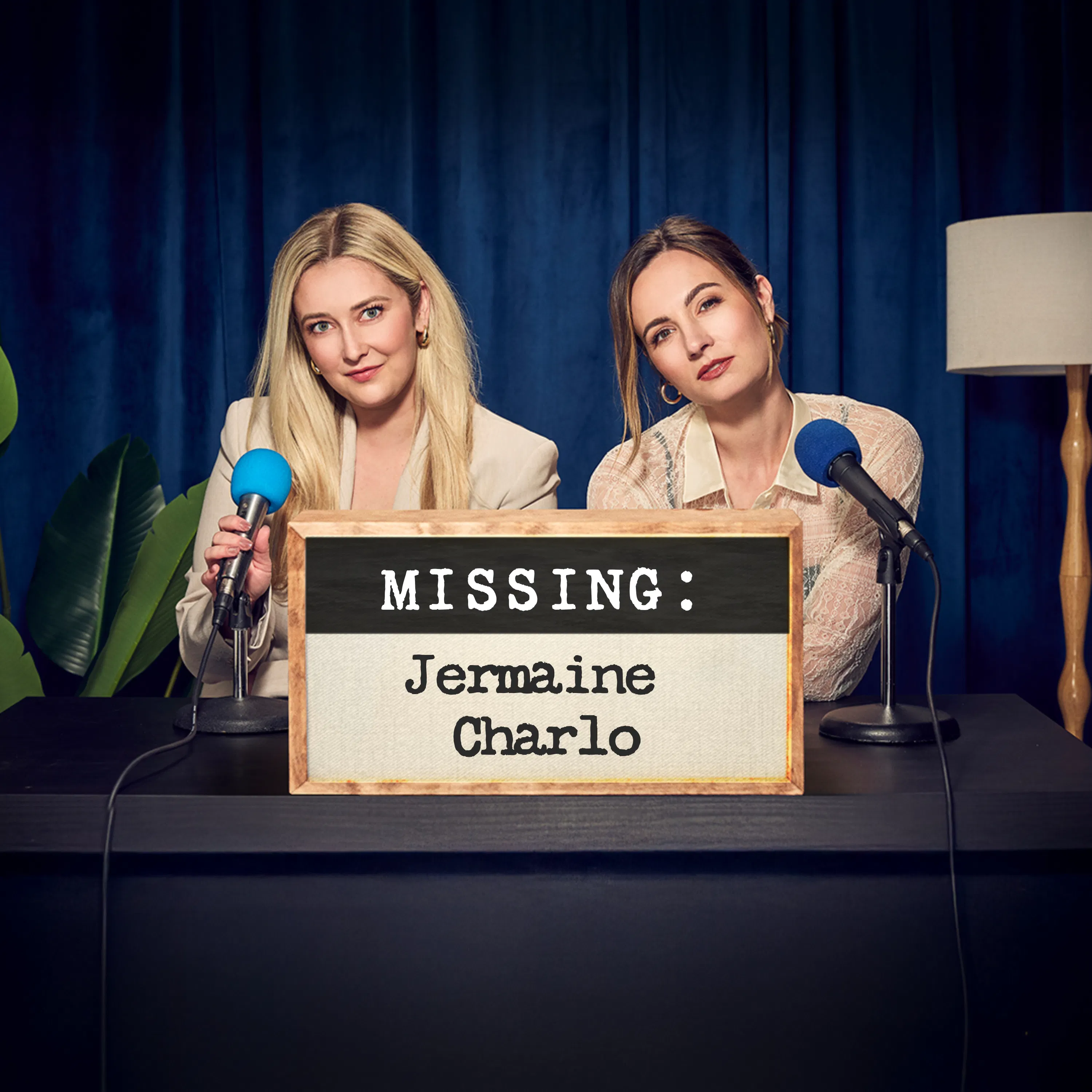
Clues with Morgan Absher and Kaelyn Moore
The Disappearance of Jermain Charlo: A Case That Demands Justice
01:12:09
Loading summary
Transcript172 lines
- [00:03]
A
Hi Crime House community, It's Vanessa Richardson. Exciting news. Conspiracy theories, cults and crimes is leveling up. Starting the week of January 12th, you'll be getting two episodes every week. Wednesdays we unravel the conspiracy or the cult, and on Fridays we look at a corresponding crime. Every week has a theme. Tech, bioterror, power, paranoia, you name it. Follow conspiracy theories, cults and crimes now on your podcast app because you're about to dive deeper, get weirder, and go darker than ever before.
- [00:47]
B
This is Crime House.
- [00:51]
C
Imagine you have two little kids who are safe and healthy. A new job that you're about to start, that you're actually excited about. You're looking forward to this next chapter of your life. So you go out to a bar to celebrate, but you never make it back home.
- [01:05]
B
This is what happened to 23 year old Jermaine Charlo. And unfortunately her story happens far too often to other young indigenous women like her. The search for Jermaine continues to this day, and if she's still out there somewhere, you could be the one to help bring her home. Hi guys. Welcome back to another episode of Clues where we sneak past the crime scene tape to explore the key evidence behind some of the most gripping true crime cases.
- [01:41]
C
I'm Kayla Moore. I'm going to be the one digging deeper into some of the timelines, the backstories, the court files released on these cases.
- [01:48]
B
And I'm your Internet sleuth, Morgan Absher. I'm the one who's diving into the Reddit forums and talking about some of the lesser known details and really pulling out the threads that just don't add up.
- [01:58]
C
And don't forget to share your thoughts on social with us. Want ad free listening and early access. Subscribe to Crime House plus on Apple Podcasts. Also search and follow Crime House Daily, Crime House's twice a day show that has unbelievable stories from the world of crime. Let's get into this case and the clues that defined it.
- [02:19]
D
A year from today, what would your dream private practice look like? Would you spend less time chasing claims or only working with clients who value your skill set? What if you had a network to reach out to for questions or free continuing education? What if you had more time for yourself? Alma empowers you to confidently accept insurance backed by an all in one EHR that simplifies scheduling, documentation and day to day practice operations. With a network of engaged providers and free CE resources, Alma makes it easy for you to build the practice of your dreams on your terms. Alma believes that when therapists get the support they need. Mental health care gets better for everyone. Learn more about alma@helloalma.com getstarted. Your dream practice is closer than you think. Get started now@helloalma.com get started.
- [03:18]
E
Meet Natural cycles, the only FDA cleared and CE marked birth control applied that's 100% natural hormone free and side effect free.
- [03:27]
B
Here's how it works.
- [03:28]
E
The app analyzes daily changes in your body temperature to find your fertile window so you can plan or prevent pregnancy naturally. Natural Cycles is a clinically proven non hormonal birth control option that's 93% effective with typical use and 98% effective with perfect use. No synthetic hormones, just science. And if you're ready to start family planning, switching from preventing to planning a pregnancy is as easy as tapping a button. Plus, the Natural Cycles app makes tracking fertility easy. You can measure your temperature trends using an Oura Ring, Apple Watch or our Bluetooth thermometer, which is free when you sign up for an annual subscription. Join over 4 million registered users who are taking control of their fertility naturally. Save 15% when you sign up with code radio15@naturalcycles.com that's radio15 for 15% off today.
- [04:19]
C
Morgan, before we jump in, can I shout out some of our listeners? Yes, I wanted to shout out some of our listeners. So we did an episode a few months ago on Savannah Lefante Greywind and we heard from some of you guys and so I wanted to shout out. Iyana was one. We had Kate, Kendra and Dakota. These are at least ones that I saw. I think there's maybe more people than that, but they're all indigenous women who listen to our show or descendants of indigenous women. And I just was thinking about them when we were getting ready to do this episode because obviously this is another missing and murdered indigenous woman story.
- [04:55]
B
Yeah, this is a really tough case today. I will say I really appreciated all of the comments on Savannah's episode. I I think it was very apparent. Like people were like, damn, you guys are struggling by the end of this. And it's like we were pretty haggard.
- [05:07]
C
It was a really tough one to get through.
- [05:08]
B
It was like you had just announced your pregnancy to us. So like it hit extra close to home that day. And this is another case that is like, it's so heavy. She's got two little boys kind of at the heart of this and there's a lot to get mad about. I will tell you right now. I am so sorry for the energy in this studio today and what I say because I'm pissed, but there's still.
- [05:31]
C
Really pissed, but still, there's still a lot that can be done, which is why I wanted to bring awareness to this case because there might be someone out there. I don't know how many listeners we have in Montana, but I need you guys full attention for this one because there could be someone who knows something that could come forward.
- [05:45]
B
Absolutely. And it's been apparent in this case already that when people get loud and they bring it up again.
- [05:50]
C
Yeah.
- [05:51]
B
It starts getting people acting and moving. So it's important we keep highlighting these cases and amplifying indigenous voices out there. So without further ado.
- [06:01]
C
Yeah. Before we even dive in, I want to immediately give a shout out to Connie Walker, who was one of the many sources that we looked into for.
- [06:08]
B
This instrumental in this case.
- [06:10]
C
But she did very in depth reporting with the stolen team for their podcast that they did on Jermaine Charlo. There's three seasons out I believe now, but the first season is all on Jermaine's story. So check out the stolen podcast. It's incredible reporting and Connie gets a lot deeper than the police ever get on this case. So just wanted to give a shout out to her. And also just a reminder, if you're watching this on YouTube, you're going to see some images and photos, assets that are going to help you visualize the case, some maps and stuff. But if you are just listening to the episode, you can also check out our socials, that's podcast and you can see those same assets. All right, let's dig into this one.
- [06:46]
B
Just a quick warning on this episode, it does include discussions of domestic violence essay, pregnancy loss and sex trafficking. So please listen with care.
- [06:55]
C
All right, our story starts on June 15, 2018. That's when 23 year old Jermaine Charlo just wanted to go out for the night and have a little bit of fun. Now, Jermaine lived around Missoula, Montana and that evening she met up with her ex boyfriend, 25 year old Michael Defrance. He is also the father of her two young sons who were 2 and 3 at the time. Jermaine and Michael had been broken up for about a year at this point. They had a pretty tumultuous on again, off again, eight year relationship. But according to Jermaine's mother, Jermaine was hoping to get back on friendly terms with Michael. I mean, they have two kids together. It's just going to be a lot easier if they can at least be friends by this point as well. It seems like both of them have moved on from their relationship. Michael had actually announced his engagement to a 21 year old woman named Cheyenne the previous December. So about seven months earlier, Jermaine even congratulated him on social media when he did this. So by June 15th, they were ready to catch up over some drinks. Jermaine and Michael entered the Dark Horse Bar together in Missoula, Montana around 10pm that night. Missoula is a college town. There's a ton of nightlife there. So when Jermaine and Michael left the Dark Horse a little bit later that evening, they had a lot of options on where they wanted to go next. They ended up taking a five minute drive to two bars that are located in the same building. There's the Golden Rose Bourbon Bar and Casino and then the Badlander, which is known for its like dance parties and DJs playing EDM. Now we know that a few minutes before midnight, Jermaine and Michael stepped out into an alley behind the Badlander. And we know this because they're captured on surveillance video standing near this electrical box. They're chatting with a small group of people. This is something that Connie Walker reported on. There's two hours of this surveillance video, but only a very short snippet of this has ever been shown to the public. And even still in that footage, you can see that Jermaine is interacting with a handful of different people. She is described as being this like incredibly social person that everyone liked. So she's just popping around, talking to some friends. Her body language seems pretty relaxed, pretty playful.
- [09:01]
B
She seems like she's having a great time. It's like she's had a few drinks. Yeah, she does like a little handshake with one of her friends that you kind of see. Like it looks like she's really having a nice night.
- [09:11]
C
There's no audio though, and that's something that would be probably very helpful in this case. We don't know what she's saying to who, but you can see that also in this footage. Next to her there's Michael. And he does not seem to be having the same type of fun night that Jermaine is having. He's kind of standing behind her the whole time. Then after a few minutes, Jermaine and Michael leave this area together. They walk down the dark alley away from the bar. And after that, Jermaine Charlo is never seen again. Let's rewind just a little bit and talk a little bit more about who Jermaine was. So Jermaine was born on April 23, 1990. Five on the Flathead Reservation in northwest Montana to 19 year old Johnny Sean Charlo and 15 year old Jennifer Morajo. Like her parents, Jermaine is an enrolled member of the Confederated Salish and Kootenay tribes, or CSKT for short. Now unfortunately, from what we can tell, it seems like Jermaine had a pretty tough childhood. Her parents were teens when they had her. They had a lot going on in their own personal lives. There's reports of them struggling with alcohol addiction and they split up when Jermaine was about a year old. Jermaine stayed with her mom and she didn't really see her dad much after that, but they did stay connected over the years. Things didn't get much better for her mom though after her parents split. According to Jermaine's best friend Jocelyn, Jermaine later witnessed her mother being physically abused by a live in boyfriend. It's not really clear how old Jermaine was at the time, but luckily she had other relatives that were willing to take her in both on and off of the reservation. Her extended family is described as being incredibly close. It's very typical for Jermaine's tribe as well. Elders in the Salish and Kootenay culture take a very active role in child rearing. They're viewed as the leaders of their families. So throughout her early life, Jermaine alternated between living with her mother and her great grandfather, Elmer Sonny Morjo, both in Escglipe, Montana. Eschule is this small town that's located on the Flathead reservation. It was previously called Dixon at the time that Jermaine disappeared. But in this episode we're going to refer to it as Eschooleep. Esgulap is kind of described as being this pretty boring small town. There's not even a movie theater or mall. There's like nowhere to really get food. But Jermaine's childhood there was never boring. She loved nature, she had all kinds of pets. She had flying squirrels and lizards. There was like a pair of pigs that she looked after and when she wasn't taking care of them, she would go down to the river where she would fish or she would be in her bedroom creating art. She used whatever she found around the house for her projects like nail polish and grocery bags. Her family described. Jermaine even dreamed of going to school at the Institute of American Indian Arts in New Mexico and becoming a professional artist. But In February of 2010, when she was just 14 years old, she met 16 year old Michael Defrance, who moved in down the street from her. And that changed everything about her life. Now, there's something about Michael that is important to explain because it's actually going to play a really big role in the investigation later on. But Michael's dad is an enrolled member of the Confederated Salish and Kootenai tribes, but Michael's mother is white. And so Michael was not tribally enrolled at the time, even though his father was. Now. One thing that I was interested to learn about was that a lot of people who live on the Flathead reservation are actually either non Native like Michael's mom, or they're tribal descendants who don't have enough Native ancestry to qualify for enrollment, which was Michael's case. And this created a very weird dynamic on the reservation which Jermaine's family talked about and actually her friends talk about a lot where it seems like a lot of the native women on the reservation understand that most of the crimes that are committed against indigenous women on the reservation are actually the perpetrators are not Native men. So when Michael moves in and he's a non Native man, her friends immediately are kind of like, hey, be careful of this guy. Like, we're just like looking out for each other. We know that this is the whole history here. Like, kind of be wary of this guy. Within a month of knowing each other, they become an official couple. Jermaine started skipping school and sneaking out of her house to go see him. And almost overnight, she was spending more time at Michael's place than she was at her own home. And that fall, when she was 15 years old, she became pregnant. She told her family right away that Michael was the father. Jermaine's family sent her to her grandmother Vicki's in New Mexico to have the baby and finish high school there. They were afraid that if she stayed in Echelape that she would end up dropping out of school and running away to go be with Michael. Unfortunately though, Jermaine got so sick that she couldn't complete her pregnancy and she had a medically necessary termination while she was in New Mexico. And this caused a really big rift between Michael and Jermaine and it ended up leading to a breakup. Eventually though, she came to miss her mom and her siblings back in Montana. And in 2012, Jermaine moved back, splitting her time between her great grandfather's place in Echelape and her mom's new home, which was 40 miles away on the shores of Flathead Lake. And soon after, 16 year old Jermaine got back together with the now 18 year old Michael. And they spent most of their nights sleeping in a camper on the Defrance family's property. On September 2, 2013, Jermaine posted this YouTube vlog about her life. And in this video she said, quote, I do have a boyfriend. That's where I live. My parents aren't happy about who I'm living with and my family is not happy at all. But hey, reality. And later in this video, she refers to Michael as her boyfriend slash fiance. But there's also something kind of strange that Jermaine says in the video, and that's that she describes herself as, quote, a lazy ass bitch who's supposed to be a housewife. Now, this was the total opposite of how her family saw her. They knew her as this brilliant artist with ambitions and all these skills. She loved hunting and fishing. She knitted and crocheted. Like, eventually she goes on to crochet all of her children's clothing. Yeah, she's like a very hardworking person.
- [15:25]
B
She's so talented. You guys will see some pictures of her art and it's really beautiful. And like, she was so resourceful. I mean, you mentioned nail polish and grocery bags. She was crocheting the grocery bags, like, right? So resourceful and crafty.
- [15:38]
C
But then she's calling, she's demeaning herself in this video. And so her family starts thinking like, well, is this what you think about yourself or is this what someone is telling you?
- [15:47]
B
Where's this coming from?
- [15:48]
C
About yourself? Where is this coming from? Exactly? And unfortunately, after this, things get a little bit tougher for Jermaine. When she was 18 years old and a senior in high school, she got pregnant again with Michael's baby. He was 20 years old at the time. On July 11, 2014, 19 year old Jermaine gave birth to her first baby boy. And then In December of 2015, Jermaine gave birth to her second child with Michael, another boy. But the next few years for the couple was really on and off. And that's kind of putting things lightly. They argued a lot and eventually Jermaine realized it was best if she and Michael parted ways for good. She went back to live with her family while the two of them figured out custody agreements with their children. And a couple of years later, In December of 2017, she gets a job bartending at the Big River Cantina in Echelape. And that same month, that's when Michael announced that he was now engaged to a new woman. But Jermaine was busy with her own life. I mean, at that point, she was training to become a firefighter. She's also dating other people, too. In May of 2018, she starts dating this guy named Jacob. We don't know a ton about him other than the two of them met on a dating app. He graduated high school in 2009, making him probably around 27 when they met, that was four years older than she was. However, Jermaine wouldn't tell people his name, but she would talk about how much better he treated her than how Michael treated her. And her life was really looking up at this point. She has this new boyfriend. She's starting her firefighting training. She's actually about to start that on June 18, 2018. But things in her life took a turn just three nights before on Friday, June 15.
- [17:36]
B
Today's episode is brought to you by Alma. It can be challenging to find the right therapist. Someone that gets you, teaches you strategies that are actually going to work for you and your needs. And it can sometimes be costly. Well, Alma is on a mission to change all that. They want to simplify access to high quality, affordable mental health care. And they have over 20,000 diverse therapists and an easy to use platform. One thing I love about Alma is that you can do consultations with a therapist. It's almost like an interview. And you can make sure you guys match each other's vibes before you really jump in and get started. Their directory helps you find a therapist that takes your insurance and meets your specific needs with filters like gender, race, therapeutic approach, and more. And you're going to know exactly how much you're paying upfront. With their free insurance, cost estimator, calculator, we're entering a new year. So now is the perfect time to start addressing things you might want to work on. A year from today isn't that far away. Get started now@helloalma.com clues that's hello a lma.com clues.
- [18:40]
F
Hey, Sal. Hank.
- [18:41]
B
What's going on?
- [18:42]
F
We haven't worked a case in years. I just bought my car at Carvana and it was so easy. Too easy. Think something's up? You tell me. They got thousands of options, found a great car at a great price, and it got delivered the next day. It sounds like Carvana just makes it easy to buy your car, Hank. Yeah, you're right. Case closed.
- [19:03]
B
Buy your car today on Carvana. Delivery fees may apply.
- [19:10]
C
So that brings us back to the last night that Jermaine was seen. After the security footage of her leaving the bar and walking with Michael down a dark alley, things got even stranger.
- [19:22]
B
Strange feels like an understatement. But that brings us to our first clue. Less than an hour after Jermaine was last seen in that security video, which was just before 1am on June 16, Jacob, her new boyfriend, tried to call her. She was supposed to stay at his place in Missoula that night, even though he was out of town. And he says the phone rang before going to voicemail, but that he thinks the call was ignored and sent to voicemail by someone doing it on purpose by, you know, holding that side button on most phones.
- [19:55]
C
Yeah.
- [19:55]
B
Later, Jermaine's phone records do confirm that the call was manually silenced. So somebody, it's unclear who, must have had Jermaine's phone.
- [20:09]
C
Yeah, it was confirmed that Jermaine did not make it to Jacob's house that night. But things got even more worrisome because no one had heard from her by Saturday, June 16, either. Her grandmother Vicki, around that time, tried calling her. And when Jermaine didn't pick up or call back that day, Vicki knew that something was wrong. Jermaine always had her phone and she always answered her grandmother's calls. I mean, that is one thing that Michael complained about too, is that she was always on her phone, but she. She was a texter backer. Like, she had her phone on her, she was always texting her friends. So it's very strange when she doesn't text her family back. Plus, on top of that, she's very active on social media the entire time.
- [20:50]
B
Yeah, huge. I mean, she was making tiktoks up until going out that night.
- [20:54]
C
Yes.
- [20:54]
B
Like, her family knew she was very good about her phone and, like, they immediately were on Facebook trying to message her, trying to FaceTime her. Like they knew something was up by her not responding.
- [21:04]
C
And all of that social media go dark after that moment as well. So both of those things become huge red flags. Vicki ends up calling Jermaine's mother and her aunts, who say they hadn't heard from her either. Neither had anyone else in the family. They're all at this point trying to get in touch with her. And On Sunday the 17th, Jermaine's mother Jennifer reports her missing to the tribal police. We'll get a little bit more into the dynamics between the tribal police and the local police in just a bit, but they say that since Jermaine went missing in Missoula, that's where she would have to be reported missing, and there wasn't much that they could do. But the Missoula police wouldn't take a report by phone, so it was going to be a couple of days before someone in the family could actually make that 40 mile drive to Missoula. So in the meantime, they all just started looking for Jermaine on their own. And I see you picking up that botchboard. That's absolutely right, yeah.
- [21:57]
B
I mean, you can't take a report over the phone. Like, clearly there's special circumstances and this is someone who is missing and she's an indigenous woman. Like, this is a huge problem in a lot of places. So Montana has a population, 6% are Native American indigenous people. 24% of their missing person cases are indigenous people. Like, yeah, they describe it there as an epidemic.
- [22:24]
C
Yeah, it is, absolutely.
- [22:26]
B
Come on, you're not going to take a report over the phone. Get real. Take the report, take the report. You're losing time.
- [22:32]
C
No. And so they just wait for someone to be able to make that really long drive, which is hard if you don't have access to a vehicle. So in the meantime, the family just decides that they're going to start looking for Jermaine on their own because they don't have any support from the police. They, I mean, do like really the only thing you can think of to do in that moment, which is call the hospitals and the homeless shelters in the area just to see if she wound up at either of those. None of them have seen her. On June 20, which is four days after Jermaine was last seen or heard from her aunt Valinda finally goes down to Missoula and she's able to file a missing person report in person. But the police, once they get this report, start the investigation incredibly slowly. They do the same things that the family has already done. They go back and they call all the same hospitals, they call all the same homeless shelters. They won't really listen to the family when they tell them that they've already done that. So at that point, Jermaine's family basically is begging them to do a full blown search to expand the radius of people that they're talking to. And so the volunteers are still searching the areas, anywhere they can think of for Jermaine. And that's when the police decide that there is one person that they're interested in talking to and that's who they can basically at that moment agree is maybe the last person to see her. And it's her ex, Michael Defrance.
- [23:49]
B
Finally, finally we get there. And that brings us to our second clue, Michael's story. Due to the confidentiality rules in Montana, we don't know exactly when this interview actually took place. But it is likely that it was in, you know, the first few days of Jermaine's disappearance. But after the days they already wasted because they wouldn't, you know, take that missing person report. Here's what Michael said. He admitted that he had given Jermaine a ride after they left the bar that night. But he said that she was only in his car briefly before he dropped her off at the Orange Street Food Farm. The Food Farm is a grocery store about a five minute walk from Jacob's place. So this would have made sense if Jermaine didn't want Michael to know she was walking over to someone's house or who she was dating. But here's the thing. Michael changes his story about that night later on. In a later interview with police, he said that he actually left Jermaine eight blocks away from the Food farm in a residential area where Jermaine said she was spending the night with a friend named Cassidy. But detectives never found anyone named Cassidy who lived in that area or even had a connection to Jermaine. The police kind of considered that maybe she invented Cassidy as another way to hide Jacob from Michael. Police did go on to check Jacob's alibi that was rock solid. He wasn't even in Montana the night she disappeared. So as days tick by with no word from Jermaine, Michael was looking more and more suspicious.
- [25:27]
C
Early on in the investigation, Jermaine's family used Facebook to get the word out about her disappearance. And these posts got hundreds of shares. Many of the reposts came from locals willing to show up in person person and help search for her. Her family also got in touch with a local Christian nonprofit group in the area called the Lifeguard Group. They printed up flyers and immediately sent a whole search party to the area where Jermaine was last seen. They even canvassed every home. They showed people pictures of her and asked if they had seen her. And that didn't really pan out. So they organized volunteers for a larger scale search with up to 60 people. Jermaine's family also led their own searches at this time. And then on June 26, 10 days after Jermaine was last seen, Detective Guy Baker with the Missoula Police Department officially took over the case. And within 24 hours of him taking over this, he finds a key piece of evidence.
- [26:24]
B
Crazy what happens when jobs are done as they should be.
- [26:27]
C
Yeah, when you look into something, this.
- [26:29]
B
Key piece of evidence is our third clue. On June 27, 11 days into the search, police get Jermaine's cell Phone records. And right away, they see something pretty concerning between 2am and 10am on June 16th. So after Jermaine was last seen, her cell phone was pinging a tower in Ivero Hill. This is a densely forested area at the southern end of the Flathead Reservation, north of Missoula. It also happens to be where Michael was living at the time. And everyone's alarm bells are, like, going off even more. And so when police confront Michael about this, can you guess what he does? He changes his story again. Again, he said that Jermaine forgot her phone in his car. He said he wanted to go through her phone and read her messages, but he didn't know the code to unlock it. So he claimed that he broke it in frustration. And then two days later, on Monday, June 18, he threw her phone out of his truck at mile marker 94 on Highway 12. This is near a place called Three Devils Creek in Idaho. It's 137 miles southwest from where Michael was now living with his family. Like an insanely far distance. You broke it. It's not your. It's not your phone. Police end up going to this area. They search for the phone. Of course, they never find it. And if you're thinking this seems extremely suspicious, well, police had the same exact thought because the more they looked into Michael and his relationship with Jermaine, the more they realize just how toxic it was and that Michael could be their main suspect. So we're gonna hop back in time again a little bit here because there's a lot we haven't really told you guys about Jermaine and Michael's tumultuous, again, understatement, seven year relationship. And that includes a pretty upsetting history of domestic violence, which is our fourth clue. Here is what we know. One of the earliest incidents we can pinpoint happened five years before Jermaine disappeared late at night on April 13, 2013. The police are called for help at an address in Ashley. By the time a deputy with the Sanders County Sheriff's Office arrived, it was just after midnight on April 14. The deputy found Jermaine out front of the residence, upset and injured. Nearby, two tribal police officers were detaining Michael. Jermaine told the deputy that her night started with plans to meet Michael about 40 miles away in Missoula for a trip to a Walmart and a China buffet. But Jermaine had decided to stay home instead. So Michael returned to Ashleep furious, saying that he had waited over an hour for her to meet him and she didn't show According to Jermaine, she grabbed her belongings she had at Michael's place and told him she was going to her great grandfather's house. But as she tried to walk away, Michael ended up attacking her from behind. He ended up shoving her into his family's van, pinned her down, punched her in the ear, temple and cheekbone, spat on her, verbally abused her, and then he walked off. Jermaine also told the deputy that Michael had previously said things to her like, quote, if I can't have you, nobody can. After taking her statement, the deputy photographed Jermaine's face, which showed bruising on her cheekbone and around her left temple. Officers also took pictures of Michael's hands showing swollen knuckles on his right hand. The deputy arrested Michael and charged him with partner family member assault, or pfma, which is essentially Montana's way of describing misdemeanor domestic violence. Michael did spend the night in jail, and these details were uncovered by Connie Walker, the journalist we mentioned, who she ended up actually seeing this full arrest report, including police photos of Jermaine's bruised cheekbone and Michael's swollen knuckles. But before those bruises really even got a chance to heal, Jermaine and Michael had seemingly gotten back together. And this is obviously a very complex situation. I mean, I talk about it on two Hot takes a lot because we do get a lot of these stories from, you know, people writing in, but it on Average takes someone 7 attempts to leave an abusive relationship. And there's so many psychological factors and we're really kind of just beginning to study this. But regardless, this is kind of where Jermaine and Michael stood at this point. So on her 18th birthday, April 23, 2013, Jermaine took all of her stuff from her mom's house and officially moved back in with 20 year old Michael. Less than a month later, on May 6, Michael officially pleaded guilty to, to assaulting Jermaine. He was sentenced to one day in jail with credit for time served, fined, and then he was ordered to complete a domestic violence counseling program for about a year. I saw in one source it was about a year, but I think it was only like 40 hours.
- [31:39]
C
Right. And I read this other statistic that said they basically do nothing. Yeah, like there's no evidence that those ever correct any behavior.
- [31:48]
B
I would be very curious what the curriculum looks like for that program, but I was shocked by how many few hours. And don't quote me on that. I'd have to like look into the exact program. But I did see somewhere about that. I'm like 40.
- [32:01]
C
Like.
- [32:02]
B
Like a couple. Like a work week. One work week.
- [32:05]
C
You have a year to complete. 40 hours.
- [32:07]
B
It just. It was underwhelming for me, given the severity of this abuse. But that is according to Jermaine's relatives, who did speak with Connie Walker as well. And they said that that also kind of became Jermaine's problem. Like, Michael actually blamed her that he had to take time off work and go to these counseling sessions.
- [32:27]
C
Right. It's her fault that he has to.
- [32:29]
B
Do these sessions because she reported him, which. As she should.
- [32:35]
C
Right.
- [32:35]
B
Like this. It's giving Darvo, which, if you're on two outtakes, like, you know, this is a common manipulation tactic, but it essentially stands for deny, attack and. And reverse victim and offender. So the person who is the abuser will often like, I didn't do that. And if you took it that way, it wasn't meant to be taken that way. And they kind of will then start attacking the victim and then reverse it. So it's like, it's not my fault I did what I did to you. It's your fault that I'm in this situation.
- [33:04]
C
Yes. Okay, that makes sense. I feel. Yeah, that comes up a lot in a. A lot of domestic abuse cases that they read about.
- [33:09]
B
It's clear that's exactly what the.
- [33:11]
C
You bring this out in me. Yes.
- [33:13]
B
He's Darvo. Ing her. And before Michael had even finished this counseling, he and Jermaine did get pregnant with their first little boy. But pregnancy really didn't protect Jermaine from Michael's temper.
- [33:27]
C
I mean, I feel like it never does. You're just so much more vulnerable when you're pregnant.
- [33:31]
B
You're an easy target.
- [33:33]
C
You're such an easy target.
- [33:34]
B
You're an easy target. You're vulnerable. You're a little slower. You're everything. And, I mean, there's stats out there that homicide is the number one cause of death for pregnant women.
- [33:45]
C
Oh, yeah, yeah, yeah. 100.
- [33:47]
B
It's out there.
- [33:48]
C
When I was reading through this case, I was just thinking about. Because now I'm eight months pregnant, but, like, just days I've had where I can't get off the couch. And I've had, by all means, like, an easy pregnancy. Days where I'm, like, crying because I can't even make food for myself, like, just needing someone to take care of me, which I'm not used to. And so I can't even imagine being in a situation where you're also. You need to flee someone or someone's taking advantage of the fact that you can't fight back at all, it's just. It's some of the most heartbreaking stuff I've ever read about.
- [34:17]
B
It is. It's really tough. And Jermaine did not have a safe and easy pregnancy, by the sounds of it, because according to a lot of friends and family members who spoke with Connie Walker, her and Michael continued fighting the whole time. It was two weeks before Thomas was born that they actually had an altercation that also involved one of Jermaine's aunts. And this ended up with Michael being arrested for assault. Connie was actually able to find an official record of this arrest, but there's no record of him ever being charged or convicted.
- [34:50]
C
Well, this is what I was talking about earlier when we kind of get into the dynamic of Michael's family. Right. Because he's not a registered tribal member.
- [34:58]
B
Yeah.
- [34:59]
C
He can't be convicted by the tribal police. He can be arrested, but he can't be convicted by the tribal police. And oftentimes that's the only investigating agency looking into these crimes, which I don't understand this.
- [35:11]
B
And if we do have any listeners that, like, live on a reservation or are familiar with this, like, can you explain this to me? Because this seems like it should be a botched board. Because if someone who's not a tribal member walks on a reservation and commits a crime, they can't be tried or convicted because they're not a tribal member.
- [35:29]
C
Not by the tribal police, by regular or by local law enforcement, official law enforcement agencies. But I think the issue here. I have. I did a little research on this. Tribal police have inherent authority to enforce tribal laws on reservation lands and exercise criminal jurisdiction over tribal members. They can arrest and detain non Native Americans for delivery or state or federal authorities, but they cannot prosecute them due to a 1978 Supreme Court decision. Oliphant versus Susquamish. If we're getting in the weeds on it, the single most damaging legal ruling for Indigenous women's safety is what that one is described as.
- [36:05]
B
Yeah. It just seems like you tied, like, tribal law enforcement's hands and you're not giving them away to solve or, like, hold people accountable for any justice.
- [36:17]
C
Yeah. Here I have that many reservations. Have just three or four tribal officers patrolling over a million acres.
- [36:24]
B
That's insane.
- [36:25]
C
And they can't prosecute. Yeah.
- [36:27]
B
It's almost like. I don't know, it's really hard because it feels like there's a lot of like. Like, almost a cop out then, where it's like, well, that's not our jurisdiction, and we can't do anything there. But it's kind of like that is the only means of getting justice because he's a non tribal member.
- [36:42]
C
Yeah.
- [36:42]
B
But yet there's a lack of action. This is really. It's really complicated. So if you can.
- [36:48]
C
I've learned so much doing this episode, and all of it has been bad and upsetting to learn about, unfortunately. Yeah.
- [36:56]
B
So our timeline does advance on. And after their second son was born in 2015, Jermaine at this point is starting to realize that she didn't want her boys to grow up watching their father hurt her. She wanted this cycle of abuse to end with her. And, you know, we kind of hear that from people that have been in these shoes. Like, I wanted it to just stop with me. So she started speaking up when the abuse happened. Connie Walker spoke to a tribal police officer on the Flathead Reservation who said he was called out to Jermaine's house for domestic violence at least three times.
- [37:32]
C
So back to kind of what we were saying earlier. But jurisdiction issues between tribal and non native police departments are a big part of the missing and murdered indigenous people.
- [37:41]
B
Crisis botchboard that it's getting a mark.
- [37:44]
C
Advocates say that Native people asking for help often get bounced between tribal county and federal law enforcement agencies. And none of them will take the case or one of them will take the case, but they don't talk to the others. And it's just because this whole mess. In 2021, the US Supreme Court ruled unanimously that tribal police officers can, quote, investigate and detain non Native people suspected of committing crimes on tribal land. But tribal officers say that that does not solve the problem because when they detain a non Native person, they still have to call a non Native law enforcement agency to make an actual arrest.
- [38:18]
B
Again, hands are so tight, so tied.
- [38:20]
C
And if nobody shows up, they have no choice but to let the perpetrator go. So it makes sense that even with all of these calls that were happening to the tribal police for domestic violence and otherwise, Michael was not collecting criminal charges during this time. By May of 2017, when Jermaine was just 22 years old, it seems like, you know, maybe she wanted to take things into her own hands because nothing was being done for her case. One of her sons was two months away from turning three. Her other son was 17 months old. And Jermaine decides that she's going to come forward and tell everyone the truth of what was going on.
- [38:56]
B
And that whole truth is our fifth clue, a story. Jermaine told in her own words, about how serious the abuse had gotten. You won't see it on Jermaine's public profile, but Connie was actually able to go and view Jermaine's private Facebook posts, like posts that had been archived or just not released publicly. And so on May 15, 2017, Jermaine posts about the reality of her relationship. In it, she says that Michael has been using their kids to blackmail her into staying with him. He says if she leaves, he'll make sure she can't see them anymore. Then Jermaine describes an incident where she turned down a goodbye kiss when Michael was leaving for work. So he threw her up against a pull up bar and strangled her. She didn't report the incident to law enforcement, and later that same month, she left the relationship for good.
- [39:48]
C
But Jermaine was not the only one who was saying that Michael was using her kids to control her at this time. According to her aunt Danielle, quote, when Jermaine started to create a life without him, it seems like things got worse for her. She was the mother of his kids and had to kind of walk on eggshells around what Michael wanted or how, you know, he pictured her or wanted her to be as a mom. It was clear that Michael was getting his way in this too. On May 30, 2017, which was not very long after they broke up, Jermaine and Michael went to a Def Leppard concert. And this was confirmed by private Facebook posts that Connie saw. After this concert, things got really bad. Michael allegedly pushed Jermaine out of a moving car on I90 near Boulder, Montana. Someone that night saw Jermaine walking down the freeway after midnight with no shoes on. So they called the police. And the next day, on June 1st, a Boulder prosecutor charged Michael with another count of PFMA, his second one at that point. And based on court records, it looks like they didn't actually arrest him though. They just wrote a document for these charges, hit it with the botch board. They just wrote a document for these charges and sent him a notice to appear in court. A second offense could get Michael up to one year in jail and a maximum thousand dollar fine, as well as probation and more of that mandatory counseling that we've already talked about. That really doesn't do much. Michael, however, pled not guilty. And a month later, on June 30, the case was set for a jury trial. And about a month after that, on August 1st, Jermaine's beloved great grandfather and the family patriarch Elmer died at the age of 88. And according to her family, Jermaine took this loss pretty hard.
- [41:32]
B
Yeah.
- [41:32]
C
And then on August 31, the prosecutor ended up dismissing Michael's charges. And it is unclear at this time as to why. But then three weeks later, Jermaine shares a poem about forgiveness on Facebook. Now, at this point, Jermaine and Michael were both gearing up for a custody battle. And typically with non married couples, the mother is given first priority when it comes to custody. That actually wasn't the case here, though. So Michael hired a lawyer, Jermaine couldn't afford one, and she ended up having to represent herself. Now, according to Connie Walker, their custody hearing took place in tribal court, and all of the proceedings there are confidential. So we don't really have a lot of information about what kind of evidence the tribal judge looked at or what Michael's lawyer was saying about jermaine. However, on October 23, 2017, Jermaine found out that Michael had been awarded residential custody. This means his address was the kid's primary residence for things like school enrollment and health insurance. And he got primary decision making authority for them because they are considered to be, quote, living with him and just visiting. Jermaine.
- [42:45]
B
Okay, yeah, we're gonna give custody of two young, vulnerable children to a known.
- [42:52]
C
Abuser, to a maniac.
- [42:53]
B
Okay, okay.
- [42:54]
C
Who keeps getting these charges, but yeah, is never prosecuted, so I guess is not showing up on his record. Jermaine would have the boys from Monday to Wednesday each week, and she would also have them every other weekend. She was also ordered to pay Michael $800 in child support, even though she technically has the boys more than he does. When you look at that schedule, I'm.
- [43:18]
B
So bad at math. But, like, that is not adding up.
- [43:21]
C
$800 in child support. That, that's a, A lot of money for someone who has the kids more than the father. How, how, how do you even afford that? Like that?
- [43:35]
B
Yeah, she couldn't afford a lawyer.
- [43:37]
C
She couldn't even afford a lawyer. So she's going to come up with. It's just so.
- [43:40]
B
And she has them more.
- [43:42]
C
Jermaine wasn't working at the time also, but if she didn't pay the child support, her family believed that Michael would just use that as an excuse to keep the kids away from her. So as you can imagine, this custody situation sends her spiraling.
- [43:55]
B
Yeah, those are her babies.
- [43:56]
C
Tells her cousin at this time that she starts having nightmares. And one night that winter, Jermaine messaged a friend to say that she did make an attempt on her own life because of her problems with Michael and that she was now in the hospital. But as bad as her mental health really got that winter, she did keep going because she still wanted to see her her two sons, who were now 2 and 3 years old. And it appears like she decided she was gonna play nice with Michael so that she could make that happen.
- [44:26]
B
I mean, what else could she do? You have to play nice.
- [44:31]
C
You really backed in a corner at that point.
- [44:32]
B
Ugh. With someone as manipulative as this. But this brings us to our sixth clue. It turns out Jermaine had spent two evenings with Michael leading up to her disappearance. Friday, June 15th, and the night before that, Thursday, June 14th. On Thursday, they went to a monster truck rally together. Or at least that's what Jermaine told her aunt they were doing. And Jacob, Jermaine's new boyfriend, told police that he was planning to meet her at the Orange Street Food Farm near his place in Missoula after the rally had ended up. But before he could leave, he actually saw her running towards his house. She explained that Michael had dropped her off at the food farm as planned, but then he started yelling at her, demanding to know if she was dating someone. Jermaine said Michael wanted to get back together and he was really pressuring her, so she ran to get away from him. Jermaine didn't want to tell Michael about her relationship with Jacob. I mean, completely understandable at this point. It's also kind of making sense how maybe Michael would have that story about the food farm and dropping her off there, despite Jermaine not wanting him to find out. It does seem like he found out anyways and he clearly wasn't happy. And then, as we know, the following night, Jermaine goes missing. When you think about meal kit companies, what do you see? Probably long, complicated recipes and subscriptions you can't escape. But with the new Blue Apron, we're doing meal delivery differently. No subscription needed, faster, easier meals and the same dedication to quality we've always had. Shop 100/Meals@blueapron.com, get 50% off your first two orders with code apron50 Terms and conditions apply. Visit blueapron.com terms for more.
- [46:26]
C
So once the police learned about the history between Jermaine and Michael, the possessiveness, the custody battles, all the domestic abuse that had been occurring, and not to mention the fact that Michael was the last one seen with her, changed his story about that night and had her phone.
- [46:44]
B
After she vanished, her phone was pinging, pinging at his place until 10am 10am in the morning, she disappeared.
- [46:52]
C
Things are not looking good for Michael's case at this point. For a long time, Jermaine's family didn't know if the police had even searched Michael's property. But when Connie Walker went to Montana to record her podcast Stolen about this, she stumbled across some information that even the family had not seen at this point.
- [47:11]
B
And that information is our seventh clue. The search warrant applications. Every search warrant application basically lays out the current theory of the case, or at least parts of it if the cops want a judge to see it. The first application was filed on June 27, the same day detectives got Jermaine's phone records. In that one, detectives said that they wanted to search Michael's property for any clothing or personal items belonging to Jermaine. That same day, police went to the Defrance family's 11 acre property in the Ivaro Hill area. They ended up speaking with Michael's mother, who claimed that Jermaine had never been to the family's new house, which may or may not have been true. Supposedly, she also denied Jermaine was ever living in the camper on their previous property, too. I don't know how you dispute a YouTube video made by Jermaine herself, but okay. She also said that Michael was still in love with Jermaine and wanted to get back together with her, even though he'd been engaged to another woman at that time, Cheyenne. But apparently they had called off the engagement about a week before Jermaine disappeared. Now, the detectives didn't seize any evidence in that search, according to an evidence log they submitted to the court. So until another lead came up, police tried to rule out other possibilities.
- [48:35]
C
For the rest of the summer, police pursued the theory that Jermaine could be a victim of human trafficking. The Department of Homeland Security says Native American and Alaska Native communities are disproportionately impacted by human trafficking. So this was something that was worth looking into. We found a quote from tribal trafficking.org that reads, quote, there is an unfortunate lack of reliable data on the problem of sex trafficking in Indian country. This lack of reliable data is tied to the limited amount of methodologically sound research articles and reports on the topic. However, the limited Native specific research that has been done and anecdotal evidence suggests that Native women and girls are overrepresented in the sex industry and that sex trafficking disproportionately impacts Native women and girls. Also, according to the Montana Department of Justice, human trafficking there is on the rise. The state tracked 1900% more human trafficking cases in 2023 than it did in 2015.
- [49:37]
B
That's fucking horrendous.
- [49:39]
C
This is really horrendous I found. I mean, have you heard of the man camps? This is like a side note.
- [49:48]
B
You hear about those or man camps, like in. And especially in like oil towns. Yeah, like, that's what, Minnesota. So I've heard of them in like North Dakota.
- [49:57]
C
Yeah.
- [49:58]
B
And yeah, there seems to be a lot going on there.
- [50:03]
C
Yeah, I had a little stat here from in the back. In oil region, which spans North Dakota and Montana, violent crimes increased 70% between 2006 and 2012, and sexual assaults were up 30%. And during the oil boom, 125 plus indigenous women went missing, which they do think is a significant undercount. And that was when these man camps would crop up around like oil rigs, basically. Like these whole towns of men coming in to do the oil extraction. And all of a sudden there's this like huge increase in crime against native women.
- [50:37]
B
I literally just got full body chills. And you mentioned a number two. You said like a hundred something.
- [50:42]
C
125 plus missing women.
- [50:44]
B
And I remember in one of the sources for this, and maybe our amazing producers behind the camera can look it up as we kind of move through. But there's some crazy stat where those are the ones that are reported. But like, during that same period, over like 4,000 actually went missing.
- [51:02]
C
Yeah.
- [51:02]
B
And it's just like, it's. It's this insane thing where it's like, why? Like, how is this happening? How is this epidemic still fucking happening?
- [51:12]
C
Well, I was even reading about, like, just the history of why, like indigenous women, the reporting is so underreported. And some of it had to do with the fact that, like, if they couldn't figure out exactly what tribe you were from, they would just write you as being white. So it got classified as white women. Or they would write N, which they were like, this will mean native American. But when the paperwork was actually being filed, they thought, this is like way back in the day, they thought n men, Negro. So they were getting classified as black women who were going missing. So there was just like a huge undercount of the in of the indigenous women.
- [51:45]
B
Which also, like, if you're putting out these missing people reports and they're classified wrong, like, how. How do people even know who they're looking for? Like, it's insane. Our amazing producer did get back to us here on that stat. I was trying to remember. And so I'm going to read you guys this, there were 5,712 reports of missing American Indian and Alaska Native women and girls in 2016 alone, according to the National Crime Information center. However, the U.S. department of Justice's federal missing persons database only logged 116 of those cases. So they missed 5,000. Again, bad at math. 5,500. Ish. Like, what the.
- [52:33]
C
Yeah. And, you know, eventually law enforcement does rule out Jermaine's case as being human trafficking. We don't know. I mean, there's, like, details around that that haven't been revealed as to why. I mean, it seems like they do have one suspect in mind the entire time of who it could be, but I wonder who. Yeah. So eventually it is ruled that she was not a victim of human trafficking.
- [52:52]
B
And maybe one of the reasons why they did start thinking not human trafficking is because of our eighth clue. On August 1, 2018, the Missoula County Sheriff's Department applied for another search warrant. Deputies wanted Google to hand over Data from Michael DeFrance's Gmail account, including his location history, search history, browsing history. They did already have his cell phone records from Verizon, but this was going to be way more thorough than the one from just the cell phone service provider. I mean, just think about how much data gets stored in the cloud. And as we've talked about in past cases, I mean, if you're signed into your Google account and have your location history turned on, as well as location reporting enabled, your whereabouts of your device and where it is basically down to the foot is being tracked and stored, even if you're not actively using any Google app. We don't know what exactly the Sheriff's Department got from Google, but they got something, because the very next day, on August 2nd, they filed a new search warrant application. This one specifically said they were investigating Michael for deliberate homicide. The previous warrants did not say any of that. Jermaine was legally a missing person, not a homicide victim. So something big must have changed. And the August 2nd warrant was pretty interesting. The police wanted permission to use aerial surveillance and thermal imaging on the defrance property for 10 days to visually observe and photograph the area. The warrant application said they were specifically looking for for some sort of hidden structure or other area where a body could be concealed. They believed that at some point in the next 10 days, Michael was likely to move or conceal evidence related to a deliberate homicide. The warrant was approved, but there was no document describing what evidence they actually collected. All the police will say about it on record even now is that Jermaine has not been found.
- [55:03]
C
So by the fall of 2018, a few months after Jermaine was last seen, it seemed like the investigation was really stalling, especially for Jermaine's family, who at the time didn't even know that the police were filing search warrants against Michael. Meanwhile, Michael still had custody of his and Jermaine's children. And once the investigation started to focus on him, he stopped letting the 4 year old and the 2 year old see Jermaine's family. He also got back together with his former fiance. However, Guy Baker, the lead detective on the case, was gearing up for another big search. And that one was finally underway in October of 2018.
- [55:40]
B
I'm so pissed. I'm so mad, you guys. The fact that he's withholding those children from them, just.
- [55:46]
C
It's control. All of it's control.
- [55:48]
B
It's insane. But this brings us to our ninth clue. Starting on October 2nd, Detective Baker and his team searched the 11 acre Defrance property extensively. It lasted for two full days with the help of special FBI trained cadaver dogs. And they found something. I'll give you Detective Baker's exact words to Connie on this one, because I think the phrasing is important. Quote, it was blood on multiple items of personal clothing and inside a location that seemed reasonable that would explain what happened to Jermaine. And that coupled with other evidence that we had led us to that location, end quote. Obviously, if the blood on the clothing items turned out to be Jermaine's, it would really help this case and lead investigators down a path to maybe getting justice. So, of course, Detective Baker sent the evidence off to the Montana Crime Lab. But when the report came back, it was inconclusive. According to the National Institute of Justice, inconclusive DNA testing results can be due to multiple contributors to a sample, contamination or degradation. So unfortunately, the bloody clothing wasn't this smoking gun that Detective Baker was hoping for, but he did find some literal guns, which was a problem because Michael was actually prohibited from owning firearms after his 2013 conviction for assaulting Jermaine. So the Missoula police confiscated those weapons. When Detective Baker asked Michael directly, quote, and you know you're not supposed to have guns, right? Michael replied, quote, I was never clear on that. However, this was a giant bump in the road for Michael that would come back to haunt him later, but. But not immediately, because they did confiscate those guns, but charges were not immediately filed on them. No keyword later.
- [57:46]
C
So as that search was happening on Michael's property, Jermaine's tribe and family were putting up missing persons billboards for her with her face on them and Detective Baker's phone number on them. The location of the billboards was a very strategic choice on their part. They put it on Highway 93, right on a route a person would have to take to get from Ivero Hill to Missoula. Whenever Michael drove by with Jermaine's two sons in the vehicle, they would all see their mother's face and keep remembering her. At that point, it was the only way Jermaine's family had to reach the boys, since Michael still refused to arrange any visitation with them. Meanwhile, time ticked on. Their youngest son's third birthday, which was in December of 2018, passed and there was no progress on the case. Then came the first anniversary of Jermaine's disappearance in June of 2019. Her tribe marked the moment by offering a $10,000 reward for information leading to an arrest in her case. And by March of 2021, more than two years after Jermaine was last seen, her friends and family held a protest outside of the Missoula Police Department demanding justice for Jermaine. On the third anniversary of her disappearance, still with no progress, the reward was upped to $15,000. Jermaine would have been 26 years old if she was found alive. At that point, prosecutors were still holding onto one card that they had to play, but it was a very risky one and the next month, July of 2021, they would decide to go for it.
- [59:22]
F
New Year, New Me. Cute, but how about New Year, new Money? With Experian you can actually take control of your finances, check your FICO score, find ways to save and get matched with credit card offers giving you time to power through those New Year's goals. You know you're going to crush start the year off right. Download the Experian app based on FICO scoring model offers an approval not guaranteed. Eligibility requirements and terms apply subject to credit check which may impact your credit scores. Offers not available in all states. See experian.com for details.
- [59:50]
C
Experian On July 28, 2021, federal prosecutors working for the U.S. district Attorney's Office in Montana filed an indictment against 28 year old Michael DeFrance for four gun crimes, one count of prohibited person in possession of a firearm and three counts of false statements during a firearm transaction. He had falsely sworn that he had never been convicted of misdemeanor domestic violence during the purchase of a gun. On August 3rd, Michael appeared in federal court to plead not guilty. He had to face a courtroom full of Jermaine's family members and supporters. And by this point, all of them believed that Michael was guilty. On May 1, 2023, not quite five years after Jermaine disappeared, Michael was found guilty on all charges. And A little over four months later, on September 21, Michael was sentenced to 21 months in prison and three years of supervised release. He was ordered to self report to prison. It wasn't the homicide conviction that Jermaine's family was hoping for, but at least Michael would be going to jail, they're thinking. Or would he? Well, Michael appealed his federal conviction to the ninth Circuit Court of Appeals and we don't know for sure if he had to serve his prison time while the appeal played out and if so, how much of the time he actually served. He reportedly remained free after sentencing as he appealed his conviction. Michael does appear in the Bureau of Prison's Federal Inmate locator. He's number 58149. 509. So he was at least added to the system at some point, but he's not shown as being in custody and there's no release date listed.
- [61:34]
B
It's giving botched maybe.
- [61:36]
C
Yeah.
- [61:36]
B
Like why is he not. He was found guilty. I thought you still had to wait on your appeal. No.
- [61:42]
C
Well, what we do know is on December 30, 2024, the Ninth Circuit reversed Michael's most serious conviction. That's definitely botched. Vacated his sentence and remanded the case to the lower courts for possible resentencing on the other three charges. In other words, the court found that he was not actually a prohibited person in possession of a firearm due to this loophole in the system, essentially. But he can still potentially be re sentenced for other charges. So today, 32 year old Michael DeFrance remains free. According to Jermaine's family, Michael still also has sole custody of Jermaine's sons, who are 10 and 11 at the time of this recording. They've not been able to see them in that much time. And unfortunately, that is pretty much where the case stands now, more than seven years after Jermaine vanished. Unless new evidence appears. But before we end this episode, there is a small update on someone else who's involved in the case. Remember Cheyenne, the woman Michael was engaged to both before and after Jermaine disappeared? Well, in 2024, she shared an Instagram post celebrating the third anniversary of her decision to leave an abusive relationship. Here's a little bit of the caption she writes, quote, today marks three years, three years since we said see you later to our home. Three years since I finally walked away from you. For my own safety and our children. She could only be talking about Michael in this post because both the boy Cheyenne welcomed in 2020 and her baby girl born in 2021 do have his last name. Based on the timeline of her 2024 post, within less than two months of giving birth to her daughter, Cheyenne left the state of Montana to get away from Michael. Sadly, her escape probably meant the end of her relationship with Jermaine's sons, who are in a lot of Cheyenne's old photos, but they're not in any of her recent ones. But lately, Cheyenne's been commenting on some posts about Jermaine, and it seems like she has some suspicions about their shared ex. In October of 2024, she replied to a post about Jermaine's 48 Hours episode, confirming that she had watched it and that she was reading all the comments. And In January of 2025, she thanked a missing person's page for sharing Jermaine's story.
- [64:06]
B
So I got chills.
- [64:07]
C
I know.
- [64:08]
B
Cheyenne, girl, you here? See you in the comments, maybe.
- [64:11]
C
I know.
- [64:12]
B
Speaking of comments, there's a lot on, you know, Reddit and kind of all over the Internet on this case. There is a comment from someone that was allegedly the roommate of someone that was dating Michael before and after she disappeared. Maybe Cheyenne's roommate. Unclear. They don't mention, but they say he told us that, quote, he thinks she was kidnapped because she was a drug addict. End quote. I never liked him and would ask he not come to our house. When I was home. Less than a year after I moved out, I had to send my roommate money because he got really violent with her and she needed money to escape him. She moved to Missoula with him and was pregnant with their second child. He is a bad man, and I 100% feel he did it again. That's allegedly. It's on Reddit, it's anonymous. We have no idea who it's coming from, but literally, it gives you the chills. And like, I. I'm entitled to my subjective opinion.
- [65:13]
C
Yeah.
- [65:14]
B
But if you look at this man, he is dead in the eyes. Hot take for the day. Like, there is. It is just, like, it's scary. It's scary. Like, I'm. I'm just beyond baffled how he was able to, like, even just, like, taking her. How do I want to put this? I'm just beyond baffled by this case. And it's so insane to me that, you know, it took so long for them to start searching. In that time, he was able to dispose of her phone again, never found. It's. There's just so many holes in this case that are beyond frustrating. And I think it does, you know, speak to that larger epidemic of missing and murdered indigenous women. I mean, this is just. It's horrible.
- [65:59]
C
Yeah. The miscommunications between, like, maybe intentional miscommunications between the police and the tribal police, like, I don't know, the ball is being dropped. Yeah.
- [66:08]
B
And people need to quit pointing fucking fingers and get this together. Quit copying out, quit blaming the other.
- [66:14]
C
Like, well, now it's get together much time. So how do you even search after all this time, if anything was ever found?
- [66:21]
B
Well, and it's like the, the, the frustrating part is too, her phone was pinging on that property or near those towers.
- [66:28]
C
Right.
- [66:28]
B
You know, whatever the police have in that data. But it was there until 10am family was already like that morning, kind of like, hey, where is she? Like, they could have gone before, you know, any time was allowed to conceal evidence.
- [66:43]
C
Like, yeah, that's.
- [66:44]
B
Her phone is evidence. Evidence was concealed.
- [66:46]
C
It was destroyed. It was destroyed.
- [66:48]
B
Where is it? Where's the phone? Where's the phone? Wasn't your phone.
- [66:50]
C
Yeah. Well, for our advocacy section today, we want to encourage anyone who has any information at all on Jermaine's case to please come forward. There's still a very real chance to find her and hold whoever harmed her accountable. You can call 406-396-3217 with any tips or sightings, and that's the same number that you'll see on Jermaine's billboards if you drive through Montana on Highway 93. Sadly, Jermaine's grandmother, Vicky Morjo, died on June 16, 2023. With Jermaine still missing, and there are still so many loving family members and fierce advocates fighting for her, and they all deserve answers. Somebody out there must be holding on to that last clue that would finally bring Jermaine home. But Jermaine's case is just one part of a much bigger issue. So we also wanted to highlight some important resources for people like Jermaine and her family. There's the Snowbird Fund, which is a project of the Montana Community foundation, and it offers immediate financial help for native families in Montana who are leading the search for missing loved ones. To apply for help or to make a donation, you can go to snowbirdfund.org there's also a national helpline specifically for Native Americans and Alaska Natives experiencing domestic and sexual violence. Go to strongheartshelpline.org to chat online or call 1-844-762-8483 to talk to them on the phone. They can provide immediate peer support and crisis intervention as well as referrals to Native centered service providers around the country. And if you're looking to partner with a good cause, you can reach out to media@strongheartshelpline.org to reach their staff.
- [68:26]
B
I do just want to plug that quiz on love is respect.org again like if you after this episode you recognize any, you know, behaviors in your relationship or you're looking for a safe exit plan, there are resources available. Please go and check out the links in our description because there are resources out there to help you and sometimes the safest exit plan is not saying anything and just going. So please look out for yourself. And on that note, let's move on to our Missing Person of the Week.
- [68:59]
C
When we were doing the research on Jermaine's case, I actually came across another missing indigenous woman in the same area as Jermaine. Her name is Shakaya Blue Harding. She was last seen in Billings, Montana on the morning of July 25, 2018. That is pretty close to Jermaine's case. Very A bus ticket was purchased in Shakaya's name for Grand Junction, Colorado, but there is no evidence it was ever used. The ticket was purchased the July 4th weekend in downtown Billings. There have been multiple possible sightings in Phoenix, Arizona, specifically the Children's Hospital, Phoenix Sky Harbor Airport, bad habits Gentleman's Club 1 McDowell and at the intersection of North 19th Ave and Dunlap Ave. There's also been possible sightings in Great Falls, Montana, specifically near the Sam's Club by Northwest Bypass, 10th Ave. And 23rd street, and near Walmart on 10th Ave. She has been cited in both of these locations with an older male. She also has connections in Fort Belknap, Montana, New Mexico, Oklahoma and Fort Riley, Kansas. Her date of birth is November 28, 1998. She was 19 years old at the time of her disappearance. She's described as having black hair, brown eyes, being 5 foot 4, around 125 pounds. Shakaya has a 5 inch long scar on her left shin and her hair may be short and there's evidence that she may have a limp at this time. She also may be going by Kaya or her middle name Blue and she may spell her name S H a K a I a H, which is different than the spelling we have on the missing poster which is S H A C A I a h and she also might use the last name H A U G H T Y N G It is believed at this time that Shakaya is a victim of human trafficking. So if anyone has any information on Shakaya's whereabouts, you can contact Detective Jam at 406-256-2925 or the Yellowstone County Sheriff's Office at 406-256-2929.
- [71:02]
B
That is all we have for you guys on this episode of Clues. Share your thoughts with us on social media. Finding Jermaine is obviously so, so important. Maybe one of you out there is the key to doing just that. We want to hear from you guys, so share all your thoughts, any theories you may have, and some feedback. It's what makes this community so special.
- [71:23]
C
Yeah, at Crime House, we really value your support so you can share your thoughts on social media. Remember to rate, review and follow clues to help others discover the show. We also read through the YouTube comment section too for other missing persons cases.
- [71:36]
B
Yes, that's been a big help, you guys. So please keep adding the missing people. Yeah. That you know about that are maybe local to your area and haven't gotten the word out.
- [71:45]
C
Yes, that's been great. And like, even as we were kind of shouting out listeners at the beginning too, like, we love hearing about your connections to cases if you know the person or if you are part of that community. Like, it's always just so interesting to hear about. So I really love hearing from you guys on that.
- [72:00]
B
We had so many connections to Elizabeth Smart and someone, someone shared a really powerful story about her in the comments of that episode. How like another missing girl ended up getting like escaping in Wisconsin and Elizabeth like went there and like talked to the town about how they should handle it and like treat her after. So really important that you guys keep commenting. It, it means the world to us.
- [72:25]
C
That's amazing. All right, we will be back next week with another episode and until then, we'll see you guys later.
- [72:31]
B
Bye Bye.
- [72:39]
A
Looking for your next listen? Hi, it's Vanessa Richardson and I have exciting news. Conspiracy theories, Cults and crimes is leveling up starting the week of January 12th. You'll be getting two episodes every week. Wednesdays we unravel the conspiracy or the cult and on Fridays we look at a corresponding crime. Follow Conspiracy Theories, Cults and Crimes now on Apple Podcasts, Spotify, Amazon Music or wherever you listen.