← Collector Nation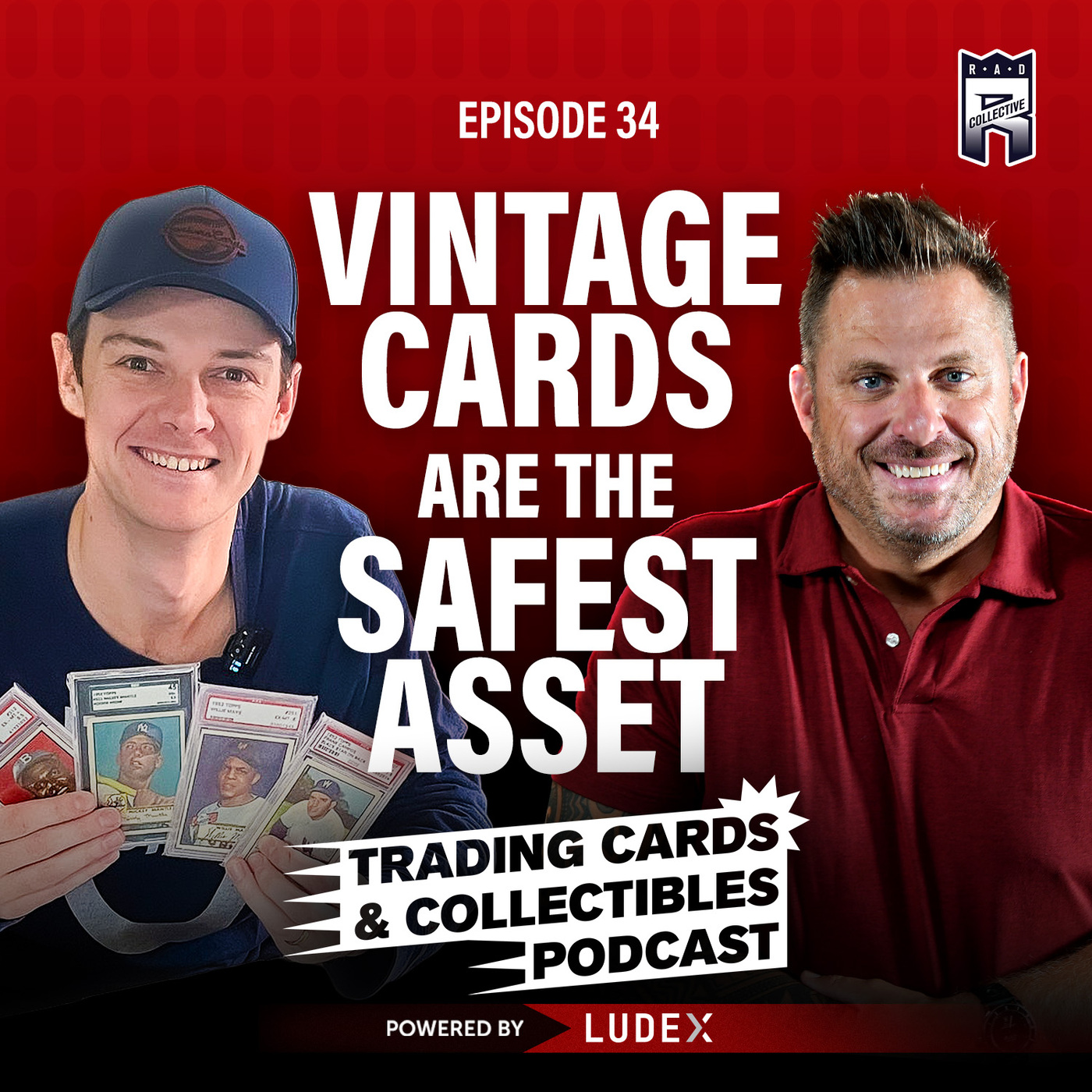
Collector Nation
Gordy Bonker left Wall Street for THIS: Why Sports Cards Are the Ultimate 'Hidden' Asset Class
00:55:44
Loading summary
Transcript121 lines
- [00:00]
A
If you didn't listen to the end, you didn't get the scoop. We pay to go to the movies and you walk away with nothing. When you leave the movies, the cards you at least still have.
- [00:08]
B
I really like that point. I talk about it a lot as to why the hobby is the best hobby. That is like a cheat code of a hobby. Like if I'm going to spend my free time and make money or at least at the very least, not lose it. It's why it's one of the coolest hobbies to me.
- [00:23]
C
Welcome to the Trading Cards and Collectibles podcast, the Radcast Network. From chasing grails to calling bluffs and going inside the hobby, are you ready to collect? Let's get at it. Here is your host, Ryan Alford.
- [00:41]
A
Hello and welcome to Trading Cards and Collectibles here on the Radcast Network. I hope everyone is doing all right. Wherever you are, whenever you are, we appreciate. We know you got options, so. So we're glad you made us one. Appreciate you keeping us at or near some of those sports charts we've been in. Don't know how or why, but we love you. I think, you know, the reason I think it is is because we have people like the guests that we have today. We've got the real, the real, I don't know, guys making a difference in the hobby, doing something different and providing quality content, conversations, and meaningful value to the hobby. And his name is Gordy Bonker. What's up, Gordy?
- [01:22]
B
Hey, what's up, Ryan? Thank you so much for having me. I appreciate it.
- [01:25]
A
Yeah, man, I. I've been, you know, we. We talked before the episode that we. Brett met very briefly at the national and at the Ludx Lounge with maybe some of the sports card nonsense guys. And then I've been a fan from afar. I. You're definitely in my, let's just say, Gordy bar. It's so weird. Man to man, I can say this as a happily married man, but Gordy's in my fe. But, yeah, man, I love your stuff.
- [01:57]
B
Thanks. I appreciate it. It's been an amazing, you know, this year. I've had a ton of growth and I'm super grateful for it. And I think it's a factor of the hobby audience growing and people wanting to see more of the information that, you know, I personally have been so passionate about and following for a while and being able to kind of summarize and use a lot of my strengths and some of the things that I have personal interest and knowledge in has been super helpful and I'm glad to hear that. It definitely brings some value to people. Yeah, man.
- [02:27]
A
It's sophisticated and it's, you know, being, I don't know, I feel like I'm a hair down business guy. I mean, I've been and done a lot in the business world, but at the same time I feel like I'm, I don't know, still a kid and still, you know, learning every day. But there's a sophistication with your stuff and I don't know, like maybe it comes with some, you know, someone that appreciates vintage and that's doing the things that you are. But there's definitely a way, in a manner about you that is both educational and meaningful.
- [02:59]
B
Thanks, man. Yeah, I mean, I, you know, before I was doing bonkers cards content full time, I've always had a passion for the financial services industry. I was working basically on Wall street as an agency recruiter specifically for financial services firms, primarily private equity, hedge funds and investment banks. So I was doing a lot of financial services content related to the stock market, the job market, the economy. And it was a way for me to essentially establish trust, credibility and brand with the candidate profiles. I was building a lot of the hedge funds. I was working with some of the best hedge funds in the world. Some of my biggest clients were the most notable investment banks that are out there. So I had to bring a certain level of sophistication and knowledge about the market at that time. And it wasn't hard for me because I've been. I studied business at Penn State. I've always loved finance and investing and I loved it. And it was really coming across the sports card market after a bit of time writing financial content that I discovered the untapped potential of what this space could be as an asset class. And I just started to build upon that. And then before I knew it, the following I had about speaking about sports cards as an investment class outpace the content I was doing in traditional financial services. So it was a crazy transition and I'm super grateful for that time as well because it helped me, you know, get a lot sharper on the content side. Jumping in here, you know, running full head of steam.
- [04:25]
A
Yeah, I mean it's. And it shows. Your education and your background shows. I hear a lot about the asset class thing. I personally believe in it or I wouldn't be here probably. It's certainly for me, it's both fun and, you know, time with my boys and things that got me into the hobby. But Ultimately, it seems untapped at the high end. And I think, I know you're going to talk about that, but let me lead the witness a little bit at least with getting your feedback because I hear two sides of this. My firm belief I think is yours the untapped side of this. And then I have the naysayers that just can't get over cardboard, you know, being worth, you know, that and it not tanking one day or you know, like being a bubble. I mean, how do you weigh that and what's sort of your response or what's giving you the confidence that you have that this truly is a long term play?
- [05:30]
B
Yeah, well, firstly, you know, collecting is centuries old, is a human innate behavior. And then when you additionally layer on the fact that sports cards have been a marketable business for over 100 years as well, you layer that in. And then when you start to see the actual market of sports cards form somewhere around the 1950s and 60s, where people see resale value of this stuff, you actually start to see like a historical performance of these cards. And one thing that is super notable on the super high end category, which I know we'll talk about more, is that it continues to compound and appreciate in value. Like we have the data to support it it and it has a lot of the characteristics that would go into any other type of alternative asset class. You know, it's an interesting point you make. Yes, it is just pieces of cardboard. However, there are elements of scarcity to it, there's a true demand to it. You know, to your point, it's a fun activity to do with your kids. And I'm not necessarily saying that whatever the shiny refractors that your boys are opening up, cards should be something that you look at as an investment. But you know, that being said, artwork is at the end of the day still just material that's put on canvas or paper. It's really the creator of that artwork or the scarcity of that artwork that drives its value. And when you recognize how valuable other alternative asset classes have been in the collectible space, specifically whether it's art, watches, other pieces of antiques, furniture, you've seen massive amounts of appreciation and oftentimes it's very strategic. From an advisory standpoint, there are advisors that specifically call on clients to speak to the investment grade of art and that hasn't yet really been built or focused on in the sports card space. And I can compare what the CAGR is of a Honus Wagner card pretty directly to other high end collectibles and you'll notice a massive growth from a CAGR perspective that hasn't yet necessarily matched nominally to some of those other classes. The highest end artwork pieces are selling for over $100 million. You know, the latest Honus Wagner cards, you see those prices anywhere from, you know, 3, 5, 10 million, and you might think it's a lot, but when you compare it to other, like, culturally relevant collectibles, it's not even close. And then if you were to take a step down from the Wagner and, you know, you look at what's happening in psa, eights, nines, tens of some of the other most historically significant players, whether it be Mickey Mantle, Roberto Clemente, Jackie Robinson, you're starting to see that appreciation from a percentage kick up. But it's still nowhere near nominally where I think it's going to go in the next again, 1, 3, 5, 10 years. And we can get into why some of the other forces are driving that demand. But I couldn't feel more confident in saying this, and I've been saying this over the last two years that I've been writing about the space, and it keeps moving higher and for all the same reasons that I said before. And we're just seeing that start to accelerate, just the early stage of it right now.
- [08:25]
A
So if you're listening and pay attention, you just got kind of a masterclass in what drives value. So take notes, hit rewind, go back. But it does, like, literally. And great comparisons with artwork being in there. I've often wondered myself. I'm like, you know, you look at stuff and I know what it used to be. You know, like, I've been. I was out of the hobby for 20 years pretty much. I mean, I always think once in the hobby, always in the hobby, a little bit, like, you pay, you kind of hear it. And Gary Vee's been in my ear for 10 years about it, and I'm like. And I collected growing up, I'm like, I hear you, Gary. I did not believe him. I just didn't have time to believe him, I'll say that. But then I look at the values, I'm like, man, wow, it's so much more. Then I'm like, I don't know if that's even scratching the surface. When you talk about rarity and demand and everything else for some of these cards, you know, from Jordan rookies to much less the Mantles and stuff like that, it's. It's nuts.
- [09:30]
B
Yeah, you know, the Jordan rookie is a very culturally relevant card in PSA 10 specifically. Though it trades at a value that is nowhere typical of what a card would trade at for the amount of cards in the population. Because what you were mentioning before, rarity is a huge driver in what the value of this stuff will go forward on. Yeah, when you look at the high end vintage baseball market, specifically the pop counts, population counts. So the total number of cards in existence in PSA 8, 9 and 10 is extremely scarce. The higher you go, you know, tens are basically off the table at this point. There are guys that have been in this 20, 30 years that saw this earlier than you or I did or were able to acquire those tens and they really are not going to come out for public sale. Maybe they could move privately. It's very unlikely and if they were to, there would be a huge premium paid for them. Essentially you, if you were trying to acquire a 10 of a very notable card, you'd be paying forward a lot of the appreciation because somebody that owns that card doesn't want to get rid of it and quite frankly they don't.
- [10:29]
A
And it would bring. So it's few people that could afford it. The ones that were there would overpay or. Yes, it would be like just blank check almost.
- [10:36]
B
So you're looking at PSA9 or SGC9 copies of those super high end culturally relevant cards or PSA eights in some examples and you're starting to see that volume or the value of those cards go through the roof. You know an example I spoke about just this week, I sold two Roberto Clemente PSA 8 rookies probably around July, August timeframe. Right around August. August, September actually. Because right after the national, right around $90,000 privately each, there's a PSA 8 Roberto Clemente ending this week at Heritage that if it were to hit the gavel as we're talking would close at 163,000. Almost double. Yeah, and that's in the last three months. And I think in the point that I wanted to write and I write weekly on my newsletter on Substack, you can check it out. Bonkers cards.substack.com yeah, we'll have that linked for everybody listening.
- [11:29]
A
Why that linked is Joe knows. So check that out.
- [11:31]
B
I, I make a point on the newsletter that you do actually see a notable change in some of this higher end stuff that happened right towards the end of the national. In between that and when Kevin o' Leary publicly purchase and talked about wanting to create an index of the greatest sports cards. And I don't, I actually, I can feel 100% confident in saying that. I know that that's going to be replicated by other high net worth individuals either that want to have complete 100% ownership of the cards or they want to create a fund structure that's going to pool capital together to acquire what's left of the supply of the best of the best cards. And if that becomes more of a public thing, I think you're going to see the valuations of this stuff move even higher. I think what we're seeing right now is a lot of it kind of being speculated about and people trying to make it happen. I myself have been called about it a number of times of people wanting to start that. I think the thing that is missing from all the people that are trying to do it is that you haven't had like a really big reputable firm or name put their name behind it and drive it. Because if you do that and even if you allow outside capital to invest into it as a strategy, I really see the demand for it. It just needs to be marketed and executed correctly.
- [12:50]
A
What's your thoughts, Gordy? Lot to unpack there. I go 100 different ways, but I'm going to go this way because you brought it up at the high level. Certainly a few companies have, have. Because I saw when I came back in, I'm like, well, why aren't they, you know, creating, you know, almost like stocks that, you know, you combine all these things and you split it up into shares. Well, companies have tried that and not been so successful, I think with the, you know, aggregating. So you, and you're a smart guy. I'm. I can be smart. I won't say I'm as smart as you, but I two relatively smart guys think that makes a lot of sense, but it's. And certainly the high end, you know, four guys coming in for 10 million is one thing, but more, let's call it the retail investors, so to speak. Why has that not made it?
- [13:43]
B
I love that you bring that up. I think that is such a great observation and something that should be addressed because it is clearly not a product that is either A marketed correctly or B in as much demand as people could think. I think Rally still is trading, but the liquidity on that platform really isn't enough for people to want to invest their money into it. To me, one thing that I've noticed is the, the ones that are actually pulling this off are taking the majority ownership of it and there's not a lot of contributors of capital. It's usually one guy, maybe Two guys, if it's like him and a family member or a really close friend for some reason. The fractional ownership model, and this has been kind of a shaky model across other assets as well. There's a company called fundrise that invests into real estate in a fragmented way. There's also a perfect one for one comparison of this company called Masterworks, where you can invest in fractionalized pieces of art. And it's the same thesis as to why you would want to invest into art as sports cards. And that hasn't really taken off. And I think it's going to be important that whatever investment vehicle that whoever actually does nail this, because I think there's probably a lot of listeners that just heard you and I speak in the first 20 minutes of this interview and they're like, yeah, this makes complete sense to me. Like I would want some capital to this. But for some reason there's a friction in terms of maybe it's the liquidity, maybe it's the marketing or the product that hasn't landed yet. And I think that's still sitting out there for somebody to really execute. And I'm rooting for Rally. I'm rooting for the people that are trying to do it. I've done some content at the Rally Museum before. I've met the people that have worked there. I think they were really early in seeing this. It's just like somebody needs to execute on it. Otherwise it will just continue to be like something that is for the high level, high net worth, elite, wealthy class. And that class of people hasn't yet viewed sports cards in a sophisticated manner. They've looked at artwork that way, in antiques and specific artifacts, but they haven't looked at sports cards that way. And I think that's surprising when you recognize how culturally relevant it is in this moment. You know, like you're talking about how much your kids like to do it. You know, it is something that has been happening for the last 30, 40 years and I think you just have to look at it at a longer tail, you know, like there wasn't. We don't have as much history on this as a market as we do the art market. And I think like with time that will mature, you know, I think it's.
- [16:20]
A
And well put. I'm glad you feel like I do. I'm like, yeah, I would have thought this would have blown up by now, but it looks like some fairly well funded, thought out platforms like Rally and others. There's another one I can't remember the Name of it feels like they've made goes at it. I'm like same as you. I was like this marketing. I'm like, I can do marketing business marketing issue. But I don't know. I think it's there. It's kind of what I saw. There's a surprising lack of sophistication in the hobby a little bit. And it's not I think as more sophisticated people that understand long term investing come into the space. Not all like billionaires, but I think you might see that take off more. And there's this proliferation of the scratch card gambling side of it. Right.
- [17:16]
B
And I want to address the gambling piece as well. But you brought. I don't want this thought to escape me while we're talking, please. The other piece to what has been difficult for rally collectible some of the other fractional ownership groups is the regulatory component of this makes things very challenging and it makes people kind of walk away from it when you're looking at it like pooled capital thing. So that's the first thing I wanted to make sure that there's a huge regulatory hurdle that people need to jump. And the second piece, when you're talking about the lack of or there's not a ton yet of sophisticated individuals that are looking at the space. Part of that is because this in itself is a hobby that was not meant to be at its core an investable asset class and all the things that we're talking about. This is kind of like a sideshow of of what the overall massive industry is, which is a hobby, a form of entertainment. Collecting isn't necessarily a one for one thing that people think of that way and that's like okay. And realistically if that ever goes away, that could potentially alter some of the thesis as to why we're saying this stuff is going up in value.
- [18:25]
A
Both sides of that coin.
- [18:26]
B
You do, you absolutely do. And you know where you were going with it in terms of the trends today and how a lot of the popularity of it is sitting on these stilts of the gambling industry and the growth of that we can absolutely get into because I think that is a, a huge element into what is making the industry get so many eyes on it right now.
- [18:46]
A
Yeah. And I don't have, I just to be clear, I don't have a problem with either side of it. Like I. Because it's entertainment for me. I mean like the first been back, you know, right at two years back in it and the first year it was just entertainment with my kids, you know, daddy and the boys, like, you know, I'm close with my kids anyway, and they surprisingly like dad, you know, and so I didn't need the cards necessarily for them to like me. But it brought us even closer together. So it was worth every penny, every box, every, you know, piece of trash my wife complained about to just have that time and entertainment with them. And, and it was, you know, like it wasn't, I guess it's gambling, but the surprise and delight of getting cards. And because we're into sports big, but we just weren't into cards so we knew all the players. So to start ripping packs and maybe getting stuff of value, plus knowing the players and get to see the artwork, because I hadn't been back into it, I hadn't seen the new parallels in 20 years, you know, like it was just a lot of entertainment, surprise and delight. And it didn't hit me or I didn't sort of connect the dots or even try to connect them till nearly a year back into it. The business, you know, and investment and all that side of it. It was just pure joy entertainment the first year. And I think it's okay to have both.
- [20:10]
B
Yes. And like, I couldn't agree with that more. And there's nothing wrong with either side to it. I love what you said there with surprise and delight. And I think that's really where people need to draw the line on in that this is not something, especially when we're talking about the modern product that coming out today, the odds of that are stacked against you from a purchasing product perspective. Like, do not think that buying this box of cards is going to make you money and that this is like a trading sort of thing where like you're buying X and selling for Y and there's a delta between like that's not going to happen.
- [20:44]
A
Yeah.
- [20:44]
B
And I think people are getting upset because the way that breaking is getting advertised, it's that, you know, I'm going to buy into this break for 20 bucks and pull this $20,000 card. And this is so wonderful. And it's really, you know, messing with people's finances. And at the same time you have this macro trend that's super, super relevant and fanatics has just launched into the prediction markets. But you have apps like Kalshi and basically the United States being all in on gambling. Like we're going to legalize sports gambling. We're going to legalize you gambling on what the fed funds rate is going to be or whether or not Taylor Swift wears red or blue in her. Her, you know, Halftime show. Like, we are all in on predicting everything. And it's up to the consumer to be able to have the discipline to not gamble. And, yeah, that is happening at the same time as sports cards are having this massive resurgence. And credit to fanatics, credit to Michael Rubin, who is a absolutely stud businessman, is seeing this and being like, we're going to ride the wave of, like, a consumer behavior shift in America, which is total speculation. Gambling is on the rise. And this is what, you know, for better or worse, we are allowing what we want. So, you know, whether or not you like it, it's aside the point. Like, that's where we're at. So you need to essentially adopt or move on, you know?
- [22:13]
A
Yes, agreed.
- [22:14]
B
That's interesting.
- [22:14]
A
I think it's okay to, like, have both sides and, like, I don't know, it's like the gambling genie isn't going back in the bottle. And so you can feel about it however you want, but it's up to you to have discernment and discipline. And if you don't, it's like, no different. If you eat a thousand pieces of cheesecake a week, you're gonna be fat. If you don't go to the gym, you're probably gonna have diabetes. And so, like. And you might still eat a thousand pieces of cheesecake, but I mean, it's no different. You know, you can't spend your whole paycheck on ripping boxes or you're not gonna have any money. And so sorry. And. And I. Look, I mean, I'm not.
- [22:55]
B
Shoot.
- [22:55]
A
I've bought a few too many. Not.
- [22:57]
B
Not.
- [22:57]
A
I never bought what I couldn't afford with my kids, but definitely bought more. I was like, more than you. But we spent a lot of money on.
- [23:05]
B
You know, it is fun.
- [23:07]
A
But it was. But I never at one time did it and went, that wasn't fun. It was a blast. And it's. It's entertainment.
- [23:15]
B
And.
- [23:16]
A
And unlike a scratch card, there was still value sitting on the table. It might not have been 100% of what I put in it, but we pay to go to the movies, so, you know, and you walk away with nothing. When you leave the movies, the cards you at least still have. And.
- [23:32]
B
Yeah, I really like that point. I talk about it a lot as to why the hobby is the best hobby. You know, I'm a huge golfer. Avid golfer is the one thing I do to get away from thinking about this stuff. And it is an expensive hobby. And all of the money you put into golf is absolutely sunk. It is gone. You pay 100 bucks for greens fee, you're not getting that money back. But when you think about the sports card hobby, to your point, it is fun to actually engage in it. Like, open the packs, see your favorite players, see the artwork. You know, you can't see it. I've got a lot of my collection displayed behind me, and I've put significant money into these cards, but it's not really sunk. I'm going to get that capital back if I ever choose to sell it. And for my specific invest the collecting taste, like I'm going to get more capital out of it than what I put into it. And that is like a cheat code of a hobby. Like, if I'm going to spend my free time and make money or at least at the very least, not lose it, it's why it's one of the coolest hobbies to me as somebody that does have, like, a very much a skew towards personal finances and interest. And I love that you bring that up. And I think when done correctly, it is probably the most economically viable hobby in the world.
- [24:47]
A
Yeah, it is. Totally. Talking with Gordy Bonker. Bonkers. What? I mean, what a great name. You know, like, perfect for cards and fun and media. Oh, you know, you never do that because it's like, bonkers, like, thinking you aren't up. But it's like it puts me in that whole, I don't know, nostalgic mindset.
- [25:06]
B
Yeah. I'm so thankful for my name. I'm actually the second it's a family name. And I remember being a kid sometimes getting teased about my name, and I fully, like, leaned into that. And, you know, I remember I wrote my college paper on what the likelihood of having somebody named Gordy Bonker apply to Penn State was. And I actually divided, you know, two, which was me and my dad divided by the world population. And it was this absurdly low percentage. And then talked about all the obscure things that are more likely to happen than have a Gordy Bonker applied to your university. I do think that is why I got into all the schools that I got into, because they got a kick out of that paper. When I started, you know, actually marketing myself, I've always put Bonker in the name. You know, my financial newsletter was the Bonker Beat, and it was really supposed to be like, I was a beat writer talking about what was happening economically. And then with Bonkers cards, you do have that. Just, it's easy to remember it. Thankfully, it is my name as well. And I'm always really specific about the way that I market myself. I want people to know who Gordy Bonker is. So I'm very calculated and always marketing my name to whatever business venture I'm moving into.
- [26:19]
A
Smart. From a brand new standpoint. Very smart and strategic, your name. But then leaning into the fact that it has what it means and you know, always going bonkers. You know, like bonkers breaks. I mean there's so many. I mean I'm sure you've got them all written down or using them. Bonkers car is, you know, it's perfect. Like see? Exactly. It's what you want. I want, every time I rip a pack, I want it to be bonkers, you know.
- [26:46]
B
Well, it means, it means a lot coming from a marketing guru like yourself. You like that? Because I definitely put some thought to it. So thank you.
- [26:54]
A
Yeah, it's been so talk to me. It's funny like the hobby and media to me and you know, what you're doing with your content and leaning into it. There's, there's a ton of opportunity and a ton of demand. I mean you think about all the, I mean my kids, part of what got my kids and I back into, I mean one, we went to a retail store, they're like, we should buy that box of cars. Like, oh, you want to buy some cars? And then it was like, then it was YouTube, you know, King of cards, whoever, non stop on the TV at card shows. There's just this, I don't know, relentless demand for more content. Pack openings, shows, trades, all that stuff. I mean, talk to me about the media aspect for you.
- [27:43]
B
Yeah, you know, when I think about 2026, like the, in my personal business, I want to double down on the media side of the hobby as a business. I think advertisers don't fully yet understand like how passionate collectors are and also the number of new collectors that are coming into the market. Thanks to Michael Rubin fanatics. The amount of marketing dollars that are being spent by the larger companies in the hobby and for people to build meaningful audiences that are specifically in this category. We have a pretty good understanding of who's watching the content oftentimes in terms of like demographics. Right. Highly skews male. Highly skews some level of discretionary income spend. I think like those are really exciting things for a advertiser that wants to partner with somebody that has built a meaningful audience. I think that the hobby is going to continue to grow to your point where there is this sensational demand for more of the content from people that are scrolling their Phone watching. You do have king of the cards Kyle who does a phenomenal job there. Card collector too. Somebody that I always bring up as well that does great content. Sports cards nonsense. My show sports Card Investor with Jeff Wilson and those guys and there's still like a huge demand for more of it. And I think it shows that it is a category that people want to be further educated on. So a lot of times people will see short form clips of my stuff but they're like yes, I want to know more about that topic more than just the 30 seconds you just gave me, like where can I go for that? And that's why I started writing a little bit further longer form stuff on my substack on my newsletter I started, you know we did this deal with sports card nonsense for the Gordy Bonkers show that I have long form content getting published once a week about things that I find interesting on the market. Guests like that have specific points of reference to the industry like that is going to continue to grow and I'm waiting for that moment when we actually see a shift from the brands that want to sponsor this content only being hobby related to brands to you know, just larger blue chip names that whether it be in the consumer product goods space or wherever that just like want a piece of this action and I think it's coming, it's just a matter of when.
- [29:56]
A
Good. Thank you Gordy. Yes, it is coming. I 100% number one, you do a great job. You got to check out all Gordy shows which we'll have. I love the sports card nonsense guys. We've done some deals and things together and yeah, Geo, the voice of the hobby, I gave him that title and the all those guys, I like all of them and I think there's a tremendous gap like you said with brands understanding that. And I've made it my mission with what we're doing with this show and what we're building with now to be released Collector Nation with sort of telling that story of, of the collector community of creators and media and getting the word out to the bigger brands and bringing because look, it's a two way street of winning. The collectors win because they get them, you know what they should get which is the dollars because they've built audience and the brands get an affluent audience that purchases and has purchase power and it's a demo that's in high demand and that's a win win and it's.
- [31:08]
B
Time for that to happen at a broader scale. Yeah. And you're seeing, you know, people are trying to claim that land. And they are continuously, you know, trying to bridge that gap to your point, with companies and brands to see that value. In the interim though, I think it's been a fascinating thing for me to learn about with. I think people want to support individual creators. And you know, my, for example, my newsletter on Substack has a paid version for nine bucks a month. You get additional writing and additional perks, benefit support or whatever. And you have people. And it took me a while to actually promote that publicly. It was just an option that Substack had. But I had people that were just paying me without me asking to say, I want to support you, I believe in what you're doing. This is really good. Like here's my money. And it was like, wow, there is this flywheel that happens where people see content and then they want to support that specific creator and actually do business with them. And so like a lot of my content, a lot of the business that has come off of it has been, you know, people wanting to buy cards directly from me. So if I'm educating them or talking them about the industry, like what vintage cards do you have for sale right now? And then on the higher end side, you know, the last probably six months I've had a huge increase in activity of high net worth individuals that want to invest into the space and they want a trusted individual to broker them those cards. They don't necessarily want to spend the time bidding or finding them. And it's like I would rather go right to Gordy and tell him what I want and then have me go find them and bring that to them. So, you know, there's been exciting opportunities in that way. But yeah, I'm still waiting for that moment where you know, from the short form video content and some of like the brand deal activation for it to come through on my content because like to this day I still don't have really large brand deals outside of hobby related companies that have ever come to me. And when I look at the audience in the reach that I have in terms of what my videos do, it's way, way higher outperforming than a lot of what the just traditional content creators that are lifestyle content creators do.
- [33:16]
A
But well, Gordy then you know, be twisting your arm to come on Collector Nation to make those deals happen for you.
- [33:22]
B
Yeah, it's true. Like that's a, it's just a fact.
- [33:27]
A
Yeah, it is a fact and it shouldn't be. There's a lot of quasi influencers that are getting those deals and True influencers like yourself, you know, that are doing fine and have figured out that. And I own the trademark for this. It pays to be known. Gordy. Bonkers proving it. But there's a gap between the brands that are spending money, spending it on the influencers that actually have influence.
- [34:01]
B
Yeah. Great line.
- [34:03]
A
Yeah. And that's what needs to change, especially as it relates to the hobby and collecting because it's a, it's got both, both sides of what we said, people that are there for the entertainment. But that's an affluent audience. That's, you know, like myself that, you know, is, you know, nostalgic reasons come back to the hobby but, you know, is in their late mid-40s and early 50s. So they have discretionary income but they have children in it. And it's like, it's. And then you've got the collecting side of it and so it's, it's wild.
- [34:38]
B
I love having conversations like this partly because, like I don't have the opportunity to do it often. Obviously I don't know the exact, the listener right now, if they have the personal interest in like business and media business and things of that nature.
- [34:50]
A
But it definitely skews that way. I get a lot of messages and it's. We've got a very astute audience.
- [34:57]
B
So is the audience. Are there also just like pure collectors that are listening because they want to know more about the hobby specifically because obviously with your marketing, a lot of.
- [35:06]
A
Business people see, I'm, I'm bringing, I'm working both sides here, Gordy. So you're listening, you know who I'm talking to. So a lot of the marketing executives, a lot of people that listen to my business show are coming over going, what is this collectibles thing? And they're interested. And so. Yeah, but that's who it is, I think.
- [35:25]
B
Yeah. If there was one thing I wish, you know, I could be critical of myself on from a content strategy thing this year. For years when I was in the financial services world, I wrote every day on LinkedIn, like short form to long form, written copy on LinkedIn every day. And I was really adamant even to my candidates, people like they should be writing on LinkedIn every day. And as I got so ingrained into the hobby and like my primary platform when I started was TikTok. That's my biggest current audience. Probably got 22 and change thousand followers there.
- [35:57]
A
Yep.
- [35:58]
B
I was dedicating so much time to short form video on TikTok that I really stopped posting on LinkedIn. And one of the things that I really want to try to recalibrate and focus on in 26 is sharing some of these contents more consistently on LinkedIn. I mean, it's, it's no one's fault but my own. Like, I know what the value of that audience is and I benefited from it for years when I was talking about the market.
- [36:20]
A
That is your audience, by the way, as your, as your marketing advisor, unpaid, and then you didn't ask for it. Get the hell back over there now, Gordy. That is your audience. I mean, they're in there, they're baked in there. It's a fluid. It's people that would appreciate the sophistication and knowledge that you have. And, and they're, they're there.
- [36:41]
B
Yeah. And I will try to reactivate that. I think it was a different shift and I could feel it. You know, I was writing about the inflation report that was coming out month over month. And then like going from that to being like, I went to a card show and spent $50,000 on a sports card. Like, as like attention grabbing as that line might be, a lot of the audience doesn't want me to give them that information on that platform. Like they're used to me providing them different background.
- [37:09]
A
So, yeah, you gotta build a different audience.
- [37:10]
B
Yeah, yeah, it's hard because there are certain people there that do find that interesting. But there was a lot of my candidates that didn't even watch sports or, you know, they're just accountants that were focused on, you know, regulatory banking information. Like nothing to do with that. So I need to re, you know, refocus and go for it there. On LinkedIn, you'll have to take two.
- [37:32]
A
Steps back to take seven forward, which is, you know, like you said, maybe some of that existing audience that might get repainted immediately if you got reactivated, that isn't necessarily going to be that audience, but the algorithm will bring the right ones and they're there totally. And I would say it's actually ripe. If there's a place that has blue ocean, there's not a lot of blue ocean left anywhere. But, you know, but the best content stands out. You and I know that, so.
- [38:05]
B
But you see attention right now on the different social media platforms. From a marketing perspective, TikTok is, you.
- [38:13]
A
Know, gold, especially if, if you integrate shopping, I think, you know, ironically, the live things, if you're doing whatnot, you know, going live on whatnot is its own media. Any live selling, you know, is kind of its own form of media. And I almost look at live selling for an hour. The way I looked at podcasting 10 years ago, when I started podcasting, I did podcasting 10 years ago with 200 listeners because I wanted the long form to cut it up in the short form to create the media. I mean, here's the secret. It's not a secret. The hobby is media. Media is the hobby. It's in commerce. You know, it's like commerce is media, Media is commerce. It's. It all feeds one another. You know, going live for an hour. Oh, how much did you sell? No, how much content did I create?
- [39:05]
B
Yeah.
- [39:06]
A
How many wow moments or just, you know, like interesting, you know, deals happen or whatever happens in an hour of live, it becomes content. And that content can be monetized in a lot of different ways. Direct sponsorship, more customers to what you do and sell more, you know, more attention. Attention is currency.
- [39:31]
B
Yeah.
- [39:32]
A
Current tension is both short term and long term currency. Everyone misses the long term. I've done my show for eight years and done eight figures in revenue directly from my business podcast with really good profit margins. And most of it happened year five onward.
- [39:53]
B
Wow.
- [39:53]
A
So I played the long game.
- [39:54]
B
Yeah, that's amazing.
- [39:55]
A
And so content is a long game and short game. It's, it can be short, short term attention, viral content, big moments, you know, gaining an audience. The algorithms are changing. But then there's the long term of building brand, repetitive, same themes. And look, you know, you replay your greatest hits, you know, like that's one thing people don't do, replay. It's like, how many commercials do you see over and over and over again? But then we do one video, we only play it one time. It's like, what are you doing?
- [40:25]
B
I love, I love so much of, of what you just shared there. And I want to go back to the live selling piece. Yeah, that is. When I left my job a few years ago, that was what I made my bet on, that I was going to make a living for my wife and I on was live selling. I was going to card shows on the weekend, buying cards and selling them on TikTok Live. And I recognized the same thing that you were talking about early on, that this is not only the action of me selling cards directly, but it is entertainment for the viewer. Like they are choosing to watch bonkers cards live on Sunday night at 8 o' clock on TikTok versus watching a rerun of something on TV or whatever.
- [41:04]
A
Whether that was 50 people or 500 people.
- [41:06]
B
And when it started it was like that, it wasn't a lot of people. And the consistency of showing up. And I did that for almost two years. I was doing it every Sunday night, Tuesday night and Thursday night, two hours a night. And I did that for a while. And the way that my personal life has changed so much from a business perspective, I can only allocate now Sunday nights, 8pm Eastern. That's always been my strongest viewership. But when I go on there, it is amazing to see the engagement that I get. The viewer count is obviously great, but to your point, it is. I just sold a sponsorship deal for my live show so that at the start of the show, in the middle of the show, the end of the show, I'm reading an advertisement for a hobby company that is the official presenting sponsor of Gordy Bonkers and Bonkers Cards Live. Like that piece of attention is so valuable because those, you know, my live show will carry somewhere. On last Sunday, I had about 250 concurrent viewers watching. Throughout the course of the night, you get close to 5,000 people that will stop in the show.
- [42:08]
A
Yeah, the 250 confirmed though, I mean that's. That's a super valuable audience.
- [42:12]
B
And it was when I first started to cross that number of 100 concurrent people watching. You know, when I show a 1966 Pete Rose SGC 7 for 200 bucks, it will sell immediately because of the amount of people that are interested in this card that want it. So, you know, I recognize the value of the audience and the attention there. But to the point that you're talking about how it's an entertainment vessel, I think that's something that as this medium grows and you're seeing Gary Vee talk a lot about it right now, that influencers, you know, a lot of them should shift their attention towards live selling because of the audience engagement and attention that it drives.
- [42:51]
A
I think the content within the live selling has a. Is a lot of opportunity too.
- [42:58]
B
Yeah.
- [42:59]
A
There's. You've got the screen and you're in there and they're in there and you don't take away from what it is. But there's a lot of space for different things. And I'm not saying we're going to add commercials, but if you did it right, there's other ways to leverage that screen.
- [43:13]
B
Yeah. And you know, if it really goes to though, and I. There's. This is not a knock at anyone for trying and anybody who is live selling on whatnot or TikTok, like keep doing it because it changed my life. But if you look at what the base of sellers are doing on those platforms, it is A still shot of a pair of hands or a zion case of cards sitting there and it is incredibly boring. One of the things that my show is different on is that I'm constantly voicing over tidbits about the sports card market, the history of the players, there's constant turnover in the cards. I. I've always been a sales guy. I came out of school, I've been in sales for five years. I want to sell product. I'm not in the business of holding it. So as soon as I make money, it goes. I'm not trying to make a killing on any of the cards. There's a huge mindset shift that needs to happen for sellers to do well. You need to be engaged with your audience. You need to sell, you need to move product. There needs to be audio that is enticing to people. I talk about the live selling platform for me, similar to a radio show. This needs to be a radio show. No dead air, keep the audience entertained. And that is something where a lot of people might go to whatnot or TikTok. And I get a lot of messages like this, hey, man, no one buys my stuff. There's nobody in the room, there's only five people here. And look, at the end of the day, you need to flip it around and be a little accountable to be like, how do I make this more engaging for somebody? And I share that honestly, just to help people. And I think that's something that the people that do it right are going to dominate in live selling.
- [44:49]
A
Yep. Everybody's favorite radio station is wiifm. What's in it for me, baby?
- [44:56]
B
Yeah.
- [44:57]
A
And you gotta remember that it's not about what's in it for you, the creator, it's what's in it for them. And they're there to be both. Yeah, they wanna buy some cards at a good deal, but they want to be entertained. You know, we live in the TikTok.
- [45:09]
B
Nation, so to be entertaining, educating or.
- [45:14]
A
Inspiring, edutain, it's like, yeah, if you're.
- [45:18]
B
Doing one of those three things, man, I really think that you're on the right path. And, you know, I'm definitely a student of Gary Vee. I've been listening to him since I was right out of college. And I think people underestimate the value of content like this. You know, if you just are observant and you listen to people that clearly know what they're talking about or have been successful in some ventures of life, like, you can apply that in your own life. And I think sometimes people don't recognize their own potential in that way.
- [45:43]
A
No, but I recognize Gordy Bonkers potential. It's as far as you want to go, baby. Hey, man, as we wrap up here, one, I'm gonna ask if we can do this, you know, on the reg when you have time, I'd love to have you on and talk what you're up to and, you know, bring your knowledge and education to our audience. So I hope you'll be willing to come back.
- [46:10]
B
Yeah, man, absolutely. I'd love to. I think that's awesome.
- [46:14]
A
Now we've mentioned it, we'll have it in the show notes, but drop all the deets for how people can work with you, see what you're selling, learn from you, etc.
- [46:24]
B
Yeah. So you know, if anyone's interested in, you know, the brokering side of the business or getting into specific cards. I always read my email at bonkers cards@gmail.com. my social media handles everywhere on TikTok, Instagram, YouTube, everything is onkerscards. It's the same handle every platform. And then the thing that I'm like the most excited about is my newsletter. I'm doubling down on my writing. I've always loved to write and it's the base of my membership. So the Bonkers Cards Club is my paid community. It's $8.99 a month. It gives you bonus access to my writing, thoughts, observations about sports card marketing. It also gets you a part of the club. So I have all club members get invited to a monthly Zoom call. I host and I talk about what's happening in the market. I've brought guests on from across the industry to speak to the club. Our final club meeting. I don't know when this is airing, but it's Monday, December 22nd. If people are around and want to join the Bonkers Cards Club and you can check that all that content out by going to bonkerscards.substack.com and yeah, man, I'm on Instagram. I'm starting to get more of a focus on Instagram. I started on TikTok. So if you're searching me, my TikTok audience is more robust than Instagram, weirdly, which isn't usually the case. But I, I'm excited to continue to build and grow that there. And yeah, you can listen to the Gordy Bonker show every Wednesday on the sports cards nonsense YouTube channel. That's my long form YouTube podcast. That's wherever you get podcasts as well. So check them out. And I think that's everything.
- [47:58]
A
Man, hey, I love it and love that you're with sports card nonsense. Guys love those guys. They're good people and you gotta check that out. So, Gordy, I am gonna do this, so I'm gonna leave a teaser to say, hey, if you didn't listen to the end, you didn't get the scoop. What's the one card or two or handful under a hundred that you would tell our audience to buy or think about under 100, under a hundred and then maybe from 100 to a thousand, like one or two, you know, from 100 and under for maybe that value crowd or someone that you know that's, that's newer, that's not dropping hundreds on everything. And then maybe a couple cards that are in that 100 to a thousand. I know that's a big range, but 100 to a thousand. So you can start with either one first.
- [48:50]
B
The 100 to 1000 is probably going to be an easier category. I would say if you were in that budget, you're going to be able to get any of the hall of famers from the 1950s. So for me, if it was purely like on the investment side of things in terms of like a store of value, I would try to identify the earliest playing year Mickey Mantle card that you can get. His career spanned from 1951-69, so his 60s cards you'll definitely be able to afford in that 100 to $1,000 price point. Can't get in anything into mantle under 100 bucks. I personally love Jackie Robinson stuff as well. And you can get into Jackie Robinson stuff. Probably the cheapest Jackie cards are his 1955, 56 cards. You could probably get low grade copies of those for 2 to 300 bucks. And Jackie Robinson, Mickey Mantle, those guys are never going to lose value. When you're playing in vintage cards, specifically under 100 bucks. It's a hard category to me because you wouldn't be 50s or 60s cards that are of like quality in that.
- [49:57]
A
I think sleepers in the 70s, 80s or 90s.
- [50:01]
B
Yeah, yeah, that's where I was going with it. I think you have to think about what the lowest population counts are of culturally or historically significant players from the 1970s, 70s. So those. Even if you were to creep into the 80s, you know, it gets really touchy with the junk wax era. Yeah, but that's a great question for that budget perspective.
- [50:26]
A
I like those. I like those. You know, I don't know. Bo Jackson, McGuire cards. I mean, are they, are the pops just so high?
- [50:34]
B
Way too high. I I honestly, where I was going to go though was a figure from that time period. I would say if you're looking in, into the 80s 90s, Ken Griffey Jr. Is going to become the next Mickey Mantle. He was the guy for. How old are you? When Griffey was like the stud. There you go.
- [50:56]
A
Yeah, that's just a seven. I don't, you know, I wouldn't leave 10 laying on the coffee table, but.
- [51:03]
B
Yeah, that card right there, There you go. Hundred dollar budget. You could get that card for around a hundred bucks right now. Yeah, as high as the pop counts are, he was the guy and he, he captivated a generation of what got me into it.
- [51:18]
A
Yeah, yeah, that's my generation. That was it. That was the chase card. 89.
- [51:23]
B
I'll go with the Ken Griffey Jr upper deck in a grade seven for 100 or under.
- [51:27]
A
And there you go.
- [51:28]
B
Hall of famers at 100 to a thousand.
- [51:31]
A
I love it. I didn't even have to lead the witness and he was going there anyway. I got my Ernie Banks laying here too. I mean, I got.
- [51:40]
B
That's a nice one.
- [51:41]
A
Yeah.
- [51:42]
B
You know that's a 67. Yep. Yeah.
- [51:45]
A
And this guy.
- [51:47]
B
Yes. I think we got matching ones.
- [51:52]
A
But yours here, Mine's a five. PSA five.
- [51:56]
B
This is an SGC five.
- [51:58]
A
There we go.
- [51:59]
B
I, I just sold this, this is out the door today to somebody. 250 bucks. So that's a cool card because it has Mickey Mantle, Willie Mays and Harmon Killbrew, three of the best players, home run hitters of their time.
- [52:11]
A
All I bought that for 60, 55 like, I don't know, like a year ago.
- [52:17]
B
That's an amazing deal, man. So, yeah, it's a great example of the appreciation side.
- [52:23]
A
I know, dude, I can do this all day with you. Really appreciate you for coming on. Can't wait to do it again. Thank you so much.
- [52:30]
B
Yes, sir. Thank you so much for having me.
- [52:33]
A
Collectibles show is where you'll find all of the channels and learn more about what we're doing. And ultimately, hey, we want to hear from you. You do case hits at Collectibles Show. I want you to send in your favorite pulls of the week. And here's the difference. This isn't about just value. Hey, we want to see some ten thousand dollar hits. Had a couple of those myself a few months back. But it's not just about the values, about what you're collecting, what means something to you. Share a story, share a video of you holding up the card that you hit last week. That was your favorite player and you nailed it. So Case hitsollectables Show Send in those videos. I want to know the stories. We're going to bring them to life here on the show. We're going to do a segment each week once we get rolling and get some videos in where we share that on the show with us. We want to feature you on Collectibles Show.
- [53:21]
C
Thanks for tuning in to the show. Don't forget to follow us on your favorite podcast platform form, and don't miss the full video version on YouTube. You can find us at www. Collectibles show or follow Ryan on Instagram at ryanolford. Now get out there and collect your.